
Wishing a Happy 86th birthday to Bill Medley of The Righteous Brothers today!!
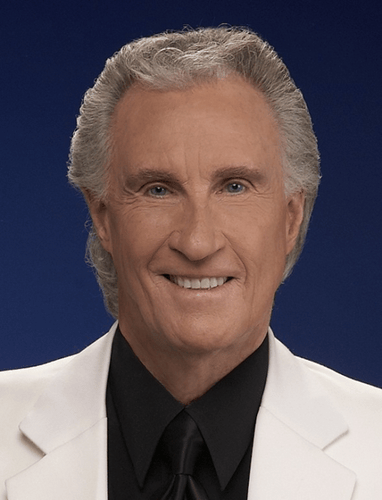
The group had hits with “You’ve Lost That Lovin’ Feelin’,” “Unchained Melody,” and today’s song – “Ebb Tide.”
The lyrics to Ebb tide were written by Carl Sigman. He was an accomplished songwriter whose hits included “It’s All In The Game” and “Pennsylvania 6-5000.” In The Carl Sigman Songbook, Sigman’s son Michael tells the story:
“Early in 1953, British orchestra leader Frank Chacksfield topped the charts with an instrumental arrangement of ‘Ebb Tide,’ a gorgeous, dramatic melody by the composer/classical harpist Robert Maxwell. Singers were clamoring to record it. The problem was that no lyric existed. Carl got an urgent call from the song’s publisher, Jack Robbins, giving him the assignment to write ‘Ebb Tide,’ with the proviso that he must write the lyric within a few days. Maxwell had titled the song as he did because the music he wrote evoked what Carl described in an interview as ‘the flowing quality of water, and particularly the rhythmic and building quality of the tides.’ That was all well and good, but how do you write a lyric about ebb tide? As Carl told me when I was in my early twenties and helping him write a chapter for a book on songwriting, ‘This assignment brought together all the difficulties which confront lyric writers, and all at one time. Usually when we get melodies to write lyrics to, the tunes either have no titles at all or titles, which somehow fit naturally into the tune, with respect to accents and meter. ‘But ‘Ebb Tide’? I knew from the start that those words would never fit into that tune, and in addition I had no idea what kind of meaningful lyric I would write that would even remotely connect itself to the title.’
Carl spent the next four fitful days writing and discarding lyric ideas, all the while staving off the incessant calls of the publisher demanding results. Finally, my father put the song aside. ‘I decided to just take a rest, go to a movie and start thinking about it again the next day.’ When he opened the paper to check the day’s listings, his eye was immediately captured by an ad for From Here To Eternity, the film that jump-started Frank Sinatra’s flagging career. The image in the ad was not of the Chairman of the Board, however, but of the famous scene in which Burt Lancaster and Deborah Kerr are locked in an embrace on the beach as the tide washes over them. Carl never made it to the theater, but he had finally found the key to ‘Ebb Tide.’ ‘It seemed so natural and simple that I couldn’t understand why I hadn’t thought of it before.’ The lyrics suddenly poured out ‘with scarcely a moment of reflection.’ The lyric for this melody couldn’t be dictated by typical songwriting conventions; there would be no chorus, nor would there be any mention of the title. Rather, the lyric would embody an association of ideas spurred by the image of lovers in the tide. ‘If listened in the right frame of mind,’ Carl told me, ‘the melody rises and falls in a way which uncannily resembles an orgasm, with one of the most stirring climaxes I’ve ever heard followed by a beautifully relaxed, restful and contented ending. At the same time, this rising and falling is a perfect symbolization of the movements of the tide. Now the connection begins to come into focus: two lovers meet on a beach, their expectations rise together as the tide is rising, they love, and they are at peace together as the tide ebbs. And the beach and tides (helped by their association with the moon) are as romantic as any setting could hope to be. The whole wedding of the tune to the lyric (or, I should say, of lyric to the tune) is the most natural, the best and the easiest (once the idea was there) I’ve ever written.’ And all this gets expressed in fewer than 100 words.”
Once the lyrics were written, many artists covered it. They include Vic Damone, Frank Sinatra, Roy Hamilton, Bobby Freeman, The Platters, Lenny Welch, Matt Monro, Lenny Welch, Rosemary Clooney, Glen Campbell, Sir Tom Jones, Screamin’ Jay Hawkins, Neil Diamond, there was a techno version by Erasure, and of course, The Righteous Brothers. They released it as a follow up to Unchained Melody.
First, here is birthday boy, Bill Medley with The Righteous Brothers, who took the song to 35 in 1966.
Sinatra’s version of this song never charted, but is generally considered the definitive version.
Bobby Freeman barely made the Hot 100 with his version topping out at #93 in 1959
Sadly, Roy Hamilton’s version bubbled under at #105 in 1959
The Platters almost hit top 40, but only reached #56 in 1960
Lenny Welch went to #25 in 1964
Here is Neil Diamond’s version
 Various Ramblings of a Nostalgic Italian