

The clarinet celebrates birthday 335 today, and in honor of that, it is Clarinet Day!
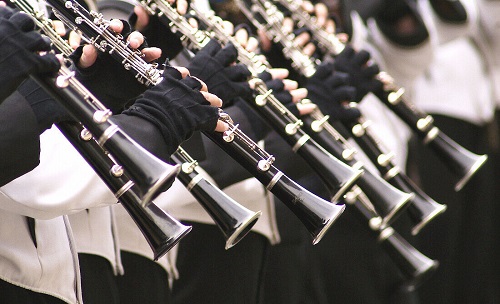
January 14th is the day the clarinet was invented in Nuremberg, Germany in 1690. The instrument was created by German instrument maker Johann Christoph Denner, or possibly his son Jacob.
It had developed from much earlier reed instruments, going right back to Ancient Greece and Egypt. The chalumeau was a Baroque single reed woodwind instrument originating in France where its use spread to Germany.
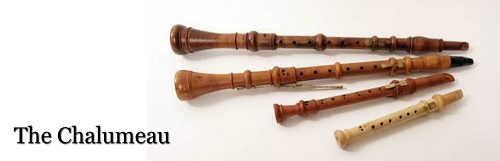
Denner developed the instrument. He equipped a chalumeau in the alto register with two keys, one of which enabled access to a higher register. This second register did not begin an octave above the first, as with other woodwind instruments. Instead, it started an octave and a perfect fifth higher than the first. A second key, at the top, extended the range of the first register to A4 and, together with the register key, to B♭4. Later, Denner lengthened the bell and provided it with a third key to extend the pitch range down to E3.
In the days of the Big Bands, there were plenty of well known clarinetists. Benny Goodman, Artie Shaw, and Woody Herman all played clarinet and had their own big bands. They also had hits that featured clarinet solos (Let’s Dance, Begin the Beguine, Woodchopper’s Ball).
As far as pop hits, there are a couple that spring to mind that feature the clarinet. The first was from Mr. Acker Bilk.
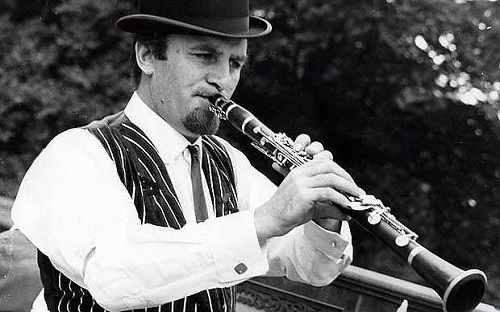
Bilk wrote Stranger on the Shore for his young daughter and originally named the song “Jenny” after her. The tune was written on a single scrap of paper by Bilk and handed over to arranger Leon Young. Young crafted the string arrangement, including the characteristic harmonic shifts at the very end.
The song was a number one in the UK and the biggest selling English single of 1962. In May of 1962 it became the first British recording to reach number one on the U.S Billboard Hot 100 Chart.
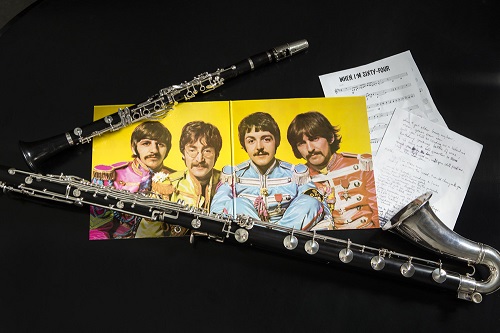
The other pop clarinet hit comes from the Fab Four. Paul McCartney wrote the melody for When I’m 64 when he was just 14 years old. It was one of the first songs he ever wrote.
The song features a clarinet trio – 2 B flat clarinets and a bass clarinet. The song was scored by George Martin, who said the clarinets were added at McCartney’s request. The reason for this was to “get around the lurking schmaltz factor” by using the clarinets “in a classical way.”
Paul McCartney suggested speeding up the track to raise the key by what musicians call a semitone. A semitone is about a half step. So speeding up the track took it from C major to D flat major. George Martin remembers that McCartney suggested this change to make his voice sound younger.
Musicologist Michael Hannon had this to say about the completed track:
“The rich timbres of the clarinets give the mix a fuller, fatter sound than many of the other tracks on the album.”
Happy 335th Birthday to the clarinet!
 Various Ramblings of a Nostalgic Italian
I didn’t know off the top of my head they were clarinets in ‘When I’m 64’
LikeLiked by 1 person
Very interesting stuff Keith. Acker Bilk charted a lot of songs but from a scrap of paper to a #1 song, now that’s a story!
LikeLiked by 1 person
Absolutely. We used to razz a DJ friend of ours because Stranger on the Shore was a song he played at almost every gig. “It’s a great slow song,” he’d tell us. I could never see playing it at a wedding.
LikeLiked by 1 person