

Today, we shine the light on another hometown hero. Donaldson Toussaint L’Ouverture Byrd II, better known to the music world as Donald Byrd, was born on this day in 1932.
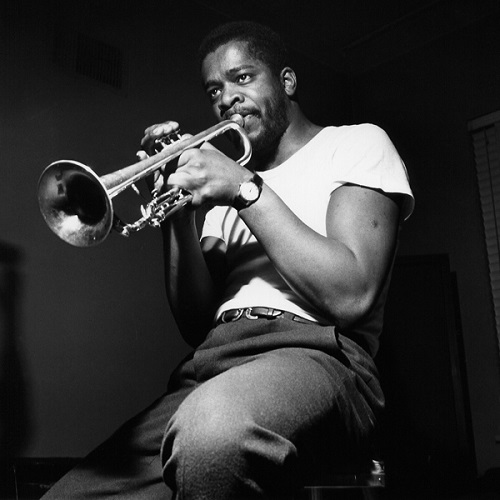
He was born in Detroit, Michigan. His mother introduced him to jazz music, and his uncle gave him his first trumpet. He attended Cass technical high school. Byrd played in a military band while in the US air force, took a music degree at Wayne State University in Michigan and then studied music education at the Manhattan School of Music in New York. He joined the Jazz Messengers in the mid-1950s. Byrd’s trumpet predecessors in Blakey’s company had already included the graceful, glossy-toned Clifford Brown and the Dizzy Gillespie-influenced Kenny Dorham, but the newcomer with his polished phrasing and luxurious tone was recognised as a technical master equal to both. He was even heralded as the new guiding light in jazz trumpet.
He was prolifically active in the late 1950s, in demand for sessions on the Savoy, Riverside, Fortune, and Blue Note labels. At the end of the decade he was also leading or co-leading his own ensembles. He was mostly operating in the laconically pyrotechnical, blues-inflected hard-bop style.
He formed the Blackbyrds, a soul and funk band, from a pool of his Howard University student. In the early 70’s his music ventured into dancefloor jazz and fusion. In 1973, his album Black Byrd was a million seller and brought Blue Note label more income than it had ever generated from any release before.
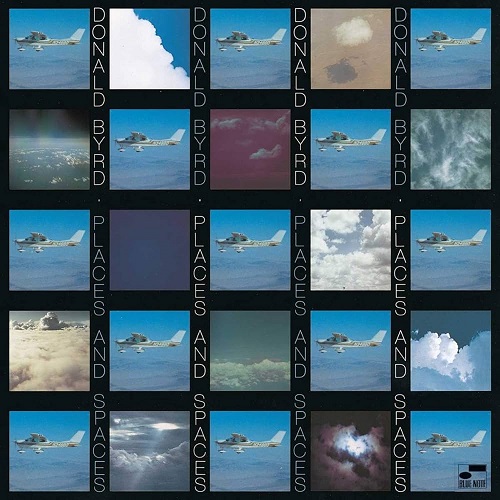
In 1975, he released the album Places and Spaces. Allmusic awarded the album with 4 stars and its review by Stephen Thomas Erlewine states: “Boasting sweeping string arrangements, sultry rhythm guitars, rubbery bass, murmuring flügelhorns, and punchy horn charts, the music falls halfway between the cinematic neo-funk of Street Lady and the proto-disco soul of Earth, Wind & Fire.”
In the late 80’s, when I worked at WKSG, Kiss-FM, we had a regular listener who would call and ask for Donald Byrd, even though we were an oldies station. He called every station in town and it wasn’t odd to be listening to another station and hearing him on the air. His name was Joe. He always asked for the same song, “Wind Parade.”
On one occasion, my pal Johnny Molson and I were talking with Joe, and he has some funky jazz playing in the background. We asked him what he was listening to and found out it was Byrd. So we did to him what he did to us, we requested he play Wind Parade. Neither of us had ever heard the song before. I think we were both genuinely interested to hear it.
As the song begins, there is a piano and syncopated cymbal beat. The a guitar riff plays along with the established beat. What Johnny and I did not expect was Joe belting out the words and singing along to the song. I cannot even describe what it sounded like, but John and I immediately collapsed in laughter.
As we laughed at this unexpected solo, the music continued. At some point he stopped singing and asked, “How do you like it, Johnny?” He had barely caught his breath long enough to say, “That’s great, Joe” only to continue laughing more.
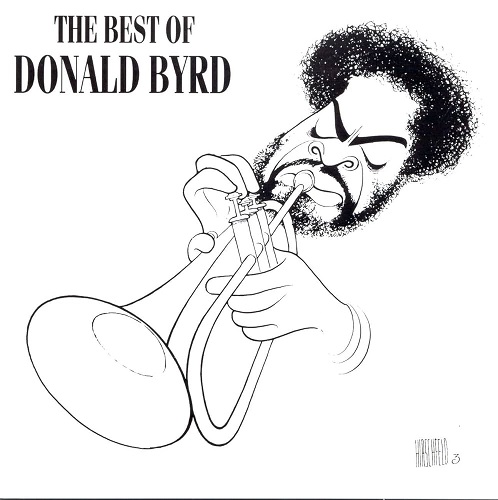
And that is how I discovered Donald Byrd. One day, while shopping at a local record store, I couldn’t believe it when I found his greatest hits CD. I picked it up without hesitation and gave it a listen. There is no doubt, he could play the trumpet well, and there were some neat tracks on the CD. It was “Wind Parade” that got the most play. Every time the vocal hit in the song, I could hear Joe singing along!
He passed away in 2013. One obituary said, “Byrd’s real legacy is his contribution to music education in a culture that spawned jazz but then neglected it – a role he pursued from the unique vantage point of having been a leading player in the idiom. His work has been sampled by pop and hip-hop artists including Public Enemy and Ice Cube, and many young musicians at work today owe their education, and the widespread acceptance of their art, to his tireless pursuit of stature and respect for jazz.”
Happy Birthday, Donald Byrd!
 Various Ramblings of a Nostalgic Italian
‘Walkin in Rhythm’ one of the ’70s less remembered greats.
LikeLiked by 1 person
Absolutely!
LikeLike
Nice!
LikeLiked by 1 person