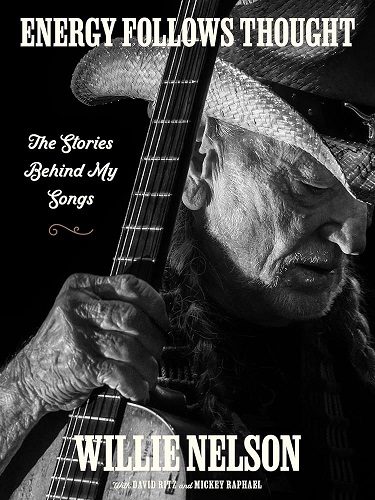
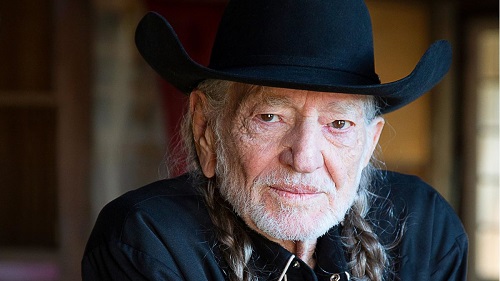
By the title of this book, you might think that it might be some sort of self-help book, or maybe a book about mindfulness, or some sort of science/psychology book. “Energy Follows Thought” just sounds … profound. It sounds deep, right? To a degree, it can get a bit deep at times. It can be sad, happy, silly, romantic, and more. So just who wrote this interesting book? You may know him as “The Red-Headed Stranger.”
If you have read any of my music posts (and as of late, there have been many), you know that I love the stories behind songs. I love to hear how a melody came about and why certain lines were put in. I love to hear about what was going on when a guitar riff was created and the reactions of people listening to it the first time. When this song came up on one of the audio apps I have, I had to get it.
I’ve been a fan of Willie for a long time. On every Willie album, there has always been a song that I have been able to apply to whatever was going on in my life at the time. As years have gone by, I can go back to those albums and find songs that take on new meaning with whatever is happening now. The power of music is really something! Willie certainly has an amazing ability to write great songs! The stories of many of them appear in this book.
The Goodreads synopsis:
For the first time ever, and to help celebrate his 90th birthday in 2023, American icon Willie Nelson provides the stories behind the lyrics of 160 of his favorite songs, along with a dynamic assortment of never-before-seen photos and ephemera.
From his earliest work in the 1950s to today, Willie looks back at the songs that have defined his career, from his days of earning $50 each to his biggest hits, from his less well-known songs (but incredibly meaningful to him) to his concept albums. Along the way, he also shares the stories of his guitar Trigger, his family and “family,” as well as the artists he collaborated with, including Patsy Cline, Waylon Jennings, Ray Charles, Merle Haggard, Ray Price, Dolly Parton, and many others.
Willie is disarmingly honest—what do you have to lose when you’re about to turn 90? —meditating on the nature of songwriting and finding his voice, and the themes he’s explored his whole life—relationships, infidelity, love, loss, friendship, life on the road, and particularly poignant at this juncture of his mortality.
Revealing, funny, whimsical, and wise, this book is an enduring tribute to Willie Nelson’s legacy.
It was interesting to hear just how Willie puts it all together. Words first. Music later. One article stated that, “while his guitar is practically an extension of his body at this point, he has always started the writing process by thinking up words rather than strumming chords. To him, it’s doing the hard part first.”
Willie says, “The melodies are easier to write than the words.” He does not, however, write those words down, not even on a napkin. “I have a theory,” he said, “that if you can’t remember ‘em, it probably wasn’t that good.”
Whether you like country music or not, I think you will enjoy not only the stories behind the songs, but the lyrics to so many powerful songs.
Welcome back to The Music of My Life, where I feature ten songs from each year of my life. In most cases, the ten songs I choose will be ones I like personally (unless I explain otherwise). The songs will be selected from Billboard’s Year-end Hot 100 Chart, Acclaimed Music, and will all be released in the featured year. In the final year of the 70’s, I turned 9 years old.
1979 is a year where I was surprised to find many of the songs that wound up on my mom’s ballad 8-track tape. I could easily have posted all of those songs in this blog, but then you would fall asleep listening to them, just like my brother and I did on our way up north. Instead, I will list them at the end of this blog, and if you wish, you can search them on YouTube.
So let’s begin with the first of two “out of place” or “odd” songs….
The first song is part of the soundtrack of my summer of 1979. The song seemed to be playing in a very hot rotation and was always on the radio when we were up at my grandparents place.
Frank Mills wrote and recorded “Music Box Dancer” in 1974, but it did not become a Canadian single until December 1978. By Christmas of that year, it was in the top ten of many European and Asian pop music charts. It was released as a single in the United States in January 1979 and got up to number three on the Billboard Hot 100 Chart.
In 1974, Mills released an album that featured the song, but it was not initially a hit. When he re-signed with Polydor Records Canada in 1978, the label released a new song as a single, with “Music Box Dancer” on the B-side. Because of a mistake, a single of “Music Box Dancer” found its way into the hands of a pop station in Ottawa – the single was only supposed to go out to adult contemporary stations. The station’s program director listened to the A-side and wondered why it was sent to him. He played the B-side and liked what he heard anyway and began airing it in rotation. Next thing you know, the album’s gone gold in Canada.
Music Box Dancer
The next song makes the list because it was on the iPod of my ex. My oldest son used to take it and listen to it all the time and I can still hear him in his toddler voice singing the chorus of this one.
Hot Stuff is a single that was on Donna Summer’s 7th studio album, Bad Girls. The song is unique in that while many consider it disco, many others consider it rock. As a matter of fact, when the Best Female Rock Vocal Performance category was added at the Grammy Awards in 1980, Donna Summer won for “Hot Stuff.”
The song has ties to other music as well. It was written by Pete Bellotte, Harold Faltermeyer and Keith Forsey. Bellotte co-wrote a few other hits for Summer, including “Love To Love You Baby” and ” Heaven Knows.” Faltermeyer had a solo hit in 1984 with the theme from Beverly Hills Cop, “Axel F” and Forsey’s credits include “Don’t You Forget About Me” for Simple Minds and “Shakedown” for Bob Seger.
This was Summer’s second #1 hit on the Hot 100; her first was her disco cover of “MacArthur Park.”
Hot Stuff
Here is a song that is missing one of the things the band is known for. Don’t Bring Me Down was the first ELO song that did not use strings. According to Songfacts, after recording it, they fired their string section, leaving four members in the band.
ELO leader Jeff Lynne wrote this song late in the sessions for the “Discovery” album. He came up with the track by looping the drums from a song he recorded earlier in the session, then coming up with more music on the piano. The words came last, as Lynne put together some lyrics about a girl who thinks she’s too good for the guy she’s with.
Here’s a fun fact: Wanna know why Jeff Lynne repeatedly sings the word “groose” after the song’s title line? Apparently it was a made-up place-keeper word to fill a gap in the vocals when he was improvising the lyrics. When the German engineer Reinhold Mack heard the ELO frontman’s demo, he asked Lynne how he knew “gruss” means “greetings” in his country’s language. Upon learning the German meaning, Lynne decided to leave it in.
Don’t Bring Me Down
“Hey Ringo, play something hot!”
Those are the words that Rodney Dangerfield’s character in Caddyshack says to the band at the snobbish country club as he throws money at them. As the money falls, the band plays the opening 5 note stings from Boogie Wonderland from Earth Wind and Fire (With the Emotions). I’ve always loved that song because of the movie connection.
The song, while it is upbeat and happy sounding, it really isn’t. Songfacts calls it one of the more complex and misinterpreted songs of the disco era. Written by Jon Lind and Allee Willis, it was inspired by the movie Looking For Mr. Goodbar, which stars Diane Keaton as a lost soul who goes to clubs every night to dance away her misery.
Willis says, “When I saw Mr. Goodbar, I got kind of fascinated with people who did go to clubs every night, whose life was kind of falling apart, but they lived for the night life, though it didn’t seem to be advancing them as humans in the end. So if you really look at the lyrics of ‘Boogie Wonderland,’ unlike ‘September,’ it’s not a happy song at all. It’s really about someone on the brink of self destruction who goes to these clubs to try and find more, but is at least aware of the fact that if there’s something like true love, that is something that could kind of drag them out of the abyss. So ‘Boogie Wonderland’ for us was this state of mind that you entered when you were around music and when you danced, but hopefully it was an aware enough state of mind that you would want to feel as good during the day as you did at night.”
Boogie Wonderland
The second “out of place” or “odd” song is also a movie song. It may seem like a very simple kid song, but if you listen to what the songwriter says about it, the song is deeper than you can imagine.
This was written by songwriters Paul Williams and Kenny Ascher for The Muppet Movie, which came out in 1979. In the film, it is sung by Kermit The Frog as the Muppets set out to find adventure. In a interview Williams said: “Rainbow Connection was the first number in The Muppet Movie. It’s the one that establishes the lead character. We find Kermit sitting in the middle of the swamp. Kenny Ascher and I sat down to write these songs, and we thought… Kermit, he’s like ‘every frog.’ He’s the Jimmy Stewart of frogs. So how do we show that he’s a thinking frog, and that he has an introspective soul, and all that good stuff? We looked at his environment, and his environment is water and air – and light. And it just seemed like it would be a place where he would see a rainbow. But we also wanted to show that he would be on this spiritual path, examining life, and the meaning of life.
It tells you that he’s been exposed to culture: ‘Why are there so many songs about rainbows?’ Which means, obviously, he’s heard a lot of songs. This is a frog that’s been exposed to culture, whether it’s movies, or records, or whatever. And I also like the fact that it starts out with the negative: ‘Rainbows are only illusions, rainbows have nothing to hide.’ So the song actually starts out as if he’s going to pooh-pooh the whole idea, and then it turns: ‘So we’ve been told, and some choose to believe it. I know they’re wrong, wait and see.’ And again, he doesn’t have the answer: ‘Someday we’ll find it.'”
Now, with that in mind, give this masterpiece a listen!
Rainbow Connection
Next is my “go-to” Karaoke song. I’ve always loved the line, “You had me down 21 to zip, the smile of Judas on your lip.” What a great line. Bad Case of Loving you was written by Moon Martin who released the original version on his 1978 album Shots From a Cold Nightmare. Martin is a singer/guitarist/songwriter with his band Southwind. When the group broke up in 1971, he took on studio work. He paired up with Linda Ronstadt, and played on her self-titled album. He nearly joined some of Ronstadt’s other backing musicians in a little band called the Eagles, but ended up a solo artist and signed a deal with Capitol Records.
Martin’s album got some good reviews but went nowhere on the charts. A song called “Hot Nite In Dallas” was chosen as a single, but “Bad Case Of Loving You” was only given limited release in Europe. Enter Robert Palmer. He heard the song when he was being driven to one of his shows by a rep from his label, who played it for him. Palmer included it in his set and got a great response, so he recorded it for his Secrets album.
Bad Case of Loving You (Doctor, Doctor)
In 1989, Palmer released a remix of this song for his Addictions: Volume 1 greatest hits album. “Looking back at the 1978 original the performance was there but someone was asleep at the mixing desk,” he wrote in the liner notes. “The original mix in comparison sounded like a band rehearsing in a garage and this sounds like the finished song.” I can’t listen to the original cut much anymore. The remix is SO MUCH better!
I LOVE good harmonies. This song kicks right off with a cold open and the amazing a cappella harmony of The Little River Band. Most of the band’s hits were written by founding members Graham Goble, Beeb Birtles or Glenn Shorrock, but “Lonesome Loser” was written by guitarist David Briggs, who joined in 1976 after the band’s second album.
The lyric uses a lot of gambling imagery to tell the story of the lonesome loser, who staked his heart and lost. His adversary is the “Queen of Hearts,” who will always win this game of love. The same year this song was released (1979), Dave Edmunds had a UK hit with a song called “Queen of Hearts” that used the same metaphor. That song, of course, became an American hit when Juice Newton covered it in 1981.
Lonesome Loser
Speaking of great harmonies and the Eagles, the next song features both. Heartache Tonight was written by Don Henley and Glenn Frey with Bob Seger and J.D. Souther. Songfacts says: When Frey was a 19-year-old in Detroit, Seger took him under his wing and got his music career started. Souther, who is sometimes considered an “Unofficial Eagle,” was the first person Frey met when he moved to Los Angeles in the late-’60s. J.D. Souther, told us how this song started: “Glenn Frey and I had been listening to Sam Cooke records at my house. So we were just walking around clapping our hands and snapping fingers and singing the verses to those songs. The melody sounds very much like those Sam Cooke shuffles. There’s not much to it. I mean, it’s really just two long verses. But it felt really good.”
Bob Seger’s contribution to this song was the chorus. JD Souther says, “We didn’t get to a chorus that we liked within the first few days, and I think Glenn was on the phone with Seger, and he said, ‘I wanna run something by you,’ and sang it to him, and Seger just came right in with the chorus, just sang it and it was so good. Glen called me and said, ‘Is four writers okay on this?’ And I said, ‘Sure, if it’s good.’ And he said, ‘Yeah, it’s great. Seger just sang this to me,’ and he sang it to me and I said, ‘That’s fantastic.'”
According to Seger, he was in the room with Glenn Frey when he came up with the chorus. He told Entertainment Weekly: “Glenn had the verse: ‘Somebody’s gonna hurt someone before the night is through.’ We hadn’t been sitting down for more that five minutes and I just blurted out, ‘There’s gonna be a heartache tonight!’ His eyes lit up huge.”
Heartache Tonight
The next song is one that I used to hear on the way home from elementary school. I had a buddy who got a ride home every day and his mom would often give me a lift, too. Keep in mind the ride home was 5 to 7 minutes tops, but it always seemed to be on the radio when we were in the car.
Freddie Mercury wrote Crazy Little Thing Called Love while Queen was recording The Game in Germany. He wrote it while taking a bubble bath in his room at the Munich Hilton. Peter Hince, the head of Queen’s road crew, recalled to Mojo magazine September 2009: “The idea for the song came to him while he was in the bath. He emerged, wrapped in a towel, I handed him the guitar and he worked out the chords there and then. Fred had this knack of knowing a great pop song.”
Freddie acknowledged that perhaps his limited talent on the guitar helped shape the song:
On stage, this was an important part of the show. Brian May often used three different guitars during the song: the first verse was played by Freddie alone with his guitar, then Brian joined with another Ovation Acoustic; before the third verse he had already switched to a Telecaster on which he performed the solo. During the singalong part (famous for its “ready Freddie” line) Brian again changed instruments to his homemade Red Special. From 1984 onwards Mercury replaced the acoustic with another Telecaster.
Crazy Little Thing Called Love
The final selection comes from a band who was formed on Valentines Day of 1977 in Detroit. That is what inspired their name – the Romantics.
Believe it or not, the band have only two US Top 40 hits, and “What I Like About You,” now their best-known song, isn’t one of them. ( Their two Top 40 hits were “Talking In Your Sleep” and “One In A Million”). It attracted little attention and was only a minor hit when first released in 1980 on their debut album. This song’s resurgence had a lot to do with MTV. The band made a simple performance video for the song that MTV put in rotation when they launched in 1981. It fit the criteria the network was looking for: American band, rock, catchy song, acceptable production quality. Since few American artists made videos at the time, MTV made do with lots of European imports when they started.
Since then the song has also become a fixture at sporting events, bars and nightclubs, and parties and celebrations of all kinds, and has taken its place as one of the most popular rock anthems of all time. It’s nice to wrap up the last year of the decade with an uptempo, fun song!
What I Like About You
I’m sure I have missed a few favorites, and the more I look ahead, the more I wonder if I need to expand to more than ten songs. I’ll tackle that issue if I have to later on.
Next week, we ring in a new decade – 1980! The 80’s sound certainly can be heard in some of these late 70’s songs and from here on out, the sound progresses quickly!
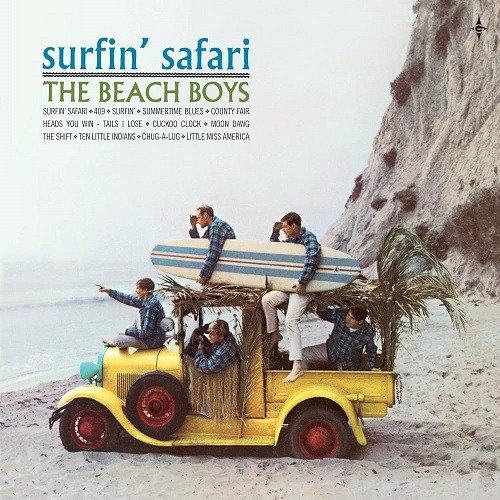
It was on this day in 1962 that Capitol Records signed one of the biggest acts of the 1960’s! The Beach Boys had been turned down by the Dot and Liberty labels, however, Capitol executive Nick Venet was sold on the group after hearing about eight bars of their song “Surfin’ Safari.”
According to Brian Wilson, the song was inspired by Chuck Berry. He referred to the song as “a silly song with a simple-but-cool C-F-G chord pattern that I came up with one day while trying to play the piano the way Chuck Berry played his guitar.”
The song was released with “409” as the B-side. Originally, Capitol Records wanted “409” to be the A-side, because it was about a car. There is a story about it actually being released as an A-side, DJ’s in Arizona started playing the B-side (Surfin’ Safari) and it becoming the hit. However, no one has ever been able to produce a copy of “409” as the A-side, so take that story with a grain of salt. In the end, it didn’t matter, because the record was considered a two-sided hit. Surfin’ Safari went to number 14 on the chart, while the flipside (“409”) charted at 76.
Many of the early Beach Boys songs were about surfing, which was their niche. Believe it or not, their first record label named the band and they were almost called The Surfers! Another little known fact: only their drummer, Dennis Wilson, was a surfer. Obviously, the guys could fake it for photos and seemed to know what they were singing about in their songs.
Surfin’ Safari
Let’s go surfin’ now Everybody’s learnin’ how Come on and safari with me (Come on and safari with)
Early in the mornin’ we’ll be startin’ out Some honeys will be comin’ along We’re loadin’ up our Woody with our boards inside And headin’ out singin’ our song
Come on, baby, wait and see (surfin’, surfin’ safari) Yes, I’m gonna take you surfin’ with me (surfin’, surfin’ safari) Come along, baby, wait and see (surfin’, surfin’ safari) Yes, I’m gonna take you surfin’ with me (surfin’, surfin’ safari)
Let’s go surfin’ now Everybody’s learnin’ how Come on and safari with me (Come on and safari with)
At Huntington and Malibu, they’re shootin’ the pier At Rincon, they’re walkin’ the nose We’re goin’ on safari to the islands this year So if you’re comin’, get ready to go
Come on, baby, wait and see (surfin’, surfin’ safari) Yes, I’m gonna take you surfin’ with me (surfin’, surfin’ safari) Come along, baby, wait and see (surfin’, surfin’ safari) Yes, I’m gonna take you surfin’ with me (surfin’, surfin’ safari)
Let’s go surfin’ now Everybody’s learnin’ how Come on and safari with me (Come on and safari with)
They’re anglin’ in Laguna in Cerro Azul They’re kickin’ out in Doheny too I tell you surfing’s mighty wild, it’s gettin’ bigger every day From Hawaii to the shores of Peru
Come on, baby, wait and see (surfin’, surfin’ safari) Yes, I’m gonna take you surfin’ with me (surfin’, surfin’ safari) Come along, baby, wait and see (surfin’, surfin’ safari) Yes, I’m gonna take you surfin’ with me (surfin’, surfin’ safari)
Let’s go surfin’ now Everybody’s learnin’ how Come on and safari with me (Come on and safari with me)
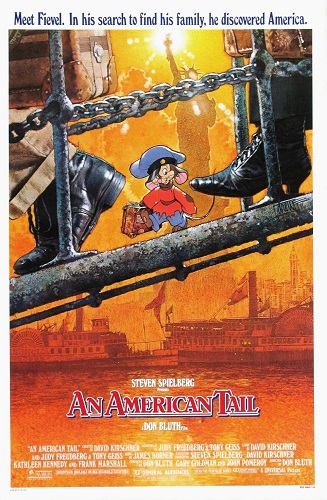
We go back to 1986 for today’s movie – Steven Spielberg’s An American Tale.
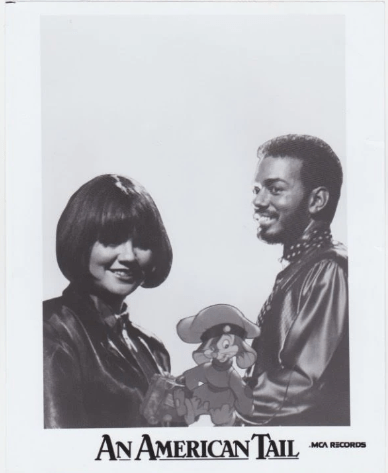
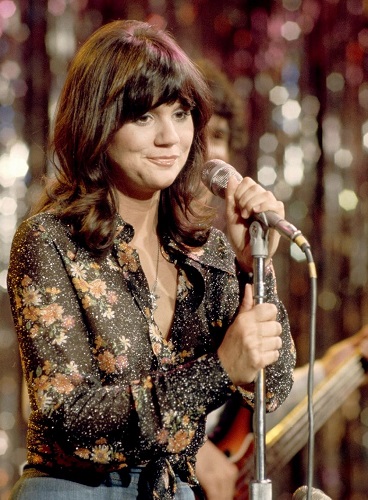
In the movie, a family of mice from the Ukraine immigrates to the United States, but loses young Fievel along the way. One lonely night, Fievel (Phillip Glasser) and his sister Tanya (Betsy Cathcart), separated by a long distance, sing “Somewhere Out There” in the hopes of reuniting. Spielberg really thought that the song had the potential to be a pop hit. So he got birthday girl Linda Ronstadt (who turns 78 today) and James Ingram to sing the pop version. Their version is a romantic ballad about two separated lovers who take comfort in the fact they are looking out at the same starry sky. Spielberg was right – the song went to #2 on the charts.
Film composer James Horner teamed up with songwriting duo Barry Mann (Who Put the Bomp) & Cynthia Weil to write the tune. Weil said in a 2014 interview, “At that time, which was the mid-’80s, animation was kind of dead. And we thought that this film would barely be seen because it was about a Jewish mouse. And so, we just loved the script and we had the opportunity to work with Steven Spielberg because he was executive producer. And so, we felt very free in writing the songs for this movie because we thought no one would be listening.”
Peter Asher (of Peter and Gordon) produced the song and spoke in an interview about the challenges of the song. “She (Ronstadt) and James Ingram, when we did ‘Somewhere Out There,’ never actually were in the studio at the same time, which is more common now but was a bit less common then. And getting it all to fit together, matching their vibratos and the last note and stuff like that, which again in Pro Tools (a digital editing program) would be two seconds, took quite a while because I had two separate takes of each of them separately. But, for reasons I can’t quite remember, they weren’t in town at the same time.
So, yeah, duets, you’ve got to figure out who sings what and all those obvious challenges and get two great vocals that fit together, ideally at the same time, but often not. I think she and Aaron [Neville] were together at the same time on ‘Don’t Know Much,’ but certainly she and James Ingram on ‘Somewhere Out There’ were not.”
The music video for the song was directed, produced, and edited by Jeffrey Abelson. It was filmed in New York City and features Ronstadt and Ingram, in two separate rooms, sitting at their desks while drawing and coloring scenes from the film. They both look out the windows, in the same manner as Fievel and Tanya in it. Clips from the movie also appear throughout the video.
The song won two Grammy awards at the 1988 ceremony: Song of the Year and Best Song Written Specifically for a Motion Picture or Television. It was also nominated for Best Pop Performance by a Duo or Group with Vocal, but lost to the Dirty Dancing hit, “(I’ve Had) The Time Of My Life.”
Our first home had one. My grandparents home had one. I think my parents had one, too. Of course, not until today did I know what it was for.
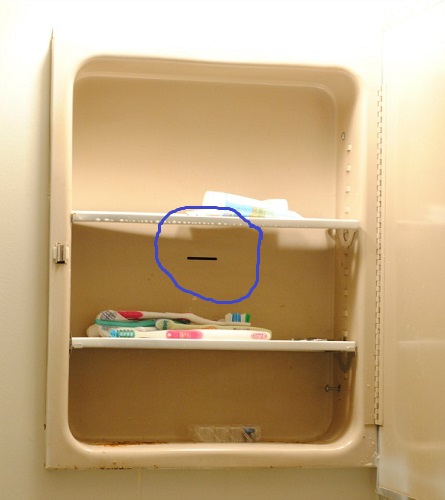
Go to your bathroom and open the medicine cabinet. Does it have a small slit on the back of it? I’ll wait. Not sure what I’m talking about? Ok, it looks like this:
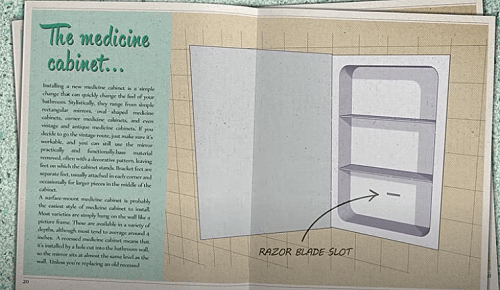
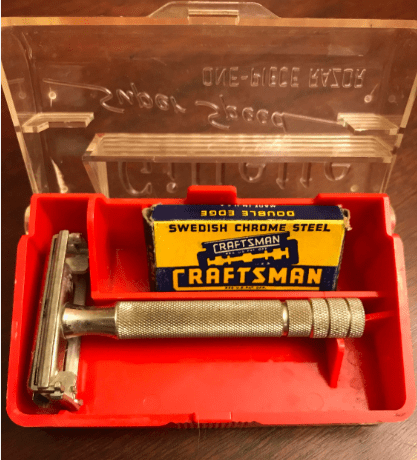
The hole could be up on the top or toward the bottom, but if you live in a home that was built between the 1920’s and 1980’s, your medicine cabinet probably has one of these. What’s it for? Believe it or not – razor blades!
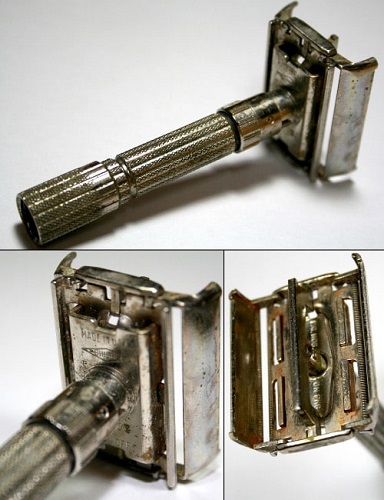
Apparently, back before we had disposable razors, people would buy a 5 pack of just razor blades to shave with. The shaver’s top opened for you to put the blade in.
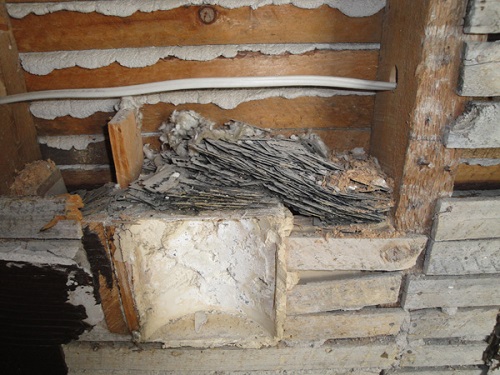
Throwing used blades in the trash brought about some concerns. So, to lessen the chance for injury for sanitation workers, people disposed of them in that little slot at the back of the medicine cabinet. That being said, if you have a razor slot it probably also means that your wall may be full of hundreds or more of someone’s old, rusty, used razor blades.
Just the thought of that is kind of disgusting, but really, who is going to see them? Probably no one, unless you are remodeling your bathroom. Then, when you ripped out that old medicine cabinet …
I was totally oblivious to this fact, but now I know (in the words of Paul Harvey) “the rest of the story!”
Since discovering the Libby App, my wife and I have been listening to almost all of our books in the car. She gets through hers faster than me, as she tends to be able to listen to them at work, too.
She will grab books that I already have on my Goodreads “Want to Read” list and there are ones that I have added to my list that she read first. The issue I have is that my “Want to Read” list grows faster than my “Read” list! Anyway, it is fun to discuss those books together after we have both read one from our lists.
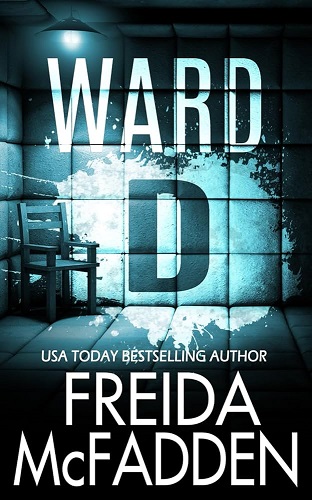
Ward D has been on my list forever. It sounded really good. My wife read it and she said it blew her away. My son’s speech therapist read it, too, and she raved about the ending as well. I was waiting on a book that was still on hold and I looked to see if Ward D was available and it was, so I finally got around to reading it.
Here is the Goodreads synopsis:
Medical student Amy Brenner is spending the night on a locked psychiatric ward.
Amy has been dreading her evening working on Ward D, the hospital’s inpatient mental health unit. There are very specific reasons why she never wanted to do this required overnight rotation. Reasons nobody can ever find out.
And as the hours tick by, Amy grows increasingly convinced something terrible is happening within these tightly secured walls. When patients and staff start to vanish without a trace, it becomes clear that everyone on the unit is in grave danger.
Amy’s worst nightmare was spending the night on Ward D. And now she might never escape.
This is the first book I read by Freida McFadden. It was a good psychological thriller. It definitely has you guessing and wondering through most of the book. There are plenty of characters in it that make you wonder who’s good and who’s bad. There are also characters that will creep you right out!
I was about 3 hours into the book (the audiobook was like 7 hours) and I came home and started telling my wife about where I was in the book and recapping what was happening. Maybe it is just that I watched a lot of Perry Mason and Columbo, but I tend to over think things. I find little things and I question them. So I blurted something out to my wife and she looked at me dumbfounded.
“I’m right, ain’t I?!” I said, proudly. She was pretty impressed that I figured part of the ending out, but “there is more to it and you’ll never guess that!” she told me. Well, she was right. There certainly was a few things I didn’t see coming and it wound up being ok. I will certainly be reading some more of her books.
I can easily see that if I was reading a physical copy of it, I’d be staying up late saying, “Ok, just one more chapter before I go to sleep!” 4 out of 5 stars.
One of the greatest things about working in radio was being in a position to help people. This is where local radio wins! Real people helping real people.
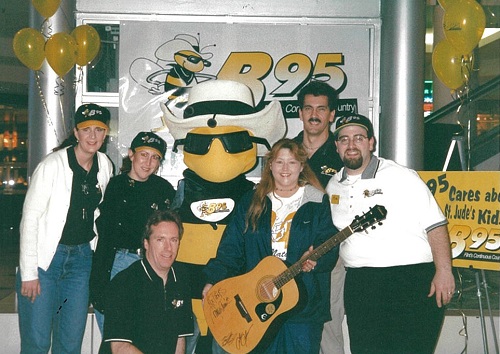
My Friday Photo Flashback this week takes me back to the very first B-95 Country Cares For St. Jude Kids Radiothon. When Brian Cleary took over as our program director, we partnered with them to raise money for kids with cancer.
I had heard of St. Jude because I was familiar with Danny Thomas. Today, there are plenty of commercials for the hospital featuring Marlo Thomas, Danny’s daughter. Back when we started doing radiothons, there was a whole lot less exposure for the hospital.
The photo below brings back a ton of memories of some of the greatest people I have ever worked with. From left to right we have Anne, Kristine, Brian (kneeling), Buzby (our mascot), Lonnie (the winner of an autographed guitar), Jim and me. What a fantastic on air staff!
Each of us was flown to Memphis to tour the hospital, meet the doctors, meet patients, meet parents of patients, and meet with many of the country stars who also supported the hospital. When I went, my ex was still pregnant with my firstborn. You can only imagine the emotions I experienced while I was there!
It was like nothing I had ever experienced. The stories, the happy endings, and the sad endings. The amazing facts and figures that were shared about how the research that they were doing was not only helping kids with cancer, but anyone with cancer. The discoveries made and the treatments that were making a difference in the lives of many were astounding. The two days I spent in Memphis were full of emotions!
We got to take the things that we saw, learned, and present them on the air, while raising money for the hospital. It was because of this radiothon that I met two very special kids (who may pop up in a future Photo Flashback), Kyle and Allyson. Both of them were St. Jude patients and I became fast friends with them and their families.
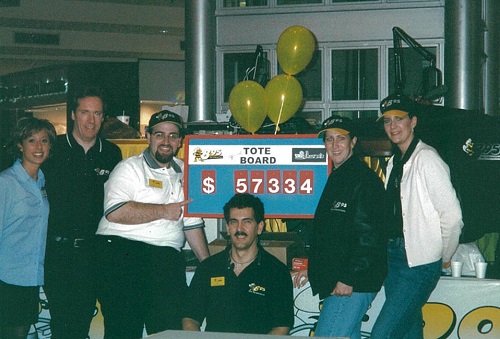
For two days, we were set up in center court of our local mall broadcasting from there. We had our volunteer phone banks set up on the floor to the front and side of us. We broadcast live from the stage, where all of the microphones and equipment was set up (which you can see in the last photo).
We weren’t a very big radio market. We weren’t sure what to expect for our first radiothon. If I remember correctly, our St. Jude rep, Amy (pictured on the left in the bottom photo) thought we might raise like $40,000. We beat those expectations by almost $20,000.
Without a doubt, it was one of the highlights of my radio career. Even though there was a ton of preparation and work that went into the event, it was one I always looked forward to. There is a lot of satisfaction knowing that you play a small part in helping save the lives of children.
You may recall that last summer they tore up our street, and sidewalks, and almost every one of our front lawns. My front lawn was where they wound up parking all of their bulldozers, excavators, and even their Port-a-John. They told us that when it was all done things would be back to the way they were “or better.”
When they were done, they put my walkway bricks back, however, they were not level. They also moved the sidewalk close to the street, so now the walkway didn’t reach the sidewalk. All winter and well into the spring they had the seed/hay on all of our lawns. Honestly, some of my neighbors lawns look good. Mine, however, was patchy and a mess.
As I mowed recently, I noticed that there were huge clumps of clay and a lot of rocks in the soil. Well, I guess they didn’t have real dirt to put back, because most of my lawn was rocks and clay. No wonder it wasn’t growing back! So I took matters into my own hands.
I decided to borrow my father-in-law’s rototiller and I was going to rip the whole lawn up. The plan was to till it up, get some good soil and lay it down with seed and fertilizer. Over the weekend I started that project. This is how my yard looks currently.
Because of the rain, I have been unable to get out and drag it so that I can get the seed down. That is still to come. So let’s talk about my stupidity.
I get out the rototiller and get read to work. I have never used one before. I know enough to know I have to set the little digger/tiller things to the depth I want and when I pull on the handle, they will go to work. I look over the control levers to get a feel for what is where. I see that the handle, once engaged, will make the tiller move forward. There is a lever to pull if I want it to go backward.
I start up this thing and I begin to walk behind it. For some reason, I don’t feel like it is really working with me. As a matter of fact, I feel like I am pushing it. I finish my first row and start the next one. Again, I feel like I am struggling with this thing. The sweat is pouring down my face by now. “What the heck is going on?” I think.
My wife is watching me and offers to do it. I am not about to let her do this. If I am struggling with it, I certainly don’t want her to. I get down to the end of the third row and my shirt is now soaked with sweat, the sweat is rolling in my eyes, and I am out of breath. From where I am I throw the thing into reverse. That is when I realize the wheels are not working. I say, “This thing is suppose to be going in reverse.” My wife says, “Well, the hub is spinning, so I don’t know.”
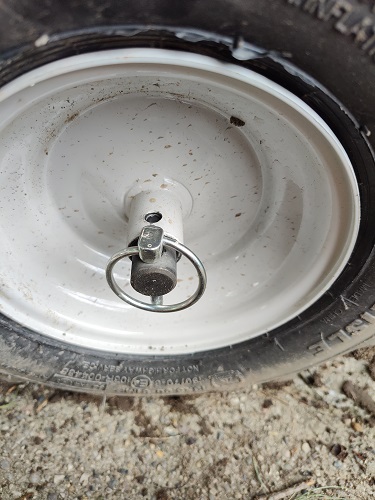
All I can think is that I have broken my father-in-law’s new rototiller. I pull the reverse lever again and I look at the wheel. Sure enough, the shaft is spinning. (Are you getting ahead of me?) This is what I see when I let go of the reverse lever:
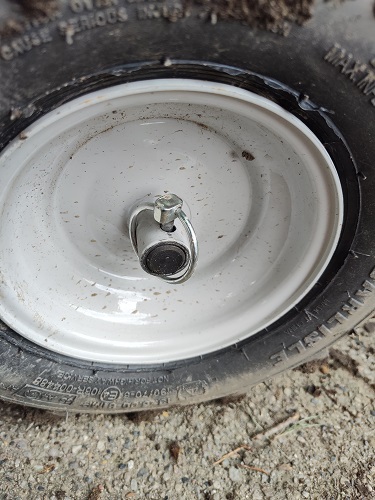
Do you see the problem? Once I did, I laughed and could not believe how stupid I am.
You see, the way that wheel is right now is the way it needs to be when you are just moving it around while you are not working. In order to get the wheels to move with you, you have to pull the pin, slide the wheel forward, place the pin through the wheel hub AND shaft, and bingo!
All of a sudden, the work became a lot easier! It moved forward when I wanted it to and backward when I needed it to. Of course, on the fifth row, the flood gates opened and it pour rain on me. That was the end of night one with the tiller. I was obviously able to get the whole thing tilled, but now I need to wait until the rain stops to finish the project.
This is a fine example of what happens when a typical guy like me says, “I don’t need to read any instruction manual!”
I have had this blog since 2018. There have been plenty of times when I have shared links to blogs on Facebook. I’ve never had an issue, until Tuesday.
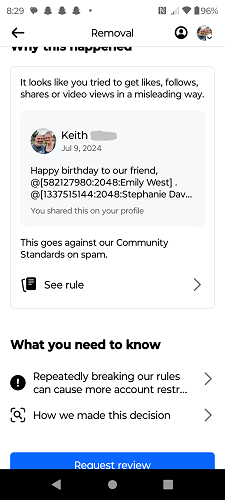
On Tuesday, you may recall, I did a Happy Birthday post about singer Emily West. She and I are friends on Facebook, so I posted the link to the blog and tagged her in it. Less than 5 minutes after I posted it, Facebook removed the post. They sent me a notification and told me why.
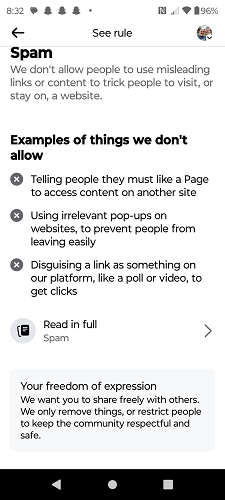
First of all, they have never flagged a blog post as spa, before. Second, I didn’t “disguise a link to get clicks.” Lastly, I certainly didn’t “try to get likes, follows, shares or videos views in a misleading way.” It was a blog post. It certainly is no different from some of the links others post on there, and a whole lot less deceptive than some of the crap I see posted. Not to mention the countless “sponsored” posts they shove into my newsfeed.
This really rubbed me the wrong way. It was an innocent post with a song. What’s the deal? I requested a review, which you know isn’t going to do anything. No human is looking at it. I’m sure they have it go through some sort of computer AI thing and it will uphold the decision. Whatever.
I tried to report a friends account who had been hacked recently. The entire feed by the hacker was some scam about money or bitcoin or getting $7000 deposited into your account. I reported it, and they said it was perfectly ok. Unreal!
On another weird note, I got a message here on Word Press that my stats were “booming.” I decided to check it out. Yesterday, my blog was a hit in Germany apparently. I had 300 more hits than normal and the vast majority of them came from Germany. So, Hallo and Guten Tag to my German readers!
Welcome back to The Music of My Life, where I feature ten songs from each year of my life. In most cases, the ten songs I choose will be ones I like personally (unless I explain otherwise). The songs will be selected from Billboard’s Year-end Hot 100 Chart, Acclaimed Music, and will all be released in the featured year. I turned 8 years old in ’78 and much like in ’77, there is an interesting mix of tunes.
In January of 1978, Kansas released a song that was what Steve Walsh said, “defies the basic formulas that most (rock) groups try to follow,” and it paid off in spades! Dust in the Wind has one of the greatest guitar intros! The story of how it came to be is fantastic.
Kerry Livgren devised what would be the guitar line for “Dust in the Wind” as a finger exercise for learning “fingerpicking.” His wife, Vicci, heard what he was doing, remarked that the melody was nice, and encouraged him to write lyrics for it. Livgren was unsure whether his fellow band members would like it, after all, it was a departure from their signature style. After Kansas had rehearsed all the songs intended for the band’s recording sessions of June and July 1976, Livgren played “Dust in the Wind” for his bandmates, who after a moment’s “stunned silence” asked: “Kerry, where has this been? That is our next single!”
Dust in the Wind
In February of 1978, a song that will forever be associated with a geriatric sitcom was released. Even though Andrew Gold’s version was not the version used as the Theme to the Golden Girls, the song was (A jingle singer named Cynthia Fee sang the TV version). It is one of my ten picks because there are so many female friends that love the show. My wife is a big fan of the show as well, so here it is.
Andrew Gold says that the song was “just this little throwaway thing” that took him “about an hour to write.” Writing is was obviously a breeze, however, recording it was a different story. They recorded 40 different takes of the song, finally releasing take number 40!
If you listen closely, you can hear sleigh bells in the instrumentation of the song.
Thank You For Being a Friend
In March of 1978, the great Warren Zevon released what some call a Halloween classic, even though it was intended to inspire a dance craze. Phil Everly of the Everly Brothers had seen the 1935 film, Werewolf of London on TV and joked to Zevon that he should adapt the title for a song and new dance. He played with the idea with his band members, who wrote the song together in about 15 minutes, all contributing lyrics that were transcribed by Zevon’s wife Crystal. However, none of them took the song seriously.
The song had been written long before it was recorded. It finally appeared on Warren’s third album, Excitable Boy, which was produced by Jackson Browne (who had already been performing the song at shows.) Although 59 takes were recorded, Browne and Zevon selected the second take for the final mix. The record label really pushed for Werewolves to be a single, but Zevon liked a couple other songs. The label released it and it became Warren’s only top 40 hit.
Werewolves of London
Three of my picks from 1978, all were released in my birthday month of May. The first one is by a group that was lucky enough to get a radio station to play a demo of one of their songs on air – and have it lead to a record deal. As a former radio guy, let me tell you, that just does not happen! It did, however, for the Cars.
Just What I Needed was written by Ric Ocasek. The band recorded a two track demo of the song and My Best Friend’s Girl. In Boston, in 1977, DJ Maxanne Sartori, who was given the tapes of these songs by Ocasek, recalled, “I began playing the demos of ‘Just What I Needed’ and ‘My Best Friend’s Girl’ in March during my weekday slot, from 2 to 6 p.m. Calls poured in with positive comments.” With a song on the radio in a major market, The Cars were a surefire success and had their pick of record labels. They went with Elektra, who had them re-record the song and released it as their first single.
Benjamin Orr sang lead on the song and it was a top 30 hit for the band.
Just What I Needed
The next May release is a song that will always remind me of shooting pool with my best friend, Jeff. He always picked songs for the jukebox and Life’s Been Good by Joe Walsh was always a pick. We always laughed at the lyrics. Even Walsh says the song was meant to be a humorous look at fame and fortune.
In a 1981 interview with the BBC, Walsh explained: “I wanted to make a statement involving satire and humor, kind of poking fun at the incredibly silly lifestyle that someone in my position is faced with – in other words, I do have a really nice house, but I’m on the road so much that when I come home from a tour, it’s really hard to feel that I even live here. It’s not necessarily me, I think it paraphrases anyone in my position, and I think that’s why a lot of people related to it, but basically, that’s the story of any rock star – I say that humbly – anyone in my position. I thought that was a valid statement, because it is a strange lifestyle – I’ve been around the world in concerts, and people say ‘What was Japan like?’, but I don’t know. It’s got a nice airport, you know… so it was kind of an overall statement.”
The song first appeared on the soundtrack to the movie FM and later on Walsh’s But Seriously, Folks album. The album version is over 8 minutes long, but the radio single clocked in at about 4 and a half minutes. Made after Walsh had joined the Eagles, “Life’s Been Good” was incorporated into that group’s concert repertoire, appearing in shows at the time as well as reunion tours.
Life’s Been Good
The last May 1978 song on my list was one that three years later would hit me a bit more personally – not because of the content of the song, but because of the title. Only the Good Die Young was a top 30 hit for Billy Joel, and as controversial as it was, the attempts to censor the song (or have it banned from radio) only helped it to gain spins and popularity.
Virginia, as mentioned in the first line is a real person. Virginia Callaghan was a girl Billy had a crush on when he first started playing in a band. She didn’t even know he existed until she saw him at a gig, but 13 years later he used her as the main character in this song about a Catholic girl who won’t have premarital sex. In a 2008 interview, Joel also pointed out one part of the lyrics that virtually all the song’s critics missed – the boy in the song failed to get anywhere with the girl, and she kept her chastity.
In 2023, Joel said of the song “It’s occurred to me recently that I’m trying to talk some poor innocent woman into losing her virginity because of my lust. It’s kind of a selfish song – like, who cares what happens to you? What about what I want?… But on the other hand, it was of its time.
In 1981, my grandfather died suddenly of a heart attack. He was only 58. It was the first time I ever experienced death. At the funeral, I would hear people saying nice thing about him, and I often heard, “He was too young,” or “He was a good man.” Yes, he was, and only the good die young …
Only the Good Die Young
Earlier I mentioned how Dust in the Wind was a totally different sound for Kansas, and my next song also was very different for the artist who recorded it. The Commodores were really known for being a funk band, but when Lionel Richie brought them Three Times a Lady, they knew it was going to be a hit.
This was a breakthrough song for the Commodores and for Lionel Richie as a songwriter. It crossed over to pop, easy listening and even country formats, setting the stage for further Commodores hits and Richie’s massive solo success. In a Blues & Soul interview, Richie said: “The song has given me so much personal satisfaction. I think it is every songwriter’s dream to be totally accepted. And from the masses of awards that the song has won, it seems that the whole world really does love that song. It’s a great feeling.”
It entered the Billboard Hot 100 chart on June 18, 1978, at number 73. Eight weeks later, it reached number 1, where it remained for two weeks. It became the Commodores first number one on this chart.
There are two reasons I have this on my list. First, it was one of those songs that was on my mother’s famous red 8-track tape. Lastly, it always reminds me of the first time I saw Eddie Murphy on SNL. He was doing a phony commercial for an album called “Buckwheat Sings” as Buckwheat from the Little Rascals. “Unce. Tice. Fee Tines a Mady!”
Three Times a Lady
For readers of this blog, you know that I have blogged about Willie Nelson’s Stardust album many times. Making a long story short, my grandparent’s place didn’t have a TV at first, so we listened to the radio and two cassette tapes. One of those was Stardust.
In July of 1978, released the song Blue Skies from that album. The song was written by Irving Berlin way back in 1926 and has been covered by many great singers. Those singers include Bobby Darin, Al Jolson, Bing Crosby and Danny Kaye, Johnny Rivers and the great Ella Fitzgerald. Willie Nelson took the song to the top of the Billboard Country Chart and crossed over to the Adult Contemporary chart, too (where it peaked at 32).
Blue Skies
In October of 1978, a group of guys released a song that would go on to be named the 7th Greatest Dance Song of the 20th Century by VH1. It is a song that was inducted into the Grammy Hall of Fame in 2020 and was selected by the Library of Congress for preservation in the National Recording Registry for being “culturally, historically, or aesthetically significant.” Believe it or not, that song was Y.M.C.A. by the Village People.
There is only one reason why it is on my Music of My Life list. If I had a dollar for every time I have played this at a wedding or DJ event, I could probably retire! I am probably on about 100 Facebook pages where videos of me, a groom and his groomsmen are dressed up as the Village People leading the crowd in the dance. It is totally ridiculous, but true.
The song went to number one in countries all over the world, but it only reached number 2 here in the US. It continues to be played at parties and sporting events throughout the world.
Y. M. C. A.
I certainly do not want to wrap the year on that song, so instead, I will end with another party classic. I’ll also end with a “feel good song.” How can you NOT love September by Earth, Wind and Fire? The song has a tendency to make people happy when they hear it. Allee Willis, who wrote the song with Maurice White and Al McKay from Earth, Wind & Fire, describes it as “Joyful Music.”
Every year, on September 21st, you will hear this song all over the radio! There are many theories as to the significance of the “21st night of September” in the opening lyrics, and until 2018, even the song’s co-writer was in the dark – Maurice White told her it had no real significance and was chosen because it sang well phonetically. White died in 2016; two years later, Willis was having lunch with his widow, Marilyn, who told her that September 21 was the due date for their son, Kahbran, and that Maurice put that specific date into the song as a secret message. Kahbran ended up being born early on August 1, which definitely wouldn’t have the same ring to it as a lyric.
Although many people hear the first words in the chorus as “Party On,” it’s really “Bah-dee-Ya.” Allee Willis explained in a Songfacts interview: “I absolutely could not deal with lyrics that were nonsensical, or lines that weren’t complete sentences. And I’m exceedingly happy that I lost that attitude. I went, ‘You cannot leave bada-ya in the chorus, that has to mean something.’ Maurice said, ‘No, that feels great. That’s what people are going to remember. We’re leaving it.’ We did try other stuff, and it always sounded clunky – thank God.” She went on to say, “The main lesson I learned from Earth, Wind & Fire, especially Maurice White, was never let a lyric get in the way of a groove,” she added. “Ultimately it’s the feel that is the most important, and someone will feel what you’re saying if those words fit in there right.”
The first appearance of the song was on The Best of Earth, Wind and Fire – Volume 1. It is a great groove that still fills the dance floor!
Next week, we’ll take a look at the final year of the 70’s. 1979 promises to be a good mixture of genres and will feature one of my first television heroes, who starred in a couple TV shows, many movies, and is still popular today.












 Various Ramblings of a Nostalgic Italian