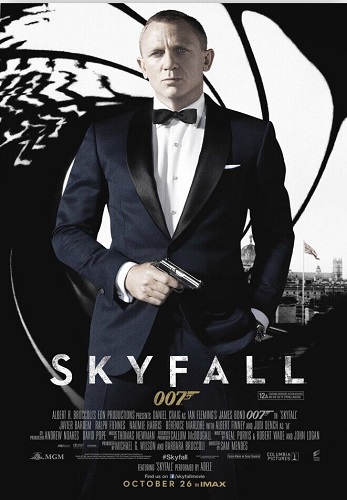
The last James Bond movie I saw starred Timothy Dalton. I think it was The Living Daylights, I might be wrong. I’ve honestly never seen a Bond film with Daniel Craig as 007. That being said, the music today comes from his movie Skyfall. The reason? Adele was born on this day in 1988.
Bond films are known for their amazing title songs. Live and Let Die from McCartney, Goldfinger from Shirley Bassey, and A View To a Kill from Duran Duran for example. So how did Adele get involved in the title song? Thanks to songfacts.com – here’s what happened.
Director Sam Mendes told Yahoo that at first, Adele wasn’t quite sure how to go about composing the movie theme. He explained: “She came in very early before we started shooting and her main concern was, ‘I write songs about myself, how can I make a ‘Bond’ song?’ My answer was, ‘Just write a personal song!'”
Adele teamed up with Paul Epworth to pen the sultry ballad. Said the singer: “I was a little hesitant at first to be involved with the theme song for Skyfall. There’s a lot of instant spotlight and pressure when it comes to a Bond song. But I fell in love with the script and Paul had some great ideas for the track and it ended up being a bit of a no-brainer to do it in the end. When we recorded the strings it was one of the proudest moments of my life.“
Paul Epworth said that finding the right sound for “Skyfall” was a particular challenge. “[The producers] said they wanted a dramatic ballad basically,” he explained. “With having read the script and trying to set the whole thing up in that context, where it happens in the film, there was really only one thing it could be. It was interesting to want to do something that was simultaneously dark and final, like a funeral, and to try and turn it into something that was not final. A sense of death and rebirth.”
After writing the piece of music that Epworth believed could be the tune for the Bond theme, the producer thought, “This could be the song.” Epworth told Hollywood.com that he then rang up Adele, “and said, ‘It might be too dark.’ And she said she loved it.” The pair immediately went into the studio and within 10 minutes she’d put down the first draft of the verse and chorus. “She had the lyrics ready in her head when she drove over. It was the most absurd thing. She’s fast, but it was really quite phenomenal,” he said.
Daniel Craig admitted to Yahoo that he found himself coming over a bit emotional when the song was first played to him: “I cried. From the opening bars I knew immediately, then the voice kicked in and it was exactly what I’d wanted from the beginning. It just got better and better because it fitted the movie. In fact the more of the movie we made, the more it fitted it.”
It was a top ten song in the US and it won Best Original Song at the 85th Academy Awards. It was the first Bond theme to win an Oscar.
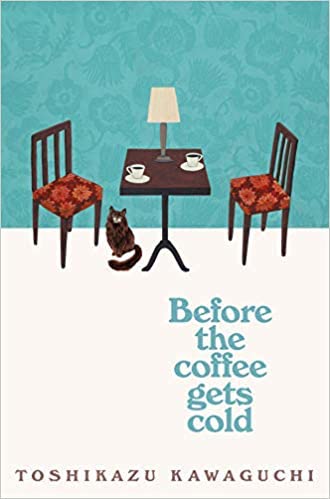
I was in between books, knowing that one I had on hold would arrive in a day or two. I normally would wait to start a book in that situation, but the title of this one caught my eye. When I read the synopsis and saw it involved time travel, I picked it up. The book is “Before the Coffee Gets Cold.”
This was no ordinary time travel book. This was time travel with a set of rigid rules. In most stories, a character goes back (or forward) in time and stays awhile. There is usually some thing they are trying to change (like in 11.22.63) or someone they want to see (like in Bid Time Return – aka Somewhere in Time). In this book, the travelers are well aware that whether in the past or future, they can’t change the present. That is just one of the rules.
Before I go further, take a look at the Goodreads synopsis:
What would you change if you could go back in time?
In a small back alley in Tokyo, there is a café which has been serving carefully brewed coffee for more than one hundred years. But this coffee shop offers its customers a unique experience: the chance to travel back in time.
In Before the Coffee Gets Cold, we meet four visitors, each of whom is hoping to make use of the café’s time-travelling offer, in order to: confront the man who left them, receive a letter from their husband whose memory has been taken by early onset Alzheimer’s, to see their sister one last time, and to meet the daughter they never got the chance to know.
But the journey into the past does not come without risks: customers must sit in a particular seat, they cannot leave the café, and finally, they must return to the present before the coffee gets cold . .
Toshikazu Kawaguchi’s beautiful, moving story explores the age-old question: what would you change if you could travel back in time? More importantly, who would you want to meet, maybe for one last time?
As a coffee drinker, my first thought was, “Just how long does it take the coffee to get cold?” I tried with a cup this morning and it was about 20 minutes. I Googled it and the response was:
“A freshly brewed cup of coffee will take roughly 30-60 minutes to cool to room temperature. This time can vary based on the coffee’s initial temperature, the size of the cup, and the room temperature.“
I think it is difficult to do anything when you are under a time constraint. If I had to go back and time for whatever reason, 20-60 minutes would be gone in a blink of an eye. Would it even be worth it? I’m not sure, I guess it would depend on what I was going back for or who I wanted to see. This is difficult with the set of rules, however.
You wouldn’t be able to go to and watch the Gettysburg address or any other historical event because you can’t leave the cafe. If I wanted to go back to see my mom, the only way that could happen is if she’d ever been to the cafe. Even if things fell into place for you to go back, there is still the time factor. I’m not sure I could focus on anything except that time was ticking away.
With all that being said, it seems like I am really dissing this book. I’m really not, because really, the people who do time travel in the book all get something out of their visit. Maybe it is closure, a last wish, a resolution, or just an answer to a question. They all get something out of it, and it is not a bad book.
The book is apparently the first in a series of five. Will I read the others? Perhaps.
3 stars out of 5 (because I didn’t care for the rules!)
This was first posted on the A Sound Day blog hosted by Dave Ruch:
Once again, Dave from A Sound Day has invited me to participate in his month Turntable Talk feature. I truly appreciate the fact that he always comes up with great topics. Some of those topics are a bit more difficult to write (like last month), and some are quite easy. This month’s topic falls into the latter category.
Dave is calling this month’s round –Turn it on Again! His instructions are very easy: “tell us about your favorite music video, or the one which impresses you most, and why you love it.” As a child who grew up with MTV, I had many that came to mind.
At this writing, I don’t know what the other contributors have chosen to write about. Has someone picked Michael Jackson’s Thriller? What about Take on Me from A-Ha or Buddy Holly by Weezer? I also wonder about Fatboy Slim’s Weapon of Choice, Peter Gabriel’s Sledgehammer and Nirvana’s Smells Like Teen Spirit. Each and every one of them stands out and have appeared on many “Best Music Video” lists.
I’m not sure that my pick would be considered my “favorite.” I also wouldn’t say it “impresses” me most, but I do enjoy watching the craziness of it. I suppose readers may be surprised at my choice, as I don’t really write about many “rock” songs. I suppose that this song wouldn’t fit into that category, but the singer qualifies as a rocker (at least most people think so).
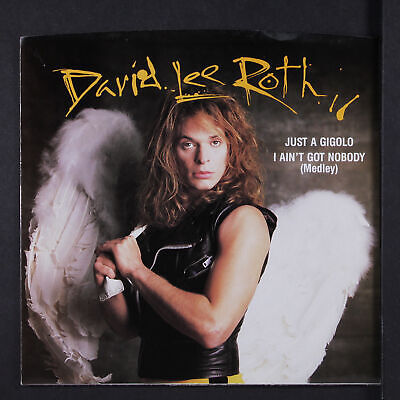
“The band as you know it is over!” That is what Eddie Van Halen told Rolling Stone in mid-August 1985. This confirmed the rumors of division in the band with David Lee Roth. Eddie also made sure to add that “Dave left to be a movie star.” With that, Dave went on to explore a solo career. In late 1984, Dave released a cover of the Beach Boy’s California Girls. He followed that with another cover song (medley actually) from the great Louis Prima.
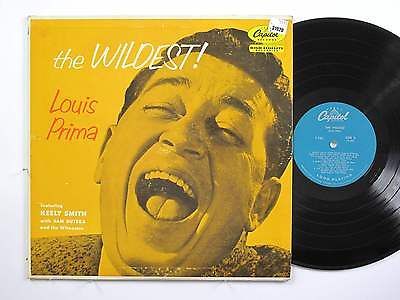
In 1956, Prima took the song Just a Gigolo and paired it up with I Ain’t Got Nobody. He used the song in his 1950’s Las Vegas act with Sam Butera and Keely Smith. The success of that act gained Prima a recording deal with Capitol Record, which hoped to capture on record the atmosphere of his shows. The first album, titled The Wildest! was released in November 1956, and opened with “Just a Gigolo”/”I Ain’t Got Nobody.” It became Prima’s signature number and helped relaunch his career.
Roth’s version is really almost a note for not copy of Prima’s record. By itself, it’s just an ok cover song. However, with an entertaining video that features celebrity look-alikes, beautiful women, and Dave being … Dave, it becomes something much much more.
The video for the song begins with Dave asleep at a news desk as his video for “California Girls” plays behind him on the monitor. The crew calls his name and he wakes up. After his talk, the freaky crew members begin to speak to him. They are right in the camera, so the viewer sees this from Dave’s perspective in this sequence. It’s actually kind of disturbing. The intro to the video is almost two minutes long before the song actually begins.
When it does, Dave is off dancing through the studio. We see him showing up at a talk show, walking through the backstage area among Vegas showgirls, astronauts, pimps, pirates, monsters, cheerleaders, hula dancers, and the police. All of this happens before you really get to the “meat and potatoes” of the video.
It is there that Dave begins parodying videos from Michael Jackson, Cyndi Lauper, Billy Idol, Richard Simmons’s “Sweatin’ to the Oldies” videos (Davercize!), Willie Nelson, and Boy George. As he appears in each of the videos, he winds up wrecking them. It is almost like watching a cartoon. It’s utter chaos, but a fun chaos (unless you count the priest who has a heart attack because of Dave’s dancing.)
The video is like a snapshot of the 80’s. It’s funny to imagine Dave crashing into a Willie Nelson or Cyndi Lauper video. As the “Nostalgic Italian,” I appreciate the nostalgia that the video presents. It is more powerful now than it was in 1985.
Eventually, MTV edited the 2 minute intro out, and just played the song portion of the video in rotation. I think that is how I first saw the video. When I searched for it to post in this blog, I found the full video. I honestly had forgotten all about the intro, but seeing it again was a hoot. Watching Dave do his “over the top” announcer made me think of so many of those DJ’s on the radio who literally puke every thing they say.
Back in one of our first rounds of Turntable Talk, we discussed music videos and whether they hurt radio. To me, I love the fact that a music video can convey the story of a sad song or add a whole lot of fun to another. With this video, Dave pokes fun at other videos, which only makes his more enjoyable to see.
I could be wrong, but it is possible that Weird Al Yankovic looked back to this video as inspiration for his UFH video. In Al’s Video, (in between clips from the movie) he pokes fun at Guns and Roses, Prince, George Michael, Peter Gabriel, ZZ Top, Billy Idol, The Beatles, INXS and the Talking Heads!
Thanks again, Dave for asking me to take part in this feature. I know that I really look forward to your topics and enjoy writing my response to them. I am already looking forward to next month.
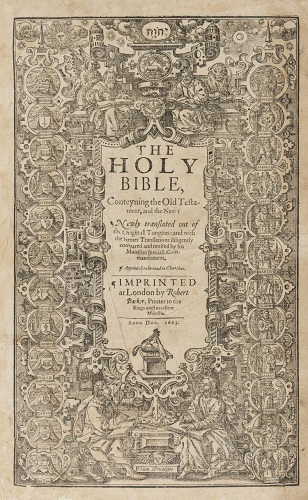
414 years ago today, the King James Bible was published for the first time in London, England. It was translated from the Majority Text (or Received Text), which was the text used by Bible believers for thousands of years.
The King James Version of 1611, also known as the Authorized Version of the Bible, “has been proven throughout history to be the greatest of all English translations.” The beautiful English prose contained in the King James Bible has had supreme influence in society, and is widely considered to be the greatest literary masterpiece known to man.
When King James the Sixth of Scotland succeeded Queen Elizabeth the First of England after her death, many different translations of the Bible were in existence, including the Bishop’s Bible, the Great Bible, and the Geneva Bible. To settle various religious grievances, King James called the Hampton Court Conference in January of 1604. During the Conference, Dr. John Reynolds, a Puritan leader and Oxford scholar, “moved his Majesty, that there might be a new translation of the Bible, because those which were allowed in the reigns of Henry the Eighth and Edward the Sixth were corrupt and not answerable to the truth of the Original.” King James then replied, “I wish some special pains were taken for an uniform translation, which should be done by the best learned men in both Universities, then reviewed by the Bishops, presented to the Privy Council, lastly ratified by the Royal authority, to be read in the whole Church, and none other.”
King James I of England
The king commissioned a new English translation to be made by 54 revisers representing the Puritans and Traditionalists. Due to death and other circumstances, 47 scholars and theologians wound up working on it. They took into consideration: the Tyndale New Testament, the Matthews Bible, the Great Bible and the Geneva Bible. The great revision of the Bible had begun.
From 1605 to 1606 the scholars engaged in private research. From 1607 to 1609 the work was assembled. In 1610 the work went to press, and in 1611 the first of the huge (16 inch tall) pulpit folios known today as “The 1611 King James Bible” came off the printing press.
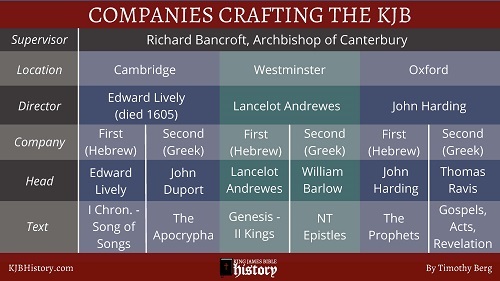
The process was a thorough one. These 47 men were organized into six Companies, two Companies at Cambridge, two Companies at Oxford and two Companies at Westminster. Each Company was given a portion of the scripture to translate. (Westminster was given Genesis – II Kings and Romans – Jude. Oxford was given Isaiah – Malachi, Matthew – Acts, and Revelation. Cambridge was given I Chronicles – Song of Solomon and the Apocrypha.)
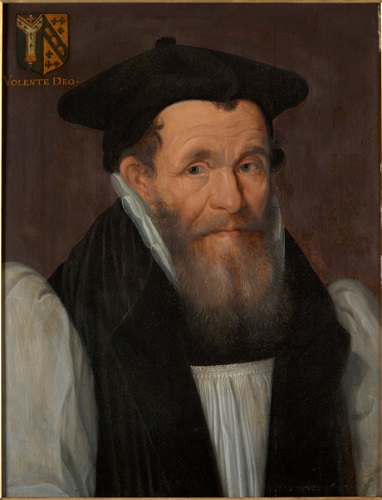
Richard Bancroft
Richard Bancroft came up with a set of rules that the translators were to follow. The process was guided by these rules. Rule #8 stated:
Every particular Man of each Company, to take the same Chapter or Chapters, and having translated or amended them severally by himself, where he thinketh good, all to meet together, confer what they have done, and agree for their Parts what shall stand.
First, each one of the men from the company took a certain part. Then, privately, each individual member would go home and study and develop a proposed translation. Then they would get together as a Company and would review each copy. I’d give you my copy, and you’d give me yours, and we’d review and compare them until that Company of men came to the conclusion that “here is what we want to do.“
Bancroft’s Rule #9:
If any one Company hath dispatched any one book in this Manner [in other words, when they get through], they shall send it to the rest, to be considered seriously and judiciously, for His Majesty is very careful in this Point.
Next, each of the Companies (two at Oxford, two at Cambridge and two at Westminster) would all go home and study. They would take the portion assigned to them and study it. Each man would take all these different versions, the Greek and the Hebrew, and then they would come together. For example, each man would say, “Here’s what I think Romans through Jude ought to look like.” Then they would all come together as a committee and compare what each one has done individually. In doing that they arrived at what the committee thought the translation ought to look like.
When these people finished with their section, they sent it to every other committee. Each of the committees reviewed what each of the other committees have done.
There are revisions, revisions, revisions, reviews, reviews, reviews. Everybody works independently and then everybody gets together, and they work together and hash out their differences. It is checked and checked again. The work isn’t done by just one or two guys. You’ve got a bunch of guys sitting there working – one looks at it, another looks at it, everybody looks at it until they feel they have it right.
Bancroft Rule #10:
If any Company, upon Review of the Book so sent, doubt or differ upon any Place, to send them Word thereof; note the Place and withal send the Reasons, to which if they Consent not, the Difference, then to be compounded at a General Meeting, which is to be of the chief Persons of each Company, at the end of the work.
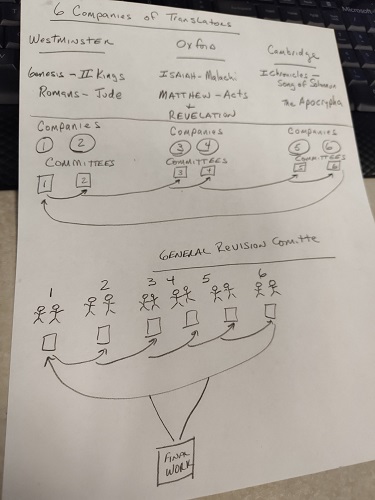
The process is still not finished. Finally, from each company/committee two men were selected to represent their group. Two men from all 6 companies (12 men total) and form a General Revision Committee.
Basically what they are saying is, “Before we get through, we’re going to have one big meeting. Two men from each of these committees are going to bring their committee’s work to this General Revision Board. That General Revision Board is going to review and issue the final version.
In early 1610, the twelve-member critical Board of Review met at Stationer’s Hall in London. The work of this Committee of twelve men was the only time that anybody in this whole process ever got paid anything. None of these other men got paid for what they were doing. They only had the privilege of being involved in a tremendous undertaking. The men on the Revision Committee were paid for their work by those that published the translation.
Here is a poor drawing of the process:
The entire process was done openly and not in secret, as some want to say. The public even had a chance to be a part of the process if they were qualified. According to Bancroft’s rules:
Rule #11
When any Place of Special Obscurity is doubted of, Letters are to be directed, by Authority, to send to any Learned Man in the Land for his Judgment of such a Place.
In other words, when they had something they were arguing about, and they couldn’t figure it out, but there was somebody over on the other side of the country who might have the answer, they were to go ask that guy to give them the answer and get his input. What Rule Number 11 did was to provide that specific help was to be sought for. “If you guys have an argument about a difficult passage, you should go find out if anybody who is not on the Committee knows.” This thing is not a closed group. Anybody in England can help, and you guys are supposed to go out and get them.
Rule #12 states:
Letters are to be sent from every Bishop to the rest of his Clergy, admonishing them to this Translation in hand; and to move and charge as many as being skillful in the Tongues; and having taken Pains in that kind to send this particular Observation to the Company, either at Westminster, Cambridge or Oxford.
If you knew something about these things, you weren’t supposed to keep it to yourself. The King put out a proclamation to be read in all the churches. He sent a letter to every preacher in England, and he saidbasically, “If you have anybody in your church who’s a good Bible translator, send him our way if he’s got some information and send it down here! “ In essence, the whole country was getting involved.
Published in 1611, the King James Bible spread quickly throughout Europe. Because of the wealth of resources devoted to the project, it was the most faithful and scholarly translation to date—not to mention the most accessible.
“Printing had already been invented, and made copies relatively cheap compared to hand-done copies,” says Carol Meyers, a professor of religious studies at Duke University. “The translation into English, the language of the land, made it accessible to all those people who could read English, and who could afford a printed Bible.”
Whereas before, the Bible had been the sole property of the Church, now more and more people could read it themselves. Not only that, but the language they read in the King James Bible was English, unlike anything they had read before. 400+ years later, and it is still in the hands of believers.
Sources: Textus Receptus Bibles (website), Britannica (website), Grace School of the Bible (Personal notes)
Back when I worked at B-95 in Flint, for whatever reason, my boss and I always greeted each other the same way. Oddly enough, when we call each other on the phone, we still do it. I’ll say, “Brian Cleary, ladies and gentlemen!” and he says, “Keith Allen Everybody!” (or vice versa)
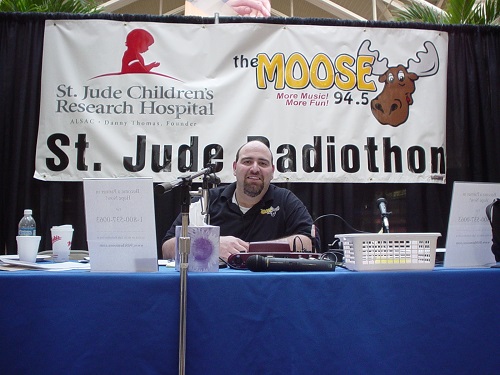
Our morning guy from B-95, JB, wound up doing mornings at the Moose shortly after I started working there. He was aware of this exchange and used it on occasion, so I’m thinking he was responsible for one of today’s photos.
The first few years we did our St. Jude radiothon, we broadcast from center court of the local mall. One year, they rented a sign to show the running tally of the money we raised. Sometime shortly after I started my show, I looked over and noticed the sign.
I couldn’t help but laugh out loud.
Eventually, they moved the radiothon back to the on air studio. All the stats showed that stations raised more money this way. Less distractions, I suppose. I truly missed those mall broadcasts, though.
I loved the interaction with listeners. I loved seeing all the silent auction items that people could bid on. I loved being out in public doing the show. It gave me an energy that I didn’t get while in the studio. You get to watch people watch you and react to what you are doing on the air. It was unique and I loved every second of it.
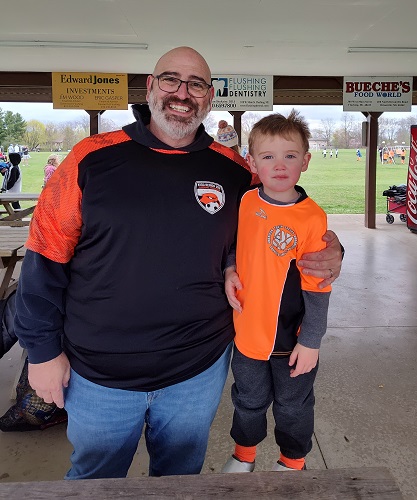
On Friday of last week, we had temperatures in the mid to upper 70’s. On Saturday, they were in the upper 30’s and low 40’s. There was also a lot of wind, so it felt colder than that. This was the first day of soccer for Andrew and me.
He was so excited that I was going to be coaching his team. There was another dad who volunteered, too. Neither of us know what we’re doing but we tried to keep it fun. We played red light green light (they kick the ball around fast/slow/stop), Simon says (Put your knee on the ball, kick a goal, etc…), soccer bowling (the have to knock down the cones with the ball), and “Ouch” (The kids job was to kick the ball at the coaches and when we got hit, we had to say “Ouch”).
It was so cold out, but the kids did a good job. We held their attention for almost the entire hour. Some kids were too cold and left, but that’s ok. Completely understandable.
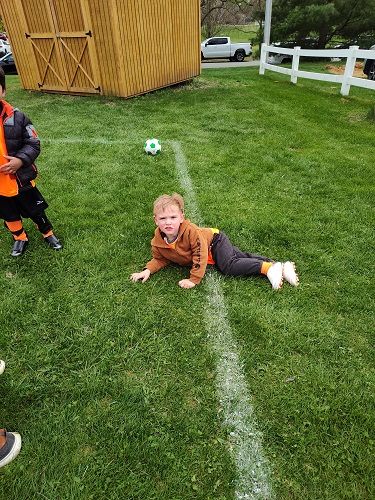
Ella was there with us and she played all the games, too. She actually played more games than Andrew. Why? Because at some point he decided he was done.
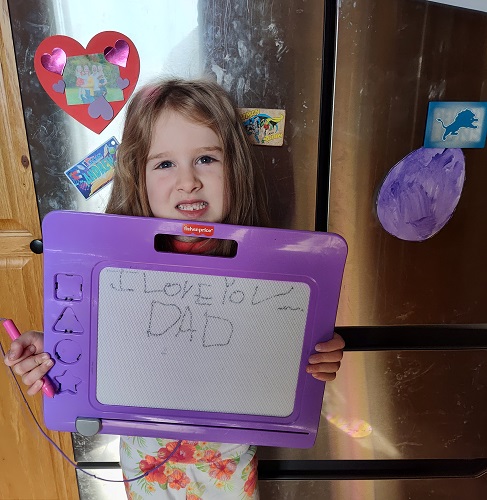
When we got home, we had hot chocolate and relaxed. I made myself some coffee and Ella came up behind me and said, “Dad, look.”
She is such a sweetheart.
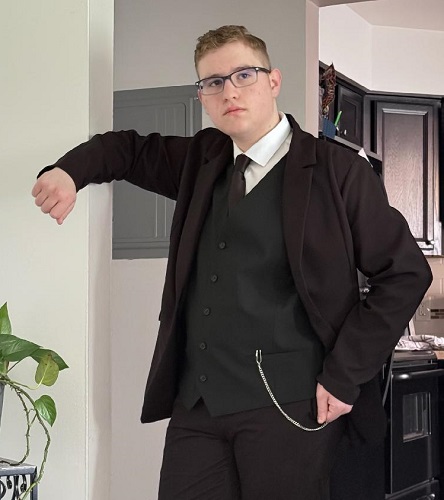
Saturday night was the Senior Prom for my second oldest. At one point he wasn’t going to go, but later decided to go. I asked him to send me a picture of him all dressed up. He looked great!
The first thing I noticed was the watch chain. He confirmed that it was indeed a pocket watch. I always wanted one to wear when I dressed up, but never got one.
Hard to believe he is in the final weeks of high school.
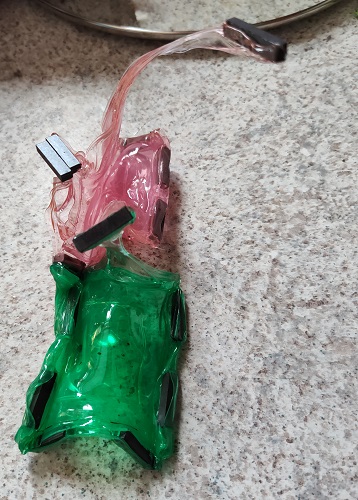
Sunday morning, I made some muffins for breakfast. I mixed up the muffins and placed them in the muffin tin to bake. After the timer went off, I pulled them out of the oven. When I looked in the oven, there was something melted on the rack.
It took me a second, but I realized what it was. My kids love playing with these magnatiles. If you look at the photo, you can see the magnets. They use them to build things.
Thank goodness the magnets, when it melted, stuck to the rack of the oven. Apparently, Andrew put the tiles in the drawer and when we put the tin away, didn’t see them. They were stuck to the bottom of the tin.
Monday it was beautiful. On the way home from school, I took the kids to get ice cream. We were the only ones there at 12 noon. It was nice to just hang out with them enjoying a treat.
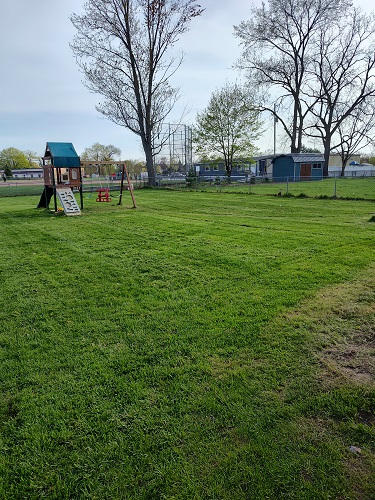
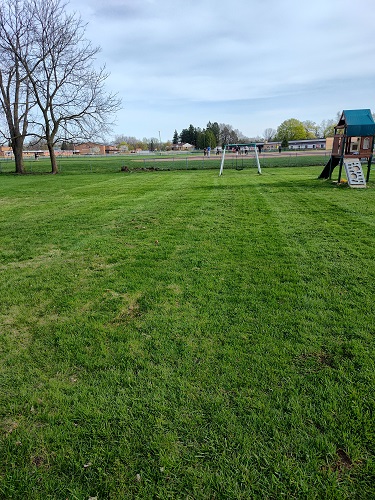
To wrap up the week, I was able to get out and mow the lawn for the first time. There is always something about that first cut that makes me feel good.
This is sort of a continuation of the Music of My Life feature. It focused on music from 1970-2025. It featured tunes that have special meaning to me, brought back a certain memory or a tune that I just really like. I found that with the first three decades, there were songs that I didn’t feature. So I sat down with my original lists and selected some songs that “bubbled under,” so to speak.
I figured a good way to present them was to focus on a decade. 10 years = 1 song per year = 10 songs. Last week we looked at the 70’s, and I thought we’d stay there one more week before moving on to the 80’s. So, let’s check out a few “Decade Extras.”
A hat tip to songfacts.com for much of the information.
1970
I suppose it wouldn’t be right to leave out the number one song for the entire year I was born, so we start off with Simon and Garfunkel’s Bridge Over Troubled Water. Paul Simon wrote this about providing comfort to a person in need. It started as a modest gospel hymn but became more dramatic as he put it together.
He wrote the song with just two verses, considering the song “a little hymn.” Art Garfunkel and producer Roy Halee heard it as more epic, and convinced him to write an extra section, which Paul did in the studio (the “Sail on, Silvergirl part”). This was very unusual for Simon, as he usually took a long time writing his lyrics. The song got a grand production, and after hearing it, Paul thought it was too long, too slow and too orchestral to be a hit. It was Clive Davis at Columbia Records who heard the commercial appeal of the song, and insisted they market it like crazy and use it as the album title.
In 1971, this won five Grammy Awards: Song of the Year, Record of the Year, Best Contemporary Song, Best Engineered Record, and Best Arrangement Accompanying Vocalists. The album also won Album of the Year.
My mom loved this song and I remember her singing along with it on car trips.
Bridge Over Troubled Water
1971
Many folks poked fun at Ringo Starr when he began a solo career. Of the four, people thought he was the least likely to have success as a solo artist. He proved them wrong and he still tours to this day. One of the songs that did well for him was It Don’t Come Easy.
Ringo is the only songwriter credited on this one, but he had a lot of help from George Harrison. George was very generous in giving his former band mate full writing credit. The track (less Ringo’s vocal and horn parts) was already completed when Harrison gave it to him, and it included a scratch vocal by George.
Fun Fact: Peter Ham and Tom Evans of Badfinger sang on the intro to this song (“It don’t come easy, ya know it don’t come easy”). Badfinger was signed to The Beatles’ Apple Records, and helped out George Harrison’s first solo album.
It Don’t Come Easy
1972
Growing up there were a lot of Van Morrison songs that I liked, but never knew it was him. It wasn’t until I worked at my first radio station that I discovered he sang Moondance, Domino, and Jackie Wilson Said.
Listening to Jackie Wilson Said, I would have never guessed that the recording was unorganized. However, according to guitarist Doug Messenger the session was chaos! He told “Uncut”:
“Jackie Wilson Said was totally disorganized. He didn’t know where anything went, and no one seemed to know what to do with it. Van went away and the band worked on the basic structure. When he came back we went through it a couple of times and he was real happy because all of a sudden it seemed to be making sense. He said, ‘I think it’s coming together,’ which is what he always said when he felt it was working.”
“I remember he said to the drummer, Ricky Schlosser, ‘When I sing “boom boom boom,” hit the tom and the kick drum at the same time.’ We ran through it once or twice, and the first recorded take is what’s on the album. It was all over the place, but somehow it worked. Even when he ad-libbed at the end -‘One more time’- somehow we all kept it together. At the end, Van was smiling like a Cheshire Cat. ‘I think we got it!’ We tried a second take and – of course – it all fell apart.”
Give it a listen and see if you can hear the “disorganization.”
Jackie Wilson Said
1973
The next song makes me think of my oldest son. His mother would play songs from her iPod around the house and one of those songs was Let Me Be There by Olivia Newton-John. There would be times where he would take her iPod and listen to it in headphones. I still laugh when I think about him singing loudly and off-key “Let me be there in your mornin’, let me be there in your night!” It was really more of a scream than singing.
The was Newton-John’s breakthrough single in the US, where it landed in the Top 10 on the Hot 100, the Country chart, and the Adult Contemporary chart. At the time, she was still living in Britain and didn’t travel across the pond to promote the single or the album. Turns out she didn’t need much promotion at all. When the song hit it big, people had no idea who she was. That actually was a relief to the singer. “The one great thrill I had in America was that my music was accepted before I was ever seen, before I was on television, before I did live appearances,” she told Rolling Stone. “Therefore I had to hope it was my music and not my face.”
Keep in mind that this was five years before she starred in the movie musical Grease. She would win her first Grammy Award for song. This was surprising because she was up against country veterans like Tammy Wynette and Dottie West. She won for Best Female Country Vocal Performance.
Let Me Be There
1974
I was lucky enough to have never walk in on my parents when they were being intimate. My friends who have say it was a truly traumatic experience. On the TV series That 70’s Show, that exact thing happens to Eric, the main character. As he opens the door, Tell Me Something Good by Rufus and Chaka Khan. As a running gag throughout the episode, that song pops up a few times. I think of that episode when I hear this song.
Stevie Wonder wrote the song and recorded it himself on December 13, 1973 – he copyrighted it on January 3, 1974. His version was never released because he gave the song to Rufus, since Stevie was a fan of their lead singer, Chaka Khan.
Chaka Khan tells the story that Stevie was going to bring them a song in the studio, and when he dropped by and played her one he had written, she stunned her bandmates by telling the mighty Stevie Wonder she didn’t like it! So Wonder asked her astrological sign, and when she told him Aries, he delivered “Tell Me Something Good.” According to Chaka, she loved it and they worked out the song together in the studio, although Stevie is the only credited writer on the song.
Fun Fact: Rufus evolved from a group called The American Breed, who had the hit “Bend Me, Shape Me.” They took their name from a column in Popular Mechanics magazine called “Ask Rufus,” later shortened to Rufus when Chaka Khan joined the band in 1972.
Tell Me Something Good
1975
I remember playing Bad Blood by Neil Sedaka when I worked at the oldies station. I had no idea at the time that he had done anything other than those 60’s songs he was known for.
Sedaka wrote this song with Philip Cody. Phil said in a Songfacts interview that it’s his least favorite song. “I went to visit my family and I spent some time with my grandmother, who is an old Sicilian lady. She was telling stories about the lady up the street who used to be a witch, a Strega. And the whole idea of people being good or evil because of what goes on in their blood was just part of the superstitious nature of my Sicilian upbringing that I tried to stay as far away from as I could. (laughing) I just thought it would be an interesting way to approach a lyric: rather than from a place of enlightenment the idea is that love makes us stupid. And that’s where I went. It wasn’t (heavy sigh – pause)… I did it, and I didn’t think I did a very good job on it, and before I had a chance to do a re-write Neil was in the studio with Elton doing the song, and that was it. So I guess the best things are left undone.”
This song turned out to be Sedaka’s biggest hit, reaching #1 on the Billboard Top 100, remaining there for three weeks. He was helped by Elton John, who sang back-up for this song which ensured airplay. In an odd coincidence, this song was knocked out of its #1 position by an Elton John song, “Island Girl.”
Bad Blood
1976
More Than a Feeling was Boston’s debut single. It turned out to be a big surprise hit. Songfacts says: The group’s rise was sudden and unexpected; when “More Than a Feeling” was released, their managers spent a lot of time pitching it to radio stations, which is a very tough sell for an unknown band, but the song is so polished and radio-friendly that many stations put it on the air. It took off, and very soon this unknown band with an album recorded mostly in a basement was a major player on the rock scene.
Boston’s Tom Scholz worked at Polaroid, which made him enough money to buy equipment to create a basement studio. He did most of the recording of the first album there. He actually took a leave of absence from his job at Polaroid to complete the album. Once the album was released, he went back to work.
Songfacts says, “disco was big, so he wasn’t sure his rock record would find an audience. He got very excited when co-workers would summon him to let him know ‘More Than A Feeling’ was playing on the radio. After that happened a few times, he was confident enough to quit his day job.
The song is a classic rock standard and appeared on the soundtrack of the film “FM,” which was the subject of this blog on Monday.
More Than a Feeling
1977
Being born and raised in Michigan, Bob Seger’s music was everywhere when I grew up. When my dad played in a wedding band Night Moves and Trying To Live My Life Without You were songs that they played at gigs.
Mainstreet was a song that was always requested at the station. The actual street Seger sings about in this song is Ann Street, which was off of Main Street in Ann Arbor. Seger told the Chicago Sun-Times: “It was a club. I can’t remember the name of the club, but the band that played there all the time was called Washboard Willie. They were a Delta and Chicago blues band. Girls would dance in the window. They were a black band, and they were very good. That’s where I would go but I was too young to get in. It wasn’t in a great part of town but college students loved to go there.”
This was the second single from the Night Moves album, following the title track. Both songs are very nostalgic and a departure from high-energy rockers his fans were used to hearing. By this time, Seger had been at it in earnest for over a decade and was just starting to break through to a national audience. Live Bullet was his first album to find a broad audience; many who bought it snatched up Night Moves when it came out, and weren’t disappointed. Both albums ended up selling over 5 million copies, making Seger a star.
Mainstreet
1978
Kiss You All Over by Exile was another one of those songs that dominated pop and country radio. It was the perfect crossover song.
In an interview with Billboard, writer Mike Chapman said:
“It’s a very unusual song and is very much about what music in the US is all about in 1978. It’s MOR (Middle Of the Road) soft rock, slightly disco though not pure disco, and has a sensuous lyric line that Americans love. Americans are big lyric listeners and listen to every word.”
It is no surprise that the song has frequently been used as backing music for TV scenes involving various degrees of smooching or similar lip-caressing activities. Songfacts notes that the most creative use of “Kiss You All Over” goes to the Canadian Broadcasting Company’s use of the song in a 2007 montage of hockey players kissing the Stanley Cup. HA!
Kiss You All Over
1979
Many DJ’s will play the song Single Ladies when they do the bouquet toss at weddings. I always love using Ladies Night by Kool and the Gang. It had a funky beat that the ladies would dance to as they waited for the bride to toss her flowers.
Songfacts notes that disco was dying when “Ladies Night” was released at the end of 1979. That didn’t stop Kool & the Gang from using a disco groove on this track and mentioning the “disco lady” and “disco lights” in the lyrics. The song mixed in enough of their funk flourishes to stand out from the pack and bring them into the ’80s – it reached its chart peak of #8 in America the second week of 1980.
Like most Kool & the Gang songs, every member of the group is credited as a writer. “Ladies Night” started with a groove their multi-instrumentalist music director Ronald Bell came up with. His brother, Robert “Kool” Bell (the bass player in the group), gave him two ideas for lyrical themes: “Ladies Night” and “Hangin’ Out.” It was no contest – Ronald knew there were ladies nights everywhere, and loved the idea.
They fleshed out the song with the group, but struggled to find a hook. Ronald Bell remembered a piece of advice from his mother. He recalled to Billboard: “My mother, Aminah, had a hand in that one. Because she would say to me, ‘Always give the people nursery rhymes. Give them something they remember.’ She liked the Dells’ song, ‘Oh What A Night,’ so I put that in. When we were finished, we were all in tune that this was it. We just didn’t know how big!”
Of course, younger folks will always think of Jon Lovitz in the Wedding Singer when they hear this one.
Ladies Night
Yes, there are plenty of great songs I missed from the 1970’s, but next week, we’ll head to the 80’s. I’ll feature ten songs, one from each year of the decade. I hope you will join me next week.
Happy 92nd birthday to the Red-Headed Stranger – Willie Nelson!
Willie Nelson is a country music legend. Whether you love or hate his music, there is no denying his legendary status. Willie is one of the most prolific songwriters and is responsible for many classic country hits. He wrote many songs that became hits for other singers including, Funny How Time Slips Away (Billy Walker), Crazy (Patsy Cline), Pretty Paper (Roy Orbison), and Hello Walls (Faron Young).
In 1962, he recorded his first album, “… And Then I Wrote”. The success of that album led to him signing with RCA Victor in 1964 and joining the Grand Ole Opry in 1965. He had some minor hits in the 60’s and early 70’s, but because of his mediocre success, he retired and moved to Austin, Texas in 1972. He didn’t stay retired long, as he signed a new deal with Atlantic Records in 1973 and began singing “outlaw country”. In 1975, he signed with Columbia Records and released The Red Headed Stranger album. Thanks to that album, his 1973 album Shotgun Willie, and the classic 1978 album Stardust, Willie became one of the most recognized names in country music.
Willie’s music has been a part of my life since I was a little boy. As I have said in previous writings, I can go to any Willie album and there is a song on it that will remind me of some life event I was dealing with or going through at that time. I can revisit an album later and find yet another song that I can relate to at that particular moment.
Last year, Willie released his 76th studio album. With 76 albums of songs to choose from, what could I possibly feature here? It is not an easy decision. I looked at song after song and any one of them could work. On the Road Again? Always On My Mind? Blue Eyes Crying in the Rain? There are plenty of hits.
I have often found that the songs that were never released as a single were ones I really connected with. One of those songs is If My World Didn’t Have You. If you are in a relationship, this beautiful song is one you have to hear. After my wife and I got together, it really said it all. It was one song that I suggested to be “our song.” Willie’s vocal and the amazing arrangement make it one of my favorite love songs.
If My World Didn’t Have You
My world has midnight and daylight and sunsets and dawn.
And your eyes, like two stars that I dream upon.
Sometimes I’m losing and sometimes I win.
Life likes to make me start over again.
And I don’t know what I would do, if my world didn’t have you.
Chorus
If my world didn’t have you,
Then I’d have no reason for my dreams to come true.
And somethings would be too much to go through
If my world didn’t have you.
Verse 2
We have good days and bad days and comfort and pain
It all has a balance like sunshine and rain
You share with me the blues and the breaks
And you are the key to the sense it all makes
No, I’d never find my way through, if my world didn’t have you
Chorus
If my world didn’t have you,
Then I’d have no reasons for my dreams to come true.
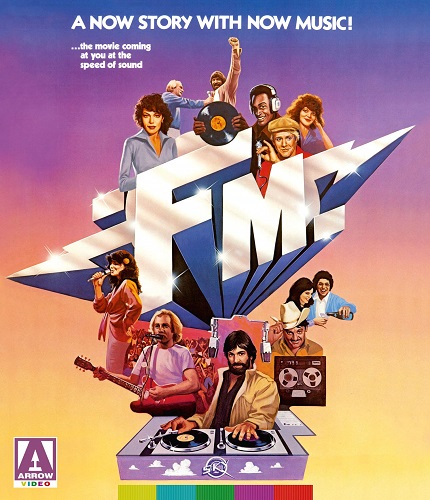
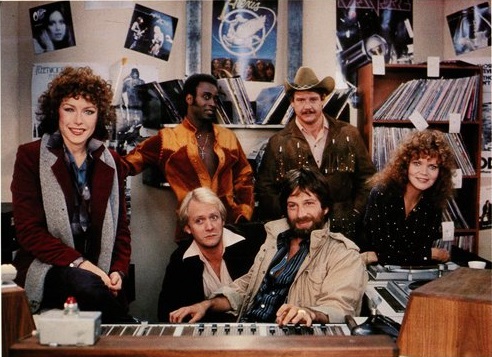
It was on this day in 1978 that “FM” premiered in theaters. As a former radio DJ, I knew it was just a matter of time before this movie would pop up in this feature. I’m surprised that it hasn’t come up already, as it has one of the best movie soundtracks!
Version 1.0.0
The film starred Michael Brandon, Eileen Brennan, Alex Karras, Cleavon Little, Martin Mull, Linda Ronstadt, Jimmy Buffett, and REO Speedwagon (just to name a few). Despite what they say, this film was not the inspiration for WKRP in Cincinnati (which was in the works at the same time).
Honestly, it’s really not that great of a movie. It’s billed as a comedy, but it’s not something you’ll be belly laughing at. It also has some serious moments that are a bit forced. Then there is the lackluster “feelgood” ending that feels more fake than good. Thank goodness for the amazing soundtrack!
The soundtrack is like a snapshot of 1978 rock radio and is loaded with hits. It is so difficult to choose just one song to play here, as there are so many to choose from. Bob Seger, Steve Miller Band, Tom Petty, Foreigner, The Eagles, Boz Scaggs, Linda Ronstadt, Jimmy Buffett, Billy Joel, Joe Walsh, and even Queen! I decided to choose a band that I haven’t featured on the blog before – Steely Dan.
I suppose that it makes sense to pick the movie’s title song, FM (No Static At All). Walter Becker and Donald Fagen wrote this song specifically for the film. Fagen told American Songwriter magazine: “There was a film called FM and we were asked to do the title song,” he said. “And I said, ‘Does it have to have any specific words?’ And they said, ‘No, it just has to be about FM radio.’ We wrote that very quickly, I remember, in one or two days. And we also recorded it very quickly, too. Johnny Mandel came in and did the string chart. It was fun to meet Johnny Mandel.”
The song sold a ton of records and was actually much more popular than the movie. Fagen felt the song could have been a bigger hit if the movie had been more successful. “The song was a hit, but I think we should have seen the movie before we committed ourselves,” he said in 2007. “As you know, it wasn’t a very successful movie.”
As a piece of music, it has a lot going on. Look it up on Wikipedia and the description sounds like a music theory class! You have an overture to start, arpeggios, tonal chords, thirds and fifths, a string section, major chords and minor chords, and all kinds of key changes. It’s actually cool to hear in headphones.
When the movie came out, FM radio listening was on the rise. As the song says, it had less static than AM radio. What made FM radio stations popular was their ability to take chances by playing lesser known bands and album cuts. Listeners couldn’t get enough of it.
In the 1970’s, Dean Martin would host celebrity roasts. They would have a man or woman of the hour and stars would get up and roast that person. It was much like the Friar’s Club Roasts, but cleaned up for national TV. Roastees included Johnny Carson, Jack Benny, Bob Hope, Jackie Gleason, Frank Sinatra and many others.
In recent years, Comedy Central resurrected the celebrity roasts. Because it was a cable channel, the jokes and insults could be a dirty and foul as they wanted to be! Roastees included Bob Sagat, Rob Lowe, Alec Baldwin, William Shatner and more.
I have friendships that are 40-50 years old and we always poke fun at each other, insult each other, and throw barbs back and forth. These things, according to a new study, are probably why we’ve remained friends for so long!
A recent study found that friends who joke around and lightly roast each other are up to three times (300%) more likely to be honest and loyal. The reason actually makes a lot of sense.
This kind of playful teasing is actually a sign of a deep connection, rooted in trust and mutual respect. It shows a level of comfort where both people know it’s all in good fun—and no one gets hurt.
With these friends, nothing is off limits. The jabs are always said in fun and with love. When they call me “cue ball” because of my bald head or “Dago” referencing my Italian heritage, it never bothers me. I laugh along with them. I’ve tossed my own insults at them, too.
Phone calls will usually start with some sort of silly name or jab. Meetings always start with a hug followed by, “Man, you look terrible,” or something to that effect. We’ve all come to expect it from each other.
The old saying goes, “With friends like this, who needs enemies?” We may sound like enemies sometime, but the friendship is loyal and true!















 Various Ramblings of a Nostalgic Italian