Today would have been my grandma’s 100th birthday. She is someone that I truly miss a lot.
We’d go to her house every Sunday at noon for “dinner.” We’d listen to or watch the Tiger’s games during the summer. Every Christmas Eve we spent at her house. I’d always call her to ask her what we were having for dinner and put her on the radio. She was your typical stubborn Italian grandma. I’ve often said that she was a lot like Sophia on the Golden Girls.
As I scrolled through my Facebook memories today, past posts from her birthday were there with photos that bring back a ton of memories.
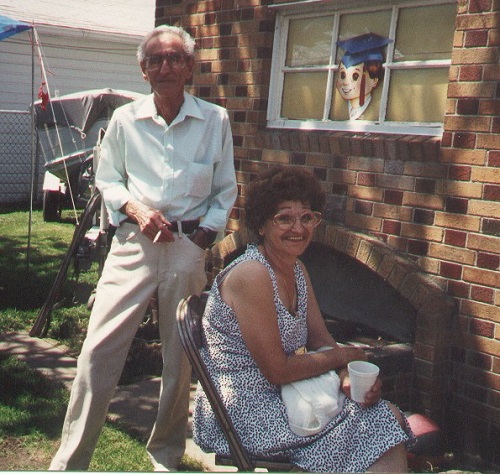
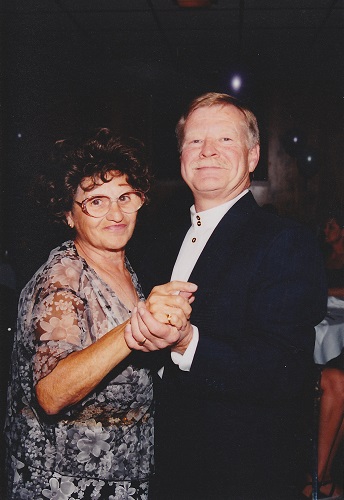
The above photo was taken at a graduation party. This is how I will forever remember my grandparents.
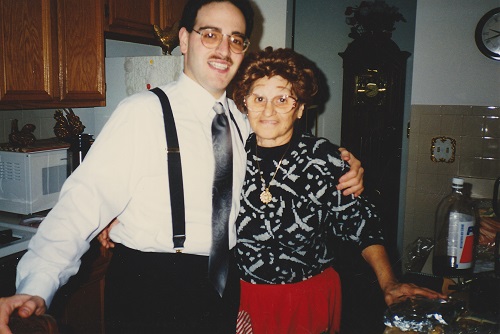
The “Skinny Keith” years. This was taken on one of those Christmas Eve’s after my grandfather had passed away. I know this because…
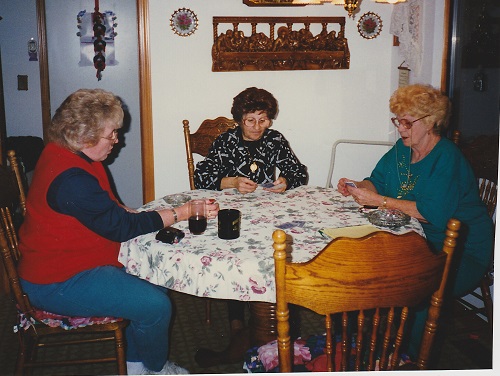
This is my mom, my grandma, and my great Aunt Rose waiting for me to sit back down to play one of MANY hands of Pinochle. I miss those games more than I can express. So much fun.
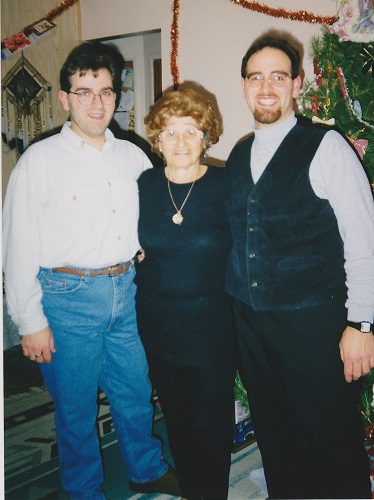
Obviously again, around Christmas. My brother must have come up from Ohio to stay for the holiday. I wish I had more pictures of all of us together.
From my first wedding, my grandma and my Godfather (Uncle Tom) dancing. I love this picture and miss them both!
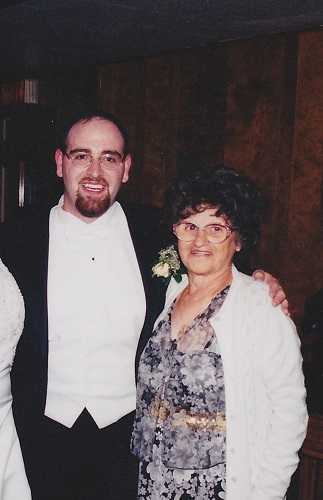
I shared a dance with my grandma to “Lazy Mary” by Lou Monte at this wedding. I was so glad to have that dance. She had a bike horn that day and was honking it throughout the first part of the night. It was beyond annoying, but I guess it was her way to celebrate. When I asked my dad to get the horn away from her, she wasn’t too happy. She danced with me anyway!
You can’t see them, but she is actually wearing bright pink slippers in this picture! She was one of a kind.
She lived long enough to meet her first great grandchild, but I wish she was around to see the others! I would love one more chat with her. I wish I could sit down to another ravioli dinner or play another couple games of pinochle.
I miss her daily, but the memories of her make me smile. Happy 100th, Grandma!
Welcome back to The Music of My Life, where I feature ten songs from each year of my life. In most cases, the ten songs I choose will be ones I like personally (unless I explain otherwise). The songs will be selected from Billboard’s Year-end Hot 100 Chart, Acclaimed Music, and will all be released in the featured year.
This week we enter a new decade – the 80’s! As the final years of the 70’s ticked away, you could already start to hear the “eighties sound” creeping in. As we move through the decade that sound will change even more. What is also interesting is the amount of crossover hits in the years ahead. 40% of my list for 1980 has roots in country music.
So what was my 10 year old self listening to in 1980?
I did not know that the first song would perhaps unknowingly influence my career choice at 10 years old, but it may have. Released in February in the US, Charlie Dore reached number 13 on the Hot 100 charts with her ode to the radio DJ, Pilot of the Airwaves.
The lyrics are from the point of view of a woman who frequently listens, late at night, to a radio disc jockey whom she calls a “pilot of the airwaves”, keeping what has often been called the “dawn patrol”. She admits that she has few real-life friends and that the DJ keeps her as much company as she believes she needs, describing her life and the feelings she has2 surrounding the fact that she considers the radio DJ her only true friend. The DJ does not need to play the selection she has requested; she does hope the DJ will do his best along those lines, adding:
I’ve been listening to your show on the radio, And you seem like a friend to me.
Looking back on this song now, I can tell you that the one thing I learned was most important about being on the air was to have the listener feel as though they were just hanging out with a friend. That was always my goal – speaking one on one and keeping my listener company.
The song played a role in an early relationship, too. Two gals used to call the station all the time and one of them always wanted to hear this song. They decided to bring me coffee one night and I hit really hit it off with one of them. We dated for a while, and when an ex of mine called to ask me to take her back, I did. Ah, young love …. it really gets messy
Pilot of the Airwaves
A songwriter and producer named Steven Greenburg wrote a song when he became bored with Minneapolis and wanted to move to New York, which he called “Funkytown.” Lipps Inc. (pronounced “Lip Synch”) was formed especially for this song. The vocals were done by Cynthia Johnson, who was Miss Black Minnesota 1976. The song reached number one on the charts and stayed there for four weeks!
The group continued to record until 1985 with a changing lineup, but they failed to see the success they’d had with their first hit. Steven Greenburg, however, went on to have great success. He became A&R Vice President for Mercury Records, signing Hanson, among other acts. Later he headed the S-Curve Records label, signing the Baha Men and Joss Stone.
This song shows up in a lot of movies (Shrek 2, History of the World Part 1, Selena) and TV shows (Everybody Loves Raymond, Will and Grace, Malcolm in the Middle, and Friends) and VH1 ranked the song at #37 in the Top 100 One Hit Wonders.
Funkytown
It’s Still Rock and Roll to Me from Billy Joel’s Glass Houses album was one of Joel’s most popular songs and was his first #1 hit on the Hot 100, spending two weeks at the top spot in July 1980. The song spent 11 weeks in the top 10 and was the 7th biggest hit of 1980. It was released on May 12, 1980 – 3 days before my 10th birthday.
In this song, Billy Joel was making a comment on musical styles and trends. At the end of the disco era, the music press began touting the “New Wave” sound, which included bands like The Police and The Cars. Joel thought that this new sound was just a variation on power-pop that had been around since the ’60s. He didn’t have a problem with the music, just the way it was being categorized. “I like it, but it’s not particularly new,” he said.
He said in a Rolling Stone interview that “new wave songs, it seems, can only be about two and a half minutes long… only a certain number of instruments can be played on the record – usually a very few… only a certain amount of production is allowed or can be heard… the sound has to be limited to what you can hear in a garage… a return to that sound is all that’s going on now.”
It’s Still Rock and Roll To Me
Despite the next song being a huge hit in 1980, it is interesting that it goes all the way back to 1959 and has ties to Buddy Holly and the Beatles.
More Than I Can Say was originally written and recorded by Sonny Curtis and Jerry Allison in 1959. Curtis and Allison were both members of Buddy Holly’s band, the Crickets. They recorded it in 1959 soon after Holly’s death and released it in 1960 on their album In Style With The Crickets. The hook was left unfinished at the time, and at the time of recording, the hook was left this way with no lyrics, only the “wo-wo yay-yay,” which became a memorable part of the song. The single went on to become a minor hit in the UK. Curtis considers this song to be one of his most enduring, looking back at the success subsequent artists have had performing it.
It was also covered by Bobby Vee in 1961. Bobby, you may recall, was one of the artists who was chosen to play the remainder of the tour that Buddy Holly, The Big Bopper, and Richie Valens were doing when they died. Bobby’s version never cracked the Top 40 in the US, but was a Top 5 song in the UK.
From Wiki: According to author Mark Lewisohn in The Complete Beatles Chronicle, The Beatles performed “More Than I Can Say” live in 1961 and 1962 (in Hamburg and Liverpool and elsewhere). Author Allen J. Weiner in The Beatles: The Ultimate Recording Guide confirms this, noting that it came from a setlist made at the time by George Harrison. It is unclear who sang the lead vocals and no recording is known to survive.
The best known version of the song was by Leo Sayer. Sayer was looking for an “oldie” for his 1980 album Living in a Fantasy. He saw a television commercial for a greatest hits collection by Bobby Vee and chose the song on the spot: “We went into a record store that afternoon, bought the record and had the song recorded that night.” It spent five weeks at #2 on the Billboard pop chart in December 1980 and January 1981.
What I remember most about this song is that my dad’s wedding band used to play this in the set. My brother and I often heard it over and over as they rehearsed it.
More Than I Can Say
I will always see a dancing gopher whenever I hear the next song. “I’m Alright” is the theme to the movie Caddyshack, and plays at the beginning and end of the film. Kenny Loggins saw a rough cut of the movie before he wrote the song. He used the character Danny Noonan, who was a caddy with hopes for a brighter future, as inspiration.
Loggins told the St. Petersburg Times: “The character was trying to figure out where he fit. But at the same time he wanted people to leave him alone and let him find his own way. So I wanted to grab him and summarize that character, and that’s what ‘I’m Alright’ is doing.”
Do you recognize a familiar voice in the song? Eddie Money was recording in a nearby studio, and Loggins convinced him to sing a line on this song. That’s him in the background singing, “You make me feel good!” Money was unhappy that he never got credit for his contribution. “I’m not a fan of Kenny Loggins to tell you the truth,” he told Cincinnati morning show host Kidd Chris of WEBN in 2014. “I sang the bridge in that. We were label mates, you know.”
Fun Fact: When Loggins launches back into the chorus partway through the song, he stutters on the lyric, singing, “I- I’m Alright,” which was a happy accident. “I actually misjudged the entrance. In the arrangement, I delayed that entrance but I forgot when I was doing the lead vocal.” They decided to leave it in the song.
I’m Alright
Urban Cowboy was released in 1980 and country music was big. There were many country songs that crossed over to the pop charts. The next song, however, makes my list because I loved watching the Dukes of Hazzard every week. The first autograph I ever received was a postcard from James Best ( Sheriff Roscoe P. Coltrane)!
Waylon Jennings was the narrator in the 1975 movie Moonrunners, where he was credited as “The Balladeer.” When CBS created a TV show based on the movie, they asked Jennings to reprise his role as narrator (again credited as “The Balladeer”) and write the theme song. He came up with an outlaw-Country theme that fit the story of Bo and Luke Duke, who were good-hearted rebels from the fictional Hazzard county in The Dukes of Hazzard. Jennings appeared in all 121 episodes of the show until it ended in 1985.
Waylon recorded two versions of the song. The commercially available version receiving radio airplay contains a musical bridge which follows the first verse and chorus. Also, following the commercial version’s second chorus, Jennings makes a tongue-in-cheek reference to his faceless appearance in the credits by singing, “I’m a good ol’ boy, you know my mama loves me, but she don’t understand, they keep-a showin’ my hands and not my face on TV” (a statement referring to the opening shot in the television theme version where Jennings is only shown below the neck playing guitar). This version was a #1 Country hit.
Personally, I think the TV version is the superior version. One of the reasons is that it features Larry McNeely’s banjo work which the commercially available version does not. That banjo really makes a difference! Additionally, the television version’s third verse contains the lyric, “Fightin’ the system like two modern-day Robin Hoods”, which is accompanied by a “Yee-haw!” said by characters, Bo & Luke Duke (John Schneider and Tom Wopat. Fun Fact: The “Yee-haw is Schneider’s vocal used twice.
Here are both versions.
Theme from The Dukes of Hazzard
Another country themed movie from 1980 starred Willie Nelson, Honeysuckle Rose.
On The Road Again was written on the spur of the moment on an air sickness bag when Nelson was on a plane with Jerry Schatzberg, the director of the movie Honeysuckle Rose and its executive producer Sydney Pollack. He recalled to Uncut magazine: “They were looking for songs for the movie and they asked me if I had any idea. I said, ‘What do you want the song to say?’ and Sydney said, ‘Can it be something about being on the road?’ It just started to click. I said ‘You mean like, On the road again, I can’t wait to get on the road again?; They said, ‘That’s great. What’s the melody?’ I said, ‘I don’t know yet.'”
Willie put off writing the melody for months until the day before he went to the studio to cut the song. “I saw no reason to put a melody to something I wasn’t ready to record,” he explained in his 1988 autobiography, Willie. “I knew I wouldn’t have any problem pulling the melody out of the air.”
This was a #1 Country hit for Willie Nelson, and also one of his biggest crossovers, reaching #20 on the Hot 100, his highest placing at the time. It also won him a Grammy Award for Best Country Song in 1981.
On The Road Again
Hit Me With Your Best Shot was the first Top 10 record for Pat Benatar. It was the second single from her Crimes of Passion album. The song was written by guitarist Eddie Schwartz. His inspiration? A pillow.
Eddie says, “I was in a kind of weird therapy when I was in my mid-20s, it was called bio-energetics, I believe. One of the things we did was punch pillows, I guess it had something to do with getting out hostility. I went to a session where we punched the pillows for a while. It all seemed kind of strange, but I remember walking outside of this therapy session and standing on the doorstep of the building I’d been in, this small house in Toronto, and the title just came to me, ‘Hit Me With Your Best Shot.’ I haven’t been to therapy before or since. Maybe I should go back.”
The song can be interpreted as a song about a one-night-stand, but that’s not what its writer had in mind. Schwartz says, “The song is laden with sexual innuendo, but at the core is a song about self confidence. It’s a song saying ‘no matter what you throw at me, I can handle it, I can play in your league.'”
Pat Benatar retired “Hit Me With Your Best Shot” from her live sets in 2022 when she deemed the lyrics inappropriate in the light of a spate of mass shootings in the United States. “We’re not doing ‘Hit Me With Your Best Shot’ and fans are having a heart attack and I’m like, ‘I’m sorry, in deference to the victims of the families of these mass shootings, I’m not singing it.’ I tell them, if you want to hear the song, go home and listen to it,” she told USA Today.
Benatar added that though the title is tongue-in-cheek, she had to draw the line. “I can’t say those words out loud with a smile on my face, I just can’t,” she said. “I’m not going to go on stage and soapbox – I go to my legislators – but that’s my small contribution to protesting. I’m not going to sing it. Tough.”
Hit Me With Your Best Shot
I guess I would call the next song one of my forgotten favorites. You don’t hear it too often anymore, and it was really Terri Gibbs only bonified hit. I’ve always loved the sound of it and remember hearing it a lot on the radio growing up. Somebody’s Knockin’ was released in October of 1980.
When Terri was only six months old, she was diagnosed with retrolental fibroplasia and declared blind. She began playing the piano when she was three. When she was seventeen, she opened up for country legend Bill Anderson. It was another country legend who told her to move to Nashville and pursue a music career – Chet Atkins. She did just that when she was eighteen, but had no luck getting a record deal.
She moved back to Georgia and toured with a trio. She made a demo tape and sent it to record producer Ed Penney of MCA Records who signed her to the label in 1980. Penney was a former Boston disc jockey and a long-time songwriter. He liked her voice on her demo, but he felt she needed stronger material. So he co-wrote “Somebody’s Knockin'” for her and also produced the song. He also became her manager.
This song was a crossover hit upon its 1980 release, reaching No. 8 on the U.S. country charts, No. 13 on the Billboard Hot 100 and No. 3 on the Adult Contemporary charts. Her debut album won her the Academy of Country Music’s Top New Female Vocalist award. She was also the first winner of the Country Music Association’s Horizon Award (which is awarded to emerging artists), and was nominated for a Grammy Award for Best Country Song and Best Female Country Vocal Performance for the song.
In 1987, after struggling to have another country hit, she switched her focus to Contemporary Christian music. Her last album was released in 2017.
Somebody’s Knockin’
It is probably just a coincidence that I am writing this during a Michigan thunderstorm, but it is the appropriate background noise to accompany my last entry of 1980. Eddie Rabbitt was a country singer and songwriter who had a fair share of country and crossover hits. Here is another example of real life inspiring a song.
Eddie first got the idea for the song I Love a Rainy Night in the ’60s when he was sitting in his small apartment on a rainy night. He sang, “I love a rainy night, I love a rainy night” into a tape recorder, but didn’t complete the song until 1980, when he discovered the tape in his basement. He finished the song with the help of fellow songwriters Even Stevens and David Malloy.
The one thing I truly remember about this song was the intro. The song has a very distinctive feature – its rhythmic pattern of alternating finger snaps and hand claps. The snaps and claps were included with the help of percussionist Farrell Morris, who, according to The Billboard Book of Number One Country Hits, mixed two tracks of each to complete the record. I am sure this is what they intended, but I always picture the windshield wipers going back and forth in that rhythm (just like Eddie sings).
This song was a huge crossover hit! Eddie had great success with the song going to #1 on the Pop, Adult Contemporary and Country charts.
I Love A Rainy Night
So that brings my list for 1980 to an end. As I continue to listen to the thunder, I’ll ponder a bit on what is to come next week as we look at 1981. That was another important year for me and the influence of radio in my future. Why? Because I discovered a show that featured one of the best on air personalities to ever grace the airwaves …..
Admittedly, this is an odd pick for me. It is one of those songs that got my attention because of the instrumentation of the song and the unique voice of the singer. It was a song that would play on the radio on one of the stations I would listen to while driving and delivering for the EDS mailroom in between radio gigs. The intro had such an interesting sound to it.
I knew nothing of the artist, never saw the video, and only learned more about the song and the complex life of Fiona Apple recently. She has used real life and events from her life to express some very deep songs. To say that she has experienced a lot of hurt in her life is an understatement. She used music and writing to get through some tough stuff.
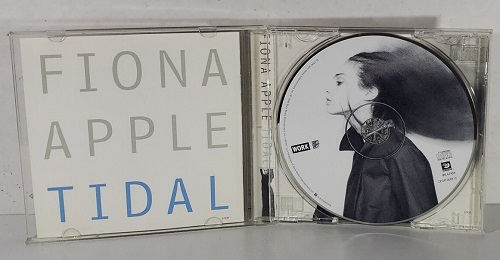
It was on this day in 1996 that 18 year old Fiona Apple released her debut album, Tidal. She got her record deal before she ever played live. A musical prodigy, she was writing songs by the time she was 11. Her high-school years were rough: she lived with her mom in New York City (her parents, never married, split when she was 4), and she felt like an outcast.
Music was her retreat – her way of expressing her internal struggles and making sense of the world. When she realized she would have to choose a profession at some point, she made a demo tape with three of the songs she wrote. Her friend gave it to a music publicist she was babysitting for, and Apple landed her deal. Less than a year later, Tidal was released with one song from the demo, “Never Is A Promise,” on the track list.
Fiona typically works by writing songs that are extensions of her journals, baring her soul for all to hear in a process that can be years in the making. “Criminal” is an outlier: she claims she wrote the song in just 45 minutes to prove she could, and to give her record label (Work, a division of Sony) the hit song they were after.
She sprung into action after one of her friends was giving her grief about how she wasn’t writing more songs. “The next time you see me, I’m gonna have a new song,” she told her. “I can force myself to do the work, but only if someone is right up behind me,” she explained.
With the weight of Sony Music behind her, the highly introverted Apple set out to promote the album with a series of showcases, interviews and performances. It quickly became clear that she will speak unflinchingly about the heartbreaks and horrors that inspired many of the songs on the album. One story she tells over and over is the one about being raped outside her apartment when she was 12 which became the subject of her song, “Sullen Girl.”
In the summer of 1997, she joined the Lilith Fair and in September, she made her mark at the MTV Video Music Awards. In her acceptance speech for Best New Artist (for her song, “Sleep to Dream”), she told the audience, “This world is bulls–t, and you shouldn’t model your life about what you think that we think is cool.” That moment went viral and the record company took advantage of it. Sony responded by releasing “Criminal” as a single, taking advantage of the wave of publicity. The song debuted at #28 on October 4, and peaked at #21 on November 29. The Tidal album went on to sell over 3 million copies.
Fiona has said that the song is about “feeling bad for getting something so easily by using your sexuality” and therefore making her a “criminal.” Depression and self-loathing were a common theme in Fiona’s songwriting at the time. She told Interview magazine: “It’s psychologically and chemically impossible for me to be happy.”
The video was quite controversial and all of the attention that it got (positive and negative) pushed the song onto the pop chart, giving Fiona the only Hot 100 hit of her career. Tidal took off, but the downforce of all the media attention and public appearances finally wore her down, and in March 1998, she canceled her tour.
Apple performed this “Criminal” at the Grammy Awards in 1998, where she won Best Female Rock Vocal Performance for the song. She was nominated for Best New Artist, but lost to her Lilith Fair tour mate Paula Cole.
The Shrek movies were such a big part of my older boy’s childhood. They loved them, and I did, too. I am not ashamed to admit that I am a tad bit excited that they just announced a 5th installment to the series. I can relate a bit to this ogre!
They’ve always seemed to work some classic tunes into the series. Bad Reputation, Funkytown, On Top of the World, I’m On My Way, The Immigrant Song, Holding Out For a Hero, and so many others fit perfectly into the scenes of this fairy tale.
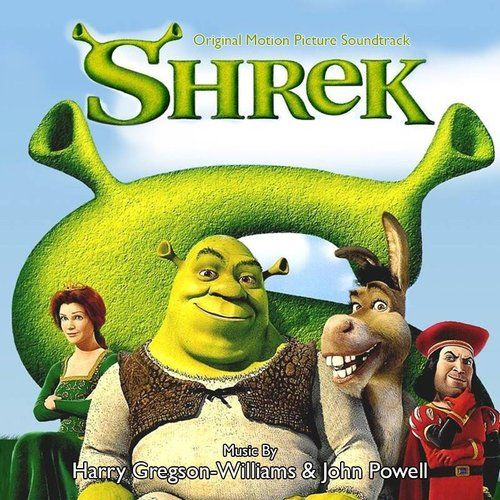
It was a Leonard Cohen song that struck a chord with me from the first movie – Hallelujah. It was released on his Various Positions album and had little success. However, when John Cale’s 1991 version appeared in the 2001 Shrek film it gained a whole new life.
I’m sure there are more now, but in 2008, someone estimated that there were at least 300-350 versions of the song that had been recorded. Randy from Mostly Music Covers may have a more accurate and current number.
According to Cohen, he estimated that he had 80-180 versions of the song that he wrote, mainly because of the various renderings of the same line. After his death, his notebooks showed at least 150 versions.
Cohen was asked the meaning of the song many times and gave plenty of answers. One of them was: “This world is full of conflicts and full of things that cannot be reconciled. But there are moments when we can reconcile and embrace the whole mess, and that’s what I mean by ‘Hallelujah.’”
Another time he stated, “there is a religious hallelujah, but there are many other ones. When one looks at the world, there’s only one thing to say, and it’s hallelujah”. k.d. Lang, who also recorded the song said in an interview shortly after Cohen’s death that she considered the song to be about “the struggle between having human desire and searching for spiritual wisdom. It’s being caught between those two places.“
Rufus Wainwright, who turns 51 today, recorded his version with an arrangement that was almost identical to John Cale’s version. Wainwright’s version was the one that appeared on the Official Shrek Soundtrack, despite the fact that Cale’s version appears in the movie. The soundtrack went on to go 2 times platinum!
I am finding that there is no shortage of books set in World War II. What is really fascinating is that despite the number of them, they all seem to have a unique story line to them. That was the case with the book today.
This was a book I kept seeing come up on Goodreads as well as on a page of Historical Fiction recommendations. There were many rave reviews and positive reactions to it, so when it became available, I grabbed it.
Here is the Goodreads synopsis:
Eva Traube Abrams, a semi-retired librarian in Florida, is shelving books one morning when her eyes lock on a photograph in a magazine lying open nearby. She freezes; it’s an image of a book she hasn’t seen in sixty-five years—a book she recognizes as The Book of Lost Names.
The accompanying article discusses the looting of libraries by the Nazis across Europe during World War II—an experience Eva remembers well—and the search to reunite people with the texts taken from them so long ago. The book in the photograph, an eighteenth-century religious text thought to have been taken from France in the waning days of the war, is one of the most fascinating cases. Now housed in Berlin’s Zentral- und Landesbibliothek library, it appears to contain some sort of code, but researchers don’t know where it came from—or what the code means. Only Eva holds the answer—but will she have the strength to revisit old memories and help reunite those lost during the war?
As a graduate student in 1942, Eva was forced to flee Paris after the arrest of her father, a Polish Jew. Finding refuge in a small mountain town in the Free Zone, she begins forging identity documents for Jewish children fleeing to neutral Switzerland. But erasing people comes with a price, and along with a mysterious, handsome forger named Rémy, Eva decides she must find a way to preserve the real names of the children who are too young to remember who they really are. The records they keep in The Book of Lost Names will become even more vital when the resistance cell they work for is betrayed and Rémy disappears.
An engaging and evocative novel reminiscent of The Lost Girls of Paris and The Alice Network, The Book of Lost Names is a testament to the resilience of the human spirit and the power of bravery and love in the face of evil.
I really enjoyed this one. It was a good story that had things I figured out and a few surprises. As the story wrapped, I was left wanting to know more. Perhaps a sequel? I dunno.
Because of the Microsoft issues yesterday, I got a text from my boss saying I could stay home if I didn’t want to come in. Well, almost everything I do needs a computer, so I stayed home. It was nice to have lunch with the family and, honestly, even nice to be able to grab a nap when the kids napped.
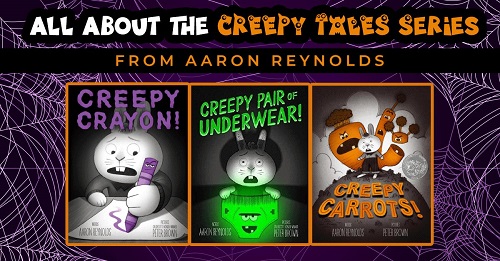
After nap time, we decided to take a quick trip to the bookstore. I found a couple books that they just love and promised to get the third in the series. The “Creepy” series features Jasper Rabbit and some creepy objects.
We found the Creepy Crayon book and began walking through the kids books. It didn’t take long for the kids to find some of the toys and stuffed animals. It took them even less time to find something there that they “had to have.”
I suppose it is wrong for an adult to think that they will get just 5 minutes to look at books for themselves. When I walk into a book store, I want to browse. I want to be able to take pictures of books I want to add to my “To Read” list. Yeah, that didn’t happen.
There was a book that Sam really wanted to read that is unavailable in the Library audio apps. The two of us walked the store looking for it as the kids continued to run around like crazies. When we finally met up she stated that she had found it and that we should probably go after she found a couple more kid books.
That, of course, meant going back to the children’s section. Ella found a Jasper Rabbit stuffy, but when she saw a fox, she wanted that instead.
This fox was like 10 bucks. Andrew, who loves all things construction, found an excavator stuffy. I had no idea that this stuffy is a character from a book, which means they can charge more or something.
I think, and I haven’t compared the two but this may be a bit smaller than the fox. As we walked up to the cashier with 4 kid books, Sam’s book, my $5 magazine, and the two stuffies, I was surprised when they told me the total was like $130!!!!
I looked at Sam when they told me that and she showed me the price of that excavator. Neither of us was smart enough to look at the tag, which read, $29.99! What makes me even more angry was a search for the picture above on the internet showed me a few places where it was $15!
At bedtime, when we read our new books, Ella grabbed her fox and I asked Andrew to get his excavator. “I don’t want it,” he said to me. Urgh ….
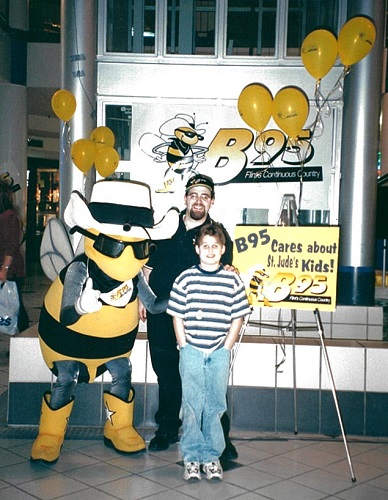
Last week, I posted a couple pictures from the St. Jude Radiothon that we did when I worked at B-95. (The radiothon was to help raise money for kids with cancer.) In that post, I mentioned two very special people who I met because they were local St. Jude patients. I knew that I had photos of them somewhere and I want to share them here.
I remember our St. Jude representative coming up to me and asking if it was ok to interview someone local who had been to St. Jude. Naturally I said, yes. This was tying every thing together. Many people asked why we were raising money for a hospital in Memphis. Most people do not realize that the hospital helps people from all over the country. Not to mention what I mentioned in the last post about all of the research that they share with doctors and hospitals here in the US and around the world.
Shortly before I was to go on the air, I was introduced to Vicky and her son, Kyle. I got to chat with them both a bit before going on the air. Kyle was maybe 8 or 9 at the time, maybe younger. When we went on the air, his mom and I talked about the hospital and all that they experienced. Kyle was a bit shy, but still talked about his stay and the things he liked to do and the music he listened to.
Kyle was a big fan of Shania Twain. When she came through town, I made sure that he got backstage passes. What I didn’t know was that Shania’s people lined all those backstage folks up in groups of 8 and Shania would walk to the groups, stand in front of us and a picture would be snapped. No autographs or anything. I was not about to let that be how Kyle’s backstage experience would be. I stepped out in front of her and introduced her to Kyle so she could shake his hand before they snapped that picture. Sometimes you gotta break the rules!
Kyle is probably in his late 20’s or early 30’s today. Every once in a while I will bump into him in the store as he lives close by. His mom and I are friends on Facebook, and she keeps me up to date on how Kyle is doing.
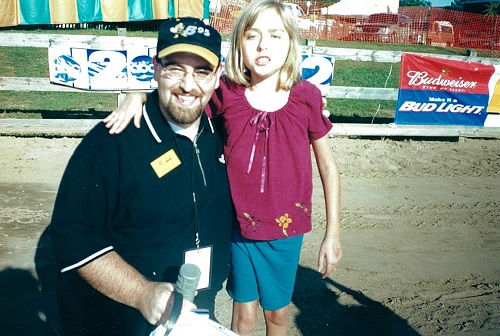
The other special person I met through the radiothon was Allyson. She may have have been about the same age as Kyle, maybe younger. Her mom and dad (Julie and Frank) became good friends with our station’s staff members too. She was a huge fan of country music and actually got some of the country stars phone numbers. She was given a signed guitar by Sammy Kershaw when he played the country fair. This picture may have been from that day.
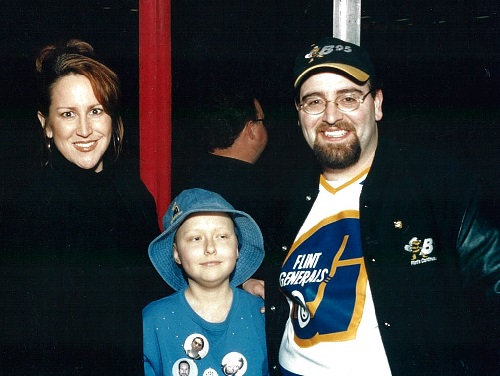
She was a huge fan of hockey and we had a few local hockey teams that played in town. I could always count on seeing her and her family at those games. One game, we tossed out t-shirts or something from the ice at a game. Our team were champs one year and we had the “cup” and we all got to be out on the ice and hold it. Allyson was right there with us.
After I left B-95, she kept in touch. She often called me just to say hello and I love you. She was such a sweetheart. I DJ’d in her back yard for her 21st birthday, if I remember correctly. Her folks threw a big party because they had told them that she wouldn’t live to see her 21st birthday. It was a joy to be there and play music for her.
Sadly, Allyson lost her battle with cancer a few years later. In 2013, she passed away at age 24. I think of her often and am glad to have some photos of us together.
These two special people benefitted from the work done at St. Jude. If you have ever thought about donating to the hospital, I can assure you, every penny counts.
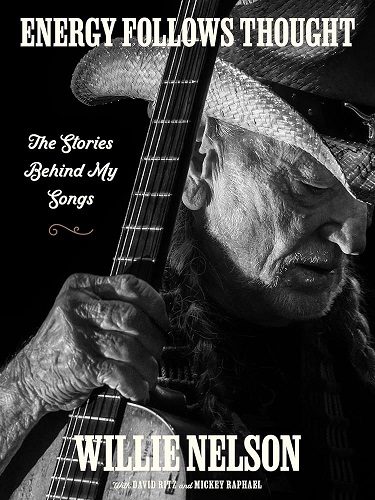
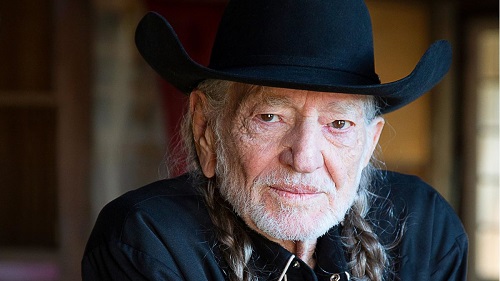
By the title of this book, you might think that it might be some sort of self-help book, or maybe a book about mindfulness, or some sort of science/psychology book. “Energy Follows Thought” just sounds … profound. It sounds deep, right? To a degree, it can get a bit deep at times. It can be sad, happy, silly, romantic, and more. So just who wrote this interesting book? You may know him as “The Red-Headed Stranger.”
If you have read any of my music posts (and as of late, there have been many), you know that I love the stories behind songs. I love to hear how a melody came about and why certain lines were put in. I love to hear about what was going on when a guitar riff was created and the reactions of people listening to it the first time. When this song came up on one of the audio apps I have, I had to get it.
I’ve been a fan of Willie for a long time. On every Willie album, there has always been a song that I have been able to apply to whatever was going on in my life at the time. As years have gone by, I can go back to those albums and find songs that take on new meaning with whatever is happening now. The power of music is really something! Willie certainly has an amazing ability to write great songs! The stories of many of them appear in this book.
The Goodreads synopsis:
For the first time ever, and to help celebrate his 90th birthday in 2023, American icon Willie Nelson provides the stories behind the lyrics of 160 of his favorite songs, along with a dynamic assortment of never-before-seen photos and ephemera.
From his earliest work in the 1950s to today, Willie looks back at the songs that have defined his career, from his days of earning $50 each to his biggest hits, from his less well-known songs (but incredibly meaningful to him) to his concept albums. Along the way, he also shares the stories of his guitar Trigger, his family and “family,” as well as the artists he collaborated with, including Patsy Cline, Waylon Jennings, Ray Charles, Merle Haggard, Ray Price, Dolly Parton, and many others.
Willie is disarmingly honest—what do you have to lose when you’re about to turn 90? —meditating on the nature of songwriting and finding his voice, and the themes he’s explored his whole life—relationships, infidelity, love, loss, friendship, life on the road, and particularly poignant at this juncture of his mortality.
Revealing, funny, whimsical, and wise, this book is an enduring tribute to Willie Nelson’s legacy.
It was interesting to hear just how Willie puts it all together. Words first. Music later. One article stated that, “while his guitar is practically an extension of his body at this point, he has always started the writing process by thinking up words rather than strumming chords. To him, it’s doing the hard part first.”
Willie says, “The melodies are easier to write than the words.” He does not, however, write those words down, not even on a napkin. “I have a theory,” he said, “that if you can’t remember ‘em, it probably wasn’t that good.”
Whether you like country music or not, I think you will enjoy not only the stories behind the songs, but the lyrics to so many powerful songs.
Welcome back to The Music of My Life, where I feature ten songs from each year of my life. In most cases, the ten songs I choose will be ones I like personally (unless I explain otherwise). The songs will be selected from Billboard’s Year-end Hot 100 Chart, Acclaimed Music, and will all be released in the featured year. In the final year of the 70’s, I turned 9 years old.
1979 is a year where I was surprised to find many of the songs that wound up on my mom’s ballad 8-track tape. I could easily have posted all of those songs in this blog, but then you would fall asleep listening to them, just like my brother and I did on our way up north. Instead, I will list them at the end of this blog, and if you wish, you can search them on YouTube.
So let’s begin with the first of two “out of place” or “odd” songs….
The first song is part of the soundtrack of my summer of 1979. The song seemed to be playing in a very hot rotation and was always on the radio when we were up at my grandparents place.
Frank Mills wrote and recorded “Music Box Dancer” in 1974, but it did not become a Canadian single until December 1978. By Christmas of that year, it was in the top ten of many European and Asian pop music charts. It was released as a single in the United States in January 1979 and got up to number three on the Billboard Hot 100 Chart.
In 1974, Mills released an album that featured the song, but it was not initially a hit. When he re-signed with Polydor Records Canada in 1978, the label released a new song as a single, with “Music Box Dancer” on the B-side. Because of a mistake, a single of “Music Box Dancer” found its way into the hands of a pop station in Ottawa – the single was only supposed to go out to adult contemporary stations. The station’s program director listened to the A-side and wondered why it was sent to him. He played the B-side and liked what he heard anyway and began airing it in rotation. Next thing you know, the album’s gone gold in Canada.
Music Box Dancer
The next song makes the list because it was on the iPod of my ex. My oldest son used to take it and listen to it all the time and I can still hear him in his toddler voice singing the chorus of this one.
Hot Stuff is a single that was on Donna Summer’s 7th studio album, Bad Girls. The song is unique in that while many consider it disco, many others consider it rock. As a matter of fact, when the Best Female Rock Vocal Performance category was added at the Grammy Awards in 1980, Donna Summer won for “Hot Stuff.”
The song has ties to other music as well. It was written by Pete Bellotte, Harold Faltermeyer and Keith Forsey. Bellotte co-wrote a few other hits for Summer, including “Love To Love You Baby” and ” Heaven Knows.” Faltermeyer had a solo hit in 1984 with the theme from Beverly Hills Cop, “Axel F” and Forsey’s credits include “Don’t You Forget About Me” for Simple Minds and “Shakedown” for Bob Seger.
This was Summer’s second #1 hit on the Hot 100; her first was her disco cover of “MacArthur Park.”
Hot Stuff
Here is a song that is missing one of the things the band is known for. Don’t Bring Me Down was the first ELO song that did not use strings. According to Songfacts, after recording it, they fired their string section, leaving four members in the band.
ELO leader Jeff Lynne wrote this song late in the sessions for the “Discovery” album. He came up with the track by looping the drums from a song he recorded earlier in the session, then coming up with more music on the piano. The words came last, as Lynne put together some lyrics about a girl who thinks she’s too good for the guy she’s with.
Here’s a fun fact: Wanna know why Jeff Lynne repeatedly sings the word “groose” after the song’s title line? Apparently it was a made-up place-keeper word to fill a gap in the vocals when he was improvising the lyrics. When the German engineer Reinhold Mack heard the ELO frontman’s demo, he asked Lynne how he knew “gruss” means “greetings” in his country’s language. Upon learning the German meaning, Lynne decided to leave it in.
Don’t Bring Me Down
“Hey Ringo, play something hot!”
Those are the words that Rodney Dangerfield’s character in Caddyshack says to the band at the snobbish country club as he throws money at them. As the money falls, the band plays the opening 5 note stings from Boogie Wonderland from Earth Wind and Fire (With the Emotions). I’ve always loved that song because of the movie connection.
The song, while it is upbeat and happy sounding, it really isn’t. Songfacts calls it one of the more complex and misinterpreted songs of the disco era. Written by Jon Lind and Allee Willis, it was inspired by the movie Looking For Mr. Goodbar, which stars Diane Keaton as a lost soul who goes to clubs every night to dance away her misery.
Willis says, “When I saw Mr. Goodbar, I got kind of fascinated with people who did go to clubs every night, whose life was kind of falling apart, but they lived for the night life, though it didn’t seem to be advancing them as humans in the end. So if you really look at the lyrics of ‘Boogie Wonderland,’ unlike ‘September,’ it’s not a happy song at all. It’s really about someone on the brink of self destruction who goes to these clubs to try and find more, but is at least aware of the fact that if there’s something like true love, that is something that could kind of drag them out of the abyss. So ‘Boogie Wonderland’ for us was this state of mind that you entered when you were around music and when you danced, but hopefully it was an aware enough state of mind that you would want to feel as good during the day as you did at night.”
Boogie Wonderland
The second “out of place” or “odd” song is also a movie song. It may seem like a very simple kid song, but if you listen to what the songwriter says about it, the song is deeper than you can imagine.
This was written by songwriters Paul Williams and Kenny Ascher for The Muppet Movie, which came out in 1979. In the film, it is sung by Kermit The Frog as the Muppets set out to find adventure. In a interview Williams said: “Rainbow Connection was the first number in The Muppet Movie. It’s the one that establishes the lead character. We find Kermit sitting in the middle of the swamp. Kenny Ascher and I sat down to write these songs, and we thought… Kermit, he’s like ‘every frog.’ He’s the Jimmy Stewart of frogs. So how do we show that he’s a thinking frog, and that he has an introspective soul, and all that good stuff? We looked at his environment, and his environment is water and air – and light. And it just seemed like it would be a place where he would see a rainbow. But we also wanted to show that he would be on this spiritual path, examining life, and the meaning of life.
It tells you that he’s been exposed to culture: ‘Why are there so many songs about rainbows?’ Which means, obviously, he’s heard a lot of songs. This is a frog that’s been exposed to culture, whether it’s movies, or records, or whatever. And I also like the fact that it starts out with the negative: ‘Rainbows are only illusions, rainbows have nothing to hide.’ So the song actually starts out as if he’s going to pooh-pooh the whole idea, and then it turns: ‘So we’ve been told, and some choose to believe it. I know they’re wrong, wait and see.’ And again, he doesn’t have the answer: ‘Someday we’ll find it.'”
Now, with that in mind, give this masterpiece a listen!
Rainbow Connection
Next is my “go-to” Karaoke song. I’ve always loved the line, “You had me down 21 to zip, the smile of Judas on your lip.” What a great line. Bad Case of Loving you was written by Moon Martin who released the original version on his 1978 album Shots From a Cold Nightmare. Martin is a singer/guitarist/songwriter with his band Southwind. When the group broke up in 1971, he took on studio work. He paired up with Linda Ronstadt, and played on her self-titled album. He nearly joined some of Ronstadt’s other backing musicians in a little band called the Eagles, but ended up a solo artist and signed a deal with Capitol Records.
Martin’s album got some good reviews but went nowhere on the charts. A song called “Hot Nite In Dallas” was chosen as a single, but “Bad Case Of Loving You” was only given limited release in Europe. Enter Robert Palmer. He heard the song when he was being driven to one of his shows by a rep from his label, who played it for him. Palmer included it in his set and got a great response, so he recorded it for his Secrets album.
Bad Case of Loving You (Doctor, Doctor)
In 1989, Palmer released a remix of this song for his Addictions: Volume 1 greatest hits album. “Looking back at the 1978 original the performance was there but someone was asleep at the mixing desk,” he wrote in the liner notes. “The original mix in comparison sounded like a band rehearsing in a garage and this sounds like the finished song.” I can’t listen to the original cut much anymore. The remix is SO MUCH better!
I LOVE good harmonies. This song kicks right off with a cold open and the amazing a cappella harmony of The Little River Band. Most of the band’s hits were written by founding members Graham Goble, Beeb Birtles or Glenn Shorrock, but “Lonesome Loser” was written by guitarist David Briggs, who joined in 1976 after the band’s second album.
The lyric uses a lot of gambling imagery to tell the story of the lonesome loser, who staked his heart and lost. His adversary is the “Queen of Hearts,” who will always win this game of love. The same year this song was released (1979), Dave Edmunds had a UK hit with a song called “Queen of Hearts” that used the same metaphor. That song, of course, became an American hit when Juice Newton covered it in 1981.
Lonesome Loser
Speaking of great harmonies and the Eagles, the next song features both. Heartache Tonight was written by Don Henley and Glenn Frey with Bob Seger and J.D. Souther. Songfacts says: When Frey was a 19-year-old in Detroit, Seger took him under his wing and got his music career started. Souther, who is sometimes considered an “Unofficial Eagle,” was the first person Frey met when he moved to Los Angeles in the late-’60s. J.D. Souther, told us how this song started: “Glenn Frey and I had been listening to Sam Cooke records at my house. So we were just walking around clapping our hands and snapping fingers and singing the verses to those songs. The melody sounds very much like those Sam Cooke shuffles. There’s not much to it. I mean, it’s really just two long verses. But it felt really good.”
Bob Seger’s contribution to this song was the chorus. JD Souther says, “We didn’t get to a chorus that we liked within the first few days, and I think Glenn was on the phone with Seger, and he said, ‘I wanna run something by you,’ and sang it to him, and Seger just came right in with the chorus, just sang it and it was so good. Glen called me and said, ‘Is four writers okay on this?’ And I said, ‘Sure, if it’s good.’ And he said, ‘Yeah, it’s great. Seger just sang this to me,’ and he sang it to me and I said, ‘That’s fantastic.'”
According to Seger, he was in the room with Glenn Frey when he came up with the chorus. He told Entertainment Weekly: “Glenn had the verse: ‘Somebody’s gonna hurt someone before the night is through.’ We hadn’t been sitting down for more that five minutes and I just blurted out, ‘There’s gonna be a heartache tonight!’ His eyes lit up huge.”
Heartache Tonight
The next song is one that I used to hear on the way home from elementary school. I had a buddy who got a ride home every day and his mom would often give me a lift, too. Keep in mind the ride home was 5 to 7 minutes tops, but it always seemed to be on the radio when we were in the car.
Freddie Mercury wrote Crazy Little Thing Called Love while Queen was recording The Game in Germany. He wrote it while taking a bubble bath in his room at the Munich Hilton. Peter Hince, the head of Queen’s road crew, recalled to Mojo magazine September 2009: “The idea for the song came to him while he was in the bath. He emerged, wrapped in a towel, I handed him the guitar and he worked out the chords there and then. Fred had this knack of knowing a great pop song.”
Freddie acknowledged that perhaps his limited talent on the guitar helped shape the song:
On stage, this was an important part of the show. Brian May often used three different guitars during the song: the first verse was played by Freddie alone with his guitar, then Brian joined with another Ovation Acoustic; before the third verse he had already switched to a Telecaster on which he performed the solo. During the singalong part (famous for its “ready Freddie” line) Brian again changed instruments to his homemade Red Special. From 1984 onwards Mercury replaced the acoustic with another Telecaster.
Crazy Little Thing Called Love
The final selection comes from a band who was formed on Valentines Day of 1977 in Detroit. That is what inspired their name – the Romantics.
Believe it or not, the band have only two US Top 40 hits, and “What I Like About You,” now their best-known song, isn’t one of them. ( Their two Top 40 hits were “Talking In Your Sleep” and “One In A Million”). It attracted little attention and was only a minor hit when first released in 1980 on their debut album. This song’s resurgence had a lot to do with MTV. The band made a simple performance video for the song that MTV put in rotation when they launched in 1981. It fit the criteria the network was looking for: American band, rock, catchy song, acceptable production quality. Since few American artists made videos at the time, MTV made do with lots of European imports when they started.
Since then the song has also become a fixture at sporting events, bars and nightclubs, and parties and celebrations of all kinds, and has taken its place as one of the most popular rock anthems of all time. It’s nice to wrap up the last year of the decade with an uptempo, fun song!
What I Like About You
I’m sure I have missed a few favorites, and the more I look ahead, the more I wonder if I need to expand to more than ten songs. I’ll tackle that issue if I have to later on.
Next week, we ring in a new decade – 1980! The 80’s sound certainly can be heard in some of these late 70’s songs and from here on out, the sound progresses quickly!
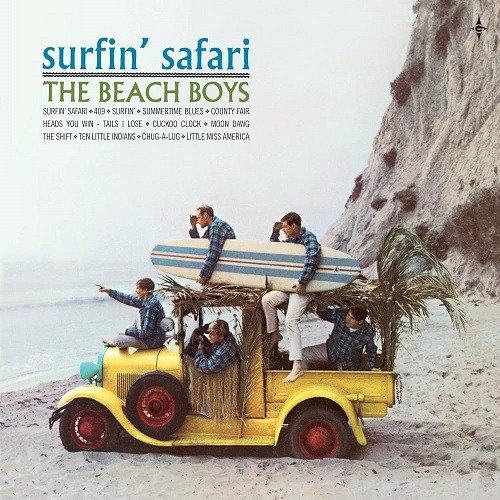
It was on this day in 1962 that Capitol Records signed one of the biggest acts of the 1960’s! The Beach Boys had been turned down by the Dot and Liberty labels, however, Capitol executive Nick Venet was sold on the group after hearing about eight bars of their song “Surfin’ Safari.”
According to Brian Wilson, the song was inspired by Chuck Berry. He referred to the song as “a silly song with a simple-but-cool C-F-G chord pattern that I came up with one day while trying to play the piano the way Chuck Berry played his guitar.”
The song was released with “409” as the B-side. Originally, Capitol Records wanted “409” to be the A-side, because it was about a car. There is a story about it actually being released as an A-side, DJ’s in Arizona started playing the B-side (Surfin’ Safari) and it becoming the hit. However, no one has ever been able to produce a copy of “409” as the A-side, so take that story with a grain of salt. In the end, it didn’t matter, because the record was considered a two-sided hit. Surfin’ Safari went to number 14 on the chart, while the flipside (“409”) charted at 76.
Many of the early Beach Boys songs were about surfing, which was their niche. Believe it or not, their first record label named the band and they were almost called The Surfers! Another little known fact: only their drummer, Dennis Wilson, was a surfer. Obviously, the guys could fake it for photos and seemed to know what they were singing about in their songs.
Surfin’ Safari
Let’s go surfin’ now Everybody’s learnin’ how Come on and safari with me (Come on and safari with)
Early in the mornin’ we’ll be startin’ out Some honeys will be comin’ along We’re loadin’ up our Woody with our boards inside And headin’ out singin’ our song
Come on, baby, wait and see (surfin’, surfin’ safari) Yes, I’m gonna take you surfin’ with me (surfin’, surfin’ safari) Come along, baby, wait and see (surfin’, surfin’ safari) Yes, I’m gonna take you surfin’ with me (surfin’, surfin’ safari)
Let’s go surfin’ now Everybody’s learnin’ how Come on and safari with me (Come on and safari with)
At Huntington and Malibu, they’re shootin’ the pier At Rincon, they’re walkin’ the nose We’re goin’ on safari to the islands this year So if you’re comin’, get ready to go
Come on, baby, wait and see (surfin’, surfin’ safari) Yes, I’m gonna take you surfin’ with me (surfin’, surfin’ safari) Come along, baby, wait and see (surfin’, surfin’ safari) Yes, I’m gonna take you surfin’ with me (surfin’, surfin’ safari)
Let’s go surfin’ now Everybody’s learnin’ how Come on and safari with me (Come on and safari with)
They’re anglin’ in Laguna in Cerro Azul They’re kickin’ out in Doheny too I tell you surfing’s mighty wild, it’s gettin’ bigger every day From Hawaii to the shores of Peru
Come on, baby, wait and see (surfin’, surfin’ safari) Yes, I’m gonna take you surfin’ with me (surfin’, surfin’ safari) Come along, baby, wait and see (surfin’, surfin’ safari) Yes, I’m gonna take you surfin’ with me (surfin’, surfin’ safari)
Let’s go surfin’ now Everybody’s learnin’ how Come on and safari with me (Come on and safari with me)















 Various Ramblings of a Nostalgic Italian