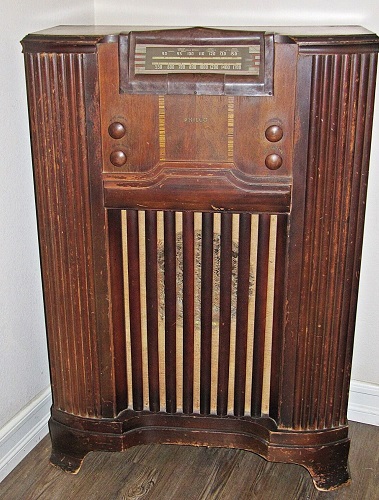
A Golden Age of Radio Classic

I’m a firm believer in using your imagination. In today’s society, we can plop down in front of the TV and watch shows and not really have to think about what’s going on. Everything is right there on the screen. However, back in the days before television, there was radio.

Radio was a medium that brought the listener’s imagination to life! You and I could listen to the same show, but each see our own version because we’d picture things differently. There is a reason that so many folks used the phrase “theater of the mind” when talking about old time radio.

One of the best radio dramas was a show simply called Suspense. If I had to describe it, I’d say it was the radio version of the Twilight Zone. I say that because there was often a twist at the end of each show. If you really want to hear REAL acting, Suspense featured it every week! Actors and actresses only had the use of their voice to display the wide range of human emotions – and they did it flawlessly!

Suspense was a half-hour drama series that aired on the CBS radio network from 1940 to 1962 (for the first half of 1948, episodes lasted for 60 minutes). That multi-year run made it one of network radio’s longer lasting dramatic series with nearly 950 episodes produced.

At its height, the radio series featured a cross-section of well known Hollywood actors and actresses (it was aired from Los Angeles from 1943 through into the 1950s) who were attracted by the quality of the scripts and show’s production values. For years, the host was simply “The Man in Black” who would almost whisper the opening line “. . . And now, another tale well-calculated to keep you in . . . Suspense.”

82 years ago today, Suspense aired one of its classic episodes. It is an episode that will often come up when anyone speaks of the Golden Age of Radio. It starred a young Agnes Moorehead (who would go on to play Endora on TV’s Bewitched). I am talking about the classic “Sorry, Wrong Number.
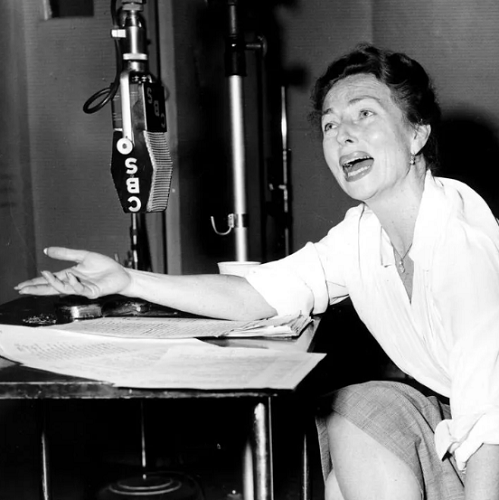
“Sorry, Wrong Number,” a classic suspense radio drama, explores the chilling scenario of a woman accidentally eavesdropping on a murder plot. The episode, broadcast on May 25, 1943, tells the story of Mrs. Stevenson, a woman who listens to a phone call between two men planning a murder. She realizes the crime is set to happen that night, and she desperately tries to alert authorities. Sadly she finds her efforts blocked by indifference and bureaucracy, leading to a terrifying climax where she realizes she might be the intended victim. 

In an essay by Christopher H. Sterling, he says,

In a modern era of digital cellphones, the impact of this period program is sometimes difficult to understand. But when it was originally broadcast in the midst of World War II, in an analog era of operator-assisted telephone calls and shared “party” lines, radio listeners could readily identify with the situations they heard.

Sorry, Wrong Number was initially broadcast live twice on May 25, 1943 (once for East Coast listeners–with a minor flub in one line—and then repeated for the West Coast). It was rebroadcast other eight times (on August 21, 1943; February 24, 1944; September 6, 1945; November 18, 1948; September 15, 1952; October 20, 1957; and February 14, 1960).

In 1948, the play was made into a movie starring Barbara Stanwyck and Burt Lancaster. The film is excellent, but nothing compares to the amazing performance of Agnes Moorehead on the radio version.

Do yourself a favor, pull up a chair and give it a listen. Let your imagination go wild! Listen to what she is able to convey simply with her voice. Let’s go back 82 years and enjoy a masterpiece!

Source: Christopher H. Sterling Essay
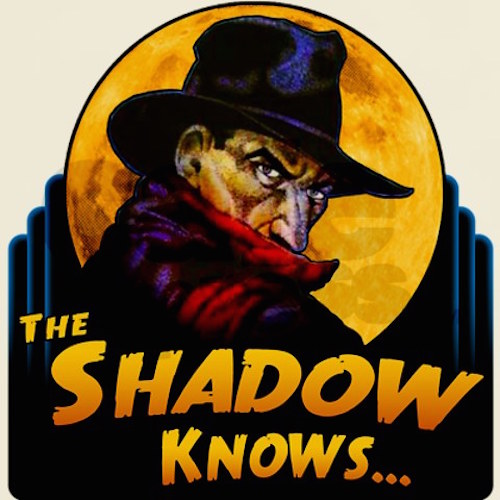
The Shadow Knows!

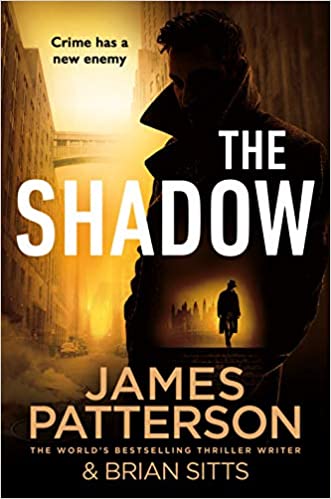
Time to read is very rare in my life. My stack of books to read seems to always be growing. Every once in a while, I get a few moments to crack open a book and read, but those moments seem to be few and far between. This week, I started reading a book by James Patterson and Brian Sitts based on a character who is over 90 years old – The Shadow. The book is one of my birthday gifts from Sam.

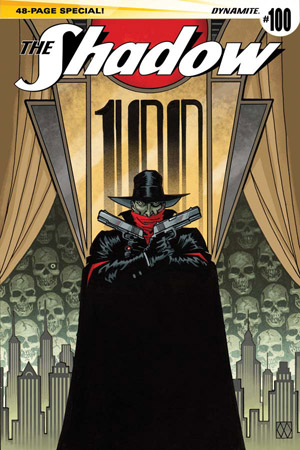
The Shadow made his debut in the 1930’s in a variety of novels. The character has made appearances on radio, in magazines, comic books, comic strips, on TV, in serials, video games and at least 5 feature films.

From Britannica.com:

The Shadow, American radio program that ran from 1937 to 1954. The title character, a caped vigilante who was also featured in The Shadow Magazine, was one of the most enduring and influential creations of the pulp era.

The Shadow was originally created as the narrator of the 1930 radio show Detective Story Hour, a program that was intended to promote publisher Street & Smith’s Detective Story magazine. The character of the Shadow, given a mysterious voice and ominous laugh by actors James La Curto and Frank Readick, was popular enough to convince Street & Smith to develop him as the protagonist in his own pulp magazine. The magazine was commercially successful, and in 1937 the Shadow returned to radio on the Mutual network as the protagonist in a weekly series. Initially played by Orson Welles, this version of the Shadow was significantly different from the pulp version. On radio the Shadow was the secret identity of Lamont Cranston, who had the power to hypnotically cloud the minds of those near him to make himself invisible. In early episodes, he occasionally used telepathy and the ability to cause others to see illusions, though these other powers were gradually dropped in later seasons.

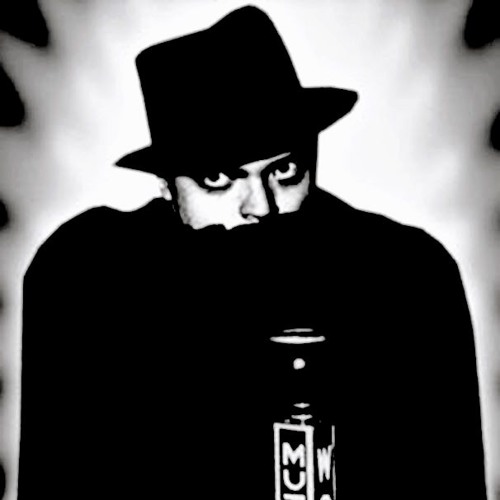
Orson Welles as The Shadow

The many agents the Shadow employed in the pulp stories were dropped in favour of a single female companion named Margo Lane, initially played by Agnes Moorehead.. The radio episodes were melodramatic, with the Shadow often tracking down mass murderers and psychotic killers who were carrying out bizarre crimes. In one episode, a modern-day pirate uses a submarine to wreak havoc on the high seas, and in another a mad scientist rips airplanes out of the sky with a giant magnet. Using his invisibility to gather information and carry out psychological warfare on the criminals, the Shadow would inevitably foil their schemes. The show’s acting and production values were excellent, and it was popular enough to last for 17 years.

During this run, the Shadow was played by Welles, Bret Morrison, Bill Johnstone, John Archer, and Steve Courtleigh. Actresses who played Margo Lane included Moorehead, Marjorie Anderson, Marion Sharkley, Laura Mae Carpenter, Lesley Woods, Grace Matthews, and Gertrude Warner. The show was canceled in 1954, but many episodes were recorded and preserved.

I was introduced to the Shadow by my dad. We would listen to old radio shows together and it was one that played often. I can remember the first time I heard the organ theme to the show followed by those marvelous opening words:

“Who know what evil lurks in the hearts of man? The Shadow knows.” This was followed by that ominous laugh ….

At the end of every show, The Shadow would appear again to remind listeners:

“The weed of crime bears bitter fruit. Crime does not pay. The Shadow knows.” This would be followed again by his laugh and the show was over.

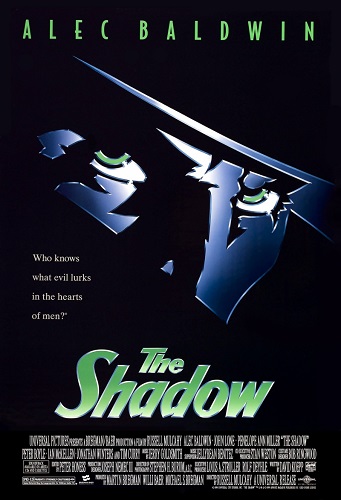
I remember in the early 1990’s Alec Baldwin starred as the Shadow in a feature film. Many panned it, but I found it to be very good. It’s worth the watch.

I remember reading somewhere that James Patterson was going to tackle the Shadow. I wasn’t sure what to think and I will wait till I finish the book to pass judgement on it. I have high hopes for it and hope it does not disappoint.