
Turntable Talk #42 – Going Out on a High Note

It is time once again for a new Turntable Talk topic from Dave at A Sound Day. Each month he offers up a musical topic for us to write about. This month we are Going out on a High Note. Dave’s instructions to us:

We all have seen artists (not to mention athletes, politicians…) who stick around long after they should have exited gracefully. For this round, pick a musical artist who you think ended their career on a high note, a great final album, or triumphant concert tour before they grew stale.

I had a difficult time with this one. As I began to think of artists, I kept coming up with artists who are still recording and touring. Willie Nelson, for example, is still making music and hitting the stage. Has he stayed around “too long?” Some say yes, while other say no. So my search continued. Then I remembered Bill Withers.
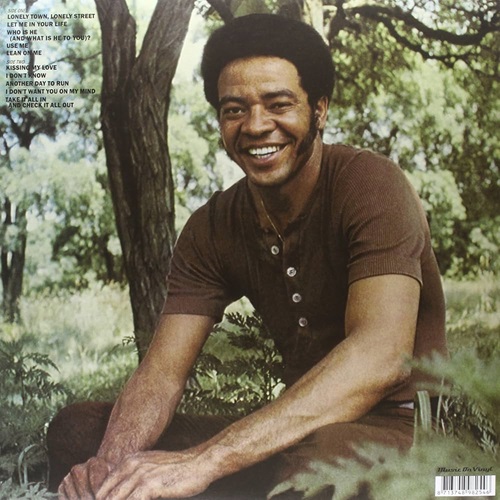
Bill served in the US Navy for almost 10 years. It was while he served our country that he began writing songs and became interested in singing. After he left the Navy, he decided to relocate to California in hopes of starting a career in music.

He found work as a mechanical assembler for several different companies including IBM, Ford, and the Douglas Aircraft Corporation. He used the money from his job to record demo tracks that he could take to record companies. He also began to play his songs in nightclubs in the area, hoping someone might discover him.

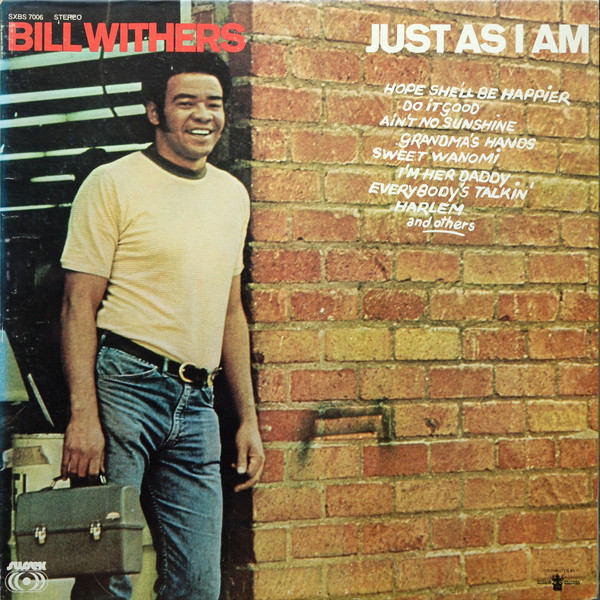
In 1967, he had his first official release – “Three Nights and a Morning.” It was a song that got little recognition. Three years later, he was signed to Sussex Records and Booker T Jones was assigned to produce Bill’s first album. That album, Just As I Am, included his first hit – “Ain’t No Sunshine.”
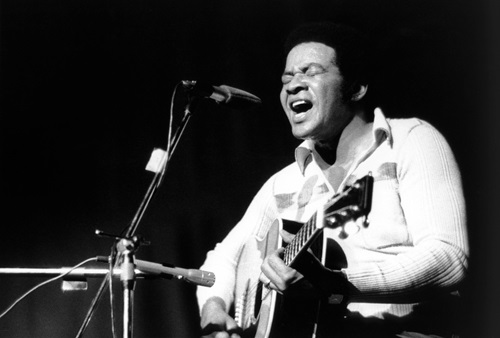
The album was a huge success and Withers rounded up a band and went out on tour. “Ain’t No Sunshine” was a Top 10 song and went on to win the Grammy for Best R&B Song in 1972. It also got him noticed by Johnny Carson’s Tonight Show, who sent him a letter inviting him to appear on the show.

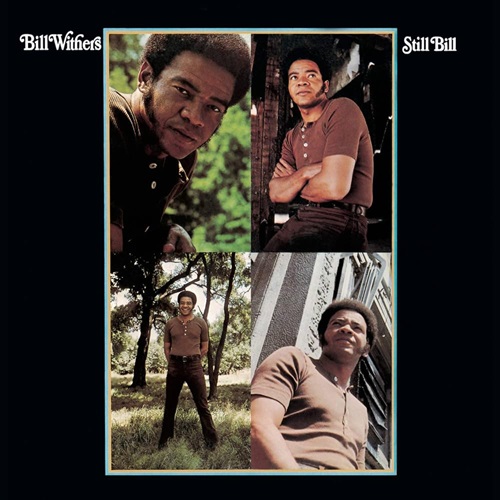
When his tour wrapped up, he used the time off to write and record songs for his second album entitled Still Bill. This album included Bill’s first #1 song – “Lean On Me,” which hit the top of the charts in July of 1972. This was followed up with his third million selling record – “Use Me.”
Bill’s relationship with Sussex record eventually went sour. He said of Sussex Records “They weren’t paying me.” He claims to have erased an entire album that he had recorded for the label in a fit of pique. “I could probably have handled that differently,” he said. There was an ongoing legal dispute with the Sussex company, and because of that Withers was unable to record for some time thereafter.

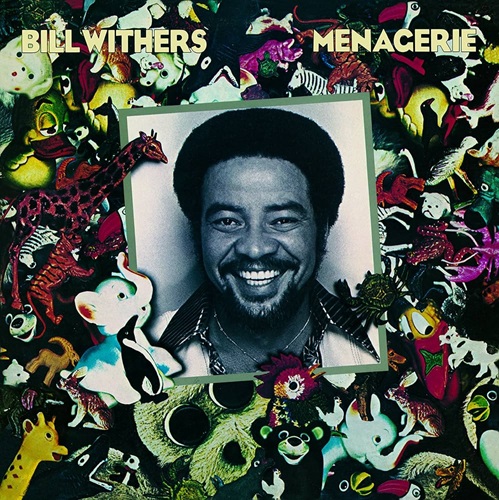
Sussex Records eventually went out of business and Bill had to find a new label. He wound up at Columbia Records in 1975. His first album on Columbia included the song “She’s Lonely,” which was featured in the movie Looking For Mr. Goodbar (which starred Richard Gere and Diane Keaton). He released an album every year afterward, including the 1977 album Menagerie which contained the hit “Lovely Day.”
Bill began to have trouble with Columbia. Apparently he was unable to get songs approved for his album. The label kept passing on the songs he wanted to record. Because of this, he decided to focus on joint projects beginning in 1977. He worked with the Crusaders, percussionist Ralph MacDonald, and jazz saxophonist Grover Washington Jr.

“Just The Two of Us” appeared on Washington’s 1980 album Winelight. It was released as a single in February of 1981 and went on to win a Grammy for Best R&B Song. In 1985, Withers released his final studio album, Watching You, Watching me. It was at this point that Bill decided to “go out on a high note.”

Withers was quoted in interviews that “a lot of the songs approved for the album—in particular, two of the first three singles released—were the same songs that had been rejected in 1982.” This played a big part in the eight-year hiatus between albums. Bill also stated how frustrating it was to see his record label release an album by actor Mr. T, when they were preventing him, an actual songwriter, from releasing his own.

With Columbia trying to exert control over his sound to sell more albums played a part in his decision to not record or re-sign with a record label after 1985. I would imagine the Mr. T thing played a part, too. This effectively ended his performing career, though remixes of his previously recorded music were released well after his “retirement.”

Withers was an artist who found musical success later in life. He was in his early 30’s when he began his career. Now at 47, he said he was socialized as a “regular guy” who had “a life before the music, so he did not feel an inherent need to keep recording once he fell out of love with the industry.” Bill felt he made the right decision. After leaving the music industry, he said that he did not miss touring and performing live and did not regret leaving music behind.

Accolades continued after his “retirement.” In 1988, he won another Grammy, this time as a songwriter for the cover of his “Lean on Me” by Club Nouveau. It won the Grammy for Best Rhythm and Blues Song. In 2005 he was inducted into the Songwriters Hall of Fame, followed in 2015 with his induction into the Rock and Roll Hall of Fame. He said:

“What few songs I wrote during my brief career, there ain’t a genre that somebody didn’t record them in. I’m not a virtuoso, but I was able to write songs that people could identify with. I don’t think I’ve done bad for a guy from Slab Fork, West Virginia.”

Bill passed away in March of 2020 in a Los Angeles hospital due to cardiac complications.

He is still receiving accolades in 2025. Last month, he was selected to be inducted into the National Rhythm and Blues Hall of Fame. The induction ceremony usually takes place in October.

Thanks to Dave for once again hosting Turntable Talk. I am already looking forward to what next month’s topic will be.

The Music of My Life – 1971

Welcome back to The Music of My Life, where I feature ten songs from each year of my life.  In most cases, the ten songs I choose will be ones I like personally (unless   I explain otherwise).

The songs will be selected from Billboard’s Year-end Hot 100 Chart, Acclaimed Music, and will all be released in the featured year.   Now, without any further ado, let’s head to 1971.

1971

In January of 1971, Tom Jones had his fifth (and final) Billboard Top 10 Hit with a Paul Anka song that Paul had released a year earlier – She’s a Lady.

Tom and Paul actually sang this as a duet on a 2013 Paul Anka album.  Paul changed the lyrics a bit because he felt like it was a bit chauvinistic.

I only knew a few of Tom’s hits until my old radio pal, Rob, introduced me to more of them.  I came to appreciate his music a lot after that. 

She’s a Lady

Also released in January of 1971 was a cover version that gave new life to a song that remains a wedding reception classic.

Creedence Clearwater Revival never had a number one record, however, Proud Mary made it to number two.  Ike and Tina Turner’s version took the song in an entirely new direction and it became one of Tina’s signature songs.

The song starts as a slow groove with Tina talking over Ike singing the lyrics.  When the tempo picks up, there’s no stopping it!  The horns kick in, the Ikettes join in, and Tina blows the roof of the place!

Proud Mary

I suppose it would be wrong not to include the number one song for the entire year of 1971 on this list, even if the members of the group how recorded it called it a “kid’s song” and a “silly song.” I can see that, especially when the lyric is about a frog named Jeremiah.

Legendary songwriter Hoyt Axton wrote “Joy to the World” and it was a monster hit for Three Dog Night. The song was released in February of 1971, and by April it had sold a million copies. Believe it or not, the first line of the song was supposed to be, “Jeremiah was a prophet,” but no one really cared for that. When Axton played it for the band, two of the three members (Danny Hutton and Cory Wells) didn’t like it. It was Chuck Negron who felt the band needed to do something like this “silly song.” Negron said in an interview that the song “wasn’t even close to our best record, but it might have been one of our most honest.” It is hard to believe that this song was almost never recorded!

Joy To The World

I’ve never claimed to be a huge fan of The Doors, but I do acknowledge that Jim Morrison was a one of a kind talent. His legacy lives on to this day. One of my favorite Doors songs was released in March of 1971. It was the first single from their LA Woman album – Love Her Madly.

The story goes that Doors guitarist Robby Krieger was messing around on a twelve string guitar and while doing so he came up with the music and melody for the song. He turned to real life for the lyrical story. He wrote the lyrics based on his troubles and fights with his then-girlfriend and later-wife Lynn.

The song peaked at number 11 on my first birthday – May 15, 1971.

Love Her Madly

As you listen to this next selection, imagine Elvis Presley singing it. Why? Well, it was supposedly written with him in mind to sing it. Take it a step further and imagine the Grass Roots doing it, because it was pitched to them, too, and they passed on it. Luckily, a new trio got a shot at it and Hamilton, Joe Frank and Reynolds had a top five hit with “Don’t Pull Your Love.”

The story of how they came to the song and their record deal is a cool one. “Joe Frank Carollo would recall how he and his fellow band members Dan Hamilton and Tommy Reynolds were performing a Creedence Clearwater Revival medley to audition for ABC-Dunhill when Steve Barri stopped the trio to play them the demo of “Don’t Pull Your Love” two or three times until the trio themselves could sing it for Barri, who resultantly arranged for Hamilton, Joe Frank & Reynolds to be signed to ABC-Dunhill that same day.”

The song was released in April of 1971.

Don’t Pull Your Love

I would bet that Carole King’s Tapestry album has influenced almost every female singer today. It is considered to be one of the best albums in music and it spent nearly six years on the album charts. Talk about a legendary songwriter, Carole has written over 100 songs that have appeared on the Billboard Hot 100 charts. For my next selection, I’m choosing half of a two-sided hit.

In April of 1971, Carole King released I Feel The Earth Move/It’s Too Late. I Feel The Earth Move is such a great song for so many reasons. Do a search for the song on Google and there are countless quotes about it. For example, Rolling Stone magazine praised King’s voice on this track, saying it “negotiates turns from “raunchy” to “bluesy” to “harsh” to “soothing”, with the last echoing the development of the song’s melody into its chorus.” Cash Box described the song as a “forceful ‘earthquake song'” and considered its pairing with “It’s Too Late” as a single to be “double dynamite.”

I love the song because of the way the piano and the vocal intermingle with each other. There is great syncopation in the way that she delivers the lyrics as well. Her version of the song peaked at number 1 on the Billboard Hot 100 chart in June of 1971. It remained there for five consecutive weeks.

I Feel The Earth Move

Willie Nelson once sang, “You just can’t play a sad song on the banjo.” The banjo is prominent in my next song which is a tribute to a Canadian city. The lyric even says, The banjo and me, we got a feel for singing.” So what do you do when your band doesn’t have a banjo player?

The Canadian rock band The Stampeders, released Sweet City Woman in May of 1971. According to songfacts.com: “Sweet City Woman is one of the most famous banjo-driven hits in rock history, but the band didn’t have a banjo player. Rich Dodson wrote that lick on guitar and played it on that instrument while they were working it out during live shows. When it came time to record the song, he decided a banjo might give it an interesting texture, so he borrowed one and played it in guitar tuning. It was a propitious choice: The banjo gave the song a back-porch feel that makes it lively and oh-so singable. The woman is a metaphor for the big city, Toronto in particular. The lyric was inspired by the city, where the group had been living for about five years. They’re from Calgary, which isn’t exactly the sticks, but Toronto is much bigger and more metropolitan.

The song went to Number One in Canada and it was a Top Ten in the States.

Sweet City Woman

In July of 1971, Bill Wither’s released his first hit song – Ain’t No Sunshine. It appears on his debut album Just As I Am. I have written about this one in more detail in the past for Tune Tuesday. You can read about it here:

Ain’t No Sunshine

A tragedy that involved the death of three early rock and rollers inspired the monster hit that was released in October of 1971. It seems that we always refer to plane crash that took the lives of Buddy Holly, Richie Valens and The Big Bopper on February 3, 1959 as “The Day the Music Died.” You can thank Don McLean for that.

American Pie was the title track of McLean’s 1971 album. The track on the album clocks in at 8:42. When it was released as a single, the song was split up with Part 1 on the A side (4:11) and Part 2 on the B-side (4:31). This month’s edition of Turntable Talk was about music and Max at the PowerPop blog chose this as his song. You can read about it more here:

American Pie

My final song from 1971 is one that can mean many things to many people, both now and when it was released. This one is the second “sunny” song on my list – Sunshine by Jonathan Edwards.

Edwards has said that he has received many letters stating what people think the song means, or what it means to them personally. When asked by Songfacts.com what he had in mind when he wrote it, he states that the song “has left me with is the wisdom to not answer the question, because everyone’s interpretation is way more creative and interesting than my original impetus for the song. So you go with it.”

The song was almost not recorded. Fate stepped in, however, when an engineer accidentally erased the master of a track called “Please Find Me” near the end of sessions for the album, and “Sunshine” was recorded to take the place of the erased song.

The song was released in November of 1971 and was a Top 5 record for him. Regarding its success, Edwards stated, “It was just at the time of the Vietnam War and Nixon. It was looking bad out there. That song meant a lot to a lot of people during that time–especially me.”

Sunshine

Thanks for reading and listening! See you in 1972!

Tune Tuesday – Ain’t No Sunshine

As summer quickly (and sadly) draws to a close, it got me to thinking about the one thing I’ll miss most about summer – sunshine. For those who live where the sun is always shining (or at least most of the time), you really cannot comprehend just how difficult the winter months in Michigan are. While I love Autumn, I miss the sunshine as we start to see it less and less.

The lack of sunshine that is on the horizon in the months ahead, made me think of this great R&B song from Bill Withers. It’s been covered by SO many people including Nancy Sinatra, Paul McCartney, Michael Jackson, Wynonna Judd and many more, but Bill Wither’s version is the gold standard! It can be found on his 1971 album “Just As I Am.”

R-4746799-1550014522-8988_jpeg

Bill wrote the song after being inspired while watching the movie The Days of Wine and Roses with Lee Remick and Jack Lemmon. He said in an interview that the characters Remick and Lemmon played: “They were both alcoholics who were alternately weak and strong. It’s like going back for seconds on rat poison. Sometimes you miss things that weren’t particularly good for you. It’s just something that crossed my mind from watching that movie, and probably something else that happened in my life that I’m not aware of.”

This was his first hit. He was in the navy for 9 years and after getting out, he worked in a factory making parts for airplanes. It was during this time that he met Booker T. Jones (of Booker and the MG’s). Booker brought in some amazing musicians (Donald “Duck” Dunn, Stephen Stills, and himself) to play on the track. Jones also produced the album.

One of the most recognizable parts of the song is where he repeats the words “I know” over and over and over. That was not they way he intended the song to be. he had hoped to write a verse to go there. Withers explained in an interview: “I wasn’t going to do that, then Booker T. said, ‘No, leave it like that.’ I was going to write something there, but there was a general consensus in the studio. It was an interesting thing because I’ve got all these guys that were already established, and I was working in the factory at the time. Graham Nash was sitting right in front of me, just offering his support. Stephen Stills was playing and there was Booker T. and Al Jackson and Donald Dunn – all of the MGs except Steve Cropper. They were all these people with all this experience and all these reputations, and I was this factory worker just sort of puttering around. So when their general feeling was, ‘Leave it like that,’ I left it like that.”

(Keith story: The first time I played this record at WKSG in Detroit, I was in the bathroom peeing when the “I know” part started repeating. I was standing at the urinal listening to the song over the speaker and I thought “the record is skipping!” I was playing this off a cart (which meant that it was already recorded and there was no way the song was skipping, unless it was recorded that way!). I remember running out of the bathroom and through the halls anyway …. by the time I got to the studio, the song was continuing ….skip free!)

R-550007-1430066685-1670_jpeg

The song won the Grammy for Best R&B song in 1972 and went all the way to #3 on the charts. While English teachers must cringe when they hear the improper grammar (“ain’t no” instead of “isn’t any”), it worked in this song (and also Ain’t No Woman (Like the One I’ve Got” and “Ain’t No Mountain High Enough).

“Ain’t No Sunshine”

Ain’t no sunshine when she’s gone
It’s not warm when she’s away
Ain’t no sunshine when she’s gone
And she’s always gone too long
Anytime she goes away

Wonder this time where she’s gone
Wonder if she’s gone to stay
Ain’t no sunshine when she’s gone
And this house just ain’t no home
Anytime she goes away

And I know, I know, I know, I know
I know, I know, I know, I know, I know
I know, I know
Hey, I oughtta leave young thing alone
But ain’t no sunshine when she’s gone

Ain’t no sunshine when she’s gone
Only darkness every day
Ain’t no sunshine when she’s gone
And this house just ain’t no home
Anytime she goes away