A Shemptastic Birthday Salute!

(This blog originally posted in 2018)

Throughout history, some truly great people never got the respect they deserved simply because they had big shoes to fill.

* John Adams following George Washington as President of the United States.

* Ryan Seacrest following Dick Clark hosting New Year’s Rockin’ Eve.

* Ray Combs following Richard Dawson as host of Family Feud.

*Daniel Craig is forever compared to Roger Moore and Sean Connery as James Bond.

* Dick Sargent never fully got the credit he deserved as an actor because he replaced Dick York on Bewitched.

There is one “under rated” comedian who truly never got the true respect that he deserved … simply because he stepped in to fill the shoes of a comedy GIANT! This modest blog hopes to give him some recognition.

Shemp Howard was born today in 1895. Shemp was born Samuel Horwitz, but his mother had a very heavy Lithuanian accent so when she called his name it came out “Shemp”. That name stuck and he was Shemp for the remainder of his life.
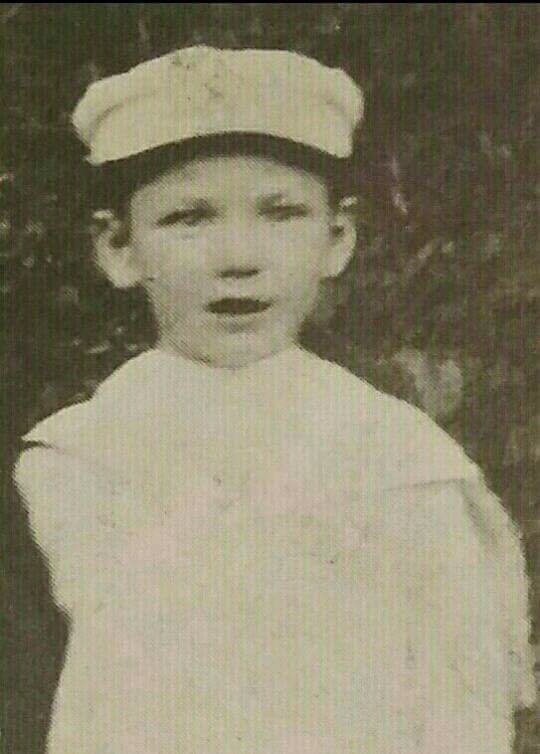
Shemp and his younger brother, Moe, watched a lot of vaudeville shows and eventually started their own act. They did an act entirely in black face. This wasn’t unusual as many performers like Al Jolson, Freeman Gosden and Charles Correll we’re doing just the same.
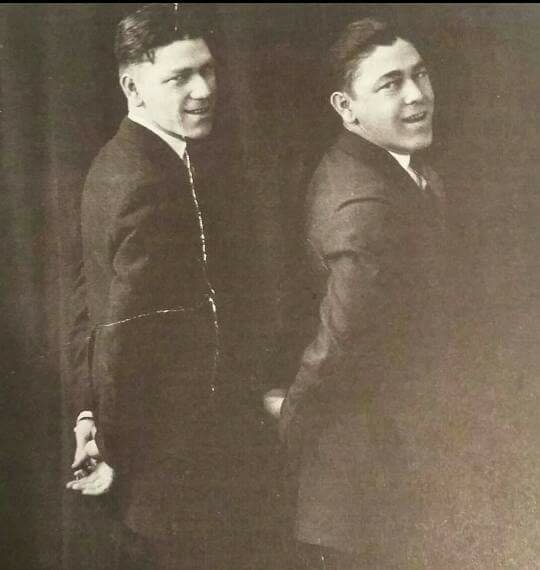
Moe and Shemp teamed up with Ted Healy, and eventually Larry Fine joined the group. Ted Healy and his Stooges were a vaudeville hit.

My pal, Eddie Deezen, (who you may know as Eugene from the movie Grease and many other great films) wrote an very nice article about Shemp for Neatorama. In it he addresses one of Shemp’s “issues”:


According to Shemp’s wife, Gertrude “Babe” Howard, whom Shemp married in 1925, Shemp was “just a big old ‘fraidy cat.” Everyone has a particular fear or phobia (many of us have more than just one); Shemp was “afraid of his own shadow,” according to his friends, with a whole litany of fears:

*He lived in constant fear of cars, never driving or getting a driver’s license. According to Moe, this fear was rooted in an auto accident Shemp experienced when he was a youth. (In his films, when Shemp had to fake driving a car, he was towed by prop men in a simulated car but was still scared, nervously holding the steering wheel until the scene mercifully ended.)

*Shemp also refused to fly in airplanes, travelling only by train.

*He was terrified of strange dogs and would carry a big stick with him, just in case a strange dog approached him.

*He refused to swim or go in any body of water larger than a bathtub. Shemp always carried a pair of rubber overshoes in his pocket, lest he be caught in the rain.

*It also became fairly common that, before Shemp appeared live on stage, he would throw up to relieve himself.

*And Shemp was a chronic bed-wetter. He had actually served in World War I, but his stint was truncated due to his bed-wetting.

Ted Healy was a jerk. He saw these things and often used his knowledge of Shemp’s fears to scare him. Because of Healy, Shemp left the group to do solo projects. He was replaced by…Curly Howard (Shemp and Moe’s younger brother). Curly went in to become a comedy icon with the Stooges and was loved by millions.

Shemp had great success working alone. He can be seen in some of Abbott and Costello’s films, but according to Eddie Deezen’s article, Costello was very jealous of Shemp and most of his funny stuff ended up being edited out. He also appeared with WC Fields in The Bank Dick and he also played Knobby Walsh in the Joe Palooka films. While off on his own, Shemp was called (and billed as) “The Ugliest Man in Hollywood”!
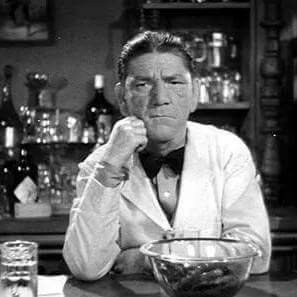
In the 1940’s, it is evident by watching the Three Stooges comedies that Curly’s health was on the decline. In 1946, while waiting to shoot a final scene for Half-Wits Holiday, Curly had a massive stroke. With Curly no longer able to perform, Moe turned to his older brother, Shemp, who agreed to return to the group.
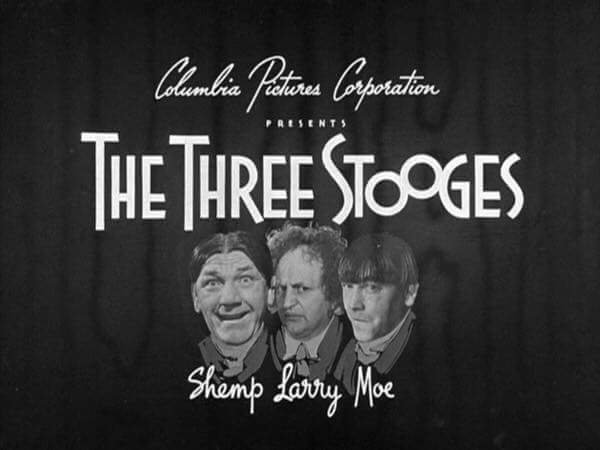
Shemp made over 70 comedies with the Stooges. He never stepped in to copy Curly, nor did he want to. He was Shemp and that was what makes his comedies with the boys unique.

Shemp had his own vocal sounds. Curly “woo woo woo’d” and “n’yuk n’yuk n’yuk’d while Shemp did something totally different. His most notable characteristic as a Stooge was a high-pitched “bee-bee-bee-bee-bee-bee!” sound, a sort of soft screech done by inhaling. This was rather multi-purpose, since Shemp emitted this sound when scared, sleeping (done as a form of snoring), overtly happy or dazed. It became as much a trademark sound of Shemp as the “nyuk nyuk” sound had become Curly’s.
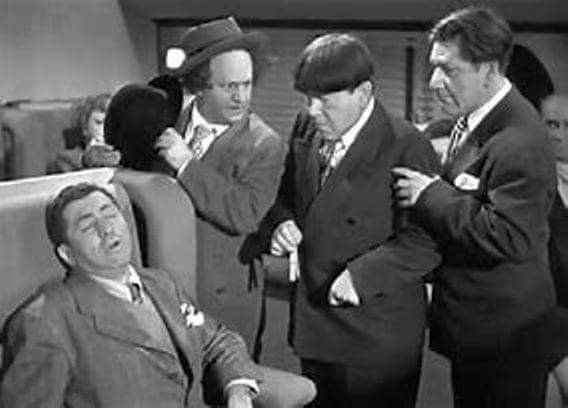
The only time Moe, Curly and Shemp appeared together in a Stooges short.

Shemp was always compared to Curly. In my humble opinion, this is like comparing baseball to football or apples to oranges. They are both unique and each have their own attributes! There is no way to compare them to each other! Curly was Curly. He was energetic, childish, silly and graceful. Shemp (who was already in his 50’s when he rejoined the group) was more flippant. He was a wise cracking, all talk no action kinda guy. The dynamic was different, but it still worked.

He played with the human language wonderfully. One of my favorite Shemp lines comes from the short Sing a Song of Six Pants. The boys are dry cleaners/tailors. A customer comes in and Shemp says “Where did you get this mess?” (Referring to the man’s suit). The customer replies ” I bought it here!”. Shemp’s reply: “Oh, what a beautiful messterpiece!”
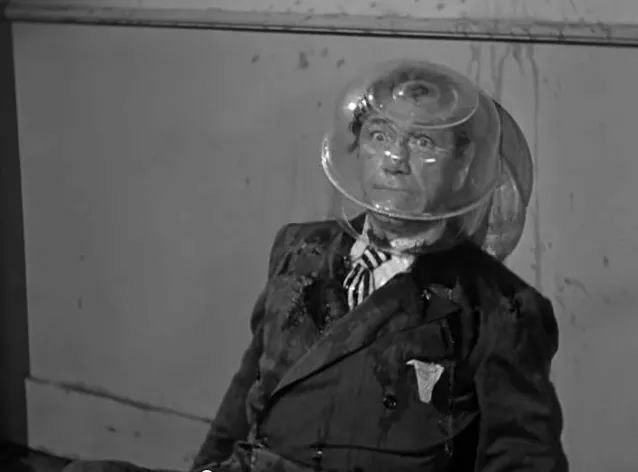
On November 22, 1955, Shemp went out with his friends to a boxing match at the Hollywood Legion Stadium. After the fights were over, Shemp hailed a taxicab to take him to his North Hollywood home with friend Al Winston. Shemp set back and lit up his cigar and told a joke. Suddenly he slumped over into Winston’s lap. Shemp had a heart attack and was dead at the age of 60. (Shemp’s daughter-in-law, Geri Greenbaum, maintains he suffered a massive cerebral hemorrhage.) His friend, Al, thought Shemp was playing a joke, since Shemp was laughing moments earlier, but realized he was actually dead. Moe’s autobiography gives a death date of November 23, 1955, as do most subsequent accounts, because of Moe’s book. But much of that book was finished posthumously by his daughter and son-in-law, and some specific details were confused as a result. The Los Angeles county coroner’s death certificate states that Shemp Howard died on Tuesday, November 22, 1955, at 11:35 [PM] PST.
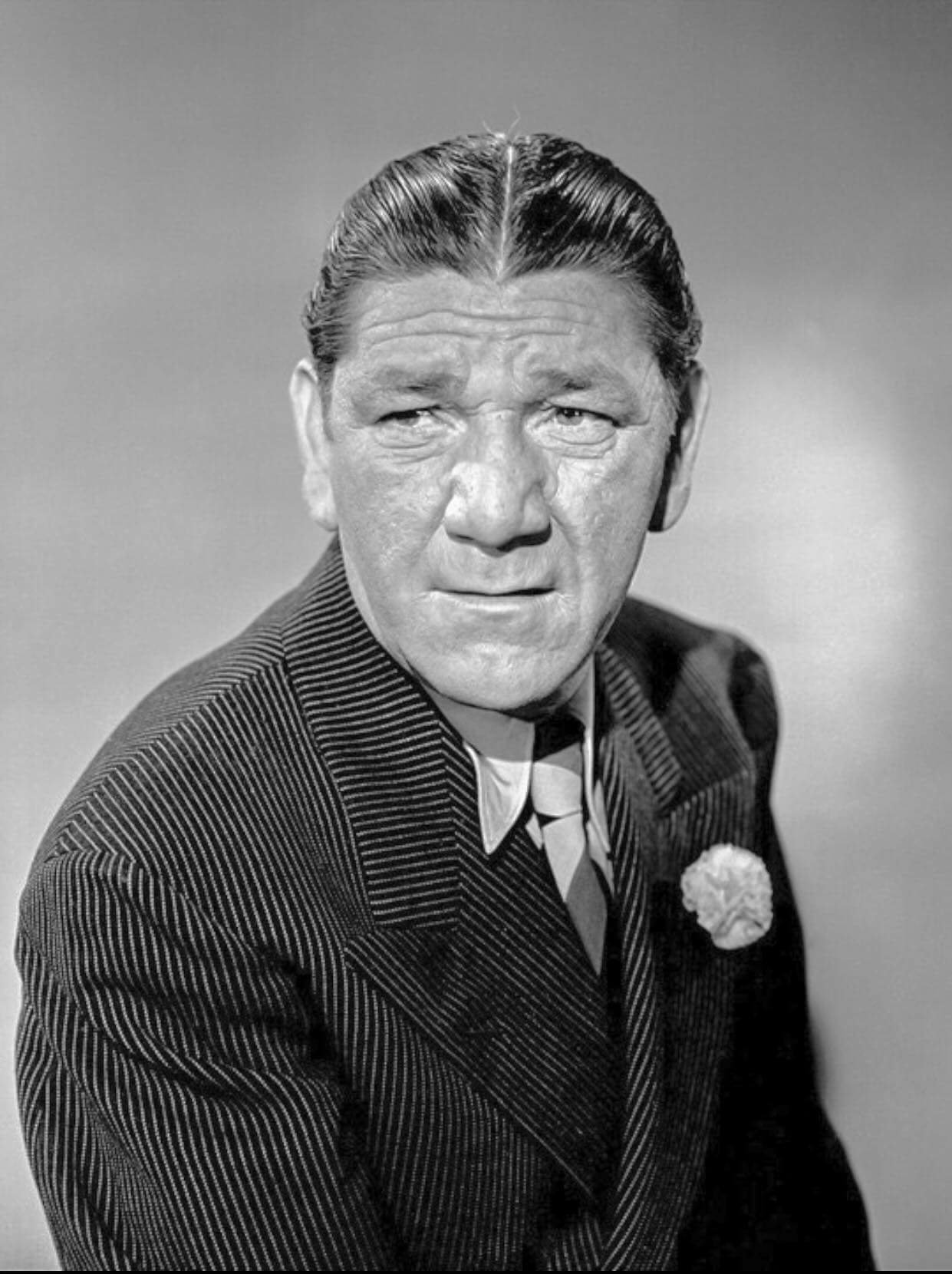
A Dapper Shemp

Many Stooge fans know “the rest of the story” (to quote Paul Harvey), but for those who don’t, Eddie Deezen’s article shared the odd final chapter of Shemp’s film career :

Columbia Studios still needed four new Three Stooges shorts after Shemp died, so they hired a replacement named Joe Palma to “be Shemp.” Joe became Shemp’s “double,” or stand-in, faking scenes by not facing the camera, just standing with his back to the camera and running off or bumbling. Old footage from previous Stooge films was intermixed with the Joe Palma footage, and thus the last four Three Stooges films with “Shemp” were made.

To this day, to “get a Shemp” or “a fake Shemp” or “a Shemp” is Hollywood nomenclature for “get a double” or “use a stand-in.” Director Sam Raimi (Spiderman), a big Three Stooges fan, always credits stand-ins or doubles in his films as “Fake Shemps.”

While people who talk about Shemp often say things like, “he’s no Curly” and Stooge Festivals often promote being “all Curly”, let’s give Shemp some credit! He was a brilliant performer. He was quick, funny, and helped to keep Stooges Comedies in theaters for years after Curly left the group.
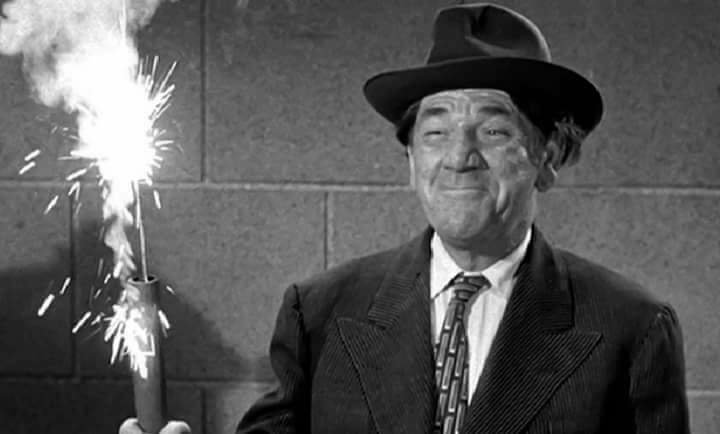
As with any team, everyone plays a part. While the team took on a new look, the slapstick was still there. The puns are still there. Larry’s facial expressions and reactions are still there. Shemp Shorts are still funny, but people who automatically cop an attitude at the opening credits before the short even starts will never come to appreciate the genius of Shemp…and that is sad.

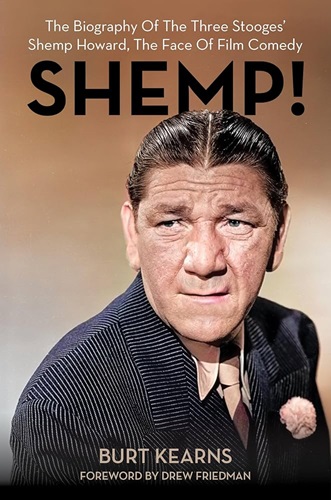
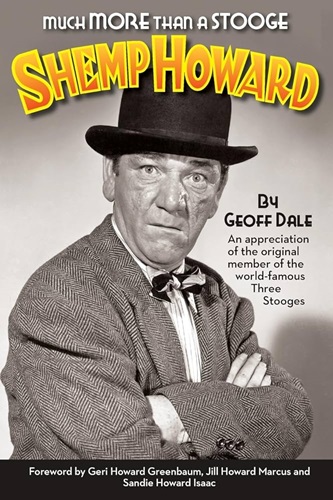
Happy Birthday, Shemp! How can you celebrate? There are two fantastic books that came out recently that are a must read for Stooge fans.
The Music of My Life – 1978

Welcome back to The Music of My Life, where I feature ten songs from each year of my life.  In most cases, the ten songs I choose will be ones I like personally (unless I explain otherwise). The songs will be selected from Billboard’s Year-end Hot 100 Chart, Acclaimed Music, and will all be released in the featured year. I turned 8 years old in ’78 and much like in ’77, there is an interesting mix of tunes.

In January of 1978, Kansas released a song that was what Steve Walsh said, “defies the basic formulas that most (rock) groups try to follow,” and it paid off in spades! Dust in the Wind has one of the greatest guitar intros! The story of how it came to be is fantastic.

Kerry Livgren devised what would be the guitar line for “Dust in the Wind” as a finger exercise for learning “fingerpicking.” His wife, Vicci, heard what he was doing, remarked that the melody was nice, and encouraged him to write lyrics for it. Livgren was unsure whether his fellow band members would like it, after all, it was a departure from their signature style. After Kansas had rehearsed all the songs intended for the band’s recording sessions of June and July 1976, Livgren played “Dust in the Wind” for his bandmates, who after a moment’s “stunned silence” asked: “Kerry, where has this been? That is our next single!”

Dust in the Wind

In February of 1978, a song that will forever be associated with a geriatric sitcom was released. Even though Andrew Gold’s version was not the version used as the Theme to the Golden Girls, the song was (A jingle singer named Cynthia Fee sang the TV version). It is one of my ten picks because there are so many female friends that love the show. My wife is a big fan of the show as well, so here it is.

Andrew Gold says that the song was “just this little throwaway thing” that took him “about an hour to write.” Writing is was obviously a breeze, however, recording it was a different story. They recorded 40 different takes of the song, finally releasing take number 40!

If you listen closely, you can hear sleigh bells in the instrumentation of the song.

Thank You For Being a Friend

In March of 1978, the great Warren Zevon released what some call a Halloween classic, even though it was intended to inspire a dance craze. Phil Everly of the Everly Brothers had seen the 1935 film, Werewolf of London on TV and joked to Zevon that he should adapt the title for a song and new dance. He played with the idea with his band members, who wrote the song together in about 15 minutes, all contributing lyrics that were transcribed by Zevon’s wife Crystal. However, none of them took the song seriously.

The song had been written long before it was recorded. It finally appeared on Warren’s third album, Excitable Boy, which was produced by Jackson Browne (who had already been performing the song at shows.) Although 59 takes were recorded, Browne and Zevon selected the second take for the final mix. The record label really pushed for Werewolves to be a single, but Zevon liked a couple other songs. The label released it and it became Warren’s only top 40 hit.

Werewolves of London

Three of my picks from 1978, all were released in my birthday month of May. The first one is by a group that was lucky enough to get a radio station to play a demo of one of their songs on air – and have it lead to a record deal. As a former radio guy, let me tell you, that just does not happen! It did, however, for the Cars.

Just What I Needed was written by Ric Ocasek. The band recorded a two track demo of the song and My Best Friend’s Girl. In Boston, in 1977, DJ Maxanne Sartori, who was given the tapes of these songs by Ocasek, recalled, “I began playing the demos of ‘Just What I Needed’ and ‘My Best Friend’s Girl’ in March during my weekday slot, from 2 to 6 p.m. Calls poured in with positive comments.” With a song on the radio in a major market, The Cars were a surefire success and had their pick of record labels. They went with Elektra, who had them re-record the song and released it as their first single.

Benjamin Orr sang lead on the song and it was a top 30 hit for the band.

Just What I Needed

The next May release is a song that will always remind me of shooting pool with my best friend, Jeff. He always picked songs for the jukebox and Life’s Been Good by Joe Walsh was always a pick. We always laughed at the lyrics. Even Walsh says the song was meant to be a humorous look at fame and fortune.

In a 1981 interview with the BBC, Walsh explained: “I wanted to make a statement involving satire and humor, kind of poking fun at the incredibly silly lifestyle that someone in my position is faced with – in other words, I do have a really nice house, but I’m on the road so much that when I come home from a tour, it’s really hard to feel that I even live here. It’s not necessarily me, I think it paraphrases anyone in my position, and I think that’s why a lot of people related to it, but basically, that’s the story of any rock star – I say that humbly – anyone in my position. I thought that was a valid statement, because it is a strange lifestyle – I’ve been around the world in concerts, and people say ‘What was Japan like?’, but I don’t know. It’s got a nice airport, you know… so it was kind of an overall statement.”

The song first appeared on the soundtrack to the movie FM and later on Walsh’s But Seriously, Folks album. The album version is over 8 minutes long, but the radio single clocked in at about 4 and a half minutes. Made after Walsh had joined the Eagles, “Life’s Been Good” was incorporated into that group’s concert repertoire, appearing in shows at the time as well as reunion tours.

Life’s Been Good

The last May 1978 song on my list was one that three years later would hit me a bit more personally – not because of the content of the song, but because of the title. Only the Good Die Young was a top 30 hit for Billy Joel, and as controversial as it was, the attempts to censor the song (or have it banned from radio) only helped it to gain spins and popularity.

Virginia, as mentioned in the first line is a real person. Virginia Callaghan was a girl Billy had a crush on when he first started playing in a band. She didn’t even know he existed until she saw him at a gig, but 13 years later he used her as the main character in this song about a Catholic girl who won’t have premarital sex. In a 2008 interview, Joel also pointed out one part of the lyrics that virtually all the song’s critics missed – the boy in the song failed to get anywhere with the girl, and she kept her chastity.

In 2023, Joel said of the song “It’s occurred to me recently that I’m trying to talk some poor innocent woman into losing her virginity because of my lust. It’s kind of a selfish song – like, who cares what happens to you? What about what I want?… But on the other hand, it was of its time.

In 1981, my grandfather died suddenly of a heart attack. He was only 58. It was the first time I ever experienced death. At the funeral, I would hear people saying nice thing about him, and I often heard, “He was too young,” or “He was a good man.” Yes, he was, and only the good die young …

Only the Good Die Young

Earlier I mentioned how Dust in the Wind was a totally different sound for Kansas, and my next song also was very different for the artist who recorded it. The Commodores were really known for being a funk band, but when Lionel Richie brought them Three Times a Lady, they knew it was going to be a hit.

This was a breakthrough song for the Commodores and for Lionel Richie as a songwriter. It crossed over to pop, easy listening and even country formats, setting the stage for further Commodores hits and Richie’s massive solo success. In a Blues & Soul interview, Richie said: “The song has given me so much personal satisfaction. I think it is every songwriter’s dream to be totally accepted. And from the masses of awards that the song has won, it seems that the whole world really does love that song. It’s a great feeling.”

It entered the Billboard Hot 100 chart on June 18, 1978, at number 73. Eight weeks later, it reached number 1, where it remained for two weeks. It became the Commodores first number one on this chart.

There are two reasons I have this on my list. First, it was one of those songs that was on my mother’s famous red 8-track tape. Lastly, it always reminds me of the first time I saw Eddie Murphy on SNL. He was doing a phony commercial for an album called “Buckwheat Sings” as Buckwheat from the Little Rascals. “Unce. Tice. Fee Tines a Mady!”

Three Times a Lady

For readers of this blog, you know that I have blogged about Willie Nelson’s Stardust album many times. Making a long story short, my grandparent’s place didn’t have a TV at first, so we listened to the radio and two cassette tapes. One of those was Stardust.

In July of 1978, released the song Blue Skies from that album. The song was written by Irving Berlin way back in 1926 and has been covered by many great singers. Those singers include Bobby Darin, Al Jolson, Bing Crosby and Danny Kaye, Johnny Rivers and the great Ella Fitzgerald. Willie Nelson took the song to the top of the Billboard Country Chart and crossed over to the Adult Contemporary chart, too (where it peaked at 32).

Blue Skies

In October of 1978, a group of guys released a song that would go on to be named the 7th Greatest Dance Song of the 20th Century by VH1. It is a song that was inducted into the Grammy Hall of Fame in 2020 and was selected by the Library of Congress for preservation in the National Recording Registry for being “culturally, historically, or aesthetically significant.” Believe it or not, that song was Y.M.C.A. by the Village People.

There is only one reason why it is on my Music of My Life list. If I had a dollar for every time I have played this at a wedding or DJ event, I could probably retire! I am probably on about 100 Facebook pages where videos of me, a groom and his groomsmen are dressed up as the Village People leading the crowd in the dance. It is totally ridiculous, but true.

The song went to number one in countries all over the world, but it only reached number 2 here in the US. It continues to be played at parties and sporting events throughout the world.

Y. M. C. A.

I certainly do not want to wrap the year on that song, so instead, I will end with another party classic. I’ll also end with a “feel good song.” How can you NOT love September by Earth, Wind and Fire? The song has a tendency to make people happy when they hear it. Allee Willis, who wrote the song with Maurice White and Al McKay from Earth, Wind & Fire, describes it as “Joyful Music.”

Every year, on September 21st, you will hear this song all over the radio! There are many theories as to the significance of the “21st night of September” in the opening lyrics, and until 2018, even the song’s co-writer was in the dark – Maurice White told her it had no real significance and was chosen because it sang well phonetically. White died in 2016; two years later, Willis was having lunch with his widow, Marilyn, who told her that September 21 was the due date for their son, Kahbran, and that Maurice put that specific date into the song as a secret message. Kahbran ended up being born early on August 1, which definitely wouldn’t have the same ring to it as a lyric.

Although many people hear the first words in the chorus as “Party On,” it’s really “Bah-dee-Ya.” Allee Willis explained in a Songfacts interview: “I absolutely could not deal with lyrics that were nonsensical, or lines that weren’t complete sentences. And I’m exceedingly happy that I lost that attitude. I went, ‘You cannot leave bada-ya in the chorus, that has to mean something.’ Maurice said, ‘No, that feels great. That’s what people are going to remember. We’re leaving it.’ We did try other stuff, and it always sounded clunky – thank God.” She went on to say, “The main lesson I learned from Earth, Wind & Fire, especially Maurice White, was never let a lyric get in the way of a groove,” she added. “Ultimately it’s the feel that is the most important, and someone will feel what you’re saying if those words fit in there right.”

The first appearance of the song was on The Best of Earth, Wind and Fire – Volume 1. It is a great groove that still fills the dance floor!

Next week, we’ll take a look at the final year of the 70’s. 1979 promises to be a good mixture of genres and will feature one of my first television heroes, who starred in a couple TV shows, many movies, and is still popular today.

See you next time in 1979!