
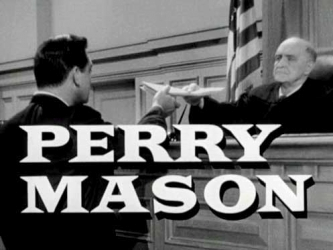
This blog post is part of the Hanspostcard TV Show Draft.
My choice for the third round draft pick is Hollywood’s first weekly one-hour series that was filmed for television – Perry Mason. The show ran for 9 seasons (September 1957 – May 1966) and starred Raymond Burr in the title role.
The character of Perry Mason was well known before he was ever on TV. The attorney was the star of novels and stories written by a lawyer-turned-author Erle Stanley Gardner. There were some movies made by Warner Brothers and also a radio series based starring the character, by Gardner hated them! As a matter of fact, he refused to license the character of Perry mason for any more adaptations. (Interestingly, the radio series continues and evolved into the famous soap opera The Edge of Night.)
Gardner’s agent married actress Gail Patrick and she was the one who talked him into adapting the novels into a TV series. He made it clear that he wanted a lot of control over the show and how it was presented. He also had a hand in helping pick the cast. Many of the stories he wrote were turned into episodes for the series.
The Cast
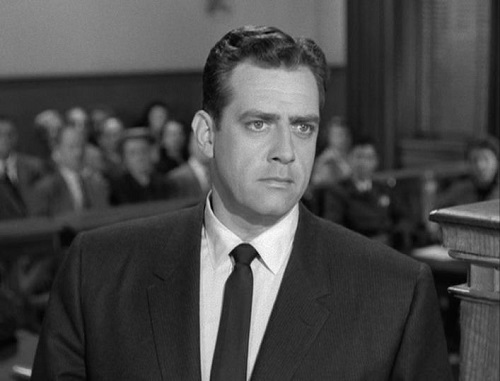
It is hard to imagine anyone other than Raymond Burr as Perry Mason. However, among the actors in the running were Mike Conners, Richard Egan, William Holden, Efrem Zimbalist Jr., William Hopper, and Fred MacMurray. Raymond Burr actually auditioned for the role of Hamilton Burger, the DA. Gail Patrick remembered his performance from the 1951 film “A Place in the Sun” and told him he was perfect for the role.
At the time, Burr was about 60 pounds overweight, so he went on a crash diet and tested for the role again with about 50 other actors. Erle Stanley Gardner saw him and reportedly said, “THAT is Perry Mason!” Burr continued to lose weight as the series continued. He stated, “I just don’t have time to eat.”
Syndicated columnist Erskine Johnson wrote, “Every six days Burr stars in what almost amounts to a full-length feature movie. He’s in 98% of all the scenes.” Burr stated, “I had no life outside of Perry Mason. And that went on 24 hours a day, sox days a week. I never went home at night. I lived on the lot. I got up at 3 o’clock every single morning to learn my lines for that day, and sometimes I hadn’t finished until 9 o’clock. I had a kitchen, bedroom, office space, sitting room – al of that – on every lot I ever worked on.“
Burr won three Primetime Emmy Awards for his portrayal of Perry Mason (1959, 1960, and 1961).
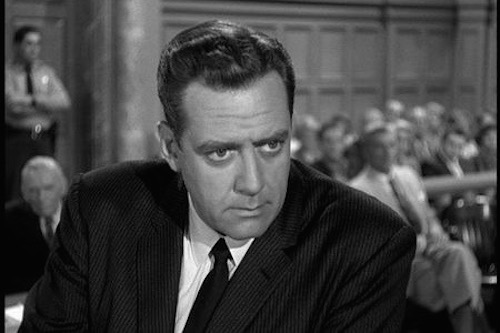
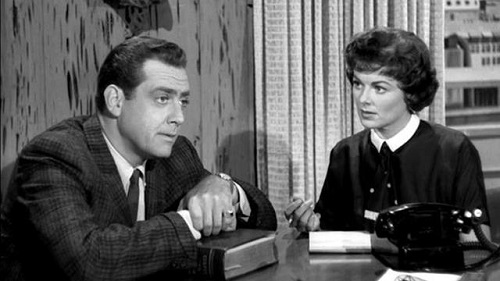
Other major players in the cast included Barbara Hale as Perry’s secretary, Della Street. Hale had done some feature films, but wanted to avoid going away for long periods of time to shoot them because she had a rather young family. According to Gail Patrick, it was Hale who called her to inquire about the role of Della.
William Hopper, as I mentioned before, auditioned for the role of Perry Mason (I believe you can find some of the audition tapes on YouTube). After not getting the role of Mason and auditioning for Private Detective Paul Drake, he walked in the room and said, “You hate my mother!” His mother was Hedda Hopper, the famous gossip columnist. Patrick said he was the perfect Paul Drake, so he got the role.
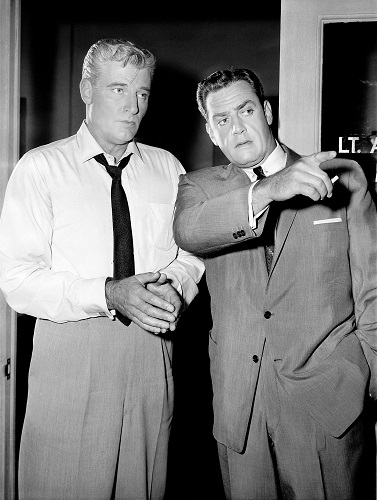
For the role of District Attorney Hamilton Burger, Patrick knew exactly who she wanted. She had seen William Tallman in The Hitch-Hiker and knew he was perfect for the role. She said, “He never disappointed.” In an interview he was asked how he felt about his character losing to Perry Mason every week. His response is perfect. He stated, “Burger doesn’t lose. How can a district attorney lose when he fails to convict an innocent person?” When Burr was asked by a fan why he won every case, he told her, “But madam, you only see the cases I try on Saturday!”
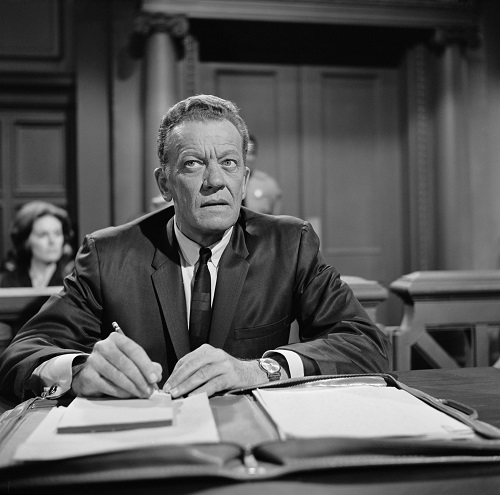
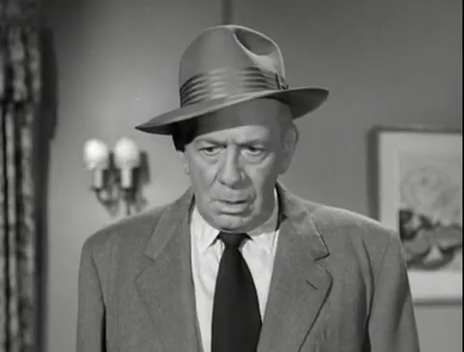
Another one of Perry’s foils was Police Lt. Arthur Tragg. Ray Collins’ voice was known to so many listeners of the Mercury Theater on radio. He had also been in movies and other TV shows. Patrick joked saying, “We overlooked the fact that on an actual police force, he would probably be long retired.” He was 68 years old when the show debuted on CBS. The playful interaction between Tragg and Mason are priceless.
The Plot
The basic formula for each episode was the same. The first part of the show introduced the viewer to a client who is hiring Perry Mason for some legal work or is introduced to him in some way. We then see the murder victim and other “suspects” introduced. The victim is murdered and Perry’s client is wrongfully accused of the crime. The remainder of the episode focuses on Burger and Tragg gathering evidence to convict the said “murderer”, Perry, Drake and Della take up their own investigation to prove their client is innocent.
The second half of the show would shift to the courtroom where Perry and Hamilton would duke it out in the preliminary hearing. In the novels, Perry likes to clear the client before they are bound over for trial, so this was worked into the show. They happen, but jury trials are rarely seen on the show.
The show would often culminate with Mason recalling a witness and questioning them until they cracked and admitted committing the murder OR causing someone else in the courtroom to admit that THEY committed the murder. The show would then wrap with a scene in Perry’s office or the courtroom where details would be presented on what led Perry to discover the real killer.
The formula worked for 9 seasons and eventually 30 TV made for TV movies.
Episodes of Interest
Throughout the run of the series, there were some very unique episodes. In the entire run of the series, Perry tackles an astounding 271 cases, and wins almost all of them! He actually lost thre cases (that we know of). In The Case of the Witless Witness, he loses a non-murder case. In The Case of the Terrified Typist, his client is found guilty of murder, but he is eventually able to clear her name. Finally, in The Case of the Deadly Verdict his client is found guilty of murder and is actually sentenced to death in the gas chamber! Perry, of course, is able to save the day before the execution is scheduled to take place.
A fun episode to watch is The Case of the Dead Ringer. Raymond Burr plays a dual role in this episode playing a man named “Grimes.” It’s fun to watch Burr question Burr as two different characters!
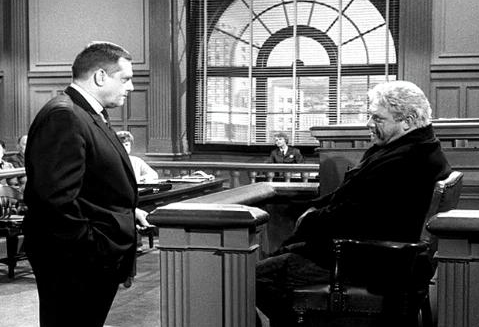
In season 6, Burr had some episodes where is appeared briefly, but guest actors filled in for Perry. Among those actors were Bette Davis, Michael Rennie, Hugh O’Brian, and Walter Pidgeon. Two years later, Burr was hospitalized for jaw surgery and Mike Conners and Barry Sullivan filled in for him.
How about the three that never set foot in a courtroom? Those were The Case of the Baited Hook, The Case of the Velvet Claws, and The Case of the Careless Kitten.
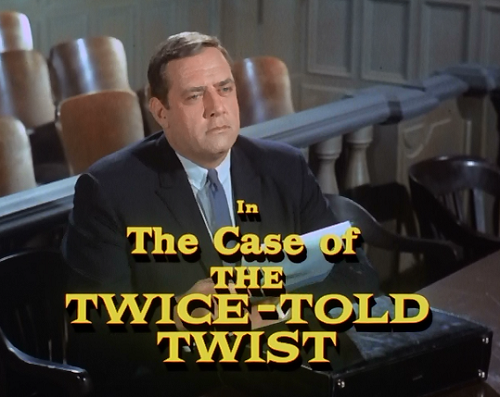
One of the most interesting shows was the one – and only – show that was shot in color. In the 9th season, CBS was hoping that the show would shoot a 10th season. Many shows were being shot in color by this time and they wanted to see what the show would look like. The Case of the Twice-Told Twist aired – in color – on February 27, 1966.
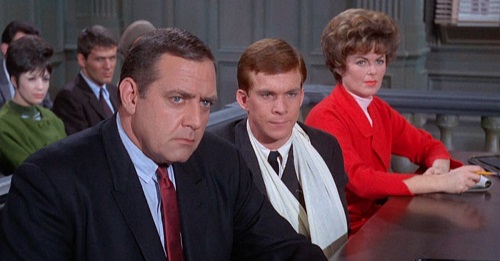
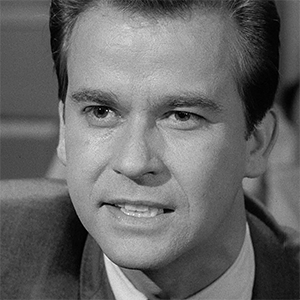
A must see episode is the series finale, The Case of the Final Fade-Out. First of all, it features cameos by all of the Perry Mason Crew in various roles. Second, it features the creator of the character, Erle Stanley Gardner, as the judge, and the murderer is … spoiler alert … a young Dick Clark!

Before They Were Famous
Many soon-to-be stars appeared on Perry Mason. I guess that is another reason why I love watching it. You never know who will pop up. Some examples: Barbara Eden, Cloris Leachman, Lee Meriwether, Pat Priest, Yvonne Craig, James Coburn, Angie Dickenson, George Kennedy, Diane Ladd, Frankie Laine, Ryan O’Neal, Robert Redford, Burt Reynolds, Claude Akins, Richard Anderson, Barbara Bain, James Best, Whit Bissell, Frank Cady, Bert Convey, Richard Deacon, Norman Fell, Alan Hale Jr., Harvey Korman, Gavin MacLeod, Allan Melvin, Leonard Nimoy, Denver Pyle, Marion Ross, Adam West, and MORE!
The Theme Song
Let’s be honest, the Perry Mason Theme Song is one of the most recognizable in all of television. The task of writing the theme went to composer Fred Steiner. He set out to write a song that would convey two of Perry’s prime characteristics – sophistication and toughness. The piece he wrote was called “Park Avenue Beat.”
Here is Fred discussing how he came up with the theme:
Here is the theme from the first season:
As much as I love the original version, I have to admit that when Perry Mason returned to TV in the two hour movies, I loved the version used for these films better. They just sound more full and better produced to me. So here it is:
I may as well touch briefly on the TV movies. In December of 1985, Perry Mason Returns aired on NBC.

In the movie, Perry is now a judge and steps down from the bench to defend Della Street, who is accused of murder.
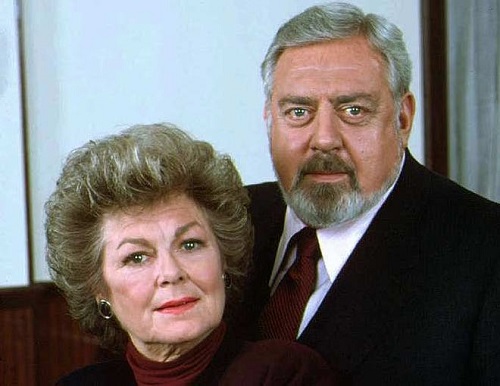
William Hopper died in 1970, so William Katt (Barbara Hale’s son) was called in to play Paul Drake Jr. The movies followed the same formula as the TV show. Burr and Hale had aged, but their on screen chemistry hadn’t changed at all. Burr was fantastic in this of course, he proves that Della is innocent! The successful reception and ratings of the reunion show led to 29 more Perry Mason Movies (Burr starred in 26 of them before passing away in 1993).
I never tire of watching Perry Mason. Despite being a bit dated, I think it still holds up today. HBO has created a “pre” Perry Mason show supposedly showing how he became the famous lawyer. I have no desire to watch it. To me, there is one and only Perry Mason!
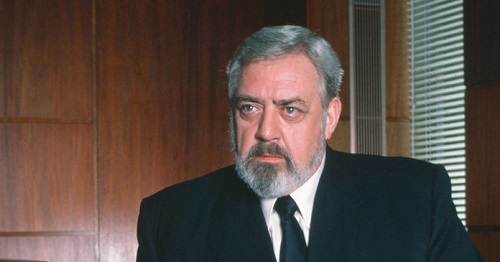
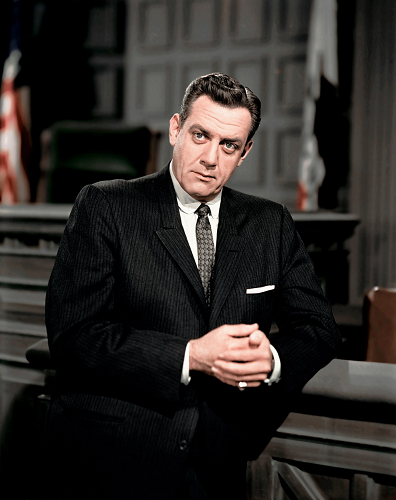
FUN FACT: Raymond Burr started playing the character in 1957 and played him until his death in 1993. He played Perry Mason for a whopping 36 years!
So if you ever find yourself accused of murder … there is only one lawyer to call….


 Various Ramblings of a Nostalgic Italian