I’m a firm believer in using your imagination. In today’s society, we can plop down in front of the TV and watch shows and not really have to think about what’s going on. Everything is right there on the screen. However, back in the days before television, there was radio.
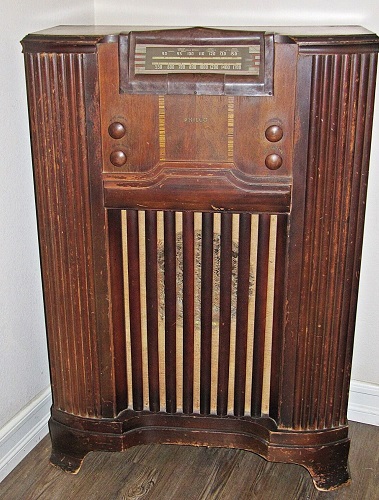
Radio was a medium that brought the listener’s imagination to life! You and I could listen to the same show, but each see our own version because we’d picture things differently. There is a reason that so many folks used the phrase “theater of the mind” when talking about old time radio.
One of the best radio dramas was a show simply called Suspense. If I had to describe it, I’d say it was the radio version of the Twilight Zone. I say that because there was often a twist at the end of each show. If you really want to hear REAL acting, Suspense featured it every week! Actors and actresses only had the use of their voice to display the wide range of human emotions – and they did it flawlessly!
Suspense was a half-hour drama series that aired on the CBS radio network from 1940 to 1962 (for the first half of 1948, episodes lasted for 60 minutes). That multi-year run made it one of network radio’s longer lasting dramatic series with nearly 950 episodes produced.
At its height, the radio series featured a cross-section of well known Hollywood actors and actresses (it was aired from Los Angeles from 1943 through into the 1950s) who were attracted by the quality of the scripts and show’s production values. For years, the host was simply “The Man in Black” who would almost whisper the opening line “. . . And now, another tale well-calculated to keep you in . . . Suspense.”
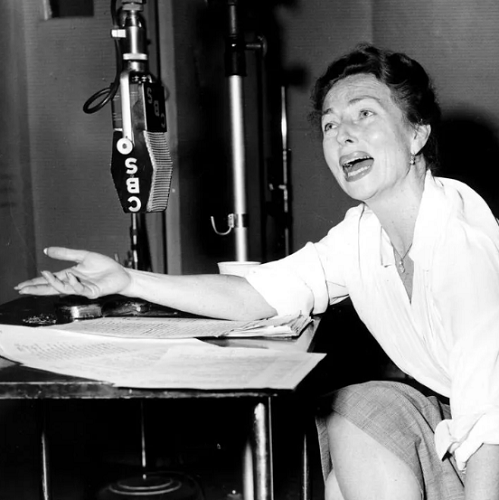
82 years ago today, Suspense aired one of its classic episodes. It is an episode that will often come up when anyone speaks of the Golden Age of Radio. It starred a young Agnes Moorehead (who would go on to play Endora on TV’s Bewitched). I am talking about the classic “Sorry, Wrong Number.
“Sorry, Wrong Number,” a classic suspense radio drama, explores the chilling scenario of a woman accidentally eavesdropping on a murder plot. The episode, broadcast on May 25, 1943, tells the story of Mrs. Stevenson, a woman who listens to a phone call between two men planning a murder. She realizes the crime is set to happen that night, and she desperately tries to alert authorities. Sadly she finds her efforts blocked by indifference and bureaucracy, leading to a terrifying climax where she realizes she might be the intended victim.
In an essay by Christopher H. Sterling, he says,
In a modern era of digital cellphones, the impact of this period program is sometimes difficult to understand. But when it was originally broadcast in the midst of World War II, in an analog era of operator-assisted telephone calls and shared “party” lines, radio listeners could readily identify with the situations they heard.
Sorry, Wrong Number was initially broadcast live twice on May 25, 1943 (once for East Coast listeners–with a minor flub in one line—and then repeated for the West Coast). It was rebroadcast other eight times (on August 21, 1943; February 24, 1944; September 6, 1945; November 18, 1948; September 15, 1952; October 20, 1957; and February 14, 1960).
In 1948, the play was made into a movie starring Barbara Stanwyck and Burt Lancaster. The film is excellent, but nothing compares to the amazing performance of Agnes Moorehead on the radio version.
Do yourself a favor, pull up a chair and give it a listen. Let your imagination go wild! Listen to what she is able to convey simply with her voice. Let’s go back 82 years and enjoy a masterpiece!
We have reached the final round of the Hanspostcard TV Show Draft. I want to take a moment and thank Max from the Power Pop Blog for taking up the reigns and helping us continue this round in Hans’ absence. It truly has been a fun draft!
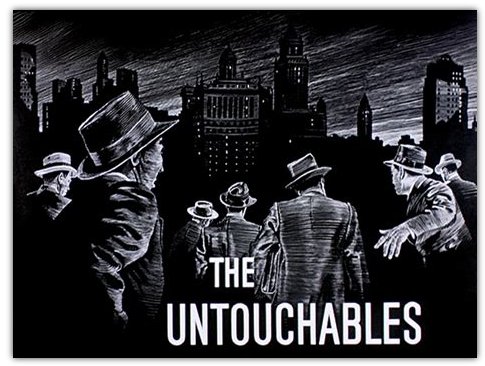
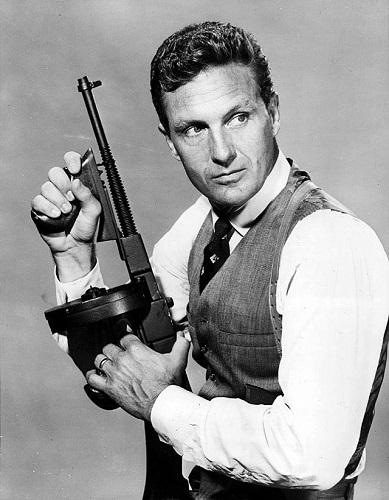
For my final pick, I have gone back to another classic – The Untouchables. The show ran from 1959 to 1963 and starred the great Robert Stack as Eliot Ness. It is hard to imagine anyone but Robert Stack in the role of Ness, but believe it or not, Desi Arnaz had originally offered the role to actor Van Johnson. Supposedly, he wanted double what they were offering to pay for the role, and it ultimately went to Stack.
When asked about the character some years later, Stack said, “Ness was a precursor of Dirty Harry. He was a hero, a vigilante in a time when breaking the law meant nothing because there was no law because Capone owned Chicago, he owned the police force.”
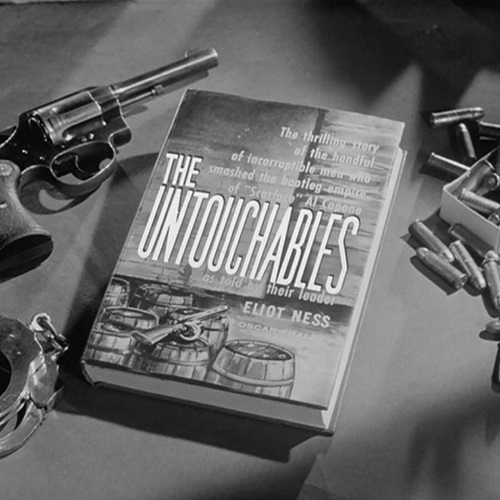
The show was based on the book of the same name written by Eliot Ness and Oscar Fraley. Brian De Palma would use the book as the basis for his 1987 film of the same name.
According to Wikipedia:
The series originally focused on the efforts of a real-life squad of Prohibition agents employed by the US Department of Justice and led by Eliot Ness (Stack) that helped bring down the bootleg empire of “Scarface” Al Capone, as described in Ness’s bestselling 1957 memoir. This squad was nicknamed “The Untouchables” because of its courage and honesty; squad members could not be bribed or intimidated by the mob. Eliot Ness himself had died suddenly in May 1957, shortly before his memoir and the subsequent TV adaptation were to bring him fame beyond any he experienced in his lifetime.
The pilot for the series, a two-part episode entitled “The Untouchables,” originally aired on CBS’s Westinghouse Desilu Placyhouse (and was introduced by Desi Arnaz) on April 20 and 27, 1959. Later re-titled “The Scarface Mob”, these episodes, which featured Neville Brand as Al Capone, were the only episodes in the series to be more-or-less directly based on Ness’s memoir, and ended with the conviction and imprisonment of Capone. CBS, which had broadcast most of Desilu’s television output since 1951 beginning with I Love Lucy, was offered the new series following the success of the pilot film. It was rejected it on the advice of network vice president Hubbell Robinson. ABC agreed to air the series, and The Untouchables premiered on October 15, 1959. In the pilot movie, the mobsters generally spoke with unrealistic pseudo-Italian accents, but this idiosyncratic pronunciation was dropped when the series debuted.
The weekly series first dramatized a power struggle to establish a new boss in Capone’s absence (for the purpose of the TV series, the new boss was Frank Nitti, although this was, as usual for the series, contrary to fact). As the series continued, there developed a highly fictionalized portrayal of Ness and his crew as all-purpose, multi-agency crime fighters who went up against an array of 1930s-era gangsters and villains, including Ma Barker, Dutch Schultz, Bugs Moran, Lucky Luciano,and in one episode, Nazi agents. On many occasions during the series run, Ness would blatantly violate suspects’ Fourth Amendment rights with no legal ramifications.
The terse narration by gossip columnist Walter Winchell, in his distinctive New York accent, was a stylistic hallmark of the series, along with its ominous theme music by Nelson Riddle and its shadowy black-and-white photography, which was influenced by film noir.
The series produced 118 episodes which ran 50 minutes each. Though the book chronicled the experiences of Ness and his team against Capone, and in reality the Untouchables disbanded soon after Capone’s conviction. The series continued after the pilot and book ended, depicting the fictitious further exploits of the Untouchables against many, often real life, criminals over a span of time ranging from 1929 to 1935.
The show came with some controversy. Italian-American groups protested over what they felt was an unfair presentation of their people as Mafia-types. “We are plagued with lawsuits after certain shows” one of the show’s producers Josef Shaftel explained, noting that the series was “heavily insured against libel.” With good reason – the first lawsuit against the show was instigated by Al Capone’s angry widow. She didn’t like the way her deceased husband was made into a running villain on the show and wanted a million dollars for unfair use of his image. (She lost.)
The FBI and J. Edgar Hoover were ticked off too. They were the ones who collared the famous names that Ness was supposedly busting each week on TV and they rightfully wanted credit for it. The second episode of the series, for example, depicted Ness and his crew involved in the capture of the Ma Barker gang, an incident in which the real-life Ness played no part. The producers agreed to insert a spoken disclaimer on future broadcasts of the episode stating that the FBI had primary responsibility for the Barker case. Even the Bureau of Prisons took offense, complaining that the show made their treatment of Al Capone look soft.
The show itself was considered one of the most violent television shows of its time. Of course, by today’s standards it’s not that bad, but it was violent enough at the time to spark protests from parents who were worried about their children seeing this violence.
My Thoughts
This is one of those shows that I just love! Robert Stack’s delivery of almost every line as Ness is perfect. He won an Emmy in 1960 for Best Actor in a Dramatic Series for his portrayal of Ness.
Despite the fact that many of the stories are fictionalized to work the Untouchables into them, they are great! The show really was a forerunner to shows like The FBI, Crime Story, and even Hawaii 5-0. I love the film noir feel of it. Every episode plays like a good 50 minute movie.
The Lebanon Pennsylvania Daily News said of The Untouchables: “Between the hard-nosed approach, sharp dialogue, and a commendably crisp pace (something rare in dramatic TV at the time), this series is one of the few that remains fresh and vibrant. Only the monochrome presentation betrays its age. The Untouchables is one of the few Golden Age TV shows that deserves being called a classic.” It really does hold up well.
As I have mentioned before, one of the things I love about these old shows is seeing big stars (who are not quite yet stars) show up. In regular roles throughout the series you could see Raymond Bailey (Mr. Drysdale on the Beverly Hillbillies), Barbara Stanwyck, Barbara Nichols, Ed Asner (Lou Grant), Harry Morgan (Col. Potter on MASH), and Henry Silva.
The list of guest star appearances is long and amazing. They include: Jack Elam, Paul Frees, Jim Backus, Sam Jaffe, Martin Balsam, John Dehner, William Bendix, Whitt Bissell, Charles Bronson, James Caan, James Coburn, Mike Conners, Robert Duvall, Peter Falk, Norman Fell, Alan Hale Jr., Brian Keith, Jack Klugman, Cloris Leachman, Jack Lord, Lee Marvin, Telly Savalas, Elizabeth Montgomery, Leonard Nimoy, Robert Redford, Ricardo Montalban, Rip Torn, Jack Warden, Dick York, Cliff Robertson and so many more!
“The Untouchables”
Paul Picerni, Robert Stack
circa 1961
You know, they play reruns of Law and Order on TV all the time. Many of the shows I have seen numerous times. I know what’s going to happen, yet I still watch (a lot like my previous picks – Perry Mason and Columbo). The Untouchables is a show that could very easily be rerun like a Law and Order. It is that good.
I love Walter Winchell’s narration
And I love the theme song!
It has been so much fun writing on some of my favorite shows. It’s been just as fun to read about the shows picked by other members of the TV Show Draft. I hope you have enjoyed my picks…



 Various Ramblings of a Nostalgic Italian