Turntable Talk #38 – It’s About Time

Dave just wrapped up another chapter of Turntable Talk. This was my contribution:

It is time once again for Turntable Talk hosted by Dave at A Sound Day. For over three years now, he has offered up a musical topic each month for me (and other participants) to write about. This month’s topic is “It’s About Time.”

Dave’s instructions are simple. “Tell us about a song about “time.” It could be one using the word “time” in the title … and there’s no shortage of them… or one that actually somehow explores the passage of, or idea of time.” While this is a topic that is fairly easy, I can’t help but wonder if there will be duplicate submissions.

For example, right off the top of my head I came up with Time in a Bottle from Jim Croce (which I have written about before. Then Time After Time from Cyndi Lauper came to mind. This was followed by Cher’s If I Could Turn Back Time and Huey Lewis’ Back in Time. Before I could shut my mind off Styx Too Much Time on My Hands and Semisonic’s Closing Time entered my mind.

I immediately discarded those, because I am sure that the other participants would choose one of those. So I dug a little deeper and tried to think of a song that might not be someone’s choice. I narrowed it down to No Time by the Guess Who, Just in Time by Dean Martin, Crying Time from Ray Charles, Time is Tight by Booker T and the MG’s, and my choice.

I chose a song written by Herman Hupfeld! Now everyone knows Herman, right? No. Not really, but I am sure you will know the song. It is a song that was written in 1931 for the Broadway show “Everybody’s Welcome.” It was first recorded by Rudy Vallee in July of 1931. It would be covered by Billie Holiday, Louis Armstrong, Frank and Nancy Sinatra, Natalie Cole, Carly Simon and Bob Dylan (Just to name a few).

While the song was recorded a few times after Vallee’s version, it was 11 years later when it would really get noticed. In 1942, the song was sung by the character “Sam” (portrayed by Dooley Wilson) in the classic film – Casablanca. As Time Goes by is heard throughout the film in short musical breaks.
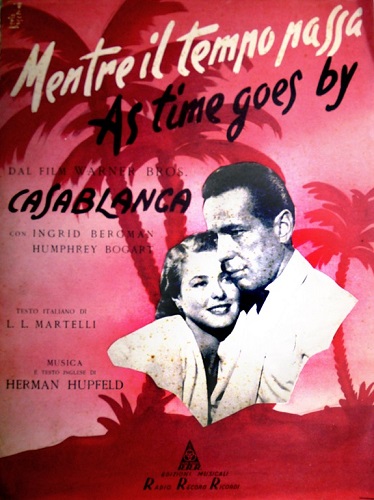
RCA Victor wanted Dooley to record a version of it to be released to the public. However, a musician’s strike happened between 1942 and 1944, so he was not allowed to do so. Instead, the record label re-released the Rudy Vallee version, which went on to become a number one record (11 years after the original release).

Wiki states: Like many later singers, Wilson in Casablanca starts with “You must remember this, a kiss is still a kiss…”, singing only the verses and refrain (“As time goes by”). He entirely omits the intro that put those “fundamental things” into context: “This day and age we’re living in gives cause for apprehension, With speed and new invention and things like third dimension. Yet, we get a trifle weary with Mister Einsten’s theory, So we must get down to earth, at times relax, relieve the tension. No matter what the progress or what may yet be proved, The simple facts of life are such they cannot be removed.”

The song was voted No. 2 on the AFI’s 100 Years… 100 Songs special. The show commemorated the best songs in film.

The version I chose to feature is by a multi-talented comedian, actor, pianist and singer. His voice was instantly recognizable on radio. He was a guest on many television shows and had some success as a singer. He is, however, probably best known for … his nose. His nickname was “the schnozzola.” I am, of course, talking about the great Jimmy Durante.
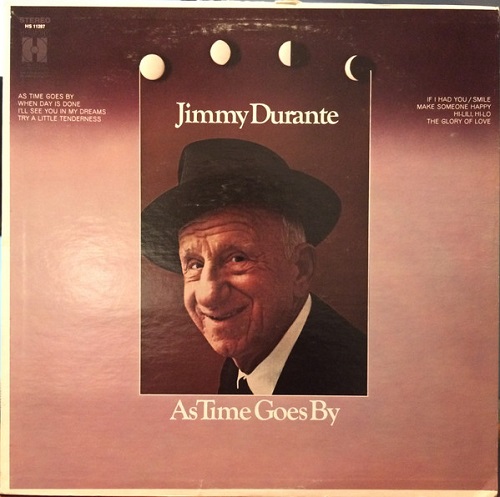
The song itself is beautiful. Every artist who has covered it brings their own special take on it. There is something that really hits me when I hear Durante’s version. Despite that raspy voice, there is a sincerity that makes it just a bit better than the other versions. I’m not trying to diss the other versions, but none of them give me goosebumps when I hear them. Jimmy’s version does. For some reason, his voice blends so well with the string arrangement.

Before I post the song, you know I have to say it – “Play it again, Sam!”

In a live version, Jimmy adds the intro that many leave out.

Thanks again to Dave for asking me to participate and for hosting this feature. I’m excited to see the choices of the other writers!

Thanks for reading and for listening!
Turntable Talk #34 – What’s My Scene?

Welcome to the first Turntable Talk of 2025, hosted by Dave of A Sound Day. This is the 34th round, if you are keeping track. If you are a new follower, let me fill you in on how it works. Dave Ruch offers up a musical topic to a group of us music fans each month. Each of the writers come up with a response to the topic and Dave runs each piece on his website.

We have had some fun and interesting topics, and this one is no exception. This time around, Dave asks,  “What’s my scene?” Our instructions: Pick a sort of music “Scene” that either you would have liked to have been a part of or one that you think really created a lot of the music you love. Pick a general place and time and have fun…. 

My fellow music bloggers know my musical tastes pretty well by now. So, let’s see a show of hands – How many thought I’d pick The Rat Pack in Vegas? I almost did, but I know I have written on a live Rat Pack show in the past. Honestly, as awesome as that would be, the more I thought about it the more I leaned another way.

My scene certainly influenced the Rat Pack. Dean Martin cut an album called Swingin’ Down Yonder. Frank Sinatra recorded albums titled: Sinatra Swings, Songs for Swingin’ Lovers, Swing Easy, Sinatra’s Swingin’ Session, Sinatra and Swingin’ Brass, and A Swingin’ Affair! You know what the song says, “It don’t mean a thing, if it ain’t got that swing!”

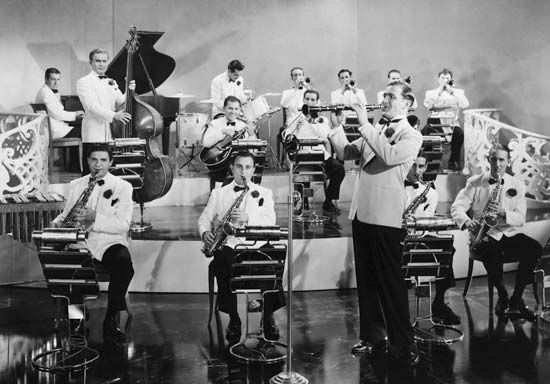
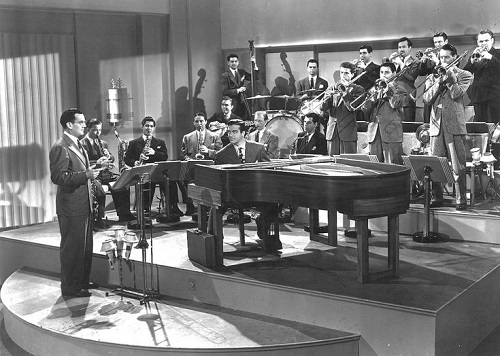
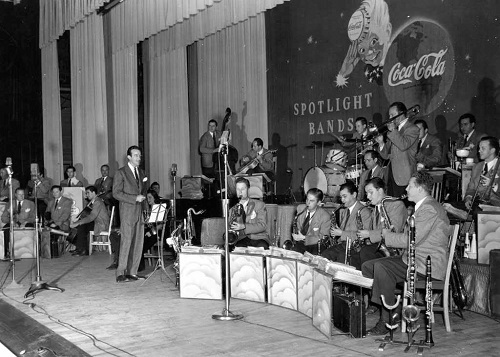
As a mediocre trumpet player, I have always loved Big Band/Swing music. Most folks would consider the Swing Era to be from the early 1930’s to around the mid 1940’s. Even though swing music was prominent in the early 1930’s, it was often ridiculed for its style and feel. Some went as far as to call it a menace (much like Rock and Roll when it gained popularity). After 1935, big bands rose to prominence playing swing music. They held a major role in defining swing as a distinctive style.

There were many big bands on the scene at this time. Each had a very distinct sound and feel to it. For example, Glenn Miller’s orchestra often used a clarinet lead. Count Basie’s sound has a relaxed feel to it. Benny Goodman used a driving and hard swing sound. Duke Ellington’s songs has a sophisticated sound to them.

The band leaders often took the spotlight. They were amazing instrumentalists. Harry James and his trumpet, Benny Goodman and Artie Shaw on their clarinets, Gene Krupa on his drums, the trombones of Tommy Dorsey and Glenn Miller, and Lionel Hampton’s vibes. Along with those great leaders, there were plenty of talented musicians within those bands who went on to make a name for themselves.

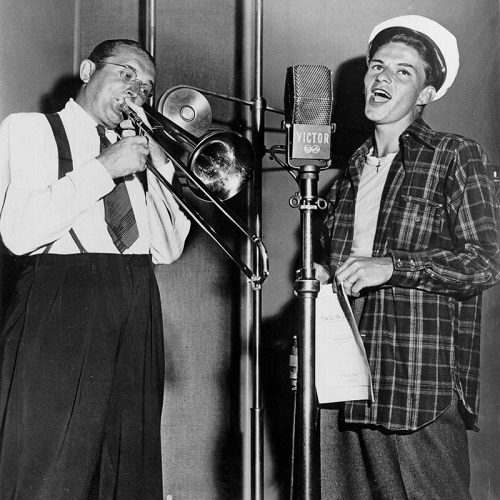
Perhaps Sinatra recorded his many swing songs because he rose to fame alongside Tommy Dorsey. He was one of many singers who sang with those big bands. Others included the voices of Ella Fitzgerald, Billie Holiday, Kay Starr, Peggy Lee, Doris Day, Kitty Kallen, and Dick Haymes. While they all started with the big swing bands, they also went on to have prolific careers.

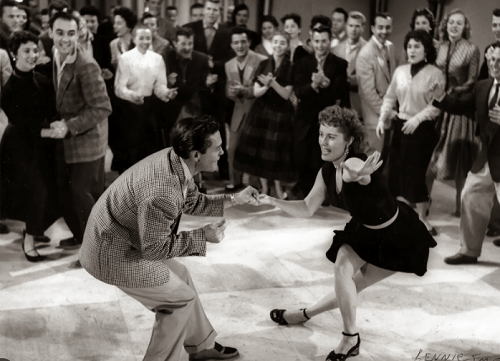
During the swing era, the big bands would often play at dance halls across the country. They appeared on the radio playing dance music. Some appeared in movies, and all of them made records. Their music had teenagers and young adults dancing until their feet hurt.

As years went on, the taste of music listeners changed. Swing began to fade away to make way for music that was less “danceable” like bebop. Many of the swing bands broke up, while other continued without their original leaders. The Glenn Miller Orchestra still tours today, for example.

When I put on headphones and listen to old big band recordings, I picture myself there listening. I picture myself in one of those great 1930’s suits with a stylish fedora.

Maybe it is in a dance hall or at a live concert. Maybe I am in the audience of a radio program where the band is playing. Wherever the music is being played, I am zoned in on it. I am listening to the drum beat of Sing, Sing, Sing and Benny Goodman. I can hear the vibrato of Tommy Dorsey’s trombone solo on I’m Getting Sentimental Over You. I marvel as I watch and listen to Harry James play his theme song, Ciribiribin.

Throughout the evening, I will study those great instrumentalists who improvise solos off the top of their head. Looking at nothing but chords and making up their own melodies. This is something I wish I could do as a trumpet player.

In all honesty, in my “scene,” I would be happy as a clam to just be in the audience. It would be the bees knees just watching those guys swing! Yeah, I can totally see myself swinging, singing, and dancing to the sounds of swing.

Thanks again, Dave for inviting me to take part in this feature. It is always fun to contribute and to read the other submissions. I’m already looking forward to next month’s topic!

Turntable Talk #24 – This Woman’s Work

For two solid years Dave Ruch from A Sound Day has been hosting a monthly feature called “Turntable Talk.” Each month he provides a topic to me and other musical bloggers to write about. I have been honored to have participated in every one of them. Each of the participants look forward to not only writing our piece, but anxiously await reading the other contributions.

As I stated in a previous blog, this month is International Women’s Month. Dave offered us an easy topic to write about this month. His instructions state “we’re going to turn our tables and sights to the women of music. Pick one you like and write about her. Whoever you want (that might sound creepier than I intended it), singer, songwriter, band member, the lady on the ‘Breakfast in America’ cover, whoever.”

I wrote a blog that teased this topic earlier in the week. In that post, I said, “I really struggled to pick one (female singer). I even posted on Facebook asking my friends to offer up their three favorite singers. I guess I hoped that they would offer up someone that I hadn’t considered (and they did). The results surprised me. The singers that came up the most were (1) Stevie Nicks, (2) Etta James, and (3 – tie) Pink and Karen Carpenter. Etta was the only one that was in my list of considerations. After looking at the list (and the suggestions) I finally chose who I am writing about and NO ONE mentioned her.

Along with Etta James, I featured a song from my other considerations: Ella Fitzgerald, Alison Krauss, Aretha Franklin, Billie Holiday, Dusty Springfield, Sarah Vaughn, Diana Krall, Norah Jones, Linda Ronstandt, Pat Benatar, Peggy Lee, Jewel, and Keely Smith in that blog. So how did I finally come up with my choice?

My friend, Dawn, from high school actually helped me make my decision. She said, “There are so many talented vocalists, I’d have a hard time picking. if you’re going to write an impactful piece, I think you have to go with somebody you admire because they knocked down boundaries or overcame obstacles. That’s how I’d pick my vocalist.” That really struck me. Now, I am not saying that the ladies I mentioned already did not knock down boundaries or overcome obstacles – heck, Jewel was living in her van before she made it big!

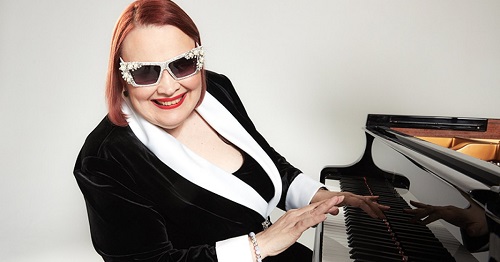
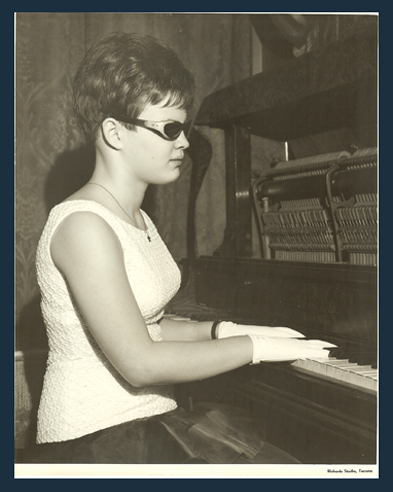
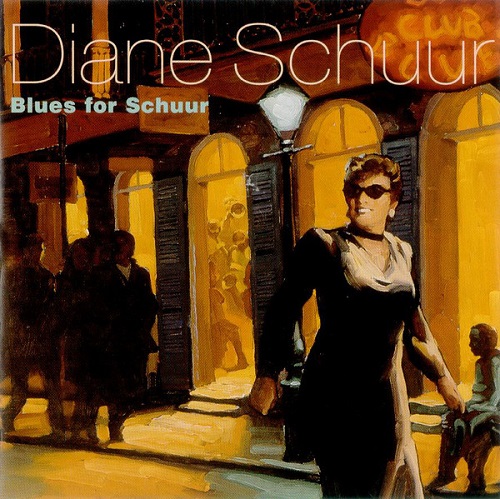
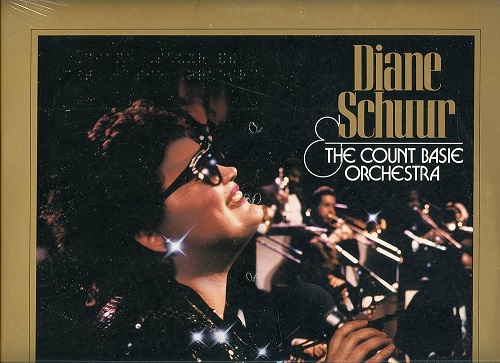
My featured female singer is a talented woman named Diane Schuur.

I was introduced to Diane Schuur back in the late 80’s. I was talking about music with a gal I was dating at the time. We started talking about jazz singers and she asked if I had ever heard of Schuur. I hadn’t. If memory serves me correct, she loaned me a cassette (or maybe a CD) with some songs on it and I really enjoyed it.

One of her biographies online says this: “Diane Schuur is as eclectic as she is brilliant.” In my opinion, this statement could not be more true. While many of her songs would fall into the jazz category, she could easily be filed in the blues or pop categories, too. While preparing to write this, I picked a playlist on YouTube and it was fun to hear the different sounds of each of the songs.

My friend Dawn said to pick someone who “overcame obstacles.” Diane certainly has done that! She was born prematurely in 1953. She has been blind since birth because of Retinopathy of Prematurity. This disorder affected premature newborns who received high-oxygen therapy during neonatal intensive care. This was a standard practice until 1954.

She learned to play piano by ear. She would listen to Dinah Washington songs and began to pound out the melodies at age 3. Dinah was a big influence to Diane as she began singing her songs as a toddler and worked on her own vocal style. She once stated, “As far back as I can remember, singing was in my blood. My parents loved music, and I loved to sing. I was scatting at an early age.” She scats right up there with Ella and Mel Torme’! She also has perfect pitch!

Blindness was not her only obstacle. When she was a young adult, she began drinking and struggled with alcoholism. She also battled an eating disorder. Those obstacles were so much that she actually contemplated and attempted suicide. Thankfully, her brother-in-law stopped her from jumping out a third-story window. She got help and has been sober for several decades.

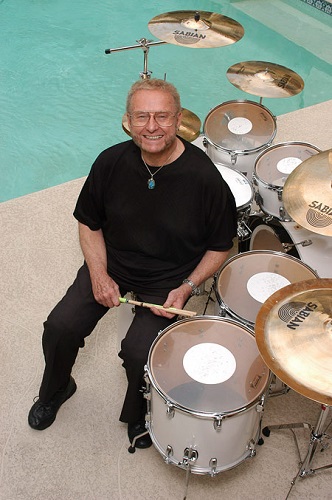
Diane got her big break when she was 22 years old. She auditioned for drummer/bandleader Ed Shaughnessy (of the Tonight Show Band) after he finished a concert with Doc Severinsen. Ed said, “this young blind girl comes in and sits down at the Fender Rhodes keyboard and starts singing the blues. Well, my hair stood on end!”

He hired her to be the vocalist in his orchestra. This led many other musicians to hear her. Those included Dizzy Gillespie and the great Stan Getz. Stan was so impressed that he became an advisor and coach to her. She stated that it was Stan who taught her that “less is more.” This was important because she had many critics that said she often “oversang” when she first started out. Stan once said, “She’s just like Sarah (Vaughn) or Ella (Fitzgerald) to me. She’s taking from the tradition, and what comes out is her own conception and advancement of the tradition.”

In 1985, she met B.B. King at a music festival in Tokyo. The two really hit it off and later made an album together entitled “Heart to Heart.” It was released in 1994 and it entered the Billboard Jazz Charts at number one!

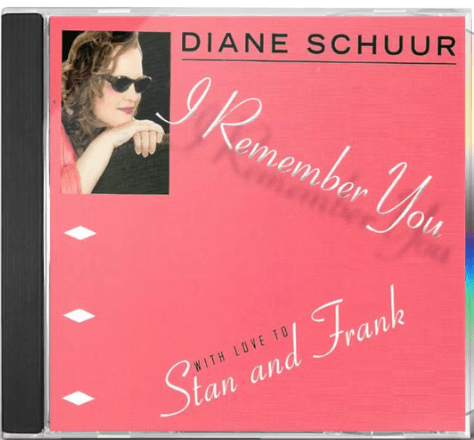
In 1988, Frank Sinatra asked her to sing with him at a benefit concert when Liza Minnelli was unable to perform. She was a guest at Sinatra’s home and also performed at a concert with him and Quincy Jones. Frank gave her an abstract oil painting that he had created for her afterwards. When Frank passed away, Schuur recorded a tribute album for her late friends (Frank and Stan).

Other inspirations to Schuur include George Shearing, Stevie Wonder and Ray Charles who are all blind as well. She has said that one of her fondest memories was performing with Ray Charles in 1998 for a PBS concert (some of which is available on YouTube).

Her career has brought her two Grammy awards – both for Best Jazz Vocal Performance (1986 & 1987). She is still recording and touring today. She says, “For the future I plan to continue my reading of American song, paying respect to celebrated writers and polishing the gems in the jazz tradition.”

I’ve never had the chance to see her in person, but there are some fantastic live albums available.

All About Jazz says, “Ms. Schuur surely is among the very best jazz vocalists, and she exemplifies, if not redefines the “diva” category with her warm, often humorous and relaxed interactions with the audience and the musicians. Her mere presence is enough to make for a memorable evening.” I hope to be able to see her perform one day.

I will include just a couple of my favorite cuts at the end of this blog, but before I do, I want to again thank Dave for hosting this monthly feature. I hope that you enjoy reading this as much as I did writing it. I love that with each topic, I am not only enjoying old favorites, but I am introduced to new songs and singers. Perhaps this blog is your introduction to Diane Schuur?

Here is a classic – Come Rain or Come Shine

Another favorite – All Right, OK, You Win!

I just love her take on Moonlight and Shadows

One more – Her swinging version of I Can’t Believe That You’re in Love With Me

Thanks for reading!

A Musical Treat (and Tease) on International Women’s Day!

I apologize for the lateness in this post. Happy International Women’s Day to the female readers of my blog! Thank you for all you do! I am lucky to have a very special woman in my life (my wife, Sam). I can honestly say that I would be a mess without her.

In a previous blog, I mentioned that for Women’s Month our Turntable Talk host (Dave from a Sound Day) has asked us to pick a female singer to write about. I really struggled to pick one. I even posted on Facebook asking my friends to offer up their three favorite singers. I guess I hoped that they would offer up someone that I hadn’t considered (and they did). The results surprised me.

The singers that came up the most were (1) Stevie Nicks, (2) Etta James, and (3 – tie) Pink and Karen Carpenter. Etta was the only one that was in my list of considerations. After looking at the list (and the suggestions) I finally chose who I am writing about and NO ONE mentioned her. Stay tuned for that.

I say all that to say this – in celebration of International Woman’s Day, here are some tunes by some of the gals on my list that I did not choose. I hope you will give them a listen and enjoy them.

Etta James – At Last.

The BEST version of this song!

Ella Fitzgerald – Blue Skies

One of the best and a fantastic arrangement. The Queen of Scat Singing!

Alison Krauss – When You Say Nothing At All

What a voice on this gal. God I love her version of this song.

Aretha Franklin – The House that Jack Built

I could pick so many from her, but I always loved this song! Funky !

Billie Holiday – All Of Me

Billie is an influence of so many singers both male and female. Tony Bennett was always mentioning her style.

Dusty Springfield – You Don’t Have To Say I Love You

My favorite Dusty song. The arrangement and her vocal – you can feel every emotion as you listen.

Sarah Vaughn – Broken Hearted Melody

Often overlooked, but SO good! A huge hit and a great vocal!

Diana Krall – The Look of Love

She is amazing. Her voice gets me every time. Her Christmas album is fantastic. There are so many great songs from her.

Norah Jones – Don’t Know Why

Norah and Diana Krall are very similar in my opinion. Both have smokey and unique voices. Both play piano. Both make great music. This song blew me away the first time I heard it.

Linda Ronstandt – What’s New?

I almost went with Linda. Don’t Know Much, Somewhere Out There, Blue Bayou, Different Drum and so many more great ones to chose from. However, I think the albums she did with Nelson Riddle really showcase her voice. Here is What’s New?

Pat Benatar – Bloodshot Eyes

She can rock and sing! I love her voice. She was such a huge part of the 80’s – Heartbreaker, Love is a Battlefield, Shadows of the Nights, and more! I have talked about her blues album from the 90’s so I thought I would share her cover of Wynonie Harris’ Bloodshot Eyes.

Peggy Lee – Big Spender

Her version of Fever is paramount, but I love Peggy’s song Big Spender! It’s sassy and brash. It is sloppy and teasing. It’s flirty and swings!

Jewel – You Were Meant For Me

Having the pleasure to meet and interview Jewel was a radio career highlight for me. She was such a sweet and wonderful person. I loved talking to her and having her sing on the air less than 6 feet from me was amazing. Here is a Jewel Classic

Keely Smith – On The Sunny Side of The Street

Keely was great with Louis Prima, but she was also a stand out as a solo singer. I love her version of this song.

Happy International Women’s Day!!

Sunny Side of the Street

“The Sunny Side of the Street”

One of my favorite commercials on TV right now is the “Spring Into Action” commercial from Kohl’s. There is something about the smile of the little girl as people “hop” by that tugs at the heart strings. It is a wonderful “feel good” commercial. If you haven’t seen it – take 30 seconds and enjoy:

Kohl’s Spring Into Action

While walking the neighborhood with Ella last week, I noticed a few chalk Hopscotch games on the sidewalk. Rest assured, if the child who had drawn it was out on the porch, I would have hopped along just like the folks in the commercial.

The ad itself is wonderful. I love the song choice in it, as well. The Sunny Side of the Street is a song that is over 90 years old! It was written in 1930 by Jimmy McHugh and Dorothy Fields (although, some say it was written by blues legend Fats Waller). It made its debut on Broadway in the show International Review. The song is considered a jazz/pop standard now and is part of the “Great American Songbook.” It has been recorded by Louis Armstrong, Billie Holiday, Bing Crosby, Benny Goodman, Ella Fitzgerald, Nat King Cole, Count Basie, The Pied Pipers, Doris Day, Keely Smith, Frank Sinatra, Willie Nelson, Tony Bennett, and so many more.

As I thought about this song, I thought about my life. This was me! It wasn’t until Sam and I got together that I began to walk on the Sunny Side of the Street! I crossed over from the “dark and shady” side. I have always loved this song – it’s one of my favorite cuts from Willie Nelson’s Stardust album. If I had to pick a favorite version it would probably be Willie’s version. It’s just so laid back and smooth….

If you want a more “swinging” version of it – try Keely Smith on for size….

Lyrics

Grab your coat and get your hat
Leave your worries on the doorstep
Just direct your feet
On the sunny side of the street

Can’t you hear the pitter pat?
And that happy tune is your step
Life can be so sweet
On the sunny side of the street

I used to walk in the shade
With those blues on parade
But I’m not afraid
This rover crossed over

And if I never had a cent
I’d be rich as Rockefeller
Gold dust at my feet
On the sunny side of the street

I used to walk in the shade
With those blues on parade
But I’m not afraid
This rover crossed over

And if I never had a cent
I’d be rich as Rockefeller
Gold dust at my feet
On the sunny side of the street

Life Lesson

When life has you down, take a stroll on the sunny side of the street!