Last Thursday would have been Elvis Presley’s 91st birthday. Believe it or not, that’s not why I picked today’s movie – Honeymoon in Vegas. I actually chose it because the soundtrack is loaded with some great Elvis cover songs.
Take a look at the talented folks who contributed to the album! Offering up their versions of Elvis tunes are Billy Joel, Amy Grant, Bono, Travis Tritt, John Mellencamp and today’s birthday boy Ricky Van Shelton.
I first heard Ricky when I worked at my first country station. He had plenty of hits, but many of them were cover songs. He covered Statue of a Fool, From a Jack To a King, and He’s Got You. For the Honeymoon in Vegas soundtrack, he covers “Wear My Ring Around Your Neck.”
The song was written by Bert Carroll and Russell Moody. It was recorded and released by Elvis in 1958 and only made it to #2 on the pop chart. Prior to this song, Elvis had a string of 10 consecutive #1 songs. Wear My Ring broke the streak.
Ricky’s version of the song was the first single release from the soundtrack. It didn’t do as well as Elvis’, but it did reach #26 on the Billboard Hot Country Singles chart.
In May 2006, he announced that he would be retiring from touring to spend more time with his family. Since then, Shelton has been sort of a recluse. He has almost disappeared from public life. He does keep busy, however, focusing on painting and writing children’s books.
I hope he is enjoying his retirement and that he has a very Happy 74th Birthday!
It was on this day in 1978 that “FM” premiered in theaters. As a former radio DJ, I knew it was just a matter of time before this movie would pop up in this feature. I’m surprised that it hasn’t come up already, as it has one of the best movie soundtracks!
Version 1.0.0
The film starred Michael Brandon, Eileen Brennan, Alex Karras, Cleavon Little, Martin Mull, Linda Ronstadt, Jimmy Buffett, and REO Speedwagon (just to name a few). Despite what they say, this film was not the inspiration for WKRP in Cincinnati (which was in the works at the same time).
Honestly, it’s really not that great of a movie. It’s billed as a comedy, but it’s not something you’ll be belly laughing at. It also has some serious moments that are a bit forced. Then there is the lackluster “feelgood” ending that feels more fake than good. Thank goodness for the amazing soundtrack!
The soundtrack is like a snapshot of 1978 rock radio and is loaded with hits. It is so difficult to choose just one song to play here, as there are so many to choose from. Bob Seger, Steve Miller Band, Tom Petty, Foreigner, The Eagles, Boz Scaggs, Linda Ronstadt, Jimmy Buffett, Billy Joel, Joe Walsh, and even Queen! I decided to choose a band that I haven’t featured on the blog before – Steely Dan.
I suppose that it makes sense to pick the movie’s title song, FM (No Static At All). Walter Becker and Donald Fagen wrote this song specifically for the film. Fagen told American Songwriter magazine: “There was a film called FM and we were asked to do the title song,” he said. “And I said, ‘Does it have to have any specific words?’ And they said, ‘No, it just has to be about FM radio.’ We wrote that very quickly, I remember, in one or two days. And we also recorded it very quickly, too. Johnny Mandel came in and did the string chart. It was fun to meet Johnny Mandel.”
The song sold a ton of records and was actually much more popular than the movie. Fagen felt the song could have been a bigger hit if the movie had been more successful. “The song was a hit, but I think we should have seen the movie before we committed ourselves,” he said in 2007. “As you know, it wasn’t a very successful movie.”
As a piece of music, it has a lot going on. Look it up on Wikipedia and the description sounds like a music theory class! You have an overture to start, arpeggios, tonal chords, thirds and fifths, a string section, major chords and minor chords, and all kinds of key changes. It’s actually cool to hear in headphones.
When the movie came out, FM radio listening was on the rise. As the song says, it had less static than AM radio. What made FM radio stations popular was their ability to take chances by playing lesser known bands and album cuts. Listeners couldn’t get enough of it.
I am no neuroscientist, but I know a little about music. It is a proven fact that that music and happiness are linked intimately. Science also shows happiness will actually make your brain work better. Now, neuroscience has come up with the ultimate list of tunes to make you happy.
Note: I have to tip my hat to my old radio pal, Johnny Molson for this. He featured this on: Mike and Molson – The Podcast.
Back in 2015, a music-loving Dutch neurologist did us all a favor. He figured out what makes for the most mood-boosting tunes. The reason for the study came from an unusual source: the British electronic brand Alba. Apparently, they wanted to know what made for a happy song. They reached out to Dr. Jacob Jolij for the answer.
The first thing that Dr. Jolij reminds us is that taste in music is subjective. You may not like what I do and vice versa. “Music appreciation is highly personal and strongly depends on social context, and personal associations. In that respect, the idea of a ‘feel good formula’ is a bit odd,” he commented.
There is something that you can do that can help find the answer. He asked the listening public to submit examples of their favorite feel good tracks. Those tracks were then analyzed for patterns to reveal what characteristics are generally associated with smile-inducing songs. After the analysis, he compiled a list.
He found that the happiest tunes are slightly faster than your average song. They will be between 140 and 150 beats per minute on average. They will also be written in a major key, and either about happy events or complete nonsense. Dr. Jolij combined these factors into a formula for the happiest songs possible. With hat formula, he went searching for existing hits that matched his template.
Based on that template, here are the ten songs that are scientifically proven to make you happy!
10. Walking on Sunshine – Katrina and the Waves
9. I Will Survive – Gloria Gaynor
8. Livin’ on a Prayer – Bon Jovi
7. Girls Just Wanna Have Fun – Cyndi Lauper
6. I’m a Believer – The Monkees
5. Eye of the Tiger – Survivor
4. Uptown Girl – Billy Joel
3. Good Vibrations – The Beach Boys
2. Dancing Queen – Abba
and the number one song that is scientifically proven to make you happy:
1. Don’t Stop Me Now – Queen
Do you agree? Disagree? I’d love to hear your thoughts! Drop them in the comments.
Welcome back to The Music of My Life, where I feature ten songs from each year of my life. In most cases, the ten songs I choose will be ones I like personally (unless I explain otherwise). The songs will be selected from Billboard’s Year-end Hot 100 Chart, Acclaimed Music, and will all be released in the featured year.
In 1992, I turned 22 and would land a radio gig at WHND, Honey Radio. It was through my old radio partner that I would become all too familiar with karaoke bars. We spent a lot of time pretending to be singers at them. Believe it or not, it was listening to people try to sing that introduced me to many songs. Many of those songs, were ones I normally would have been unfamiliar with.
Let’s jump right into 1992!
The Spin Doctors are often referred to as an alternative band. I tend to think of them as a rock band, though. Two Princes sounds more like a rock song to me. I could easily hear the Stones covering it.
A buddy of mine used to sing this song all the time. From the opening drum kick and guitar lick, I was hooked. The content of the song was influenced by some classic literature. Chris Barron, said:
“I loved The Lord of the Rings and The Hobbit and Sir Gawain and the Green Knight. I was really into fantasy fiction and stuff like that. I wrote that song when I was 19, so I was still coming out of childhood, and as a child I loved wizards and kings and queens and princess and princesses and stuff like that. And I loved Shakespeare – I already was way into Shakespeare. So I gravitated towards that kind of imagery just because I liked books and poems from that period of time.”
Drummer Aaron Comess said that the song was almost a lot faster. “There are certain songs when you find the right tempo, all of a sudden the lyrics come out, it feels right and I think with ‘Two Princes’ we really lucked out. It’s one of those things, we got in the studio, found a good tempo, we recorded it, everything just really came together. It’s very simple, there’s not a lot of stuff on it, somehow the sound and feel we got, we just lucked out and found the perfect thing.”
Songfacts pointed out that it was songs like this one that were in high demand on radio in 1992-1993. There was an onslaught of hip-hop songs at the time and it was this “sound” that began pushing it back a bit.
Two Princes
Here is another example of how I came to learn of the original because of a parody. I was familiar with the cover of their Nevermind album, but unfamiliar with a lot of their songs. Enter once again, Weird Al.
When Al first heard Nirvana, he was very impressed but thought they wouldn’t catch on. He was thrilled when “Teen Spirit” became a huge hit, since that made the group a parody target.
Al is famous for asking for permission before doing any type of parody. He got permission from Nirvana’s lead singer Kurt Cobain while he was doing an episode of Saturday Night Live. Kurt initially thought the song would be about food. Instead, it was poking fun at how hard it was to understand their lyrics.
The video is a very close parody of Nirvana’s, and got almost as much airplay. For example, the same janitor used in Nirvana’s video also makes an appearance in Weird Al’s. This time donning a tutu and playing a tuba. Al dresses just as Cobain did, complete with wig. He plays a fake blowup guitar and makes fun of the hard-to-understand lyrics by gargling water and singing with marbles in his mouth.
FYI – Dick Van Patten was not in the Nirvana video.
This song is probably the one that really solidified my opinion of Weird Al as a musical genius!
Smells Like Nirvana
For comparison – the original video:
Ok, I admit that the next song was far from a hit. It only peaked at #92 in the US, however in the UK it hit #27. The original, of course, was a number one hit for Elvis Presley in 1957. Personally, I really like Billy Joel’s version of All Shook Up. I think it should have done better on the charts.
The song is one of many Elvis covers from the soundtrack to Honeymoon in Vegas. The movie starred Nicolas Cage, James Caan, and Sarah Jessica Parker. It also featured a whole lot of Elvis impersonators.
What I love about Billy’s version is that it retains the feel of the original, but there is enough “Billy” to make it his song. When I was DJing, I used to put on a cape, an Elvis Wig, Elvis glasses, and grab some random gal out of the audience and “lip synch” this to her. It was ridiculous, but it always got a laugh from the crowd (along with a lot of photos).
All Shook Up
Next, we have the only song that I will fast dance to. I say this, because I believe there is no real dancing necessary. Songfacts explains this perfectly:
House of Pain’s Jump Around earned relentless airplay on MTV and pop radio, and became a huge crowd pleaser in bars and dance clubs. It was great for getting people on the dance floor, as no real dancing is involved – just jumping around.
Exactly. I jump like a fool when this one is on! It’s hard to look bad. It brings the bounce with a steady, throbbing rhythm along with explicit instructions on when to jump. You can’t mess this one up!
Erik “Everlast” Schrody wrote the song. Songfacts explains that the lyrics on this track are very aggressive. It contains lines like “I bust him in the eye, and then I’ll take the punk’s ho.” Everlast was surprised when the song crossed over to a pop audience. He thought it was “too hardcore” to do so. The “pugnacious” lyrics, however, are tempered with comic relief. Listen for lines like “I got more rhymes than there’s cops at a Dunkin’ Donuts shop. ” They make it a lot less threatening.
If the horn flourish that opens this song sounds familiar, it is because it comes from Bob and Earl’s song, “Harlem Shuffle”.
Jump Around
Next a movie song that never made the movie’s soundtrack. In A League of Their Own, Madonna starred with Tom Hanks, Geena Davis and Rosie O’Donnell. The film was based on the true story of an all-women baseball team that was popular during World War II.
The song is about a woman who can’t and let go of her past, with the implication that her present circumstances aren’t so good. The lyrics fit well with the film’s premise, as the now-elderly women reunite and recall their glory days as baseball stars.
To a degree, I can relate to this as I tend to live in my nostalgia and memories, however, my present circumstances are actually good. I find myself thinking of those summers playing ball at our old elementary when I hear this song.
This made me laugh: The video for this song, which shows Madonna singing from the pages of a photo album, bears a strong resemblance to Boy George’s video for his 1987 song “To Be Reborn.” The similarities were not lost on the Culture Club singer, who angrily dubbed it “This Used to Be My Video” in his autobiography.
This Used To Be My Playground
What I love about country music is the honesty of it. There are a handful of songs that I can say really hit home for me. One of them is from Travis Tritt’s third album. For me, I could relate to the lyrics of Lord Have Mercy on the Working Man. After all, I was working on a DJ’s salary!
Truth be told, it doesn’t matter what job you hold, these lyrics hit home. While primarily focusing on the economical injustice to blue collar workers, it fits anyone who struggles financially.
Uncle Sam’s got his hands in my pockets And he helps himself each time he needs a dime
Why’s the rich man busy dancing While the poor man pays the band Oh they’re billing me for killing me Lord have mercy on the working man
The final verse features Tritt’s friends joining in. Listen for Brooks and Dunn, George Jones, Little Texas, Tanya Tucker, T. Graham Brown and Porter Wagoner.
Lord Have Mercy On The Workin’ Man
MTV’s Unplugged had been around since 1989. It featured Joe Walsh, The Cure, Paul McCartney, Sting, and Mariah Carey. Eric Clapton recorded an Unplugged performance at Bray Studios in London. He rearranged many of his classic songs for the acoustic context.
The resulting Unplugged album went on to become the best selling Unplugged album in the U.S. and worldwide with sales of 10 million in the U.S. and 26 million worldwide. He earned six Grammy Awards for the album. He earned Grammys for Record of the Year, Album of the Year, Song of the Year, Best Male Pop Vocal Performance, Best Rock Male Vocal Performance and Best Rock Song.
I have been a fan of acoustic shows for a long time. I loved when artists came in and played acoustically for us. It is raw and you really feel the song. When I heard the Unplugged version of Layla, I couldn’t get enough of it. I loved the entirely different feel to the song! It was so much more bluesy.
The Unplugged version also helped Eric do his vocal. According to Songfacts, “playing the “Layla” riff while singing is like juggling on a unicycle, so Clapton tries to avoid it. When he does the rock version live, he’ll play the riff until his vocals come in, then let one of his band members take over the riff.” With the slower version, it was a lot easier for him.
Layla (Unplugged)
When it comes to Disney, you cannot deny the amazing songs that have been featured in their films. It is truly hard to picture anyone other than Robin Williams as the Genie in Aladdin. He was just perfect. There were hours of audio that were not used in the film from Robin. If it were ever released to the public, I’d buy it in a heartbeat!
Prior to having children, I was not one to run out and watch a Disney movie. However, knowing that Williams was the Genie in this one, I had to go see it. I was not disappointed.
The Genie’s song, Friend Like Me was written by the amazing composer Alan Menken and lyricist Howard Ashman. Menken and Ashman didn’t write this with Robin Williams in mind, but the actor would make the number his own. Menken told Entertainment Weekly:
“We didn’t know who was going to play the genie when we wrote the song. We were looking at the character as black, a hipster, and I suggested a Fats Waller, Harlem stride-piano style from the ’40s. When Robin Williams was suggested, my first thought was, ‘Can he sing like Fats Waller?’ Robin learned every note. He was working on Hook at the time, and he would come in after being stuck in a harness all day and sit at the piano and learn. When we went into the studio, we got exactly the Fats Waller performance we wanted, and then everyone said, ‘Okay, but now can we let Robin do his thing?’ He was amazing. That trumpet wah-wah-wah was supposed to be from an instrument, and he made it vocal. He took ahold of the creative process, both on that and ‘Prince Ali’ especially. My God, he went crazy on ‘Prince Ali.’ He was doing the Thanksgiving Day Parade, Arab-style.”
One source says that the song was originally written as a Cab Calloway style big band number. Some elements of this concept remain (for instance, when the Genie scats, in typical Calloway moves), but after Robin Williams was cast it was expanded as a more comedic, pop-culture-filled song.
I miss Robin Williams. He could do comedy and drama and do them both well. This is what makes a great actor, in my opinion. He was truly one of the best ad-libbers and I always loved watching him on late night shows.
When we were picking songs for our alumni band one year, I picked this song for us. Not the best song to march to in a parade, but it was fun to play.
Friend Like Me
I was disappointed in the soundtrack version, as it seems like Robin’s vocals are a bit buried.
I just realized that my list has two Elvis covers on it. Technically, they are both movie songs, too.
When ZZ Top released their Greatest Hits album, they included a remake of Viva Las Vegas. ZZ Top took it up a notch. They took Elvis’ song and modernized it and gave it a real driving rock sound.
I remember my dad bringing home the 12 inch single of it and saying, “Keith, you’ve got to hear this!” He put it on the turntable and there was a downward swishy sound effect followed by Elvis saying, “Y’all still want me to come with ya?” Once the guitars kick in, it just jams!
It’s one of my guilty pleasure songs.
Viva Las Vegas
I had a meeting with a bride and groom once. We were going over songs for their wedding. When I asked them what their wedding song was, they told me “If I Had $1,000,000 by Barenaked Ladies.” I must have looked like an idiot. I thought they were joking. “Barenaked Ladies?! Really?!” I had never heard of them.
I had no idea what to expect when I went searching for the song. I’ve had my share of weird songs to play for the bridal dance, so I was ready for anything. I was finally able to get a copy of it, but it wasn’t easy. The couple enjoyed their dance and the crowd loved every second of it.
Even though it’s one of the group’s most popular songs, it was never a hit single in America. It wasn’t a hit in the UK either. A lot of it was timing: The group didn’t break through outside of their native Canada until their 1998 album Stunt. The song was even re-released in 1996, but didn’t chart then either.
This is a very important song for Barenaked Ladies. They have performed it at nearly every live show since 1988. Frontman Ed Robertson told Songfacts:
“It has become its own thing and people sing along and it represents a time and a place for so many people. It’s oddly a song I don’t get bored of. It brings such joy to the room that it’s hard to not enjoy it.”
He goes on to say, “That song, it was about being in love and being maybe a little bit extravagant but not losing hold of what’s important.” Ultimately it’s just about celebrating your good fortune with someone else, and I think I’ve stayed pretty true to that.”
The song was my introduction to the group. I have come to enjoy many of their future songs, too. Perhaps one or two may show up in the years to come.
If I Had $1,000,000
That’s a wrap on 1992. Did I miss one of your favorites? Drop it in the comments.
Next week, as we head to 1993, a few ballads with a lot of personal meaning to me, a couple fun dance songs, a spelling lesson, and more stories behind the songs.
Welcome back to The Music of My Life, where I feature ten songs from each year of my life. In most cases, the ten songs I choose will be ones I like personally (unless I explain otherwise). The songs will be selected from Billboard’s Year-end Hot 100 Chart, Acclaimed Music, and will all be released in the featured year.
I would turn 17 in 1987. It was my junior year in high school and I did what I had to do to get by in all my classes except band class. I was completely devoted to band class. I was an officer in band class (I was one of the librarians who helped sort, catalog and distribute music). I often stayed late and practiced with a couple other band nerds.
It was also the year I dated a gal who was kinda sorta toxic. It was an 8 month relationship that really had me messed up. I won’t go into details. We had some good times, but the bad times outweighed them. As I have worked ahead for this feature, I began to notice how some songs really hold some big relationship memories. The power of a song and the memories attached to them aren’t always happy, but I have noticed that there are more happy ones than bad ones.
Off to 1987 and my ten picks …
One of the best concerts I ever attended was Billy Joel and Elton John. There were two piano greats and a night of fantastic music. I am always interested to find out an artist’s hero, or favorite artist. Billy has often said that his favorite was the great Ray Charles. Put the two of them together and you’ve got one very cool song.
According to songfacts.com, when Ray showed up at the session, they met for the first time, and Joel was in awe. To break the ice and get to know each other, they each played piano for a while before recording the song. Whenever Charles would meet someone for the first time, he would touch that person’s face. When he did this to Joel, he said, “relax,” since he could tell Billy was nervous.
In a 1986 promotional interview, Joel said he was sitting at home trying to find inspiration for the song in his surroundings when his baby grand sparked his imagination. “I began looking around at things that have been consistent in my life, and in this age of synthesizers and electronic keyboards the piano has almost become an old-fashioned instrument,” he recalled. “I glanced at the baby grand piano and realized that I had a lot of love for that thing. The piano has provided me with a nice living, a career, and happiness. It’s gotten me women, and it’s gotten me through some strange times.”
He continued: “Sometimes at night I’d sit down and give myself a concert, and it’s almost like the piano did it – I didn’t even have anything to do with it. When I was thinking about a theme for Ray and me, it seemed apropos: you know, Ray Charles, piano player. Billy Joel, piano player. Let’s talk about a real love in our lives – the baby grand. ‘Baby Grand’ is really a love song to an instrument.”
Personally, this is just one of those magical musical songs to me. It’s a bluesy love song played by two talents who love their instrument – and making music. And that is good enough for me.
Baby Grand
I’m sure that every radio market had an adult contemporary station that played love songs at night. Usually, it was hosted by a deep voiced DJ who would smoothly deliver requests and dedications over the air. In Detroit, we had “Pillow Talk” hosted by Alan Almond.
In 1987, I had my driver’s license and I would go out cruising around with my friends. When I began dating, I would often “park” and listen to the love song show. As I was going through songs for this feature, I was overwhelmed by just how many of those songs were nightly staples on that show.
While there were times that my girlfriend and I would make out in a parking lot, there were also a lot of times when we sat and listened to the music and talk. There were a lot of ballads that came out in the mid-80’s. Many of them continue to be played as wedding songs and such.
One song that really stood out on the radio was an instrumental by Kenny G. It was his hit, Songbird. It sounded so out of place, yet perfectly fit. Because it was an instrumental, the DJ would often use it to read those lovey dovey dedications. “Sarah wants Josh to know that she misses him so much tonight.” “William called in to thank Beth for a wonderful first date.” “Deborah wants Tim to know that she is very sorry for the argument they had tonight and wants to dedicate this one to him.”
Fun fact: “Songbird” is all Kenny G – he played every instrument on the track (including the drum programming) and recorded it in his home studio. “I created a whole sound based on what I was hearing inside me,” he told Vanity Fair. “It came out, and Whoa! That’s exactly what I wanted!”
When I hear Songbird, I am reminded of those nights where I thought I was really in love and had no idea what true love was at the time.
Songbird
MTV turned 6 in 1987 and as we have seen in the past few weeks, there were many creative videos to boost record sales. I could list about 50 videos that are forever etched in my brain, and up near the top would be the one for the next song – Doing It All For My Baby.
Mike Duke (who played with the Outlaws) cowrote the song with Philip Cody. They couldn’t get anyone to record it. Mike went on tour with Delbert McClinton and at some point was doing club gigs in Mississippi. Some guys from Huey’s band came in to see the gig and he was playing ‘Doing It All For My Baby.’ The guys in the band said, ‘Wow, we love this song. We’re going to bring it to Huey.’ And they brought it in, and three years after we wrote the song, Huey Lewis & the News recorded the song and put it on their biggest selling album ever.”
The band produced an extended video for the song that lasted almost 8 minutes and resulted an one of the iconic MTV images of the ’80s: the band’s heads on display in glass cases while they sing this song. In the video, the band gets stranded somewhere spooky, and end up in various Frankenstein scenes with Lewis playing Dr. Frankenstein. It was truly one of those “fun” videos!
This song features the Tower of Power Horns. I can’t imagine the song without them!
Doing It All For My Baby
When I used to DJ, I would often play music at the VFW hall that my dad belonged to. I met so many great people there and remain friends with many of them. It was here that I became familiar with a lot of songs that I hadn’t heard before. One of them was my next song.
Jimmy Mac, as he was known to all of us, used to always ask for stuff like Barry White, Deon Jackson and the Whispers. Rock Steady never failed to get people on the dance floor. I started playing it at other gigs afterward and it always worked.
According to songfacts.com, the song was written and produced by the team of L.A. Reid and Babyface. It was one of the first songs the pair worked on for another artist – they were members of the group The Deele at the time. In 1989, they formed LaFace Records and became music moguls as well as hit producers. TLC, OutKast and Pink were all signed to LaFace. It would be their biggest hit, reaching #7 on the chart.
Rock Steady
It has taken me 17 weeks to finally “Rickroll” you. Sorry. Of course, Rickrolling wouldn’t even become a thing until 2007, but you have to admit that the song was an earworm. Once you heard it, it was stuck in your brain for hours. (The same thing happens to me with his song, “Together Forever.” Which is almost the same song, really!)
At the time, however, this was a pretty big thing. I remember it playing at all the high school dances and all the kids dancing to it, well, not me, but you know what I mean. Astley’s story is actually a cool one …
He worked for the British production team of Stock, Aitken and Waterman’s studio for two years. While he was there he was operating tape machines, singing on recordings for other singers, learning the trade and famously making the tea before the production trio wrote and produced this song for him, which became his first hit. It was recorded in October 1986, but wasn’t released until July 1987, as the producers were waiting for the right environment to break a new artist.
It was inspired by a woman Pete Waterman had been seeing for three years. Rick Astley was staying with Waterman at the time, and after a three-hour phone call with the woman, Astley said, “You’re never gonna give her up.” Aitken and Waterman then changed the story a bit and made him the one who was vulnerable. It was the biggest hit of 1987 in the UK, and went to number one here in the states.
I guess the nice thing about this blog is that you don’t have to click on the video, but you KNOW you want to! Do it! Click it!
Never Gonna Give You Up
Time to clear your musical pallet of Mr. Astley. I’ll do it with the phenomenal blending of three beautiful voices.
The group Trio was made up of Dolly Parton, Linda Ronstadt, and Emmylou Harris. These three ladies were good friends with each other and admirers of each other’s work. The first attempted to record an album together in the mid-1970s, but scheduling conflicts and other difficulties (including the fact that the three women all recorded for different record labels) prevented its release. Record labels were real peculiar about that kind of thing, I guess.
The Trio album was released in March of 1987. One of four singles that was released was called Those Memories of You. This song was recorded by Bill and James Monroe in 1950! Mel Tillis’ daughter, Pam, released a version in 1986 (reaching #55), but the Trio version is the one that was the hit. It was a top 5 song on the Country charts. The video starred a familiar face – actor Harry Dean Stanton.
The Trio album won the Grammy Award for Best Country Performance by a Duo or Group with Vocal.
It is one of those songs that I could get lost in the vocals and the harmonies.
Those Memories of You
The next song is on my list because of my brother. He listened to a lot of music in his room, but I can distinctly remember Madonna and Debbie Gibson music playing a lot. If memory serves me right, he saw her in concert a few times. Shake Your Love seems to be the one song from this album that I always heard from down the hall.
Out of the Blue was Debbie’s debut album and Shake Your Love was the second single from it. What is impressive to me is that she wrote every song on this album and was only 16 when the album was released! This and her first single (Only in My Dreams) were both top 5 records for her.
Another 1980’s superstar helped Debbie with the dance moves in the video for this song – Paula Abdul.
Shake Your Love
Desmond Child has written and co-written some very big songs, including You Give Love a Bad Name and Livin’ on a Prayer for Bon Jovi. When a record rep suggested that Steven Tyler and Joe Perry of Aerosmith write a song with him, they were not thrilled.
Child told songfacts.com: Steven was much more friendly, as he is, and was very generous, really, and showed me a song that they had started called ‘Cruisin’ for the Ladies.’ I listened to that lyric, and I said, ‘You know what, that’s a very boring title.’ And they looked at me like, ‘How dare you?’ And then Steven volunteered, sheepishly, and said that when he first wrote the melody he was singing ‘Dude Looks like a Lady.’ It was kind of a tongue twister that sounded more like scatting. He got the idea because they had gone to a bar and had seen a girl at the end of the bar with ginormous blonde rock hair, and the girl turned around and it ended up being Vince Neil from Motley Crue. So then they started making fun of him and started saying, ‘That dude looks like a lady, dude looks like a lady, dude looks like a lady.’ So that’s how that was born. That’s the true story of how that was born. So I grabbed onto that and I said, ‘No, that’s the title of the song.'”
I have always loved the story of how the song came to be. It really became the comeback song for the group, as their last hit was back in 1978. When I first saw Mrs. Doubtfire with Robin Williams and they played this song, I laughed out loud.
Dude Looks Like A Lady
In 1982, George Harrison released his Gone Troppo album and it didn’t do well. It can be said that a lot of his work was well off the mainstream, using unusual instruments and based on Indian music. “Got My Mind Set On You” proved that he could release a song requiring very little thought and send it up the charts. Naturally, many of Harrison’s ardent followers can’t stand this song.
The song was written by Rudy Clark and originally recorded by James Ray in 1962. George had bought a copy of the single in the summer of 1963 when visiting his sister Louise in Illinois. Many years later when he was writing his Cloud Nine album, he remembered the song and decided to cover it.
Songfacts.com says that when Harrison conceived the Cloud Nine album, he looked for a producer who could carry some of the load and not be intimidated by working with a former Beatle. He sought out Jeff Lynne of ELO for the role even though he had never met him – he connected with Lynne by having their mutual friend, Dave Edmunds, get him the message. It ended up being a great fit. Lynne brought his distinctive production sheen to the tracks and helped out writing some of the songs. Lynne’s influence can be heard in the backing vocals of the “Got My Mind Set On You” chorus. Harrison and Lynne are responsible for bringing together Roy Orbison, Bob Dylan, and Tom Petty, forming The Traveling Wilburys in 1988.
MTV played the video a lot for this song and VH1 had recently gone on the air, so it aired there, too. As simple as this song is, I’ve always loved this one by George.
There were two videos for the song, the first I was unaware of until I stumbled on it for this piece. Both were directed by Gary Weis. The first features a young guy trying to win a ballerina for a gal he sees in an arcade. She is watching the video of George on a kinescope. Here is that video:
Got My Mind Set On You
This second video is the one I am most familiar with. It was inspired by the then-recently released movie – Evil Dead II. As George sits in a study singing, furniture and knick-knacks (including a stuffed squirrel, sentient chainsaw, a suit of armor, and mounted stag and warthog) begin to sing or dance along with the song. FYI, the backflip is performed by a stunt double.
I have made it no secret that I love Roy Orbison’s music. I remember being thrilled that he was making a comeback in the late 80’s. His stuff with the aforementioned Wilburys is so good. His posthumous Mystery Girl album was a fitting sendoff for him.
The original version of crying was recorded in 1961. Roy claimed to have written this as the result of an encounter he had with an old flame with whom he was still in love. He refused to say how much she meant to him, and when he ran into her again it was too late. It has one of the most powerful endings in music, in my opinion.
He claimed the stunning climax at the end of the song was not contrived, but just happened in the course of the song. He told the NME in 1980: “Immediately I thought of a past experience and just retold that, was the way that came about. It was the retelling of a thing with a girlfriend that I had had. I couldn’t tell you right now what notes I hit at the end of the song, or anything.”
In 1987, shortly after he signed with Virgin Records, he recorded a duet of this song with kd lang which was released as a single and later used as the B-side to his 1989 release “She’s A Mystery To Me.” This duet won the 1988 Grammy award for Best Country Vocal Collaboration, and was re-released in the UK in 1992, where it hit #13. Lang said that when they met to do the recording, it was obvious that their voices had a “tonal connection.”
I do not disagree with her. To me, the 1961 version is perfection. When I hear it, I am mentally exhausted. It is so moving. How can you top it? Add kd lang. Wow. To say that I was blown away by this version is an understatement. The arrangement and the vocals are just powerful and beautiful at the same time.
There was a time in my life where I could relate to the lyrics of this song. It was a painful time, and the hurt conveyed in the song was very real to me.
Crying
Boy, this week I Rickroll you and end on a sad note. Sorry about that. Next week will be better.
We’ll travel to 1988 next week. It was my senior year, and there are some fun ones on my list. I hope you will come back and check out the list.
What was your favorite from 1987? Drop them in the comments ….
Welcome back to The Music of My Life, where I feature ten songs from each year of my life. In most cases, the ten songs I choose will be ones I like personally (unless I explain otherwise). The songs will be selected from Billboard’s Year-end Hot 100 Chart, Acclaimed Music, and will all be released in the featured year.
I turned sweet sixteen in 1986. MTV was 5 years old and music videos were becoming more and more iconic. To make that point, we kick off my list with a video that is often listed as one of the best of the 1980’s.
Robert Palmer released Addicted to Love in January of 1986. It was accompanied by a video where he is singing in front of a “band” of beautiful women who look exactly alike. They wear lots of makeup and identical outfits as they pretend to play the instruments.
According to songfacts: the funny thing about the video is that the models posing as a band were selected precisely because they did NOT know how to play the instruments. As a result, each girl is keeping her own time and moving to a different beat. The video is constantly parodied, including in a Pepsi commercial with Britney Spears.
You might say the song came to Palmer in a dream. It all started with a guitar riff that came to him in a dream one night. He told Q magazine in 1988, “That noisy riff woke me up. I went downstairs, got out the tape recorder, then went back to bed. Next morning, I thought, Phew, caught one there!”
From the “What Might Have Been” file: Palmer wanted this song to be a duet with Chaka Khan, and he almost got his wish. He recorded it with her, but Chaka’s label, Warner Brothers Records, would not allow her voice to be used on the record, so Palmer had to erase her part and re-record her high notes before releasing it.
If you’re going to be addicted to something, love is a good thing, wouldn’t you say?
Addicted to Love
Next, we have a song whose video was like nothing that had been done before. Depending on the source, some say it was the 4th most played video on MTV. The video is so fun to watch, you may actually forget that the song is full of sexual innuendos.
Sledgehammer was a BIG number one song for Peter Gabriel. It was his first solo number one. It actually bumped his old band, Genesis, out of the number one spot.
The song was influenced by the ’60s soul music Gabriel listened to as a teenager, in particular Otis Redding, who Peter saw perform at the Ram Jam club in London in 1967. The horn section was typical of this sound. As a matter of fact, the horn section that he used was the legendary Memphis Horns, who played on several hits from Stax Records.
The wildly innovative video was directed by Stephen R. Johnson and featured stop-motion claymation techniques. It swept the MTV video music awards in 1987, and is considered a major breakthrough. It was a bit hard for Gabriel, though. He once remembered how he spent 16 hours lying beneath a heavy sheet of glass for the video, while each frame was shot, one after the other.
I’ve always felt that this song had at least some influence in the blues. It just sounds like a great blues song to me.
Sledgehammer
Songfacts says that this song has a lot of haters and has appeared on various “worst of” lists over the years. An example: it was listed #1 on VH1’s 40 Most Awesomely Bad Metal Songs. As a Michigan guy, I can tell you that they used this song as the Detroit Pistons theme song for years. Heck, they use this song at all kinds of sporting events.
Europe’s The Final Countdown is like an anthem. The iconic keyboard riff was composed by lead singer Joey Tempest five years before the song was recorded. The band’s keyboard player Mic Michaeli had lent him the instrument.
Despite writing the song, Tempest still cannot believe the success. He said, “It was quite a surprise that the song ‘The Final Countdown’ became such a big hit because it was written for the band, it was written for our concert, it was written to be the opening song in our concert. It was almost six-minutes long, it was never intended to be a short pop hit or anything, it was very much a surprise and its been used for all kinds of events, anything from Formula 1 to boxing. It’s been used a lot.”
I liked this song before Arrested Development aired on Fox, but came to love it even more because of the way they used it on the show. Will Arnett is a magician on the show and they often used the song as background music as he performed his “illusions.” The song only made a very funny scene, even funnier for me.
The Final Countdown
The next pick is not quite a duet, but it brought back a legendary voice and put her back in the spotlight. It almost didn’t happen, but Eddie Money stepped in and made it happen.
My favorite track on Eddie Money’s Can’t Hold Back album is Take Me Home Tonight. The song is based on The Ronettes’ 1963 hit “Be My Baby,” and features their lead singer, Ronnie Spector, on the chorus performing her famous line, “Be my little baby.”
At first, the song was going to be a duet with Martha Davis, lead singer of The Motels. Eddie, however, wanted “the real thing” (Ronnie) on the song, so he called her to ask, telling her, “This is a tribute to you. The song is all about you.” According to Spector, she got on board as soon as she heard the lyric, “Listen honey, just like Ronnie sang… be my little baby.”
“When they said that, I was sold,” she told Entertainment Weekly. Spector says Money was very excited when she showed up to record it. “He was a crazy person – freaking out in the studio, going, ‘I’ve got the real Ronnie Spector singing ‘Be My Baby’ on my record!,'” she said.
This cracks me up because I can see Eddie going crazy. He was a bundle of energy. Every time I interviewed him on the radio, it was hard to get a word in because he would just chat away with that “Eddie Money” energy!
Take Me Home Tonight
It must have been the summer of 1987 when our band took a trip to Cedar Point. I am not a ride person, so I hung out with guys who also didn’t ride them. As we walked the streets of the Point, we saw a “You Be The Star” booth. I suppose you would call it an early form of Karaoke.
There was a book that listed a bunch of songs that they had a music track from. They ushered you into this little recording booth with a microphone and headphones. I don’t remember if you got to rehearse the song first, but I thought that was the case. At the end of the session, they played your song on the speakers for all to hear and you got a cassette of the tune to take home. It cost a pretty penny to do and the music tracks were very cheap sounding.
I had some money and made a tape of Mack the Knife for my grandma (which was awful). I sounded so bad on it. Then, me and my three friends chose Hip To Be Square. I had heard the song before, but didn’t know it well enough to sing the lead. My buddy, Steve knew it and sang it like he had a record deal! Chris and I were satisfied enough to be the “Here, there and everywhere” guys.
The music video was directed by the team of Kevin Godley and Lol Creme, who made some of the most innovative videos of the ’80s. They got a distinctive look by using a medical camera – the kind doctors use to see inside the human body. They had the band perform the song a few times a few feet away from the camera, and did the heavy lifting in post production – the band loved it because it was so easy for them. The resulting video contained angles previously unseen on MTV, including one from the point of view of the drumsticks. It was nominated for Best Experimental Video at the 1987 Video Music Awards.
Hip To Be Square
The next pick is one that didn’t mean much to me in 1986, but two years later it sure did. I remember early in my senior year receiving a ballot in which I was to vote on our class song. Honestly, I don’t remember what songs we were picking from, but I do recall some of them being not very “class song-like.”
Our class chose Time to Remember by Billy Joel. It was the third single from his The Bridge album. The chorus is about looking back on the good times with appreciation and gratitude, making it a perfect song for proms, graduations, and just about any occasion where memories are shared:
This is the time to remember ‘Cause it will not last forever These are the days to hold on to ‘Cause we won’t, although we’ll want to
Our teachers told us that the high school years would fly by. We never really felt that, especially during some boring lecture. Of course, the senior years goes by the quickest. Those lyrics should have been posted somewhere for every one to see, because by the time I heard them, and the meaning sunk in, it was graduation day.
I’m reminded of a quote from Ed Helms’ character Andy on the final episode of NBC’s The Office:
“I wish there was a way to know you’re in the good old days before you’ve actually left them.”
I don’t have to tell you, especially if you are a regular reader, that those days are definitely a time I remember, and remember them fondly!
Time To Remember
The group Cameo was formed in 1974, however, it wasn’t until 12 years later that they had their first Top 40 Hit. Word Up was the title track from their 13th album! The song was written by band members Larry Blackmon and Tomi Jenkins.
“Word Up” is a saying that was popular in New York and other urban areas in the US that acted as an affirmation of what was said, kind of a hipper “you bet.” Blackmon said this about the song:
“It just sounded good, and it was before its time. You can play “Word Up” anyplace anywhere, and someone is going to be grooving and bobbing their head. Our sound was unique, as well. I haven’t heard another one like it, and we probably won’t hear another one like it in the future. It was that significant for us.“
This was one of those songs that everyone at school seemed to be singing as they walked down the hall to class. We all seemed to know the words.
It got a lot of radio airplay and MTV played the video a lot. I’ve seen the video many times before, but I had forgotten about a neat cameo. (LOL – a cameo in a Cameo video!) Watch for Star Trek: The Next Generation’s LeVar Burton as a policeman.
Word Up
I am almost 100% against remaking movies. I feel the same way about television shows. Music on the other hand is a bit different. When an artist covers a song, they bring to it their own interpretation of the song. Think of all the different versions of an old standard like “Georgia on My Mind.” Off the top of my head I can throw out 5-8 versions that I absolutely love.
I remember the first time I heard the Art of Noise doing Peter Gunn. I was in the car and I thought, “What in the world is this?” The more I listened the more intrigued I was. I was impressed with how close the guitar sounded like Duane Eddy. Of course, I was even more surprised to hear that it WAS Eddy!
It didn’t do much on the charts, but the sound was so different and unique that I had to go pick up the tune. The video was a private eye parody with comedian Rik Mayall as the detective. The song was a Grammy winner, as it took home the award for Best Rock Instrumental Performance.
Peter Gunn
I mentioned that Sledgehammer had a bit of a blues sound to it earlier, and so does this one. Take a little blues and mix in some rock and you get some good stuff from The Fabulous Thunderbirds.
The title track from their Tuff Enuff album was a top 10 record for the group in 1986. They are often considered to be a one hit wonder band, but their song Wrap It Up was a minor hit. Kim Wilson wrote it and sings lead on the song.
The song is about a guy who will do pretty much anything for his gal, including wrestling with a lion or a grizzly bear, swimming the sea, put out a fire, and fight Ali. He’d even walk ten miles on his hands and knees, which really isn’t walking I suppose, but walk sounds better than crawl.
There is so much I love about this song, the syncopated guitar lick, the lyrics and the attitude. It made for a perfect sing along driving song.
Tuff Enuff
My last pick is another cover song, and this one I think tops the original and most of the other versions. That is saying a lot, because I am not the biggest Beach Boys fan.
California Dreamin’ was a hit for the Mamas and the Papas. It was written by John and Michelle Phillips. Barry McGuire (who had a hit with Eve of Destruction in 1965) actually recorded it first with the Mamas and Papas singing backup. They, of course, recorded their own version of the song soon after.
The Beach Boys recorded it for their Greatest Hits album, Made in U.S.A. The song was produced by the great Terry Melcher and had Roger McGuinn of the Byrds playing the 12-string guitar on it. Naturally, there was a video which featured McGuinn along with every living member of The Beach Boys and the “California Dreamin'” songwriters, John and Michelle Phillips. This primed the group for a big comeback two years later with their #1 hit “Kokomo.”
There are so many things about this song that I just love. That opening 12-string is fantastic. With the opening line, you get it and an echo of it which I thought sounded cool. Even cooler, after the line “and the sky is grey” there is that rumble of thunder that makes you feel the chill of the wind and the anticipation of a storm. Then there is that fantastic harmony! It is perfect for this song. Finally, their version opts for a jamming sax solo and loses the wimpy flute solo used in the Mamas and Papas version. That sax aids in conveying a “haunted sounding ending” as the song begins to fade away.
The song never hit the Top 40 on the Hot 100 chart, but on the Adult Contemporary charts it went to number 8.
California Dreamin‘
Next week, we’ll take a look at 1987. I’ll feature two fantastic duets, we’ll shake, rock, and roll, and hear about 6 beautiful ladies … er, 5.
What was your favorite from 1986? Tell Me about it in the comments. See you next time….
Last week the Music of My Life post focused on 1983, and coincidentally today’s Movie Music comes from a 1983 comedy. Easy Money was released on this day back in ’83 and has one of the funniest last lines I’ve ever heard!
The film stars Rodney Dangerfield, Joe Pesci, and Jennifer Jason Leigh. Rodney plays Monty Capuletti who loves to drink, smoke and gamble. When his rich mother-in-law dies his family is told that they will inherit $10 million. There is one condition – Monty has to give up drinking, smoking, gambling and live a healthy life for 365 days.
The movie earned $5,844,974 in its opening weekend, ranking number one at the domestic box office, toppling the prior three-week #1 run of National Lampoon’s Vacation.
Gene Siskel wrote that “the big discovery in the comedy ‘Easy Money’ is that Rodney Dangerfield, unlike most stand-up comics, does not need dialogue to be funny. He is funny just standing still—or his version of standing still, which includes nervous twitching, profuse sweating, pained expressions and rolling of the eyes.” Rodney is indeed funny in this movie, but Pesci’s performance is just as funny!
Billy Joel was asked to write a song for a new Rodney Dangerfield movie, also titled Easy Money, and he came up with “Easy Money.” This triggered the retro approach to the rest of the songs his An Innocent Man album. (Rodney later appeared in the music video for “Tell Her About It’.)
Easy Money is what one author called “a get-up-and-dance, snap-your-fingers, clap-your-hands song complete with a beefy horn section and Billy channeling the vocals of the king of soul, James Brown, or Wilson Pickett.” The lyrics are just as catchy as Billy keeps delivering clever metaphors (“I got a hot slot machine of a system ready to go”) only this time the song’s theme is looking for easy money, rather than trying to get a girl. Billy was clearly having a good time as he is singing.
I always loved this one, sadly, it was never released as a single. I really think this one could have been a huge hit. It’s just too fun!
Welcome back to The Music of My Life, where I feature ten songs from each year of my life. In most cases, the ten songs I choose will be ones I like personally (unless I explain otherwise). The songs will be selected from Billboard’s Year-end Hot 100 Chart, Acclaimed Music, and will all be released in the featured year.
This week we enter a new decade – the 80’s! As the final years of the 70’s ticked away, you could already start to hear the “eighties sound” creeping in. As we move through the decade that sound will change even more. What is also interesting is the amount of crossover hits in the years ahead. 40% of my list for 1980 has roots in country music.
So what was my 10 year old self listening to in 1980?
I did not know that the first song would perhaps unknowingly influence my career choice at 10 years old, but it may have. Released in February in the US, Charlie Dore reached number 13 on the Hot 100 charts with her ode to the radio DJ, Pilot of the Airwaves.
The lyrics are from the point of view of a woman who frequently listens, late at night, to a radio disc jockey whom she calls a “pilot of the airwaves”, keeping what has often been called the “dawn patrol”. She admits that she has few real-life friends and that the DJ keeps her as much company as she believes she needs, describing her life and the feelings she has2 surrounding the fact that she considers the radio DJ her only true friend. The DJ does not need to play the selection she has requested; she does hope the DJ will do his best along those lines, adding:
I’ve been listening to your show on the radio, And you seem like a friend to me.
Looking back on this song now, I can tell you that the one thing I learned was most important about being on the air was to have the listener feel as though they were just hanging out with a friend. That was always my goal – speaking one on one and keeping my listener company.
The song played a role in an early relationship, too. Two gals used to call the station all the time and one of them always wanted to hear this song. They decided to bring me coffee one night and I hit really hit it off with one of them. We dated for a while, and when an ex of mine called to ask me to take her back, I did. Ah, young love …. it really gets messy
Pilot of the Airwaves
A songwriter and producer named Steven Greenburg wrote a song when he became bored with Minneapolis and wanted to move to New York, which he called “Funkytown.” Lipps Inc. (pronounced “Lip Synch”) was formed especially for this song. The vocals were done by Cynthia Johnson, who was Miss Black Minnesota 1976. The song reached number one on the charts and stayed there for four weeks!
The group continued to record until 1985 with a changing lineup, but they failed to see the success they’d had with their first hit. Steven Greenburg, however, went on to have great success. He became A&R Vice President for Mercury Records, signing Hanson, among other acts. Later he headed the S-Curve Records label, signing the Baha Men and Joss Stone.
This song shows up in a lot of movies (Shrek 2, History of the World Part 1, Selena) and TV shows (Everybody Loves Raymond, Will and Grace, Malcolm in the Middle, and Friends) and VH1 ranked the song at #37 in the Top 100 One Hit Wonders.
Funkytown
It’s Still Rock and Roll to Me from Billy Joel’s Glass Houses album was one of Joel’s most popular songs and was his first #1 hit on the Hot 100, spending two weeks at the top spot in July 1980. The song spent 11 weeks in the top 10 and was the 7th biggest hit of 1980. It was released on May 12, 1980 – 3 days before my 10th birthday.
In this song, Billy Joel was making a comment on musical styles and trends. At the end of the disco era, the music press began touting the “New Wave” sound, which included bands like The Police and The Cars. Joel thought that this new sound was just a variation on power-pop that had been around since the ’60s. He didn’t have a problem with the music, just the way it was being categorized. “I like it, but it’s not particularly new,” he said.
He said in a Rolling Stone interview that “new wave songs, it seems, can only be about two and a half minutes long… only a certain number of instruments can be played on the record – usually a very few… only a certain amount of production is allowed or can be heard… the sound has to be limited to what you can hear in a garage… a return to that sound is all that’s going on now.”
It’s Still Rock and Roll To Me
Despite the next song being a huge hit in 1980, it is interesting that it goes all the way back to 1959 and has ties to Buddy Holly and the Beatles.
More Than I Can Say was originally written and recorded by Sonny Curtis and Jerry Allison in 1959. Curtis and Allison were both members of Buddy Holly’s band, the Crickets. They recorded it in 1959 soon after Holly’s death and released it in 1960 on their album In Style With The Crickets. The hook was left unfinished at the time, and at the time of recording, the hook was left this way with no lyrics, only the “wo-wo yay-yay,” which became a memorable part of the song. The single went on to become a minor hit in the UK. Curtis considers this song to be one of his most enduring, looking back at the success subsequent artists have had performing it.
It was also covered by Bobby Vee in 1961. Bobby, you may recall, was one of the artists who was chosen to play the remainder of the tour that Buddy Holly, The Big Bopper, and Richie Valens were doing when they died. Bobby’s version never cracked the Top 40 in the US, but was a Top 5 song in the UK.
From Wiki: According to author Mark Lewisohn in The Complete Beatles Chronicle, The Beatles performed “More Than I Can Say” live in 1961 and 1962 (in Hamburg and Liverpool and elsewhere). Author Allen J. Weiner in The Beatles: The Ultimate Recording Guide confirms this, noting that it came from a setlist made at the time by George Harrison. It is unclear who sang the lead vocals and no recording is known to survive.
The best known version of the song was by Leo Sayer. Sayer was looking for an “oldie” for his 1980 album Living in a Fantasy. He saw a television commercial for a greatest hits collection by Bobby Vee and chose the song on the spot: “We went into a record store that afternoon, bought the record and had the song recorded that night.” It spent five weeks at #2 on the Billboard pop chart in December 1980 and January 1981.
What I remember most about this song is that my dad’s wedding band used to play this in the set. My brother and I often heard it over and over as they rehearsed it.
More Than I Can Say
I will always see a dancing gopher whenever I hear the next song. “I’m Alright” is the theme to the movie Caddyshack, and plays at the beginning and end of the film. Kenny Loggins saw a rough cut of the movie before he wrote the song. He used the character Danny Noonan, who was a caddy with hopes for a brighter future, as inspiration.
Loggins told the St. Petersburg Times: “The character was trying to figure out where he fit. But at the same time he wanted people to leave him alone and let him find his own way. So I wanted to grab him and summarize that character, and that’s what ‘I’m Alright’ is doing.”
Do you recognize a familiar voice in the song? Eddie Money was recording in a nearby studio, and Loggins convinced him to sing a line on this song. That’s him in the background singing, “You make me feel good!” Money was unhappy that he never got credit for his contribution. “I’m not a fan of Kenny Loggins to tell you the truth,” he told Cincinnati morning show host Kidd Chris of WEBN in 2014. “I sang the bridge in that. We were label mates, you know.”
Fun Fact: When Loggins launches back into the chorus partway through the song, he stutters on the lyric, singing, “I- I’m Alright,” which was a happy accident. “I actually misjudged the entrance. In the arrangement, I delayed that entrance but I forgot when I was doing the lead vocal.” They decided to leave it in the song.
I’m Alright
Urban Cowboy was released in 1980 and country music was big. There were many country songs that crossed over to the pop charts. The next song, however, makes my list because I loved watching the Dukes of Hazzard every week. The first autograph I ever received was a postcard from James Best ( Sheriff Roscoe P. Coltrane)!
Waylon Jennings was the narrator in the 1975 movie Moonrunners, where he was credited as “The Balladeer.” When CBS created a TV show based on the movie, they asked Jennings to reprise his role as narrator (again credited as “The Balladeer”) and write the theme song. He came up with an outlaw-Country theme that fit the story of Bo and Luke Duke, who were good-hearted rebels from the fictional Hazzard county in The Dukes of Hazzard. Jennings appeared in all 121 episodes of the show until it ended in 1985.
Waylon recorded two versions of the song. The commercially available version receiving radio airplay contains a musical bridge which follows the first verse and chorus. Also, following the commercial version’s second chorus, Jennings makes a tongue-in-cheek reference to his faceless appearance in the credits by singing, “I’m a good ol’ boy, you know my mama loves me, but she don’t understand, they keep-a showin’ my hands and not my face on TV” (a statement referring to the opening shot in the television theme version where Jennings is only shown below the neck playing guitar). This version was a #1 Country hit.
Personally, I think the TV version is the superior version. One of the reasons is that it features Larry McNeely’s banjo work which the commercially available version does not. That banjo really makes a difference! Additionally, the television version’s third verse contains the lyric, “Fightin’ the system like two modern-day Robin Hoods”, which is accompanied by a “Yee-haw!” said by characters, Bo & Luke Duke (John Schneider and Tom Wopat. Fun Fact: The “Yee-haw is Schneider’s vocal used twice.
Here are both versions.
Theme from The Dukes of Hazzard
Another country themed movie from 1980 starred Willie Nelson, Honeysuckle Rose.
On The Road Again was written on the spur of the moment on an air sickness bag when Nelson was on a plane with Jerry Schatzberg, the director of the movie Honeysuckle Rose and its executive producer Sydney Pollack. He recalled to Uncut magazine: “They were looking for songs for the movie and they asked me if I had any idea. I said, ‘What do you want the song to say?’ and Sydney said, ‘Can it be something about being on the road?’ It just started to click. I said ‘You mean like, On the road again, I can’t wait to get on the road again?; They said, ‘That’s great. What’s the melody?’ I said, ‘I don’t know yet.'”
Willie put off writing the melody for months until the day before he went to the studio to cut the song. “I saw no reason to put a melody to something I wasn’t ready to record,” he explained in his 1988 autobiography, Willie. “I knew I wouldn’t have any problem pulling the melody out of the air.”
This was a #1 Country hit for Willie Nelson, and also one of his biggest crossovers, reaching #20 on the Hot 100, his highest placing at the time. It also won him a Grammy Award for Best Country Song in 1981.
On The Road Again
Hit Me With Your Best Shot was the first Top 10 record for Pat Benatar. It was the second single from her Crimes of Passion album. The song was written by guitarist Eddie Schwartz. His inspiration? A pillow.
Eddie says, “I was in a kind of weird therapy when I was in my mid-20s, it was called bio-energetics, I believe. One of the things we did was punch pillows, I guess it had something to do with getting out hostility. I went to a session where we punched the pillows for a while. It all seemed kind of strange, but I remember walking outside of this therapy session and standing on the doorstep of the building I’d been in, this small house in Toronto, and the title just came to me, ‘Hit Me With Your Best Shot.’ I haven’t been to therapy before or since. Maybe I should go back.”
The song can be interpreted as a song about a one-night-stand, but that’s not what its writer had in mind. Schwartz says, “The song is laden with sexual innuendo, but at the core is a song about self confidence. It’s a song saying ‘no matter what you throw at me, I can handle it, I can play in your league.'”
Pat Benatar retired “Hit Me With Your Best Shot” from her live sets in 2022 when she deemed the lyrics inappropriate in the light of a spate of mass shootings in the United States. “We’re not doing ‘Hit Me With Your Best Shot’ and fans are having a heart attack and I’m like, ‘I’m sorry, in deference to the victims of the families of these mass shootings, I’m not singing it.’ I tell them, if you want to hear the song, go home and listen to it,” she told USA Today.
Benatar added that though the title is tongue-in-cheek, she had to draw the line. “I can’t say those words out loud with a smile on my face, I just can’t,” she said. “I’m not going to go on stage and soapbox – I go to my legislators – but that’s my small contribution to protesting. I’m not going to sing it. Tough.”
Hit Me With Your Best Shot
I guess I would call the next song one of my forgotten favorites. You don’t hear it too often anymore, and it was really Terri Gibbs only bonified hit. I’ve always loved the sound of it and remember hearing it a lot on the radio growing up. Somebody’s Knockin’ was released in October of 1980.
When Terri was only six months old, she was diagnosed with retrolental fibroplasia and declared blind. She began playing the piano when she was three. When she was seventeen, she opened up for country legend Bill Anderson. It was another country legend who told her to move to Nashville and pursue a music career – Chet Atkins. She did just that when she was eighteen, but had no luck getting a record deal.
She moved back to Georgia and toured with a trio. She made a demo tape and sent it to record producer Ed Penney of MCA Records who signed her to the label in 1980. Penney was a former Boston disc jockey and a long-time songwriter. He liked her voice on her demo, but he felt she needed stronger material. So he co-wrote “Somebody’s Knockin'” for her and also produced the song. He also became her manager.
This song was a crossover hit upon its 1980 release, reaching No. 8 on the U.S. country charts, No. 13 on the Billboard Hot 100 and No. 3 on the Adult Contemporary charts. Her debut album won her the Academy of Country Music’s Top New Female Vocalist award. She was also the first winner of the Country Music Association’s Horizon Award (which is awarded to emerging artists), and was nominated for a Grammy Award for Best Country Song and Best Female Country Vocal Performance for the song.
In 1987, after struggling to have another country hit, she switched her focus to Contemporary Christian music. Her last album was released in 2017.
Somebody’s Knockin’
It is probably just a coincidence that I am writing this during a Michigan thunderstorm, but it is the appropriate background noise to accompany my last entry of 1980. Eddie Rabbitt was a country singer and songwriter who had a fair share of country and crossover hits. Here is another example of real life inspiring a song.
Eddie first got the idea for the song I Love a Rainy Night in the ’60s when he was sitting in his small apartment on a rainy night. He sang, “I love a rainy night, I love a rainy night” into a tape recorder, but didn’t complete the song until 1980, when he discovered the tape in his basement. He finished the song with the help of fellow songwriters Even Stevens and David Malloy.
The one thing I truly remember about this song was the intro. The song has a very distinctive feature – its rhythmic pattern of alternating finger snaps and hand claps. The snaps and claps were included with the help of percussionist Farrell Morris, who, according to The Billboard Book of Number One Country Hits, mixed two tracks of each to complete the record. I am sure this is what they intended, but I always picture the windshield wipers going back and forth in that rhythm (just like Eddie sings).
This song was a huge crossover hit! Eddie had great success with the song going to #1 on the Pop, Adult Contemporary and Country charts.
I Love A Rainy Night
So that brings my list for 1980 to an end. As I continue to listen to the thunder, I’ll ponder a bit on what is to come next week as we look at 1981. That was another important year for me and the influence of radio in my future. Why? Because I discovered a show that featured one of the best on air personalities to ever grace the airwaves …..
Welcome back to The Music of My Life, where I feature ten songs from each year of my life. In most cases, the ten songs I choose will be ones I like personally (unless I explain otherwise). The songs will be selected from Billboard’s Year-end Hot 100 Chart, Acclaimed Music, and will all be released in the featured year. I turned 8 years old in ’78 and much like in ’77, there is an interesting mix of tunes.
In January of 1978, Kansas released a song that was what Steve Walsh said, “defies the basic formulas that most (rock) groups try to follow,” and it paid off in spades! Dust in the Wind has one of the greatest guitar intros! The story of how it came to be is fantastic.
Kerry Livgren devised what would be the guitar line for “Dust in the Wind” as a finger exercise for learning “fingerpicking.” His wife, Vicci, heard what he was doing, remarked that the melody was nice, and encouraged him to write lyrics for it. Livgren was unsure whether his fellow band members would like it, after all, it was a departure from their signature style. After Kansas had rehearsed all the songs intended for the band’s recording sessions of June and July 1976, Livgren played “Dust in the Wind” for his bandmates, who after a moment’s “stunned silence” asked: “Kerry, where has this been? That is our next single!”
Dust in the Wind
In February of 1978, a song that will forever be associated with a geriatric sitcom was released. Even though Andrew Gold’s version was not the version used as the Theme to the Golden Girls, the song was (A jingle singer named Cynthia Fee sang the TV version). It is one of my ten picks because there are so many female friends that love the show. My wife is a big fan of the show as well, so here it is.
Andrew Gold says that the song was “just this little throwaway thing” that took him “about an hour to write.” Writing is was obviously a breeze, however, recording it was a different story. They recorded 40 different takes of the song, finally releasing take number 40!
If you listen closely, you can hear sleigh bells in the instrumentation of the song.
Thank You For Being a Friend
In March of 1978, the great Warren Zevon released what some call a Halloween classic, even though it was intended to inspire a dance craze. Phil Everly of the Everly Brothers had seen the 1935 film, Werewolf of London on TV and joked to Zevon that he should adapt the title for a song and new dance. He played with the idea with his band members, who wrote the song together in about 15 minutes, all contributing lyrics that were transcribed by Zevon’s wife Crystal. However, none of them took the song seriously.
The song had been written long before it was recorded. It finally appeared on Warren’s third album, Excitable Boy, which was produced by Jackson Browne (who had already been performing the song at shows.) Although 59 takes were recorded, Browne and Zevon selected the second take for the final mix. The record label really pushed for Werewolves to be a single, but Zevon liked a couple other songs. The label released it and it became Warren’s only top 40 hit.
Werewolves of London
Three of my picks from 1978, all were released in my birthday month of May. The first one is by a group that was lucky enough to get a radio station to play a demo of one of their songs on air – and have it lead to a record deal. As a former radio guy, let me tell you, that just does not happen! It did, however, for the Cars.
Just What I Needed was written by Ric Ocasek. The band recorded a two track demo of the song and My Best Friend’s Girl. In Boston, in 1977, DJ Maxanne Sartori, who was given the tapes of these songs by Ocasek, recalled, “I began playing the demos of ‘Just What I Needed’ and ‘My Best Friend’s Girl’ in March during my weekday slot, from 2 to 6 p.m. Calls poured in with positive comments.” With a song on the radio in a major market, The Cars were a surefire success and had their pick of record labels. They went with Elektra, who had them re-record the song and released it as their first single.
Benjamin Orr sang lead on the song and it was a top 30 hit for the band.
Just What I Needed
The next May release is a song that will always remind me of shooting pool with my best friend, Jeff. He always picked songs for the jukebox and Life’s Been Good by Joe Walsh was always a pick. We always laughed at the lyrics. Even Walsh says the song was meant to be a humorous look at fame and fortune.
In a 1981 interview with the BBC, Walsh explained: “I wanted to make a statement involving satire and humor, kind of poking fun at the incredibly silly lifestyle that someone in my position is faced with – in other words, I do have a really nice house, but I’m on the road so much that when I come home from a tour, it’s really hard to feel that I even live here. It’s not necessarily me, I think it paraphrases anyone in my position, and I think that’s why a lot of people related to it, but basically, that’s the story of any rock star – I say that humbly – anyone in my position. I thought that was a valid statement, because it is a strange lifestyle – I’ve been around the world in concerts, and people say ‘What was Japan like?’, but I don’t know. It’s got a nice airport, you know… so it was kind of an overall statement.”
The song first appeared on the soundtrack to the movie FM and later on Walsh’s But Seriously, Folks album. The album version is over 8 minutes long, but the radio single clocked in at about 4 and a half minutes. Made after Walsh had joined the Eagles, “Life’s Been Good” was incorporated into that group’s concert repertoire, appearing in shows at the time as well as reunion tours.
Life’s Been Good
The last May 1978 song on my list was one that three years later would hit me a bit more personally – not because of the content of the song, but because of the title. Only the Good Die Young was a top 30 hit for Billy Joel, and as controversial as it was, the attempts to censor the song (or have it banned from radio) only helped it to gain spins and popularity.
Virginia, as mentioned in the first line is a real person. Virginia Callaghan was a girl Billy had a crush on when he first started playing in a band. She didn’t even know he existed until she saw him at a gig, but 13 years later he used her as the main character in this song about a Catholic girl who won’t have premarital sex. In a 2008 interview, Joel also pointed out one part of the lyrics that virtually all the song’s critics missed – the boy in the song failed to get anywhere with the girl, and she kept her chastity.
In 2023, Joel said of the song “It’s occurred to me recently that I’m trying to talk some poor innocent woman into losing her virginity because of my lust. It’s kind of a selfish song – like, who cares what happens to you? What about what I want?… But on the other hand, it was of its time.
In 1981, my grandfather died suddenly of a heart attack. He was only 58. It was the first time I ever experienced death. At the funeral, I would hear people saying nice thing about him, and I often heard, “He was too young,” or “He was a good man.” Yes, he was, and only the good die young …
Only the Good Die Young
Earlier I mentioned how Dust in the Wind was a totally different sound for Kansas, and my next song also was very different for the artist who recorded it. The Commodores were really known for being a funk band, but when Lionel Richie brought them Three Times a Lady, they knew it was going to be a hit.
This was a breakthrough song for the Commodores and for Lionel Richie as a songwriter. It crossed over to pop, easy listening and even country formats, setting the stage for further Commodores hits and Richie’s massive solo success. In a Blues & Soul interview, Richie said: “The song has given me so much personal satisfaction. I think it is every songwriter’s dream to be totally accepted. And from the masses of awards that the song has won, it seems that the whole world really does love that song. It’s a great feeling.”
It entered the Billboard Hot 100 chart on June 18, 1978, at number 73. Eight weeks later, it reached number 1, where it remained for two weeks. It became the Commodores first number one on this chart.
There are two reasons I have this on my list. First, it was one of those songs that was on my mother’s famous red 8-track tape. Lastly, it always reminds me of the first time I saw Eddie Murphy on SNL. He was doing a phony commercial for an album called “Buckwheat Sings” as Buckwheat from the Little Rascals. “Unce. Tice. Fee Tines a Mady!”
Three Times a Lady
For readers of this blog, you know that I have blogged about Willie Nelson’s Stardust album many times. Making a long story short, my grandparent’s place didn’t have a TV at first, so we listened to the radio and two cassette tapes. One of those was Stardust.
In July of 1978, released the song Blue Skies from that album. The song was written by Irving Berlin way back in 1926 and has been covered by many great singers. Those singers include Bobby Darin, Al Jolson, Bing Crosby and Danny Kaye, Johnny Rivers and the great Ella Fitzgerald. Willie Nelson took the song to the top of the Billboard Country Chart and crossed over to the Adult Contemporary chart, too (where it peaked at 32).
Blue Skies
In October of 1978, a group of guys released a song that would go on to be named the 7th Greatest Dance Song of the 20th Century by VH1. It is a song that was inducted into the Grammy Hall of Fame in 2020 and was selected by the Library of Congress for preservation in the National Recording Registry for being “culturally, historically, or aesthetically significant.” Believe it or not, that song was Y.M.C.A. by the Village People.
There is only one reason why it is on my Music of My Life list. If I had a dollar for every time I have played this at a wedding or DJ event, I could probably retire! I am probably on about 100 Facebook pages where videos of me, a groom and his groomsmen are dressed up as the Village People leading the crowd in the dance. It is totally ridiculous, but true.
The song went to number one in countries all over the world, but it only reached number 2 here in the US. It continues to be played at parties and sporting events throughout the world.
Y. M. C. A.
I certainly do not want to wrap the year on that song, so instead, I will end with another party classic. I’ll also end with a “feel good song.” How can you NOT love September by Earth, Wind and Fire? The song has a tendency to make people happy when they hear it. Allee Willis, who wrote the song with Maurice White and Al McKay from Earth, Wind & Fire, describes it as “Joyful Music.”
Every year, on September 21st, you will hear this song all over the radio! There are many theories as to the significance of the “21st night of September” in the opening lyrics, and until 2018, even the song’s co-writer was in the dark – Maurice White told her it had no real significance and was chosen because it sang well phonetically. White died in 2016; two years later, Willis was having lunch with his widow, Marilyn, who told her that September 21 was the due date for their son, Kahbran, and that Maurice put that specific date into the song as a secret message. Kahbran ended up being born early on August 1, which definitely wouldn’t have the same ring to it as a lyric.
Although many people hear the first words in the chorus as “Party On,” it’s really “Bah-dee-Ya.” Allee Willis explained in a Songfacts interview: “I absolutely could not deal with lyrics that were nonsensical, or lines that weren’t complete sentences. And I’m exceedingly happy that I lost that attitude. I went, ‘You cannot leave bada-ya in the chorus, that has to mean something.’ Maurice said, ‘No, that feels great. That’s what people are going to remember. We’re leaving it.’ We did try other stuff, and it always sounded clunky – thank God.” She went on to say, “The main lesson I learned from Earth, Wind & Fire, especially Maurice White, was never let a lyric get in the way of a groove,” she added. “Ultimately it’s the feel that is the most important, and someone will feel what you’re saying if those words fit in there right.”
The first appearance of the song was on The Best of Earth, Wind and Fire – Volume 1. It is a great groove that still fills the dance floor!
Next week, we’ll take a look at the final year of the 70’s. 1979 promises to be a good mixture of genres and will feature one of my first television heroes, who starred in a couple TV shows, many movies, and is still popular today.
Welcome back to The Music of My Life, where I feature ten songs from each year of my life. In most cases, the ten songs I choose will be ones I like personally (unless I explain otherwise). The songs will be selected from Billboard’s Year-end Hot 100 Chart, Acclaimed Music, and will all be released in the featured year. May 15, 1977, I turned a whopping 7 years old. I have some really great memories of 1977 and I think you’ll get to read about them and how they tie into some of these songs.
I love stories where a radio DJ plays a significant role in the creation of a song. Released in January of ’77, I’m Your Boogie Man is one of those songs.
Written by KC & The Sunshine Band bassist-producer Richard Finch and frontman Harry Wayne Casey, The “boogie” of the title is in the sense of dancing, shaking your booty, and getting down, not with the scary kind of “boogie man.” Harry Wayne Casey tells the story:
“‘I’m Your Boogie Man,’ in the initial writing of it I called it ‘I’ll Be A Son Of A Gun’:
I’ll be a son of a gun Look what you’ve done
Then I went back and ‘I’m Your Boogie Man’ came into my head because I was thinking about how disc jockeys were always there on the radio. Like it says:
Early morning Late afternoon Or at midnight It’s never too soon I’m your Boogie Man
It’s taking the theme of the disc jockey being the one that’s there for you all the time, no matter when. So it was as if I was a disc jockey, I’m the Boogie Man. Like if you call in and want to hear a certain song, or talk about what was going on in your life, I’m your Boogie Man. And of course I put in ‘turn me on,’ but that could also mean turned on the radio.”
A specific DJ who influenced this song was Robert W. Walker at Y-100 in Miami, Florida, who was the first to give the group’s hit single “Get Down Tonight” airplay. So Walker “was the Boogie Man that brought all the funk and the good feeling and the vibes to the people every morning,” according to Richard Finch.
I’m Your Boogie Man
Bob Seger had a couple big songs in 1977. Mainstreet was released in April of that year, while an anthem was released in June – Rock and Roll Never Forgets.
According to Seger, he wrote this song after attending a high school reunion. “I wanted to just write an honest appraisal of where I was at that moment in time,” he said. “I was 31 years old and I was damn glad to be here.” He goes on, “A song like “Rock ‘n’ Roll Never Forgets” is just slammin’. When we play that song live people go nuts. At that point in my life I was 31 years old. And the first 10 or 11 years in my career I was making six, eight grand a year and just doin’ it because I loved the music. So I’m writing for Night Moves and I just felt grateful; here I am and I’m starting to make it. You know, rock ’n’ roll never forgets. You build up goodwill over 10 years and you set the stage. “Rock ‘n’ Roll Never Forgets” is a grateful song. I’m grateful to all the people I played for in those small clubs, on the top of cafeteria tables, in gymnasiums and in hockey rinks. Suddenly all those people came out and bought my records and said: “I remember him. I saw him at the high school or hockey rink.”
The song is about aging and the ongoing power of rock music. The song advises the 31 year old listener to return to the rock ‘n’ roll she loved when he/she was 16. The line, “All Chuck’s children are out there playing his licks” is a reference (and tribute) to Chuck Berry, the rock pioneer whose sound is in the DNA of many musicians how followed.
Rock and Roll Never Forgets
The very last single that Elvis ever released before his death was Way Down in June of 1977. It was recorded in the famous Jungle Room at Graceland. It was also a song that had a very interesting chart performance. The song peaked at number 31 on the Billboard Hot 100 Chart at the beginning of August, fell to number 52 by the end of August, and after his death, it climbed back up to number 18 before falling again.
Way Down
In July of 1977, Foreigner released Cold As Ice. It was one of the many songs I remember buying on 45 and spinning on my little record player. It was written by Lou Gramm and Mick Jones.
According to Wiki, “Cold as Ice” was a replacement for a song that was intended for Foreigner but which producer Gary Lyons didn’t feel fit the album. According to Mick Jones “I went home after Gary said this, sat down at my piano and out came the riff for Cold As Ice. And the rest of the song flowed from there.” Lyons said that “When I got back, they played me Cold As Ice and it worked for me. So we went into Atlantic Studios one night to cut it.” According to Ian McDonald, “Gary and I were in there all night working on the vocals. And when we got out of the studio we discovered that a blizzard had been raging. Everywhere was covered in snow, and we heard on the radio that it had been coldest night in New York on record! Somehow that seemed to be a good omen for the song.”
Cold As Ice
One of the biggest movies of 1977 was Star Wars. It comes as no surprise to me that the main title theme was a Top 10 hit!
What can you say about composer John Williams? He conducted this score with the London Symphony Orchestra, but his main orchestra was the Boston Pops Orchestra, with which he conducted other famous film themes. This theme won him a simultaneous Oscar, Golden Globe, BAFTA, Saturn, and Grammy award. THAT is amazing!!
Star Wars Main Title
The next song was released in August of 1977 and people STILL dance to it today! Brick House epitomizes the funky side of the Commodores, who could switch between uptempo R&B and easy listening by swapping singers. “Brick House” was sung by their drummer Walter Orange, with Lionel Richie on saxophone.
In a way, the Commodores recorded it as a “radio edit.” This disco classic is about a woman with a great body. She is “Built like a Brick House.” Lionel Richie says that this is a play on the original phrase, “She’s built like a brick s–thouse.” That’s the reason for the pause with the horn fill between the words “brick” and “house.”
Brick House
A few songs ago, I mentioned the last single Elvis released before his death. For those who have been following this blog a while, you know where I was the night Elvis died. My family was at a drive-in movie theater waiting for the sun to go down when the radio broke the news that he had passed away. The movie we were there to see? Smokey and the Bandit.
The song’s lyrics tell the basic plot of the movie (leaving out the runaway bride element) of making a 28-hour round-trip run from Atlanta, Georgia, to Texarkana, Texas and back to illegally transport 400 cases of Coors beer for an after-race celebration put on by Big and Little Enos.
Back when Max from the PowerPop Blog was hosting a song draft, East Bound and Down was my pick. Here is that blog if you would like to read it:
In October of 1977, Johnny Paycheck released a David Allen Coe song that expressed what many a worker felt about their employer/employment. Take This Job and Shove It was a number one country hit for Paycheck and the phrase took on a life of its own in pop culture.
This was one of the songs that was on Paycheck’s Greatest Hits Volume 2 that my grandfather and dad always played up north.
Take This Job and Shove It
The next song makes the list because I became familiar with it not by Billy Joel, but by the wedding band my dad played in. I can’t tell you how many times my brother and I sat and watched TV while the band practiced new songs. Just The Way You Are was one of them.
According to Joel, some listeners missed the point and thought the song was misogynistic because he was telling a woman she wasn’t “allowed” to change. “No, no, no. Don’t go changing to try and please me,” he told SiriusXM in 2016. “People forget these things. If they don’t like what I do, they’ll go, ‘Oh yeah, he hates women. Look at this. Don’t change, stay the way you are, the same old someone that he knew. Wow, he really doesn’t like her. ‘Don’t change for me. You wanna change for yourself, fine. But you don’t have to change for me because I’m happy exactly the way you are. That’s why I love you in the first place.”
Billy wrote this song about his first wife, Elizabeth. A pure expression of unconditional love, he gave it to her as a birthday present. Sadly, after nine years of marriage, Joel and Elizabeth divorced in 1982. Joel’s next two marriages didn’t work out either: he was married to Christie Brinkley from 1985-1994, and to Katie Lee from 2004-2010. “Every time I wrote a song for a person I was in a relationship with, it didn’t last,” Joel said. “It was kind of like the curse. Here’s your song – we might as well say goodbye now.”
Just The Way You Are
The last song was bigger in 1978 because it was released in December of 1977. It is simply an amazing song. Lovely Day was written for Bill Withers’ Menagerie album.
Skip Scarborough was a songwriter and producer who worked with Earth, Wind & Fire, Patti Labelle, LTD, and many other R&B stars before his death in 2003. He wrote the music for this song, and was also the inspiration for the lyrics Withers came up with. In a Songfacts interview, Bill explained: “Skip was a very nice, gentle man. The way Skip was, every day was just a lovely day. He was an optimist. We’re all sponges in a sense. You put us around very nice people, and the nice things come out in us. You put us around some jerks, and we practice being jerks. We all adjust. Did you ever notice the difference in the way you speak to your grandmother or your best contemporary friend? If I had sat down with the same music and my collaborator had been somebody else with a different personality, it probably would have caused something else to cross my mind lyrically. It was a combination of the music and the person and the ambiance in the room.”
One of the highlights of the song is Bill holding a note for about 18 seconds at the end of the song! It may be one of the longest notes held by a singer on a pop song.
Lovely Day
So there you have it – 10 great songs from 1977. I’m sure there are plenty others I’ve missed. Can you name any? Next week, I will age another year and we’ll visit 1978. The sound of music will start to sound a bit different as we get closer and closer to the 1980’s.

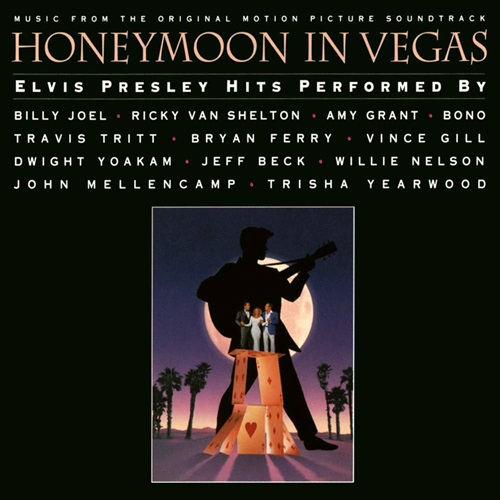
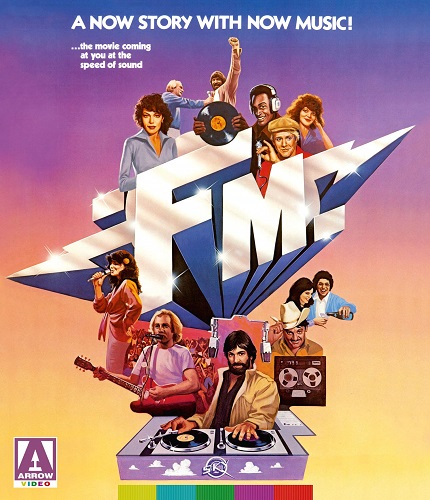
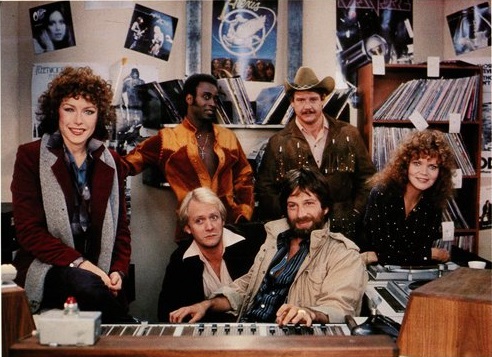



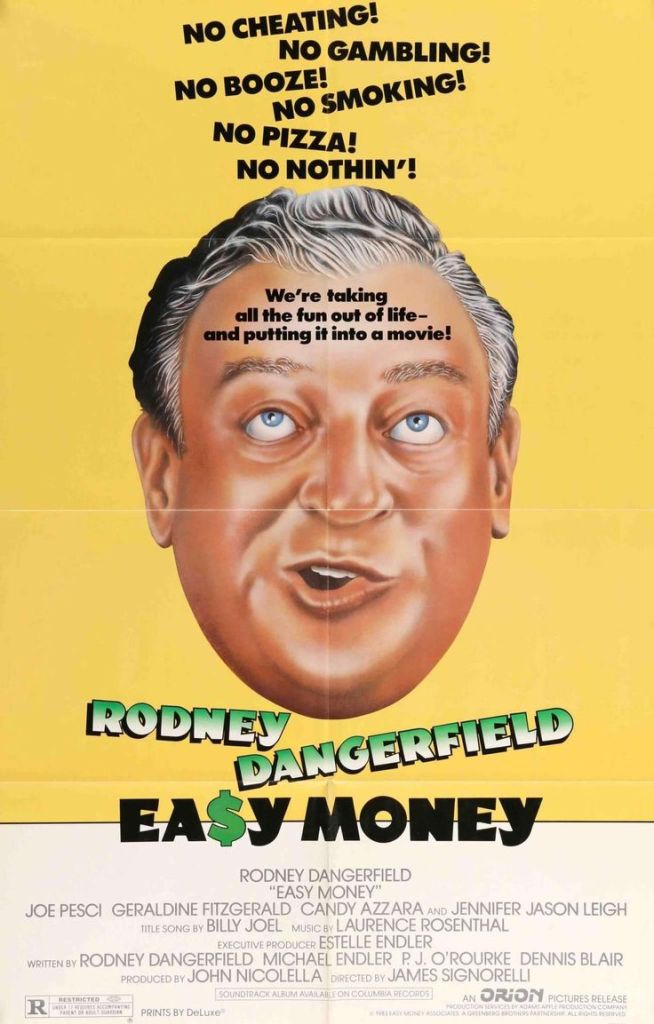
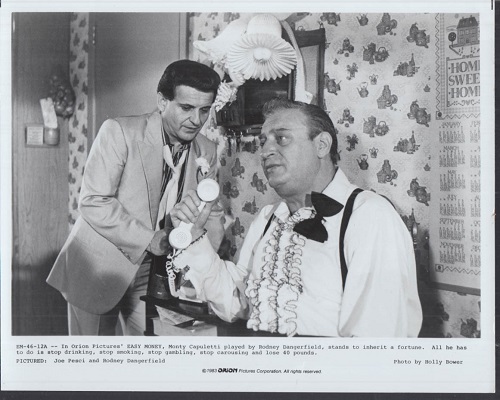
 Various Ramblings of a Nostalgic Italian