

Once again, it is time for Turntable Talk, our monthly musical topic hosted by Dave from A Sound Day. Most readers are familiar with this feature. Dave gives some of us musical bloggers a topic and we write about it. This month, he asked for our help in creating a holiday playlist.
Per his instructions: “Because of the time of the year, we’ll keep it simple – One More For Under The Tree. Just pick a favorite Christmas / holiday season song of yours and tell us a wee bit about it and maybe why you love it. If it’s a ‘standard’, old or new, pick the favorite version of yours and we’ll make a nice little Christmas playlist of sorts.”
A couple years ago, we did something similar. As someone who loves Christmas music, it is difficult for me to chose just one. I will try to keep it to no more than two. Maybe three. Surely, not four….
The song I want to feature is one that has never really been classified as a “Christmas” song. It is not one that you will hear often (if at all) on the radio in December. You will find it on a few 1970’s Holiday compilation albums, though. It was first released as a B-side of a single and released again as a posthumous single.
It Doesn’t Have To Be That Way
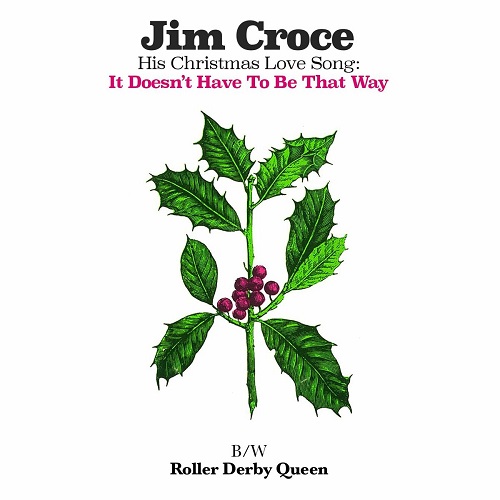
Jim Croce’s It Doesn’t Have to Be That Way was on his 1973 Life and Times Album. It was the B-side of One Less Set of Footsteps. He died in a plane crash in September of that year. It was in December that his label rereleased the song as the final single from the album. The song paints some wonderful images of winter and Christmas for the listener. Perhaps this is what the label was hoping to take advantage of when it was released again.
I was introduced to this song by a gal I was dating in the late 1980’s. I had never heard the song before and she had told me it was one of her favorites. From the opening guitar work and Jim’s vocal, I was hooked. The song is melodically beautiful. As beautiful as it is, however, it is a sad song.
Anyone who has ever gone through a break-up around the holidays will tell you how difficult it is. The festive decorations, the warmth and happiness of the season, and the overall feeling of love can really cause depression. No one wants to be alone at Christmas time.
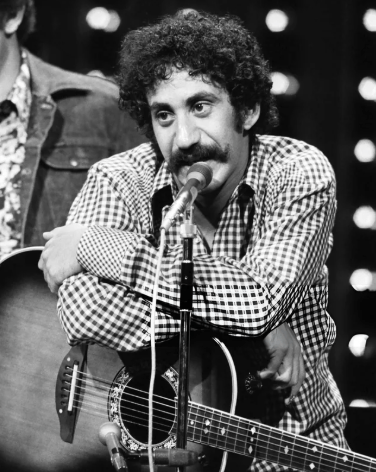
The singer reveals himself to be a man who has recently ended a relationship. As the holiday season approaches, the Christmas atmosphere in his town is evident nearly everywhere. The lyrics attest to that. As he experiences his surroundings, he begins to wish that he and his lover could reunite. He professes that it was a mistake to end their relationship and that it can easily be rekindled.
The song ends in mystery. In a bold move, the man says he will be stopping by his old lover’s place to “get it together.” “It’s only right” for them to start the relationship again according to the song. We never do find out what happens. Perhaps the “happy” chimes at the end of the song elude to a happy ending.
The songwriting team of Jerry Leiber and Mike Stoller wrote over 70 hit songs together. They wrote songs in the 1950’s for The Coasters, Wilbert Harrision, Big Mama, Thorton, and Elvis Presley. One of those Elvis songs was the one that opened his first Christmas album…
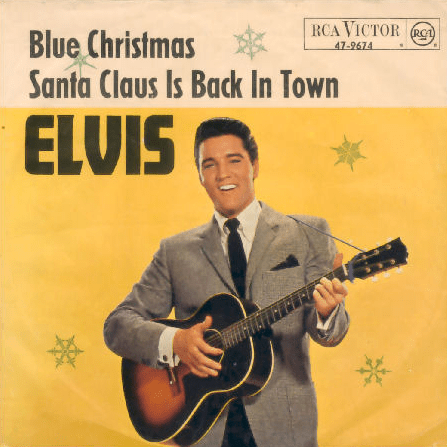
Santa Claus is Back In Town
Elvis’ Christmas Album was released in 1957. It contained twelve songs – six on each side. Side A contained the more contemporary cuts like Blue Christmas, White Christmas and Santa Claus is Back in Town. Side B contained the more religious and sacred songs like Silent Night and O Little Town of Bethlehem.
For years, I was only familiar with his versions of Blue Christmas and Here Comes Santa Claus. You know, the ones that played on the radio. In 1994, I picked up the compilation “If Every Day Was Like Christmas.” It included early Christmas songs as well as his later songs. I first heard Santa Claus is Back in Town on this album.
The song is a basic twelve-bar blues song with three verses. I have always wished that Elvis would have recorded an album of all blues songs. The genre (and the mixing of blues and rock) is one that allows him to shine. This song is a prime example of this. It is a raunchy, raw, and dirty blues song that is misleading from the beginning.
The song begins a group singing the word “Christmas” three times. You get the feeling that you are about to hear this beautiful holiday song. Suddenly the drum kicks, Elvis growls his first lyric and the blues begin!
Elvis howls his was through the verses as “Santa Claus,” who has no sleigh, but a black Cadillac instead. He also tells his pretty baby to expect him to come down her chimney later that night. The chorus begs her to be a good little girl because Santa is back in town. Naturally, the lyrics and the song itself are meant to have that “double entendre” and “innuendo” to it.
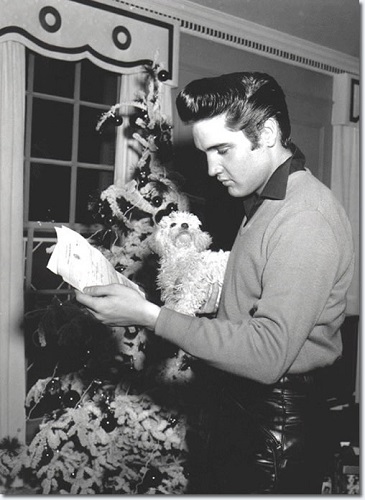
Many people have covered this song, including Dwight Yoakam, Foghat, Billy Idol, and Joe Perry. Even Kurt Russell performed it in the Netflix special, “The Christmas Chronicles.” These versions never seem to live up to the energy and the grittiness that the Elvis version has. None of them have ever given me goosebumps when I hear it either. The Elvis version does. His version is the best!
The question I pose now is a simple one. Is it possible to make this song sound even better? Personally, I think so. When the Royal Philharmonic Orchestra accompanied Elvis on a Christmas album in 2017, it brought it to an entire new level! It is still gritty. It is still bluesy. It is still raunchy. But now, you’ve got this fantastic horn line that takes it up a notch. Mix the orchestra parts with the original arrangement and you have a much fuller and fresh sound. Now, there is a raunchy “sparkle” to it.
Dave, thank you for again asking me to be a part of this feature. To my fellow music bloggers and you, I wish you and your family a Happy Holiday season. May you and yours have a blessed and Merry Christmas! Here’s to an amazing 2025!!


 Various Ramblings of a Nostalgic Italian