I’m sure that it is pure coincidence, but you know I had to take advantage of the fact that Movie Music Monday falls on Groundhog Day. I bet you I don’t even have to tell you what song is featured today, because it has kind of become a Groundhog Day tradition.
I don’t know very many people who have not seen Groundhog Day. If you are not familiar with it, Bill Murray is in Pennsylvania for the annual Groundhog Day festivities. Murray’s character is awakened to “I Got You Babe” by Sonny and Cher every morning at precisely 6:00 a.m. on the alarm clock in his hotel room. He relives the day over and over again. The movie grew a cult of fans that watched it every February 2, giving it a foothold in the popular culture
From Songfacts:
Sonny Bono was an up-and-coming record producer when he got Cher a job with Phil Spector as a session singer. They started dating and moved in to their manager’s house, where Bono would write songs on a piano in the garage. He came up with “I Got You Babe” and wrote the lyrics on a piece of cardboard.
Cher didn’t like it at first. She recalled to Billboard magazine: “Sonny woke me up in the middle of the night to come in where the piano was, in the living room, and sing it. And I didn’t like it and just said, ‘OK, I’ll sing it and then I’m going back to bed.'”
Sonny changed the key in the bridge to fit her voice and she loved it.
Fun Fact: Bob Dylan’s use of the word “Babe” in his 1964 song ” It Ain’t Me Babe” gave Sonny Bono the idea to use it in this song.
They last performed this together in 1987 on David Letterman’s show. They didn’t expect to sing, but Dave kept encouraging them until they did the song. Sonny and Cher put their differences aside and gave a touching performance. That was the last time they performed it together live, however, when Cher started her Las Vegas residency in 2017, she began performing this song as a virtual duet to a projection of Sonny.
In 1955, Johnny Cash released the hit “Folsom Prison Blues.” Shortly after that, he became interested in recording a performance at a prison. The idea was always on his mind, but it wasn’t until some changes in personnel at his record label that the idea came to fruition.
It was on this day in 1968 that Johnny walked on stage at Folsom Prison and recorded the album that would revitalize his career.
Cash was backed by Carl Perkins, June Carter and the Tennessee Three for two shows. The record label barely promoted the album, but that didn’t matter. The album went to #1 on the country chart and reached #15 on the national album chart. The first single released was, of course, Folsom Prison Blues, which put Johnny in the Top 40 for the first time since 1964.
(From songfacts.com): Bob Johnston, famous for his work with Bob Dylan, produced the album and arranged for the prison performance. According to Johnson, he told Cash to “just go out and say who you are” when he took the stage, so Cash opened the set with what became his catch phrase: “Hello, I’m Johnny Cash.”These are the words he used to start every episode of his TV series The Johnny Cash Show, which ran from 1969-1971.
The most famous line in this song, “I shot a man in Reno just to watch him die,” Cash said he wrote while “Trying to think of the worst reason for killing another person.” He added, “It did come to mind quite easily, though.” He came up with the line after watching the 1951 movie Inside the Walls of Folsom Prison while serving in West Germany with the US Air Force.
Dave just wrapped up another chapter of Turntable Talk. This was my contribution:
It is time once again for Turntable Talk hosted by Dave at A Sound Day. For over three years now, he has offered up a musical topic each month for me (and other participants) to write about. This month’s topic is “It’s About Time.”
Dave’s instructions are simple. “Tell us about a song about “time.” It could be one using the word “time” in the title … and there’s no shortage of them… or one that actually somehow explores the passage of, or idea of time.” While this is a topic that is fairly easy, I can’t help but wonder if there will be duplicate submissions.
For example, right off the top of my head I came up with Time in a Bottle from Jim Croce (which I have written about before. Then Time After Time from Cyndi Lauper came to mind. This was followed by Cher’s If I Could Turn Back Time and Huey Lewis’ Back in Time. Before I could shut my mind off Styx Too Much Time on My Hands and Semisonic’s Closing Time entered my mind.
I immediately discarded those, because I am sure that the other participants would choose one of those. So I dug a little deeper and tried to think of a song that might not be someone’s choice. I narrowed it down to No Time by the Guess Who, Just in Time by Dean Martin, Crying Time from Ray Charles, Time is Tight by Booker T and the MG’s, and my choice.
I chose a song written by Herman Hupfeld! Now everyone knows Herman, right? No. Not really, but I am sure you will know the song. It is a song that was written in 1931 for the Broadway show “Everybody’s Welcome.” It was first recorded by Rudy Vallee in July of 1931. It would be covered by Billie Holiday, Louis Armstrong, Frank and Nancy Sinatra, Natalie Cole, Carly Simon and Bob Dylan (Just to name a few).
While the song was recorded a few times after Vallee’s version, it was 11 years later when it would really get noticed. In 1942, the song was sung by the character “Sam” (portrayed by Dooley Wilson) in the classic film – Casablanca. As Time Goes by is heard throughout the film in short musical breaks.
RCA Victor wanted Dooley to record a version of it to be released to the public. However, a musician’s strike happened between 1942 and 1944, so he was not allowed to do so. Instead, the record label re-released the Rudy Vallee version, which went on to become a number one record (11 years after the original release).
Wiki states: Like many later singers, Wilson in Casablanca starts with “You must remember this, a kiss is still a kiss…”, singing only the verses and refrain (“As time goes by”). He entirely omits the intro that put those “fundamental things” into context: “This day and age we’re living in gives cause for apprehension, With speed and new invention and things like third dimension. Yet, we get a trifle weary with Mister Einsten’s theory, So we must get down to earth, at times relax, relieve the tension. No matter what the progress or what may yet be proved, The simple facts of life are such they cannot be removed.”
The song was voted No. 2 on the AFI’s 100 Years… 100 Songs special. The show commemorated the best songs in film.
The version I chose to feature is by a multi-talented comedian, actor, pianist and singer. His voice was instantly recognizable on radio. He was a guest on many television shows and had some success as a singer. He is, however, probably best known for … his nose. His nickname was “the schnozzola.” I am, of course, talking about the great Jimmy Durante.
The song itself is beautiful. Every artist who has covered it brings their own special take on it. There is something that really hits me when I hear Durante’s version. Despite that raspy voice, there is a sincerity that makes it just a bit better than the other versions. I’m not trying to diss the other versions, but none of them give me goosebumps when I hear them. Jimmy’s version does. For some reason, his voice blends so well with the string arrangement.
Before I post the song, you know I have to say it – “Play it again, Sam!”
In a live version, Jimmy adds the intro that many leave out.
Thanks again to Dave for asking me to participate and for hosting this feature. I’m excited to see the choices of the other writers!
I noticed that I accidentally scheduled this to post at 8pm instead of 8am. Sorry I am late.
This is sort of a continuation of the Music of My Life feature. It focused on music from 1970-2025. It featured tunes that have special meaning to me, brought back a certain memory or a tune that I just really like. I found that with the first three decades, there were songs that I didn’t feature. So I sat down with my original lists and selected some songs that “bubbled under,” so to speak.
I figured a good way to present them was to focus on a decade. 10 years = 1 song per year = 10 songs. Last week I wrapped up the 80’s. This week we move on to the 90’s. So, let’s check out a few “Decade Extras.”
1990
My first song this week is one from a group that has music in their bloodline – Wilson Phillips. Chynna Phillips is the daughter of John Phillips and Michelle Phillips of The Mamas & The Papas, while Carnie Wilson and Wendy Wilson are the daughters of Brian Wilson of The Beach Boys and Marilyn Rovell of The Honeys.
Around this time I was really going through some depression. There were so many things coming at me at home, at work, and life in general. Hold On, cheesy as this may sound, really helped me get through some of those times. The song was the breakout hit for the group, and it was a huge one, peaking at #1 on June 9, 1990.
According to Songfacts.com, Chynna Phillips wrote the lyrics about her drug and alcohol addiction.
Producer Glen Ballard had been working with Wilson Phillips when he handed Chynna a cassette tape with some music that needed words. Phillips took it home to work on the lyrics, but inspiration struck before she even got to the front door.
She wrote about the pain of a lost love and the substance that surrounded it while sitting in her driveway. “I thought to myself, ‘Well, AA tells me, just hold on, just one day at a time. I thought, ‘OK, if I can just hold on for one more day, then I can do this.'”
Hold On
1991
The plea for racial tolerance had been going on long before 1991 (and remains to this day). Michael Jackson offered up his plea in the song Black or White. The song was the fastest-rising single in 22 years (since The Beatles’ “Get Back”), jumping from #35 to #3 in its second week, and landing at #1 in its third week.
The video was originally 11 minutes long, but eventually edited down for airplay on channels like MTV. It featured a morphing technique that was very innovative at the time. We see this kind of thing all the time today, but in 1991, it was one of the coolest things I had ever seen.
The video features Macaulay Culkin and George Wendt (Norm from the sitcom Cheers, who passed away yesterday) appeared in it, as well as Tyra Banks before she gained supermodel status.
Black or White
1992
Tears in Heaven by Eric Clapton is just a beautiful (albeit sad) song. Clapton wrote this about his four-year-old son Conor, who died on March 20, 1991 when he fell out of a 53rd floor window in the apartment where his mother was staying in New York City. He wrote it with Will Jennings. Jennings told Songfacts:
“Eric and I were engaged to write a song for a movie called Rush. We wrote a song called ‘Help Me Up’ for the end of the movie… then Eric saw another place in the movie for a song and he said to me, ‘I want to write a song about my boy.’ Eric had the first verse of the song written, which, to me, is all the song, but he wanted me to write the rest of the verse lines and the release (‘Time can bring you down, time can bend your knees…’), even though I told him that it was so personal he should write everything himself. He told me that he had admired the work I did with Steve Winwood and finally there was nothing else but do to as he requested, despite the sensitivity of the subject. This is a song so personal and so sad that it is unique in my experience of writing songs.”
Clapton wasn’t sure he wanted this song to be released at all, but the director of Rush, Lili Zanuck, convinced him to use it in the film. “Her argument was that it might in some way help somebody, and that got my vote,” Clapton said.
The song was a huge hit. It won Grammys in 1993 for Record of the Year, Song of the Year, and Best Male Pop Vocal. Clapton was nominated for nine Grammys that year and won six.
Tears in Heaven
Clapton played an acoustic version on his 1992 MTV Unplugged special. Personally, I love this version best.
1993
There are some songs that will be forever associated with television or movies. The next song is one of those. If I say “What is Love” by Haddaway, you know what you think of …. SNL.
According to Songfacts, this song gained popularity when it was used in a recurring Saturday Night Live sketch about three guys who go clubbing. They dress alike – in outdated fashion – and torment women at the clubs by forcing their dancing upon them. There is very little dialogue in the sketches, and this song plays throughout, with the three men bobbing their heads in unison. In 1998, the skit was extended to a full-length movie called A Night At The Roxbury.
The two regular performers in the skit (and movie) were SNL cast members Will Ferrell and Chris Kattan. The host of the show would often be their third man in the bits – Jim Carrey and Sylvester Stallone each did a turn as the head-bobbing swingers.
Although the song is an upbeat dance track, the lyrics are rather gut-wrenching, as Haddaway sings about trying to love a girl who won’t love him back.
What is Love
1994
1994 features a cover song. The original was done by Vicki Sue Robinson in 1976, and it was her only hit. That song was Turn the Beat Around.
Gloria Estefan’s nearly identical cover version in 1994 was used in the Sharon Stone movie The Specialist. Her version was a #1 Dance hit and went to #13 on the Hot 100. The song reminds me of many of the dances that I DJ’d over the years where it was a big dance tune.
Turn the Beat Around
1995
The next song was meant to be a tribute to Bob Dylan. Apparently, Dylan felt the “tribute” infringed too closely on original work, and he sued the group who recorded it for unauthorized use of his lyrics. Bob wound up receiving a large, out-of-court settlement in 1995. The song? Only Wanna Be With You. The group? Hootie and the Blowfish.
When singer Darius Rucker recorded a country album, he stopped by our station. It was in the late afternoon and I was the morning guy. I honestly didn’t think his country stuff would go anywhere, so I skipped the visit. For what it is worth, that first country album had some great tunes on it and I regret not stopping in.
I Only Wanna Be With You
1996
One of the biggest slow dance songs of 1996 came from a movie that featured – Cartoon characters! R. Kelly wrote I Believe I Can Fly for Space Jam, a movie starring Michael Jordan and other NBA stars in a world of cartoons (including Bugs Bunny). The song plays in the opening scene where a young Jordan is practicing late at night. When his father comes to bring him inside, they talk about Michael’s aspirations: to play at North Carolina; to play in the NBA; to fly.
The movie was big at the box office, but this song was even bigger, becoming an inspirational anthem often played at weddings and used in video tributes. Kelly got an early copy of the movie to view for inspiration. According to Rolling Stone magazine, Kelly said, “I studied it and I prayed over it because I wanted the best thing to come out of it.”
Fun Fact: Kelly may claim that he believes he can fly in this song, but in reality the R&B superstar has a chronic fear of air travel. Kelly is so scared of planes that he even takes boats when he tours Europe.
I Believe I Can Fly
1997
I was still working at the mailroom at EDS when Tonic released If You Could Only See. It played a lot on Planet 96.3 in Detroit when I was doing deliveries. I had no idea how the song came about, but it is a neat story.
Songfacts says, Tonic frontman Emerson Hart wrote this song after a tense phone call with his mother. Hart was 21 years old and planning to get married – not what his mother had in mind. She tried to talk him out of it, but you can’t argue with love. Emerson told her: “If you could only see the way she loves me, then maybe you would understand,” and then he hung up.
With his fire sparked, Hart started writing the song, and it came very quickly, with him taking aim at his mother’s “manipulations” and “lies” during the strident verses, then slowing it down to present his side of the story in the chorus. The song was very cathartic and helped him work out his feelings, but in the end his mother was right: it didn’t work out with the girl and they never got married.
This was Tonic’s first single, but it almost didn’t make the album. The band got a deal with Polydor Records after playing clubs for a few years in the Los Angeles area. When it came time to record their debut album, Emerson Hart wasn’t sure if they should use “If You Could Only See,” since it was a very vulnerable song and he wasn’t sure how it would be received. Polydor, however, loved it and made sure it was the debut single.
If You Could Only See
1998
I’ve said before, Jewel was one of the greatest interviews I ever did. She was such a wonderful and delightful person. The story that proceeds her success is inspiring.
At a February 2008 concert in Las Vegas, Jewel explained that when she was 18, she was living in a van and did some shoplifting. She was going to take a dress when she looked at her hands and realized that she controlled them. Said Jewel, “I realized I was cheating myself. No matter how you work with your hands your own dignity is up to you.”
She played mostly new tracks from her country album when she was with us. I did get her to play Hands for us while we not on the air. She also did a Christmas version on her Christmas album.
Jewel performed this on Late Night with David Letterman a week after the 9/11 terrorist attacks. The song was a popular choice on the radio when a DJ remixed the track after the tragedy.
Hands
1999
American Woman by the Guess Who was the song that was number one on the day I was born. It was featured in the first installment of this feature. It’s interesting that it shows up again in 1999, but this time by Lenny Kravitz.
This was used in the movie Austin Powers 2, The Spy Who Shagged Me. The video featured Heather Graham, who was in the movie, as the American Woman. Kravitz told how he came to record the song in an interview:
“I was called by the people making Austin Powers and they simple asked me to cover ‘American Woman,’ which I thought was odd but I accepted thinking it was an interesting challenge and did my best to change it as much as possible while still respecting the original. I was pleased when Burton Cummings called me to tell me how much he loved it.”
Lenny’s version is actually pretty good. I think he did a great job making it his own. People liked it, too, as it won a Grammy in 1999 for Best Male Rock Vocal Performance.
American Woman
There’s Round 1 of the 90’s. We’ll revisit the decade again next week before moving on into the 2000’s and wrapping up the feature.
Welcome back to The Music of My Life, where I feature ten songs from each year of my life. In most cases, the ten songs I choose will be ones I like personally (unless I explain otherwise). The songs will be selected from Billboard’s Year-end Hot 100 Chart, Acclaimed Music, and will all be released in the featured year.
Before we get into the music, I have to take a moment to mark a blogging milestone. This blog will be the 1400th blog I have written since the Nostalgic Italian site went live.
1400 posts and here you are still reading. For that, I thank you from the bottom of my heart. I am glad that you are here. Now, let’s celebrate by going back to 1989…. when I turned 19.
As I sorted through the singles from 1989, I noticed that there were a lot of duets recorded that year. After All from Peter Cetera and Cher, Don’t Know Much and All My Life from Linda Ronstadt and Aaron Neville, were just a few of them. No duets made my list, however, as I just didn’t feel any of them connected with me enough to bump the ten songs I picked.
I grew up listening to Roy Orbison. He was a favorite for a long time. I used to ask my dad to play his songs on the stereo all the time as a kid. In 1988, Roy saw his career take on new life. He recorded with George Harrison, Jeff Lynne, Tom Petty and Bob Dylan as part of the group The Traveling Wilburys (More on them in a moment) and had recorded a brand new album (Mystery Girl) in November of 1988.
On December 6, 1988, I was at the radio station when an “Urgent” Bulletin came across the AP Newswire stating that Roy had died after having a heart attack. I had never met Roy, but his music was such a big part of my life that seeing the story upset me quite a bit.
You Got It was the first single released from the Mystery Girl album in January of 1989. Orbison wrote the song with his Wilbury friends, Jeff Lynne and Tom Petty. Lynne produced the track and also played guitar, keyboards and bass; Petty played acoustic guitar and sang backup. It would reach #1 on the Adult Contemporary chart and #9 on the Top 40 chart.
Orbison performed this song just once: at the Diamond Awards Festival in Antwerp, Belgium on November 19, 1988. This performance was used as the song’s music video.
You Got It
Every interview I have seen with the guys from the Traveling Wilburys always has them saying how wowed they were by having Roy in their group. When Jeff Lynne was asked about the recording sessions, he said, “Everybody just sat there going, ‘Wow, it’s Roy Orbison!’ … Even though he’s become your pal and you’re hanging out and having a laugh and going to dinner, as soon as he gets behind that [microphone] and he’s doing his business, suddenly it’s shudder time.”
Roy was in the group’s first video (for Handle With Care), and was set to travel to London a couple days after he passed away. One of those videos was for The End of the Line. One of the reasons that I love this video is that the group gives a heartfelt tribute to their friend. When Roy’s vocal happens, we see Roy’s guitar in a rocking chair next to a framed photo of Roy.
The End of the Line
I have never seen the movie Road House. My mom liked it a lot, because she liked Patrick Swayze. Jeff Healey and his band were shooting scenes for the movie (and Jeff had many scenes with Swayze) and recording his See The Light album simultaneously. One of the cuts from this album was Angel Eyes.
I had never heard of Healey before this song. I had no idea that he was blind and marveled at the way he played his guitar (on his lap, like a piano). I was really blown away by his vocals and his guitar playing. He was discovered by two blues legends – Stevie Ray Vaughn and Albert Collins.
He toured and sat in with some fantastic people over the years including Buddy Guy, BB King, Eric Clapton, ZZ Top, The Allman Brothers and Bonnie Raitt (just to mention a few.) While he is mainly known for his bluesy style, by the year 2000 he actually was releasing many jazz albums.
He loved music and he was an avid record collector. He amassed a collection of well over 30,000 old 78 rpm records. Starting in 1990 he hosted a radio program of very early jazz on CIUT at the University of Toronto with Colin Bray. Later he went national on CBC Radio’s program entitled My Kind of Jazz, in which he played records from his vast vintage jazz collection.
Too many people write him off as a “One hit wonder” act. His music is fantastic and this song is so soulful … he was a talent taken too soon.
Angel Eyes
“Hey, man! Have you heard that new song by Marvin Young?” I can’t even imagine what type of music someone called Marvin Young would be singing! However, Young MC just screams rap music, right?! I’ve never been a big rap fan, but there was just something about the baseline and the catchy lyrics that made this a favorite for me.
Bust a Move was a song that whenever I played it, the crowd always new the words and sang along. The verse that every one knows is “Your best friend, Harry, has a brother Larry, in five days from now he’s gonna marry…” The whole rhythm of that verse and the baseline fit so well together. I also like the fact that while there is some sexual innuendo, there is no profanity in the song.
Interesting story from songfacts.com: Flea from The Red hot Chili Peppers played bass on this song and appears in the video, but he didn’t reap the rewards. He explained to Bass Player magazine: “I have a bitter taste in my mouth about that, because I feel as though I got ripped off. The bass line I wrote ended up being a major melody of the tune, and I felt I deserved songwriting credit and money because it was a #1 hit. They sold millions of records, and I got $200! Afterwards, my lawyer told them, ‘You should throw down Flea some cash,’ but the record company said, ‘We told him exactly what to play.’ No one was even in the room at the time but me and the engineer! It was ridiculous, but I learned from it.”
It was one of the first rap records to cross over to the mainstream charts. It went to #7! Young MC recalled to Rolling Stone: “People looked at rap and hard rock as the type of music that you slam your door after you argue with your parents, and bang your head in defiance. My record wasn’t necessarily rebellious, but it was clever enough to grab in a decent segment of people that didn’t listen to rap music.”
Bust a Move
The next song is one that I used to play for my prom date, Karen, after we started dating. This and Just You and I from Eddie Rabbit and Crystal Gayle were “our songs.” I remember the first time I heard Luther Vandross sing Here and Now. I remember how powerful the lyric was and just how perfect his voice was for the song.
Karen and I dated for a bit and broke up around 1990, only to get back together a year or so later before breaking up after another year or so. Somewhere during that time I had made her a mix tape of love songs. This was just one of many that made it to that tape.
It was hard for me after we broke up because I was DJing a lot of weddings and this was a very popular Bride and Groom song. I almost always had to put headphones on and listen to something else while it played. Today, I can listen to it and it doesn’t bother me, but at the time, it brought about a lot of pain.
Here and Now
My next tune is one that I have featured before and I wrote about how it was helpful to me post-divorce. You can read about it here:
I have said many times that Willie Nelson always seemed to have one song on each album that I connected with personally. Many times it was more than that. In 1989, he released a fantastic album entitled “A Horse Called Music.” On the album is a cut that was co-written by Mike Reid (who played five seasons with the Cincinnati Bengals and had a brief country singing career) called There You Are.
I had heard the song many times when listening to the album, but it wasn’t until after the final break up with Karen (see above) that the song really hit me hard. At the time, I was still wrapped up in feelings and hated that we were not together. I found myself thinking about her more than I should have been, especially since she had moved on with her life. Then I heard this song…
I could have written this song! It literally was exactly what was happening to me. For no reason, she’d pop into my head. It was never bad things, it was always some good memory of when we were together. The string arrangement and Willie’s vocal convey those feelings in such a magnificent way. It is beautifully sad …
I had never seen the video for this song until I searched for it today. Willie cleans up pretty good…
There You Are
When you make a list of great songwriters – Leiber and Stoller always are on that list. The next song was written by Oliver Leiber, the son of Jerry Leiber of that aforementioned team. Oliver had already written a couple songs for Paula Abdul (Forever Your Girl and The Way That You Love Me) when he got a call saying that the label needed one more song for her album. That song would be Opposite Attract.
From songfacts: This song evolved into a duet with a cartoon cat named MC Skat Kat, who was actually the duo The Wild Pair. Oliver Leiber explains: “I wrote it all from the perspective of one person singing it. It wasn’t initially a duet. It was saying, ‘I like this and you like that.’ It was basically: I like potatoes, and you like po-tah-toes, all from one singer’s perspective. But I had these two singers I had been working with – Marvin Gunn and Tony Christian. They’re the guys that sang on Prince’s “Kiss” and they were incredibly soulful funky singers that I had been using as part of my sound on the first two tracks I did with Paula, helping to preserve the Minneapolis sound, because they sounded very Prince-y and it really added something to Paula’s vocals.
Basically, he had the Wild Pair sing the entire song and then got Paula to cut her lines later. He wasn’t happy with the original mix, which is why the album and the single versions sound so different.
In the video, the real Paula interacted with the animated MC Skat Kat. The concept of Paula dueting with a cat came from Anchors Aweigh, a movie where Gene Kelly dances with the mouse from Tom & Jerry. The video was directed by Michael Patterson and his wife Candace Reckinger, who also created the MC Skat Kat character and animation. Patterson said: “Gene Kelly loved it; he was a friend of Paula’s. Gene was also an inspiration to Candace and I.”
Fun Fact: Patterson and Reckinger got their start in music videos when they created the iconic clip for a-ha’s Take On Me
I loved the Gene Kelly and Jerry Mouse dance, so naturally, I loved this video (and Paula) too!
Opposites Attract
Before I knew the song was about Elvis, I really loved the sound of Black Velvet by Alannah Miles. It was considered a power ballad, but to me it sounded more like a good blues song. Miles’ voice had that bluesy and sultry voice that fit with the groove of the song perfectly.
The story of how the song came to be is a good one. Co-writer Christopher Ward, who was Myles’ then-boyfriend, was inspired on a bus full of Elvis fans riding to Memphis attending the 10th Anniversary Vigil at Graceland, in 1987. Upon his return to Canada, he brought his idea to Myles and producer David Tyson, who wrote the chords for the bridge. The song was one of three in a demo Myles presented to Atlantic Records, which eventually got her signed to the label.
Songfacts provides a bit of lyric analysis:
“Black velvet and that little boy’s smile” – You can buy a black velvet Elvis painting at any respectable yard sale. Early female fans were drawn to his “Little boy smile.”
“Black velvet with that slow southern style” – Elvis delivered some of his songs with slow, undulating hips. Check out “Steamroller Blues” live.
“Up in Memphis the music’s like a heatwave” – Sun Studios. The epicenter of early rock music and where Elvis recorded.
“Love Me Tender leaves ’em cryin’ in the aisle” – Love Me Tender was a huge hit for Elvis in 1956.
“The way he moved, it was a sin, so sweet and true” – Elvis’ legendary hips swivel, the Pelvis.
“Every word of every song that he sang was for you. In a flash he was gone, it happened so soon, what could you do?” – Elvis died suddenly in 1977.
Black Velvet
For me, the last song for this week is something that I continue to work on in my personal life. In my first marriage and throughout that period of my life, I just found it easier to back down and make everyone happy. I did this even if it made me unhappy. It is challenging to stand your ground and not back down from what you believe in or what you feel is right.
Tom Petty’s song was helpful to him as well. Before recording his Full Moon Fever album, an arsonist burned down his house while he was in it with his family and their housekeeper. They escaped, but Petty was badly shaken and spent much of the next few months driving between hotel rooms and a rented house.
Songfacts says that: It was on these drives that he came up with many of the songs for the album; the fire was a huge influence, especially on this song. Petty felt grateful to be alive, but also traumatized – understandable considering someone had tried to kill him. “I Won’t Back Down” was his way of reclaiming his life and getting past the torment – he said that writing and recording the song had a calming effect on him.
The song was used as a patriotic anthem after the September 11th terrorist attacks. Regarding that, Tom said: “The song has also been adopted by nice people for good things, too. I just write them, I can’t control where it ends up.”
The song has a Wilburys connection. The video features Ringo Starr on drums, with Wilburys’ George Harrison and Jeff Lynne on guitar. Harrison did play on the track and contributed backing vocals, but Ringo had nothing to do with the song itself.
I Won’t Back Down
That’s it for the 1980’s! We’ll dive into a brand new decade next week. 1990 was a good year for music. Starting in the 1990’s my music choices tended to lean a bit more country as far as new stuff. In 1990 alone, I could have picked 10 country songs for the list. I didn’t, but I could have.
Next week’s list will feature and interesting mix of music, largely due to the radio station where I was working at the time … some classic rock, some soulful songs, and big pants ….
Did I miss a favorite of yours from 1989? Tell me all about it in the comments. See you next week.
Welcome back to The Music of My Life, where I feature ten songs from each year of my life. In most cases, the ten songs I choose will be ones I like personally (unless I explain otherwise). The songs will be selected from Billboard’s Year-end Hot 100 Chart, Acclaimed Music, and will all be released in the featured year.
1988 was a very big year for me. It was the year I graduated from high school. It was also the year that I landed my first radio job. As graduation day grew closer, I began counting all of the “lasts.” The last marching band performance. The last band concert. The last final exam. To say that I was an emotional wreck would be an understatement.
After graduation, I had a full time radio gig (making a whopping $12 an hour) and so I gave up thinking about doing anything else. I was that clueless to think that I’d have this radio gig until I retired. Can you imagine? Typical 18 year-old!
I mentioned last week that 1988’s list would present some songs that may or may not seem out of place. I suppose that those who know me well will not be surprised by the songs I picked, and there certainly is a variety! Well, I suppose I should get right into the tunes …
I have to remind myself that it is not Movie Music Monday, because my list includes not one, but two songs from the soundtrack to Tom Cruise’s film, Cocktail. My buddy Steve and I cruised a lot our senior year. He was always bringing new music for me to listen to. I am almost positive that he was the one who told me about the Georgia Satellites’ version of the Hippy Hippy Shake.
The version I was familiar with was done by the Swinging Blue Jeans, and was a song we played at my first radio station. I had no idea that the song was written and recorded first by Chan Romero in 1959. Anyway, when I hear the Satellites’ version really rocks and it was a great song to cruise to.
Hippy Hippy Shake
In 1987, the song La Bamba was a hit again. This time it was Los Lobos from the soundtrack to the hit movie starring Lou Diamond Phillips. It made for the perfect parody song for Weird Al Yankovic. His version was called, Lasagna. Now, what Italian wouldn’t like this song?!
It is on my list because when my dad booked my graduation party, he also gathered up a few of his band friends. He had the sax guy, keyboard guy, and bass guy come. It was either my cousin or my uncle who brought their drum kit, and my dad brought his guitar. No rehearsal, all they had was some lyric sheets with chords on them and they jammed through the whole party. It was awesome!
My dad played so many great blues songs. Everyone seemed to take turns singing something. My dad called me, and my friends Steve and Joe up to the stage and handed us the lyrics to Weird Al’s Lasagna. I’m guessing it didn’t take much coaxing for us to sing, and it was probably awful. However, it is a great memory of me and my pals.
Lasagna
If it ain’t broke, don’t fix it, they say. Robert Palmer had great success with his Addicted to Love video. So he brought back the models from the previous music video for this one. Only this time they’ve multiplied! Five of them do choreographed dance moves, but another eight stand behind Palmer looking bored. It worked, though, as Palmer won the 1988 Grammy Award for Best Rock Vocal Performance, Male for this song. It was the same award he won two years earlier for “Addicted To Love.”
Songfacts.com says: The big, sexy hook in this song is the pause after Palmer sings, “Now I find her.” After some drumbeats, he comes back with “…simply irresistible.” The song was in the works for three years before Palmer came up with this part, making the song complete. “A little thing like that makes the difference between an idea and the complete song,” he wrote in his Addictions: Volume 1 liner notes, adding, “I like the manic military rhythm and the strong counter melody.”
This was yet another song that made it to our “cruising cassettes.” It was another great sing along song for us.
Simply Irresistible
My next song is one that I always thought was very creative. I Hate Myself for Loving You is such a great line. I relate to in in a few ways. As a young punk, I kinda fell for gals pretty hard. I let many of them treat me bad and I just kept hanging on with them. I always felt that I would just keep on loving them through it all. Yeah, I was an idiot. Today, that title makes me smile and makes me think of young Keith, who just wanted to make someone happy.
Thanks to Songfacts, I learned that that wasn’t originally the title: Joan Jett’s producer Kenny Laguna told us that Joan came up with the guitar riff for this song and wrote it as “I Hate Myself Because I Can’t Get Laid.” She took it to the writer/producer Desmond Child, who thought the title would never fly and convinced Joan to change it to something with “Love” in the title. Child, who got a co-writing credit on the song.
I Hate Myself For Loving You
The next song is the only country song on my list. I am guessing that I never really heard this when it was released, and became familiar with it a year or so after when I had my first stint at a country station.
I was familiar with the Oak Ridge Boys, of course. I mean, who wasn’t? Elvira was all over the radio when it was out. They guys had great harmonies and when I first heard Gonna Take a Lot of River, that is what stood out to me. This would have been sometime in 1991, when my girlfriend had broken up with me.
That being said, the lyrics now really hit home. I spent a lot of time at the beach and on the pier watching the waves during that time. So the lines “Because my baby’s long gone and nothings going my way. I’m gonna let this muddy water just wash away my blues.” resonated with me.
Today, when I hear it I just love listening to the harmonies and fumble every time I try to say, “Monongahela.”
Gonna Take a Lot of River
The variety of songs continues …
1988 brought us the only acapella song to go to number one in the United States. It is the second song from the Cocktail soundtrack. Don’t Worry, Be Happy by Bobby McFerrin was unlike anything on the radio at the time. Bobby recorded it using only his body to make all the sounds. The simple message and unusual sound made it a surprise hit.
The inspiration for the song came from a poster that Bobby saw featuring the Indian guru Meher Baba. It simply said, “Don’t Worry, Be Happy.” Bobby says that when he saw it he thought it was “a pretty neat philosophy in four words.” If I had a dollar for every time I heard someone say, Don’t Worry, Be Happy in 1988 alone, I’d be financially set for life.
The video was a silly one and a received lots of airplay on MTV. It featured Robin Williams and the lesser-known comedian Bill Irwin (who plays Mr. Noodle on Sesame Street). It is interesting to note that the video is a bit shorter than the single.
I always think of my best friend, Jeff, when I hear this one. He would always say the line, “I’ll give you my phone number, when you worry, call me, I’ll make you happy.” We found that line hilarious for some reason.
Don’t Worry, Be Happy
The next song was something I heard while cruising with my girlfriend. I’m sure we were listening to that Love Song show (Pillow Talk). It grabbed me from the intro. It was a smooth groove that reminded me of some old Atlantic or Stax soul songs. I was surprised to learn it was Glenn Frey.
Glenn’s Soul Searching album was his third solo album. I picked up the album because of the song True Love. My feelings about the song were justified when I read the liner notes. Frey wrote of the song “For those of you who have my previous albums, I apologize. I just can’t shake my obsession with this Al Green-Memphis thing. Like Wilson Pickett says, ‘Don’t fight it’.” Cash Box magazine even called the song: “a classic R&B tune replete with hornbreaks and soul-tinged arrangement and production.”
My favorite part of the song is the fake ending. After a second or two, the drum kicks back in and the sax wails away at a solo. Love this song. I wish the video would have started with the song instead of the cheesy acting by the actors … LOL
True Love
Who would have thought that Tom Jones would have a career boost in 1988?! Tom enjoyed great success in the mid 60’s and the 1970’s. He never really stopped making records and was always on tour. In the early 1980s, Jones started to record country music. From 1980 to 1986, he had nine songs in the US country top 40, yet failed to crack the top 100 in the UK or the Billboard Hot 100.
Prince had recorded Kiss in 1986. The song was a big hit and continues to be played in a regular rotation on Adult Contemporary stations all over the country. I know that many will not agree with me when I say that Prince’s version sounds weak compared to the Tom Jones/Art of Noise version. Tom commands the song and I cannot love it more!
According to Songfacts, after his country songs, he “made a left-field decision to cover this song, and in doing so revived his career. He told the Observer Music Monthly December 2008 how this came about: “If I hear a song I like I’ll do it in the show, so when I heard this I sang it (Kiss) in an R&B style. Then I was due to go on Jonathan Ross’s program in 1987 to perform the ballad ‘A Boy From Nowhere,’ and he wanted something upbeat too. My philosophy has always been: when in doubt, do ‘Great Balls of Fire.’ But Jonathan asked if I had anything new. Art of Noise were watching and they asked if I’d do a version with them. When they sent me the finished version I thought: ‘If this isn’t a hit, I’ll bloody well pack it all in.’ It was a busting hit.”
Tom tells a great story about Prince. When he met Prince and thanked him for the song, but didn’t ask what his thought of his version, as he wasn’t sure he would like the answer. “I saw a movie once that Bette Midler did called The Rose,” Jones said in a Songfacts interview. “She goes to see Harry Dean Stanton, a country singer, because she’d recorded one of his songs. She says she’s a big fan of his, and just before she walks out the door he says, ‘Could I say one thing to you? Don’t you ever record one of my songs again. ‘That hit home. I thought, s–t, I’m never going to ask a songwriter what he or she thinks of my version. I’ll leave that to them. That always sticks in my mind. So I just thanked him for writing it.”
Fun fact: Prince and Tom Jones were both born on the same day, the 7th of June (Prince in 1958, Jones in 1940)
Kiss
I am sure that I have talked about the next song before. I am also sure that I talked about the album before. It was truly a monumental event!
From Songfacts: Handle With Care was the first single from The Traveling Wilburys, a supergroup created by George Harrison and Jeff Lynne. Initially an informal grouping with Roy Orbison and Tom Petty, they got together at Bob Dylan’s Santa Monica, California, studio to quickly record an additional track as a B-side for the single release of Harrison’s song “This Is Love.” “Handle With Care” was the song they came up with, which Harrison and his record company immediately realized was too good to be released as merely a B-side. The five superstars decided to form a band and make an entire album, recording nine more songs at Dave Stewart’s (of Eurythmics) house in Los Angeles in a 10-day window when they were all available.
This was the only video that included Roy Orbison. A short time after the album was released, he passed away of a heart attack. I was working at the radio station the morning that news of his passing came across the news wire. I will never forget that.
Handle With Care
When I was DJing parties and weddings, I would often find out about new dance songs from people who made requests. Many of the songs were line dances like the Cupid Shuffle or Cha Cha Slide. Over the years, I was introduced to The Biker Shuffle, The Turbo Hustle, The Dougie and many others that way. I was always surprised at how they would fill the dance floor.
I remember someone asking for a song called Da Butt and I laughed. It was from a Spike Lee movie, but I had never heard of it. That week, I stopped by a DJ supply store and there on one of the many compilation CD’s they made was Da Butt by a group called EU. I bought it, took it home and gave it a listen.
It certainly had a funkiness to it and I could see how this might be something that people could dance to. It didn’t take long to find out because I had a wedding the following weekend. Once I started the song, the crowd screamed and got on the dance floor. Before I knew it, everyone was shaking their rear end. I would use this song a lot over the years.
I always think of one of my college instructors when I hear this because I DJ’d a birthday party for one of her kids and SHE was the one who asked me to play it.
I would often get out on the dance floor with these poster board signs I had made for my gigs. I had one that said “Oh-We-Oh. Whoa-Oh” and I would hold it up for audience participation during that part of the song. While it is not the most family friendly song, it did give me a chance to have some fun at a lot of DJ gigs.
Da Butt
I couldn’t let this year pass without touching on one of the big controversies of the year. In June of 1988, Gail Brewer-Giorgio released a book called “Is Elvis Alive?” Along with the book, there was a cassette tape with alleged phone conversations that Elvis had with someone long after he was supposed to have died.
This played right into the rumor in the music industry was that Elvis had faked his death. In the years following his death, there were many sightings of him (including my home state of Michigan – at a Kalamazoo Burger King), and in late 1988 record label LS Records released “Spelling on the Stone” to capitalize on the popularity of the phenomenon. According to LS Records owner Lee Stoller, who produced the song, his daughter Tammy received the recording in August 1988 from an anonymous man who arrived at the label’s offices in a limousine. After obtaining distribution rights, LS Records released the song on radio by the end of 1988, with the single’s release not crediting an artist. The song’s title refers to the fact that Presley’s middle name, Aron, is misspelled as “Aaron” on his tombstone, which was a common argument against his death at the time. The song features an uncredited vocalist with a delivery similar to Presley’s; it tells a first-person narrative, purportedly from his perspective, to suggest that he had faked his death.
Some people claim that the impersonator is actually a guy named Dan Willis, who recorded at LS Records. Others think it really is Elvis. I say Balderdash …
Bonus Song: Spelling On the Stone
1988 had so many great songs. There have been times I wonder if I should pick 15 instead of 10. I know that in future years, I will struggle to pick 10, so I won’t. What one of your favorite 1988 hits did I miss? Mention it in the comments.
Next week we move to 1989. The list isn’t as all over the place like this one and includes some great songs. Join me next week and we’ll give them a listen….
Welcome back to The Music of My Life, where I feature ten songs from each year of my life. In most cases, the ten songs I choose will be ones I like personally (unless I explain otherwise). The songs will be selected from Billboard’s Year-end Hot 100 Chart, Acclaimed Music, and will all be released in the featured year.
I would turn 17 in 1987. It was my junior year in high school and I did what I had to do to get by in all my classes except band class. I was completely devoted to band class. I was an officer in band class (I was one of the librarians who helped sort, catalog and distribute music). I often stayed late and practiced with a couple other band nerds.
It was also the year I dated a gal who was kinda sorta toxic. It was an 8 month relationship that really had me messed up. I won’t go into details. We had some good times, but the bad times outweighed them. As I have worked ahead for this feature, I began to notice how some songs really hold some big relationship memories. The power of a song and the memories attached to them aren’t always happy, but I have noticed that there are more happy ones than bad ones.
Off to 1987 and my ten picks …
One of the best concerts I ever attended was Billy Joel and Elton John. There were two piano greats and a night of fantastic music. I am always interested to find out an artist’s hero, or favorite artist. Billy has often said that his favorite was the great Ray Charles. Put the two of them together and you’ve got one very cool song.
According to songfacts.com, when Ray showed up at the session, they met for the first time, and Joel was in awe. To break the ice and get to know each other, they each played piano for a while before recording the song. Whenever Charles would meet someone for the first time, he would touch that person’s face. When he did this to Joel, he said, “relax,” since he could tell Billy was nervous.
In a 1986 promotional interview, Joel said he was sitting at home trying to find inspiration for the song in his surroundings when his baby grand sparked his imagination. “I began looking around at things that have been consistent in my life, and in this age of synthesizers and electronic keyboards the piano has almost become an old-fashioned instrument,” he recalled. “I glanced at the baby grand piano and realized that I had a lot of love for that thing. The piano has provided me with a nice living, a career, and happiness. It’s gotten me women, and it’s gotten me through some strange times.”
He continued: “Sometimes at night I’d sit down and give myself a concert, and it’s almost like the piano did it – I didn’t even have anything to do with it. When I was thinking about a theme for Ray and me, it seemed apropos: you know, Ray Charles, piano player. Billy Joel, piano player. Let’s talk about a real love in our lives – the baby grand. ‘Baby Grand’ is really a love song to an instrument.”
Personally, this is just one of those magical musical songs to me. It’s a bluesy love song played by two talents who love their instrument – and making music. And that is good enough for me.
Baby Grand
I’m sure that every radio market had an adult contemporary station that played love songs at night. Usually, it was hosted by a deep voiced DJ who would smoothly deliver requests and dedications over the air. In Detroit, we had “Pillow Talk” hosted by Alan Almond.
In 1987, I had my driver’s license and I would go out cruising around with my friends. When I began dating, I would often “park” and listen to the love song show. As I was going through songs for this feature, I was overwhelmed by just how many of those songs were nightly staples on that show.
While there were times that my girlfriend and I would make out in a parking lot, there were also a lot of times when we sat and listened to the music and talk. There were a lot of ballads that came out in the mid-80’s. Many of them continue to be played as wedding songs and such.
One song that really stood out on the radio was an instrumental by Kenny G. It was his hit, Songbird. It sounded so out of place, yet perfectly fit. Because it was an instrumental, the DJ would often use it to read those lovey dovey dedications. “Sarah wants Josh to know that she misses him so much tonight.” “William called in to thank Beth for a wonderful first date.” “Deborah wants Tim to know that she is very sorry for the argument they had tonight and wants to dedicate this one to him.”
Fun fact: “Songbird” is all Kenny G – he played every instrument on the track (including the drum programming) and recorded it in his home studio. “I created a whole sound based on what I was hearing inside me,” he told Vanity Fair. “It came out, and Whoa! That’s exactly what I wanted!”
When I hear Songbird, I am reminded of those nights where I thought I was really in love and had no idea what true love was at the time.
Songbird
MTV turned 6 in 1987 and as we have seen in the past few weeks, there were many creative videos to boost record sales. I could list about 50 videos that are forever etched in my brain, and up near the top would be the one for the next song – Doing It All For My Baby.
Mike Duke (who played with the Outlaws) cowrote the song with Philip Cody. They couldn’t get anyone to record it. Mike went on tour with Delbert McClinton and at some point was doing club gigs in Mississippi. Some guys from Huey’s band came in to see the gig and he was playing ‘Doing It All For My Baby.’ The guys in the band said, ‘Wow, we love this song. We’re going to bring it to Huey.’ And they brought it in, and three years after we wrote the song, Huey Lewis & the News recorded the song and put it on their biggest selling album ever.”
The band produced an extended video for the song that lasted almost 8 minutes and resulted an one of the iconic MTV images of the ’80s: the band’s heads on display in glass cases while they sing this song. In the video, the band gets stranded somewhere spooky, and end up in various Frankenstein scenes with Lewis playing Dr. Frankenstein. It was truly one of those “fun” videos!
This song features the Tower of Power Horns. I can’t imagine the song without them!
Doing It All For My Baby
When I used to DJ, I would often play music at the VFW hall that my dad belonged to. I met so many great people there and remain friends with many of them. It was here that I became familiar with a lot of songs that I hadn’t heard before. One of them was my next song.
Jimmy Mac, as he was known to all of us, used to always ask for stuff like Barry White, Deon Jackson and the Whispers. Rock Steady never failed to get people on the dance floor. I started playing it at other gigs afterward and it always worked.
According to songfacts.com, the song was written and produced by the team of L.A. Reid and Babyface. It was one of the first songs the pair worked on for another artist – they were members of the group The Deele at the time. In 1989, they formed LaFace Records and became music moguls as well as hit producers. TLC, OutKast and Pink were all signed to LaFace. It would be their biggest hit, reaching #7 on the chart.
Rock Steady
It has taken me 17 weeks to finally “Rickroll” you. Sorry. Of course, Rickrolling wouldn’t even become a thing until 2007, but you have to admit that the song was an earworm. Once you heard it, it was stuck in your brain for hours. (The same thing happens to me with his song, “Together Forever.” Which is almost the same song, really!)
At the time, however, this was a pretty big thing. I remember it playing at all the high school dances and all the kids dancing to it, well, not me, but you know what I mean. Astley’s story is actually a cool one …
He worked for the British production team of Stock, Aitken and Waterman’s studio for two years. While he was there he was operating tape machines, singing on recordings for other singers, learning the trade and famously making the tea before the production trio wrote and produced this song for him, which became his first hit. It was recorded in October 1986, but wasn’t released until July 1987, as the producers were waiting for the right environment to break a new artist.
It was inspired by a woman Pete Waterman had been seeing for three years. Rick Astley was staying with Waterman at the time, and after a three-hour phone call with the woman, Astley said, “You’re never gonna give her up.” Aitken and Waterman then changed the story a bit and made him the one who was vulnerable. It was the biggest hit of 1987 in the UK, and went to number one here in the states.
I guess the nice thing about this blog is that you don’t have to click on the video, but you KNOW you want to! Do it! Click it!
Never Gonna Give You Up
Time to clear your musical pallet of Mr. Astley. I’ll do it with the phenomenal blending of three beautiful voices.
The group Trio was made up of Dolly Parton, Linda Ronstadt, and Emmylou Harris. These three ladies were good friends with each other and admirers of each other’s work. The first attempted to record an album together in the mid-1970s, but scheduling conflicts and other difficulties (including the fact that the three women all recorded for different record labels) prevented its release. Record labels were real peculiar about that kind of thing, I guess.
The Trio album was released in March of 1987. One of four singles that was released was called Those Memories of You. This song was recorded by Bill and James Monroe in 1950! Mel Tillis’ daughter, Pam, released a version in 1986 (reaching #55), but the Trio version is the one that was the hit. It was a top 5 song on the Country charts. The video starred a familiar face – actor Harry Dean Stanton.
The Trio album won the Grammy Award for Best Country Performance by a Duo or Group with Vocal.
It is one of those songs that I could get lost in the vocals and the harmonies.
Those Memories of You
The next song is on my list because of my brother. He listened to a lot of music in his room, but I can distinctly remember Madonna and Debbie Gibson music playing a lot. If memory serves me right, he saw her in concert a few times. Shake Your Love seems to be the one song from this album that I always heard from down the hall.
Out of the Blue was Debbie’s debut album and Shake Your Love was the second single from it. What is impressive to me is that she wrote every song on this album and was only 16 when the album was released! This and her first single (Only in My Dreams) were both top 5 records for her.
Another 1980’s superstar helped Debbie with the dance moves in the video for this song – Paula Abdul.
Shake Your Love
Desmond Child has written and co-written some very big songs, including You Give Love a Bad Name and Livin’ on a Prayer for Bon Jovi. When a record rep suggested that Steven Tyler and Joe Perry of Aerosmith write a song with him, they were not thrilled.
Child told songfacts.com: Steven was much more friendly, as he is, and was very generous, really, and showed me a song that they had started called ‘Cruisin’ for the Ladies.’ I listened to that lyric, and I said, ‘You know what, that’s a very boring title.’ And they looked at me like, ‘How dare you?’ And then Steven volunteered, sheepishly, and said that when he first wrote the melody he was singing ‘Dude Looks like a Lady.’ It was kind of a tongue twister that sounded more like scatting. He got the idea because they had gone to a bar and had seen a girl at the end of the bar with ginormous blonde rock hair, and the girl turned around and it ended up being Vince Neil from Motley Crue. So then they started making fun of him and started saying, ‘That dude looks like a lady, dude looks like a lady, dude looks like a lady.’ So that’s how that was born. That’s the true story of how that was born. So I grabbed onto that and I said, ‘No, that’s the title of the song.'”
I have always loved the story of how the song came to be. It really became the comeback song for the group, as their last hit was back in 1978. When I first saw Mrs. Doubtfire with Robin Williams and they played this song, I laughed out loud.
Dude Looks Like A Lady
In 1982, George Harrison released his Gone Troppo album and it didn’t do well. It can be said that a lot of his work was well off the mainstream, using unusual instruments and based on Indian music. “Got My Mind Set On You” proved that he could release a song requiring very little thought and send it up the charts. Naturally, many of Harrison’s ardent followers can’t stand this song.
The song was written by Rudy Clark and originally recorded by James Ray in 1962. George had bought a copy of the single in the summer of 1963 when visiting his sister Louise in Illinois. Many years later when he was writing his Cloud Nine album, he remembered the song and decided to cover it.
Songfacts.com says that when Harrison conceived the Cloud Nine album, he looked for a producer who could carry some of the load and not be intimidated by working with a former Beatle. He sought out Jeff Lynne of ELO for the role even though he had never met him – he connected with Lynne by having their mutual friend, Dave Edmunds, get him the message. It ended up being a great fit. Lynne brought his distinctive production sheen to the tracks and helped out writing some of the songs. Lynne’s influence can be heard in the backing vocals of the “Got My Mind Set On You” chorus. Harrison and Lynne are responsible for bringing together Roy Orbison, Bob Dylan, and Tom Petty, forming The Traveling Wilburys in 1988.
MTV played the video a lot for this song and VH1 had recently gone on the air, so it aired there, too. As simple as this song is, I’ve always loved this one by George.
There were two videos for the song, the first I was unaware of until I stumbled on it for this piece. Both were directed by Gary Weis. The first features a young guy trying to win a ballerina for a gal he sees in an arcade. She is watching the video of George on a kinescope. Here is that video:
Got My Mind Set On You
This second video is the one I am most familiar with. It was inspired by the then-recently released movie – Evil Dead II. As George sits in a study singing, furniture and knick-knacks (including a stuffed squirrel, sentient chainsaw, a suit of armor, and mounted stag and warthog) begin to sing or dance along with the song. FYI, the backflip is performed by a stunt double.
I have made it no secret that I love Roy Orbison’s music. I remember being thrilled that he was making a comeback in the late 80’s. His stuff with the aforementioned Wilburys is so good. His posthumous Mystery Girl album was a fitting sendoff for him.
The original version of crying was recorded in 1961. Roy claimed to have written this as the result of an encounter he had with an old flame with whom he was still in love. He refused to say how much she meant to him, and when he ran into her again it was too late. It has one of the most powerful endings in music, in my opinion.
He claimed the stunning climax at the end of the song was not contrived, but just happened in the course of the song. He told the NME in 1980: “Immediately I thought of a past experience and just retold that, was the way that came about. It was the retelling of a thing with a girlfriend that I had had. I couldn’t tell you right now what notes I hit at the end of the song, or anything.”
In 1987, shortly after he signed with Virgin Records, he recorded a duet of this song with kd lang which was released as a single and later used as the B-side to his 1989 release “She’s A Mystery To Me.” This duet won the 1988 Grammy award for Best Country Vocal Collaboration, and was re-released in the UK in 1992, where it hit #13. Lang said that when they met to do the recording, it was obvious that their voices had a “tonal connection.”
I do not disagree with her. To me, the 1961 version is perfection. When I hear it, I am mentally exhausted. It is so moving. How can you top it? Add kd lang. Wow. To say that I was blown away by this version is an understatement. The arrangement and the vocals are just powerful and beautiful at the same time.
There was a time in my life where I could relate to the lyrics of this song. It was a painful time, and the hurt conveyed in the song was very real to me.
Crying
Boy, this week I Rickroll you and end on a sad note. Sorry about that. Next week will be better.
We’ll travel to 1988 next week. It was my senior year, and there are some fun ones on my list. I hope you will come back and check out the list.
What was your favorite from 1987? Drop them in the comments ….
The fantastic blues singer Jimmy Reed was born today in 1925. He was born Mathis James Reed in Mississippi where he learned to play guitar and harmonica. He moved to Chicago in 1943 and was drafted into the Navy. After he was discharged a couple years later, he went back to Mississippi where he married his girlfriend and the moved to Indiana.
By the 1950’s he was a fairly well known musician and was signed to Vee-Jay Records, where he recorded many of his hits. Those hits influenced many artists including Elvis, The Rolling Stones, The Yardbirds, Bob Dylan and more. All of them have recorded covers of Jimmy’s songs.
My dad introduced me to Jimmy when I was working at my first radio job. He asked me to make him a cassette of some songs if they were in the station’s library. A couple of those songs were from Jimmy. He told me stories of how he and my Uncle Tom loved listening to Jimmy Reed and the they even played a couple of those at my high school graduation party.
To me, Jimmy is a blues pioneer. When people talk about the blues, Jimmy’s name comes up. He was posthumously inducted into Rock and Roll Hall of Fame in 1991. His music may not be for everyone, but I really dig it. It will always make me think of my dad and my uncle.
Here are some of my favorites in honor of his birthday!
One of the songs on my dad’s list was “Baby What You Want Me To Do.” Elvis did this at a few of his concerts. I love the groove of this one …
Another one that Elvis covered was Jimmy’s “Big Boss Man”
The guitar lick from Jimmy’s “Shame, Shame, Shame” seems like one that I always heard my dad playing when he was warming up …
Another favorite is “Bright Lights, Big City”
The Stones covered this great one – “Ain’t That Lovin’ You Baby”
The Blues Brothers covered Jimmy on one of their albums, doing a cool version of “I Ain’t Got You”
Jimmy died of respiratory failure just 8 days before his 51st birthday on August 29, 1976. He was inducted posthumously to the Blues Hall of Fame in 1980. He was certainly a “Boss Man of the Blues”
I have to admit that I almost picked a Ringo Starr song today, because of his birthday this week. I didn’t because I really couldn’t decided whether to pick a solo song or some of his Beatles stuff. I am guessing that’s a future blog – I’ll add it to my “blog topics” list. Instead, the picture below was posted on Facebook this week and prompted the songs I am writing about.
I’ll be the first to admit that I did my share of recording songs off the radio. I cannot remember how old I was when I got my first “boom box.” I do remember getting it for a birthday gift. I remember buying tons of cassette tapes to record songs on, and I spent many hours listening for my favorite songs.
Not knowing that I would eventually become a radio DJ, I remember how difficult it was to record a song without the DJ talking over the intro. You would hope to catch the song coming out of a jingle or sweeper – that was usually a good way to catch it with a “talk free” intro. Guys like me got pretty good at timing and using the pause button.
I can distinctly remember being the listener that would eventually drive me crazy! I spent many hours calling up the radio station asking for songs. When I didn’t hear them, I would call back and ask again. Of course I didn’t know how radio worked and that with each call, I was just pissing off the DJ! The more you call, the more likely the DJ will NOT play your song! I also did the “kid disguising my voice to sound like an adult” thing, which every DJ can hear immediately! (You’re not fooling us, kids!)
At any rate, there are two songs that I can distinctly remember trying to record on tape. (Let me interject here that I am sure I had my paper route at this time, and why I just didn’t go buy the record is beyond me). I guess I remember these two in particular, because I have two specific memories to accompany the songs. On to song #1:
Queen – Crazy Little Thing Called Love
I remember calling over and over to ask for this song. I remember I was in elementary school and my friend Billy used to get his mom to give us a ride home. This song always seemed to play on our ride home (I know this probably was not the case now, knowing how music is scheduled and such). I remember us both asking his mom to turn up the radio when it played.
The story goes that Freddie Mercury wrote this while the band was touring in Germany. He wrote it on an acoustic guitar and it didn’t take him long to do it. He said it “took me five or ten minutes. I did that on the guitar, which I can’t play for nuts, and in one way it was quite a good thing because I was restricted, knowing only a few chords. It’s a good discipline because I simply had to write within a small framework. I couldn’t work through too many chords and because of that restriction I wrote a good song, I think.”
Some sources say he wrote it as a tribute to Elvis. Roger Taylor said he wrote it while lounging in a bath at a hotel during one of their extensive Munich recording sessions. Some stories say that Freddie also played the original guitar solo, but it was lost and Brian May then played it for the single (Not sure how true this is). Brian played the solo on a Telecaster guitar (Perhaps to make it sound like an older song. Many artists played Telecasters). Brian, however, didn’t really care for the Telecaster and when playing the song live, he’d play the solo on it, and go back to his favorite guitar (his Red Special).
One of my favorite parts of the song is when the bass guitar has its solo moment toward the end.
This thing called love
I just can’t handle it
This thing called love
I must get round to it
I ain’t ready
Crazy little thing called love
This thing (this thing) called love (called love)
It cries (like a baby) in a cradle all night
It swings (ooh, ooh), it jives (ooh, ooh)
It shakes all over like a jelly fish,
I kinda like it
Crazy little thing called love
There goes my baby
She knows how to rock-n-roll
She drives me crazy
She gives me hot and cold fever
She leaves me in a cool, cool sweat
I gotta be cool, relax, get hip
Get on my tracks
Take a back seat, hitch-hike
And take a long ride on my motorbike
Until I’m ready
Crazy little thing called love
I gotta be cool, relax, get hip
And get on my tracks
Take a back seat, hitch-hike
And take a long ride on my motorbike
Until I’m ready (Ready Freddie)
Crazy little thing called love
This thing called love
I just can’t handle it
This thing called love
I must get round to it
I ain’t ready
Crazy little thing called love [repeat to fade]
The second song I have a distinct memory of is from ELO.
ELO – Rock and Roll is King
The reason why I remember recording this song off the radio is simple – I screwed it up the first time I tried to record it! It has what we call in the radio biz a “fake cold.” A cold ending is when a song doesn’t fade out, it just stops. This song has a point before the last line, where the song stops….there is silence….and then the band comes back for the final line and the real cold ending. I remember it because when the fake cold happens, I hit the pause button on my cassette player and messed up the recording because I missed the end of the song!
The song could be found on ELO’s 1983 album Secret Messages. I read an article that said the song was originally called something else and had an entirely different set of lyrics before it was re-worked. The song reminds me a bit of their 1981 hit “Hold on Tight,” as it has the same sort of feel to it. The song only made it to #19 on the charts in the US. This was one of the first songs I heard from ELO, and it made me start picking up more of their stuff. I really thought it was cool how they used string instruments in their songs.
“Rock ‘N’ Roll Is King”
Listen everybody let me tell you ’bout the rock ‘n’ roll
Feel that rhythm and it’s really gonna thrill your soul
She said come along with me, to a land of make believe
She said wamalamalamalama rock ‘n’ roll is king
She loves that rock ‘n’ roll and she plays it all night long
That’s all she ever tells me when I call her on the telephone
She says feel that jumpin’ beat, and git up on your feet
She says wamalamalamalama rock ‘n’ roll is king
[Chorus:]
Oh let those guitars play
Play for me play for me
Oh let that song ring out
That’s how it’s meant to be
It rolls like a train that’s comin’ on down the track
She rolled over Beethoven and she gave Tchaikovsky back
She loves that drivin’ beat, she goes dancin’ on down the street
She said wamalamalamalama rock ‘n’ roll is king
[Chorus]
When she comes around and I’m listenin’ to the radio
She says you can’t do that ’cause all I wanna do is rock ‘n’ roll
Now here I’m gonna stay where that music starts to play
She says wamalamalamalama rock ‘n’ roll is king
Jeff Lynne wrote the song and I love the line “She rolled over Beethoven and she gave Tchaikovsky back.” It is obviously a nod to Chuck Berry’s Roll Over Beethoven (which ELO covered, and is awesome!).
Jeff, continues to tour with his current version of ELO, and also was a member of the Traveling Wilburys with George Harrison, Tom Petty, Bob Dylan, and Roy Orbison.
Roy Orbison is a rock and roll legend. I refuse to debate this. It is a fact. The Beatles and Elvis Presley (both legends in their own right) had stated on record that Roy was a major influence on their music. Roy’s music was different – it had it’s own style and a certain darkness to it. My first exposure to Roy Orbison was when I was about 4 or 5 years old.
I remember my dad had an album of Roy’s Greatest Hits. My favorite song as a kid was Dream Baby. I didn’t know that was the name of it. I know this because when I asked him to play it, I would ask for it by singing the opening bass line: “Daddy, play ‘boom boom boom, bum bum boom.'” I remember the first song on the album was Candy Man, which started with a harmonica. That is the instrument Roy asked for as a kid.
When asked hey wanted for his sixth birthday, Roy told his parents he wanted a harmonica. Luckily for the music industry, his father bought him a guitar instead. While some stories differ, most biographies claim that Roy learned how to play from his father Orbie Lee Orbison. Some sources say that he learned from his Uncle Charlie, Orbie’s brother.
He wrote his first song in 1944, and entered a talent show in 1946. He and another act tied for first place and the first prize of $15 was split between Roy and the other winner. How much of a class act was Roy? He gave half of his $7.50 to the friend of his who carried his guitar to the contest!
He formed a band while in Wink, Texas called the Wink Westerners and that band played some high school dances. While in college, two friends of his had written a song called “Ooby Dooby.” They began playing that in their shows and because of their success, they got their own radio show on station KMID. In 1955, the band got their own TV show and artists came to play and sing on it. Among them, Elvis Presley and Johnny Cash.
Roy pulled Johnny aside and asked for advice. He wanted to know how to get a record released on the radio. Johnny suggested that he call Sam Phillips over at Sun Records in Memphis. Johnny gave Roy the number and sure enough Roy called. I am sure he was not expecting what happened. Sam Phillips answered the phone and after a brief conversation, Sam hung up on him, but not before telling Roy, “Johnny Cash doesn’t run my record company!”
Roy eventually found a place to record and recorded “Ooby Dooby” with his band, now called the Teen Kings. The song was released in 1956 and Roy took it to a well known record dealer named Cecil “Poppa” Hollifield. He heard the song and immediately called a “connection” he had in Memphis and played him the record over the phone. His connection asked for a copy of the record, and three days later he called Poppa up to tell him he wanted the Teen Kings in Memphis in three days to record in his studio. That connection was none other than Sam Phillips of Sun Records!
That deal got him out on tour with Johnny Cash, Faron Young, Carl Perkins, and Johnny Horton among others. In 1958, Roy was asked to tour with the Everly Brothers. During the tour, the Everly Brothers told Roy they needed a new single and asked if he had any songs. He picked up his guitar and sang the song Claudette. They liked it, and asked him to write down the words and chords. The song was the B-side of All I Have To Do Is Dream. Roy had some of his other songs recorded by artists like Jerry Lee Lewis, Buddy Holly, and even Ricky Nelson.
In 1959, Roy was signed to an independent label called Monument. It was at this label that so many of Roy’s big hits came, starting with Uptown. That was followed by Only The Lonely (which reached #2), Blue Angel, and I’m Hurtin’. What followed was Roy’s first #1 song, Running Scared.
Roy had hoped to change up the “pop” sound and try something different. They recorded the song twice and he was disappointed with the two takes, so they cut it again. Instead of using a falsetto voice, Roy sang the high natural A and nailed it. The accompanying musicians were awestruck and had never heard anything like it. Producer Fred Foster said “Nobody had ever hear anything like it before!”
What followed was four solid years of top 40 hits. Those hits included Crying, Candy Man, Dream Baby, Working for the Man, In Dreams, Pretty Paper, Leah, Blue Bayou, Mean Woman Blues, and Its Over. His success got him a spot opening up for some concerts in England. He was the opening act for a few guys who were known as The Beatles (they had yet to become a big thing in the US). The tour sold out in minutes, and on the first night of the show, they say that Roy played 14 encores before the Beatles ever got on stage!
In 1964, Roy recorded what is probably his biggest hit, Oh Pretty Woman. It would be his last big hit while at Monument records. Touring hurt his personal life, and his wife Claudette began having an affair. One day while writing with songwriter Bill Dees, Claudette entered the room and said that she was going to Nashville. Roy asked her if she had any money, and Dee’s replied, “A pretty woman never needs any money.” With that phrase, and about 40 minutes, they wrote Oh, Pretty Woman, which went to number 1 in almost every country in the world.
In 1966, Claudette was killed when a pickup truck pulled out in front of her and she hit the door. She died instantly. Two years later, Roy was on a tour in England and he received a call that his home had burned down. As if that wasn’t enough bad news, he was also told that his two oldest sons were killed in the fire. He tried to cope by keeping himself busy with work. He starred in the film The Fastest Guitar Alive, which ended up being his only lead role.
Roy changed labels a few times after this and eventually re-signed with Monument. In 1987, Roy Orbison was inducted into the Rock and Roll Hall of Fame. Bruce Springsteen was there to do the honors. A TV special followed. Roy had always wanted to do one and this special included some powerful special guests: Elvis Costello, k.d.Lang, Tom Waits, Bonny Raitt, Jennifer Warrens, Jackson Brown, and Bruce Springsteen. The special was called Roy Orbison and Friends – A Black and White Night Live. It was aired on cable and released on video and became one of Roy’s great concerts.
Jeff Lynne of ELO was busy producing George Harrison’s Cloud Nine album, and was working on Tom Petty’s and Roy’s albums at the same time. This led to them all getting together with Bob Dylan for the Traveling Wilburys project which was a huge success! Handle With Care was a big hit from the album. A song that was supposed to be a group song on the album was You’re Not Alone Anymore. It was decided that there was really only one voice that could do the song justice, and that was Roy. It is an amazing vocal and an amazing song!
In late 1988, Roy put the finishing touches on the Mystery Girl album. It was set for release in 1989. There would be a world tour to support the project. The album would include the smash hit “You Got It”. On December 6, 1988, Roy was complaining of chest pains. Just before midnight, he had a heart attack and collapsed at his mother’s home. Roy Orbison died at the young age of 52.
I was still a senior in high school and I was going to WKSG to rip news and type up stories for the news director. I would stay till 6am and then head to school. I remember going to the AP wire and seeing the URGENT breaking news that Roy had died. We were an oldies station and this was big news. I remember when we broke the news. It is one of those moments I will never forget.
You Got It was released after Roy’s death and reached the top 10. One of the coolest tributes to Roy was when the Traveling Wilburys released the song End of the Line. In the video, the group is on a train singing. When Roy’s vocal comes on, the camera is on a rocking chair in which Roy’s guitar is sitting. Next to it, is a framed photo of Roy. Powerful!
Roy Orbison is a legend. His music was like no one else. His style was like no one else. His vocals were indescribably beautiful, haunting, and amazing. Heaven’s choir is blessed to have him in their baritone section. Happy Birthday, Roy!

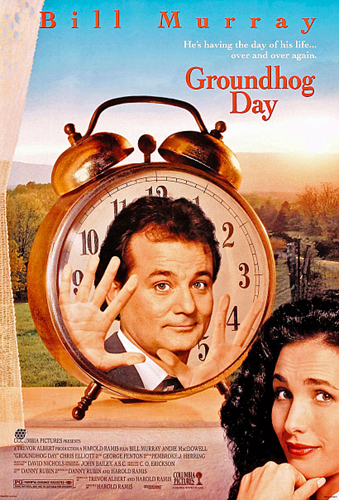

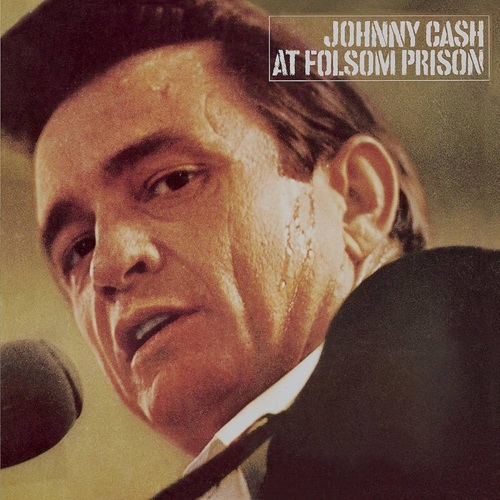

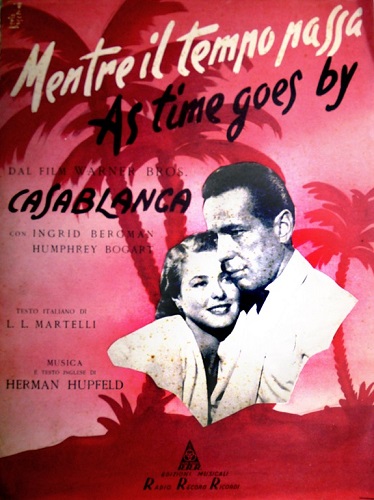
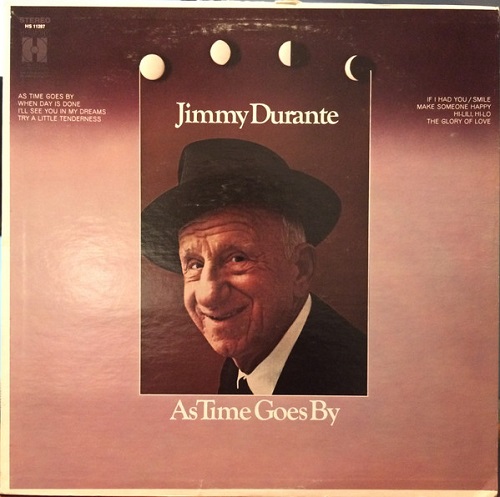


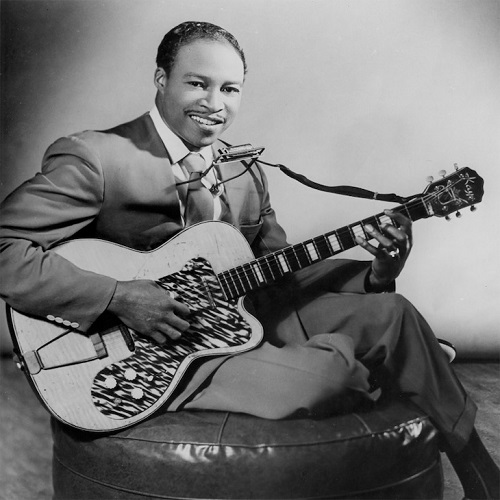
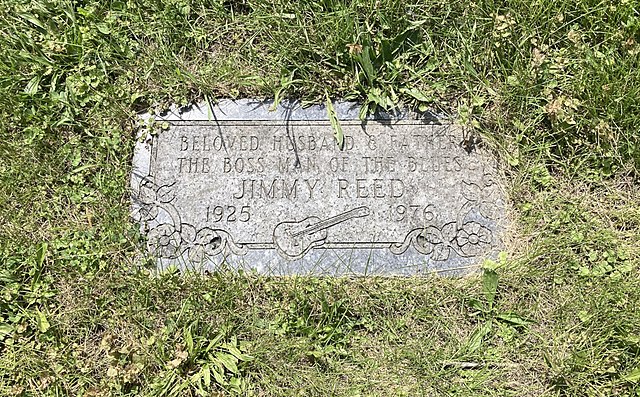
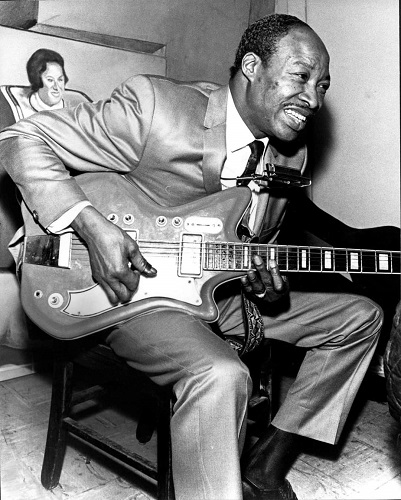
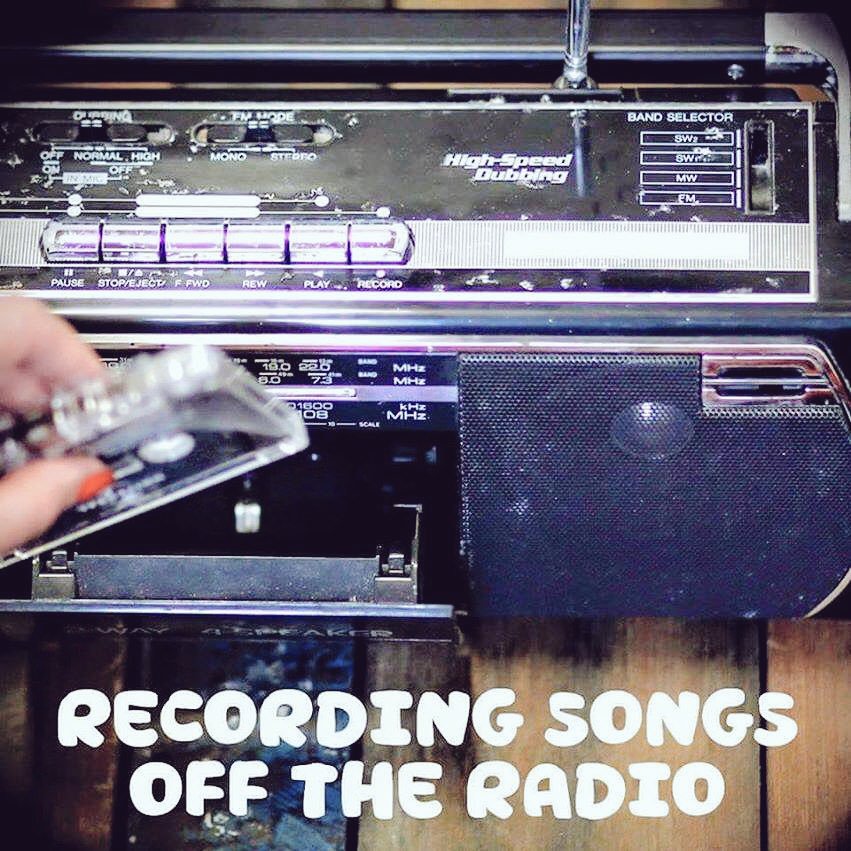
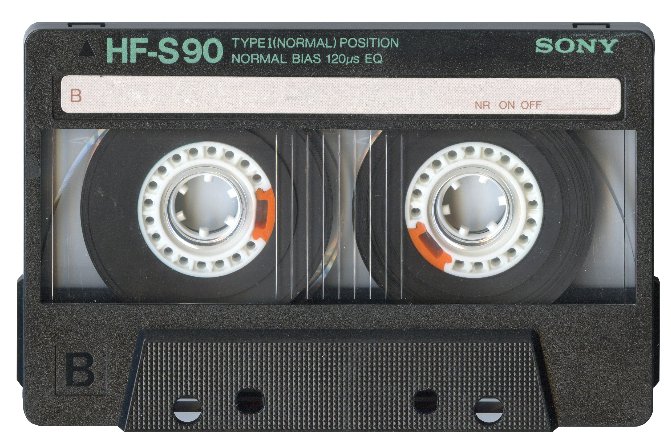
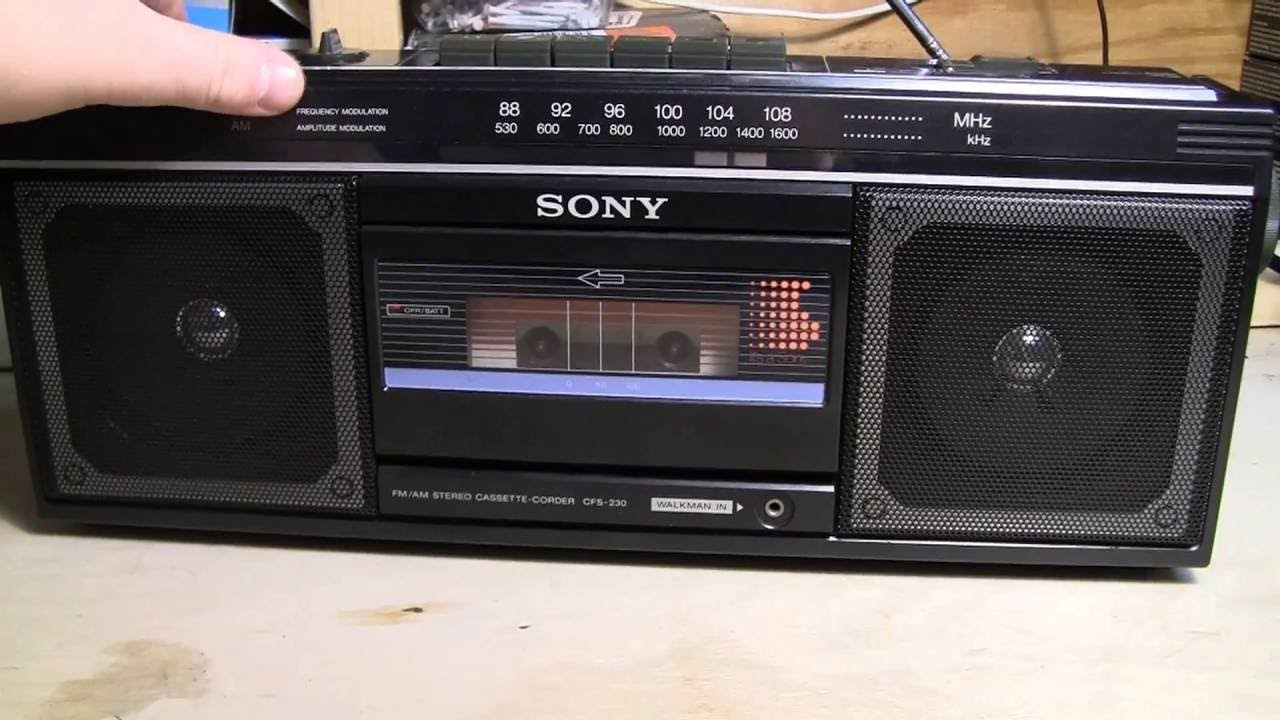
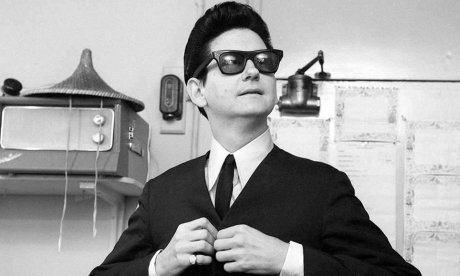
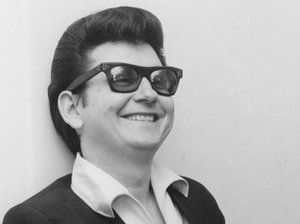
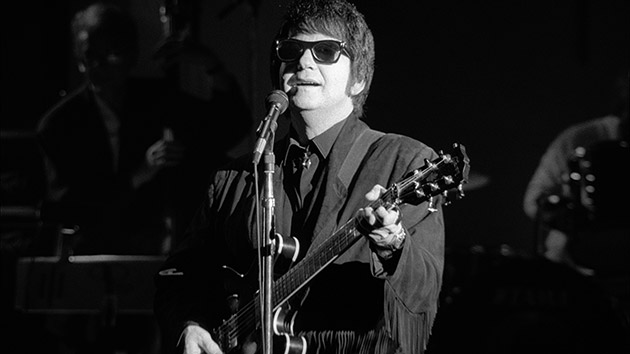
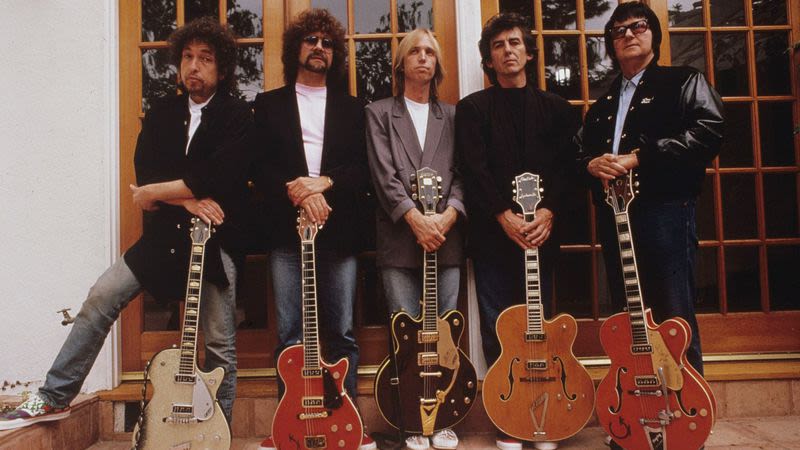
 Various Ramblings of a Nostalgic Italian