My home state has produced some of the most amazing artists and music of the past 75 years. As a Michigander (Michiganian?), I consider Bob Seger to be Rock and Roll Royalty. In all the years I listened to his music and played his music on the radio, I had never seen him in concert.
A few years back, when he did his farewell tour, a radio pal asked if I wanted to go see his show in Saginaw. I jumped at the chance and was NOT disappointed. Despite his age, he still sounded amazing. It was a show I will never forget.
A song I have not featured by Bob is a great one called Beautiful Loser. It was the title track to his 1975 album.
Bob says, “A lot of people think I wrote ‘Beautiful Loser’ about myself. I got the idea for that song from a book of Leonard Cohen poetry by the same name. The song was about underachievers in general. I very rarely write about myself that much. I draw on my own experiences like anyone else, but I’m not what you’d call auteuristic. I’m not like my songs at all. I’m a lot more up person than what I write.”
Songfacts says: Seger took almost a year to write this. He played around with many different arrangements of the song until he got it right. In a 1994 interview with Music Connection, he explained:
“I’ve never written the lyrics and tried to build the music around that. It’s usually a feel or a verse or a chorus, and the lyrics will come after I’ve decided that a certain pattern or groove or rhythm is cool. Then I’ll start singing gibberish over that and just find a lyrical idea that fits the ideas that I started out with.
Other times I’ll just sit down and say, ‘I wanna write a song called this.’ That’s how ‘Beautiful Loser’ happened. I just loved the title, which I got from a book of poetry from Leonard Cohen called Beautiful Losers, with an ‘s,’ and I thought it was a really cool title. Actually, I wrote three or four songs called ‘Beautiful Loser’ until I came up with the one that worked. But that’s a pretty rare thing.”
Happy 80th birthday to a Michigan Legend – Bob Seger!
This is sort of a continuation of the Music of My Life feature. It focused on music from 1970-2025. It featured tunes that have special meaning to me, brought back a certain memory or a tune that I just really like. I found that with the first three decades, there were songs that I didn’t feature. So I sat down with my original lists and selected some songs that “bubbled under,” so to speak.
I figured a good way to present them was to focus on a decade. 10 years = 1 song per year = 10 songs. Last week we looked at the 70’s, and I thought we’d stay there one more week before moving on to the 80’s. So, let’s check out a few “Decade Extras.”
A hat tip to songfacts.com for much of the information.
1970
I suppose it wouldn’t be right to leave out the number one song for the entire year I was born, so we start off with Simon and Garfunkel’s Bridge Over Troubled Water. Paul Simon wrote this about providing comfort to a person in need. It started as a modest gospel hymn but became more dramatic as he put it together.
He wrote the song with just two verses, considering the song “a little hymn.” Art Garfunkel and producer Roy Halee heard it as more epic, and convinced him to write an extra section, which Paul did in the studio (the “Sail on, Silvergirl part”). This was very unusual for Simon, as he usually took a long time writing his lyrics. The song got a grand production, and after hearing it, Paul thought it was too long, too slow and too orchestral to be a hit. It was Clive Davis at Columbia Records who heard the commercial appeal of the song, and insisted they market it like crazy and use it as the album title.
In 1971, this won five Grammy Awards: Song of the Year, Record of the Year, Best Contemporary Song, Best Engineered Record, and Best Arrangement Accompanying Vocalists. The album also won Album of the Year.
My mom loved this song and I remember her singing along with it on car trips.
Bridge Over Troubled Water
1971
Many folks poked fun at Ringo Starr when he began a solo career. Of the four, people thought he was the least likely to have success as a solo artist. He proved them wrong and he still tours to this day. One of the songs that did well for him was It Don’t Come Easy.
Ringo is the only songwriter credited on this one, but he had a lot of help from George Harrison. George was very generous in giving his former band mate full writing credit. The track (less Ringo’s vocal and horn parts) was already completed when Harrison gave it to him, and it included a scratch vocal by George.
Fun Fact: Peter Ham and Tom Evans of Badfinger sang on the intro to this song (“It don’t come easy, ya know it don’t come easy”). Badfinger was signed to The Beatles’ Apple Records, and helped out George Harrison’s first solo album.
It Don’t Come Easy
1972
Growing up there were a lot of Van Morrison songs that I liked, but never knew it was him. It wasn’t until I worked at my first radio station that I discovered he sang Moondance, Domino, and Jackie Wilson Said.
Listening to Jackie Wilson Said, I would have never guessed that the recording was unorganized. However, according to guitarist Doug Messenger the session was chaos! He told “Uncut”:
“Jackie Wilson Said was totally disorganized. He didn’t know where anything went, and no one seemed to know what to do with it. Van went away and the band worked on the basic structure. When he came back we went through it a couple of times and he was real happy because all of a sudden it seemed to be making sense. He said, ‘I think it’s coming together,’ which is what he always said when he felt it was working.”
“I remember he said to the drummer, Ricky Schlosser, ‘When I sing “boom boom boom,” hit the tom and the kick drum at the same time.’ We ran through it once or twice, and the first recorded take is what’s on the album. It was all over the place, but somehow it worked. Even when he ad-libbed at the end -‘One more time’- somehow we all kept it together. At the end, Van was smiling like a Cheshire Cat. ‘I think we got it!’ We tried a second take and – of course – it all fell apart.”
Give it a listen and see if you can hear the “disorganization.”
Jackie Wilson Said
1973
The next song makes me think of my oldest son. His mother would play songs from her iPod around the house and one of those songs was Let Me Be There by Olivia Newton-John. There would be times where he would take her iPod and listen to it in headphones. I still laugh when I think about him singing loudly and off-key “Let me be there in your mornin’, let me be there in your night!” It was really more of a scream than singing.
The was Newton-John’s breakthrough single in the US, where it landed in the Top 10 on the Hot 100, the Country chart, and the Adult Contemporary chart. At the time, she was still living in Britain and didn’t travel across the pond to promote the single or the album. Turns out she didn’t need much promotion at all. When the song hit it big, people had no idea who she was. That actually was a relief to the singer. “The one great thrill I had in America was that my music was accepted before I was ever seen, before I was on television, before I did live appearances,” she told Rolling Stone. “Therefore I had to hope it was my music and not my face.”
Keep in mind that this was five years before she starred in the movie musical Grease. She would win her first Grammy Award for song. This was surprising because she was up against country veterans like Tammy Wynette and Dottie West. She won for Best Female Country Vocal Performance.
Let Me Be There
1974
I was lucky enough to have never walk in on my parents when they were being intimate. My friends who have say it was a truly traumatic experience. On the TV series That 70’s Show, that exact thing happens to Eric, the main character. As he opens the door, Tell Me Something Good by Rufus and Chaka Khan. As a running gag throughout the episode, that song pops up a few times. I think of that episode when I hear this song.
Stevie Wonder wrote the song and recorded it himself on December 13, 1973 – he copyrighted it on January 3, 1974. His version was never released because he gave the song to Rufus, since Stevie was a fan of their lead singer, Chaka Khan.
Chaka Khan tells the story that Stevie was going to bring them a song in the studio, and when he dropped by and played her one he had written, she stunned her bandmates by telling the mighty Stevie Wonder she didn’t like it! So Wonder asked her astrological sign, and when she told him Aries, he delivered “Tell Me Something Good.” According to Chaka, she loved it and they worked out the song together in the studio, although Stevie is the only credited writer on the song.
Fun Fact: Rufus evolved from a group called The American Breed, who had the hit “Bend Me, Shape Me.” They took their name from a column in Popular Mechanics magazine called “Ask Rufus,” later shortened to Rufus when Chaka Khan joined the band in 1972.
Tell Me Something Good
1975
I remember playing Bad Blood by Neil Sedaka when I worked at the oldies station. I had no idea at the time that he had done anything other than those 60’s songs he was known for.
Sedaka wrote this song with Philip Cody. Phil said in a Songfacts interview that it’s his least favorite song. “I went to visit my family and I spent some time with my grandmother, who is an old Sicilian lady. She was telling stories about the lady up the street who used to be a witch, a Strega. And the whole idea of people being good or evil because of what goes on in their blood was just part of the superstitious nature of my Sicilian upbringing that I tried to stay as far away from as I could. (laughing) I just thought it would be an interesting way to approach a lyric: rather than from a place of enlightenment the idea is that love makes us stupid. And that’s where I went. It wasn’t (heavy sigh – pause)… I did it, and I didn’t think I did a very good job on it, and before I had a chance to do a re-write Neil was in the studio with Elton doing the song, and that was it. So I guess the best things are left undone.”
This song turned out to be Sedaka’s biggest hit, reaching #1 on the Billboard Top 100, remaining there for three weeks. He was helped by Elton John, who sang back-up for this song which ensured airplay. In an odd coincidence, this song was knocked out of its #1 position by an Elton John song, “Island Girl.”
Bad Blood
1976
More Than a Feeling was Boston’s debut single. It turned out to be a big surprise hit. Songfacts says: The group’s rise was sudden and unexpected; when “More Than a Feeling” was released, their managers spent a lot of time pitching it to radio stations, which is a very tough sell for an unknown band, but the song is so polished and radio-friendly that many stations put it on the air. It took off, and very soon this unknown band with an album recorded mostly in a basement was a major player on the rock scene.
Boston’s Tom Scholz worked at Polaroid, which made him enough money to buy equipment to create a basement studio. He did most of the recording of the first album there. He actually took a leave of absence from his job at Polaroid to complete the album. Once the album was released, he went back to work.
Songfacts says, “disco was big, so he wasn’t sure his rock record would find an audience. He got very excited when co-workers would summon him to let him know ‘More Than A Feeling’ was playing on the radio. After that happened a few times, he was confident enough to quit his day job.
The song is a classic rock standard and appeared on the soundtrack of the film “FM,” which was the subject of this blog on Monday.
More Than a Feeling
1977
Being born and raised in Michigan, Bob Seger’s music was everywhere when I grew up. When my dad played in a wedding band Night Moves and Trying To Live My Life Without You were songs that they played at gigs.
Mainstreet was a song that was always requested at the station. The actual street Seger sings about in this song is Ann Street, which was off of Main Street in Ann Arbor. Seger told the Chicago Sun-Times: “It was a club. I can’t remember the name of the club, but the band that played there all the time was called Washboard Willie. They were a Delta and Chicago blues band. Girls would dance in the window. They were a black band, and they were very good. That’s where I would go but I was too young to get in. It wasn’t in a great part of town but college students loved to go there.”
This was the second single from the Night Moves album, following the title track. Both songs are very nostalgic and a departure from high-energy rockers his fans were used to hearing. By this time, Seger had been at it in earnest for over a decade and was just starting to break through to a national audience. Live Bullet was his first album to find a broad audience; many who bought it snatched up Night Moves when it came out, and weren’t disappointed. Both albums ended up selling over 5 million copies, making Seger a star.
Mainstreet
1978
Kiss You All Over by Exile was another one of those songs that dominated pop and country radio. It was the perfect crossover song.
In an interview with Billboard, writer Mike Chapman said:
“It’s a very unusual song and is very much about what music in the US is all about in 1978. It’s MOR (Middle Of the Road) soft rock, slightly disco though not pure disco, and has a sensuous lyric line that Americans love. Americans are big lyric listeners and listen to every word.”
It is no surprise that the song has frequently been used as backing music for TV scenes involving various degrees of smooching or similar lip-caressing activities. Songfacts notes that the most creative use of “Kiss You All Over” goes to the Canadian Broadcasting Company’s use of the song in a 2007 montage of hockey players kissing the Stanley Cup. HA!
Kiss You All Over
1979
Many DJ’s will play the song Single Ladies when they do the bouquet toss at weddings. I always love using Ladies Night by Kool and the Gang. It had a funky beat that the ladies would dance to as they waited for the bride to toss her flowers.
Songfacts notes that disco was dying when “Ladies Night” was released at the end of 1979. That didn’t stop Kool & the Gang from using a disco groove on this track and mentioning the “disco lady” and “disco lights” in the lyrics. The song mixed in enough of their funk flourishes to stand out from the pack and bring them into the ’80s – it reached its chart peak of #8 in America the second week of 1980.
Like most Kool & the Gang songs, every member of the group is credited as a writer. “Ladies Night” started with a groove their multi-instrumentalist music director Ronald Bell came up with. His brother, Robert “Kool” Bell (the bass player in the group), gave him two ideas for lyrical themes: “Ladies Night” and “Hangin’ Out.” It was no contest – Ronald knew there were ladies nights everywhere, and loved the idea.
They fleshed out the song with the group, but struggled to find a hook. Ronald Bell remembered a piece of advice from his mother. He recalled to Billboard: “My mother, Aminah, had a hand in that one. Because she would say to me, ‘Always give the people nursery rhymes. Give them something they remember.’ She liked the Dells’ song, ‘Oh What A Night,’ so I put that in. When we were finished, we were all in tune that this was it. We just didn’t know how big!”
Of course, younger folks will always think of Jon Lovitz in the Wedding Singer when they hear this one.
Ladies Night
Yes, there are plenty of great songs I missed from the 1970’s, but next week, we’ll head to the 80’s. I’ll feature ten songs, one from each year of the decade. I hope you will join me next week.
It was on this day in 1978 that “FM” premiered in theaters. As a former radio DJ, I knew it was just a matter of time before this movie would pop up in this feature. I’m surprised that it hasn’t come up already, as it has one of the best movie soundtracks!
Version 1.0.0
The film starred Michael Brandon, Eileen Brennan, Alex Karras, Cleavon Little, Martin Mull, Linda Ronstadt, Jimmy Buffett, and REO Speedwagon (just to name a few). Despite what they say, this film was not the inspiration for WKRP in Cincinnati (which was in the works at the same time).
Honestly, it’s really not that great of a movie. It’s billed as a comedy, but it’s not something you’ll be belly laughing at. It also has some serious moments that are a bit forced. Then there is the lackluster “feelgood” ending that feels more fake than good. Thank goodness for the amazing soundtrack!
The soundtrack is like a snapshot of 1978 rock radio and is loaded with hits. It is so difficult to choose just one song to play here, as there are so many to choose from. Bob Seger, Steve Miller Band, Tom Petty, Foreigner, The Eagles, Boz Scaggs, Linda Ronstadt, Jimmy Buffett, Billy Joel, Joe Walsh, and even Queen! I decided to choose a band that I haven’t featured on the blog before – Steely Dan.
I suppose that it makes sense to pick the movie’s title song, FM (No Static At All). Walter Becker and Donald Fagen wrote this song specifically for the film. Fagen told American Songwriter magazine: “There was a film called FM and we were asked to do the title song,” he said. “And I said, ‘Does it have to have any specific words?’ And they said, ‘No, it just has to be about FM radio.’ We wrote that very quickly, I remember, in one or two days. And we also recorded it very quickly, too. Johnny Mandel came in and did the string chart. It was fun to meet Johnny Mandel.”
The song sold a ton of records and was actually much more popular than the movie. Fagen felt the song could have been a bigger hit if the movie had been more successful. “The song was a hit, but I think we should have seen the movie before we committed ourselves,” he said in 2007. “As you know, it wasn’t a very successful movie.”
As a piece of music, it has a lot going on. Look it up on Wikipedia and the description sounds like a music theory class! You have an overture to start, arpeggios, tonal chords, thirds and fifths, a string section, major chords and minor chords, and all kinds of key changes. It’s actually cool to hear in headphones.
When the movie came out, FM radio listening was on the rise. As the song says, it had less static than AM radio. What made FM radio stations popular was their ability to take chances by playing lesser known bands and album cuts. Listeners couldn’t get enough of it.
Last week I wrapped up my Music of My Life feature. It focused on music from 1970-2025. I admit that it was fun to look back at the tunes that have special meaning to me, bring back a certain memory or a tune that I just really like.
When I got into the 2000’s it became more difficult for me to find songs. With the earlier years, however, I found it difficult to narrow my list down to just ten songs. So I sat down with my original lists and selected some songs that “bubbled under,” so to speak.
I figured a good way to present them was to focus on a decade. 10 years = 1 song per year = 10 songs. Let’s head back to the 70’s and check out a few “Decade Extras.”
1970
I wish I could find the recording of this so I could set it up better. My co-host, Steph, and I were in conversation with our newsman, Hal. Something came up about knocking and Hal says, “Knock three times on the ceiling if you want me.” This led to me asking why we were discussing Tony Orlando on a country station.
Steph walks out of the studio during commercials and I went on the hunt for the song. I found it and cued it up to the chorus. When she comes back to the studio, and she has to read a sponsorship for the weather forecast. I let her begin and out of nowhere I play the chorus of Knock Three Times. She was so thrown by this, she can’t stop laughing. She’s trying to do the sponsorship, but every 6th or 7th word, I’d fire the chorus again. She is down for the count in laughter (which was my intention), so I wound up reading it and apologizing to our listeners.
I think of Steph every time I hear it.
Knock Three Times
1971
I’ve always love the Jonathan Edwards song “Sunshine.” It was always one that I loved singing along with. Had it not been for a mistake, it may never have gotten recorded. According to songfacts.com, he recorded this out of necessity when one of the tracks he put down was accidentally erased. Instead of redoing that song, he did “Sunshine.” Pleased with the results, he and the engineer overdubbed bass and added the drums the next day.
Edwards was signed to Atco Records. They released “Sunshine” as his first single early in 1971, but it flopped. The song got some traction thanks to disc jockeys in New England who started playing it off the album. Six months after the Atco single was released, it was re-issued on the independent Capricorn label with a demo version on the B-side. This time, the song was a hit, shooting to #4 in the US.
He would often end live shows with the song, and Edwards said, “I often say, and it’s true, that if I had never done another song in my life, I’ll be happy to have come and gone with that.”
Sunshine
1972
For the longest time, I thought that Neil Diamond was singing Nice To Be With You. When I started working at my first radio gig, I found out I was wrong.
The song was actually one that had a local connection. Jim Gold formed the group Gallery in Detroit. They recorded quite a few songs, but none were as big as Nice To Be With You. It was also the title track of their debut album.
Nice to Be With You
1973
There was no shortage of Jim Croce songs in my original feature. My mom and dad listened to his music a lot. He was one of many artists who were a part of my childhood.
I love when songs have some basis or inspiration in real life. Bad, Bad Leroy Brown is one of them.
“Leroy Brown is a guy that he actually met,” said his widow Ingrid. “When he was in the service – The National Guard – this guy had gone AWOL. He was a guy that Jim kind of related to, he liked to sing with him. This guy had gone AWOL but he came back to get his paycheck, and he got caught. Jim just thought he was such a funny guy that he thought he’d include his name in the song, and it just worked. There really was a Leroy Brown, and sometimes having a name helps you to build a song around it.”
It’s one of the few songs I can sing at karaoke.
Bad, Bad Leroy Brown
1974
I was a big Beatles fan growing up. As a kid, I didn’t really understand why Paul McCartney was in another group (Wings) or why John Lennon was doing solo stuff. I do remember hearing Band on the Run, though, and liking it.
McCartney recorded the album in Lagos, Nigeria along with his wife Linda and guitarist Denny Laine. The other Wings decided not to make the trip, which worked out fine in the end: McCartney considers the album his best post-Beatles work. He told Word in 2005:
“I was on drums and guitar a lot, mainly because the drummer decided to leave the group the night before and one of the guitar players decided not to come! So we got that solo element into an otherwise ‘produced’ album.”
Band On the Run
1975
It’s a Long Way to the Top is an autobiographical song for AC/DC. It describes their struggles as they tried to make it big. Right from the start, they delivered a top notch live show night after night. Songfacts says: It was genuine: At the time, they were just getting started and playing some seedy venues with even seedier business associates. The hard work eventually paid off, and several years later the band was selling out arenas.
“It’s A Long Way To The Top” really summed us up as a band,” Angus Young told Rolling Stone. “It was the audience that really allowed us to even get near a studio.”
The song is a bit unusual because instead of a lengthy guitar solo it features Angus Young on lead and Bon Scott on the bagpipes in a Dueling Banjos sort of way. I remember the first time I heard the song. “Are those bagpipes?!” Yes. Yes, they are!
It’s a Long Way to the Top
1976
Turn the Page by Bob Seger is also a song about being out on the road and performing. This one focuses on the effects of touring on a performer. There is a lot of loneliness that they feel.
Bob says, “Our first headline shows ever in a large (twelve thousand seat) hall were the two shows at Detroit’s Cobo Arena, September 4th and 5th, 1975. I remember while I was singing this how nice it was to have such good on-stage monitors. I had never heard my voice so well while performing.” The version on Seger’s greatest hits album was taken from these shows.
The song is a classic rock staple here in Michigan. I got to see Bob perform one of his last shows and it was electrifying. I can’t even begin to explain the feel of the room when he performed this one.
Turn the Page
1977
“What’s Your Name” by Lynyrd Skynyrd is another song that is based on a true story. One night while they were on tour, the band was drinking at their hotel bar when one of the roadies got in a fight. They all got kicked out. So they went to a room, ordered champagne and continued the party.
Songfacts says: The incident in this song did not happen in Boise, Idaho. The first line was originally, “It’s 8 o’clock and boys it’s time to go,” but lead singer Ronnie Van Zant changed it when he found out his brother, Donnie, was opening his first national tour with his band .38 Special in Boise. The first line became “It’s 8 o’clock in Boise, Idaho.”
Three days after the album was released, Ronnie Van Zant, Steve Gaines, and Cassie Gaines died in a plane crash. The cover of the album was redone because the original cover had the band surrounded by flames.
What’s Your Name
1978
Hold the Line by Toto caught my ear the first time I heard it because of the piano open with the guitar riff intermingling with it. It was the debut single for the group who was made up primarily of session musicians.
From songfacts: “Hold the line” is an expression meaning to maintain your existing position, which in this case is the singer telling a girl to be patient and stay with their relationship.
The saying also has a more literal meaning, however, which is how David Paich came up with the title. “Hold the line” is what you tell someone on the phone if you want to put them on hold while you’re taking another call. This is typical in workplaces, but in the days before cell phones, some households (especially ones with teenagers) also had multiple phone lines coming in and could put callers on hold. Paich lived in one such household.
Paich said: “When I was in high school, all of a sudden the phone started ringing off the hook, and I had a situation where I was at the dinner table and I had three girls all call at the same time, so all the lights were flashing. I was kind of juggling girlfriends, and that’s how that came about.”
Toto’s video was a bit ahead of it’s time. MTV hadn’t even gone on the air yet when the song was released.
Hold the Line
1979
Don’t Stop Me Now by Queen is such a fun song to play at weddings and parties, especially after the audience has loosened up. So often I’d come out of a slow song and segue right into the smooth intro of Freddie Mercury. People would raise their hands and sway while singing along. Then, when the tempo changes, the dance floor was insane.
It’s a catchy song that has you singing along, even if you are just hearing it for the first time. In 2011, Queen fans voted the chorus of “Don’t Stop Me Now” as the band’s best ever lyric.
In an Absolute Radio interview, Brian May says, “I thought it was a lot of fun, but I did have an undercurrent feeling of, ‘aren’t we talking about danger here,’ because we were worried about Freddie at this point. That feeling lingers, but it’s become almost the most successful Queen track as regards to what people play in their car or at their weddings. It’s become a massive, massive track and an anthem to people who want to be hedonistic. It was kind of a stroke of genius from Freddie.”
Don’t Stop Me Now
So what do you think? I like this idea. A quick look back at a decade. There are plenty of songs to choose from that did not make the original run of this feature. Join me next week for more!
It was on this day in 1983 that Risky Business was released in theaters. It featured Tom Cruise is what many consider his “break out role.” It also starred Rebecca DeMornay, Curtis Anderson, Bronson Pinchot, and Megan Mullally. Cruise was picked for the role over some other famous actors who auditioned for it including, Tom Hanks, Kevin Bacon, Sean Penn, and John Cusack. Michelle Pfeiffer was actually offered the female lead role, but turned it down.
Roger Ebert enjoyed the film. He said that the film featured “New faces and inspired insights and genuine laughs… one of the smartest, funniest, most perceptive satires in a long time… not only invites comparison with The Graduate, it earns it.“
The soundtrack of the film was done by Tangerine Dream. Their music makes up half of the movie’s soundtrack. Mixed in with their music are songs from Muddy Waters, Prince, Phil Collins, Journey, Jeff Beck, and the song I’m featuring in this blog. I’m sure I don’t even have to tell you what it is, because it is THE song that is forever connected with one of the films greatest scenes.
Old Time Rock and Roll by Bob Seger was released in 1979 and had all but gone away before it was featured in Risky Business. Thanks to the film and the iconic scene featuring Cruise’s character sliding across the floor, dancing in just his pink shirt, socks, and white briefs while lip synching to the song, it enjoyed renewed popularity.
As far as the influence on pop culture… the scene has been recreated in episodes of many television series, as well as in films, parodies, and advertisements.
So today, find a nice smooth wood floor, throw on a pink shirt, white socks and your tightie whiteys and sing along …
Old Time Rock and Roll
Just take those old records off the shelf I’ll sit and listen to ’em by myself Today’s music ain’t got the same soul I like that old time rock ‘n’ roll Don’t try to take me to a disco You’ll never even get me out on the floor In ten minutes I’ll be late for the door I like that old time rock ‘n’ roll
Still like that old time rock ‘n’ roll That kind of music just soothes the soul I reminisce about the days of old With that old time rock ‘n’ roll (oh)
Won’t go to hear ’em play a tango I’d rather hear some blues or funky old soul There’s only one sure way to get me to go Start playing old time rock ‘n’ roll Call me a relic, call me what you will Say I’m old-fashioned, say I’m over the hill Today’s music ain’t got the same soul I like that old time rock ‘n’ roll
Still like that old time rock ‘n’ roll That kind of music just soothes the soul I reminisce about the days of old With that old time rock ‘n’ roll (oh)
Still like that old time rock ‘n’ roll That kind of music just soothes the soul I reminisce about the days of old With that old time rock ‘n’ roll
Still like that old time rock ‘n’ roll That kind of music just soothes the soul I reminisce about the days of old With that old time rock ‘n’ roll (hey)
Still like that old time rock ‘n’ roll That kind of music just soothes the soul I reminisce about the days of old With that old time rock ‘n’ roll
Welcome back to The Music of My Life, where I feature ten songs from each year of my life. In most cases, the ten songs I choose will be ones I like personally (unless I explain otherwise). The songs will be selected from Billboard’s Year-end Hot 100 Chart, Acclaimed Music, and will all be released in the featured year. In the final year of the 70’s, I turned 9 years old.
1979 is a year where I was surprised to find many of the songs that wound up on my mom’s ballad 8-track tape. I could easily have posted all of those songs in this blog, but then you would fall asleep listening to them, just like my brother and I did on our way up north. Instead, I will list them at the end of this blog, and if you wish, you can search them on YouTube.
So let’s begin with the first of two “out of place” or “odd” songs….
The first song is part of the soundtrack of my summer of 1979. The song seemed to be playing in a very hot rotation and was always on the radio when we were up at my grandparents place.
Frank Mills wrote and recorded “Music Box Dancer” in 1974, but it did not become a Canadian single until December 1978. By Christmas of that year, it was in the top ten of many European and Asian pop music charts. It was released as a single in the United States in January 1979 and got up to number three on the Billboard Hot 100 Chart.
In 1974, Mills released an album that featured the song, but it was not initially a hit. When he re-signed with Polydor Records Canada in 1978, the label released a new song as a single, with “Music Box Dancer” on the B-side. Because of a mistake, a single of “Music Box Dancer” found its way into the hands of a pop station in Ottawa – the single was only supposed to go out to adult contemporary stations. The station’s program director listened to the A-side and wondered why it was sent to him. He played the B-side and liked what he heard anyway and began airing it in rotation. Next thing you know, the album’s gone gold in Canada.
Music Box Dancer
The next song makes the list because it was on the iPod of my ex. My oldest son used to take it and listen to it all the time and I can still hear him in his toddler voice singing the chorus of this one.
Hot Stuff is a single that was on Donna Summer’s 7th studio album, Bad Girls. The song is unique in that while many consider it disco, many others consider it rock. As a matter of fact, when the Best Female Rock Vocal Performance category was added at the Grammy Awards in 1980, Donna Summer won for “Hot Stuff.”
The song has ties to other music as well. It was written by Pete Bellotte, Harold Faltermeyer and Keith Forsey. Bellotte co-wrote a few other hits for Summer, including “Love To Love You Baby” and ” Heaven Knows.” Faltermeyer had a solo hit in 1984 with the theme from Beverly Hills Cop, “Axel F” and Forsey’s credits include “Don’t You Forget About Me” for Simple Minds and “Shakedown” for Bob Seger.
This was Summer’s second #1 hit on the Hot 100; her first was her disco cover of “MacArthur Park.”
Hot Stuff
Here is a song that is missing one of the things the band is known for. Don’t Bring Me Down was the first ELO song that did not use strings. According to Songfacts, after recording it, they fired their string section, leaving four members in the band.
ELO leader Jeff Lynne wrote this song late in the sessions for the “Discovery” album. He came up with the track by looping the drums from a song he recorded earlier in the session, then coming up with more music on the piano. The words came last, as Lynne put together some lyrics about a girl who thinks she’s too good for the guy she’s with.
Here’s a fun fact: Wanna know why Jeff Lynne repeatedly sings the word “groose” after the song’s title line? Apparently it was a made-up place-keeper word to fill a gap in the vocals when he was improvising the lyrics. When the German engineer Reinhold Mack heard the ELO frontman’s demo, he asked Lynne how he knew “gruss” means “greetings” in his country’s language. Upon learning the German meaning, Lynne decided to leave it in.
Don’t Bring Me Down
“Hey Ringo, play something hot!”
Those are the words that Rodney Dangerfield’s character in Caddyshack says to the band at the snobbish country club as he throws money at them. As the money falls, the band plays the opening 5 note stings from Boogie Wonderland from Earth Wind and Fire (With the Emotions). I’ve always loved that song because of the movie connection.
The song, while it is upbeat and happy sounding, it really isn’t. Songfacts calls it one of the more complex and misinterpreted songs of the disco era. Written by Jon Lind and Allee Willis, it was inspired by the movie Looking For Mr. Goodbar, which stars Diane Keaton as a lost soul who goes to clubs every night to dance away her misery.
Willis says, “When I saw Mr. Goodbar, I got kind of fascinated with people who did go to clubs every night, whose life was kind of falling apart, but they lived for the night life, though it didn’t seem to be advancing them as humans in the end. So if you really look at the lyrics of ‘Boogie Wonderland,’ unlike ‘September,’ it’s not a happy song at all. It’s really about someone on the brink of self destruction who goes to these clubs to try and find more, but is at least aware of the fact that if there’s something like true love, that is something that could kind of drag them out of the abyss. So ‘Boogie Wonderland’ for us was this state of mind that you entered when you were around music and when you danced, but hopefully it was an aware enough state of mind that you would want to feel as good during the day as you did at night.”
Boogie Wonderland
The second “out of place” or “odd” song is also a movie song. It may seem like a very simple kid song, but if you listen to what the songwriter says about it, the song is deeper than you can imagine.
This was written by songwriters Paul Williams and Kenny Ascher for The Muppet Movie, which came out in 1979. In the film, it is sung by Kermit The Frog as the Muppets set out to find adventure. In a interview Williams said: “Rainbow Connection was the first number in The Muppet Movie. It’s the one that establishes the lead character. We find Kermit sitting in the middle of the swamp. Kenny Ascher and I sat down to write these songs, and we thought… Kermit, he’s like ‘every frog.’ He’s the Jimmy Stewart of frogs. So how do we show that he’s a thinking frog, and that he has an introspective soul, and all that good stuff? We looked at his environment, and his environment is water and air – and light. And it just seemed like it would be a place where he would see a rainbow. But we also wanted to show that he would be on this spiritual path, examining life, and the meaning of life.
It tells you that he’s been exposed to culture: ‘Why are there so many songs about rainbows?’ Which means, obviously, he’s heard a lot of songs. This is a frog that’s been exposed to culture, whether it’s movies, or records, or whatever. And I also like the fact that it starts out with the negative: ‘Rainbows are only illusions, rainbows have nothing to hide.’ So the song actually starts out as if he’s going to pooh-pooh the whole idea, and then it turns: ‘So we’ve been told, and some choose to believe it. I know they’re wrong, wait and see.’ And again, he doesn’t have the answer: ‘Someday we’ll find it.'”
Now, with that in mind, give this masterpiece a listen!
Rainbow Connection
Next is my “go-to” Karaoke song. I’ve always loved the line, “You had me down 21 to zip, the smile of Judas on your lip.” What a great line. Bad Case of Loving you was written by Moon Martin who released the original version on his 1978 album Shots From a Cold Nightmare. Martin is a singer/guitarist/songwriter with his band Southwind. When the group broke up in 1971, he took on studio work. He paired up with Linda Ronstadt, and played on her self-titled album. He nearly joined some of Ronstadt’s other backing musicians in a little band called the Eagles, but ended up a solo artist and signed a deal with Capitol Records.
Martin’s album got some good reviews but went nowhere on the charts. A song called “Hot Nite In Dallas” was chosen as a single, but “Bad Case Of Loving You” was only given limited release in Europe. Enter Robert Palmer. He heard the song when he was being driven to one of his shows by a rep from his label, who played it for him. Palmer included it in his set and got a great response, so he recorded it for his Secrets album.
Bad Case of Loving You (Doctor, Doctor)
In 1989, Palmer released a remix of this song for his Addictions: Volume 1 greatest hits album. “Looking back at the 1978 original the performance was there but someone was asleep at the mixing desk,” he wrote in the liner notes. “The original mix in comparison sounded like a band rehearsing in a garage and this sounds like the finished song.” I can’t listen to the original cut much anymore. The remix is SO MUCH better!
I LOVE good harmonies. This song kicks right off with a cold open and the amazing a cappella harmony of The Little River Band. Most of the band’s hits were written by founding members Graham Goble, Beeb Birtles or Glenn Shorrock, but “Lonesome Loser” was written by guitarist David Briggs, who joined in 1976 after the band’s second album.
The lyric uses a lot of gambling imagery to tell the story of the lonesome loser, who staked his heart and lost. His adversary is the “Queen of Hearts,” who will always win this game of love. The same year this song was released (1979), Dave Edmunds had a UK hit with a song called “Queen of Hearts” that used the same metaphor. That song, of course, became an American hit when Juice Newton covered it in 1981.
Lonesome Loser
Speaking of great harmonies and the Eagles, the next song features both. Heartache Tonight was written by Don Henley and Glenn Frey with Bob Seger and J.D. Souther. Songfacts says: When Frey was a 19-year-old in Detroit, Seger took him under his wing and got his music career started. Souther, who is sometimes considered an “Unofficial Eagle,” was the first person Frey met when he moved to Los Angeles in the late-’60s. J.D. Souther, told us how this song started: “Glenn Frey and I had been listening to Sam Cooke records at my house. So we were just walking around clapping our hands and snapping fingers and singing the verses to those songs. The melody sounds very much like those Sam Cooke shuffles. There’s not much to it. I mean, it’s really just two long verses. But it felt really good.”
Bob Seger’s contribution to this song was the chorus. JD Souther says, “We didn’t get to a chorus that we liked within the first few days, and I think Glenn was on the phone with Seger, and he said, ‘I wanna run something by you,’ and sang it to him, and Seger just came right in with the chorus, just sang it and it was so good. Glen called me and said, ‘Is four writers okay on this?’ And I said, ‘Sure, if it’s good.’ And he said, ‘Yeah, it’s great. Seger just sang this to me,’ and he sang it to me and I said, ‘That’s fantastic.'”
According to Seger, he was in the room with Glenn Frey when he came up with the chorus. He told Entertainment Weekly: “Glenn had the verse: ‘Somebody’s gonna hurt someone before the night is through.’ We hadn’t been sitting down for more that five minutes and I just blurted out, ‘There’s gonna be a heartache tonight!’ His eyes lit up huge.”
Heartache Tonight
The next song is one that I used to hear on the way home from elementary school. I had a buddy who got a ride home every day and his mom would often give me a lift, too. Keep in mind the ride home was 5 to 7 minutes tops, but it always seemed to be on the radio when we were in the car.
Freddie Mercury wrote Crazy Little Thing Called Love while Queen was recording The Game in Germany. He wrote it while taking a bubble bath in his room at the Munich Hilton. Peter Hince, the head of Queen’s road crew, recalled to Mojo magazine September 2009: “The idea for the song came to him while he was in the bath. He emerged, wrapped in a towel, I handed him the guitar and he worked out the chords there and then. Fred had this knack of knowing a great pop song.”
Freddie acknowledged that perhaps his limited talent on the guitar helped shape the song:
On stage, this was an important part of the show. Brian May often used three different guitars during the song: the first verse was played by Freddie alone with his guitar, then Brian joined with another Ovation Acoustic; before the third verse he had already switched to a Telecaster on which he performed the solo. During the singalong part (famous for its “ready Freddie” line) Brian again changed instruments to his homemade Red Special. From 1984 onwards Mercury replaced the acoustic with another Telecaster.
Crazy Little Thing Called Love
The final selection comes from a band who was formed on Valentines Day of 1977 in Detroit. That is what inspired their name – the Romantics.
Believe it or not, the band have only two US Top 40 hits, and “What I Like About You,” now their best-known song, isn’t one of them. ( Their two Top 40 hits were “Talking In Your Sleep” and “One In A Million”). It attracted little attention and was only a minor hit when first released in 1980 on their debut album. This song’s resurgence had a lot to do with MTV. The band made a simple performance video for the song that MTV put in rotation when they launched in 1981. It fit the criteria the network was looking for: American band, rock, catchy song, acceptable production quality. Since few American artists made videos at the time, MTV made do with lots of European imports when they started.
Since then the song has also become a fixture at sporting events, bars and nightclubs, and parties and celebrations of all kinds, and has taken its place as one of the most popular rock anthems of all time. It’s nice to wrap up the last year of the decade with an uptempo, fun song!
What I Like About You
I’m sure I have missed a few favorites, and the more I look ahead, the more I wonder if I need to expand to more than ten songs. I’ll tackle that issue if I have to later on.
Next week, we ring in a new decade – 1980! The 80’s sound certainly can be heard in some of these late 70’s songs and from here on out, the sound progresses quickly!
Welcome back to The Music of My Life, where I feature ten songs from each year of my life. In most cases, the ten songs I choose will be ones I like personally (unless I explain otherwise). The songs will be selected from Billboard’s Year-end Hot 100 Chart, Acclaimed Music, and will all be released in the featured year. May 15, 1977, I turned a whopping 7 years old. I have some really great memories of 1977 and I think you’ll get to read about them and how they tie into some of these songs.
I love stories where a radio DJ plays a significant role in the creation of a song. Released in January of ’77, I’m Your Boogie Man is one of those songs.
Written by KC & The Sunshine Band bassist-producer Richard Finch and frontman Harry Wayne Casey, The “boogie” of the title is in the sense of dancing, shaking your booty, and getting down, not with the scary kind of “boogie man.” Harry Wayne Casey tells the story:
“‘I’m Your Boogie Man,’ in the initial writing of it I called it ‘I’ll Be A Son Of A Gun’:
I’ll be a son of a gun Look what you’ve done
Then I went back and ‘I’m Your Boogie Man’ came into my head because I was thinking about how disc jockeys were always there on the radio. Like it says:
Early morning Late afternoon Or at midnight It’s never too soon I’m your Boogie Man
It’s taking the theme of the disc jockey being the one that’s there for you all the time, no matter when. So it was as if I was a disc jockey, I’m the Boogie Man. Like if you call in and want to hear a certain song, or talk about what was going on in your life, I’m your Boogie Man. And of course I put in ‘turn me on,’ but that could also mean turned on the radio.”
A specific DJ who influenced this song was Robert W. Walker at Y-100 in Miami, Florida, who was the first to give the group’s hit single “Get Down Tonight” airplay. So Walker “was the Boogie Man that brought all the funk and the good feeling and the vibes to the people every morning,” according to Richard Finch.
I’m Your Boogie Man
Bob Seger had a couple big songs in 1977. Mainstreet was released in April of that year, while an anthem was released in June – Rock and Roll Never Forgets.
According to Seger, he wrote this song after attending a high school reunion. “I wanted to just write an honest appraisal of where I was at that moment in time,” he said. “I was 31 years old and I was damn glad to be here.” He goes on, “A song like “Rock ‘n’ Roll Never Forgets” is just slammin’. When we play that song live people go nuts. At that point in my life I was 31 years old. And the first 10 or 11 years in my career I was making six, eight grand a year and just doin’ it because I loved the music. So I’m writing for Night Moves and I just felt grateful; here I am and I’m starting to make it. You know, rock ’n’ roll never forgets. You build up goodwill over 10 years and you set the stage. “Rock ‘n’ Roll Never Forgets” is a grateful song. I’m grateful to all the people I played for in those small clubs, on the top of cafeteria tables, in gymnasiums and in hockey rinks. Suddenly all those people came out and bought my records and said: “I remember him. I saw him at the high school or hockey rink.”
The song is about aging and the ongoing power of rock music. The song advises the 31 year old listener to return to the rock ‘n’ roll she loved when he/she was 16. The line, “All Chuck’s children are out there playing his licks” is a reference (and tribute) to Chuck Berry, the rock pioneer whose sound is in the DNA of many musicians how followed.
Rock and Roll Never Forgets
The very last single that Elvis ever released before his death was Way Down in June of 1977. It was recorded in the famous Jungle Room at Graceland. It was also a song that had a very interesting chart performance. The song peaked at number 31 on the Billboard Hot 100 Chart at the beginning of August, fell to number 52 by the end of August, and after his death, it climbed back up to number 18 before falling again.
Way Down
In July of 1977, Foreigner released Cold As Ice. It was one of the many songs I remember buying on 45 and spinning on my little record player. It was written by Lou Gramm and Mick Jones.
According to Wiki, “Cold as Ice” was a replacement for a song that was intended for Foreigner but which producer Gary Lyons didn’t feel fit the album. According to Mick Jones “I went home after Gary said this, sat down at my piano and out came the riff for Cold As Ice. And the rest of the song flowed from there.” Lyons said that “When I got back, they played me Cold As Ice and it worked for me. So we went into Atlantic Studios one night to cut it.” According to Ian McDonald, “Gary and I were in there all night working on the vocals. And when we got out of the studio we discovered that a blizzard had been raging. Everywhere was covered in snow, and we heard on the radio that it had been coldest night in New York on record! Somehow that seemed to be a good omen for the song.”
Cold As Ice
One of the biggest movies of 1977 was Star Wars. It comes as no surprise to me that the main title theme was a Top 10 hit!
What can you say about composer John Williams? He conducted this score with the London Symphony Orchestra, but his main orchestra was the Boston Pops Orchestra, with which he conducted other famous film themes. This theme won him a simultaneous Oscar, Golden Globe, BAFTA, Saturn, and Grammy award. THAT is amazing!!
Star Wars Main Title
The next song was released in August of 1977 and people STILL dance to it today! Brick House epitomizes the funky side of the Commodores, who could switch between uptempo R&B and easy listening by swapping singers. “Brick House” was sung by their drummer Walter Orange, with Lionel Richie on saxophone.
In a way, the Commodores recorded it as a “radio edit.” This disco classic is about a woman with a great body. She is “Built like a Brick House.” Lionel Richie says that this is a play on the original phrase, “She’s built like a brick s–thouse.” That’s the reason for the pause with the horn fill between the words “brick” and “house.”
Brick House
A few songs ago, I mentioned the last single Elvis released before his death. For those who have been following this blog a while, you know where I was the night Elvis died. My family was at a drive-in movie theater waiting for the sun to go down when the radio broke the news that he had passed away. The movie we were there to see? Smokey and the Bandit.
The song’s lyrics tell the basic plot of the movie (leaving out the runaway bride element) of making a 28-hour round-trip run from Atlanta, Georgia, to Texarkana, Texas and back to illegally transport 400 cases of Coors beer for an after-race celebration put on by Big and Little Enos.
Back when Max from the PowerPop Blog was hosting a song draft, East Bound and Down was my pick. Here is that blog if you would like to read it:
In October of 1977, Johnny Paycheck released a David Allen Coe song that expressed what many a worker felt about their employer/employment. Take This Job and Shove It was a number one country hit for Paycheck and the phrase took on a life of its own in pop culture.
This was one of the songs that was on Paycheck’s Greatest Hits Volume 2 that my grandfather and dad always played up north.
Take This Job and Shove It
The next song makes the list because I became familiar with it not by Billy Joel, but by the wedding band my dad played in. I can’t tell you how many times my brother and I sat and watched TV while the band practiced new songs. Just The Way You Are was one of them.
According to Joel, some listeners missed the point and thought the song was misogynistic because he was telling a woman she wasn’t “allowed” to change. “No, no, no. Don’t go changing to try and please me,” he told SiriusXM in 2016. “People forget these things. If they don’t like what I do, they’ll go, ‘Oh yeah, he hates women. Look at this. Don’t change, stay the way you are, the same old someone that he knew. Wow, he really doesn’t like her. ‘Don’t change for me. You wanna change for yourself, fine. But you don’t have to change for me because I’m happy exactly the way you are. That’s why I love you in the first place.”
Billy wrote this song about his first wife, Elizabeth. A pure expression of unconditional love, he gave it to her as a birthday present. Sadly, after nine years of marriage, Joel and Elizabeth divorced in 1982. Joel’s next two marriages didn’t work out either: he was married to Christie Brinkley from 1985-1994, and to Katie Lee from 2004-2010. “Every time I wrote a song for a person I was in a relationship with, it didn’t last,” Joel said. “It was kind of like the curse. Here’s your song – we might as well say goodbye now.”
Just The Way You Are
The last song was bigger in 1978 because it was released in December of 1977. It is simply an amazing song. Lovely Day was written for Bill Withers’ Menagerie album.
Skip Scarborough was a songwriter and producer who worked with Earth, Wind & Fire, Patti Labelle, LTD, and many other R&B stars before his death in 2003. He wrote the music for this song, and was also the inspiration for the lyrics Withers came up with. In a Songfacts interview, Bill explained: “Skip was a very nice, gentle man. The way Skip was, every day was just a lovely day. He was an optimist. We’re all sponges in a sense. You put us around very nice people, and the nice things come out in us. You put us around some jerks, and we practice being jerks. We all adjust. Did you ever notice the difference in the way you speak to your grandmother or your best contemporary friend? If I had sat down with the same music and my collaborator had been somebody else with a different personality, it probably would have caused something else to cross my mind lyrically. It was a combination of the music and the person and the ambiance in the room.”
One of the highlights of the song is Bill holding a note for about 18 seconds at the end of the song! It may be one of the longest notes held by a singer on a pop song.
Lovely Day
So there you have it – 10 great songs from 1977. I’m sure there are plenty others I’ve missed. Can you name any? Next week, I will age another year and we’ll visit 1978. The sound of music will start to sound a bit different as we get closer and closer to the 1980’s.
Welcome back to The Music of My Life, where I feature ten songs from each year of my life. In most cases, the ten songs I choose will be ones I like personally (unless I explain otherwise). The songs will be selected from Billboard’s Year-end Hot 100 Chart, Acclaimed Music, and will all be released in the featured year. In 1976, America celebrated her 200th birthday, while I celebrated my 6th. Let’s go back there together …
My first song actually goes back to 1969, Waylon Jennings saw an advertisement for Tina Turner in a newspaper, It called her a “good hearted woman loving two-timing men”, a reference to Ike Turner. Waylon went to Willie Nelson who was in a middle of a poker game, about writing a song based on that phrase. Joining the game, he and Nelson expanded the lyrics as Nelson’s wife Connie Koepke wrote them down.
Waylon released it as a solo single in 1971. Later, he recorded a concert version for his Waylon- Live album. This served as a basis for the duet with Nelson. “I just took my voice off and put Willie’s on in different places,” he explained. “Willie wasn’t within 10,000 miles when I recorded it.” When it was released as a single in 1976, it became the first of three number ones on the country chart for the duo.
Good Hearted Woman
In March of 1976, the Doobie Brothers introduced the public to their new lead singer, Michael McDonald. He wrote the song that would become the title track of the album, Takin’ It To the Streets. Industry folks were impressed.
Cash Box magazine said, “both instrumentally and vocally this is the best thing the Doobie Brothers have done to date,” adding that “the melody is based around a strong chordal structure.” Record World magazine said that the song “has all the essential qualities that have contributed to making this group a dominating chart force” and that “all these ingredients are wrapped together in an appealing package.” Ultimate Classic Rock critic Michael Gallucci rated “Takin’ It to the Streets” as the Doobie Brothers’ 6th greatest song, praising McDonald’s “soulful rasp” on the vocal. Billboard magazine rated it as the Doobie Brothers’ 3rd best song, saying that it “hits an elemental theme and drives it home with soulful urgency.”
From songfacts.com: The chorus is almost a chant, with the group singing “takin’ it to the streets” as Michael McDonald ad-libs underneath. This gives the song a church feel, which was intentional: McDonald thought the melody evoked gospel music, and wanted it to sound like a gospel song. This meant delivering a powerful message in the lyric and having lots of people sing on the chorus as the spirit moved them.
Takin’ It To the Streets
The next song is here because it is yet another ballad from my mom’s red 8 track tape that we were forced to listen to on our way up north as kids. I remember thinking “Who the heck names their kid, “England?” England Dan is Dan Seals, who had a series of country hits after he stopped performing with John Ford Coley in 1980. His older brother Jim was the Seals of Seals & Crofts, who had the hit “Summer Breeze.”
The duo’s biggest hit reached number 2 on the charts – “I’d Really Love To See You Tonight.” Seals and Coley met in high school. This was their first single, but it almost never made the radio. Songfacts.com says, “When “I’d Really Love To See You Tonight” was played to an executive at Atlantic Records, he turned it down. However Doug Morris of Big Tree Records heard the song through the wall of his over-joining office and offered the duo a contract.“
Listen carefully – One of the great misheard lyrics appears in this song: “I’m not talking about movin’ in” is often heard as “I’m not talking about the linen.”
I’d Really Love to See You Tonight
The next song on my list was written by Ann Orson and Carte Blanche. “Who?” you ask! I’m am sure that you are well aware of their real names – Elton John and Bernie Taupin! They wrote Don’t Go Breaking My Heart under those silly pseudonyms!
The song was originally supposed to be Elton and Dusty Springfield, but the offer was rejected because she was ill at the time. It was written to mimic some of the great Motown duets like those of Marvin Gaye and Tammy Terrell. Kiki Dee, who sings the duet with Elton, coincidentally was the first female artist from the UK to sign with Motown’s Tamla Label.
Songfacts.com shares this great story: Elton recorded his part in Toronto, then the tape was sent to London where Kiki Dee recorded her vocal. Producer Gus Dudgeon recalls, “I was with Elton in Canada and he actually sang about three quarters of the song and gave Kiki about four lines. I said, “Hang on a minute, is this supposed to be a duet or a guest appearance? Elton replied, ‘A duet.’ Then you’ve got to give her at least 50% of the song.”
After Elton recorded his part in Toronto, the tapes were sent to London and when Kiki got them she remembered, “Elton had recorded the song abroad and also did my vocals in a high-pitched voice which was quite funny, so I knew which lines to sing.”
Don’t Go Breaking My Heart
The next song is one that I had heard on the radio a million times before seeing the 2000 Saturday Night Live Sketch that will forever be associated with it.
“(Don’t Fear) The Reaper” was written and sung by Blue Öyster Cult’s lead guitarist, Donald Roeser, also known as Buck Dharma. It was rumored to be about suicide, but it actually deals with the inevitability of death and the belief that we should not fear it. When Dharma wrote it, he was thinking about what would happen if he died at a young age and if he would be reunited with loved ones in the afterlife.
Dharma was diagnosed with an irregular heartbeat, which got him thinking about his mortality and inspired the song. “I thought I was going to maybe not live that long,” he said wen interviewed by songfacts.com, “I had been diagnosed with a heart condition, and your mind starts running away with you – especially when you’re young-ish. So, that’s why I wrote the story. It’s imagining you can survive death in terms of your spirit. Your spirit will prevail.”
New life was given to the song on April 8, 2000. Saturday Night Live aired a skit with Christopher Walken that made fun of the overreaching cowbell in this song. In the sketch, the band would get upset when Will Ferrell would play the bell too loud, but Walken kept calling for “more cowbell.”
From songfacts.com: In the skit, Walken plays a super-producer named Bruce Dickinson, whom the band respects enough to put up with his cowbell antics. There really is a Bruce Dickinson , but he didn’t produce “(Don’t Fear) The Reaper” – that was David Lucas, who also brought us the General Electric “we bring good things to life” and the AT&T “reach out and touch someone” jingles. Dickinson is an archivist who works on album reissues, which means gathering master tapes to ensure the best sound quality. He is credited as the reissue producer on a later version of the album, which apparently is how he was named in the sketch.
When Lucas and Dickinson both appeared on the Just My Show podcast, Lucas explained that the cowbell was his idea, as the song “needed some momentum.” He grabbed a cowbell from a nearby recording studio and “just played four on the floor… not hard to do.” He found out about the SNL skit when a friend instant messaged him as it was airing.
Fun fact: Is the cowbell in this song really that loud? It depends on how you’re listening to the song. On a home stereo system, it’s pretty unobtrusive, but radio stations compress their signals, and when cowbell gets compressed, it pops out in the mix.
Don’t Fear the Reaper
The next song was actually performed three years before it was released to radio. The Steve Miller Band joined Buddy Guy, Junior Wells and the Marshall Tucker Band at a New York show and played a “more bluesy and less funky” version of Fly Like an Eagle. The lyrics were a bit different, too. It was re-recorded for the 1976 album with the same name.
This introspective and inspirational song reminds us that time is always ticking away, so we’d better make the most of it. The message of freedom through revolution is one Steve Miller picked up when he formed his Steve Miller band in San Francisco in 1966, a time and place that centered him in the counterculture as America was ramping up the Vietnam War.
A lot of the SMB songs from this time were story songs or songs about having fun, but this one had a pretty serious message to it.
Fly Like an Eagle
With a name like Arnold George Dorsey, you’d just have to change your name to be a singer, right? Sure. Why not change it to something simple … like… Engelbert Humperdinck!? Yeah, there ya go!
Say what you will about Engelbert, but you have to give him credit, he was certainly very well liked by fans! He first was noticed by audiences with his 1967 hit, “Release Me.” He followed that with “The Last Waltz,” “There Goes My Everything,” and ” A Man Without Love.”
When Epic Records released “After the Lovin'” in 1976, it became a huge hit for him. It hit number 8 on the Billboard Hot 100 chart and went to number 1 on the Adult Contemporary chart. It also won the “most played juke box record of the year” award. The album of the same name reached the top 20 on the US charts, was nominated for a Grammy Award, and was a Double Platinum hit for the singer. The song is one that I have played for countless brides and grooms to dance their first dance to.
Today, Engelbert is 88 years old and he is still performing! One of the bloggers I follow just saw him perform and said that he was terrific! God bless him!
After the Lovin’
The next song is one that I will always remember because the album we had was on blue vinyl! Elvis Presley’s Moody Blue was written by a guy named Mark James. Mark actually recorded the song first and also wrote Suspicious Minds for Elvis. The song was recorded in February 1976 in the Jungle Room at Graceland. “Moody Blue” was Presley’s last No. 1 hit in his lifetime, topping the Billboard Hot Country singles chart in February 1977. Elvis died six months after it hit number one.
Moody Blue
The next song technically was a hit in 1977, but it was released in November of 1976 on the Kansas album Leftoverture. Carry on Wayward Son has since become a classic rock staple!
It was written by guitarist Kerry Livgren. According to Livgren, the song was not written to express anything specifically religious, though it certainly expresses spiritual searching and other ideas.
Livgren became an evangelical Christian in 1980, and has said that his songwriting to that point was all about “searching.” Regarding this song, he explained: “I felt a profound urge to ‘Carry On’ and continue the search. I saw myself as the ‘Wayward Son,’ alienated from the ultimate reality, and yet striving to know it or him. The positive note at the end (‘surely heaven waits for you’) seemed strange and premature, but I felt impelled to include it in the lyrics. It proved to be prophetic.”
I have always loved the cold a cappella vocals that kick off the song!
Carry On Wayward Son
As we come to my final song from 1976, I realize that this year really has a wide range of songs. In a way that really fits who I am, as I like many different genres of music. That really comes across with this list. Ok, moving on…
Bob Seger only wrote two songs while on the road – Turn the Page and Night Moves. “Night Moves” was a breakthrough hit for Seger, introducing the heartland rocker to a much wider audience. He had been Michigan famous ever since his first album in 1969, which had the solid hit “Ramblin’ Gamblin’ Man.” That song went to #17 on the Hot 100, but over the next few years, he struggled to make a national impact. A big break came in April 1976 when his label, Capitol, seeing the success of Peter Frampton’s Frampton Comes Alive, issued a Seger live album, Live Bullet, recorded at two of his Detroit concerts in 1975. It quickly found a following and outsold every other Seger album. The song would reach number 4 on the Billboard Hot 100 chart.
Seger says the song is autobiographical, but he took some liberties, as their tryst was after high school. The girl he was with had a boyfriend away in the military, and when he came back, she married him, breaking Seger’s heart. Seger says the song represents the freedom and possibility of the high school years.
In an interview, Bob describes writing the song: It was inspired by the movie American Graffiti. It was all about cars and peg pants and rolled-up T-shirts with a cigarette pack up here and stiletto pointed shoes. That’s how I grew up, that was my high-school years. It was the easiest song in the world to write but the hardest song to finish. It took me six months to finish it. I had the first two verses. Then I’m listening to Born To Run and I notice in “Jungleland” Bruce had a double bridge. I never thought of two bridges in one song. So I have two bridges in “Night Moves.” People at Capitol Records told me after they heard the song “Night Moves” that I had a ‘career record”. They said: “This is a song that you’re gonna have to play for the rest of your life.”
The famous bridge in this song, where Seger strips it down and sings “I woke last night to the sound of thunder,” is something he and producer Jack Richardson came up with on the fly in the studio.
Night Moves
And that’s a wrap on 1976 for me. What were your favorites from ’76?
Disco continued to rise into the mainstream from 1974-1979. As we head into 1977 next time, I’m wondering how many disco songs may or may not be a part of my list …
Welcome back to The Music of My Life, where I feature ten songs from each year of my life. In most cases, the ten songs I choose will be ones I like personally (unless I explain otherwise). The songs will be selected from Billboard’s Year-end Hot 100 Chart, Acclaimed Music, and will all be released in the featured year. I turned five in ’75, so let’s give a listen together…
Why not start off with a song that soared to number one? Shining Star was released by Earth, Wind and Fire in January of 1975. Maurice White was taking a late night walk while recording the album That’s the Way of the World and was inspired by the stars in the sky. He took the idea back to other members of the band and wrote the song.
The song was inducted into the Grammy Hall of Fame in 2008 and still sounds great today! One music critic called the song, “sweaty funk” … So let’s get funky!
Shining Star
Honestly, I wasn’t really into KISS when I was five. I suppose I was in my teens when I came to appreciate some of their songs. We played one or two at the first oldies station I worked at and I heard them a lot when me and my buddies would go play pool together. One that always played was Rock and Roll All Night.
Originally released on their Dresses to Kill album, the studio version only went to number 69 on the singles chart. Later, the live version would go all the way to number 12. I would guess that it has become their “theme” song. It has been the song that the group has used as a closing concert tune in almost every show since 1976.
The song was written by Paul Stanley and Gene Simmons in Los Angeles, but on January 26, 1976, Stanley told an audience at Cobo Hall in Detroit that the song was written in and for Detroit! I like that, so I’ll go with it…
Rock and Roll All Night
(Studio version)
(Live version)
Speaking of Detroit, the next song comes from hometown hero Bob Seger. Bob released his Beautiful Loser album in ’75 and Katmandu was a cut from it. Katmandu wasn’t a huge hit, but it has always been one of my favorite Seger tunes. It was later featured on his Live Bullet album.
Seger says that the song was written at a time in his life where he wasn’t sure if he was going to make it. He said, “It’s an exasperated song. It’s like: ‘I’m never gonna make it, I’m just gonna go to Katmandu.'”
He says that Glenn Frey and Don Henley pulled him aside and “told me that the Beautiful Loser album was the first little step in the right direction for me. Then the next step after that was Live Bullet, which was a huge step. And the next step was Night Moves, which was an even huger step. By 1980 both records were at six million, and they kept selling continuously. Beautiful Loser was a transitional album, and in the song “Katmandu” I still had some of that defeatist mentality and you can hear it in there.”
Katmandu
The next song was released one day before my fifth birthday. Low Rider appeared on War’s Why Can’t We Be Friends album.
From song facts.com:
The group’s sax player, Charles Miller, came up with the idea for the song. Harold Brown told Songfacts: “What happened on ‘Low Rider’ was in the studio, we were jamming, and I was supposed to have been on the downbeat. But all of the sudden I was on the upbeat. And I said, ‘Oh, boy. I got the beat turned around.’ I didn’t panic. I said, ‘Wait a minute. Stay there. Don’t change it. Stay.’ Because as long as you keep doing it over and over and over, it won’t be a mistake.
We were just messing around, you know. Then the next thing I know, Charles started just singing, ‘Low ri-der drives a little slower. The low…’ he was just pumping it. And then the next thing I know Lee’s over there putting that harmonica on, because Lee is a melody man all the time. And then – boom.
If you’d hear the original version of it, all with that jam, that would be worth a million right there. When we finished it, all of us looked at it, ‘That’s a hit.’ We didn’t know that it was going to be an icon.
Low Rider
In June of ’75, Bad Company released a classic. Did you know that Feel Like Makin’ Love is actually a combination of two separate songs?
Several years after Paul Rodgers wrote the song, he played it to Bad Company guitarist Mick Ralphs, who came up with some big chords for the chorus. Ralphs recalled:
“I came up with the riff, and I suggested we put the two together to create a song. I think that’s the feel of the song, the verses are very appealing to the ladies, probably more than the men; and then the riff comes in which is all bloody macho. It’s a big chorus and it worked out really well.”
It reached number 10 on the Hot 100 Chart.
Feel Like Makin’ Love
Despite being a song of their second album, Orleans scored their first Top 40 hit with “Dance With Me.” The song was released in July of ’75. It was written by group member John Hall and his then wife Johanna. John told Songfacts.com:
“I started playing it on acoustic guitar and developed it, just jamming by myself in the living room. The whole song – the verses, the bridge, the ending – was all complete coming out of my acoustic guitar. Johanna yelled from the other room, ‘That sounds like ‘Dance With Me.” And I went, ‘Can’t we come up with something a little bit more unusual than that?” And she said, “I don’t know, it really sounds like ‘Dance With Me.”
She couldn’t get past that and I couldn’t get past that any further, so I played the instrumental version for Larry Hoppen and he said, ‘Boy, you really need to finish that, that sounds like a hit song.’
So coming back from a show in Ithaca, New York, on the western part of the state, through the Woodstock area again, Johanna and I were riding in the car, and suddenly she says, ‘Pick the beat up and kick your feet up.’ She starts scribbling on another one of those envelopes, and by the time we got home, we had kicked the ideas back and forth and finished the lyric.
I love the guitar work and harmonies in it.
Dance With Me
I was probably about 4 years away from my introduction to Willie Nelson in 1975. When I was finally introduced to him, it was thanks to my dad and my grandfather. They had a cassette of Willie’s Stardust album and they played the heck out of it. It drove us kids crazy! After my grandfather passed away in 1981, I began to listen to more and more from Willie and came to really love his music.
Willie is a fantastic song writer, having written hits like “Crazy,” “Hello Walls,” and so many others, but he did NOT write Blue Eyes Crying in the Rain. It was written by Fred Rose in the late 1940’s. It was recorded by Roy Acuff, Hank Williams Sr., Ferlin Husky, Bill Anderson and Conway Twitty all before Willie recorded it in 1975 for his Red-Headed Stranger album.
In October 1975, the song became Willie’s first Number 1 hit as a singer, and at year’s end, was the third-biggest song of 1975 on the Billboard Hot Country Singles chart. It got Top 40 airplay, too, reaching number 21 on the Hot 100 Chart. At the 18th Annual Grammy Awards, the song won Willie a Grammy for Best Male Country Vocal Performance.
Fun (but sad) Fact: Elvis Presley recorded a version of the song in the Jungle Room at Graceland in 1976. The song would be the last one he played before he died. In the early morning of August 16, 1977, he played it on his piano in Graceland. Later that day, he died.
Blue Eyes Crying In The Rain
Earlier I mentioned playing pool with some my friends in my teens and many of the songs I mention will be ones that played on the jukebox while we were there. One of those songs was Tush by ZZ Top. Before the song’s release in 1975, they were well known in Texas, but Tush became their first nationwide hit.
According to Dusty Hill, the song was written in under ten minutes during a soundcheck in Alabama. Billy Gibbons said “We were in Florence, Alabama, playing in a rodeo arena with a dirt floor. We decided to play a bit in the afternoon. I hit that opening lick, and Dave Blayney, our lighting director, gave us the hand [twirls a finger in the air]: ‘Keep it going.’ I leaned over to Dusty and said, ‘Call it ‘Tush.’
So what does it mean? In a 1985 interview with Spin magazine, bass player Dusty Hill explained: “Tush, where I grew up, had two meanings. It meant what it means in New York. Tush is also like plush, very lavish, very luxurious. So it depended on how you used it. If somebody said, “That’s a tush car,’ you knew they weren’t talking about the rear and of the car. That’s like saying, ‘That’s a cherry short.’ But tush as in ‘That’s a nice tush on that girl,’ that’s definitely the same as the Yiddish word. I don’t know how we got it in Dallas. All it could have took was one guy moving down from New York.”
Tush
The next song is one that comes from my family’s infamous red 8 track tape. It was one of the first things I blogged about when I started this site. You can read that blog here:
Songfacts.com says: In the DVD Hell Freezes Over, the Eagles discussed this song’s origins. When they were a struggling band in Los Angeles, they saw a lot of beautiful women around Hollywood who were married to wealthy, successful men, and wondered if they were unhappy. One night they were drinking in a bar (their favorite watering hole: Dan Tana’s) when they spotted this stunning young woman; two steps behind her was a much older, fat, rich guy. As they were half laughing at them, Glenn Frey commented, “Look at her, she can’t even hide those lyin eyes!”
Realizing they had a song title, the band members began grabbing for cocktail napkins to write down lyrics to go with that great observation.
The song reached number 2 on the Hot 100 Chart.
Lyin’ Eyes
In 1975, Capitol Records couldn’t seem to make up their mind about which song to release first from Linda Ronstadt’s Heart Like a Wheel album. It was a toss up between You’re No Good and When Will I Be Loved and the prior won out. Linda’s Everly Brothers cover would be the second single, released in March of ’75.
Both the Everly’s and Linda had top ten hits with the song, but Linda’s went to number 2 while the Everly Bros peaked at number 8. Linda’s version also went to number 1 on the country chart. Singing with Linda on this single are Kenny Edwards (from her band the Stone Poneys) and Andrew Gold (Who later had success with Thank You For Being a Friend). I absolutely love the harmonies on this one.
And there are my picks for 1975! What did I miss?
Next week, I’m sure there will be a shiny disco ball hanging over the dance floor as we head to 1976! See you then.
In a recent blog, I mentioned local horror host Sir Graves Ghastly. While I liked watching his show, there was another host who I connected with on a more “childish” level – Count Scary.
The Count (and his cool twin brother, Val Scary) was portrayed by Tom Ryan. Tom was a radio guy who worked at the Big 8 (CKLW) and at WOMC in Detroit. I listened to Tom on the radio growing up.
Count Scary hosted a few B-movies on WDIV, one of which (maybe the first) was in 3-D. You could pick up 3-D glasses for watching at the local Wendy’s restaurant if I remember correctly.
I remember our family went camping one weekend and the Count was hosting a movie. I made sure that we brought a TV and while my family was out at the bonfire, I was in the tent watching Count Scary.
His specials would feature music from local artists like the Bus Boys, Bob Seger, and Nolan Strong. There were always clips of him doing things locally and mingling with local celebrities. I remember a clip of him with Detroit Tiger manager Sparky Anderson. In the clip, the Count get’s bonked on the head by a baseball.
He always seemed to be fighting with the people producing his special. His “fine boys” he’d call them. The one thing I loved was this little “stinger” sound effect that would play whenever he’d say something. He’d say “This movie will scare your pants off!” followed by the spooky stinger.
The movies he showed were usually far from scary. However, one time he showed Dracula starring Jack Palance. During the showing of this movie, they cut to Count Scary after a scary scene and he has lost his pants. To me, this always makes me laugh. Listen for the stinger in the clip. Man, I wish I had that clip when I was on the radio – I loved that thing!
I want to say I was about 12 when Count Scary first started hosting movies on TV. When he was still at CKLW, he put out a 45 record for Christmas. Naturally, right from the get-go, the “fine boys” louse it up.
The flip side featured Tom Ryan as Val Scary. I don’t have the physical 45 anymore, but it’s good to know I can still listen to this silly thing on YouTube.
It’s been over 20 years since the Count has been on TV. I think his last appearance was in 1996. All these years later, there are still times I will say, “Ooooo, that’s scary!” and hear that stinger in my head!


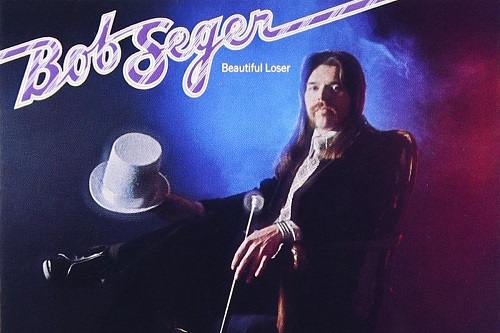


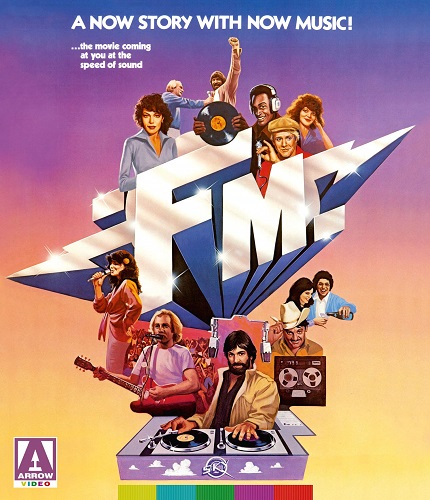
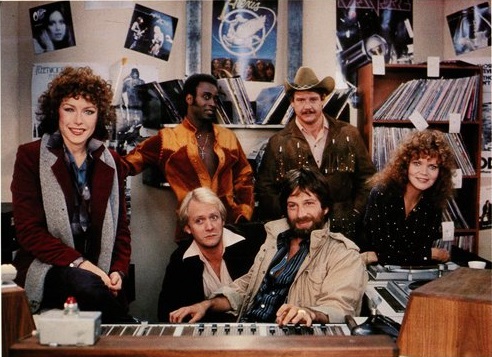

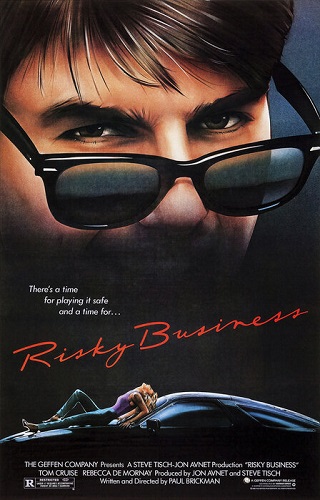
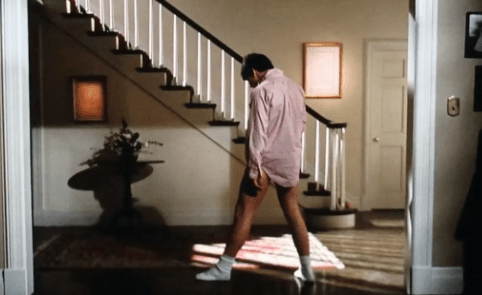



 Various Ramblings of a Nostalgic Italian