The Music of My Life – Decade Extras – The 1990’s Part 2

This is sort of a continuation of the Music of My Life feature. It focused on music from 1970-2025. It featured tunes that have special meaning to me, brought back a certain memory or a tune that I just really like. I found that with the first three decades, there were songs that I didn’t feature. So I sat down with my original lists and selected some songs that “bubbled under,” so to speak.

I figured a good way to present them was to focus on a decade. 10 years = 1 song per year = 10 songs. Last week we looked at the 90’s. This week I have 10 more from the 90’s. Next week we’ll move to the 2000’s. So, let’s check out a few “Decade Extras.”

1990

To kick off the decade, I chose a song that is still played today and remains one of the most requested songs at parties and weddings. When Vanilla Ice hit the scene, many people mocked him, but all these years later, his song Ice Ice Baby remains a favorite.

In a 2016 interview, he explained that the song was based on a real life scenario. “The song tells you the story. It’s me, with my top down, in my 5.0 Mustang, cruising down A1A Beachfront Avenue. It’s a weekend experience that turned into an amazing song. It’s timeless. I still love singing it, and it never gets old.”

The song samples “Under Pressure” from Queen and David Bowie. Songfacts.com says: Vanilla Ice never got permission to use it. No lawsuit was filed, but it is likely that Vanilla Ice agreed to pay Queen and Bowie a settlement. According to industry insider Hans Ebert, Brian May of Queen first heard this song in a disco in Germany. He asked the DJ what it was, and learned that it was #1 in the US.

Ice Ice Baby

1991

In 1991, I was working at my first country station. I was familiar with many of the legends that were mixed into the playlist like Willie Nelson, Waylon Jennings and Johnny Cash. My dad listened to many of them, so I heard them, too.

The song Get Rhythm was a Johnny Cash song from 1956 as the B-side to I Walk The Line. Johnny’s music has influenced many an up and coming country singer. In 1991, Martin Delray decided to cover the song for his debut album. It had to be a thrill for Delray to have Johnny sing with him on the track AND appear in the music video.

I’ve always loved this song.

Get Rhythm

1992

Annie Lennox is best known for being in the 1980’s group the Eurythmics. It was her extremely successful and inventive duo with Dave Stewart. In early 1990, the group split and Lennox took time off to work on charitable endeavors and focus on her home life. In 1992 she released her first solo album, Diva.

The third single from the album was Walking on Broken Glass. Pop Matters Magazine described the song as a “gloriously weird pop song with one of the oddest intros: prancing strings, strutting keyboards, and the enigmatic line”. It went on to claim that “all of that make the track sound like nothing else on pop radio in 1992.” Honestly, I think that is why I like the song – it stood out.

The video was based on the 1988 movie Dangerous Liaisons, with elaborate costumes inspired by film, which was set in France during the 1700s. Annie Lennox recalled the song’s video in a blog promoting her 2009 greatest hits album:

“This was a wonderful video to create. There were some wonderful people involved – John Malkovich and Hugh Laurie (before he had an American accent)! That was tremendous fun. The idea of it being a period piece, like Les Liaisons Dangereux. The alternative title for ‘Broken Glass’ could easily have been ‘Hell hath no more fury than a woman scorned.’ The video is very wry and tongue-in-cheek. People can take me a little seriously sometimes, but I do actually have a rather radical sense of humor.”

Walking on Broken Glass

1993

Karaoke introduced me to the Gin Blossoms. I was going out the the bars a lot around this time and every once in a while someone would sing one of their songs. When I started driving for EDS and listening to the radio, I heard them much more.

Found Out About You was written by Doug Hopkins for the group’s first album, 1989’s Dusted. The album, however, was on a small label and really didn’t get noticed. When the band signed to A&M, they rerecorded the song for their New Miserable Experience album and it was released as the fourth single.

Singer Robin Wilson says, “The first time we ever demo’d “Found Out About You” we knew it was a hit song. I remember that being a significant event in my mind, when we were in the studio doing that song. I was sitting out on my car and what I imagined to be a hit song was a bunch of kids dancing to it at the Devil House. We were listening to it and Bill [Leen, the bassist] looked over at me and said, “Hey, wow, this song is going to get you a lot of women, isn’t it?” I was just like “Yeah, whatever.”

I was hooked from the opening guitar…

Found Out About You

1994

I heard Round Here by Counting Crows long after it had been released. This was one of the albums that my ex loved to listen to, so I hear it on long drives a lot.

Adam Duritz wrote the song and says it is sort of autobiographical. He wrote the song when he was in college and part of a band called the Himalayans. Members of that group helped with some lyrics and the music. When he formed Counting Crows, he brought the song with him and they reworked it a bit. Wanting to give everyone their due, Adam made sure to credit everyone in both bands with writing the song, so “Round Here” has eight different writers listed on the composer credits.

Songfacts.com says, The theme of childhood promises not panning out is one that shows up a lot in Duritz’ lyrics. In the chorus of this song, he lists some sayings that our parents often say: “Around here we always stand up straight,” “Around here we’re carving out our names.”

Adam says, “You’re told as a kid that if you do these things, it will add up to something: you’ll have a job, you life. And for me, and for the character in the song, they don’t add up to anything, it’s all a bunch of crap. Your life comes to you or doesn’t come to you, but those things didn’t really mean anything. By the end of the song, he’s so dismayed that he’s screaming out that he gets to stay up as late as he wants and nobody makes him wait; the things that are important to a kid – you don’t have to go to bed, you don’t have to do anything. But they’re the sort of things that don’t make any difference at all when you’re an adult. They’re nothing.”

Round Here

1995

When You Say Nothing At All was originally a hit for country singer Keith Whitley in 1988. It was co-written by Paul Overstreet. I had played it when I was at that first country station. I thought it was a great song lyrically, but wasn’t a fan of his voice. He died in 1989 of alcohol poisoning.

When some of Whitley’s friends decided to put together a tribute album to Whitley, they had other singers recording his songs. It was Alison Krauss who chose to cover “When You Say Nothing At All.

When I heard her version of the song, it stopped me in my tracks. Her voice is so beautiful and perfectly fit the song. Her voice took the song to an entirely different level. She knocked it out of the park!

When asked by Songfacts what he thought of the Krauss version, Overstreet said when he first heard it, “All the hair stood up all over my body. I was like, ‘Are you kidding me!?’ She sang it great.”  It still gives me goosebumps!

When You Say Nothing At All

1996

I think whenever guys have a “guy’s night” or gals have a “gal’s night” they begin to talk and tell stories. “My wife/girlfriend does that, too!” or “Why is it that all men keep shirts or socks with holes in them?” You know, that kind of thing.

I have been guilty of asking male friends, “How come they can do that and we can’t?” It all falls into that “Battle of the Sexes” thing. Music has focused on those male/female differences for years, but I hadn’t heard it put the way Mindy McCready did in 1996.

It was at my second country station that I heard “Guys Do It All The Time.” It is the ultimate switcheroo song from the woman’s point of view. The song itself does a great job in conveying this, but the video only enhances it with gal’s doing guy things.

I saw Mindy in passing at a Radio Seminar, and she was even more beautiful in person. It was sad to see her life spiral out of control before her passing.

Guys Do It All The Time

1997

Picture it – you are getting ready to go on a trip or maybe you are being shipped off for the military. This is the last night you will be with your special someone for a while. You’d want it to last forever and make it special right? That’s the premise of Save Tonight by Eagle Eye Cherry. He wants to cherish this one last night spent with his love. He explains that you can’t fight changes, all you can do is accept them.

This was the last song Cherry wrote for his debut album and he wanted it to be special, “something that would stand the test of time.” He achieved his goal – two decades later, the song is still in rotation on throwback radio stations and is a fixture on the setlists of countless cover bands.

Songfacts says that the black-and-white music video was filmed in Sweden and follows Cherry in the roles of several different characters whose lives intersect, including an amiable young man, a bespectacled butcher, a robber, a truck driver, a busker, and a homeless man.

Cherry is actually a trained actor, having attended New York City’s School of Performing Arts, with credits that include a bit part on The Cosby Show and a stint as an ex-con on the short-lived TV drama South Beach.

Save Tonight

1998

Another song that really stood out to me on the radio was Iris by the Goo Goo Dolls. That opening guitar always seemed to cut through whatever was going on. It was almost hypnotic.

Songfacts says that lead Goo Johnny Rzeznik wrote this song for the movie City Of Angels, where it is sung from the perspective of Nicolas Cage’s character. In the film, Cage plays an angel sent to help humans make their transition to the afterlife. When he falls in love with a human (played by Meg Ryan), he must choose between love and eternal life.

Johnny explained how the film influenced the song: “I was thinking about the situation of the Nicolas Cage character in the movie,” he said. “This guy is completely willing to give up his own immortality, just to be able to feel something very human. And I think, ‘Wow! What an amazing thing it must be like to love someone so much that you give up everything to be with them.’ That’s a pretty heavy thought.”

Iris was nominated for Grammys in the categories Song of the Year, Record of the Year, and Best Pop Performance By Duo Or Group. It didn’t win any of them.

Iris

1999

It was around 1998-1999 that I took a leap of faith after deciding to give up on radio. I had received a call from a station in the Flint area. They had called the Detroit country station that I had just resigned from asking if they knew anyone who wanted full time work. The boss talked me up and gave them my number. It was from there that I would spend the next 10-12 years working full time in Country radio.

LeAnn Rimes was making quite a name for herself around this time. She had burst on the scene in 1996 with her debut single “Blue.” She was only 13 years old at the time!

In 1999, she recorded an album of country cover songs. It included Patsy Cline’s Crazy and She’s Got You, Hank Williams Your Cheating Heart and Lovesick Blues, and other classics. The album was entitled “LeAnn Rimes” and was her fourth studio album.

If you have ever been in a situation where your lover broke up with you, only to begin dating one of your closest friends, you know how much that hurts. How do you handle that situation? In country radio, you write a hit song about it. That song was only original song on the album – Big Deal.

What I loved about the song is the slow and deliberate opening verse. It almost has a gospel song feel to it. She is lamenting about letting her man get away and eventually winding up with her friend. Then the tempo kicks in and she let’s her rival have it. She’s tired of her bragging …

Big Deal

And that is a wrap on the 1990’s. You may remember that the further along I got in the original series the less songs I was able to come up with. I think I have enough to look at the early 2000’s and officially put this feature to bed. Next week we’ll glace at 2000-2009. I hope you’ll come back then.

Thanks for reading and listening!

The Music of My Life – Decade Extra – The 1970’s

Last week I wrapped up my Music of My Life feature. It focused on music from 1970-2025. I admit that it was fun to look back at the tunes that have special meaning to me, bring back a certain memory or a tune that I just really like.

When I got into the 2000’s it became more difficult for me to find songs. With the earlier years, however, I found it difficult to narrow my list down to just ten songs. So I sat down with my original lists and selected some songs that “bubbled under,” so to speak.

I figured a good way to present them was to focus on a decade. 10 years = 1 song per year = 10 songs. Let’s head back to the 70’s and check out a few “Decade Extras.”

1970

I wish I could find the recording of this so I could set it up better. My co-host, Steph, and I were in conversation with our newsman, Hal. Something came up about knocking and Hal says, “Knock three times on the ceiling if you want me.” This led to me asking why we were discussing Tony Orlando on a country station.

Steph walks out of the studio during commercials and I went on the hunt for the song. I found it and cued it up to the chorus. When she comes back to the studio, and she has to read a sponsorship for the weather forecast. I let her begin and out of nowhere I play the chorus of Knock Three Times. She was so thrown by this, she can’t stop laughing. She’s trying to do the sponsorship, but every 6th or 7th word, I’d fire the chorus again. She is down for the count in laughter (which was my intention), so I wound up reading it and apologizing to our listeners.

I think of Steph every time I hear it.

Knock Three Times

1971

I’ve always love the Jonathan Edwards song “Sunshine.” It was always one that I loved singing along with. Had it not been for a mistake, it may never have gotten recorded. According to songfacts.com, he recorded this out of necessity when one of the tracks he put down was accidentally erased. Instead of redoing that song, he did “Sunshine.” Pleased with the results, he and the engineer overdubbed bass and added the drums the next day.

Edwards was signed to Atco Records. They released “Sunshine” as his first single early in 1971, but it flopped. The song got some traction thanks to disc jockeys in New England who started playing it off the album. Six months after the Atco single was released, it was re-issued on the independent Capricorn label with a demo version on the B-side. This time, the song was a hit, shooting to #4 in the US.

He would often end live shows with the song, and Edwards said,  “I often say, and it’s true, that if I had never done another song in my life, I’ll be happy to have come and gone with that.”

Sunshine

1972

For the longest time, I thought that Neil Diamond was singing Nice To Be With You. When I started working at my first radio gig, I found out I was wrong.

The song was actually one that had a local connection. Jim Gold formed the group Gallery in Detroit. They recorded quite a few songs, but none were as big as Nice To Be With You. It was also the title track of their debut album.

Nice to Be With You

1973

There was no shortage of Jim Croce songs in my original feature. My mom and dad listened to his music a lot. He was one of many artists who were a part of my childhood.

I love when songs have some basis or inspiration in real life. Bad, Bad Leroy Brown is one of them.

“Leroy Brown is a guy that he actually met,” said his widow Ingrid. “When he was in the service – The National Guard – this guy had gone AWOL. He was a guy that Jim kind of related to, he liked to sing with him. This guy had gone AWOL but he came back to get his paycheck, and he got caught. Jim just thought he was such a funny guy that he thought he’d include his name in the song, and it just worked. There really was a Leroy Brown, and sometimes having a name helps you to build a song around it.”

It’s one of the few songs I can sing at karaoke.

Bad, Bad Leroy Brown

1974

I was a big Beatles fan growing up. As a kid, I didn’t really understand why Paul McCartney was in another group (Wings) or why John Lennon was doing solo stuff. I do remember hearing Band on the Run, though, and liking it.

McCartney recorded the album in Lagos, Nigeria along with his wife Linda and guitarist Denny Laine. The other Wings decided not to make the trip, which worked out fine in the end: McCartney considers the album his best post-Beatles work. He told Word in 2005:

“I was on drums and guitar a lot, mainly because the drummer decided to leave the group the night before and one of the guitar players decided not to come! So we got that solo element into an otherwise ‘produced’ album.”

Band On the Run

1975

It’s a Long Way to the Top is an autobiographical song for AC/DC. It describes their struggles as they tried to make it big. Right from the start, they delivered a top notch live show night after night. Songfacts says: It was genuine: At the time, they were just getting started and playing some seedy venues with even seedier business associates. The hard work eventually paid off, and several years later the band was selling out arenas.

“It’s A Long Way To The Top” really summed us up as a band,” Angus Young told Rolling Stone. “It was the audience that really allowed us to even get near a studio.”

The song is a bit unusual because instead of a lengthy guitar solo it features Angus Young on lead and Bon Scott on the bagpipes in a Dueling Banjos sort of way. I remember the first time I heard the song. “Are those bagpipes?!” Yes. Yes, they are!

It’s a Long Way to the Top

1976

Turn the Page by Bob Seger is also a song about being out on the road and performing. This one focuses on the effects of touring on a performer. There is a lot of loneliness that they feel.

Bob says, “Our first headline shows ever in a large (twelve thousand seat) hall were the two shows at Detroit’s Cobo Arena, September 4th and 5th, 1975. I remember while I was singing this how nice it was to have such good on-stage monitors. I had never heard my voice so well while performing.” The version on Seger’s greatest hits album was taken from these shows.

The song is a classic rock staple here in Michigan. I got to see Bob perform one of his last shows and it was electrifying. I can’t even begin to explain the feel of the room when he performed this one.

Turn the Page

1977

“What’s Your Name” by Lynyrd Skynyrd is another song that is based on a true story. One night while they were on tour, the band was drinking at their hotel bar when one of the roadies got in a fight. They all got kicked out. So they went to a room, ordered champagne and continued the party.

Songfacts says: The incident in this song did not happen in Boise, Idaho. The first line was originally, “It’s 8 o’clock and boys it’s time to go,” but lead singer Ronnie Van Zant changed it when he found out his brother, Donnie, was opening his first national tour with his band .38 Special in Boise. The first line became “It’s 8 o’clock in Boise, Idaho.”

Three days after the album was released, Ronnie Van Zant, Steve Gaines, and Cassie Gaines died in a plane crash. The cover of the album was redone because the original cover had the band surrounded by flames.

What’s Your Name

1978

Hold the Line by Toto caught my ear the first time I heard it because of the piano open with the guitar riff intermingling with it. It was the debut single for the group who was made up primarily of session musicians.

From songfacts: “Hold the line” is an expression meaning to maintain your existing position, which in this case is the singer telling a girl to be patient and stay with their relationship.

The saying also has a more literal meaning, however, which is how David Paich came up with the title. “Hold the line” is what you tell someone on the phone if you want to put them on hold while you’re taking another call. This is typical in workplaces, but in the days before cell phones, some households (especially ones with teenagers) also had multiple phone lines coming in and could put callers on hold. Paich lived in one such household.

Paich said: “When I was in high school, all of a sudden the phone started ringing off the hook, and I had a situation where I was at the dinner table and I had three girls all call at the same time, so all the lights were flashing. I was kind of juggling girlfriends, and that’s how that came about.”

Toto’s video was a bit ahead of it’s time. MTV hadn’t even gone on the air yet when the song was released.

Hold the Line

1979

Don’t Stop Me Now by Queen is such a fun song to play at weddings and parties, especially after the audience has loosened up. So often I’d come out of a slow song and segue right into the smooth intro of Freddie Mercury. People would raise their hands and sway while singing along. Then, when the tempo changes, the dance floor was insane.

It’s a catchy song that has you singing along, even if you are just hearing it for the first time. In 2011, Queen fans voted the chorus of “Don’t Stop Me Now” as the band’s best ever lyric.

In an Absolute Radio interview, Brian May says, “I thought it was a lot of fun, but I did have an undercurrent feeling of, ‘aren’t we talking about danger here,’ because we were worried about Freddie at this point. That feeling lingers, but it’s become almost the most successful Queen track as regards to what people play in their car or at their weddings. It’s become a massive, massive track and an anthem to people who want to be hedonistic. It was kind of a stroke of genius from Freddie.”

Don’t Stop Me Now

So what do you think? I like this idea. A quick look back at a decade. There are plenty of songs to choose from that did not make the original run of this feature. Join me next week for more!

The Music of My Life – 1979

Welcome back to The Music of My Life, where I feature ten songs from each year of my life.  In most cases, the ten songs I choose will be ones I like personally (unless I explain otherwise). The songs will be selected from Billboard’s Year-end Hot 100 Chart, Acclaimed Music, and will all be released in the featured year.  In the final year of the 70’s, I turned 9 years old. 

1979 is a year where I was surprised to find many of the songs that wound up on my mom’s ballad 8-track tape.  I could easily have posted all of those songs in this blog, but then you would fall asleep listening to them, just like my brother and I did on our way up north. Instead, I will list them at the end of this blog, and if you wish, you can search them on YouTube.

So let’s begin with the first of two “out of place” or “odd” songs….

The first song is part of the soundtrack of my summer of 1979. The song seemed to be playing in a very hot rotation and was always on the radio when we were up at my grandparents place.

Frank Mills wrote and recorded “Music Box Dancer” in 1974, but it did not become a Canadian single until December 1978. By Christmas of that year, it was in the top ten of many European and Asian pop music charts. It was released as a single in the United States in January 1979 and got up to number three on the Billboard Hot 100 Chart.

In 1974, Mills released an album that featured the song, but it was not initially a hit. When he re-signed with Polydor Records Canada in 1978, the label released a new song as a single, with “Music Box Dancer” on the B-side.  Because of a mistake, a single of “Music Box Dancer” found its way into the hands of a pop station in Ottawa – the single was only supposed to go out to adult contemporary stations. The station’s program director listened to the A-side and wondered why it was sent to him. He played the B-side and liked what he heard anyway and began airing it in rotation. Next thing you know, the album’s gone gold in Canada.

Music Box Dancer

The next song makes the list because it was on the iPod of my ex. My oldest son used to take it and listen to it all the time and I can still hear him in his toddler voice singing the chorus of this one.

Hot Stuff is a single that was on Donna Summer’s 7th studio album, Bad Girls. The song is unique in that while many consider it disco, many others consider it rock. As a matter of fact, when the Best Female Rock Vocal Performance category was added at the Grammy Awards in 1980, Donna Summer won for “Hot Stuff.”

The song has ties to other music as well. It was written by Pete Bellotte, Harold Faltermeyer and Keith Forsey. Bellotte co-wrote a few other hits for Summer, including “Love To Love You Baby” and ” Heaven Knows.” Faltermeyer had a solo hit in 1984 with the theme from Beverly Hills Cop, “Axel F” and Forsey’s credits include “Don’t You Forget About Me” for Simple Minds and “Shakedown” for Bob Seger.

This was Summer’s second #1 hit on the Hot 100; her first was her disco cover of “MacArthur Park.”

Hot Stuff

Here is a song that is missing one of the things the band is known for. Don’t Bring Me Down was the first ELO song that did not use strings. According to Songfacts, after recording it, they fired their string section, leaving four members in the band.

ELO leader Jeff Lynne wrote this song late in the sessions for the “Discovery” album. He came up with the track by looping the drums from a song he recorded earlier in the session, then coming up with more music on the piano. The words came last, as Lynne put together some lyrics about a girl who thinks she’s too good for the guy she’s with.

Here’s a fun fact: Wanna know why Jeff Lynne repeatedly sings the word “groose” after the song’s title line? Apparently it was a made-up place-keeper word to fill a gap in the vocals when he was improvising the lyrics. When the German engineer Reinhold Mack heard the ELO frontman’s demo, he asked Lynne how he knew “gruss” means “greetings” in his country’s language. Upon learning the German meaning, Lynne decided to leave it in.

Don’t Bring Me Down

“Hey Ringo, play something hot!”

Those are the words that Rodney Dangerfield’s character in Caddyshack says to the band at the snobbish country club as he throws money at them. As the money falls, the band plays the opening 5 note stings from Boogie Wonderland from Earth Wind and Fire (With the Emotions). I’ve always loved that song because of the movie connection.

The song, while it is upbeat and happy sounding, it really isn’t. Songfacts calls it one of the more complex and misinterpreted songs of the disco era. Written by Jon Lind and Allee Willis, it was inspired by the movie Looking For Mr. Goodbar, which stars Diane Keaton as a lost soul who goes to clubs every night to dance away her misery.

Willis says, “When I saw Mr. Goodbar, I got kind of fascinated with people who did go to clubs every night, whose life was kind of falling apart, but they lived for the night life, though it didn’t seem to be advancing them as humans in the end. So if you really look at the lyrics of ‘Boogie Wonderland,’ unlike ‘September,’ it’s not a happy song at all. It’s really about someone on the brink of self destruction who goes to these clubs to try and find more, but is at least aware of the fact that if there’s something like true love, that is something that could kind of drag them out of the abyss. So ‘Boogie Wonderland’ for us was this state of mind that you entered when you were around music and when you danced, but hopefully it was an aware enough state of mind that you would want to feel as good during the day as you did at night.”

Boogie Wonderland

The second “out of place” or “odd” song is also a movie song. It may seem like a very simple kid song, but if you listen to what the songwriter says about it, the song is deeper than you can imagine.

This was written by songwriters Paul Williams and Kenny Ascher for The Muppet Movie, which came out in 1979. In the film, it is sung by Kermit The Frog as the Muppets set out to find adventure. In a interview Williams said: “Rainbow Connection was the first number in The Muppet Movie. It’s the one that establishes the lead character. We find Kermit sitting in the middle of the swamp. Kenny Ascher and I sat down to write these songs, and we thought… Kermit, he’s like ‘every frog.’ He’s the Jimmy Stewart of frogs. So how do we show that he’s a thinking frog, and that he has an introspective soul, and all that good stuff? We looked at his environment, and his environment is water and air – and light. And it just seemed like it would be a place where he would see a rainbow. But we also wanted to show that he would be on this spiritual path, examining life, and the meaning of life.

It tells you that he’s been exposed to culture: ‘Why are there so many songs about rainbows?’ Which means, obviously, he’s heard a lot of songs. This is a frog that’s been exposed to culture, whether it’s movies, or records, or whatever. And I also like the fact that it starts out with the negative: ‘Rainbows are only illusions, rainbows have nothing to hide.’ So the song actually starts out as if he’s going to pooh-pooh the whole idea, and then it turns: ‘So we’ve been told, and some choose to believe it. I know they’re wrong, wait and see.’ And again, he doesn’t have the answer: ‘Someday we’ll find it.'”

Now, with that in mind, give this masterpiece a listen!

Rainbow Connection

Next is my “go-to” Karaoke song. I’ve always loved the line, “You had me down 21 to zip, the smile of Judas on your lip.” What a great line. Bad Case of Loving you was written by Moon Martin who released the original version on his 1978 album Shots From a Cold Nightmare. Martin is a singer/guitarist/songwriter with his band Southwind. When the group broke up in 1971, he took on studio work. He paired up with Linda Ronstadt, and played on her self-titled album. He nearly joined some of Ronstadt’s other backing musicians in a little band called the Eagles, but ended up a solo artist and signed a deal with Capitol Records.

Martin’s album got some good reviews but went nowhere on the charts. A song called “Hot Nite In Dallas” was chosen as a single, but “Bad Case Of Loving You” was only given limited release in Europe. Enter Robert Palmer. He heard the song when he was being driven to one of his shows by a rep from his label, who played it for him. Palmer included it in his set and got a great response, so he recorded it for his Secrets album.

Bad Case of Loving You (Doctor, Doctor)

In 1989, Palmer released a remix of this song for his Addictions: Volume 1 greatest hits album. “Looking back at the 1978 original the performance was there but someone was asleep at the mixing desk,” he wrote in the liner notes. “The original mix in comparison sounded like a band rehearsing in a garage and this sounds like the finished song.” I can’t listen to the original cut much anymore. The remix is SO MUCH better!

I LOVE good harmonies. This song kicks right off with a cold open and the amazing a cappella harmony of The Little River Band. Most of the band’s hits were written by founding members Graham Goble, Beeb Birtles or Glenn Shorrock, but “Lonesome Loser” was written by guitarist David Briggs, who joined in 1976 after the band’s second album.

The lyric uses a lot of gambling imagery to tell the story of the lonesome loser, who staked his heart and lost. His adversary is the “Queen of Hearts,” who will always win this game of love. The same year this song was released (1979), Dave Edmunds had a UK hit with a song called “Queen of Hearts” that used the same metaphor. That song, of course, became an American hit when Juice Newton covered it in 1981.

Lonesome Loser

Speaking of great harmonies and the Eagles, the next song features both. Heartache Tonight was written by Don Henley and Glenn Frey with Bob Seger and J.D. Souther. Songfacts says: When Frey was a 19-year-old in Detroit, Seger took him under his wing and got his music career started. Souther, who is sometimes considered an “Unofficial Eagle,” was the first person Frey met when he moved to Los Angeles in the late-’60s. J.D. Souther, told us how this song started: “Glenn Frey and I had been listening to Sam Cooke records at my house. So we were just walking around clapping our hands and snapping fingers and singing the verses to those songs. The melody sounds very much like those Sam Cooke shuffles. There’s not much to it. I mean, it’s really just two long verses. But it felt really good.”

Bob Seger’s contribution to this song was the chorus. JD Souther says, “We didn’t get to a chorus that we liked within the first few days, and I think Glenn was on the phone with Seger, and he said, ‘I wanna run something by you,’ and sang it to him, and Seger just came right in with the chorus, just sang it and it was so good. Glen called me and said, ‘Is four writers okay on this?’ And I said, ‘Sure, if it’s good.’ And he said, ‘Yeah, it’s great. Seger just sang this to me,’ and he sang it to me and I said, ‘That’s fantastic.'”

According to Seger, he was in the room with Glenn Frey when he came up with the chorus. He told Entertainment Weekly: “Glenn had the verse: ‘Somebody’s gonna hurt someone before the night is through.’ We hadn’t been sitting down for more that five minutes and I just blurted out, ‘There’s gonna be a heartache tonight!’ His eyes lit up huge.”

Heartache Tonight

The next song is one that I used to hear on the way home from elementary school. I had a buddy who got a ride home every day and his mom would often give me a lift, too. Keep in mind the ride home was 5 to 7 minutes tops, but it always seemed to be on the radio when we were in the car.

Freddie Mercury wrote Crazy Little Thing Called Love while Queen was recording The Game in Germany. He wrote it while taking a bubble bath in his room at the Munich Hilton. Peter Hince, the head of Queen’s road crew, recalled to Mojo magazine September 2009: “The idea for the song came to him while he was in the bath. He emerged, wrapped in a towel, I handed him the guitar and he worked out the chords there and then. Fred had this knack of knowing a great pop song.”

Freddie acknowledged that perhaps his limited talent on the guitar helped shape the song:

On stage, this was an important part of the show. Brian May often used three different guitars during the song: the first verse was played by Freddie alone with his guitar, then Brian joined with another Ovation Acoustic; before the third verse he had already switched to a Telecaster on which he performed the solo. During the singalong part (famous for its “ready Freddie” line) Brian again changed instruments to his homemade Red Special. From 1984 onwards Mercury replaced the acoustic with another Telecaster.

Crazy Little Thing Called Love

The final selection comes from a band who was formed on Valentines Day of 1977 in Detroit. That is what inspired their name – the Romantics.

Believe it or not, the band have only two US Top 40 hits, and “What I Like About You,” now their best-known song, isn’t one of them. ( Their two Top 40 hits were “Talking In Your Sleep” and “One In A Million”). It attracted little attention and was only a minor hit when first released in 1980 on their debut album. This song’s resurgence had a lot to do with MTV. The band made a simple performance video for the song that MTV put in rotation when they launched in 1981. It fit the criteria the network was looking for: American band, rock, catchy song, acceptable production quality. Since few American artists made videos at the time, MTV made do with lots of European imports when they started.

Since then the song has also become a fixture at sporting events, bars and nightclubs, and parties and celebrations of all kinds, and has taken its place as one of the most popular rock anthems of all time. It’s nice to wrap up the last year of the decade with an uptempo, fun song!

What I Like About You

I’m sure I have missed a few favorites, and the more I look ahead, the more I wonder if I need to expand to more than ten songs. I’ll tackle that issue if I have to later on.

Next week, we ring in a new decade – 1980! The 80’s sound certainly can be heard in some of these late 70’s songs and from here on out, the sound progresses quickly!

Tune Tuesday – Queen & ELO

I have to admit that I almost picked a Ringo Starr song today, because of his birthday this week.  I didn’t because I really couldn’t decided whether to pick a solo song or some of his Beatles stuff.  I am guessing that’s a future blog – I’ll add it to my “blog topics” list.  Instead, the picture below was posted on Facebook this week and prompted the songs I am writing about.

CamyNoaWwAAzbDl

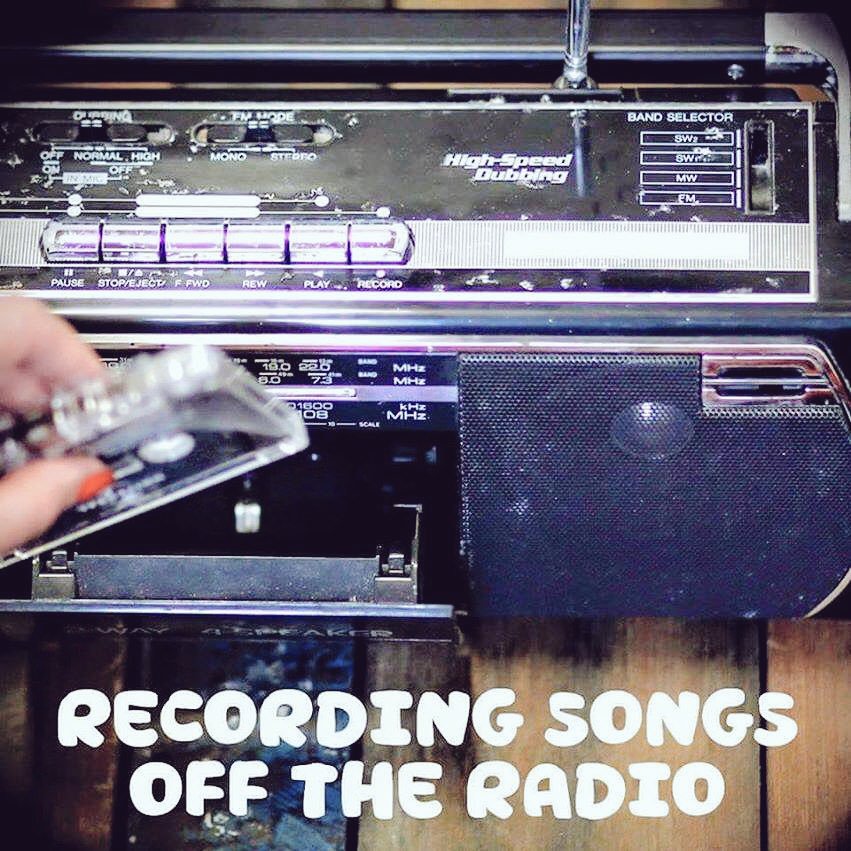
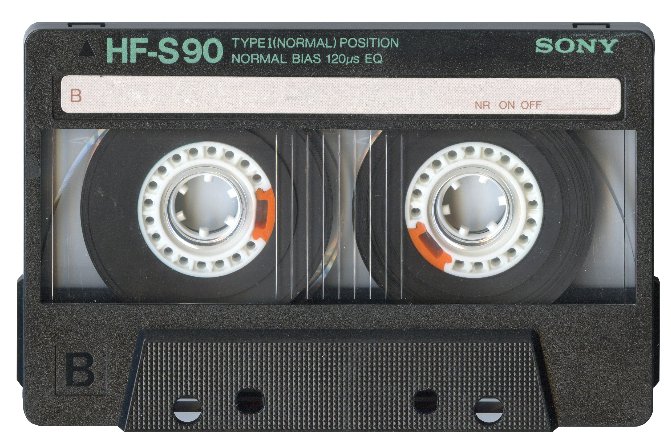
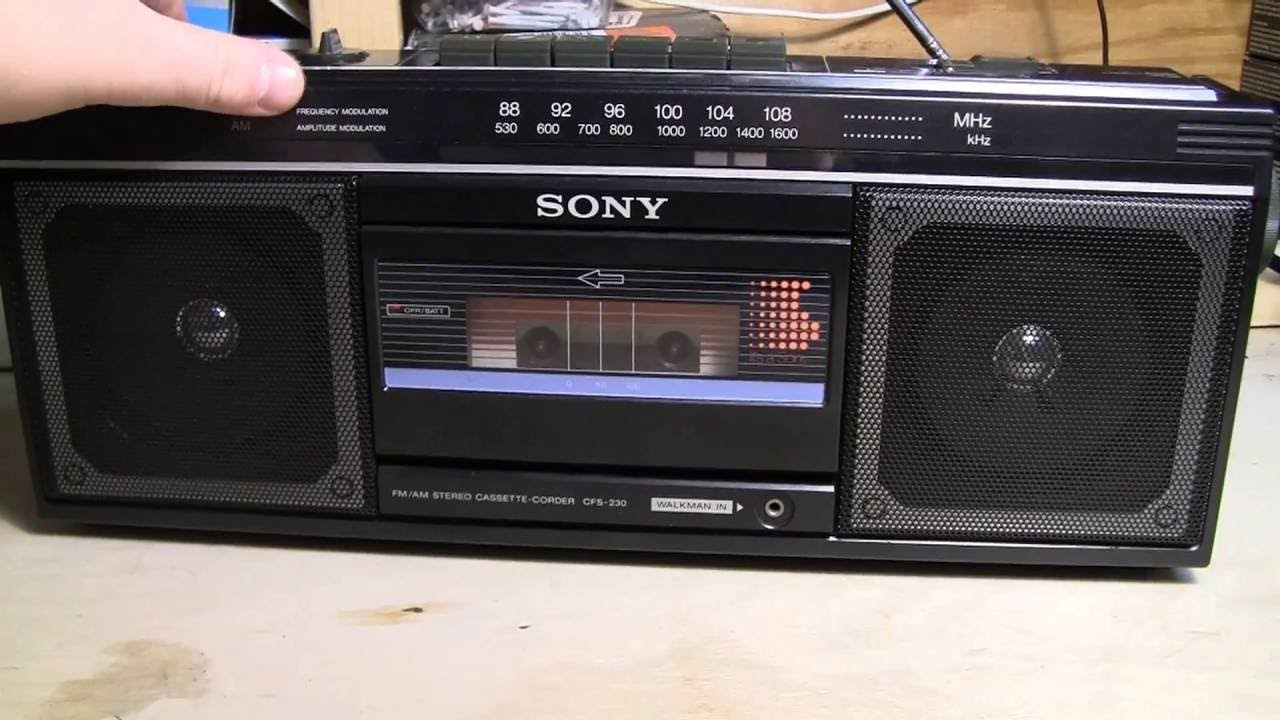
I’ll be the first to admit that I did my share of recording songs off the radio.  I cannot remember how old I was when I got my first “boom box.”  I do remember getting it for a birthday gift.  I remember buying tons of cassette tapes to record songs on, and I spent many hours listening for my favorite songs.

Not knowing that I would eventually become a radio DJ, I remember how difficult it was to record a song without the DJ talking over the intro.  You would hope to catch the song coming out of a jingle or sweeper – that was usually a good way to catch it with a “talk free” intro.  Guys like me got pretty good at timing and using the pause button.

I can distinctly remember being the listener that would eventually drive me crazy!  I spent many hours calling up the radio station asking for songs.  When I didn’t hear them, I would call back and ask again.  Of course I didn’t know how radio worked and that with each call, I was just pissing off the DJ!  The more you call, the more likely the DJ will NOT play your song!  I also did the “kid disguising my voice to sound like an adult” thing, which every DJ can hear immediately!  (You’re not fooling us, kids!)

At any rate, there are two songs that I can distinctly remember trying to record on tape.  (Let me interject here that I am sure I had my paper route at this time, and why I just didn’t go buy the record is beyond me).  I guess I remember these two in particular, because I have two specific memories to accompany the songs.  On to song #1:

Queen – Crazy Little Thing Called Love

I remember calling over and over to ask for this song.  I remember I was in elementary school and my friend Billy used to get his mom to give us a ride home.  This song always seemed to play on our ride home (I know this probably was not the case now, knowing how music is scheduled and such).  I remember us both asking his mom to turn up the radio when it played.

The story goes that Freddie Mercury wrote this while the band was touring in Germany.  He wrote it on an acoustic guitar and it didn’t take him long to do it.  He said it “took me five or ten minutes. I did that on the guitar, which I can’t play for nuts, and in one way it was quite a good thing because I was restricted, knowing only a few chords. It’s a good discipline because I simply had to write within a small framework. I couldn’t work through too many chords and because of that restriction I wrote a good song, I think.”

Some sources say he wrote it as a tribute to Elvis. Roger Taylor said he wrote it while lounging in a bath at a hotel during one of their extensive Munich recording sessions.  Some stories say that Freddie also played the original guitar solo, but it was lost and Brian May then played it for the single (Not sure how true this is).  Brian played the solo on a Telecaster guitar (Perhaps to make it sound like an older song.  Many artists played Telecasters).  Brian, however, didn’t really care for the Telecaster and when playing the song live, he’d play the solo on it, and go back to his favorite guitar (his Red Special).

One of my favorite parts of the song is when the bass guitar has its solo moment toward the end.

This thing called love
I just can’t handle it
This thing called love
I must get round to it
I ain’t ready
Crazy little thing called love

This thing (this thing) called love (called love)
It cries (like a baby) in a cradle all night
It swings (ooh, ooh), it jives (ooh, ooh)
It shakes all over like a jelly fish,
I kinda like it
Crazy little thing called love

There goes my baby
She knows how to rock-n-roll
She drives me crazy
She gives me hot and cold fever
She leaves me in a cool, cool sweat

I gotta be cool, relax, get hip
Get on my tracks
Take a back seat, hitch-hike
And take a long ride on my motorbike
Until I’m ready
Crazy little thing called love

I gotta be cool, relax, get hip
And get on my tracks
Take a back seat, hitch-hike
And take a long ride on my motorbike
Until I’m ready (Ready Freddie)
Crazy little thing called love

This thing called love
I just can’t handle it
This thing called love
I must get round to it
I ain’t ready
Crazy little thing called love [repeat to fade]

cassette_tape_sony

The second song I have a distinct memory of is from ELO.

ELO – Rock and Roll is King

The reason why I remember recording this song off the radio is simple – I screwed it up the first time I tried to record it! It has what we call in the radio biz a “fake cold.”  A cold ending is when a song doesn’t fade out, it just stops.  This song has a point before the last line, where the song stops….there is silence….and then the band comes back for the final line and the real cold ending.  I remember it because when the fake cold happens, I hit the pause button on my cassette player and messed up the recording because I missed the end of the song!

The song could be found on ELO’s 1983 album Secret Messages.  I read an article that said the song was originally called something else and had an entirely different set of lyrics before it was re-worked.  The song reminds me a bit of their 1981 hit “Hold on Tight,” as it has the same sort of feel to it.  The song only made it to #19 on the charts in the US.  This was one of the first songs I heard from ELO, and it made me start picking up more of their stuff.  I really thought it was cool how they used string instruments in their songs.

“Rock ‘N’ Roll Is King”


Listen everybody let me tell you ’bout the rock ‘n’ roll
Feel that rhythm and it’s really gonna thrill your soul
She said come along with me, to a land of make believe

She said wamalamalamalama rock ‘n’ roll is king

She loves that rock ‘n’ roll and she plays it all night long
That’s all she ever tells me when I call her on the telephone
She says feel that jumpin’ beat, and git up on your feet

She says wamalamalamalama rock ‘n’ roll is king


[Chorus:]
Oh let those guitars play
Play for me play for me
Oh let that song ring out

That’s how it’s meant to be

It rolls like a train that’s comin’ on down the track
She rolled over Beethoven and she gave Tchaikovsky back
She loves that drivin’ beat, she goes dancin’ on down the street

She said wamalamalamalama rock ‘n’ roll is king


[Chorus]

When she comes around and I’m listenin’ to the radio
She says you can’t do that ’cause all I wanna do is rock ‘n’ roll
Now here I’m gonna stay where that music starts to play
She says wamalamalamalama rock ‘n’ roll is king
Jeff Lynne wrote the song and I love the line “She rolled over Beethoven and she gave Tchaikovsky back.”  It is obviously a nod to Chuck Berry’s Roll Over Beethoven (which ELO covered, and is awesome!).
Jeff, continues to tour with his current version of ELO, and also was a member of the Traveling Wilburys with George Harrison, Tom Petty, Bob Dylan, and Roy Orbison.
What songs do YOU remember taping off the radio??
1887v6sn0aw21