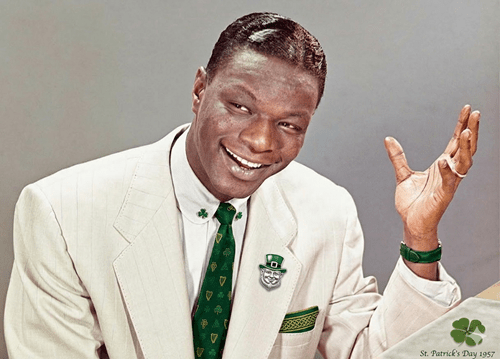
Happy St. Patrick’s Day and Happy Birthday to Nat King Cole!
Nat King Cole recorded somewhere in between 1,400 to more than 2,000 songs during his 28-year career. He was an incredibly prolific artist for Capitol Records, scoring 150 hits on the Billboard charts and leaving behind a massive legacy that includes jazz recordings, pop vocals, and, in his later years, numerous albums. Now you would think that Nat would have recorded a few Irish songs, right? Wrong.
As a matter of fact, I could have sworn that he recorded Danny Boy, but apparently not. Galway Bay? Nope. Too-Ra-Loo-Ra-Loo-Ra? Not at all. Surely he had to have recorded When Irish Eyes are Smiling. Wrong again. My hope of featuring a “St. Patty’s Day” song from Nat on his birthday was not looking very good.
I almost scrapped the idea when I remembered a song that might be a stretch. It does have a small tie to Ireland, so I am going to run with it!
“Red Sails in the Sunset” was published in 1935. Its music was written by Hugh Williams with lyrics by prolific songwriter Jimmy Kennedy. The song was inspired by the “red sails” of Kitty of Coleraine, a yacht Kennedy often saw off the northern coast of Northern Ireland and by his adopted town Portstewart, a seaside resort in County Londonderry. It was recorded by Mantovani, Louis Armstrong, Bing Crosby and others. Nat recorded his version in 1951.
So throw on some green, grab a pint and let’s celebrate St. Patrick’s Day and Nat King Cole’s Birthday with the beuatiful Red Sails in the Sunset.
Happy 43rd birthday to Carrie Underwood. She was born today in Oklahoma and has become the highest-certified female country artist by selling over 95 million albums and singles!
She went to Nashville at 14 years old and Capitol Records actually had a contract for her. Management changed, however, and it never happened. In 2004 she auditioned for Season Four of American Idol. She made it through and went on to be the Season Four winner.
She has enjoyed great success and had hits on both the country and pop charts. Hits include Jesus Take The Wheel, Before He Cheats, Inside Your Heaven, All-American Girl, I Told You So, Cowboy Casanova and many more.
She has plenty of “bling” too. She has won 8 Grammy Awards, 12 Billboard Music Awards, 16 Academy of Country Music Awards, 17 American Music Awards, 9 Country Music Awards, 7 Teen Choice Awards and 23 CMT Music Awards.
She has appeared on TV shows like How I Met Your Mother, Nashville, and Blue Bloods. She is also a successful author. Her 2020 book, Find Your Path, was a New York Times Bestseller.
She has recorded 9 studio albums and all have plenty of hits. I had plenty to choose from for Tune Tuesday. I have opted for one that was featured on her 2021 Gospel Album, “My Savior.”
There is something that I love about the beloved hymns that have been sung in churches for years. Many churches today play contemporary modern Christian songs. I’d rather listen to the old hymns. Alan Jackson had success with his Gospel albums (Precious Memories 1 & 2). Whether or not that influenced Carrie to record one I do not know.
In celebration of her birthday, here is Carrie Underwood with Victory in Jesus.
It is no secret to those who know me that I love classic comedy. I have written about the Three Stooges, The Little Rascals, and Laurel and Hardy. While I have mentioned them separately at times, I am not sure I ever wrote about the team of Abbott and Costello.
Growing up on Sunday mornings, there would always be an Abbott and Costello movie on TV. Their films were not as slap-sticky as the Stooges, but funny all the same. Now that I am older, I appreciate their humor even more. Especially their bits involving word play, like Who’s On First?
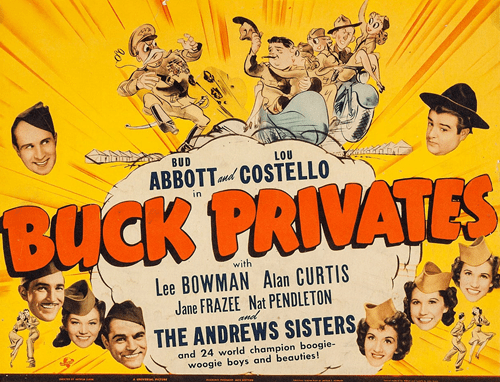
For Movie Music Monday, we dig into the 1941 soundtrack of Buck Privates.
The Hollywood brass weren’t really sure that the boys would be able to carry a movie. Director Arthur Lubin remembered, “The studio was a little uncertain about how they were going to be accepted. But at the first preview the audience just died. Buck Privates was a very, very funny show. And, actually, I must say it was very little credit to the director. It consisted mainly of fabulous gags that these two wonderful guys knew from years and years of being in burlesque.”
Fun Fact: Japan used this film as propaganda to demonstrate to its own troops the “incompetence” of the United States Army.
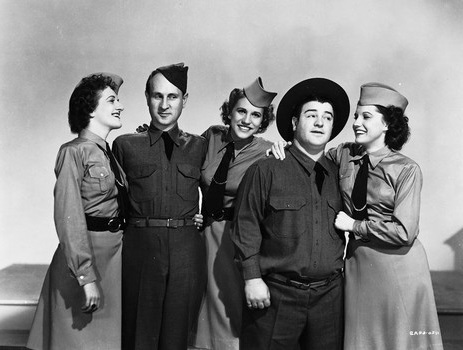
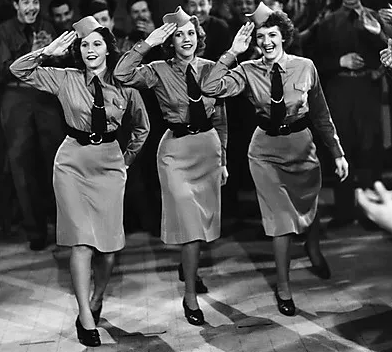
Abbott and Costello were teamed with The Andrews Sisters for the film. Patty Andrews was born on this day in 1918. The Andrews Sisters perform four songs in the film: “You’re a Lucky Fellow, Mr. Smith”, “Boogie Woogie Bugle Boy”, “Bounce Me Brother, With a Solid Four”, and “(I’ll Be With You) In Apple Blossom Time”. The composers of the first three of these songs, Don Raye amd Hughie Prince, appear in the film as new recruits alongside Abbott and Costello.
Boogie Woogie Bugle Boy is a jump-blues number about a trumpeter from Chicago who’s drafted into the army during World War II and shakes up Reveille as the Boogie Woogie Bugle Boy of Company B. Believe it or not, the song was originally intended for Lou Costello to perform. As fate would have it, the song was reworked for The Andrews Sisters, who introduced it in the film. The trio also released the tune as a single that same year, and it peaked at #6.
Fun Fact: “Boogie Woogie Bugle Boy” was nominated for an Academy Award.
Patty Andrews of The Andrews Sisters performed this with Lucille Ball, Lucie Arnaz, and Desi Arnaz Jr. on the 1969 Here’s Lucy episode “Lucy And The Andrews Sisters.”
Bette Midler brought this back to the charts in 1972 when she recorded it for her debut album, The Divine Miss M. Her version, produced by Barry Manilow, peaked at #8 on the Hot 100. It was also reached #1 on the Adult Contemporary chart. Thanks to the hit cover, The Andrews Sisters experienced a career resurgence that included a successful Broadway debut for two of the sisters, Patty and Maxene, in 1974.
In total, the Andrews Sisters have recorded at least four different versions on different labels. The Original on Decca Records in 1941, V-Disc in 1944, Capitol Records in 1956, and Dot Records in 1962.
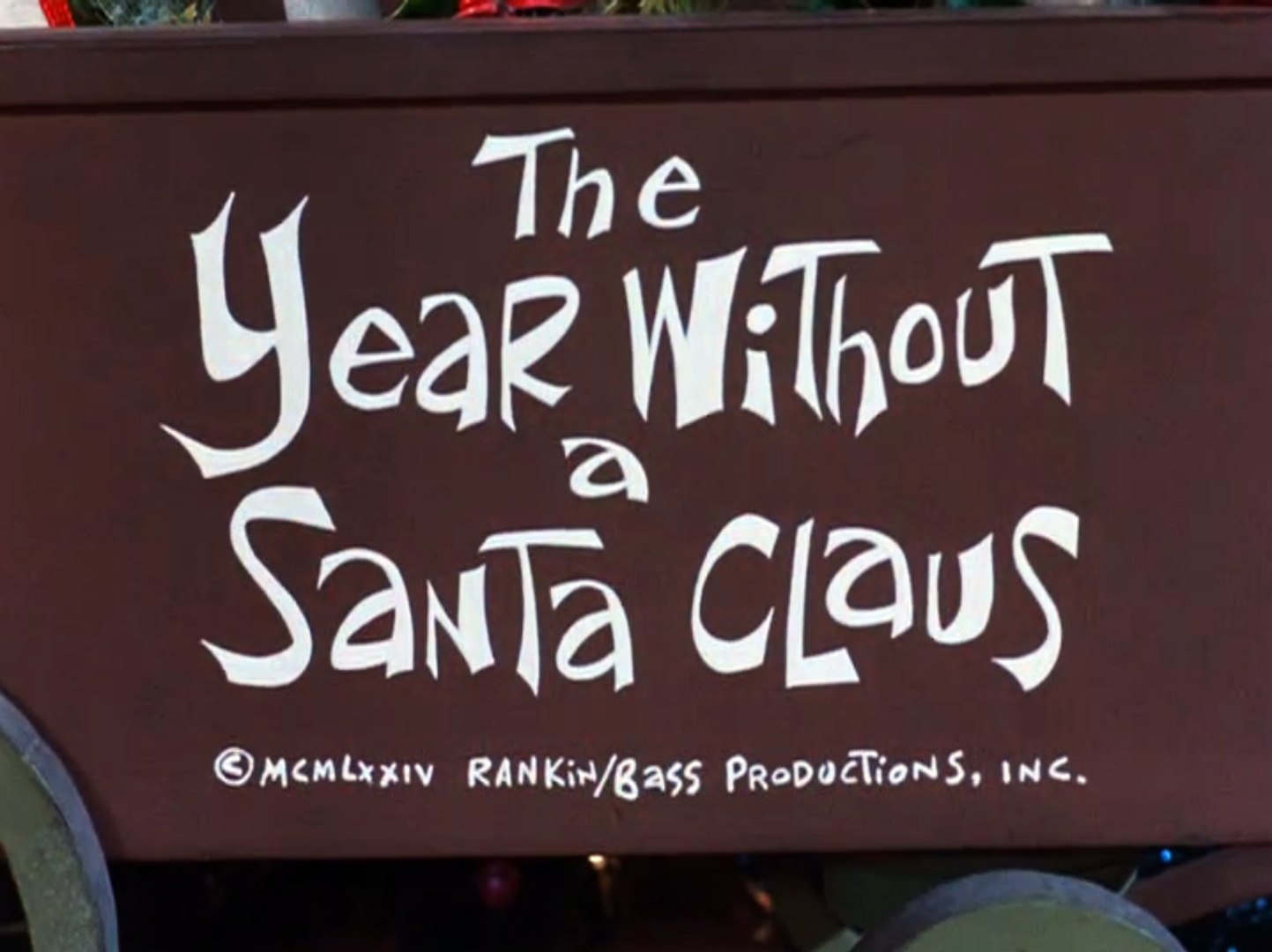
51 years ago on this day, December 10, 1974, my all time favorite Christmas special aired for the first time. Long time readers of this blog are familiar with it for sure – The Year Without a Santa Claus. Back in 2019, I wrote an entire piece on the special for a blog-a-thon. Here it is updated a bit:
Rankin and Bass Productions produced many holiday television specials. Many of these were based on songs (1964’s Rudolph the Red-Nosed Reindeer, 1968’s Little Drummer Boy, 1969’s Frosty the Snowman, and 1970’s Santa Claus is Coming to Town). Along with How the Grinch Stole Christmas and A Charlie Brown Christmas, these holiday specials were something that I (and many children) looked forward to watching every year.
So what makes these specials so special? Here are my thoughts: First of all, many of them were produced using a stop-motion animation process called “Animagic”. Animagic was used on shows like Puppetoons, Gumby, and Davey and Goliath. Compared to the advances we see in animation today, these specials shot with this primitive process still hold up and are entertaining.
Second, many are based on familiar Christmas songs. We know the songs and the stories, but the specials elaborate on them. We know the story of Frosty – but the song doesn’t mention Professor Hinkle (and we know we need his magic hat). We know the story of Rudolph – but there is no mention of Yukon Cornelius, Hermie, or Bumbles in the song (and we know Yukon saved Rudolph’s life). We know the story of Santa Claus – but the song doesn’t mention the Burgermeister Meisterburger (who is responsible for him going down chimneys) or the Winter Warlock (who gives Santa his magic snowball so he can see if you’ve been bad or good).
Next, you have the wonderful musical score and additional songs throughout the specials. Maury Laws, who sadly passed away in March of 2019 at age 95, was the music director for almost every Rankin and Bass production. He conducted and arranged so much of the wonderful music heard in these specials. Along with the title songs, who can forget “Holly Jolly Christmas”, “We Are Santa’s Elves”, “Silver and Gold”, “There’s Always Tomorrow”, “Put One Foot in Front of the Other”, “No More Toymakers to the King” and so many others?!
Finally, and maybe most importantly, the voice work of some very talented actors and actresses make the Rankin and Bass specials so very entertaining. I read somewhere that they really tried to find unique voices for their characters. They did have their own company of actors (Paul Soles, Larry Mann, Billie Richards, Paul Klingman, and Paul Frees), but they were able to get some “star power” for narrators and other characters. Think about the voices of Jimmy Durante, Jackie Vernon (who was known for his blue comedy work), Buddy Hackett, Shirley Booth, Mickey Rooney, Fred Astaire, and Burl Ives. They all had very unique voices that were perfect for these characters!
The Year Without A Santa Claus
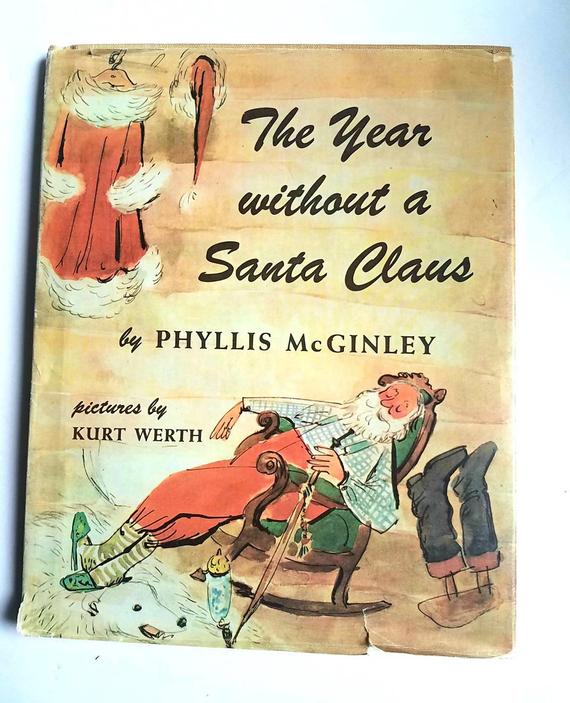
The Year Without a Santa Claus originally aired on the ABC TV Network on December 10, 1974. The story is not based on a song, but is based on a poem/book. In 1956, Good Housekeeping magazine published the poem “The Year Without a Santa Claus” which was written by Phyllis McGinley. It was so popular that it was turned into a picture book the following year with illustrations by Kurt Werth.
In 1968, 6 years before the Rankin and Bass special, just a few months before he passed Boris Karloff (who narrated How The Grinch Stole Christmas) narrated an LP record version of the story/poem that was available on Capitol Records.
The poem tells of a year where Santa decides to take a vacation because he is feeling old and worn out. As the children of the world hear of this, they become very sad and cannot imagine a Christmas without Santa. There is one boy, Ignatius Thistlewhite, who takes a stand and explains that even Santa needs a vacation. He explains that Christmas is not only about receiving, but about giving. The children of the world launch a big campaign to give back to Santa and send him gifts to show him how much they love him. He is so moved by this gesture that he decides not to take the vacation and goes out on his annual flight like every other year.
Rankin and Bass Version
(Note: Spoilers) For the most part, the special follows the poem/book, with some minor and major changes. Shirley Booth plays Mrs. Claus, who tells us the story. This would be Shirley’s last acting role, as she retired after her part was completed. Santa is played by Mickey Rooney, who also played Santa in the Rankin/Bass special Santa Claus is Coming to Town.
In the special, Santa is sick. He is advised by his overly honest and grumpy doctor to stay home. The doctor also tells him nobody care about Christmas, and that no one believes in him anymore! Santa, feeling that his doctor may be right, decides to cancel Christmas for the first time ever.
Mrs. Claus, however, feels that it wouldn’t be fair to the children, and has a plan. She sends two Christmas elves, Jingle and Jangle, along with reindeer Vixen into the world to prove that there is still Christmas Spirit and that children still believe in Santa. Jingle and Jangle provide some comic relief (I always sensed a Laurel and Hardy vibe with them). Bob McFadden voices Jingle, while Bradley Bolke (best known as Chumley in the Tennessee Tuxedo cartoons) voices Jangle.
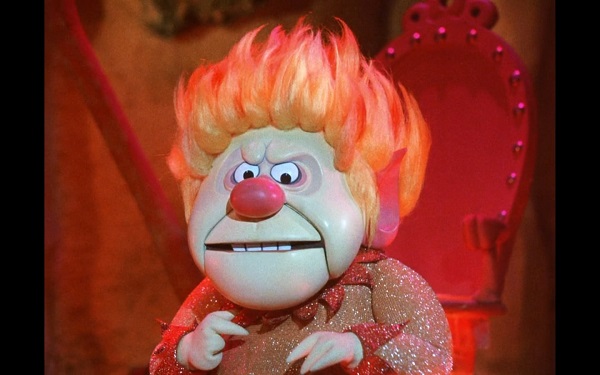
Santa knows his wife is up to something and gets her to explain just what she’s got going on. He is aghast to learn that the elves and Vixen are heading into the world. In a bit of foreshadowing, he mentioned that they’ll be lucky to make it past the Miser Brothers. The Miser Brothers are easily two of the most memorable characters ever created by Rankin and Bass, more on them shortly. As the elves fly directly into their path, the are shot down by Heat Miser (who calls them members of “the Santa Claus Gang”). Vixen and the elves narrowly escape and wind up landing in a place called Southtown USA.
While in Southtown, they find a lack of Christmas Spirit, and children (one of them Ignatius “Iggy” Thistlewhite, mentioned earlier) skeptical that Santa even exists. Things go from bad to worse in Southtown, as the elves receive a ticket and then Vixen is taken to the pound by the dog catcher (who thinks she is a dog). The elves are told by the policeman to see the mayor if they want to free Vixen.
Santa, who is now on a mission to save Vixen and the elves, has also flown down (on Dasher) to Southtown in search of them. He seems to be a step or two behind them. He runs into Iggy as he is coming home, introduces himself as “Mr. Clowze” and asks if he has seen his friends. Iggy replies that he has, but when Santa sneezes, Iggy’s mom invites him in for tea to help his cold.
While at the table, he learns that the elves were asking if he believed in Santa Claus. Iggy asks the old gent if HE believes in Santa Claus. He admits that he does in song, and we learn that Iggy’s dad actually saw Santa as boy, and he still believes. Iggy then tells Santa about the mess that the elves were in and that the dog catcher has their “dog”. Santa, worried about Vixen, jumps on his reindeer and flies away, not caring that he is in plain sight of the family. Iggy now realizes who Mr. Clowze really is and decides he is going to help Jingle and Jangle.
Santa pays a fine to the dog catcher and decides it is best to take Vixen home. Meanwhile, Iggy and the elves tell the mayor their story and the mayor laughs in disbelief. He does not believe that they are Christmas Elves, or any bit of their story!
He does, however, agree to free Vixen (and give Santa a holiday) if they can PROVE they are elves (who he says can do magic) and make it snow in Southtown, where it hasn’t snowed in over 100 years! Knowing that they are in a spot, they call Mrs. Claus to help. When she arrives, they go to see Snow Miser.
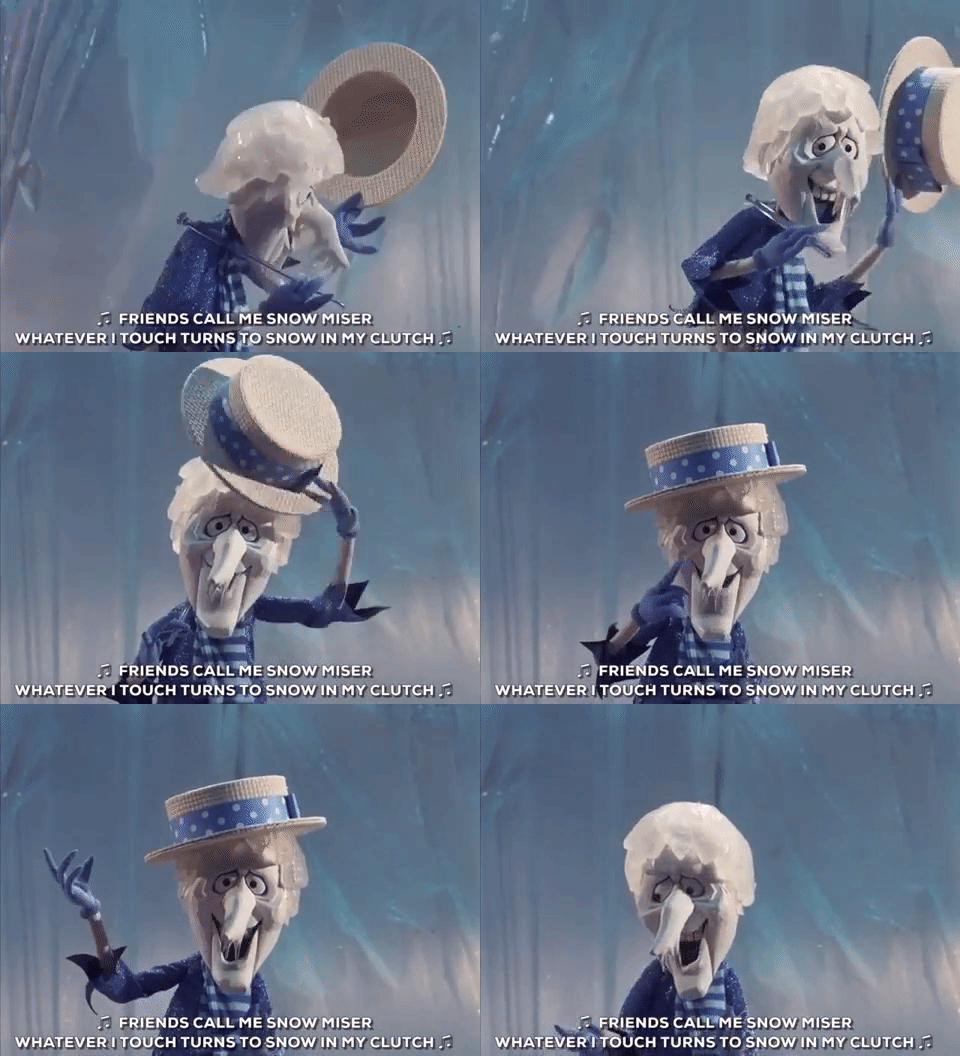
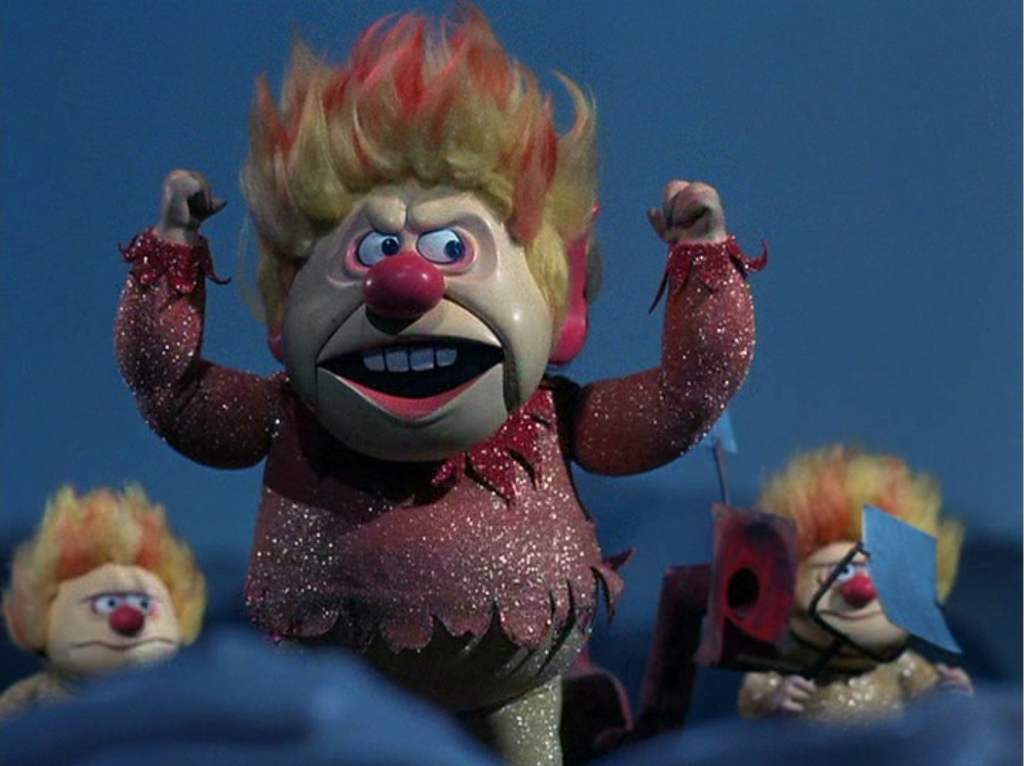
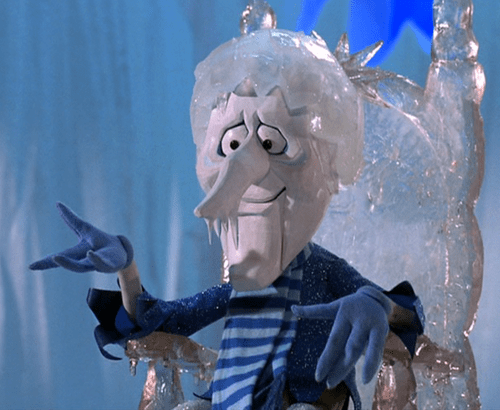
The Miser Brothers, Snow Miser and Heat Miser, are the offspring of Mother nature. Snow Miser controls all of the cold weather on the earth, while Heat Miser controls all the warm weather. There is no doubt that these two characters are the stand outs in this holiday special. The characters are larger than life. They are two step brothers, who obviously dislike and despise each other. We got a glimpse of them both early on, but now we get their official “introductions”.
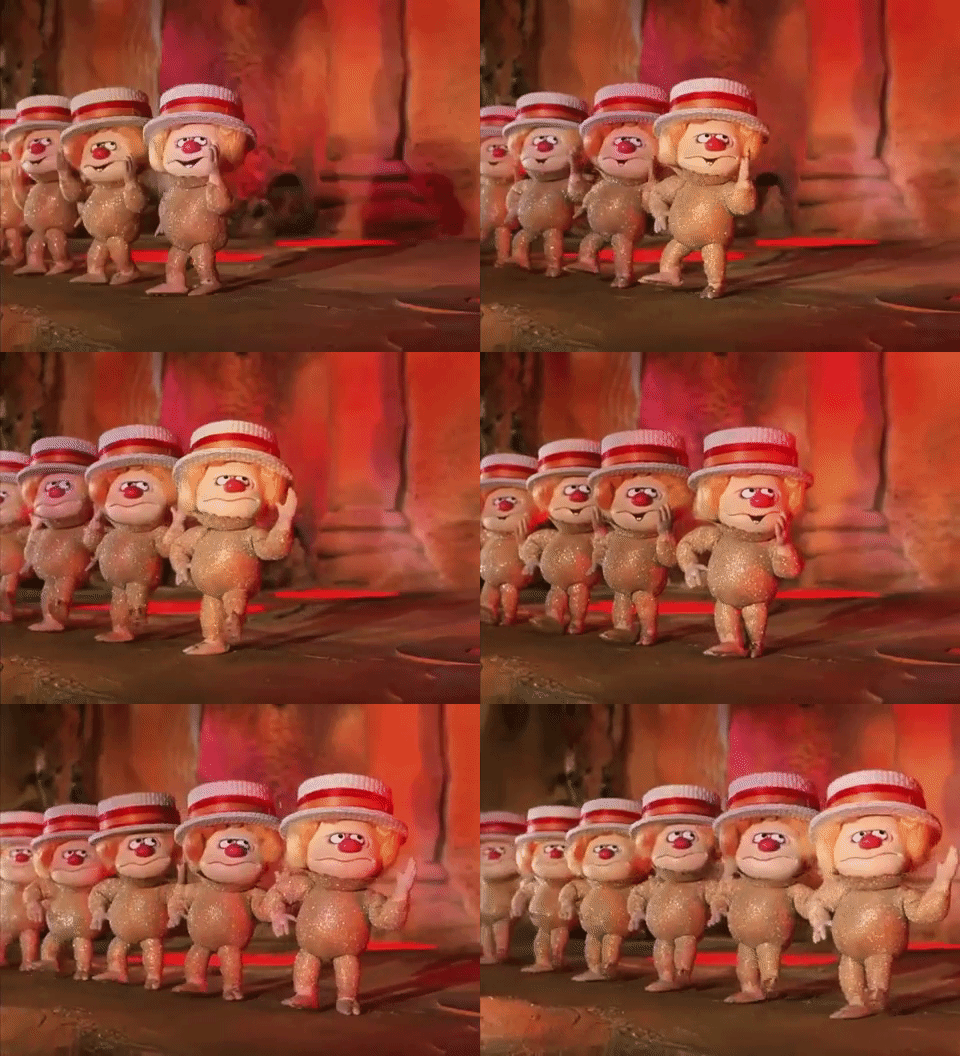
Each Miser Brother has his own introductory song, with choreography and dancing minions. Each song is a boost to their egos as they admit that they are both “too much”!
Snow Miser is voiced by the amazing Dick Shawn, while Heat Miser is voiced by George S. Irving. Both were very well known character actors and each play their roles to the utmost. Shawn’s Snow Miser is a friendly guy who is full of puns and energy, while Irving’s Heat Miser is a miserable grouch!
It would just be wrong for me NOT to post a link to their songs – which are truly the highlights of the special!
Mrs. Claus arrives and asks Snow Miser for a snow storm. He will gladly oblige! However, when he hears where they need it to snow, he tells them he cannot help because the South is under Heat Miser’s control, and they must get his permission. Upon arriving at Heat Miser’s volcano, and listening to his song, he is obviously miffed at his visitors. He even accuses Santa of going out “doing commercials” for his brother. When the ask to let it snow in Southtown, he refuses at first, but then says he will allow it to snow there if he can provide a nice sunny day at the North Pole. The two brothers bicker on the phone and Mrs. Claus stops them and says that she is going over their heads. She is taking this to their mother – Mother Nature!
Despite the fact that the brothers, the elves, and Mrs. Claus are all a bit scared of Mother nature, she is a pleasant lady. She summons her boys with thunder and lightening (very reminiscent of the old Chiffon margarine ads that featured Mother Nature). With some initial bickering, she eventually gets the boys to agree. Snow Miser will allow a nice warm day at the North Pole and Heat Miser will let it snow in the south.
Once the snow hits Southtown, the mayor finally believes Jingle and Jangle and gets on the phone with all the mayors around the world. They officially declare a national holiday for Santa. The newspapers proclaim this “Day Off For Santa!” and the word spreads from pole to pole! With this news, all of the children begin to send letters and presents to Santa to show their appreciation for him and wish him a happy holiday. Santa receives one letter from a little girl who says she’ll have a Blue Christmas without him (and the song accompanies this)…
Santa is very moved by this letter, and the outpouring of gifts and love by the children of the world. He decides that it is ridiculous for him to take the night off! Christmas is back on again! He tells the elves to load up the sleigh and his ride begins by going down “Santa Claus Lane” in Southtown, USA.
At the end of the special, Mrs. Claus reminds us that somehow, “yearly, newly, faithfully, and truly” Santa ALWAYS comes!
Final Thoughts
In 2006, NBC remade this classic into a live-action special that was a huge disappointment. In 2008, ABC Family aired “A Miser Brothers’ Christmas” which, despite having a few of the original voice actors, was also something that never achieves the magic of the original.
Had The Year Without a Santa Claus simply told the story of the poem or book, it would easily be classified as a typical and standard Christmas special. However, Rankin and Bass take it above and beyond that. They make it a truly wonderful story with great characters, wonderful voice actors, well known and original music that brings a smile to my face each and every year! When I listen to the radio and hear “You’re a Mean One, Mr. Grinch”, “Frosty the Snowman” and “Holly Jolly Christmas” from other TV specials, I find myself wondering why stations don’t take a chance and play the Miser Brothers songs? Every time I mention this special to someone – they IMMEDIATELY know them and their songs!! It’s a missed opportunity!
I can still remember the first time my brother and I sat in front of the TV to watch this. I remember over the years checking the TV guide to see if and when it would air again. When it was available on home video/DVD, I made sure I had a copy. It was one of the first specials I shared with my sons. I still tear up when Santa is reading about the little girl’s Blue Christmas. I sing along with the Miser Brothers. My heart doubles in size when Santa declares that Christmas isn’t cancelled. And every time I watch it, I am laying on the floor in front of the TV with my younger brother next to me … and I am 6 years old all over again.
Vocalist Jasper Cini was born on this day in 1927. Of course, the world knew him as the great Al Martino. He had his greatest success as a singer between the early 1950s and mid-1970s, being described as “one of the great Italian American pop crooners.”
In World War II, Al served in the US Navy. He took part in the invasion of Iwo Jima, where he was wounded. He took an interest in singing after the war and got some sage advice from a family friend. That friend was Alfredo Cocozza, who was better known as Mario Lanza. It was Mario who suggested that Jasper use the name “Al Martino.”
Al would land a deal at Capitol Records, where he would have hits with “Take My Heart,” “Rachel,” “When You Were Mine,” “I Love You Because,” “Daddy’s Little Girl,” and “Spanish Eyes.” His run of chart success began to fade after the mid-1960s, despite that many of his records continued to reach the U.S. Hot 100. So, he turned to acting.
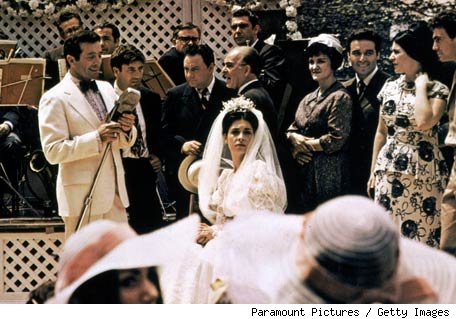
In 1972, he would play Johnny Fontane in The Godfather.
Al had been told about the character by a friend who had read Mario Puzo’s novel and felt Martino represented the character of Johnny Fontane. Martino contacted producer Albert Ruddy who initially gave him the part. When Francis Ford Coppola came on board to direct, the part was taken from him and given to Vic Damone.
Al went to Russell Bufalino, his godfather and a crime boss, who then orchestrated the publication of various news articles that claimed Coppola had been unaware of Ruddy having given Martino the part. Damone eventually dropped the role because he did not want to provoke the Bufalino family.
“The Godfather”
Al Martino, Marlon Brando
1972
** I.V.C.
In the novel, Johnny Fontane plays a much bigger part than he does in the movie. It was one story line that was stripped and edited down for the film. Al didn’t seem to mind, as he would continue to play the role of Johnny Fontane in the Godfather sequels.
The movie opens with the wedding of Don Corleone’s daughter, Connie. When Johnny shows up at the wedding, he is begged to sing. The song that he sings is the beautiful, “I Have But One Heart.” Coincidentally, the song was the first song ever released by … Vic Damone.
Welcome back to The Music of My Life, where I feature ten songs from each year of my life. In most cases, the ten songs I choose will be ones I like personally (unless I explain otherwise). The songs will be selected from Billboard’s Year-end Hot 100 Chart, Acclaimed Music, and will all be released in the featured year.
A brand new decade has dawned and I will turn 20 in 1990. It was a time of change for me, as well. I had been working at WKSG for a little over 2 years. I truly believed that I’d have that job for years, but had yet to learn how unstable radio jobs were. When I was fired, I called my old boss (now at another station in Detroit) and cried like a baby. He brought me in part time at WMXD.
As I looked through the music from 1990 and 1991, there were many songs that I played while at WMXD. When I started there, the music was a mix of Adult Contemporary and Urban songs. Eventually, they would go all Urban Contemporary and I was let go again.
One of the songs I played, I wrote about recently, but it still makes my list here. If you want to know more about Elton John’s Club at the End of the Street, you can read the earlier post here:
Next on the list is a song that was released on my 20th birthday, May 15, 1990. “Vision Of Love” was Mariah Carey’s first single. The song debuted at #73 in America, but two months later, in August, spent four weeks at the #1 spot. I remember playing this one on WMXD, as well. It was a song that really showcased her outrageous vocal range! The first time I heard her belt out that high note, I couldn’t believe it!
The original demo of the song was described as a 1950’s shuffle, but that didn’t matter. The song was good enough. Songfacts says, The original version was included on Mariah’s demo tape for Columbia. It was one of the songs that caught the ear of Tommy Mottola, her future husband and, more importantly, the head of the label’s parent company, CBS Records. At the time, Mariah was working as a backup singer for Brenda K. Starr, who invited her to a label party in Manhattan where the demo tape made its way into Mottola’s hands. After listening to the tape in his limo on the way home, he went back to the party to track down the singer. Mariah had already left and no one knew who she was. Days later, she found a message on her answering machine inviting her to sign with the label. Mottola then sent her to Los Angeles to re-record “Vision Of Love.”
Let me be honest right here. After her second album, there were not too many songs by Mariah that I cared for. I don’t know this for sure, but I feel the “business” changed her. There were a couple of songs later that were good. I felt, however, her strongest stuff was on those first two albums.
Vision of Love
The Godfather trilogy will always be my number one, but my second favorite trilogy would be Back to the Future. In 1990, Back to the Future Part III was released in theaters. I couldn’t wait to see how it all wrapped up.
ZZ Top released their Recycler album in 1990. The lead single from the album was a song from Back to the Future Part III called Doubleback. The group made a cameo appearance in the movie playing an acoustic version. That version is on the soundtrack of the movie.
Doubleback
But wait, there’s more! Consider this a Double Shot of ZZ Top. From the same album, My Head’s In Mississippi sounded like classic ZZ Top to me. I just loved the shuffle and the vocals. Billy Gibbons said:
“My buddy Walter Baldwin spoke in the most poetic way. Every sentence was a visual awakening. His dad was the editor of the Houston Post. We grew up in a neighborhood where the last thing you would say is, ‘These teenagers know what blues is.’ But our appreciation dragged us in. Years later, we were sitting in a tavern in Memphis called Sleep Out Louie’s — you could see the Mississippi River. Walter said, ‘We didn’t grow up pickin’ cotton. We weren’t field hands in Mississippi. But my head’s there.’ Our platform, in ZZ Top, was we’d be the Salvador Dalí of the Delta. It was a surrealist take. This song was not a big radio hit. But we still play it live, even if it’s just the opening bit.”
In 2008, Gibbons stated, “‘My Head’s in Mississippi,’ which was one of the first completed tracks on the album, is a great example of how we mixed the new with the old. Initially, it was a straight-ahead boogie-woogie. Then Frank stepped in and threw in those highly gated electronic drum fills, which modernized the track.”
My Head’s in Mississippi
I have never owned a pair of parachute pants. They do look comfortable, however, and it looks like you have a lot of freedom in them.
As much as I didn’t really want to include this one, I did play it a lot while DJing. It always got folks out dancing, then again, so did Super Freak by Rick James. Believe it or not, James did NOT give Hammer permission to use the song.
Songfacts explains: Rick James tried to keep rappers from sampling his music, turning down any requests. According to James, his lawyers authorized the “Super Freak” sample without his permission. He heard about it when a friend told him about “U Can’t Touch This” and the song came on the radio they were listening to in the car. James said he was irate, but somewhat appeased when he found out how much money it was making for him. Still, he claimed he wouldn’t have done the deal if he was asked.
James had another beef as well: he wanted to be listed as a songwriter on “U Can’t Touch This.” He sued MC Hammer for credit. The case was settled out of court, with James getting listed as a co-writer on the track along with Hammer and Alonzo Miller. Miller was a disc jockey who wrote some lyrics on “Super Freak.”
He recorded the song at Capitol Records, where Frank Sinatra, Nat King Cole, and Dean Martin recorded, The label ran an innovative marketing campaign to promote this song. They mailed out free cassette singles of the track to 100,000 kids. The cassettes came with a letter from Hammer asking them to call MTV and request the video. The ploy worked, and the video became the most-played of 1990 on the network.
U Can’t Touch This
I don’t remember when my ex-girlfriend had sent this song to me. It was probably after we broke up the first time. I say that because I believe that this song is what led us to getting back together eventually. I remember being pretty messed up after the break up. I did end up dating someone else.
I don’t recall how my ex and I began chatting again, but it led to her giving me this song. I really loved and cared about my ex. I broke it off with the gal I had been dating to get back together with my ex. It was really unfair to her, but I was 20, almost 21, and didn’t really know any better.
While we enjoyed some very good times the second time around, it didn’t last. She broke up with me again, which led to me always wondering what I did to cause he to leave. Anyway, I tell you all that to play Cuts Both Ways.
Cuts Both Ways
In 1967, Otis Redding wrote and recorded his version of Hard to Handle. He wrote it with Allen Jones and Al Bell and the track was produced by the legendary Steve Cropper. It was released in 1968 (after his death) as the B-side to his song “Amen.”
The song was first covered in 1968 by Patti Drew. The Black Crowes covered the song on their debut album, Shake Your Money Maker. Two versions of the song exist. First, the original album version and the hit single remixed with an overdubbed brass section. The latter is available on the 30th Anniversary edition of Shake Your Money Maker.
Songfacts says: This was The Black Crowes’ third single, following “Twice As Hard” and “Jealous Again.” It made #45 in the US in December 1990, as the group was rapidly gaining momentum. After “She Talks To Angels” hit #30 in May 1991 – over a year after the album was released – “Hard To Handle” was reissued, this time going to #26 and becoming the highest-charting single for the band on the Hot 100.
This has always been a song that I love to crank up. It’s funky and fun!
Hard To Handle
My next song is another one that I played while at WMXD. I was familiar with James Ingram before I worked there and always liked his voice. I Don’t Have The Heart was his only solo number one song. The song won him a Grammy Award for Best Male Pop Vocal Performance in 1991.
The song was written by the duo of Allan Rich and Jud Friedman. It was the first song they wrote together. Speaking about Rich’s lyrics, Friedman told Songwriting Magazine, “Allan says he’s not a poetic lyricist, and he’s not a flowery lyricist. He is very conversational, but in a good way, and that has its own poetry. It’s the poetry of reality and the poetry of life and interactions. And the thing about I Don’t Have The Heart, among many brilliant things about Allan’s idea for the song, is it’s an example of taking a phrase that’s very well known, ‘I don’t have the heart,’ and flipping it. ‘I don’t have the heart to hurt you but I don’t have the heart to love you.’ He used it in two different ways, and that was poetic. We’ve all been there, sometimes wearing one of the shoes and sometimes wearing the other.”
That was the thing that caught me, too. The flip. I love when a lyric does that.
I Don’t Have the Heart
Whitney Houston hadn’t been on the radio since 1988. While she had her fair share of uptempo songs, but I feel like radio played more of her ballads. So the first time I played I’m Your Baby Tonight, I was wowed by it.
According to Songfacts:
By the time Houston released her third album, I’m Your Baby Tonight, she was coming off of a three-year hiatus. Prior to this, she had a record-breaking string of seven consecutive #1 singles on the Billboard Hot 100. The problem was, her record label felt she was losing touch with her black audience. Houston balked at the claim, telling USA Today, “I don’t sing music thinking this is black, or this is white… I sing songs that everybody’s going to like.”
But producers L.A. Reid and Babyface agreed with the assertion. Reid told Billboard: “We wanted to come up with something that was different than anything Whitney had sung. So we approached it from that angle. We wanted to give her a new direction, and pick up where we felt she was lacking. We felt like she needed more of a black base.”
It definitely was a fresh sound for her, but I don’t know hear it as “more black” or “more white.” To me, it is just a great song!
The Julien Temple-directed music video shows Houston in the guise of different pop culture figures. They include silver screen siren Marlene Dietrich, Audrey Hepburn, and all three of The Supremes.
I’m Your Baby Tonight
Allow me just one more song from my WMXD days. Let me set this up for you. When I was at WKSG, these two sweet old ladies always called to request songs. They were sisters named Virginia and Dorothy. They always seemed to call toward the end of my overnight shift.
Virginia suffered with respiratory issues, so it took her a bit to say what she wanted. She would get a couple words out and have to take a breath. She had emphysema and really struggled to breathe.
Dorothy, on the other hand, was always on the go. She was always talking about where she was over the weekend. She was always at a party or something, even though she didn’t drive. She took a bus or Your Ride where she needed to go.
When I told them that I was leaving the station, Dorothy gave me her address to keep in touch. When I moved to Ludington, she and Virginia wrote me often. Eventually, communication was over the phone. When I moved back home, we actually ran into each other at a Weight Watchers. meeting.
I was closer to Dorothy, and she would invite me to stop by for coffee. She always had some sort of baked good ready. She was born the same day as Frank Sinatra. She was such a sweet friend. I am sure that I lost touch with her after I married my ex, and was sad to hear that she (and her sister) had passed away.
She once told me that she didn’t like all of the music we played at WMXD. One song she loved was The First Time by Surface. This song went to number one on the Billboard Hot 100. Whenever I hear it, I think about my friend and am grateful to have known her.
The First Time
Robert Palmer’s Don’t Explain album was very different. It contains 18 tracks and a variety of styles. There is R&B, Rock, Jazz, and more. It also includes some cover songs. I love the track “Top 40” because it swings a bit with a great sax line. It, however, wasn’t released as a single.
The song that is closest to what he had success with in the 80’s is You’re Amazing. I love the guitar line in the song. Billboard said, “Palmer’s reliably strong soul stylings added to headbanger guitar riffs and sweet background harmonies proves to be a quirky, but potent, combination.”
I don’t know that I would call the guitars “headbangers,” but I suppose they are a bit harder than Palmer usually presents. Now, the background harmonies – yeah, I dig those!
You’re Amazing
1990 Bonus Song
I just can’t pass up one song. It is a song that my best friend, Jeff, and I still laugh about. I can’t be sure who heard this first, but I know we laughed about it for years. The idea of taking the voice from a 1970’s instructional dance record and incorporating it into this is brilliant. The Bingo Boys did just that!
It is this vocal part from that record that makes us laugh so much. I cannot even being to picture a couple in their living room trying to learn a dance to that guy! It is so absurd that after a few of his lines, Princessa jumps in to shut him up. “Act like the end of a record and fade out …” is the lyric. I think that’s an awesome line.
The Bingo Boys were a trio from Austria. The song was actually released in the US first. It was released in the UK in 1991. It went to number one on the Hot Dance Club Play chart and reached number 25 on the Hot 100.
The song borrows heavily from a number of earlier recordings, including “Dance, Dance, Dance (Yowsah, Yowsah, Yowsah)” by Chic, “Dance (Disco Heat) by Sylvester, “Kiss” by the Art of Noise and Tom Jones, the popular James Brown “Yeah! Woo!” sample loop, the bassline motif from Mantronix’s single “Got to Have Your Love”, and a synth motif from The Whispers’ “And The Beat Goes On”. See if you can catch them all ….
How To Dance
That’s a wrap on 1990. Next week, we’ll check out 1991. That was the year I turned 21 and moved out for the first time. What kind of surprises will pop up?
Did I miss any big 1990 songs from your list?? Drop them in the comments!
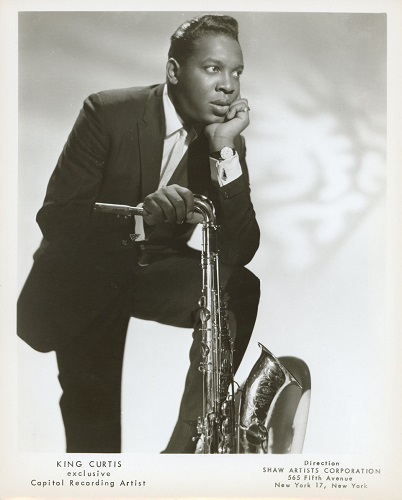
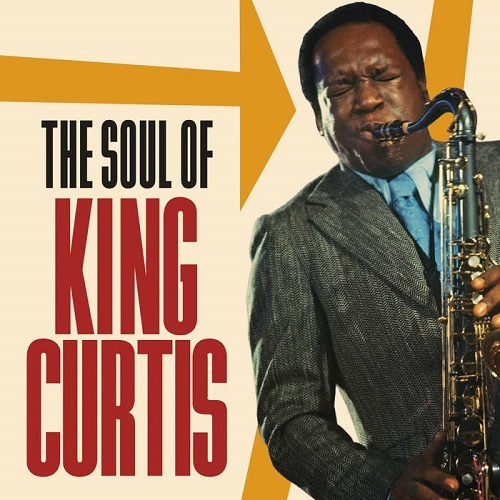
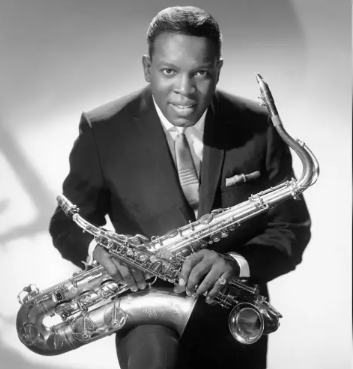
The song for today is a familiar one, despite its age. The reason I pick this one is to remember one of the greats who passed away on this day in 1971. Perhaps you don’t know him by his real name, Curtis Montgomery, or his adopted name Curtis Ousley. If you are a music lover, I would hope that you are familiar with his stage name – King Curtis. He was one of the all time great saxophonists and had quite a career.
Curtis began playing saxophone at age twelve and liked a variety of music. He turned down college scholarships to join up with the legendary Lionel Hampton band where he wrote and arranged music. In the early 1950’s he left the band to go to New York. He became an on call session musician for labels like Atco, Prestige, and Capitol Records. He recorded with Clyde McPhatter, Bobby Darin, Buddy Holly, Jimi Hendrix, Andy Williams and was on Waylon Jennings first record. He also made his own records like “Soul Twist” (with his Noble Knights) in 1962.
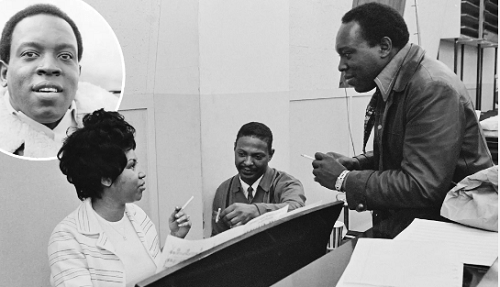
In 1967, Aretha Franklin covered Otis Redding’s Respect by flipping the gender and presenting it from the female point of view. The song featured Aretha’s sisters, Erma and Carolyn on the repeated “sock it to me” line and King Curtis on the saxophone solo.
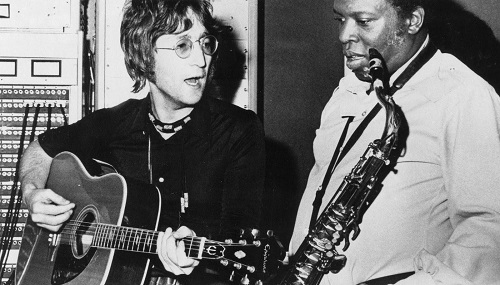
In February of 1971, John Lennon started recording tracks for his Imagine album. When Lennon, Yoko Ono and Phil Specter were mixing and finishing the album, John must have felt that he needed something more on a couple tracks. Apple’s Allen Steckler said, “John knew he wanted a sax player and it was his idea to use King Curtis. He asked me to get him. I found his agent and booked him. John played him the tracks and told him the kind of feel he wanted. He went into the studio and played his ass off. John loved it, as did Phil Spector and all of us.“
Curtis recorded his parts for the album in July of 1971. He can be heard on Lennon’s “I Don’t Want to Be a Soldier Mama” and “It’s So Hard.”
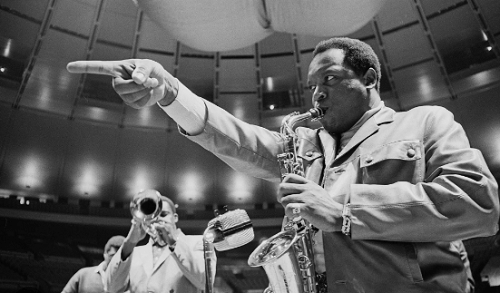
Long before all of that, Curtis decided to move towards playing rhythm and blues in part because it was a more lucrative career choice, but he also loved the music. It was in 1958 that he became widely known for his unique saxophone work when he played on The Coasters hit “Yakety Yak.” The sound that Curtis unleashed earned him some fame and influenced the sound of R&B the saxophone. He developed a strong relationship with The Coasters, becoming their go to sax man and contributing to arrangements as well on a string of hits that included “Charlie Brown,” “Along Came Jones,” “Shoppin’ For Clothes,” and more.
Saxophonist Boots Randolph was so influenced by the “Yakety Yak” solo that he altered the melody a bit and made it his own song called “Yakety Sax” (which played prominently on the Benny Hill Show). That song only further exposed the King Curtis sound.
On the night of August 12, 1971, Curtis was attempting to access the fuse box to his house (his central air conditioning system was tripping the breaker) when he confronted Juan Montanez, who was loitering on Curtis’s front steps with an unidentified female. A fight ensued and Montanez stabbed him. Curtis was found on the steps outside his apartment and was taken to New York’s Roosevelt Hospital where he died early on the morning of August 13, 1971. He was 37 years old.
So today, on the 53rd anniversary of his passing, check out the great King Curtis with the Coasters on the classic, “Yakety Yak.”
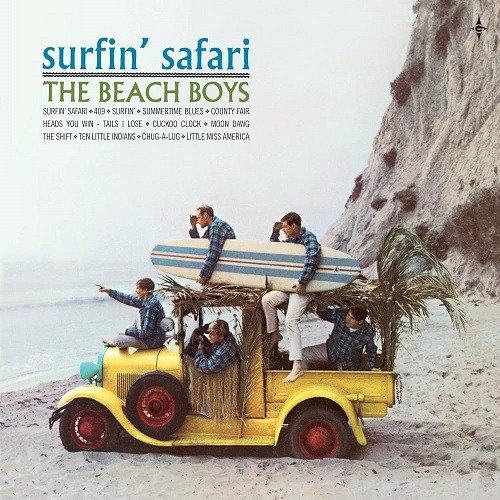
It was on this day in 1962 that Capitol Records signed one of the biggest acts of the 1960’s! The Beach Boys had been turned down by the Dot and Liberty labels, however, Capitol executive Nick Venet was sold on the group after hearing about eight bars of their song “Surfin’ Safari.”
According to Brian Wilson, the song was inspired by Chuck Berry. He referred to the song as “a silly song with a simple-but-cool C-F-G chord pattern that I came up with one day while trying to play the piano the way Chuck Berry played his guitar.”
The song was released with “409” as the B-side. Originally, Capitol Records wanted “409” to be the A-side, because it was about a car. There is a story about it actually being released as an A-side, DJ’s in Arizona started playing the B-side (Surfin’ Safari) and it becoming the hit. However, no one has ever been able to produce a copy of “409” as the A-side, so take that story with a grain of salt. In the end, it didn’t matter, because the record was considered a two-sided hit. Surfin’ Safari went to number 14 on the chart, while the flipside (“409”) charted at 76.
Many of the early Beach Boys songs were about surfing, which was their niche. Believe it or not, their first record label named the band and they were almost called The Surfers! Another little known fact: only their drummer, Dennis Wilson, was a surfer. Obviously, the guys could fake it for photos and seemed to know what they were singing about in their songs.
Surfin’ Safari
Let’s go surfin’ now Everybody’s learnin’ how Come on and safari with me (Come on and safari with)
Early in the mornin’ we’ll be startin’ out Some honeys will be comin’ along We’re loadin’ up our Woody with our boards inside And headin’ out singin’ our song
Come on, baby, wait and see (surfin’, surfin’ safari) Yes, I’m gonna take you surfin’ with me (surfin’, surfin’ safari) Come along, baby, wait and see (surfin’, surfin’ safari) Yes, I’m gonna take you surfin’ with me (surfin’, surfin’ safari)
Let’s go surfin’ now Everybody’s learnin’ how Come on and safari with me (Come on and safari with)
At Huntington and Malibu, they’re shootin’ the pier At Rincon, they’re walkin’ the nose We’re goin’ on safari to the islands this year So if you’re comin’, get ready to go
Come on, baby, wait and see (surfin’, surfin’ safari) Yes, I’m gonna take you surfin’ with me (surfin’, surfin’ safari) Come along, baby, wait and see (surfin’, surfin’ safari) Yes, I’m gonna take you surfin’ with me (surfin’, surfin’ safari)
Let’s go surfin’ now Everybody’s learnin’ how Come on and safari with me (Come on and safari with)
They’re anglin’ in Laguna in Cerro Azul They’re kickin’ out in Doheny too I tell you surfing’s mighty wild, it’s gettin’ bigger every day From Hawaii to the shores of Peru
Come on, baby, wait and see (surfin’, surfin’ safari) Yes, I’m gonna take you surfin’ with me (surfin’, surfin’ safari) Come along, baby, wait and see (surfin’, surfin’ safari) Yes, I’m gonna take you surfin’ with me (surfin’, surfin’ safari)
Let’s go surfin’ now Everybody’s learnin’ how Come on and safari with me (Come on and safari with me)
Welcome back to The Music of My Life, where I feature ten songs from each year of my life. In most cases, the ten songs I choose will be ones I like personally (unless I explain otherwise). The songs will be selected from Billboard’s Year-end Hot 100 Chart, Acclaimed Music, and will all be released in the featured year. I turned five in ’75, so let’s give a listen together…
Why not start off with a song that soared to number one? Shining Star was released by Earth, Wind and Fire in January of 1975. Maurice White was taking a late night walk while recording the album That’s the Way of the World and was inspired by the stars in the sky. He took the idea back to other members of the band and wrote the song.
The song was inducted into the Grammy Hall of Fame in 2008 and still sounds great today! One music critic called the song, “sweaty funk” … So let’s get funky!
Shining Star
Honestly, I wasn’t really into KISS when I was five. I suppose I was in my teens when I came to appreciate some of their songs. We played one or two at the first oldies station I worked at and I heard them a lot when me and my buddies would go play pool together. One that always played was Rock and Roll All Night.
Originally released on their Dresses to Kill album, the studio version only went to number 69 on the singles chart. Later, the live version would go all the way to number 12. I would guess that it has become their “theme” song. It has been the song that the group has used as a closing concert tune in almost every show since 1976.
The song was written by Paul Stanley and Gene Simmons in Los Angeles, but on January 26, 1976, Stanley told an audience at Cobo Hall in Detroit that the song was written in and for Detroit! I like that, so I’ll go with it…
Rock and Roll All Night
(Studio version)
(Live version)
Speaking of Detroit, the next song comes from hometown hero Bob Seger. Bob released his Beautiful Loser album in ’75 and Katmandu was a cut from it. Katmandu wasn’t a huge hit, but it has always been one of my favorite Seger tunes. It was later featured on his Live Bullet album.
Seger says that the song was written at a time in his life where he wasn’t sure if he was going to make it. He said, “It’s an exasperated song. It’s like: ‘I’m never gonna make it, I’m just gonna go to Katmandu.'”
He says that Glenn Frey and Don Henley pulled him aside and “told me that the Beautiful Loser album was the first little step in the right direction for me. Then the next step after that was Live Bullet, which was a huge step. And the next step was Night Moves, which was an even huger step. By 1980 both records were at six million, and they kept selling continuously. Beautiful Loser was a transitional album, and in the song “Katmandu” I still had some of that defeatist mentality and you can hear it in there.”
Katmandu
The next song was released one day before my fifth birthday. Low Rider appeared on War’s Why Can’t We Be Friends album.
From song facts.com:
The group’s sax player, Charles Miller, came up with the idea for the song. Harold Brown told Songfacts: “What happened on ‘Low Rider’ was in the studio, we were jamming, and I was supposed to have been on the downbeat. But all of the sudden I was on the upbeat. And I said, ‘Oh, boy. I got the beat turned around.’ I didn’t panic. I said, ‘Wait a minute. Stay there. Don’t change it. Stay.’ Because as long as you keep doing it over and over and over, it won’t be a mistake.
We were just messing around, you know. Then the next thing I know, Charles started just singing, ‘Low ri-der drives a little slower. The low…’ he was just pumping it. And then the next thing I know Lee’s over there putting that harmonica on, because Lee is a melody man all the time. And then – boom.
If you’d hear the original version of it, all with that jam, that would be worth a million right there. When we finished it, all of us looked at it, ‘That’s a hit.’ We didn’t know that it was going to be an icon.
Low Rider
In June of ’75, Bad Company released a classic. Did you know that Feel Like Makin’ Love is actually a combination of two separate songs?
Several years after Paul Rodgers wrote the song, he played it to Bad Company guitarist Mick Ralphs, who came up with some big chords for the chorus. Ralphs recalled:
“I came up with the riff, and I suggested we put the two together to create a song. I think that’s the feel of the song, the verses are very appealing to the ladies, probably more than the men; and then the riff comes in which is all bloody macho. It’s a big chorus and it worked out really well.”
It reached number 10 on the Hot 100 Chart.
Feel Like Makin’ Love
Despite being a song of their second album, Orleans scored their first Top 40 hit with “Dance With Me.” The song was released in July of ’75. It was written by group member John Hall and his then wife Johanna. John told Songfacts.com:
“I started playing it on acoustic guitar and developed it, just jamming by myself in the living room. The whole song – the verses, the bridge, the ending – was all complete coming out of my acoustic guitar. Johanna yelled from the other room, ‘That sounds like ‘Dance With Me.” And I went, ‘Can’t we come up with something a little bit more unusual than that?” And she said, “I don’t know, it really sounds like ‘Dance With Me.”
She couldn’t get past that and I couldn’t get past that any further, so I played the instrumental version for Larry Hoppen and he said, ‘Boy, you really need to finish that, that sounds like a hit song.’
So coming back from a show in Ithaca, New York, on the western part of the state, through the Woodstock area again, Johanna and I were riding in the car, and suddenly she says, ‘Pick the beat up and kick your feet up.’ She starts scribbling on another one of those envelopes, and by the time we got home, we had kicked the ideas back and forth and finished the lyric.
I love the guitar work and harmonies in it.
Dance With Me
I was probably about 4 years away from my introduction to Willie Nelson in 1975. When I was finally introduced to him, it was thanks to my dad and my grandfather. They had a cassette of Willie’s Stardust album and they played the heck out of it. It drove us kids crazy! After my grandfather passed away in 1981, I began to listen to more and more from Willie and came to really love his music.
Willie is a fantastic song writer, having written hits like “Crazy,” “Hello Walls,” and so many others, but he did NOT write Blue Eyes Crying in the Rain. It was written by Fred Rose in the late 1940’s. It was recorded by Roy Acuff, Hank Williams Sr., Ferlin Husky, Bill Anderson and Conway Twitty all before Willie recorded it in 1975 for his Red-Headed Stranger album.
In October 1975, the song became Willie’s first Number 1 hit as a singer, and at year’s end, was the third-biggest song of 1975 on the Billboard Hot Country Singles chart. It got Top 40 airplay, too, reaching number 21 on the Hot 100 Chart. At the 18th Annual Grammy Awards, the song won Willie a Grammy for Best Male Country Vocal Performance.
Fun (but sad) Fact: Elvis Presley recorded a version of the song in the Jungle Room at Graceland in 1976. The song would be the last one he played before he died. In the early morning of August 16, 1977, he played it on his piano in Graceland. Later that day, he died.
Blue Eyes Crying In The Rain
Earlier I mentioned playing pool with some my friends in my teens and many of the songs I mention will be ones that played on the jukebox while we were there. One of those songs was Tush by ZZ Top. Before the song’s release in 1975, they were well known in Texas, but Tush became their first nationwide hit.
According to Dusty Hill, the song was written in under ten minutes during a soundcheck in Alabama. Billy Gibbons said “We were in Florence, Alabama, playing in a rodeo arena with a dirt floor. We decided to play a bit in the afternoon. I hit that opening lick, and Dave Blayney, our lighting director, gave us the hand [twirls a finger in the air]: ‘Keep it going.’ I leaned over to Dusty and said, ‘Call it ‘Tush.’
So what does it mean? In a 1985 interview with Spin magazine, bass player Dusty Hill explained: “Tush, where I grew up, had two meanings. It meant what it means in New York. Tush is also like plush, very lavish, very luxurious. So it depended on how you used it. If somebody said, “That’s a tush car,’ you knew they weren’t talking about the rear and of the car. That’s like saying, ‘That’s a cherry short.’ But tush as in ‘That’s a nice tush on that girl,’ that’s definitely the same as the Yiddish word. I don’t know how we got it in Dallas. All it could have took was one guy moving down from New York.”
Tush
The next song is one that comes from my family’s infamous red 8 track tape. It was one of the first things I blogged about when I started this site. You can read that blog here:
Songfacts.com says: In the DVD Hell Freezes Over, the Eagles discussed this song’s origins. When they were a struggling band in Los Angeles, they saw a lot of beautiful women around Hollywood who were married to wealthy, successful men, and wondered if they were unhappy. One night they were drinking in a bar (their favorite watering hole: Dan Tana’s) when they spotted this stunning young woman; two steps behind her was a much older, fat, rich guy. As they were half laughing at them, Glenn Frey commented, “Look at her, she can’t even hide those lyin eyes!”
Realizing they had a song title, the band members began grabbing for cocktail napkins to write down lyrics to go with that great observation.
The song reached number 2 on the Hot 100 Chart.
Lyin’ Eyes
In 1975, Capitol Records couldn’t seem to make up their mind about which song to release first from Linda Ronstadt’s Heart Like a Wheel album. It was a toss up between You’re No Good and When Will I Be Loved and the prior won out. Linda’s Everly Brothers cover would be the second single, released in March of ’75.
Both the Everly’s and Linda had top ten hits with the song, but Linda’s went to number 2 while the Everly Bros peaked at number 8. Linda’s version also went to number 1 on the country chart. Singing with Linda on this single are Kenny Edwards (from her band the Stone Poneys) and Andrew Gold (Who later had success with Thank You For Being a Friend). I absolutely love the harmonies on this one.
And there are my picks for 1975! What did I miss?
Next week, I’m sure there will be a shiny disco ball hanging over the dance floor as we head to 1976! See you then.
I realize that I have spent a lot of time writing about books lately. I also realized that it has been a while since I posted a song for Tune Tuesday. I heard one on the way into work today that remains one of my favorites.
When I Fall In Love
The song itself was written by Victor Young (who wrote the music) and Edward Heyman (who wrote the lyrics) in 1952. It was first recorded by the lovely Jeri Southern. Victor Young and his orchestra accompanied her on her version.
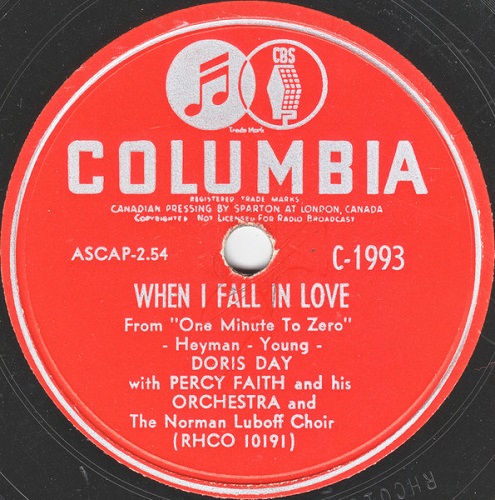
Doris Day’s version became the movie theme from One Minute to Zero (also 1952) and became the first “hit” version.
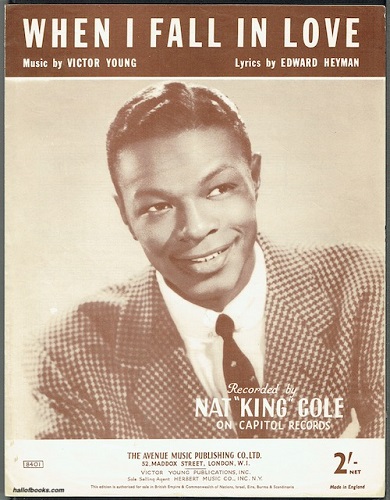
I was most familiar with Nat King Cole’s Version of the song. He released it on Capitol Records and his vocal is amazing. That version was the love theme for the 1957 movie Istanbul. Nat’s daughter Natalie recorded it twice – in 1987 and in 1996, the later version being a duet with her father.
It is a song that has been recorded by just about everyone. Celine Dion, Michael Buble’ Linda Ronstadt, Johnny Mathis, Etta James, Rick Astley, and Donny Osmond are just a few of the many who have recorded the song. The song itself stands out as an amazing piece of music, and I can’t think of a bad version of it. However, the version I want to feature today comes from the early 60’s.
In 1961, the song was recorded by The Letterman. These guys were one of the most popular vocal groups of their day. The group was formed in Las Vegas, Nevada, in the late 50’s. Anyone who reads my blog knows that I love good harmony, and their music features amazing harmony and beautiful arrangements. They were an unknown group of guys until they signed with Capitol Records in 1961. At the time the group members were Jim Pike, Tony Butala, and Bob Engemann. Their first single for Capitol was a song that is forever connected with Frank Sinatra – “The Way You Look Tonight.” Their version of the song went to #13 on the Billboard Hot 100. However, they struck gold and a top 10 record with their follow-up single – “When I Fall in Love.” Their version went to #7 on the Billboard hot 100 and #1 on the Billboard Easy Listening Chart in late 1962.
Give this beautiful arrangement a listen and enjoy one of the classic love songs!
When I fall in love, it will be forever Or I’ll never fall in love
In a restless world like this is Love is ended before it’s begun And too many moonlight kisses Seem to cool in the warmth of the sun
When I give my heart, it will be completely Or I’ll never give my heart
And the moment I can feel that You feel that way too Is when I fall in love When I fall in love with you
The group’s members have changed over the years, but as far as I know, they still tour together. As a bonus, check out this clip from a talk show where each of them sing their part and then put it all together. It’s kind of neat to hear.















 Various Ramblings of a Nostalgic Italian