
This is sort of a continuation of the Music of My Life feature. It focused on music from 1970-2025. It featured tunes that have special meaning to me, brought back a certain memory or a tune that I just really like. I found that with the first three decades, there were songs that I didn’t feature. So I sat down with my original lists and selected some songs that “bubbled under,” so to speak.
I figured a good way to present them was to focus on a decade. 10 years = 1 song per year = 10 songs. Last week finished up the 70’s, and this week we’ll move on to the 80’s. So, let’s check out a few “Decade Extras.”
1980
Let’s kick off the decade with a country/pop crossover. Back when we first got cable TV, the movie channels would run movies a lot. They would schedule it in the morning, afternoon, evening, and overnight kind of rotating them so people had options on what time worked best. I remember 9 to 5 being on all the time. My mom always seemed to be watching it if it was on. I’m pretty sure she had them theme song memorized.
Dolly Parton wrote (and sang) this for the 1980 film of the same name. The film, which was her acting debut, stars Jane Fonda, Lily Tomlin, Parton, and Dabney Coleman. It dealt with life in an American office, where the workday was 9 a.m. to 5 p.m. She wrote the song while the movie was filming.
This song won the 1981 Grammys for Best Country Song and Best Country Vocal Performance, Female; it also received a Grammy nomination for Best Album Of Original Score Written For A Motion Picture Or Television Special and received Oscar and Golden Globe nominations. It also won the People’s Choice Award for Favorite Motion Picture Song.
Mojo magazine asked her what lyric she’s most proud of, Dolly Parton said: “One that I remember the very moment I wrote when I was working on ‘9 to 5,’ was ‘Pour myself a cup of ambition.’ I went, ‘Yeah that’s so good.’ That has really followed me oh through the years.”
She wrote the lyric in LA. “I would watch things going on, on the set,” she recalled to Mojo. “At night, I would go back to the hotel Bel-Air. I would get my guitar, and I would start putting pieces together. I would work on songs, clicking my nails on a typewriter.”
“I had just made myself some coffee, because I was going to spend two or three hours working on the song,” Parton continued. “I always drink coffee when I write. And I just remember saying, ‘Tumble out of bed, and stumble to the kitchen.’ What else you doing? I looked at my coffee cup and thought, ‘I pour myself a cup of ambition.'”
“Sometimes when those lines come, you just think, ‘Oh my goodness that is so good. I’m so proud of myself,” she concluded. “And then of course, many things spiritual based, I always look up and say, ‘Hey, thank you, Lord. I like that one.'”
As old as the song is, it still sounds good today.
9 to 5
1981
There are a handful of songs that “define” the 80’s for me. Your handful may or may not be different from mine. One of the greats that always seems to pop up on 80’s collections and as a “favorite” 80’s song was a phone number that everyone knows!
The opening guitar lick grabs your attention and that drum kick into the full band hooks you. This ode to a gal who doesn’t even know the singer soared up the charts to become a Top 5 single.
For years, Tommy Tutone (who isn’t the name of a person, just the name of the group) has used a story that there was a Jenny and she ran a recording studio. They have also said it was inspired by a real girl who band member Tommy Heath met in a nightclub and 867-5309 was the phone number of her parents. None of this is true, but it got them a lot more media attention, since it made a better story.
Alex Call, the songwriter, came up with it while sitting under a plum tree. He told Songfacts the story: “Despite all the mythology to the contrary, I actually just came up with the ‘Jenny,’ and the telephone number and the music and all that just sitting in my backyard. There was no Jenny. I don’t know where the number came from, I was just trying to write a 4-chord rock song and it just kind of came out.
This was back in 1981 when I wrote it, and I had at the time a little squirrel-powered 4-track in this industrial yard in California, and I went up there and made a tape of it. I had the guitar lick, I had the name and number, but I didn’t know what the song was about. This buddy of mine, Jim Keller, who’s the co-writer, was the lead guitar player in Tommy Tutone. He stopped by that afternoon and he said, ‘Al, it’s a girl’s number on a bathroom wall,’ and we had a good laugh. I said, ‘That’s exactly right, that’s exactly what it is.’
The rest is history.
867-5309
1982
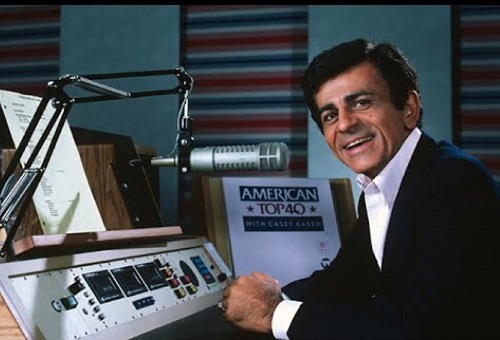
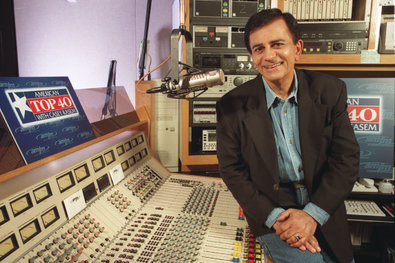
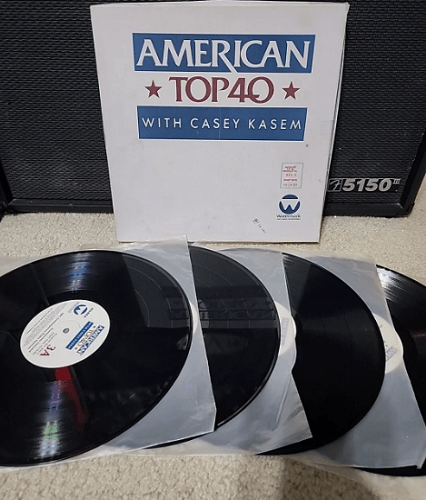
I heard Foreigner for the first time while listening to Casey Kasem on American Top 40. I really liked their sound. Lou Gramm’s voice really stood out for me.
Juke Box Hero was a song that was in a good rotation when I was at the classic rock station. It has become a staple on classic rock playlists. The story behind the song is one that I love:
This song was written by Foreigner guitarist Mick Jones and lead singer Lou Gramm. In a Songfacts interview, Jones said: “That stemmed from an experience that we had, I think it was in Cincinnati. We’d gone to the arena for a sound check, and it was pouring down rain, and there were a bunch of fans waiting at the door when we went in. When we came back for the show later on, all that was left was one lonely fan, a young guy waiting out there in the rain, soaked to the skin. I thought, well, he’s waiting like five hours here, maybe we’ll take him in and give him a glimpse of what happens backstage at a show. And this kid was just mesmerized with everything. I saw this look in his eyes, and I thought, he’s seeing this for the first time, he’s having this experience. And I just imagined what was going through his mind. And I’d been toying with this title, ‘Juke Box Hero,’ I thought it was almost a satire on what we did and how it was perceived from an audience level, and public. That’s how it originated.”
How cool was that kid’s experience?! Kudos to the band for making this happen. As a bonus, they got a hit song out of it!
Jukebox Hero
1983
I was late to the Stevie Ray Vaughn party. Very late. I didn’t hear one of his songs until after his death. I had gotten together with a buddy I hadn’t seen in a while. He popped in a cassette of Stevie. I was blown away on so many levels. His voice, his playing … I’d never heard anything like it.
After a 1982 performance, Stevie and the Double Trouble band got the attention of Jackson Brown. He told the guys that they could use his personal studio to record a demo. They did just that over Thanksgiving weekend 1982. That demo was heard by a talent scout, who presented it to Epic Records, who signed Vaughn to a record deal. Epic remixed the demo, which would become his first album, Texas Flood.
While the song received heavy airplay, it didn’t get any love from the charts. The music video, the only one from this album, got heavy rotation on MTV in 1983. What he could have done if he was still around, one can only guess.
Love Struck Baby
1984
Marching band was one of my favorite things about high school. At football games and pep assemblies, we’d often play songs that were familiar to us. We Got The Beat was one they were still playing long after I graduated. Neutron Dance from the Pointer Sisters was one of those “pep songs.”
Allee Willis (who wrote Earth, Wind & Fire’s hits “September” and “Boogie Wonderland,” wrote the lyrics for this song. She sums up the song, saying: “That’s basically: if your life isn’t working, get up off your ass and change it. Because it’s really up to you.”
Fun Fact: This song was released at the high of the Cold War when there was a great deal of tension between the United States and Russia, as both had nuclear missiles aimed at each other. Willis Says: “The Russian government named me as one of the most dangerous people living in the United States, because they mis-translated it as ‘Neutron Bomb.’ The first verse they translated as ‘A powerful nuclear explosion is approaching, it will annihilate everyone; who cares if you have no car, no job, no money, just dance, dance, dance.’ And this was a huge article in Pravda, and I was supposed to be going to Russia with BMI, and I wasn’t let in the country. I mean, it was nuts.”
The song was featured in the film Beverly Hills Cop and the video includes scenes from the movie.
Neutron Dance
1985
Next is a song that I almost always played at weddings. If it wasn’t the bride and groom’s wedding song, it was one of the slow songs that packed the dance floor. The Search is Over by Survivor started as a title that was scribbled in Jim Peterik’s notebook.
He said, “It wasn’t about my life as much as a friend of mine who had a girlfriend – really a play pal throughout their growing up years – and never thought it could be anything more than that. It was looking him straight in the face that this was the girl of his destiny, and he looked everywhere to find that dream girl only to come back to the sandbox. This couple is still married and going strong. It became kind of an allegory to looking for what is obvious; having it in your hand and you being too close to even realize it.”
He told Songfacts, “Mechanically, the whole thing kind of started in my head driving down the street. I turned on my tape recorder and I sang the whole melody top to bottom into my tape recorder. The way it modulated into the chorus was very unique. When I got to the piano a few hours later, I had to find out where it was going and what it was. I brought it to rehearsal, showed it to the guys and worked with Frank (Sullivan) one on one on the song – he loved it. It was called The Search Is Over, but I still didn’t know exactly what the hook of the song was going to be. I thought of this couple, and when we came up with the line, ‘Then I touched your hand, I could hear you whisper, the search is over, love was right before my eyes,’ we looked at each other’s arms and we both had goose bumps. It was the magical turn of that phrase and realizing what this song was about. I think we discovered the song as we were writing it.”
It’s a beautiful song.
The Search Is Over
1986
I had heard Land of Confusion by Genesis on the radio long before I saw the video. It was odd to hear a “political” song from them. When I saw the video, I remember thinking that those puppets were a bit scary, not to mention ugly.
Songfacts says, “The very popular video was made using puppets created by Peter Fluck and Roger Law, who had a British TV series called The Spitting Image. The show would often make fun of Genesis, and by hiring their tormentors, the band proved that they could take a joke.
Genesis puppets had been used on the show before, but they made new ones for the video – not very flattering ones either. It was a way for the band to lighten their image from their days as earnest prog rockers. The video could go in the Cold War cultural time capsule: at the end, the Ronald Reagan puppet accidentally launches a nuclear missile.”
I guess the puppets didn’t freak everyone out, though. The video won the 1987 Grammy for Best Concept Music Video – it was the only Grammy Genesis ever won, and they weren’t even in the clip. At the MTV Video Music Awards, the video was nominated in six categories, but lost them all to Peter Gabriel’s “Sledgehammer.”
Land of Confusion
1987
The song Hot Hot Hot was first released by the group Arrow in 1982. Many cover songs followed, but the most recognizable was done by Buster Poindexter (aka David Johansen). It garnered extensive airplay through radio, MTV, and other television appearances.
For many years, people would request this at weddings and parties so they could do a conga line. It was a pretty popular tune . One venue would bring out their roast beef, which they would light on fire, and wanted us to play the song when they did it.
Over time, I was easily burned out on the song.
Hot Hot Hot
1988
I think every friend of mine had a copy of the Cocktail soundtrack in 1988. The Tom Cruise movie was what all the girls seemed to be talking about. I had been getting requests for Kokomo by the Beach Boys and it was the only place I could find it.
Mike Love of the Beach boys explained to Ssongfacts how it came together: “Terry (Melcher) was in the studio doing a track with a demo, because we were asked to do the song for the soundtrack of the movie Cocktail, featuring Tom Cruise. So we were asked by the director to come up with a song for this part of the movie where Tom Cruise goes from a bartender in New York to Jamaica. So that’s where I came up with the ‘Aruba, Jamaica’ idea, that part.
So Terry was in the studio doing the track and they didn’t have the chorus yet. They just had a certain amount of bars, but there was nothing going on there. I said, ‘Well, here’s what I want to do.’ And I remember I had told them about the part before. But he said, ‘Uh huh. How does it go again?’ So I literally, over the phone – he was in the studio and I was on the phone – sang [deadpan slow recitation]: ‘Aruba, Jamaica, ooo, I want to take you.’ So he’s writing that down, and I’m singing it in the scene, the notes, and the timing of it in tempo to the track.”
Regarding the composition of the song, Mike said: “The verses and the verse lyric was written by John Phillips of the Mamas and the Papas. He wrote ‘Off the Florida keys, there’s a place called Kokomo, that’s where we used to go to get away from it all.’ I said, ‘Hold on. We used to go sounds like an old guy lamenting his misspent youth.’ So I just changed the tense there. ‘That’s where you want to go to get away from it all.’ So that was the verse. And it was very lovely. But it didn’t have such a groove, I didn’t feel.
So I came up with the chorus part: ‘Aruba, Jamaica, ooo, I want to take you to Bermuda, Bahama, come on, pretty mama. Key Largo, Montego…’ That’s me, the chorus and the words to the chorus was Mike Love. The verse was John Phillips. The bridge, where it goes, ‘Ooo, I want to take you down to Kokomo, we’ll get there fast and we can take it slow. That’s where you want to go, down to Kokomo,’ that’s Terry Melcher. Terry Melcher produced the Byrds and Paul Revere & the Raiders, very successful producer. But he actually produced that song and he wrote that bridge part, which Carl Wilson sang beautifully. And I sang the rest of it. I sang the chorus and the verses on that particular song.
Before “Kokomo,” the last US #1 for The Beach Boys was “Good Vibrations in 1966. At 22 years, it was the longest any act had gone between US #1 hits until Cher topped the charts with “Believe” in 1999. Her previous #1 hit was “Dark Lady” in 1974, setting the new record at 25 years.
Kokomo
1989
When you think about “Super Groups,” a few come to mind: The Traveling Wilburys, Audioslave, Cream, Blind Faith, and Crosby, Stills, Nash, and Young for example. In 1989, there was another super group who had a monster hit.
Songfacts explains: Bad English was a supergroup comprised of lead singer John Waite, keyboard player Jonathan Cain, bass player Ricky Phillips, guitarist Neal Schon and drummer Deen Castronovo. Waite, Cain and Phillips had been in a popular British band called the Babys, while Schon, Castronovo and Cain were in Journey (Cain was in both groups). It was quite an assemblage of musical talent, and between them they wrote 11 of the 13 songs on their self-titled debut album. “When I See You Smile” wasn’t one of them.
The song was written by Diane Warren, who had a knack for supplying popular rock musicians with pop hits: she wrote “Nothing’s Gonna Stop Us Now” for Starship, “Who Will You Run To” for Heart, and “I Don’t Want To Miss a Thing” for Aerosmith. She had also written the song “Don’t Lose Any Sleep,” which appeared on Waite’s 1987 solo album Rover’s Return.
The band was signed to Epic Records, whose A&R man Don Grierson implored them to record a hit. They liked him, so when he suggested “When I See You Smile,” the band agreed to record it, since they knew it would supply Grierson with his hit.
This is by far the biggest hit for Bad English, but it’s not their only one. Their first single was “Forget Me Not,” which made #45 in the US. “When I See You Smile” was their next release, and “Price of Love” came next, charting at #5. They released one more album (Backlash, 1991) before terminating the project.
John Waite told Songfacts, “It was fun for a year. And then people reverted to type. I think the Journey guys wanted to be back in Journey and I wanted to be back solo. We had a very valiant attempt at making a (third) record, but we weren’t given enough time to write it. We tried, and we almost made it.”
It was (and still is) a great slow dance song!
When I See You Smile
So there you have it, a peak into some tunes that did not make my original list. If you’re an 80’s fan, we’ll visit the decade one more time next week before moving on to the 1990’s.
Thanks for listening and for reading!
























 Various Ramblings of a Nostalgic Italian