Turntable Talk #47 – Baby Come Back!

This piece was originally published on the A Sound Day website as a part of the feature: Turntable Talk.

My thanks to Dave from A Sound Day for inviting me to take part in his monthly feature, Turntable Talk. This is the 47th round of the feature and once again he has given us a great topic. This time around he is calling it “Baby Come Back!”

Dave’s instructions this month: “I’d just like you to pick an artist you enjoy that had a great comeback; whether it’s one you have come across historically or one that you loved in real time, thought had disappeared but happily – boing! – they were back and great again.

When Dave reached out to us, I had just written about the passing of Neil Sedaka. He certainly falls into this category. I didn’t want to feel repetitive, so I opted not to write about him again. Instead, I chose someone who I have written about a few times and definitely saw his career take off – stall – and then have a resurgence. Today, I shift the spotlight to “The Big O,” Roy Orbison.
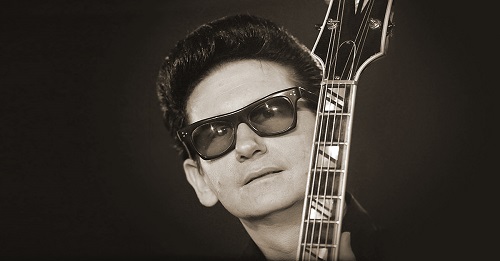
Roy Orbison is a rock and roll legend.  I refuse to debate this.  It is a fact.  The Beatles and Elvis Presley (both legends in their own right) have stated on record that Roy was a major influence on their music.  Roy’s music was different – it had its own style and a certain darkness to it.  My first exposure to Roy Orbison was when I was about 4 or 5 years old.

I distinctively remember my dad having an album of Roy’s Greatest Hits.  My favorite song as a kid was Dream Baby.  I didn’t know that was the name of it at the time.  I do know, however, that when I asked him to play it, I would ask for it by singing the opening bass line: “Daddy, play ‘boom boom boom, bum bum boom.’”  I remember the first song on the album was Candy Man, which started with a harmonica.  Coincidentally, that is the instrument Roy asked his parents for as a kid.

When asked he wanted for his sixth birthday, Roy told his parents he wanted a harmonica.  Luckily for the music industry, his father bought him a guitar instead.  While some stories differ, most biographies claim that Roy learned how to play from his father Orbie Lee Orbison.  Some sources say that he learned from his Uncle Charlie, Orbie’s brother. Either way, he was taught how to play by family.

After graduating from high school in 1954, Roy enrolled at North Texas State College. His original plan was to study geology so he could secure work in the oil fields if music didn’t pan out. In his first year, he became bored with the course and switched to history and English.

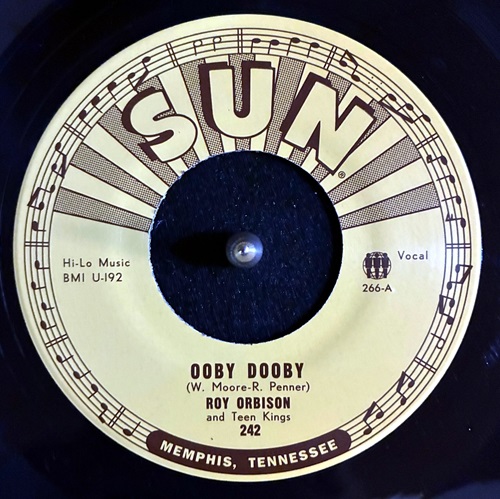
While in college, Roy played music with fellow students Billy Pat Ellis, Dick Penner, and Wade Moore. They called themselves the Wink Westerners. Penner and Moore had written a simple, catchy rockabilly song, called “Ooby Dooby.” The song impressed Orbison, and he started looking into how he could make a recording of it. He heard that his schoolmate Pat Boon had been signed to a record deal, and it further strengthened his resolve to become a professional musician.  

While playing a New Year’s Eve dance in 1954, Roy and the Wink Westerners had mostly played country and western swing music throughout the night. A decision was made to end the night by playing Bill Haley & The Comets’ song, “Shake, Rattle and Roll.” This would be the thing that caused the band to switch to rock and roll music.

The band began playing “Ooby Dooby” in their shows and because of their success, they got their own radio show on station KMID. In 1955, the band got their own TV show and artists came to play and sing on it.  Among them, Elvis Presley and Johnny Cash.

Roy pulled Johnny aside and asked for advice.  He wanted to know how to get a record released on the radio.  Johnny suggested that he call Sam Phillips over at Sun Records in Memphis.  Johnny gave Roy the number and sure enough Roy called.  I am sure he was not expecting what happened.  Sam Phillips answered the phone and after a brief conversation, Sam hung up on him, but not before telling Roy, “Johnny Cash doesn’t run my record company!”

In an ironic twist of fate, Roy eventually found a place to record and recorded “Ooby Dooby” with his band, now called the Teen Kings.  The song was released in 1956 and Roy took it to a well known record dealer named Cecil “Poppa” Hollifield. He heard the song and immediately called a “connection” he had in Memphis and played him the record over the phone.  His connection asked for a copy of the record, and three days later he called Poppa up to tell him he wanted the Teen Kings in Memphis in three days to record in his studio.  That connection was none other than Sam Phillips of Sun Records!
His record deal put him out on tour with the likes of Johnny Cash, Faron Young, Carl Perkins, and Johnny Horton among others.  In 1958, Roy was asked to tour with the Everly Brothers.  During the tour, the Everly Brothers told Roy they needed a new single and asked if he had any songs.  He picked up his guitar and sang the song Claudette.  They liked it, and asked him to write down the words and chords.  The song was the B-side of All I Have To Do Is Dream.  Roy had some of his other songs recorded by artists like Jerry Lee Lewis, Buddy Holly, and even Ricky Nelson.

In 1959, Roy was signed to an independent label called Monument.  It was on this label that so many of Roy’s big hits were released, starting with Uptown.  That was followed by Only The Lonely (which reached #2), Blue Angel, and I’m Hurtin’. What followed was Roy’s first #1 song, Running Scared.

Roy had hoped to change up the “pop” sound and try something different.  They recorded the song twice and he was disappointed with the two takes, so they cut it again.  Instead of using a falsetto voice, Roy sang the high natural A and nailed it.  The accompanying musicians were awestruck and had never heard anything like it.  Producer Fred Foster said “Nobody had ever hear anything like it before!”

What followed was four solid years of top 40 hits.  Those hits included Crying, Candy Man, Dream Baby, Working for the Man, In Dreams, Pretty Paper, Leah, Blue Bayou, Mean Woman Blues, and Its Over. His success got him a spot opening up for some concerts in England. He was the opening act for a few guys who were known as The Beatles (they had yet to become a big thing in the US).  The tour sold out in minutes, and on the first night of the show, they say that Roy played 14 encores before the Beatles ever got on stage!

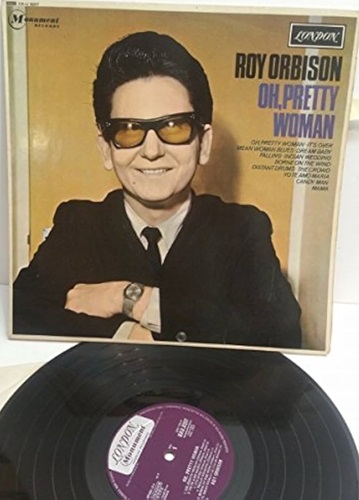
In 1964, Roy recorded what is probably his biggest hit, Oh Pretty Woman.  It would be his last big hit while at Monument records. How it came about is a story in itself. Touring hurt his personal life, and his wife Claudette began having an affair.  One day while writing with songwriter Bill Dees, Claudette entered the room and said that she was going to Nashville.  Roy asked her if she had any money, and Dee’s replied, “A pretty woman never needs any money.” With that phrase, and about 40 minutes, they wrote Oh, Pretty Woman, which went to number 1 in almost every country in the world.
The success of Oh, Pretty Woman was followed by a string of tragedies. In 1966, Claudette was killed when a pickup truck pulled out in front of her and she hit the door.  She died instantly.  Two years later, Roy was on a tour in England and he received a call that his home had burned down.  As if that wasn’t enough bad news, he was also told that his two oldest sons were killed in the fire.  He tried to cope by keeping himself busy with work.  He starred in the film The Fastest Guitar Alive, which ended up being his only lead role. After that, Roy seemed to slip away from the spotlight.

Despite all that was going on in his life, Roy continued to make music in the 1970’s. It was during this time that his career really slowed. It was around this time that he started to wear his hair straight, instead of combing it back. He would wear it like this for the rest of his life. He did see some success when his single “Penny Arcade” was number one in Australia for many weeks and “Too Soon to Know” reached number three in England.

He continued to tour, but played to mostly empty auditoriums. This was the case with the concert at Cincinnati Gardens that he played on his 40th birthday in April 1976. This was a new low for Roy. In his book, Roy Orbison: Invention Of An Alternative Rock Masculinity, Peter Lehman stated that Orbison’s absence was a part of the mystery of his persona: “Since it was never clear where he had come from, no one seemed to pay much mind to where he had gone; he was just gone.”

In 1977, Roy was not feeling well, so he decided to spend the winter in Hawaii. Once there, he checked in to a hospital where testing discovered that he had severely obstructed coronary arteries and was lucky to be still alive. He underwent open-heart surgery on January 18, 1978. His medical history stated that he had suffered from duodenal ulcers since 1960 and had been a heavy smoker since he was young. The surgery was a success and Roy said that he felt great. His weight would continue to fluctuate, however, for the rest of his life. He also continued to smoke cigarettes, despite the advice of his doctor.

A decade later, in 1987, he was inducted into the Rock and Roll Hall of Fame.  Bruce Springsteen was there to do the induction honors. Bruce concluded his speech with a reference to his own album Born to Run: “I wanted a record with words like Bob Dylan that sounded like Phil Spector—but, most of all, I wanted to sing like Roy Orbison. Now, everyone knows that no one sings like Roy Orbison.” Roy was so touched by the speech, he asked Springsteen for a copy of it. He would go on to say of his induction that he felt “validated” by the honor. After the awards, Orbison signed with Virgin Records and began preparing to record an album of new songs.

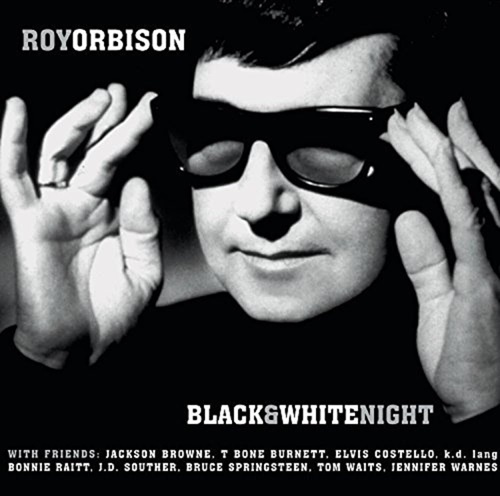
Following his Rock and Roll Hall of Fame induction, Roy recorded a concert that would go air on television as a special. He had always wanted to do one and this special included some powerful special guests:  Elvis Costello, k.d.Lang, Tom Waits, Bonny Raitt, Jennifer Warrens, Jackson Brown, and, of course, Bruce Springsteen.  The special was called Roy Orbison and Friends – A Black and White Night Live. It was aired on cable and released on video and became one of Roy’s greatest concerts.
Roy had begun working with Jeff Lynne of ELO, who would produce his next album. Lynne had just completed production work on George Harrison’s Cloud Nine album. The three of them ate lunch together one day when Orbison accepted an invitation to sing on Harrison’s new single. They subsequently contacted Bob Dylan, who, in turn, allowed them to use a recording studio in his home. Along the way, Harrison made a quick visit to Tom Petty’s House to get his guitar; Petty and his band had backed Dylan on his last tour. By that evening, the group had written “Handle With Care.” The song and all that went into it led to the idea of recording an entire album together. They called themselves the Traveling Wilburys.

When Jeff Lynne described the recording sessions, he said, “Everybody just sat there going, ‘Wow, it’s Roy Orbison!’ … Even though he’s become your pal and you’re hanging out and having a laugh and going to dinner, as soon as he gets behind that [mic] and he’s doing his business, suddenly it’s shudder time.”
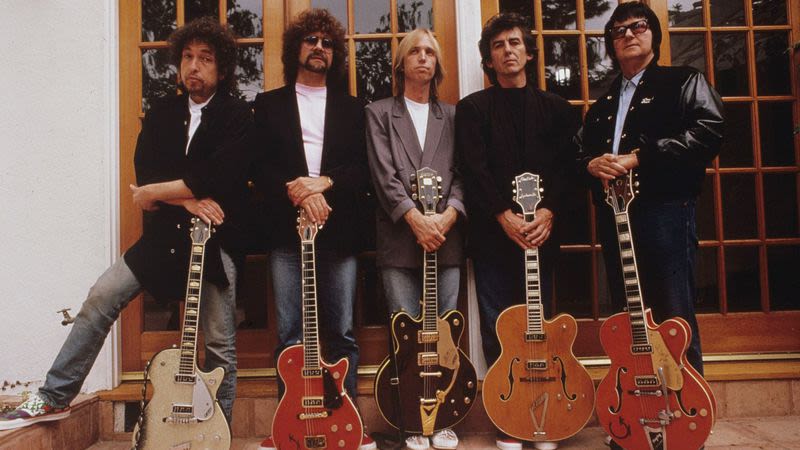
For the Wilburys album, Roy was given a solo track. The song was “Not Alone Anymore.” In reviews of the album, Roy’s contributions were highly praised by critics and fans alike. Because of this, he decided to pursue his second chance at stardom. He expressed amazement at his success: “It’s very nice to be wanted again, but I still can’t quite believe it.” He lost some weight to fit his new image and the constant demand of touring, as well as the newer demands of making videos.

In November of 1988, Roy put the finishing touches on the Mystery Girl album.  It was co-produced by Jeff Lynne. It was set for release in 1989.  This would be the “Return of Orbison!” There was to be a world tour to support the project.  No one could have known that Roy would not be around to enjoy his comeback.

On December 6, 1988, Roy went to his mother’s house and chatted with his son Wesley. He went to the bathroom but did not return for 30 minutes. He was found collapsed on the bathroom floor and rushed to the hospital by ambulance. Roy never regained consciousness and passed away at age 52 of a heart attack.

I was still a senior in high school and I was going to WKSG to rip news and type up stories for the news director.  I would stay till 6am and then head to school.  I remember going to the Associated Press wire and seeing the “URGENT” breaking news that Roy had died.  We were an oldies station and this was big news.  I can still remember when we broke the news.  It is one of those moments I will never forget.
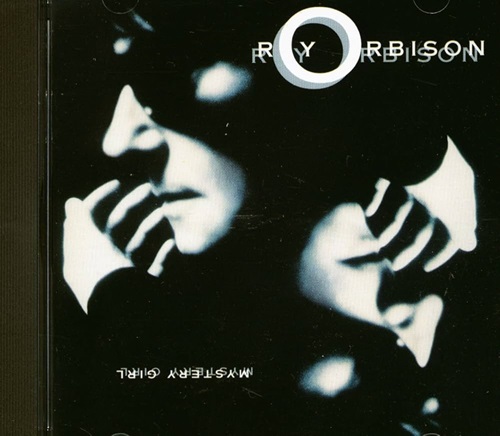
You Got It (from the Mystery Girl album) was released after Roy’s death and reached the top 10.  One of the coolest tributes to Roy was when the Traveling Wilburys released the song End of the Line.  In the video, the group is on a train singing.  When Roy’s vocal comes on, the camera is on a rocking chair in which Roy’s guitar is sitting.  Next to it, is a framed photo of Roy.  That scene will always give me chills.

One can only wonder what might have happened if Roy hadn’t passed away. Would the world tour have led to further chart success? Numerous new albums and singles? Perhaps another #1 record? The world will never know. However, Roy never really was forgotten.

  • On April 8, 1989, Orbison became the first deceased musician since Elvis Presley to have two albums in the US top five at the same time, with Traveling Wilburys Vol. 1 at number four and his own Mystery Girl at number five.
  • In the early 1990s, Rodney Crowell and Roy’s friend and occasional songwriting partner Will Jennings wrote the lyrics to a recording of a melody that Orbison had made before his death. They titled the resulting song, which was recorded by Crowell and released in 1992, “What Kind of Love.”
  • In 2014, a demo recording of Orbison’s “The Way Is Love” was released as part of the 25th-anniversary deluxe edition of Mystery Girl. The song was originally recorded on a stereo cassette player around 1986. Roy’s sons contributed instrumentation on the track along with Orbison’s vocals.
  • On December 4, 2015, the studio album One of the Lonely Ones, recorded by Orbison in 1969, was posthumously released. The album, which Orbison recorded surreptitiously in the aftermath of his first wife Claudette’s death in a motorcycle accident and the death of their two sons in a house fire 2 years later, was long believed lost.

One of my favorite posthumous Orbison recording were released in 2017 and 2018. In 2017, the album A Love So Beautiful was released. It features archival vocal recordings of Orbison accompanied by new orchestral arrangements by the Royal Philharmonic Orchestra. I believe that these “new” recordings only add to the beauty of these hit songs. The addition of strings to In Dreams, Crying, It’s Over, Running Scared and Love Hurts only deepens the meaning and emotions of the songs. The addition of a horn section to Dream Baby and Mean Woman Blues only makes them sound more vibrant and full. A second album, Unchained Melodies, with the Royal Philharmonic was released in 2018.
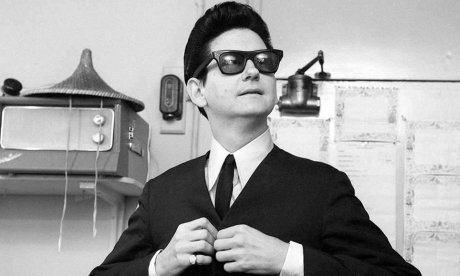
To me, Roy Orbison will always be a legend. His music was one of a kind. Colin Escott wrote an introduction to Orbison’s biography published in a CD box set: “Orbison was the master of compression. Working the singles era, he could relate a short story, or establish a mood in under three minutes. If you think that’s easy—try it. His greatest recordings were quite simply perfect; not a word or note surplus to intention.” His style was like no one else. In the 60’s he said, “I’m not a super personality—on stage or off....People come to hear my music, my songs. That’s what I have to give them.” His vocals were indescribably beautiful, haunting, and amazing. Elvis Presley stated Orbison’s voice was the “greatest and most distinctive he had ever heard.” I would have to agree.

Thanks again to Dave for hosting another great round of Turntable Talk. I cannot wait to hear what we’re writing about next month. Thanks for reading!

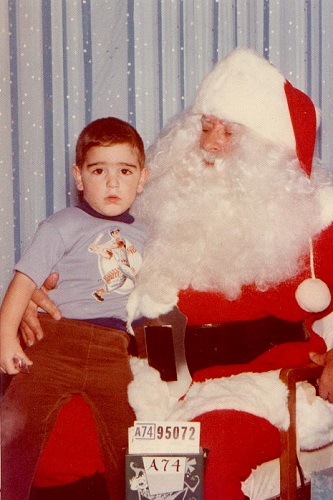
Friday Photo Flashback

Just one more Christmas photo …

I’m not sure if I’ve ever posted this photo with me and Santa.  According to my dad’s caption, I’m about 2 years old here.

There are a couple bonuses here.  First, I am not crying.  I do look terrified, but after all, it is Santa.  I am also not wearing loud paisley print pants.  I’m not sure corduroy is any better, but I’m told it was “in.”

All I see when I look at myself is big ears and big eyebrows.  Lol.

I picked this picture because when my boys were over Christmas Eve, it came up as a Facebook memory.  My middle boy was like “Who is that?!”. He couldn’t believe it was me!! 

He kept staring at it.  I told him to look at the eyebrows – those haven’t changed in years!!

He’s still not sure….

I’m sad we didn’t get to take the kids to get their picture with Santa this year.  Things were just so busy.

How often did you get your picture with Santa?

The Music of My Life – 1987

Welcome back to The Music of My Life, where I feature ten songs from each year of my life.  In most cases, the ten songs I choose will be ones I like personally (unless I explain otherwise). The songs will be selected from Billboard’s Year-end Hot 100 Chart, Acclaimed Music, and will all be released in the featured year.

I would turn 17 in 1987. It was my junior year in high school and I did what I had to do to get by in all my classes except band class. I was completely devoted to band class. I was an officer in band class (I was one of the librarians who helped sort, catalog and distribute music). I often stayed late and practiced with a couple other band nerds.

It was also the year I dated a gal who was kinda sorta toxic. It was an 8 month relationship that really had me messed up. I won’t go into details. We had some good times, but the bad times outweighed them. As I have worked ahead for this feature, I began to notice how some songs really hold some big relationship memories. The power of a song and the memories attached to them aren’t always happy, but I have noticed that there are more happy ones than bad ones.

Off to 1987 and my ten picks …

One of the best concerts I ever attended was Billy Joel and Elton John. There were two piano greats and a night of fantastic music. I am always interested to find out an artist’s hero, or favorite artist. Billy has often said that his favorite was the great Ray Charles. Put the two of them together and you’ve got one very cool song.

According to songfacts.com, when Ray showed up at the session, they met for the first time, and Joel was in awe. To break the ice and get to know each other, they each played piano for a while before recording the song. Whenever Charles would meet someone for the first time, he would touch that person’s face. When he did this to Joel, he said, “relax,” since he could tell Billy was nervous.

In a 1986 promotional interview, Joel said he was sitting at home trying to find inspiration for the song in his surroundings when his baby grand sparked his imagination. “I began looking around at things that have been consistent in my life, and in this age of synthesizers and electronic keyboards the piano has almost become an old-fashioned instrument,” he recalled. “I glanced at the baby grand piano and realized that I had a lot of love for that thing. The piano has provided me with a nice living, a career, and happiness. It’s gotten me women, and it’s gotten me through some strange times.”

He continued: “Sometimes at night I’d sit down and give myself a concert, and it’s almost like the piano did it – I didn’t even have anything to do with it. When I was thinking about a theme for Ray and me, it seemed apropos: you know, Ray Charles, piano player. Billy Joel, piano player. Let’s talk about a real love in our lives – the baby grand. ‘Baby Grand’ is really a love song to an instrument.”

Personally, this is just one of those magical musical songs to me. It’s a bluesy love song played by two talents who love their instrument – and making music. And that is good enough for me.

Baby Grand

I’m sure that every radio market had an adult contemporary station that played love songs at night. Usually, it was hosted by a deep voiced DJ who would smoothly deliver requests and dedications over the air. In Detroit, we had “Pillow Talk” hosted by Alan Almond.

In 1987, I had my driver’s license and I would go out cruising around with my friends. When I began dating, I would often “park” and listen to the love song show. As I was going through songs for this feature, I was overwhelmed by just how many of those songs were nightly staples on that show.

While there were times that my girlfriend and I would make out in a parking lot, there were also a lot of times when we sat and listened to the music and talk. There were a lot of ballads that came out in the mid-80’s. Many of them continue to be played as wedding songs and such.

One song that really stood out on the radio was an instrumental by Kenny G. It was his hit, Songbird. It sounded so out of place, yet perfectly fit. Because it was an instrumental, the DJ would often use it to read those lovey dovey dedications. “Sarah wants Josh to know that she misses him so much tonight.” “William called in to thank Beth for a wonderful first date.” “Deborah wants Tim to know that she is very sorry for the argument they had tonight and wants to dedicate this one to him.”

Fun fact: “Songbird” is all Kenny G – he played every instrument on the track (including the drum programming) and recorded it in his home studio. “I created a whole sound based on what I was hearing inside me,” he told Vanity Fair. “It came out, and Whoa! That’s exactly what I wanted!”

When I hear Songbird, I am reminded of those nights where I thought I was really in love and had no idea what true love was at the time.

Songbird

MTV turned 6 in 1987 and as we have seen in the past few weeks, there were many creative videos to boost record sales. I could list about 50 videos that are forever etched in my brain, and up near the top would be the one for the next song – Doing It All For My Baby.

Mike Duke (who played with the Outlaws) cowrote the song with Philip Cody. They couldn’t get anyone to record it. Mike went on tour with Delbert McClinton and at some point was doing club gigs in Mississippi. Some guys from Huey’s band came in to see the gig and he was playing ‘Doing It All For My Baby.’ The guys in the band said, ‘Wow, we love this song. We’re going to bring it to Huey.’ And they brought it in, and three years after we wrote the song, Huey Lewis & the News recorded the song and put it on their biggest selling album ever.”

The band produced an extended video for the song that lasted almost 8 minutes and resulted an one of the iconic MTV images of the ’80s: the band’s heads on display in glass cases while they sing this song. In the video, the band gets stranded somewhere spooky, and end up in various Frankenstein scenes with Lewis playing Dr. Frankenstein. It was truly one of those “fun” videos!

This song features the Tower of Power Horns. I can’t imagine the song without them!

Doing It All For My Baby

When I used to DJ, I would often play music at the VFW hall that my dad belonged to. I met so many great people there and remain friends with many of them. It was here that I became familiar with a lot of songs that I hadn’t heard before. One of them was my next song.

Jimmy Mac, as he was known to all of us, used to always ask for stuff like Barry White, Deon Jackson and the Whispers. Rock Steady never failed to get people on the dance floor. I started playing it at other gigs afterward and it always worked.

According to songfacts.com, the song was written and produced by the team of L.A. Reid and Babyface. It was one of the first songs the pair worked on for another artist – they were members of the group The Deele at the time. In 1989, they formed LaFace Records and became music moguls as well as hit producers. TLC, OutKast and Pink were all signed to LaFace. It would be their biggest hit, reaching #7 on the chart.

Rock Steady

It has taken me 17 weeks to finally “Rickroll” you. Sorry. Of course, Rickrolling wouldn’t even become a thing until 2007, but you have to admit that the song was an earworm. Once you heard it, it was stuck in your brain for hours. (The same thing happens to me with his song, “Together Forever.” Which is almost the same song, really!)

At the time, however, this was a pretty big thing. I remember it playing at all the high school dances and all the kids dancing to it, well, not me, but you know what I mean. Astley’s story is actually a cool one …

He worked for the British production team of Stock, Aitken and Waterman’s studio for two years. While he was there he was operating tape machines, singing on recordings for other singers, learning the trade and famously making the tea before the production trio wrote and produced this song for him, which became his first hit. It was recorded in October 1986, but wasn’t released until July 1987, as the producers were waiting for the right environment to break a new artist.

It was inspired by a woman Pete Waterman had been seeing for three years. Rick Astley was staying with Waterman at the time, and after a three-hour phone call with the woman, Astley said, “You’re never gonna give her up.” Aitken and Waterman then changed the story a bit and made him the one who was vulnerable. It was the biggest hit of 1987 in the UK, and went to number one here in the states.

I guess the nice thing about this blog is that you don’t have to click on the video, but you KNOW you want to! Do it! Click it!

Never Gonna Give You Up

Time to clear your musical pallet of Mr. Astley. I’ll do it with the phenomenal blending of three beautiful voices.

The group Trio was made up of Dolly Parton, Linda Ronstadt, and Emmylou Harris. These three ladies were good friends with each other and admirers of each other’s work. The first attempted to record an album together in the mid-1970s, but scheduling conflicts and other difficulties (including the fact that the three women all recorded for different record labels) prevented its release. Record labels were real peculiar about that kind of thing, I guess.

The Trio album was released in March of 1987. One of four singles that was released was called Those Memories of You. This song was recorded by Bill and James Monroe in 1950! Mel Tillis’ daughter, Pam, released a version in 1986 (reaching #55), but the Trio version is the one that was the hit. It was a top 5 song on the Country charts. The video starred a familiar face – actor Harry Dean Stanton.

The Trio album won the Grammy Award for Best Country Performance by a Duo or Group with Vocal.

It is one of those songs that I could get lost in the vocals and the harmonies.

Those Memories of You

The next song is on my list because of my brother. He listened to a lot of music in his room, but I can distinctly remember Madonna and Debbie Gibson music playing a lot. If memory serves me right, he saw her in concert a few times. Shake Your Love seems to be the one song from this album that I always heard from down the hall.

Out of the Blue was Debbie’s debut album and Shake Your Love was the second single from it. What is impressive to me is that she wrote every song on this album and was only 16 when the album was released! This and her first single (Only in My Dreams) were both top 5 records for her.

Another 1980’s superstar helped Debbie with the dance moves in the video for this song – Paula Abdul.

Shake Your Love

Desmond Child has written and co-written some very big songs, including You Give Love a Bad Name and Livin’ on a Prayer for Bon Jovi. When a record rep suggested that Steven Tyler and Joe Perry of Aerosmith write a song with him, they were not thrilled.

Child told songfacts.com: Steven was much more friendly, as he is, and was very generous, really, and showed me a song that they had started called ‘Cruisin’ for the Ladies.’ I listened to that lyric, and I said, ‘You know what, that’s a very boring title.’ And they looked at me like, ‘How dare you?’ And then Steven volunteered, sheepishly, and said that when he first wrote the melody he was singing ‘Dude Looks like a Lady.’ It was kind of a tongue twister that sounded more like scatting. He got the idea because they had gone to a bar and had seen a girl at the end of the bar with ginormous blonde rock hair, and the girl turned around and it ended up being Vince Neil from Motley Crue. So then they started making fun of him and started saying, ‘That dude looks like a lady, dude looks like a lady, dude looks like a lady.’ So that’s how that was born. That’s the true story of how that was born. So I grabbed onto that and I said, ‘No, that’s the title of the song.'”

I have always loved the story of how the song came to be. It really became the comeback song for the group, as their last hit was back in 1978. When I first saw Mrs. Doubtfire with Robin Williams and they played this song, I laughed out loud.

Dude Looks Like A Lady

In 1982, George Harrison released his Gone Troppo album and it didn’t do well. It can be said that a lot of his work was well off the mainstream, using unusual instruments and based on Indian music. “Got My Mind Set On You” proved that he could release a song requiring very little thought and send it up the charts. Naturally, many of Harrison’s ardent followers can’t stand this song.

The song was written by Rudy Clark and originally recorded by James Ray in 1962. George had bought a copy of the single in the summer of 1963 when visiting his sister Louise in Illinois. Many years later when he was writing his Cloud Nine album, he remembered the song and decided to cover it.

Songfacts.com says that when Harrison conceived the Cloud Nine album, he looked for a producer who could carry some of the load and not be intimidated by working with a former Beatle. He sought out Jeff Lynne of ELO for the role even though he had never met him – he connected with Lynne by having their mutual friend, Dave Edmunds, get him the message. It ended up being a great fit. Lynne brought his distinctive production sheen to the tracks and helped out writing some of the songs. Lynne’s influence can be heard in the backing vocals of the “Got My Mind Set On You” chorus. Harrison and Lynne are responsible for bringing together Roy Orbison, Bob Dylan, and Tom Petty, forming The Traveling Wilburys in 1988.

MTV played the video a lot for this song and VH1 had recently gone on the air, so it aired there, too. As simple as this song is, I’ve always loved this one by George.

There were two videos for the song, the first I was unaware of until I stumbled on it for this piece. Both were directed by Gary Weis. The first features a young guy trying to win a ballerina for a gal he sees in an arcade. She is watching the video of George on a kinescope. Here is that video:

Got My Mind Set On You

This second video is the one I am most familiar with. It was inspired by the then-recently released movie – Evil Dead II. As George sits in a study singing, furniture and knick-knacks (including a stuffed squirrel, sentient chainsaw, a suit of armor, and mounted stag and warthog) begin to sing or dance along with the song. FYI, the backflip is performed by a stunt double.

I have made it no secret that I love Roy Orbison’s music. I remember being thrilled that he was making a comeback in the late 80’s. His stuff with the aforementioned Wilburys is so good. His posthumous Mystery Girl album was a fitting sendoff for him.

The original version of crying was recorded in 1961. Roy claimed to have written this as the result of an encounter he had with an old flame with whom he was still in love. He refused to say how much she meant to him, and when he ran into her again it was too late. It has one of the most powerful endings in music, in my opinion.

He claimed the stunning climax at the end of the song was not contrived, but just happened in the course of the song. He told the NME in 1980: “Immediately I thought of a past experience and just retold that, was the way that came about. It was the retelling of a thing with a girlfriend that I had had. I couldn’t tell you right now what notes I hit at the end of the song, or anything.”

In 1987, shortly after he signed with Virgin Records, he recorded a duet of this song with kd lang which was released as a single and later used as the B-side to his 1989 release “She’s A Mystery To Me.” This duet won the 1988 Grammy award for Best Country Vocal Collaboration, and was re-released in the UK in 1992, where it hit #13. Lang said that when they met to do the recording, it was obvious that their voices had a “tonal connection.”

I do not disagree with her. To me, the 1961 version is perfection. When I hear it, I am mentally exhausted. It is so moving. How can you top it? Add kd lang. Wow. To say that I was blown away by this version is an understatement. The arrangement and the vocals are just powerful and beautiful at the same time.

There was a time in my life where I could relate to the lyrics of this song. It was a painful time, and the hurt conveyed in the song was very real to me.

Crying

Boy, this week I Rickroll you and end on a sad note. Sorry about that. Next week will be better.

We’ll travel to 1988 next week. It was my senior year, and there are some fun ones on my list. I hope you will come back and check out the list.

What was your favorite from 1987? Drop them in the comments ….