Dave just wrapped up another chapter of Turntable Talk. This was my contribution:
It is time once again for Turntable Talk hosted by Dave at A Sound Day. For over three years now, he has offered up a musical topic each month for me (and other participants) to write about. This month’s topic is “It’s About Time.”
Dave’s instructions are simple. “Tell us about a song about “time.” It could be one using the word “time” in the title … and there’s no shortage of them… or one that actually somehow explores the passage of, or idea of time.” While this is a topic that is fairly easy, I can’t help but wonder if there will be duplicate submissions.
For example, right off the top of my head I came up with Time in a Bottle from Jim Croce (which I have written about before. Then Time After Time from Cyndi Lauper came to mind. This was followed by Cher’s If I Could Turn Back Time and Huey Lewis’ Back in Time. Before I could shut my mind off Styx Too Much Time on My Hands and Semisonic’s Closing Time entered my mind.
I immediately discarded those, because I am sure that the other participants would choose one of those. So I dug a little deeper and tried to think of a song that might not be someone’s choice. I narrowed it down to No Time by the Guess Who, Just in Time by Dean Martin, Crying Time from Ray Charles, Time is Tight by Booker T and the MG’s, and my choice.
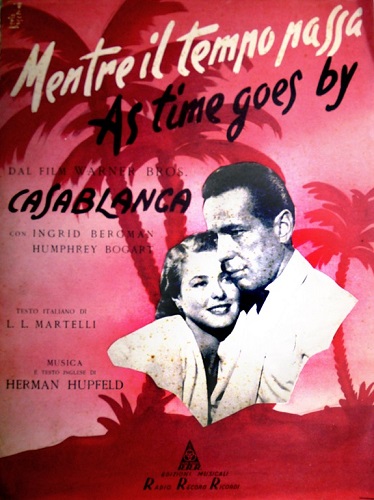
I chose a song written by Herman Hupfeld! Now everyone knows Herman, right? No. Not really, but I am sure you will know the song. It is a song that was written in 1931 for the Broadway show “Everybody’s Welcome.” It was first recorded by Rudy Vallee in July of 1931. It would be covered by Billie Holiday, Louis Armstrong, Frank and Nancy Sinatra, Natalie Cole, Carly Simon and Bob Dylan (Just to name a few).
While the song was recorded a few times after Vallee’s version, it was 11 years later when it would really get noticed. In 1942, the song was sung by the character “Sam” (portrayed by Dooley Wilson) in the classic film – Casablanca. As Time Goes by is heard throughout the film in short musical breaks.
RCA Victor wanted Dooley to record a version of it to be released to the public. However, a musician’s strike happened between 1942 and 1944, so he was not allowed to do so. Instead, the record label re-released the Rudy Vallee version, which went on to become a number one record (11 years after the original release).
Wiki states: Like many later singers, Wilson in Casablanca starts with “You must remember this, a kiss is still a kiss…”, singing only the verses and refrain (“As time goes by”). He entirely omits the intro that put those “fundamental things” into context: “This day and age we’re living in gives cause for apprehension, With speed and new invention and things like third dimension. Yet, we get a trifle weary with Mister Einsten’s theory, So we must get down to earth, at times relax, relieve the tension. No matter what the progress or what may yet be proved, The simple facts of life are such they cannot be removed.”
The song was voted No. 2 on the AFI’s 100 Years… 100 Songs special. The show commemorated the best songs in film.
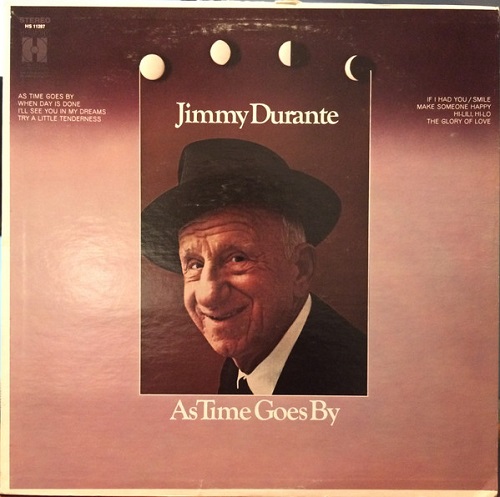
The version I chose to feature is by a multi-talented comedian, actor, pianist and singer. His voice was instantly recognizable on radio. He was a guest on many television shows and had some success as a singer. He is, however, probably best known for … his nose. His nickname was “the schnozzola.” I am, of course, talking about the great Jimmy Durante.
The song itself is beautiful. Every artist who has covered it brings their own special take on it. There is something that really hits me when I hear Durante’s version. Despite that raspy voice, there is a sincerity that makes it just a bit better than the other versions. I’m not trying to diss the other versions, but none of them give me goosebumps when I hear them. Jimmy’s version does. For some reason, his voice blends so well with the string arrangement.
Before I post the song, you know I have to say it – “Play it again, Sam!”
In a live version, Jimmy adds the intro that many leave out.
Thanks again to Dave for asking me to participate and for hosting this feature. I’m excited to see the choices of the other writers!
This is sort of a continuation of the Music of My Life feature. It focused on music from 1970-2025. It featured tunes that have special meaning to me, brought back a certain memory or a tune that I just really like. I found that with the first three decades, there were songs that I didn’t feature. So I sat down with my original lists and selected some songs that “bubbled under,” so to speak.
I figured a good way to present them was to focus on a decade. 10 years = 1 song per year = 10 songs. Last week I featured the 80’s. This week 10 more 80’s tunes before we move on to the 90’s. So, let’s check out a few “Decade Extras.”
1980
While I was never a truck driver, we certainly listened to Eddie Rabbitt’s Drivin’ My Life Away a lot while driving my my folks. I’m sure it was one of the songs my dad had recorded on 8-track to listen to on our drives up north.
This song was the first song that really made Eddie a crossover artist. The song went to number 5 on the Billboard Hot 100 charts. I Love A Rainy Night followed and hit #1 on the Hot 100, Country and Adult Contemporary Charts. Step By Step and You and I followed in 1981 and 1982 as crossover hits.
It is one of many Eddie Rabbitt songs I love.
Driving My Life Away
1981
Originally done by Tommy James and the Shondells, Mony Mony was covered by Billy Idol. Billy first released his version as a single in 1981, his first as a solo artist after leaving the band Generation X. His live version of the song went to #1 in 1987.
It was a big song at weddings and schools dances. However, it quickly made many school’s “Do Not Play” list. Why? It became popular for kids to shout “hey, hey, what, get laid, get f–ked” during the instrumental break in the chorus. I found this out the hard way at a school prom. I had a lot of requests for the song and when I played it the kids went crazy. When they shouted out the vulgar chant, it only took seconds for a teacher to come up and tell me to turn it off. Apparently, the chant is still shouted at Billy’s concerts.
Weird Al Yankovic did a parody of Billy’s version called “Alimony” on his Even Worse album in 1988.
Mony Mony
1982
It took two releases for the next song to get noticed. I can still remember going to the record store and buying Built For Speed by the Stray Cats. Rock This Town was such a cool thing to hear on the radio for me. My dad played a lot of Rockabilly stuff for me growing up, so I had to go get this album.
When Stray Cat Strut was first released in August of 1982, it didn’t even crack the Hot 100. I think it stopped at #109. Then Rock This Town was released and the band got noticed. The record company decided to re-release Stray Cat Strut and this time it debuted at #43 and went all the way to #3.
Michigan Trivia: Detroiters may remember that WRIF’s (101 FM) JJ and the Morning Crew a parody of this called “Fat Cat Strut.”
Stray Cat Strut
1983
The Eurythmics are Annie Lennox and Dave Stewart who actually dated for a while. Lennox said in an interview that they wrote this song after the two had a huge fight. Dave came up with a beat, Annie improvised the synthesizer riff, and suddenly they realized they had a potential hit.
In an interview with songfacts.com, Stewart said “We thought we’d made something really special but we had no idea, really, the impact it would have. Neither did the record label, which didn’t even think it was a single.”
Three other songs from the album were released as singles in the UK before their label, RCA, finally issued “Sweet Dreams.” When they did, it took off, climbing to #2.
Songfacts says about the video:
The video presented Lennox with close-cropped orange hair and a tailored black suit, making it the first popular video presenting an androgynous female. The cow in the video was Dave Stewart’s idea – he was a big fan of surreal artists Salvador Dali and Luis Bunuel. Said Stewart: “A few people were saying, ‘Dave, why the cow? Annie is so good looking.’ Those people should go buy a copy of Purple Cow by Seth Dogin, about how to make your business remarkable. It was written 20 years after I had the purple cow in our video – which certainly did the trick and made my whole life remarkable.”
The cow, while very eye-catching, posed a logistical problem because most studios can’t accommodate them. Eurythmics found a basement studio in London with an elevator big enough to transport the animal. Lennox recalls the shoot with the bovine walking around as being one of the more surreal experiences of her life.
This song used to drive my former sister-in-law crazy. I’m not sure why, but whenever I DJ’s a family party or an event that she was at, I always played this song.
Sweet Dreams Are Made of This
1984
The next song got it’s title from a 1979 movie. Time After Time is the name of a 1979 science fiction movie starring Malcolm McDowell as H.G. Wells, whose time machine is stolen by Jack The Ripper, who uses it to travel from 1893 to 1979. Wells follows him into the future and goes on a quest to stop him from killing.
Cyndi Lauper wrote the song with Rob Hyman of The Hooters. Hyman told Songfacts: “When she saw Time After Time, something clicked. She said, ‘I think I have a title.'”
Once the title was in place, they set about writing the song. Hyman explained: “I was sitting at the piano and just started banging out what would eventually be the chorus, hook, and the way we sing it. It almost had like a reggae feel, it was a little bouncier and a little more upbeat. We started getting off on that chorus, then the verse melodies started to appear.
It’s a deceptively simple song. The verses are just a little repeating three-note motif – almost like a nursery rhyme, a very simple song. Then we started to realize we were on to something. The mood of the lyrics came from both of us. I think Cyndi came in and really started the lyric flow, then all of the sudden we realized it wasn’t such a bouncy song, but it was a little more bittersweet and a little deeper in its feeling and a little more poignant, so the music started to change. We wrote a little bridge section and I think the last thing we really wrote was the chorus. We had ‘Time After Time,’ we just had to get the words that would surround it.”
This song surprised me. Compared to Girls Just Wanna Have Fun and She Bop, this song was kind of deep. This one and True Colors really made me appreciate her talent.
Time After Time
1985
My Detroit Tigers are doing very well so far this season. I hope they keep it up! From 1985, here is a song that I have written about in the past Centerfield.
Centerfield
1986
My dad always played me classics from Elvis, Roy Orbison, Buddy Holly and Little Richard. I remember my dad coming home and saying, “Keith, you gotta hear this Little Richard song.” It was a song that was featured in the movie Down and Out in Beverly Hills with Richard Dreyfus.
Honestly, it sounded like something he could have done in the 50’s. Great Gosh A’Mighty must have been the cleaned up version for the film, because Little Richard also recorded a Great God Almighty version, too.
The song is always one I play on repeat on the iPod.
Great Gosh A’Mighty
1987
Randy Travis was one of the coolest country stars I’ve had the chance to meet. He was so down to earth and friendly. We talked about music, family and faith. It was like talking to an old friend.
I feel Forever and Ever, Amen is right up in the Top 10 best country songs of all time. It was written by two of the best songwriters in Nashville – Paul Overstreet and Don Schlitz. The two had already wrote Randy’s hit “On the Other Hand,” and I love the story of how this one came to be.
Overstreet told Songfacts:
“I had played about 36 holes of golf that day, and Don says, ‘I’ve got this idea we have to write.’ His new fiancée’s little boy was learning the Lord’s Prayer, and he was going around saying ‘forever and ever amen’ after everything. He would say, ‘Mommy, I love you. Forever and ever, amen.’ So Don said, ‘We’ve got to write this.’ I said, ‘How about tomorrow?’ He says, ‘No, now.'”
They got together on Overstreet’s front porch that night and composed the song by candlelight. Confident it was a hit, they recorded a demo the next day and sent it to Travis, who made it the lead single to his second album, Always & Forever. It was indeed a hit, spending three weeks at the top of the Country chart, longer than any other song in 1987.
Forever and Ever, Amen
1988
Another cover song on the list – this time, a cover of Elvis Presley. I remember hearing Cheap Trick’s version of Don’t Be Cruel and loving it! I remember really digging the spots in the song where that running bass line can be heard. The key change was something that stood out for me.
I hate to diss on the King, but I almost love the Cheap Trick version a bit more. There is so much going on that really takes the song to another level – that drum beat, the fake cold ending, the guitar solo and so much more. I played the heck out of this 45
Don’t Be Cruel
1989
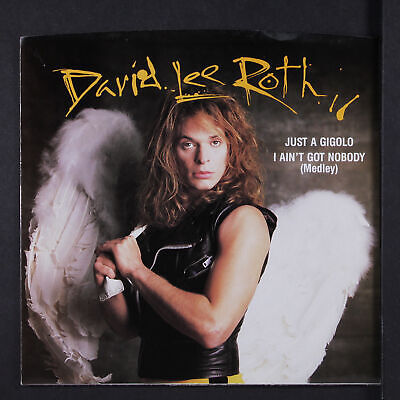
The final pick comes from the movie UHF from Weird Al Yankovic. In a recent Turntable Talk feature, I talked about the David Lee Roth video for Just a Gigolo. At the end of it, I wondered if Dave borrowed from the music video for UHF’s title song.
While the video for the song is hilarious and brilliant, the song itself is one of my favorites from Al. It is not a parody, rather an original. It is a song that sounds like something you would hear on the radio in ’89. It has an alternative rock feel to it.
It’s an underrated and often forgotten Al song
UHF
What a way to wrap up the 80’s! I hope you heard some tunes you liked, too. Next week we’ll move on to the 1990’s and see what songs bubbled under my original list. See you then!
This was first posted on the A Sound Day blog hosted by Dave Ruch:
Once again, Dave from A Sound Day has invited me to participate in his month Turntable Talk feature. I truly appreciate the fact that he always comes up with great topics. Some of those topics are a bit more difficult to write (like last month), and some are quite easy. This month’s topic falls into the latter category.
Dave is calling this month’s round –Turn it on Again! His instructions are very easy: “tell us about your favorite music video, or the one which impresses you most, and why you love it.” As a child who grew up with MTV, I had many that came to mind.
At this writing, I don’t know what the other contributors have chosen to write about. Has someone picked Michael Jackson’s Thriller? What about Take on Me from A-Ha or Buddy Holly by Weezer? I also wonder about Fatboy Slim’s Weapon of Choice, Peter Gabriel’s Sledgehammer and Nirvana’s Smells Like Teen Spirit. Each and every one of them stands out and have appeared on many “Best Music Video” lists.
I’m not sure that my pick would be considered my “favorite.” I also wouldn’t say it “impresses” me most, but I do enjoy watching the craziness of it. I suppose readers may be surprised at my choice, as I don’t really write about many “rock” songs. I suppose that this song wouldn’t fit into that category, but the singer qualifies as a rocker (at least most people think so).
“The band as you know it is over!” That is what Eddie Van Halen told Rolling Stone in mid-August 1985. This confirmed the rumors of division in the band with David Lee Roth. Eddie also made sure to add that “Dave left to be a movie star.” With that, Dave went on to explore a solo career. In late 1984, Dave released a cover of the Beach Boy’s California Girls. He followed that with another cover song (medley actually) from the great Louis Prima.
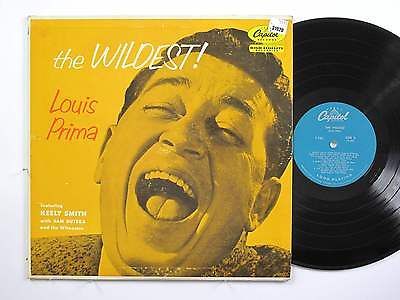
In 1956, Prima took the song Just a Gigolo and paired it up with I Ain’t Got Nobody. He used the song in his 1950’s Las Vegas act with Sam Butera and Keely Smith. The success of that act gained Prima a recording deal with Capitol Record, which hoped to capture on record the atmosphere of his shows. The first album, titled The Wildest! was released in November 1956, and opened with “Just a Gigolo”/”I Ain’t Got Nobody.” It became Prima’s signature number and helped relaunch his career.
Roth’s version is really almost a note for not copy of Prima’s record. By itself, it’s just an ok cover song. However, with an entertaining video that features celebrity look-alikes, beautiful women, and Dave being … Dave, it becomes something much much more.
The video for the song begins with Dave asleep at a news desk as his video for “California Girls” plays behind him on the monitor. The crew calls his name and he wakes up. After his talk, the freaky crew members begin to speak to him. They are right in the camera, so the viewer sees this from Dave’s perspective in this sequence. It’s actually kind of disturbing. The intro to the video is almost two minutes long before the song actually begins.
When it does, Dave is off dancing through the studio. We see him showing up at a talk show, walking through the backstage area among Vegas showgirls, astronauts, pimps, pirates, monsters, cheerleaders, hula dancers, and the police. All of this happens before you really get to the “meat and potatoes” of the video.
It is there that Dave begins parodying videos from Michael Jackson, Cyndi Lauper, Billy Idol, Richard Simmons’s “Sweatin’ to the Oldies” videos (Davercize!), Willie Nelson, and Boy George. As he appears in each of the videos, he winds up wrecking them. It is almost like watching a cartoon. It’s utter chaos, but a fun chaos (unless you count the priest who has a heart attack because of Dave’s dancing.)
The video is like a snapshot of the 80’s. It’s funny to imagine Dave crashing into a Willie Nelson or Cyndi Lauper video. As the “Nostalgic Italian,” I appreciate the nostalgia that the video presents. It is more powerful now than it was in 1985.
Eventually, MTV edited the 2 minute intro out, and just played the song portion of the video in rotation. I think that is how I first saw the video. When I searched for it to post in this blog, I found the full video. I honestly had forgotten all about the intro, but seeing it again was a hoot. Watching Dave do his “over the top” announcer made me think of so many of those DJ’s on the radio who literally puke every thing they say.
Back in one of our first rounds of Turntable Talk, we discussed music videos and whether they hurt radio. To me, I love the fact that a music video can convey the story of a sad song or add a whole lot of fun to another. With this video, Dave pokes fun at other videos, which only makes his more enjoyable to see.
I could be wrong, but it is possible that Weird Al Yankovic looked back to this video as inspiration for his UFH video. In Al’s Video, (in between clips from the movie) he pokes fun at Guns and Roses, Prince, George Michael, Peter Gabriel, ZZ Top, Billy Idol, The Beatles, INXS and the Talking Heads!
Thanks again, Dave for asking me to take part in this feature. I know that I really look forward to your topics and enjoy writing my response to them. I am already looking forward to next month.
I am no neuroscientist, but I know a little about music. It is a proven fact that that music and happiness are linked intimately. Science also shows happiness will actually make your brain work better. Now, neuroscience has come up with the ultimate list of tunes to make you happy.
Note: I have to tip my hat to my old radio pal, Johnny Molson for this. He featured this on: Mike and Molson – The Podcast.
Back in 2015, a music-loving Dutch neurologist did us all a favor. He figured out what makes for the most mood-boosting tunes. The reason for the study came from an unusual source: the British electronic brand Alba. Apparently, they wanted to know what made for a happy song. They reached out to Dr. Jacob Jolij for the answer.
The first thing that Dr. Jolij reminds us is that taste in music is subjective. You may not like what I do and vice versa. “Music appreciation is highly personal and strongly depends on social context, and personal associations. In that respect, the idea of a ‘feel good formula’ is a bit odd,” he commented.
There is something that you can do that can help find the answer. He asked the listening public to submit examples of their favorite feel good tracks. Those tracks were then analyzed for patterns to reveal what characteristics are generally associated with smile-inducing songs. After the analysis, he compiled a list.
He found that the happiest tunes are slightly faster than your average song. They will be between 140 and 150 beats per minute on average. They will also be written in a major key, and either about happy events or complete nonsense. Dr. Jolij combined these factors into a formula for the happiest songs possible. With hat formula, he went searching for existing hits that matched his template.
Based on that template, here are the ten songs that are scientifically proven to make you happy!
10. Walking on Sunshine – Katrina and the Waves
9. I Will Survive – Gloria Gaynor
8. Livin’ on a Prayer – Bon Jovi
7. Girls Just Wanna Have Fun – Cyndi Lauper
6. I’m a Believer – The Monkees
5. Eye of the Tiger – Survivor
4. Uptown Girl – Billy Joel
3. Good Vibrations – The Beach Boys
2. Dancing Queen – Abba
and the number one song that is scientifically proven to make you happy:
1. Don’t Stop Me Now – Queen
Do you agree? Disagree? I’d love to hear your thoughts! Drop them in the comments.
Welcome back to The Music of My Life, where I feature ten songs from each year of my life. In most cases, the ten songs I choose will be ones I like personally (unless I explain otherwise). The songs will be selected from Billboard’s Year-end Hot 100 Chart, Acclaimed Music, and will all be released in the featured year.
I turned 13 in 1983. I had a paper route and a weekly income because of it. I spent my money on toys, books and music. I loved going into Harmony House and buying 45’s or albums. As I get deeper into the 80’s, I’m seeing more and more songs that I “had” to have.
I am noticing something about a lot of the songs on my lists. There have been some that have not necessarily been meaningful to me the year they were released, but wound up being important later on in my life. That is the case of a few of them from this year. That being said, let’s check out my list….
When Lionel Richie left the Commodores, he had a number one song with “Truly.” The follow up song has always been one of my favorites. I can still see and hear my mother singing along the the chorus of “You Are.”
What I love about this is the fact that while it is a love song, it has some tempo to it. It also has a horn section. Future hit maker Richard Marx sang backup on this track. His first job in music was singing on the Lionel Richiealbum, and he proved himself on this track, which required some deft background vocals. Richard told songfacts.com: “Every session I ever did with Lionel, or for him, was a very fun atmosphere. I’ve been on so many sessions where it’s a downer, and you just try to get through it and nobody is having fun. Lionel is always having fun – no matter what.”
You Are
When I worked in country radio, I used to go to the Country Radio Seminar. It was a place where you got to hear various panels discussing programming, promotions and more. There were plenty of artists there (both old and new) to entertain. We’d often bring stuff for artists to sign so we could auction them off for St. Jude.
Every night there was always a show somewhere. Everyone had always talked about “the boat.” One record label would bring folks about the General Jackson Showboat and provide dinner and drinks. While us radio people would sit and eat, they would bring artists out on the stage to play for us. Many times it was familiar artists featuring their new songs or new artists that the label wanted to showcase.
One of the things about the boat was that there were always one or two surprise guests. You never knew who might show up. The year before my first boat ride, Huey Lewis had mad an appearance. The first time I was on the boat, they wheeled out this piano on the stage. Next, they brought out Ronnie Milsap and I was thrilled. I had always loved his music and he did not disappoint.
He came out laughing and joking and cranked out a few songs, including Stranger In My House. It was written by Mike Reid, who was a defensive tackle for the Cincinnati Bengals for five seasons and had a couple country hits of his own. The song was a country hit and also crossed over to the AC and Hot 100 charts.
The song is done in a minor key and from the opening chords, I was hooked.
Stranger In My House
Anyone who goes through a divorce or a break up knows that what follows can be a rough road. The next song is an example of a song that meant nothing to me at the time, but years later it did.
The fighting, the bickering, the pettiness, the blame, the suffering, the accusations and all the things that comes with a divorce is difficult enough. Once they hand you the final decree, it is important to start anew. I had a wonderful support system in place for me and as time passed, I looked back to see that I was making it. I had been through the war and I had made it to the victory.
Elton John’s I’m Still Standing was used in an animated movie called “Sing.” It was while watching that with the kids that I really heard and felt the lyrics. I can look in the mirror and know that I’m Still Standing and life is GOOD!
I’m Still Standing
Remember ELO’s song “Motor Factory?” Of course, you don’t. That’s because as the group was recording the song, it went through a bunch of changes. They lyrics were completely changed and it became Rock and Roll Is King. The song was released as a single from their Secret Messages album.
ELO’s Dave Morgan said in an interview, “I sang on quite a few tracks, I sang on ‘Rock ‘N’ Roll Is King’. I played on that one, but it wasn’t called that, it was something about something about working at Austin Longbridge! It was full of car plant sounds, you could hear it going clank, clank, clank, like somebody hitting a lathe with a hammer, and Jeff went away and made it into ‘Rock ‘n’ Roll Is King’, wiped off everything we’d done, no, there was still some backing left in there, It was much better how he finished it off than it was before.”
I remember recording this off the radio as a kid. I didn’t realize that there was (what we radio guys call) a “fake cold” ending. That’s where the song stops, you think it’s over, and they come back and sing again. The first time I recorded it off the radio I hit pause on the fake cold, only for ELO to start singing again. Urgh! I got smart after that and went and bought the single.
Rock and Roll Is King
Fleetwood Mac’s Lindsey Buckingham released a few solo albums in the 80’s. Despite some songs that were Top 40 hits, not many folks can recall them. There is, however, one song that folks know thanks to the misadventures of a family named Griswold.
Thanks to National Lampoon’s Vacation, Buckingham’s song Holiday Road had become his best known song. That’s really saying something for a song that never cracked the Top 40 and peaked at #82 when it was released. The song almost didn’t happen.
Actor/director Harold Ramis asked Buckingham to create two songs for his film National Lampoon’s Vacation. He was initially reluctant, believing that soundtrack work “wasn’t part of his discipline.” Thankfully, he decided to grant Ramis’s request, and wrote. Buckingham recorded “Holiday Road” without seeing the entire film. He figured that the movie “had to be somewhat uplifting and a little bit funny”. To keep in line with that, he added dog barks near the end of the song, unaware that the movie featured a scene where a dog is accidentally dragged to death from the bumper of a car.
It is one of those songs that makes you unconsciously press down a bit too much on the gas pedal if your driving while it is playing. I’m not sure I ever “got” the video for the song, though.
Holiday Road
ZZ Top’s Eliminator album was one of few albums that have sold over 10 million copies in America, earning Diamond certification. I helped it get there! This was an album that I remember buying and dropping the needle on for the first time. It had such a neat sound.
Billy Gibbons says that he got the idea for Sharp Dressed man when he saw a movie and a character was listed in the credits as “Sharp-Eyed Man.” According to songfacts.com, the song attracted a slew of new fans to ZZ Top when the video ran constantly on MTV. Their long beards made them instantly recognizable and the babes certainly helped, but the car was the real star.
Prior ZZ Top albums had a Tex-Mex vibe, but when it came time to sort out visuals for the album, the hot rod was finally ready – Gibbons had been working on it for years. It was good timing, giving them an MTV-friendly focal point just when they needed it. They had never made videos before and had no acting experience, but their videos provided everything MTV’s target audience craved: girls, rock and roll, and a really sweet ride.
The music video was the first that was a sequel. It picked up the story from the “Gimme All Your Loving” video of the down-on-his-luck gas station worker who is swept away by three beautiful women. In “Sharp Dressed Man,” he’s a valet, and he encounters the same three girls and is once again given the keys to the Eliminator, Billy Gibbons’ 1933 Ford Hot Rod.
Sharp Dressed Man
I had no idea in 1983 that I would be working as a sleep technologist. The next song is one that is based on a real sleep disorder – somniloquy (Sleep talking). “Talking In Your Sleep” is the biggest hit of The Romantics’ career. In fact, it’s their only Top 10 hit, and only one other song by them (“One in a Million”) even made it to the Top 40. Contrast that with the number of times you’ve heard their song, “What I Like About You,” which only made it to #49.
I love this story about the song: As usual, MTV helped boost The Romantics’ success right around this time with videos of their songs. In Greg Prato’s book MTV Ruled the World, Romantics’ lead singer Jimmy Marinos talks about this song: “That was the last song recorded for the album In Heat. All we had was a backtrack, the instrumental part of the song. And we realized it was too good a track to leave unfinished. So everybody put their heads together, and in a couple of days, we finished up the song melodically and lyrically.” Ha also mentions that the video was filmed at 8:00 in the morning in Detroit, surrounded by girls in their jammies, at what was deemed “not really rock ‘n’ roll hours.” So if they look like they just woke up, that’s because they did – and it works great!
Check out their hair in this video!!
Talking In Your Sleep
Two years ago, Dave Ruch invited a bunch of us to write a column for his Turntable Talk feature. The first topic was about why the Beatles are still relevant, the next song is an example of their influence.
When Genesis began to write That’s All, it was intended as an attempt to write a simple pop song with a melody in the style of The Beatles. Phil Collins even acknowledged in a subsequent interview that the song also features one of his attempts at a “Ringo Starr drum part.”
Genesis keyboard player Tony Banks was one of the first to use an Emulator, which was one of the first digital samplers (it was introduced in 1981). Banks would record his bandmate Mike Rutherford as he noodled around on his instruments, then play around with those samples to craft a track, which is how this song developed.
That’s All was the band’s first Top 10 hit in the US, setting the stage for their tremendous success the rest of the decade as they adapted their sound from progressive rock to tighter pop songs. The video certainly played a part in the success of the song, too. It depicts the band as homeless men taking shelter outside a disused factory. They perform the song, eat soup, play cards, and keep warm around an open fire. It was the first time Genesis used director Jim Yukich, who would direct the majority of their next videos as well as many of Collins’s solo videos.
That’s All
Remember the group Blue Angel? Me either. It was the group that Cyndi Lauper was in in 1981. It was her solo career and her first single, however, that made her famous. It is interesting to note that Girls Just Wanna Have Fun didn’t start out as the female anthem that Cyndi made it.
A Philadelphia singer/songwriter named Robert Hazard, who had a band called Robert Hazard and the Heroes, wrote it. He recorded a demo of it in 1979. Speaking with Rolling Stone, Lauper said that she had to alter the lyrics from Hazard’s original. “It was originally about how fortunate he was ’cause he was a guy around these girls that wanted to have ‘fun’ – with him”
Believe it or not, Cyndi didn’t want to record this song, but her producer, Rick Chertoff, was convinced it could become her anthem. The challenge for her was figuring out how to sing it. She ended up doing her vocal in the style of the ’50s hit “Let the Good Times Roll” by Shirley & Lee, which Shirley Goodman sings in a high-pitched voice. It obviously worked as the song went to number 2 on the Billboard Hot 100 chart.
MTV again played into the success of the song, as this was a very fun video to watch. The video, which ran constantly on MTV, features the wrestler Captain Lou Albano as Lauper’s father, and also Lauper’s real-life mother, who had no acting experience but did just fine. It won the first ever award for Best Female Video at the 1984 MTV Video Music Awards.
The song had a huge influence on how girls dressed in the 80’s. When I think of it, I can picture so many of my gal friends who dressed like Cyndi.
Girl’s Just Want To Have Fun
Everyone I grew up with had the 1984 album from Van Halen. The song actually was a bigger hit in 84, but it is on this list because it was released in December of 1983. Jump is just one of many songs that used synthesizers in the 80’s. The synthesizer intro for Van Halen’s Jump is iconic, but not everyone in the band wanted to use it.
The synthesizer was a point of contention in the band. Eddie wanted to use it, but lead singer David Lee Roth thought it would look like they were selling out to get more radio play. Eddie was classically trained on piano growing up – he didn’t start playing guitar until he was a teenager – so it wasn’t that far a stretch for him. Had the band brought in an outside keyboard player they probably would have gotten a lot of flak, but Eddie was held in such high esteem that fans were happy to hear him on another instrument.
Songfacts.com says: 1984 was David Lee Roth’s last album with Van Halen before he left the band in 1985; the video for “Jump” inflamed the tensions that led to his departure. The video was produced by Robert Lombard, who wanted to show the personal side of the band on stage. Roth, however, wanted the performance intercut with footage of him doing other things, so they shot him doing things like riding a motorcycle and getting arrested while wearing nothing but a towel. Lombard edited the video and used none of the extra Roth footage, taking it to Eddie and Alex for approval. Two days later, the band’s manager fired him for bypassing Roth. Lombard says he never received the award the video won from MTV.
Jump
Next week, we’ll look at songs from 1984. 1984 was a big year for me in a lot of ways. Musically, it was a big year for ballads. With a mix of country, R&B, and a song that led to me embarrassing myself on the air years later, it will be an interesting list!
Tell me about your favorite from 1983 that I may have missed in the comments and I will see you next week.
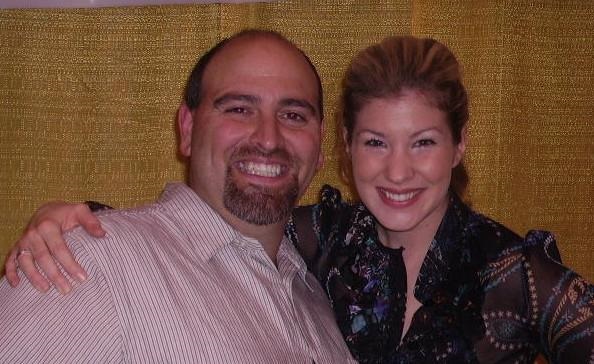
Wishing a very happy 43rd birthday to a talented artist who hails from Waterloo, Iowa – Emily West. When I worked in radio, we got to meet a lot of new artists when they did radio tours across the country. I had the pleasure of meeting Emily back in 2008 when she was signed to Capitol Records. I remember her really being something special.
We had her come in and play for our staff in the conference room at the radio station. She was very personable and had a contagious laugh. It was a joy to get to know her before she began to sing for us. I remember her doing 4 or 5 songs for us and two of them really struck a chord with me.
The first was her debut single “Rocks in Your Shoes.” It was a song that I could totally relate to. Life can be very difficult, and sometimes you gotta walk through life with the rocks in your shoes. It was just her and a guitar player in the conference room. When she began to sing, I fell in love with her voice. It was powerful and pure. The song was uptempo and I thought it should have been a hit (it reached number 39 on the charts).
The second song was called Blue Sky. It was a gut wrenching song of heartache that she sang with such emotion that it nearly brought me to tears. And that was just with her and her guitar player! The fully produced version was hauntingly beautiful. It was remixed as a duet with her labelmate, Keith Urban and released in 2010. Roughstock gave the song 4½ stars out of 5, stating that “‘Blue Sky’ is already a contender for one of 2010’s best singles.” Sadly (and to me, unbelievably), it only reached number 38 on the charts.
When we had to pick a new act to perform at a local women’s expo, we all unanimously picked Emily as our top pick. She made that big of an impact on us and we all loved her! When we found out she was available, it made us even more excited. Naturally, she was just wonderful and many listeners told us how much they enjoyed her.
Perhaps you have seen her on television? She also won $25,000 on Are You Smarter Than a 5th Grader in 2009. Emily appeared in a 2010, episode of Celebrity Apprentice as the “music make-over” target for the women’s team led by Cyndi Lauper. Lauper won the challenge and as a result West donated 100% of the first month of iTunes sales of her song “Blue Sky” to the Stonewall Community Foundation, Lauper’s charity. Then, in 2012, she did a guest appearance on the crime drama Body of Proof. But it was in 2014 that TV viewers came to know her and love her when competed on America’s Got Talent during their 9th season.
I cannot begin to tell you how disappointed I was that she was only the runner up that year. She was amazing in every performance she did. Her talent was on display for all of America to see and she knocked it out of the park every time! Her version of Sia’s Chandelier was talked about for weeks after it aired. It was stellar. I am sure that I wasn’t the only one who thought that there was no way that she should have lost to a magician!
Here is Emily West with Keith Urban singing harmonies on Blue Sky.
Wow. Just Wow!
Just because, here is her debut single, Rocks in Your Shoes
Happy Birthday, Emily West!!! I’m proud to be a “Westie!”
This blog is my entry for Dave over at A Sound Day’s “Turntable Talk.” Kudo’s to Dave for picking some fantastic topics, and at the same time letting us participants “run” with it. The following are the instructions we were given:
We were told we ” …don’t have to write literally about the question, but we’re looking for your thoughts on all things music video – how much did MTV change the music of the ’80s? Since there were already British acts making videos regularly in the 70s, do you think it would have taken off in a big way even without the American MTV influence? Did it kill careers… or make careers that shouldn’t have happened? Do you have favorite ones you still like to watch? Do you miss the days when MTV (or Much Music in Canada, or European equivalents) ran music videos instead of reality TV and old reruns? Really, approach it how you like, but I’m curious to get thoughts on the Video Revolution.“
My Conundrum
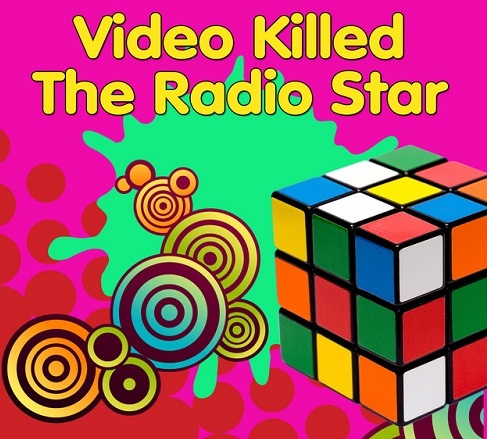
There have been many people who truly believe that video killed the radio star. As a child of the 70’s and 80’s, I lived through the beginnings of MTV. When I think about music videos, there are so many that I will forever associate with the songs. For example:
Take On Me – a-ha
Sledgehammer – Peter Gabriel
Rhythm Nation – Janet Jackson
Bad, Billie Jean, Beat It, Black or White, and of course, Thriller – Michael Jackson
Vogue – Madonna
Smells Like Teen Spirit – Nirvana
Buddy Holly – Weezer
Weapon of Choice – Fatboy Slim
Dire Straits – Money For Nothing
Legs – ZZ Top
Land of Confusion – Genesis
Hot For Teacher – Van Halen
Simply Irresistible – Robert Palmer
Girls Just Wanna Have Fun – Cyndi Lauper
Run DMC and Aerosmith – Walk This Way
California Girls – David Lee Roth
Got My Mind Set on You – George Harrison
Stuck With You – Huey Lewis and the News
Faith – George Michael
White Wedding – Billy Idol
Opposites Attract – Paula Abdul
The list could go on and on! Those are just the ones that I pulled off the top of my head (and I am probably forgetting some big ones)!
The more I thought about it, I kept coming back to “Video killed the radio star.” Perhaps that is the case (as some proclaim), but I can think of one artist who made videos and it got him mainstream attention.
MTV Welcomes Weird Al Yankovic
According to Wikipedia, the discography of Mr. Yankovic consists of fourteen studio albums, nine compilation albums, eleven videos albums, two extended plays, two box sets, forty-six singles and fifty-four music videos.
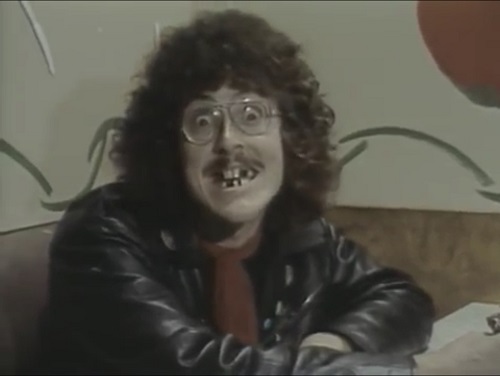
Those fifty-four music videos helped to take Weird Al Yankovic to the mainstream world. Let’s face it, the only place you could hear him on the radio was on the Dr. Demento Show, which was often aired in the worst possible time slot because of the crazy content. When Al ventured into the video realm, more and more viewers wanted to see – and hear – more of him!
Parody songs have been around forever, and very rarely ever got radio play. Novelty records were big in the 50’s and 60’s, and there were a few here and there in the 70’s. When Al comes on the scene in 1983, he took it to a whole new level, using videos.
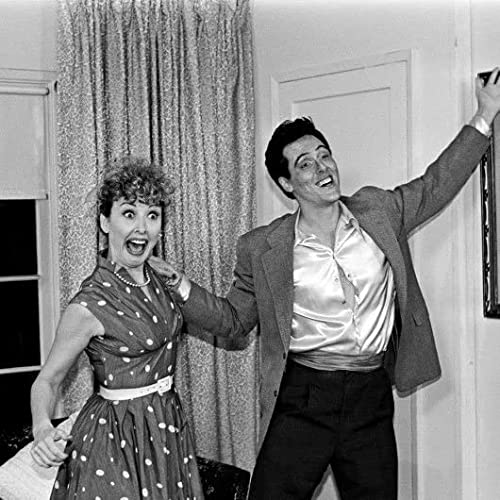
1983’s “Ricky” is credited as being his first video. It was a parody of Toni Basil’s “Micky.” It was a parody base on the TV show I Love Lucy. The video was shot in black and white and still looks great today.
From there, Al continued to use video to gain exposure on MTV. His next single was “I Love Rocky Road” which parodies Joan Jett’s “I Love Rock and Roll.” Instead of a greaser bar, it is set in … an ice cream parlor.
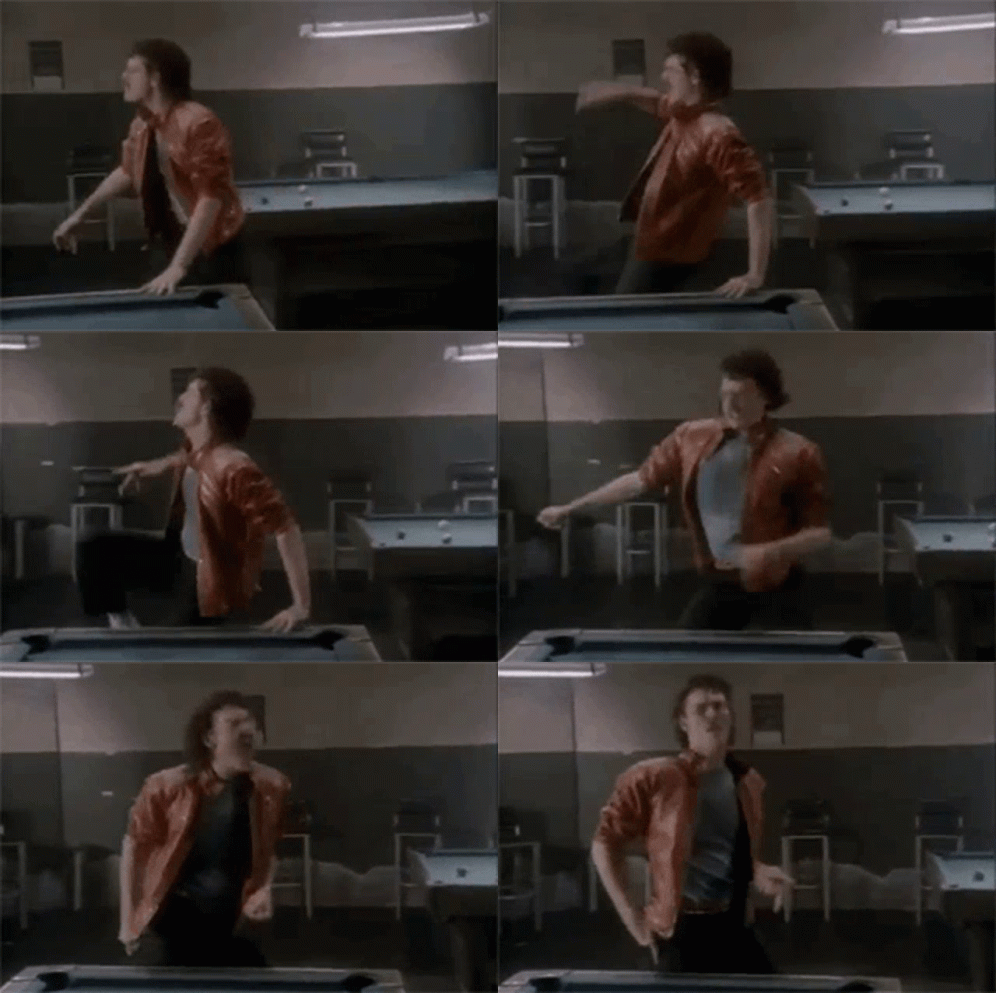
Al’s next video is really the one that really stands out as the one that moved him to a whole new level. Yes, he is a parody singer, but with the video for “Eat It” (a parody of Michael Jackson’s Beat It), not only is the song parodied, but so is the video. Al’s video is literally a shot for shot remake of Jackson’s. Throughout the video, instead of switchblades there are rubber chickens and kitchen utensils, and gags for almost everything in the Beat It video.
I can’t say whether or not the video is responsible for this, but the song won Al a Grammy Award for Best Comedy Recording in 1984. The video won for Best Male Performance at the 1984 American Video Awards!
From that point on, Al continued to make music videos for his singles. Art Fleming appeared in the “I Lost on Jeopardy” video, non-stop visual gags were plentiful in the “Like a Surgeon” video, and the James Brown “screams and shrieks” in “Living With a Hernia” were all more painful than soulful.
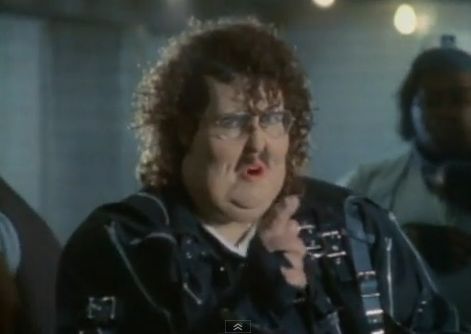
In 1988, Al once again parodied Michael Jackson. If I had to pick a “perfect” Weird Al parody video, it this would be one of two. Al won another Grammy Award for Best Concept Music Video for “Fat.” He even got permission from MJ to use the same set as the original video. Al’s makeup took three hours to apply every day and his fat suit weighed 40 pounds. Every time I hear the line, “Ding Dong, Yo!” I still crack up.
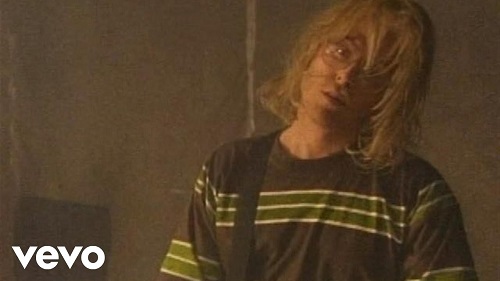
I mentioned that “Fat” is one of two “perfect” videos. The other would have to be the fantastic video for “Smells Like Nirvana” (a parody of Smells Like Teen Spirit). Al famously got permission for this parody from Kurt Cobain himself when he was performing on Saturday Night Live. In this Grammy-nominated video, Al satirizes Nirvana and the grunge movement, shooting on the same set as the original video and using the same actor who played the janitor (Rudy Larosa). Dick Van Patten has a cameo, which for whatever reason is extremely funny to me. Why Dick Van Patten??!! Someone said that Tony Hawk makes an appearance in the video, too. I’m not sure I know where.
Weird Al has certainly used music videos to his advantage. It takes a lot of creativity to write a good parody (I mean, come on, there are a lot of crap ones out there – just look on YouTube), but to take an already funny song and create a video that brings about even more humor, just enhances the song. I’ve said it before, and I will say it again, Weird Al is a musical genius.
There have been many other great videos that have followed. To name a few: Amish Paradise (featuring Florence Henderson), Headline News (featuring The People’s Court’s Doug Llewelyn), Gump (featuring Ruth Buzzi and Pat Boone), The Saga Begins (the fantastic Star Wars tribute), White and Nerdy (featuring Donny Osmond and Seth Green), and so many more.
Yes, video may have killed the radio star, but it certainly helped boost the career of Weird Al Yankovic.








 Various Ramblings of a Nostalgic Italian