Turntable Talk #47 – Baby Come Back!

This piece was originally published on the A Sound Day website as a part of the feature: Turntable Talk.

My thanks to Dave from A Sound Day for inviting me to take part in his monthly feature, Turntable Talk. This is the 47th round of the feature and once again he has given us a great topic. This time around he is calling it “Baby Come Back!”

Dave’s instructions this month: “I’d just like you to pick an artist you enjoy that had a great comeback; whether it’s one you have come across historically or one that you loved in real time, thought had disappeared but happily – boing! – they were back and great again.

When Dave reached out to us, I had just written about the passing of Neil Sedaka. He certainly falls into this category. I didn’t want to feel repetitive, so I opted not to write about him again. Instead, I chose someone who I have written about a few times and definitely saw his career take off – stall – and then have a resurgence. Today, I shift the spotlight to “The Big O,” Roy Orbison.
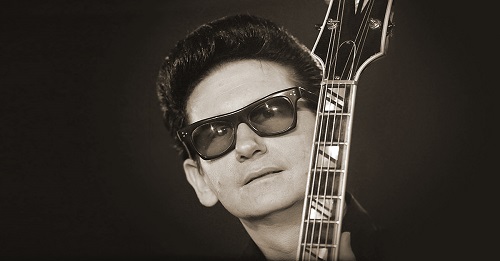
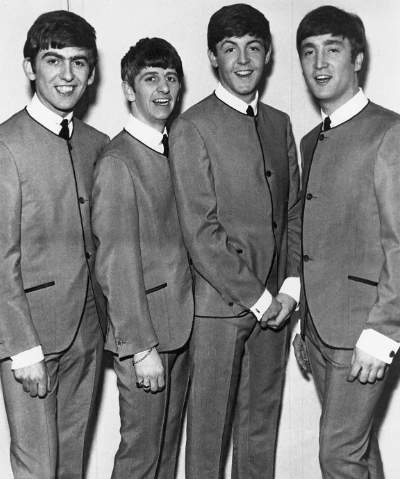
Roy Orbison is a rock and roll legend.  I refuse to debate this.  It is a fact.  The Beatles and Elvis Presley (both legends in their own right) have stated on record that Roy was a major influence on their music.  Roy’s music was different – it had its own style and a certain darkness to it.  My first exposure to Roy Orbison was when I was about 4 or 5 years old.

I distinctively remember my dad having an album of Roy’s Greatest Hits.  My favorite song as a kid was Dream Baby.  I didn’t know that was the name of it at the time.  I do know, however, that when I asked him to play it, I would ask for it by singing the opening bass line: “Daddy, play ‘boom boom boom, bum bum boom.’”  I remember the first song on the album was Candy Man, which started with a harmonica.  Coincidentally, that is the instrument Roy asked his parents for as a kid.

When asked he wanted for his sixth birthday, Roy told his parents he wanted a harmonica.  Luckily for the music industry, his father bought him a guitar instead.  While some stories differ, most biographies claim that Roy learned how to play from his father Orbie Lee Orbison.  Some sources say that he learned from his Uncle Charlie, Orbie’s brother. Either way, he was taught how to play by family.

After graduating from high school in 1954, Roy enrolled at North Texas State College. His original plan was to study geology so he could secure work in the oil fields if music didn’t pan out. In his first year, he became bored with the course and switched to history and English.

While in college, Roy played music with fellow students Billy Pat Ellis, Dick Penner, and Wade Moore. They called themselves the Wink Westerners. Penner and Moore had written a simple, catchy rockabilly song, called “Ooby Dooby.” The song impressed Orbison, and he started looking into how he could make a recording of it. He heard that his schoolmate Pat Boon had been signed to a record deal, and it further strengthened his resolve to become a professional musician.  

While playing a New Year’s Eve dance in 1954, Roy and the Wink Westerners had mostly played country and western swing music throughout the night. A decision was made to end the night by playing Bill Haley & The Comets’ song, “Shake, Rattle and Roll.” This would be the thing that caused the band to switch to rock and roll music.

The band began playing “Ooby Dooby” in their shows and because of their success, they got their own radio show on station KMID. In 1955, the band got their own TV show and artists came to play and sing on it.  Among them, Elvis Presley and Johnny Cash.

Roy pulled Johnny aside and asked for advice.  He wanted to know how to get a record released on the radio.  Johnny suggested that he call Sam Phillips over at Sun Records in Memphis.  Johnny gave Roy the number and sure enough Roy called.  I am sure he was not expecting what happened.  Sam Phillips answered the phone and after a brief conversation, Sam hung up on him, but not before telling Roy, “Johnny Cash doesn’t run my record company!”

In an ironic twist of fate, Roy eventually found a place to record and recorded “Ooby Dooby” with his band, now called the Teen Kings.  The song was released in 1956 and Roy took it to a well known record dealer named Cecil “Poppa” Hollifield. He heard the song and immediately called a “connection” he had in Memphis and played him the record over the phone.  His connection asked for a copy of the record, and three days later he called Poppa up to tell him he wanted the Teen Kings in Memphis in three days to record in his studio.  That connection was none other than Sam Phillips of Sun Records!
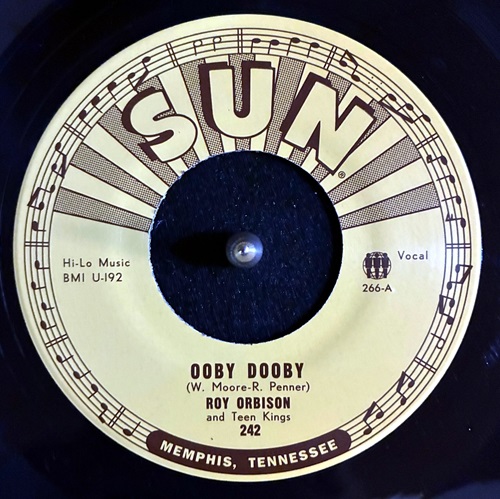
His record deal put him out on tour with the likes of Johnny Cash, Faron Young, Carl Perkins, and Johnny Horton among others.  In 1958, Roy was asked to tour with the Everly Brothers.  During the tour, the Everly Brothers told Roy they needed a new single and asked if he had any songs.  He picked up his guitar and sang the song Claudette.  They liked it, and asked him to write down the words and chords.  The song was the B-side of All I Have To Do Is Dream.  Roy had some of his other songs recorded by artists like Jerry Lee Lewis, Buddy Holly, and even Ricky Nelson.

In 1959, Roy was signed to an independent label called Monument.  It was on this label that so many of Roy’s big hits were released, starting with Uptown.  That was followed by Only The Lonely (which reached #2), Blue Angel, and I’m Hurtin’. What followed was Roy’s first #1 song, Running Scared.

Roy had hoped to change up the “pop” sound and try something different.  They recorded the song twice and he was disappointed with the two takes, so they cut it again.  Instead of using a falsetto voice, Roy sang the high natural A and nailed it.  The accompanying musicians were awestruck and had never heard anything like it.  Producer Fred Foster said “Nobody had ever hear anything like it before!”

What followed was four solid years of top 40 hits.  Those hits included Crying, Candy Man, Dream Baby, Working for the Man, In Dreams, Pretty Paper, Leah, Blue Bayou, Mean Woman Blues, and Its Over. His success got him a spot opening up for some concerts in England. He was the opening act for a few guys who were known as The Beatles (they had yet to become a big thing in the US).  The tour sold out in minutes, and on the first night of the show, they say that Roy played 14 encores before the Beatles ever got on stage!

In 1964, Roy recorded what is probably his biggest hit, Oh Pretty Woman.  It would be his last big hit while at Monument records. How it came about is a story in itself. Touring hurt his personal life, and his wife Claudette began having an affair.  One day while writing with songwriter Bill Dees, Claudette entered the room and said that she was going to Nashville.  Roy asked her if she had any money, and Dee’s replied, “A pretty woman never needs any money.” With that phrase, and about 40 minutes, they wrote Oh, Pretty Woman, which went to number 1 in almost every country in the world.
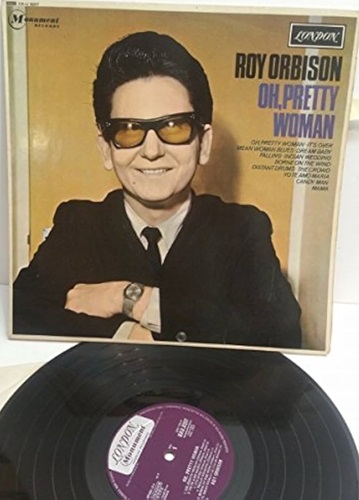
The success of Oh, Pretty Woman was followed by a string of tragedies. In 1966, Claudette was killed when a pickup truck pulled out in front of her and she hit the door.  She died instantly.  Two years later, Roy was on a tour in England and he received a call that his home had burned down.  As if that wasn’t enough bad news, he was also told that his two oldest sons were killed in the fire.  He tried to cope by keeping himself busy with work.  He starred in the film The Fastest Guitar Alive, which ended up being his only lead role. After that, Roy seemed to slip away from the spotlight.

Despite all that was going on in his life, Roy continued to make music in the 1970’s. It was during this time that his career really slowed. It was around this time that he started to wear his hair straight, instead of combing it back. He would wear it like this for the rest of his life. He did see some success when his single “Penny Arcade” was number one in Australia for many weeks and “Too Soon to Know” reached number three in England.

He continued to tour, but played to mostly empty auditoriums. This was the case with the concert at Cincinnati Gardens that he played on his 40th birthday in April 1976. This was a new low for Roy. In his book, Roy Orbison: Invention Of An Alternative Rock Masculinity, Peter Lehman stated that Orbison’s absence was a part of the mystery of his persona: “Since it was never clear where he had come from, no one seemed to pay much mind to where he had gone; he was just gone.”

In 1977, Roy was not feeling well, so he decided to spend the winter in Hawaii. Once there, he checked in to a hospital where testing discovered that he had severely obstructed coronary arteries and was lucky to be still alive. He underwent open-heart surgery on January 18, 1978. His medical history stated that he had suffered from duodenal ulcers since 1960 and had been a heavy smoker since he was young. The surgery was a success and Roy said that he felt great. His weight would continue to fluctuate, however, for the rest of his life. He also continued to smoke cigarettes, despite the advice of his doctor.

A decade later, in 1987, he was inducted into the Rock and Roll Hall of Fame.  Bruce Springsteen was there to do the induction honors. Bruce concluded his speech with a reference to his own album Born to Run: “I wanted a record with words like Bob Dylan that sounded like Phil Spector—but, most of all, I wanted to sing like Roy Orbison. Now, everyone knows that no one sings like Roy Orbison.” Roy was so touched by the speech, he asked Springsteen for a copy of it. He would go on to say of his induction that he felt “validated” by the honor. After the awards, Orbison signed with Virgin Records and began preparing to record an album of new songs.

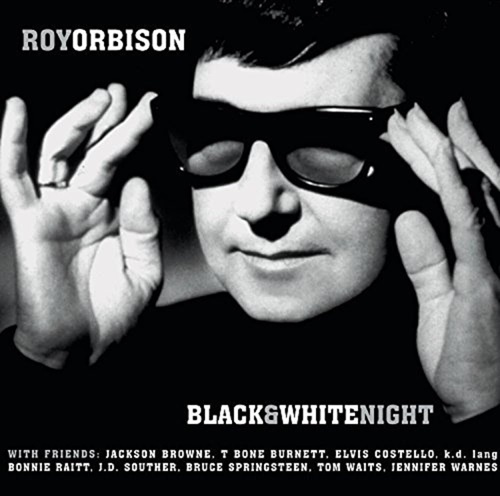
Following his Rock and Roll Hall of Fame induction, Roy recorded a concert that would go air on television as a special. He had always wanted to do one and this special included some powerful special guests:  Elvis Costello, k.d.Lang, Tom Waits, Bonny Raitt, Jennifer Warrens, Jackson Brown, and, of course, Bruce Springsteen.  The special was called Roy Orbison and Friends – A Black and White Night Live. It was aired on cable and released on video and became one of Roy’s greatest concerts.
Roy had begun working with Jeff Lynne of ELO, who would produce his next album. Lynne had just completed production work on George Harrison’s Cloud Nine album. The three of them ate lunch together one day when Orbison accepted an invitation to sing on Harrison’s new single. They subsequently contacted Bob Dylan, who, in turn, allowed them to use a recording studio in his home. Along the way, Harrison made a quick visit to Tom Petty’s House to get his guitar; Petty and his band had backed Dylan on his last tour. By that evening, the group had written “Handle With Care.” The song and all that went into it led to the idea of recording an entire album together. They called themselves the Traveling Wilburys.

When Jeff Lynne described the recording sessions, he said, “Everybody just sat there going, ‘Wow, it’s Roy Orbison!’ … Even though he’s become your pal and you’re hanging out and having a laugh and going to dinner, as soon as he gets behind that [mic] and he’s doing his business, suddenly it’s shudder time.”
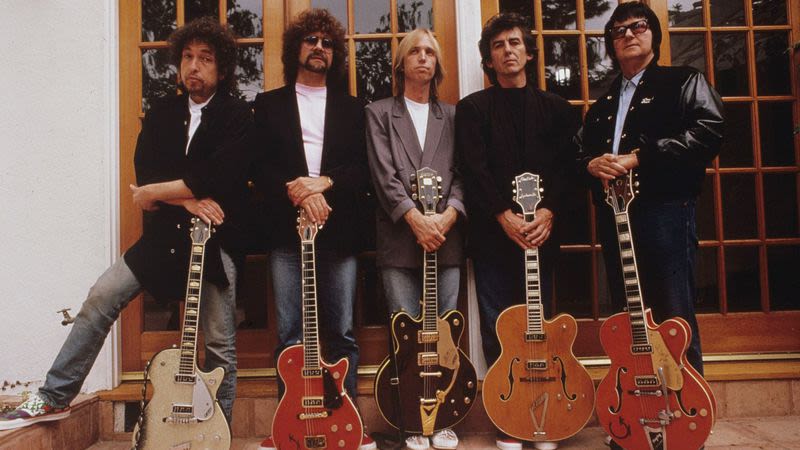
For the Wilburys album, Roy was given a solo track. The song was “Not Alone Anymore.” In reviews of the album, Roy’s contributions were highly praised by critics and fans alike. Because of this, he decided to pursue his second chance at stardom. He expressed amazement at his success: “It’s very nice to be wanted again, but I still can’t quite believe it.” He lost some weight to fit his new image and the constant demand of touring, as well as the newer demands of making videos.

In November of 1988, Roy put the finishing touches on the Mystery Girl album.  It was co-produced by Jeff Lynne. It was set for release in 1989.  This would be the “Return of Orbison!” There was to be a world tour to support the project.  No one could have known that Roy would not be around to enjoy his comeback.

On December 6, 1988, Roy went to his mother’s house and chatted with his son Wesley. He went to the bathroom but did not return for 30 minutes. He was found collapsed on the bathroom floor and rushed to the hospital by ambulance. Roy never regained consciousness and passed away at age 52 of a heart attack.

I was still a senior in high school and I was going to WKSG to rip news and type up stories for the news director.  I would stay till 6am and then head to school.  I remember going to the Associated Press wire and seeing the “URGENT” breaking news that Roy had died.  We were an oldies station and this was big news.  I can still remember when we broke the news.  It is one of those moments I will never forget.
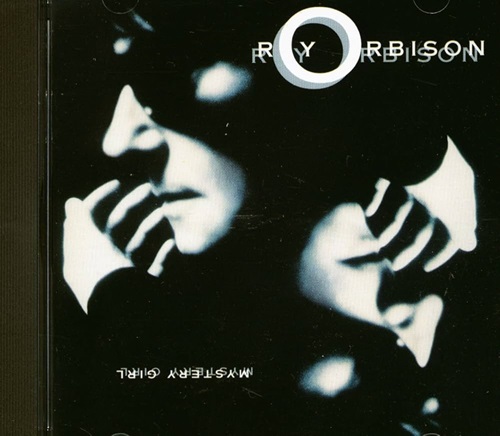
You Got It (from the Mystery Girl album) was released after Roy’s death and reached the top 10.  One of the coolest tributes to Roy was when the Traveling Wilburys released the song End of the Line.  In the video, the group is on a train singing.  When Roy’s vocal comes on, the camera is on a rocking chair in which Roy’s guitar is sitting.  Next to it, is a framed photo of Roy.  That scene will always give me chills.

One can only wonder what might have happened if Roy hadn’t passed away. Would the world tour have led to further chart success? Numerous new albums and singles? Perhaps another #1 record? The world will never know. However, Roy never really was forgotten.

  • On April 8, 1989, Orbison became the first deceased musician since Elvis Presley to have two albums in the US top five at the same time, with Traveling Wilburys Vol. 1 at number four and his own Mystery Girl at number five.
  • In the early 1990s, Rodney Crowell and Roy’s friend and occasional songwriting partner Will Jennings wrote the lyrics to a recording of a melody that Orbison had made before his death. They titled the resulting song, which was recorded by Crowell and released in 1992, “What Kind of Love.”
  • In 2014, a demo recording of Orbison’s “The Way Is Love” was released as part of the 25th-anniversary deluxe edition of Mystery Girl. The song was originally recorded on a stereo cassette player around 1986. Roy’s sons contributed instrumentation on the track along with Orbison’s vocals.
  • On December 4, 2015, the studio album One of the Lonely Ones, recorded by Orbison in 1969, was posthumously released. The album, which Orbison recorded surreptitiously in the aftermath of his first wife Claudette’s death in a motorcycle accident and the death of their two sons in a house fire 2 years later, was long believed lost.

One of my favorite posthumous Orbison recording were released in 2017 and 2018. In 2017, the album A Love So Beautiful was released. It features archival vocal recordings of Orbison accompanied by new orchestral arrangements by the Royal Philharmonic Orchestra. I believe that these “new” recordings only add to the beauty of these hit songs. The addition of strings to In Dreams, Crying, It’s Over, Running Scared and Love Hurts only deepens the meaning and emotions of the songs. The addition of a horn section to Dream Baby and Mean Woman Blues only makes them sound more vibrant and full. A second album, Unchained Melodies, with the Royal Philharmonic was released in 2018.
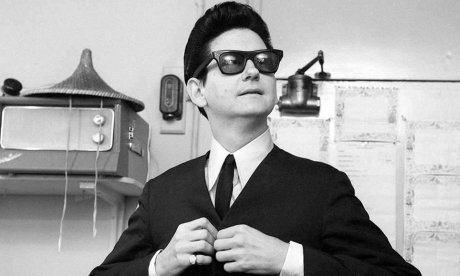
To me, Roy Orbison will always be a legend. His music was one of a kind. Colin Escott wrote an introduction to Orbison’s biography published in a CD box set: “Orbison was the master of compression. Working the singles era, he could relate a short story, or establish a mood in under three minutes. If you think that’s easy—try it. His greatest recordings were quite simply perfect; not a word or note surplus to intention.” His style was like no one else. In the 60’s he said, “I’m not a super personality—on stage or off....People come to hear my music, my songs. That’s what I have to give them.” His vocals were indescribably beautiful, haunting, and amazing. Elvis Presley stated Orbison’s voice was the “greatest and most distinctive he had ever heard.” I would have to agree.

Thanks again to Dave for hosting another great round of Turntable Talk. I cannot wait to hear what we’re writing about next month. Thanks for reading!

Turntable Talk #44 – That’s What Christmas Means to Me

It is time once again for Turntable Talk, our monthly feature hosted by Dave at A Sound Day. This is round #44 and with it being December, his topic is “That’s What Christmas Means to Me”.  Our instructions this month: This time, just think about Yule time and pick a song – Christmas-themed or not – that sums up your feelings for the day and season. Happy, loving, hopeful, stressful, over-commercialized, religious reflection… you pick it and give it a mini-soundtrack!

I had a hand full of songs that I thought about choosing. Ultimately, I always felt that there was something in the lyric that really didn’t fit the theme. At one point, I almost went through and picked a set of lyrics from one song and more lyrics from another thinking I could piecemeal something together. So I went back through my hard drive of Christmas songs….

Christmas has always been my favorite holiday. If you go back over the many blogs I have written for my page, I think you will find the majority of them are Christmas related. There is something magical about Christmas especially if you are a child. That’s why I almost picked 364 Days To Go from Brad Paisley who sang:

Don’t you get the sense tonight
That for now the world is right
And as another Christmas ends
My mind drifts and once again
I’m thinking like a six year old
Only 364 days to go

Another song I almost chose is one that I wrote about a couple of years ago. At that time, Frank Sinatra’s Christmas Memories really hit home for me. As he ends the song with the line, “Funny, but comes December, And I remember every Christmas I’ve known.” It hits home. As the Nostalgic Italian, I find myself looking back at pictures of Christmases gone by and can remember bits and pieces about each one.

Instead, I chose another Sinatra song to explain part of what Christmas means to me. Before I go into the details, let me be clear that Christmas remains a very special day for me. I enjoy watching the kids ripping open their presents and shouting with excitement. I love our tradition of having homemade cinnamon rolls for breakfast. There is an energy and feeling like no other on Christmas morning.

But all too often, I will find myself drifting off in memories of what Christmas used to be like for me. Those old feelings that I attempt to capture, but cannot because the “cast” has changed or disappeared. That is where Frank Sinatra’s “Whatever Happened to Christmas?” comes in.

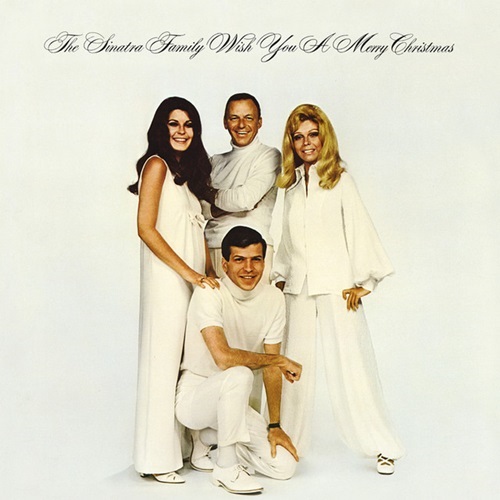
Whatever Happened to Christmas can be found on the 1968 album, “The Sinatra Family Wish You a Merry Christmas.” The song was actually released as a single and became a Top 10 record, peaking at number 7 on the Hot 100 Chart.

I must say that the song is deep and reflective. It is far from the “jolliness” of Jingle Bells or Let It Snow. But there is a sort of lesson there. I’ll post the song in a paragraph or so, but for now, look at the lyrics:

Whatever happened to Christmas? It’s gone and left no traces,
Whatever happened to the faces or the glow,
Whatever happened to Christmas, to Christmas way of living?
Whatever happened to the giving, the magic in the snow?

Remember the sight and the smell and the sound,
And remember hearing the call,
Remember how love was all around, whatever happened to it all?
Whatever happened to Christmas, bells in the streets were ringing,

Whatever happened to the singing, the songs we used to know.
Whatever happened to this Christmas, and when did it disappeared from view,
Where was I, and whatever happened to you?
Whatever happened to Christmas and you?

The song is about loss. It is also about change as we get older. “The Christmas way of living” from our youth is very different from it today. The snow was magical then, but a pain to shovel now. Just walking around town or in a store, there was the happiness and love that was felt by every one. When did the bells stop ringing? When did the singing stop? Where is the Christmas that was “just like the ones I used to know” (to quote Bing Crosby)?

This song connects to a reflective time long after Christmas morning is over and I get a moment to myself. There is a sense of sadness as I think back to my childhood and the innocence of it. I think about the possibilities and creativity that new toys brought my way. I think about the people who were key players in those special Christmas memories who are no longer here. And yet, while there is sadness, there is the lesson.

The lesson can be summed up in a quote attributed to Dr. Seuss: “Don’t cry because it’s over. Smile because it happened.”

So let me try to take this “downer” and bring it up a bit. When it comes to Christmas, there was (in the past) and is (in the present) a wonder to it all. That wonder, that magic, and that feeling is something that was worth celebrating then, and is worth celebrating now. When you celebrate, remember the past, but don’t let it control the present.

Thanks again to Dave for asking me to participate. I hope that this contribution doesn’t stop him from asking me to take part in next month’s topic.

To those of you who celebrate Christmas, I wish you and yours a very Merry and Blessed Christmas. For those who do not celebrate, I wish you a very happy holiday season. I thank you for reading and hope to see you next year!

Turntable Talk #43 – Spooky Tunes

It’s time once again for Turntable Talk. This is the 43rd round and since it will begin around Halloween, Dave from A Sound Day asked us to “pick a song that you like that is either about a scary story or person, or just sounds kind of spooky or scary to you.” What do you choose?

There are many songs that come to mind. Because my piece will be toward the end of the contributions, I am avoiding the obvious ones: Monster Mash, Werewolves of London, Purple People Eater, Witch Doctor, Thriller, Ghostbusters, etc… I am sure by the time this publishes, at least one or two of these will have been chosen.

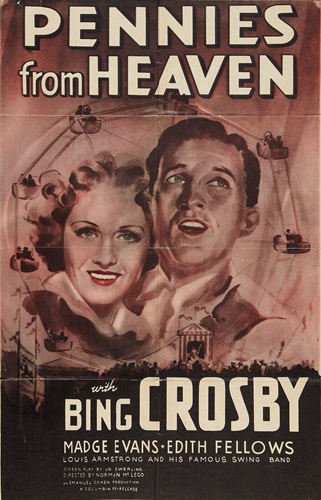
I have chosen to go with an odd tune that you may not be familiar with. It was actually a movie song from the 1936 film, Pennies From Heaven. The film starred Bing Crosby and Louis Armstrong. He was hired for the film at the insistence of Bing Crosby, Bing was a lifelong student, friend, collaborator and admirer of Armstrong. When the film came out, Armstrong got his own credit during the main titles, making him the first African-American to get featured billing alongside white actors. 

According to the Wonderful World of Louis Armstrong, Louis was “playing a bandleader who is hired by Crosby to perform at his nightclub, Armstrong’s “role, as written, makes one cringe,” according to Lawrence Bergreen. Bergreen quotes an exchange between Armstrong and Crosby in the film, comedically playing on the ignorance of Armstrong’s character, who asks for seven percent instead of accepting Bing’s offering of ten percent because his is a seven-piece band, “And none of us knows how to divide ten percent up by seven.

Bergreen writes that this banter dwells “on black inferiority and subservience” but what he doesn’t mention is that Pops (Armstrong) legitimately loved this scene, quoting it in front of friends on one of his later private tapes. One of his last television appearances was made with Crosby on the David Frost Show from February 10, 1971. During the interview portion, Armstrong talks about how much fun they had making the film and though 35 years had gone by. Armstrong quotes the entire “percent” scene, line by line, as it originally appeared in the film. Thus, it’s easy for a white critic to “cringe” while watching Pennies From Heaven but for Pops, funny was funny and he cherished the gags he was asked to deliver.

The lone song that Armstrong has to himself in the film is called “The Skeleton in the Closet.” As you watch this clip, I hope you appreciate the story telling and acting by Armstrong. I love watching him in this. He is completely enjoying himself while performing this. That is why I want you to see the movie scene first. The recording is good, but you certainly lose out by not being able to watch him.

The Wonderful World of Louis Armstrong says this about the recorded version: “The “spookiness” of the record gave the arranger the license to use all sorts of unusual harmonies and nonchord tones, things that would sound pretty modern ten years later, but just convey a haunted house spirit when used as they are on this record. ” Give it a listen.

Here are the lyrics:


There’s an old deserted mansion on an old forgotten road
Where the better ghosts and goblins always hang out
One night they threw a party in a manner a la mode
And they cordially invited all the gang out

At a dark, bewitchin’ hour when the fun was loud and hearty
A notorious wall flower became the life of the party
Mmm, the spooks were havin’ their midnight fling
The merry makin’ was in full swing
They shrieked themselves into a cheerful trance
When the skeleton in the closet started to dance


Now a goblin giggled with fiendish glee
A shout rang out from a big banshee
Amazement was in every ghostly glance
When the skeleton in the closet started to dance

All the witches were in stitches while his steps made rhythmic thumps
And they nearly dropped their broomsticks when he tried to do the bumps
You never heard such unearthly laughter, or such hilarious groans
When the skeleton in the closet rattled his bones

A Halloween classic? Probably not. However, it is a fun song that fits right in with Dave’s topic this month. I really hope that you enjoyed it and aren’t upset that I passed on “the usual” hits. The thing I love about Dave’s feature is being exposed to songs that are new to me.

Thanks again to Dave for hosting my favorite monthly feature to write for. I look forward to the next topic.

Thanks for reading!
Halloween Repost

I know that this may step on the toes of Dave over at A Sound Day as his feature Turntable Talk this month will feature write ups about “Spooky Hits.” What follows is a piece I wrote about DJing Halloween Parties and the “must have” songs.

It shouldn’t ruin Dave’s feature much, as all I am doing is listing songs. So be sure to be on the lookout for Dave’s Spooky edition of Turntable Talk starting today.

(This post was originally from October of 2022.)

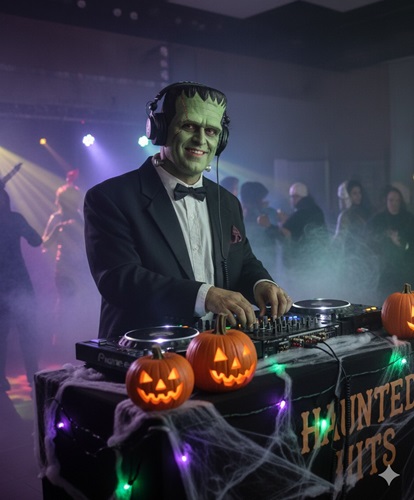
I have DJ’d countless Halloween parties. This year I had to turn down one of my favorite ones. For the past few years a local daycare throws a big party and kids and their parents dress up in costumes and it is always a blast. Due to my current work schedule, I was just not able to be there this year.

I always had to have a variety of “haunted” hits to play at these parties. In case you are looking for musical ideas for your Halloween party, here is a starter list.

As much as I hate this record, you have to play Bobby “Boris” Pickett

You’ve also gotta play Michael Jackson’s Thriller. (Love Vincent Price’s narration in this!)

A personal favorite is from the Classics IV – Spooky

I always loved Jumpin’ Gene Simmons version of Haunted House

A favorite of the kids – This Is Halloween from The Nightmare Before Christmas

Speaking of nightmares, DJ Jazzy Jeff and The Fresh Prince offer up Nightmare on My Street

A great one from The Eagles – Witchy Woman

Kid Rock sampled this one for All Summer Long – Werewolves of London from Warren Zevon

You gotta play Clap for the Wolfman from the Guess Who

How about the silly song called The Blob by The Five Blobs?

The Hocus Pocus movie brought this one back, but the original is the best version – I Put a Spell On You by Screaming Jay Hawkins

How about some Rockwell? Somebody’s Watching Me

Be careful who you run around with …. Van Halen – Runnin’ With the Devil

Another favorite of mine – Santana – Black Magic Woman

It’s a very rare occurrence to have a full moon on Halloween, but this song works all year round. Bad Moon Rising – CCR

The moon causes the Shadows in the Night – Pat Benatar

Beware of the walking dead …. Zombie by the Cranberries

Another overplayed Halloween Song – The Purple People Eater – Sheb Wooley

I suppose you have to play Ray Parker Jr. – Ghostbusters

Going back to the 50’s for a couple crazy songs …

The Mummy from Bob McFadden and Dor

From Chipmunk creator David Seville – The Witch Doctor

Grab a bite with a vampire – Dinner With Drac from John Zacherle

Three Devilish songs now –

Devil with the Blue Dress – Mitch Ryder and the Detroit Wheels

Sympathy for the Devil – The Rolling Stones

A classic from The Charlie Daniels Band – The Devil Went Down to Georgia

Alice Cooper did this one in Wayne’s World – Feed My Frankenstein

Speaking of Frankenstein – how about the Edgar Winter classic instrumental..

Need some cowbell?? Don’t Fear The Reaper – Blue Oyster Cult

A song I have blogged about in the past – Superstition – Stevie Wonder

Demons – Imagine Dragons

Trick or Treat … I Want Candy – Bow Wow Wow

Another 80’s flashback … Dead Man’s Party – Oingo Boingo

Lots of requests for Enter Sandman – Metallica

All good lists need a cut from Frank Sinatra – Witchcraft

I’ve never really understood how this is a Halloween song, but everyone wants to do the Time Warp from the Rocky Horror Picture Show

From another film (Rain Man) The Delta Rhythm Boys -sing about Dem Bones

Now, some kid favorites which had me searching YouTube a lot ….

Spooky Scary Skeletons

I sang this in music class when I was in elementary school and kids are still singing it today – Witches Brew

Then you can fill in with various Theme songs from films and TV …

Scooby Doo

Tales From The Crypt

The Twilight Zone

The Munsters

The Addams Family

The X-Files

Whew!!

Watch for my Turntable Talk pick in the days ahead on Dave’s sight (and eventually here). It is a song that I don’t mention in this blog!

Turntable Talk #39 – Bands? We Don’t Need No Stinkin’ Bands!

Dave at A Sound Day just wrapped up his monthly feature Turntable Talk. It was an interesting topic this time around and there were a lot of surprises as to who everyone chose to write about. This was my entry to the feature, which originally posted on Dave’s site on Monday:

It is time once again for Dave’s feature Turntable Talk. Dave features this every month on his site A Sound Day. This is the 39th edition, and he continues to come up with fantastic topics. This month is a fun one: Bands? We Don’t Need No Stinkin’ Bands!  Dave’s instructions were simple: This time around, we’re looking for artists who left popular bands to go solo and did well (either commercially or else in your own critical assessment.)

I am sure that I did exactly what the other participants did when the topic was presented – I Googled. I was actually surprised at just how many artists moved from a group to become a solo artist. Off the top of my head I can list Diana Ross, Sting, Lionel Richie, Eric Clapton, Gwen Stefani, Ricky Martin, Peter Gabriel, Rob Thomas, Steve Perry, Lou Gramm, and Justin Timberlake. There are SO many.

In all honesty, I had my choice almost immediately. However, as I began to write about him, there was another artist connected with him that became more interesting to me. It was an artist who had solo success for a short time, and then a sad ending.

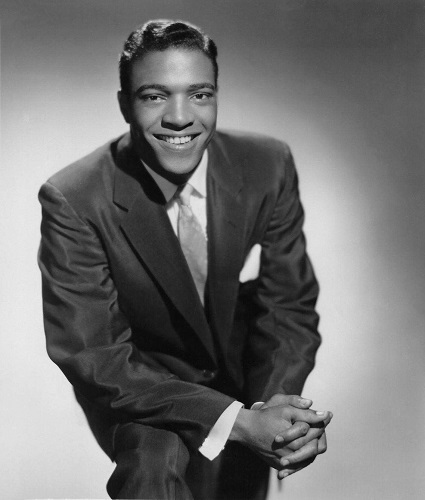
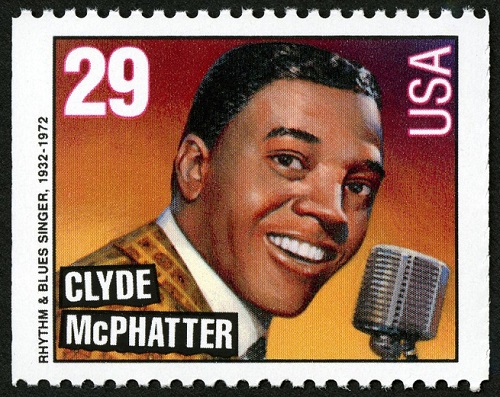
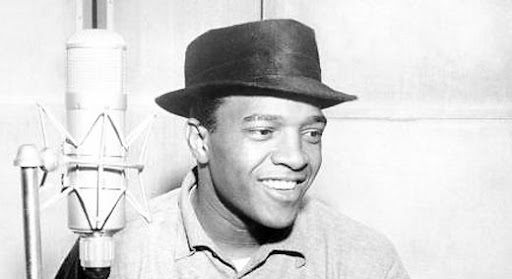
If I mention The Drifters I am sure you can name a few of their big hits. Under The Boardwalk, This Magic Moment, and Up On The Roof are just some of them. The Drifters were formed by my choice artist in 1953. His name was Clyde McPhatter. Let’s go back a couple years to see how it all came together.

Like many artists, Clyde McPhatter began singing in the church choir at his father’s church. In 1950, he was working at a grocery store. He entered the Amateur Night contest at Harlem’s Apollo Theater – and won! Afterward, he went back to working in the store.

One Sunday, Billy Ward of Billy Ward and the Dominoes heard Clyde singing in the choir of Holiness Baptist Church of New York City. He was immediately recruited to join the group. Clyde was there for the recording of their hit “Sixty Minute Man,” which was a number one song on the R&B chart for 14 weeks in 1951.

My original pick for this round was Jackie Wilson. Jackie was hired by Billy Ward in 1953 to join The Dominoes. That same year, Clyde left the group. He coached Wilson while they were out touring together. Wilson would leave in 1957. Apparently, Ward was not pleasant to work with. Wilson said, “Billy Ward was not an easy man to work for. He played piano and organ, could arrange, and he was a fine director and coach. He knew what he wanted, and you had to give it to him. And he was a strict disciplinarian. You better believe it! You paid a fine if you stepped out of line.”

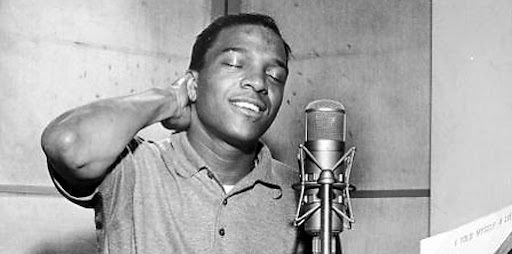
Atlantic Records saw a Dominoes show and noticed that Clyde was not with the group, so they searched for him, found him and wanted to sign him to a record deal. Clyde agreed to sign on one condition – they allow him to form his own group. That group was the Drifters. While known as Clyde McPhatter and the Drifters, they released songs like Money Honey.

Elvis Presley covered Money Honey in 1956. In researching for this piece I was surprised to find that McPhatter and the Drifters did the original of another Elvis hit – Such a Night.

In late 1954, McPhatter was inducted into the U.S. Army. He assigned to Special Services in the continental United States. This allowed him to continue recording. After his tour of duty, he left the Drifters and launched a solo career. The Drifters continued as a successful group, but with many changes in personnel, and the group assembled by McPhatter was long gone by the time their greatest successes were released after he left the group.

It would take two years, but Clyde would finally get his first solo #1 R&B hit when he released “Treasure of Love” in 1956. It would top out at #16 on the US Pop Chart. I love his vocal on this one.

His biggest solo hit would come in 1958 when he recorded and released a song written by Brook Benton. A Lover’s Question would reach #6 on the Pop Chart. If I had to pick my favorite Clyde song, it would be this one. There is so much to love about this song. That acapella bass line being sung throughout the song is very catchy.

McPhatter would leave Atlantic Records and bounce from label to label recording many songs, but not having much success. His last top ten record would come in 1962 with a song written by Billy Swan. Lover Please was first recorded by the Rhythm Steppers in 1960. It was the title track from Clyde’s 1962 album of the same name. It would reach #7 on the Pop Chart.

Clyde did manage to have a top 30 hit in 1964 with “Crying Won’t Help You Now,” but when it fell of the chart, he turned to alcohol for comfort. He would record every so often, but nothing ever really did well on the charts. He always had a decent following in the UK, so in 1968 he moved to England.

He wouldn’t return to the US until 1970. Outside of performing on a few Rock and Roll Revival shows, he lived a very private and reclusive life. In 1972, Decca Records signed him and they were planning a a big comeback. That never materialized as Clyde passed away on June 13, 1972 of complications from liver, heart and kidney disease. This was brought on by his alcohol abuse years earlier. He was only 39 years old.

His legacy consists of over 22 years of recording history. Clyde was the first artist to be inducted twice into the Rock and Roll Hall of Fame, first as a solo artist and later as a member of the Drifters.

In 1993, Clyde was honored with his own stamp by the US Postal Service.

His career had ups and downs, and his hit songs were an important part of Rock and Roll history. Vocalists like Marv Johnson, Smokey Robinson and Ben E. King are all said to have patterned their vocal styles on Clyde’s. Others have cited him as a major influence as well. In the book “The Drifters” by Bill Millar, he says:

“McPhatter took hold of the Ink Spots’ simple major chord harmonies, drenched them in call-and-response patterns, and sang as if he were back in church. In doing so, he created a revolutionary musical style from which—thankfully—popular music will never recover.”

Thanks again to Dave for hosting another great round of Turntable Talk. I cannot wait to see who the other writers have picked and look forward to Round #40 next month.

Thanks for reading and thanks for listening!
Turntable Talk #38 – It’s About Time

Dave just wrapped up another chapter of Turntable Talk. This was my contribution:

It is time once again for Turntable Talk hosted by Dave at A Sound Day. For over three years now, he has offered up a musical topic each month for me (and other participants) to write about. This month’s topic is “It’s About Time.”

Dave’s instructions are simple. “Tell us about a song about “time.” It could be one using the word “time” in the title … and there’s no shortage of them… or one that actually somehow explores the passage of, or idea of time.” While this is a topic that is fairly easy, I can’t help but wonder if there will be duplicate submissions.

For example, right off the top of my head I came up with Time in a Bottle from Jim Croce (which I have written about before. Then Time After Time from Cyndi Lauper came to mind. This was followed by Cher’s If I Could Turn Back Time and Huey Lewis’ Back in Time. Before I could shut my mind off Styx Too Much Time on My Hands and Semisonic’s Closing Time entered my mind.

I immediately discarded those, because I am sure that the other participants would choose one of those. So I dug a little deeper and tried to think of a song that might not be someone’s choice. I narrowed it down to No Time by the Guess Who, Just in Time by Dean Martin, Crying Time from Ray Charles, Time is Tight by Booker T and the MG’s, and my choice.

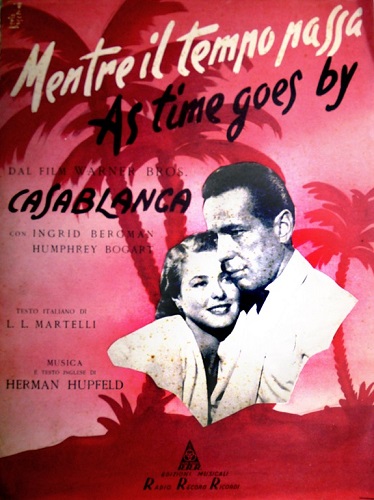
I chose a song written by Herman Hupfeld! Now everyone knows Herman, right? No. Not really, but I am sure you will know the song. It is a song that was written in 1931 for the Broadway show “Everybody’s Welcome.” It was first recorded by Rudy Vallee in July of 1931. It would be covered by Billie Holiday, Louis Armstrong, Frank and Nancy Sinatra, Natalie Cole, Carly Simon and Bob Dylan (Just to name a few).

While the song was recorded a few times after Vallee’s version, it was 11 years later when it would really get noticed. In 1942, the song was sung by the character “Sam” (portrayed by Dooley Wilson) in the classic film – Casablanca. As Time Goes by is heard throughout the film in short musical breaks.

RCA Victor wanted Dooley to record a version of it to be released to the public. However, a musician’s strike happened between 1942 and 1944, so he was not allowed to do so. Instead, the record label re-released the Rudy Vallee version, which went on to become a number one record (11 years after the original release).

Wiki states: Like many later singers, Wilson in Casablanca starts with “You must remember this, a kiss is still a kiss…”, singing only the verses and refrain (“As time goes by”). He entirely omits the intro that put those “fundamental things” into context: “This day and age we’re living in gives cause for apprehension, With speed and new invention and things like third dimension. Yet, we get a trifle weary with Mister Einsten’s theory, So we must get down to earth, at times relax, relieve the tension. No matter what the progress or what may yet be proved, The simple facts of life are such they cannot be removed.”

The song was voted No. 2 on the AFI’s 100 Years… 100 Songs special. The show commemorated the best songs in film.

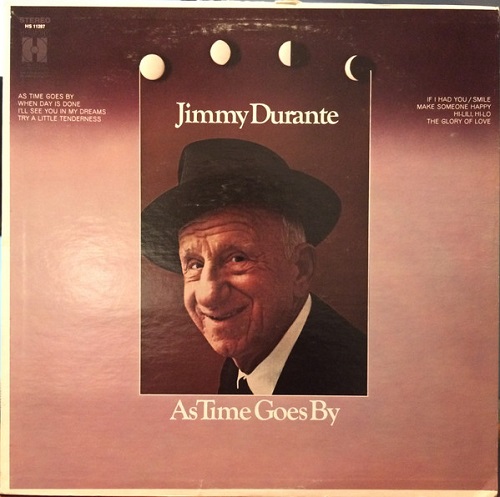
The version I chose to feature is by a multi-talented comedian, actor, pianist and singer. His voice was instantly recognizable on radio. He was a guest on many television shows and had some success as a singer. He is, however, probably best known for … his nose. His nickname was “the schnozzola.” I am, of course, talking about the great Jimmy Durante.

The song itself is beautiful. Every artist who has covered it brings their own special take on it. There is something that really hits me when I hear Durante’s version. Despite that raspy voice, there is a sincerity that makes it just a bit better than the other versions. I’m not trying to diss the other versions, but none of them give me goosebumps when I hear them. Jimmy’s version does. For some reason, his voice blends so well with the string arrangement.

Before I post the song, you know I have to say it – “Play it again, Sam!”

In a live version, Jimmy adds the intro that many leave out.

Thanks again to Dave for asking me to participate and for hosting this feature. I’m excited to see the choices of the other writers!

Thanks for reading and for listening!
Share Your Nostalgia – Round 3

A while back, I asked some blogger friends if they’d want to write a piece for my Share Your Nostalgia feature. In the past we have looked at Favorite Childhood Toy and Favorite Childhood Book. Today, we go back to Saturday mornings. This was when we sat in front of the TV with our favorite cereal and watched hours of cartoons. So I asked my guests to write about their favorite cartoon or cartoon character growing up.

Today’s guest blogger is no stranger to readers of this blog. He is my friend, Dave, from A Sound Day. He has been hosting his monthly music feature Turntable Talk for 3 years. I have been lucky enough to write for every topic. He is also the one who encouraged me to host a feature of my own, which is this one. I have used his presentation as a blueprint for my feature. I appreciate Dave’s support on this. I probably would have never started it, had he not encouraged me. For that, I thank you!

I’m excited to see what Dave’s thoughts are, so I’ll turn it over to him….

Thanks to Keith for inviting me back to this round of his super “Share your Nostalgia”. I love the idea and the picks for toys and books were pretty simple for me. But this round is a bit different. Keith mentioned that I challenged him a little in the last round of my Music round-table, Turntable Talk, with a tricky topic. Well, I think he’s going tit-for-tat here; I had to think some about this one – a favorite childhood cartoon.

I loved cartoons as a kid, but it’s odd. I loved music then too, and I seem to have an almost photographic (or is it audio tape?) memory of the music I heard back then. It seems like I could close to pull a top 30 chart from the early-’70s out of my head and it would be fairly close to accurate; I can hear a few bars of a song from that era and usually I’ll identify it if it was on radio back then, even if I’d not thought about it for a couple of decades. Not so the cartoons though! My memories of the ones I watched are now a bit fuzzy.

Reading Christian’s column earlier this week, it occurs to me I could have gone for Peanuts and A Charlie Brown Christmas. I loved that show then, love it now and I likely have seen it each and every December since I was a kid, so I remember it pretty clearly! But even though it was animated, it somehow seems more like a “special” than a cartoon for me.

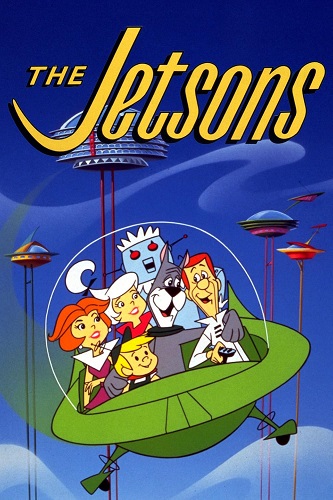
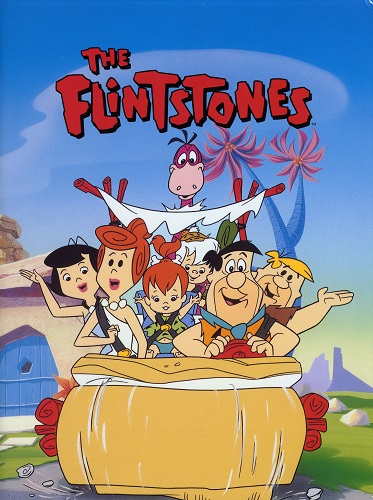
I do remember, as many others here will probably comment on too, that it was a different world back then. The Flintstones and Jetsons (both of which I liked) were something of a different breed, half hour cartoons with a full story line, and they played Monday-Friday when I was young. They were like a sitcom made via animation and the forefunner of The Simpsons, which for years as an adult in the ’90s was a weekly “must see”.

I remember seeing the Flintstones a lot during my school lunch breaks … the public school was just five doors up from our house so coming home was easy and I often had my sandwich while enjoying Fred and Barney’s antics. But otherwise, cartoons were pretty much just a Saturday morning thing. No Cartoon Network or round-the-clock programming with cartoons then, so they were a special treat. Many a Saturday I’d be up before my parents and crept into the living room (no TVs in our bedrooms back then either) and turn on the big old console TV quietly and laugh my head off at the cartoons. 

Now, it’s tough to really pick a particular favorite but what I recall well is that there were essentially two diffferent cartoon streams. There was Merrie Melodies/Looney Tunes and Hanna-Barbera. The first two were technically separate but by the 1940s had pretty much merged and were interchangeable. They were the dominant ones that played week after week, hour after hour it seemed. There were shows like Looney Tunes and the Bugs Bunny & Roadrunner Show. They were, I guess, the “stars” of the cartoon world – Bugs Bunny, Roadrunner and Coyote, Tweety bird and Sylvester the Cat, Porky Pig and of course, everyone’s favorite sexually abusive skunk, Pepe le Pew. There were endless numbers of the short cartoons featuring those characters and while I enjoyed them somewhat, they didn’t really grab me all that much.

Bugs Bunny actually bugged me somewhat – he was too smug, too arrogant. Looking back, I think it was indicative of my upbringing. Both parents rather stressed “don’t brag. Don’t show off” to me, and while even though my Dad wasn’t British (my Mom was) they both rather exuded that British “stiff upper lip” persona. As such, that smug, show offy rabbit got under my skin … though not as much as it did Elmer Fudd’s. Same goes for Tweety, as much as I love birds. And the Coyote, he I sort of felt sorry for. But even now recall wondering “why does he keep buying stuff from Acme when it always backfires on him?” 

I much preferred the Hanna-Barbera ones, though I didn’t see them nearly as much. They likely weren’t as popular overall. I guess Yogi Bear was the most famous of their Saturday morning characters, there were shows which incorporated Yogi into the title. I found Yogi, Booboo and their never-ending quest for a pic-a-nic basket kind of funny. But the real stars to me were some of the minor or secondary characters who’d have their own little bits now and again. Specifically, Auggie Doggie and Huckleberry Hound. 

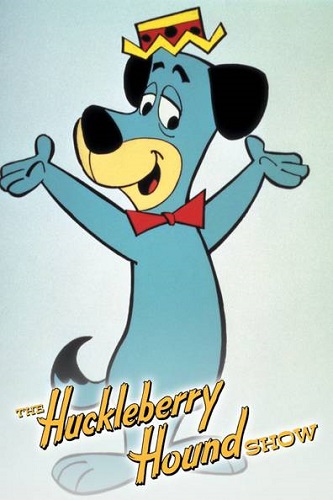
Huckleberry Hound was a laid-back blue dog with a southern accent apparently designed to sound like Andy Griffith. He’d try various jobs, like dog catcher or even ancient knight, usually not too well and was often outsmarted by local crows. All the while, his love was playing on his old banjo, singing “My darling Clementine” rather off-key. It was the first animated show to win an Emmy by the way, going back to 1960 when it won Outstanding Achievement in Children’s Programming. When I found this old clip of him on Youtube, it made me smile and think back again.

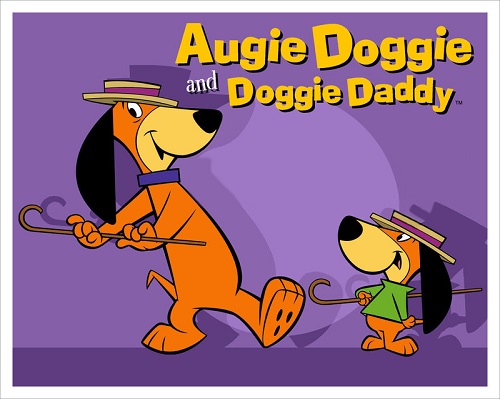
Auggie Doggie was a little dachshund pup who adored his father, Doggie Daddy. Auggie just wanted to make Dear Old Dad proud and Doggie Daddy doted on his son (in his Jimmy Durante-like voice) and together they took on a number of adventures… usually with unexpected consequences. For instance, in a review of the first season of its clips, storylines included Auggie creating a flying saucer and taking off into space and “Good Mouse Keeping” where the pair “try to get rid of an annoying mouse from their home” with the mouse always getting the upper hand. 

I liked those three dogs a lot, and perhaps even more because they weren’t as omni-present as the Merrie Melodies crew. Looking back, there was a sort of innocence and naivete about them perhaps lacking in the competitors which were a little mean at the core. Its a child-like quality that seems entirely welcome in shows for small children and something that, my very limited experience suggests has long disappeared from 21st Century cartoons. Those are usually better drawn or computer-animated and more action packed but lacking in storyline or morals. It’s nice to think back to a simpler time and simpler childhoods and watching a few of these old cartoons helps me do that, so thanks Keith for the topic. I hope you all have similar recollections or trips back to happy times of your past with the others’ picks too.

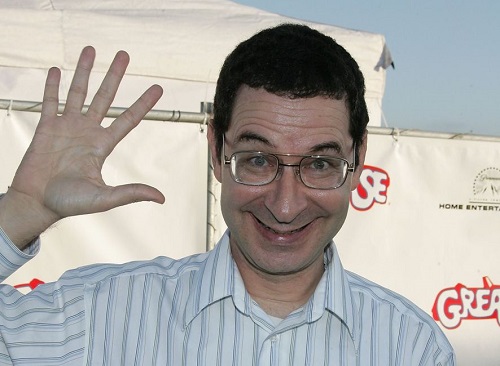
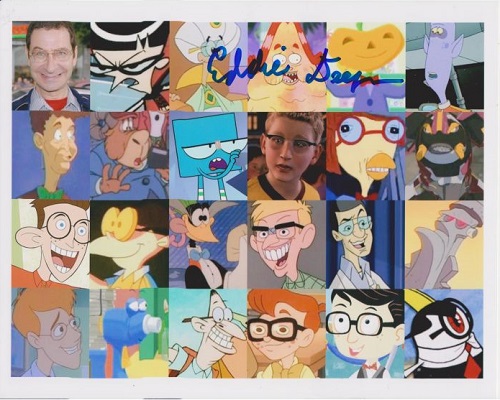
Ladies and Gentlemen – Mr. Eddie Deezen!

Eddie Deezen

I have been meaning to do a little interview with Eddie Deezen for a couple of years. I was always afraid to ask. You see, we’ve been friends on Facebook for some time and I’ve found that we share a lot in common. He has shared a lot of great personal stories about his interactions with other Hollywood celebrities, as well as some amazing trivia on just about everything.

I had noticed that he did a few podcasts with other Facebook friends and thought, “Maybe, he’ll allow me to ask him some questions for my blog.” As scared as I was to ask, Eddie said yes almost immediately. What follows in the transcript, if you will, of our chat. My questions are in bold and his answers follow.

Today is Eddie’s birthday, by the way, so what better way to celebrate than sharing a few minutes with him?

Keith: You and I have been Facebook friends now for almost 10 years.  You have a very active social media presence.  For fans like me, it is a wonderful way to connect with you.  Like a true friendship, you share your life with us and you share your laughs with us.  Many celebrities avoid social media or have someone run their page for them.  What is it about social media (Facebook) makes you love it so much?

Eddie Deezen: I love Facebook. I am 100% pure Facebook. I know I could reach more fans and have more followers on other sites, on Facebook I am limited to just 5,000 fans. This is the only thing about Facebook I dislike. The 5,000 friend limit makes no sense to me. I am a compulsive writer and joke writer. I fill up notebook after notebook with my jokes and stuff. With Facebook I have an avenue of people to see my stuff. Before I joined Facebook in 2009, I would write jokes and stories and trivia to a list of about 200 friends. My Facebook friends are wonderful. I love them very much. Also, I get told by people who are not on my Facebook friends list that they read my posts too. So that makes me happy.

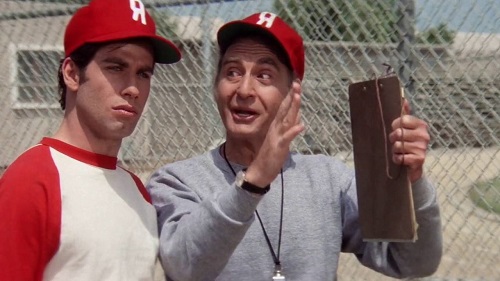
One of the things I look forward to on your Facebook posts is your personal stories about your movies, behind the scenes tid-bits, and your interaction with other actors.  Many folks know you as Eugene from Grease.  You have shared so many wonderful stories about John Travolta and Olivia Newton-John (and others).  Do you have a favorite Grease story you love to share?

My favorite Grease story would be how I got Grease in the first place. Ok, I went to my Grease audition in my little suit, with a bow tie and I put Vitalis or some greasy stuff in my hair (The movie was called “Grease”, so I figured Grease in my hair made sense). I went in to Paramount Studios (by the way, Paramount has always been my favorite studio) and the place was packed with guts in leather jackets and girls in poodle skirts and saddle shoes.

I read for Allan Carr the producer), Randal Kleiser (the director) and Joel Thurm ( the casting director). As I was talking to them and reading my two or three lines, I saw them nudging each other. I figured the nudges were a good sign. Anyway, a few days later, my agent calls and tells me I got the part. I was ecstatic, I called my parents and my friends and told them I was going to be in a movie with John Travolta and all.

Then, a few days later, my agent calls me and tells me “Eugene is a small role and the studio decided they’re going to cut out your role from the film”. Of course, I felt like jumping off a cliff. My agent said “We’re going to church to pray”. I swear to God, we go in, my agent gives me a match and tells me to light candies and pray at the alter. I prayed fervently to God. “Please God, let something good happen”. A few days later, the studio calls my agent and tells her they want me back in the movie.

True story. Divine intervention? Or just a lucky break? Who knows? I have wondered about this first 48 years now. You can believe whatever you want, but this really did happen.. 

That is a GREAT story! I’m glad you got back into the film! Speaking of Grease, you worked with comedy legend Sid Caesar.  Did you have any interesting interactions with him?

Well, I was chauffeured home each night with Sid Caesar. I was carefully instructed “Don’t speak to Mr. Caesar unless he speaks to you first”. So I would sit in the back seat and Mr. Caesar would sit in the front seat and I would just sit silently as he spoke to our chauffeur. One day He turned around to me and said “So you’re the water boy, huh?”. I replied sarcastically “ Oh, is it okay if I speak?”. This was very rude of me, but I was a twenty year old kid. Very immature.

Mr. Caesar was a very intelligent man. I would listen to him pontificate about history and religion and stuff. Our chauffeur was named Kirk or Kurt. He was a nice guy.

One of my favorite movies of yours is 1941.  What a cast for that movie!  You had the chance to work with John Belushi. On Facebook, you have shared that Belushi was actually pretty quiet and was very nice to you.  Can you elaborate on that? 

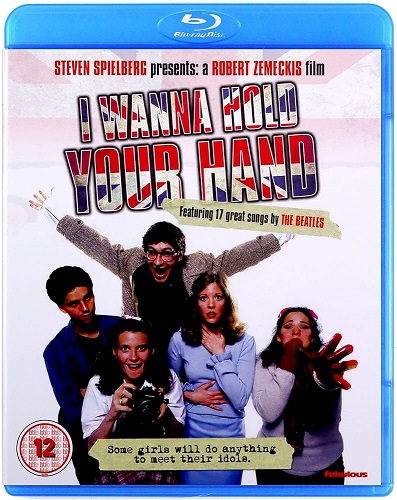
John was always extremely kind and nice to me. I loved him so much. We had met previously in New York. He was at the premiere of my movie “I Wanna Hold Your Hand”. At the party after the premiere I sat with John and we chatted for about 15 minutes. He was serious and thoughtful. No jokes. He spoke earnestly. I loved seeing him on the set of “1941” 

The last time I saw John was around 1980. I was just leaving a really bad audition. I felt bad and who comes walking down the street but John Belushi. He saw I was sad and said “What’s the matter, Eddie?”. I said, “ I just had a terrible audition, John. These guys hated me”. He replied “They’re assholes”. And he just walked away. That was the last time I ever saw John Belushi.

To John’s credit, he was probably right!

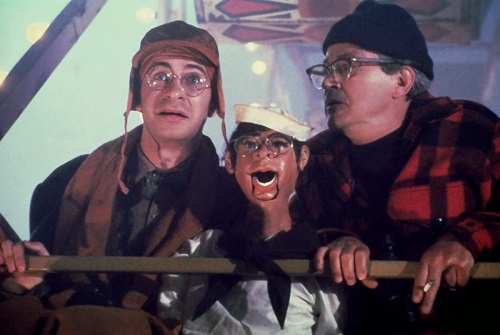
I wasn’t going to ask, but I’d kick myself if I didn’t ask you to share a bit about Murray Hamilton and the dummy from the Ferris Wheel scene….

Murray was a wonderful, very nice guy. We had many great talks up on that Ferris wheel. Murray was a big time smoker. He smoked three or four packs a day. So every once in a while he would have trouble breathing up there. Steven had a. Oxygen tank he kept for Murray. If Murray was having trouble breathing, Steven would let us down and Murray would take a few hits of oxygen.

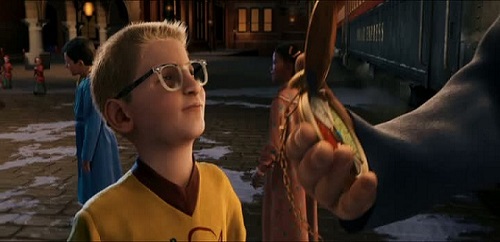
One of my favorite holiday films is the Polar Express.  Your work as the Know It All kid is just wonderful!  How did you and Tom Hanks get along?  Is he as nice as he seems?

Tom has always been my favorite movie star. The first day of the table read, there were a bunch of us all gathered to greet Tom. He was the biggest movie star in the world. He spots me in the bunch, walks up to me first and says, “Hi Eddie. I’m Tom”. No shit Sherlock.

He was a total pro. Never flubbed a line or missed a cue. One day I made a bad mistake. I screwed up a line or some such thing. Our director, Bob Zemeckis, said “cut”. “What happened, Eddie?”, he asked me. Before I could say anything, Tom cut in. “That was my fault”, he said. He took the blame for my mistake. He was like an older brother to me.

After we finished filming “The Polar Express”, he took me to three Dodger games at Dodger Stadium. We sat in his box seats. We sang the National Anthem and “Take Me Out to the Ballgame” together. He was just as cool as you’d expect him to be.

That’s awesome. What an experience for you!

You got to work with Dick Shawn in an episode of Magnum PI. 

He seemed like a pretty unique guy.  His comedy was so different and manic at times.  I don’t think there is anything I’ve seen him do that didn’t intrigue me.  What was it like to work with him?

Dick Shawn was a wonderful, nice, lovely, friendly, terrific, and delightful guy. I loved working with him. My career was pretty much movies, not a whole lot of television. But that “Magnum P.I.” episode I did (“Squeeze Play”) was probably the best thing I ever did on tv. I loved the entire Magnum cast and crew. Dick Shawn was a marvelous comedian and a fantastic straight man too. I loved playing his nephew.

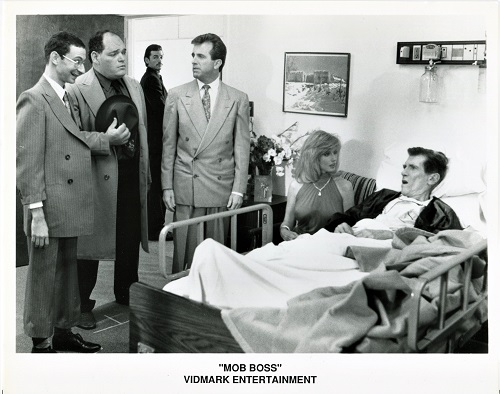
You also shared the screen with two of the hottest gals of the 1980’s: Heather Thomas in Zapped! and Morgan Fairchild in Mob Boss. 

Correct me if I am wrong but don’t you have a story about kissing Morgan Fairchild?

Yes, I did a movie called “ Mob Boss” with Morgan. Ok, we had a scene where the nerdy guy (me) kisses the ultra-sexy woman. We embrace and kiss and my glasses are all steamed up. Well, before we did that scene, Morgan said to me, “Eddie, do you want to rehearse?”. YOU THINK?? So she held me and kissed me at different angles and straight on, Etc. By the way, Morgan was a marvelous kisser. Her lips were so soft. She was also the most lovely lady ever. I loved her so much. She was a fabulous comedienne. Great straight woman too.

It was so much fun to work with Heather Thomas, too. Heather was a doll. She was very cool and incredibly nice. The episode of “The Fall Guy” I did with her was very fun to shoot. I loved all the cast and crew of “The Fall Guy”.

As a voice over actor, you have appeared in countless cartoons and series. 

I always love when I hear your voice on something my kids are watching.  You showed up recently on an episode of Handy Manny and also on Oswald.  Do you find voice acting to be easier than acting on screen or are the about the same?  Do you prefer one over the other?

Well, I have never been great at memorizing lines. Now, on camera stuff, you have to learn your lines by heart. For “The Polar Express”, our director Bob Zemeckis, knew my problem, and he let me read my entire role using cue cards.

I enjoy voiceovers and doing cartoons because you can just read your role from a script, no memorization involved. But as a performer, you get a bigger rush doing a movie, because it’s fun seeing yourself onscreen.

A show that many folks don’t remember is the Weird Al Show from the late 90’s.  Can you tell me how you got to play “Guy Boarded Up in the Wall?”

Yes, Weird Al is a marvelous, very nice guy. He also knew of my problem remembering lines and he wanted me on his show. So he created the “Man in the Wall” character. I was “ on camera” but I was behind a wall, so I could just read my lines. It was a very fun gig.

Your fans are well aware of your love for the Beatles and their music. 

A while back, my blogger friend, Dave from A Sound Day ran a feature. He had some of us bloggers write about the Beatles and if they were still relevant today.  I wrote my piece about songs I would use to introduce the band to someone. So, if YOU had to introduce someone who had never heard of the Beatles or their music, what 5 (or ten if you wish) songs would you play for them?

My favorite Beatles song is “A Hard Day’s Night”, so I would have to include that one. Now, you did not ask first my favorite Beatle songs, however, you asked first five or ten Beatle songs I would use to introduce a new fan to the Beatles. So here are my choices:

  • Love Me Do
  • She Loves You
  • I Want to Hold Your Hand
  • Help!
  • Yesterday
  • In My Life
  • Penny Lane
  • A Day in the Life
  • Strawberry Fields Forever
  • Let It Be

There are so many great Beatles tunes to choose from, and you have some classics there!

You and I share many of the same likes, the Beatles being one of them.  However, you are also as big a Stooge Fan as I am.  I have loved The Three Stooges since my dad introduced me to them as a kid.  You have said often that Curly is your favorite. 

It is hard NOT to like him.  Is there any one thing in particular that makes him your favorite? 

Yes, Curly Howard is my all- time favorite comedian. He was as great as Charlie Chaplin or Buster Keaton physically. Plus, he was a hilarious verbal comedian, something Chaplin and Keaton were not. He made 97 shorts. About 70 or 80 are comedy classics. He was amazingly prolific. He was all finished and retired by the age of 42. 42!!!! He just wore himself out. He was spent and got progressively sicker. The poor guy was gone at the age of 48. 48!!!

You could really see how sick he was in his last few shorts. The world certainly got a lot less “funny” when he passed away. So, do you have a favorite Stooges Short? 

My favorite Three Stooge shorts are “Punch Drunks” and “Micro-Phonies”

Those are both in my top ten Stooges shorts, too. One last question for you, my friend. Do you think Shemp gets a bum rap for following Curly?

Well, yes. Shemp is obviously anticlimactic because he followed Curly. That’s Iike following Elvis or Paul McCartney, anyone would suffer in comparison. That said, Shemp was a fair to good comedian. He was not great. He did not have Curly’s innate sense of humor or timing or sense of what makes a line funny or what makes a gag funny.

He had his great moments, yes, but he has a lot of very unfunny scenes too. Plus, his character was not as original or lovable or magical as Curly’s. I always love what Leonard Martin said about him- Shemp was an indisputably good comedian, but he never had Curly’s “otherworldliness.” A perfect word that captures it all. Curly was otherworldly.

I’d forgotten that you wrote a piece about Shemp for Mental Floss back in 2011. It’s a great piece that readers can see on the Mental Floss Site.

Eddie, thank you for taking the time to answer my questions.  Thank you for your friendship.  I truly hope to meet you in person one day.  Maybe a trip to the Stoogeum in Pennsylvania one day?  I wish you all the best and lots of happiness on your birthday, my friend!  Cheers to another year of friendship and laughs!

Thanks Keith. I’m glad to answer these questions for you. You are a wonderful guy and I am proud to have you as a friend both on Facebook and in my life. That trip to the Stoogeum sounds like a plan on my bucket list, so let’s hope! See you on Facebook!

I need to once again extend a huge thank you to Eddie for taking the time to chat with me. If you are a fan, Eddie also does do personalized messages for birthdays and such on Cameo. I had him do one for my dad a year or so ago! You can check out the information on Eddie’s Cameo Page.

Happy Birthday, Eddie! May your day be filled with laughter and happiness!


Share Your Nostalgia – Round 2

Back in November, I did a feature I called “Share Your Nostalgia.” I asked some of my blogger friends to write up a piece that focused on their favorite toy from childhood. The response was positive and it was suggested to do another round. So this time around, I asked for them to tell us about their Favorite Childhood Book.

Their book could be something that was read to them by their parents or grandparents. It could also be a book that was read to them in school at story time. I also suggested that their book might be one that they read to their own children. I wanted each of them to have as much freedom as necessary.

Today’s guest blogger is responsible for my continuing this feature. Dave from A Sound Day hosts Turntable Talk every month, which many of the participants and I take part in. It’s a wonderful music feature that we all enjoy taking part in. When I decided to try my feature, Dave was very supportive of the idea and felt it was worthy of doing again with a change in topic.

Dave has been one of those bloggers that I followed early on. His musical pieces are worth a read daily. Will his books have a musical theme to them? Let’s find out together…

Thanks Keith, for running this interesting feature and inviting me to be a part of it. Last time, we talked about toys we loved as a kid which brought me back a lot of nice memories, as it likely did to most of the readers I would bet. This time we’re remembering something that was as important as the toys to me growing up – books.

I feel fortunate I grew up in a household of readers, book-lovers. My Mom was a school teacher (although she pretty much gave that up to be a stay-at-home mom as my brother and I grew up) and loved books, read quite a bit. Even in her old age, she loved romance novels and Diana Galbadon fantasy books. She even read the hefty Harry Potter series by JK Rowling. My dad was more surprising to many. He dropped out of school at 14, more due to his family’s financial reasons than a disdain for education. He grew up speaking German but learned English when he came over here and taught himself a great deal reading. He built nice bookcases in our living room and filled them with books, fiction and non-fiction alike. He read anything from history epics to James Bond thrillers to ones of philosophy to books theorizing about extraterrestrials; probably where I got my fascination for UFOs from. There were series of books on foreign lands and even some novels that were considered on the “racy” side I’d eventually find out. He was walking proof that formal education isn’t necessarily equal to intelligence. Both of them had their flaws (we all do) but both loved reading and would often take me to the library or bookstores and for that I’m grateful.

Not surprisingly then, my parents got me reading pretty young. I can’t remember the exact dates or details, but most definitely I could read some basic things before I was near school age. 

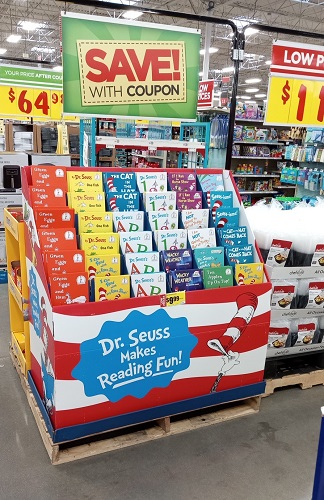
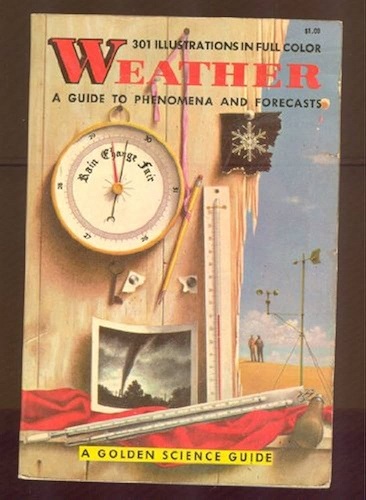
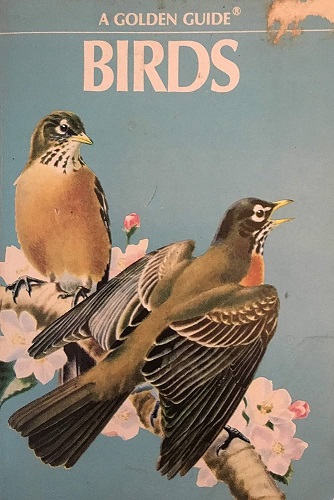
Like most kids my age, I would guess, the first books I remember having and learning to read (first having my mom read it and after awhile being able to myself) were various ones from the great, delightful Dr. Seuss. He had to have done more to promote literacy in young people than any other individual in the 1950s through ’70s. We had pretty much all of the “classic” titles in his collection; I’m thrilled when I go to my town supermarket now and see a big display featuring most of them, even in the same format and with the same covers I remember. Green Eggs & Ham was a real fave of mine, and I  liked that rascally Cat in the Hat but of course the prize in that set was The Grinch. Of course I loved the TV version of it (still do) but it was amazingly fun to me back then to be able to read the words and see the still pictures Ted Geisel (aka, Dr Seuss) drew for them.  I nearly picked those books collectively to feature but decided to go for something a little more unusual perhaps that were hugely important to me later, when I was … maybe eight to ten years old. The little Golden books, and in particular Weather : A Guide to Phenomena and Forecasts, and Birds : A Guide to Familiar American Birds.  Both were small, pocket-sized ( just a shade smaller than a Reader’s Digest magazine as a reference point), had 160 pages and were published in the mid-’50s. And both let me develop a couple of interests I already had into real passions.

Ever since I was little, the changes in the weather, and especially storms always fascinated me. When the thunder rolled or snow blizzarded so hard you could barely see across the street, I ran to the window, not for cover. By the time I was about 10, I had a little weather set and kept records of the temperature, the barometer, the amount of rain we got day-by-day. I was quite the nerd apparently! But I loved that stuff and the Golden book was the one that made me understand it all. It described air masses, cold and warm fronts, how storms developed, tornadoes and hurricanes  and how professionals measured it all and came up with forecasts. All explained with a lot of pictures and maps and in terms simple enough for a kid my age to understand, but not totally dumbed down. I swear that an average person who read through it twice might well have a better understanding of how weather works than a number of TV “weathermen” or “weatherwomen” I’ve seen on TV. It was a trusty reference book for me for years, probably until my parents split up and my Mom and I moved, when I was a teen. In no small part thanks to it, I even thought about becoming a meteorolgist. The amount of advanced schooling required for the degree and the probability of being sent to work in some remote northern locale ended up deterring me from that but to this day, I note the weather and try to see the weather maps online. I even took a training course a few years back offered by the Weather Service to be an informed weather spotter… basically if I see a wall cloud that’s rotating or nickel-sized hail falling, I can call into the weather office and report it and they won’t think I’m some total bozo without a clue.

The birds book had a similar effect on me, and I probably got it around the same age. I’d always loved nature, and back then our family often watched shows like Wild Kingdom . I was fascinated. When my Mom put out a bird feeder in the birch tree in our front yard, near the living room window, I soon became enthralled by the creatures. The color, the vibrancy, the variety… I’d spend hours at times in winter adoring the tiny, busy chickadees, admiring the occasional neon-red Cardinal that dropped by, seeing the goldfinches and being amazed how the dazzling yellow June ones and the more subdued olive-and-brown January ones were the same birds! All the while, I thought the bold, loud and ultra-colorful Blue Jays were just about the best. How great for me my favorite baseball team chose them as their name and symbol!

Anyway,  when something unfamiliar showed up in the yard, I was always wondering what it was. What it ate, where it came from, that sort of thing. The Golden book helped me do that. Now, it was only 160 pages, so it probably only covered about 140 or so species; a small sampling of the over 700 types that inhabit the U.S. and Canada. But most of the ones I saw regularly were in there, or if not, were close to ones that were shown. Soon I knew a Slate-colored Junco was that little blackish sparrow eating seeds on the ground and those green-headed ducks I’d see on every pond and creek were Mallards. The book showed them, told a bit about them in a paragraph or two, and even had a little map to show where you should expect to see them. It also made me see birds that I wanted to see but hadn’t – man, who can look at a Pileated Woodpecker, the one the cartoonist based Woody on, the size of a crow with a flaming red crest on top of its head, and not be in awe? I would venture out to parks and woods to look for some of those magic creatures, and in time saw most of them. Soon of course, I wanted to know more and got a full field guide (as it happens, also a Golden one, but a much more scientific and complete one, over 400 pages with pretty much every bird on the continent shown) that could tell me all those species and how to tell them apart, but it was the little beginners one that got me to that point. I found one in a used store not many years ago, and of course bought it. Why wouldn’t I? 

If I wasn’t nostalgic for my childhood, I wouldn’t be writing this for Keith… and if you weren’t for your own childhood, you wouldn’t be reading it.

My brother at those ages liked the Hardy Boys. Nothing wrong with that, but I guess I was always more fascinated by what really was than what could be in a pretend world. Thanks to the creators of that Golden series for helping me understand the basics and become even more fascinated with every bit I learned.

Turntable Talk #34 – What’s My Scene?

Welcome to the first Turntable Talk of 2025, hosted by Dave of A Sound Day. This is the 34th round, if you are keeping track. If you are a new follower, let me fill you in on how it works. Dave Ruch offers up a musical topic to a group of us music fans each month. Each of the writers come up with a response to the topic and Dave runs each piece on his website.

We have had some fun and interesting topics, and this one is no exception. This time around, Dave asks,  “What’s my scene?” Our instructions: Pick a sort of music “Scene” that either you would have liked to have been a part of or one that you think really created a lot of the music you love. Pick a general place and time and have fun…. 

My fellow music bloggers know my musical tastes pretty well by now. So, let’s see a show of hands – How many thought I’d pick The Rat Pack in Vegas? I almost did, but I know I have written on a live Rat Pack show in the past. Honestly, as awesome as that would be, the more I thought about it the more I leaned another way.

My scene certainly influenced the Rat Pack. Dean Martin cut an album called Swingin’ Down Yonder. Frank Sinatra recorded albums titled: Sinatra Swings, Songs for Swingin’ Lovers, Swing Easy, Sinatra’s Swingin’ Session, Sinatra and Swingin’ Brass, and A Swingin’ Affair! You know what the song says, “It don’t mean a thing, if it ain’t got that swing!”

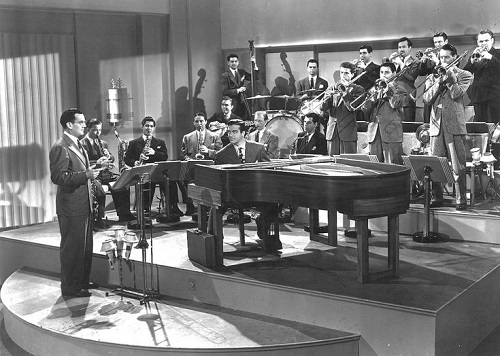
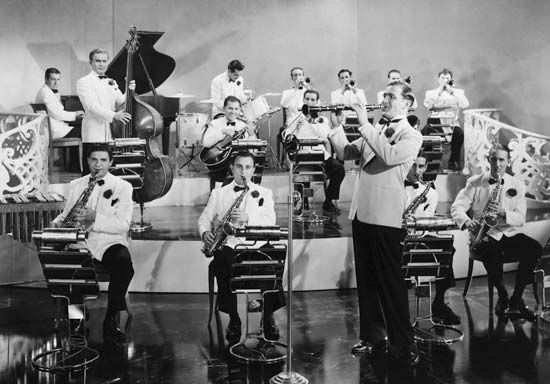
As a mediocre trumpet player, I have always loved Big Band/Swing music. Most folks would consider the Swing Era to be from the early 1930’s to around the mid 1940’s. Even though swing music was prominent in the early 1930’s, it was often ridiculed for its style and feel. Some went as far as to call it a menace (much like Rock and Roll when it gained popularity). After 1935, big bands rose to prominence playing swing music. They held a major role in defining swing as a distinctive style.

There were many big bands on the scene at this time. Each had a very distinct sound and feel to it. For example, Glenn Miller’s orchestra often used a clarinet lead. Count Basie’s sound has a relaxed feel to it. Benny Goodman used a driving and hard swing sound. Duke Ellington’s songs has a sophisticated sound to them.

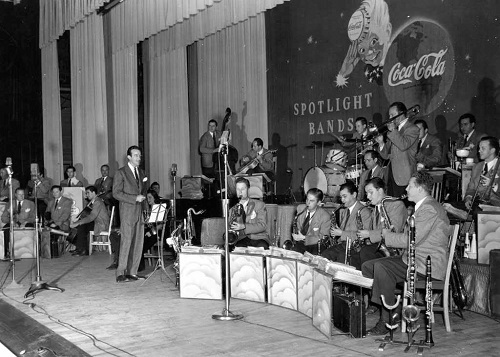
The band leaders often took the spotlight. They were amazing instrumentalists. Harry James and his trumpet, Benny Goodman and Artie Shaw on their clarinets, Gene Krupa on his drums, the trombones of Tommy Dorsey and Glenn Miller, and Lionel Hampton’s vibes. Along with those great leaders, there were plenty of talented musicians within those bands who went on to make a name for themselves.

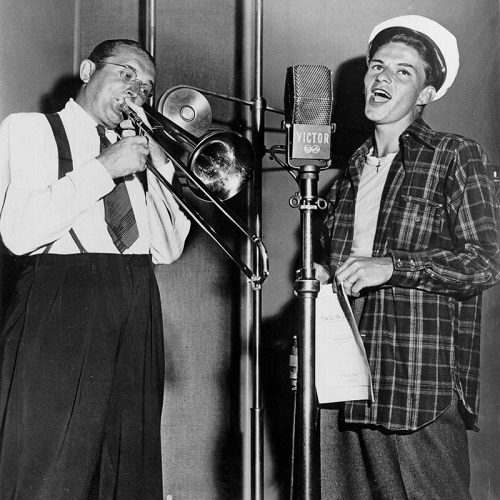
Perhaps Sinatra recorded his many swing songs because he rose to fame alongside Tommy Dorsey. He was one of many singers who sang with those big bands. Others included the voices of Ella Fitzgerald, Billie Holiday, Kay Starr, Peggy Lee, Doris Day, Kitty Kallen, and Dick Haymes. While they all started with the big swing bands, they also went on to have prolific careers.

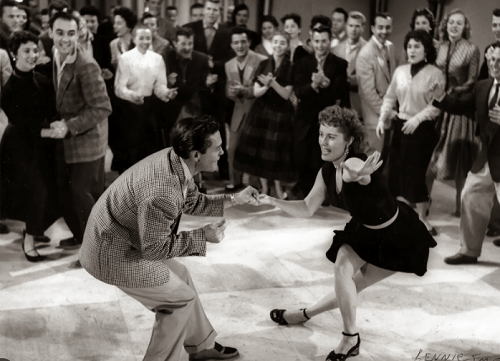
During the swing era, the big bands would often play at dance halls across the country. They appeared on the radio playing dance music. Some appeared in movies, and all of them made records. Their music had teenagers and young adults dancing until their feet hurt.

As years went on, the taste of music listeners changed. Swing began to fade away to make way for music that was less “danceable” like bebop. Many of the swing bands broke up, while other continued without their original leaders. The Glenn Miller Orchestra still tours today, for example.

When I put on headphones and listen to old big band recordings, I picture myself there listening. I picture myself in one of those great 1930’s suits with a stylish fedora.

Maybe it is in a dance hall or at a live concert. Maybe I am in the audience of a radio program where the band is playing. Wherever the music is being played, I am zoned in on it. I am listening to the drum beat of Sing, Sing, Sing and Benny Goodman. I can hear the vibrato of Tommy Dorsey’s trombone solo on I’m Getting Sentimental Over You. I marvel as I watch and listen to Harry James play his theme song, Ciribiribin.

Throughout the evening, I will study those great instrumentalists who improvise solos off the top of their head. Looking at nothing but chords and making up their own melodies. This is something I wish I could do as a trumpet player.

In all honesty, in my “scene,” I would be happy as a clam to just be in the audience. It would be the bees knees just watching those guys swing! Yeah, I can totally see myself swinging, singing, and dancing to the sounds of swing.
Thanks again, Dave for inviting me to take part in this feature. It is always fun to contribute and to read the other submissions. I’m already looking forward to next month’s topic!