Here we go with another month and another Turntable Talk topic from Dave at A Sound Day. For the 46th round, Dave has picked quite a broad topic – love. Dave has called this “Love is in the Air”. He asks, “Has there been any topic that inspired more songs than “love”? I doubt it. So this time out, I just hope you can pick your favorite song with “love” in the title and write a bit about it. It can be romantic, sexy, or of course the opposite.”
When I worked in radio, we’d get requests for songs that led to interesting phone calls. “Can you please play that song by that one singer? You know, the one about love?”
I asked Google a single question, which led to some interesting facts. I asked “approximately how many songs have the word ‘love’ in the title?” The response:
While an exact total for every song ever recorded is impossible to track, it has been estimated that over 100 million “love” songs have been recorded throughout history. The word “love” and its variations appear in more No. 1 Billboard Hot 100 hits than any other, with 117 such songs reaching the top spot between the 1960s and 2022.
Did you know that Elvis Presley had 66 songs with “love” in the title? Did you know that the Beatles used the word “love 613 times across their catalogue, with 76 instances in “All You Need Is Love” alone? Google also states that studies indicate that 57% to 67% of songs generally contain themes of love. So how in the world do you pick just one with so many great ones to chose from?
I mean, with Elvis “Can’t Help Falling in Love” is a good one. If I choose the Beatles, perhaps “Can’t Buy Me Love.” I then thought about my Rat Pack standards like “Everybody Loves Somebody” from Dean Martin and “What Is This Thing Called Love?” from Frank Sinatra. How about “Crazy Little Thing Called Love” from Queen or “Baby Love” by the Supremes? There are countless possibilities to choose from!
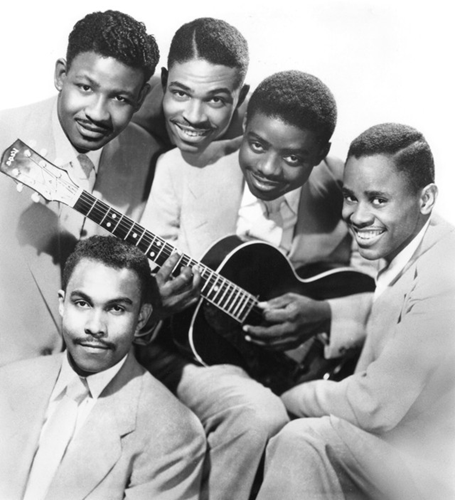
I decided to pop in a flash drive with music on my way to work in hopes that one would stand out. I was barely out of my driveway when the drive finished indexing and the first song played. It is a song that we played often when I worked at Honey Radio and it is one that may be new to you. I’ll triple Dave’s instructions and play a song with “love” in the title three times – Love, Love, Love from the Clovers.
The Clovers were formed in 1946 at Armstrong High School in Washington DC. Originally a trio, the group would add members to broaden their sound. The group recorded one song in 1950 for Rainbow Records in New York. They caught the ear of Atlantic Records and were signed to that label in 1951.
Their biggest hit would be Love Potion # 9 in 1959, but it took a few years to get there. In 1952 they had hits on the R&B charts with One Mint Julep and Ting A Ling. 1954 brought Your Cash Ain’t Nothin’ But Trash and Lovey Dovey. In 1956, they started to break out with Devil Or Angel (covered in 1960 by Bobby Vee) and Love, Love Love.
Love, Love Love was recorded in March of 1956 and was a top ten R&B hit by June. The song, however, would not crack the Top 40 chart, bubbling under it in August of that year.
The song always tested well with our oldies audience and I always loved hearing it. It has a fun bouncy sound to it with the vocals mixing with piano and baritone saxophone. It’s hard not to feel good when you hear it. The Beatles said “All You Need is Love,” and the lyrics of the song tell just how love can change the way you feel.
There ain’t nothin’ in this world for a boy and a girl but love, love, love Love, love, love: love. love, love There ain’t nothin’ in this world for a boy and a girl but love, love, love And that’s the only thing I’m thinkin’ of
Love can make you happy when you’re feelin’ blue If the one you love is in love with you
There ain’t nothin’ in this world for a boy and a girl but love, love, love Love, love, love: love. love, love There ain’t nothin’ in this world for a boy and a girl but love, love, love And that’s the only thing I’m thinkin’ of
Love can pick you up (love can pick you up) When you feel low-down (when you feel low- down) Love can make you smile when you’re wearin’ a frown
I want it, I need it, fill my cup with lo-ove, lo-ove, lo-ove Lo-ove, lo-ove, lo-ove: lo-ove, lo-ove, lo-ove Let me drink till my head goes ’round and ’round with lo-ove, lo-ove, lo-ove So come and be my, be my turtle dove
And because you know since my favorite singer cut the song on his 1965 Houston album, I have to include Dean Martin’s version. He sounds like he is having a blast singing it.
There are so many songs about love that I think I may feature a love song every week on my blog, who knows. Thanks to Dave for the invitation to participate again in this feature. It is a perfect topic for Valentine’s month. I’m sure that like past topics, there will be a nice variety of love songs from the other writers.
AJ McLean said: “Music is love, love is music, music is life, and I love my life.” I like that. As we listen to words of love set to music this month, I suggest we take it one step further. I encourage you to share the love with those you come in contact with this month – and every day.
It is time once again for a new Turntable Talk topic from Dave at A Sound Day. Each month he offers up a musical topic for us to write about. This month we are Going out on a High Note. Dave’s instructions to us:
We all have seen artists (not to mention athletes, politicians…) who stick around long after they should have exited gracefully. For this round, pick a musical artist who you think ended their career on a high note, a great final album, or triumphant concert tour before they grew stale.
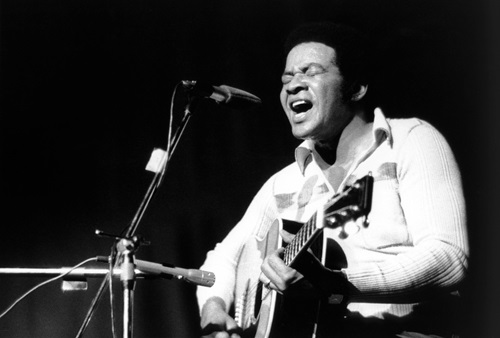
I had a difficult time with this one. As I began to think of artists, I kept coming up with artists who are still recording and touring. Willie Nelson, for example, is still making music and hitting the stage. Has he stayed around “too long?” Some say yes, while other say no. So my search continued. Then I remembered Bill Withers.
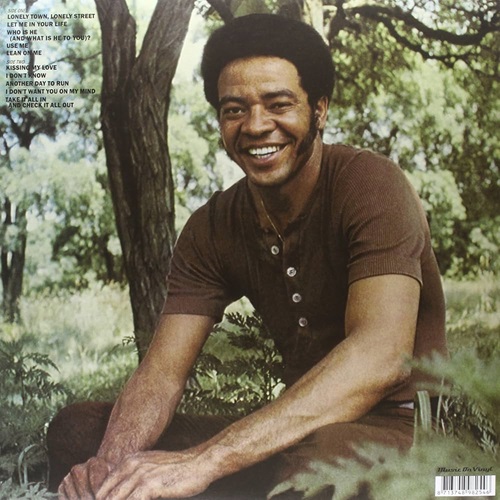
Bill served in the US Navy for almost 10 years. It was while he served our country that he began writing songs and became interested in singing. After he left the Navy, he decided to relocate to California in hopes of starting a career in music.
He found work as a mechanical assembler for several different companies including IBM, Ford, and the Douglas Aircraft Corporation. He used the money from his job to record demo tracks that he could take to record companies. He also began to play his songs in nightclubs in the area, hoping someone might discover him.
In 1967, he had his first official release – “Three Nights and a Morning.” It was a song that got little recognition. Three years later, he was signed to Sussex Records and Booker T Jones was assigned to produce Bill’s first album. That album, Just As I Am, included his first hit – “Ain’t No Sunshine.”
The album was a huge success and Withers rounded up a band and went out on tour. “Ain’t No Sunshine” was a Top 10 song and went on to win the Grammy for Best R&B Song in 1972. It also got him noticed by Johnny Carson’s Tonight Show, who sent him a letter inviting him to appear on the show.
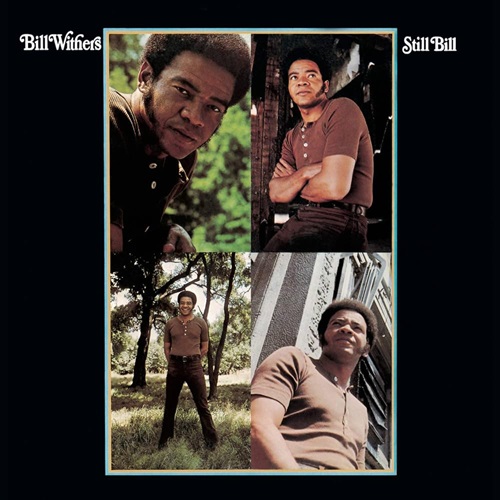
When his tour wrapped up, he used the time off to write and record songs for his second album entitled Still Bill. This album included Bill’s first #1 song – “Lean On Me,” which hit the top of the charts in July of 1972. This was followed up with his third million selling record – “Use Me.”
Bill’s relationship with Sussex record eventually went sour. He said of Sussex Records “They weren’t paying me.” He claims to have erased an entire album that he had recorded for the label in a fit of pique. “I could probably have handled that differently,” he said. There was an ongoing legal dispute with the Sussex company, and because of that Withers was unable to record for some time thereafter.
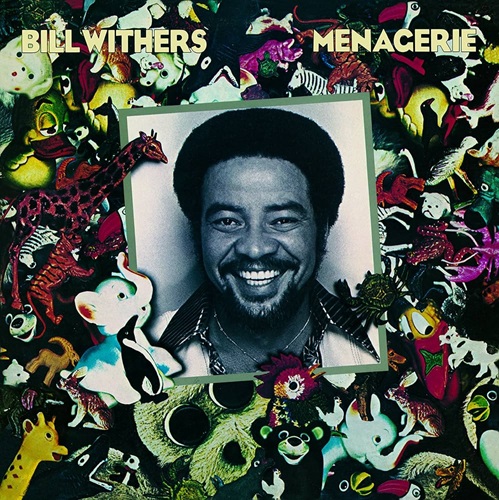
Sussex Records eventually went out of business and Bill had to find a new label. He wound up at Columbia Records in 1975. His first album on Columbia included the song “She’s Lonely,” which was featured in the movie Looking For Mr. Goodbar (which starred Richard Gere and Diane Keaton). He released an album every year afterward, including the 1977 album Menagerie which contained the hit “Lovely Day.”
Bill began to have trouble with Columbia. Apparently he was unable to get songs approved for his album. The label kept passing on the songs he wanted to record. Because of this, he decided to focus on joint projects beginning in 1977. He worked with the Crusaders, percussionist Ralph MacDonald, and jazz saxophonist Grover Washington Jr.
“Just The Two of Us” appeared on Washington’s 1980 album Winelight. It was released as a single in February of 1981 and went on to win a Grammy for Best R&B Song. In 1985, Withers released his final studio album, Watching You, Watching me. It was at this point that Bill decided to “go out on a high note.”
Withers was quoted in interviews that “a lot of the songs approved for the album—in particular, two of the first three singles released—were the same songs that had been rejected in 1982.” This played a big part in the eight-year hiatus between albums. Bill also stated how frustrating it was to see his record label release an album by actor Mr. T, when they were preventing him, an actual songwriter, from releasing his own.
With Columbia trying to exert control over his sound to sell more albums played a part in his decision to not record or re-sign with a record label after 1985. I would imagine the Mr. T thing played a part, too. This effectively ended his performing career, though remixes of his previously recorded music were released well after his “retirement.”
Withers was an artist who found musical success later in life. He was in his early 30’s when he began his career. Now at 47, he said he was socialized as a “regular guy” who had “a life before the music, so he did not feel an inherent need to keep recording once he fell out of love with the industry.” Bill felt he made the right decision. After leaving the music industry, he said that he did not miss touring and performing live and did not regret leaving music behind.
Accolades continued after his “retirement.” In 1988, he won another Grammy, this time as a songwriter for the cover of his “Lean on Me” by Club Nouveau. It won the Grammy for Best Rhythm and Blues Song. In 2005 he was inducted into the Songwriters Hall of Fame, followed in 2015 with his induction into the Rock and Roll Hall of Fame. He said:
“What few songs I wrote during my brief career, there ain’t a genre that somebody didn’t record them in. I’m not a virtuoso, but I was able to write songs that people could identify with. I don’t think I’ve done bad for a guy from Slab Fork, West Virginia.”
Bill passed away in March of 2020 in a Los Angeles hospital due to cardiac complications.
He is still receiving accolades in 2025. Last month, he was selected to be inducted into the National Rhythm and Blues Hall of Fame. The induction ceremony usually takes place in October.
Thanks to Dave for once again hosting Turntable Talk. I am already looking forward to what next month’s topic will be.
Dave at A Sound Day just wrapped up his monthly feature Turntable Talk. It was an interesting topic this time around and there were a lot of surprises as to who everyone chose to write about. This was my entry to the feature, which originally posted on Dave’s site on Monday:
It is time once again for Dave’s feature Turntable Talk. Dave features this every month on his site A Sound Day. This is the 39th edition, and he continues to come up with fantastic topics. This month is a fun one: Bands? We Don’t Need No Stinkin’ Bands! Dave’s instructions were simple: This time around, we’re looking for artists who left popular bands to go solo and did well (either commercially or else in your own critical assessment.)
I am sure that I did exactly what the other participants did when the topic was presented – I Googled. I was actually surprised at just how many artists moved from a group to become a solo artist. Off the top of my head I can list Diana Ross, Sting, Lionel Richie, Eric Clapton, Gwen Stefani, Ricky Martin, Peter Gabriel, Rob Thomas, Steve Perry, Lou Gramm, and Justin Timberlake. There are SO many.
In all honesty, I had my choice almost immediately. However, as I began to write about him, there was another artist connected with him that became more interesting to me. It was an artist who had solo success for a short time, and then a sad ending.
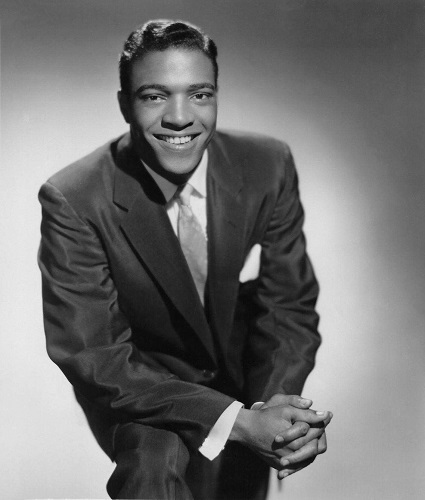
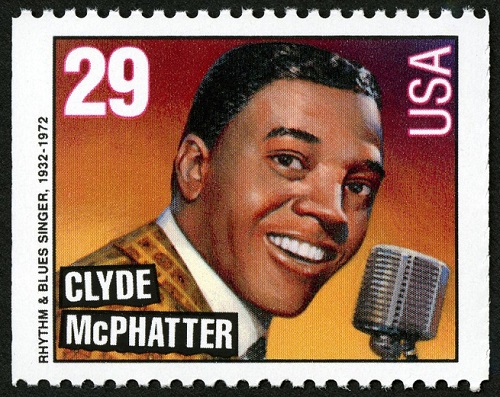
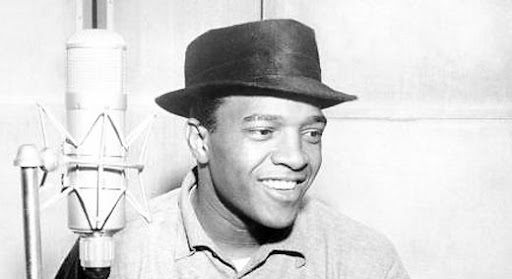
If I mention The Drifters I am sure you can name a few of their big hits. Under The Boardwalk, This Magic Moment, and Up On The Roof are just some of them. The Drifters were formed by my choice artist in 1953. His name was Clyde McPhatter. Let’s go back a couple years to see how it all came together.
Like many artists, Clyde McPhatter began singing in the church choir at his father’s church. In 1950, he was working at a grocery store. He entered the Amateur Night contest at Harlem’s Apollo Theater – and won! Afterward, he went back to working in the store.
One Sunday, Billy Ward of Billy Ward and the Dominoes heard Clyde singing in the choir of Holiness Baptist Church of New York City. He was immediately recruited to join the group. Clyde was there for the recording of their hit “Sixty Minute Man,” which was a number one song on the R&B chart for 14 weeks in 1951.
My original pick for this round was Jackie Wilson. Jackie was hired by Billy Ward in 1953 to join The Dominoes. That same year, Clyde left the group. He coached Wilson while they were out touring together. Wilson would leave in 1957. Apparently, Ward was not pleasant to work with. Wilson said, “Billy Ward was not an easy man to work for. He played piano and organ, could arrange, and he was a fine director and coach. He knew what he wanted, and you had to give it to him. And he was a strict disciplinarian. You better believe it! You paid a fine if you stepped out of line.”
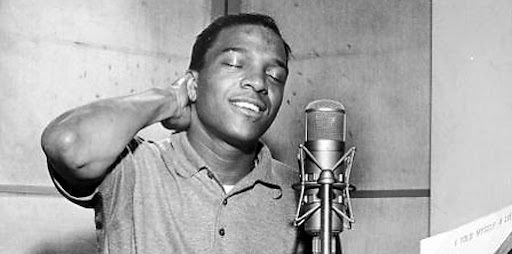
Atlantic Records saw a Dominoes show and noticed that Clyde was not with the group, so they searched for him, found him and wanted to sign him to a record deal. Clyde agreed to sign on one condition – they allow him to form his own group. That group was the Drifters. While known as Clyde McPhatter and the Drifters, they released songs like Money Honey.
Elvis Presley covered Money Honey in 1956. In researching for this piece I was surprised to find that McPhatter and the Drifters did the original of another Elvis hit – Such a Night.
In late 1954, McPhatter was inducted into the U.S. Army. He assigned to Special Services in the continental United States. This allowed him to continue recording. After his tour of duty, he left the Drifters and launched a solo career. The Drifters continued as a successful group, but with many changes in personnel, and the group assembled by McPhatter was long gone by the time their greatest successes were released after he left the group.
It would take two years, but Clyde would finally get his first solo #1 R&B hit when he released “Treasure of Love” in 1956. It would top out at #16 on the US Pop Chart. I love his vocal on this one.
His biggest solo hit would come in 1958 when he recorded and released a song written by Brook Benton. A Lover’s Question would reach #6 on the Pop Chart. If I had to pick my favorite Clyde song, it would be this one. There is so much to love about this song. That acapella bass line being sung throughout the song is very catchy.
McPhatter would leave Atlantic Records and bounce from label to label recording many songs, but not having much success. His last top ten record would come in 1962 with a song written by Billy Swan. Lover Please was first recorded by the Rhythm Steppers in 1960. It was the title track from Clyde’s 1962 album of the same name. It would reach #7 on the Pop Chart.
Clyde did manage to have a top 30 hit in 1964 with “Crying Won’t Help You Now,” but when it fell of the chart, he turned to alcohol for comfort. He would record every so often, but nothing ever really did well on the charts. He always had a decent following in the UK, so in 1968 he moved to England.
He wouldn’t return to the US until 1970. Outside of performing on a few Rock and Roll Revival shows, he lived a very private and reclusive life. In 1972, Decca Records signed him and they were planning a a big comeback. That never materialized as Clyde passed away on June 13, 1972 of complications from liver, heart and kidney disease. This was brought on by his alcohol abuse years earlier. He was only 39 years old.
His legacy consists of over 22 years of recording history. Clyde was the first artist to be inducted twice into the Rock and Roll Hall of Fame, first as a solo artist and later as a member of the Drifters.
In 1993, Clyde was honored with his own stamp by the US Postal Service.
His career had ups and downs, and his hit songs were an important part of Rock and Roll history. Vocalists like Marv Johnson, Smokey Robinson and Ben E. King are all said to have patterned their vocal styles on Clyde’s. Others have cited him as a major influence as well. In the book “The Drifters” by Bill Millar, he says:
“McPhatter took hold of the Ink Spots’ simple major chord harmonies, drenched them in call-and-response patterns, and sang as if he were back in church. In doing so, he created a revolutionary musical style from which—thankfully—popular music will never recover.”
Thanks again to Dave for hosting another great round of Turntable Talk. I cannot wait to see who the other writers have picked and look forward to Round #40 next month.
Back in November, I did a feature I called “Share Your Nostalgia.” I asked some of my blogger friends to write up a piece that focused on their favorite toy from childhood. The response was positive and it was suggested to do another round. So this time around, I asked for them to tell us about their Favorite Childhood Book.
Their book could be something that was read to them by their parents or grandparents. It could also be a book that was read to them in school at story time. I also suggested that their book might be one that they read to their own children. I wanted each of them to have as much freedom as necessary.
Today’s guest blogger is responsible for my continuing this feature. Dave from A Sound Dayhosts Turntable Talk every month, which many of the participants and I take part in. It’s a wonderful music feature that we all enjoy taking part in. When I decided to try my feature, Dave was very supportive of the idea and felt it was worthy of doing again with a change in topic.
Dave has been one of those bloggers that I followed early on. His musical pieces are worth a read daily. Will his books have a musical theme to them? Let’s find out together…
Thanks Keith, for running this interesting feature and inviting me to be a part of it. Last time, we talked about toys we loved as a kid which brought me back a lot of nice memories, as it likely did to most of the readers I would bet. This time we’re remembering something that was as important as the toys to me growing up – books.
I feel fortunate I grew up in a household of readers, book-lovers. My Mom was a school teacher (although she pretty much gave that up to be a stay-at-home mom as my brother and I grew up) and loved books, read quite a bit. Even in her old age, she loved romance novels and Diana Galbadon fantasy books. She even read the hefty Harry Potter series by JK Rowling. My dad was more surprising to many. He dropped out of school at 14, more due to his family’s financial reasons than a disdain for education. He grew up speaking German but learned English when he came over here and taught himself a great deal reading. He built nice bookcases in our living room and filled them with books, fiction and non-fiction alike. He read anything from history epics to James Bond thrillers to ones of philosophy to books theorizing about extraterrestrials; probably where I got my fascination for UFOs from. There were series of books on foreign lands and even some novels that were considered on the “racy” side I’d eventually find out. He was walking proof that formal education isn’t necessarily equal to intelligence. Both of them had their flaws (we all do) but both loved reading and would often take me to the library or bookstores and for that I’m grateful.
Not surprisingly then, my parents got me reading pretty young. I can’t remember the exact dates or details, but most definitely I could read some basic things before I was near school age.
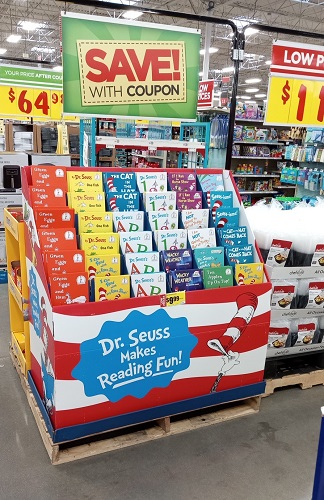
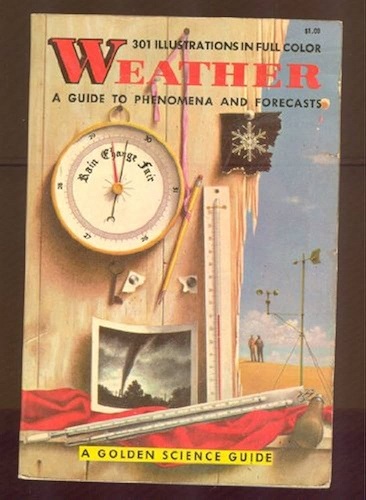
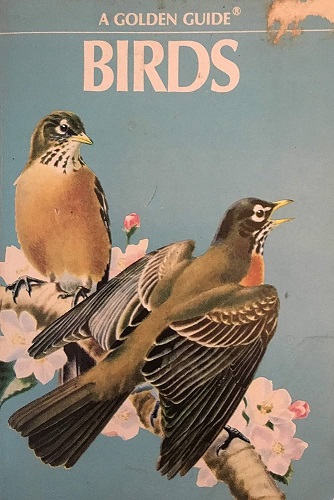
Like most kids my age, I would guess, the first books I remember having and learning to read (first having my mom read it and after awhile being able to myself) were various ones from the great, delightful Dr. Seuss. He had to have done more to promote literacy in young people than any other individual in the 1950s through ’70s. We had pretty much all of the “classic” titles in his collection; I’m thrilled when I go to my town supermarket now and see a big display featuring most of them, even in the same format and with the same covers I remember. Green Eggs & Ham was a real fave of mine, and I liked that rascally Cat in the Hat but of course the prize in that set was The Grinch. Of course I loved the TV version of it (still do) but it was amazingly fun to me back then to be able to read the words and see the still pictures Ted Geisel (aka, Dr Seuss) drew for them. I nearly picked those books collectively to feature but decided to go for something a little more unusual perhaps that were hugely important to me later, when I was … maybe eight to ten years old. The little Golden books, and in particular Weather : A Guide to Phenomena and Forecasts, and Birds : A Guide to Familiar American Birds. Both were small, pocket-sized ( just a shade smaller than a Reader’s Digest magazine as a reference point), had 160 pages and were published in the mid-’50s. And both let me develop a couple of interests I already had into real passions.
Ever since I was little, the changes in the weather, and especially storms always fascinated me. When the thunder rolled or snow blizzarded so hard you could barely see across the street, I ran to the window, not for cover. By the time I was about 10, I had a little weather set and kept records of the temperature, the barometer, the amount of rain we got day-by-day. I was quite the nerd apparently! But I loved that stuff and the Golden book was the one that made me understand it all. It described air masses, cold and warm fronts, how storms developed, tornadoes and hurricanes and how professionals measured it all and came up with forecasts. All explained with a lot of pictures and maps and in terms simple enough for a kid my age to understand, but not totally dumbed down. I swear that an average person who read through it twice might well have a better understanding of how weather works than a number of TV “weathermen” or “weatherwomen” I’ve seen on TV. It was a trusty reference book for me for years, probably until my parents split up and my Mom and I moved, when I was a teen. In no small part thanks to it, I even thought about becoming a meteorolgist. The amount of advanced schooling required for the degree and the probability of being sent to work in some remote northern locale ended up deterring me from that but to this day, I note the weather and try to see the weather maps online. I even took a training course a few years back offered by the Weather Service to be an informed weather spotter… basically if I see a wall cloud that’s rotating or nickel-sized hail falling, I can call into the weather office and report it and they won’t think I’m some total bozo without a clue.
The birds book had a similar effect on me, and I probably got it around the same age. I’d always loved nature, and back then our family often watched shows like Wild Kingdom . I was fascinated. When my Mom put out a bird feeder in the birch tree in our front yard, near the living room window, I soon became enthralled by the creatures. The color, the vibrancy, the variety… I’d spend hours at times in winter adoring the tiny, busy chickadees, admiring the occasional neon-red Cardinal that dropped by, seeing the goldfinches and being amazed how the dazzling yellow June ones and the more subdued olive-and-brown January ones were the same birds! All the while, I thought the bold, loud and ultra-colorful Blue Jays were just about the best. How great for me my favorite baseball team chose them as their name and symbol!
Anyway, when something unfamiliar showed up in the yard, I was always wondering what it was. What it ate, where it came from, that sort of thing. The Golden book helped me do that. Now, it was only 160 pages, so it probably only covered about 140 or so species; a small sampling of the over 700 types that inhabit the U.S. and Canada. But most of the ones I saw regularly were in there, or if not, were close to ones that were shown. Soon I knew a Slate-colored Junco was that little blackish sparrow eating seeds on the ground and those green-headed ducks I’d see on every pond and creek were Mallards. The book showed them, told a bit about them in a paragraph or two, and even had a little map to show where you should expect to see them. It also made me see birds that I wanted to see but hadn’t – man, who can look at a Pileated Woodpecker, the one the cartoonist based Woody on, the size of a crow with a flaming red crest on top of its head, and not be in awe? I would venture out to parks and woods to look for some of those magic creatures, and in time saw most of them. Soon of course, I wanted to know more and got a full field guide (as it happens, also a Golden one, but a much more scientific and complete one, over 400 pages with pretty much every bird on the continent shown) that could tell me all those species and how to tell them apart, but it was the little beginners one that got me to that point. I found one in a used store not many years ago, and of course bought it. Why wouldn’t I?
If I wasn’t nostalgic for my childhood, I wouldn’t be writing this for Keith… and if you weren’t for your own childhood, you wouldn’t be reading it.
My brother at those ages liked the Hardy Boys. Nothing wrong with that, but I guess I was always more fascinated by what really was than what could be in a pretend world. Thanks to the creators of that Golden series for helping me understand the basics and become even more fascinated with every bit I learned.
Welcome to the first Turntable Talk of 2025, hosted by Dave of A Sound Day. This is the 34th round, if you are keeping track. If you are a new follower, let me fill you in on how it works. Dave Ruch offers up a musical topic to a group of us music fans each month. Each of the writers come up with a response to the topic and Dave runs each piece on his website.
We have had some fun and interesting topics, and this one is no exception. This time around, Dave asks, “What’s my scene?” Our instructions: Pick a sort of music “Scene” that either you would have liked to have been a part of or one that you think really created a lot of the music you love. Pick a general place and time and have fun….
My fellow music bloggers know my musical tastes pretty well by now. So, let’s see a show of hands – How many thought I’d pick The Rat Pack in Vegas? I almost did, but I know I have written on a live Rat Pack show in the past. Honestly, as awesome as that would be, the more I thought about it the more I leaned another way.
My scene certainly influenced the Rat Pack. Dean Martin cut an album called Swingin’ Down Yonder. Frank Sinatra recorded albums titled: Sinatra Swings, Songs for Swingin’ Lovers, Swing Easy, Sinatra’s Swingin’ Session, Sinatra and Swingin’ Brass, and A Swingin’ Affair! You know what the song says, “It don’t mean a thing, if it ain’t got that swing!”
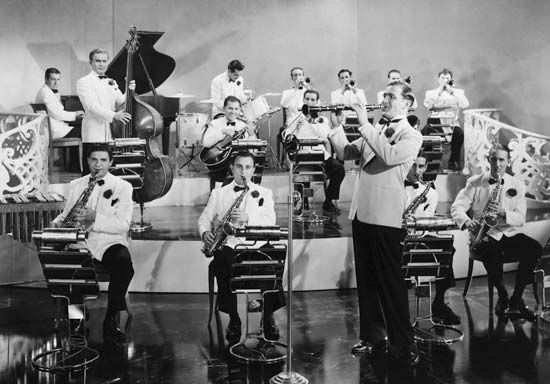
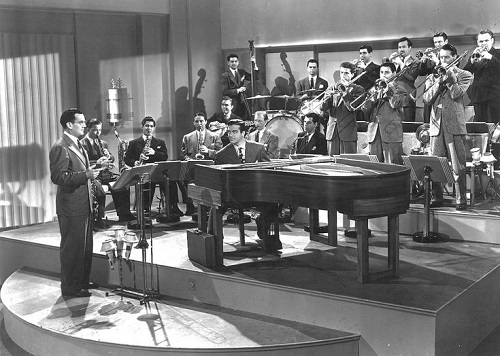
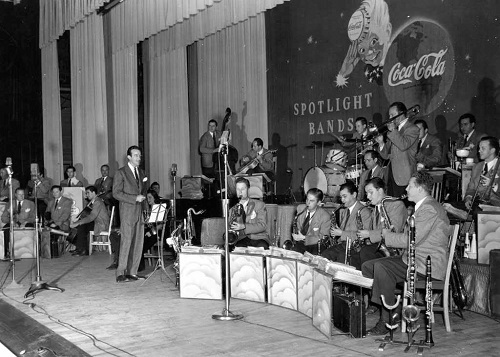
As a mediocre trumpet player, I have always loved Big Band/Swing music. Most folks would consider the Swing Era to be from the early 1930’s to around the mid 1940’s. Even though swing music was prominent in the early 1930’s, it was often ridiculed for its style and feel. Some went as far as to call it a menace (much like Rock and Roll when it gained popularity). After 1935, big bands rose to prominence playing swing music. They held a major role in defining swing as a distinctive style.
There were many big bands on the scene at this time. Each had a very distinct sound and feel to it. For example, Glenn Miller’s orchestra often used a clarinet lead. Count Basie’s sound has a relaxed feel to it. Benny Goodman used a driving and hard swing sound. Duke Ellington’s songs has a sophisticated sound to them.
The band leaders often took the spotlight. They were amazing instrumentalists. Harry James and his trumpet, Benny Goodman and Artie Shaw on their clarinets, Gene Krupa on his drums, the trombones of Tommy Dorsey and Glenn Miller, and Lionel Hampton’s vibes. Along with those great leaders, there were plenty of talented musicians within those bands who went on to make a name for themselves.
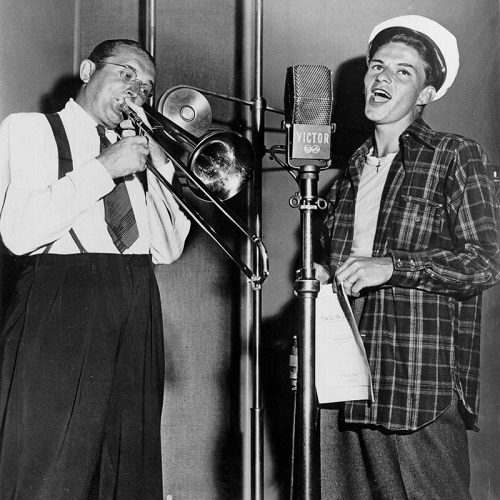
Perhaps Sinatra recorded his many swing songs because he rose to fame alongside Tommy Dorsey. He was one of many singers who sang with those big bands. Others included the voices of Ella Fitzgerald, Billie Holiday, Kay Starr, Peggy Lee, Doris Day, Kitty Kallen, and Dick Haymes. While they all started with the big swing bands, they also went on to have prolific careers.
During the swing era, the big bands would often play at dance halls across the country. They appeared on the radio playing dance music. Some appeared in movies, and all of them made records. Their music had teenagers and young adults dancing until their feet hurt.
As years went on, the taste of music listeners changed. Swing began to fade away to make way for music that was less “danceable” like bebop. Many of the swing bands broke up, while other continued without their original leaders. The Glenn Miller Orchestra still tours today, for example.
When I put on headphones and listen to old big band recordings, I picture myself there listening. I picture myself in one of those great 1930’s suits with a stylish fedora.
Maybe it is in a dance hall or at a live concert. Maybe I am in the audience of a radio program where the band is playing. Wherever the music is being played, I am zoned in on it. I am listening to the drum beat of Sing, Sing, Sing and Benny Goodman. I can hear the vibrato of Tommy Dorsey’s trombone solo on I’m Getting Sentimental Over You. I marvel as I watch and listen to Harry James play his theme song, Ciribiribin.
Throughout the evening, I will study those great instrumentalists who improvise solos off the top of their head. Looking at nothing but chords and making up their own melodies. This is something I wish I could do as a trumpet player.
In all honesty, in my “scene,” I would be happy as a clam to just be in the audience. It would be the bees knees just watching those guys swing! Yeah, I can totally see myself swinging, singing, and dancing to the sounds of swing.
Thanks again, Dave for inviting me to take part in this feature. It is always fun to contribute and to read the other submissions. I’m already looking forward to next month’s topic!
Once again, it is time for Turntable Talk, our monthly musical topic hosted by Dave from A Sound Day. Most readers are familiar with this feature. Dave gives some of us musical bloggers a topic and we write about it. This month, he asked for our help in creating a holiday playlist.
Per his instructions: “Because of the time of the year, we’ll keep it simple – One More For Under The Tree. Just pick a favorite Christmas / holiday season song of yours and tell us a wee bit about it and maybe why you love it. If it’s a ‘standard’, old or new, pick the favorite version of yours and we’ll make a nice little Christmas playlist of sorts.”
A couple years ago, we did something similar. As someone who loves Christmas music, it is difficult for me to chose just one. I will try to keep it to no more than two. Maybe three. Surely, not four….
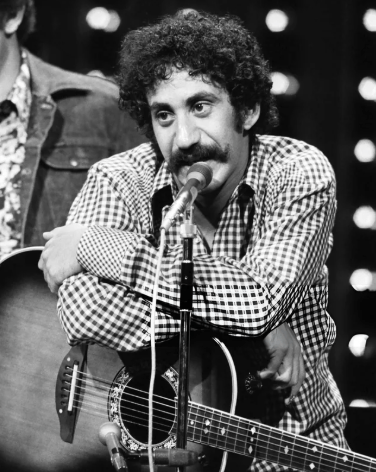
The song I want to feature is one that has never really been classified as a “Christmas” song. It is not one that you will hear often (if at all) on the radio in December. You will find it on a few 1970’s Holiday compilation albums, though. It was first released as a B-side of a single and released again as a posthumous single.
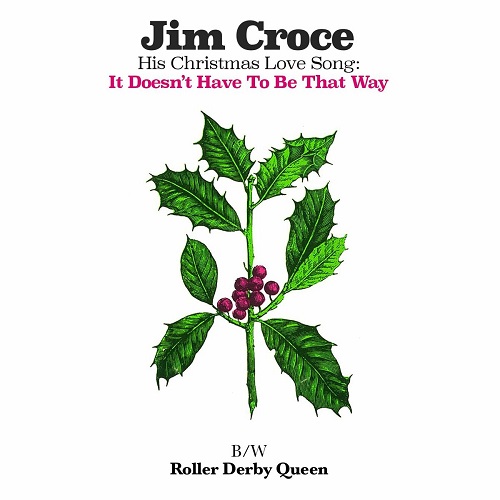
It Doesn’t Have To Be That Way
Jim Croce’s It Doesn’t Have to Be That Way was on his 1973 Life and Times Album. It was the B-side of One Less Set of Footsteps. He died in a plane crash in September of that year. It was in December that his label rereleased the song as the final single from the album. The song paints some wonderful images of winter and Christmas for the listener. Perhaps this is what the label was hoping to take advantage of when it was released again.
I was introduced to this song by a gal I was dating in the late 1980’s. I had never heard the song before and she had told me it was one of her favorites. From the opening guitar work and Jim’s vocal, I was hooked. The song is melodically beautiful. As beautiful as it is, however, it is a sad song.
Anyone who has ever gone through a break-up around the holidays will tell you how difficult it is. The festive decorations, the warmth and happiness of the season, and the overall feeling of love can really cause depression. No one wants to be alone at Christmas time.
The singer reveals himself to be a man who has recently ended a relationship. As the holiday season approaches, the Christmas atmosphere in his town is evident nearly everywhere. The lyrics attest to that. As he experiences his surroundings, he begins to wish that he and his lover could reunite. He professes that it was a mistake to end their relationship and that it can easily be rekindled.
The song ends in mystery. In a bold move, the man says he will be stopping by his old lover’s place to “get it together.” “It’s only right” for them to start the relationship again according to the song. We never do find out what happens. Perhaps the “happy” chimes at the end of the song elude to a happy ending.
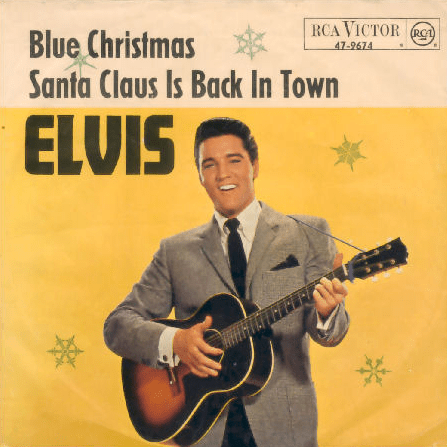
The songwriting team of Jerry Leiber and Mike Stoller wrote over 70 hit songs together. They wrote songs in the 1950’s for The Coasters, Wilbert Harrision, Big Mama, Thorton, and Elvis Presley. One of those Elvis songs was the one that opened his first Christmas album…
Santa Claus is Back In Town
Elvis’ Christmas Album was released in 1957. It contained twelve songs – six on each side. Side A contained the more contemporary cuts like Blue Christmas, White Christmas and Santa Claus is Back in Town. Side B contained the more religious and sacred songs like Silent Night and O Little Town of Bethlehem.
For years, I was only familiar with his versions of Blue Christmas and Here Comes Santa Claus. You know, the ones that played on the radio. In 1994, I picked up the compilation “If Every Day Was Like Christmas.” It included early Christmas songs as well as his later songs. I first heard Santa Claus is Back in Town on this album.
The song is a basic twelve-bar blues song with three verses. I have always wished that Elvis would have recorded an album of all blues songs. The genre (and the mixing of blues and rock) is one that allows him to shine. This song is a prime example of this. It is a raunchy, raw, and dirty blues song that is misleading from the beginning.
The song begins a group singing the word “Christmas” three times. You get the feeling that you are about to hear this beautiful holiday song. Suddenly the drum kicks, Elvis growls his first lyric and the blues begin!
Elvis howls his was through the verses as “Santa Claus,” who has no sleigh, but a black Cadillac instead. He also tells his pretty baby to expect him to come down her chimney later that night. The chorus begs her to be a good little girl because Santa is back in town. Naturally, the lyrics and the song itself are meant to have that “double entendre” and “innuendo” to it.
Many people have covered this song, including Dwight Yoakam, Foghat, Billy Idol, and Joe Perry. Even Kurt Russell performed it in the Netflix special, “The Christmas Chronicles.” These versions never seem to live up to the energy and the grittiness that the Elvis version has. None of them have ever given me goosebumps when I hear it either. The Elvis version does. His version is the best!
The question I pose now is a simple one. Is it possible to make this song sound even better? Personally, I think so. When the Royal Philharmonic Orchestra accompanied Elvis on a Christmas album in 2017, it brought it to an entire new level! It is still gritty. It is still bluesy. It is still raunchy. But now, you’ve got this fantastic horn line that takes it up a notch. Mix the orchestra parts with the original arrangement and you have a much fuller and fresh sound. Now, there is a raunchy “sparkle” to it.
Dave, thank you for again asking me to be a part of this feature. To my fellow music bloggers and you, I wish you and your family a Happy Holiday season. May you and yours have a blessed and Merry Christmas! Here’s to an amazing 2025!!
It is time for another edition of Turntable Talk, hosted by Dave from A Sound Day. There seems to be no shortage of music topics for him to present. This month the topic is a bit different. Here are his instructions:
It’s time to Hit the Road, Jack … you’re invited to take part in a sort of magical road trip… but with a few restrictions. You can go to any music location you’d like to see, and if it is long gone, we can assume it was still there for you to see (or that you could go back in time to see it). Studio, concert venue, house, record store, you name it! Wanna see Graceland (or see it again if you’ve been) – boom! You’re there.
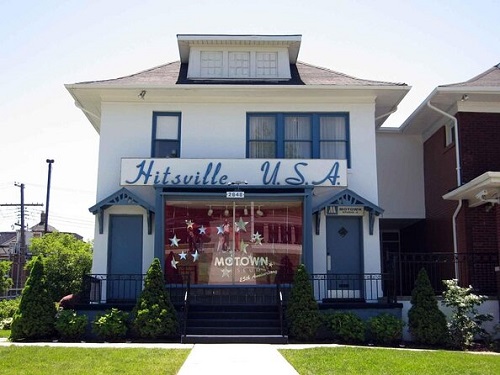
As I began to think on my musical place, I became depressed. This is because there are so many places that I have never been to. Yes, I have been to the Rock and Roll Hall of Fame. Yes I have been to Graceland. Sadly, despite the 90 minute drive from where I live, I have never visited the Motown Museum!
Next I began to think about concert venues. I looked up “Greatest Concert Venues” and it is quite a list. Surprisingly, Pine Knob Music Theater (in Clarkston, MI) is one I have been to numerous times! It’s a great place to see a show. I couldn’t believe that it was counted as one of the “greatest” among some of the others.
In the cartoons, it meant you had made it if you played The Hollywood Bowl in Los Angeles. It was always a big deal if an artist is playing Carnegie Hall, Radio City Music Hall or Madison Square Garden in New York. As many times as I have been to Nashville, I have never seen a show at the Ryman Auditorium. Outside of the US, it is big to play the Syndey Opera House in Australia or Royal Albert Hall in London.
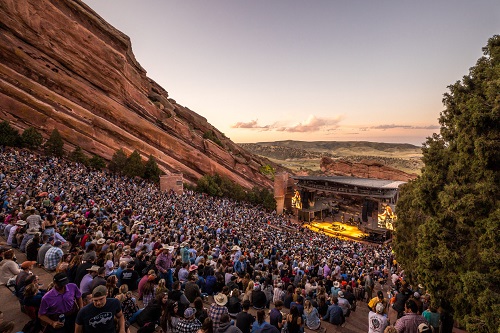
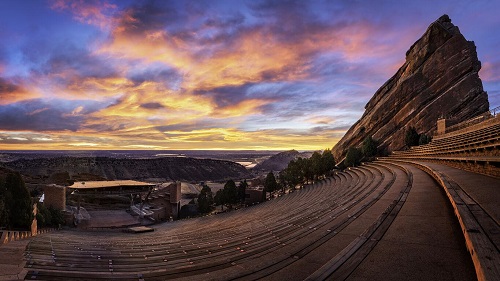
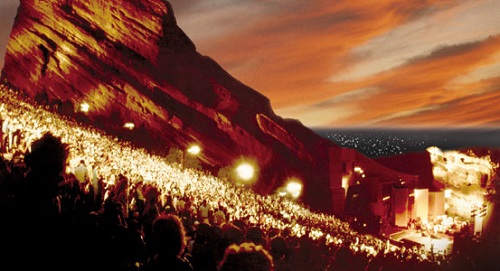
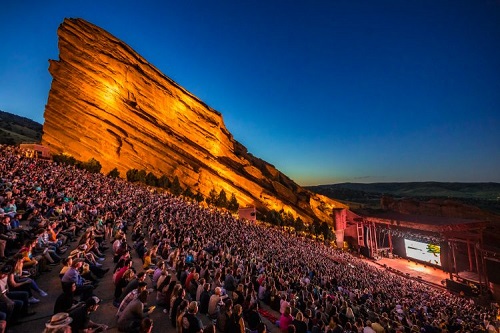
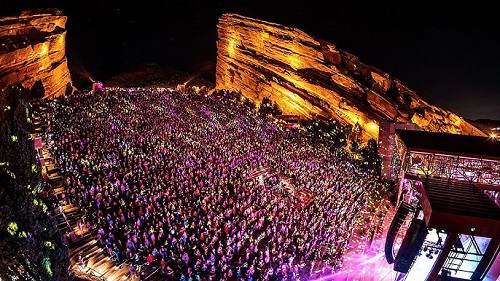
There are so many great places on the list, but one stood out. It is a venue that I truly hope to see a show at some day. Many artists have recorded albums or videos there. They include, the Grateful Dead, Joe Bonamassa, U2, Barenaked Ladies, Stevie Nicks, The Dave Matthews Band, and even John Tesh! That place is the Red Rocks Amphitheater in Morrison Colorado.
I am in awe of this truly amazing place. The venue is approximately ten miles southwest of Denver. The venue is best recognized by its two massive monoliths. They are named “Ship Rock” and “Creation Rock”. There is also the smaller “Stage Rock”. All of them together flank its 9,525 capacity seating area and naturally form the amphitheater.
Imagine seeing your favorite band on stage, while enjoying the breathtaking scenery! It is on my bucket list!
The experience that a concert viewer would have is incomprehensible to me. Go back to the first photo and scroll down. Think about the various changes in light, the beauty of the setting sun, the lights up on the rocks, and finally night fall. Wow!
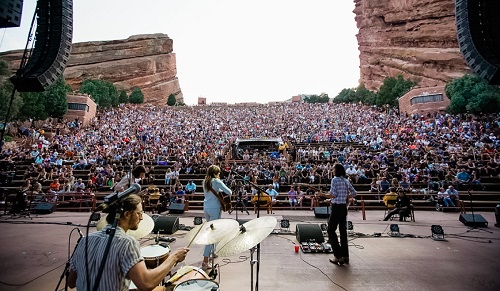
I would think that this has to be an extraordinary experience for the artists, too. While their view is a bit different than the audience, it still is pretty amazing.
I believe that I am the last contribution before Dave wraps up this topic. I can’t help but wonder what the other bloggers have chosen. Did they chose a venue? A recording studio? A musical museum? By the time you read this, you will already know – and so will I. Right now, however, I am excited to find out what they chose.
Thanks again to Dave for asking me to participate in this feature. I would also like to thank him for his understanding. I chose to run my Share Your Nostalgia Feature right around the same time as Turntable Talk. He did some shuffling and made it work for all of the writers involved. Should I do another topic, I will check with Dave and make sure the schedules are good for everyone.
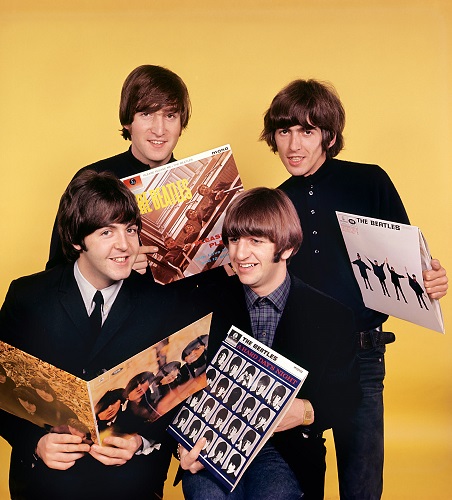
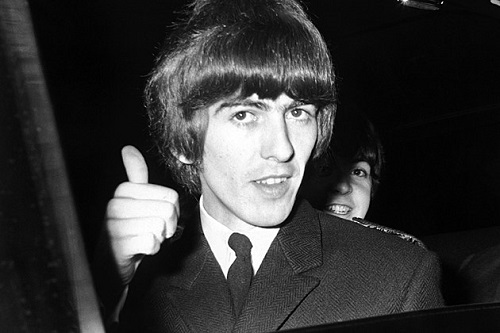
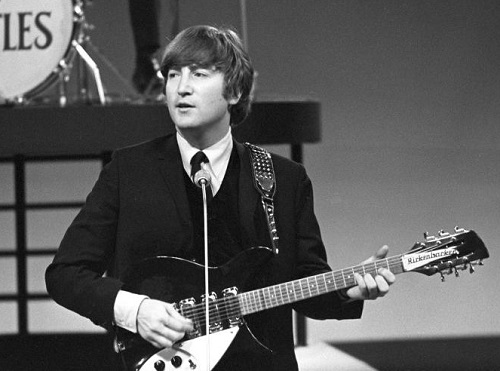
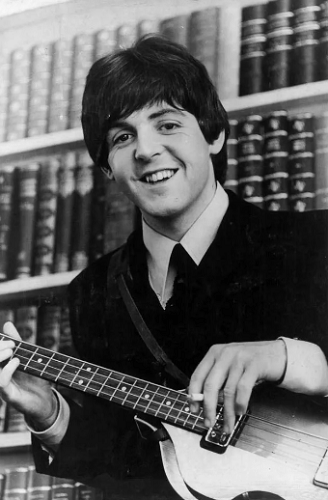
It’s time again for my contribution to Dave from A Sound Day’s monthly feature Turntable Talk. If you are keeping track, this is round #30! Way back when we started this, he asked us if the Beatles were still relevant. This time we circle back to the Fab Four and Dave wants us to write about our favorite Beatle. He is calling this round The Most Fab of Them All.
I have struggled in the past to narrow down what song or artist I am going to write about, but never like this. It shouldn’t be hard to pick one guy out of four, right? For me it is, believe it or not. Frankly, and I mean no disrespect to Dave, the topic is unfair. To me, a musical group or band is the coming together of people, each contributing something unique. Like a puzzle, when all the pieces come together, you have something amazing. To have to choose one is a daunting task.
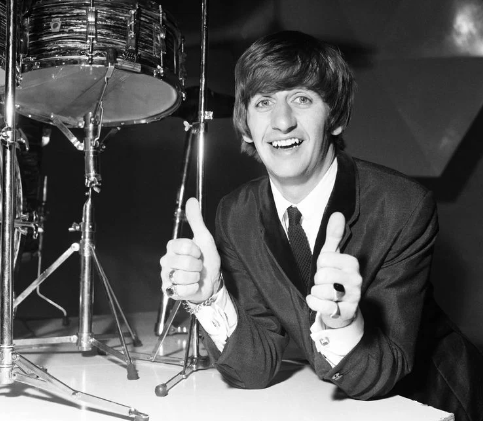
Let me start by saying that if you had asked me as a kid, without a pause, I would have chose Ringo. This may be because I was so familiar with the Beatles cartoon and Ringo always made me laugh. I also really enjoyed the almost all of the songs that he sang lead on. He went on to have some solo hits post-Beatles, too.
There are times I might have picked George Harrison, but probably not because of his Beatles stuff. Don’t get me wrong, he wrote the amazing song “Something,” which even Sinatra said was a beautiful love song. I also loved a lot of the early songs he sang on. Everybody’s Trying to Be My Baby is one of my favorites. George really gained my respect as a musician and songwriter post-Beatles.
John was a quick wit and always made me laugh when I saw him in those early interviews. You cannot deny the songwriting power that he had both solo and with Paul McCartney. He really wrote some deep songs. To me, it is interesting to look back and see how he put much of his hurt, suffering and confusion into a song.
John was also a guy who wasn’t afraid to take a stand for something. Many of his solo songs are still as relevant today as they were when they were released. If only the people would listen to the lyrics of Imagine, maybe we’d see a change? Every Christmas I hear War is Over, yet every day when I go to MSN, there is some new story about Putin and World War III. Obviously, Give Peace a Chance is not something any of the world powers wants to do.
Then, there is Paul. I don’t have to really say much about his songwriting abilities. As a matter of fact, if you look at the output of the Lennon-McCartney machine, you cannot help but be in awe of the volume of work they put out. As a musician, he really was the greatest talent of the group. Before you get up in arms, let me prove it to you.
We know that he was best known for playing bass guitar for the Beatles. Growing up, his first instrument was the trumpet (given to him by his dad). He also knew how to play the piano, and did so on Beatles songs like Slow Down and Ob La Di Ob La Da. While it is a simple tune, you can hear Paul’s drumming skills on The Ballad of John and Yoko. As a matter of fact, he can play over 40 instruments including mandolin, cello, harmonica, harpsichord, and the ukulele. Watch his video from 2020 for Find My Way and you will see him playing many (FYI – it’s not my favorite McCartney song, but it is a good illustration).
While many songs had both John and Paul listed as writers, many were “all Paul.” Yesterday, Hey Jude, Blackbird, and Here There and Everywhere, just to name a few. Paul said once that the last one was the only one that John had ever complimented him on. John said in an interview that it “was all his” and was “one of my favorite Beatles songs.”
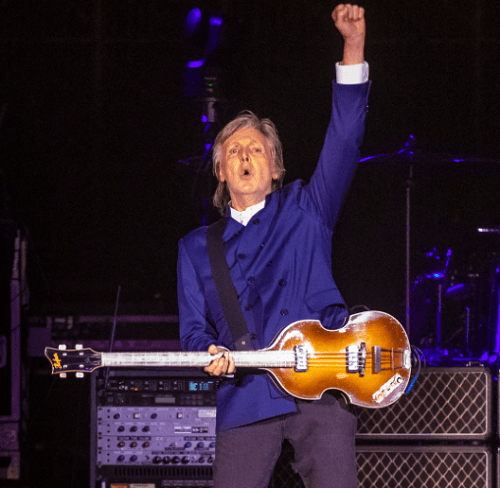
So why am I picking Paul? Honestly, if it wasn’t Paul it would be Ringo for the simple fact that they are still around. Both are still touring and in the public eye. I love watching Paul do interviews. He is fun to watch, tells great stories and isn’t afraid to be a part of something a bit silly.
One of my favorite McCartney moments was when Chris Farley interviewed him on SNL for the Chris Farley Show bit. How Paul kept a straight face through that still amazes me. Farley asks him, “Remember when they said you were dead? That was a hoax, right?” and Paul simply says, “I wasn’t really dead!” That always makes me laugh. How Paul keeps a straight face through the bit is beyond me. I wish there was a better quality clip…
There’s another great SNL bit where he and Martin Short and doing something for a Christmas Pageant. Martin says that he and Paul are a team but he is the only singer because Paul “cannot sing.” Paul plays the triangle in the bit. He misses cues and Martin screams at him through the whole bit. Paul is hilarious. The bit ends with Martin leaving and Paul asking, “Can I sing now?” Walls move and Paul walks onto the stage to sing Wonderful Christmastime, as himself.
Paul was fantastic on the Letterman show reminiscing about being there on the Ed Sullivan show. During the interview Dave says that they have been trying to get him on the show for years. He asks why it took so long to get him there, to which Paul says with a straight face, “I don’t like the show, David.” But THE highlight for me was to watch him do a rooftop performance of Get Back. I want to say that he wound up doing about a 40 minute concert from up there that night.
Another great Paul bit is when he shows up on James Corden’s show and does his Carpool Karaoke. The first song they sing together is Drive My Car and he’s having a blast doing it. The conversation between the two of them as they drive around is moving at times. Paul and James stop at Paul’s boyhood home and shares some great stories. The kicker is that they go to a pub that McCartney used to play at and he and his band surprise the patrons of it with a concert. It is worth a watch on Youtube –
As I write this, I have no idea what Beatle the other contributors have chosen. I am guessing that many of the pieces will be very music related. While I feel mine is also a bit music related, I also feel that what made Paul stand out to me was Paul being Paul. Paul, years away from the Beatles, talking about those days, the music, the memories, and the rest of the band. Paul, looking back at those early days that influenced and brought him to where he is today.
Not too long ago, country singer George Strait said he was done touring. George is 72. Sir Paul is 82 and still out there playing for sold out crowds for hours at a time. He is an artist who is always trying something new, while never forgetting his roots. He has a passion for the music and for his fans. He just seems to be that guy who’d be fun to hang out with.
Thanks to Dave for asking me to be a part of Turntable Talk. Thanks for another great topic. I love writing for it and love to see the responses from the other music lovers. Until next month … Thanks for reading.
I have been honored to take part in many features that are hosted by other bloggers and their sites. Honestly, writing for those features is really a lot of fun for me. Not to mention that you get some exposure for your blog on another site.
Themed blog-a-thons about movies are always fun to write for. Dave Ruch’s musical Turntable Talk feature is one of my favorites to participate in. Recently, Max at the PowerPop Blog did a week or two feature on the Kinks and their music. He said that he got a lot of positive feedback from that. Then, of course, we had our Song and TV Show Drafts which was a wonderful stroll down memory lane.
With that in mind, some of my blogger friends have said that I should host some sort of feature where my followers could join in and contribute a piece to be posted here. I have gone back and forth on whether or not this would be something that anyone might be interested in doing. Before making the decision, I thought I would ask for your opinion.
I called my site the Nostalgic Italian, because that’s who I am. I love the things of the past. I have no doubt that every reader of this blog has some sort of nostalgic memory that they could share. Let me say, without spoiling it for anyone, that I have a topic in mind. I randomly asked the question at work last week and was amazed at how passionate some of my coworkers were about it and how it led to about an hour long conversation.
So, if you think that you might be interest in taking part, I’d like to you comment here. Better yet, drop me an e-mail at: nostalgicitalian@yahoo.com. If you’d like to know the topic before deciding, I will e-mail it to you. I was thinking that this could be something that runs for a week or two (with every blogger getting a day devoted to their piece) in mid to late October.
If there is enough interest, I will compose an email with the topic and instructions. I’ll give a dead line to get your piece to me and then send out a schedule of when each piece will post. This works well with Dave and his Turntable Talk, so I see no need to do it any differently.
I’m not sure what to expect, but I really hope you will consider taking part. Why? Because I am truly interested in your answer to the question and it will let you explore your childhood a bit while coming up with that answer. If it turns out like I think it will, YOUR piece will not only bring back memories for you, but it will stir up memories for the other readers, too.
If you need more info – don’t hesitate to reach out.
Welcome back to The Music of My Life, where I feature ten songs from each year of my life. In most cases, the ten songs I choose will be ones I like personally (unless I explain otherwise). The songs will be selected from Billboard’s Year-end Hot 100 Chart, Acclaimed Music, and will all be released in the featured year.
I turned 13 in 1983. I had a paper route and a weekly income because of it. I spent my money on toys, books and music. I loved going into Harmony House and buying 45’s or albums. As I get deeper into the 80’s, I’m seeing more and more songs that I “had” to have.
I am noticing something about a lot of the songs on my lists. There have been some that have not necessarily been meaningful to me the year they were released, but wound up being important later on in my life. That is the case of a few of them from this year. That being said, let’s check out my list….
When Lionel Richie left the Commodores, he had a number one song with “Truly.” The follow up song has always been one of my favorites. I can still see and hear my mother singing along the the chorus of “You Are.”
What I love about this is the fact that while it is a love song, it has some tempo to it. It also has a horn section. Future hit maker Richard Marx sang backup on this track. His first job in music was singing on the Lionel Richiealbum, and he proved himself on this track, which required some deft background vocals. Richard told songfacts.com: “Every session I ever did with Lionel, or for him, was a very fun atmosphere. I’ve been on so many sessions where it’s a downer, and you just try to get through it and nobody is having fun. Lionel is always having fun – no matter what.”
You Are
When I worked in country radio, I used to go to the Country Radio Seminar. It was a place where you got to hear various panels discussing programming, promotions and more. There were plenty of artists there (both old and new) to entertain. We’d often bring stuff for artists to sign so we could auction them off for St. Jude.
Every night there was always a show somewhere. Everyone had always talked about “the boat.” One record label would bring folks about the General Jackson Showboat and provide dinner and drinks. While us radio people would sit and eat, they would bring artists out on the stage to play for us. Many times it was familiar artists featuring their new songs or new artists that the label wanted to showcase.
One of the things about the boat was that there were always one or two surprise guests. You never knew who might show up. The year before my first boat ride, Huey Lewis had mad an appearance. The first time I was on the boat, they wheeled out this piano on the stage. Next, they brought out Ronnie Milsap and I was thrilled. I had always loved his music and he did not disappoint.
He came out laughing and joking and cranked out a few songs, including Stranger In My House. It was written by Mike Reid, who was a defensive tackle for the Cincinnati Bengals for five seasons and had a couple country hits of his own. The song was a country hit and also crossed over to the AC and Hot 100 charts.
The song is done in a minor key and from the opening chords, I was hooked.
Stranger In My House
Anyone who goes through a divorce or a break up knows that what follows can be a rough road. The next song is an example of a song that meant nothing to me at the time, but years later it did.
The fighting, the bickering, the pettiness, the blame, the suffering, the accusations and all the things that comes with a divorce is difficult enough. Once they hand you the final decree, it is important to start anew. I had a wonderful support system in place for me and as time passed, I looked back to see that I was making it. I had been through the war and I had made it to the victory.
Elton John’s I’m Still Standing was used in an animated movie called “Sing.” It was while watching that with the kids that I really heard and felt the lyrics. I can look in the mirror and know that I’m Still Standing and life is GOOD!
I’m Still Standing
Remember ELO’s song “Motor Factory?” Of course, you don’t. That’s because as the group was recording the song, it went through a bunch of changes. They lyrics were completely changed and it became Rock and Roll Is King. The song was released as a single from their Secret Messages album.
ELO’s Dave Morgan said in an interview, “I sang on quite a few tracks, I sang on ‘Rock ‘N’ Roll Is King’. I played on that one, but it wasn’t called that, it was something about something about working at Austin Longbridge! It was full of car plant sounds, you could hear it going clank, clank, clank, like somebody hitting a lathe with a hammer, and Jeff went away and made it into ‘Rock ‘n’ Roll Is King’, wiped off everything we’d done, no, there was still some backing left in there, It was much better how he finished it off than it was before.”
I remember recording this off the radio as a kid. I didn’t realize that there was (what we radio guys call) a “fake cold” ending. That’s where the song stops, you think it’s over, and they come back and sing again. The first time I recorded it off the radio I hit pause on the fake cold, only for ELO to start singing again. Urgh! I got smart after that and went and bought the single.
Rock and Roll Is King
Fleetwood Mac’s Lindsey Buckingham released a few solo albums in the 80’s. Despite some songs that were Top 40 hits, not many folks can recall them. There is, however, one song that folks know thanks to the misadventures of a family named Griswold.
Thanks to National Lampoon’s Vacation, Buckingham’s song Holiday Road had become his best known song. That’s really saying something for a song that never cracked the Top 40 and peaked at #82 when it was released. The song almost didn’t happen.
Actor/director Harold Ramis asked Buckingham to create two songs for his film National Lampoon’s Vacation. He was initially reluctant, believing that soundtrack work “wasn’t part of his discipline.” Thankfully, he decided to grant Ramis’s request, and wrote. Buckingham recorded “Holiday Road” without seeing the entire film. He figured that the movie “had to be somewhat uplifting and a little bit funny”. To keep in line with that, he added dog barks near the end of the song, unaware that the movie featured a scene where a dog is accidentally dragged to death from the bumper of a car.
It is one of those songs that makes you unconsciously press down a bit too much on the gas pedal if your driving while it is playing. I’m not sure I ever “got” the video for the song, though.
Holiday Road
ZZ Top’s Eliminator album was one of few albums that have sold over 10 million copies in America, earning Diamond certification. I helped it get there! This was an album that I remember buying and dropping the needle on for the first time. It had such a neat sound.
Billy Gibbons says that he got the idea for Sharp Dressed man when he saw a movie and a character was listed in the credits as “Sharp-Eyed Man.” According to songfacts.com, the song attracted a slew of new fans to ZZ Top when the video ran constantly on MTV. Their long beards made them instantly recognizable and the babes certainly helped, but the car was the real star.
Prior ZZ Top albums had a Tex-Mex vibe, but when it came time to sort out visuals for the album, the hot rod was finally ready – Gibbons had been working on it for years. It was good timing, giving them an MTV-friendly focal point just when they needed it. They had never made videos before and had no acting experience, but their videos provided everything MTV’s target audience craved: girls, rock and roll, and a really sweet ride.
The music video was the first that was a sequel. It picked up the story from the “Gimme All Your Loving” video of the down-on-his-luck gas station worker who is swept away by three beautiful women. In “Sharp Dressed Man,” he’s a valet, and he encounters the same three girls and is once again given the keys to the Eliminator, Billy Gibbons’ 1933 Ford Hot Rod.
Sharp Dressed Man
I had no idea in 1983 that I would be working as a sleep technologist. The next song is one that is based on a real sleep disorder – somniloquy (Sleep talking). “Talking In Your Sleep” is the biggest hit of The Romantics’ career. In fact, it’s their only Top 10 hit, and only one other song by them (“One in a Million”) even made it to the Top 40. Contrast that with the number of times you’ve heard their song, “What I Like About You,” which only made it to #49.
I love this story about the song: As usual, MTV helped boost The Romantics’ success right around this time with videos of their songs. In Greg Prato’s book MTV Ruled the World, Romantics’ lead singer Jimmy Marinos talks about this song: “That was the last song recorded for the album In Heat. All we had was a backtrack, the instrumental part of the song. And we realized it was too good a track to leave unfinished. So everybody put their heads together, and in a couple of days, we finished up the song melodically and lyrically.” Ha also mentions that the video was filmed at 8:00 in the morning in Detroit, surrounded by girls in their jammies, at what was deemed “not really rock ‘n’ roll hours.” So if they look like they just woke up, that’s because they did – and it works great!
Check out their hair in this video!!
Talking In Your Sleep
Two years ago, Dave Ruch invited a bunch of us to write a column for his Turntable Talk feature. The first topic was about why the Beatles are still relevant, the next song is an example of their influence.
When Genesis began to write That’s All, it was intended as an attempt to write a simple pop song with a melody in the style of The Beatles. Phil Collins even acknowledged in a subsequent interview that the song also features one of his attempts at a “Ringo Starr drum part.”
Genesis keyboard player Tony Banks was one of the first to use an Emulator, which was one of the first digital samplers (it was introduced in 1981). Banks would record his bandmate Mike Rutherford as he noodled around on his instruments, then play around with those samples to craft a track, which is how this song developed.
That’s All was the band’s first Top 10 hit in the US, setting the stage for their tremendous success the rest of the decade as they adapted their sound from progressive rock to tighter pop songs. The video certainly played a part in the success of the song, too. It depicts the band as homeless men taking shelter outside a disused factory. They perform the song, eat soup, play cards, and keep warm around an open fire. It was the first time Genesis used director Jim Yukich, who would direct the majority of their next videos as well as many of Collins’s solo videos.
That’s All
Remember the group Blue Angel? Me either. It was the group that Cyndi Lauper was in in 1981. It was her solo career and her first single, however, that made her famous. It is interesting to note that Girls Just Wanna Have Fun didn’t start out as the female anthem that Cyndi made it.
A Philadelphia singer/songwriter named Robert Hazard, who had a band called Robert Hazard and the Heroes, wrote it. He recorded a demo of it in 1979. Speaking with Rolling Stone, Lauper said that she had to alter the lyrics from Hazard’s original. “It was originally about how fortunate he was ’cause he was a guy around these girls that wanted to have ‘fun’ – with him”
Believe it or not, Cyndi didn’t want to record this song, but her producer, Rick Chertoff, was convinced it could become her anthem. The challenge for her was figuring out how to sing it. She ended up doing her vocal in the style of the ’50s hit “Let the Good Times Roll” by Shirley & Lee, which Shirley Goodman sings in a high-pitched voice. It obviously worked as the song went to number 2 on the Billboard Hot 100 chart.
MTV again played into the success of the song, as this was a very fun video to watch. The video, which ran constantly on MTV, features the wrestler Captain Lou Albano as Lauper’s father, and also Lauper’s real-life mother, who had no acting experience but did just fine. It won the first ever award for Best Female Video at the 1984 MTV Video Music Awards.
The song had a huge influence on how girls dressed in the 80’s. When I think of it, I can picture so many of my gal friends who dressed like Cyndi.
Girl’s Just Want To Have Fun
Everyone I grew up with had the 1984 album from Van Halen. The song actually was a bigger hit in 84, but it is on this list because it was released in December of 1983. Jump is just one of many songs that used synthesizers in the 80’s. The synthesizer intro for Van Halen’s Jump is iconic, but not everyone in the band wanted to use it.
The synthesizer was a point of contention in the band. Eddie wanted to use it, but lead singer David Lee Roth thought it would look like they were selling out to get more radio play. Eddie was classically trained on piano growing up – he didn’t start playing guitar until he was a teenager – so it wasn’t that far a stretch for him. Had the band brought in an outside keyboard player they probably would have gotten a lot of flak, but Eddie was held in such high esteem that fans were happy to hear him on another instrument.
Songfacts.com says: 1984 was David Lee Roth’s last album with Van Halen before he left the band in 1985; the video for “Jump” inflamed the tensions that led to his departure. The video was produced by Robert Lombard, who wanted to show the personal side of the band on stage. Roth, however, wanted the performance intercut with footage of him doing other things, so they shot him doing things like riding a motorcycle and getting arrested while wearing nothing but a towel. Lombard edited the video and used none of the extra Roth footage, taking it to Eddie and Alex for approval. Two days later, the band’s manager fired him for bypassing Roth. Lombard says he never received the award the video won from MTV.
Jump
Next week, we’ll look at songs from 1984. 1984 was a big year for me in a lot of ways. Musically, it was a big year for ballads. With a mix of country, R&B, and a song that led to me embarrassing myself on the air years later, it will be an interesting list!
Tell me about your favorite from 1983 that I may have missed in the comments and I will see you next week.







 Various Ramblings of a Nostalgic Italian