

(This blog originally posted in 2018)
Throughout history, some truly great people never got the respect they deserved simply because they had big shoes to fill.
* John Adams following George Washington as President of the United States.
* Ryan Seacrest following Dick Clark hosting New Year’s Rockin’ Eve.
* Ray Combs following Richard Dawson as host of Family Feud.
*Daniel Craig is forever compared to Roger Moore and Sean Connery as James Bond.
* Dick Sargent never fully got the credit he deserved as an actor because he replaced Dick York on Bewitched.
There is one “under rated” comedian who truly never got the true respect that he deserved … simply because he stepped in to fill the shoes of a comedy GIANT! This modest blog hopes to give him some recognition.
Shemp Howard was born today in 1895. Shemp was born Samuel Horwitz, but his mother had a very heavy Lithuanian accent so when she called his name it came out “Shemp”. That name stuck and he was Shemp for the remainder of his life.
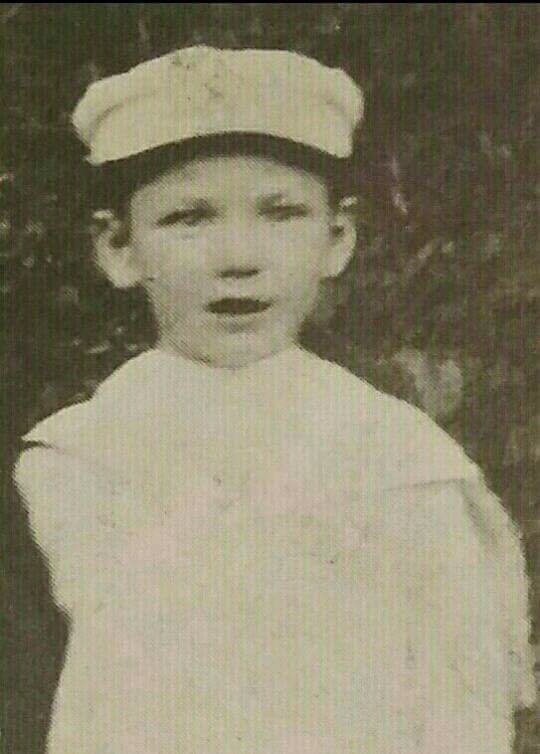
Shemp and his younger brother, Moe, watched a lot of vaudeville shows and eventually started their own act. They did an act entirely in black face. This wasn’t unusual as many performers like Al Jolson, Freeman Gosden and Charles Correll we’re doing just the same.
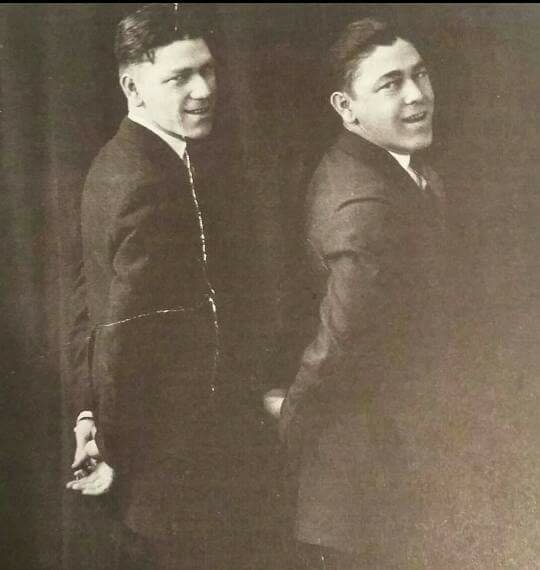
Moe and Shemp teamed up with Ted Healy, and eventually Larry Fine joined the group. Ted Healy and his Stooges were a vaudeville hit.
My pal, Eddie Deezen, (who you may know as Eugene from the movie Grease and many other great films) wrote an very nice article about Shemp for Neatorama. In it he addresses one of Shemp’s “issues”:
According to Shemp’s wife, Gertrude “Babe” Howard, whom Shemp married in 1925, Shemp was “just a big old ‘fraidy cat.” Everyone has a particular fear or phobia (many of us have more than just one); Shemp was “afraid of his own shadow,” according to his friends, with a whole litany of fears:
*He lived in constant fear of cars, never driving or getting a driver’s license. According to Moe, this fear was rooted in an auto accident Shemp experienced when he was a youth. (In his films, when Shemp had to fake driving a car, he was towed by prop men in a simulated car but was still scared, nervously holding the steering wheel until the scene mercifully ended.)
*Shemp also refused to fly in airplanes, travelling only by train.
*He was terrified of strange dogs and would carry a big stick with him, just in case a strange dog approached him.
*He refused to swim or go in any body of water larger than a bathtub. Shemp always carried a pair of rubber overshoes in his pocket, lest he be caught in the rain.
*It also became fairly common that, before Shemp appeared live on stage, he would throw up to relieve himself.
*And Shemp was a chronic bed-wetter. He had actually served in World War I, but his stint was truncated due to his bed-wetting.
Ted Healy was a jerk. He saw these things and often used his knowledge of Shemp’s fears to scare him. Because of Healy, Shemp left the group to do solo projects. He was replaced by…Curly Howard (Shemp and Moe’s younger brother). Curly went in to become a comedy icon with the Stooges and was loved by millions.
Shemp had great success working alone. He can be seen in some of Abbott and Costello’s films, but according to Eddie Deezen’s article, Costello was very jealous of Shemp and most of his funny stuff ended up being edited out. He also appeared with WC Fields in The Bank Dick and he also played Knobby Walsh in the Joe Palooka films. While off on his own, Shemp was called (and billed as) “The Ugliest Man in Hollywood”!
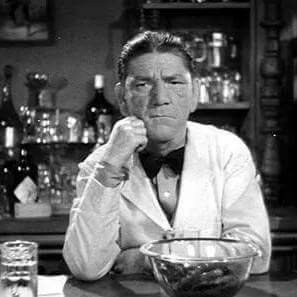
In the 1940’s, it is evident by watching the Three Stooges comedies that Curly’s health was on the decline. In 1946, while waiting to shoot a final scene for Half-Wits Holiday, Curly had a massive stroke. With Curly no longer able to perform, Moe turned to his older brother, Shemp, who agreed to return to the group.
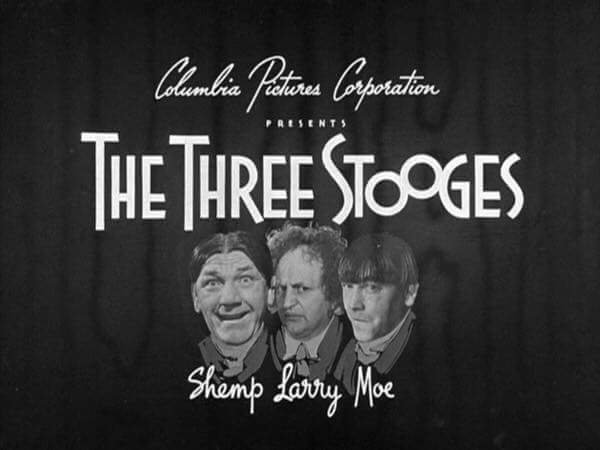
Shemp made over 70 comedies with the Stooges. He never stepped in to copy Curly, nor did he want to. He was Shemp and that was what makes his comedies with the boys unique.
Shemp had his own vocal sounds. Curly “woo woo woo’d” and “n’yuk n’yuk n’yuk’d while Shemp did something totally different. His most notable characteristic as a Stooge was a high-pitched “bee-bee-bee-bee-bee-bee!” sound, a sort of soft screech done by inhaling. This was rather multi-purpose, since Shemp emitted this sound when scared, sleeping (done as a form of snoring), overtly happy or dazed. It became as much a trademark sound of Shemp as the “nyuk nyuk” sound had become Curly’s.
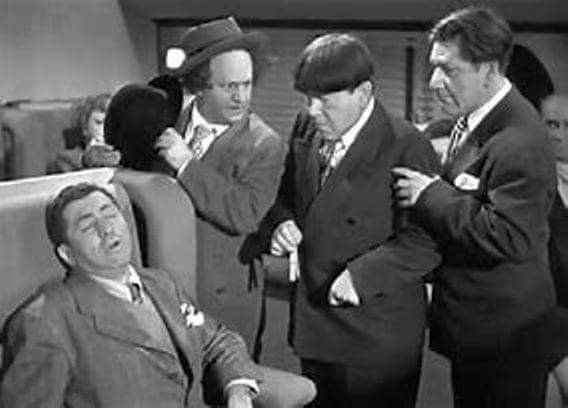
Shemp was always compared to Curly. In my humble opinion, this is like comparing baseball to football or apples to oranges. They are both unique and each have their own attributes! There is no way to compare them to each other! Curly was Curly. He was energetic, childish, silly and graceful. Shemp (who was already in his 50’s when he rejoined the group) was more flippant. He was a wise cracking, all talk no action kinda guy. The dynamic was different, but it still worked.
He played with the human language wonderfully. One of my favorite Shemp lines comes from the short Sing a Song of Six Pants. The boys are dry cleaners/tailors. A customer comes in and Shemp says “Where did you get this mess?” (Referring to the man’s suit). The customer replies ” I bought it here!”. Shemp’s reply: “Oh, what a beautiful messterpiece!”
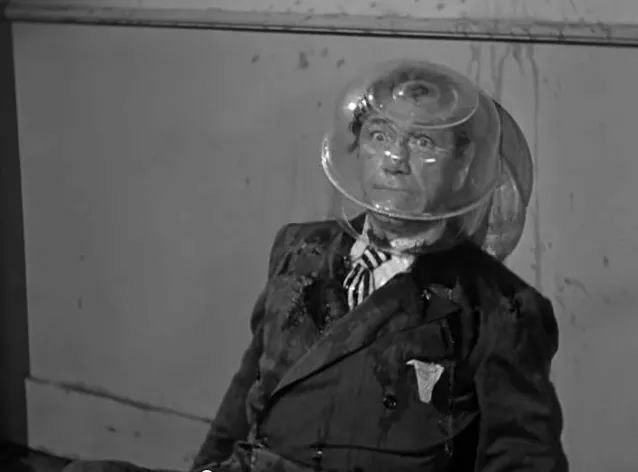
On November 22, 1955, Shemp went out with his friends to a boxing match at the Hollywood Legion Stadium. After the fights were over, Shemp hailed a taxicab to take him to his North Hollywood home with friend Al Winston. Shemp set back and lit up his cigar and told a joke. Suddenly he slumped over into Winston’s lap. Shemp had a heart attack and was dead at the age of 60. (Shemp’s daughter-in-law, Geri Greenbaum, maintains he suffered a massive cerebral hemorrhage.) His friend, Al, thought Shemp was playing a joke, since Shemp was laughing moments earlier, but realized he was actually dead. Moe’s autobiography gives a death date of November 23, 1955, as do most subsequent accounts, because of Moe’s book. But much of that book was finished posthumously by his daughter and son-in-law, and some specific details were confused as a result. The Los Angeles county coroner’s death certificate states that Shemp Howard died on Tuesday, November 22, 1955, at 11:35 [PM] PST.
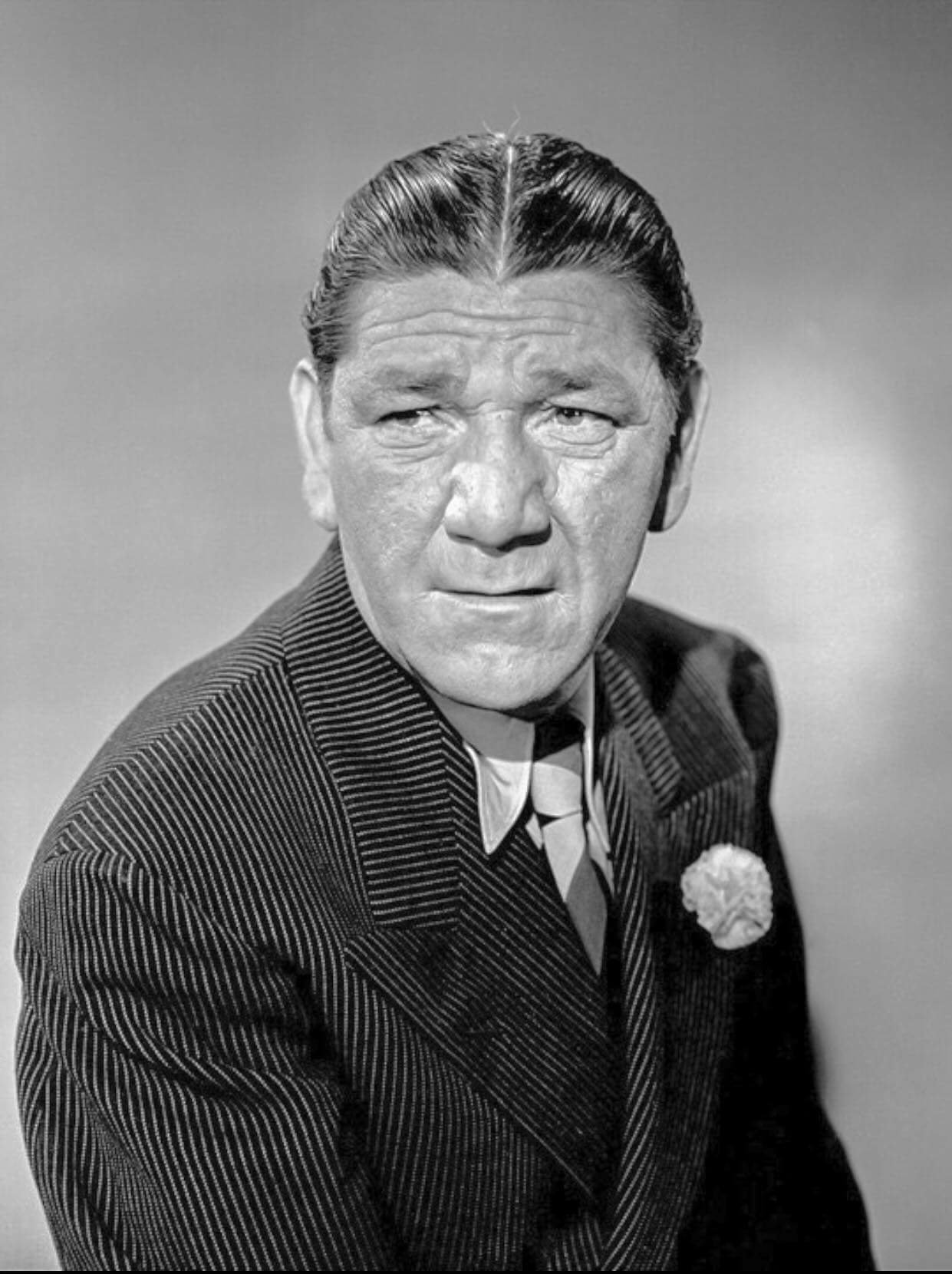
Many Stooge fans know “the rest of the story” (to quote Paul Harvey), but for those who don’t, Eddie Deezen’s article shared the odd final chapter of Shemp’s film career :
Columbia Studios still needed four new Three Stooges shorts after Shemp died, so they hired a replacement named Joe Palma to “be Shemp.” Joe became Shemp’s “double,” or stand-in, faking scenes by not facing the camera, just standing with his back to the camera and running off or bumbling. Old footage from previous Stooge films was intermixed with the Joe Palma footage, and thus the last four Three Stooges films with “Shemp” were made.
To this day, to “get a Shemp” or “a fake Shemp” or “a Shemp” is Hollywood nomenclature for “get a double” or “use a stand-in.” Director Sam Raimi (Spiderman), a big Three Stooges fan, always credits stand-ins or doubles in his films as “Fake Shemps.”
While people who talk about Shemp often say things like, “he’s no Curly” and Stooge Festivals often promote being “all Curly”, let’s give Shemp some credit! He was a brilliant performer. He was quick, funny, and helped to keep Stooges Comedies in theaters for years after Curly left the group.
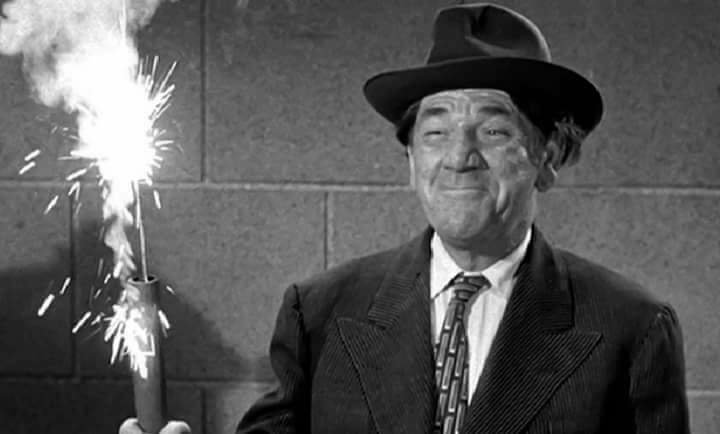
As with any team, everyone plays a part. While the team took on a new look, the slapstick was still there. The puns are still there. Larry’s facial expressions and reactions are still there. Shemp Shorts are still funny, but people who automatically cop an attitude at the opening credits before the short even starts will never come to appreciate the genius of Shemp…and that is sad.
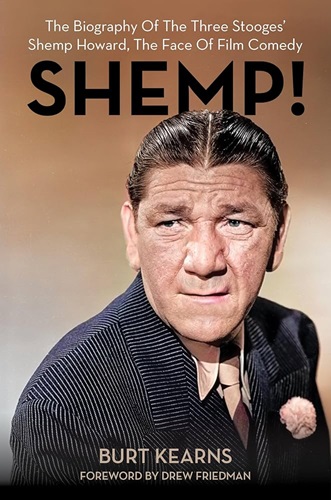
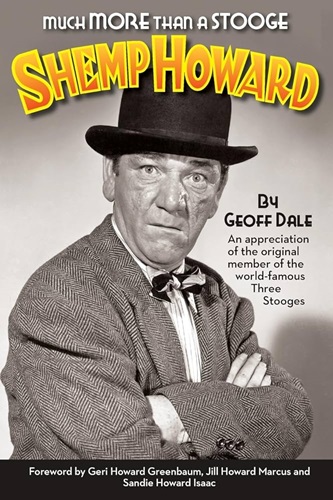
Happy Birthday, Shemp! How can you celebrate? There are two fantastic books that came out recently that are a must read for Stooge fans.


 Various Ramblings of a Nostalgic Italian