The Music of My Life – Decade Extras – The 1980’s Part 2

This is sort of a continuation of the Music of My Life feature. It focused on music from 1970-2025. It featured tunes that have special meaning to me, brought back a certain memory or a tune that I just really like. I found that with the first three decades, there were songs that I didn’t feature. So I sat down with my original lists and selected some songs that “bubbled under,” so to speak.

I figured a good way to present them was to focus on a decade. 10 years = 1 song per year = 10 songs. Last week I featured the 80’s. This week 10 more 80’s tunes before we move on to the 90’s. So, let’s check out a few “Decade Extras.”

1980

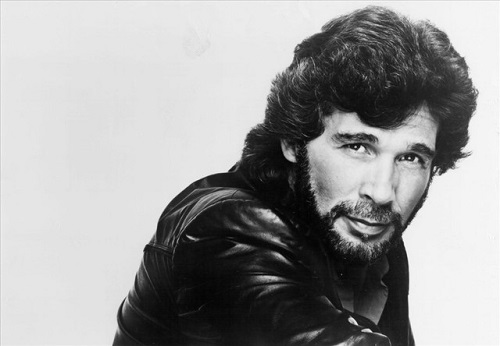
While I was never a truck driver, we certainly listened to Eddie Rabbitt’s Drivin’ My Life Away a lot while driving my my folks. I’m sure it was one of the songs my dad had recorded on 8-track to listen to on our drives up north.

This song was the first song that really made Eddie a crossover artist. The song went to number 5 on the Billboard Hot 100 charts. I Love A Rainy Night followed and hit #1 on the Hot 100, Country and Adult Contemporary Charts. Step By Step and You and I followed in 1981 and 1982 as crossover hits.

It is one of many Eddie Rabbitt songs I love.

Driving My Life Away

1981

Originally done by Tommy James and the Shondells, Mony Mony was covered by Billy Idol. Billy first released his version as a single in 1981, his first as a solo artist after leaving the band Generation X. His live version of the song went to #1 in 1987.

It was a big song at weddings and schools dances. However, it quickly made many school’s “Do Not Play” list. Why? It became popular for kids to shout “hey, hey, what, get laid, get f–ked” during the instrumental break in the chorus. I found this out the hard way at a school prom. I had a lot of requests for the song and when I played it the kids went crazy. When they shouted out the vulgar chant, it only took seconds for a teacher to come up and tell me to turn it off. Apparently, the chant is still shouted at Billy’s concerts.

Weird Al Yankovic did a parody of Billy’s version called “Alimony” on his Even Worse album in 1988.

Mony Mony

1982

It took two releases for the next song to get noticed. I can still remember going to the record store and buying Built For Speed by the Stray Cats. Rock This Town was such a cool thing to hear on the radio for me. My dad played a lot of Rockabilly stuff for me growing up, so I had to go get this album.

When Stray Cat Strut was first released in August of 1982, it didn’t even crack the Hot 100. I think it stopped at #109. Then Rock This Town was released and the band got noticed. The record company decided to re-release Stray Cat Strut and this time it debuted at #43 and went all the way to #3.

Michigan Trivia: Detroiters may remember that WRIF’s (101 FM) JJ and the Morning Crew a parody of this called “Fat Cat Strut.”

Stray Cat Strut

1983

The Eurythmics are Annie Lennox and Dave Stewart who actually dated for a while. Lennox said in an interview that they wrote this song after the two had a huge fight. Dave came up with a beat, Annie improvised the synthesizer riff, and suddenly they realized they had a potential hit.

In an interview with songfacts.com, Stewart said “We thought we’d made something really special but we had no idea, really, the impact it would have. Neither did the record label, which didn’t even think it was a single.”

Three other songs from the album were released as singles in the UK before their label, RCA, finally issued “Sweet Dreams.” When they did, it took off, climbing to #2.

 Songfacts says about the video:

The video presented Lennox with close-cropped orange hair and a tailored black suit, making it the first popular video presenting an androgynous female. The cow in the video was Dave Stewart’s idea – he was a big fan of surreal artists Salvador Dali and Luis Bunuel. Said Stewart: “A few people were saying, ‘Dave, why the cow? Annie is so good looking.’ Those people should go buy a copy of Purple Cow by Seth Dogin, about how to make your business remarkable. It was written 20 years after I had the purple cow in our video – which certainly did the trick and made my whole life remarkable.”

The cow, while very eye-catching, posed a logistical problem because most studios can’t accommodate them. Eurythmics found a basement studio in London with an elevator big enough to transport the animal. Lennox recalls the shoot with the bovine walking around as being one of the more surreal experiences of her life.

This song used to drive my former sister-in-law crazy. I’m not sure why, but whenever I DJ’s a family party or an event that she was at, I always played this song.

Sweet Dreams Are Made of This

1984

The next song got it’s title from a 1979 movie. Time After Time is the name of a 1979 science fiction movie starring Malcolm McDowell as H.G. Wells, whose time machine is stolen by Jack The Ripper, who uses it to travel from 1893 to 1979. Wells follows him into the future and goes on a quest to stop him from killing.

Cyndi Lauper wrote the song with Rob Hyman of The Hooters. Hyman told Songfacts: “When she saw Time After Time, something clicked. She said, ‘I think I have a title.'”

Once the title was in place, they set about writing the song. Hyman explained: “I was sitting at the piano and just started banging out what would eventually be the chorus, hook, and the way we sing it. It almost had like a reggae feel, it was a little bouncier and a little more upbeat. We started getting off on that chorus, then the verse melodies started to appear.

It’s a deceptively simple song. The verses are just a little repeating three-note motif – almost like a nursery rhyme, a very simple song. Then we started to realize we were on to something. The mood of the lyrics came from both of us. I think Cyndi came in and really started the lyric flow, then all of the sudden we realized it wasn’t such a bouncy song, but it was a little more bittersweet and a little deeper in its feeling and a little more poignant, so the music started to change. We wrote a little bridge section and I think the last thing we really wrote was the chorus. We had ‘Time After Time,’ we just had to get the words that would surround it.”

This song surprised me. Compared to Girls Just Wanna Have Fun and She Bop, this song was kind of deep. This one and True Colors really made me appreciate her talent.

Time After Time

1985

My Detroit Tigers are doing very well so far this season. I hope they keep it up! From 1985, here is a song that I have written about in the past Centerfield.

Centerfield

1986

My dad always played me classics from Elvis, Roy Orbison, Buddy Holly and Little Richard. I remember my dad coming home and saying, “Keith, you gotta hear this Little Richard song.” It was a song that was featured in the movie Down and Out in Beverly Hills with Richard Dreyfus.

Honestly, it sounded like something he could have done in the 50’s. Great Gosh A’Mighty must have been the cleaned up version for the film, because Little Richard also recorded a Great God Almighty version, too.

The song is always one I play on repeat on the iPod.

Great Gosh A’Mighty

1987

Randy Travis was one of the coolest country stars I’ve had the chance to meet. He was so down to earth and friendly. We talked about music, family and faith. It was like talking to an old friend.

I feel Forever and Ever, Amen is right up in the Top 10 best country songs of all time. It was written by two of the best songwriters in Nashville – Paul Overstreet and Don Schlitz. The two had already wrote Randy’s hit “On the Other Hand,” and I love the story of how this one came to be.

Overstreet told Songfacts:

“I had played about 36 holes of golf that day, and Don says, ‘I’ve got this idea we have to write.’ His new fiancée’s little boy was learning the Lord’s Prayer, and he was going around saying ‘forever and ever amen’ after everything. He would say, ‘Mommy, I love you. Forever and ever, amen.’ So Don said, ‘We’ve got to write this.’ I said, ‘How about tomorrow?’ He says, ‘No, now.'”

They got together on Overstreet’s front porch that night and composed the song by candlelight. Confident it was a hit, they recorded a demo the next day and sent it to Travis, who made it the lead single to his second album, Always & Forever. It was indeed a hit, spending three weeks at the top of the Country chart, longer than any other song in 1987.

Forever and Ever, Amen

1988

Another cover song on the list – this time, a cover of Elvis Presley. I remember hearing Cheap Trick’s version of Don’t Be Cruel and loving it! I remember really digging the spots in the song where that running bass line can be heard. The key change was something that stood out for me.

I hate to diss on the King, but I almost love the Cheap Trick version a bit more. There is so much going on that really takes the song to another level – that drum beat, the fake cold ending, the guitar solo and so much more. I played the heck out of this 45

Don’t Be Cruel

1989

The final pick comes from the movie UHF from Weird Al Yankovic. In a recent Turntable Talk feature, I talked about the David Lee Roth video for Just a Gigolo. At the end of it, I wondered if Dave borrowed from the music video for UHF’s title song.

While the video for the song is hilarious and brilliant, the song itself is one of my favorites from Al. It is not a parody, rather an original. It is a song that sounds like something you would hear on the radio in ’89. It has an alternative rock feel to it.

It’s an underrated and often forgotten Al song

UHF

What a way to wrap up the 80’s! I hope you heard some tunes you liked, too. Next week we’ll move on to the 1990’s and see what songs bubbled under my original list. See you then!

Thanks for listening and for reading.

The Music of My Life – 1989

Welcome back to The Music of My Life, where I feature ten songs from each year of my life.  In most cases, the ten songs I choose will be ones I like personally (unless I explain otherwise). The songs will be selected from Billboard’s Year-end Hot 100 Chart, Acclaimed Music, and will all be released in the featured year.

Before we get into the music, I have to take a moment to mark a blogging milestone. This blog will be the 1400th blog I have written since the Nostalgic Italian site went live.

1400 posts and here you are still reading. For that, I thank you from the bottom of my heart. I am glad that you are here. Now, let’s celebrate by going back to 1989…. when I turned 19.

As I sorted through the singles from 1989, I noticed that there were a lot of duets recorded that year. After All from Peter Cetera and Cher, Don’t Know Much and All My Life from Linda Ronstadt and Aaron Neville, were just a few of them. No duets made my list, however, as I just didn’t feel any of them connected with me enough to bump the ten songs I picked.

I grew up listening to Roy Orbison. He was a favorite for a long time. I used to ask my dad to play his songs on the stereo all the time as a kid. In 1988, Roy saw his career take on new life. He recorded with George Harrison, Jeff Lynne, Tom Petty and Bob Dylan as part of the group The Traveling Wilburys (More on them in a moment) and had recorded a brand new album (Mystery Girl) in November of 1988.

On December 6, 1988, I was at the radio station when an “Urgent” Bulletin came across the AP Newswire stating that Roy had died after having a heart attack. I had never met Roy, but his music was such a big part of my life that seeing the story upset me quite a bit.

You Got It was the first single released from the Mystery Girl album in January of 1989. Orbison wrote the song with his Wilbury friends, Jeff Lynne and Tom Petty. Lynne produced the track and also played guitar, keyboards and bass; Petty played acoustic guitar and sang backup. It would reach #1 on the Adult Contemporary chart and #9 on the Top 40 chart.

Orbison performed this song just once: at the Diamond Awards Festival in Antwerp, Belgium on November 19, 1988. This performance was used as the song’s music video.

You Got It

Every interview I have seen with the guys from the Traveling Wilburys always has them saying how wowed they were by having Roy in their group. When Jeff Lynne was asked about the recording sessions, he said, “Everybody just sat there going, ‘Wow, it’s Roy Orbison!’ … Even though he’s become your pal and you’re hanging out and having a laugh and going to dinner, as soon as he gets behind that [microphone] and he’s doing his business, suddenly it’s shudder time.”

Roy was in the group’s first video (for Handle With Care), and was set to travel to London a couple days after he passed away. One of those videos was for The End of the Line. One of the reasons that I love this video is that the group gives a heartfelt tribute to their friend. When Roy’s vocal happens, we see Roy’s guitar in a rocking chair next to a framed photo of Roy.

The End of the Line

I have never seen the movie Road House. My mom liked it a lot, because she liked Patrick Swayze. Jeff Healey and his band were shooting scenes for the movie (and Jeff had many scenes with Swayze) and recording his See The Light album simultaneously. One of the cuts from this album was Angel Eyes.

I had never heard of Healey before this song. I had no idea that he was blind and marveled at the way he played his guitar (on his lap, like a piano). I was really blown away by his vocals and his guitar playing. He was discovered by two blues legends – Stevie Ray Vaughn and Albert Collins.

He toured and sat in with some fantastic people over the years including Buddy Guy, BB King, Eric Clapton, ZZ Top, The Allman Brothers and Bonnie Raitt (just to mention a few.) While he is mainly known for his bluesy style, by the year 2000 he actually was releasing many jazz albums.

He loved music and he was an avid record collector. He amassed a collection of well over 30,000 old 78 rpm records. Starting in 1990 he hosted a radio program of very early jazz on CIUT at the University of Toronto with Colin Bray. Later he went national on CBC Radio’s program entitled My Kind of Jazz, in which he played records from his vast vintage jazz collection.

Too many people write him off as a “One hit wonder” act. His music is fantastic and this song is so soulful … he was a talent taken too soon.

Angel Eyes

“Hey, man! Have you heard that new song by Marvin Young?” I can’t even imagine what type of music someone called Marvin Young would be singing! However, Young MC just screams rap music, right?! I’ve never been a big rap fan, but there was just something about the baseline and the catchy lyrics that made this a favorite for me.

Bust a Move was a song that whenever I played it, the crowd always new the words and sang along. The verse that every one knows is “Your best friend, Harry, has a brother Larry, in five days from now he’s gonna marry…” The whole rhythm of that verse and the baseline fit so well together. I also like the fact that while there is some sexual innuendo, there is no profanity in the song.

Interesting story from songfacts.com: Flea from The Red hot Chili Peppers played bass on this song and appears in the video, but he didn’t reap the rewards. He explained to Bass Player magazine: “I have a bitter taste in my mouth about that, because I feel as though I got ripped off. The bass line I wrote ended up being a major melody of the tune, and I felt I deserved songwriting credit and money because it was a #1 hit. They sold millions of records, and I got $200! Afterwards, my lawyer told them, ‘You should throw down Flea some cash,’ but the record company said, ‘We told him exactly what to play.’ No one was even in the room at the time but me and the engineer! It was ridiculous, but I learned from it.”

It was one of the first rap records to cross over to the mainstream charts. It went to #7! Young MC recalled to Rolling Stone: “People looked at rap and hard rock as the type of music that you slam your door after you argue with your parents, and bang your head in defiance. My record wasn’t necessarily rebellious, but it was clever enough to grab in a decent segment of people that didn’t listen to rap music.”

Bust a Move

The next song is one that I used to play for my prom date, Karen, after we started dating. This and Just You and I from Eddie Rabbit and Crystal Gayle were “our songs.” I remember the first time I heard Luther Vandross sing Here and Now. I remember how powerful the lyric was and just how perfect his voice was for the song.

Karen and I dated for a bit and broke up around 1990, only to get back together a year or so later before breaking up after another year or so. Somewhere during that time I had made her a mix tape of love songs. This was just one of many that made it to that tape.

It was hard for me after we broke up because I was DJing a lot of weddings and this was a very popular Bride and Groom song. I almost always had to put headphones on and listen to something else while it played. Today, I can listen to it and it doesn’t bother me, but at the time, it brought about a lot of pain.

Here and Now

My next tune is one that I have featured before and I wrote about how it was helpful to me post-divorce. You can read about it here:

I’m On My Way

I have said many times that Willie Nelson always seemed to have one song on each album that I connected with personally. Many times it was more than that. In 1989, he released a fantastic album entitled “A Horse Called Music.” On the album is a cut that was co-written by Mike Reid (who played five seasons with the Cincinnati Bengals and had a brief country singing career) called There You Are.

I had heard the song many times when listening to the album, but it wasn’t until after the final break up with Karen (see above) that the song really hit me hard. At the time, I was still wrapped up in feelings and hated that we were not together. I found myself thinking about her more than I should have been, especially since she had moved on with her life. Then I heard this song…

I could have written this song! It literally was exactly what was happening to me. For no reason, she’d pop into my head. It was never bad things, it was always some good memory of when we were together. The string arrangement and Willie’s vocal convey those feelings in such a magnificent way. It is beautifully sad …

I had never seen the video for this song until I searched for it today. Willie cleans up pretty good…

There You Are

When you make a list of great songwriters – Leiber and Stoller always are on that list. The next song was written by Oliver Leiber, the son of Jerry Leiber of that aforementioned team. Oliver had already written a couple songs for Paula Abdul (Forever Your Girl and The Way That You Love Me) when he got a call saying that the label needed one more song for her album. That song would be Opposite Attract.

From songfacts: This song evolved into a duet with a cartoon cat named MC Skat Kat, who was actually the duo The Wild Pair. Oliver Leiber explains: “I wrote it all from the perspective of one person singing it. It wasn’t initially a duet. It was saying, ‘I like this and you like that.’ It was basically: I like potatoes, and you like po-tah-toes, all from one singer’s perspective. But I had these two singers I had been working with – Marvin Gunn and Tony Christian. They’re the guys that sang on Prince’s “Kiss” and they were incredibly soulful funky singers that I had been using as part of my sound on the first two tracks I did with Paula, helping to preserve the Minneapolis sound, because they sounded very Prince-y and it really added something to Paula’s vocals.

Basically, he had the Wild Pair sing the entire song and then got Paula to cut her lines later. He wasn’t happy with the original mix, which is why the album and the single versions sound so different.

In the video, the real Paula interacted with the animated MC Skat Kat. The concept of Paula dueting with a cat came from Anchors Aweigh, a movie where Gene Kelly dances with the mouse from Tom & Jerry. The video was directed by Michael Patterson and his wife Candace Reckinger, who also created the MC Skat Kat character and animation. Patterson said: “Gene Kelly loved it; he was a friend of Paula’s. Gene was also an inspiration to Candace and I.”

Fun Fact: Patterson and Reckinger got their start in music videos when they created the iconic clip for a-ha’s Take On Me

I loved the Gene Kelly and Jerry Mouse dance, so naturally, I loved this video (and Paula) too!

Opposites Attract

Before I knew the song was about Elvis, I really loved the sound of Black Velvet by Alannah Miles. It was considered a power ballad, but to me it sounded more like a good blues song. Miles’ voice had that bluesy and sultry voice that fit with the groove of the song perfectly.

The story of how the song came to be is a good one. Co-writer Christopher Ward, who was Myles’ then-boyfriend, was inspired on a bus full of Elvis fans riding to Memphis attending the 10th Anniversary Vigil at Graceland, in 1987. Upon his return to Canada, he brought his idea to Myles and producer David Tyson, who wrote the chords for the bridge. The song was one of three in a demo Myles presented to Atlantic Records, which eventually got her signed to the label.

Songfacts provides a bit of lyric analysis:

“Black velvet and that little boy’s smile” – You can buy a black velvet Elvis painting at any respectable yard sale. Early female fans were drawn to his “Little boy smile.”

“Black velvet with that slow southern style” – Elvis delivered some of his songs with slow, undulating hips. Check out “Steamroller Blues” live.

“Up in Memphis the music’s like a heatwave” – Sun Studios. The epicenter of early rock music and where Elvis recorded.

“Love Me Tender leaves ’em cryin’ in the aisle” – Love Me Tender was a huge hit for Elvis in 1956.

The way he moved, it was a sin, so sweet and true” – Elvis’ legendary hips swivel, the Pelvis.

“Every word of every song that he sang was for you. In a flash he was gone, it happened so soon, what could you do?” – Elvis died suddenly in 1977.

Black Velvet

For me, the last song for this week is something that I continue to work on in my personal life. In my first marriage and throughout that period of my life, I just found it easier to back down and make everyone happy. I did this even if it made me unhappy. It is challenging to stand your ground and not back down from what you believe in or what you feel is right.

Tom Petty’s song was helpful to him as well. Before recording his Full Moon Fever album, an arsonist burned down his house while he was in it with his family and their housekeeper. They escaped, but Petty was badly shaken and spent much of the next few months driving between hotel rooms and a rented house.

Songfacts says that: It was on these drives that he came up with many of the songs for the album; the fire was a huge influence, especially on this song. Petty felt grateful to be alive, but also traumatized – understandable considering someone had tried to kill him. “I Won’t Back Down” was his way of reclaiming his life and getting past the torment – he said that writing and recording the song had a calming effect on him.

The song was used as a patriotic anthem after the September 11th terrorist attacks. Regarding that, Tom said: “The song has also been adopted by nice people for good things, too. I just write them, I can’t control where it ends up.”

The song has a Wilburys connection.  The video features Ringo Starr on drums, with Wilburys’ George Harrison and Jeff Lynne on guitar. Harrison did play on the track and contributed backing vocals, but Ringo had nothing to do with the song itself.

I Won’t Back Down

That’s it for the 1980’s! We’ll dive into a brand new decade next week. 1990 was a good year for music. Starting in the 1990’s my music choices tended to lean a bit more country as far as new stuff. In 1990 alone, I could have picked 10 country songs for the list. I didn’t, but I could have.

Next week’s list will feature and interesting mix of music, largely due to the radio station where I was working at the time … some classic rock, some soulful songs, and big pants ….

Did I miss a favorite of yours from 1989? Tell me all about it in the comments. See you next week.

The Music of My Life – 1980

Welcome back to The Music of My Life, where I feature ten songs from each year of my life.  In most cases, the ten songs I choose will be ones I like personally (unless I explain otherwise). The songs will be selected from Billboard’s Year-end Hot 100 Chart, Acclaimed Music, and will all be released in the featured year.

This week we enter a new decade – the 80’s! As the final years of the 70’s ticked away, you could already start to hear the “eighties sound” creeping in. As we move through the decade that sound will change even more. What is also interesting is the amount of crossover hits in the years ahead.  40% of my list for 1980 has roots in country music.

So what was my 10 year old self listening to in 1980? 

I did not know that the first song would perhaps unknowingly influence my career choice at 10 years old, but it may have. Released in February in the US, Charlie Dore reached number 13 on the Hot 100 charts with her ode to the radio DJ, Pilot of the Airwaves.

The lyrics are from the point of view of a woman who frequently listens, late at night, to a radio disc jockey whom she calls a “pilot of the airwaves”, keeping what has often been called the “dawn patrol”. She admits that she has few real-life friends and that the DJ keeps her as much company as she believes she needs, describing her life and the feelings she has2 surrounding the fact that she considers the radio DJ her only true friend. The DJ does not need to play the selection she has requested; she does hope the DJ will do his best along those lines, adding:

I’ve been listening to your show on the radio,
And you seem like a friend to me.

Looking back on this song now, I can tell you that the one thing I learned was most important about being on the air was to have the listener feel as though they were just hanging out with a friend. That was always my goal – speaking one on one and keeping my listener company.

The song played a role in an early relationship, too. Two gals used to call the station all the time and one of them always wanted to hear this song. They decided to bring me coffee one night and I hit really hit it off with one of them. We dated for a while, and when an ex of mine called to ask me to take her back, I did. Ah, young love …. it really gets messy

Pilot of the Airwaves

A songwriter and producer named Steven Greenburg wrote a song when he became bored with Minneapolis and wanted to move to New York, which he called “Funkytown.” Lipps Inc. (pronounced “Lip Synch”) was formed especially for this song. The vocals were done by Cynthia Johnson, who was Miss Black Minnesota 1976. The song reached number one on the charts and stayed there for four weeks!

The group continued to record until 1985 with a changing lineup, but they failed to see the success they’d had with their first hit. Steven Greenburg, however, went on to have great success. He became A&R Vice President for Mercury Records, signing Hanson, among other acts. Later he headed the S-Curve Records label, signing the Baha Men and Joss Stone.

This song shows up in a lot of movies (Shrek 2, History of the World Part 1, Selena) and TV shows (Everybody Loves Raymond, Will and Grace, Malcolm in the Middle, and Friends) and VH1 ranked the song at #37 in the Top 100 One Hit Wonders.

Funkytown

It’s Still Rock and Roll to Me from Billy Joel’s Glass Houses album was one of Joel’s most popular songs and was his first #1 hit on the Hot 100, spending two weeks at the top spot in July 1980. The song spent 11 weeks in the top 10 and was the 7th biggest hit of 1980. It was released on May 12, 1980 – 3 days before my 10th birthday.

In this song, Billy Joel was making a comment on musical styles and trends. At the end of the disco era, the music press began touting the “New Wave” sound, which included bands like The Police and The Cars. Joel thought that this new sound was just a variation on power-pop that had been around since the ’60s. He didn’t have a problem with the music, just the way it was being categorized. “I like it, but it’s not particularly new,” he said.

He said in a Rolling Stone interview that “new wave songs, it seems, can only be about two and a half minutes long… only a certain number of instruments can be played on the record – usually a very few… only a certain amount of production is allowed or can be heard… the sound has to be limited to what you can hear in a garage… a return to that sound is all that’s going on now.”

It’s Still Rock and Roll To Me

Despite the next song being a huge hit in 1980, it is interesting that it goes all the way back to 1959 and has ties to Buddy Holly and the Beatles.

More Than I Can Say was originally written and recorded by Sonny Curtis and Jerry Allison in 1959. Curtis and Allison were both members of Buddy Holly’s band, the Crickets. They recorded it in 1959 soon after Holly’s death and released it in 1960 on their album In Style With The Crickets. The hook was left unfinished at the time, and at the time of recording, the hook was left this way with no lyrics, only the “wo-wo yay-yay,” which became a memorable part of the song. The single went on to become a minor hit in the UK. Curtis considers this song to be one of his most enduring, looking back at the success subsequent artists have had performing it.

It was also covered by Bobby Vee in 1961. Bobby, you may recall, was one of the artists who was chosen to play the remainder of the tour that Buddy Holly, The Big Bopper, and Richie Valens were doing when they died. Bobby’s version never cracked the Top 40 in the US, but was a Top 5 song in the UK.

From Wiki: According to author Mark Lewisohn in The Complete Beatles Chronicle, The Beatles performed “More Than I Can Say” live in 1961 and 1962 (in Hamburg and Liverpool and elsewhere). Author Allen J. Weiner in The Beatles: The Ultimate Recording Guide confirms this, noting that it came from a setlist made at the time by George Harrison. It is unclear who sang the lead vocals and no recording is known to survive.

The best known version of the song was by Leo Sayer. Sayer was looking for an “oldie” for his 1980 album Living in a Fantasy. He saw a television commercial for a greatest hits collection by Bobby Vee and chose the song on the spot: “We went into a record store that afternoon, bought the record and had the song recorded that night.” It spent five weeks at #2 on the Billboard pop chart in December 1980 and January 1981.

What I remember most about this song is that my dad’s wedding band used to play this in the set. My brother and I often heard it over and over as they rehearsed it.

More Than I Can Say

I will always see a dancing gopher whenever I hear the next song. “I’m Alright” is the theme to the movie Caddyshack, and plays at the beginning and end of the film. Kenny Loggins saw a rough cut of the movie before he wrote the song. He used the character Danny Noonan, who was a caddy with hopes for a brighter future, as inspiration.

Loggins told the St. Petersburg Times: “The character was trying to figure out where he fit. But at the same time he wanted people to leave him alone and let him find his own way. So I wanted to grab him and summarize that character, and that’s what ‘I’m Alright’ is doing.”

Do you recognize a familiar voice in the song? Eddie Money was recording in a nearby studio, and Loggins convinced him to sing a line on this song. That’s him in the background singing, “You make me feel good!” Money was unhappy that he never got credit for his contribution. “I’m not a fan of Kenny Loggins to tell you the truth,” he told Cincinnati morning show host Kidd Chris of WEBN in 2014. “I sang the bridge in that. We were label mates, you know.”

Fun Fact: When Loggins launches back into the chorus partway through the song, he stutters on the lyric, singing, “I- I’m Alright,” which was a happy accident. “I actually misjudged the entrance. In the arrangement, I delayed that entrance but I forgot when I was doing the lead vocal.” They decided to leave it in the song.

I’m Alright

Urban Cowboy was released in 1980 and country music was big. There were many country songs that crossed over to the pop charts. The next song, however, makes my list because I loved watching the Dukes of Hazzard every week. The first autograph I ever received was a postcard from James Best ( Sheriff Roscoe P. Coltrane)!

Waylon Jennings was the narrator in the 1975 movie Moonrunners, where he was credited as “The Balladeer.” When CBS created a TV show based on the movie, they asked Jennings to reprise his role as narrator (again credited as “The Balladeer”) and write the theme song. He came up with an outlaw-Country theme that fit the story of Bo and Luke Duke, who were good-hearted rebels from the fictional Hazzard county in The Dukes of Hazzard. Jennings appeared in all 121 episodes of the show until it ended in 1985.

Waylon recorded two versions of the song. The commercially available version receiving radio airplay contains a musical bridge which follows the first verse and chorus. Also, following the commercial version’s second chorus, Jennings makes a tongue-in-cheek reference to his faceless appearance in the credits by singing, “I’m a good ol’ boy, you know my mama loves me, but she don’t understand, they keep-a showin’ my hands and not my face on TV” (a statement referring to the opening shot in the television theme version where Jennings is only shown below the neck playing guitar). This version was a #1 Country hit.

Personally, I think the TV version is the superior version. One of the reasons is that it features Larry McNeely’s banjo work which the commercially available version does not. That banjo really makes a difference! Additionally, the television version’s third verse contains the lyric, “Fightin’ the system like two modern-day Robin Hoods”, which is accompanied by a “Yee-haw!” said by characters, Bo & Luke Duke (John Schneider and Tom Wopat. Fun Fact: The “Yee-haw is Schneider’s vocal used twice.

Here are both versions.

Theme from The Dukes of Hazzard

Another country themed movie from 1980 starred Willie Nelson, Honeysuckle Rose.

On The Road Again was written on the spur of the moment on an air sickness bag when Nelson was on a plane with Jerry Schatzberg, the director of the movie Honeysuckle Rose and its executive producer Sydney Pollack. He recalled to Uncut magazine: “They were looking for songs for the movie and they asked me if I had any idea. I said, ‘What do you want the song to say?’ and Sydney said, ‘Can it be something about being on the road?’ It just started to click. I said ‘You mean like, On the road again, I can’t wait to get on the road again?; They said, ‘That’s great. What’s the melody?’ I said, ‘I don’t know yet.'”

Willie put off writing the melody for months until the day before he went to the studio to cut the song. “I saw no reason to put a melody to something I wasn’t ready to record,” he explained in his 1988 autobiography, Willie. “I knew I wouldn’t have any problem pulling the melody out of the air.”

This was a #1 Country hit for Willie Nelson, and also one of his biggest crossovers, reaching #20 on the Hot 100, his highest placing at the time. It also won him a Grammy Award for Best Country Song in 1981.

On The Road Again

Hit Me With Your Best Shot was the first Top 10 record for Pat Benatar. It was the second single from her Crimes of Passion album. The song was written by guitarist Eddie Schwartz. His inspiration? A pillow.

Eddie says, “I was in a kind of weird therapy when I was in my mid-20s, it was called bio-energetics, I believe. One of the things we did was punch pillows, I guess it had something to do with getting out hostility. I went to a session where we punched the pillows for a while. It all seemed kind of strange, but I remember walking outside of this therapy session and standing on the doorstep of the building I’d been in, this small house in Toronto, and the title just came to me, ‘Hit Me With Your Best Shot.’ I haven’t been to therapy before or since. Maybe I should go back.”

The song can be interpreted as a song about a one-night-stand, but that’s not what its writer had in mind. Schwartz says, “The song is laden with sexual innuendo, but at the core is a song about self confidence. It’s a song saying ‘no matter what you throw at me, I can handle it, I can play in your league.'”

Pat Benatar retired “Hit Me With Your Best Shot” from her live sets in 2022 when she deemed the lyrics inappropriate in the light of a spate of mass shootings in the United States. “We’re not doing ‘Hit Me With Your Best Shot’ and fans are having a heart attack and I’m like, ‘I’m sorry, in deference to the victims of the families of these mass shootings, I’m not singing it.’ I tell them, if you want to hear the song, go home and listen to it,” she told USA Today.

Benatar added that though the title is tongue-in-cheek, she had to draw the line. “I can’t say those words out loud with a smile on my face, I just can’t,” she said. “I’m not going to go on stage and soapbox – I go to my legislators – but that’s my small contribution to protesting. I’m not going to sing it. Tough.”

Hit Me With Your Best Shot

I guess I would call the next song one of my forgotten favorites. You don’t hear it too often anymore, and it was really Terri Gibbs only bonified hit. I’ve always loved the sound of it and remember hearing it a lot on the radio growing up. Somebody’s Knockin’ was released in October of 1980.

When Terri was only six months old, she was diagnosed with retrolental fibroplasia and declared blind. She began playing the piano when she was three. When she was seventeen, she opened up for country legend Bill Anderson. It was another country legend who told her to move to Nashville and pursue a music career – Chet Atkins. She did just that when she was eighteen, but had no luck getting a record deal.

She moved back to Georgia and toured with a trio. She made a demo tape and sent it to record producer Ed Penney of MCA Records who signed her to the label in 1980. Penney was a former Boston disc jockey and a long-time songwriter. He liked her voice on her demo, but he felt she needed stronger material. So he co-wrote “Somebody’s Knockin'” for her and also produced the song. He also became her manager.

This song was a crossover hit upon its 1980 release, reaching No. 8 on the U.S. country charts, No. 13 on the Billboard Hot 100 and No. 3 on the Adult Contemporary charts. Her debut album won her the Academy of Country Music’s Top New Female Vocalist award. She was also the first winner of the Country Music Association’s Horizon Award (which is awarded to emerging artists), and was nominated for a Grammy Award for Best Country Song and Best Female Country Vocal Performance for the song.

In 1987, after struggling to have another country hit, she switched her focus to Contemporary Christian music. Her last album was released in 2017.

Somebody’s Knockin’

It is probably just a coincidence that I am writing this during a Michigan thunderstorm, but it is the appropriate background noise to accompany my last entry of 1980. Eddie Rabbitt was a country singer and songwriter who had a fair share of country and crossover hits. Here is another example of real life inspiring a song.

Eddie first got the idea for the song I Love a Rainy Night in the ’60s when he was sitting in his small apartment on a rainy night. He sang, “I love a rainy night, I love a rainy night” into a tape recorder, but didn’t complete the song until 1980, when he discovered the tape in his basement. He finished the song with the help of fellow songwriters Even Stevens and David Malloy.

The one thing I truly remember about this song was the intro. The song has a very distinctive feature – its rhythmic pattern of alternating finger snaps and hand claps. The snaps and claps were included with the help of percussionist Farrell Morris, who, according to The Billboard Book of Number One Country Hits, mixed two tracks of each to complete the record. I am sure this is what they intended, but I always picture the windshield wipers going back and forth in that rhythm (just like Eddie sings).

This song was a huge crossover hit! Eddie had great success with the song going to #1 on the Pop, Adult Contemporary and Country charts.

I Love A Rainy Night

So that brings my list for 1980 to an end. As I continue to listen to the thunder, I’ll ponder a bit on what is to come next week as we look at 1981. That was another important year for me and the influence of radio in my future. Why? Because I discovered a show that featured one of the best on air personalities to ever grace the airwaves …..

See you next week – in 1981.

In Synch

In 1980, singer Eddie Rabbitt had quite a few country cross-over hits. One of them was Drivin’ My Life Away. One of my favorite lines in that song is:

Those windshield wipers slappin’ out a tempo,
Keepin’ perfect rhythm with the song on the radio,
But I got to keep rollin’

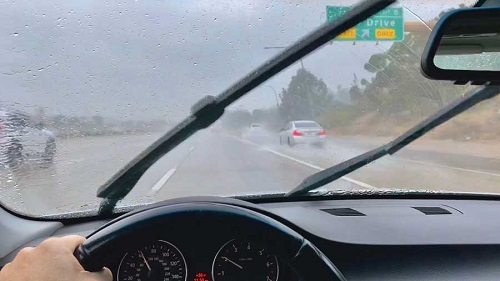
In all the years I have been driving, I’ve never really experienced such a phenomena. I spend a lot of time on the road. Weather conditions often require the windshield wipers to be on during my drive. Sure, every now and then the tempo of a song and the wipers have been close – but never in synch with each other. If it had, I never really noticed. Finally, tonight it happened!

The drive in was absolutely awful. Temperatures were in the upper 20’s. North of us, they were getting hit with snow. Near me, it was freezing rain and drizzle. The roads were icy and I knew I’d have to leave earlier than normal. As I headed out, those icy conditions were very apparent.

The freezing rain, drizzle, and rain continued all the way to work. I had to have the heat blowing on the windshield the entire way in because if I didn’t it was freezing to it. I also had to bump the wiper speed from “intermittent” to “low” to keep a clear view. Because of this, everything fell “in synch.”

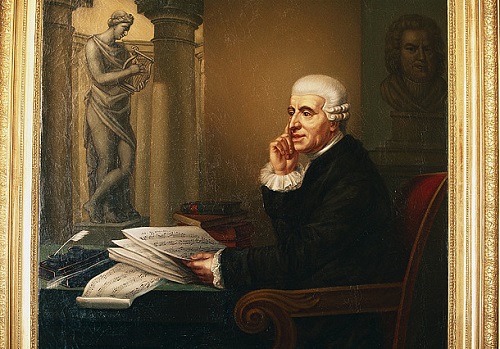
I had finished listening to a book on tape, and switched over to Sirius XM Symphony Hall in hopes that some classical music would keep me calm and focused on the drive in. They were playing a symphony or a sonata from Joseph Haydn. I don’t know that I ever heard it before. I can’t recall the name of it. It was either in 6/8 or 3/4 time. It was almost “waltz” sounding.

As I listened to the wipers slapping back and forth against the ice and rain, I noticed it had a “1-2-3, 1-2-3” feel to it. The first beat as the wiper raised, the second as it reached the top, and the third as it rested back at the bottom. It then became very clear as I listened to the wipers that the Haydn piece was totally in synch with them. It is the silliest thing, but I actually got excited and even more into the piece! Immediately, the words of Eddie Rabbitt came to mind.

I drove and listened to the remainder of this song in perfect time with my windshield wipers and the whole time I was giddy as a kid in a candy store. Ridiculous, right? Maybe, but sometimes you need something so silly and so simple to put you in a good mood.