Charles Edwin Hatcher was born on this day in 1942. You and I know him better as Edwin Starr. He was born in Nashville, moved to Cleveland and eventually to Detroit.
In 1957, he formed the Doo Woo group, the Future Tones. Soon after, he was called to serve in the US Army. He spent most of his time in Europe. When he was discharged, he decided that he wanted his career to be in music.
He joined up with Bill Doggett’s group. Bill was known for his hit Honky Tonk Part 2. Starr’s stage name was suggested to him by Doggett’s manager, as he didn’t think Charles Hatcher would catch on.
In 1965, Edwin made his solo debut with his first single for Ric-Tic Records. The James Bond series was quite popular at the time. Starr’s first single was a play on that entitled Agent Double-O-Soul.
Songfacts says that instead of being a spy, Edwin is “a sophisticated cat that brings soul music to the masses. He doesn’t have to go undercover!” I think that is a perfect description!
When I first started in radio back in 1988, it was at an oldies station. My dad gave me a list of songs that he asked me to look for. Most of them were songs he grew up loving. Many were also big hits by local artists in Detroit. Agent Double-O-Soul was on that list.
Thanks to that list, I was introduced to songs that I was unfamiliar with. Those songs have since become some of my favorites.
When Ric-Tic Records went out of business, they sold Starr’s contract to their much larger rival, Motown. His first few singles there flopped. But in 1969 he scored with “Twenty-Five Miles” and in 1970 he had a #1 hit with”War.” He ended up leaving Motown in the mid-’70s. In 1983 he moved to the UK, where he performed until 2003, when he died of a heart attack at 61.
As I celebrate birthday 54, I am borrowing (ok, stealing) an idea from another blogger. I have altered the idea a bit, and may decide to change it up after a few posts …
I am calling the feature “The Music of My Life.” I plan on starting with the year I was born and picking 10 favorites from that year. I will move on through the years one by one. I doubt I will go too deep in the more modern years, so I’m not sure how long this will go on.
Right now, I am hoping to do this once a week. That’s a bit adventurous of me, but I am really hoping to be able to work ahead on these.
So what sources am I using to choose my songs? First, I am looking at the Billboard Year-End Top 100. This can be a problem as some of the songs from the list may have been released the year before. Next, I am looking a lists from various sources with all the songs released as singles for each year. Finally, my buddy Max (who may or may not be the blogger I stole this idea from), gave me a cool website to check out. It is acclaimedmusic.net
With that being said, let’s take a look at some of my favorites from the year I was born…
1970
I may as well start with the song that was number one on my birthday – American Woman by The Guess Who. It was released in January of 1970 and was the third biggest song of the year. A cool thing about this song – the whole thing was improvised on stage during a concert after Randy Bachman was tuning his guitar after breaking a string!
American Woman – The Guess Who
Next, a group that never had a number one song. That has always baffled me. CCR had a few hits in 1970. Travelin’ Band was released in January of 1970 and has a very 1950’s sort of sound to it. John Fogerty has been said to have channeled a bit of Little Richard in the vocal delivery of this song. Coincidentally, CCR was sued by the publishing company that had the rights to Little Richard’s “Good Golly Miss Molly,” because they sounded so much alike. The case was settled out of court.
Travelin’ Band – CCR
I always loved the sound of Dave Edmunds I Hear You Knocking. In 1970, he was getting ready to cut a version of Wilbert Harrison’s Let’s Work Together, when he heard that the group Canned Heat had just cut it. As he was driving in his car, a radio station played the Smiley Lewis’ 1955 version of I Hear You Knocking. He realized just how similar it was to Let’s Work Together and knew he wouldn’t have to change much and recorded it. He played all the instruments on the song (except maybe the bass guitar).
I Hear You Knockin’ – Dave Edmunds
Another group I have always liked is Badfinger. The song was recorded in May of 1970 and released in October. The band loved this song, but some of the folks at Apple records had no interest in releasing it. In August, the American director at Apple in New York heard the tape and liked it. The song was remixed and released as a single. It was a Top 10 single.
No Matter What – Badfinger
Released in January of 1970, Norman Greenbaum had a Top 5 Hit with Spirit in the Sky. Jesus is mentioned many times throughout the song, so I remember being surprised to read that Norman was Jewish! In a 2006 interview, he said that he was inspired to write the song after watching country singer Porter Wagoner singing a gospel song on TV. He said that he thought, “I can do that,” and wrote “my own gospel song.”
As far as the unique sound of the opening guitar lick? Normal used a Fender Telecaster with a fuzz-tone circuit built into the body to generate the song’s characteristic guitar sound. Because of the song’s length and religious tone of the lyrics, the record company was initially reluctant to issue the song. They came to their senses and finally released as a single after two other singles from the album had poor sales. The rest … is history.
Spirit in the Sky – Norman Greenbaum
Edwin Starr is one of my favorite Motown singers. In 1970, he released a song co-written by another Motown artist, Barrett Strong. The song is basically a protest song as the Vietnam War was still going on. The song was recorded originally with the Temptations singing it, however, the label decided to withhold the Temptations’ version from single release so as not to alienate that group’s more conservative fans, and had Edwin Starr record and release it.
War – Edwin Starr
By the time I was born, the Beatles were getting ready to call it quits. However, in March of 1970, they released Let It Be. At the time, the song became the highest debut ever on the Billboard Hot 100 chart. It entered the chart at number 6 and went straight to the top. This was the final single released before Paul announced he was leaving the band.
Let It Be – The Beatles
One of the great song intros in classic rock belongs to All Right Now by Free. The song was recorded in January of 1970 and released on my birthday in the UK (May 15). Drummer Simon Kirke said: “‘All Right Now’ was created after a bad gig in Durham. We finished our show and walked off the stage to the sound of our own footsteps. The applause had died before I had even left the drum riser. It was obvious that we needed a rocker to close our shows. All of a sudden the inspiration struck (Bass Player Andy) Fraser and he started bopping around singing ‘All Right Now’. He sat down and wrote it right there in the dressing room. It couldn’t have taken more than ten minutes.” It’s a great jam!
All Right Now – Free
This song fits exactly what many blogger friends and I do often – Turn Back the Hands of Time through music, movies, and nostalgia. One of R&B’s greatest was released in February of 1970 by Tyrone Davis. The song was Davis’ second big hit. It went to number one on the Billboard R&B Chart and went to number three on the Pop Singles Chart.
I’ve always loved the way the intro starts with drum and bass, then adds guitar and keyboard (xylophone?) and finally the strings before Tyrone’s smooth vocal. And who doesn’t sing along with the background singers when they come in? I know I do.
Turn Back the Hands of Time – Tyrone Davis
Finally, we grab a cut from Van Morrison’s 1970 album, Moondance. Into the Mystic is just such a cool song. I guess this would fall into the category of “Yacht Rock” today. It has a spiritual feel to it. One article compared it to Yesterday by the Beatles describing it as “another song where the music and the words seem to have been born together, at the same time, to make one perfectly formed, complete artistic element.”
Van said the use of homophones really lent the song to have alternate meanings. He states: “Originally I wrote it as ‘Into the Misty’. But later I thought that it had something of an ethereal feeling to it so I called it ‘Into the Mystic’. That song is kind of funny because when it came time to send the lyrics in WB Music, I couldn’t figure out what to send them. Because really the song has two sets of lyrics. For example, there’s ‘I was born before the wind’ and ‘I was borne before the wind’, and also ‘Also younger than the sun, Ere the bonny boat was one’ and ‘All so younger than the son, Ere the bonny boat was won’ … I guess the song is just about being part of the universe.”
Into the Mystic – Van Morrison
I hope you enjoyed giving these songs a listen. Picking just 10 was harder than I thought. What about your favorites from 1970??
It is time once again for another edition of Turntable Talk. This is a feature created by my friend Dave Ruch from the A Sound Day Blog. This is my 18th submission for this feature and it is something I look forward to writing each month.
This time around, Dave took us to the Land of Oz for inspiration. His instructions:
“Pay No Attention to That Man (Or Woman) Behind The Curtain” . Yep the famous phrase about the Wizard of Oz.
We’ve looked at a number of great artists – singers, groups, musicians – and their records. This time we’re switching it up just a little and are going to salute someone “behind the scenes” that was significant to music. All too often people do pay no attention to the people behind the curtain in music that are so important to the albums and groups we love. There are record producers, the record company bosses and talent scouts, the people on radio who used to make the hits happen, even unsung heroes like concert roadies. Pick one you feel is important and maybe a little un-noticed and tell us why!
As a former radio guy, I immediately thought I should write about a well known DJ. There are many of them who played a big part in the music industry. Dick Clark, Casey Kasem, Wolfman Jack and Alan Freed come to mind. However, I decided that I would feature a man who played on some of the biggest hits on the radio, yet until recently was relatively unknown.
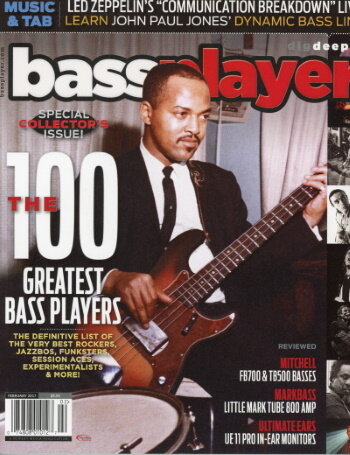
40 years ago, James Jamerson passed away at the young age of 47. At the time he passed away, no one really knew who he was, despite being one of the best (if not THE best) bass player of all time! As a matter of fact, he often tops the list of Best Bass Players of all time by numerous publications. It has been said that he single-handedly revolutionized bass playing. I agree. His creative contributions to music certainly makes him a good pick for a “man behind the curtain.”
James Jamerson was born on January 29, 1936 in Charleston, SC. When his parents divorced, his mother moved to Detroit to find work. He would spend time with his aunt, grandmother and cousin. His aunt sung at church while his grandmother and cousin played piano. He spent time listening to gospel, Jazz, and blues music and that influenced his own musical abilities.
In 1954, his mother sent for him and he attended Northwestern High School. In the music room of the high school, he saw a stand up bass lying on the floor. He picked it up and began to play with it. He had “found” his instrument. He began to play at many of the Detroit area blues and jazz clubs.
He began to get noticed and he began playing for dances, weddings, frat parties, and other events. He was quite a local celebrity. It was hard to miss him driving through town with his bass sticking out the window of his car! Because he was still a minor, the good folks at the Detroit Police Dept. gave him a permit so that he could play in clubs that served alcohol. This allowed him to get more work.
Believe it or not, Wayne State University offered him a full ride music scholarship which he turned down! He was playing so often, he figured he was already in the music field, so why would he need to go to college? Instead, after he graduated high school, he joined up with Washboard Willie and the Super Suds of Rhythm (How’s that for a group name?!). It was during this time that he began to drink alcohol (which would eventually lead to his death).
In 1958, someone from the Northern Records label heard him play and asked him to sit in on the session recordings for the label. The unique way he played caught the ear of other labels. He began to work for Fortune, Tri-Phi, Anna Records, and eventually Motown.
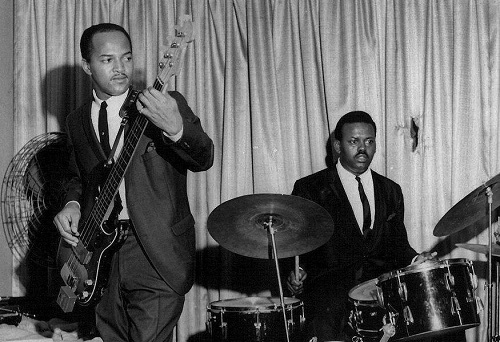
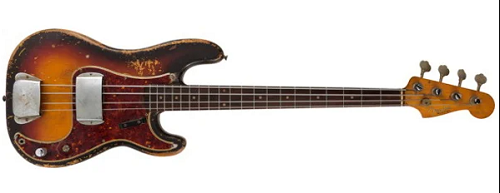
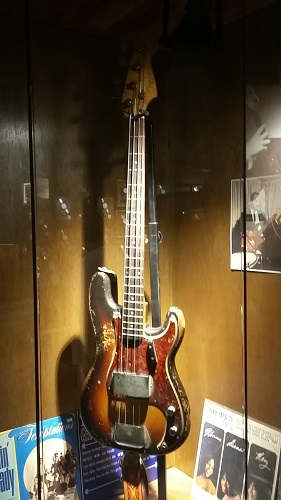
He and the Funk Brothers (pianist Earl Van Dyke, drummer Benny Benjamin, and guitarists Robert White and Joe Messina) spent the days recording in the “Snake Pit” (the Basement of Motown Records) and playing at Jazz clubs in the evenings. Jamerson had switched from an upright bass to a brand new creation – the electric Fender Precision Bass.
The switch really made his work stand out. On some songs, he’d play the stand up bass and then double it with the electric. What made his work on the electric so awesome is that he played the electric just like he played the stand up bass – with one finger (which many folks called “the claw”).
While he is known for playing on many of the Motown songs, he also played on Boom Boom by John Lee Hooker, Whispers Getting Louder and Higher and Higher by Jackie Wilson, Agent Double-O-Soul by Edwin Starr, Cool Jerk by the Capitols, Show and Tell by Al Wilson, Boogie Fever by the Sylvers, and so many other hits! What made the Motown stuff so good was he had some free reign to be “James Jamerson.”
Musician magazine interviewed him in 1983 and he stated that the Motown songwriting and productions teams “would give me the chord sheet, but they couldn’t write for me. When they did, it didn’t sound right. When they gave me that chord sheet, I’d look at it, but then start doing what I thought would fit. I’d hear the melody line from the lyrics and build the bass line around that.”
One of the coolest examples of how he listened and did his thing was on two separate recordings of the same song. To help illustrate this, I found some isolated bass lines on YouTube that are fascinating! Jamerson played on Marvin Gaye’s I Heard It Through the Grapevine – a Motown classic! Check out the soulful line here:
Now check out the same song – and a funkier bass line – on the Gladys Knight Version:
I find it amazing that the same man can take the same song and make them so different.
Speaking of Marvin Gaye, the Funk Brothers shared a story about how Marvin wanted Jamerson to play on What’s Going On. James was out drinking and Marvin went out looking for him. When he found him, he brought him back to the studio. Jamerson was so drunk that he couldn’t even stand up! It was no problem for him, though, he just laid on his back on the floor and played on the track!
Trivia Bit: What’s Going On is the first track that Jamerson is credited on a recording.
It is said that James Jamerson played on almost every Motown song between 1963 and 1968. That would include over 60 songs that hit #15 or better on the charts. He also performed on 23 # 1 songs on the pop charts and 56 #1 songs on the R&B charts! Berry Gordy called him an “incredible improvisor” and said “I, like the other producers, would not do a session unless at least two of the Funk Brothers were present, namely Benny Benjamin and James Jamerson.”
Some of the other Motown songs that feature Jamerson:
Ain’t No Mountain High Enough – Diana Ross and the Supremes
Ain’t That Peculiar – Marvin Gaye
Ain’t to Proud to Beg – The Temptations
Baby, I Need Your Loving – The Four Tops
Baby Love – The Supremes
Bernadette _ The Four Tops
Can I Get a Witness – Marvin Gaye
Dancing in the Streets – Martha and the Vandellas
Don’t Mess With Bill – The Marvelettes
Going to a Go Go – Smokey Robinson and the Miracles
Home Cooking – Jr. Walker and the All Stars
It Takes Two – Marvin Gaye and Tammy Terrell
My Cherie Amour – Stevie Wonder
My Girl – The Temptations
Pride and Joy – Marvin Gaye
Reach Out, I’ll Be There – The Four Tops
Shotgun – Jr. Walker and the All Stars
This Old Heart of Mine – The Isley Brothers
Two Lovers – Mary Wells
What Becomes of the Broken Hearted – Jimmy Ruffin
You can also hear him on :
The Theme from S.W.A.T. – Rhythm Heritage
The Theme from Starsky and Hutch
Just Like Romeo and Juliet – The Reflections
Rock the Boat – Hues Corporation
The list of people who were influenced by Jamerson’s playing is almost as long as the list of songs he played on! Saxophone and bass player Wilton Felder called him “The Godfather of the electric bass.”
Suzi Quatro says, “I grew up in Detroit, so I was weaned on James Jamerson and Motown music. It’s in my DNA. He is still the best and I took my style from him. It’s hard to improve on what he did, because you are talking perfection.”
Sir Paul McCartney says, “Jamerson was where I picked up a lot of my bass style. Because bass players normally have to follow: we follow chords, follow the drummer, follow the vocalist, we have a following role. Suddenly the bass had power! We could dictate the direction of the music and add excitement. James Jamerson became just my hero, really.”
James Jamerson Jr. says, “As for his sense of syncopation, that was his God-given gift. I couldn’t even explain that one. I put it like this: My dad liked to dance, so he just danced on the bass. He would occasionally polish his bass, but he’d never touch the gunk that built up on that fingerboard. he told me the ‘dirt keeps the funk’.”
Years of drinking finally caught up with Jamerson. On August 2, 1983, he died of complications from cirrhosis of the liver, heart failure and pneumonia.
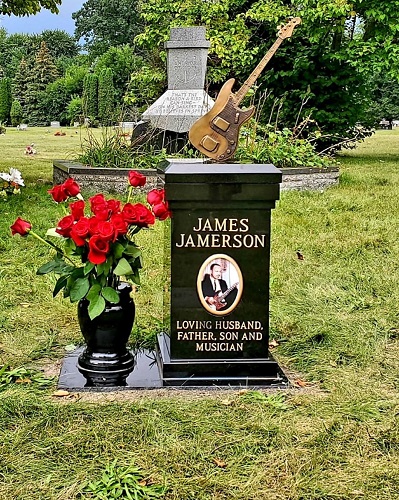
He was buried in Detroit’s Woodlawn Cemetery. A few years ago, Jamerson’s cousin saw a picture of his grave site. There was no headstone, only a grass marker. Eventually, the funds were raised and a proper headstone was set in place on August 27, 2021.
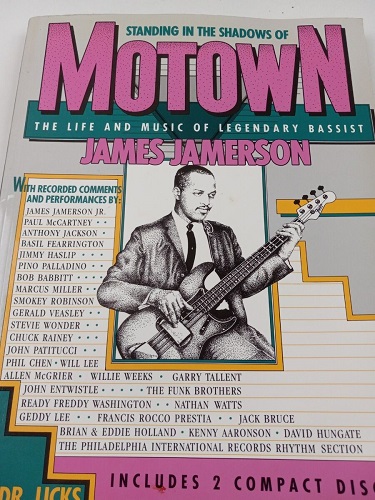
In 1989, Jamerson was the subject of a book loaded with great stuff – Standing in the Shadows of Motown. I think you can still get this on Amazon. A documentary of the same name was produced in 2002
He was posthumously inducted into the Rock and Roll Hall of Fame in 2000, received a Grammy Lifetime Achievement Award in 2004, and inducted into the Musicians Hall of Fame in 2007. Last month, in South Carolina, he was honored when a street was named for him.
It is a shame that it took so long for Jamerson and the Funk Brothers to get the recognition that they deserve.
As I prepared for this piece I found myself on YouTube listening to track after track of Motown stuff and listening with different ears. I focused on that bass line and really was blown away. These are songs I have heard countless times, yet focusing on that bass made them so fresh! As I said, the isolated tracks are an entirely different thing – it is so awesome to hear Jamerson “feel” and “drive” the tunes. It is no wonder that he is ranked the #1 bass player in the business by so many different sources, including Rolling Stone magazine.
Thanks again to Dave for allowing me to be a part of such a cool feature. I have already been impressed by the other blogger’s submissions. I am sure that they love taking part in this feature as much as I do.
As the Song Draft continues, we have come to my fifth pick. I have noticed that I have primarily leaned very “local”. In all honesty, I don’t think I did this intentionally. I have featured songs from my home state of Michigan, and primarily from the Detroit area. I would be remiss if I did not include a song from the Motown Label.
I thought long and hard about just which song to pick. As I looked through the LONG list of Motown groups, I saw The Four Tops, The Supremes, The Temptations, Edwin Starr, Marvin Gaye, The Marvelettes, Diana Ross, The Jackson 5, Gladys Knight and the Pips, The Isley Brothers, Mary Wells, Tammi Terrell, The Spinners and more! There were so many artists to chose from.
Now look at that list of artists again, and imagine the list of songs associated with them! The amount of hits (and non hits) produced out of Motown are plenty. However, as I looked through the list of songs, there was one stand out. I dare say that the song is THE BEST of all of the Motown songs. That song, and my fifth pick for the 2021 Song Draft, is I Heard It Through the Grapevine.
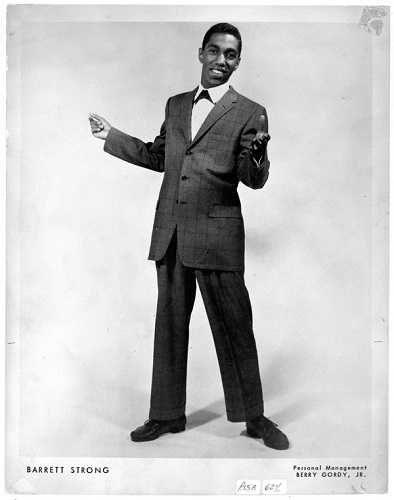
The song was written by another Motown artist, Barrett Strong.
Barrett is famous for his song Money (which was once covered by the Beatles) and for writing other songs like Papa Was a Rolling Stone. He got the idea for the song when he was living in Chicago and heard lots of people using the phrase “I heard it through the grapevine.” Barrett said, “Nobody wrote a song about it, so I sat at a piano and came up with the bass line.”
From Song Facts:
The classic about a man who finds out his woman is cheating on him was written by Norman Whitfield and Barrett Strong. Strong came up with the idea and asked Motown writers Holland-Dozier-Holland to work on it with him. They refused to credit another writer, so Strong took it to Whitfield, who helped put it together. The song eventually became a Motown classic, but it had a rough start, as executives at the company thought it was too bluesy and lacked hit potential.
Smokey Robinson and the Miracles were the first to record the song, but their version wasn’t released until years later on an album called Special Occasion. The Isley Brothers then took a crack at it, but their version wasn’t released. Whitfield and Strong then had Marvin Gaye record the song but still no luck: Motown head Berry Gordy chose Holland-Dozier-Holland’s “Your Unchanging Love” over “Grapevine” as his next single. Finally, a new Motown act Gladys Knight and the Pips recorded the song as a gospel rocker. Their version was a hit, entering the Top 40 in November 1967 and going to #2 in America.
Marvin Gaye’s version was included on his 1968 album In The Groove (later re-titled I Heard It Through The Grapevine). After E. Rodney Jones, the Chicago disc jockey at WVON, started playing it on the air, Berry Gordy reconsidered and released Gaye’s version as a single, which became even more popular and known as the definitive version of the song. Gaye’s “Grapevine” pounded the charts about a year after Knight’s, going to #1 in America on December 14, 1968.
On the Motown Box Set, Gladys Knight’s version and Marvin’s version are included. If I had to chose which version I like more, I’d lean more Marvin. However, that being said, Gladys version is really cool too. Hers has a more uptempo feel to it, the bass line (played by James Jamerson in both versions) is extra funky and I love to listen to the drum work in it. Check it out here:
Then you get to Marvin’s version. Slower, groovier, and perfect.
What makes Marvin’s so special? According to Song Facts: Marvin Gaye wrung out the emotion in the song thanks to Norman Whitfield, who produced the track and gave him very specific instructions. Whitfield had Gaye sing slightly higher than his normal range, which created the strained vocal, and he made him do it over and over until he got it right. Gaye explained to NME: “I simply took direction, as I felt the direction he was expounding was a proper one. Had I done it myself I would not have sung it at all like that, but y’see there are many benefits in just singing other people’s material and taking directions. The job of interpreting is quite an important one, because when people are not able to express what is in their souls if there is an artist who can… then I think that is very valuable.”
With that in mind, one of the most amazing videos on YouTube is this version of Grapevine where Marvin’s vocal is isolated. I still get chills listening to the perfection in his voice.
WOW! Just WOW!!
Heard It Through The Grapevine – Lyrics
Ooh-ooh, bet you’re wond’ring how I knew ‘Bout your plans to make me blue With some other guy that you knew before Between the two of us guys, you know I love you more
It took me by surprise I must say When I found out yesterday
Ooh-ooh I heard it through the grapevine Not much longer would you be mine Ooh-ooh I heard it through the grapevine And I’m just about to lose my mind Honey honey yeah
You know that a man ain’t supposed to cry But these tears I can’t, hold inside Losin’ you would end my life you see ‘Cause you mean that much to me
You could have told me yourself That you found someone else
Instead I heard it through the grapevine Not much longer would you be mine Ooh-ooh I heard it through the grapevine And I’m just about to lose my mind Honey honey yeah
People say you have from what you see And not not not from what you hear I can’t help, bein’ confused If it’s true, won’t you tell me dear
Do you plan to let me go For the other guy that you knew before
Ooh-ooh I heard it through the grapevine Not much longer would you be mine Ooh-ooh I heard it through the grapevine And I’m just about to lose my mind Honey honey yeah
Ooh-ooh I heard it through the grapevine Not much longer would you be mine Ooh-ooh I heard it through the grapevine And I’m just about to lose my mind
Over the years I have been influenced musically by many people, but I would have to say that it is my father who has had the biggest influence. This blog is sort of a continuation of the “series” I have been doing based on “songs from my iPod”.
My dad introduced me to almost every genre of music. My love for oldies music comes from some of my earliest memories of songs he played. I was also introduced to classic country and country music in general by him. He played in a wedding band for years – the first being Now & Then, and the second was Foxfire. I recall him sitting in front of the stereo playing along with 45 records of songs that they were learning for gigs. I remember long nights when my brother and I had to go to “band practice” as well.
Rock and Roll music was a staple in our house, probably because it was the stuff he grew up listening to. The first song that comes to mind is Dream Baby by Roy Orbison. As a kid, I would ask, “Daddy please play ‘boom boom boom….bum bum boom'”. This was a reference to the bass notes that open the song. I loved that song. While so many other folks always connect Roy to Pretty Woman (a classic, no doubt), I remember Candy Man, In Dreams, and Crying. Roy was awesome – and dad introduced me to him.
He also introduced me to Elvis. Man, Elvis was cool! Sure, every one knows Hound Dog, All Shook Up, and the biggies….but dad played me songs like Steamroller Blues, Moody Blue, and Way Down! He had the Moody Blue album (which was on Blue Vinyl) and Elvis In Concert and I remember playing them on the stereo many times. I remember the look on my dad’s face when the news came on the radio that Elvis had died. We were at the drive in movie getting ready to watch Smokey and the Bandit, when Honey Radio announced it. Dad was shocked. We listened to Elvis music until dark and the movie started.
I have to include another person in this section about music – my Godfather, my Uncle Tom. He and my dad grew up together and their exploits can be an entirely separate blog. For now, let me talk about R&B and “local” music. When I first started working at WKSG (Kiss-FM) in Detroit, my dad asked if I could find him some songs. I told him I would look and if they were at the station, I’d throw them on tape for him. These were songs that he and my Uncle Tom grew up listening to.
As I looked over the list, I remember thinking, “What the hell are these songs? Were these even hits? Who are these people?’ The result was me getting a taste of some really amazing music. I cannot listen to any of these songs without thinking of them. This is music that was stripped down, funky, and amazing.
Mind Over Matter by Nolan Strong jumps out at first. This song is classic! Backing Nolan on this is the group the Diablos. Simple instrumentation and a powerful vocal makes this one of my favorites. This was not a song that would play on the radio much in the late 80’s, and I recall watching my uncle and my dad listening to the tape I made and loving every damn second of it. I watched them become transported back to when they were teens and jamming to these songs for the first time – it was magical!
Village of Love by Nathaniel Mayer is another one that is worth a listen just for the bass singer – it is R&B gold!. Two songs that were on his list (and now on my iPod) that were local hits that I absolutely love were by the band The Dynamics. I’m The Man and Misery are two very different songs, but they capture the sound of Motown prior to the Motown sound emerging.
A couple oldies that were on the list which we actually played in a regular rotation at WHND Honey Radio were Don’t Let Go by Roy Hamilton, You Can Have Her by Roy Hamiliton, So Fine by the Fiestas, Let’s Go Let’s Go Let’s Go by Hank Ballard and the Midnighters, What In the World’s Come Over You by Jack Scott, and Agent Double O Soul by Edwin Star. I loved when these songs would come up on the play list.
Another one that would come up was the song You’re So Fine by the Falcons. Wanna talk about stripped down? This one was as simple as they come. It was recorded in a garage with probably one or two microphones. You can totally tell that they it recorded all at once on one track and it was one take. You can even hear a little guitar feedback at the end. GREAT song! I love it!
My dad was instrumental in introducing me to blues music too. One of those songs that he and my uncle asked for was Baby, What You Want Me To Do by Jimmy Reed. Wow. It is one of those songs that DEFINES the blues in my opinion. Other songs he had me listen to were Fannie Mae by Buster Brown, which we played at WHND, Baby, Scratch My Back by Slim Harpo, Shake Your Money Maker by Elmore James, and The Thrill is Gone by BB King. The blues and R&B music helped shape Rock and Roll and these songs are a must for my iPod.
I grew up in the Urban Cowboy era when country music got a lot of attention and a lot of radio airplay. I don’t know that I would say country music is my dad’s favorite genre, but he sure introduced me to some great artists and songs. He, of course was responsible for me hearing Willie Nelson & Johnny Paycheck (who are mentioned in other blogs), but he also introduced me to Hank Williams Sr. and Jr. I recall him playing the two of them singing a duet on Tear in My Beer. This was high tech at the time, they took Hank Sr’s vocal and isolated it and then Hank Jr. sang with him, It was a great song with just Hank Sr., but adding Hank Jr. was excellent.
Another song he played for me was Okie from Muskogee. The opening line is “We don’t smoke marijuana in Muskogee”…not exactly the best song for a 10 year old to hear, but I had no idea what it meant and I liked Merle Haggard’s voice. I also recall him playing Amanda by Waylon Jennings. It is probably one of my favorite Waylon songs. Such a simple ballad, but I could listen to it over and over. I also loved when he bought the soundtrack to Smokey and the Bandit II because it was the only place you could find a great song by Don Williams called To Be Your Man. Among other acts he played were the great Ronnie Milsap, George Jones, Juice Newton, and Charlie Pride.
Two country albums I remember him calling me in to hear were from Dwight Yoakam and The Kentucky Headhunters. The Headhunters album had a great cover of Oh Lonesome Me on there, but the song he played for me was Dumas Walker. It sounded fresh and almost a little rockish. I remember immediately getting this on cassette for the car. The other album was If There Was a Way from Dwight. In my opinion, this is one of his best. My favorite cut from the album was never released as a single – The Distance Between You and Me. The instrumentation is perfect and the lyric is classic – almost Brad Paisley-ish. I crank it up ALWAYS.
On the “pop” side of things, a few songs stand out, most of which because they were songs he learned and played for his wedding band gigs. The first one I think of is the Breakup Song by Greg Kihn. I remember him putting the 45 on the stereo, and playing that intro over and over. The first time I heard him play it note for note, I was blown away! I loved watching him work out licks and chords and stuff by simply listening to it on the stereo! America by Neil Diamond was another. By the time this one came out, he was in Foxfire and playing bass guitar, not lead guitar. These guys were good. Not that the other band wasn’t, I just know that they sounded amazing. Dennis, the lead singer, (and at one time my boss at my first job) NAILED his vocals. I could swear he was Neil Diamond! Every song he sang was dead on. Man, I miss that group of guys!
Probably the craziest musical incident involving my dad was when he introduced me to the music of Red Prysock. My grandmother always wanted to go to garage sales. I think my dad hated it. There was a familiar look of disgust on his face one day when she asked to go. While at one garage sale, he was going through old 45’s. His face lit up with boyish excitement as he stopped at one 45 with a black label on it. I heard him so, “I can’t believe it…” He bought the 45 and couldn’t wait to play it for me … and to be able to hear it for the first time in years. Hand Clappin’ was the song. It was a jazzy sax number that caused to you tap your toes. It was GREAT. It was like nothing I had ever heard. My dad said that DJ’s used to use it for their “theme song” back in the day. Still remains a favorite for me. Who says garage sales are bad?!
Over the years, my dad has called me over to the turntable, the cassette deck, the CD player, the mini-disc player, and his computer with the words, “Hey son, listen to this …” Very rarely was I ever disappointed. Today, I listen to almost every type of music and have always kept an open mind to genres because of dad. I am so lucky that he was such an instrumental (pun intended) part of my musical influence. Thanks, Pop!







 Various Ramblings of a Nostalgic Italian