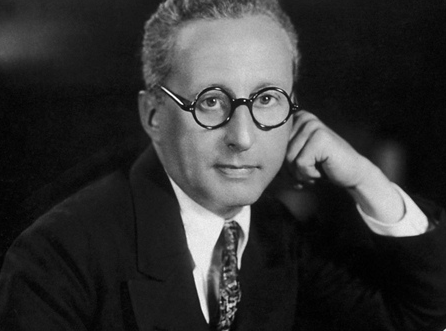
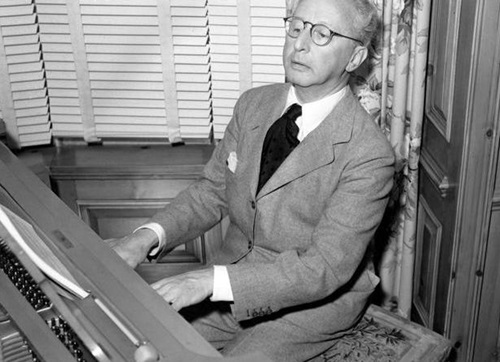
Born on this day 141 years ago, one of the great contributors to the Great American Songbook – Jerome Kern. He was born January 27, 1885.
Jerome Kern was one of the most important American theatre composers of the early 20th century. He wrote more than 700 songs that were used in over 100 stage works.
Wikipedia states:
A native New Yorker, Kern created dozens of Broadway musicals and Hollywood films in a career that lasted for more than four decades. His musical innovations, such as 4/4 dance rhythms and the employment of syncopation and jazz progressions, built on, rather than rejected, earlier musical theatre tradition. He and his collaborators also employed his melodies to further the action or develop characterization to a greater extent than in the other musicals of his day, creating the model for later musicals. Although dozens of Kern’s musicals and musical films were hits, only Show Boat is now regularly revived. Songs from his other shows, however, are still frequently performed and adapted. Many of Kern’s songs have been adapted by jazz musicians to become standard tunes.
Among the songs he wrote were: Look For the Silver Lining, Ol’ Man River, The Last Time I Saw Paris, I Won’t Dance, and All The Things You Are. To celebrate his birthday, I’d like to present some of my favorite Jerome Kern compositions and my favorite versions of them.
First, written for the 1933 musical comedy “Roberta,” here are The Platters with Smoke Gets In Your Eyes:
From the 1936 film Swing Time, here is Frank Sinatra with The Way You Look Tonight:
Again from the 1933 musical comedy Roberta, here are Jane Monheit and Michael Buble’ with I Won’t Dance:
You cannot go wrong with Ella Fitzgerald. Here is Can’t Help Lovin’ Dat Man:
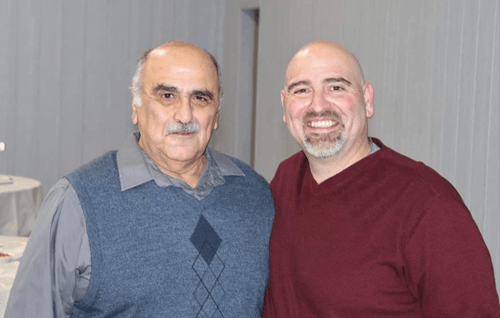
If you have read my blogs in the past, you know that it consists of a mixture of pop culture things (like movie, TV and music thoughts) and personal things (radio stories, school memories, and things from my childhood). As I thought about today’s blog topic, I realized that without this man in my life – this blog would probably not exist! I guess I didn’t really realize it until now. As I scrolled back over the blogs of the past, I see just how much influence he has had in almost ALL of them! I am talking, of course, about my dad. Today – is his 79th birthday. So here are some birthday thoughts for dad.
In the past I wrote a blog about his musical influence. My musical taste is very broad, because I was introduced to so many different genres by him. He introduced me to rock and roll with the music of Little Richard, Bobby Darin, Roy Orbison and Elvis. He introduced me to the “Great American Songbook” with music from Frank Sinatra, Dean Martin, and Bing Crosby. He introduced me to Jazz with Louis Prima, and Ella Fitzgerald. He played me music from Johnny Paycheck, Willie Nelson and Merle Haggard to introduce me to country music. The list goes on and on … but what about other influences?
Movies
I could spend an entire week writing about the various movies he introduced to me! As far as the classic films, most of those were introduced to me because he saw that they were playing on the Monday Night Movie on regular TV or something. You have to remember VCR’s and DVD players were not a staple in the home yet. You also have to remember that I grew up at the time where “pay TV” was just being incarnated. One of the first pay services was “ON TV”. It came on channel 20 at like 8 or 9 at night. They put an antenna on your roof and it unscrambled the signal so you could watch movies. I remember one time I wanted to record Smokey & the Bandit – but as I said, VCR’s were not for home use yet. The last showing of it on ON TV was at 1am one Friday night. My dad actually stayed up with a cassette recorder in front of the TV and recorded the audio for me. What makes this even better is there were scenes that were so funny to him, you could hear him laughing in the background as the movie played.
With Cable TV came The Movie Channel and HBO. As more and more channels became available, American Movie Classics, Turner Classic Movies, and others were the way to watch them. So he’d tell me “You gotta watch AMC at 3 today – they’re playing ‘Angels With Dirty Faces’!” Growing up, I remember hearing my dad talking with my grandparents, my Uncle Tom, or his friends about actors and actresses and the movies they were in. “Great Movie!” or “What a great flick!” I’d hear him say. Well, if he thought it was great – I wanted to see it! Movies I remember watching – only because I had heard him talk about them included The Godfather, White Heat, Little Caesar, Key Largo, Patton, Midway, The Maltese Falcon, and Night of the Hunter. Many of these were films that I’d walk in to the living room and dad would be watching and he’d tell me about them and catch me up so I could watch it with him. I was introduced to Humphrey Bogart, Edward G. Robinson, The Marx Brothers, The Three Stooges, Abbott and Costello, Alfred Hitchcock, Robert Mitchum, Burt Reynolds, and SO many actors just be casually walking into a room where he was watching TV!
The Godfather Part 1 & 2 and Patton are probably some of my favorite films. I remember watching Godfather the first time trying to keep all the names straight. Don Barzinni, Don Stracci, Luca Brazi, Sonny, Fredo, and Tom Hagen were all characters that I had to remember (amongst many more). Dad was there to explain so many things to me as I watched this film the first few times through. I have found myself doing the same thing when I sit and watch it with someone who has never seen it. (On a side note, for one class I had to read books and write book reports for it. I remember dad wrote a book report for me on The Godfather! He got an A!)
TV
Look through my DVD collection and amongst the movies are entire series of classic TV shows. This, again, is a direct result from my dad’s influence. I remember watching re-runs of The Honeymooners on channel 50. I remember when dad told me that Ralph Kramden and Sheriff Buford T. Justice from Smokey and the Bandit were the same person! I don’t know if I would have known that as a 7 year old! I remember staying home sick and watching re-runs of the Dick Van Dyke Show on channel 9 out of Canada. I knew about Carl Reiner because he was one of many cameos in the movie It’s a Mad, Mad, Mad, Mad World (which should have been mentioned in the movie section of this blog). The other stars of “Mad World” were also known to me because of my dad: I knew Mickey Rooney from a flick called Quicksand he rented. I knew Milton Berle from The Dean Martin Roasts and other TV appearances. I knew Jonathan Winters from a classic Twilight Zone episode (Loved watching TZ with him). Among the other “classic” TV shows he introduced me to: The Untouchables, F-Troop, The Munsters, Car 54, Where Are You?, McHale’s Navy, Perry Mason, Combat, Star Trek, Hogan’s Heroes, Mission: Impossible, and Get Smart.
With the availability of video rentals, I remember dad bringing home TV shows that were not shown on TV anymore or shown late at night. You couldn’t really watch The Little Rascals, Laurel and Hardy, or The Three Stooges on TV unless you stayed up late for comedy classics – which usually was on at 11pm or midnight. With the VCR, though, we could go to the store and rent them! I had listened to Jack Benny and Amos and Andy on cassette tapes of old radio shows (again, thanks to dad), but now I was able to see these TV shows – and they were amazing! I used to love watching these shows with him. One thing I always love seeing is my dad laughing and these shows (and a couple I will mention in a minute) always made him laugh – I mean big belly laughs!
I guess you could say that I grew up at a time where some of the “current” shows are now considered classics. Those shows, my brother and I watched on a weekly basis and watched in re-runs. These shows included The Love Boat, Mork & Mindy, Happy Days, Lavern and Shirley, The Dukes of Hazzard, Emergency!, Welcome Back, Kotter, All In the Family, The Jeffersons, The Carol Burnett Show, Barney Miller, Fantasy Island, and Charlie’s Angels. Some of those dad introduced me to, while others he really couldn’t stand.
Sanford and Soupy
The one show that I will forever associate with my dad is Sanford and Son. These shows, no matter how many times we see them remain funny. I can be on the phone with my dad and say, “So last night I watched “the piano movers” and we will both start laughing! Years later, we can quote this show to each other and still crack each other up. Why do we and can we bond over this show? Perhaps it’s the fact that the show is about a father and son and their relationship. I remember how I thought it was odd that Lamont always called Fred, “Pop”. I never used to call my dad that, although somewhere over the years, dad has become “Pop” to me. I call him that all the time now. As a matter of fact, he still often calls me “Lamont”! It is not used flippantly, I use it as a genuine term of endearment! He’s my Pop – and I use it with much love and affection!
Another show that dad introduced me to was The New Soupy Sales Show. He grew up watching Soupy at lunch time. My grandmother often told stories of how Soupy would say “Tomorrow, we’re having bologna sandwiches for lunch” and if dad didn’t have them, he was pissed! Soupy’s new show on channel 20 was pretty much just like the old show. It was full of puns, bad jokes, clips of old movies, funny horoscopes on the radio, the Words of Wisdom, and his friends White Fang, Black Tooth, Pookie and Hippy. It may have been on right after school and before dad came home from work, because I don’t recall him watching it too much with me, however, when it became available on video – we talked about it just like we talk about Sanford and Son.
Traits of a Good Dad
When I became a father, I remember reading something about what makes a good dad. Let me say here that none of us is perfect. My dad was not perfect and neither am I. My point is that when you look at these things, we can assess things we are doing well, things we can improve, and things that we will start doing. As I think back on those things – I can see where I strive to achieve those things and, at the same time, can see a lot of those things in my own father.
For example, a father must be a good disciplinarian. All dad’s love their children, but you know and I know that you can’t let them get away with everything. Dad was this way. The old story about mom saying “Wait till your father get’s home” and the child being scared to death? Yep! That was me! You didn’t want to make dad mad! I would say I made him mad more than a few times.
One time in particular I remember telling him I was spending the night at a friends house. I was out with my girlfriend at the time. We were still in high school, and it was a weekend. We had no money, so we weren’t going to a hotel or anything like that. We just planned on staying out all night. I don’t remember how he found out, but I remember getting a page (remember pagers?!) from the friend who I said I was staying with and he asked why my dad thought I was there! I think my girlfriend’s mom had called my house or something. At any rate – I was in BIG trouble! Dad’s punishment was a fair one (even though I didn’t think so at the time). He proved a point and I NEVER did that again. He let me know that he was in charge. Another time, I got in trouble at school for something. We had a meeting with the teacher and he said what he would go on to tell every teacher afterward in parent teacher conferences, “If he gets out of line again, you have my permission to smack his ass!” (Yes, this was back before a teacher giving the kid a paddle was considered wrong).
A good dad allows his kids to make mistakes. Dad watched me make a TON of them, but he knew that if I was going to learn, I needed to make those mistakes. He’d never let me make a mistake that was life threatening or would put me in danger, but he’d let me make mistakes that he knew, when all was said and done – I’d mature and learn from it. While there were things he questioned, he never really interfered. I learned a lot from that – even though there were times I wish he HAD said something!
A good dad has an open mind. Times change. The way that things were done when he was growing up, well, they may be handled differently now (the paddling in school is a good example). He respected that and embraced it to a degree. As someone who loved all kinds of music, I will never forget the time he called me into the living room to play me this “cool song” he heard and liked. It was “Groove is in the Heart” by Deee-lite. The song was not like anything he’s ever played for me, but he liked it and played it at DJ jobs! He embraces change!
A good dad teaches his kids to appreciate things. Those things can be anything. My dad certainly taught me how to appreciate family and friends. He taught me how to appreciate good music, movies and TV. He taught me how to appreciate what you have and the importance of living within your means.
A good dad accepts that his kids aren’t exactly like him. This may or may not have been a lesson he learned from my grandpa. My dad had always been very accepting of my brother and I. While we all have a lot of similarities, we are all SO very different. He respects that our religious and political views may not be the same as his.
A good dad spends quality time with his children. This is one of those things that is difficult to do in today’s society. We spend so much time working and trying to get things done, that we often spend the hours we are not at work doing these things. As a divorced father with limited time with my boys, I really try hard to make the time we spend quality time, even if it is just a car ride. Some of my favorite memories with my dad are just him and I throwing the ball around in the front yard. That meant more to me than he will ever know!
A good dad leads by example. Dad was never really the “Do as I say, not as I do” kind of guy. He was a hard worker and knew the importance of providing for our family. I never once thought of growing up and not having a job. Dad wasn’t always perfect in this area, but because of that, I was also able to take some of the things that I didn’t like him doing (like smoking) and not doing them.
A good dad is supportive and loyal. I am sure that in my 30 year radio career, my dad probably thought “he needs to get out of that business and find something more stable”. If he thought it – he never once told me that! He was nothing but supportive! If I ever came to him with something that he questioned, he might ask a question or two regarding the opposite viewpoint, but that was it. He might ask “are you sure you want to do this” or “have you thought about what might happen if…”, and then he let me decide. Whatever the decision, he supported it. I have a great respect for that.
A good dad is someone who challenges his kids. I’m sure that there were many ways that dad challenged me. I know there were times I wanted to quit something and he gave me the pep talk to keep going. I cannot recall specific incidents, but I know they were there.
A good dad is a teacher. While dad taught me how to throw a “submarine” ball and how to swing a golf club, he also taught me some valuable lessons. One of the things I have hoped to do is to write down some of those lessons and pass them down to my own children. To illustrate my point: there is a cartoon I saw once of two guys standing in front of three piles of stuff in a garage. The one guy asked what they were. The second guy says, “This stuff is the stuff my dad gave me.” He points to the first pile and says “This is the stuff I want to keep.” He points to the second pile and says, “This is the stuff my dad gave me that I want to share with my kids.” He points to the third pile and says, “This is my stuff that I don’t need and will throw away.” That’s the way it is – as a father, you take things that you learned from your dad and keep the stuff you want to share, throw out what you don’t, and then add stuff of your own.
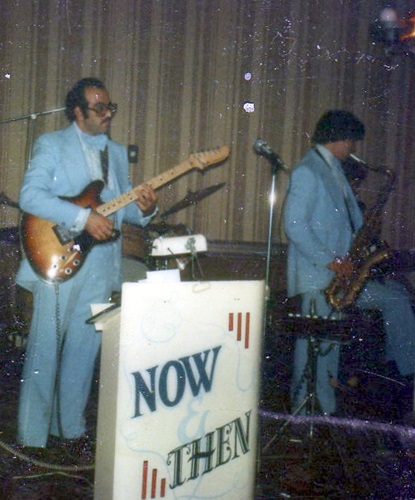
A good dad protects and provides for his family. When times were tough and money was tight, my dad would DJ or play in the wedding band to bring in extra money. I remember as a young boy my dad going back to college to get a degree so he could move up in his place of employment. It took me over 20 years, but I also decided to go back to school to better provide for my family. I know that my dad would do anything for us, and I would do the same for my family.
Finally, a good dad shows unconditional love. I read where this is the greatest quality of a good father. Even though his child may let him down, upset him, make him mad, disrespect him, and disappoint him … the love remains constant. Not to get theological, but it is one of the great principles spoken of about God in the Bible. It says that no matter how much a child of God angers Him, ignores Him, or disappoints Him – His love is never ending and ever present. THAT is the kind of love a father has for his children.
I am lucky that I have never had to question whether or not my dad loves me. He has done so much for me during my lifetime and continues to do so. I can only hope that he knows how much he is appreciated. I can only hope he knows how thankful I am that he was chosen to be my father. I can only hope that he knows of the impact that he has made on me. I hope that he will never have to question how much I love him.
Thanks, Pop, for being such an amazing man! Thanks for being a wonderful example to me. Thanks for everything you have done to support, encourage, accept, and love my family. Today, I wish you a very happy birthday and wish you many more in the future! I love you, Pop.
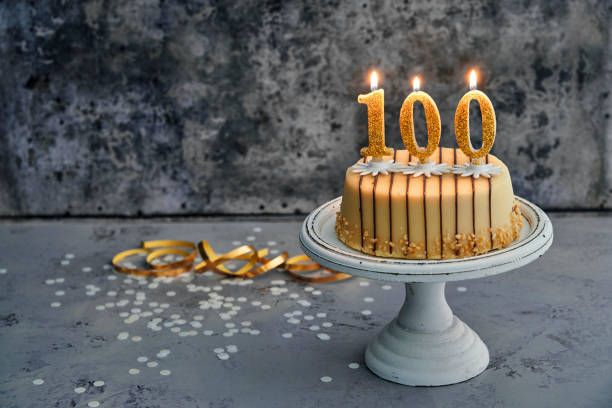
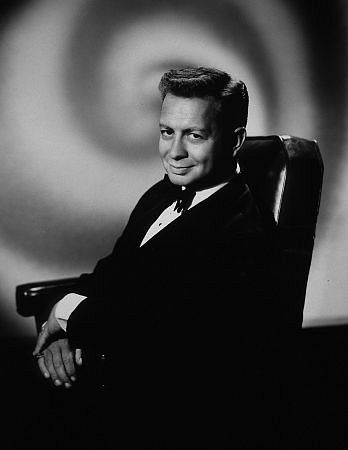
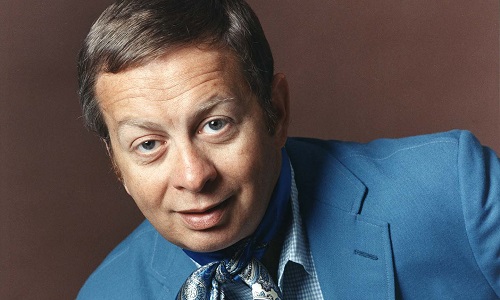
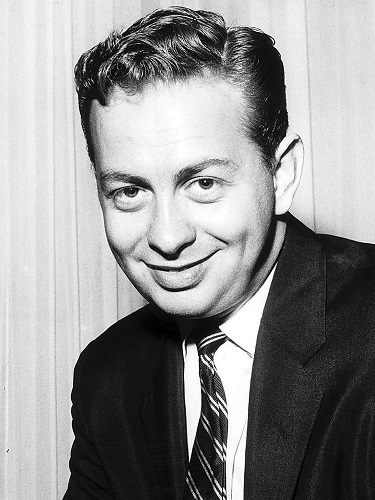
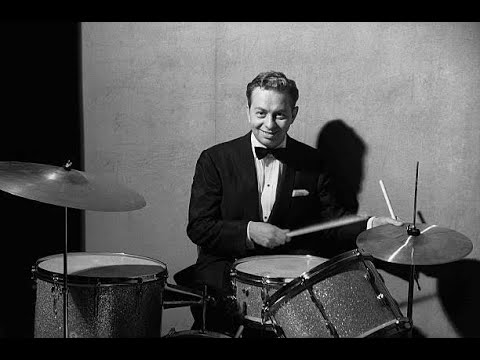
Happy 100th birthday to the late, great Mel Torme’!!
Melvin Howard Tormé was an American musician, singer, composer, arranger, drummer, actor, and author. He was a jazz icon. He won two Grammy Awards and was nominated a total of 14 times.
Mel grew up in a largely black neighborhood and was heavily influenced by jazz. He was a child prodigy, who performed professionally at age four with the Coon-Sanders Orchestra. He would sing “You’re Driving Me Crazy” – a song he had learned on the radio, at Chicago’s Blackhawk restaurant. He was invited back and sang every Monday night for six months. It wasn’t a bad first gig. He was paid $15 a night with a free dinner for his family.
From 1942 to 1943, he was a member of a band led by Chico Marx. He was the singer and drummer and also created some arrangements for the band. In 1944, he formed a vocal quintet called Mel Tormé and His Mel-Tones. His group was modeled on Frank Sinatra and The Pied Pipers. The Mel-Tones had several hits while fronting Artie Shaw’s band and on their own. The Mel-Tones were among the first jazz-influenced vocal groups.
In 1947, he started a solo singing career. His appearances at New York’s Copacabana led local disc jockey Fred Robbins to give him the nickname “the Velvet Fog” in honor of his high tenor and smooth vocal style. Mel detested the nickname. He self-deprecatingly referred to it as “this Velvet Frog voice”.
As a solo singer, he recorded several romantic hits for Decca records and with the Artie Shaw Orchestra for Musiccraft (1946–1948). In 1949, he moved to Capital records, where his first record, “Careless Hands”, became his only number-one hit.
Though he spent most of his career singing jazz, Tormé had a deep appreciation of classical music. As for Rock and roll … he considered “three-chord manure”.
In the ’60s and ’70s, Tormé covered pop tunes of the day, never staying long with one label. He had two minor hits: his 1956 recording of “Mountain Greenery”, which did better in the United Kingdom where it reached No. 4; and his 1962 R&B song “Comin’ Home Baby”, which reached No. 13 in the UK. “Comin’ Home Baby” led the jazz and gospel singer Ethel Waters to say that “Tormé is the only white man who sings with the soul of a black man.”
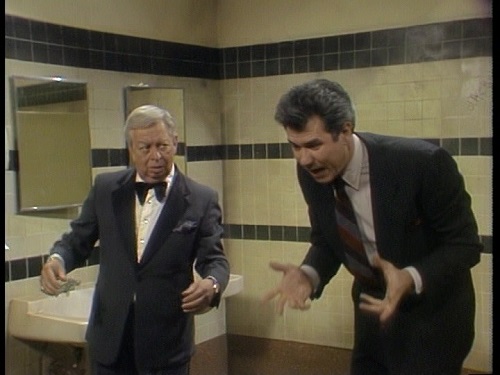
He gained popularity among a younger generation when he made nine guest appearances as himself (and one as a guardian angel) on the 1980s situation comedy Night Court. The main character, Judge Harry Stone, played by Harry Anderson, was depicted as an unabashed Tormé fan, an admiration that Anderson shared in real life. Anderson would deliver the eulogy at Tormé’s funeral.
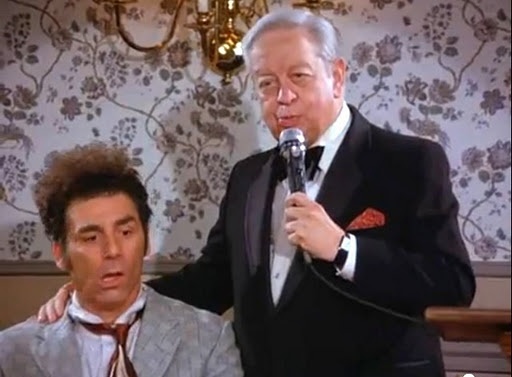
Mel also appeared in Mountain Dew commercials and in a 1995 episode of the sitcom Seinfeld as himself. This is in one of my favorite episodes – “The Jimmy.”
During the 1980s and 1990s he performed often with piano great George Shearing. They recorded six albums together for Concord Records. It was about this period Shearing wrote:
It is impossible to imagine a more compatible musical partner… I humbly put forth that Mel and I had the best musical marriage in many a year. We literally breathed together during our countless performances. As Mel put it, we were two bodies of one musical mind.
Mel Tormé wrote more than 250 songs, several of which became standards. He often wrote the arrangements for the songs he sang. He collaborated with Bob Wells on his most popular composition, “The Christmas Song”(1946). They wrote the song on a swelteringly hot and sunny day in California, sitting down and coming up with all the most ‘mid-wintery’ things they could think of, in an attempt to cool themselves down; it was recorded first by Nat King Cole. Tormé said that he wrote the music in 45 minutes and that it was not one of his favorites, calling it “my annuity”
I had the chance to see him when he toured with Doc Severinsen. He was fantastic! He owned that stage and had the audience in the palm of his hand. That concert remains one of the best concerts I have ever been to. He blew me away when he joined Doc for Sing, Sing, Sing and played the drums. It was amazing.
On August 8, 1996, a stroke ended Tormé’s 65-year singing career. In February 1999, he was awarded the Grammy Lifetime Achievement Award. He died from another stroke on June 5, 1999, at the age of 73
In his eulogistic essay, John Andrews wrote:
Tormé’s style shared much with that of his idol, Ella Fitzgerald. Both were firmly rooted in the foundation of the swing era, but both seemed able to incorporate bebop innovations to keep their performances sounding fresh and contemporary. Like Sinatra, they sang with perfect diction and brought out the emotional content of the lyrics through subtle alterations of phrasing and harmony. Ballads were characterized by paraphrasing of the original melody which always seemed tasteful, appropriate and respectful to the vision of the songwriter. Unlike Sinatra, both Fitzgerald and Tormé were likely to cut loose during a swinging up-tempo number with several scat choruses, using their voices without words to improvise a solo like a brass or reed instrument.
They were two of the best scat singers. Watch this magical improv moment with Ella and Mel:
Welcome to the first Turntable Talk of 2025, hosted by Dave of A Sound Day. This is the 34th round, if you are keeping track. If you are a new follower, let me fill you in on how it works. Dave Ruch offers up a musical topic to a group of us music fans each month. Each of the writers come up with a response to the topic and Dave runs each piece on his website.
We have had some fun and interesting topics, and this one is no exception. This time around, Dave asks, “What’s my scene?” Our instructions: Pick a sort of music “Scene” that either you would have liked to have been a part of or one that you think really created a lot of the music you love. Pick a general place and time and have fun….
My fellow music bloggers know my musical tastes pretty well by now. So, let’s see a show of hands – How many thought I’d pick The Rat Pack in Vegas? I almost did, but I know I have written on a live Rat Pack show in the past. Honestly, as awesome as that would be, the more I thought about it the more I leaned another way.
My scene certainly influenced the Rat Pack. Dean Martin cut an album called Swingin’ Down Yonder. Frank Sinatra recorded albums titled: Sinatra Swings, Songs for Swingin’ Lovers, Swing Easy, Sinatra’s Swingin’ Session, Sinatra and Swingin’ Brass, and A Swingin’ Affair! You know what the song says, “It don’t mean a thing, if it ain’t got that swing!”
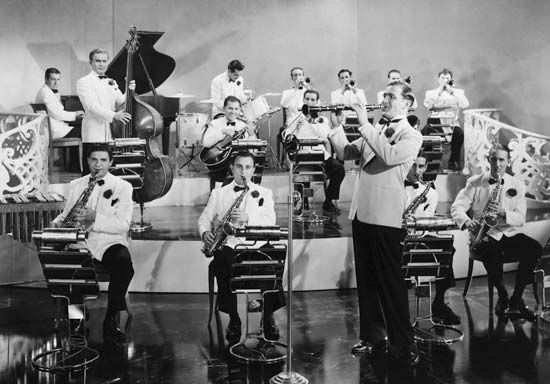
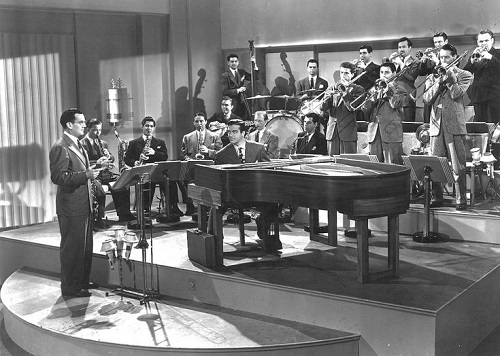
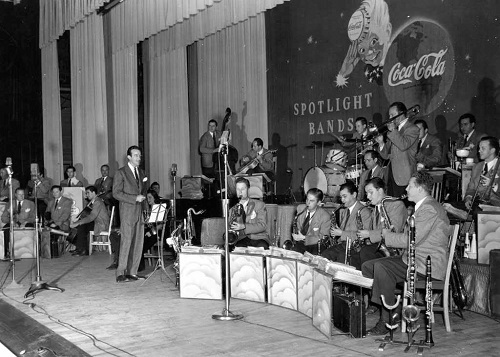
As a mediocre trumpet player, I have always loved Big Band/Swing music. Most folks would consider the Swing Era to be from the early 1930’s to around the mid 1940’s. Even though swing music was prominent in the early 1930’s, it was often ridiculed for its style and feel. Some went as far as to call it a menace (much like Rock and Roll when it gained popularity). After 1935, big bands rose to prominence playing swing music. They held a major role in defining swing as a distinctive style.
There were many big bands on the scene at this time. Each had a very distinct sound and feel to it. For example, Glenn Miller’s orchestra often used a clarinet lead. Count Basie’s sound has a relaxed feel to it. Benny Goodman used a driving and hard swing sound. Duke Ellington’s songs has a sophisticated sound to them.
The band leaders often took the spotlight. They were amazing instrumentalists. Harry James and his trumpet, Benny Goodman and Artie Shaw on their clarinets, Gene Krupa on his drums, the trombones of Tommy Dorsey and Glenn Miller, and Lionel Hampton’s vibes. Along with those great leaders, there were plenty of talented musicians within those bands who went on to make a name for themselves.
Perhaps Sinatra recorded his many swing songs because he rose to fame alongside Tommy Dorsey. He was one of many singers who sang with those big bands. Others included the voices of Ella Fitzgerald, Billie Holiday, Kay Starr, Peggy Lee, Doris Day, Kitty Kallen, and Dick Haymes. While they all started with the big swing bands, they also went on to have prolific careers.
During the swing era, the big bands would often play at dance halls across the country. They appeared on the radio playing dance music. Some appeared in movies, and all of them made records. Their music had teenagers and young adults dancing until their feet hurt.
As years went on, the taste of music listeners changed. Swing began to fade away to make way for music that was less “danceable” like bebop. Many of the swing bands broke up, while other continued without their original leaders. The Glenn Miller Orchestra still tours today, for example.
When I put on headphones and listen to old big band recordings, I picture myself there listening. I picture myself in one of those great 1930’s suits with a stylish fedora.
Maybe it is in a dance hall or at a live concert. Maybe I am in the audience of a radio program where the band is playing. Wherever the music is being played, I am zoned in on it. I am listening to the drum beat of Sing, Sing, Sing and Benny Goodman. I can hear the vibrato of Tommy Dorsey’s trombone solo on I’m Getting Sentimental Over You. I marvel as I watch and listen to Harry James play his theme song, Ciribiribin.
Throughout the evening, I will study those great instrumentalists who improvise solos off the top of their head. Looking at nothing but chords and making up their own melodies. This is something I wish I could do as a trumpet player.
In all honesty, in my “scene,” I would be happy as a clam to just be in the audience. It would be the bees knees just watching those guys swing! Yeah, I can totally see myself swinging, singing, and dancing to the sounds of swing.
Thanks again, Dave for inviting me to take part in this feature. It is always fun to contribute and to read the other submissions. I’m already looking forward to next month’s topic!
Welcome to October! Every First of October the world celebrates International Coffee Day.
As a life long coffee drinker, this is the perfect day to offer up a tune or two about my blessed “bean water!”. There are a lot of songs about coffee, but today I will share my top 3.
Frank Sinatra was not known for his novelty songs, but he did record one or two. The Coffee Song pokes fun at they drink a lot in Brazil because no other drink is available.
Many covers of the song are out there, too. Louis Prima, Rosemary Clooney and even the Muppets covered that song.
—
Black Coffee is another song that has many covers. It was first recorded in 1949 by Sarah Vaughn. Peggy Lee was next to cover it as well as Ray Charles, Bobby Darin, Julie London and kd Lang.
The most popular version of the song is probably by Ella Fitzgerald. She really can sing this one
The Java Jive was done by the ink Spots. It was first written in 1940. It was first recorded by the Ink Spots, and The Manhattan Transfer did a great cover. I am partial to the Ink Spots, but the Transfer:a version is better sound quality
Whether you percolate your coffee, use a Keurig, or simply use a drip coffee machine, grab a hot cup of Joe today and celebrate with the world?!
Welcome back to The Music of My Life, where I feature ten songs from each year of my life. In most cases, the ten songs I choose will be ones I like personally (unless I explain otherwise). The songs will be selected from Billboard’s Year-end Hot 100 Chart, Acclaimed Music, and will all be released in the featured year. I turned 8 years old in ’78 and much like in ’77, there is an interesting mix of tunes.
In January of 1978, Kansas released a song that was what Steve Walsh said, “defies the basic formulas that most (rock) groups try to follow,” and it paid off in spades! Dust in the Wind has one of the greatest guitar intros! The story of how it came to be is fantastic.
Kerry Livgren devised what would be the guitar line for “Dust in the Wind” as a finger exercise for learning “fingerpicking.” His wife, Vicci, heard what he was doing, remarked that the melody was nice, and encouraged him to write lyrics for it. Livgren was unsure whether his fellow band members would like it, after all, it was a departure from their signature style. After Kansas had rehearsed all the songs intended for the band’s recording sessions of June and July 1976, Livgren played “Dust in the Wind” for his bandmates, who after a moment’s “stunned silence” asked: “Kerry, where has this been? That is our next single!”
Dust in the Wind
In February of 1978, a song that will forever be associated with a geriatric sitcom was released. Even though Andrew Gold’s version was not the version used as the Theme to the Golden Girls, the song was (A jingle singer named Cynthia Fee sang the TV version). It is one of my ten picks because there are so many female friends that love the show. My wife is a big fan of the show as well, so here it is.
Andrew Gold says that the song was “just this little throwaway thing” that took him “about an hour to write.” Writing is was obviously a breeze, however, recording it was a different story. They recorded 40 different takes of the song, finally releasing take number 40!
If you listen closely, you can hear sleigh bells in the instrumentation of the song.
Thank You For Being a Friend
In March of 1978, the great Warren Zevon released what some call a Halloween classic, even though it was intended to inspire a dance craze. Phil Everly of the Everly Brothers had seen the 1935 film, Werewolf of London on TV and joked to Zevon that he should adapt the title for a song and new dance. He played with the idea with his band members, who wrote the song together in about 15 minutes, all contributing lyrics that were transcribed by Zevon’s wife Crystal. However, none of them took the song seriously.
The song had been written long before it was recorded. It finally appeared on Warren’s third album, Excitable Boy, which was produced by Jackson Browne (who had already been performing the song at shows.) Although 59 takes were recorded, Browne and Zevon selected the second take for the final mix. The record label really pushed for Werewolves to be a single, but Zevon liked a couple other songs. The label released it and it became Warren’s only top 40 hit.
Werewolves of London
Three of my picks from 1978, all were released in my birthday month of May. The first one is by a group that was lucky enough to get a radio station to play a demo of one of their songs on air – and have it lead to a record deal. As a former radio guy, let me tell you, that just does not happen! It did, however, for the Cars.
Just What I Needed was written by Ric Ocasek. The band recorded a two track demo of the song and My Best Friend’s Girl. In Boston, in 1977, DJ Maxanne Sartori, who was given the tapes of these songs by Ocasek, recalled, “I began playing the demos of ‘Just What I Needed’ and ‘My Best Friend’s Girl’ in March during my weekday slot, from 2 to 6 p.m. Calls poured in with positive comments.” With a song on the radio in a major market, The Cars were a surefire success and had their pick of record labels. They went with Elektra, who had them re-record the song and released it as their first single.
Benjamin Orr sang lead on the song and it was a top 30 hit for the band.
Just What I Needed
The next May release is a song that will always remind me of shooting pool with my best friend, Jeff. He always picked songs for the jukebox and Life’s Been Good by Joe Walsh was always a pick. We always laughed at the lyrics. Even Walsh says the song was meant to be a humorous look at fame and fortune.
In a 1981 interview with the BBC, Walsh explained: “I wanted to make a statement involving satire and humor, kind of poking fun at the incredibly silly lifestyle that someone in my position is faced with – in other words, I do have a really nice house, but I’m on the road so much that when I come home from a tour, it’s really hard to feel that I even live here. It’s not necessarily me, I think it paraphrases anyone in my position, and I think that’s why a lot of people related to it, but basically, that’s the story of any rock star – I say that humbly – anyone in my position. I thought that was a valid statement, because it is a strange lifestyle – I’ve been around the world in concerts, and people say ‘What was Japan like?’, but I don’t know. It’s got a nice airport, you know… so it was kind of an overall statement.”
The song first appeared on the soundtrack to the movie FM and later on Walsh’s But Seriously, Folks album. The album version is over 8 minutes long, but the radio single clocked in at about 4 and a half minutes. Made after Walsh had joined the Eagles, “Life’s Been Good” was incorporated into that group’s concert repertoire, appearing in shows at the time as well as reunion tours.
Life’s Been Good
The last May 1978 song on my list was one that three years later would hit me a bit more personally – not because of the content of the song, but because of the title. Only the Good Die Young was a top 30 hit for Billy Joel, and as controversial as it was, the attempts to censor the song (or have it banned from radio) only helped it to gain spins and popularity.
Virginia, as mentioned in the first line is a real person. Virginia Callaghan was a girl Billy had a crush on when he first started playing in a band. She didn’t even know he existed until she saw him at a gig, but 13 years later he used her as the main character in this song about a Catholic girl who won’t have premarital sex. In a 2008 interview, Joel also pointed out one part of the lyrics that virtually all the song’s critics missed – the boy in the song failed to get anywhere with the girl, and she kept her chastity.
In 2023, Joel said of the song “It’s occurred to me recently that I’m trying to talk some poor innocent woman into losing her virginity because of my lust. It’s kind of a selfish song – like, who cares what happens to you? What about what I want?… But on the other hand, it was of its time.
In 1981, my grandfather died suddenly of a heart attack. He was only 58. It was the first time I ever experienced death. At the funeral, I would hear people saying nice thing about him, and I often heard, “He was too young,” or “He was a good man.” Yes, he was, and only the good die young …
Only the Good Die Young
Earlier I mentioned how Dust in the Wind was a totally different sound for Kansas, and my next song also was very different for the artist who recorded it. The Commodores were really known for being a funk band, but when Lionel Richie brought them Three Times a Lady, they knew it was going to be a hit.
This was a breakthrough song for the Commodores and for Lionel Richie as a songwriter. It crossed over to pop, easy listening and even country formats, setting the stage for further Commodores hits and Richie’s massive solo success. In a Blues & Soul interview, Richie said: “The song has given me so much personal satisfaction. I think it is every songwriter’s dream to be totally accepted. And from the masses of awards that the song has won, it seems that the whole world really does love that song. It’s a great feeling.”
It entered the Billboard Hot 100 chart on June 18, 1978, at number 73. Eight weeks later, it reached number 1, where it remained for two weeks. It became the Commodores first number one on this chart.
There are two reasons I have this on my list. First, it was one of those songs that was on my mother’s famous red 8-track tape. Lastly, it always reminds me of the first time I saw Eddie Murphy on SNL. He was doing a phony commercial for an album called “Buckwheat Sings” as Buckwheat from the Little Rascals. “Unce. Tice. Fee Tines a Mady!”
Three Times a Lady
For readers of this blog, you know that I have blogged about Willie Nelson’s Stardust album many times. Making a long story short, my grandparent’s place didn’t have a TV at first, so we listened to the radio and two cassette tapes. One of those was Stardust.
In July of 1978, released the song Blue Skies from that album. The song was written by Irving Berlin way back in 1926 and has been covered by many great singers. Those singers include Bobby Darin, Al Jolson, Bing Crosby and Danny Kaye, Johnny Rivers and the great Ella Fitzgerald. Willie Nelson took the song to the top of the Billboard Country Chart and crossed over to the Adult Contemporary chart, too (where it peaked at 32).
Blue Skies
In October of 1978, a group of guys released a song that would go on to be named the 7th Greatest Dance Song of the 20th Century by VH1. It is a song that was inducted into the Grammy Hall of Fame in 2020 and was selected by the Library of Congress for preservation in the National Recording Registry for being “culturally, historically, or aesthetically significant.” Believe it or not, that song was Y.M.C.A. by the Village People.
There is only one reason why it is on my Music of My Life list. If I had a dollar for every time I have played this at a wedding or DJ event, I could probably retire! I am probably on about 100 Facebook pages where videos of me, a groom and his groomsmen are dressed up as the Village People leading the crowd in the dance. It is totally ridiculous, but true.
The song went to number one in countries all over the world, but it only reached number 2 here in the US. It continues to be played at parties and sporting events throughout the world.
Y. M. C. A.
I certainly do not want to wrap the year on that song, so instead, I will end with another party classic. I’ll also end with a “feel good song.” How can you NOT love September by Earth, Wind and Fire? The song has a tendency to make people happy when they hear it. Allee Willis, who wrote the song with Maurice White and Al McKay from Earth, Wind & Fire, describes it as “Joyful Music.”
Every year, on September 21st, you will hear this song all over the radio! There are many theories as to the significance of the “21st night of September” in the opening lyrics, and until 2018, even the song’s co-writer was in the dark – Maurice White told her it had no real significance and was chosen because it sang well phonetically. White died in 2016; two years later, Willis was having lunch with his widow, Marilyn, who told her that September 21 was the due date for their son, Kahbran, and that Maurice put that specific date into the song as a secret message. Kahbran ended up being born early on August 1, which definitely wouldn’t have the same ring to it as a lyric.
Although many people hear the first words in the chorus as “Party On,” it’s really “Bah-dee-Ya.” Allee Willis explained in a Songfacts interview: “I absolutely could not deal with lyrics that were nonsensical, or lines that weren’t complete sentences. And I’m exceedingly happy that I lost that attitude. I went, ‘You cannot leave bada-ya in the chorus, that has to mean something.’ Maurice said, ‘No, that feels great. That’s what people are going to remember. We’re leaving it.’ We did try other stuff, and it always sounded clunky – thank God.” She went on to say, “The main lesson I learned from Earth, Wind & Fire, especially Maurice White, was never let a lyric get in the way of a groove,” she added. “Ultimately it’s the feel that is the most important, and someone will feel what you’re saying if those words fit in there right.”
The first appearance of the song was on The Best of Earth, Wind and Fire – Volume 1. It is a great groove that still fills the dance floor!
Next week, we’ll take a look at the final year of the 70’s. 1979 promises to be a good mixture of genres and will feature one of my first television heroes, who starred in a couple TV shows, many movies, and is still popular today.
For two solid years Dave Ruch from A Sound Day has been hosting a monthly feature called “Turntable Talk.” Each month he provides a topic to me and other musical bloggers to write about. I have been honored to have participated in every one of them. Each of the participants look forward to not only writing our piece, but anxiously await reading the other contributions.
As I stated in a previous blog, this month is International Women’s Month. Dave offered us an easy topic to write about this month. His instructions state “we’re going to turn our tables and sights to the women of music. Pick one you like and write about her. Whoever you want (that might sound creepier than I intended it), singer, songwriter, band member, the lady on the ‘Breakfast in America’ cover, whoever.”
I wrote a blog that teased this topic earlier in the week. In that post, I said, “I really struggled to pick one (female singer). I even posted on Facebook asking my friends to offer up their three favorite singers. I guess I hoped that they would offer up someone that I hadn’t considered (and they did). The results surprised me. The singers that came up the most were (1) Stevie Nicks, (2) Etta James, and (3 – tie) Pink and Karen Carpenter. Etta was the only one that was in my list of considerations. After looking at the list (and the suggestions) I finally chose who I am writing about and NO ONE mentioned her.“
Along with Etta James, I featured a song from my other considerations: Ella Fitzgerald, Alison Krauss, Aretha Franklin, Billie Holiday, Dusty Springfield, Sarah Vaughn, Diana Krall, Norah Jones, Linda Ronstandt, Pat Benatar, Peggy Lee, Jewel, and Keely Smith in that blog. So how did I finally come up with my choice?
My friend, Dawn, from high school actually helped me make my decision. She said, “There are so many talented vocalists, I’d have a hard time picking. if you’re going to write an impactful piece, I think you have to go with somebody you admire because they knocked down boundaries or overcame obstacles. That’s how I’d pick my vocalist.” That really struck me. Now, I am not saying that the ladies I mentioned already did not knock down boundaries or overcome obstacles – heck, Jewel was living in her van before she made it big!
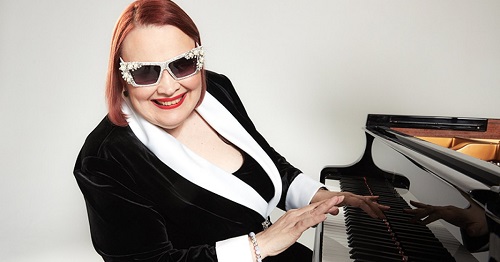
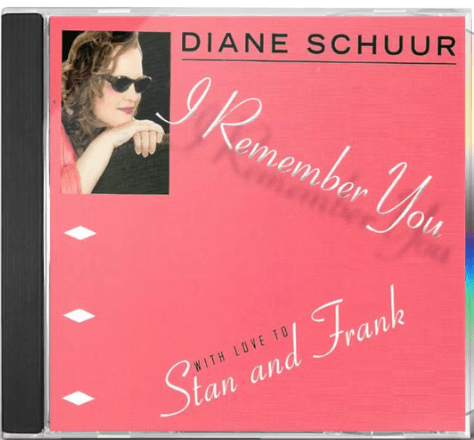
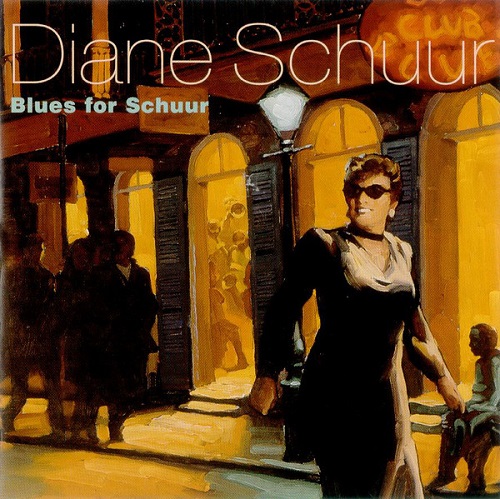
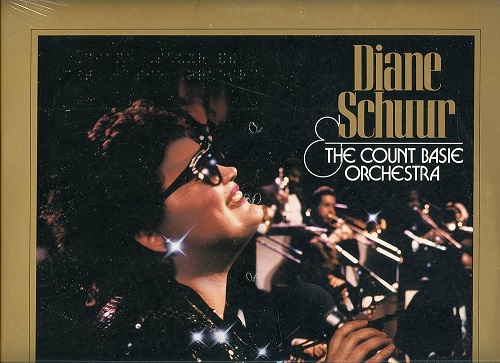
My featured female singer is a talented woman named Diane Schuur.
I was introduced to Diane Schuur back in the late 80’s. I was talking about music with a gal I was dating at the time. We started talking about jazz singers and she asked if I had ever heard of Schuur. I hadn’t. If memory serves me correct, she loaned me a cassette (or maybe a CD) with some songs on it and I really enjoyed it.
One of her biographies online says this: “Diane Schuur is as eclectic as she is brilliant.” In my opinion, this statement could not be more true. While many of her songs would fall into the jazz category, she could easily be filed in the blues or pop categories, too. While preparing to write this, I picked a playlist on YouTube and it was fun to hear the different sounds of each of the songs.
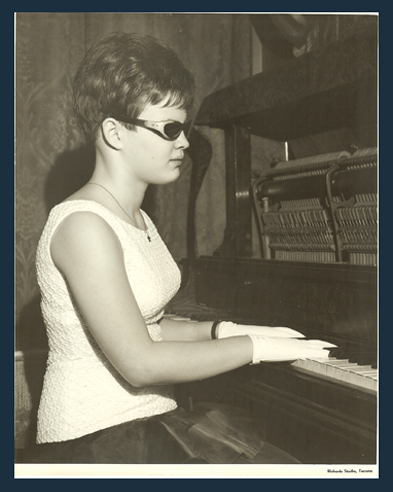
My friend Dawn said to pick someone who “overcame obstacles.” Diane certainly has done that! She was born prematurely in 1953. She has been blind since birth because of Retinopathy of Prematurity. This disorder affected premature newborns who received high-oxygen therapy during neonatal intensive care. This was a standard practice until 1954.
She learned to play piano by ear. She would listen to Dinah Washington songs and began to pound out the melodies at age 3. Dinah was a big influence to Diane as she began singing her songs as a toddler and worked on her own vocal style. She once stated, “As far back as I can remember, singing was in my blood. My parents loved music, and I loved to sing. I was scatting at an early age.” She scats right up there with Ella and Mel Torme’! She also has perfect pitch!
Blindness was not her only obstacle. When she was a young adult, she began drinking and struggled with alcoholism. She also battled an eating disorder. Those obstacles were so much that she actually contemplated and attempted suicide. Thankfully, her brother-in-law stopped her from jumping out a third-story window. She got help and has been sober for several decades.
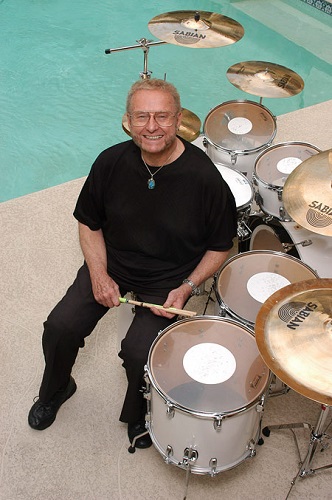
Diane got her big break when she was 22 years old. She auditioned for drummer/bandleader Ed Shaughnessy (of the Tonight Show Band) after he finished a concert with Doc Severinsen. Ed said, “this young blind girl comes in and sits down at the Fender Rhodes keyboard and starts singing the blues. Well, my hair stood on end!”
He hired her to be the vocalist in his orchestra. This led many other musicians to hear her. Those included Dizzy Gillespie and the great Stan Getz. Stan was so impressed that he became an advisor and coach to her. She stated that it was Stan who taught her that “less is more.” This was important because she had many critics that said she often “oversang” when she first started out. Stan once said, “She’s just like Sarah (Vaughn) or Ella (Fitzgerald) to me. She’s taking from the tradition, and what comes out is her own conception and advancement of the tradition.”
In 1985, she met B.B. King at a music festival in Tokyo. The two really hit it off and later made an album together entitled “Heart to Heart.” It was released in 1994 and it entered the Billboard Jazz Charts at number one!
In 1988, Frank Sinatra asked her to sing with him at a benefit concert when Liza Minnelli was unable to perform. She was a guest at Sinatra’s home and also performed at a concert with him and Quincy Jones. Frank gave her an abstract oil painting that he had created for her afterwards. When Frank passed away, Schuur recorded a tribute album for her late friends (Frank and Stan).
Other inspirations to Schuur include George Shearing, Stevie Wonder and Ray Charles who are all blind as well. She has said that one of her fondest memories was performing with Ray Charles in 1998 for a PBS concert (some of which is available on YouTube).
Her career has brought her two Grammy awards – both for Best Jazz Vocal Performance (1986 & 1987). She is still recording and touring today. She says, “For the future I plan to continue my reading of American song, paying respect to celebrated writers and polishing the gems in the jazz tradition.”
I’ve never had the chance to see her in person, but there are some fantastic live albums available.
All About Jazz says, “Ms. Schuur surely is among the very best jazz vocalists, and she exemplifies, if not redefines the “diva” category with her warm, often humorous and relaxed interactions with the audience and the musicians. Her mere presence is enough to make for a memorable evening.” I hope to be able to see her perform one day.
I will include just a couple of my favorite cuts at the end of this blog, but before I do, I want to again thank Dave for hosting this monthly feature. I hope that you enjoy reading this as much as I did writing it. I love that with each topic, I am not only enjoying old favorites, but I am introduced to new songs and singers. Perhaps this blog is your introduction to Diane Schuur?
Here is a classic – Come Rain or Come Shine
Another favorite – All Right, OK, You Win!
I just love her take on Moonlight and Shadows
One more – Her swinging version of I Can’t Believe That You’re in Love With Me
I apologize for the lateness in this post. Happy International Women’s Day to the female readers of my blog! Thank you for all you do! I am lucky to have a very special woman in my life (my wife, Sam). I can honestly say that I would be a mess without her.
In a previous blog, I mentioned that for Women’s Month our Turntable Talk host (Dave from a Sound Day) has asked us to pick a female singer to write about. I really struggled to pick one. I even posted on Facebook asking my friends to offer up their three favorite singers. I guess I hoped that they would offer up someone that I hadn’t considered (and they did). The results surprised me.
The singers that came up the most were (1) Stevie Nicks, (2) Etta James, and (3 – tie) Pink and Karen Carpenter. Etta was the only one that was in my list of considerations. After looking at the list (and the suggestions) I finally chose who I am writing about and NO ONE mentioned her. Stay tuned for that.
I say all that to say this – in celebration of International Woman’s Day, here are some tunes by some of the gals on my list that I did not choose. I hope you will give them a listen and enjoy them.
Etta James – At Last.
The BEST version of this song!
Ella Fitzgerald – Blue Skies
One of the best and a fantastic arrangement. The Queen of Scat Singing!
Alison Krauss – When You Say Nothing At All
What a voice on this gal. God I love her version of this song.
Aretha Franklin – The House that Jack Built
I could pick so many from her, but I always loved this song! Funky !
Billie Holiday – All Of Me
Billie is an influence of so many singers both male and female. Tony Bennett was always mentioning her style.
Dusty Springfield – You Don’t Have To Say I Love You
My favorite Dusty song. The arrangement and her vocal – you can feel every emotion as you listen.
Sarah Vaughn – Broken Hearted Melody
Often overlooked, but SO good! A huge hit and a great vocal!
Diana Krall – The Look of Love
She is amazing. Her voice gets me every time. Her Christmas album is fantastic. There are so many great songs from her.
Norah Jones – Don’t Know Why
Norah and Diana Krall are very similar in my opinion. Both have smokey and unique voices. Both play piano. Both make great music. This song blew me away the first time I heard it.
Linda Ronstandt – What’s New?
I almost went with Linda. Don’t Know Much, Somewhere Out There, Blue Bayou, Different Drum and so many more great ones to chose from. However, I think the albums she did with Nelson Riddle really showcase her voice. Here is What’s New?
Pat Benatar – Bloodshot Eyes
She can rock and sing! I love her voice. She was such a huge part of the 80’s – Heartbreaker, Love is a Battlefield, Shadows of the Nights, and more! I have talked about her blues album from the 90’s so I thought I would share her cover of Wynonie Harris’ Bloodshot Eyes.
Peggy Lee – Big Spender
Her version of Fever is paramount, but I love Peggy’s song Big Spender! It’s sassy and brash. It is sloppy and teasing. It’s flirty and swings!
Jewel – You Were Meant For Me
Having the pleasure to meet and interview Jewel was a radio career highlight for me. She was such a sweet and wonderful person. I loved talking to her and having her sing on the air less than 6 feet from me was amazing. Here is a Jewel Classic
Keely Smith – On The Sunny Side of The Street
Keely was great with Louis Prima, but she was also a stand out as a solo singer. I love her version of this song.
Yesterday, my Turntable Talk was about the Blues Brothers Soundtrack. Ray Charles is featured on there with his version of Shake a Tailfeather. Also yesterday, my buddy Max from the Power Pop Blog (powerpop.blog) posted about Ray’s version of What’d I Say. That got me in a Ray Charles mood and I was surprised that I’d never posted this song before.
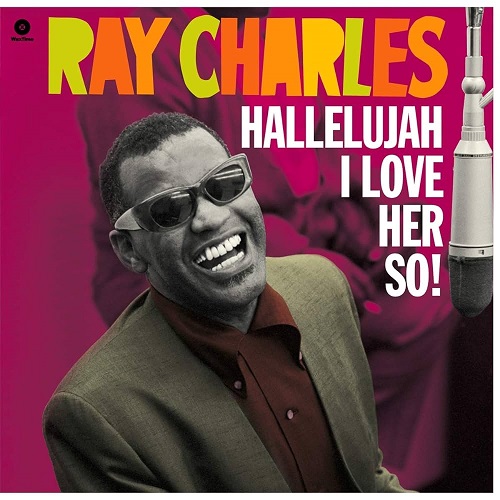
Hallelujah, I Love Her So was written and released by Ray Charles in 1956. I remember playing it on rare occasions when I worked at WHND, Honey Radio in Detroit. It was usually when we were featuring songs from 1956. It didn’t do much on the pop charts, but it was a Top 5 hit on the R&B charts.
As the title insinuates, it has a gospel feel to it. The opening piano lick sounds like something you’d hear before jumping into a happy hymn. One source says the song “is a testament to the joyous release of love, featuring a sophisticated horn arrangement and memorable tenor sax solo by Don Wilkerson.”
My buddy Randy from http://www.mostlymusiccovers.com no doubt knows that there have been plenty of covers of this song. Ray must have been thrilled to have his song covered by folks like Ella Fitzgerald, Peggy Lee, Brenda Lee, Jerry Lee Lewis, Stevie Wonder, Eddie Cochran, Gerry and the Pacemakers, and Frank Sinatra! Oh, and a band called the Quarrymen (who went on to become the Beatles) also covered it!
To start with, here is the original by Ray:
Ella Fitzgerald’s version sounds a bit more church-like to start, but really swings.
From the Beatles Anthology, here are the Quarrymen
Eddie Cochran’s version was released in 1959
I had no idea that Jerry Reed covered it, but it’s neat to hear his take
Sinatra always makes a song his own and he does that with this one. Very bluesy
Hugh Laurie’s version was on the deluxe version of his debut album
Of all the covers, one of my favorite versions is by an Australian singer named Guy Sebastian. From his Memphis Album he a great version.
I hope you love this one as much as I do!
Hallelujah, I Love Her SO
Let me tell you ’bout a girl I know She is my baby and she lives next door Every mornin’ ‘fore the sun comes up She brings me coffee in my favorite cup That’s why I know, yes, I know Hallelujah, I just love her so
When I’m in trouble and I have no friend I know she’ll go with me until the end Everybody asks me how I know I smile at them and say, “She told me so” That’s why I know, oh, I know Hallelujah, I just love her so
Now, if I call her on the telephone And tell her that I’m all alone By the time I count from one to four I hear her (KNOCK) on my door In the evening when the sun goes down When there is nobody else around She kisses me and she holds me tight
And tells me, “Ray Charles everything’s all right” That’s why I know, whoa, I know Hallelujah, I just love her so
Now, if I call her on the telephone And tell her that I’m all alone By the time I count from one to four I hear her (KNOCK) on my door
In the evening when the sun goes down When there is nobody else around She kisses me and she holds me tight And tells me, “Daddy, everything’s all right” That’s why I know, yes, I know Hallelujah, I just love her so
Oh, hallelujah Don’t you know, I just love her so She’s my little woman, waitin’ all this time Babe, I’m a little fool for you, little girl…
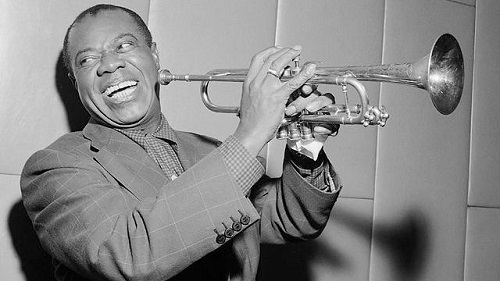
Today is the 122nd birthday of a jazz legend – Louis “Satchmo” “Pops” “Satch” Armstrong.
A unique voice and a amazing trumpet player, he is synonymous with jazz. Nothing I could write about him would do any justice to his life and legacy, so I thought I would just share a few of my favorite Louis Armstrong songs with you.
I’ve always loved A Kiss to Build a Dream On, but Louis’ version is my favorite.
Another favorite by Louis was actually one that I played at one of the last weddings I DJ’d. I was surprised that they actually asked for his version. La Vie En Rose.
How could I not mention his Grammy winning performance of Hello, Dolly! This song knocked the Beatles out of the number one spot on the charts (a spot they had held with three consecutive songs for 14 weeks!)
His collaborations with the great Ella Fitzgerald are classics. My favorite is from the show Porgy and Bess – Summertime. Both were great scat singers
Yes, it’s out of season, but I LOVE Louis’ version of Winter Wonderland
How could I not include a song that I believe belongs to Louis? NO ONE, in my humble opinion, could ever do it the same justice as he did. The emotion expressed, the beautiful arrangement, and those amazing lyrics – What A Wonderful World.
Here is a version not many are familiar with. Listen to “Pops” Armstrong’s vocal introduction to the song…




 Various Ramblings of a Nostalgic Italian