I Wondered When This Would Happen

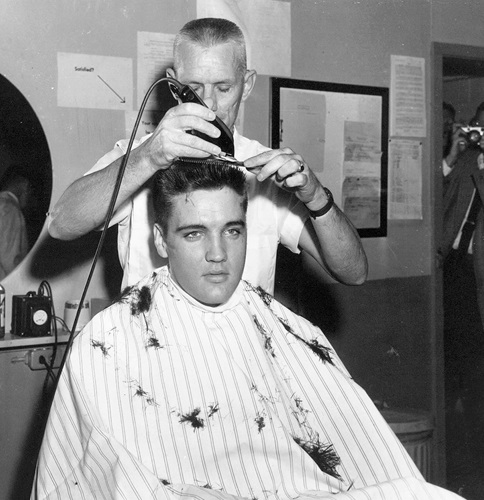
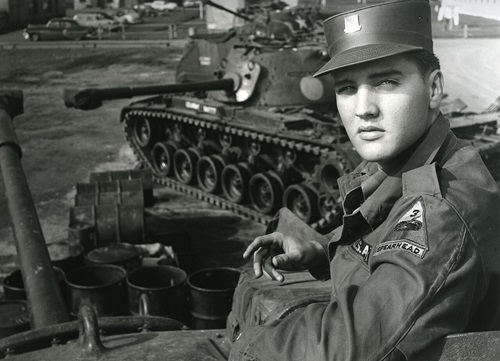
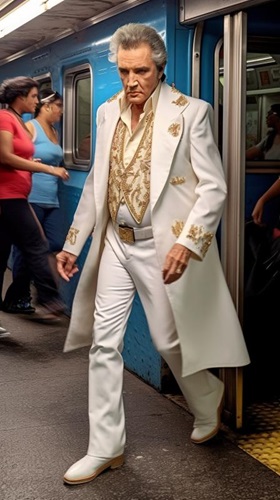
The above photo is one of many AI photos created to show “what Elvis would look like if he were still alive.” While it is interesting to see what AI comes up with, things are beginning to get out of control.

Scroll Instagram or Tik Tok today and you will eventually find videos that feature AI renditions of celebrities that have passed away. The ones that have come up the most feature familiar faces and the voices are very close to their real voice.

  • A forgetful Ronald Reagan lost in the halls of the White House
  • Martin Luther King Jr. and his dream that the ice cream machine would be working (among other things)
  • JFK riding in the Dallas motorcade saying, “This is so boring. Just shoot me.”
  • Rod Serling talking about the time traveling DeLorean
  • Elvis as Captain Kirk in Star Trek, Indiana Jones, and Han Solo in Star Wars
  • Mr. Rogers in a movie trailer that has him physically fighting painter Bob Ross
  • George Carlin standing in his grave doing jokes about the state of the country

One more that seems to be everywhere is Robin Williams. I’ve seen him hosting a podcast in heaven where he interviews Freddie Mercury, Jimi Hendrix, and John Lennon; I’ve seen him walking a dog out on the streets of New York joking around with people; and seen him ordering a coffee at Starbucks while tossing out puns about coffee. The voice on these is so good, you’d think it really was him.

These AI creations are something that has caused Robin’s daughter to speak out. Zelda Williams posted on her Instagram page this week asking people to “just stop sending me AI videos of Dad.” She went on to say, “Stop believing I wanna see it or that I’ll understand, I don’t and I won’t,” she wrote. “If you’re just trying to troll me, I’ve seen way worse, I’ll restrict and move on. But please, if you’ve got any decency, just stop doing this to him and to me, to everyone even, full stop. It’s dumb, it’s a waste of time and energy, and believe me, it’s NOT what he’d want.”

She finally said, “To watch the legacies of real people be condensed down to ‘this vaguely looks and sounds like them so that’s enough’, just so other people can churn out horrible TikTok slop puppeteering them is maddening. You’re not making art, you’re making disgusting, over-processed hotdogs out of the lives of human beings, out of the history of art and music, and then shoving them down someone else’s throat hoping they’ll give you a little thumbs up and like it. Gross.”

I think Zelda is right. Many of the celebrities have been gone for some time like Marilyn Monroe and Albert Einstein. There are still living relatives of many of the famous people in these videos. I wondered how they might feel about them. Zelda Williams cannot be the only one who feels this way about their deceased loved ones.

I admit, the first one I saw was an Elvis video. It was done to be humorous in that he says in one, “I can’t wait for AI to come along so I can stop acting in these dumb movies.” He says this while in a scene from his movie Spinout. I chuckled a bit when I saw it, because I had read somewhere that Elvis didn’t necessarily enjoy making all of his movies.

The more I thought about this, the more I wondered about the future. If these videos are close today, imagine how good they might be as the technology advances. We would be left questioning everything. How would we know that what we are watching is real? We can’t trust what we see on TV now, let alone if/when AI stuff starts being broadcast. This just scares me.

Remember that line from the X-Files? “The truth is out there.” The problem is going to be trying to figure out what is true and what isn’t!

Turntable Talk #39 – Bands? We Don’t Need No Stinkin’ Bands!

Dave at A Sound Day just wrapped up his monthly feature Turntable Talk. It was an interesting topic this time around and there were a lot of surprises as to who everyone chose to write about. This was my entry to the feature, which originally posted on Dave’s site on Monday:

It is time once again for Dave’s feature Turntable Talk. Dave features this every month on his site A Sound Day. This is the 39th edition, and he continues to come up with fantastic topics. This month is a fun one: Bands? We Don’t Need No Stinkin’ Bands!  Dave’s instructions were simple: This time around, we’re looking for artists who left popular bands to go solo and did well (either commercially or else in your own critical assessment.)

I am sure that I did exactly what the other participants did when the topic was presented – I Googled. I was actually surprised at just how many artists moved from a group to become a solo artist. Off the top of my head I can list Diana Ross, Sting, Lionel Richie, Eric Clapton, Gwen Stefani, Ricky Martin, Peter Gabriel, Rob Thomas, Steve Perry, Lou Gramm, and Justin Timberlake. There are SO many.

In all honesty, I had my choice almost immediately. However, as I began to write about him, there was another artist connected with him that became more interesting to me. It was an artist who had solo success for a short time, and then a sad ending.

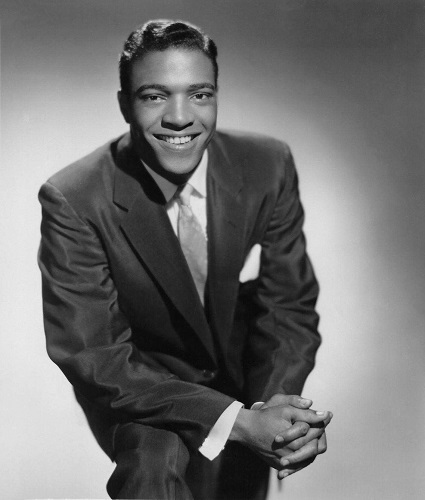
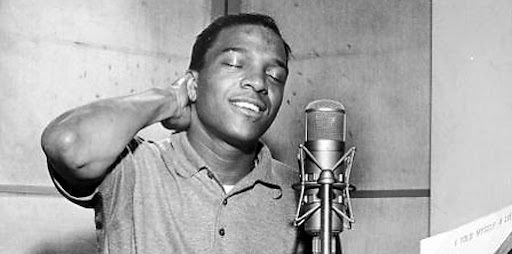
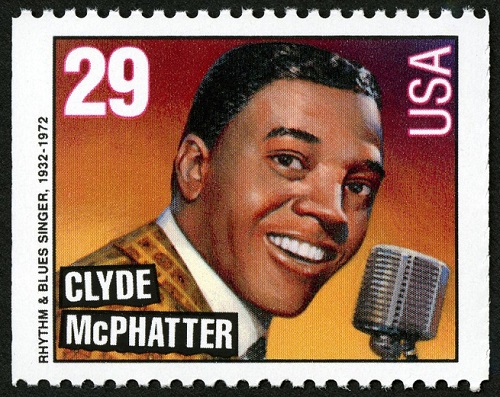
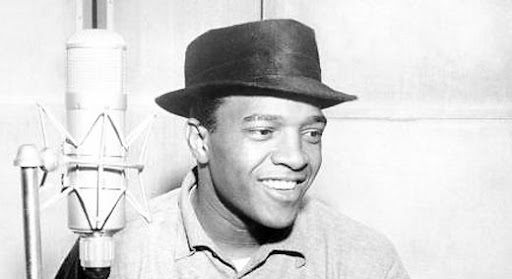
If I mention The Drifters I am sure you can name a few of their big hits. Under The Boardwalk, This Magic Moment, and Up On The Roof are just some of them. The Drifters were formed by my choice artist in 1953. His name was Clyde McPhatter. Let’s go back a couple years to see how it all came together.

Like many artists, Clyde McPhatter began singing in the church choir at his father’s church. In 1950, he was working at a grocery store. He entered the Amateur Night contest at Harlem’s Apollo Theater – and won! Afterward, he went back to working in the store.

One Sunday, Billy Ward of Billy Ward and the Dominoes heard Clyde singing in the choir of Holiness Baptist Church of New York City. He was immediately recruited to join the group. Clyde was there for the recording of their hit “Sixty Minute Man,” which was a number one song on the R&B chart for 14 weeks in 1951.

My original pick for this round was Jackie Wilson. Jackie was hired by Billy Ward in 1953 to join The Dominoes. That same year, Clyde left the group. He coached Wilson while they were out touring together. Wilson would leave in 1957. Apparently, Ward was not pleasant to work with. Wilson said, “Billy Ward was not an easy man to work for. He played piano and organ, could arrange, and he was a fine director and coach. He knew what he wanted, and you had to give it to him. And he was a strict disciplinarian. You better believe it! You paid a fine if you stepped out of line.”

Atlantic Records saw a Dominoes show and noticed that Clyde was not with the group, so they searched for him, found him and wanted to sign him to a record deal. Clyde agreed to sign on one condition – they allow him to form his own group. That group was the Drifters. While known as Clyde McPhatter and the Drifters, they released songs like Money Honey.

Elvis Presley covered Money Honey in 1956. In researching for this piece I was surprised to find that McPhatter and the Drifters did the original of another Elvis hit – Such a Night.

In late 1954, McPhatter was inducted into the U.S. Army. He assigned to Special Services in the continental United States. This allowed him to continue recording. After his tour of duty, he left the Drifters and launched a solo career. The Drifters continued as a successful group, but with many changes in personnel, and the group assembled by McPhatter was long gone by the time their greatest successes were released after he left the group.

It would take two years, but Clyde would finally get his first solo #1 R&B hit when he released “Treasure of Love” in 1956. It would top out at #16 on the US Pop Chart. I love his vocal on this one.

His biggest solo hit would come in 1958 when he recorded and released a song written by Brook Benton. A Lover’s Question would reach #6 on the Pop Chart. If I had to pick my favorite Clyde song, it would be this one. There is so much to love about this song. That acapella bass line being sung throughout the song is very catchy.

McPhatter would leave Atlantic Records and bounce from label to label recording many songs, but not having much success. His last top ten record would come in 1962 with a song written by Billy Swan. Lover Please was first recorded by the Rhythm Steppers in 1960. It was the title track from Clyde’s 1962 album of the same name. It would reach #7 on the Pop Chart.

Clyde did manage to have a top 30 hit in 1964 with “Crying Won’t Help You Now,” but when it fell of the chart, he turned to alcohol for comfort. He would record every so often, but nothing ever really did well on the charts. He always had a decent following in the UK, so in 1968 he moved to England.

He wouldn’t return to the US until 1970. Outside of performing on a few Rock and Roll Revival shows, he lived a very private and reclusive life. In 1972, Decca Records signed him and they were planning a a big comeback. That never materialized as Clyde passed away on June 13, 1972 of complications from liver, heart and kidney disease. This was brought on by his alcohol abuse years earlier. He was only 39 years old.

His legacy consists of over 22 years of recording history. Clyde was the first artist to be inducted twice into the Rock and Roll Hall of Fame, first as a solo artist and later as a member of the Drifters.

In 1993, Clyde was honored with his own stamp by the US Postal Service.

His career had ups and downs, and his hit songs were an important part of Rock and Roll history. Vocalists like Marv Johnson, Smokey Robinson and Ben E. King are all said to have patterned their vocal styles on Clyde’s. Others have cited him as a major influence as well. In the book “The Drifters” by Bill Millar, he says:

“McPhatter took hold of the Ink Spots’ simple major chord harmonies, drenched them in call-and-response patterns, and sang as if he were back in church. In doing so, he created a revolutionary musical style from which—thankfully—popular music will never recover.”

Thanks again to Dave for hosting another great round of Turntable Talk. I cannot wait to see who the other writers have picked and look forward to Round #40 next month.

Thanks for reading and thanks for listening!

Tune Tuesday

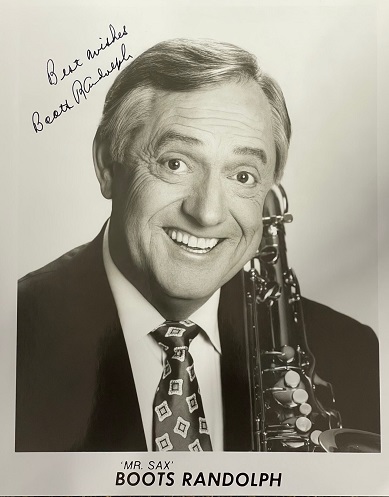
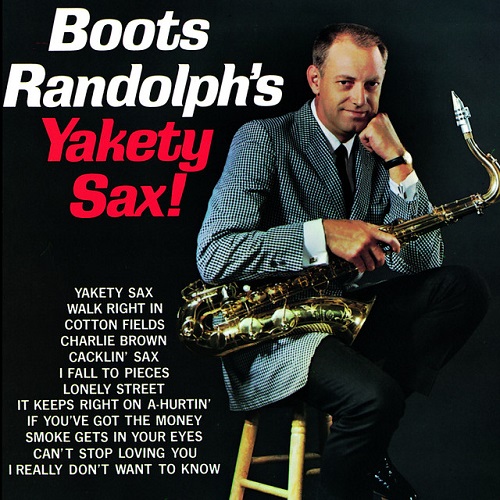
Homer “Boots” Randolph was born on this day in 1927. Boots Randolph was a Nashville sax player who performed solos on Roy Orbison’s “Mean Woman Blues” and Brenda Lee’s “Rockin’ Around The Christmas Tree.” He also played on many of Elvis Presley’s songs. He was often called Mr. Sax.

As a solo recording artist he placed four singles in the Top-100 between 1963 and 1967. The most successful of these was “Yakety Sax”, which reached #35 in 1963 and stayed on the charts for nine weeks.

The song had some influence by the Coaster’s hit, Yakety Yak, however, it will forever be connected to a British comedian. The song was popularized on The Benny Hill Show, where it played when Hill was being chased around by policemen and angry women. Because of its use on the show, it has appeared in many comedic skits on other shows over the years.

Happy Birthday, Boots!

The Music of My Life – Decade Extras – The 1980’s Part 2

This is sort of a continuation of the Music of My Life feature. It focused on music from 1970-2025. It featured tunes that have special meaning to me, brought back a certain memory or a tune that I just really like. I found that with the first three decades, there were songs that I didn’t feature. So I sat down with my original lists and selected some songs that “bubbled under,” so to speak.

I figured a good way to present them was to focus on a decade. 10 years = 1 song per year = 10 songs. Last week I featured the 80’s. This week 10 more 80’s tunes before we move on to the 90’s. So, let’s check out a few “Decade Extras.”

1980

While I was never a truck driver, we certainly listened to Eddie Rabbitt’s Drivin’ My Life Away a lot while driving my my folks. I’m sure it was one of the songs my dad had recorded on 8-track to listen to on our drives up north.

This song was the first song that really made Eddie a crossover artist. The song went to number 5 on the Billboard Hot 100 charts. I Love A Rainy Night followed and hit #1 on the Hot 100, Country and Adult Contemporary Charts. Step By Step and You and I followed in 1981 and 1982 as crossover hits.

It is one of many Eddie Rabbitt songs I love.

Driving My Life Away

1981

Originally done by Tommy James and the Shondells, Mony Mony was covered by Billy Idol. Billy first released his version as a single in 1981, his first as a solo artist after leaving the band Generation X. His live version of the song went to #1 in 1987.

It was a big song at weddings and schools dances. However, it quickly made many school’s “Do Not Play” list. Why? It became popular for kids to shout “hey, hey, what, get laid, get f–ked” during the instrumental break in the chorus. I found this out the hard way at a school prom. I had a lot of requests for the song and when I played it the kids went crazy. When they shouted out the vulgar chant, it only took seconds for a teacher to come up and tell me to turn it off. Apparently, the chant is still shouted at Billy’s concerts.

Weird Al Yankovic did a parody of Billy’s version called “Alimony” on his Even Worse album in 1988.

Mony Mony

1982

It took two releases for the next song to get noticed. I can still remember going to the record store and buying Built For Speed by the Stray Cats. Rock This Town was such a cool thing to hear on the radio for me. My dad played a lot of Rockabilly stuff for me growing up, so I had to go get this album.

When Stray Cat Strut was first released in August of 1982, it didn’t even crack the Hot 100. I think it stopped at #109. Then Rock This Town was released and the band got noticed. The record company decided to re-release Stray Cat Strut and this time it debuted at #43 and went all the way to #3.

Michigan Trivia: Detroiters may remember that WRIF’s (101 FM) JJ and the Morning Crew a parody of this called “Fat Cat Strut.”

Stray Cat Strut

1983

The Eurythmics are Annie Lennox and Dave Stewart who actually dated for a while. Lennox said in an interview that they wrote this song after the two had a huge fight. Dave came up with a beat, Annie improvised the synthesizer riff, and suddenly they realized they had a potential hit.

In an interview with songfacts.com, Stewart said “We thought we’d made something really special but we had no idea, really, the impact it would have. Neither did the record label, which didn’t even think it was a single.”

Three other songs from the album were released as singles in the UK before their label, RCA, finally issued “Sweet Dreams.” When they did, it took off, climbing to #2.

 Songfacts says about the video:

The video presented Lennox with close-cropped orange hair and a tailored black suit, making it the first popular video presenting an androgynous female. The cow in the video was Dave Stewart’s idea – he was a big fan of surreal artists Salvador Dali and Luis Bunuel. Said Stewart: “A few people were saying, ‘Dave, why the cow? Annie is so good looking.’ Those people should go buy a copy of Purple Cow by Seth Dogin, about how to make your business remarkable. It was written 20 years after I had the purple cow in our video – which certainly did the trick and made my whole life remarkable.”

The cow, while very eye-catching, posed a logistical problem because most studios can’t accommodate them. Eurythmics found a basement studio in London with an elevator big enough to transport the animal. Lennox recalls the shoot with the bovine walking around as being one of the more surreal experiences of her life.

This song used to drive my former sister-in-law crazy. I’m not sure why, but whenever I DJ’s a family party or an event that she was at, I always played this song.

Sweet Dreams Are Made of This

1984

The next song got it’s title from a 1979 movie. Time After Time is the name of a 1979 science fiction movie starring Malcolm McDowell as H.G. Wells, whose time machine is stolen by Jack The Ripper, who uses it to travel from 1893 to 1979. Wells follows him into the future and goes on a quest to stop him from killing.

Cyndi Lauper wrote the song with Rob Hyman of The Hooters. Hyman told Songfacts: “When she saw Time After Time, something clicked. She said, ‘I think I have a title.'”

Once the title was in place, they set about writing the song. Hyman explained: “I was sitting at the piano and just started banging out what would eventually be the chorus, hook, and the way we sing it. It almost had like a reggae feel, it was a little bouncier and a little more upbeat. We started getting off on that chorus, then the verse melodies started to appear.

It’s a deceptively simple song. The verses are just a little repeating three-note motif – almost like a nursery rhyme, a very simple song. Then we started to realize we were on to something. The mood of the lyrics came from both of us. I think Cyndi came in and really started the lyric flow, then all of the sudden we realized it wasn’t such a bouncy song, but it was a little more bittersweet and a little deeper in its feeling and a little more poignant, so the music started to change. We wrote a little bridge section and I think the last thing we really wrote was the chorus. We had ‘Time After Time,’ we just had to get the words that would surround it.”

This song surprised me. Compared to Girls Just Wanna Have Fun and She Bop, this song was kind of deep. This one and True Colors really made me appreciate her talent.

Time After Time

1985

My Detroit Tigers are doing very well so far this season. I hope they keep it up! From 1985, here is a song that I have written about in the past Centerfield.

Centerfield

1986

My dad always played me classics from Elvis, Roy Orbison, Buddy Holly and Little Richard. I remember my dad coming home and saying, “Keith, you gotta hear this Little Richard song.” It was a song that was featured in the movie Down and Out in Beverly Hills with Richard Dreyfus.

Honestly, it sounded like something he could have done in the 50’s. Great Gosh A’Mighty must have been the cleaned up version for the film, because Little Richard also recorded a Great God Almighty version, too.

The song is always one I play on repeat on the iPod.

Great Gosh A’Mighty

1987

Randy Travis was one of the coolest country stars I’ve had the chance to meet. He was so down to earth and friendly. We talked about music, family and faith. It was like talking to an old friend.

I feel Forever and Ever, Amen is right up in the Top 10 best country songs of all time. It was written by two of the best songwriters in Nashville – Paul Overstreet and Don Schlitz. The two had already wrote Randy’s hit “On the Other Hand,” and I love the story of how this one came to be.

Overstreet told Songfacts:

“I had played about 36 holes of golf that day, and Don says, ‘I’ve got this idea we have to write.’ His new fiancée’s little boy was learning the Lord’s Prayer, and he was going around saying ‘forever and ever amen’ after everything. He would say, ‘Mommy, I love you. Forever and ever, amen.’ So Don said, ‘We’ve got to write this.’ I said, ‘How about tomorrow?’ He says, ‘No, now.'”

They got together on Overstreet’s front porch that night and composed the song by candlelight. Confident it was a hit, they recorded a demo the next day and sent it to Travis, who made it the lead single to his second album, Always & Forever. It was indeed a hit, spending three weeks at the top of the Country chart, longer than any other song in 1987.

Forever and Ever, Amen

1988

Another cover song on the list – this time, a cover of Elvis Presley. I remember hearing Cheap Trick’s version of Don’t Be Cruel and loving it! I remember really digging the spots in the song where that running bass line can be heard. The key change was something that stood out for me.

I hate to diss on the King, but I almost love the Cheap Trick version a bit more. There is so much going on that really takes the song to another level – that drum beat, the fake cold ending, the guitar solo and so much more. I played the heck out of this 45

Don’t Be Cruel

1989

The final pick comes from the movie UHF from Weird Al Yankovic. In a recent Turntable Talk feature, I talked about the David Lee Roth video for Just a Gigolo. At the end of it, I wondered if Dave borrowed from the music video for UHF’s title song.

While the video for the song is hilarious and brilliant, the song itself is one of my favorites from Al. It is not a parody, rather an original. It is a song that sounds like something you would hear on the radio in ’89. It has an alternative rock feel to it.

It’s an underrated and often forgotten Al song

UHF

What a way to wrap up the 80’s! I hope you heard some tunes you liked, too. Next week we’ll move on to the 1990’s and see what songs bubbled under my original list. See you then!

Thanks for listening and for reading.

Saluting the “First Class”

It was 39 years ago today that the Rock and Roll Hall of Fame inducted its inaugural class. When you look at the 10 inductees, you cannot help but be impressed. These artists are legends who were a part of the birth of Rock and Roll. The performers category is meant for recording artists and bands that have “influence and significance to the development and perpetuation of rock and roll.” Each of them did just that!

To honor this class of Rock and Roll pioneers, I thought I would feature a favorite song from each of them. Feel free to add your favorites in the comments.

Chuck Berry – No Particular Place To Go

The “Granddaddy of Rock and Roll”

James Brown – Please, Please, Please

“The Godfather of Soul”

Ray Charles – Hallelujah, I Love Her So

“The Genius”

Sam Cooke – Twisting The Night Away

“The King of Soul”

Fats Domino – I’m Walkin’

“The Father of Rock and Roll”

The Everly Brothers – Bye Bye Love

Buddy Holly – Rave On

Jerry Lee Lewis – Whole Lotta Shakin’ Goin’ On

“The Killer”

Little Richard – Rip It Up

“The Architect of Rock and Roll” (Also “The Bronze Liberace”)

Elvis Presley – Blue Suede Shoes

“The King of Rock and Roll”

I wish I could find out who the artist is on this amazing caricature! I love this and would love to get a print of it.

The amount of music that these ten performers put out in their lifetime is overwhelming! It is fitting that they make up the first class of Rock and Roll Hall of Fame inductees.

My wife and I took a trip to Cleveland for our anniversary one year. We visited the Hall of Fame and I was in awe walking amongst the pieces of history. If you have never been there, I highly recommend a visit!

The Music of My Life – 2003

Welcome back to The Music of My Life, where I feature ten songs from each year of my life.  In most cases, the ten songs I choose will be ones I like personally (unless I explain otherwise). The songs will be selected from Billboard’s Year-end Hot 100 Chart, Acclaimed Music, and will all be released in the featured year.

This will post on January 1, 2025, so let me start off by saying Happy New Year! I am sure that I will be posting something of a New Year’s Wish as well today.

Off to the side of my 2003 list I wrote, “Difficult year!” This could mean that it was difficult to pick ten songs. It could also mean that it was difficult to narrow the list down to ten songs. With my life, it could mean that 2003 was a difficult year personally. I’m not sure. I know that as I got deeper into the 2000’s, there were fewer songs that I liked. Maybe that is it?

Anyway, let’s drift into 2003:

Drift Away was a top 5 hit for Dobie Gray in 1973. In 2002, Gray recorded this as a duet with Uncle Kracker. When the song reached the Billboard top 10 in 2003, 30 years later, it broke a record. Dobie broke the record for the biggest gap between top US top 10 appearances and held that record for 17 years.

How did Uncle Kracker come to record it? You can thank a radio DJ for that. Songfacts explains:

“Although Uncle Kracker liked this song, he only performed it out of necessity at first. He was making the rounds on the morning radio shows to promote his solo debut, Double Wide (2000), which was mostly rap-rock tracks except for the mellow hit single “Follow Me.” Because he was expected to perform a few songs during his appearance, he needed something else to sing in the same vein, and the DJ Scott Shannon suggested the Dobie Gray tune.

Kracker said, “If it wasn’t for him, that song would have never gotten cut, he pretty much put the bug in my ear for that.”

I like the fact that the cover included the original singer. People liked it, too. It was #1 for 28 weeks in 2003-04 on the Adult Contemporary chart. It broke the record for the longest run atop the tally and held the record for 15 years.

Drift Away

I had my first child in 2002. Over that first year, it was amazing to see the changes in him. I never really understood how fast time flies, until having children.

I was working in country radio in 2003 and I remember hearing Then They Do for the first time. I knew that it would be a huge hit because any parent could relate to the lyrics. They are delivered perfectly by Trace Adkins.

The song begins and describes a typical morning where the singer’s children are causing trouble on the way to school. Naturally, he thinks things will be easier when the children grow up. In time, the children go off to college and get married. It is then that the parents realize that they have more time to themselves now. Their children have accomplished their dreams, but their house and lives feel a lot emptier nonetheless.

It’s sort of a “be careful what you wish for” kind of thing. Be present and enjoy the memories.

Then They Do

The next song is one that I really liked. I don’t necessarily pray to angels when I am down or when I am hurting, but I do pray. I pray to God and ask Him to give me guidance or comfort. I did an in depth study for Sunday School at our church about angels once. That is why I don’t pray to them.

That being said, I do understand that in certain situations, people will often pray. Some, pray to angels. I think in essence, they pray to heaven for help. That’s kind of what I got from Train’s Pat Monahan’s inspiration for the song.

From Songfacts:

The song was inspired by something his therapist, Judy Bell, told him. Monahan told Buzzfeed, she said: “Just remember that we are made up of angels and traitors, and the angel is the one that says, ‘You’re beautiful and you can do anything you want,’ and the traitor is the one that says, ‘You’re ugly and you can’t get anything right.'”

“That song just came from that conversation of, if we all called our angels, what a cool life this would be for all of us,” he said.

The song went to number one on the Adult Contemporary chart.

Calling All Angels

I have always loved Willie Nelson. Some of his duets are just fantastic. I loved Pancho and Lefty with Merle Haggard. I loved To All The Girls I’ve Loved Before and Spanish Eyes with Julio Iglesias. I loved Seven Spanish Angels with Ray Charles. Last week, I could have included Mendocino County Line, his duet with Lee Ann Womack. When he did his duet with Toby Keith, it was a monster country hit.

Toby posted the story behind Beer For My Horses on his website:

“When I was a kid I worked for a rodeo company,” says Toby. “The old timers who worked the stock and stuff in the back would carry a pint of whiskey in their pocket – they were just old cowboys. They would pull it out and say, ‘Here’s to me, here’s to you, we got screwed, so screw you, here’s to me.’ They always had some little toast. One was to hold up the bottle for a drink and say, ‘Whiskey for my men, beer for my horses.’ I kept that in my head a long time thinking I’d write it some day.

We did finally, trying to say that maybe it’s time that justice gets back into the judicial system. The big posse goes out and catches the bad guys and everybody comes back to lick their wounds, remember the ones they lost and celebrate with the ones that made it back. You raise your glass and say, ‘Whiskey for my men, beer for my horses, bartender.’ One of those conceptual deals. Soon as we got done writing it I thought man, it’d be cool if we could talk Willie Nelson into singing the Texas verse on that. Obviously he went for it and I think it’s the biggest multi-week #1 either of us ever had.

In 2008, Toby and Willie starred with Rodney Carrington in the movie of the same name.

Beer For My Horses

The next song was a top five hit for 3 Doors Down. Lead singer, Brad Arnold told Songfacts:

“The song’s just about being away from someone, or missing them,” he clarifies. “And it really doesn’t matter if you’re here without them for all day or all month. It’s just kind of about the lonely and missing of somebody, but people kind of take that sort of as a little bit of a sad song. And in a way, I kind of meant it as a happy song. And the reason being because it’s talking about being here without you, but she’s still with me in my dreams. ‘And tonight, it’s only you and me,’ so the song was really just about that dream. And being in a state of peace, because you’ve got that person there with you in your sleep. And in that way I kind of meant for it to be a little bit of a happy song.”

The song means a lot to many military personnel. Especially those who find themselves away from their loved ones with their lives in danger. At the same time, many think about someone who has passed away and that miss them. However you interpret it, it really is a great song.

Here Without You

Josh Turner is one of the nicest singers I’ve ever had the chance to meet. His voice can rattle things hanging on a wall it is so deep. I remember when his first single (Long Black Train) hit my desk. Personally, I loved it. I got it. I understood it. However, it had a Christian theme to it and I wondered how the listeners would like it.

I love hearing him tell the story of how the song came about. He told AOL Music:

“‘Long Black Train’ was inspired by a vision that I had of a long, black train running down this track way out in the middle of nowhere. I could see people standing out to the sides of this track watching this train go by. As I was walking, experiencing this vision, I kept asking myself, ‘What does this vision mean and what is this train?’ It dawned on me that this train was a physical metaphor for temptation. These people are caught up in the decision of whether or not to go on this train. And this came about in a time of my life where I was trying to figure out who I was as an artist and as a person… I was trying to learn how to deal with the freedom that I had away from home for the first time. ‘Long Black Train,’ the song and the album, are very special to me. It was just one of those things that I felt like God gave to me for a purpose, and I’ve been out here promoting that purpose.”

He wrote the song after listening to some old Hank Williams Sr. songs. He was a college senior. He said he started strumming the guitar and the verses came to him. He never had any intention of releasing the song and noted that when he wrote it, “I didn’t even have a record contract yet!”

Long Black Train

Next is song that has been covered a few times. The First Cut is the Deepest was written by Cat Stevens. He did a demo of the song in 1965. In 1967,  it was a hit for P.P. Arnold in Britain reaching #18 in the charts.

In America, the first version to chart was by Keith Hampshire, who took it to #70 in 1973. Rod Stewart covered it in 1976, taking it to #21 US and #1 UK. Sheryl Crow released her version in 2003, which made #14 in the US and #37 in the UK.

Sheryl recorded it for her hits compilation, “The Very Best of Sheryl Crow.” It was one of her biggest radio hits. It also became her first solo top-40 country hit following the success of her duet with Kid Rock (“Picture”)

First Cut Is The Deepest

Next, the third duet on my 2003 list. This was another one of those songs that after hearing it, I knew it would be a hit. How could it NOT be with Jimmy Buffett on it?

The song came about when writer Don Rollins had with the line “It’s Five O’Clock Somewhere.” It was written for another artist whose album wanted a Jimmy Buffett vibe to it. The artist passed on the song and eventually it came to Alan Jackson. Rollins explains,

“I got the call that it was on hold for Alan, which I thought was strange, because if you hear the demo it’s very island-ly. There are acoustic guitars and steel drum samples, very much Buffett. The idea that someone as country as Alan Jackson might be interested in that song never even occurred to me. Then I got wind that he was wanting to do a duet with Buffett, and it made a little bit more sense at that point.”

This song spent eight weeks at #1 on the Country charts, and won the 2003 Grammy for Best Country Song. It was the first #1 song on the Country chart for Jimmy Buffett.

It’s Five O’clock Somewhere

Last week I picked a remix of Elvis Presley’s A Little Less Conversation. In 2002, the remix had worldwide success. Because of that English record producer Paul Oakenfold took another Elvis song and did a remix of it. This time it was Rubberneckin’.

Rubberneckin’ was a song that Elvis sang in the movie A Change of Habit. It was released as the B-side of Don’t Cry Daddy. It was a top ten hit for him.

The remix only reached number 94 on the Hot 100 chart in the US, but it was big elsewhere. It peaked at number two in Canada, and number three in Australia. It also reached the top 10 in Denmark, Finland, Ireland, and the United Kingdom.

Some folks dislike these remixes. I can see where a bad remix would make me feel that way. I really thought these two Elvis remixes were great. I was loving how many people danced to them at parties.

Rubberneckin’

The final song of 2003 is probably the most bizarre. It just sticks out, and the band knew this! I’m talking about I Believe in a Thing Called Love by The Darkness. This was a song that was brought to my attention by my ex. I had never heard it before, but one time I was asked to play it at a party and the crowd went crazy!

From Songfacts:

The British magazine Classic Rock named this as their Greatest Rock Song of the ’00s. The band’s frontman Justin Hawkins commented: “All The Darkness ever tried to do was bring a little joy into the glorious realm of rock, but ‘I Believe In A Thing Called Love’ crossed over big time and changed our lives forever. To have been awarded ‘Song Of The Decade’ is overwhelming and I’m very grateful to Classic Rock for everything.”

The band’s former guitarist, Dan Hawkins, told Classic Rock the story of the song: “‘I Believe In A Thing Called Love’ was such an important song for The Darkness, but when we wrote it I really wasn’t sure about it. The chorus is so stupidly catchy, I thought people were just gonna take it as a complete joke! Right from the start, this song stuck out like a sore thumb.

We started with the riff, which Justin came up with. It sounded really great right away. But when he sang the chorus for the first time, I just said, ‘No, you can’t do that – it sounds ridiculous!’ I really thought people would just laugh at us when they heard it. So for the rest of the song, I tried to make it sound cool, more ‘rock.’ The rest of the song is all in minor key.

Songfacts also presents this very funny review:

The New York Times wrote that this song “sticks to the listener like hair gel.”

I Believe in a Thing Called Love

So there you have it. Did I miss one of your favorites from 2003? Make sure to tell me about it in the comments.

Next week, I’ll present my list from 2004. The list include one of the funniest group names to say on the radio, a monster debut song, movie music, a dance craze that is still going strong, and a song that still brings me to tears.

Thanks for reading and listening!

The Music of My Life – 2002

Welcome back to The Music of My Life, where I feature ten songs from each year of my life.  In most cases, the ten songs I choose will be ones I like personally (unless I explain otherwise). The songs will be selected from Billboard’s Year-end Hot 100 Chart, Acclaimed Music, and will all be released in the featured year.

This particular year is posting on Christmas Day. I wasn’t sure about skipping it or moving it to another day, so here it is. That being said, Merry Christmas to you and yours!

In 2002, I turned 32 years old. I also became a father for the first time. It was a year of change to be sure. I was also a year of struggle, as I would be let go from my radio job shortly after my son was born. I was able to find another radio job, but the rate of pay was so much lower that I would have been better off on unemployment.

Music has always been a way for me to get through tough times. Here are my favorites from 2002:

In February of 2002, the world was introduced to the amazing Norah Jones. The album was Come Away With Me and it was something that really stood out amongst the rest of what was going on musically at the time.

According to Songfacts.com, Norah started performing this song with Jesse Harris (the write of the song) after moving to New York City. Harris “thought it was a good fit for a female voice. Jones changed the key to fit her voice, added a drum beat, then recorded a demo of the song with Harris in October 2000. That demo got the attention of the jazz label Blue Note, which signed Jones and sent her to the studio to record with a group of session musicians. The results were too convoluted, so Jones was assigned to a different producer, Arif Mardin, who had worked with many famous artists, including Aretha Franklin. He was brought in to capture Jones’ distinctive sound, which he did by keeping the original demo take and adding some guitar and a vocal harmony, making Jones harmonize with herself.”

Jesse Harris played guitar on the original demo, which ended up being used on the final recording. He almost stopped the take because he didn’t like the mix in his headphones. He kept going and was glad he did, since that was the keeper. Jones and her band were willing to do another take, but the engineer, Jay Newland, thought it was perfect and wouldn’t let them.

Songfacts says, “Grammy voters were enamored with Jones, nominating her in five categories, with “Don’t Know Why” up for Record of the Year and Song of the Year. After the nominations were announced, the album went to #1 in America, claiming the top spot on January 25, 2003, 11 months after it was released.

Jones cleaned up at the Grammys, winning all five awards she was nominated for, with Come Away With Me earning Album of the Year. Jones also won Best New Artist and performed “Don’t Know Why” on the show.”

It wasn’t long after this that I was watching Sesame Street with my son. Norah sang this with altered lyrics about the letter “Y.”

I Don’t Know Why

The Come Away With Me album is a rare massive seller with no big hits. The only song to land in the Hot 100 was “Don’t Know Why,” which made #30. “Come Away with Me” was the third single, released in December 2002 after the album had been out for nine months. By this time, it has already sold millions of copies, but many were just discovering it.

I love that these two songs really show off the unique voice of Norah Jones.

Come Away With Me

I don’t recall the first time I heard A Thousand Miles by Vanessa Carlton. It is entirely possible that it was years after it was released. I probably heard it for the first time when I was at the Adult Contemporary station I was working for.

I just know that I really liked it. I loved the melody and her voice. I had never seen the video before I watched it to post here.

Vanessa wrote the lyrics after coming up with the song’s piano riff in the summer of 1998 at her parents’ house in Philadelphia. She revealed in a documentary for Vice that she penned the words about a Juilliard student she had a crush on while studying at the School of American Ballet. However, her love was unrequited. “I would never talk to this person,” Carlton said. “I was very shy. I was like, ‘There’s just no way on God’s creation that this would ever happen.'”

She refused to reveal the subject’s name to Vice because he’s a “famous actor” now, apparently.

The song was used in the Shawn and Marlon Wayans movie “White Chicks.” When asked about the song being in the movie, Vanessa said, “I thought it was hilarious. Those guys are really nice, too. I ran into them backstage or something, and they asked me if they could use it. They’re like fans, they’re so cute. But the scene that was in was hilarious.”

A Thousand Miles

Brad Paisley was just coming on the scene when our station brought him to town for a show. He was friendly and a bit shy. When he hit the stage, he was a marvel to watch. I’d watched a lot of people play guitar, but I was in awe of his playing!

His second album, Part II, was released in 2001. One of the songs from it showcases Brad’s playful lyrics and sense of humor. I’m Gonna Miss Her (The Fishing Song) is about a wife who gives her man an ultimatum. He needs to pick between fishing and her. I would imagine this could be re-written as The Golf Song or The Hunting Song, too.

The video is something that takes the song up a notch. Songfacts, quotes Brad:

“I’ve always written with a little humor. Even my saddest songs have a little smile to them,” Paisley recalled in his spotlight interview during the 2018 Country Radio Seminar in Nashville. “So for the [‘I’m Gonna Miss Her’] music video, I pitched this whole idea: I said, ‘I’m gonna do a video that’s gonna take the song to whole other places.’ I was going to get Dan Patrick, who was at ESPN at the time, and have him officiate a fishing tournament. And then Jimmy Dickens was gonna be my fishing buddy. Then, we were going to end up on The Jerry Springer Show. The wives were going to be upset with us, throwing chairs and stuff. [The guy from the label] said, ‘Can you really make this happen?’ And I said, ‘Absolutely.'”

“I walked out of that meeting,” Paisley added, “called my agent and said, ‘I really, really need Dan Patrick’s number.'”

His real life wife, Kimberly Williams, also appears in the video.

I’m Gonna Miss Her

The next song is one that I can relate to quite well. I have been very lucky to still have friends from elementary school (as well as middle and high school). Those elementary school friendships that last are treasures. I have written here many times about my best friend, Jeff, who I have known since second grade.

“We’re Going To Be Friends” by the White Stripes was released on the band’s third album, White Blood Cells. At that time, they were little known outside of their Detroit stomping grounds and in the UK, where they got a lot of love from the music press. But thanks to a surprise hit movie, they gained lots of recognition and fans.

This song plays at the beginning of the 2004 movie Napoleon Dynamite, where it’s used under a clever opening sequence where the credits appear on various everyday objects (lip balm, bag lunch). The film, of course, was a surprise hit and earned a great deal of exposure for the song. The main character, Napoleon, is a strong-willed, talented, quirky type with big ideas. Kinda like the White Stripes frontman, Jack White.

The movie was my first exposure to the song. It led me to dig deeper into their musical catalog.

We’re Going To Be Friends

I have always loved a song that has a Spanish feel to it. There is something about the sound of a Spanish guitar that I really dig. When I first heard My Heart is Lost to You by Brooks and Dunn, I was impressed on many levels. The thing that stuck out most was just how good Ronnie Dunn’s voice fit this type of song.

It only went to #5 on the country charts, and faded away afterward. You rarely hear it on the radio today. It is one of the songs that really got me through a rough patch. It always made me feel good when I heard it.

My Heart Is Lost To You

The 9/11 attacks were still very fresh in our minds in 2002. Patriotism was still on the rise, too. The next song became a sort of anthem for the country, but almost was not released.

Toby Keith wrote Courtesy of the Red, White and Blue shortly after the terrorist attacks of 9/11. He said he wrote the song based on what he thought his father’s thoughts on the terrorist attacks would have been. Keith’s father was a veteran and a patriot.

He told the CBS show 60 Minutes that he wrote this song in just 20 minutes, a week after 9/11. His intention was to play it for troops on USO tours, but not to be part of a commercial release. However, after playing it for Pentagon brass in Washington, the Marine Corps commandant said, according to Keith: “You have to release it. You can serve your country in other ways besides suiting up in combat.”

This was one of many country songs that were written and released after 9/11.

Courtesy of the Red, White and Blue

Elvis Presley had been dead 25 years in 2002, yet, here he is on my list!

Songfacts explains: Mac Davis and Billy Strange wrote A Little Less Conversation for the 1968 Elvis movie Live A Little, Love A Little, which was one of Presley’s last. Davis wrote the original version for Aretha Franklin, but when Billy Strange, who was handling music for the film, approached Davis about contributing a song, he realized that “A Little Less Conversation” fit the scene perfectly, so he reworked it with Strange and Elvis sang it for the film.

This was a fairly obscure Elvis song, peaking at a very un-Kingly #69 in America when it was released in 1968. But when it was remixed and released as a single in 2002, this new version went to #1 in the UK, giving Elvis 18 #1 hits there, the most of any artist. Previously, he was tied with The Beatles at 17. The remix topped the charts in several other countries as well, but only reached #50 in the US.

I do remember the first time I heard this. I was blown away. I thought it sounded modern and fresh. It was great to hear his vocals preserved and this take on the song. I was surprised when high school kids were asking for it at dances, too. They loved it and so did I.

A Little Less Conversation

The band Weezer has made some fantastic and memorable music videos. The next one is no exception.

Maladroit was Weezer’s fourth album. Keep Fishin’ was the second song released from the album. It received some high praise from critics. The AV Club stated: “It’s the kind of infectious, impeccably crafted power-pop rocker Cuomo can probably bang out in his sleep”.

The video is just a joy to watch, especially for folks like me who grew up watching The Muppet Show. The music video features Weezer as guests on The Muppet Show as drummer Patrick Wilson is held captive by none other than Miss Piggy. As noted in the Weezer Video Capture Device DVD, it marks the acting debut for the band members in a music video.

The video premiered on July 14, 2002, on MTV2. It was accompanied by a half-hour special showcasing behind-the-scenes footage from the video’s shoot.

Despite the Muppet Show wrapping in 1979 after five seasons on the air, I can see them having more fun with Weezer and other artists if it were still airing. (The new version from a few years ago took it to a more adult level with themes that I felt were not “Muppet-ish”)

Keep Fishing

Speaking of growing up in the 70’s and 80’s, the next song was like a time capsule. It tossed in many things that I remembered, and many others did, too. It was a crossover hit for Mark Wills called 19 Something.

The song begins with singer’s reminiscence of his formative years, the 1970s and 1980s. In the first verse and chorus, various 1970s-related bits of pop culture are referenced, such as Farrah Fawcett, eight track tapes, and Stretch Armstrong. The first verse also mentions the videogame Pac-man (“I had the Pac-Man pattern memorized.”). The first chorus begins with the line “It was 1970-somethin’ / In the world that I grew up in.” Verse two, similarly, references 1980s pop culture, such as the Rubik’s Cube, a black Pontiac Trans Am, and MTV. The second chorus likewise begins with “It was 1980-somethin’.” In the song’s bridge, the singer then expresses his desire to escape to his childhood years: “Now I’ve got a mortgage and an SUV / All this responsibility makes me wish sometimes / That it was 1980-somethin’.

It was released as a single from Mark Wills’ Greatest Hits CD. It went to number one on the Country Charts and peaked at number twenty-three on the Hot 100 charts.

19 Something

The final song on my list is a cover of a Joni Mitchell song, Big Yellow Taxi. The song was a hit for her in 1970. She said in an interview: “I wrote ‘Big Yellow Taxi’ on my first trip to Hawaii. I took a taxi to the hotel and when I woke up the next morning, I threw back the curtains and saw these beautiful green mountains in the distance. Then, I looked down and there was a parking lot as far as the eye could see, and it broke my heart… this blight on paradise. That’s when I sat down and wrote the song.”

The Counting Crows covered the song as an afterthought and originally for a hidden track on their 2002 album Hard Candy. It was only released as a single after Vanessa Carlton’s back-up vocals were added for a new version that featured on the soundtrack to the 2003 movie Two Weeks Notice. Their version became the band’s only Top 20 single in the UK, peaking at #13. In the US it reached #42.

If I had to choose between the original and the cover version, I’d choose the original. I don’t think this is a bad cover, but many did. It appears on a few “worst cover song” lists.

I think the song itself is why it is on my list, I love the song. This version doesn’t touch the original, but it did introduce younger folks to the song.

Big Yellow Taxi

Did I leave off one of your favorites from 2002? If so, mention it in the comments.

Next week, we kick off the New Year with 2003. Next to my list for ’03, I wrote “difficult year.” Whether that means that it was hard to narrow my list down to 10 songs or that it was hard to find 10 songs, I don’t remember. I can tell you it features a couple covers songs, a song every parent can relate to, and we learn what beverage equestrians give to their horses.

See you then!

A Holiday Tradition Since 1982 (Spoilers Ahead)

“Marley was dead: to begin with” … so begins the Dickens classic A Christmas Carol.  It was originally titled: A Christmas Carol. In Prose. Being a Ghost Story of Christmas. It was published on this day (December 19) in 1843. The first edition was completely sold out by Christmas Eve (that’s less than a week!). By the end of 1844 thirteen editions had been released!

This was not Dickens’ first Christmas story.  As a matter of fact, he had written three before writing this one. He would go on to write four more afterward.  The story of the transformation of Ebenezer Scrooge, however, remains his best known holiday story.

Backstory

By mid-1843 Dickens began to suffer from financial problems. The sales of his Martin Chuzzlewit were falling off. His wife, Catherine, was pregnant with their fifth child. To make matters worse, his publishers threatened to reduce his monthly income by £50 if sales dropped further! It has been said that the publishers knew that the Chuzzlewit stories were not gaining public interest. They begged Dickens for a Christmas book.

Dickens started writing the book in October of 1843. Michael Slater, Dickens’s biographer, describes the book as being “written at white heat.” It was completed in six weeks, the final pages being written in early December. He built much of the work in his head while taking night-time walks around London.

Slater says that A Christmas Carol was “intended to open its readers’ hearts towards those struggling to survive on the lower rungs of the economic ladder and to encourage practical benevolence, but also to warn of the terrible danger to society created by the toleration of widespread ignorance and actual want among the poor.”

Since its initial publication the book has been issued in numerous hardback and paperback editions, translated into several languages and has never been out of print

1982 – English Class – Lincoln Junior High

I was familiar, of course, with the story of Scrooge. I had even seen a few movie versions of this classic ghost story. Interestingly, I had never actually read the novella.  However, in 7th grade, I was blessed with one of my all time favorite teachers – Mrs. Shirley Kellogg.  She was a no-nonsense teacher who could even make diagramming sentences fun.

I remember one day I got caught daydreaming and looking out the window.  She  saw me and asked me a question, which I obviously did not hear.  I was startled by her calling my name and I must have looked scared to death.  She looked at me and said, “Well just don’t sit there like a Willie Lump Lump – answer the question.”  I started laughing, because I was well aware of the Red Skelton character she was referring to! Even though I didn’t have an answer, I immediately connected with her! Rest assured, I saved my daydreaming for other classes!

I digress. Back to A Christmas Carol :

I remember that we would often read from this big blue book that had the word “Literature” in the title.  It was a collection of modern stories, short stories, classic stories, and poems.  Charles Dickens’ tale was in this book. In elementary school, we would often read stories aloud, with each student reading a chapter.  What makes my first “reading” of this story unique is that Mrs. Kellogg read it to us – not live though…it was Memorex!  She had spent time recording herself reading the entire story and played it back to us on a cassette tape.  This allowed us to read along while she graded papers and such. Because of this, when I read the story today, I can still hear certain lines in her voice.

Stave One

Dickens divides his tale into 5 “staves” or chapters.  The story opens on a miserable Christmas Eve, seven years after the death of Scrooge’s partner in business Jacob Marley.  Dickens’ opening line stresses the importance of the fact that he was dead.  In fact, he stated that this “must distinctly be understood or nothing wonderful can come of the story” that follows. Dickens’ description of Scrooge is something that I can still hear in Mrs. Kellogg’s voice – “a squeezing, wrenching, grasping, scraping, clutching, covetous old sinner!” Right from the start, we learn what a miserable man Scrooge truly is.

In this stave we are also introduced to Fred, Scrooge’s nephew.  His visit only continues to illustrate Scrooge’s hate for the holiday and the season. Another main character is Bob Cratchit, Scrooge’s clerk.  Dickens describes the poor working conditions and Cratchit’s measly salary. Jobs must have been scarce at the time. I say that because you have to wonder why this poor man is working for such a jerk like Scrooge. We are also introduced to two men collecting for charity, who are basically told by Scrooge to “get lost”.  He tells them that he supports prisons and workhouses and those in need should go there for refuge.

Before the chapter is over, we follow Scrooge to his empty, damp, dark, and desolate home. It is there that we are introduced to his deceased business partner, Jacob Marley. It is here that we witness the beginnings of Scrooge’s transformation.

Marley’s ghost is a ghastly sight.  He is wearing heavy chains and lock boxes.  He tells of the misery and gloom that he suffers in the afterlife.  He gives Scrooge a warning that his fate is far worse than his. This is because he has had additional years to labor on the chains he is forging.  A doubtful Scrooge tells him he must be some sort of mirage or illusion. In response to this, Marley scares him into believing his presence.  Marley sets the stage for what is to follow – the visits from three spirits.  These visits are the only chance that Scrooge has to avoid Marley’s fate.

Stave Two – The Past

Scrooge’s second spiritual visit from the Ghost of Christmas Past. Scrooge then asks the spirit if it is the spirit of “long past”, and the spirit responds “your past”.  The spirit whisks Scrooge away to Christmases where Scrooge was a boy, a young man, and a young adult.  We begin to get a sense of why he is the way he is.  As a boy, he spends Christmas at a boarding school.  As a young man, we see him as an apprentice – an apprentice who loves Christmas.  We also see him as a young adult. Here, we witness the love of his life leave him. She leaves because money has grown to be the most important thing in his life.

The older I get, the more this part of the story stays with me.  Scrooge, as he witnesses all these past Christmases, is given a gift.  He is allowed to see a younger self and those who he grew up with.  We watch him call out the names of former school mates. He sees his beloved sister who died giving birth to his nephew. He also speaks highly of his fellow apprentice and former boss. Finally, he relives the pain of the loss of his love. These are among the many scenes that spark strong emotions with Scrooge.

Imagine, being able to go back in time to witness past Christmases!  What I wouldn’t give to relive those childhood memories!  I would love to see:

  • My grandfather’s face as I opened the cribbage board he gave me
  • The joy on me and my brother’s faces as we opened up the entire collection of Star War figures
  • The homemade Christmas ornaments mom made for our tree
  • My children’s first Christmases
  • A family pinochle game in the sun room at my grandparents
  • Dad putting together one of our toys with a gazillion stickers to place on it
  • Mom in good health, laughing at a gag gift I bought her
  • The adults playing guitars and the organ after having a few too many rum balls
  • The spread of Italian food we’d feast on every Christmas Eve

The list goes on and on. Oh to be able to hear the voices of loved ones who are no longer with us … wow.  What a gift Scrooge is treated to.

Stave Three – The Present

The second spirit is the Ghost of Christmas Present.  He is a jolly spirit who shows Scrooge what is to happen this Christmas.  He is first given some enlightenment about his clerk as he visits their home.  He learns first hand of the struggles that they face, financially and emotionally.  He is shown the small feast that the entire family is to eat. It is here that Scrooge (and the reader) is introduced to the Cratchit’s lame boy, Tiny Tim.

We really see the events of the past and present working in old Scrooge here. At one point, he very uncharacteristically asks the spirit if Tiny Tim will live.  The spirit informs him that if the present course remains, Tiny Tim will die.  The amazing change that is beginning in Scrooge is seen clearly here.  There is a glimpse of compassion and worry as he asks the question of Tiny Tim’s fate. This is followed by the hanging of his head in grief when he hears the answer.

Ever wonder what people are saying about you when you are not there?  In some cases, it’s better that you not know.  Scrooge visits his nephews home next and is shown the dinner that he was invited to.  What he sees is the guests making fun of him.  He sees his nephew telling everyone in disbelief about his uncle’s abhorrence of the holiday. The more he sees the angrier he gets. He is so angry that he tells the spirit to take him away from the scene he is watching.

As the spirit’s time grows short, Scrooge notices something. He spies what looks like a claw coming out from underneath the spirit’s robe.  When asked about it, the spirit reveals two children – a boy and a girl who are anything but pretty.  They were children, but they looked terrible.  Scrooge asks the spirit if they belong to him.  The spirit answers that they are “Man’s”.  Scrooge learns that the boy is Ignorance and the girl is Want. He is then told to “Beware them both, and all their degree”.  181 years later – these words are still true!  Beware ignorance and want!

There is nothing that is more embarrassing and humbling than to have your own words thrown back at you. Especially when those words are applied the way the ghost does. As the ghost’s time expires on earth, he answers Scrooge’s question about finding the children some sort of refuge. His powerful reply consists of Scrooge’s words to the men collecting for charity “Are there no prisons?  Are there no workhouses?” With that, the spirit is gone…

Stave Four – Christmas Yet To Come

Fear can be a very good motivator.  Imagine the fear that now engulfs Scrooge as he sees his final spiritual visitor!  The Phantom which is described as being “draped and hooded” is now coming toward Scrooge. He is approaching ”slowly, gravely” and “silently – like a mist on the ground.” Rather than run away in a panic, Scrooge faces the spirit who speaks not a word.  Words can be scary – silence can be scarier!  How he realizes that he is in the presence of the ghost of the future I do not know. It must have be based on his knowledge of his previous two visitors. He confirms this by asking the spirit if that is who he is. The reply that he gets is a slow and deliberate nod.

Scrooge’s fear is no secret. As a matter of fact, he tells the ghost that he fears him. He fears him “more than any other spectre I have seen.” The change that continues in Scrooge is apparent here. He states that he knows that his “purpose is to do me good, and as I hope to live to be another man from what I was.  I am prepared to bear you company”.

No surprise that the topic everyone shown to Scrooge is discussing is death.  The death of one nameless man in particular. He sees business men standing on the street talking about an “old scratch” who “got his own at last”.  Then he is taken to a sort of pawn shop. There three people meet up to sell stuff they took from a dead man’s home! One of the items was the shirt off the man’s dead corpse.  He is then in a dark empty room where a dead man lays on a bed under a sheet.  The spirit points to the head of the body – he wants Scrooge to look at the man.  Scrooge says that he cannot do it.  Every situation the spirit showed Scrooge was one where the man’s death brought pleasure.

Scrooge begs the spirit to show him some “tenderness connected with death”.  He is taken through town to the home of his clerk, Bob Cratchit.  The mood is somber there as they continue to deal with the death of Tiny Tim.  There is much hurt and many tears in the house.  Scrooge then has the realization that the time with the spirit is almost gone. But he has to know something. He asks to know who the man was that had died.  He is taken to a church yard that is overrun with weeds and has not been tended to. The spirit stands with nothing but a hand pointing to a gravestone.

The culmination of all that he has seen is now coming to a head.  Scrooge must have some sort of inkling of who is buried in this terrible place. I say this because he now becomes frantic. He asks if the things he was shown are things that “will be” or things that “may be.” He begs to know whether or not they can be changed.  Upon reading his own name on the gravestone, Scrooge breaks.  He begs the spirit to wipe his name from the stone.  He insists that he is not the man he was and that he will live an altered life.  He makes promises to honor Christmas and live by the lessons taught by all the spirits.  He grabs the spirit and continues to plead, but the spirit disappears and turns into his bedpost.

Remember the classic It’s a Wonderful Life? In it George Bailey is shown what life would be like if he was never born.  George is frightened by so many things that he sees.  He understands just how many things would have been different if he were never born.  With A Christmas Carol, Ebenezer Scrooge sees things a bit differently. He sees the product of the present and future because of his life and how he currently lives it.

Stave Five – The End of It

The climax of the story – the miracle of the story – all culminates here.  Scrooge is now a changed man!  He awakens on Christmas day and he is filled with joy and happiness. These are emotions which have eluded him for many many years.  His first order of business is to buy the prize turkey and send it to his clerk anonymously.  He even splurges for a cab to send it there. He then dresses in his best and heads out. 

He see’s the men who were collecting for charity the day before. He calls one of them over, apologizes for the day before and whispers a huge sum of money to them. They marvel at what is happening, and Scrooge assures them that there are many back payments included in that amount.  He goes to church for the first time in years. Finally, he heads over to his nephew’s house, not knowing what will happen.  Fred is surprised and welcomes him with open arms.

The one man who is unaware of the change in Scrooge is Bob Cratchit.  When he arrives at work a few minutes late, Scrooge is waiting for him. This is exactly what Scrooge had hoped for. As soon as he walks in, Scrooge lays into him. He demands to know why he is coming in late. Scrooge continues his charade and stresses how he is not going to stand this behavior anymore!  Quickly, he changes his demeanor and announces he is giving Bob a raise! He then vows to help his family in all ways possible.

Dickens ends by telling the reader that he was better than his word.  He was a great man and second father to Tiny Tim.  He explains that there were plenty of naysayers who still laughed at the transformation in Scrooge. The old man said it didn’t bother him one bit. We are told that there is no more spiritual intervention and that he “knew how to keep Christmas well”.

Closing Thoughts

I have been reading Dickens’ A Christmas Carol every year for 42 years now. Each and every year I am grateful for the start of the tradition.  I was lucky enough to have had Mrs. Kellogg for English Class in 7th and 8th grade and she read it to us both years.  Every holiday, I think of her fondly as I read those opening words.

I have seen almost every film and TV adaptation of this story. Honestly, it is hard for me to pick a favorite.  What holds true for all of them is the amazing transformation of Ebenezer Scrooge. There is also a renewed appreciation for the Christmas season.  During the holidays, just like Scrooge, people tend to give more to those in need. They tend to be kinder, and they tend to be happier.  Here’s a thought – why not do this all year round?

Elvis Presley had a song on his Christmas CD which stated my feelings perfectly:

Why can’t every day be like Christmas? Why can’t that feeling go on endlessly?  For if every day could be just like Christmas, what a wonderful world this would be.

Turntable Talk #33 – One More For Under The Tree

Once again, it is time for Turntable Talk, our monthly musical topic hosted by Dave from A Sound Day. Most readers are familiar with this feature. Dave gives some of us musical bloggers a topic and we write about it. This month, he asked for our help in creating a holiday playlist.

Per his instructions: “Because of the time of the year, we’ll keep it simple –  One More For Under The Tree.  Just pick a favorite Christmas / holiday season song of yours and tell us a wee bit about it and maybe why you love it. If it’s a ‘standard’, old or new, pick the favorite version of yours and we’ll make a nice little Christmas playlist of sorts.”

A couple years ago, we did something similar. As someone who loves Christmas music, it is difficult for me to chose just one. I will try to keep it to no more than two. Maybe three. Surely, not four….

The song I want to feature is one that has never really been classified as a “Christmas” song. It is not one that you will hear often (if at all) on the radio in December. You will find it on a few 1970’s Holiday compilation albums, though. It was first released as a B-side of a single and released again as a posthumous single.

It Doesn’t Have To Be That Way

Jim Croce’s It Doesn’t Have to Be That Way was on his 1973 Life and Times Album. It was the B-side of One Less Set of Footsteps. He died in a plane crash in September of that year. It was in December that his label rereleased the song as the final single from the album. The song paints some wonderful images of winter and Christmas for the listener. Perhaps this is what the label was hoping to take advantage of when it was released again.

I was introduced to this song by a gal I was dating in the late 1980’s. I had never heard the song before and she had told me it was one of her favorites. From the opening guitar work and Jim’s vocal, I was hooked. The song is melodically beautiful. As beautiful as it is, however, it is a sad song.

Anyone who has ever gone through a break-up around the holidays will tell you how difficult it is. The festive decorations, the warmth and happiness of the season, and the overall feeling of love can really cause depression. No one wants to be alone at Christmas time.

The singer reveals himself to be a man who has recently ended a relationship. As the holiday season approaches, the Christmas atmosphere in his town is evident nearly everywhere. The lyrics attest to that. As he experiences his surroundings, he begins to wish that he and his lover could reunite. He professes that it was a mistake to end their relationship and that it can easily be rekindled.

The song ends in mystery. In a bold move, the man says he will be stopping by his old lover’s place to “get it together.” “It’s only right” for them to start the relationship again according to the song. We never do find out what happens. Perhaps the “happy” chimes at the end of the song elude to a happy ending.

The songwriting team of Jerry Leiber and Mike Stoller wrote over 70 hit songs together. They wrote songs in the 1950’s for The Coasters, Wilbert Harrision, Big Mama, Thorton, and Elvis Presley. One of those Elvis songs was the one that opened his first Christmas album…

Santa Claus is Back In Town

Elvis’ Christmas Album was released in 1957. It contained twelve songs – six on each side. Side A contained the more contemporary cuts like Blue Christmas, White Christmas and Santa Claus is Back in Town. Side B contained the more religious and sacred songs like Silent Night and O Little Town of Bethlehem.

For years, I was only familiar with his versions of Blue Christmas and Here Comes Santa Claus. You know, the ones that played on the radio. In 1994, I picked up the compilation “If Every Day Was Like Christmas.” It included early Christmas songs as well as his later songs. I first heard Santa Claus is Back in Town on this album.

The song is a basic twelve-bar blues song with three verses. I have always wished that Elvis would have recorded an album of all blues songs. The genre (and the mixing of blues and rock) is one that allows him to shine. This song is a prime example of this. It is a raunchy, raw, and dirty blues song that is misleading from the beginning.

The song begins a group singing the word “Christmas” three times. You get the feeling that you are about to hear this beautiful holiday song. Suddenly the drum kicks, Elvis growls his first lyric and the blues begin!

Elvis howls his was through the verses as “Santa Claus,” who has no sleigh, but a black Cadillac instead. He also tells his pretty baby to expect him to come down her chimney later that night. The chorus begs her to be a good little girl because Santa is back in town. Naturally, the lyrics and the song itself are meant to have that “double entendre” and “innuendo” to it.

Many people have covered this song, including Dwight Yoakam, Foghat, Billy Idol, and Joe Perry. Even Kurt Russell performed it in the Netflix special, “The Christmas Chronicles.” These versions never seem to live up to the energy and the grittiness that the Elvis version has. None of them have ever given me goosebumps when I hear it either. The Elvis version does. His version is the best!

The question I pose now is a simple one. Is it possible to make this song sound even better? Personally, I think so. When the Royal Philharmonic Orchestra accompanied Elvis on a Christmas album in 2017, it brought it to an entire new level! It is still gritty. It is still bluesy. It is still raunchy. But now, you’ve got this fantastic horn line that takes it up a notch. Mix the orchestra parts with the original arrangement and you have a much fuller and fresh sound. Now, there is a raunchy “sparkle” to it.

Dave, thank you for again asking me to be a part of this feature. To my fellow music bloggers and you, I wish you and your family a Happy Holiday season. May you and yours have a blessed and Merry Christmas! Here’s to an amazing 2025!!

The Music of My Life – 2000

Welcome back to The Music of My Life, where I feature ten songs from each year of my life.  In most cases, the ten songs I choose will be ones I like personally (unless I explain otherwise). The songs will be selected from Billboard’s Year-end Hot 100 Chart, Acclaimed Music, and will all be released in the featured year.

In 2000, I turned 30. It was one of those big milestone birthdays that people joke about. “You start to fall apart at 30,” I was told. I was lucky. Right around my 30th birthday I achieved my 30 pound weight loss. I was on my way to better health and actually felt good. I was married, had a steady full time job, was doing radio part time, and still DJing on the side.

It has been interesting to look back year by year to see the changes in music. It’s funny to see how certain things come and go. For example, “Boy Bands.” When the New Kids on the Block faded away in the early 90’s, many folks thought the boy bands were done. However, in 1999, two new boy bands brought the genre back into the spotlight.

When the Backstreet Boys stormed on the scene in 1999, they helped pave the way for ‘N Sync. ‘N Sync’s No Strings Attached album would go on to be the best selling album of the 2000’s according to Billboard magazine. Bye Bye Bye was one of the songs from it that helped the sales of the album.

The song is on my list because it was one of my “go to” songs at parties. It never failed to get all of the younger females out on the dance floor. It always made me laugh because when it started to play, you’d hear a bunch of high pitched screams. I liked it to the girls you’d see watching the Beatles or Elvis!

Bye Bye Bye

Next, it’s a one hit wonder that really stuck out on the radio. The group Nine Days took Absolutely (The Story of a Girl) to the top ten on the charts, but wound up being a “one and done” group.

The song was written by lead singer Josh Hampson. The song is actually an autobiographical song about him and his wife. In an interview with Impose magazine, he says, “I exaggerated things and used tons of figurative language to express something, but it’s about me, and it’s about my wife – who was then my girlfriend – and her wanting to get engaged. I just wasn’t ready. I was basically stalling her and making her cry. I was good at that.”

Their first album didn’t produce any further hits. They recorded a second album, but their label dropped them and said that the album would not be released. They said that there were “no hits” on it.

John left the music business and became a teacher.

When a song opens cold (with no musical intro), that first line really has to grab you. The first time I heard this on the radio, it grabbed me. I thought, “Okay, tell me more about the girl who cried a river and tried to drown the whole world…”

Absolutely (The Story of a Girl)

We’ve seen throughout this series how tough times can often lead to amazing songs. That is the case for the country cross-over hit, I Hope You Dance.

The was written by Tia Sillers and Mark Sanders. Sillers told Songwriter Universe magazine:

“For ‘I Hope You Dance,’ I had written the opening line, ‘I hope you never lose your sense of wonder.’ I had just broken up with someone, going through a brutal divorce. I needed to get away, so I went to a beach on the Florida Gulf Coast. Sitting on the beach and reflecting about the breakup, I felt so small and inconsequential. But out of this difficult time came the inspiration to write ‘I Hope You Dance.’ As I was leaving the beach, I remember thinking that things weren’t really so bad, that I would get through it. That’s when I came up with the line, ‘I hope you still feel small when you stand beside the ocean.'”

In a Song facts interview, Bill Withers talked about this song. He stated that this is a song that says something that everyone can understand and remember: “There are lines that are so profound… ‘And when the time comes for you to sit it out or dance, I hope you dance.’ Come on man, you can’t say that any better.”

This was a song that became big for Daddy/Daughter and Mother/Son dances at weddings. It wasn’t odd for it to be the bridal dance either. I think Lee Ann Womack’s voice is perfect for this song and I was thrilled to see it get pop airplay.

It really is one of those songs that is a “wisdom song.” It could easily be something someone would tell a loved one if they knew it was the last time they’d see each other in my opinion. It’s just a really great song.

I Hope You Dance

it would be two years before my first child would be born. I won’t lie, the thought of being a dad scared me. The next song is one that was still being played on the radio when my son was born. It struck a chord and I know now, why.

According to Song facts, Creed’s lead singer, Scott Stapp was due to be a father. Once he found out that he was going to have a son, Stapp wrote this song because he didn’t want his child facing the same problems he faced while growing up. He was from a very strict, very devout Christian household and he didn’t want his son to grow up questioning himself and his faith like Scott did. Stapp told us: “Don’t we always want our kids to be better than us? Don’t we always want them to have a better experience in this life and this journey than we did? So I think that from my point of view I’m beginning to see why that song struck a chord with multiple generations: because it touches on a feeling and sentiments that are universal for fathers, and for parents in general.”

Scott says that he still connects with the song when he performs it. He says he remembers the fear of being a father, but also knows with time, the fear has gone and he loves being a dad.

The song would be Creed’s only #1 on the Pop chart.

With Arms Wide Open

Next is a song that I hated to include. I never really cared for the song, but it was a part of my life. Heck, it was a part of everyone’s life. It seemed like you couldn’t go anywhere without hear it or a reference to it. It may surprise you to know that despite this, it barely did anything on the charts.

Songfacts says, “Considering what a sensation this song was in America, it had a surprisingly low chart position, peaking at just #40. While the song seemed to be everywhere, its omnipresence was due more to cultural references than to record sales or airplay. Few radio stations put the song in rotation, and in this pre-download era, consumers had little interest in owning the single.”

So just how did it get so popular??

Songfacts answers that, too. “Knowing most radio stations would have no interest in this song, it was marketed through sports, with the single sent to various baseball, basketball, football, hockey and soccer teams in hopes that they would play it at games.

Most of the music played during sporting events is during lulls in the action – after a foul ball in a baseball game or when a football team is in the huddle – which is only room for about 12 seconds of a song. Songs with quick, high energy, easily understood hooks work well, and “Who Let The Dogs Out” fit the bill for these jock jams.”

Who Let The Dogs Out?

I was working in Country Radio when Tim McGraw released “My Next Thirty Years.” Talk about a song that hit home at the time. I think when you hit any milestone birthday you think about the past and the future. The lyrics conveyed things that I was feeling at the same time.

The song mentions focusing on “where I go from here,” and forgetting about “the crazy things I’ve done.” He says he is going to “cry less” and “laugh more!” He’s going to “eat more salads” and watch his weight. Then he says he’ll try “not to stay up too late.” Can you relate? I know at the time I did.

Actually, I found myself pondering those exact same things when I hit forty and fifty. You look back and hope that you’ve learned from your past experiences. You look forward with a plan to make what lies ahead the best yet. I know so many people who connected with this song. Rightfully so, it went to number one for Tim McGraw.

My Next 30 Years

How can a song that starts with the lines, “Hey, Mr. DJ, put a record on! I wanna dance with my baby!” not make my list? Music from Madonna was a song that a lot of people asked for when I was DJing. It was almost like the song was doing the talking for the crowd.

Madonna has always been a complex sort of person. This album brought back the “fun” Madonna, if you will. She told Billboard magazine, “Everything in life moves in cycles… there’s a period where you’re quiet, and there’s a period where you explode. In the time leading up to Ray of Light, I was in a quiet space – making lots of discoveries and going through lots of changes. It was an introspective, questioning time. Then, almost without warning, I felt like I needed to explode. I didn’t feel the need to be so introspective. I felt like dancing. And that’s reflected in these songs.”

When Madonna shot the video for this song, she was expecting her son. She hides it by wearing a lot of coats and such. There is one section of the video that was difficult for her to shoot due to her pregnancy, so it was animated.

Music

My next song was one that I heard first from my ex-wife. She had Beth Hart’s CD and listened to it often. I was very familiar with LA song and my pick, Delicious Surprise because of her. When I heard it on the radio, it struck me a bit differently. I can’t explain why. Maybe it was because it was just her singing (and not my ex joining in).

We all like to dream. Many of us dream big. “What if I won the lottery?” “What if I was the President?” “What if I was a movie star?” Those are questions pondered by the singer in this song. Then she offers up the advice to “see and believe” those dreams.

Jo Dee Messina did a country version of the song in 2005.

Shortly after the song was released, Beth was dropped from her record label. While it was never given as a reason, many believe it was because of her drug addiction. She battled this and bi-polar disorder for some time yet continued to make music. Today, she has been long sober and lives in California.

Her last album was a Led Zeppelin tribute album in 2022.

Delicious Surprise

The world can always use a bit more gratitude. Don’t we spend the first few years of their lives teaching our children to say “please” and “thank you?” Sadly, we don’t say it enough.

I love Dido’s song, Thank You. I love the simplicity and complexity of it. The song features all of the troubles and and stress of life in general. It also features how that all goes away when that special someone is there.

According to Songfacts:

Dido wrote “Thank You” after meeting her boyfriend, a lawyer named Bob Page, in 1995 and falling for him hard. She thanks Page for giving her the “best day of her life,” which is when they met in a club and had their first encounter. Page sparked a creative fire in Dido, who also wrote the song “Here With Me” about him. They got engaged in 2001, but broke up a year later, inspiring another Dido song: ” White Flag.”

Dido owes a lot of thanks to Eminem. He sampled the song for his song, “Stan.” He did not ask permission to use this on “Stan” until after the song was produced. However, Dido loved it agreed to let him use it. She recalled to Billboard magazine in a 2013 interview: “I just got a letter saying, ‘We heard your track. We love it. We’d like to use it for this track ‘Stan.’ Can you take a listen? I hope you like it and can we use your song?’ It was completely out of the blue. I put it on like, ‘I wonder what he could have done.’ You just don’t know. And I was a big Eminem fan, so it was pretty cool. And then I heard it. I remember because I had some friends staying in the same hotel. They were literally running down the hall, like ‘You gotta listen to this; it’s just brilliant!'”

Thank You

The final song for this week’s list is one that never cracked the Hot 100. It was the second single and title track from Green Day’s Warning album. Songfacts says, “by this time they were mellowing out a bit, with lead singer Billie Joe Armstrong playing more acoustic guitar. This was a product both of the band getting older and the pop-punk sound they ushered in falling out of fashion. The album sold poorly, but the band was well established by this point and wasn’t watching the charts.”

Billy Joe Armstrong has said that the original concept was to create a song whose lyrics were made up of all of the everyday warning signs and labels and the idea grew from there. I love his description of the content.

“The world is being filled with warnings and instructions of what not to do. The song states that it’s important to trust your instinct and do what you believe is right, but also to not be stupid enough to be the cause of another warning sign to be established. Take risks and question your surroundings, but don’t fall victim to your own stupidity.”

Well, alrighty then….

It wasn’t the words that made me like the song. It was actually the guitar and bass licks. It was so simple, but I loved the chord progressions. Someone compared it to the Kink’s Picture Book. I can hear that …

Warning

Well, that wraps up Y2K! I’m sure your list looks different than mine. What were your favorite songs from 2000? Let me know in the comments.

Next week, I may play the theme from 2001, just because, ha ha! My list only includes 2 cover songs, a must have party song, movie and TV music, a song that moves me and a song that moved the entire country.

Thanks for listening and reading! See you next week.