It was 39 years ago today that the Rock and Roll Hall of Fame inducted its inaugural class. When you look at the 10 inductees, you cannot help but be impressed. These artists are legends who were a part of the birth of Rock and Roll. The performers category is meant for recording artists and bands that have “influence and significance to the development and perpetuation of rock and roll.” Each of them did just that!
To honor this class of Rock and Roll pioneers, I thought I would feature a favorite song from each of them. Feel free to add your favorites in the comments.
Chuck Berry– No Particular Place To Go
The “Granddaddy of Rock and Roll”
James Brown – Please, Please, Please
“The Godfather of Soul”
Ray Charles – Hallelujah, I Love Her So
“The Genius”
Sam Cooke – Twisting The Night Away
“The King of Soul”
Fats Domino – I’m Walkin’
“The Father of Rock and Roll”
The Everly Brothers – Bye Bye Love
Buddy Holly – Rave On
Jerry Lee Lewis – Whole Lotta Shakin’ Goin’ On
“The Killer”
Little Richard – Rip It Up
“The Architect of Rock and Roll” (Also “The Bronze Liberace”)
Elvis Presley – Blue Suede Shoes
“The King of Rock and Roll”
I wish I could find out who the artist is on this amazing caricature! I love this and would love to get a print of it.
The amount of music that these ten performers put out in their lifetime is overwhelming! It is fitting that they make up the first class of Rock and Roll Hall of Fame inductees.
My wife and I took a trip to Cleveland for our anniversary one year. We visited the Hall of Fame and I was in awe walking amongst the pieces of history. If you have never been there, I highly recommend a visit!
Welcome back to The Music of My Life, where I feature ten songs from each year of my life. In most cases, the ten songs I choose will be ones I like personally (unless I explain otherwise). The songs will be selected from Billboard’s Year-end Hot 100 Chart, Acclaimed Music, and will all be released in the featured year.
This will post on January 1, 2025, so let me start off by saying Happy New Year! I am sure that I will be posting something of a New Year’s Wish as well today.
Off to the side of my 2003 list I wrote, “Difficult year!” This could mean that it was difficult to pick ten songs. It could also mean that it was difficult to narrow the list down to ten songs. With my life, it could mean that 2003 was a difficult year personally. I’m not sure. I know that as I got deeper into the 2000’s, there were fewer songs that I liked. Maybe that is it?
Anyway, let’s drift into 2003:
Drift Away was a top 5 hit for Dobie Gray in 1973. In 2002, Gray recorded this as a duet with Uncle Kracker. When the song reached the Billboard top 10 in 2003, 30 years later, it broke a record. Dobie broke the record for the biggest gap between top US top 10 appearances and held that record for 17 years.
How did Uncle Kracker come to record it? You can thank a radio DJ for that. Songfacts explains:
“Although Uncle Kracker liked this song, he only performed it out of necessity at first. He was making the rounds on the morning radio shows to promote his solo debut, Double Wide (2000), which was mostly rap-rock tracks except for the mellow hit single “Follow Me.” Because he was expected to perform a few songs during his appearance, he needed something else to sing in the same vein, and the DJ Scott Shannon suggested the Dobie Gray tune.“
Kracker said, “If it wasn’t for him, that song would have never gotten cut, he pretty much put the bug in my ear for that.”
I like the fact that the cover included the original singer. People liked it, too. It was #1 for 28 weeks in 2003-04 on the Adult Contemporary chart. It broke the record for the longest run atop the tally and held the record for 15 years.
Drift Away
I had my first child in 2002. Over that first year, it was amazing to see the changes in him. I never really understood how fast time flies, until having children.
I was working in country radio in 2003 and I remember hearing Then They Do for the first time. I knew that it would be a huge hit because any parent could relate to the lyrics. They are delivered perfectly by Trace Adkins.
The song begins and describes a typical morning where the singer’s children are causing trouble on the way to school. Naturally, he thinks things will be easier when the children grow up. In time, the children go off to college and get married. It is then that the parents realize that they have more time to themselves now. Their children have accomplished their dreams, but their house and lives feel a lot emptier nonetheless.
It’s sort of a “be careful what you wish for” kind of thing. Be present and enjoy the memories.
Then They Do
The next song is one that I really liked. I don’t necessarily pray to angels when I am down or when I am hurting, but I do pray. I pray to God and ask Him to give me guidance or comfort. I did an in depth study for Sunday School at our church about angels once. That is why I don’t pray to them.
That being said, I do understand that in certain situations, people will often pray. Some, pray to angels. I think in essence, they pray to heaven for help. That’s kind of what I got from Train’s Pat Monahan’s inspiration for the song.
From Songfacts:
The song was inspired by something his therapist, Judy Bell, told him. Monahan told Buzzfeed, she said: “Just remember that we are made up of angels and traitors, and the angel is the one that says, ‘You’re beautiful and you can do anything you want,’ and the traitor is the one that says, ‘You’re ugly and you can’t get anything right.'”
“That song just came from that conversation of, if we all called our angels, what a cool life this would be for all of us,” he said.
The song went to number one on the Adult Contemporary chart.
Calling All Angels
I have always loved Willie Nelson. Some of his duets are just fantastic. I loved Pancho and Lefty with Merle Haggard. I loved To All The Girls I’ve Loved Before and Spanish Eyes with Julio Iglesias. I loved Seven Spanish Angels with Ray Charles. Last week, I could have included Mendocino County Line, his duet with Lee Ann Womack. When he did his duet with Toby Keith, it was a monster country hit.
Toby posted the story behind Beer For My Horses on his website:
“When I was a kid I worked for a rodeo company,” says Toby. “The old timers who worked the stock and stuff in the back would carry a pint of whiskey in their pocket – they were just old cowboys. They would pull it out and say, ‘Here’s to me, here’s to you, we got screwed, so screw you, here’s to me.’ They always had some little toast. One was to hold up the bottle for a drink and say, ‘Whiskey for my men, beer for my horses.’ I kept that in my head a long time thinking I’d write it some day.“
“We did finally, trying to say that maybe it’s time that justice gets back into the judicial system. The big posse goes out and catches the bad guys and everybody comes back to lick their wounds, remember the ones they lost and celebrate with the ones that made it back. You raise your glass and say, ‘Whiskey for my men, beer for my horses, bartender.’ One of those conceptual deals. Soon as we got done writing it I thought man, it’d be cool if we could talk Willie Nelson into singing the Texas verse on that. Obviously he went for it and I think it’s the biggest multi-week #1 either of us ever had.“
In 2008, Toby and Willie starred with Rodney Carrington in the movie of the same name.
Beer For My Horses
The next song was a top five hit for 3 Doors Down. Lead singer, Brad Arnold told Songfacts:
“The song’s just about being away from someone, or missing them,” he clarifies. “And it really doesn’t matter if you’re here without them for all day or all month. It’s just kind of about the lonely and missing of somebody, but people kind of take that sort of as a little bit of a sad song. And in a way, I kind of meant it as a happy song. And the reason being because it’s talking about being here without you, but she’s still with me in my dreams. ‘And tonight, it’s only you and me,’ so the song was really just about that dream. And being in a state of peace, because you’ve got that person there with you in your sleep. And in that way I kind of meant for it to be a little bit of a happy song.”
The song means a lot to many military personnel. Especially those who find themselves away from their loved ones with their lives in danger. At the same time, many think about someone who has passed away and that miss them. However you interpret it, it really is a great song.
Here Without You
Josh Turner is one of the nicest singers I’ve ever had the chance to meet. His voice can rattle things hanging on a wall it is so deep. I remember when his first single (Long Black Train) hit my desk. Personally, I loved it. I got it. I understood it. However, it had a Christian theme to it and I wondered how the listeners would like it.
I love hearing him tell the story of how the song came about. He told AOL Music:
“‘Long Black Train’ was inspired by a vision that I had of a long, black train running down this track way out in the middle of nowhere. I could see people standing out to the sides of this track watching this train go by. As I was walking, experiencing this vision, I kept asking myself, ‘What does this vision mean and what is this train?’ It dawned on me that this train was a physical metaphor for temptation. These people are caught up in the decision of whether or not to go on this train. And this came about in a time of my life where I was trying to figure out who I was as an artist and as a person… I was trying to learn how to deal with the freedom that I had away from home for the first time. ‘Long Black Train,’ the song and the album, are very special to me. It was just one of those things that I felt like God gave to me for a purpose, and I’ve been out here promoting that purpose.”
He wrote the song after listening to some old Hank Williams Sr. songs. He was a college senior. He said he started strumming the guitar and the verses came to him. He never had any intention of releasing the song and noted that when he wrote it, “I didn’t even have a record contract yet!”
Long Black Train
Next is song that has been covered a few times. The First Cut is the Deepest was written by Cat Stevens. He did a demo of the song in 1965. In 1967, it was a hit for P.P. Arnold in Britain reaching #18 in the charts.
In America, the first version to chart was by Keith Hampshire, who took it to #70 in 1973. Rod Stewart covered it in 1976, taking it to #21 US and #1 UK. Sheryl Crow released her version in 2003, which made #14 in the US and #37 in the UK.
Sheryl recorded it for her hits compilation, “The Very Best of Sheryl Crow.” It was one of her biggest radio hits. It also became her first solo top-40 country hit following the success of her duet with Kid Rock (“Picture”)
First Cut Is The Deepest
Next, the third duet on my 2003 list. This was another one of those songs that after hearing it, I knew it would be a hit. How could it NOT be with Jimmy Buffett on it?
The song came about when writer Don Rollins had with the line “It’s Five O’Clock Somewhere.” It was written for another artist whose album wanted a Jimmy Buffett vibe to it. The artist passed on the song and eventually it came to Alan Jackson. Rollins explains,
“I got the call that it was on hold for Alan, which I thought was strange, because if you hear the demo it’s very island-ly. There are acoustic guitars and steel drum samples, very much Buffett. The idea that someone as country as Alan Jackson might be interested in that song never even occurred to me. Then I got wind that he was wanting to do a duet with Buffett, and it made a little bit more sense at that point.”
This song spent eight weeks at #1 on the Country charts, and won the 2003 Grammy for Best Country Song. It was the first #1 song on the Country chart for Jimmy Buffett.
It’s Five O’clock Somewhere
Last week I picked a remix of Elvis Presley’s A Little Less Conversation. In 2002, the remix had worldwide success. Because of that English record producer Paul Oakenfold took another Elvis song and did a remix of it. This time it was Rubberneckin’.
Rubberneckin’ was a song that Elvis sang in the movie A Change of Habit. It was released as the B-side of Don’t Cry Daddy. It was a top ten hit for him.
The remix only reached number 94 on the Hot 100 chart in the US, but it was big elsewhere. It peaked at number two in Canada, and number three in Australia. It also reached the top 10 in Denmark, Finland, Ireland, and the United Kingdom.
Some folks dislike these remixes. I can see where a bad remix would make me feel that way. I really thought these two Elvis remixes were great. I was loving how many people danced to them at parties.
Rubberneckin’
The final song of 2003 is probably the most bizarre. It just sticks out, and the band knew this! I’m talking about I Believe in a Thing Called Love by The Darkness. This was a song that was brought to my attention by my ex. I had never heard it before, but one time I was asked to play it at a party and the crowd went crazy!
From Songfacts:
The British magazine Classic Rock named this as their Greatest Rock Song of the ’00s. The band’s frontman Justin Hawkins commented: “All The Darkness ever tried to do was bring a little joy into the glorious realm of rock, but ‘I Believe In A Thing Called Love’ crossed over big time and changed our lives forever. To have been awarded ‘Song Of The Decade’ is overwhelming and I’m very grateful to Classic Rock for everything.”
The band’s former guitarist, Dan Hawkins, told Classic Rock the story of the song: “‘I Believe In A Thing Called Love’ was such an important song for The Darkness, but when we wrote it I really wasn’t sure about it. The chorus is so stupidly catchy, I thought people were just gonna take it as a complete joke! Right from the start, this song stuck out like a sore thumb.
We started with the riff, which Justin came up with. It sounded really great right away. But when he sang the chorus for the first time, I just said, ‘No, you can’t do that – it sounds ridiculous!’ I really thought people would just laugh at us when they heard it. So for the rest of the song, I tried to make it sound cool, more ‘rock.’ The rest of the song is all in minor key.“
Songfacts also presents this very funny review:
The New York Times wrote that this song “sticks to the listener like hair gel.”
I Believe in a Thing Called Love
So there you have it. Did I miss one of your favorites from 2003? Make sure to tell me about it in the comments.
Next week, I’ll present my list from 2004. The list include one of the funniest group names to say on the radio, a monster debut song, movie music, a dance craze that is still going strong, and a song that still brings me to tears.
Welcome back to The Music of My Life, where I feature ten songs from each year of my life. In most cases, the ten songs I choose will be ones I like personally (unless I explain otherwise). The songs will be selected from Billboard’s Year-end Hot 100 Chart, Acclaimed Music, and will all be released in the featured year.
This particular year is posting on Christmas Day. I wasn’t sure about skipping it or moving it to another day, so here it is. That being said, Merry Christmas to you and yours!
In 2002, I turned 32 years old. I also became a father for the first time. It was a year of change to be sure. I was also a year of struggle, as I would be let go from my radio job shortly after my son was born. I was able to find another radio job, but the rate of pay was so much lower that I would have been better off on unemployment.
Music has always been a way for me to get through tough times. Here are my favorites from 2002:
In February of 2002, the world was introduced to the amazing Norah Jones. The album was Come Away With Me and it was something that really stood out amongst the rest of what was going on musically at the time.
According to Songfacts.com, Norah started performing this song with Jesse Harris (the write of the song) after moving to New York City. Harris “thought it was a good fit for a female voice. Jones changed the key to fit her voice, added a drum beat, then recorded a demo of the song with Harris in October 2000. That demo got the attention of the jazz label Blue Note, which signed Jones and sent her to the studio to record with a group of session musicians. The results were too convoluted, so Jones was assigned to a different producer, Arif Mardin, who had worked with many famous artists, including Aretha Franklin. He was brought in to capture Jones’ distinctive sound, which he did by keeping the original demo take and adding some guitar and a vocal harmony, making Jones harmonize with herself.”
Jesse Harris played guitar on the original demo, which ended up being used on the final recording. He almost stopped the take because he didn’t like the mix in his headphones. He kept going and was glad he did, since that was the keeper. Jones and her band were willing to do another take, but the engineer, Jay Newland, thought it was perfect and wouldn’t let them.
Songfacts says, “Grammy voters were enamored with Jones, nominating her in five categories, with “Don’t Know Why” up for Record of the Year and Song of the Year. After the nominations were announced, the album went to #1 in America, claiming the top spot on January 25, 2003, 11 months after it was released.
Jones cleaned up at the Grammys, winning all five awards she was nominated for, with Come Away With Me earning Album of the Year. Jones also won Best New Artist and performed “Don’t Know Why” on the show.”
It wasn’t long after this that I was watching Sesame Street with my son. Norah sang this with altered lyrics about the letter “Y.”
I Don’t Know Why
The Come Away With Me album is a rare massive seller with no big hits. The only song to land in the Hot 100 was “Don’t Know Why,” which made #30. “Come Away with Me” was the third single, released in December 2002 after the album had been out for nine months. By this time, it has already sold millions of copies, but many were just discovering it.
I love that these two songs really show off the unique voice of Norah Jones.
Come Away With Me
I don’t recall the first time I heard A Thousand Miles by Vanessa Carlton. It is entirely possible that it was years after it was released. I probably heard it for the first time when I was at the Adult Contemporary station I was working for.
I just know that I really liked it. I loved the melody and her voice. I had never seen the video before I watched it to post here.
Vanessa wrote the lyrics after coming up with the song’s piano riff in the summer of 1998 at her parents’ house in Philadelphia. She revealed in a documentary for Vice that she penned the words about a Juilliard student she had a crush on while studying at the School of American Ballet. However, her love was unrequited. “I would never talk to this person,” Carlton said. “I was very shy. I was like, ‘There’s just no way on God’s creation that this would ever happen.'”
She refused to reveal the subject’s name to Vice because he’s a “famous actor” now, apparently.
The song was used in the Shawn and Marlon Wayans movie “White Chicks.” When asked about the song being in the movie, Vanessa said, “I thought it was hilarious. Those guys are really nice, too. I ran into them backstage or something, and they asked me if they could use it. They’re like fans, they’re so cute. But the scene that was in was hilarious.”
A Thousand Miles
Brad Paisley was just coming on the scene when our station brought him to town for a show. He was friendly and a bit shy. When he hit the stage, he was a marvel to watch. I’d watched a lot of people play guitar, but I was in awe of his playing!
His second album, Part II, was released in 2001. One of the songs from it showcases Brad’s playful lyrics and sense of humor. I’m Gonna Miss Her (The Fishing Song) is about a wife who gives her man an ultimatum. He needs to pick between fishing and her. I would imagine this could be re-written as The Golf Song or The Hunting Song, too.
The video is something that takes the song up a notch. Songfacts, quotes Brad:
“I’ve always written with a little humor. Even my saddest songs have a little smile to them,” Paisley recalled in his spotlight interview during the 2018 Country Radio Seminar in Nashville. “So for the [‘I’m Gonna Miss Her’] music video, I pitched this whole idea: I said, ‘I’m gonna do a video that’s gonna take the song to whole other places.’ I was going to get Dan Patrick, who was at ESPN at the time, and have him officiate a fishing tournament. And then Jimmy Dickens was gonna be my fishing buddy. Then, we were going to end up on The Jerry Springer Show. The wives were going to be upset with us, throwing chairs and stuff. [The guy from the label] said, ‘Can you really make this happen?’ And I said, ‘Absolutely.'”
“I walked out of that meeting,” Paisley added, “called my agent and said, ‘I really, really need Dan Patrick’s number.'”
His real life wife, Kimberly Williams, also appears in the video.
I’m Gonna Miss Her
The next song is one that I can relate to quite well. I have been very lucky to still have friends from elementary school (as well as middle and high school). Those elementary school friendships that last are treasures. I have written here many times about my best friend, Jeff, who I have known since second grade.
“We’re Going To Be Friends” by the White Stripes was released on the band’s third album, White Blood Cells. At that time, they were little known outside of their Detroit stomping grounds and in the UK, where they got a lot of love from the music press. But thanks to a surprise hit movie, they gained lots of recognition and fans.
This song plays at the beginning of the 2004 movie Napoleon Dynamite, where it’s used under a clever opening sequence where the credits appear on various everyday objects (lip balm, bag lunch). The film, of course, was a surprise hit and earned a great deal of exposure for the song. The main character, Napoleon, is a strong-willed, talented, quirky type with big ideas. Kinda like the White Stripes frontman, Jack White.
The movie was my first exposure to the song. It led me to dig deeper into their musical catalog.
We’re Going To Be Friends
I have always loved a song that has a Spanish feel to it. There is something about the sound of a Spanish guitar that I really dig. When I first heard My Heart is Lost to You by Brooks and Dunn, I was impressed on many levels. The thing that stuck out most was just how good Ronnie Dunn’s voice fit this type of song.
It only went to #5 on the country charts, and faded away afterward. You rarely hear it on the radio today. It is one of the songs that really got me through a rough patch. It always made me feel good when I heard it.
My Heart Is Lost To You
The 9/11 attacks were still very fresh in our minds in 2002. Patriotism was still on the rise, too. The next song became a sort of anthem for the country, but almost was not released.
Toby Keith wrote Courtesy of the Red, White and Blue shortly after the terrorist attacks of 9/11. He said he wrote the song based on what he thought his father’s thoughts on the terrorist attacks would have been. Keith’s father was a veteran and a patriot.
He told the CBS show 60 Minutes that he wrote this song in just 20 minutes, a week after 9/11. His intention was to play it for troops on USO tours, but not to be part of a commercial release. However, after playing it for Pentagon brass in Washington, the Marine Corps commandant said, according to Keith: “You have to release it. You can serve your country in other ways besides suiting up in combat.”
This was one of many country songs that were written and released after 9/11.
Courtesy of the Red, White and Blue
Elvis Presley had been dead 25 years in 2002, yet, here he is on my list!
Songfacts explains: Mac Davis and Billy Strange wrote A Little Less Conversation for the 1968 Elvis movie Live A Little, Love A Little, which was one of Presley’s last. Davis wrote the original version for Aretha Franklin, but when Billy Strange, who was handling music for the film, approached Davis about contributing a song, he realized that “A Little Less Conversation” fit the scene perfectly, so he reworked it with Strange and Elvis sang it for the film.
This was a fairly obscure Elvis song, peaking at a very un-Kingly #69 in America when it was released in 1968. But when it was remixed and released as a single in 2002, this new version went to #1 in the UK, giving Elvis 18 #1 hits there, the most of any artist. Previously, he was tied with The Beatles at 17. The remix topped the charts in several other countries as well, but only reached #50 in the US.
I do remember the first time I heard this. I was blown away. I thought it sounded modern and fresh. It was great to hear his vocals preserved and this take on the song. I was surprised when high school kids were asking for it at dances, too. They loved it and so did I.
A Little Less Conversation
The band Weezer has made some fantastic and memorable music videos. The next one is no exception.
Maladroit was Weezer’s fourth album. Keep Fishin’ was the second song released from the album. It received some high praise from critics. The AV Club stated: “It’s the kind of infectious, impeccably crafted power-pop rocker Cuomo can probably bang out in his sleep”.
The video is just a joy to watch, especially for folks like me who grew up watching The Muppet Show. The music video features Weezer as guests on The Muppet Show as drummer Patrick Wilson is held captive by none other than Miss Piggy. As noted in the Weezer Video Capture Device DVD, it marks the acting debut for the band members in a music video.
The video premiered on July 14, 2002, on MTV2. It was accompanied by a half-hour special showcasing behind-the-scenes footage from the video’s shoot.
Despite the Muppet Show wrapping in 1979 after five seasons on the air, I can see them having more fun with Weezer and other artists if it were still airing. (The new version from a few years ago took it to a more adult level with themes that I felt were not “Muppet-ish”)
Keep Fishing
Speaking of growing up in the 70’s and 80’s, the next song was like a time capsule. It tossed in many things that I remembered, and many others did, too. It was a crossover hit for Mark Wills called 19 Something.
The song begins with singer’s reminiscence of his formative years, the 1970s and 1980s. In the first verse and chorus, various 1970s-related bits of pop culture are referenced, such as Farrah Fawcett, eight track tapes, and Stretch Armstrong. The first verse also mentions the videogame Pac-man (“I had the Pac-Man pattern memorized.”). The first chorus begins with the line “It was 1970-somethin’ / In the world that I grew up in.” Verse two, similarly, references 1980s pop culture, such as the Rubik’s Cube, a black Pontiac Trans Am, and MTV. The second chorus likewise begins with “It was 1980-somethin’.” In the song’s bridge, the singer then expresses his desire to escape to his childhood years: “Now I’ve got a mortgage and an SUV / All this responsibility makes me wish sometimes / That it was 1980-somethin’.“
It was released as a single from Mark Wills’ Greatest Hits CD. It went to number one on the Country Charts and peaked at number twenty-three on the Hot 100 charts.
19 Something
The final song on my list is a cover of a Joni Mitchell song, Big Yellow Taxi. The song was a hit for her in 1970. She said in an interview: “I wrote ‘Big Yellow Taxi’ on my first trip to Hawaii. I took a taxi to the hotel and when I woke up the next morning, I threw back the curtains and saw these beautiful green mountains in the distance. Then, I looked down and there was a parking lot as far as the eye could see, and it broke my heart… this blight on paradise. That’s when I sat down and wrote the song.”
The Counting Crows covered the song as an afterthought and originally for a hidden track on their 2002 album Hard Candy. It was only released as a single after Vanessa Carlton’s back-up vocals were added for a new version that featured on the soundtrack to the 2003 movie Two Weeks Notice. Their version became the band’s only Top 20 single in the UK, peaking at #13. In the US it reached #42.
If I had to choose between the original and the cover version, I’d choose the original. I don’t think this is a bad cover, but many did. It appears on a few “worst cover song” lists.
I think the song itself is why it is on my list, I love the song. This version doesn’t touch the original, but it did introduce younger folks to the song.
Big Yellow Taxi
Did I leave off one of your favorites from 2002? If so, mention it in the comments.
Next week, we kick off the New Year with 2003. Next to my list for ’03, I wrote “difficult year.” Whether that means that it was hard to narrow my list down to 10 songs or that it was hard to find 10 songs, I don’t remember. I can tell you it features a couple covers songs, a song every parent can relate to, and we learn what beverage equestrians give to their horses.
“Marley was dead: to begin with” … so begins the Dickens classic A Christmas Carol. It was originally titled: A Christmas Carol. In Prose. Being a Ghost Story of Christmas. It was published on this day (December 19) in 1843. The first edition was completely sold out by Christmas Eve (that’s less than a week!). By the end of 1844 thirteen editions had been released!
This was not Dickens’ first Christmas story. As a matter of fact, he had written three before writing this one. He would go on to write four more afterward. The story of the transformation of Ebenezer Scrooge, however, remains his best known holiday story.
Backstory
By mid-1843 Dickens began to suffer from financial problems. The sales of his Martin Chuzzlewit were falling off. His wife, Catherine, was pregnant with their fifth child. To make matters worse, his publishers threatened to reduce his monthly income by £50 if sales dropped further! It has been said that the publishers knew that the Chuzzlewit stories were not gaining public interest. They begged Dickens for a Christmas book.
Dickens started writing the book in October of 1843. Michael Slater, Dickens’s biographer, describes the book as being “written at white heat.” It was completed in six weeks, the final pages being written in early December. He built much of the work in his head while taking night-time walks around London.
Slater says that A Christmas Carol was “intended to open its readers’ hearts towards those struggling to survive on the lower rungs of the economic ladder and to encourage practical benevolence, but also to warn of the terrible danger to society created by the toleration of widespread ignorance and actual want among the poor.”
Since its initial publication the book has been issued in numerous hardback and paperback editions, translated into several languages and has never been out of print
1982 – English Class – Lincoln Junior High
I was familiar, of course, with the story of Scrooge. I had even seen a few movie versions of this classic ghost story. Interestingly, I had never actually read the novella. However, in 7th grade, I was blessed with one of my all time favorite teachers – Mrs. Shirley Kellogg. She was a no-nonsense teacher who could even make diagramming sentences fun.
I remember one day I got caught daydreaming and looking out the window. She saw me and asked me a question, which I obviously did not hear. I was startled by her calling my name and I must have looked scared to death. She looked at me and said, “Well just don’t sit there like a Willie Lump Lump – answer the question.” I started laughing, because I was well aware of the Red Skelton character she was referring to! Even though I didn’t have an answer, I immediately connected with her! Rest assured, I saved my daydreaming for other classes!
I digress. Back to A Christmas Carol :
I remember that we would often read from this big blue book that had the word “Literature” in the title. It was a collection of modern stories, short stories, classic stories, and poems. Charles Dickens’ tale was in this book. In elementary school, we would often read stories aloud, with each student reading a chapter. What makes my first “reading” of this story unique is that Mrs. Kellogg read it to us – not live though…it was Memorex! She had spent time recording herself reading the entire story and played it back to us on a cassette tape. This allowed us to read along while she graded papers and such. Because of this, when I read the story today, I can still hear certain lines in her voice.
Stave One
Dickens divides his tale into 5 “staves” or chapters. The story opens on a miserable Christmas Eve, seven years after the death of Scrooge’s partner in business Jacob Marley. Dickens’ opening line stresses the importance of the fact that he was dead. In fact, he stated that this “must distinctly be understood or nothing wonderful can come of the story” that follows. Dickens’ description of Scrooge is something that I can still hear in Mrs. Kellogg’s voice – “a squeezing, wrenching, grasping, scraping, clutching, covetous old sinner!” Right from the start, we learn what a miserable man Scrooge truly is.
In this stave we are also introduced to Fred, Scrooge’s nephew. His visit only continues to illustrate Scrooge’s hate for the holiday and the season. Another main character is Bob Cratchit, Scrooge’s clerk. Dickens describes the poor working conditions and Cratchit’s measly salary. Jobs must have been scarce at the time. I say that because you have to wonder why this poor man is working for such a jerk like Scrooge. We are also introduced to two men collecting for charity, who are basically told by Scrooge to “get lost”. He tells them that he supports prisons and workhouses and those in need should go there for refuge.
Before the chapter is over, we follow Scrooge to his empty, damp, dark, and desolate home. It is there that we are introduced to his deceased business partner, Jacob Marley. It is here that we witness the beginnings of Scrooge’s transformation.
Marley’s ghost is a ghastly sight. He is wearing heavy chains and lock boxes. He tells of the misery and gloom that he suffers in the afterlife. He gives Scrooge a warning that his fate is far worse than his. This is because he has had additional years to labor on the chains he is forging. A doubtful Scrooge tells him he must be some sort of mirage or illusion. In response to this, Marley scares him into believing his presence. Marley sets the stage for what is to follow – the visits from three spirits. These visits are the only chance that Scrooge has to avoid Marley’s fate.
Stave Two – The Past
Scrooge’s second spiritual visit from the Ghost of Christmas Past. Scrooge then asks the spirit if it is the spirit of “long past”, and the spirit responds “your past”. The spirit whisks Scrooge away to Christmases where Scrooge was a boy, a young man, and a young adult. We begin to get a sense of why he is the way he is. As a boy, he spends Christmas at a boarding school. As a young man, we see him as an apprentice – an apprentice who loves Christmas. We also see him as a young adult. Here, we witness the love of his life leave him. She leaves because money has grown to be the most important thing in his life.
The older I get, the more this part of the story stays with me. Scrooge, as he witnesses all these past Christmases, is given a gift. He is allowed to see a younger self and those who he grew up with. We watch him call out the names of former school mates. He sees his beloved sister who died giving birth to his nephew. He also speaks highly of his fellow apprentice and former boss. Finally, he relives the pain of the loss of his love. These are among the many scenes that spark strong emotions with Scrooge.
Imagine, being able to go back in time to witness past Christmases! What I wouldn’t give to relive those childhood memories! I would love to see:
My grandfather’s face as I opened the cribbage board he gave me
The joy on me and my brother’s faces as we opened up the entire collection of Star War figures
The homemade Christmas ornaments mom made for our tree
My children’s first Christmases
A family pinochle game in the sun room at my grandparents
Dad putting together one of our toys with a gazillion stickers to place on it
Mom in good health, laughing at a gag gift I bought her
The adults playing guitars and the organ after having a few too many rum balls
The spread of Italian food we’d feast on every Christmas Eve
The list goes on and on. Oh to be able to hear the voices of loved ones who are no longer with us … wow. What a gift Scrooge is treated to.
Stave Three – The Present
The second spirit is the Ghost of Christmas Present. He is a jolly spirit who shows Scrooge what is to happen this Christmas. He is first given some enlightenment about his clerk as he visits their home. He learns first hand of the struggles that they face, financially and emotionally. He is shown the small feast that the entire family is to eat. It is here that Scrooge (and the reader) is introduced to the Cratchit’s lame boy, Tiny Tim.
We really see the events of the past and present working in old Scrooge here. At one point, he very uncharacteristically asks the spirit if Tiny Tim will live. The spirit informs him that if the present course remains, Tiny Tim will die. The amazing change that is beginning in Scrooge is seen clearly here. There is a glimpse of compassion and worry as he asks the question of Tiny Tim’s fate. This is followed by the hanging of his head in grief when he hears the answer.
Ever wonder what people are saying about you when you are not there? In some cases, it’s better that you not know. Scrooge visits his nephews home next and is shown the dinner that he was invited to. What he sees is the guests making fun of him. He sees his nephew telling everyone in disbelief about his uncle’s abhorrence of the holiday. The more he sees the angrier he gets. He is so angry that he tells the spirit to take him away from the scene he is watching.
As the spirit’s time grows short, Scrooge notices something. He spies what looks like a claw coming out from underneath the spirit’s robe. When asked about it, the spirit reveals two children – a boy and a girl who are anything but pretty. They were children, but they looked terrible. Scrooge asks the spirit if they belong to him. The spirit answers that they are “Man’s”. Scrooge learns that the boy is Ignorance and the girl is Want. He is then told to “Beware them both, and all their degree”. 181 years later – these words are still true! Beware ignorance and want!
There is nothing that is more embarrassing and humbling than to have your own words thrown back at you. Especially when those words are applied the way the ghost does. As the ghost’s time expires on earth, he answers Scrooge’s question about finding the children some sort of refuge. His powerful reply consists of Scrooge’s words to the men collecting for charity “Are there no prisons? Are there no workhouses?” With that, the spirit is gone…
Stave Four – Christmas Yet To Come
Fear can be a very good motivator. Imagine the fear that now engulfs Scrooge as he sees his final spiritual visitor! The Phantom which is described as being “draped and hooded” is now coming toward Scrooge. He is approaching ”slowly, gravely” and “silently – like a mist on the ground.” Rather than run away in a panic, Scrooge faces the spirit who speaks not a word. Words can be scary – silence can be scarier! How he realizes that he is in the presence of the ghost of the future I do not know. It must have be based on his knowledge of his previous two visitors. He confirms this by asking the spirit if that is who he is. The reply that he gets is a slow and deliberate nod.
Scrooge’s fear is no secret. As a matter of fact, he tells the ghost that he fears him. He fears him “more than any other spectre I have seen.” The change that continues in Scrooge is apparent here. He states that he knows that his “purpose is to do me good, and as I hope to live to be another man from what I was. I am prepared to bear you company”.
No surprise that the topic everyone shown to Scrooge is discussing is death. The death of one nameless man in particular. He sees business men standing on the street talking about an “old scratch” who “got his own at last”. Then he is taken to a sort of pawn shop. There three people meet up to sell stuff they took from a dead man’s home! One of the items was the shirt off the man’s dead corpse. He is then in a dark empty room where a dead man lays on a bed under a sheet. The spirit points to the head of the body – he wants Scrooge to look at the man. Scrooge says that he cannot do it. Every situation the spirit showed Scrooge was one where the man’s death brought pleasure.
Scrooge begs the spirit to show him some “tenderness connected with death”. He is taken through town to the home of his clerk, Bob Cratchit. The mood is somber there as they continue to deal with the death of Tiny Tim. There is much hurt and many tears in the house. Scrooge then has the realization that the time with the spirit is almost gone. But he has to know something. He asks to know who the man was that had died. He is taken to a church yard that is overrun with weeds and has not been tended to. The spirit stands with nothing but a hand pointing to a gravestone.
The culmination of all that he has seen is now coming to a head. Scrooge must have some sort of inkling of who is buried in this terrible place. I say this because he now becomes frantic. He asks if the things he was shown are things that “will be” or things that “may be.” He begs to know whether or not they can be changed. Upon reading his own name on the gravestone, Scrooge breaks. He begs the spirit to wipe his name from the stone. He insists that he is not the man he was and that he will live an altered life. He makes promises to honor Christmas and live by the lessons taught by all the spirits. He grabs the spirit and continues to plead, but the spirit disappears and turns into his bedpost.
Remember the classic It’s a Wonderful Life? In it George Bailey is shown what life would be like if he was never born. George is frightened by so many things that he sees. He understands just how many things would have been different if he were never born. With A Christmas Carol, Ebenezer Scrooge sees things a bit differently. He sees the product of the present and future because of his life and how he currently lives it.
Stave Five – The End of It
The climax of the story – the miracle of the story – all culminates here. Scrooge is now a changed man! He awakens on Christmas day and he is filled with joy and happiness. These are emotions which have eluded him for many many years. His first order of business is to buy the prize turkey and send it to his clerk anonymously. He even splurges for a cab to send it there. He then dresses in his best and heads out.
He see’s the men who were collecting for charity the day before. He calls one of them over, apologizes for the day before and whispers a huge sum of money to them. They marvel at what is happening, and Scrooge assures them that there are many back payments included in that amount. He goes to church for the first time in years. Finally, he heads over to his nephew’s house, not knowing what will happen. Fred is surprised and welcomes him with open arms.
The one man who is unaware of the change in Scrooge is Bob Cratchit. When he arrives at work a few minutes late, Scrooge is waiting for him. This is exactly what Scrooge had hoped for. As soon as he walks in, Scrooge lays into him. He demands to know why he is coming in late. Scrooge continues his charade and stresses how he is not going to stand this behavior anymore! Quickly, he changes his demeanor and announces he is giving Bob a raise! He then vows to help his family in all ways possible.
Dickens ends by telling the reader that he was better than his word. He was a great man and second father to Tiny Tim. He explains that there were plenty of naysayers who still laughed at the transformation in Scrooge. The old man said it didn’t bother him one bit. We are told that there is no more spiritual intervention and that he “knew how to keep Christmas well”.
Closing Thoughts
I have been reading Dickens’ A Christmas Carol every year for 42 years now. Each and every year I am grateful for the start of the tradition. I was lucky enough to have had Mrs. Kellogg for English Class in 7th and 8th grade and she read it to us both years. Every holiday, I think of her fondly as I read those opening words.
I have seen almost every film and TV adaptation of this story. Honestly, it is hard for me to pick a favorite. What holds true for all of them is the amazing transformation of Ebenezer Scrooge. There is also a renewed appreciation for the Christmas season. During the holidays, just like Scrooge, people tend to give more to those in need. They tend to be kinder, and they tend to be happier. Here’s a thought – why not do this all year round?
Elvis Presley had a song on his Christmas CD which stated my feelings perfectly:
Why can’t every day be like Christmas? Why can’t that feeling go on endlessly? For if every day could be just like Christmas, what a wonderful world this would be.
Once again, it is time for Turntable Talk, our monthly musical topic hosted by Dave from A Sound Day. Most readers are familiar with this feature. Dave gives some of us musical bloggers a topic and we write about it. This month, he asked for our help in creating a holiday playlist.
Per his instructions: “Because of the time of the year, we’ll keep it simple – One More For Under The Tree. Just pick a favorite Christmas / holiday season song of yours and tell us a wee bit about it and maybe why you love it. If it’s a ‘standard’, old or new, pick the favorite version of yours and we’ll make a nice little Christmas playlist of sorts.”
A couple years ago, we did something similar. As someone who loves Christmas music, it is difficult for me to chose just one. I will try to keep it to no more than two. Maybe three. Surely, not four….
The song I want to feature is one that has never really been classified as a “Christmas” song. It is not one that you will hear often (if at all) on the radio in December. You will find it on a few 1970’s Holiday compilation albums, though. It was first released as a B-side of a single and released again as a posthumous single.
It Doesn’t Have To Be That Way
Jim Croce’s It Doesn’t Have to Be That Way was on his 1973 Life and Times Album. It was the B-side of One Less Set of Footsteps. He died in a plane crash in September of that year. It was in December that his label rereleased the song as the final single from the album. The song paints some wonderful images of winter and Christmas for the listener. Perhaps this is what the label was hoping to take advantage of when it was released again.
I was introduced to this song by a gal I was dating in the late 1980’s. I had never heard the song before and she had told me it was one of her favorites. From the opening guitar work and Jim’s vocal, I was hooked. The song is melodically beautiful. As beautiful as it is, however, it is a sad song.
Anyone who has ever gone through a break-up around the holidays will tell you how difficult it is. The festive decorations, the warmth and happiness of the season, and the overall feeling of love can really cause depression. No one wants to be alone at Christmas time.
The singer reveals himself to be a man who has recently ended a relationship. As the holiday season approaches, the Christmas atmosphere in his town is evident nearly everywhere. The lyrics attest to that. As he experiences his surroundings, he begins to wish that he and his lover could reunite. He professes that it was a mistake to end their relationship and that it can easily be rekindled.
The song ends in mystery. In a bold move, the man says he will be stopping by his old lover’s place to “get it together.” “It’s only right” for them to start the relationship again according to the song. We never do find out what happens. Perhaps the “happy” chimes at the end of the song elude to a happy ending.
The songwriting team of Jerry Leiber and Mike Stoller wrote over 70 hit songs together. They wrote songs in the 1950’s for The Coasters, Wilbert Harrision, Big Mama, Thorton, and Elvis Presley. One of those Elvis songs was the one that opened his first Christmas album…
Santa Claus is Back In Town
Elvis’ Christmas Album was released in 1957. It contained twelve songs – six on each side. Side A contained the more contemporary cuts like Blue Christmas, White Christmas and Santa Claus is Back in Town. Side B contained the more religious and sacred songs like Silent Night and O Little Town of Bethlehem.
For years, I was only familiar with his versions of Blue Christmas and Here Comes Santa Claus. You know, the ones that played on the radio. In 1994, I picked up the compilation “If Every Day Was Like Christmas.” It included early Christmas songs as well as his later songs. I first heard Santa Claus is Back in Town on this album.
The song is a basic twelve-bar blues song with three verses. I have always wished that Elvis would have recorded an album of all blues songs. The genre (and the mixing of blues and rock) is one that allows him to shine. This song is a prime example of this. It is a raunchy, raw, and dirty blues song that is misleading from the beginning.
The song begins a group singing the word “Christmas” three times. You get the feeling that you are about to hear this beautiful holiday song. Suddenly the drum kicks, Elvis growls his first lyric and the blues begin!
Elvis howls his was through the verses as “Santa Claus,” who has no sleigh, but a black Cadillac instead. He also tells his pretty baby to expect him to come down her chimney later that night. The chorus begs her to be a good little girl because Santa is back in town. Naturally, the lyrics and the song itself are meant to have that “double entendre” and “innuendo” to it.
Many people have covered this song, including Dwight Yoakam, Foghat, Billy Idol, and Joe Perry. Even Kurt Russell performed it in the Netflix special, “The Christmas Chronicles.” These versions never seem to live up to the energy and the grittiness that the Elvis version has. None of them have ever given me goosebumps when I hear it either. The Elvis version does. His version is the best!
The question I pose now is a simple one. Is it possible to make this song sound even better? Personally, I think so. When the Royal Philharmonic Orchestra accompanied Elvis on a Christmas album in 2017, it brought it to an entire new level! It is still gritty. It is still bluesy. It is still raunchy. But now, you’ve got this fantastic horn line that takes it up a notch. Mix the orchestra parts with the original arrangement and you have a much fuller and fresh sound. Now, there is a raunchy “sparkle” to it.
Dave, thank you for again asking me to be a part of this feature. To my fellow music bloggers and you, I wish you and your family a Happy Holiday season. May you and yours have a blessed and Merry Christmas! Here’s to an amazing 2025!!
Welcome back to The Music of My Life, where I feature ten songs from each year of my life. In most cases, the ten songs I choose will be ones I like personally (unless I explain otherwise). The songs will be selected from Billboard’s Year-end Hot 100 Chart, Acclaimed Music, and will all be released in the featured year.
In 2000, I turned 30. It was one of those big milestone birthdays that people joke about. “You start to fall apart at 30,” I was told. I was lucky. Right around my 30th birthday I achieved my 30 pound weight loss. I was on my way to better health and actually felt good. I was married, had a steady full time job, was doing radio part time, and still DJing on the side.
It has been interesting to look back year by year to see the changes in music. It’s funny to see how certain things come and go. For example, “Boy Bands.” When the New Kids on the Block faded away in the early 90’s, many folks thought the boy bands were done. However, in 1999, two new boy bands brought the genre back into the spotlight.
When the Backstreet Boys stormed on the scene in 1999, they helped pave the way for ‘N Sync. ‘N Sync’s No Strings Attached album would go on to be the best selling album of the 2000’s according to Billboard magazine. Bye Bye Bye was one of the songs from it that helped the sales of the album.
The song is on my list because it was one of my “go to” songs at parties. It never failed to get all of the younger females out on the dance floor. It always made me laugh because when it started to play, you’d hear a bunch of high pitched screams. I liked it to the girls you’d see watching the Beatles or Elvis!
Bye Bye Bye
Next, it’s a one hit wonder that really stuck out on the radio. The group Nine Days took Absolutely (The Story of a Girl) to the top ten on the charts, but wound up being a “one and done” group.
The song was written by lead singer Josh Hampson. The song is actually an autobiographical song about him and his wife. In an interview with Impose magazine, he says, “I exaggerated things and used tons of figurative language to express something, but it’s about me, and it’s about my wife – who was then my girlfriend – and her wanting to get engaged. I just wasn’t ready. I was basically stalling her and making her cry. I was good at that.”
Their first album didn’t produce any further hits. They recorded a second album, but their label dropped them and said that the album would not be released. They said that there were “no hits” on it.
John left the music business and became a teacher.
When a song opens cold (with no musical intro), that first line really has to grab you. The first time I heard this on the radio, it grabbed me. I thought, “Okay, tell me more about the girl who cried a river and tried to drown the whole world…”
Absolutely (The Story of a Girl)
We’ve seen throughout this series how tough times can often lead to amazing songs. That is the case for the country cross-over hit, I Hope You Dance.
The was written by Tia Sillers and Mark Sanders. Sillers told Songwriter Universe magazine:
“For ‘I Hope You Dance,’ I had written the opening line, ‘I hope you never lose your sense of wonder.’ I had just broken up with someone, going through a brutal divorce. I needed to get away, so I went to a beach on the Florida Gulf Coast. Sitting on the beach and reflecting about the breakup, I felt so small and inconsequential. But out of this difficult time came the inspiration to write ‘I Hope You Dance.’ As I was leaving the beach, I remember thinking that things weren’t really so bad, that I would get through it. That’s when I came up with the line, ‘I hope you still feel small when you stand beside the ocean.'”
In a Song facts interview, Bill Withers talked about this song. He stated that this is a song that says something that everyone can understand and remember: “There are lines that are so profound… ‘And when the time comes for you to sit it out or dance, I hope you dance.’ Come on man, you can’t say that any better.”
This was a song that became big for Daddy/Daughter and Mother/Son dances at weddings. It wasn’t odd for it to be the bridal dance either. I think Lee Ann Womack’s voice is perfect for this song and I was thrilled to see it get pop airplay.
It really is one of those songs that is a “wisdom song.” It could easily be something someone would tell a loved one if they knew it was the last time they’d see each other in my opinion. It’s just a really great song.
I Hope You Dance
it would be two years before my first child would be born. I won’t lie, the thought of being a dad scared me. The next song is one that was still being played on the radio when my son was born. It struck a chord and I know now, why.
According to Song facts, Creed’s lead singer, Scott Stapp was due to be a father. Once he found out that he was going to have a son, Stapp wrote this song because he didn’t want his child facing the same problems he faced while growing up. He was from a very strict, very devout Christian household and he didn’t want his son to grow up questioning himself and his faith like Scott did. Stapp told us: “Don’t we always want our kids to be better than us? Don’t we always want them to have a better experience in this life and this journey than we did? So I think that from my point of view I’m beginning to see why that song struck a chord with multiple generations: because it touches on a feeling and sentiments that are universal for fathers, and for parents in general.”
Scott says that he still connects with the song when he performs it. He says he remembers the fear of being a father, but also knows with time, the fear has gone and he loves being a dad.
The song would be Creed’s only #1 on the Pop chart.
With Arms Wide Open
Next is a song that I hated to include. I never really cared for the song, but it was a part of my life. Heck, it was a part of everyone’s life. It seemed like you couldn’t go anywhere without hear it or a reference to it. It may surprise you to know that despite this, it barely did anything on the charts.
Songfacts says, “Considering what a sensation this song was in America, it had a surprisingly low chart position, peaking at just #40. While the song seemed to be everywhere, its omnipresence was due more to cultural references than to record sales or airplay. Few radio stations put the song in rotation, and in this pre-download era, consumers had little interest in owning the single.”
So just how did it get so popular??
Songfacts answers that, too. “Knowing most radio stations would have no interest in this song, it was marketed through sports, with the single sent to various baseball, basketball, football, hockey and soccer teams in hopes that they would play it at games.
Most of the music played during sporting events is during lulls in the action – after a foul ball in a baseball game or when a football team is in the huddle – which is only room for about 12 seconds of a song. Songs with quick, high energy, easily understood hooks work well, and “Who Let The Dogs Out” fit the bill for these jock jams.”
Who Let The Dogs Out?
I was working in Country Radio when Tim McGraw released “My Next Thirty Years.” Talk about a song that hit home at the time. I think when you hit any milestone birthday you think about the past and the future. The lyrics conveyed things that I was feeling at the same time.
The song mentions focusing on “where I go from here,” and forgetting about “the crazy things I’ve done.” He says he is going to “cry less” and “laugh more!” He’s going to “eat more salads” and watch his weight. Then he says he’ll try “not to stay up too late.” Can you relate? I know at the time I did.
Actually, I found myself pondering those exact same things when I hit forty and fifty. You look back and hope that you’ve learned from your past experiences. You look forward with a plan to make what lies ahead the best yet. I know so many people who connected with this song. Rightfully so, it went to number one for Tim McGraw.
My Next 30 Years
How can a song that starts with the lines, “Hey, Mr. DJ, put a record on! I wanna dance with my baby!” not make my list? Music from Madonna was a song that a lot of people asked for when I was DJing. It was almost like the song was doing the talking for the crowd.
Madonna has always been a complex sort of person. This album brought back the “fun” Madonna, if you will. She told Billboard magazine, “Everything in life moves in cycles… there’s a period where you’re quiet, and there’s a period where you explode. In the time leading up to Ray of Light, I was in a quiet space – making lots of discoveries and going through lots of changes. It was an introspective, questioning time. Then, almost without warning, I felt like I needed to explode. I didn’t feel the need to be so introspective. I felt like dancing. And that’s reflected in these songs.”
When Madonna shot the video for this song, she was expecting her son. She hides it by wearing a lot of coats and such. There is one section of the video that was difficult for her to shoot due to her pregnancy, so it was animated.
Music
My next song was one that I heard first from my ex-wife. She had Beth Hart’s CD and listened to it often. I was very familiar with LA song and my pick, Delicious Surprise because of her. When I heard it on the radio, it struck me a bit differently. I can’t explain why. Maybe it was because it was just her singing (and not my ex joining in).
We all like to dream. Many of us dream big. “What if I won the lottery?” “What if I was the President?” “What if I was a movie star?” Those are questions pondered by the singer in this song. Then she offers up the advice to “see and believe” those dreams.
Jo Dee Messina did a country version of the song in 2005.
Shortly after the song was released, Beth was dropped from her record label. While it was never given as a reason, many believe it was because of her drug addiction. She battled this and bi-polar disorder for some time yet continued to make music. Today, she has been long sober and lives in California.
Her last album was a Led Zeppelin tribute album in 2022.
Delicious Surprise
The world can always use a bit more gratitude. Don’t we spend the first few years of their lives teaching our children to say “please” and “thank you?” Sadly, we don’t say it enough.
I love Dido’s song, Thank You. I love the simplicity and complexity of it. The song features all of the troubles and and stress of life in general. It also features how that all goes away when that special someone is there.
According to Songfacts:
“Dido wrote “Thank You” after meeting her boyfriend, a lawyer named Bob Page, in 1995 and falling for him hard. She thanks Page for giving her the “best day of her life,” which is when they met in a club and had their first encounter. Page sparked a creative fire in Dido, who also wrote the song “Here With Me” about him. They got engaged in 2001, but broke up a year later, inspiring another Dido song: ” White Flag.”
Dido owes a lot of thanks to Eminem. He sampled the song for his song, “Stan.” He did not ask permission to use this on “Stan” until after the song was produced. However, Dido loved it agreed to let him use it. She recalled to Billboard magazine in a 2013 interview: “I just got a letter saying, ‘We heard your track. We love it. We’d like to use it for this track ‘Stan.’ Can you take a listen? I hope you like it and can we use your song?’ It was completely out of the blue. I put it on like, ‘I wonder what he could have done.’ You just don’t know. And I was a big Eminem fan, so it was pretty cool. And then I heard it. I remember because I had some friends staying in the same hotel. They were literally running down the hall, like ‘You gotta listen to this; it’s just brilliant!'”
Thank You
The final song for this week’s list is one that never cracked the Hot 100. It was the second single and title track from Green Day’s Warning album. Songfacts says, “by this time they were mellowing out a bit, with lead singer Billie Joe Armstrong playing more acoustic guitar. This was a product both of the band getting older and the pop-punk sound they ushered in falling out of fashion. The album sold poorly, but the band was well established by this point and wasn’t watching the charts.”
Billy Joe Armstrong has said that the original concept was to create a song whose lyrics were made up of all of the everyday warning signs and labels and the idea grew from there. I love his description of the content.
“The world is being filled with warnings and instructions of what not to do. The song states that it’s important to trust your instinct and do what you believe is right, but also to not be stupid enough to be the cause of another warning sign to be established. Take risks and question your surroundings, but don’t fall victim to your own stupidity.”
Well, alrighty then….
It wasn’t the words that made me like the song. It was actually the guitar and bass licks. It was so simple, but I loved the chord progressions. Someone compared it to the Kink’s Picture Book. I can hear that …
Warning
Well, that wraps up Y2K! I’m sure your list looks different than mine. What were your favorite songs from 2000? Let me know in the comments.
Next week, I may play the theme from 2001, just because, ha ha! My list only includes 2 cover songs, a must have party song, movie and TV music, a song that moves me and a song that moved the entire country.
Thanks for listening and reading! See you next week.
56 years ago today, NBC aired Elvis Presley’s 1968 Comeback Special. This was HUGE! Elvis hadn’t appeared live in about seven years because he was busy doing movies. Naturally, it topped the ratings!
The special was originally going to be a Christmas special. The special’s director didn’t think that would peak the interests of young people at the time. Instead, the special included a sit-down session that showcased Elvis in an informal setting, surrounded by fans and a small band.
The special was recorded in June of 1968, and despite it not being a Christmas special, it did include one of his biggest Christmas songs – Blue Christmas. Now I could easily play the Elvis version of the song that was a hit, or the new arrangement with the Royal Philharmonic Orchestra, or even the full 1968 Comeback version for you, but I decided not to.
What I want to play for you is the 1968 Comeback version with a twist. What would it have sounded like if a special guest joined Elvis in a duet of his famous hit? Well, Martina McBride (thanks to a green screen and modern technology) does just that. Check this out:
I LOVE THIS!
Just for fun, here is a behind the scenes video of how it was done…
Prior to this cut, an Elvis Christmas Duets album was released. Martina sings this with him on that album, but it is the “hit version” arrangement. Here is that, just because:
Robert Goulet was born on this day in 1933. He was one of those entertainers who seemed to do everything. He was cast as Sir Lancelot in the 1960 production of Camelot, which costarred Richard Burton and Julie Andrews. It was in that role that he sang If Ever I Would Leave You, which became his signature song. (In 1993, he would star in the revival of Camelot as King Arthur.)
In 1962, he began a recording career on Columbia Records. In his lifetime, he would record over 60 best selling albums!
Not everyone was a fan of Goulet. In 1974, he appeared on the Mike Douglas Show. Elvis Presley was watching that show from his suite at the Las Vegas International Hotel. He was so annoyed and irritated by Goulet’s performance that he shot the television set!!
He had his share of television roles, too. In 1966, he starred in Blue Light, as a journalist. He also starred in the Emmy winning show, Brigadoon. He has memorable guest starring roles on The Lucy Show, Alice, Mission: Impossible, Love Boat and Fantasy Island.
His movie roles include 1980’s Atlantic City, Beetlejuice, Scrooged, and the first sequel in the Naked Gun series. Goulet played a fantastic villain in Naked Gun 2 1/2: The Smell of Fear named Quentin Hapsburg.
Because it is Robert Goulet, I have to share how he “ends up” in that movie. It is one of my favorite scenes…
I cannot tell you how many times I have seen the Toy Story movies. My kids loved them. In Toy Story 2, Robert Goulet did not have a character with speaking lines in the film. However, he did provide the singing voice for Wheezy, the Penguin.
You’ve Got a Friend In Me will forever be connected with the Toy Story films. Personally, the Randy Newman version is just “ok.” The version that I absolutely love is the “Wheezy Version” that plays at the finale of Toy Story 2! Goulet’s swingin’ take on the song is just plain fun! The swinging arrangement is something that could have easily been a Sinatra chart!
Welcome back to The Music of My Life, where I feature ten songs from each year of my life. In most cases, the ten songs I choose will be ones I like personally (unless I explain otherwise). The songs will be selected from Billboard’s Year-end Hot 100 Chart, Acclaimed Music, and will all be released in the featured year.
In 1992, I turned 22 and would land a radio gig at WHND, Honey Radio. It was through my old radio partner that I would become all too familiar with karaoke bars. We spent a lot of time pretending to be singers at them. Believe it or not, it was listening to people try to sing that introduced me to many songs. Many of those songs, were ones I normally would have been unfamiliar with.
Let’s jump right into 1992!
The Spin Doctors are often referred to as an alternative band. I tend to think of them as a rock band, though. Two Princes sounds more like a rock song to me. I could easily hear the Stones covering it.
A buddy of mine used to sing this song all the time. From the opening drum kick and guitar lick, I was hooked. The content of the song was influenced by some classic literature. Chris Barron, said:
“I loved The Lord of the Rings and The Hobbit and Sir Gawain and the Green Knight. I was really into fantasy fiction and stuff like that. I wrote that song when I was 19, so I was still coming out of childhood, and as a child I loved wizards and kings and queens and princess and princesses and stuff like that. And I loved Shakespeare – I already was way into Shakespeare. So I gravitated towards that kind of imagery just because I liked books and poems from that period of time.”
Drummer Aaron Comess said that the song was almost a lot faster. “There are certain songs when you find the right tempo, all of a sudden the lyrics come out, it feels right and I think with ‘Two Princes’ we really lucked out. It’s one of those things, we got in the studio, found a good tempo, we recorded it, everything just really came together. It’s very simple, there’s not a lot of stuff on it, somehow the sound and feel we got, we just lucked out and found the perfect thing.”
Songfacts pointed out that it was songs like this one that were in high demand on radio in 1992-1993. There was an onslaught of hip-hop songs at the time and it was this “sound” that began pushing it back a bit.
Two Princes
Here is another example of how I came to learn of the original because of a parody. I was familiar with the cover of their Nevermind album, but unfamiliar with a lot of their songs. Enter once again, Weird Al.
When Al first heard Nirvana, he was very impressed but thought they wouldn’t catch on. He was thrilled when “Teen Spirit” became a huge hit, since that made the group a parody target.
Al is famous for asking for permission before doing any type of parody. He got permission from Nirvana’s lead singer Kurt Cobain while he was doing an episode of Saturday Night Live. Kurt initially thought the song would be about food. Instead, it was poking fun at how hard it was to understand their lyrics.
The video is a very close parody of Nirvana’s, and got almost as much airplay. For example, the same janitor used in Nirvana’s video also makes an appearance in Weird Al’s. This time donning a tutu and playing a tuba. Al dresses just as Cobain did, complete with wig. He plays a fake blowup guitar and makes fun of the hard-to-understand lyrics by gargling water and singing with marbles in his mouth.
FYI – Dick Van Patten was not in the Nirvana video.
This song is probably the one that really solidified my opinion of Weird Al as a musical genius!
Smells Like Nirvana
For comparison – the original video:
Ok, I admit that the next song was far from a hit. It only peaked at #92 in the US, however in the UK it hit #27. The original, of course, was a number one hit for Elvis Presley in 1957. Personally, I really like Billy Joel’s version of All Shook Up. I think it should have done better on the charts.
The song is one of many Elvis covers from the soundtrack to Honeymoon in Vegas. The movie starred Nicolas Cage, James Caan, and Sarah Jessica Parker. It also featured a whole lot of Elvis impersonators.
What I love about Billy’s version is that it retains the feel of the original, but there is enough “Billy” to make it his song. When I was DJing, I used to put on a cape, an Elvis Wig, Elvis glasses, and grab some random gal out of the audience and “lip synch” this to her. It was ridiculous, but it always got a laugh from the crowd (along with a lot of photos).
All Shook Up
Next, we have the only song that I will fast dance to. I say this, because I believe there is no real dancing necessary. Songfacts explains this perfectly:
House of Pain’s Jump Around earned relentless airplay on MTV and pop radio, and became a huge crowd pleaser in bars and dance clubs. It was great for getting people on the dance floor, as no real dancing is involved – just jumping around.
Exactly. I jump like a fool when this one is on! It’s hard to look bad. It brings the bounce with a steady, throbbing rhythm along with explicit instructions on when to jump. You can’t mess this one up!
Erik “Everlast” Schrody wrote the song. Songfacts explains that the lyrics on this track are very aggressive. It contains lines like “I bust him in the eye, and then I’ll take the punk’s ho.” Everlast was surprised when the song crossed over to a pop audience. He thought it was “too hardcore” to do so. The “pugnacious” lyrics, however, are tempered with comic relief. Listen for lines like “I got more rhymes than there’s cops at a Dunkin’ Donuts shop. ” They make it a lot less threatening.
If the horn flourish that opens this song sounds familiar, it is because it comes from Bob and Earl’s song, “Harlem Shuffle”.
Jump Around
Next a movie song that never made the movie’s soundtrack. In A League of Their Own, Madonna starred with Tom Hanks, Geena Davis and Rosie O’Donnell. The film was based on the true story of an all-women baseball team that was popular during World War II.
The song is about a woman who can’t and let go of her past, with the implication that her present circumstances aren’t so good. The lyrics fit well with the film’s premise, as the now-elderly women reunite and recall their glory days as baseball stars.
To a degree, I can relate to this as I tend to live in my nostalgia and memories, however, my present circumstances are actually good. I find myself thinking of those summers playing ball at our old elementary when I hear this song.
This made me laugh: The video for this song, which shows Madonna singing from the pages of a photo album, bears a strong resemblance to Boy George’s video for his 1987 song “To Be Reborn.” The similarities were not lost on the Culture Club singer, who angrily dubbed it “This Used to Be My Video” in his autobiography.
This Used To Be My Playground
What I love about country music is the honesty of it. There are a handful of songs that I can say really hit home for me. One of them is from Travis Tritt’s third album. For me, I could relate to the lyrics of Lord Have Mercy on the Working Man. After all, I was working on a DJ’s salary!
Truth be told, it doesn’t matter what job you hold, these lyrics hit home. While primarily focusing on the economical injustice to blue collar workers, it fits anyone who struggles financially.
Uncle Sam’s got his hands in my pockets And he helps himself each time he needs a dime
Why’s the rich man busy dancing While the poor man pays the band Oh they’re billing me for killing me Lord have mercy on the working man
The final verse features Tritt’s friends joining in. Listen for Brooks and Dunn, George Jones, Little Texas, Tanya Tucker, T. Graham Brown and Porter Wagoner.
Lord Have Mercy On The Workin’ Man
MTV’s Unplugged had been around since 1989. It featured Joe Walsh, The Cure, Paul McCartney, Sting, and Mariah Carey. Eric Clapton recorded an Unplugged performance at Bray Studios in London. He rearranged many of his classic songs for the acoustic context.
The resulting Unplugged album went on to become the best selling Unplugged album in the U.S. and worldwide with sales of 10 million in the U.S. and 26 million worldwide. He earned six Grammy Awards for the album. He earned Grammys for Record of the Year, Album of the Year, Song of the Year, Best Male Pop Vocal Performance, Best Rock Male Vocal Performance and Best Rock Song.
I have been a fan of acoustic shows for a long time. I loved when artists came in and played acoustically for us. It is raw and you really feel the song. When I heard the Unplugged version of Layla, I couldn’t get enough of it. I loved the entirely different feel to the song! It was so much more bluesy.
The Unplugged version also helped Eric do his vocal. According to Songfacts, “playing the “Layla” riff while singing is like juggling on a unicycle, so Clapton tries to avoid it. When he does the rock version live, he’ll play the riff until his vocals come in, then let one of his band members take over the riff.” With the slower version, it was a lot easier for him.
Layla (Unplugged)
When it comes to Disney, you cannot deny the amazing songs that have been featured in their films. It is truly hard to picture anyone other than Robin Williams as the Genie in Aladdin. He was just perfect. There were hours of audio that were not used in the film from Robin. If it were ever released to the public, I’d buy it in a heartbeat!
Prior to having children, I was not one to run out and watch a Disney movie. However, knowing that Williams was the Genie in this one, I had to go see it. I was not disappointed.
The Genie’s song, Friend Like Me was written by the amazing composer Alan Menken and lyricist Howard Ashman. Menken and Ashman didn’t write this with Robin Williams in mind, but the actor would make the number his own. Menken told Entertainment Weekly:
“We didn’t know who was going to play the genie when we wrote the song. We were looking at the character as black, a hipster, and I suggested a Fats Waller, Harlem stride-piano style from the ’40s. When Robin Williams was suggested, my first thought was, ‘Can he sing like Fats Waller?’ Robin learned every note. He was working on Hook at the time, and he would come in after being stuck in a harness all day and sit at the piano and learn. When we went into the studio, we got exactly the Fats Waller performance we wanted, and then everyone said, ‘Okay, but now can we let Robin do his thing?’ He was amazing. That trumpet wah-wah-wah was supposed to be from an instrument, and he made it vocal. He took ahold of the creative process, both on that and ‘Prince Ali’ especially. My God, he went crazy on ‘Prince Ali.’ He was doing the Thanksgiving Day Parade, Arab-style.”
One source says that the song was originally written as a Cab Calloway style big band number. Some elements of this concept remain (for instance, when the Genie scats, in typical Calloway moves), but after Robin Williams was cast it was expanded as a more comedic, pop-culture-filled song.
I miss Robin Williams. He could do comedy and drama and do them both well. This is what makes a great actor, in my opinion. He was truly one of the best ad-libbers and I always loved watching him on late night shows.
When we were picking songs for our alumni band one year, I picked this song for us. Not the best song to march to in a parade, but it was fun to play.
Friend Like Me
I was disappointed in the soundtrack version, as it seems like Robin’s vocals are a bit buried.
I just realized that my list has two Elvis covers on it. Technically, they are both movie songs, too.
When ZZ Top released their Greatest Hits album, they included a remake of Viva Las Vegas. ZZ Top took it up a notch. They took Elvis’ song and modernized it and gave it a real driving rock sound.
I remember my dad bringing home the 12 inch single of it and saying, “Keith, you’ve got to hear this!” He put it on the turntable and there was a downward swishy sound effect followed by Elvis saying, “Y’all still want me to come with ya?” Once the guitars kick in, it just jams!
It’s one of my guilty pleasure songs.
Viva Las Vegas
I had a meeting with a bride and groom once. We were going over songs for their wedding. When I asked them what their wedding song was, they told me “If I Had $1,000,000 by Barenaked Ladies.” I must have looked like an idiot. I thought they were joking. “Barenaked Ladies?! Really?!” I had never heard of them.
I had no idea what to expect when I went searching for the song. I’ve had my share of weird songs to play for the bridal dance, so I was ready for anything. I was finally able to get a copy of it, but it wasn’t easy. The couple enjoyed their dance and the crowd loved every second of it.
Even though it’s one of the group’s most popular songs, it was never a hit single in America. It wasn’t a hit in the UK either. A lot of it was timing: The group didn’t break through outside of their native Canada until their 1998 album Stunt. The song was even re-released in 1996, but didn’t chart then either.
This is a very important song for Barenaked Ladies. They have performed it at nearly every live show since 1988. Frontman Ed Robertson told Songfacts:
“It has become its own thing and people sing along and it represents a time and a place for so many people. It’s oddly a song I don’t get bored of. It brings such joy to the room that it’s hard to not enjoy it.”
He goes on to say, “That song, it was about being in love and being maybe a little bit extravagant but not losing hold of what’s important.” Ultimately it’s just about celebrating your good fortune with someone else, and I think I’ve stayed pretty true to that.”
The song was my introduction to the group. I have come to enjoy many of their future songs, too. Perhaps one or two may show up in the years to come.
If I Had $1,000,000
That’s a wrap on 1992. Did I miss one of your favorites? Drop it in the comments.
Next week, as we head to 1993, a few ballads with a lot of personal meaning to me, a couple fun dance songs, a spelling lesson, and more stories behind the songs.
Welcome back to The Music of My Life, where I feature ten songs from each year of my life. In most cases, the ten songs I choose will be ones I like personally (unless I explain otherwise). The songs will be selected from Billboard’s Year-end Hot 100 Chart, Acclaimed Music, and will all be released in the featured year.
Before we get into the music, I have to take a moment to mark a blogging milestone. This blog will be the 1400th blog I have written since the Nostalgic Italian site went live.
1400 posts and here you are still reading. For that, I thank you from the bottom of my heart. I am glad that you are here. Now, let’s celebrate by going back to 1989…. when I turned 19.
As I sorted through the singles from 1989, I noticed that there were a lot of duets recorded that year. After All from Peter Cetera and Cher, Don’t Know Much and All My Life from Linda Ronstadt and Aaron Neville, were just a few of them. No duets made my list, however, as I just didn’t feel any of them connected with me enough to bump the ten songs I picked.
I grew up listening to Roy Orbison. He was a favorite for a long time. I used to ask my dad to play his songs on the stereo all the time as a kid. In 1988, Roy saw his career take on new life. He recorded with George Harrison, Jeff Lynne, Tom Petty and Bob Dylan as part of the group The Traveling Wilburys (More on them in a moment) and had recorded a brand new album (Mystery Girl) in November of 1988.
On December 6, 1988, I was at the radio station when an “Urgent” Bulletin came across the AP Newswire stating that Roy had died after having a heart attack. I had never met Roy, but his music was such a big part of my life that seeing the story upset me quite a bit.
You Got It was the first single released from the Mystery Girl album in January of 1989. Orbison wrote the song with his Wilbury friends, Jeff Lynne and Tom Petty. Lynne produced the track and also played guitar, keyboards and bass; Petty played acoustic guitar and sang backup. It would reach #1 on the Adult Contemporary chart and #9 on the Top 40 chart.
Orbison performed this song just once: at the Diamond Awards Festival in Antwerp, Belgium on November 19, 1988. This performance was used as the song’s music video.
You Got It
Every interview I have seen with the guys from the Traveling Wilburys always has them saying how wowed they were by having Roy in their group. When Jeff Lynne was asked about the recording sessions, he said, “Everybody just sat there going, ‘Wow, it’s Roy Orbison!’ … Even though he’s become your pal and you’re hanging out and having a laugh and going to dinner, as soon as he gets behind that [microphone] and he’s doing his business, suddenly it’s shudder time.”
Roy was in the group’s first video (for Handle With Care), and was set to travel to London a couple days after he passed away. One of those videos was for The End of the Line. One of the reasons that I love this video is that the group gives a heartfelt tribute to their friend. When Roy’s vocal happens, we see Roy’s guitar in a rocking chair next to a framed photo of Roy.
The End of the Line
I have never seen the movie Road House. My mom liked it a lot, because she liked Patrick Swayze. Jeff Healey and his band were shooting scenes for the movie (and Jeff had many scenes with Swayze) and recording his See The Light album simultaneously. One of the cuts from this album was Angel Eyes.
I had never heard of Healey before this song. I had no idea that he was blind and marveled at the way he played his guitar (on his lap, like a piano). I was really blown away by his vocals and his guitar playing. He was discovered by two blues legends – Stevie Ray Vaughn and Albert Collins.
He toured and sat in with some fantastic people over the years including Buddy Guy, BB King, Eric Clapton, ZZ Top, The Allman Brothers and Bonnie Raitt (just to mention a few.) While he is mainly known for his bluesy style, by the year 2000 he actually was releasing many jazz albums.
He loved music and he was an avid record collector. He amassed a collection of well over 30,000 old 78 rpm records. Starting in 1990 he hosted a radio program of very early jazz on CIUT at the University of Toronto with Colin Bray. Later he went national on CBC Radio’s program entitled My Kind of Jazz, in which he played records from his vast vintage jazz collection.
Too many people write him off as a “One hit wonder” act. His music is fantastic and this song is so soulful … he was a talent taken too soon.
Angel Eyes
“Hey, man! Have you heard that new song by Marvin Young?” I can’t even imagine what type of music someone called Marvin Young would be singing! However, Young MC just screams rap music, right?! I’ve never been a big rap fan, but there was just something about the baseline and the catchy lyrics that made this a favorite for me.
Bust a Move was a song that whenever I played it, the crowd always new the words and sang along. The verse that every one knows is “Your best friend, Harry, has a brother Larry, in five days from now he’s gonna marry…” The whole rhythm of that verse and the baseline fit so well together. I also like the fact that while there is some sexual innuendo, there is no profanity in the song.
Interesting story from songfacts.com: Flea from The Red hot Chili Peppers played bass on this song and appears in the video, but he didn’t reap the rewards. He explained to Bass Player magazine: “I have a bitter taste in my mouth about that, because I feel as though I got ripped off. The bass line I wrote ended up being a major melody of the tune, and I felt I deserved songwriting credit and money because it was a #1 hit. They sold millions of records, and I got $200! Afterwards, my lawyer told them, ‘You should throw down Flea some cash,’ but the record company said, ‘We told him exactly what to play.’ No one was even in the room at the time but me and the engineer! It was ridiculous, but I learned from it.”
It was one of the first rap records to cross over to the mainstream charts. It went to #7! Young MC recalled to Rolling Stone: “People looked at rap and hard rock as the type of music that you slam your door after you argue with your parents, and bang your head in defiance. My record wasn’t necessarily rebellious, but it was clever enough to grab in a decent segment of people that didn’t listen to rap music.”
Bust a Move
The next song is one that I used to play for my prom date, Karen, after we started dating. This and Just You and I from Eddie Rabbit and Crystal Gayle were “our songs.” I remember the first time I heard Luther Vandross sing Here and Now. I remember how powerful the lyric was and just how perfect his voice was for the song.
Karen and I dated for a bit and broke up around 1990, only to get back together a year or so later before breaking up after another year or so. Somewhere during that time I had made her a mix tape of love songs. This was just one of many that made it to that tape.
It was hard for me after we broke up because I was DJing a lot of weddings and this was a very popular Bride and Groom song. I almost always had to put headphones on and listen to something else while it played. Today, I can listen to it and it doesn’t bother me, but at the time, it brought about a lot of pain.
Here and Now
My next tune is one that I have featured before and I wrote about how it was helpful to me post-divorce. You can read about it here:
I have said many times that Willie Nelson always seemed to have one song on each album that I connected with personally. Many times it was more than that. In 1989, he released a fantastic album entitled “A Horse Called Music.” On the album is a cut that was co-written by Mike Reid (who played five seasons with the Cincinnati Bengals and had a brief country singing career) called There You Are.
I had heard the song many times when listening to the album, but it wasn’t until after the final break up with Karen (see above) that the song really hit me hard. At the time, I was still wrapped up in feelings and hated that we were not together. I found myself thinking about her more than I should have been, especially since she had moved on with her life. Then I heard this song…
I could have written this song! It literally was exactly what was happening to me. For no reason, she’d pop into my head. It was never bad things, it was always some good memory of when we were together. The string arrangement and Willie’s vocal convey those feelings in such a magnificent way. It is beautifully sad …
I had never seen the video for this song until I searched for it today. Willie cleans up pretty good…
There You Are
When you make a list of great songwriters – Leiber and Stoller always are on that list. The next song was written by Oliver Leiber, the son of Jerry Leiber of that aforementioned team. Oliver had already written a couple songs for Paula Abdul (Forever Your Girl and The Way That You Love Me) when he got a call saying that the label needed one more song for her album. That song would be Opposite Attract.
From songfacts: This song evolved into a duet with a cartoon cat named MC Skat Kat, who was actually the duo The Wild Pair. Oliver Leiber explains: “I wrote it all from the perspective of one person singing it. It wasn’t initially a duet. It was saying, ‘I like this and you like that.’ It was basically: I like potatoes, and you like po-tah-toes, all from one singer’s perspective. But I had these two singers I had been working with – Marvin Gunn and Tony Christian. They’re the guys that sang on Prince’s “Kiss” and they were incredibly soulful funky singers that I had been using as part of my sound on the first two tracks I did with Paula, helping to preserve the Minneapolis sound, because they sounded very Prince-y and it really added something to Paula’s vocals.
Basically, he had the Wild Pair sing the entire song and then got Paula to cut her lines later. He wasn’t happy with the original mix, which is why the album and the single versions sound so different.
In the video, the real Paula interacted with the animated MC Skat Kat. The concept of Paula dueting with a cat came from Anchors Aweigh, a movie where Gene Kelly dances with the mouse from Tom & Jerry. The video was directed by Michael Patterson and his wife Candace Reckinger, who also created the MC Skat Kat character and animation. Patterson said: “Gene Kelly loved it; he was a friend of Paula’s. Gene was also an inspiration to Candace and I.”
Fun Fact: Patterson and Reckinger got their start in music videos when they created the iconic clip for a-ha’s Take On Me
I loved the Gene Kelly and Jerry Mouse dance, so naturally, I loved this video (and Paula) too!
Opposites Attract
Before I knew the song was about Elvis, I really loved the sound of Black Velvet by Alannah Miles. It was considered a power ballad, but to me it sounded more like a good blues song. Miles’ voice had that bluesy and sultry voice that fit with the groove of the song perfectly.
The story of how the song came to be is a good one. Co-writer Christopher Ward, who was Myles’ then-boyfriend, was inspired on a bus full of Elvis fans riding to Memphis attending the 10th Anniversary Vigil at Graceland, in 1987. Upon his return to Canada, he brought his idea to Myles and producer David Tyson, who wrote the chords for the bridge. The song was one of three in a demo Myles presented to Atlantic Records, which eventually got her signed to the label.
Songfacts provides a bit of lyric analysis:
“Black velvet and that little boy’s smile” – You can buy a black velvet Elvis painting at any respectable yard sale. Early female fans were drawn to his “Little boy smile.”
“Black velvet with that slow southern style” – Elvis delivered some of his songs with slow, undulating hips. Check out “Steamroller Blues” live.
“Up in Memphis the music’s like a heatwave” – Sun Studios. The epicenter of early rock music and where Elvis recorded.
“Love Me Tender leaves ’em cryin’ in the aisle” – Love Me Tender was a huge hit for Elvis in 1956.
“The way he moved, it was a sin, so sweet and true” – Elvis’ legendary hips swivel, the Pelvis.
“Every word of every song that he sang was for you. In a flash he was gone, it happened so soon, what could you do?” – Elvis died suddenly in 1977.
Black Velvet
For me, the last song for this week is something that I continue to work on in my personal life. In my first marriage and throughout that period of my life, I just found it easier to back down and make everyone happy. I did this even if it made me unhappy. It is challenging to stand your ground and not back down from what you believe in or what you feel is right.
Tom Petty’s song was helpful to him as well. Before recording his Full Moon Fever album, an arsonist burned down his house while he was in it with his family and their housekeeper. They escaped, but Petty was badly shaken and spent much of the next few months driving between hotel rooms and a rented house.
Songfacts says that: It was on these drives that he came up with many of the songs for the album; the fire was a huge influence, especially on this song. Petty felt grateful to be alive, but also traumatized – understandable considering someone had tried to kill him. “I Won’t Back Down” was his way of reclaiming his life and getting past the torment – he said that writing and recording the song had a calming effect on him.
The song was used as a patriotic anthem after the September 11th terrorist attacks. Regarding that, Tom said: “The song has also been adopted by nice people for good things, too. I just write them, I can’t control where it ends up.”
The song has a Wilburys connection. The video features Ringo Starr on drums, with Wilburys’ George Harrison and Jeff Lynne on guitar. Harrison did play on the track and contributed backing vocals, but Ringo had nothing to do with the song itself.
I Won’t Back Down
That’s it for the 1980’s! We’ll dive into a brand new decade next week. 1990 was a good year for music. Starting in the 1990’s my music choices tended to lean a bit more country as far as new stuff. In 1990 alone, I could have picked 10 country songs for the list. I didn’t, but I could have.
Next week’s list will feature and interesting mix of music, largely due to the radio station where I was working at the time … some classic rock, some soulful songs, and big pants ….
Did I miss a favorite of yours from 1989? Tell me all about it in the comments. See you next week.

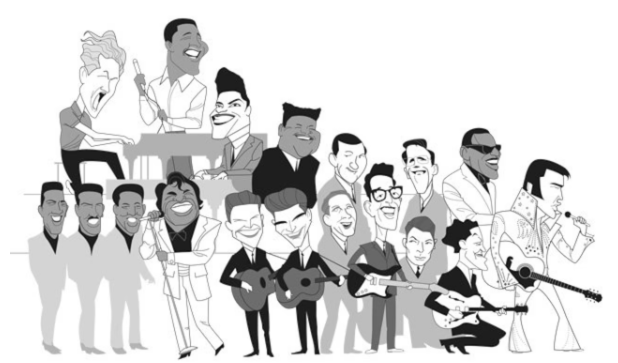

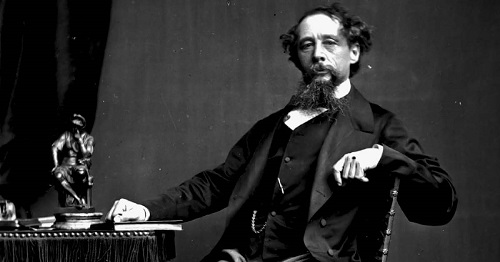
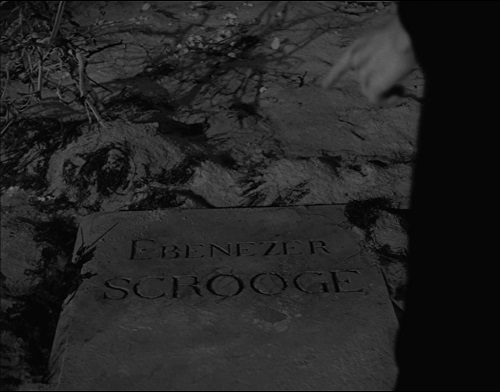
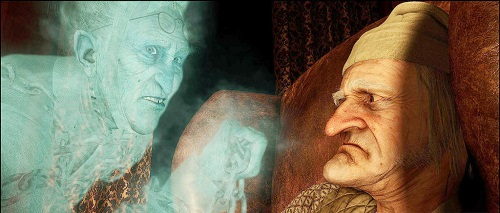
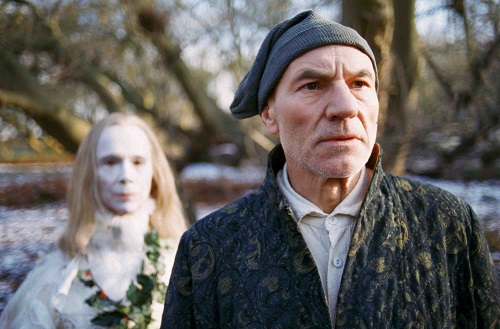
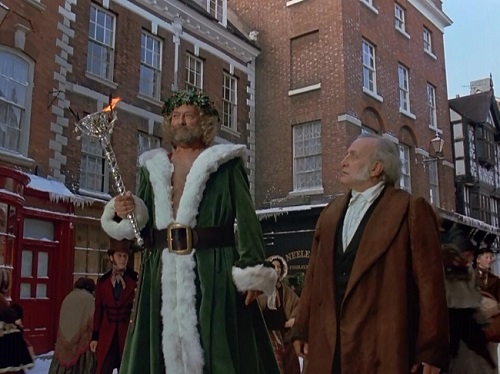
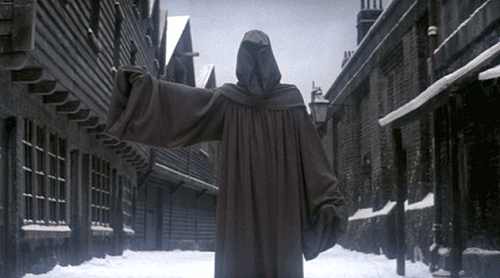
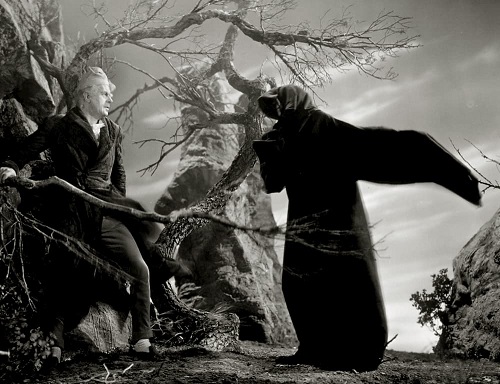
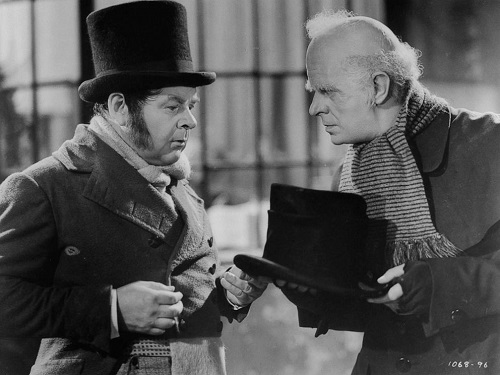
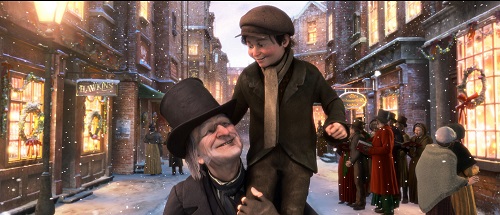

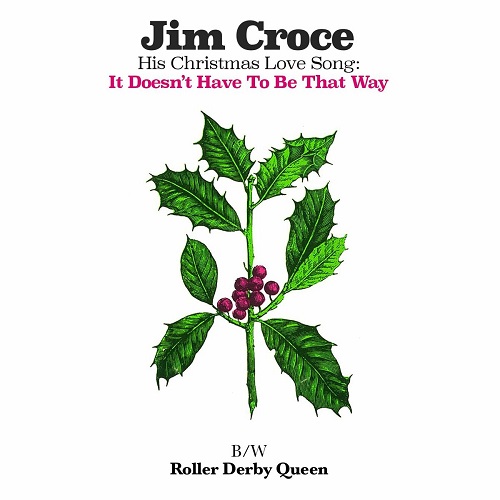
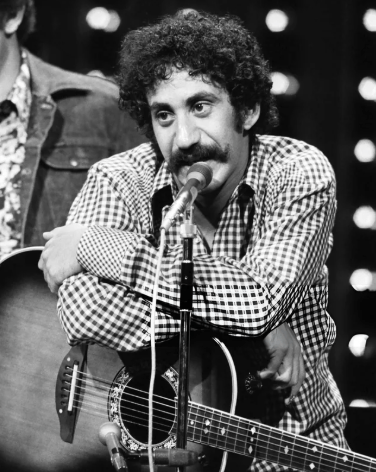
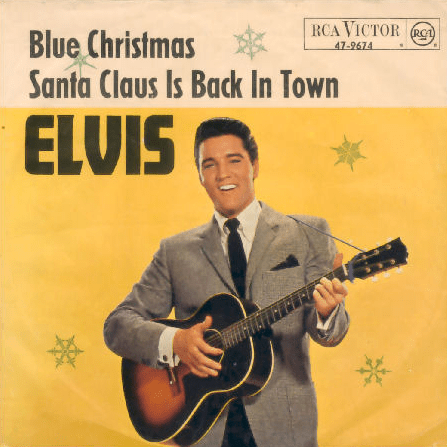
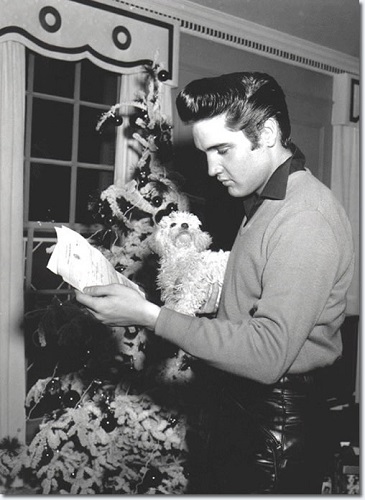

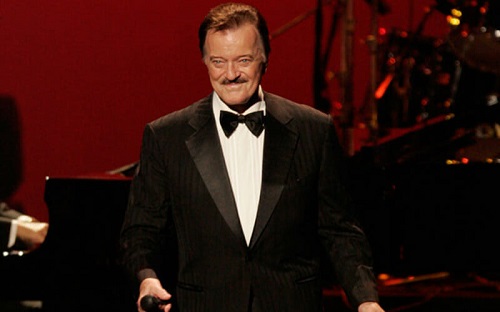

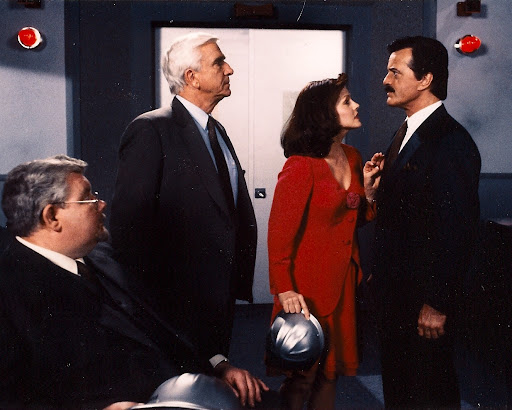

 Various Ramblings of a Nostalgic Italian