The Music of My Life – 1973

Welcome back to The Music of My Life, where I feature ten songs from each year of my life.  In most cases, the ten songs I choose will be ones I like personally (unless I explain otherwise). The songs will be selected from Billboard’s Year-end Hot 100 Chart, Acclaimed Music, and will all be released in the featured year.  I turned three in 1973, so let’s see what music had some influence on me ….

In January of 1973, The Four Tops released their second song on the ABC label.  They had left Motown the year before and this song became their biggest post-Motown hit.  Ain’t No Woman (Like The One I’ve Got) was originally recorded by Hamilton, Joe Frank, and Reynolds in 1972. It’s hard for me to hear anyone else but Levi Stubbs on the vocal.  It reached #4 on the Billboard Hot 100.

Ain’t No Woman (Like The One I’ve Got)

In March of 1973, Elvis released one of my favorite live cuts – Steamroller Blues.  I did a piece on the song for Tune Tuesday a few months back.  You can read that here:

https://nostalgicitalian.com/2024/03/12/tune-tuesday-steamroller/

Elvis added the song to his concert set list and this recording was from his Aloha From Hawaii show. It reached #17 on the charts.

Steamroller Blues

In April of 1973, Gerry Rafferty and Joe Egan’s song about a music industry party was released by their band The Stealer’s Wheel. “Well, I don’t know why I came here tonight” is the opening line of Stuck in the Middle and it makes you want to hear the rest of the story. 

It was a top ten hit for the group, reaching #6 on the charts.  The band was surprised at the success of the song, especially since Gerry’s vocal was meant to sound like a funny Bob Dylan. Many people thought it actually was Bob Dylan singing!

Stuck in the Middle

Also released in April of 1973, the last Top 40 hit for a singing barber.  This song actually seems out of place on my list, but I have a reason it’s here.

Don McLean wrote And I Love You So for his debut album in 1970.  It was the B-side of his single Castles in the Air. Crooner Perry Como used it as the title song for his 1973 album. It would peak at #29 on the charts.

I include it here because when my old morning show partner and I would go out and sing karaoke, he used to sing this one.  I had never heard it before then and I loved the lyrics and melody.

And I Love You So

Another great opening line for a song was from Paul Simon.  “When I think back on all the crap I learned in high school….” Kodachrome was released in May of 1973.  The song was originally written as “Going Home,” but he didn’t think it worked.  Kodachrome sounded similar and he went with that.

It has been said that the song is a sort of admiration for all the things that brighten the world.  After his lamenting about high school,  his world becomes alive with memories.

Kodachrome

Also released in May of 1973, a song that is based on real events and has one of the greatest opening riffs of all time. Smoke on the Water is the story of how Deep Purple was getting to record in a mobile studio they rented from the Rolling Stones.  The night before they were set to record, someone fired a flare gun during Frank Zappa’s song King Kong and set the casino venue on fire that destroyed it.  Deep Purple watched the fire from their hotel room and the smoke from the fire across the water led to the song’s title.

The opening riff which was written by guitarist Richie Blackmore, was inspired by “an interpretation of inversion” of Beethoven’s Fifth Symphony.  That intro remains something I love hearing, especially in headphones.  The guitar riff by itself, then the hi-hat cymbal, snare drum kicks, bass guitar and finally the vocal.  SO cool.

Smoke on the Water

The next song has an interesting story. It has it’s origins in a song that I almost picked for my list. From Songfacts.com: In February 1973, Stevenson released the song “Shambala” which was written by the composer Daniel Moore. Two weeks later, Three Dog Night released their version of the song, which became the much bigger hit, charting at US #3 while Stevenson’s version stalled at #66. Stevenson and Moore then got together and re-wrote “Shambala” as “My Maria,” changing the lyrics so the song became an ode to a beautiful woman. The ploy worked, and Stevenson had by far his biggest hit. (It went to #9 on the Billboard Hot 100.)

Brooks and Dunn enjoyed a number one country song with their cover of the song in 1996.

My Maria

Another song that was inspired by real events was from Jim Croce. In 1970, Jim Croce wrote Time in a Bottle the night that he found out his wife, Ingrid, was pregnant. Songfacts.com says: The couple had been married for five years, and Ingrid found out she was pregnant when she went to a fertility specialist. She recalls a mix of terror and delight in Jim’s reaction when she told him the news. The child was a boy named Adrian, who grew up to become the singer-songwriter A.J. Croce.

The song was released in November of 1973, and it hit #1 in America 14 weeks after Croce was killed in a plane crash in September.

For the record, I have never been to a whorehouse. The next song is a classic rock standard about the aforementioned establishment. The boys of ZZ Top based La Grange on John Lee Hooker’s Boogie Chillin’, and there is even a vocal tribute to Hooker as Billy Gibbons sings “Ho Ho Ho Ho!”

Again from Songfacts.com: The place in this song is the subject of the 1982 movie The Best Little Whorehouse In Texas, starring Dolly Parton and Burt Reynolds, which was adapted from a 1978 Broadway play. In a 1985 interview with Spin magazine, ZZ Top bass player Dusty Hill explained: “Did you ever see the movie, The Best Little Whorehouse in Texas? That’s what it’s about. I went there when I was 13. A lot of boys in Texas, when it’s time to be a guy, went there and had it done. Fathers took their sons there.

La Grange

We wrap 1973 with another great classic rock song. “I was cutting a rug down at a place called the Jug with a girl named Linda Lou…” the story begins and right from the get go trouble is brewing!  Lynyrd Skynyrd released Gimme Three Steps in November of 1973.

From Songfacts.com: This song is based on a true story. As Skynyrd guitarist Gary Rossington tells it, lead singer Ronnie Van Zant, who was about 18 at the time, used a fake ID to get in a bar while his younger bandmates Rossington and Allen Collins waited for him in a truck. Van Zant danced with a girl named Linda, whose boyfriend, who was not too happy about it, came up to Ronnie and reached for something in his boot. Figuring he was going for a gun, Van Zant told him: “If you’re going to shoot me it’s going to be in the ass or the elbows… just gimme a few steps and I’ll be gone.” He ran to the truck, and he, Rossington, and Collins wrote this song that night.

This was one of the few songs Skynyrd released as a single. It was their first major-label release, and it didn’t chart, which simply amazes me. It is a song that has truly become a party classic. I think I got more requests for this one than Sweet Home Alabama at weddings. Maybe it wasn’t a hit, but I have certainly heard this a lot throughout my life, and I always sing along!

Gimme Three Steps

That wraps up 1973 for me. Did you have any favorites from that year? Next week, we move on to 1974. See you there!

The Music of My Life – 1972

Welcome back to The Music of My Life, where I feature ten songs from each year of my life.  In most cases, the ten songs I choose will be ones I like personally (unless I explain otherwise). The songs will be selected from Billboard’s Year-end Hot 100 Chart, Acclaimed Music, and will all be released in the featured year.   I turned two in 1972, so what songs were influencing my tiny ears? Let’s find out.

By March of 1972, Badfinger was enjoying the success of their fourth album, Straight Up. Baby Blue was their last top 20 single. It reached number 14 on the charts. Todd Rundgren produced the song. Younger folks remember this song from the 2013 series finale of Breaking Bad.

Baby Blue

In April of 1972, the Hollies had a hit that was a film noir story set to music. Long Cool Woman in a Black Dress features an FBI agent, a bar filled with criminals and a 5’9″ beauty. Songfacts.com says: This tale of a government agent and a femme fatale contains one of the classic indecipherable lyrics in rock history. The part after “she was a long cool woman in a black dress” is “just a 5′ 9″ beautiful tall.”

The song should have been a number one, but Alone Again Naturally by Gilbert O’Sullivan prevented it from grabbing the top spot.

Long Cool Woman in a Black Dress

One of the biggest films of the year was The Godfather. The Love Theme from The Godfather is instantly recognizable. The music was composed by Nino Rota and most folks are familiar with the instrumental version. A lyricist named Larry Kusik actually wrote words to the song and it was recorded by Andy Williams under the title Speak Softly Love.

While it only reached number 34 on the charts, personally, I found the arrangement of this simply beautiful. Andy’s vocal is great, but give it a listen and just focus on the instrumentation of the orchestra.

Speak Softly Love

Three days after my second birthday, The Looking Glass released Brandy (You’re a Fine Girl). The story of the barmaid who serves the many sailors was from the band’s debut album and the song went to number one. The song was so popular that the US Social Security Administration saw a large increase in baby girls with that name in 1973.

This was not typical of the band’s sound, which caused a problem at concerts. While audiences expected pop songs like this one, the Looking Glass played rock, which left the crowds disappointed. The band broke up less than two years later.

Brandy (You’re a Fine Girl)

Also in May of 1972, the world was introduced to a little band known as The Eagles. The story behind their debut single Take it Easy is a great one. Here is the short version from Songfacts.com:

Jackson Browne started writing “Take It Easy” for his first album, but he didn’t know how to finish it. At the time, he was living in an apartment in the Echo Park section of Los Angeles, and his upstairs neighbor was Glenn Frey, who needed songs for his new band – the Eagles.

Frey heard Browne working on the song (he says that he learned a lot about songwriting by listening to his downstairs neighbor work), and told Jackson he thought it was great. Browne said he was having trouble completing the track, and played what he had of it. When he got to the second verse, Frey came up with a key lyric: “It’s a girl, my lord, in a flatbed Ford, slowing down to take a look at me.”

Browne turned the song over to Frey, who finished writing it and recorded it with the Eagles, who used it as the first song on their first album, and also their first single. Frey says Browne did most of the work on the song and was very generous in sharing the writing credit. He described the unfinished version of the song as a “package without the ribbon.”

Take It Easy

1972 introduced us to another new artist – Jim Croce. “You Don’t Mess Around With Jim” was his first single. After several years struggling for success and battling music industry politics, the song got the promotion it deserved when a rep at ABC/Dunhill named Matty Singer visited radio stations in the Philadelphia area to promote the song. It got solid airplay and national attention, which was followed by lots of positive press for the album. You Don’t Mess Around With Jim wasn’t released until nine months after it had been recorded, so Croce and his musical partner Maury Muehleisen had perfected the songs in performance, earning rave reviews.

You Don’t Mess Around With Jim

Here’s a story for you – The King of Rock and Roll was actually prevented from hitting the number one spot in 1972 by the Granddaddy of Rock and Roll. Yep, Burning Love reached number two on the charts while Chuck Berry held the number one spot with “My Ding-A-Ling!” Urgh!

Burning Love was the final Top 10 hit in the American Hot 100 or pop charts for Elvis. The electric guitar opening and riffs were overdubbed and played by Dennis Linde, the writer of the song. He performed the song in the concert movie Elvis on Tour, and because the song was still new to him, you can see him holding a sheet of paper with the lyrics on it.

Burning Love

In October of 1972, Motown’s of Stevie Wonder released on of my all time favorite songs. When some music bloggers were doing a “Song Draft” I actually picked Superstition as one of my songs. You can read that blog here:

Superstition

In September of 1972, Johnny Rivers released a cover of Huey “Piano” Smith’s 1957 song, Rockin’ Pneumonia and the Boogie Woogie Flu. In the late 50’s the country was hit with the Asian Flu, also called the “walking pneumonia.” The title of the song is a play on this. Johnny’s version did much better than Huey’s version. Huey didn’t even get into the top 40 (it peaked at 52), while Johnny had a top ten (peaking at 6). Playing piano on Johnny’s version was none other than the Wrecking Crew’s Larry Knechtel.

Rockin’ Pneumonia and the Boogie Woogie Flu

My final song from 1972 is a funky jam. There is so much that I love about Use Me by Bill Withers. The song was released on his Still Bill album. It has such a neat syncopated percussion line that interplays with the rest of the instruments and Bill’s vocal. Again, there is a great story about the writing of the song. It seems a lot of women were telling him he was just “too nice” and he wanted to change that. Bill said in an interview:

That’s fun stuff. That’s just talkin’ trash. That’s just a song about being a little playful, a little arrogant and a little cool. Unless you were one of those people that were born popular, I was a chronic stutterer until I was twenty-eight. I avoided the phone. So I wasn’t this popular guy. I remember being young and I would have girls tell me, “You’re too nice.” I didn’t understand that.

What kind of twisted world are we in? Women like bad boys, I guess. There is no more confusing form of rejection than for somebody to tell you that you’re not interesting to them because you’re too nice.

So over the course of time, you say okay, you wanna play, okay, let’s play? Use Me taps into that. I tried to be nice, now let’s get nasty. That song came quick. I was working in McDonnell Douglas out in Long Beach and the noise of the factory, they had some women working there. I crossed that line there thinking, “You all want a nasty boy? Well here I come.” [laughs]

Use Me

I hope you enjoyed my picks. What 1972 tunes were your favorites?

Next week – 1973! See you then

Movie Music Monday – Viva Las Vegas

Today we go back to 1964 for what many consider to be one of Elvis Presley’s best films – Viva Las Vegas. Why? Because his co-star in the movie, the beautiful Ann Margaret celebrated her 83rd birthday yesterday.

The chemistry between Elvis and Ann Margaret that you see on screen is real. They began an affair that got a lot of press by gossip columnists and the movie industry. This led to a showdown between Ann and Pricilla Beaulieu, Elvis’ girlfriend. Years later, in her autobiography, Ann called Elvis her “soulmate.”

15 songs were recorded for the soundtrack of the film, but only 11 were used. A full LP soundtrack was never released. Instead, to coincide with the film’s release, RCA chose four songs for a Viva Las Vegas EP.

The song Viva Las Vegas was released as a single in 1964 with What’d I Say as the B-side. This actually hurt the record’s chart performance. The title song was written by Doc Primus and Mort Shuman. The song went to #29 on the Billboard Hot 100 pop singles chart (What’d I Say did slightly better by going to #21). It has been covered by a few different artists (I love the ZZ Top version), but Elvis’ version remains my favorite.

Dim the lights and cue the theme song ….

Tune Tuesday – You’re Not Alone Anymore

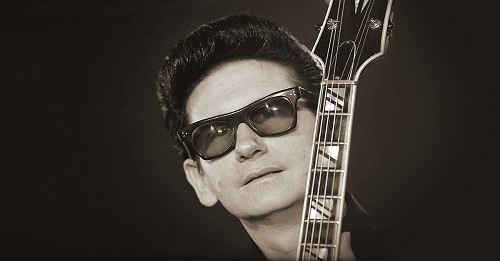
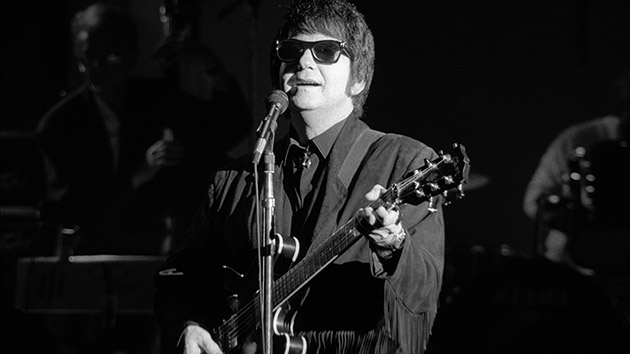
For Tune Tuesday today, we celebrate the birthday of one of the greatest singers of all time. Roy Orbison was born on this day in 1936. A few years ago, I wrote a blog about him and this may or may not be a bit of a rehashing of that.

Roy Orbison is a rock and roll legend.  I refuse to debate this.  It is a fact.  The Beatles and Elvis Presley (both legends in their own right) have stated on record that Roy was a major influence on their music.  Roy’s music was different – it had it’s own style and a certain darkness to it.  My first exposure to Roy Orbison was when I was about 4 or 5 years old.

I remember my dad had an album of Roy’s Greatest Hits.  My favorite song as a kid was Dream Baby.  I didn’t know that was the name of it.  I know this because when I asked him to play it, I would ask for it by singing the opening bass line: “Daddy, play ‘boom boom boom, bum bum boom.’”  I remember the first song on the album was Candy Man, which started with a harmonica.  That is the instrument Roy asked for as a kid.

When asked hey wanted for his sixth birthday, Roy told his parents he wanted a harmonica.  Luckily for the music industry, his father bought him a guitar instead.  While some stories differ, most biographies claim that Roy learned how to play from his father Orbie Lee Orbison.  Some sources say that he learned from his Uncle Charlie, Orbie’s brother.

He formed a band while in Wink, Texas called the Wink Westerners and that band played some high school dances.  While in college, two friends of his had written a song called “Ooby Dooby.” They began playing that in their shows and because of their success, they got their own radio show on station KMID. In 1955, the band got their own TV show and artists came to play and sing on it.  Among them, Elvis Presley and Johnny Cash.

Roy pulled Johnny aside and asked for advice.  He wanted to know how to get a record released on the radio.  Johnny suggested that he call Sam Phillips over at Sun Records in Memphis.  Johnny gave Roy the number and sure enough Roy called.  I am sure he was not expecting what happened.  Sam Phillips answered the phone and after a brief conversation, Sam hung up on him, but not before telling Roy, “Johnny Cash doesn’t run my record company!”

Roy eventually found a place to record and recorded “Ooby Dooby” with his band, now called the Teen Kings.  The song was released in 1956 and Roy took it to a well known record dealer named Cecil “Poppa” Hollifield. He heard the song and immediately called a “connection” he had in Memphis and played him the record over the phone.  His connection asked for a copy of the record, and three days later he called Poppa up to tell him he wanted the Teen Kings in Memphis in three days to record in his studio.  That connection was none other than Sam Phillips of Sun Records!

That deal got him out on tour with Johnny Cash, Faron Young, Carl Perkins, and Johnny Horton among others.  In 1958, Roy was asked to tour with the Everly Brothers.  During the tour, the Everly Brothers told Roy they needed a new single and asked if he had any songs.  He picked up his guitar and sang the song Claudette.  They liked it, and asked him to write down the words and chords.  The song was the B-side of All I Have To Do Is Dream.  Roy had some of his other songs recorded by artists like Jerry Lee Lewis, Buddy Holly, and even Ricky Nelson.

roy-orbison--essential--2up-bw-660abd1c38f8000b8e00e53a02b4a27190fb3287-s300-c85

In 1959, Roy was signed to an independent label called Monument.  It was at this label that so many of Roy’s big hits came, starting with Uptown.  That was followed by Only The Lonely (which reached #2), Blue Angel, and I’m Hurtin’. What followed was Roy’s first #1 song, Running Scared.

Roy had hoped to change up the “pop” sound and try something different.  They recorded the song twice and he was disappointed with the two takes, so they cut it again.  Instead of using a falsetto voice, Roy sang the high natural A and nailed it.  The accompanying musicians were awestruck and had never heard anything like it.  Producer Fred Foster said “Nobody had ever hear anything like it before!”

What followed was four solid years of top 40 hits.  Those hits included Crying, Candy Man, Dream Baby, Working for the Man, In Dreams, Pretty Paper, Leah, Blue Bayou, Mean Woman Blues, and Its Over. His success got him a spot opening up for some concerts in England. He was the opening act for a few guys who were known as The Beatles (they had yet to become a big thing in the US).  The tour sold out in minutes, and on the first night of the show, they say that Roy played 14 encores before the Beatles ever got on stage!

In 1964, Roy recorded what is probably his biggest hit, Oh Pretty Woman.  It would be his last big hit while at Monument records.  Touring hurt his personal life, and his wife Claudette began having an affair.  One day while writing with songwriter Bill Dees, Claudette entered the room and said that she was going to Nashville.  Roy asked her if she had any money, and Dee’s replied, “A pretty woman never needs any money.” With that phrase, and about 40 minutes, they wrote Oh, Pretty Woman, which went to number 1 in almost every country in the world.

In 1966, Claudette was killed when a pickup truck pulled out in front of her and she hit the door.  She died instantly.  Two years later, Roy was on a tour in England and he received a call that his home had burned down.  As if that wasn’t enough bad news, he was also told that his two oldest sons were killed in the fire.  He tried to cope by keeping himself busy with work.  He starred in the film The Fastest Guitar Alive, which ended up being his only lead role.

Roy changed labels a few times after this and eventually re-signed with Monument.  In 1987, Roy Orbison was inducted into the Rock and Roll Hall of Fame.  Bruce Springsteen was there to do the honors.  A TV special followed.  Roy had always wanted to do one and this special included some powerful special guests:  Elvis Costello, k.d.Lang, Tom Waits, Bonny Raitt, Jennifer Warrens, Jackson Brown, and Bruce Springsteen.  The special was called Roy Orbison and Friends – A Black and White Night Live. It was aired on cable and released on video and became one of Roy’s great concerts.

Roy-Orbison-2

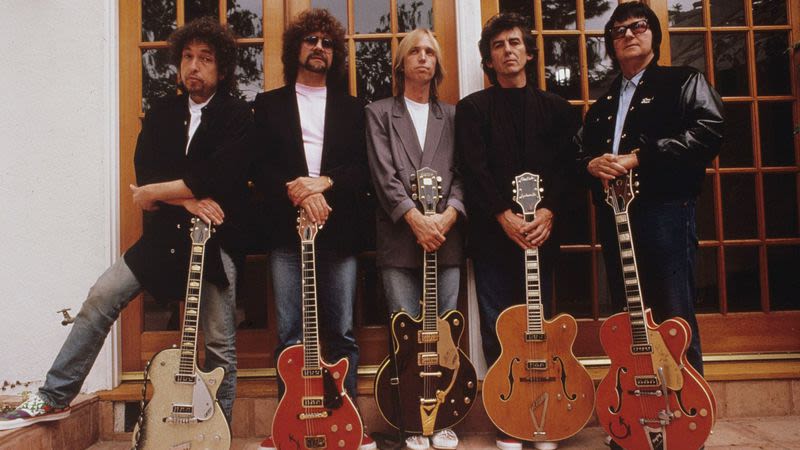
Jeff Lynne of ELO was busy producing George Harrison’s Cloud Nine album, and was working on Tom Petty’s and Roy’s albums at the same time.  This led to them all getting together with Bob Dylan for the Traveling Wilburys project which was a huge success! Handle With Care was a big hit from the album. 

ije87ee9xmempwxiaynh

In late 1988, Roy put the finishing touches on the Mystery Girl album.  It was set for release in 1989.  There would be a world tour to support the project.  The album would include the smash hit “You Got It”.  On December 6, 1988, Roy was complaining of chest pains.  Just before midnight, he had a heart attack and collapsed at his mother’s home.  Roy Orbison died at the young age of 52.

I was still a senior in high school and I was going to WKSG to rip news and type up stories for the news director.  I would stay till 6am and then head to school.  I remember going to the AP wire and seeing the “URGENT” breaking news that Roy had died.  We were an oldies station and this was big news.  I remember when we broke the news.  It is one of those moments I will never forget.

You Got It was released after Roy’s death and reached the top 10.  One of the coolest tributes to Roy was when the Traveling Wilburys released the song End of the Line.  In the video, the group is on a train singing.  When Roy’s vocal comes on, the camera is on a rocking chair in which Roy’s guitar is sitting.  Next to it, is a framed photo of Roy.  Powerful!

Back to the Wilburys for my song choice for this blog. A song that was supposed to be a group song on the album was You’re Not Alone Anymore.  After rehearsing it a bit and trying a few things, it was decided that there was really only one voice that could do the song justice, and that was Roy.  It is an amazing vocal and an amazing song!

Roy Orbison is a legend.  His music was like no one else.  His style was like no one else.  His vocals were indescribably beautiful, haunting, and amazing.  Heaven’s choir is blessed to have him in their baritone section.  Happy Birthday, Roy!

Tune Tuesday – You Can Have Her

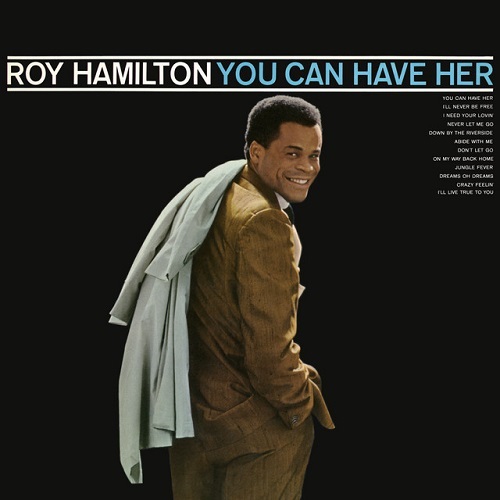
Today’s Tune Tuesday song is by a guy who should have been bigger than he was – Roy Hamilton.

Roy was born in Georgia on this day in 1929. He found success in 1953 with the song You’ll Never Walk Alone from the movie Carousel. It went to number 1 on the R&B chart and stayed there for 8 weeks. When he performed the song on the Ed Sullivan show, it got him more attention. His record label rushed him in to record other songs including Unchained Melody (which was a hit for Al Hibbler). In 1955, his version held the top spot on the R&B chart while, on the pop chart, it had reached the number six spot. It was the second number-one R&B hit of his career as well as the first, and only, top-ten US pop hit of his career.

In 1956, Roy developed a lung condition that was compared to tuberculosis and announced an indefinite retirement from show business. A year later, when he was in better health, he resumed his career, but pop standards weren’t so hot anymore. By this time, Rock and Roll had made the scene. So, in late 1957, Epic coaxed Hamilton into recording “Don’t Let Go”, an R&B rocker produced by Otis Blackwell (who wrote Don’t Be Cruel and All Shook Up for Elvis). By early 1958, “Don’t Let Go” had become the second US top-15 pop hit of Hamilton’s career and the first top-40 hit ever recorded in stereo.

By the mid 1960’s, sadly, Roy’s career was on the down side. In 1969, he made his last recordings at the same studio where Elvis was recording. About 6 months later, he suffered a cerebral hemorrhage while at home and was in a coma for a week before he was taken off life support. Roy was 40 years old when he died.

In a 2017 documentary for the BBC, Hamilton’s son Roy Hamilton Jr. revealed that Elvis sent Roy’s wife, Myrna, a rose every day Hamilton was in the hospital. When Roy passed away from complications of his stroke, Presley sent Myrna flowers for the following six months.

Today, I wanted to share his last hit record – You Can Have Her. In 1961, the song spent 10 weeks on the Billboard Hot 100, reaching No. 12, while reaching No. 6 on Billboard’s Hot R&B Sides chart. The lyrics tell the story of a man who’s love has left him for someone else. It is a song that at one time hit home for me and led to a moment I still am not very proud of.

I once had to DJ a wedding for the sister of my ex-girlfriend. It was an incredibly awkward time for me. By the time of this wedding, my ex had remarried and had a child. Throughout that evening, I avoided looking at her as much as I could. I remember all of the emotions and they got the best of me. During a set of uptempo oldies, I snuck You Can Have Her into the mix. This would certainly be a song that no one at this party would know. Oh sure, they danced to it, but it was literally played for … my own satisfaction. Not one of my best moments.

Anyway, I digress. Roy Hamilton had SO many great songs that have long been forgotten. If you get the chance to listen to more of his stuff, I encourage it. Here is You Can Have Her:

You Can Have Her

Well, you can have her, I don’t want her,
She didn’t love me anyway.
She only wanted someone to play with
But all I wanted was love to stay.

Well, you get stuck with the wrong woman
There’s only one thing that you can do:
Just dig a hole and jump right in it,
And pull the ground right over you.

[Chorus:]
Well, you can have her (you can have her)
I don’t want her ( I don’t want her),
She didn’t love me (didn’t love me ) anyway (anyway).
She only wanted (only wanted) someone to play with (one to lay with)
But all I wanted (all I wanted) was love to stay (was love to stay).

The girl I love, she, up and left me,
She ran away with my best friend.
Comes home at night just for an hour
When day light comes she’s gone again.

[Chorus]

Life without love is mighty empty,
But confession’s good for the soul.
I’d rather have love that I can cling to
Than have the world and all of it’s gold.

(You can have her) you can have her,
(I don’t want her) I don’t want her,
(She didn’t love you) She didn’t love me, (anyway) anyway.
(She only wanted) she only wanted (someone to play with) someone to play with
(But all I wanted) Ohh! (Was love to stay) Ohh!

You can have her (you can have her)
I don’t want her (I don’t want her)
She didn’t love me (didn’t love me) anyway (anyway)
She only wanted (only wanted) someone to play with (someone to play with)
But all I want (all I want)
All I want (all I want)
All I want (all I want)…

Tune Tuesday – Steamroller

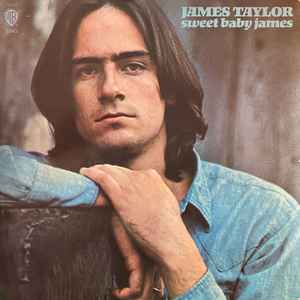
Sweet Baby James Taylor celebrates his sweet 76th birthday today. The man is a legend. The singer-songwriter has won 6 Grammy Awards, has written countless hits, and is one of the most loved singers in America.

Songs like Fire and Rain, Handy Man, You’ve Got a Friend, and How Sweet It Is To Be Loved By You made him a household name and a radio favorite. I want to dig into his Sweet Baby James album for a song that he never released – Steamroller.

According to SongFacts.com :

James Taylor wrote this song when he was in a band called The Flying Machine, which issued one single in 1966 before disbanding. He came up with the song after seeing lots of white college kids playing blues songs by the likes of Muddy Waters and Howlin’ Wolf – he noticed a disconnect there. This song is a parody of sorts, taking aim at overtly sexual blues metaphors. Taylor has “the steamroller blues” and compares his love machine to a cement mixer, a demolition derby, and even a napalm bomb.

“Steamroller” was never released as a single, but is one of Taylor’s most popular live songs, making its way into most of his setlists. He has done different versions over the years, often having some fun with the last verse. The song was loved by not just fans, but by Rock and Roll Royalty:

Elvis Presley added this song to his live set, and performed it on his 1973 Aloha from Hawaii special. This live version was released as a single (as “Steamroller Blues”) and made #17 US.

Happy Birthday to James Taylor!

I gotta include Elvis here:

Just because – one of my favorite covers – country singer Billy Dean, who keeps his version very close to James’ version.

Turntable Talk #23 – The Soundtrack of Our Lives

Once again, Dave Ruch from A Sound Day has offered up a gem of a topic for his monthly Turntable Talk feature! This month it is a topic that I have been hoping he’d get around to. Per his instructions:

This time around, let’s look for THE SOUNDTRACK OF OUR LIVES !  Pick a great movie soundtrack and talk a bit about it. It can be from a great movie or a dog of one (or anything in between), one made specifically for the film or one assembled from existing tunes as long as it’s one that works for you!

There are certainly many fantastic soundtracks to choose from. Movies that are known for being a great film and also their great soundtracks include American Graffiti, Smokey and the Bandit, The Wedding Singer, The Sting, and Forrest Gump. Those aren’t even considered “musicals!” When I think about musicals, wow, that list is a long one. 

Plenty of movie (and TV) soundtracks can be found in my collection. When I worked in radio, I would often buy soundtracks so I could uses some instrumental tracks as voiceover beds (music that plays underneath your voice as you are doing a bit or talking to a listener). I used a variety of cuts from Napoleon Dynamite, Stripes, The Three Amigos, Dragnet, and movies that were box office bombs! My pick comes from a movie that was far from a bomb. It was one of the biggest films of the 1980’s.

The one soundtrack that has always been a favorite for me (and it doesn’t even contain all the songs featured in the film) is The Blues Brothers. It has some fantastic cuts from Belushi and Aykroyd as well as musical legends like Ray Charles, Aretha Franklin, and Cab Calloway.

I had this soundtrack on vinyl and I played the heck out of it. Many of the songs were featured on my “driving mix tapes” when I had my first car! While the album contains 11 great tracks, the film included many other classics that I wound up searching for to add to my collection. The music doesn’t follow their chronological appearance in the film for some reason.

She Caught the Katy

The album opens with this Taj Mahal song. The Blues Brothers version has a lot more sound to it. It is so much fuller with the horns and guitars of the band. It is the song that the starring credits roll under. The opening guitar lick leads to the first big horn stab (and we see Belushi) then you have another horn stab (and we see Aykroyd) and the third big horn stab hits as we see the movie’s title card.

Belushi’s vocal on this is perfect. I like his vocal on this cut more than any other song on the album.

Peter Gunn Theme

This is the first of two TV themes on the album. This instrumental plays as the Blues Brothers are driving back to Elwood’s place. There are some really great shots of the city of Chicago in this scene. As you listen to this one, you can hear the talents of Tom “Bones” Malone, “Blue” Lou Marini, and “Mr. Fabulous” Alan Rubin. If I had a dollar for every time I used this as background music to introduce a wedding party I could fly to Italy! 

Gimme Some Lovin’

Best known for being a hit for the Spencer Davis Group (and a young Steve Winwood), the soundtrack features the full song. In the film, the band begins to play this song at Bob’s Country Bunker (a country bar) and the owner shuts the lights off on them. If I had to choose between the two, I’d pick the Spencer Davis version over this one, but it is still a great jam.

Shake a Tail Feather

Originally done by the Five Du-Tones of Chicago in 1963, James and Bobby Purify had a bigger hit with it in 1967. This version tops them because of one man – the great Ray Charles. In the film, he owns a music shop and the band is buying new instruments. Ray is asked about a keyboard and Murphy Dunn tells him that the “action” of the keys is not that great. Ray sits down and says, “I don’t see anything wrong with the action on this piano” and launches into this song.

As Ray plays, a crowd gathers outside the store and dances along with the song doing all the dances mentioned in it (the monkey, the jerk, the boogaloo, etc…). This song is fantastic. 

Everybody Needs Somebody To Love

The song was written by Solomon Burke and recorded by him in 1964. Wilson Pickett’s 1966 cover is probably the best known version. This song is featured at the Blues Brothers’ big concert toward the end of the film. Over the intro, Elwood (Aykroyd) speaks to the audience and thanks “the members of Illinois law enforcement” who are present and waiting to arrest them. We get to hear a big more of Aykroyd on this track.

The Old Landmark

When you mention the Blues Brothers to someone, they will often quote “We’re on a mission from God.” This song is performed by the Godfather of Soul, James Brown who plays a preacher. Jake and Elwood are attending this church service and it is a pivotal moment in the film (and what sets them off on their “mission from God.” 

The Old Landmark is a gospel song written by Dr. William Herbert Brewster Sr. back in 1949. It has been recorded by the Staple Singers, Aretha Franklin, Dionne Warwick and many others. James Brown takes this to a whole new level. It’s hard to imagine anyone performing this. He performed/recorded this one live on set.

Think

The Queen of Soul, Aretha Franklin, performs this one as she is telling off her husband Matt “Guitar” Murphy. The song was a hit for Aretha in 1968. For the film, they bump up the tempo and add some dancers. This track is SO good! ”Blue” Lou Marini grabs his sax midway through the number and really jams through the end.

This was one of the harder songs to do in the film. Aretha had recorded the song and found it difficult to lip synch to her vocals as they filmed. It was a scene that needed many takes to do. This version is far superior to her original version.

Theme From Rawhide

The second TV theme on the album takes place in that country bar. After the lights go out they band has to figure out something that the audience will like. They wind up performing this one. Aykroyd’s vocal is just awesome here not to mention the “call and answer” between him and Belushi. Add in a whip and you have a real country hit on your hands!

This scene always makes me laugh because they perform on a stage surrounded by chicken wire. Why? Because the crowd gets so excited they throw beer bottles at them!

Minnie The Moocher

This was a song that Cab Calloway had been singing for decades! He was the “Hi-De-Ho Man.” I just love this version of the song. The rumor is that Cab wanted to do the disco version of the song that he had recorded in the past. They insisted that it needed to be the jazz/big band sound. 

The song itself send you right back to the 1940’s. The full sound of the band, the horn section, and the amazing trumpet solos by Alan Rubin. Without a visual, it is still fantastic. Watching it in the film only enhances the experience. 

They band is on stage waiting for Jake and Elwood to arrive. The crowd is getting antsy. The band is dressed in street clothes and look sort of shabby. Cab asks if they know the song and the band says they do. He yells, “Hit it!” and the curtain opens. Out struts Cab in a white tuxedo backed by the band, wearing black tuxes and looking sharp. The stage now has an backdrop of famous 40’s places with neon signs and a sweet looking band stand.

As a trumpet player, I can’t NOT mention the spectacular trumpet playing of Alan Rubin on this one!

Cab was a scat singer and his call and answer with the audience is just priceless. I’m not sure how old he was here, but his vocals are right on! He was a legend!

Sweet Home Chicago

This is the longest track on the soundtrack. The original version was done by Robert Johnson in 1936. This is the second song the band plays at their big concert (and the one where they make their escape, hence the long instrumental ending). As they intro it, they dedicate it to the late, great Magic Sam (who was from Chicago) who recorded it in 1967.

This is such a fun song to listen to and to watch in the film. The looks that they give John Candy’s character and the other folks who have been chasing them always make me smile. The song serves as the background music as we transition from night to day and the ultimate finale of the movie.

Jailhouse Rock

Movie Spoiler: The entire Blues Brothers Band gets arrested at the end of the movie. Naturally, the final song of the movie is Jailhouse Rock, originally done by Elvis Presley. Trivia: In the film, the first “prisoner” to jump up on the tables and dance is Joe Walsh!

On the soundtrack, the song is a bit different than in the film. You have a complete cut on the album, while in the movie each band member has a little solo as their name appears in the credits. In the film version you also get a line or two sung by James Brown, Cab Calloway, Aretha Franklin, Ray Charles and more. It’s a perfect capstone to wrap the soundtrack.

I have played the songs on this album over and over again on vinyl, cassette, on my iPod, and YouTube. It remains one of my favorite soundtracks of all time! What disappoints me is the many songs that were featured in the film that didn’t make the soundtrack. They are worth finding and checking out!

Of course, I can’t tease those without listing them, so here goes:

  • Somebody Loan Me a Dime – Fenton Robinson (Plays while Jake is escorted from his prison cell)
  • Shake Your Moneymaker – Elmore James (Plays while Jake and Elwood visit with Curtis at the orphanage)
  • Soothe Me/Hold On, I’m Comin’ – Sam and Dave (Plays on the 8 track in the Bluesmobile while Jake and Elwood are driving and get pulled over)
  • I Can’t Turn You Loose – The Blues Brothers – Originally done by Otis Redding (Plays while they drive through the mall and as they take the stage at the Palace Hotel Ballroom concert)
  • Let the Good Times Roll – Louis Jordan (Plays on the record player in Elwood’s place)
  • Anema e core (Until) – Ezio Pinza (The piece is playing the apartment that Tom Malone and Lou Marini used to stay – the “Are you the police?” scene)
  • Quando, Quando, Quando – Murph and the Magictones (Plays in the Holiday Inn scene)
  • Just the Way You Are – Muzak version of the Billy Joel song. (Plays in the Holiday Inn scene)
  • Die Romantiker (The waltz that plays at the Chez Paul restaurant)
  • Boom Boom – John Lee Hooker (Plays as the Blues Brothers are going to meet Matt “Guitar” Murphy)
  • Mama Lawdy/Boogie Chillen – John Lee Hooker (Plays when Jake calls Maury Sline and on the way to Bob’s Country Bunker)
  • Your Cheatin’ Heart – Kitty Wells (Plays as the Blues Brothers enter Bob’s Country Bunker)
  • Stand By Your Man – The Blues Brothers (Plays at Bob’s Country Bunker)
  • I’m Walkin’ – Fat’s Domino (Plays as Jake and Elwood and the orphans promote the concert)
  • Ride of the Valkyries – Richard Wagner (Plays as the Nazis are chasing the Blues Brothers toward the end of the movie)
  • The Girl from Impanema – Muzak version (Plays, naturally, in an elevator as the Blues Brothers go up the 11th floor with the tax money)

The Blues Brothers may or may not have been the first movie of “mine” that I made my wife watch with me. I’m sure that she made me watch one of her tear jerking chick flicks to get back at me afterward. To me, this movie remains a classic. As far as the sequel – not so much. It did have a decent soundtrack, but that is about it.

I have been wanting to write about this album for a long time and am glad that Dave finally gave me a reason to indulge myself with this blog. I am also excited to see what the rest of the bloggers have chosen for their soundtrack. 

I’m already looking forward to next month’s topic! Thanks for reading!

Turntable Talk 21 – Guess Who’s Coming to Dinner

Once again, Dave Ruch from A Sound Day has offered up an interesting topic for this month’s Turntable Talk. I see it as being a way for each of us writers to offer you a bit of ourselves. I mean, any time I write something, it usually has something that gives the reader a glimpse at who I am. In some blogs I read, there are a lot of facts and not much of the author. I’ve come to “know” many of the participants through their past submissions, but this month I feel we’re going to get a bit more personal.

This month, Dave presented us with the following instructions:

It’s almost time for Christmas dinner (even if you aren’t necessarily prone to celebrating Christmas, play along) and there’s one more seat at the table. Because of the magic that is Christmas, you can invite any one musician (or person from the music world) to be your guest. Even if they’ve passed away, they can be at your table for a meal, and a few stories.  So, who would you invite?  And any little musical gift you hope they might possibly come with?

As with past topics, one possibility jumped out immediately. I decided to think a bit more before I made that final decision. Oh! The list of names that I came up with! It was a long one that included Elvis Presley, Mel Torme’, Nat King Cole, Bobby Darin, Roy Orbison, Doc Severinsen, Louis Prima, Frank Sinatra, Paul McCartney, Tony Bennett, Reba McEntire, Michael Buble’, and so many more! In the end, I stuck with the first name that came to mind – Dean Martin.

To this day, Dean remains my favorite singer. His laid back, carefree, and effortless approach is part of the charm that makes him so likable to me. So many of his songs hold special memories for me.

I imagine him showing up dressed to the nines in his staple tuxedo, knowing he is the guest of honor. However, I also picture him as a humble man who gets along with everyone.

Naturally, on Christmas I’d make the dish that was always served by my grandma – Ravioli. I’d be sure to make the homemade sauce for him. I’d always seen pictures of him and John Wayne eating pasta together. I’d love to hear those stories.

I feel like we could easily talk about the similarities between his folks and my grandparents (both from the old country). I know he was a fairly private guy, but I would enjoy hearing his stories about growing up in that Italian family.

The conversation would naturally turn to music. I’d have so many questions for him. The recording process has always fascinated me. On some of the newer releases they’d include some of the in between take studio chatter. Dean always seemed to be joking around and I bet he’d have some great stories about that.

Not to mention all the stars he personally knew and hung out with. I bet he could have wrote a book full of Sinatra stories! If you look back on the guests who were on his TV show, on the TV roasts, or actors who were in movies with him – it is truly an amazing group. How could he just pick one or two stories to tell when he knew so many people!?

I certainly wouldn’t want to pressure him, but I think it would be very cool to be sitting around the table and for him to give us a few measures of a Christmas song. I remember watching how people often just sang with each other back in the day. Would Dean duet with me on Marshmallow World? Who knows?

As someone who really stinks up the golf course, I’d probably bug Dean for a few golf tips. He was SO good at it, I’m sure just one little piece of advice on my grip, my stance or my swing would help me tremendously!

I’m not sure what musical gift I would hope for him to bring, but I would certainly love to get my hands on one of two things. He once had his own brand of golf balls! I’d never use them, of course, but I would love to have a box!

I would also like to have a bottle of his spirits. At one time he had a few types of his own booze!

I don’t really drink, but I think it would be awesome to have these sitting on a bar.

I suppose I’d only have one more request – a photo with him. That may be pushing the limits, so I might just have to have the camera lying around so that someone could snap some candids of the the two of us together.

I’m sure he’d be the one to want to cut the evening short. “Look, pallie, I’d love to stay and answer all your questions, but I have a 7 o’clock tee time in the morning ….” I’d totally be ok with that.

Thanks to Dave for a great topic! I cannot wait to read the guests that our other writers come up with!

How about you? Who would you picki?

Wishing you and yours a VERY Merry Christmas and a blessed 2024!

Royal Rock and Roll Remembrance (and Other Orchestral Music)

August 16

On this day in 1977 – a King died. The King of Rock and Roll.

On this day in 2018 – a Queen died. The Queen of Soul.

Both were musical royalty. Did you know they both have a musical group in common? Both have “recorded” with the world famous Royal Philharmonic Orchestra. Imagine what some of their songs might have sounded like with an orchestral background! Never mind. You don’t have to, because there are albums you can check out.

Here are a couple of my favorites from those albums (with some bonus cuts and artists later on)

Elvis

A Big Hunk o’ Love

Can’t Help Falling in Love

Steamroller Blues

In the Ghetto

Aretha Franklin

Respect

Natural Woman

Think

Until You Come Back To Me

Elvis has two albums with the RPO and a Christmas Album. Aretha has one. But there are other artists whose song’s have been reimagined by the RPO. The first being The Carpenters. Honestly, many of their songs already had some sort of orchestra background, but these new arrangements are neat to hear.

The Carpenters

I Just Fall In Love Again

We’ve Only Just Begun

The oddest pairing in my opinion is the RPO and the Beach Boys. Orchestral Surf??

Wouldn’t It Be Nice

Sloop John B

My favorite cut is this one – Fun, Fun, Fun

My favorite collaboration (besides Elvis) is the RPO and Roy Orbison. Wow! What an album! Simply amazing.

In Dreams

Crying

It’s Over

Only the Lonely

Running Scared

I have always loved Mean Woman Blues by Roy. However, I think the version with the RPO takes the original and beefs it up with some cool horns and makes it even better! My favorite cut!

Mean Woman Blues

So today we salute a King, a Queen, and some artists that would be considered music royalty – with a “royal” musical group that they all have in common. I hope you enjoyed listening. All of the Royal Philharmonic Albums can be heard on YouTube!

Turntable Talk #15 – My Home Town

It is time once again for one of my favorite blog posts – Turntable Talk, hosted by Dave at A Sound Day. If you are unfamiliar with this feature, Dave assigns the participants with a specific musical topic each month. This is the 15th installment. This month the topic is: My Hometown

Dave’s instructions for us this time read: “I’m leaving this one rather open-ended for your interpretation, but  essentially if you’re in, write about either a song about your hometown, or highlight an artist from your hometown. Likewise, I leave it to you to define what your hometown is –  it can be your literal one, or one you live in now or somewhere close by that you associate with.”

As many followers know, I live in Michigan. I was raised in the city of Warren, which is about 20 miles from Detroit (less than 20 miles in some places). When the topic was presented, my first thought was to pic the song Detroit City (which was done by numerous artists). I really don’t consider that song a favorite, so I started thinking about Motown Songs. There were SO many good ones to chose from, but I decided against that, too.

I then did a search of artists from Michigan hoping that one would jump out at me. One did. I wrote briefly about him in the past, but feel he is worth writing about for this topic. I will mention some of his biggest hits, which you will be familiar with, and maybe even include some YouTube links. There is one song that wasn’t a huge hit for him, but it is my favorite vocal by him. I hope you are ready for some excitement – Mr. Excitement, Jackie Wilson!

Jackie Wilson has ties to many other artists and groups, all prior to having a successful solo career. He was considered a master showman and one of the most dynamic singers and performers in soul, R&B, and rock and roll history. His story is really an amazing one to follow, although it does have a sad ending.

The iconic, soulful and energetic stage entertainer was born in Detroit on June 9th, 1934, and raised in the rough neighborhoods of Highland Park, Michigan (13 miles outside of Detroit). He actually began singing as a young boy, accompanying his mother, an experienced church choir singer. In his early teens he joined a quartet, the Ever Ready Gospel Singers, who gained popularity in local churches. Wilson was not very religious, but he enjoyed singing in public. The money the quartet earned from performing was often spent on alcohol, and Wilson began drinking at an early age.

Life was rough for him growing up. At age 15, he dropped out of school. He joined an area gang, which led to Jackie getting in trouble. He got locked up twice in juvenile homes where he eventually learned to box. He entered the amateur circuits around the Detroit area where he met fellow boxer and future Motown chief, Berry Gordy. Jackie would become a Golden Gloves boxer, but after his mother told him ‘that’s enough boxing’, and with a record of 2-8, he turned to music.

Forming the original Falcons, he would be discovered by Johnny Otis, who placed him in a group called the Thrillers. The Thrillers later became the Royals, the same group that backed another Detroit legend, Hank Ballard, but Jackie left before they made their big hits. Joining Billy Ward & the Dominoes in 1953, replacing Clyde McPhatter.  He stayed with the group for 3 years, and cut their last real hit “St. Terese of the Roses.” It was after this (in 1957) that he decided going solo would be a better option. He was absolutely right and it paid off for him in a big way.

Signing with Brunswick Records, Jackie would have his first hit “Reet Petite” in 1957, co-written by Berry Gordy, who would become good friends with Wilson over the years, and co-writing a few of his early hits.

Jackie followed this with “To Be Loved,” “That’s Why (I Love You So),” and “I’ll Be Satisfied.” But it was “Lonely Teardrops” that would launch him to a whole new level!

Charting 54 hits from 1957-1974, his stage presence earned him the nickname “Mr. Excitement”! Audiences went wild for his stage show! Go to YouTube and watch some of his live performances! He was amazing. He sang while doing knee-drops, spins, the splits, back flips, one-footed across-the-floor slides, removing his tie and jacket and throwing them off the stage, basic boxing steps like advance and retreat shuffling. Jackie would sing anything from high-powered soul classics, to opera, to ballads – there wasn’t anything Jackie couldn’t sing.

One of those amazing ballads was a song called, “Doggin’ Around” from 1960. The vocal on this song blows me away every time I hear it! You can hear the pain in his voice as he pleads to this woman to stop playing games with him. There is that lone piano plinking along in the back ground and the back ground singers are just enough to enhance the “pain” Jackie is trying to convey. The song itself only went to #15, but I have always felt it should have gone MUCH higher.

Doggin’ Around – Lyrics

You better stop, yeah, doggin’ me around
If don’t you stop, yeah, I’m gonna put you down

Cause, I can’t take it
Much longer
My heart’s getting weak,
It’s not getting any stronger
You keep me so upset,
My head’s in a whirl,
But if you wanna be my girl

You better stop, yeah, doggin’ me around
Cause if you don’t stop, I’m gonna put you down

Now you know you go out nights,
To have yourself a ball
Sometimes you don’t, you don’t make it home at all
I don’t mind you having yourself a real good time,
But now what are you tryna do, tryna make me lose my mind

You better stop, yeah, doggin’ me around
If you don’t stop, I’m gonna put you down
Yes, put you down
I don’t want to do it, but I’ll have to put you down
I love you baby, but still, I’ll put you down…

Elvis Presley’s hairstylist, Larry Geller, once visited Jackie backstage with Elvis after one of his Las Vegas performances. He said that Jackie had a habit of taking a handful of salt tablets and drinking large amounts of water before each performance, to create profuse sweating. Wilson told Elvis, “The chicks love it.” This may not have been the healthiest thing to do, and may have contributed to his tragic end.

On September 29, 1975, Jackie was one of the main acts to be featured in Dick Clark’s Good Ol’ Rock and Roll Revue at the Latin Casino in Cherry Hill, New Jersey. While singing “Lonely Teardrops,” as he sang the words “My heart is crying” he collapsed on stage; audience members applauded as they initially thought it was part of the act. He had suffered a heart attack onstage. Dick Clark sensed something was wrong, then ordered the musicians to stop the music.

Due to the lack of oxygen, he fell into a coma, of which he never recovered. He was moved to a retirement community in Mt. Holly, New Jersey, where he needed constant care. Elvis Presley paid for a lot of his medical expenses. On January 21, 1984, Jackie Wilson died at the young age of 49.

So many great singers hail from Michigan, and the Detroit area. Jackie Wilson was an amazing talent who, despite a short career, left us so many great songs! He posthumously received his star on the Hollywood Walk of Fame on September 4, 2019. He is buried at Westlawn Cemetery in Wayne, Michigan. His tombstone reads “No more lonely teardrops.” A bench in front of his grave says, “Jackie – The Complete Entertainer.”

Thanks again to Dave for allowing me to take part in this feature! I truly look forward to writing for it and reading the other participant’s entries. I am already waiting patiently for next month’s topic.