56 years ago today, NBC aired Elvis Presley’s 1968 Comeback Special. This was HUGE! Elvis hadn’t appeared live in about seven years because he was busy doing movies. Naturally, it topped the ratings!
The special was originally going to be a Christmas special. The special’s director didn’t think that would peak the interests of young people at the time. Instead, the special included a sit-down session that showcased Elvis in an informal setting, surrounded by fans and a small band.
The special was recorded in June of 1968, and despite it not being a Christmas special, it did include one of his biggest Christmas songs – Blue Christmas. Now I could easily play the Elvis version of the song that was a hit, or the new arrangement with the Royal Philharmonic Orchestra, or even the full 1968 Comeback version for you, but I decided not to.
What I want to play for you is the 1968 Comeback version with a twist. What would it have sounded like if a special guest joined Elvis in a duet of his famous hit? Well, Martina McBride (thanks to a green screen and modern technology) does just that. Check this out:
I LOVE THIS!
Just for fun, here is a behind the scenes video of how it was done…
Prior to this cut, an Elvis Christmas Duets album was released. Martina sings this with him on that album, but it is the “hit version” arrangement. Here is that, just because:
The trial run of Share Your Nostalgia continues! This was an idea suggested to me by some fellow bloggers. The topic for this feature is “The Toy of Your Life.” Was there one toy that you considered the “best?” When you think of yourself as a child, what is the toy that immediately pops into your mind? What was the toy that you brought to Show and Tell or took with you everywhere?
Today, I welcome a blogger who is no stranger to followers of my page. My good buddy, Max runs the Power Pop Blog (https://powerpop.blog/) and features a lot of great musical posts. He has written guest blogs for my site in the past, and I have returned the favor for his blog. Even though we’ve never met in person, I feel like I’ve been friends with Max for years. I love chatting about music and life with him.
Max and I are about the same age. I believe one of the first conversations we had was about one of my early blogs. Is it a coincidence that the blog was about toys from my childhood? Probably. So what toy is Max picking? Is it one I had too? Let’s find out…
Thank you Keith for inviting me to do this. I really appreciate it! I hope you do more in the future.
Whenever I see red, white, and blue not only do I think of the flag but I think of Evel Knievel. A hero to many in the 1970s… He is responsible for more broken arms, legs, bruises, bumps, and scrapes than anyone… Kids set up homemade ramps and then jumping them with their bicycles. I said kids…it wasn’t exclusive to boys because I remember some girls jumping also.
Riding down hills standing on your seat, popping wheelies, jumping ramps with your buddy stupidly laying in-between. We wanted to be Evel Knievel jumping over those cars or buses.
He was THE Daredevil… There are Daredevils around today but no one has reached the popularity that Knievel achieved. Not only did he jump and crash he looked cool jumping and crashing. He was like a cool Elvis in a jumpsuit jumping various objects.
I got the Evel Knievel Stunt Cycle and Figure when I was 8 years old on Christmas Eve. I have a picture that I can see halfway unwrapped. I immediately started to play with it that night. Over the next couple of months, I would jump everything in sight.
I would make it jump on our porch, our outside dog, and finally, I got a great idea. It took me hours to set it up but I finally got it right. I had ramps going over my mom’s car. I never could get it to go completely over but I got it really close when it came down on the trunk…who needed the Snake Canyon? My mom wasn’t a big fan of the Stunt Cycle…when Evel missed and hit the flowers…some flowers would be missing. When I revved it up in the house…more than one glass shattered making mom shut down my jumping activities.
I wouldn’t mind getting one now to tell you the truth!
Another…well Keith could disqualify this but it was a toy to me…it was called Pong.
Basically, it was magical! It would connect to your television, and you could play table tennis all day long. It was the forerunner of modern games that we have today. It was simple black and white, but I can’t tell you how it felt playing the thing.
I got it around 1977 and we just didn’t have things like this. There is one thing I remember well though…mom made me play it at night or on rainy days. The days were made for kids to go out and play baseball, play in the creek, or ride their bicycles for miles. What I wouldn’t give to relive one of those days being 11 again.
I wish the audio was better on the original commercial:
Welcome back to The Music of My Life, where I feature ten songs from each year of my life. In most cases, the ten songs I choose will be ones I like personally (unless I explain otherwise). The songs will be selected from Billboard’s Year-end Hot 100 Chart, Acclaimed Music, and will all be released in the featured year.
In 1993, I turned 23 and was still coping with the fact that my girlfriend had broken up with me. It wasn’t until a year later that I began going out with a buddy and hitting the Karaoke bars. It was while we sat and waited for our turn to sing that I heard many songs that were new to me. The first was by Expose.
Expose had success with dance/pop music. When they crossed over and had a #1 song with Seasons Change, they decided to go in a different direction. Their focus was shifted to more mature audiences. The label picked some great songs for their third album, including the Diane Warren song “I’ll Never Get Over You Getting Over Me.”
When one of the gals we hung out with at Karaoke got up and sang this, I watched the words on the screen. The heartache was still pretty fresh and it actually choked me up. It was the break up that I really never saw coming and the fact that she moved on so quickly rubbed salt in my wound.
Today, I appreciate the song for the powerful lyrics, the beautiful arrangement, and the lovely vocals.
I’ll Never Get Over You Getting Over Me
Elvis Presley recorded two songs called “Trouble”. The first was back in 1958. The second was in 1975, but that time he spelled it out. The latter was written by Jerry Chesnut. Travis Tritt covered it on his third album and it was the title track.
Tritt’s version went to #13 on the charts and got some positive reviews. Geoffrey Himes, of Billboard magazine, reviewed the song favorably, saying that Tritt transforms it with “boogie-woogie piano, slide guitar and super-fast tempo into a bar romp reminiscent of (the band) Little Feat.”
Not to diss on Elvis, but Tritt’s version is superior.
T-R-O-U-B-L-E
I’m not the biggest Rod Stewart fan. I can’t give you a reason for that. However, there are a few songs that I feel he does a really good job with. One example of this is from his 1993 Unplugged performance – Have I Told You Lately.
The song was originally done by Van Morrison. According to songfacts.com, the song is widely considered to be about Van Morrison’s relationship with God and religious convictions. Although we’ve never heard him speak specifically about the song, he does acknowledge a spiritual element in his music.
In 1993, during his Unplugged show, Rod dedicates the song to his wife Rachel Hunter (They divorced in 1999). You can really hear the emotion as he sings this, and when you watch the video, those emotions are more apparent.
The song was a huge hit, reaching #5 in both the US and the UK. It remains one of the most popular bridal dance songs.
Have I Told You Lately
Every once in a while, there a song that just pops out of the radio at me. That was the case for Every Little Thing by Carlene Carter. From the opening guitar strums and the drum that kicks into the beat, I was hooked.
Carlene is the daughter of June Carter Cash and her first husband Cal Smith. I’d never heard of her prior to this song, but she’d been recording and writing for some time. As a matter of fact, the album Little Love Letters was actually her seventh album!
To me, this was one of those songs that just made me feel good. It’s happy. It’s uptempo. It’s about a gal who loves her man so much everything reminds her of him. Isn’t that what we all want? Someone who loves us like that?
Every Little Thing
The next song was another one that hit me in the emotional gut. The song could be taken a few ways I suppose. I think you can look at a variety of situations and wonder, “What Might Have Been”. Our lives are full of “What ifs” and such.
When I heard this song, I thought about my ex girlfriend and wondered what our lives would be like if we had stayed together. Depression makes you dive deep into those hurtful thoughts. In hindsight now, I am glad to be where I am and realize that things happened the way they did to get me where I am today. At the time, though, this one ripped me apart.
It’s a truly beautiful song by Little Texas.
What Might Have Been
The early 90’s was a great time for dance music. There were some really awesome songs that kept folks out on the dance floor. As opposed to years later, I never really had to struggle to find a good follow up song back then.
One of my go-to songs was from the German group Real McCoy. The group was a dance trio formed in Berlin in 1993. They were made up of 2 female dance singers and a male rapper. This quickly became a huge hit in European dance clubs, and hit #2 UK. It went to #3 in the US.
It featured a good beat and the signature 90’s synthesizer. The song caught the attention of Clive Davis, who worked a deal with the band and the song took off!
Another Night
The next song was written before the band who sang it was ever created. Blind Melon’s bass player, Brad Smith, was not exactly feeling great. That’s when he wrote No Rain. He says, “The song is about not being able to get out of bed and find excuses to face the day when you have really, in a way, nothing.”
At the time, Brad was dating a girl who was going through depression (she would sleep through sunny days and complain when it didn’t rain), and for a while he told himself that he was writing the song from her perspective. He later realized that he was also writing about it himself.
He once said, “A lot of my songs come from a darker place. And if you just met me walking down the street, you’d say, ‘Oh, you’re such a happy guy, Brad. Why the dark songs?’ I’m like, ‘I don’t know.’ For me, it just has more meaning if you can get inside someone’s soul and identify with them on a heavier level and try to connect with them on that level. Because when you’re sad and you’re down, you’re the most vulnerable, and you feel the most alone.”
This is one of those songs where I really got lost in the lyrics. I felt like there was something more to them, and I couldn’t figure it out.
No Rain
The next one is another one of those songs I heard at the karaoke bar. Sadly, many of the people who tried to sing it were awful!
Linda Perry, the front woman for 4 Non Blondes, said, “There are times when we just need to take a deep breath and scream from the top of our lungs, ‘What’s going on!?'” On a podcast, she said that was the way she felt when she wrote the very cathartic song, “What’s Up”. “It’s like, ‘Why does it always seem like either I’m struggling, or there’s some f–king political mess happening? Why is this all happening in the world?'”
Fun fact: After the “And I scream at the top of my lungs, what’s going on?” line in the chorus, Linda Perry sings, “Hey hey hey hey…” She put this part in as filler, planning to insert lyrics, but the song sounded so good that way she left it in.
The song is sort of an anthem I suppose. I tend to agree with Linda. There are plenty of times where I wonder exactly what’s going on ….
What’s Up
The next one reminds me of my former sister-in-law. She always made me laugh and there are plenty of songs that make me think of her. This one is no exception. She loved Jim Carrey and this song was featured on the soundtrack. It is Boom-Shack-A-Lak by Apache Indian.
I can’t recite any of the lyrics except the chorus. and all I know is that it had a bouncy feel to it and was loaded with wacky sound effects. It is actually kind of silly.
Larry Flick of Billboard magazine described the song as “a wacky blend of guttural toasting and retro-pop shuffle beats.” He felt that “the hook has the potential to take up permanent residence in your brain, while the fun array of sound effects are sure to get those shoulders shakin’ out of control.” He also encouraged, “Seek it out and give it a whirl.”
I can hear my former sister-in-law laughing at this as I type…
Boom-Shack-A-Lak
The final song for this week is one that really didn’t mean much to me in 1993, but it sure did in 1999. When my mom was diagnosed with breast cancer, there was a lot of uncertainty. I recall many times wondering about how long she was going to be around. She was in and out of remission so many times.
When I got engaged to my ex wife, there was a lot of talk about whether or not she’d make it to see us get married. Her battle was a long one and she struggled so much with the chemo and radiation. It was through this time that I realized just how strong she was!
She would battle that disease and fight like no one’s business. So when it came time to choose a song to dance with my mom for the mother/son song, I thought long and hard about it. With every passing day, I realized just how much of a hero my mom was to me. She was stronger than I could have ever imagined. So, I chose Mariah Carey’s Hero.
I remember walking out to the dance floor and meeting her there. I remember her telling me how much she loved me and how handsome I looked. I told her how amazing she was and how much I loved her. We both shed tears and it is four minutes of my life that I wish I could revisit every day. I miss her terribly.
Hero
So what song from 1993 was your favorite? What did I miss? Drop it in the comments.
Next week, we visit 1994. There are a couple cover songs, but no Elvis covers. There’s a tribute to a Rock and Roll legend. There’s a bit of country and a bit of alternative music. I’ll share a great story about a singer who appreciates the veterans of our country, and feature my favorite “last song of the night” at weddings and parties.
Welcome back to The Music of My Life, where I feature ten songs from each year of my life. In most cases, the ten songs I choose will be ones I like personally (unless I explain otherwise). The songs will be selected from Billboard’s Year-end Hot 100 Chart, Acclaimed Music, and will all be released in the featured year.
In 1992, I turned 22 and would land a radio gig at WHND, Honey Radio. It was through my old radio partner that I would become all too familiar with karaoke bars. We spent a lot of time pretending to be singers at them. Believe it or not, it was listening to people try to sing that introduced me to many songs. Many of those songs, were ones I normally would have been unfamiliar with.
Let’s jump right into 1992!
The Spin Doctors are often referred to as an alternative band. I tend to think of them as a rock band, though. Two Princes sounds more like a rock song to me. I could easily hear the Stones covering it.
A buddy of mine used to sing this song all the time. From the opening drum kick and guitar lick, I was hooked. The content of the song was influenced by some classic literature. Chris Barron, said:
“I loved The Lord of the Rings and The Hobbit and Sir Gawain and the Green Knight. I was really into fantasy fiction and stuff like that. I wrote that song when I was 19, so I was still coming out of childhood, and as a child I loved wizards and kings and queens and princess and princesses and stuff like that. And I loved Shakespeare – I already was way into Shakespeare. So I gravitated towards that kind of imagery just because I liked books and poems from that period of time.”
Drummer Aaron Comess said that the song was almost a lot faster. “There are certain songs when you find the right tempo, all of a sudden the lyrics come out, it feels right and I think with ‘Two Princes’ we really lucked out. It’s one of those things, we got in the studio, found a good tempo, we recorded it, everything just really came together. It’s very simple, there’s not a lot of stuff on it, somehow the sound and feel we got, we just lucked out and found the perfect thing.”
Songfacts pointed out that it was songs like this one that were in high demand on radio in 1992-1993. There was an onslaught of hip-hop songs at the time and it was this “sound” that began pushing it back a bit.
Two Princes
Here is another example of how I came to learn of the original because of a parody. I was familiar with the cover of their Nevermind album, but unfamiliar with a lot of their songs. Enter once again, Weird Al.
When Al first heard Nirvana, he was very impressed but thought they wouldn’t catch on. He was thrilled when “Teen Spirit” became a huge hit, since that made the group a parody target.
Al is famous for asking for permission before doing any type of parody. He got permission from Nirvana’s lead singer Kurt Cobain while he was doing an episode of Saturday Night Live. Kurt initially thought the song would be about food. Instead, it was poking fun at how hard it was to understand their lyrics.
The video is a very close parody of Nirvana’s, and got almost as much airplay. For example, the same janitor used in Nirvana’s video also makes an appearance in Weird Al’s. This time donning a tutu and playing a tuba. Al dresses just as Cobain did, complete with wig. He plays a fake blowup guitar and makes fun of the hard-to-understand lyrics by gargling water and singing with marbles in his mouth.
FYI – Dick Van Patten was not in the Nirvana video.
This song is probably the one that really solidified my opinion of Weird Al as a musical genius!
Smells Like Nirvana
For comparison – the original video:
Ok, I admit that the next song was far from a hit. It only peaked at #92 in the US, however in the UK it hit #27. The original, of course, was a number one hit for Elvis Presley in 1957. Personally, I really like Billy Joel’s version of All Shook Up. I think it should have done better on the charts.
The song is one of many Elvis covers from the soundtrack to Honeymoon in Vegas. The movie starred Nicolas Cage, James Caan, and Sarah Jessica Parker. It also featured a whole lot of Elvis impersonators.
What I love about Billy’s version is that it retains the feel of the original, but there is enough “Billy” to make it his song. When I was DJing, I used to put on a cape, an Elvis Wig, Elvis glasses, and grab some random gal out of the audience and “lip synch” this to her. It was ridiculous, but it always got a laugh from the crowd (along with a lot of photos).
All Shook Up
Next, we have the only song that I will fast dance to. I say this, because I believe there is no real dancing necessary. Songfacts explains this perfectly:
House of Pain’s Jump Around earned relentless airplay on MTV and pop radio, and became a huge crowd pleaser in bars and dance clubs. It was great for getting people on the dance floor, as no real dancing is involved – just jumping around.
Exactly. I jump like a fool when this one is on! It’s hard to look bad. It brings the bounce with a steady, throbbing rhythm along with explicit instructions on when to jump. You can’t mess this one up!
Erik “Everlast” Schrody wrote the song. Songfacts explains that the lyrics on this track are very aggressive. It contains lines like “I bust him in the eye, and then I’ll take the punk’s ho.” Everlast was surprised when the song crossed over to a pop audience. He thought it was “too hardcore” to do so. The “pugnacious” lyrics, however, are tempered with comic relief. Listen for lines like “I got more rhymes than there’s cops at a Dunkin’ Donuts shop. ” They make it a lot less threatening.
If the horn flourish that opens this song sounds familiar, it is because it comes from Bob and Earl’s song, “Harlem Shuffle”.
Jump Around
Next a movie song that never made the movie’s soundtrack. In A League of Their Own, Madonna starred with Tom Hanks, Geena Davis and Rosie O’Donnell. The film was based on the true story of an all-women baseball team that was popular during World War II.
The song is about a woman who can’t and let go of her past, with the implication that her present circumstances aren’t so good. The lyrics fit well with the film’s premise, as the now-elderly women reunite and recall their glory days as baseball stars.
To a degree, I can relate to this as I tend to live in my nostalgia and memories, however, my present circumstances are actually good. I find myself thinking of those summers playing ball at our old elementary when I hear this song.
This made me laugh: The video for this song, which shows Madonna singing from the pages of a photo album, bears a strong resemblance to Boy George’s video for his 1987 song “To Be Reborn.” The similarities were not lost on the Culture Club singer, who angrily dubbed it “This Used to Be My Video” in his autobiography.
This Used To Be My Playground
What I love about country music is the honesty of it. There are a handful of songs that I can say really hit home for me. One of them is from Travis Tritt’s third album. For me, I could relate to the lyrics of Lord Have Mercy on the Working Man. After all, I was working on a DJ’s salary!
Truth be told, it doesn’t matter what job you hold, these lyrics hit home. While primarily focusing on the economical injustice to blue collar workers, it fits anyone who struggles financially.
Uncle Sam’s got his hands in my pockets And he helps himself each time he needs a dime
Why’s the rich man busy dancing While the poor man pays the band Oh they’re billing me for killing me Lord have mercy on the working man
The final verse features Tritt’s friends joining in. Listen for Brooks and Dunn, George Jones, Little Texas, Tanya Tucker, T. Graham Brown and Porter Wagoner.
Lord Have Mercy On The Workin’ Man
MTV’s Unplugged had been around since 1989. It featured Joe Walsh, The Cure, Paul McCartney, Sting, and Mariah Carey. Eric Clapton recorded an Unplugged performance at Bray Studios in London. He rearranged many of his classic songs for the acoustic context.
The resulting Unplugged album went on to become the best selling Unplugged album in the U.S. and worldwide with sales of 10 million in the U.S. and 26 million worldwide. He earned six Grammy Awards for the album. He earned Grammys for Record of the Year, Album of the Year, Song of the Year, Best Male Pop Vocal Performance, Best Rock Male Vocal Performance and Best Rock Song.
I have been a fan of acoustic shows for a long time. I loved when artists came in and played acoustically for us. It is raw and you really feel the song. When I heard the Unplugged version of Layla, I couldn’t get enough of it. I loved the entirely different feel to the song! It was so much more bluesy.
The Unplugged version also helped Eric do his vocal. According to Songfacts, “playing the “Layla” riff while singing is like juggling on a unicycle, so Clapton tries to avoid it. When he does the rock version live, he’ll play the riff until his vocals come in, then let one of his band members take over the riff.” With the slower version, it was a lot easier for him.
Layla (Unplugged)
When it comes to Disney, you cannot deny the amazing songs that have been featured in their films. It is truly hard to picture anyone other than Robin Williams as the Genie in Aladdin. He was just perfect. There were hours of audio that were not used in the film from Robin. If it were ever released to the public, I’d buy it in a heartbeat!
Prior to having children, I was not one to run out and watch a Disney movie. However, knowing that Williams was the Genie in this one, I had to go see it. I was not disappointed.
The Genie’s song, Friend Like Me was written by the amazing composer Alan Menken and lyricist Howard Ashman. Menken and Ashman didn’t write this with Robin Williams in mind, but the actor would make the number his own. Menken told Entertainment Weekly:
“We didn’t know who was going to play the genie when we wrote the song. We were looking at the character as black, a hipster, and I suggested a Fats Waller, Harlem stride-piano style from the ’40s. When Robin Williams was suggested, my first thought was, ‘Can he sing like Fats Waller?’ Robin learned every note. He was working on Hook at the time, and he would come in after being stuck in a harness all day and sit at the piano and learn. When we went into the studio, we got exactly the Fats Waller performance we wanted, and then everyone said, ‘Okay, but now can we let Robin do his thing?’ He was amazing. That trumpet wah-wah-wah was supposed to be from an instrument, and he made it vocal. He took ahold of the creative process, both on that and ‘Prince Ali’ especially. My God, he went crazy on ‘Prince Ali.’ He was doing the Thanksgiving Day Parade, Arab-style.”
One source says that the song was originally written as a Cab Calloway style big band number. Some elements of this concept remain (for instance, when the Genie scats, in typical Calloway moves), but after Robin Williams was cast it was expanded as a more comedic, pop-culture-filled song.
I miss Robin Williams. He could do comedy and drama and do them both well. This is what makes a great actor, in my opinion. He was truly one of the best ad-libbers and I always loved watching him on late night shows.
When we were picking songs for our alumni band one year, I picked this song for us. Not the best song to march to in a parade, but it was fun to play.
Friend Like Me
I was disappointed in the soundtrack version, as it seems like Robin’s vocals are a bit buried.
I just realized that my list has two Elvis covers on it. Technically, they are both movie songs, too.
When ZZ Top released their Greatest Hits album, they included a remake of Viva Las Vegas. ZZ Top took it up a notch. They took Elvis’ song and modernized it and gave it a real driving rock sound.
I remember my dad bringing home the 12 inch single of it and saying, “Keith, you’ve got to hear this!” He put it on the turntable and there was a downward swishy sound effect followed by Elvis saying, “Y’all still want me to come with ya?” Once the guitars kick in, it just jams!
It’s one of my guilty pleasure songs.
Viva Las Vegas
I had a meeting with a bride and groom once. We were going over songs for their wedding. When I asked them what their wedding song was, they told me “If I Had $1,000,000 by Barenaked Ladies.” I must have looked like an idiot. I thought they were joking. “Barenaked Ladies?! Really?!” I had never heard of them.
I had no idea what to expect when I went searching for the song. I’ve had my share of weird songs to play for the bridal dance, so I was ready for anything. I was finally able to get a copy of it, but it wasn’t easy. The couple enjoyed their dance and the crowd loved every second of it.
Even though it’s one of the group’s most popular songs, it was never a hit single in America. It wasn’t a hit in the UK either. A lot of it was timing: The group didn’t break through outside of their native Canada until their 1998 album Stunt. The song was even re-released in 1996, but didn’t chart then either.
This is a very important song for Barenaked Ladies. They have performed it at nearly every live show since 1988. Frontman Ed Robertson told Songfacts:
“It has become its own thing and people sing along and it represents a time and a place for so many people. It’s oddly a song I don’t get bored of. It brings such joy to the room that it’s hard to not enjoy it.”
He goes on to say, “That song, it was about being in love and being maybe a little bit extravagant but not losing hold of what’s important.” Ultimately it’s just about celebrating your good fortune with someone else, and I think I’ve stayed pretty true to that.”
The song was my introduction to the group. I have come to enjoy many of their future songs, too. Perhaps one or two may show up in the years to come.
If I Had $1,000,000
That’s a wrap on 1992. Did I miss one of your favorites? Drop it in the comments.
Next week, as we head to 1993, a few ballads with a lot of personal meaning to me, a couple fun dance songs, a spelling lesson, and more stories behind the songs.
Welcome back to The Music of My Life, where I feature ten songs from each year of my life. In most cases, the ten songs I choose will be ones I like personally (unless I explain otherwise). The songs will be selected from Billboard’s Year-end Hot 100 Chart, Acclaimed Music, and will all be released in the featured year.
Before we get into the music, I have to take a moment to mark a blogging milestone. This blog will be the 1400th blog I have written since the Nostalgic Italian site went live.
1400 posts and here you are still reading. For that, I thank you from the bottom of my heart. I am glad that you are here. Now, let’s celebrate by going back to 1989…. when I turned 19.
As I sorted through the singles from 1989, I noticed that there were a lot of duets recorded that year. After All from Peter Cetera and Cher, Don’t Know Much and All My Life from Linda Ronstadt and Aaron Neville, were just a few of them. No duets made my list, however, as I just didn’t feel any of them connected with me enough to bump the ten songs I picked.
I grew up listening to Roy Orbison. He was a favorite for a long time. I used to ask my dad to play his songs on the stereo all the time as a kid. In 1988, Roy saw his career take on new life. He recorded with George Harrison, Jeff Lynne, Tom Petty and Bob Dylan as part of the group The Traveling Wilburys (More on them in a moment) and had recorded a brand new album (Mystery Girl) in November of 1988.
On December 6, 1988, I was at the radio station when an “Urgent” Bulletin came across the AP Newswire stating that Roy had died after having a heart attack. I had never met Roy, but his music was such a big part of my life that seeing the story upset me quite a bit.
You Got It was the first single released from the Mystery Girl album in January of 1989. Orbison wrote the song with his Wilbury friends, Jeff Lynne and Tom Petty. Lynne produced the track and also played guitar, keyboards and bass; Petty played acoustic guitar and sang backup. It would reach #1 on the Adult Contemporary chart and #9 on the Top 40 chart.
Orbison performed this song just once: at the Diamond Awards Festival in Antwerp, Belgium on November 19, 1988. This performance was used as the song’s music video.
You Got It
Every interview I have seen with the guys from the Traveling Wilburys always has them saying how wowed they were by having Roy in their group. When Jeff Lynne was asked about the recording sessions, he said, “Everybody just sat there going, ‘Wow, it’s Roy Orbison!’ … Even though he’s become your pal and you’re hanging out and having a laugh and going to dinner, as soon as he gets behind that [microphone] and he’s doing his business, suddenly it’s shudder time.”
Roy was in the group’s first video (for Handle With Care), and was set to travel to London a couple days after he passed away. One of those videos was for The End of the Line. One of the reasons that I love this video is that the group gives a heartfelt tribute to their friend. When Roy’s vocal happens, we see Roy’s guitar in a rocking chair next to a framed photo of Roy.
The End of the Line
I have never seen the movie Road House. My mom liked it a lot, because she liked Patrick Swayze. Jeff Healey and his band were shooting scenes for the movie (and Jeff had many scenes with Swayze) and recording his See The Light album simultaneously. One of the cuts from this album was Angel Eyes.
I had never heard of Healey before this song. I had no idea that he was blind and marveled at the way he played his guitar (on his lap, like a piano). I was really blown away by his vocals and his guitar playing. He was discovered by two blues legends – Stevie Ray Vaughn and Albert Collins.
He toured and sat in with some fantastic people over the years including Buddy Guy, BB King, Eric Clapton, ZZ Top, The Allman Brothers and Bonnie Raitt (just to mention a few.) While he is mainly known for his bluesy style, by the year 2000 he actually was releasing many jazz albums.
He loved music and he was an avid record collector. He amassed a collection of well over 30,000 old 78 rpm records. Starting in 1990 he hosted a radio program of very early jazz on CIUT at the University of Toronto with Colin Bray. Later he went national on CBC Radio’s program entitled My Kind of Jazz, in which he played records from his vast vintage jazz collection.
Too many people write him off as a “One hit wonder” act. His music is fantastic and this song is so soulful … he was a talent taken too soon.
Angel Eyes
“Hey, man! Have you heard that new song by Marvin Young?” I can’t even imagine what type of music someone called Marvin Young would be singing! However, Young MC just screams rap music, right?! I’ve never been a big rap fan, but there was just something about the baseline and the catchy lyrics that made this a favorite for me.
Bust a Move was a song that whenever I played it, the crowd always new the words and sang along. The verse that every one knows is “Your best friend, Harry, has a brother Larry, in five days from now he’s gonna marry…” The whole rhythm of that verse and the baseline fit so well together. I also like the fact that while there is some sexual innuendo, there is no profanity in the song.
Interesting story from songfacts.com: Flea from The Red hot Chili Peppers played bass on this song and appears in the video, but he didn’t reap the rewards. He explained to Bass Player magazine: “I have a bitter taste in my mouth about that, because I feel as though I got ripped off. The bass line I wrote ended up being a major melody of the tune, and I felt I deserved songwriting credit and money because it was a #1 hit. They sold millions of records, and I got $200! Afterwards, my lawyer told them, ‘You should throw down Flea some cash,’ but the record company said, ‘We told him exactly what to play.’ No one was even in the room at the time but me and the engineer! It was ridiculous, but I learned from it.”
It was one of the first rap records to cross over to the mainstream charts. It went to #7! Young MC recalled to Rolling Stone: “People looked at rap and hard rock as the type of music that you slam your door after you argue with your parents, and bang your head in defiance. My record wasn’t necessarily rebellious, but it was clever enough to grab in a decent segment of people that didn’t listen to rap music.”
Bust a Move
The next song is one that I used to play for my prom date, Karen, after we started dating. This and Just You and I from Eddie Rabbit and Crystal Gayle were “our songs.” I remember the first time I heard Luther Vandross sing Here and Now. I remember how powerful the lyric was and just how perfect his voice was for the song.
Karen and I dated for a bit and broke up around 1990, only to get back together a year or so later before breaking up after another year or so. Somewhere during that time I had made her a mix tape of love songs. This was just one of many that made it to that tape.
It was hard for me after we broke up because I was DJing a lot of weddings and this was a very popular Bride and Groom song. I almost always had to put headphones on and listen to something else while it played. Today, I can listen to it and it doesn’t bother me, but at the time, it brought about a lot of pain.
Here and Now
My next tune is one that I have featured before and I wrote about how it was helpful to me post-divorce. You can read about it here:
I have said many times that Willie Nelson always seemed to have one song on each album that I connected with personally. Many times it was more than that. In 1989, he released a fantastic album entitled “A Horse Called Music.” On the album is a cut that was co-written by Mike Reid (who played five seasons with the Cincinnati Bengals and had a brief country singing career) called There You Are.
I had heard the song many times when listening to the album, but it wasn’t until after the final break up with Karen (see above) that the song really hit me hard. At the time, I was still wrapped up in feelings and hated that we were not together. I found myself thinking about her more than I should have been, especially since she had moved on with her life. Then I heard this song…
I could have written this song! It literally was exactly what was happening to me. For no reason, she’d pop into my head. It was never bad things, it was always some good memory of when we were together. The string arrangement and Willie’s vocal convey those feelings in such a magnificent way. It is beautifully sad …
I had never seen the video for this song until I searched for it today. Willie cleans up pretty good…
There You Are
When you make a list of great songwriters – Leiber and Stoller always are on that list. The next song was written by Oliver Leiber, the son of Jerry Leiber of that aforementioned team. Oliver had already written a couple songs for Paula Abdul (Forever Your Girl and The Way That You Love Me) when he got a call saying that the label needed one more song for her album. That song would be Opposite Attract.
From songfacts: This song evolved into a duet with a cartoon cat named MC Skat Kat, who was actually the duo The Wild Pair. Oliver Leiber explains: “I wrote it all from the perspective of one person singing it. It wasn’t initially a duet. It was saying, ‘I like this and you like that.’ It was basically: I like potatoes, and you like po-tah-toes, all from one singer’s perspective. But I had these two singers I had been working with – Marvin Gunn and Tony Christian. They’re the guys that sang on Prince’s “Kiss” and they were incredibly soulful funky singers that I had been using as part of my sound on the first two tracks I did with Paula, helping to preserve the Minneapolis sound, because they sounded very Prince-y and it really added something to Paula’s vocals.
Basically, he had the Wild Pair sing the entire song and then got Paula to cut her lines later. He wasn’t happy with the original mix, which is why the album and the single versions sound so different.
In the video, the real Paula interacted with the animated MC Skat Kat. The concept of Paula dueting with a cat came from Anchors Aweigh, a movie where Gene Kelly dances with the mouse from Tom & Jerry. The video was directed by Michael Patterson and his wife Candace Reckinger, who also created the MC Skat Kat character and animation. Patterson said: “Gene Kelly loved it; he was a friend of Paula’s. Gene was also an inspiration to Candace and I.”
Fun Fact: Patterson and Reckinger got their start in music videos when they created the iconic clip for a-ha’s Take On Me
I loved the Gene Kelly and Jerry Mouse dance, so naturally, I loved this video (and Paula) too!
Opposites Attract
Before I knew the song was about Elvis, I really loved the sound of Black Velvet by Alannah Miles. It was considered a power ballad, but to me it sounded more like a good blues song. Miles’ voice had that bluesy and sultry voice that fit with the groove of the song perfectly.
The story of how the song came to be is a good one. Co-writer Christopher Ward, who was Myles’ then-boyfriend, was inspired on a bus full of Elvis fans riding to Memphis attending the 10th Anniversary Vigil at Graceland, in 1987. Upon his return to Canada, he brought his idea to Myles and producer David Tyson, who wrote the chords for the bridge. The song was one of three in a demo Myles presented to Atlantic Records, which eventually got her signed to the label.
Songfacts provides a bit of lyric analysis:
“Black velvet and that little boy’s smile” – You can buy a black velvet Elvis painting at any respectable yard sale. Early female fans were drawn to his “Little boy smile.”
“Black velvet with that slow southern style” – Elvis delivered some of his songs with slow, undulating hips. Check out “Steamroller Blues” live.
“Up in Memphis the music’s like a heatwave” – Sun Studios. The epicenter of early rock music and where Elvis recorded.
“Love Me Tender leaves ’em cryin’ in the aisle” – Love Me Tender was a huge hit for Elvis in 1956.
“The way he moved, it was a sin, so sweet and true” – Elvis’ legendary hips swivel, the Pelvis.
“Every word of every song that he sang was for you. In a flash he was gone, it happened so soon, what could you do?” – Elvis died suddenly in 1977.
Black Velvet
For me, the last song for this week is something that I continue to work on in my personal life. In my first marriage and throughout that period of my life, I just found it easier to back down and make everyone happy. I did this even if it made me unhappy. It is challenging to stand your ground and not back down from what you believe in or what you feel is right.
Tom Petty’s song was helpful to him as well. Before recording his Full Moon Fever album, an arsonist burned down his house while he was in it with his family and their housekeeper. They escaped, but Petty was badly shaken and spent much of the next few months driving between hotel rooms and a rented house.
Songfacts says that: It was on these drives that he came up with many of the songs for the album; the fire was a huge influence, especially on this song. Petty felt grateful to be alive, but also traumatized – understandable considering someone had tried to kill him. “I Won’t Back Down” was his way of reclaiming his life and getting past the torment – he said that writing and recording the song had a calming effect on him.
The song was used as a patriotic anthem after the September 11th terrorist attacks. Regarding that, Tom said: “The song has also been adopted by nice people for good things, too. I just write them, I can’t control where it ends up.”
The song has a Wilburys connection. The video features Ringo Starr on drums, with Wilburys’ George Harrison and Jeff Lynne on guitar. Harrison did play on the track and contributed backing vocals, but Ringo had nothing to do with the song itself.
I Won’t Back Down
That’s it for the 1980’s! We’ll dive into a brand new decade next week. 1990 was a good year for music. Starting in the 1990’s my music choices tended to lean a bit more country as far as new stuff. In 1990 alone, I could have picked 10 country songs for the list. I didn’t, but I could have.
Next week’s list will feature and interesting mix of music, largely due to the radio station where I was working at the time … some classic rock, some soulful songs, and big pants ….
Did I miss a favorite of yours from 1989? Tell me all about it in the comments. See you next week.
Welcome back to The Music of My Life, where I feature ten songs from each year of my life. In most cases, the ten songs I choose will be ones I like personally (unless I explain otherwise). The songs will be selected from Billboard’s Year-end Hot 100 Chart, Acclaimed Music, and will all be released in the featured year.
1988 was a very big year for me. It was the year I graduated from high school. It was also the year that I landed my first radio job. As graduation day grew closer, I began counting all of the “lasts.” The last marching band performance. The last band concert. The last final exam. To say that I was an emotional wreck would be an understatement.
After graduation, I had a full time radio gig (making a whopping $12 an hour) and so I gave up thinking about doing anything else. I was that clueless to think that I’d have this radio gig until I retired. Can you imagine? Typical 18 year-old!
I mentioned last week that 1988’s list would present some songs that may or may not seem out of place. I suppose that those who know me well will not be surprised by the songs I picked, and there certainly is a variety! Well, I suppose I should get right into the tunes …
I have to remind myself that it is not Movie Music Monday, because my list includes not one, but two songs from the soundtrack to Tom Cruise’s film, Cocktail. My buddy Steve and I cruised a lot our senior year. He was always bringing new music for me to listen to. I am almost positive that he was the one who told me about the Georgia Satellites’ version of the Hippy Hippy Shake.
The version I was familiar with was done by the Swinging Blue Jeans, and was a song we played at my first radio station. I had no idea that the song was written and recorded first by Chan Romero in 1959. Anyway, when I hear the Satellites’ version really rocks and it was a great song to cruise to.
Hippy Hippy Shake
In 1987, the song La Bamba was a hit again. This time it was Los Lobos from the soundtrack to the hit movie starring Lou Diamond Phillips. It made for the perfect parody song for Weird Al Yankovic. His version was called, Lasagna. Now, what Italian wouldn’t like this song?!
It is on my list because when my dad booked my graduation party, he also gathered up a few of his band friends. He had the sax guy, keyboard guy, and bass guy come. It was either my cousin or my uncle who brought their drum kit, and my dad brought his guitar. No rehearsal, all they had was some lyric sheets with chords on them and they jammed through the whole party. It was awesome!
My dad played so many great blues songs. Everyone seemed to take turns singing something. My dad called me, and my friends Steve and Joe up to the stage and handed us the lyrics to Weird Al’s Lasagna. I’m guessing it didn’t take much coaxing for us to sing, and it was probably awful. However, it is a great memory of me and my pals.
Lasagna
If it ain’t broke, don’t fix it, they say. Robert Palmer had great success with his Addicted to Love video. So he brought back the models from the previous music video for this one. Only this time they’ve multiplied! Five of them do choreographed dance moves, but another eight stand behind Palmer looking bored. It worked, though, as Palmer won the 1988 Grammy Award for Best Rock Vocal Performance, Male for this song. It was the same award he won two years earlier for “Addicted To Love.”
Songfacts.com says: The big, sexy hook in this song is the pause after Palmer sings, “Now I find her.” After some drumbeats, he comes back with “…simply irresistible.” The song was in the works for three years before Palmer came up with this part, making the song complete. “A little thing like that makes the difference between an idea and the complete song,” he wrote in his Addictions: Volume 1 liner notes, adding, “I like the manic military rhythm and the strong counter melody.”
This was yet another song that made it to our “cruising cassettes.” It was another great sing along song for us.
Simply Irresistible
My next song is one that I always thought was very creative. I Hate Myself for Loving You is such a great line. I relate to in in a few ways. As a young punk, I kinda fell for gals pretty hard. I let many of them treat me bad and I just kept hanging on with them. I always felt that I would just keep on loving them through it all. Yeah, I was an idiot. Today, that title makes me smile and makes me think of young Keith, who just wanted to make someone happy.
Thanks to Songfacts, I learned that that wasn’t originally the title: Joan Jett’s producer Kenny Laguna told us that Joan came up with the guitar riff for this song and wrote it as “I Hate Myself Because I Can’t Get Laid.” She took it to the writer/producer Desmond Child, who thought the title would never fly and convinced Joan to change it to something with “Love” in the title. Child, who got a co-writing credit on the song.
I Hate Myself For Loving You
The next song is the only country song on my list. I am guessing that I never really heard this when it was released, and became familiar with it a year or so after when I had my first stint at a country station.
I was familiar with the Oak Ridge Boys, of course. I mean, who wasn’t? Elvira was all over the radio when it was out. They guys had great harmonies and when I first heard Gonna Take a Lot of River, that is what stood out to me. This would have been sometime in 1991, when my girlfriend had broken up with me.
That being said, the lyrics now really hit home. I spent a lot of time at the beach and on the pier watching the waves during that time. So the lines “Because my baby’s long gone and nothings going my way. I’m gonna let this muddy water just wash away my blues.” resonated with me.
Today, when I hear it I just love listening to the harmonies and fumble every time I try to say, “Monongahela.”
Gonna Take a Lot of River
The variety of songs continues …
1988 brought us the only acapella song to go to number one in the United States. It is the second song from the Cocktail soundtrack. Don’t Worry, Be Happy by Bobby McFerrin was unlike anything on the radio at the time. Bobby recorded it using only his body to make all the sounds. The simple message and unusual sound made it a surprise hit.
The inspiration for the song came from a poster that Bobby saw featuring the Indian guru Meher Baba. It simply said, “Don’t Worry, Be Happy.” Bobby says that when he saw it he thought it was “a pretty neat philosophy in four words.” If I had a dollar for every time I heard someone say, Don’t Worry, Be Happy in 1988 alone, I’d be financially set for life.
The video was a silly one and a received lots of airplay on MTV. It featured Robin Williams and the lesser-known comedian Bill Irwin (who plays Mr. Noodle on Sesame Street). It is interesting to note that the video is a bit shorter than the single.
I always think of my best friend, Jeff, when I hear this one. He would always say the line, “I’ll give you my phone number, when you worry, call me, I’ll make you happy.” We found that line hilarious for some reason.
Don’t Worry, Be Happy
The next song was something I heard while cruising with my girlfriend. I’m sure we were listening to that Love Song show (Pillow Talk). It grabbed me from the intro. It was a smooth groove that reminded me of some old Atlantic or Stax soul songs. I was surprised to learn it was Glenn Frey.
Glenn’s Soul Searching album was his third solo album. I picked up the album because of the song True Love. My feelings about the song were justified when I read the liner notes. Frey wrote of the song “For those of you who have my previous albums, I apologize. I just can’t shake my obsession with this Al Green-Memphis thing. Like Wilson Pickett says, ‘Don’t fight it’.” Cash Box magazine even called the song: “a classic R&B tune replete with hornbreaks and soul-tinged arrangement and production.”
My favorite part of the song is the fake ending. After a second or two, the drum kicks back in and the sax wails away at a solo. Love this song. I wish the video would have started with the song instead of the cheesy acting by the actors … LOL
True Love
Who would have thought that Tom Jones would have a career boost in 1988?! Tom enjoyed great success in the mid 60’s and the 1970’s. He never really stopped making records and was always on tour. In the early 1980s, Jones started to record country music. From 1980 to 1986, he had nine songs in the US country top 40, yet failed to crack the top 100 in the UK or the Billboard Hot 100.
Prince had recorded Kiss in 1986. The song was a big hit and continues to be played in a regular rotation on Adult Contemporary stations all over the country. I know that many will not agree with me when I say that Prince’s version sounds weak compared to the Tom Jones/Art of Noise version. Tom commands the song and I cannot love it more!
According to Songfacts, after his country songs, he “made a left-field decision to cover this song, and in doing so revived his career. He told the Observer Music Monthly December 2008 how this came about: “If I hear a song I like I’ll do it in the show, so when I heard this I sang it (Kiss) in an R&B style. Then I was due to go on Jonathan Ross’s program in 1987 to perform the ballad ‘A Boy From Nowhere,’ and he wanted something upbeat too. My philosophy has always been: when in doubt, do ‘Great Balls of Fire.’ But Jonathan asked if I had anything new. Art of Noise were watching and they asked if I’d do a version with them. When they sent me the finished version I thought: ‘If this isn’t a hit, I’ll bloody well pack it all in.’ It was a busting hit.”
Tom tells a great story about Prince. When he met Prince and thanked him for the song, but didn’t ask what his thought of his version, as he wasn’t sure he would like the answer. “I saw a movie once that Bette Midler did called The Rose,” Jones said in a Songfacts interview. “She goes to see Harry Dean Stanton, a country singer, because she’d recorded one of his songs. She says she’s a big fan of his, and just before she walks out the door he says, ‘Could I say one thing to you? Don’t you ever record one of my songs again. ‘That hit home. I thought, s–t, I’m never going to ask a songwriter what he or she thinks of my version. I’ll leave that to them. That always sticks in my mind. So I just thanked him for writing it.”
Fun fact: Prince and Tom Jones were both born on the same day, the 7th of June (Prince in 1958, Jones in 1940)
Kiss
I am sure that I have talked about the next song before. I am also sure that I talked about the album before. It was truly a monumental event!
From Songfacts: Handle With Care was the first single from The Traveling Wilburys, a supergroup created by George Harrison and Jeff Lynne. Initially an informal grouping with Roy Orbison and Tom Petty, they got together at Bob Dylan’s Santa Monica, California, studio to quickly record an additional track as a B-side for the single release of Harrison’s song “This Is Love.” “Handle With Care” was the song they came up with, which Harrison and his record company immediately realized was too good to be released as merely a B-side. The five superstars decided to form a band and make an entire album, recording nine more songs at Dave Stewart’s (of Eurythmics) house in Los Angeles in a 10-day window when they were all available.
This was the only video that included Roy Orbison. A short time after the album was released, he passed away of a heart attack. I was working at the radio station the morning that news of his passing came across the news wire. I will never forget that.
Handle With Care
When I was DJing parties and weddings, I would often find out about new dance songs from people who made requests. Many of the songs were line dances like the Cupid Shuffle or Cha Cha Slide. Over the years, I was introduced to The Biker Shuffle, The Turbo Hustle, The Dougie and many others that way. I was always surprised at how they would fill the dance floor.
I remember someone asking for a song called Da Butt and I laughed. It was from a Spike Lee movie, but I had never heard of it. That week, I stopped by a DJ supply store and there on one of the many compilation CD’s they made was Da Butt by a group called EU. I bought it, took it home and gave it a listen.
It certainly had a funkiness to it and I could see how this might be something that people could dance to. It didn’t take long to find out because I had a wedding the following weekend. Once I started the song, the crowd screamed and got on the dance floor. Before I knew it, everyone was shaking their rear end. I would use this song a lot over the years.
I always think of one of my college instructors when I hear this because I DJ’d a birthday party for one of her kids and SHE was the one who asked me to play it.
I would often get out on the dance floor with these poster board signs I had made for my gigs. I had one that said “Oh-We-Oh. Whoa-Oh” and I would hold it up for audience participation during that part of the song. While it is not the most family friendly song, it did give me a chance to have some fun at a lot of DJ gigs.
Da Butt
I couldn’t let this year pass without touching on one of the big controversies of the year. In June of 1988, Gail Brewer-Giorgio released a book called “Is Elvis Alive?” Along with the book, there was a cassette tape with alleged phone conversations that Elvis had with someone long after he was supposed to have died.
This played right into the rumor in the music industry was that Elvis had faked his death. In the years following his death, there were many sightings of him (including my home state of Michigan – at a Kalamazoo Burger King), and in late 1988 record label LS Records released “Spelling on the Stone” to capitalize on the popularity of the phenomenon. According to LS Records owner Lee Stoller, who produced the song, his daughter Tammy received the recording in August 1988 from an anonymous man who arrived at the label’s offices in a limousine. After obtaining distribution rights, LS Records released the song on radio by the end of 1988, with the single’s release not crediting an artist. The song’s title refers to the fact that Presley’s middle name, Aron, is misspelled as “Aaron” on his tombstone, which was a common argument against his death at the time. The song features an uncredited vocalist with a delivery similar to Presley’s; it tells a first-person narrative, purportedly from his perspective, to suggest that he had faked his death.
Some people claim that the impersonator is actually a guy named Dan Willis, who recorded at LS Records. Others think it really is Elvis. I say Balderdash …
Bonus Song: Spelling On the Stone
1988 had so many great songs. There have been times I wonder if I should pick 15 instead of 10. I know that in future years, I will struggle to pick 10, so I won’t. What one of your favorite 1988 hits did I miss? Mention it in the comments.
Next week we move to 1989. The list isn’t as all over the place like this one and includes some great songs. Join me next week and we’ll give them a listen….
Today is the birthday of one of the “Three Kings of Blues Guitar.” The best known of these three is most likely B.B. King, followed closely by Albert King, and last but not least, the birthday boy, Freddie King. All three Kings – but no relation to each other. Freddie was born today in 1934.
Freddie was not just a great guitarist, he was also a songwriter and singer. His voice has been called “soulful and powerful,” but today I’ll focus on his guitar playing.
He was taught to play by his mother and uncle as child and eventually moved to Chicago. There he formed a band called the Every Hour Blues Boys. He tried many times to get a record deal at Chess Records (the home of Muddy Waters and Howlin’ Wolf), but was rejected every time. They told him that he “sounded too much like B.B. King.”
Persistence paid off for him as he finally landed a record deal with Federal Records in 1960. In August of 1960, he recorded his debut single, “Have You Ever Loved a Woman.” At that same session, he recorded an instrumental that has gone on to become a blues “standard,” “Hide Away.”
Hide Away reached number five on the R&B Chart and number 29 on the Pop Chart, an unprecedented accomplishment for a blues instrumental at a time when the genre was still largely unknown to white audiences.
While at Federal Records, Freddie became good friends with Sonny Thompson, a pianist, producer, and A&R man for Cincinnati’s King Records. Federal Records was a subsidiary of King Records. After the success of Hide Away, Thompson and Freddie recorded over 30 instrumentals (including today’s pick). Yes, they recorded vocal tracks throughout this period but often released the tunes as instrumentals on albums.
On the last day of local broadcasting at Honey Radio, my partner Rob Main and I were given 6 hours of the day to play whatever we wanted. We had decided to do have each hour focus on something different. Hour 1 was songs with Male names. Hour 2 was songs with Female names. Hour 3 had songs with body parts in the title. Hour 4 focused on instrumentals. That hour got a ton of requests for more and we did an extra hour of them.
Rob was a guitar player and he was the guy who introduced me to today’s Freddie King song. He had the “Let’s Hide Away and Dance Away” album his favorite cut was called Wash Out. I remember he told me he thought it had an “early Elvis” feel to it. The repeated guitar lick does remind me a bit of Elvis’ Blue Christmas.
He handed the song to me on a cart (what we played songs off of before CDs) and I played it on air without ever hearing it. We both sat with our headphones on listened. When it was done, we cracked the microphone and he asked me if I liked it. I remember telling him that it sounded like I was just listening to a couple guys sitting in a room jamming together. That’s what it felt like to me, improvising the blues.
Freddie was always out on the road. He toured with guys like Sam Cooke, James Brown, and Jackie Wilson. He was on the road almost 300 days out of the year. All the touring caught up with him. In 1976 he began suffering from stomach issues. Painful ulcers and acute pancreatitis led to failing health and he passed away just after Christmas in 1976 at the young age of 42.
In 2012, ZZ Top inducted him into the Rock and Roll Hall of Fame. A year later, Rolling Stone magazine ranked him 15th on their list of 100 Greatest Guitarists of All Time.
On August 16, 1977, 47 years ago today, Elvis Presley died in Memphis, Tennessee. I was just 7 years old when he passed away, but I can recall how his passing hit my father and many others who grew up with his music and his legacy. As a kid, I knew Hound Dog, Teddy Bear, All Shook Up, and Don’t Be Cruel. It wasn’t until after he passed and as I began to dive deeper into his music that I came to appreciate his talent and why he was adored by his fans.
The first radio station I worked at (WKSG-FM, 102.7 Kiss-FM) was an oldies station, so I played my share of Elvis songs there. I played even more when I moved over to Honey Radio (WHND AM560) as they focused on early rock and roll. Discovering “new” Elvis music by playing unfamiliar (to me) songs on the radio only made me a bigger fan.
It was in the early 2000’s that I had the chance to go to Memphis on a radio trip. After we had finished our business at St. Jude Children’s Research Hospital in preparation for our radiothon, I had the opportunity to go to Graceland – Elvis’s home.
We had to wear these Walkman like headphones and carry a small device attached to them that allowed us to hear narration of the rooms and such on the tour. When we pulled up in front of the house I was surprised. It really doesn’t look as big as it does in the pictures.
Naturally, I had brought a camera, but the lighting within the house wasn’t that great for picture taking and there was a “No Flash Photography” rule on the tour. This was before we all carried around cameras on our phones. I had a camera with actual film in it that had to be developed. My photos came out dark or blurry. I was really upset by this.
The tour itself was really amazing. The various colors of the rooms, the 1977 appliances, the Jungle Room, the piano where Elvis played on the night he passed away, and the memorabilia had my brain overloading. One wall had gold records, awards, album covers and more line from floor to ceiling! Throughout the place were outfits from his movies and movie posters and various other things encased in glass. I was loving every second of my visit, snapping as many pictures as I could take and getting excited to show them to my dad when I developed them. And then, in an instant, I was silenced.
Full disclosure: the above photo is not mine. Mine came out blurry.
As you walk outside, you are almost at once in front of Elvis’ grave. The emotions that hit me were completely unexpected. I was overwhelmed to the point where I was almost in tears. I remember thinking, “Why am I almost crying? I never met Elvis before, yet I am overcome with feelings of sadness, wonder, and awe.” It was a humbling experience.
I had seen photos of the grave before, but now I was literally standing in front of it. There were flowers everywhere. It was beautiful. I stood there for quite a long time just lost in my thoughts and the moment. I had even forgot to press the button on the little audio thingy to hear this part of the tour.
As I think back to that moment, I really can’t explain what I was feeling or experiencing. It was surreal. It was like feeling a bunch of emotions all at once. There was respect and admiration as well as reverence and grief. Those few minutes at Graceland are certainly in my Top 5 “Most Complex” moments of my life.
There have since been some additions to the Graceland Graveyard since my visit. I wonder if it would hit me the same way if I were to go back.
Welcome back to The Music of My Life, where I feature ten songs from each year of my life. In most cases, the ten songs I choose will be ones I like personally (unless I explain otherwise). The songs will be selected from Billboard’s Year-end Hot 100 Chart, Acclaimed Music, and will all be released in the featured year.
Let’s jump right into 1982. We start with a song that was released in January of ’82 in the United States. Believe it or not, this song would go on to have a special meaning for me and many others from my high school. More on that in a minute.
The Go-Go’s were one of those bands who wrote most of their own songs. “We Got The Beat” was written by guitarist Charlotte Caffey, who drew inspiration from some Motown beats, specifically one that mentioned the name of her group. She explains, “I thought it would be very clever to do ‘Going to a Go Go’ (by the Miracles). I thought, Well, let’s try working this out as a cover song. Which is really funny when I think about it. I was listening to it a lot one day, and later that night, the song came to me within five minutes. I don’t even know if it has anything to do with listening to that song, but this whole idea came to me. It was one of those things that just went right through me and came out my hand; I wrote it down, recorded it a little bit, and then brought it into rehearsal a few days later.”
The Go-Go’s released an early version of “We Got The Beat” in the UK as their first single. It was issued on Stiff Records, which was home to The Specials and Madness, both groups The Go-Go’s toured with in England to promote it. Sadly, it flopped, but the group fared far better in America, where they were signed to IRS Records by Miles Copeland, who managed The Police. In the US, “Our Lips Are Sealed” was released as their first single in the summer of 1981, followed by a new version of “We Got The Beat” in January 1982. This release was The Go-Go’s biggest hit, spending three weeks at #2. (I’ll include both versions below)
Band Camp – Summer 1985. We Got the Beat was a favorite of my high school marching band. I have no idea how long they had been playing it prior to my first year, but it was always played at pep assemblies and when our team won. It was a staple in the marching band music folder. It was the one song that we could play and just have fun. We danced, we jumped, we acted the fool while playing it. It was a celebratory song.
Our band director would say, “Let’s do the little Italian number” during rehearsals. We all knew what he was talking about because he’d often call it, “We Gotta Da Beat.” I want to say our alumni band was around for at least 10 or 12 years after I graduated and they were still playing it. We always joined it because we all had it memorized. I haven’t played my trumpet in years, but I can assure you that if I were to pick it up today, I could still play this song!
We Got the Beat
Real life once again inspired another big hit. Songwriter Wayne Carson, who wrote The Box Tops’ 1967 #1 hit “The Letter,” came up with “Always On My Mind” when he was working at a recording studio in Memphis. He lived with his wife in Springfield, Missouri, and the trip to Memphis had gone 10 days longer than expected.
When he called the missus to tell her he would be there even longer, she let him have it. He tried to assuage her by telling her that was thinking about her all the time – she was “always on my mind.” “It just struck me like someone had hit me with a hammer,” he told the LA Times, “I told her real fast I had to hang up because I had to put that into a song.”
Willie had never heard the song before the song’s co-writer, Johnny Christopher, brought it to him and Merle Haggard, who were busy recording the album Pancho & Lefty (Christopher was playing guitar on the session). “‘Always On My Mind,’ bowled me over the moment I heard it, which is one of the ways I pick songs to record,” Nelson recalled in his 1988 autobiography, Willie. “There are beautifully sad songs that bowl me over… haunting melodies you can’t get out of your mind, with lines that really stick.”
Nelson figured he and Haggard would do the song together, but Haggard didn’t care for it. After they finished recording their album, Nelson stayed in the studio and recorded the ballad solo, just to see what it would sound like. Of course, it sounded like a hit, but Nelson wondered, “We’ll never know what would have happened if Merle had really heard the song right.”
You may remember that Willie Nelson played a big part in my childhood. His Stardust album was played all the time by my grandfather. My grandfather passed away in 1981. Any song by Willie reminded me of my grandpa. My mom really struggled with his passing and I remember being in the car with her when Always on My Mind came on the radio. She had to pull over because it really hit her hard.
It hit me the same way. I know that it is far fetched to believe that grandpa sent a message from beyond the grave, but it felt that way. From Stardust to Always on My Mind and every Willie album that followed, there always seemed to be one song that fit into something that was going on in my life. This one helped me cope with the first death I ever experienced, even though it was more of a love/apology song.
Always on My Mind
One of the things that I noticed as I scanned over the list of singles released in the early eighties was the prominent use of the synthesizer. Rock bands like ZZ Top, Van Halen, and Yes added synthesizers to their mix in the ’80s and scored huge hits by adapting what songfacts.com called “the sound of the decade.” The Steve Miller Band started out as a blues band in the ’60s, evolving into a rock outfit in the ’70s. They often sprinkled electronic effects into their songs, so the keyboards and synth stabs in this song weren’t out of character.
“Abracadabra” was the last US Top 40 hit for the Steve Miller Band, and their third #1. The song was written by Miller and the lyrics were inspired by Diana Ross and the Supremes, whom he had met while performing together on NBC’s Hullabaloo in 1966. “‘Abracadabra’ started off as a great piece of music with really atrocious lyrics,” Miller explained to The Dallas Morning News. “One day I was out skiing in Sun Valley and, lo and behold, who did I see on the mountain but Diana Ross. I skied down off the mountain to go have lunch. I started thinking about the Supremes and I wrote the lyrics to ‘Abracadabra’ in 15 minutes.”
Honestly, I’m really not sure how the Supremes led to the song, but I remember it being a song that really stood out to me on the radio. I rushed out to buy the 45 and it was always a song that wound up on my “driving music” tapes.
Abracadabra
1981 was the year that many were introduced to Men at Work. Their debut single, “Who Can It Be Now” shot straight to #1 on the charts. The group started as an acoustic duo with singer Colin Hay and guitarist Ron Strykert. After a few years playing pubs in Australia, they were discovered by an American who worked for CBS records and signed them.
Colin Hay wrote the song and explained how it came about:
“I was up in the bush in Southern New South Wales with my girlfriend, just sitting outside at night. We had this little tree hut in the middle of the bush. It was a great place to kill the time, mess around with ideas. It was just an idea that popped out, it took about half and hour to write that song. I was living in St. Kilda in Melbourne, which is a great part of Melbourne. At that particular time it was a very interesting area, it was frequented by everybody from the high Jewish population, punks, drug movers, all kinds of different people. It was about six or seven hours drive away, sitting in the middle of the bush in New South Wales and that song just popped out. My girlfriend at the time said, ‘that will be your first hit, that song,’ and she was right.”
Their Business as Usual album was one that I played often.
Fun Fact: The famous saxophone part originally didn’t come in until the middle of the song, which suited when the band played it in bars. When they recorded it, producer Peter McIan identified the sax as a hook and moved it to the beginning of the song, also making it more prominent throughout. This opening sax riff made the song instantly identifiable.
Who Can It Be Now
Juice Newton had a few big hits between Queen of Hearts and Love’s Been a Little Bit Hard On Me. The latter is one of those fun sounding songs, even though it is about the hardships of a relationship. The song was released exactly one week after my 12th birthday.
Juice reminds me of Carlene Carter who had some jumpy, fun songs like this one. Even though she channels Neil Sedaka and sings harmony with herself on the song, that’s one of the reasons I love it. It’s nothing fancy, but it is just good harmony and it blends so well.
One of the things I have enjoyed while picking songs for this year was seeing the videos that were made for certain songs. Wiki describes the music video for this one perfectly. It says that it comically plays off the emotional hurt of love by showing Juice Newton being physically injured by her lover in a series of accidents. The final shot is of Newton singing in the hospital in a full-body cast with her broken leg in the air. The video was awarded Video of the Year by the American Video Association in 1982.
Love’s Been a Little Bit Hard On Me
There is an outdoor amphitheater in the Detroit area that packs in some fantastic shows every summer. I cannot tell you how many shows I have seen at Pine Knob (For some time DTE Energy paid to have the name and even though shows were at “DTE Energy Music Theater,” everyone still called it Pine Knob!). I’ve seen rock shows, comedy shows, country shows, and more there.
For many years, Eddie Money was ALWAYS the guy who played the first show there. He kicked off the summer concert season annually and it became a tradition. One year, I had the opportunity to interview Eddie on the air. It was the easiest interview in the world! Why? You never had to ask questions after he got on the phone. “Hey, Eddie! How are you?” Then Eddie would roll – he’d promote the show, promote an album, share some funny story, talk about the venue, and more. The “Money Man” was great!
I dated in high school who loved Eddie Money’s Music. She had the No Control album on cassette and we’d listen to it in the car. Think I’m in Love was on that album and I remember the first time I saw the video on MTV. Again, these early videos are fun to watch. Eddie plays a sort of vampire character in it. It was a very popular video.
Think I’m In Love
Growing up I listened to Elvis, Bill Haley, Carl Perkins, Eddie Cochran and other artists who played some rockabilly music. So when I heard the Stray Cats in 1982, it was like hearing stuff I was already familiar with. The Built For Speed album was one I played over and over.
Brian Setzer was born in New York and was exposed to a lot of genres of music. He learned to play the guitar at a young age, and when he was a teen, he formed a trio he called the Tomcats, That group would later change their name to the Stray Cats. They were influenced by all those artists I just mentioned and their group developed a fairly large following in the underground punk scene of New York City during the late ’70s. Their fan base expanded so quickly that they found themselves being courted by no less than a half dozen record labels in 1980.
Brian Setzer opted to record and produce the Stray Cats’ debut album in the UK Rock This Town was released there over a year before it was released in the US. Rock This Town was a Top 10 hit for the band. It’s crazy to watch the video and see Brian. He looks like a baby in it. Hard to believe he was only 23 when this video was shot.
Rock This Town
My dad and my uncle used to play old blues music on records and on the guitar. At my graduation party, they played stuff from Jimmy Reed, Bo Diddley, and other blues legends. Because of that, I’ve always loved the blues. Because of that, I was naturally a fan of George Thorogood.
Bad to the Bone is based on the Bo Diddley blues song “I’m a Man.” Bo Diddley was one of George’s heroes. His “version” has a much heavier guitar sound, which replaces the harmonica in Diddley’s recording. Songfacts.com says that “both songs are full of swagger, with the singers exuding lots of testosterone.”
Songfacts.com goes on to say, “With MTV coming on the air in 1981, Thorogood picked a good time to release a memorable video. The clip shows Thorogood playing pool against Bo Diddley in a place where there is no chance of a dance sequence breaking out. Pool champion Willie Mosconi also appears in the clip, which introduced Thorogood – and to some extent, Diddley – to the younger MTV crowd. Among the British New Wave acts that dominated MTV’s playlist at the time, Thorogood certainly stood out, and he created an image of a bad man. While Thorogood is a disciple of the blues, he was raised in a Delaware suburb and by most accounts is actually a pretty nice guy, despite what he claims in this song.”
I love the fact that Diddley is in this video! The song is one that has a life of it’s own. It is used as intro music for wrestlers, it has been used during the removal of the bride’s garter at weddings, and has been used in both movies and television in seriousness and for comedic effect. It is a classic.
Bad to the Bone
I love a great intro. Sometimes a great guitar riff or a neat drum thing is all it takes to hook me. The intro to Everybody Wants You was one of those intros. It appeared as the opening track of his multi-Platinum 1982 album Emotions in Motion.
The song itself didn’t do that great on the Hot 100 chart, as it only went to number 32. However, it was around this time that one of the radio formats that was big was called AOR – Album Oriented Rock. It had great success on these and rock stations. It reached number one on Billboard’s Top Rock Tracks chart. Naturally, the video did well on MTV, too. It remained in heavy rotation for quite some time.
The minute I hear this one, I think back to those nights of shooting pool with my buddies. It was always on the jukebox.
Everybody Wants You
The next song is one that is still applicable today. Perhaps even more so. What exactly is “news” today? Turn on any local news channel or entertainment news show – it is chock full of stories like the ones referenced in Don Henley’s first Top 40 hit as a solo artist – Dirty Laundry.
Again, the intro of this really stood out for me. The lyrics take it to an entirely new level. They are so good and perhaps that is because Henley had plenty of real life to draw from. This song is about unscrupulous news people doing anything for a story. Henley values his privacy, and hates it when reporters pry into his personal life. He had to deal with increased press attention when his girlfriend at the time, Maren Jensen, came down with Epstein-Barr Syndrome. She recovered, but they broke up soon after.
Songfacts.com states: “Henley sings from the standpoint of a news anchorman who “could have been an actor, but I wound up here”. The song’s theme is that TV news coverage focuses too much on negative and sensationalist news; in particular, deaths, disasters, and scandals, with little regard to the consequences or for what is important (“We all know that crap is king”). The song was inspired by the intrusive press coverage surrounding the deaths of John Belushi and Natalie Wood. It was also inspired by Henley’s own arrest in 1980 when he was charged with contributing to the delinquency of a minor and possession of marijuana, cocaine, and Quaaludes after a 16-year-old girl overdosed at his Los Angeles home”
While Don’s version is the best, Lisa Marie Presley (who had to deal with a lot of press intrusions on her personal life) also does a really neat version of Dirty Laundry.
Dirty Laundry
There were plenty of great songs in 1982, I’m sorry if I missed one of your favorites. Next week, we’ll move ahead to 1983 where there will be a good mix of rock, country, pop, soul and a movie song that will forever be associated with summer vacations ….
Welcome back to The Music of My Life, where I feature ten songs from each year of my life. In most cases, the ten songs I choose will be ones I like personally (unless I explain otherwise). The songs will be selected from Billboard’s Year-end Hot 100 Chart, Acclaimed Music, and will all be released in the featured year. May 15, 1977, I turned a whopping 7 years old. I have some really great memories of 1977 and I think you’ll get to read about them and how they tie into some of these songs.
I love stories where a radio DJ plays a significant role in the creation of a song. Released in January of ’77, I’m Your Boogie Man is one of those songs.
Written by KC & The Sunshine Band bassist-producer Richard Finch and frontman Harry Wayne Casey, The “boogie” of the title is in the sense of dancing, shaking your booty, and getting down, not with the scary kind of “boogie man.” Harry Wayne Casey tells the story:
“‘I’m Your Boogie Man,’ in the initial writing of it I called it ‘I’ll Be A Son Of A Gun’:
I’ll be a son of a gun Look what you’ve done
Then I went back and ‘I’m Your Boogie Man’ came into my head because I was thinking about how disc jockeys were always there on the radio. Like it says:
Early morning Late afternoon Or at midnight It’s never too soon I’m your Boogie Man
It’s taking the theme of the disc jockey being the one that’s there for you all the time, no matter when. So it was as if I was a disc jockey, I’m the Boogie Man. Like if you call in and want to hear a certain song, or talk about what was going on in your life, I’m your Boogie Man. And of course I put in ‘turn me on,’ but that could also mean turned on the radio.”
A specific DJ who influenced this song was Robert W. Walker at Y-100 in Miami, Florida, who was the first to give the group’s hit single “Get Down Tonight” airplay. So Walker “was the Boogie Man that brought all the funk and the good feeling and the vibes to the people every morning,” according to Richard Finch.
I’m Your Boogie Man
Bob Seger had a couple big songs in 1977. Mainstreet was released in April of that year, while an anthem was released in June – Rock and Roll Never Forgets.
According to Seger, he wrote this song after attending a high school reunion. “I wanted to just write an honest appraisal of where I was at that moment in time,” he said. “I was 31 years old and I was damn glad to be here.” He goes on, “A song like “Rock ‘n’ Roll Never Forgets” is just slammin’. When we play that song live people go nuts. At that point in my life I was 31 years old. And the first 10 or 11 years in my career I was making six, eight grand a year and just doin’ it because I loved the music. So I’m writing for Night Moves and I just felt grateful; here I am and I’m starting to make it. You know, rock ’n’ roll never forgets. You build up goodwill over 10 years and you set the stage. “Rock ‘n’ Roll Never Forgets” is a grateful song. I’m grateful to all the people I played for in those small clubs, on the top of cafeteria tables, in gymnasiums and in hockey rinks. Suddenly all those people came out and bought my records and said: “I remember him. I saw him at the high school or hockey rink.”
The song is about aging and the ongoing power of rock music. The song advises the 31 year old listener to return to the rock ‘n’ roll she loved when he/she was 16. The line, “All Chuck’s children are out there playing his licks” is a reference (and tribute) to Chuck Berry, the rock pioneer whose sound is in the DNA of many musicians how followed.
Rock and Roll Never Forgets
The very last single that Elvis ever released before his death was Way Down in June of 1977. It was recorded in the famous Jungle Room at Graceland. It was also a song that had a very interesting chart performance. The song peaked at number 31 on the Billboard Hot 100 Chart at the beginning of August, fell to number 52 by the end of August, and after his death, it climbed back up to number 18 before falling again.
Way Down
In July of 1977, Foreigner released Cold As Ice. It was one of the many songs I remember buying on 45 and spinning on my little record player. It was written by Lou Gramm and Mick Jones.
According to Wiki, “Cold as Ice” was a replacement for a song that was intended for Foreigner but which producer Gary Lyons didn’t feel fit the album. According to Mick Jones “I went home after Gary said this, sat down at my piano and out came the riff for Cold As Ice. And the rest of the song flowed from there.” Lyons said that “When I got back, they played me Cold As Ice and it worked for me. So we went into Atlantic Studios one night to cut it.” According to Ian McDonald, “Gary and I were in there all night working on the vocals. And when we got out of the studio we discovered that a blizzard had been raging. Everywhere was covered in snow, and we heard on the radio that it had been coldest night in New York on record! Somehow that seemed to be a good omen for the song.”
Cold As Ice
One of the biggest movies of 1977 was Star Wars. It comes as no surprise to me that the main title theme was a Top 10 hit!
What can you say about composer John Williams? He conducted this score with the London Symphony Orchestra, but his main orchestra was the Boston Pops Orchestra, with which he conducted other famous film themes. This theme won him a simultaneous Oscar, Golden Globe, BAFTA, Saturn, and Grammy award. THAT is amazing!!
Star Wars Main Title
The next song was released in August of 1977 and people STILL dance to it today! Brick House epitomizes the funky side of the Commodores, who could switch between uptempo R&B and easy listening by swapping singers. “Brick House” was sung by their drummer Walter Orange, with Lionel Richie on saxophone.
In a way, the Commodores recorded it as a “radio edit.” This disco classic is about a woman with a great body. She is “Built like a Brick House.” Lionel Richie says that this is a play on the original phrase, “She’s built like a brick s–thouse.” That’s the reason for the pause with the horn fill between the words “brick” and “house.”
Brick House
A few songs ago, I mentioned the last single Elvis released before his death. For those who have been following this blog a while, you know where I was the night Elvis died. My family was at a drive-in movie theater waiting for the sun to go down when the radio broke the news that he had passed away. The movie we were there to see? Smokey and the Bandit.
The song’s lyrics tell the basic plot of the movie (leaving out the runaway bride element) of making a 28-hour round-trip run from Atlanta, Georgia, to Texarkana, Texas and back to illegally transport 400 cases of Coors beer for an after-race celebration put on by Big and Little Enos.
Back when Max from the PowerPop Blog was hosting a song draft, East Bound and Down was my pick. Here is that blog if you would like to read it:
In October of 1977, Johnny Paycheck released a David Allen Coe song that expressed what many a worker felt about their employer/employment. Take This Job and Shove It was a number one country hit for Paycheck and the phrase took on a life of its own in pop culture.
This was one of the songs that was on Paycheck’s Greatest Hits Volume 2 that my grandfather and dad always played up north.
Take This Job and Shove It
The next song makes the list because I became familiar with it not by Billy Joel, but by the wedding band my dad played in. I can’t tell you how many times my brother and I sat and watched TV while the band practiced new songs. Just The Way You Are was one of them.
According to Joel, some listeners missed the point and thought the song was misogynistic because he was telling a woman she wasn’t “allowed” to change. “No, no, no. Don’t go changing to try and please me,” he told SiriusXM in 2016. “People forget these things. If they don’t like what I do, they’ll go, ‘Oh yeah, he hates women. Look at this. Don’t change, stay the way you are, the same old someone that he knew. Wow, he really doesn’t like her. ‘Don’t change for me. You wanna change for yourself, fine. But you don’t have to change for me because I’m happy exactly the way you are. That’s why I love you in the first place.”
Billy wrote this song about his first wife, Elizabeth. A pure expression of unconditional love, he gave it to her as a birthday present. Sadly, after nine years of marriage, Joel and Elizabeth divorced in 1982. Joel’s next two marriages didn’t work out either: he was married to Christie Brinkley from 1985-1994, and to Katie Lee from 2004-2010. “Every time I wrote a song for a person I was in a relationship with, it didn’t last,” Joel said. “It was kind of like the curse. Here’s your song – we might as well say goodbye now.”
Just The Way You Are
The last song was bigger in 1978 because it was released in December of 1977. It is simply an amazing song. Lovely Day was written for Bill Withers’ Menagerie album.
Skip Scarborough was a songwriter and producer who worked with Earth, Wind & Fire, Patti Labelle, LTD, and many other R&B stars before his death in 2003. He wrote the music for this song, and was also the inspiration for the lyrics Withers came up with. In a Songfacts interview, Bill explained: “Skip was a very nice, gentle man. The way Skip was, every day was just a lovely day. He was an optimist. We’re all sponges in a sense. You put us around very nice people, and the nice things come out in us. You put us around some jerks, and we practice being jerks. We all adjust. Did you ever notice the difference in the way you speak to your grandmother or your best contemporary friend? If I had sat down with the same music and my collaborator had been somebody else with a different personality, it probably would have caused something else to cross my mind lyrically. It was a combination of the music and the person and the ambiance in the room.”
One of the highlights of the song is Bill holding a note for about 18 seconds at the end of the song! It may be one of the longest notes held by a singer on a pop song.
Lovely Day
So there you have it – 10 great songs from 1977. I’m sure there are plenty others I’ve missed. Can you name any? Next week, I will age another year and we’ll visit 1978. The sound of music will start to sound a bit different as we get closer and closer to the 1980’s.



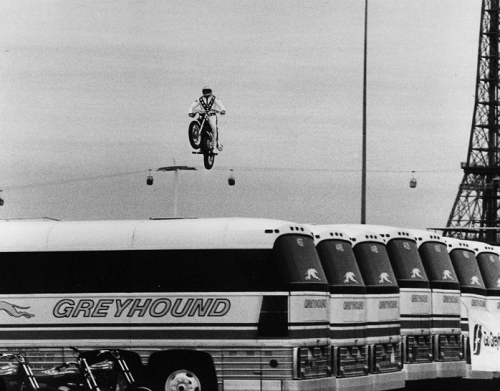
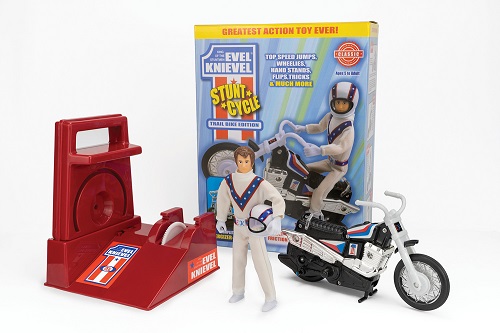
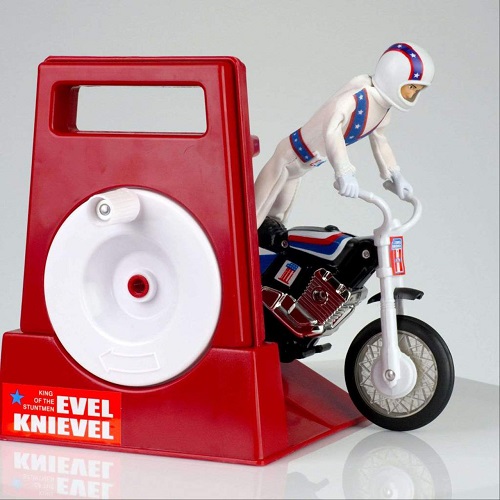
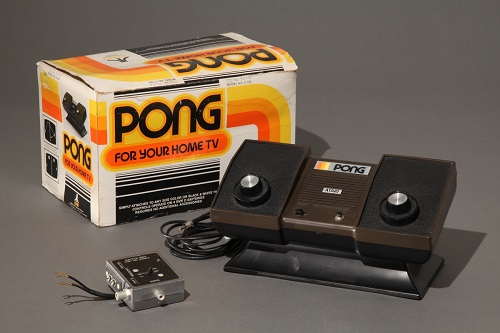
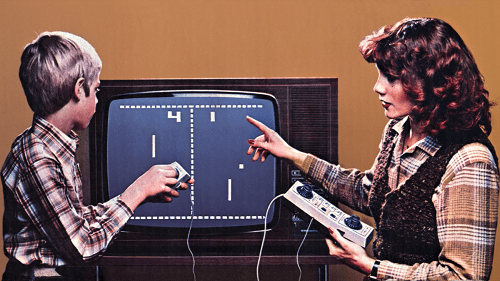


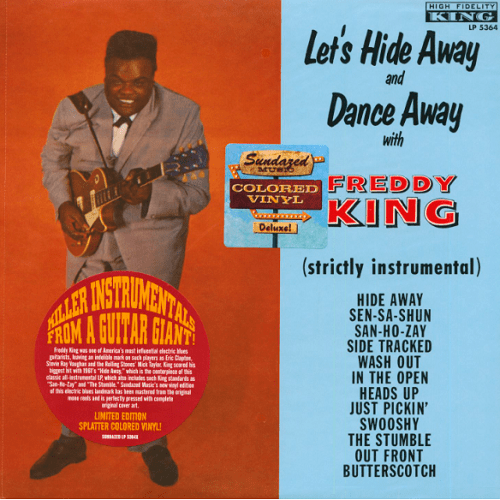
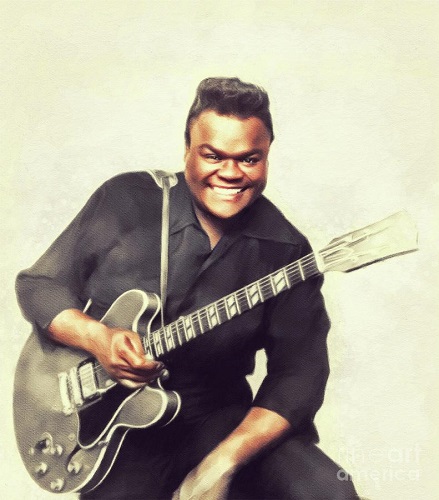
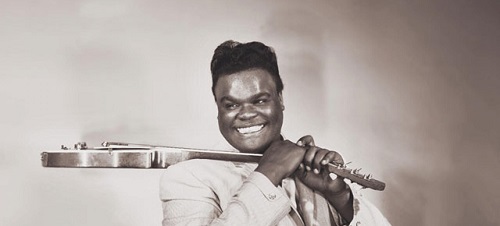

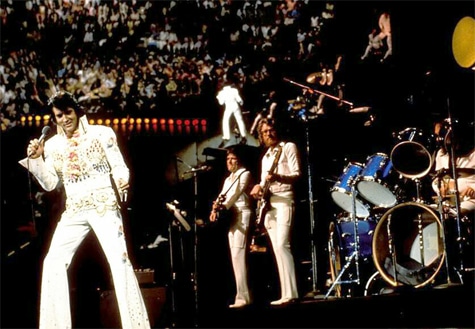
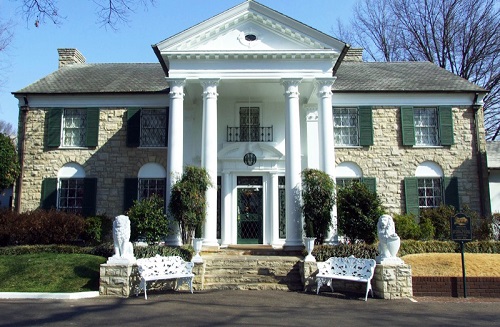
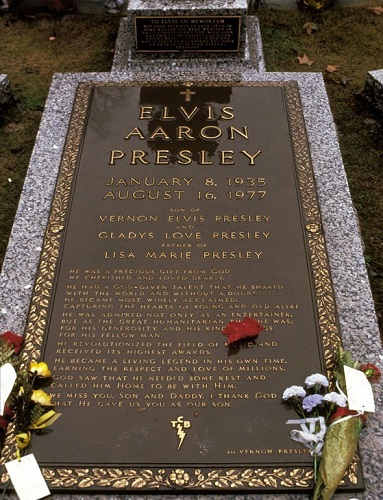
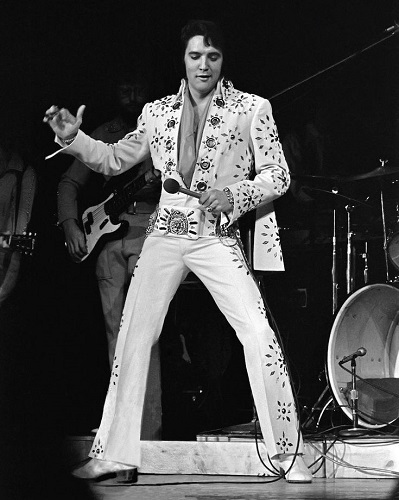
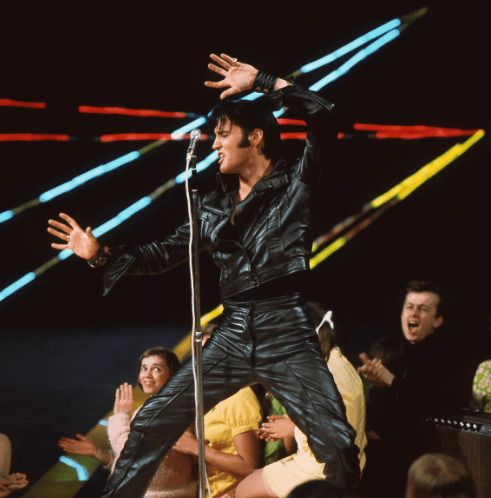
 Various Ramblings of a Nostalgic Italian