The Music of My Life – 1976

Welcome back to The Music of My Life, where I feature ten songs from each year of my life.  In most cases, the ten songs I choose will be ones I like personally (unless I explain otherwise). The songs will be selected from Billboard’s Year-end Hot 100 Chart, Acclaimed Music, and will all be released in the featured year.  In 1976, America celebrated her 200th birthday, while I celebrated my 6th. Let’s go back there together …

My first song actually goes back to 1969, Waylon Jennings saw an advertisement for Tina Turner in a newspaper, It called her a “good hearted woman loving two-timing men”, a reference to Ike Turner. Waylon went to Willie Nelson who was in a middle of a poker game, about writing a song based on that phrase. Joining the game, he and Nelson expanded the lyrics as Nelson’s wife Connie Koepke wrote them down.

Waylon released it as a solo single in 1971. Later, he recorded a concert version for his Waylon- Live album. This served as a basis for the duet with Nelson. “I just took my voice off and put Willie’s on in different places,” he explained. “Willie wasn’t within 10,000 miles when I recorded it.” When it was released as a single in 1976, it became the first of three number ones on the country chart for the duo.

Good Hearted Woman

In March of 1976, the Doobie Brothers introduced the public to their new lead singer, Michael McDonald. He wrote the song that would become the title track of the album, Takin’ It To the Streets. Industry folks were impressed.

Cash Box magazine said, “both instrumentally and vocally this is the best thing the Doobie Brothers have done to date,” adding that “the melody is based around a strong chordal structure.” Record World magazine said that the song “has all the essential qualities that have contributed to making this group a dominating chart force” and that “all these ingredients are wrapped together in an appealing package.” Ultimate Classic Rock critic Michael Gallucci rated “Takin’ It to the Streets” as the Doobie Brothers’ 6th greatest song, praising McDonald’s “soulful rasp” on the vocal. Billboard magazine rated it as the Doobie Brothers’ 3rd best song, saying that it “hits an elemental theme and drives it home with soulful urgency.”

From songfacts.com: The chorus is almost a chant, with the group singing “takin’ it to the streets” as Michael McDonald ad-libs underneath. This gives the song a church feel, which was intentional: McDonald thought the melody evoked gospel music, and wanted it to sound like a gospel song. This meant delivering a powerful message in the lyric and having lots of people sing on the chorus as the spirit moved them.

Takin’ It To the Streets

The next song is here because it is yet another ballad from my mom’s red 8 track tape that we were forced to listen to on our way up north as kids. I remember thinking “Who the heck names their kid, “England?” England Dan is Dan Seals, who had a series of country hits after he stopped performing with John Ford Coley in 1980. His older brother Jim was the Seals of Seals & Crofts, who had the hit “Summer Breeze.”

The duo’s biggest hit reached number 2 on the charts – “I’d Really Love To See You Tonight.” Seals and Coley met in high school. This was their first single, but it almost never made the radio. Songfacts.com says, “When “I’d Really Love To See You Tonight” was played to an executive at Atlantic Records, he turned it down. However Doug Morris of Big Tree Records heard the song through the wall of his over-joining office and offered the duo a contract.

Listen carefully – One of the great misheard lyrics appears in this song: “I’m not talking about movin’ in” is often heard as “I’m not talking about the linen.”

I’d Really Love to See You Tonight

The next song on my list was written by Ann Orson and Carte Blanche. “Who?” you ask! I’m am sure that you are well aware of their real names – Elton John and Bernie Taupin! They wrote Don’t Go Breaking My Heart under those silly pseudonyms!

The song was originally supposed to be Elton and Dusty Springfield, but the offer was rejected because she was ill at the time. It was written to mimic some of the great Motown duets like those of Marvin Gaye and Tammy Terrell. Kiki Dee, who sings the duet with Elton, coincidentally was the first female artist from the UK to sign with Motown’s Tamla Label.

Songfacts.com shares this great story: Elton recorded his part in Toronto, then the tape was sent to London where Kiki Dee recorded her vocal. Producer Gus Dudgeon recalls, “I was with Elton in Canada and he actually sang about three quarters of the song and gave Kiki about four lines. I said, “Hang on a minute, is this supposed to be a duet or a guest appearance? Elton replied, ‘A duet.’ Then you’ve got to give her at least 50% of the song.”

After Elton recorded his part in Toronto, the tapes were sent to London and when Kiki got them she remembered, “Elton had recorded the song abroad and also did my vocals in a high-pitched voice which was quite funny, so I knew which lines to sing.”

Don’t Go Breaking My Heart

The next song is one that I had heard on the radio a million times before seeing the 2000 Saturday Night Live Sketch that will forever be associated with it.

“(Don’t Fear) The Reaper” was written and sung by Blue Öyster Cult’s lead guitarist, Donald Roeser, also known as Buck Dharma. It was rumored to be about suicide, but it actually deals with the inevitability of death and the belief that we should not fear it. When Dharma wrote it, he was thinking about what would happen if he died at a young age and if he would be reunited with loved ones in the afterlife.

Dharma was diagnosed with an irregular heartbeat, which got him thinking about his mortality and inspired the song. “I thought I was going to maybe not live that long,” he said wen interviewed by songfacts.com, “I had been diagnosed with a heart condition, and your mind starts running away with you – especially when you’re young-ish. So, that’s why I wrote the story. It’s imagining you can survive death in terms of your spirit. Your spirit will prevail.”

New life was given to the song on April 8, 2000. Saturday Night Live aired a skit with Christopher Walken that made fun of the overreaching cowbell in this song. In the sketch, the band would get upset when Will Ferrell would play the bell too loud, but Walken kept calling for “more cowbell.”

From songfacts.com: In the skit, Walken plays a super-producer named Bruce Dickinson, whom the band respects enough to put up with his cowbell antics. There really is a Bruce Dickinson , but he didn’t produce “(Don’t Fear) The Reaper” – that was David Lucas, who also brought us the General Electric “we bring good things to life” and the AT&T “reach out and touch someone” jingles. Dickinson is an archivist who works on album reissues, which means gathering master tapes to ensure the best sound quality. He is credited as the reissue producer on a later version of the album, which apparently is how he was named in the sketch.

When Lucas and Dickinson both appeared on the Just My Show podcast, Lucas explained that the cowbell was his idea, as the song “needed some momentum.” He grabbed a cowbell from a nearby recording studio and “just played four on the floor… not hard to do.” He found out about the SNL skit when a friend instant messaged him as it was airing.

Fun fact: Is the cowbell in this song really that loud? It depends on how you’re listening to the song. On a home stereo system, it’s pretty unobtrusive, but radio stations compress their signals, and when cowbell gets compressed, it pops out in the mix.

Don’t Fear the Reaper

The next song was actually performed three years before it was released to radio. The Steve Miller Band joined Buddy Guy, Junior Wells and the Marshall Tucker Band at a New York show and played a “more bluesy and less funky” version of Fly Like an Eagle. The lyrics were a bit different, too. It was re-recorded for the 1976 album with the same name.

This introspective and inspirational song reminds us that time is always ticking away, so we’d better make the most of it. The message of freedom through revolution is one Steve Miller picked up when he formed his Steve Miller band in San Francisco in 1966, a time and place that centered him in the counterculture as America was ramping up the Vietnam War.

A lot of the SMB songs from this time were story songs or songs about having fun, but this one had a pretty serious message to it.

Fly Like an Eagle

With a name like Arnold George Dorsey, you’d just have to change your name to be a singer, right? Sure. Why not change it to something simple … like… Engelbert Humperdinck!? Yeah, there ya go!

Say what you will about Engelbert, but you have to give him credit, he was certainly very well liked by fans! He first was noticed by audiences with his 1967 hit, “Release Me.” He followed that with “The Last Waltz,” “There Goes My Everything,” and ” A Man Without Love.”

When Epic Records released “After the Lovin'” in 1976, it became a huge hit for him. It hit number 8 on the Billboard Hot 100 chart and went to number 1 on the Adult Contemporary chart. It also won the “most played juke box record of the year” award. The album of the same name reached the top 20 on the US charts, was nominated for a Grammy Award, and was a Double Platinum hit for the singer. The song is one that I have played for countless brides and grooms to dance their first dance to.

Today, Engelbert is 88 years old and he is still performing! One of the bloggers I follow just saw him perform and said that he was terrific! God bless him!

After the Lovin’

The next song is one that I will always remember because the album we had was on blue vinyl! Elvis Presley’s Moody Blue was written by a guy named Mark James. Mark actually recorded the song first and also wrote Suspicious Minds for Elvis. The song was recorded in February 1976 in the Jungle Room at Graceland. “Moody Blue” was Presley’s last No. 1 hit in his lifetime, topping the Billboard Hot Country singles chart in February 1977. Elvis died six months after it hit number one.

Moody Blue

The next song technically was a hit in 1977, but it was released in November of 1976 on the Kansas album Leftoverture. Carry on Wayward Son has since become a classic rock staple!

It was written by guitarist Kerry Livgren. According to Livgren, the song was not written to express anything specifically religious, though it certainly expresses spiritual searching and other ideas.

Livgren became an evangelical Christian in 1980, and has said that his songwriting to that point was all about “searching.” Regarding this song, he explained: “I felt a profound urge to ‘Carry On’ and continue the search. I saw myself as the ‘Wayward Son,’ alienated from the ultimate reality, and yet striving to know it or him. The positive note at the end (‘surely heaven waits for you’) seemed strange and premature, but I felt impelled to include it in the lyrics. It proved to be prophetic.”

I have always loved the cold a cappella vocals that kick off the song!

Carry On Wayward Son

As we come to my final song from 1976, I realize that this year really has a wide range of songs. In a way that really fits who I am, as I like many different genres of music. That really comes across with this list. Ok, moving on…

Bob Seger only wrote two songs while on the road – Turn the Page and Night Moves. “Night Moves” was a breakthrough hit for Seger, introducing the heartland rocker to a much wider audience. He had been Michigan famous ever since his first album in 1969, which had the solid hit “Ramblin’ Gamblin’ Man.” That song went to #17 on the Hot 100, but over the next few years, he struggled to make a national impact. A big break came in April 1976 when his label, Capitol, seeing the success of Peter Frampton’s Frampton Comes Alive, issued a Seger live album, Live Bullet, recorded at two of his Detroit concerts in 1975. It quickly found a following and outsold every other Seger album. The song would reach number 4 on the Billboard Hot 100 chart.

Seger says the song is autobiographical, but he took some liberties, as their tryst was after high school. The girl he was with had a boyfriend away in the military, and when he came back, she married him, breaking Seger’s heart. Seger says the song represents the freedom and possibility of the high school years.

In an interview, Bob describes writing the song: It was inspired by the movie American Graffiti. It was all about cars and peg pants and rolled-up T-shirts with a cigarette pack up here and stiletto pointed shoes. That’s how I grew up, that was my high-school years. It was the easiest song in the world to write but the hardest song to finish. It took me six months to finish it. I had the first two verses. Then I’m listening to Born To Run and I notice in “Jungleland” Bruce had a double bridge. I never thought of two bridges in one song. So I have two bridges in “Night Moves.” People at Capitol Records told me after they heard the song “Night Moves” that I had a ‘career record”. They said: “This is a song that you’re gonna have to play for the rest of your life.”

The famous bridge in this song, where Seger strips it down and sings “I woke last night to the sound of thunder,” is something he and producer Jack Richardson came up with on the fly in the studio.

Night Moves

And that’s a wrap on 1976 for me. What were your favorites from ’76?

Disco continued to rise into the mainstream from 1974-1979. As we head into 1977 next time, I’m wondering how many disco songs may or may not be a part of my list …

Thanks for reading (and listening).

The Music of My Life – 1973

Welcome back to The Music of My Life, where I feature ten songs from each year of my life.  In most cases, the ten songs I choose will be ones I like personally (unless I explain otherwise). The songs will be selected from Billboard’s Year-end Hot 100 Chart, Acclaimed Music, and will all be released in the featured year.  I turned three in 1973, so let’s see what music had some influence on me ….

In January of 1973, The Four Tops released their second song on the ABC label.  They had left Motown the year before and this song became their biggest post-Motown hit.  Ain’t No Woman (Like The One I’ve Got) was originally recorded by Hamilton, Joe Frank, and Reynolds in 1972. It’s hard for me to hear anyone else but Levi Stubbs on the vocal.  It reached #4 on the Billboard Hot 100.

Ain’t No Woman (Like The One I’ve Got)

In March of 1973, Elvis released one of my favorite live cuts – Steamroller Blues.  I did a piece on the song for Tune Tuesday a few months back.  You can read that here:

https://nostalgicitalian.com/2024/03/12/tune-tuesday-steamroller/

Elvis added the song to his concert set list and this recording was from his Aloha From Hawaii show. It reached #17 on the charts.

Steamroller Blues

In April of 1973, Gerry Rafferty and Joe Egan’s song about a music industry party was released by their band The Stealer’s Wheel. “Well, I don’t know why I came here tonight” is the opening line of Stuck in the Middle and it makes you want to hear the rest of the story. 

It was a top ten hit for the group, reaching #6 on the charts.  The band was surprised at the success of the song, especially since Gerry’s vocal was meant to sound like a funny Bob Dylan. Many people thought it actually was Bob Dylan singing!

Stuck in the Middle

Also released in April of 1973, the last Top 40 hit for a singing barber.  This song actually seems out of place on my list, but I have a reason it’s here.

Don McLean wrote And I Love You So for his debut album in 1970.  It was the B-side of his single Castles in the Air. Crooner Perry Como used it as the title song for his 1973 album. It would peak at #29 on the charts.

I include it here because when my old morning show partner and I would go out and sing karaoke, he used to sing this one.  I had never heard it before then and I loved the lyrics and melody.

And I Love You So

Another great opening line for a song was from Paul Simon.  “When I think back on all the crap I learned in high school….” Kodachrome was released in May of 1973.  The song was originally written as “Going Home,” but he didn’t think it worked.  Kodachrome sounded similar and he went with that.

It has been said that the song is a sort of admiration for all the things that brighten the world.  After his lamenting about high school,  his world becomes alive with memories.

Kodachrome

Also released in May of 1973, a song that is based on real events and has one of the greatest opening riffs of all time. Smoke on the Water is the story of how Deep Purple was getting to record in a mobile studio they rented from the Rolling Stones.  The night before they were set to record, someone fired a flare gun during Frank Zappa’s song King Kong and set the casino venue on fire that destroyed it.  Deep Purple watched the fire from their hotel room and the smoke from the fire across the water led to the song’s title.

The opening riff which was written by guitarist Richie Blackmore, was inspired by “an interpretation of inversion” of Beethoven’s Fifth Symphony.  That intro remains something I love hearing, especially in headphones.  The guitar riff by itself, then the hi-hat cymbal, snare drum kicks, bass guitar and finally the vocal.  SO cool.

Smoke on the Water

The next song has an interesting story. It has it’s origins in a song that I almost picked for my list. From Songfacts.com: In February 1973, Stevenson released the song “Shambala” which was written by the composer Daniel Moore. Two weeks later, Three Dog Night released their version of the song, which became the much bigger hit, charting at US #3 while Stevenson’s version stalled at #66. Stevenson and Moore then got together and re-wrote “Shambala” as “My Maria,” changing the lyrics so the song became an ode to a beautiful woman. The ploy worked, and Stevenson had by far his biggest hit. (It went to #9 on the Billboard Hot 100.)

Brooks and Dunn enjoyed a number one country song with their cover of the song in 1996.

My Maria

Another song that was inspired by real events was from Jim Croce. In 1970, Jim Croce wrote Time in a Bottle the night that he found out his wife, Ingrid, was pregnant. Songfacts.com says: The couple had been married for five years, and Ingrid found out she was pregnant when she went to a fertility specialist. She recalls a mix of terror and delight in Jim’s reaction when she told him the news. The child was a boy named Adrian, who grew up to become the singer-songwriter A.J. Croce.

The song was released in November of 1973, and it hit #1 in America 14 weeks after Croce was killed in a plane crash in September.

For the record, I have never been to a whorehouse. The next song is a classic rock standard about the aforementioned establishment. The boys of ZZ Top based La Grange on John Lee Hooker’s Boogie Chillin’, and there is even a vocal tribute to Hooker as Billy Gibbons sings “Ho Ho Ho Ho!”

Again from Songfacts.com: The place in this song is the subject of the 1982 movie The Best Little Whorehouse In Texas, starring Dolly Parton and Burt Reynolds, which was adapted from a 1978 Broadway play. In a 1985 interview with Spin magazine, ZZ Top bass player Dusty Hill explained: “Did you ever see the movie, The Best Little Whorehouse in Texas? That’s what it’s about. I went there when I was 13. A lot of boys in Texas, when it’s time to be a guy, went there and had it done. Fathers took their sons there.

La Grange

We wrap 1973 with another great classic rock song. “I was cutting a rug down at a place called the Jug with a girl named Linda Lou…” the story begins and right from the get go trouble is brewing!  Lynyrd Skynyrd released Gimme Three Steps in November of 1973.

From Songfacts.com: This song is based on a true story. As Skynyrd guitarist Gary Rossington tells it, lead singer Ronnie Van Zant, who was about 18 at the time, used a fake ID to get in a bar while his younger bandmates Rossington and Allen Collins waited for him in a truck. Van Zant danced with a girl named Linda, whose boyfriend, who was not too happy about it, came up to Ronnie and reached for something in his boot. Figuring he was going for a gun, Van Zant told him: “If you’re going to shoot me it’s going to be in the ass or the elbows… just gimme a few steps and I’ll be gone.” He ran to the truck, and he, Rossington, and Collins wrote this song that night.

This was one of the few songs Skynyrd released as a single. It was their first major-label release, and it didn’t chart, which simply amazes me. It is a song that has truly become a party classic. I think I got more requests for this one than Sweet Home Alabama at weddings. Maybe it wasn’t a hit, but I have certainly heard this a lot throughout my life, and I always sing along!

Gimme Three Steps

That wraps up 1973 for me. Did you have any favorites from that year? Next week, we move on to 1974. See you there!

The Music of My Life – 1972

Welcome back to The Music of My Life, where I feature ten songs from each year of my life.  In most cases, the ten songs I choose will be ones I like personally (unless I explain otherwise). The songs will be selected from Billboard’s Year-end Hot 100 Chart, Acclaimed Music, and will all be released in the featured year.   I turned two in 1972, so what songs were influencing my tiny ears? Let’s find out.

By March of 1972, Badfinger was enjoying the success of their fourth album, Straight Up. Baby Blue was their last top 20 single. It reached number 14 on the charts. Todd Rundgren produced the song. Younger folks remember this song from the 2013 series finale of Breaking Bad.

Baby Blue

In April of 1972, the Hollies had a hit that was a film noir story set to music. Long Cool Woman in a Black Dress features an FBI agent, a bar filled with criminals and a 5’9″ beauty. Songfacts.com says: This tale of a government agent and a femme fatale contains one of the classic indecipherable lyrics in rock history. The part after “she was a long cool woman in a black dress” is “just a 5′ 9″ beautiful tall.”

The song should have been a number one, but Alone Again Naturally by Gilbert O’Sullivan prevented it from grabbing the top spot.

Long Cool Woman in a Black Dress

One of the biggest films of the year was The Godfather. The Love Theme from The Godfather is instantly recognizable. The music was composed by Nino Rota and most folks are familiar with the instrumental version. A lyricist named Larry Kusik actually wrote words to the song and it was recorded by Andy Williams under the title Speak Softly Love.

While it only reached number 34 on the charts, personally, I found the arrangement of this simply beautiful. Andy’s vocal is great, but give it a listen and just focus on the instrumentation of the orchestra.

Speak Softly Love

Three days after my second birthday, The Looking Glass released Brandy (You’re a Fine Girl). The story of the barmaid who serves the many sailors was from the band’s debut album and the song went to number one. The song was so popular that the US Social Security Administration saw a large increase in baby girls with that name in 1973.

This was not typical of the band’s sound, which caused a problem at concerts. While audiences expected pop songs like this one, the Looking Glass played rock, which left the crowds disappointed. The band broke up less than two years later.

Brandy (You’re a Fine Girl)

Also in May of 1972, the world was introduced to a little band known as The Eagles. The story behind their debut single Take it Easy is a great one. Here is the short version from Songfacts.com:

Jackson Browne started writing “Take It Easy” for his first album, but he didn’t know how to finish it. At the time, he was living in an apartment in the Echo Park section of Los Angeles, and his upstairs neighbor was Glenn Frey, who needed songs for his new band – the Eagles.

Frey heard Browne working on the song (he says that he learned a lot about songwriting by listening to his downstairs neighbor work), and told Jackson he thought it was great. Browne said he was having trouble completing the track, and played what he had of it. When he got to the second verse, Frey came up with a key lyric: “It’s a girl, my lord, in a flatbed Ford, slowing down to take a look at me.”

Browne turned the song over to Frey, who finished writing it and recorded it with the Eagles, who used it as the first song on their first album, and also their first single. Frey says Browne did most of the work on the song and was very generous in sharing the writing credit. He described the unfinished version of the song as a “package without the ribbon.”

Take It Easy

1972 introduced us to another new artist – Jim Croce. “You Don’t Mess Around With Jim” was his first single. After several years struggling for success and battling music industry politics, the song got the promotion it deserved when a rep at ABC/Dunhill named Matty Singer visited radio stations in the Philadelphia area to promote the song. It got solid airplay and national attention, which was followed by lots of positive press for the album. You Don’t Mess Around With Jim wasn’t released until nine months after it had been recorded, so Croce and his musical partner Maury Muehleisen had perfected the songs in performance, earning rave reviews.

You Don’t Mess Around With Jim

Here’s a story for you – The King of Rock and Roll was actually prevented from hitting the number one spot in 1972 by the Granddaddy of Rock and Roll. Yep, Burning Love reached number two on the charts while Chuck Berry held the number one spot with “My Ding-A-Ling!” Urgh!

Burning Love was the final Top 10 hit in the American Hot 100 or pop charts for Elvis. The electric guitar opening and riffs were overdubbed and played by Dennis Linde, the writer of the song. He performed the song in the concert movie Elvis on Tour, and because the song was still new to him, you can see him holding a sheet of paper with the lyrics on it.

Burning Love

In October of 1972, Motown’s of Stevie Wonder released on of my all time favorite songs. When some music bloggers were doing a “Song Draft” I actually picked Superstition as one of my songs. You can read that blog here:

Superstition

In September of 1972, Johnny Rivers released a cover of Huey “Piano” Smith’s 1957 song, Rockin’ Pneumonia and the Boogie Woogie Flu. In the late 50’s the country was hit with the Asian Flu, also called the “walking pneumonia.” The title of the song is a play on this. Johnny’s version did much better than Huey’s version. Huey didn’t even get into the top 40 (it peaked at 52), while Johnny had a top ten (peaking at 6). Playing piano on Johnny’s version was none other than the Wrecking Crew’s Larry Knechtel.

Rockin’ Pneumonia and the Boogie Woogie Flu

My final song from 1972 is a funky jam. There is so much that I love about Use Me by Bill Withers. The song was released on his Still Bill album. It has such a neat syncopated percussion line that interplays with the rest of the instruments and Bill’s vocal. Again, there is a great story about the writing of the song. It seems a lot of women were telling him he was just “too nice” and he wanted to change that. Bill said in an interview:

That’s fun stuff. That’s just talkin’ trash. That’s just a song about being a little playful, a little arrogant and a little cool. Unless you were one of those people that were born popular, I was a chronic stutterer until I was twenty-eight. I avoided the phone. So I wasn’t this popular guy. I remember being young and I would have girls tell me, “You’re too nice.” I didn’t understand that.

What kind of twisted world are we in? Women like bad boys, I guess. There is no more confusing form of rejection than for somebody to tell you that you’re not interesting to them because you’re too nice.

So over the course of time, you say okay, you wanna play, okay, let’s play? Use Me taps into that. I tried to be nice, now let’s get nasty. That song came quick. I was working in McDonnell Douglas out in Long Beach and the noise of the factory, they had some women working there. I crossed that line there thinking, “You all want a nasty boy? Well here I come.” [laughs]

Use Me

I hope you enjoyed my picks. What 1972 tunes were your favorites?

Next week – 1973! See you then

Movie Music Monday – Viva Las Vegas

Today we go back to 1964 for what many consider to be one of Elvis Presley’s best films – Viva Las Vegas. Why? Because his co-star in the movie, the beautiful Ann Margaret celebrated her 83rd birthday yesterday.

The chemistry between Elvis and Ann Margaret that you see on screen is real. They began an affair that got a lot of press by gossip columnists and the movie industry. This led to a showdown between Ann and Pricilla Beaulieu, Elvis’ girlfriend. Years later, in her autobiography, Ann called Elvis her “soulmate.”

15 songs were recorded for the soundtrack of the film, but only 11 were used. A full LP soundtrack was never released. Instead, to coincide with the film’s release, RCA chose four songs for a Viva Las Vegas EP.

The song Viva Las Vegas was released as a single in 1964 with What’d I Say as the B-side. This actually hurt the record’s chart performance. The title song was written by Doc Primus and Mort Shuman. The song went to #29 on the Billboard Hot 100 pop singles chart (What’d I Say did slightly better by going to #21). It has been covered by a few different artists (I love the ZZ Top version), but Elvis’ version remains my favorite.

Dim the lights and cue the theme song ….

A Beautiful Celebration

This weekend was just wonderful! My Goddaughter and her fiancé got married on Saturday. I was honored to be able to DJ the wedding for them.

Before I tell you more, I want to give a little backstory. Just after we rang in the year 2020, and before Covid closed everything, I blogged about my Goddaughter and her mom. I think in order to fully understand what I was feeling this weekend, it is worth revisiting:

January 1, 2020

Today, we met one of my oldest and dearest friends for lunch. Margaret and I have been friends since junior high. We are both Italian. My folks loved her, and her folks loved me. I think they probably both thought that we would date or something, but that never happened. We both went to a few dances together, but that was about as close to “dating” as it got. We were just really good friends and that made us both happy. We were officers in band together, we dressed up as twins for Twin Day, she and I both took a senior picture together, and spent many hours on the phone. She was/is one of my best friends!

When her daughter, Marissa, was born she asked me to be her Godfather. I was honored to do it. A Godfather is a very important role for an Italian. When I got married the first time, sadly, I saw less and less of Margaret and my Goddaughter. Whenever I was supposed to get together with them, I was always informed that we couldn’t go or we had something to do with my ex’s family. (If you have followed this blog for any length of time, you are well aware of the narcissism that I dealt with and how miserable my life had become.)

After the divorce, Margaret was one of the first to reach out to me. She completely understood what was going on. Her forgiveness meant everything to me. I hurt her. I was hurt, too. I lost many years of our friendship, and I lost so many moments with my Goddaughter. After all of that, Margaret (and many other friends) had every right to just stop talking to me, but our friendship meant so much, that we have picked up where we left off.

When I attended my Goddaughter’s 21st birthday party, I pulled her aside and apologized for missing so many important things in her life. How do you explain that to someone? As I looked back on the past, my stomach was in knots. I was sickened to think of how I must have made so many people feel. She didn’t bat an eye, however, and told me she loved me and we all enjoyed a great evening! I remember driving home from her party crying my eyes out. It wasn’t fair to her that I missed so many things. It makes me angry to know that I missed so much, but I am also happy that I can try to make up for lost time with her!

Sam and I were going to see what Margaret and her husband, Walt, were doing on New Year’s Eve and found out she was working that night. So they met us at one of the nearby bars for lunch on New Year’s Day. We enjoyed some amazing burgers, and enjoyed good conversation. There is always a lot of laughter when we get together, story telling with wild hand gestures (it is the Italian in us!) and usually some profanity! It was truly a wonderful afternoon. We hope to be able to do it more often!

During lunch, Margaret said something that struck a chord. It was something that made me sad, and happy at the same time. She said, “I have seen you more and talked to you more in the past two years, that the entire time you were married.” This made me sad, because of what I touched on early – a great friendship almost destroyed as well as the relationship between my Goddaughter and me, all because of the stupidity of someone else. It made me happy to know that our friendship remains and will grow even stronger in the years ahead.

Shortly After That

My daughter Ella was born just over a month later. Margaret and Walt made the drive up to the hospital that night with Olive Garden dinners for Sam and me, and also a ton of soup and breadsticks for the hospital staff on our floor!

Ella loves her Aunt Margaret. Margaret has shown so much love to her and Andrew. Ella thanks God for her every night when she prays. Margaret refers to them as “my babies!” Thanks to technology, they love being able to video chat with her anytime!

Last week, Margaret and I got into one of those deep conversations. The years I missed came up. The deep regret that I hate thinking about . The “What Ifs” and such. We had been talking about my kids. She told me that she had always wanted to do that for my older boys, too! Thanks to my ex, that was never to be. All the hurt I felt about missing time with Marissa and I never really realized just how much hurt Margaret felt about missing time with my boys.

Sigh. On to happier stuff….

September 23, 2023

Saturday, I arrived at the breathtaking tree farm where the wedding was to be held. The first person I saw was the groom to be, Connor. He’s a great guy and I know that he is going to be a great husband. I asked him if he was nervous, and he said he was. Marissa and Connor have been together for 7 years. They are perfect together. I don’t remember what I told him, but I assured him all would go well.

When Marissa arrived, they shuffled Connor into the lodge area so he couldn’t see her. She came over and embraced me for a hug. She didn’t even have her dress on yet, and she was just stunning. We talked a briefly and then she was off to get ready.

I saw Margaret out in front of the lodge as I parked my father-in-law’s truck (which he let me borrow so I could fit everything in it!). She was busy putting out fires on the cell phone and with people at the venue.

It didn’t take me too long to get set up. It was hot, so I was glad I hadn’t arrived in my suit. I went to change and by then, we were about an hour and a half away from the ceremony. The families all came out and the photographers got pictures done before the ceremony, which you don’t see too often. But I get it, the sun was perfect and I know that they got some amazing pictures. I, however, only got two. One of Margaret and me, and the other with Marissa.

The ceremony was just wonderful. I was sitting next to Chris, a mutual friend of Margaret and me. She asked if I was going to need a tissue. I told her probably, but I passed her back the tissue pack. Once Marissa and her dad began walking down the aisle, I could feel those tears well up.

Their officiant knew both of them very well and shared some very funny stories. At the same time, he was very professional. Marissa and Connor each wrote their own vows. They read like a love story. Wow, the looks that they gave each other throughout the ceremony and the sharing of their vows….. It was a powerful example of true love. Again, I held back tears.

I’ve DJ’s many weddings, but this was the first where a grand entrance was timed down to the second! They entered to Natalie Cole’s This Will Be (An Everlasting Love). I had a cue sheet with the time and the lyrics along with the couples that were entering at that time. They had it timed perfectly.

After the grand entrance, Marissa and Connor had put together a dance for their first song. It was such a joy to watch these two execute their moves to perfection. I was glad that a little hiccup that could have meant me not having their song was an easy fix. In all my years doing weddings, this was only the third time the bride and groom had choreographed their first dance. It was beautiful.

It was after this that I saw Margaret become “that Italian mom.” Let me explain. No one had filled the glasses of the head table and when we went to do toasts, there was nothing to toast! They decided to let people eat and they would toast during dinner while someone filled glasses. That someone – was Margaret. She came busting out of the lodge with bottle of wine in each hand. She walked to every person with an empty glass and asked, “White or red?”

She was the first table called to eat after the head table. Yet, she was like the last in line to eat! I had to tell her to get a plate. She naturally swore at me and moved through the buffet line.

Toasts from the Best Man, Maid of Honor, and the fathers of both the Bride and Groom followed. The Best Man impressed me with a perfect line. He stated that he and Connor had been best friends forever. He stated that he was happy to give up that title, because Marissa would now forever be his best friend. Good stuff!

After dinner, Marissa danced with her dad and Connor danced with his mom. Then the dance floor opened for the night. Music was not an issue, as they had given me plenty of songs to choose from. There is never enough time to get through the entire list. There were plenty of requests and the crowd seemed to be having a good time.

I naturally brought out the groom and the groomsmen, who had no idea why I called them out to the floor. I passed out a cowboy hat, and Indian head dress, a policeman’s hat, a sailor hat, and a biker hat. I led them through some silly moves and we did the YMCA together. This is always silly and they guys had fun. I even got to embarrass myself as I walked through the crown lip synching “Can’t Help Falling In Love” by Elvis with my terrible Elvis wig.

There were so many things from the evening that I will remember, but the one thing that will stick with me forever is just how beautiful Marissa looked.

I am so happy for her. I am excited to hear about all the things that are ahead for her and Connor. Random thought: Is he now my Godson-in-law? I’d be ok with that.

On my hour drive home, there was a lot of time to think about the day. I smiled again as I recalled the vows, the first dance, the last dance, and more. I had to pull over when the sadness crept in with the memory of the lost time with her. I had to remind myself that that is all in the past, and there will be more happy days ahead. Plenty of happy days, I am sure of it!

Congratulations to Marissa and Connor. Your love for each other will carry you through the tough storms … and God will get you through the rest!

I love you both!

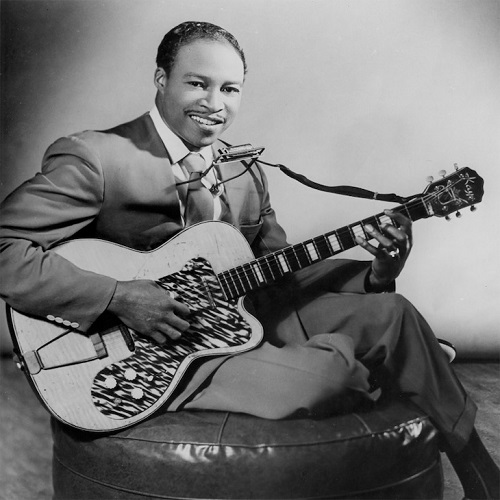
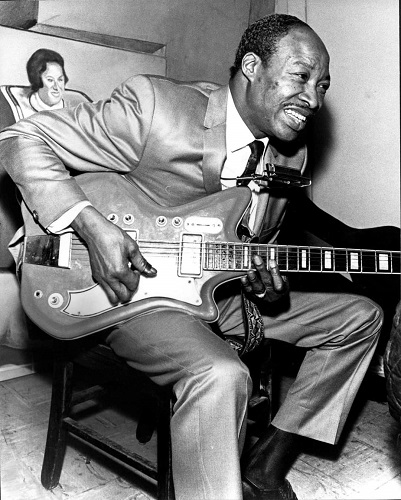
Celebrating Jimmy Reed

The fantastic blues singer Jimmy Reed was born today in 1925. He was born Mathis James Reed in Mississippi where he learned to play guitar and harmonica. He moved to Chicago in 1943 and was drafted into the Navy. After he was discharged a couple years later, he went back to Mississippi where he married his girlfriend and the moved to Indiana.

By the 1950’s he was a fairly well known musician and was signed to Vee-Jay Records, where he recorded many of his hits. Those hits influenced many artists including Elvis, The Rolling Stones, The Yardbirds, Bob Dylan and more. All of them have recorded covers of Jimmy’s songs.

My dad introduced me to Jimmy when I was working at my first radio job. He asked me to make him a cassette of some songs if they were in the station’s library. A couple of those songs were from Jimmy. He told me stories of how he and my Uncle Tom loved listening to Jimmy Reed and the they even played a couple of those at my high school graduation party.

To me, Jimmy is a blues pioneer. When people talk about the blues, Jimmy’s name comes up. He was posthumously inducted into Rock and Roll Hall of Fame in 1991. His music may not be for everyone, but I really dig it. It will always make me think of my dad and my uncle.

Here are some of my favorites in honor of his birthday!

One of the songs on my dad’s list was “Baby What You Want Me To Do.” Elvis did this at a few of his concerts. I love the groove of this one …

Another one that Elvis covered was Jimmy’s “Big Boss Man”

The guitar lick from Jimmy’s “Shame, Shame, Shame” seems like one that I always heard my dad playing when he was warming up …

Another favorite is “Bright Lights, Big City”

The Stones covered this great one – “Ain’t That Lovin’ You Baby”

The Blues Brothers covered Jimmy on one of their albums, doing a cool version of “I Ain’t Got You”

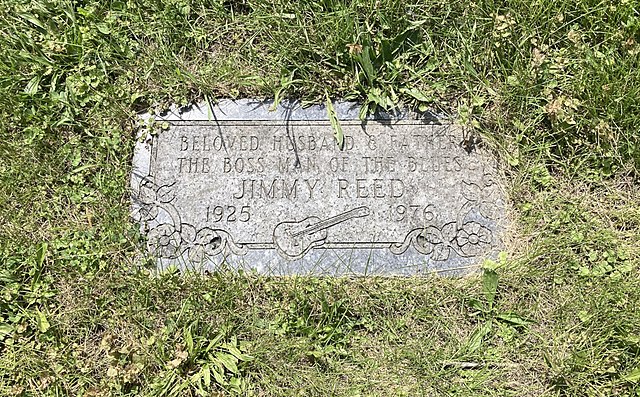
Jimmy died of respiratory failure just 8 days before his 51st birthday on August 29, 1976. He was inducted posthumously to the Blues Hall of Fame in 1980. He was certainly a “Boss Man of the Blues”

Happy Birthday, Jimmy!

Royal Rock and Roll Remembrance (and Other Orchestral Music)

August 16

On this day in 1977 – a King died. The King of Rock and Roll.

On this day in 2018 – a Queen died. The Queen of Soul.

Both were musical royalty. Did you know they both have a musical group in common? Both have “recorded” with the world famous Royal Philharmonic Orchestra. Imagine what some of their songs might have sounded like with an orchestral background! Never mind. You don’t have to, because there are albums you can check out.

Here are a couple of my favorites from those albums (with some bonus cuts and artists later on)

Elvis

A Big Hunk o’ Love

Can’t Help Falling in Love

Steamroller Blues

In the Ghetto

Aretha Franklin

Respect

Natural Woman

Think

Until You Come Back To Me

Elvis has two albums with the RPO and a Christmas Album. Aretha has one. But there are other artists whose song’s have been reimagined by the RPO. The first being The Carpenters. Honestly, many of their songs already had some sort of orchestra background, but these new arrangements are neat to hear.

The Carpenters

I Just Fall In Love Again

We’ve Only Just Begun

The oddest pairing in my opinion is the RPO and the Beach Boys. Orchestral Surf??

Wouldn’t It Be Nice

Sloop John B

My favorite cut is this one – Fun, Fun, Fun

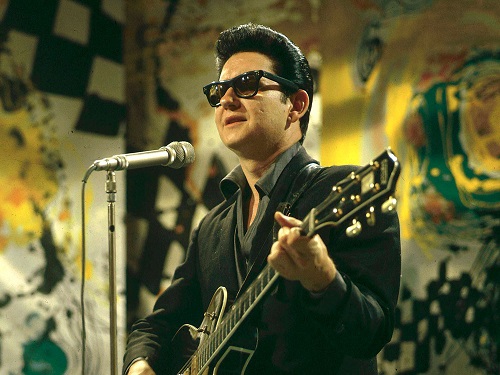
My favorite collaboration (besides Elvis) is the RPO and Roy Orbison. Wow! What an album! Simply amazing.

In Dreams

Crying

It’s Over

Only the Lonely

Running Scared

I have always loved Mean Woman Blues by Roy. However, I think the version with the RPO takes the original and beefs it up with some cool horns and makes it even better! My favorite cut!

Mean Woman Blues

So today we salute a King, a Queen, and some artists that would be considered music royalty – with a “royal” musical group that they all have in common. I hope you enjoyed listening. All of the Royal Philharmonic Albums can be heard on YouTube!

Turntable Talk – Feels Like The First Time

It’s time for another round of Turntable Talk. This is the 14th edition hosted by Dave over at A Sound Day. As always he has presented our little group of music lovers with a great topic.

In his instructions he asks:

Do you remember what the first album you bought was? LP? CD? Reel to reel, LOL? Why that one? Do you still have it? Would you want to ? Let your nostalgia run wild! Tell us about that first record you made your own.

Let me start by saying that many of the albums my dad had, eventually wound up as “mine.” When I think back to the albums I remember there are some that I will never forget. To be clear, my dad bought these, but I wound up listening to them. He had many from Roy Orbison, Elvis, Lenny Dee, Herb Alpert, and so many others. The ones that eventually wound up in my room were a bit odd.

First, there was Dumb Ditties. An album of novelty songs put out by K-Tel. What 6 year old kid didn’t like silly songs?

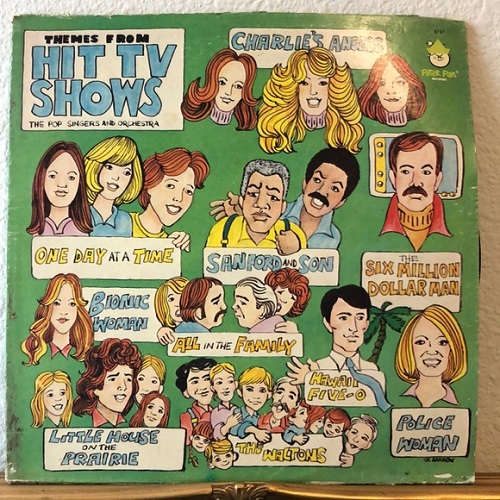
Then there were two albums that had TV themes on them. There were not the original artists, and this was long before TV Toons put out their collections. They were actually pretty cheesy versions that a kid like me knew weren’t quite right, but close enough. They had goofy cartoon drawings of the main characters from the shows on the cover and were done by the Pop Singers and Orchestra. Was that even a real group?!

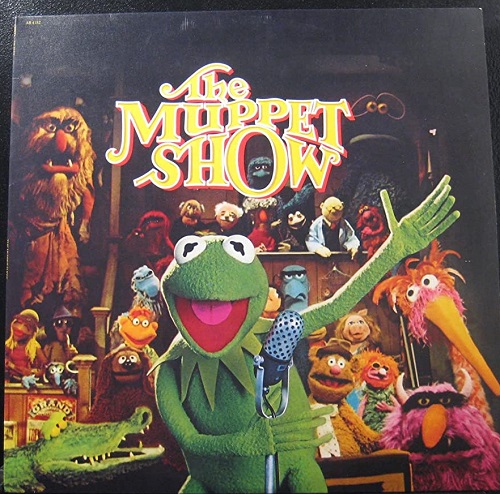
The last album that my dad bought that wound up in my record collection was the 1977 album of The Muppet Show. It had the theme song, Mah-Nah-Mah-Nah, and plenty of clips of the two old guys heckling the acts.

Now as far as the first album I actually bought, my memory is hazy. I know it had to be one of two and I know I would have bought them within a week of each other.

I had a paper route. I remember that you collected whatever your customers owed you for the week, and you paid for your papers. Whatever extra tip money you made was yours. I don’t recall making a lot of money, but it was enough to go up to the toy store to buy Star Wars stuff or to Harmony House to buy an album.

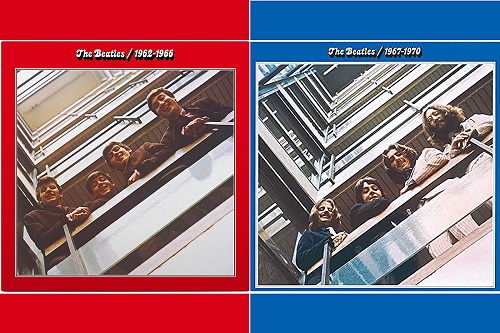
My dad had a couple of the Beatles albums. He had the blue and red greatest hits albums with them looking over the railing.

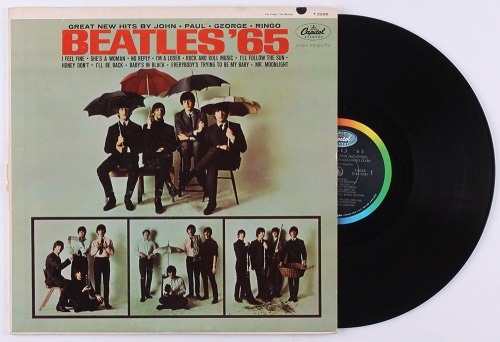
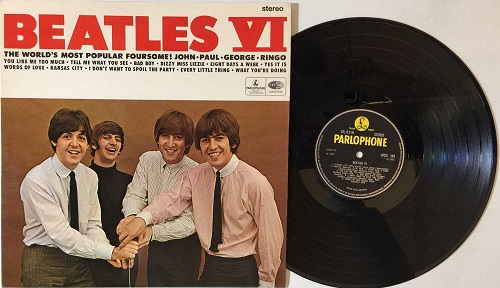
I loved the Beatles growing up – early Beatles. It took me a while to appreciate the later Beatles stuff. I recall walking into the Harmony House and grabbing either Beatles ’65 OR Beatles VI. I wish I could remember which one was THE first. I know, however, that these two albums were bought almost immediately after I began delivering papers.

Whichever one I bought first, I suppose doesn’t matter. These two albums contain some of my favorite songs by the Fab Four and they were played over and over again.

“This happened once before, when I came to your door. No reply….” A cold open starts Beatles 65. Boom! There’s John. What follows on the album was a variety of musical nuggets that my young ear just loved!

The harmonies sounded even better with headphones. I’m a Loser, Baby’s In Black, I’ll Be Back, and Mr. Moonlight each had me trying to sing all the different notes. There were great cover songs like Honey Don’t, Everybody’s Trying to Be My Baby, and Rock and Roll Music. Then there was I’ll Follow the Sun. Beautifully simple.

Beatles 65 was an album I played from start to finish many times.

As for Beatles VI, there were “skip” songs on this one for me. Skip songs were You Like Me Too Much, Words of Love, Tell Me What You See, and Every Little Thing. Why those didn’t do much for me, I can’t say.

I, of course, loved those great cover songs – Dizzy Miss Lizzie, Bad Boy, and Kansas City. I knew all of these songs by their original artists, but came to dig those Beatles versions more.

As a kid, I often found myself drumming my desk in school to the opening of Look What You’re Doing. The teachers told me to leave the drumming to Ringo!

The one song that is the stand out for me on the album was Eight Days a Week. What a great song. It is one that even non Beatles fans know, love, and sing along to. I could be mistaken on this, but I swear there was no fade in on the album. I remember the first time I played this at a radio station and the fade in happened – it freaked me out. Either way, it is one of their best songs.

My love for the Fab Four started very early in life thanks to the musical influence of my mom and dad (and maybe that Beatles cartoon). That love for them continues to this day. It only makes sense to me that the first album I would buy would be from them! These albums remain as fresh today as they were when they were released – years before I ever got my hands on them. 

Thanks again to Dave for inviting me to take part in this feature.  As always, I look forward to reading the other contributions and to next month’s topic.

Turntable Talk #8 – Best Year In Music?

Once again, Dave from A Sound Day has asked some of us music lovers to participate in another round of Turntable Talk. This time around was a bit of a challenge for me. Dave’s e-mail stated:

Put your thinking caps on and go through your stacks of records (or scroll thru that I-pod) and … come up with what you think the best year for music was. A tough call of course, thankfully there have been more than a few good ones! I’m interested in what you pick and don’t worry if yours duplicates someone else’s , you still have your reasons which might be different.” He goes on to say, “I think I have a guess on a couple of years that might come up more than once, but we’ll wait and see.

This particular blog will be one of the last ones to be featured and I do not know if my year will be or has been featured. I plan on writing this KNOWING that the year I have chosen very well may be one that comes up in another post. Before I tell you the year I picked, let me tell you that I had a very difficult time narrowing it down.

My first thought was to go with 1956/1957 because those years were always so unique. You had the birth of rock and roll mixing with pop standards. When I worked at Honey Radio, I loved doing the Top 12 at 12 show when those years popped up because there was such a big variety in what was played. You could go from Elvis or Jerry Lee Lewis to Pat Boone or Nelson Riddle. When I looked at the list of songs, however, were they really the BEST? No.

The same thing can be said for some of the years in the 70’s decades. I looked through many lists and while there were many great songs, there were also a lot of really crappy songs! I just couldn’t really come up with the conviction to pick a year in that decade as the BEST.

One year kept coming up every time I started thinking about it – 1964.

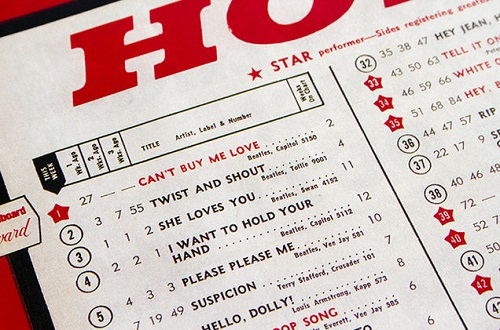
I want you to know before I continue that I was dead set AGAINST 1964 when I read Dave’s e-mail. Why? Well, I felt that it would just be too Beatle heavy and loaded with British Invasion stuff. And it is. On the Top 100 Chart, The Fab Four nabbed 9 spots. 18 spots were held by other British Invasion acts. In total 27% of the Top 100 were British acts. When I really looked at the chart, the more and more I felt like this WAS the year.

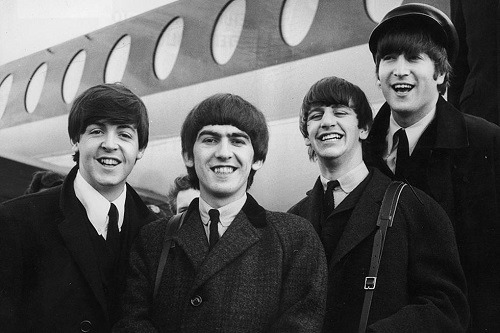
1964 really was the year of the Beatles, so let’s discuss them first. They were present almost right from the start as their “Introducing The Beatles” album was released in America on January 10th of that year.

This album preceded Capitol Records “Meet the Beatles” by 10 days and there was a lawsuit surrounding that whole issue. Capitol Records won an injunction and Vee-jay Records was not allowed to put out any more Beatles recordings.

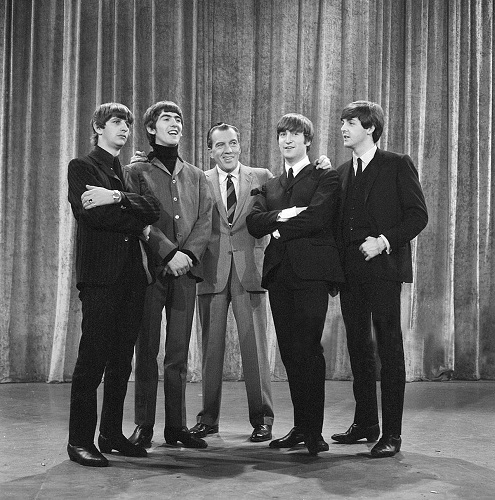
In February of 1964, the Beatles arrived in the US and appeared on Ed Sullivan’s show three times (2/9, 2/16, and 2/23). In March of 64, Billboard magazine stated that the Beatles were responsible for 60% of all single record sales! In a feat that has yet to be matched, on April 4, 1964, the Beatles held the Top 5 spots on the Billboard chart!

A week later, the boys held 14 spots on the Hot 100 Chart! That broke the previous record of 9 spots held by Elvis Presley in 1956.

In May, The Beatles Second Album was released and in July, they would release A Hard Day’s Night in theaters. “I Want to Hold Your Hand” wound up being the #1 song for the whole year of 64 (“She Loves You” was #2) To say that they played a small part in the music of 1964 would be a huge understatement.

Among the other artists that came over from “across the pond” in 64 were Manfred Mann (Do Wah Diddy Diddy), Billy J. Kramer and the Dakotas (Little Children and Bad to Me), The Dave Clark Five (Glad All Over, Because, Do You Love Me), Peter and Gordon (A World Without Love), The Animals (House of the Rising Son), The Honeycombs (Have I The Right), Dusty Springfield (Wishin’ and Hopin’), Gerry & The Pacemakers (Don’t Let the Sun Catch You Crying and How Do You Do It), Chad and Jeremy (A Summer Song), The Kinks (You Really Got Me), and the Searchers (Don’t Throw Your Love Away and Needles and Pins). It is interesting to note that the Rolling Stones debut album was released this year, but no songs appear in the Top 100 for the year.

Once you move away from the British artists, the chart has a nice variety of pop, rock, folk, country, soul, and even a few novelty songs. I think that is what made me ultimately choose this particular year.

It was nice to look over the Top 100 and see Motown represented with some classics. The Supremes hold two of the six Motown songs (Where Did Our Love Go and Baby Love), Motown was female heavy as Mary Wells (My Guy) and Martha and the Vandellas (Dancin’ In The Street) grabbed the next two spots, and the male gender was represented by The Four Tops (Baby I Need Your Loving) and The Temptations (The Way You Do The Things You Do).

While they were not “oldies” at the time, there were some classic songs that are still in hot rotation today on the oldies stations across the country. Roy Orbison had a smash with Pretty Woman in 64, and also had a hit with It’s Over. Frankie Valli and the Four Seasons grabbed three of the Top 100 with Rag Doll, Dawn and Ronnie. The Beach Boys only entry in the Top 100 was I Get Around.

1964 brought us classics like The Drifters Under The Boardwalk, Chapel of Love by the Dixie Cups, Suspicion by Terry Stafford, It Hurts to Be In Love from gene Pitney and Come A Little Bit Closer by Jay and the Americans. Johnny Rivers had a hit with Chuck Berry’s Memphis, Bobby Freeman invited us to C’mon and Swim, Detroit’s Reflections offered up Just Like Romeo and Juliet and the Shangri-Las told us the story of the Leader of the Pack.

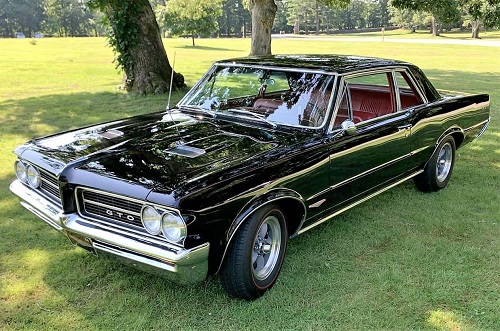
Car songs were well represented in 64! Ronny and the Daytonas had GTO, while the Rip Chords sang Hey Little Cobra, and the Hondells had Little Honda. Jan and Dean told us the stories of The Little Old Lady from Pasadena and Dead Man’s Curve, while J. Frank Wilson and the Cavaliers told us the tragic story of a Last Kiss.

Soul music is represented by The Impressions (I’m So Proud and Keep on Pushing), Joe Hinton (Funny How Time Slips Away), The Tams (What Kind of Fool Do You Think I Am), Jimmy Hughes (Steal Away) and Nancy Wilson (How Glad Am I). If you throw Blues into the “Soul” mix, the great Tommy Tucker song “Hi Heel Sneakers” was out in 1964.

Instrumentally, Al Hirt had a monster hit with Java, The Ventures had Walk Don’t Run 1964, The Marketts had The Outer Limits, and Robert Maxwell had the incredibly cheesy lounge version of Shangri-la. While novelty songs included Jumpin’ Gene Simmons (Haunted House), The Trashmen (Surfin’ Bird) and Roger Miller (Chug-a-Lug).
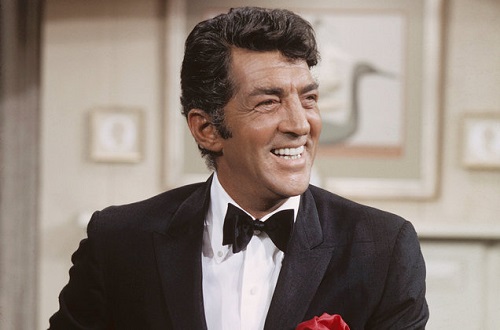
While Rock was dominant in 1964, there were still some pop (and even folk) songs that made the Top 100 – one of them, doing the “impossible.” Two of the biggest pop hits of the year couldn’t be more different from each other. The third biggest hit of the year belonged to Louis “Satchmo” Armstrong and his Dixieland hit “Hello, Dolly!” Barbra Streisand (who won Album of the year at the 1964 Grammy Awards) had the 11th biggest hit of the year with “People.”

Pop/Folk was also represented by Gale Garnett (We’ll Sing in the Sunshine), The Ray Charles Singers (Love Me With All Your Heart), Dionne Warwick (Walk On By), Al Martino (I Love You More and More Every Day), and Andy Williams (A Fool Never Learns). But the biggest surprise came from an artist who hadn’t had a top 40 record since 1958!

Dean Martin didn’t care for Rock and Roll. With the British Invasion in full swing, there was very little chance of him ever having another hit. His kids loved the new artists. His son, Dean Paul, loved the Beatles. Dean told his boy, “I’m gonna knock your pallies off the charts!” On August 15, 1964 – he did just that with a song that became his NEW theme song, “Everybody Loves Somebody.” (It replaced That’s Amore as his theme song)
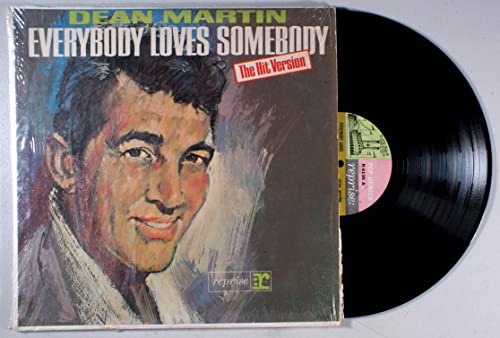
The song knocked the beloved Beatles A Hard Day’s Night out of the number 1 spot! It went on to stay at #1 on the Pop Standards Singles Chart for 8 weeks. It also became the theme to his weekly television show in 1965.

I picked 1964 for a few reasons. Despite my initial worry about it being British act heavy, it was the year that introduced us to the Beatles (who changed the music scene forever!). It is also the year that one act held the top 5 spots on the charts (a record that remains in place). It is also the year that my favorite singer of all time bumped the biggest group in music out of the top spot.

It is also a year that encompasses such a vast variety of music. While there may be better songs that appeared before and after 1964, it truly represents a unique time in history. America was still recovering from the loss of a beloved president, there were still Civil Rights issues, and a war in Vietnam. The music of 1964 was a welcome escape from so many things.

Was it all good? No, and that is true of every year. However, as I look at the 100 biggest songs of the year, there are a lot of great songs that have gone on to become classics. There are so many songs that are still looked at as pivotal in the music scene. The fact that many of these songs are still getting airplay today is a statement to just how good they are.

Thanks again to Dave at a Sound Day for allowing me to be a part of this feature. I can only hope that my contribution is worthy of an invite to participate in the next round.