The Music of My Life – Decade Extras – The 1980’s

This is sort of a continuation of the Music of My Life feature. It focused on music from 1970-2025. It featured tunes that have special meaning to me, brought back a certain memory or a tune that I just really like. I found that with the first three decades, there were songs that I didn’t feature. So I sat down with my original lists and selected some songs that “bubbled under,” so to speak.

I figured a good way to present them was to focus on a decade. 10 years = 1 song per year = 10 songs. Last week finished up the 70’s, and this week we’ll move on to the 80’s. So, let’s check out a few “Decade Extras.”

1980

Let’s kick off the decade with a country/pop crossover. Back when we first got cable TV, the movie channels would run movies a lot. They would schedule it in the morning, afternoon, evening, and overnight kind of rotating them so people had options on what time worked best. I remember 9 to 5 being on all the time. My mom always seemed to be watching it if it was on. I’m pretty sure she had them theme song memorized.

Dolly Parton wrote (and sang) this for the 1980 film of the same name. The film, which was her acting debut, stars Jane Fonda, Lily Tomlin, Parton, and Dabney Coleman. It dealt with life in an American office, where the workday was 9 a.m. to 5 p.m. She wrote the song while the movie was filming.

This song won the 1981 Grammys for Best Country Song and Best Country Vocal Performance, Female; it also received a Grammy nomination for Best Album Of Original Score Written For A Motion Picture Or Television Special and received Oscar and Golden Globe nominations. It also won the People’s Choice Award for Favorite Motion Picture Song.

Mojo magazine asked her what lyric she’s most proud of, Dolly Parton said: “One that I remember the very moment I wrote when I was working on ‘9 to 5,’ was ‘Pour myself a cup of ambition.’ I went, ‘Yeah that’s so good.’ That has really followed me oh through the years.”

She wrote the lyric in LA. “I would watch things going on, on the set,” she recalled to Mojo. “At night, I would go back to the hotel Bel-Air. I would get my guitar, and I would start putting pieces together. I would work on songs, clicking my nails on a typewriter.”

“I had just made myself some coffee, because I was going to spend two or three hours working on the song,” Parton continued. “I always drink coffee when I write. And I just remember saying, ‘Tumble out of bed, and stumble to the kitchen.’ What else you doing? I looked at my coffee cup and thought, ‘I pour myself a cup of ambition.'”

“Sometimes when those lines come, you just think, ‘Oh my goodness that is so good. I’m so proud of myself,” she concluded. “And then of course, many things spiritual based, I always look up and say, ‘Hey, thank you, Lord. I like that one.'”

As old as the song is, it still sounds good today.

9 to 5

1981

There are a handful of songs that “define” the 80’s for me. Your handful may or may not be different from mine. One of the greats that always seems to pop up on 80’s collections and as a “favorite” 80’s song was a phone number that everyone knows!

The opening guitar lick grabs your attention and that drum kick into the full band hooks you. This ode to a gal who doesn’t even know the singer soared up the charts to become a Top 5 single.

For years, Tommy Tutone (who isn’t the name of a person, just the name of the group) has used a story that there was a Jenny and she ran a recording studio. They have also said it was inspired by a real girl who band member Tommy Heath met in a nightclub and 867-5309 was the phone number of her parents. None of this is true, but it got them a lot more media attention, since it made a better story.

Alex Call, the songwriter, came up with it while sitting under a plum tree. He told Songfacts the story: “Despite all the mythology to the contrary, I actually just came up with the ‘Jenny,’ and the telephone number and the music and all that just sitting in my backyard. There was no Jenny. I don’t know where the number came from, I was just trying to write a 4-chord rock song and it just kind of came out.

This was back in 1981 when I wrote it, and I had at the time a little squirrel-powered 4-track in this industrial yard in California, and I went up there and made a tape of it. I had the guitar lick, I had the name and number, but I didn’t know what the song was about. This buddy of mine, Jim Keller, who’s the co-writer, was the lead guitar player in Tommy Tutone. He stopped by that afternoon and he said, ‘Al, it’s a girl’s number on a bathroom wall,’ and we had a good laugh. I said, ‘That’s exactly right, that’s exactly what it is.’

The rest is history.

867-5309

1982

I heard Foreigner for the first time while listening to Casey Kasem on American Top 40. I really liked their sound. Lou Gramm’s voice really stood out for me.

Juke Box Hero was a song that was in a good rotation when I was at the classic rock station. It has become a staple on classic rock playlists. The story behind the song is one that I love:

This song was written by Foreigner guitarist Mick Jones and lead singer Lou Gramm. In a Songfacts interview, Jones said: “That stemmed from an experience that we had, I think it was in Cincinnati. We’d gone to the arena for a sound check, and it was pouring down rain, and there were a bunch of fans waiting at the door when we went in. When we came back for the show later on, all that was left was one lonely fan, a young guy waiting out there in the rain, soaked to the skin. I thought, well, he’s waiting like five hours here, maybe we’ll take him in and give him a glimpse of what happens backstage at a show. And this kid was just mesmerized with everything. I saw this look in his eyes, and I thought, he’s seeing this for the first time, he’s having this experience. And I just imagined what was going through his mind. And I’d been toying with this title, ‘Juke Box Hero,’ I thought it was almost a satire on what we did and how it was perceived from an audience level, and public. That’s how it originated.”

How cool was that kid’s experience?! Kudos to the band for making this happen. As a bonus, they got a hit song out of it!

Jukebox Hero

1983

I was late to the Stevie Ray Vaughn party. Very late. I didn’t hear one of his songs until after his death. I had gotten together with a buddy I hadn’t seen in a while. He popped in a cassette of Stevie. I was blown away on so many levels. His voice, his playing … I’d never heard anything like it.

After a 1982 performance, Stevie and the Double Trouble band got the attention of Jackson Brown. He told the guys that they could use his personal studio to record a demo. They did just that over Thanksgiving weekend 1982. That demo was heard by a talent scout, who presented it to Epic Records, who signed Vaughn to a record deal. Epic remixed the demo, which would become his first album, Texas Flood.

While the song received heavy airplay, it didn’t get any love from the charts. The music video, the only one from this album, got heavy rotation on MTV in 1983. What he could have done if he was still around, one can only guess.

Love Struck Baby

1984

Marching band was one of my favorite things about high school. At football games and pep assemblies, we’d often play songs that were familiar to us. We Got The Beat was one they were still playing long after I graduated. Neutron Dance from the Pointer Sisters was one of those “pep songs.”

Allee Willis (who wrote Earth, Wind & Fire’s hits “September” and “Boogie Wonderland,” wrote the lyrics for this song. She sums up the song, saying: “That’s basically: if your life isn’t working, get up off your ass and change it. Because it’s really up to you.”

Fun Fact: This song was released at the high of the Cold War when there was a great deal of tension between the United States and Russia, as both had nuclear missiles aimed at each other. Willis Says: “The Russian government named me as one of the most dangerous people living in the United States, because they mis-translated it as ‘Neutron Bomb.’ The first verse they translated as ‘A powerful nuclear explosion is approaching, it will annihilate everyone; who cares if you have no car, no job, no money, just dance, dance, dance.’ And this was a huge article in Pravda, and I was supposed to be going to Russia with BMI, and I wasn’t let in the country. I mean, it was nuts.”

The song was featured in the film Beverly Hills Cop and the video includes scenes from the movie.

Neutron Dance

1985

Next is a song that I almost always played at weddings. If it wasn’t the bride and groom’s wedding song, it was one of the slow songs that packed the dance floor. The Search is Over by Survivor started as a title that was scribbled in Jim Peterik’s notebook.

He said, “It wasn’t about my life as much as a friend of mine who had a girlfriend – really a play pal throughout their growing up years – and never thought it could be anything more than that. It was looking him straight in the face that this was the girl of his destiny, and he looked everywhere to find that dream girl only to come back to the sandbox. This couple is still married and going strong. It became kind of an allegory to looking for what is obvious; having it in your hand and you being too close to even realize it.”

He told Songfacts, “Mechanically, the whole thing kind of started in my head driving down the street. I turned on my tape recorder and I sang the whole melody top to bottom into my tape recorder. The way it modulated into the chorus was very unique. When I got to the piano a few hours later, I had to find out where it was going and what it was. I brought it to rehearsal, showed it to the guys and worked with Frank (Sullivan) one on one on the song – he loved it. It was called The Search Is Over, but I still didn’t know exactly what the hook of the song was going to be. I thought of this couple, and when we came up with the line, ‘Then I touched your hand, I could hear you whisper, the search is over, love was right before my eyes,’ we looked at each other’s arms and we both had goose bumps. It was the magical turn of that phrase and realizing what this song was about. I think we discovered the song as we were writing it.”

It’s a beautiful song.

The Search Is Over

1986

I had heard Land of Confusion by Genesis on the radio long before I saw the video. It was odd to hear a “political” song from them. When I saw the video, I remember thinking that those puppets were a bit scary, not to mention ugly.

Songfacts says, “The very popular video was made using puppets created by Peter Fluck and Roger Law, who had a British TV series called The Spitting Image. The show would often make fun of Genesis, and by hiring their tormentors, the band proved that they could take a joke.

Genesis puppets had been used on the show before, but they made new ones for the video – not very flattering ones either. It was a way for the band to lighten their image from their days as earnest prog rockers. The video could go in the Cold War cultural time capsule: at the end, the Ronald Reagan puppet accidentally launches a nuclear missile.”

I guess the puppets didn’t freak everyone out, though. The video won the 1987 Grammy for Best Concept Music Video – it was the only Grammy Genesis ever won, and they weren’t even in the clip. At the MTV Video Music Awards, the video was nominated in six categories, but lost them all to Peter Gabriel’s “Sledgehammer.”

Land of Confusion

1987

The song Hot Hot Hot was first released by the group Arrow in 1982. Many cover songs followed, but the most recognizable was done by Buster Poindexter (aka David Johansen). It garnered extensive airplay through radio, MTV, and other television appearances.

For many years, people would request this at weddings and parties so they could do a conga line. It was a pretty popular tune . One venue would bring out their roast beef, which they would light on fire, and wanted us to play the song when they did it.

Over time, I was easily burned out on the song.

Hot Hot Hot

1988

I think every friend of mine had a copy of the Cocktail soundtrack in 1988. The Tom Cruise movie was what all the girls seemed to be talking about. I had been getting requests for Kokomo by the Beach Boys and it was the only place I could find it.

Mike Love of the Beach boys explained to Ssongfacts how it came together: “Terry (Melcher) was in the studio doing a track with a demo, because we were asked to do the song for the soundtrack of the movie Cocktail, featuring Tom Cruise. So we were asked by the director to come up with a song for this part of the movie where Tom Cruise goes from a bartender in New York to Jamaica. So that’s where I came up with the ‘Aruba, Jamaica’ idea, that part.

So Terry was in the studio doing the track and they didn’t have the chorus yet. They just had a certain amount of bars, but there was nothing going on there. I said, ‘Well, here’s what I want to do.’ And I remember I had told them about the part before. But he said, ‘Uh huh. How does it go again?’ So I literally, over the phone – he was in the studio and I was on the phone – sang [deadpan slow recitation]: ‘Aruba, Jamaica, ooo, I want to take you.’ So he’s writing that down, and I’m singing it in the scene, the notes, and the timing of it in tempo to the track.”

Regarding the composition of the song, Mike said: “The verses and the verse lyric was written by John Phillips of the Mamas and the Papas. He wrote ‘Off the Florida keys, there’s a place called Kokomo, that’s where we used to go to get away from it all.’ I said, ‘Hold on. We used to go sounds like an old guy lamenting his misspent youth.’ So I just changed the tense there. ‘That’s where you want to go to get away from it all.’ So that was the verse. And it was very lovely. But it didn’t have such a groove, I didn’t feel.

So I came up with the chorus part: ‘Aruba, Jamaica, ooo, I want to take you to Bermuda, Bahama, come on, pretty mama. Key Largo, Montego…’ That’s me, the chorus and the words to the chorus was Mike Love. The verse was John Phillips. The bridge, where it goes, ‘Ooo, I want to take you down to Kokomo, we’ll get there fast and we can take it slow. That’s where you want to go, down to Kokomo,’ that’s Terry Melcher. Terry Melcher produced the Byrds and Paul Revere & the Raiders, very successful producer. But he actually produced that song and he wrote that bridge part, which Carl Wilson sang beautifully. And I sang the rest of it. I sang the chorus and the verses on that particular song.

Before “Kokomo,” the last US #1 for The Beach Boys was “Good Vibrations in 1966. At 22 years, it was the longest any act had gone between US #1 hits until Cher topped the charts with “Believe” in 1999. Her previous #1 hit was “Dark Lady” in 1974, setting the new record at 25 years.

Kokomo

1989

When you think about “Super Groups,” a few come to mind: The Traveling Wilburys, Audioslave, Cream, Blind Faith, and Crosby, Stills, Nash, and Young for example. In 1989, there was another super group who had a monster hit.

Songfacts explains: Bad English was a supergroup comprised of lead singer John Waite, keyboard player Jonathan Cain, bass player Ricky Phillips, guitarist Neal Schon and drummer Deen Castronovo. Waite, Cain and Phillips had been in a popular British band called the Babys, while Schon, Castronovo and Cain were in Journey (Cain was in both groups). It was quite an assemblage of musical talent, and between them they wrote 11 of the 13 songs on their self-titled debut album. “When I See You Smile” wasn’t one of them.

The song was written by Diane Warren, who had a knack for supplying popular rock musicians with pop hits: she wrote “Nothing’s Gonna Stop Us Now” for Starship, “Who Will You Run To” for Heart, and “I Don’t Want To Miss a Thing” for Aerosmith. She had also written the song “Don’t Lose Any Sleep,” which appeared on Waite’s 1987 solo album Rover’s Return.

The band was signed to Epic Records, whose A&R man Don Grierson implored them to record a hit. They liked him, so when he suggested “When I See You Smile,” the band agreed to record it, since they knew it would supply Grierson with his hit.

This is by far the biggest hit for Bad English, but it’s not their only one. Their first single was “Forget Me Not,” which made #45 in the US. “When I See You Smile” was their next release, and “Price of Love” came next, charting at #5. They released one more album (Backlash, 1991) before terminating the project.

John Waite told Songfacts, “It was fun for a year. And then people reverted to type. I think the Journey guys wanted to be back in Journey and I wanted to be back solo. We had a very valiant attempt at making a (third) record, but we weren’t given enough time to write it. We tried, and we almost made it.”

It was (and still is) a great slow dance song!

When I See You Smile

So there you have it, a peak into some tunes that did not make my original list. If you’re an 80’s fan, we’ll visit the decade one more time next week before moving on to the 1990’s.

Thanks for listening and for reading!

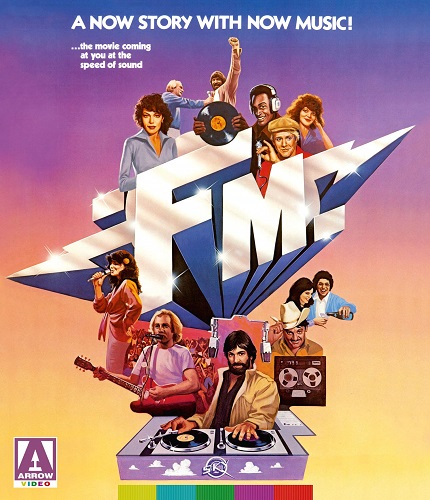
Movie Music Monday – FM

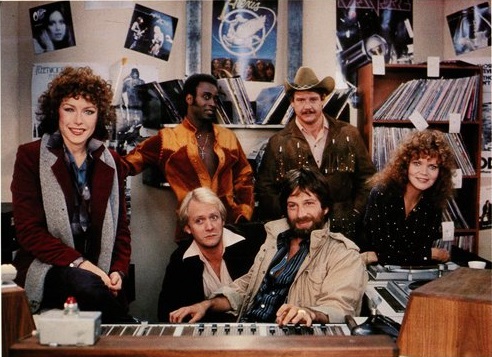
It was on this day in 1978 that “FM” premiered in theaters. As a former radio DJ, I knew it was just a matter of time before this movie would pop up in this feature. I’m surprised that it hasn’t come up already, as it has one of the best movie soundtracks!

Version 1.0.0

The film starred Michael Brandon, Eileen Brennan, Alex Karras, Cleavon Little, Martin Mull, Linda Ronstadt, Jimmy Buffett, and REO Speedwagon (just to name a few). Despite what they say, this film was not the inspiration for WKRP in Cincinnati (which was in the works at the same time).

Honestly, it’s really not that great of a movie. It’s billed as a comedy, but it’s not something you’ll be belly laughing at. It also has some serious moments that are a bit forced. Then there is the lackluster “feelgood” ending that feels more fake than good. Thank goodness for the amazing soundtrack!

The soundtrack is like a snapshot of 1978 rock radio and is loaded with hits. It is so difficult to choose just one song to play here, as there are so many to choose from. Bob Seger, Steve Miller Band, Tom Petty, Foreigner, The Eagles, Boz Scaggs, Linda Ronstadt, Jimmy Buffett, Billy Joel, Joe Walsh, and even Queen! I decided to choose a band that I haven’t featured on the blog before – Steely Dan.

I suppose that it makes sense to pick the movie’s title song, FM (No Static At All). Walter Becker and Donald Fagen wrote this song specifically for the film. Fagen told American Songwriter magazine: “There was a film called FM and we were asked to do the title song,” he said. “And I said, ‘Does it have to have any specific words?’ And they said, ‘No, it just has to be about FM radio.’ We wrote that very quickly, I remember, in one or two days. And we also recorded it very quickly, too. Johnny Mandel came in and did the string chart. It was fun to meet Johnny Mandel.”

The song sold a ton of records and was actually much more popular than the movie. Fagen felt the song could have been a bigger hit if the movie had been more successful. “The song was a hit, but I think we should have seen the movie before we committed ourselves,” he said in 2007. “As you know, it wasn’t a very successful movie.”

As a piece of music, it has a lot going on. Look it up on Wikipedia and the description sounds like a music theory class! You have an overture to start, arpeggios, tonal chords, thirds and fifths, a string section, major chords and minor chords, and all kinds of key changes. It’s actually cool to hear in headphones.

When the movie came out, FM radio listening was on the rise. As the song says, it had less static than AM radio. What made FM radio stations popular was their ability to take chances by playing lesser known bands and album cuts. Listeners couldn’t get enough of it.

The Music of My Life – 1977

Welcome back to The Music of My Life, where I feature ten songs from each year of my life.  In most cases, the ten songs I choose will be ones I like personally (unless I explain otherwise). The songs will be selected from Billboard’s Year-end Hot 100 Chart, Acclaimed Music, and will all be released in the featured year. May 15, 1977, I turned a whopping 7 years old. I have some really great memories of 1977 and I think you’ll get to read about them and how they tie into some of these songs.

I love stories where a radio DJ plays a significant role in the creation of a song. Released in January of ’77, I’m Your Boogie Man is one of those songs.

Written by KC & The Sunshine Band bassist-producer Richard Finch and frontman Harry Wayne Casey, The “boogie” of the title is in the sense of dancing, shaking your booty, and getting down, not with the scary kind of “boogie man.” Harry Wayne Casey tells the story:

“‘I’m Your Boogie Man,’ in the initial writing of it I called it ‘I’ll Be A Son Of A Gun’:

I’ll be a son of a gun
Look what you’ve done

Then I went back and ‘I’m Your Boogie Man’ came into my head because I was thinking about how disc jockeys were always there on the radio. Like it says:

Early morning
Late afternoon
Or at midnight
It’s never too soon
I’m your Boogie Man

It’s taking the theme of the disc jockey being the one that’s there for you all the time, no matter when. So it was as if I was a disc jockey, I’m the Boogie Man. Like if you call in and want to hear a certain song, or talk about what was going on in your life, I’m your Boogie Man. And of course I put in ‘turn me on,’ but that could also mean turned on the radio.”

A specific DJ who influenced this song was Robert W. Walker at Y-100 in Miami, Florida, who was the first to give the group’s hit single “Get Down Tonight” airplay. So Walker “was the Boogie Man that brought all the funk and the good feeling and the vibes to the people every morning,” according to Richard Finch.

I’m Your Boogie Man

Bob Seger had a couple big songs in 1977. Mainstreet was released in April of that year, while an anthem was released in June – Rock and Roll Never Forgets.

According to Seger, he wrote this song after attending a high school reunion. “I wanted to just write an honest appraisal of where I was at that moment in time,” he said. “I was 31 years old and I was damn glad to be here.” He goes on, “A song like “Rock ‘n’ Roll Never Forgets” is just slammin’. When we play that song live people go nuts. At that point in my life I was 31 years old. And the first 10 or 11 years in my career I was making six, eight grand a year and just doin’ it because I loved the music. So I’m writing for Night Moves and I just felt grateful; here I am and I’m starting to make it. You know, rock ’n’ roll never forgets. You build up goodwill over 10 years and you set the stage. “Rock ‘n’ Roll Never Forgets” is a grateful song. I’m grateful to all the people I played for in those small clubs, on the top of cafeteria tables, in gymnasiums and in hockey rinks. Suddenly all those people came out and bought my records and said: “I remember him. I saw him at the high school or hockey rink.”

The song is about aging and the ongoing power of rock music. The song advises the 31 year old listener to return to the rock ‘n’ roll she loved when he/she was 16. The line, “All Chuck’s children are out there playing his licks” is a reference (and tribute) to Chuck Berry, the rock pioneer whose sound is in the DNA of many musicians how followed.

Rock and Roll Never Forgets

The very last single that Elvis ever released before his death was Way Down in June of 1977. It was recorded in the famous Jungle Room at Graceland. It was also a song that had a very interesting chart performance. The song peaked at number 31 on the Billboard Hot 100 Chart at the beginning of August, fell to number 52 by the end of August, and after his death, it climbed back up to number 18 before falling again.

Way Down

In July of 1977, Foreigner released Cold As Ice. It was one of the many songs I remember buying on 45 and spinning on my little record player. It was written by Lou Gramm and Mick Jones.

According to Wiki, “Cold as Ice” was a replacement for a song that was intended for Foreigner but which producer Gary Lyons didn’t feel fit the album. According to Mick Jones “I went home after Gary said this, sat down at my piano and out came the riff for Cold As Ice. And the rest of the song flowed from there.” Lyons said that “When I got back, they played me Cold As Ice and it worked for me. So we went into Atlantic Studios one night to cut it.” According to Ian McDonald, “Gary and I were in there all night working on the vocals. And when we got out of the studio we discovered that a blizzard had been raging. Everywhere was covered in snow, and we heard on the radio that it had been coldest night in New York on record! Somehow that seemed to be a good omen for the song.”

Cold As Ice

One of the biggest movies of 1977 was Star Wars. It comes as no surprise to me that the main title theme was a Top 10 hit!

What can you say about composer John Williams? He conducted this score with the London Symphony Orchestra, but his main orchestra was the Boston Pops Orchestra, with which he conducted other famous film themes. This theme won him a simultaneous Oscar, Golden Globe, BAFTA, Saturn, and Grammy award. THAT is amazing!!

Star Wars Main Title

The next song was released in August of 1977 and people STILL dance to it today! Brick House epitomizes the funky side of the Commodores, who could switch between uptempo R&B and easy listening by swapping singers. “Brick House” was sung by their drummer Walter Orange, with Lionel Richie on saxophone.

In a way, the Commodores recorded it as a “radio edit.” This disco classic is about a woman with a great body. She is “Built like a Brick House.” Lionel Richie says that this is a play on the original phrase, “She’s built like a brick s–thouse.” That’s the reason for the pause with the horn fill between the words “brick” and “house.”

Brick House

A few songs ago, I mentioned the last single Elvis released before his death. For those who have been following this blog a while, you know where I was the night Elvis died. My family was at a drive-in movie theater waiting for the sun to go down when the radio broke the news that he had passed away. The movie we were there to see? Smokey and the Bandit.

The song’s lyrics tell the basic plot of the movie (leaving out the runaway bride element) of making a 28-hour round-trip run from Atlanta, Georgia, to Texarkana, Texas and back to illegally transport 400 cases of Coors beer for an after-race celebration put on by Big and Little Enos.

Back when Max from the PowerPop Blog was hosting a song draft, East Bound and Down was my pick. Here is that blog if you would like to read it:

East Bound and Down

In October of 1977, Johnny Paycheck released a David Allen Coe song that expressed what many a worker felt about their employer/employment. Take This Job and Shove It was a number one country hit for Paycheck and the phrase took on a life of its own in pop culture.

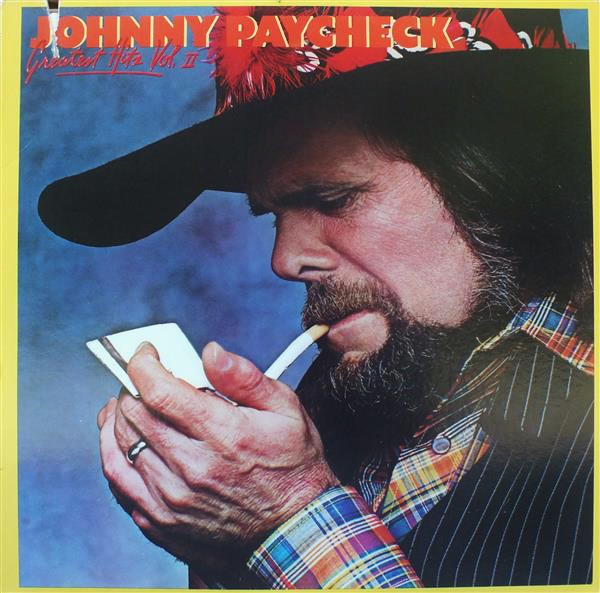
This was one of the songs that was on Paycheck’s Greatest Hits Volume 2 that my grandfather and dad always played up north.

Take This Job and Shove It

The next song makes the list because I became familiar with it not by Billy Joel, but by the wedding band my dad played in. I can’t tell you how many times my brother and I sat and watched TV while the band practiced new songs. Just The Way You Are was one of them.

According to Joel, some listeners missed the point and thought the song was misogynistic because he was telling a woman she wasn’t “allowed” to change. “No, no, no. Don’t go changing to try and please me,” he told SiriusXM in 2016. “People forget these things. If they don’t like what I do, they’ll go, ‘Oh yeah, he hates women. Look at this. Don’t change, stay the way you are, the same old someone that he knew. Wow, he really doesn’t like her. ‘Don’t change for me. You wanna change for yourself, fine. But you don’t have to change for me because I’m happy exactly the way you are. That’s why I love you in the first place.”

Billy wrote this song about his first wife, Elizabeth. A pure expression of unconditional love, he gave it to her as a birthday present. Sadly, after nine years of marriage, Joel and Elizabeth divorced in 1982. Joel’s next two marriages didn’t work out either: he was married to Christie Brinkley from 1985-1994, and to Katie Lee from 2004-2010. “Every time I wrote a song for a person I was in a relationship with, it didn’t last,” Joel said. “It was kind of like the curse. Here’s your song – we might as well say goodbye now.”

Just The Way You Are

The last song was bigger in 1978 because it was released in December of 1977. It is simply an amazing song. Lovely Day was written for Bill Withers’ Menagerie album.

Skip Scarborough was a songwriter and producer who worked with Earth, Wind & Fire, Patti Labelle, LTD, and many other R&B stars before his death in 2003. He wrote the music for this song, and was also the inspiration for the lyrics Withers came up with. In a Songfacts interview, Bill explained: “Skip was a very nice, gentle man. The way Skip was, every day was just a lovely day. He was an optimist. We’re all sponges in a sense. You put us around very nice people, and the nice things come out in us. You put us around some jerks, and we practice being jerks. We all adjust. Did you ever notice the difference in the way you speak to your grandmother or your best contemporary friend? If I had sat down with the same music and my collaborator had been somebody else with a different personality, it probably would have caused something else to cross my mind lyrically. It was a combination of the music and the person and the ambiance in the room.”

One of the highlights of the song is Bill holding a note for about 18 seconds at the end of the song! It may be one of the longest notes held by a singer on a pop song.

Lovely Day

So there you have it – 10 great songs from 1977. I’m sure there are plenty others I’ve missed. Can you name any? Next week, I will age another year and we’ll visit 1978. The sound of music will start to sound a bit different as we get closer and closer to the 1980’s.

See you then!

Music and my Grandparents

Glenn_Miller_Band

As I have mentioned in previous blogs, I can take almost any song and connect it to a person in my life, a life event, or a time period in my life. Today, my iPod shuffle focuses on four very special people – my grandparents. What is interesting as I looked at the music, was that the list of songs for Grandpa D is the longest. Why is that interesting? As I stated in a blog entirely about him, he is the grandparent who was in my life for the shortest amount of time.

Grandpa D’s list consists of big band and country music. As stated in the previous blog, Willie Nelson’s Stardust album will forever be connected with him. September Song, Moonlight in Vermont, Stardust, All of Me, and Georgia on My Mind from that album bring back vivid memories of him. Willie Nelson, in general makes me think of him though. Blue Eyes Crying In the Rain, while I don’t think I ever heard him play it, makes me think of him. So does Angel Flying Too Close to the Ground or the amazing duet with Ray Charles, Seven Spanish Angels.

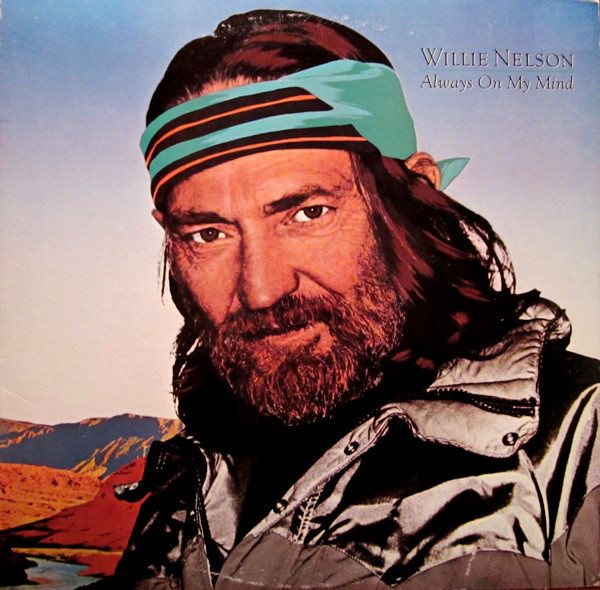
Grandpa died in 1981. In 1982, Willie Nelson released on of his biggest hits – Always On My Mind. I can recall the first time we heard it on the radio. We were driving in the car, the entire family, and it played. My mom started crying immediately. “Maybe I didn’t love you quite as often as I could have. Maybe I didn’t treat you quite as good as I should have. But you were always on my mind.” I remember mom saying that it was like grandpa sending a little message to us. I’ll always remember that.

R-1202919-1361636078-7864.jpeg

Grandpa liked classic country, too. So songs like Behind Closed Doors by Charlie Rich, Amanda by Waylon Jennings, I Believe In You by Don Williams, You Needed Me by Anne Murray, Colorado Cool-Aid by Johnny Paycheck, and Kiss an Angel Good Morning by Charlie Pride make me think of him too.

Grandma D’s list is shortest. I’m not sure why, but I don’t remember much of the stuff she listened to. I remember her clock radio at her house and it always seemed to be on a talk radio station or a news station. I do recall her listening to a few songs, though. Sentimental Journey is a Big Band Classic. I don’t recall if it was in a commercial or on a TV show, but I remember saying that she liked it.

Because we spent a lot of time in Caseville with Grandma, she listened to the same cassettes as everyone else. Johnny Paycheck’s Greatest Hits Volume II included the song Loving You Beats All I’ve Ever Seen, a wonderful ballad about a guy who has seen some of the most beautiful things in the world – but loving his woman beats it all hands down. I recall her liking that song.

The one she loved the most on that album, though, was Rhythm Guitar. As old as the song is, it still paints a picture of people today. “Nobody wants to play Rhythm Guitar behind Jesus. Everybody wants to be the lead singer in the band.” The rhythm guitar player in the group is there to hit the chords and keep the tempo. He is in the background while the lead guitar player has all the solos and such. Nobody wants to be in the background today. In a spiritual sense, Jesus is an example of how we should live our lives. Throughout the Bible, He gives instructions on what to do and not do. However, we as people, often disregard those rules and instructions because we’d rather be the lead singer and live by our rules. I remember that was in a nutshell how grandma explained that song’s meaning to me.

R-2573189-1433357426-2377.jpeg

Here, I would like to include my Aunt Jodi. She is only 4 years older than me. When I think of Grandma and Grandpa D, I think of her. There are songs that make me think of her and some of those great times in Caseville as well. The one that comes to mind immediately is Music Box Dance by Frank Mills. It was one of those instrumentals that you would hear on the radio all the time up there. It was a “current” (as we call it in radio) and it played like every three to four hours. She loved that song and we did too.

Another instrumental that makes me think of her is from Herb Alpert and the Tijuana Brass (who will be mentioned again in a second). We had their Greatest Hits album and they did a song called Zorba the Greek. It was a fun song that started out fast … then the song slowed WAY down……and gradually sped up to the original speed and finished. It was a fun song and I can remember dancing around the living room to it. When it was fast – we were crazy kids running and laughing. When it was slow – we were glad, because we caught our breath from running around at the beginning of the song.

Other songs that remind me of Jodi are Urgent by Foreigner and Ebony and Ivory by Paul McCartney and Stevie Wonder. Those songs were on vinyl albums that she had. My grandpa had this big console record player. It was the one that had the lid that flipped up and the turntable was inside. I recall her listening to those as well as David or Shaun Cassidy on there. I am sure she had some other albums, but there is one more I recall….

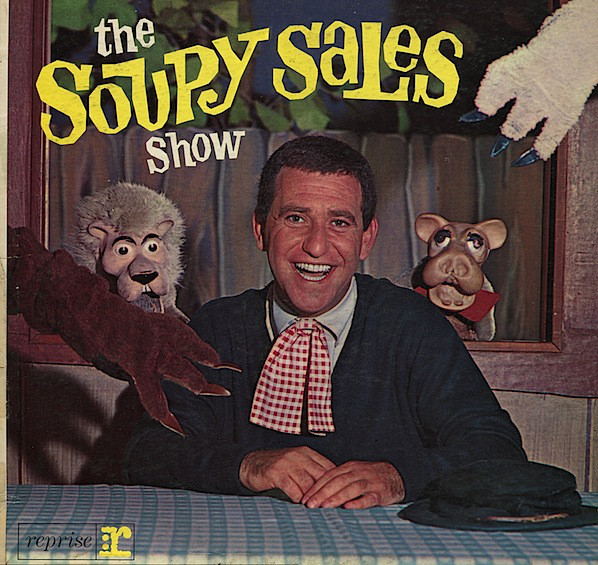
The last song that makes me think of her is called “Soupy Wails”. Another instrumental from an album called “The Soupy Sales Show”. It’s basically the Soupy Sales TV show on record. All the characters are there with songs they wrote – White Fang, Black Tooth, Hippy, and Pookie. This song is played because the neighbor tells Soupy to cut out the singing so they play an instrumental. Great stuff!

R-2113139-1344088751-9342.jpeg

Grandma P’s list is a short one, but the songs on it generate powerful memories. A Taste of Honey was a song that was popular and recorded by a few artists. The version I am talking about was done by Herb Alpert and the Tijuana Brass. Why does this make me think of her? Because Grandma loved the Detroit Tigers. I remember many Sundays going over and watching the game on TV after eating dinner. Most of the time, she had it on the radio. The voices of the great Ernie Harwell and Paul Carey called the games while we sat in the sun porch or outside. One of the sponsors of the game was the Honey Baked Ham Company. They always used that song in their commercials. Yeah, a long stretch….but it always reminds me of those ball games and Grandma.

Grandma loved Dean Martin. He was her favorite singer. One day we got into a discussion about other Italian singers and she mentions that she she never liked Tony Bennett. Can you imagine?! Here is a guy who is STILL making music today! He’s 90 and a musical ICON. His style was very different from Dean or Sinatra. She said once that she couldn’t stand “that pimple faced, no talent, wanna be”! It still makes me laugh to think about it. One day I went to a record store and bought a few Tony albums. The funnest part of our visits became hiding them in places where she might find them (on her pillow, in the fridge, on the kitchen lighting, in the bread box….). Sometimes we were there to catch her reaction, and sometimes it was a phone call saying she found it. Fun times.

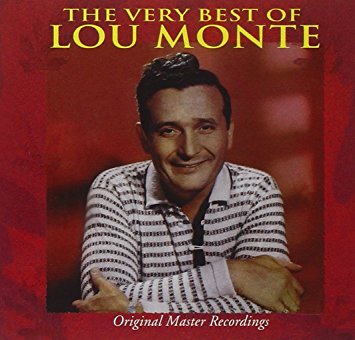
The last song that reminds me of her is Lazy Mary by Lou Monte. Lou was an Italian singer and it is a tarantella type song that has some “risque” lyrics. It is a song that many singers have sung, but Lou had a hit with it. When I got married, I wanted a dance with my grandma. I chose Lazy Mary. I am sure that I wore her out dancing to such a fast song, but I can still remember the smile on her face during it. Priceless memory.

71ULQrMiSLL._SX355_

Grandpa P’s list is mostly big band music. I remember him telling me that his favorite song was String of Pearls by Glenn Miller. While many people remember Glenn for In The Mood, I feel String of Pearls is one of his best. A couple other Glenn Miller songs that remind me of him are the classics Sunrise Serenade and the counterpart, Moonlight Serenade. Begin the Beguine by Artie Shaw, Ciribiribin by Harry James, and many other big band songs remind me of him, too.

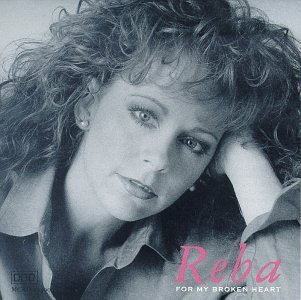
The odd song on this list is one he never heard. It makes me think of him because a friend of mine, Allyson, bought me a CD for Christmas the year my grandpa died. She knew that I was close to him and said there was a song on there that I had to hear. She said to listen to the lyrics and think about him while listening. That song was If I Had Only Known by Reba McEntire.

If I had only known
It was the last walk in the rain
I’d keep you out for hours in the storm
I would hold your hand
Like a life line to my heart
Underneath the thunder we’d be warm
If I had only known
It was our last walk in the rain

If I had only known
I’d never hear your voice again
I’d memorize each thing you ever said
And on those lonely nights
I could think of them once more
Keep your words alive inside my head
If I had only known
I’d never hear your voice again

You were the treasure in my hand
You were the one who always stood beside me
So unaware I foolishly believed
That you would always be there
But then there came a day
And I turned my head and you slipped away

If I had only known
It was my last night by your side
I’d pray a miracle would stop the dawn
And when you’d smile at me
I would look into your eyes
And make sure you know my love
For you goes on and on
If I had only known
If I had only known
The love I would’ve shown
If I had only known

POWERFUL! Typing those lyrics bring tears to my eyes instantly! In truth, you could think about any loved one who has passed away when you hear this song. I do. The message is clear – treat every encounter with your loved ones as if it might be your last because you never know.

41DH24CXPSL

Our band director, Mr. Shaner, used to write announcements on a grease board every day. At the end of them, he’d always have some quote to think about. One of them, in particular, I have NEVER forgotten. It plays in to what I just said:

“Live every day as if it were your last – someday, you’ll be right”.

Make every day count. Always tell someone you love them. Treasure ever moment you have with family. Life is too short. Make memories that will last long after those special people in your life are gone!