The Music of My Life – Decade Extras – The 1980’s

This is sort of a continuation of the Music of My Life feature. It focused on music from 1970-2025. It featured tunes that have special meaning to me, brought back a certain memory or a tune that I just really like. I found that with the first three decades, there were songs that I didn’t feature. So I sat down with my original lists and selected some songs that “bubbled under,” so to speak.

I figured a good way to present them was to focus on a decade. 10 years = 1 song per year = 10 songs. Last week finished up the 70’s, and this week we’ll move on to the 80’s. So, let’s check out a few “Decade Extras.”

1980

Let’s kick off the decade with a country/pop crossover. Back when we first got cable TV, the movie channels would run movies a lot. They would schedule it in the morning, afternoon, evening, and overnight kind of rotating them so people had options on what time worked best. I remember 9 to 5 being on all the time. My mom always seemed to be watching it if it was on. I’m pretty sure she had them theme song memorized.

Dolly Parton wrote (and sang) this for the 1980 film of the same name. The film, which was her acting debut, stars Jane Fonda, Lily Tomlin, Parton, and Dabney Coleman. It dealt with life in an American office, where the workday was 9 a.m. to 5 p.m. She wrote the song while the movie was filming.

This song won the 1981 Grammys for Best Country Song and Best Country Vocal Performance, Female; it also received a Grammy nomination for Best Album Of Original Score Written For A Motion Picture Or Television Special and received Oscar and Golden Globe nominations. It also won the People’s Choice Award for Favorite Motion Picture Song.

Mojo magazine asked her what lyric she’s most proud of, Dolly Parton said: “One that I remember the very moment I wrote when I was working on ‘9 to 5,’ was ‘Pour myself a cup of ambition.’ I went, ‘Yeah that’s so good.’ That has really followed me oh through the years.”

She wrote the lyric in LA. “I would watch things going on, on the set,” she recalled to Mojo. “At night, I would go back to the hotel Bel-Air. I would get my guitar, and I would start putting pieces together. I would work on songs, clicking my nails on a typewriter.”

“I had just made myself some coffee, because I was going to spend two or three hours working on the song,” Parton continued. “I always drink coffee when I write. And I just remember saying, ‘Tumble out of bed, and stumble to the kitchen.’ What else you doing? I looked at my coffee cup and thought, ‘I pour myself a cup of ambition.'”

“Sometimes when those lines come, you just think, ‘Oh my goodness that is so good. I’m so proud of myself,” she concluded. “And then of course, many things spiritual based, I always look up and say, ‘Hey, thank you, Lord. I like that one.'”

As old as the song is, it still sounds good today.

9 to 5

1981

There are a handful of songs that “define” the 80’s for me. Your handful may or may not be different from mine. One of the greats that always seems to pop up on 80’s collections and as a “favorite” 80’s song was a phone number that everyone knows!

The opening guitar lick grabs your attention and that drum kick into the full band hooks you. This ode to a gal who doesn’t even know the singer soared up the charts to become a Top 5 single.

For years, Tommy Tutone (who isn’t the name of a person, just the name of the group) has used a story that there was a Jenny and she ran a recording studio. They have also said it was inspired by a real girl who band member Tommy Heath met in a nightclub and 867-5309 was the phone number of her parents. None of this is true, but it got them a lot more media attention, since it made a better story.

Alex Call, the songwriter, came up with it while sitting under a plum tree. He told Songfacts the story: “Despite all the mythology to the contrary, I actually just came up with the ‘Jenny,’ and the telephone number and the music and all that just sitting in my backyard. There was no Jenny. I don’t know where the number came from, I was just trying to write a 4-chord rock song and it just kind of came out.

This was back in 1981 when I wrote it, and I had at the time a little squirrel-powered 4-track in this industrial yard in California, and I went up there and made a tape of it. I had the guitar lick, I had the name and number, but I didn’t know what the song was about. This buddy of mine, Jim Keller, who’s the co-writer, was the lead guitar player in Tommy Tutone. He stopped by that afternoon and he said, ‘Al, it’s a girl’s number on a bathroom wall,’ and we had a good laugh. I said, ‘That’s exactly right, that’s exactly what it is.’

The rest is history.

867-5309

1982

I heard Foreigner for the first time while listening to Casey Kasem on American Top 40. I really liked their sound. Lou Gramm’s voice really stood out for me.

Juke Box Hero was a song that was in a good rotation when I was at the classic rock station. It has become a staple on classic rock playlists. The story behind the song is one that I love:

This song was written by Foreigner guitarist Mick Jones and lead singer Lou Gramm. In a Songfacts interview, Jones said: “That stemmed from an experience that we had, I think it was in Cincinnati. We’d gone to the arena for a sound check, and it was pouring down rain, and there were a bunch of fans waiting at the door when we went in. When we came back for the show later on, all that was left was one lonely fan, a young guy waiting out there in the rain, soaked to the skin. I thought, well, he’s waiting like five hours here, maybe we’ll take him in and give him a glimpse of what happens backstage at a show. And this kid was just mesmerized with everything. I saw this look in his eyes, and I thought, he’s seeing this for the first time, he’s having this experience. And I just imagined what was going through his mind. And I’d been toying with this title, ‘Juke Box Hero,’ I thought it was almost a satire on what we did and how it was perceived from an audience level, and public. That’s how it originated.”

How cool was that kid’s experience?! Kudos to the band for making this happen. As a bonus, they got a hit song out of it!

Jukebox Hero

1983

I was late to the Stevie Ray Vaughn party. Very late. I didn’t hear one of his songs until after his death. I had gotten together with a buddy I hadn’t seen in a while. He popped in a cassette of Stevie. I was blown away on so many levels. His voice, his playing … I’d never heard anything like it.

After a 1982 performance, Stevie and the Double Trouble band got the attention of Jackson Brown. He told the guys that they could use his personal studio to record a demo. They did just that over Thanksgiving weekend 1982. That demo was heard by a talent scout, who presented it to Epic Records, who signed Vaughn to a record deal. Epic remixed the demo, which would become his first album, Texas Flood.

While the song received heavy airplay, it didn’t get any love from the charts. The music video, the only one from this album, got heavy rotation on MTV in 1983. What he could have done if he was still around, one can only guess.

Love Struck Baby

1984

Marching band was one of my favorite things about high school. At football games and pep assemblies, we’d often play songs that were familiar to us. We Got The Beat was one they were still playing long after I graduated. Neutron Dance from the Pointer Sisters was one of those “pep songs.”

Allee Willis (who wrote Earth, Wind & Fire’s hits “September” and “Boogie Wonderland,” wrote the lyrics for this song. She sums up the song, saying: “That’s basically: if your life isn’t working, get up off your ass and change it. Because it’s really up to you.”

Fun Fact: This song was released at the high of the Cold War when there was a great deal of tension between the United States and Russia, as both had nuclear missiles aimed at each other. Willis Says: “The Russian government named me as one of the most dangerous people living in the United States, because they mis-translated it as ‘Neutron Bomb.’ The first verse they translated as ‘A powerful nuclear explosion is approaching, it will annihilate everyone; who cares if you have no car, no job, no money, just dance, dance, dance.’ And this was a huge article in Pravda, and I was supposed to be going to Russia with BMI, and I wasn’t let in the country. I mean, it was nuts.”

The song was featured in the film Beverly Hills Cop and the video includes scenes from the movie.

Neutron Dance

1985

Next is a song that I almost always played at weddings. If it wasn’t the bride and groom’s wedding song, it was one of the slow songs that packed the dance floor. The Search is Over by Survivor started as a title that was scribbled in Jim Peterik’s notebook.

He said, “It wasn’t about my life as much as a friend of mine who had a girlfriend – really a play pal throughout their growing up years – and never thought it could be anything more than that. It was looking him straight in the face that this was the girl of his destiny, and he looked everywhere to find that dream girl only to come back to the sandbox. This couple is still married and going strong. It became kind of an allegory to looking for what is obvious; having it in your hand and you being too close to even realize it.”

He told Songfacts, “Mechanically, the whole thing kind of started in my head driving down the street. I turned on my tape recorder and I sang the whole melody top to bottom into my tape recorder. The way it modulated into the chorus was very unique. When I got to the piano a few hours later, I had to find out where it was going and what it was. I brought it to rehearsal, showed it to the guys and worked with Frank (Sullivan) one on one on the song – he loved it. It was called The Search Is Over, but I still didn’t know exactly what the hook of the song was going to be. I thought of this couple, and when we came up with the line, ‘Then I touched your hand, I could hear you whisper, the search is over, love was right before my eyes,’ we looked at each other’s arms and we both had goose bumps. It was the magical turn of that phrase and realizing what this song was about. I think we discovered the song as we were writing it.”

It’s a beautiful song.

The Search Is Over

1986

I had heard Land of Confusion by Genesis on the radio long before I saw the video. It was odd to hear a “political” song from them. When I saw the video, I remember thinking that those puppets were a bit scary, not to mention ugly.

Songfacts says, “The very popular video was made using puppets created by Peter Fluck and Roger Law, who had a British TV series called The Spitting Image. The show would often make fun of Genesis, and by hiring their tormentors, the band proved that they could take a joke.

Genesis puppets had been used on the show before, but they made new ones for the video – not very flattering ones either. It was a way for the band to lighten their image from their days as earnest prog rockers. The video could go in the Cold War cultural time capsule: at the end, the Ronald Reagan puppet accidentally launches a nuclear missile.”

I guess the puppets didn’t freak everyone out, though. The video won the 1987 Grammy for Best Concept Music Video – it was the only Grammy Genesis ever won, and they weren’t even in the clip. At the MTV Video Music Awards, the video was nominated in six categories, but lost them all to Peter Gabriel’s “Sledgehammer.”

Land of Confusion

1987

The song Hot Hot Hot was first released by the group Arrow in 1982. Many cover songs followed, but the most recognizable was done by Buster Poindexter (aka David Johansen). It garnered extensive airplay through radio, MTV, and other television appearances.

For many years, people would request this at weddings and parties so they could do a conga line. It was a pretty popular tune . One venue would bring out their roast beef, which they would light on fire, and wanted us to play the song when they did it.

Over time, I was easily burned out on the song.

Hot Hot Hot

1988

I think every friend of mine had a copy of the Cocktail soundtrack in 1988. The Tom Cruise movie was what all the girls seemed to be talking about. I had been getting requests for Kokomo by the Beach Boys and it was the only place I could find it.

Mike Love of the Beach boys explained to Ssongfacts how it came together: “Terry (Melcher) was in the studio doing a track with a demo, because we were asked to do the song for the soundtrack of the movie Cocktail, featuring Tom Cruise. So we were asked by the director to come up with a song for this part of the movie where Tom Cruise goes from a bartender in New York to Jamaica. So that’s where I came up with the ‘Aruba, Jamaica’ idea, that part.

So Terry was in the studio doing the track and they didn’t have the chorus yet. They just had a certain amount of bars, but there was nothing going on there. I said, ‘Well, here’s what I want to do.’ And I remember I had told them about the part before. But he said, ‘Uh huh. How does it go again?’ So I literally, over the phone – he was in the studio and I was on the phone – sang [deadpan slow recitation]: ‘Aruba, Jamaica, ooo, I want to take you.’ So he’s writing that down, and I’m singing it in the scene, the notes, and the timing of it in tempo to the track.”

Regarding the composition of the song, Mike said: “The verses and the verse lyric was written by John Phillips of the Mamas and the Papas. He wrote ‘Off the Florida keys, there’s a place called Kokomo, that’s where we used to go to get away from it all.’ I said, ‘Hold on. We used to go sounds like an old guy lamenting his misspent youth.’ So I just changed the tense there. ‘That’s where you want to go to get away from it all.’ So that was the verse. And it was very lovely. But it didn’t have such a groove, I didn’t feel.

So I came up with the chorus part: ‘Aruba, Jamaica, ooo, I want to take you to Bermuda, Bahama, come on, pretty mama. Key Largo, Montego…’ That’s me, the chorus and the words to the chorus was Mike Love. The verse was John Phillips. The bridge, where it goes, ‘Ooo, I want to take you down to Kokomo, we’ll get there fast and we can take it slow. That’s where you want to go, down to Kokomo,’ that’s Terry Melcher. Terry Melcher produced the Byrds and Paul Revere & the Raiders, very successful producer. But he actually produced that song and he wrote that bridge part, which Carl Wilson sang beautifully. And I sang the rest of it. I sang the chorus and the verses on that particular song.

Before “Kokomo,” the last US #1 for The Beach Boys was “Good Vibrations in 1966. At 22 years, it was the longest any act had gone between US #1 hits until Cher topped the charts with “Believe” in 1999. Her previous #1 hit was “Dark Lady” in 1974, setting the new record at 25 years.

Kokomo

1989

When you think about “Super Groups,” a few come to mind: The Traveling Wilburys, Audioslave, Cream, Blind Faith, and Crosby, Stills, Nash, and Young for example. In 1989, there was another super group who had a monster hit.

Songfacts explains: Bad English was a supergroup comprised of lead singer John Waite, keyboard player Jonathan Cain, bass player Ricky Phillips, guitarist Neal Schon and drummer Deen Castronovo. Waite, Cain and Phillips had been in a popular British band called the Babys, while Schon, Castronovo and Cain were in Journey (Cain was in both groups). It was quite an assemblage of musical talent, and between them they wrote 11 of the 13 songs on their self-titled debut album. “When I See You Smile” wasn’t one of them.

The song was written by Diane Warren, who had a knack for supplying popular rock musicians with pop hits: she wrote “Nothing’s Gonna Stop Us Now” for Starship, “Who Will You Run To” for Heart, and “I Don’t Want To Miss a Thing” for Aerosmith. She had also written the song “Don’t Lose Any Sleep,” which appeared on Waite’s 1987 solo album Rover’s Return.

The band was signed to Epic Records, whose A&R man Don Grierson implored them to record a hit. They liked him, so when he suggested “When I See You Smile,” the band agreed to record it, since they knew it would supply Grierson with his hit.

This is by far the biggest hit for Bad English, but it’s not their only one. Their first single was “Forget Me Not,” which made #45 in the US. “When I See You Smile” was their next release, and “Price of Love” came next, charting at #5. They released one more album (Backlash, 1991) before terminating the project.

John Waite told Songfacts, “It was fun for a year. And then people reverted to type. I think the Journey guys wanted to be back in Journey and I wanted to be back solo. We had a very valiant attempt at making a (third) record, but we weren’t given enough time to write it. We tried, and we almost made it.”

It was (and still is) a great slow dance song!

When I See You Smile

So there you have it, a peak into some tunes that did not make my original list. If you’re an 80’s fan, we’ll visit the decade one more time next week before moving on to the 1990’s.

Thanks for listening and for reading!

The Music of My Life – 1991

Welcome back to The Music of My Life, where I feature ten songs from each year of my life.  In most cases, the ten songs I choose will be ones I like personally (unless I explain otherwise). The songs will be selected from Billboard’s Year-end Hot 100 Chart, Acclaimed Music, and will all be released in the featured year.

1991 saw big changes for me.  In April, a former coworker called to ask if I wanted a full time radio job at his station.  It was a small market on the west side of the state (In Ludington). My girlfriend at the time and I had just had a big argument and I figured “Why not?!”

I was all by myself, in a place where I really only knew one person, at a job that decided to pay less than what I was told when I moved.  It was lonely and I struggled a lot.  The day I turned 21, I went to the store to buy beer and they never even carded me!

That summer would be one of my favorite summers.  Michigan’s West side is just beautiful.  I had never seen sunsets like those before!  They were breathtaking. 

Musically, there were some powerful tunes released in 1991.  Some of them wouldn’t play into the events of my life for a few years, but when they did …

The first pick from ’91 is a song that I have found people either love or hate.  I’m not sure why. Personally, I love the guitar sound and the harmonies in it, and I love the lyrics.

More Than Words is a song that was written by Gary Cherone and Nuno Bettencourt of Extreme.  Nuno says, “The word ‘love’ itself gets really diluted, so we just wanted to say, ‘It’s not really about saying it,’ because everybody gets really worked up when somebody says that to each other. They say, ‘I love you,’ and everybody goes, ‘Oh my God! It must be serious. It must be heavy.’ It’s like, ‘Eh… it’s easy to say that.’ It’s really about showing it constantly and continuously in a relationship. We knew that was the message.”

The song was a huge hit for them.  People who rushed out to buy their albums were quite surprised when they heard that the band primarily played Rock music.  The band has called the song “both a blessing and a curse.”

More Than Words

R.E.M. had released the very thought provoking Losing My Religion from their Out of Time album as their first single.  Their follow up was a song that could not be more different! That song was Shiny Happy People.

Michael Stipe calls this “A really fruity, kind of bubblegum song.” In an interview with The Quietus, he said that he was a bit embarrassed when it became a big hit, but it’s an important song because it shows a different side of him. Said Stipe:

Many people’s idea of R.E.M, and me in particular, is very serious, with me being a very serious kind of poet. But I’m also actually quite funny – hey, my bandmates think so, my family thinks so, my boyfriend thinks so, so I must be – but that doesn’t always come through in the music! People have this idea of who I am probably because when I talk on camera, I’m working so hard to articulate my thoughts that I come across as very intense.”

Kate Pierson from the B-52s sang backup. She was in demand for her distinctive vocals after the B-52s achieved mainstream success with Love Shack.

In 1999, R.E.M. performed this on Sesame Street as “Furry Happy Monsters.” Kate Pierson’s part was performed by a Muppet that looked like her, voiced by Stephanie D’Abruzzo, a Muppeteer who was also a huge fan of the band.

Guitarist Peter Buck has two daughters who were big fans of the show. “You just looked around,” he recalled to Mojo in 2016, “going, Man this is a weird way to make a living.”

I had heard the song on the radio but it wasn’t until I was sitting at home watching Sesame Street with my oldest that I gained an appreciation for it. 

Shiny Happy People

My next one had been on my iPod for years before the lyrics really hit me.  My ex and I were at a point where all we did was argue.  It was a very unhappy situation. 

It was after an argument that I was in the car and heard Mariah Carey’s “I Don’t Wanna Cry.” Those lyrics were something I could have wrote;

Once again we sit in silence
After all is said and done
Only emptiness inside us
Baby look what we’ve become
We can make a million promises
But we still won’t change
It isn’t right to stay together
When we only bring each other pain

It stung, but it was true.  The end was upon us.

This was Mariah’s fourth consecutive #1 hit on the Hot 100, making her the first solo artist and female artist in Billboard history to have their first four singles top the chart.

I love her vocal and the guitar work in this one

I Don’t Want to Cry

Long before I stood next to a very drunk Hank Williams Jr at a urinal in Nashville, he had put out an album in ’91 entitled Pure Hank.

One of the singles that was released was If It Will It Will.  It’s very easy for us to get caught up in worry, but worry isn’t good for us.  Hank’s simple advice is something we should all remember,

“If it will, it will.  If it won’t, it won’t.”

The weirdest thing about this song is the video.  Right at the beginning, Little Richard shows up.  To me, he’s out of place and isn’t utilized very well. Even when he does sing along, you can barely hear him. The song, however, is a favorite.  It starts off with a  bluesy vocal/introduction and then kicks.

If It Will, It Will

As I compile these lists for each year, I always seem to stumble on one that could be used for another feature. The next song would certainly work for my Movie Music Monday feature. It was a big hit from the Robin Hood: Prince of Thieves soundtrack.

(Everything I Do) I Do It For You was written to order for the movie. It was initially written by American film composer Michael Kamen. The middle eight, break, outro and arrangement added by Bryan Adams and producer Mutt Lange. Adams used a line in the movie, “I do it for you…” as the basis for the song, and they had it written in about an hour.

The song didn’t meet with Hollywood approval. The film company wanted the song to have an instrumentation that was in line with the film’s era. Can you imagine the song featuring lutes, mandolins, and the like? The film company eventually relented, but still buried the song midway through the credits. They were obviously unaware of the huge hit they had on their hands.

The reason it made my list is because of an ex-girlfriend. It is not because it was “our song” or anything like that. She asked me if I knew the song. Naturally, I did. It was a big bridal dance song. She told me to listen to it again, but to listen to it as if God was speaking the words (making changes to tense and such).

You can’t tell me it’s (your) not worth dying for
You know it’s true
Everything I do (did)
I do (did) it for you

I had never thought of it that way before. I always remember that conversation when I hear the song.

(Everything I Do) I Do It For You

I love Bonnie Raitt. I love listening to her sing and watching her play. She is blues. She is country. She is pop. She is folk. She is something!

She was no stranger to the music scene. Her first album came out in 1971! She also did some session work. She’s collaborated with artists like John Prine, Jackson Brown, The Pointer Sisters, Warren Zevon and Leon Russell. She finally had some success in 1989 with her award winning album Nick of Time.

The first time I heard Something To Talk About on the radio, it stuck out to me. It was so different. As a blues fan, I could hear that blues influence and I feel in love with the song. The song would go on to be her biggest chart hit in the United States, rising to #5.

She was never a singles act, but after her four Grammy wins for the album Nick Of Time, her songs started getting radio play. With radio play, they began showing up on the chart. “Something to Talk About” was the lead single to her next album, Luck of the Draw. Because of her prior success, the song was highly anticipated and radio jumped on it. The song won a Grammy Award for Best Female Pop Vocal Performance. Bonnie beat out Oleta Adams, Mariah Carey, Amy Grant and Whitney Houston.

Sadly, it is also a karaoke favorite that is destroyed by many a “wanna be” singer in pubs everywhere! I’ll take the original, thank you.

Something To Talk About

The next song is on the list not because of the content, but the title. “Things That Make You Go Hmmm” became a sort of catch phrase. Arsenio Hall used it on his show all the time. I still hear people using it today!

C+C Music Factory was a dance floor staple when I was DJing. “Gonna Make You Sweat” is still one that I hear when I go to weddings. “Things That Make You Go Hmmm” was a huge dance song when it came out. It had a cool dance beat and some catchy lyrics.

Songfacts says this:

In the early ’90s, before gangsta rap took hold, rap songs were often lighthearted and clever, telling self-deprecating stories over dance grooves. Examples of this would be “Bust a Move” and “Funky Cold Medina.”

I think that is why that early 90s rap is still popular today. They really were very clever. They were also light on profanity. It isn’t odd to see “MF” and other profane words right in the titles as time goes on. That always made me laugh because how can anyone like a song where 75% of the lyrics are bleeped out? I guess that’s one of those … Things That Make You Go Hmmm….

Things That Make You Go Hmmm

The next song was one that was never released as a single. I became familiar with it after my grandfather passed away in 1994. I was extremely close to my grandpa and was heart broken when he passed. I received Reba McEntire’s For My Broken Heart album from my dear friend Allyson.

We both have birthdays in May and when life wasn’t so complicated, we’d meet for coffee or lunch to celebrate. She gave me this CD as a gift. She mentioned that she knew I was still grieving the death of my grandpa. She told me she thought of me when she heard the song, If I Had Only Known.

Quick background on the album. Reba recorded this album after losing many members of her touring band in an airplane crash. In her liner notes she says the album is “a form of healing for all our broken hearts.”

When I listened to this song for the first time, I thought about my grandpa (as Allyson had suggested). It moved me to tears. A decade later, I would hear it and think of my mom, too.

The lesson of the song? If we were aware that we were experiencing the “last” of something, we’d live life a bit differently.

If I Had Only Known

I always love to hear stories about how a song almost didn’t happen. That was the case for I Can’t Dance by Genesis. It came from a mix of a Jam session and writing session.

The lyrics are made up of bits that Phil Collins improvised in the studio. When they started working on it, they decided to just write spontaneously to keep from over-thinking it. Mike Rutherford first created the main riff of the song he called “Heavy A Flat.” Which led Phil to suddenly improvise the basic concept for “I Can’t Dance”. The riff was actually inspired by a Levi Strauss & Co. television commercial.

Originally, the band did not think of it as anything more than a joke recording that would be discarded quickly. They felt this way because the song was too simple, too bluesy, and unlike Genesis’ style. Tony Banks said, “It was one of those bits you thought was going to go nowhere. It sounded fun but wasn’t really special.”

When Banks decided to add keyboard sound effects to complement Rutherford’s playing, “I Can’t Dance” took on an entirely different feeling. The band came to appreciate the sly humor inherent in the song and chose to not only record it properly, but to put it on the album as a single.

The video created a lasting image thanks to the “silly walk” the three band members did. This walk was something Phil Collins did from time to time. He got the idea for it when he attended drama school and noticed that the worst dancers would always lead with the hand and foot on the same side. The dance has become sort of iconic.

I think that I relate to this song in that I can’t really dance. I sway when slow dancing. Fast dancing? HA! Forget it. I can’t. When I try, I look like Elaine from Seinfeld.

I Can’t Dance

When I was DJing at the local VFW, line dancing was a pretty big thing. There were all kinds of country line dances. At one point I had to make a list so I knew what dances people were doing to certain songs.

“Can you play Moo Moo Land?”

That was what someone came up and asked me one day. Moo Moo Land? What in the world was that!? Naturally, my dad knew it because there was a dance they did to it. It was called “Justified and Ancient” by the KLF and featured Tammy Wynette! What a weird pairing!

But it gets weirder! According to Songfacts:

The title “Justified & Ancient” refers to the KLF’s pseudonym and earlier incarnation, “The Justified Ancients of Mu Mu” (The JAMs). The JAMs took their name from Robert Shea and Robert Anton Wilson’s sci-fi tinged, conspiracy theory-laden Illuminatus! Book series in which The Justified Ancients Of Mu Mu are a fictional subversive cult who have been around since pre-history. The song lyrics describe the Justified Ancients making their way to Mu Mu Land in an ice cream van.

Huh?!

Even Tammy was unsure about it. She originally thought the song was called “Justified and ANXIOUS.” She said, “As it was, I didn’t understand what some of the words meant. I know about ice cream vans, but I’d never heard of a 99 before,” she added. “Bill explained it to me and now it makes perfectly good sense. I’m still not sure about Justified and Ancient though.” (A 99 is an ice cream with a flake in it).

Really, it is a great dance record. It’s neat to hear Tammy Wynette on it and it really revitalized her career.

Justified and Ancient

Last week I threw in that crazy Bingo Boys song at the end of my list. This week, I have to throw in another totally ridiculous song at you. Again, it is one that my best friend Jeff and I laughed about – a lot.

The group 2nu (pronounced “two – new”) was a pop group out of Seattle, Washington. When they first hit the scene, they has yet to come up with a name. A radio DJ said that the band was still too new to have a name, and they decided that worked. They have only released three albums, the first in 1991. What makes them unique (if that is the right word) is that their songs consist of sound effects, rhythmic beats, and a spoken word lyric. Their first single was “This is Ponderous.”

The song is more bizarre than ponderous. My buddy and I used to laugh at the “language the narrator doesn’t understand.”

Feel free to file this in the “What the heck was that?” folder…

This Is Ponderous

And with that silliness, we wrap up 1991. I mentioned that I can’t dance this week. Next week, as we dive into 1992, it contains the only fast song that I will dance to. It is an interesting list. It includes three cover songs, one parody song, three movie songs, a song about a royal feud, a song for the hard workers, and a song for the poor. I think you’ll enjoy it.

Did I forget one one your favorites from 1991? Drop it in the comments. I’d love to see if it was one that was on my radar.

I truly hope you are enjoying this series. Thanks for reading!

The Music of My Life – 1986

Welcome back to The Music of My Life, where I feature ten songs from each year of my life.  In most cases, the ten songs I choose will be ones I like personally (unless I explain otherwise). The songs will be selected from Billboard’s Year-end Hot 100 Chart, Acclaimed Music, and will all be released in the featured year.

I turned sweet sixteen in 1986. MTV was 5 years old and music videos were becoming more and more iconic. To make that point, we kick off my list with a video that is often listed as one of the best of the 1980’s.

Robert Palmer released Addicted to Love in January of 1986. It was accompanied by a video where he is singing in front of a “band” of beautiful women who look exactly alike. They wear lots of makeup and identical outfits as they pretend to play the instruments.

According to songfacts: the funny thing about the video is that the models posing as a band were selected precisely because they did NOT know how to play the instruments. As a result, each girl is keeping her own time and moving to a different beat. The video is constantly parodied, including in a Pepsi commercial with Britney Spears.

You might say the song came to Palmer in a dream. It all started with a guitar riff that came to him in a dream one night. He told Q magazine in 1988, “That noisy riff woke me up. I went downstairs, got out the tape recorder, then went back to bed. Next morning, I thought, Phew, caught one there!”

From the “What Might Have Been” file: Palmer wanted this song to be a duet with Chaka Khan, and he almost got his wish. He recorded it with her, but Chaka’s label, Warner Brothers Records, would not allow her voice to be used on the record, so Palmer had to erase her part and re-record her high notes before releasing it.

If you’re going to be addicted to something, love is a good thing, wouldn’t you say?

Addicted to Love

Next, we have a song whose video was like nothing that had been done before. Depending on the source, some say it was the 4th most played video on MTV. The video is so fun to watch, you may actually forget that the song is full of sexual innuendos.

Sledgehammer was a BIG number one song for Peter Gabriel. It was his first solo number one. It actually bumped his old band, Genesis, out of the number one spot.

The song was influenced by the ’60s soul music Gabriel listened to as a teenager, in particular Otis Redding, who Peter saw perform at the Ram Jam club in London in 1967. The horn section was typical of this sound. As a matter of fact, the horn section that he used was the legendary Memphis Horns, who played on several hits from Stax Records.

The wildly innovative video was directed by Stephen R. Johnson and featured stop-motion claymation techniques. It swept the MTV video music awards in 1987, and is considered a major breakthrough. It was a bit hard for Gabriel, though. He once remembered how he spent 16 hours lying beneath a heavy sheet of glass for the video, while each frame was shot, one after the other.

I’ve always felt that this song had at least some influence in the blues. It just sounds like a great blues song to me.

Sledgehammer

Songfacts says that this song has a lot of haters and has appeared on various “worst of” lists over the years. An example: it was listed #1 on VH1’s 40 Most Awesomely Bad Metal Songs. As a Michigan guy, I can tell you that they used this song as the Detroit Pistons theme song for years. Heck, they use this song at all kinds of sporting events.

Europe’s The Final Countdown is like an anthem. The iconic keyboard riff was composed by lead singer Joey Tempest five years before the song was recorded. The band’s keyboard player Mic Michaeli had lent him the instrument.

Despite writing the song, Tempest still cannot believe the success. He said, “It was quite a surprise that the song ‘The Final Countdown’ became such a big hit because it was written for the band, it was written for our concert, it was written to be the opening song in our concert. It was almost six-minutes long, it was never intended to be a short pop hit or anything, it was very much a surprise and its been used for all kinds of events, anything from Formula 1 to boxing. It’s been used a lot.”

I liked this song before Arrested Development aired on Fox, but came to love it even more because of the way they used it on the show. Will Arnett is a magician on the show and they often used the song as background music as he performed his “illusions.” The song only made a very funny scene, even funnier for me.

The Final Countdown

The next pick is not quite a duet, but it brought back a legendary voice and put her back in the spotlight. It almost didn’t happen, but Eddie Money stepped in and made it happen.

My favorite track on Eddie Money’s Can’t Hold Back album is Take Me Home Tonight. The song is based on The Ronettes’ 1963 hit “Be My Baby,” and features their lead singer, Ronnie Spector, on the chorus performing her famous line, “Be my little baby.”

At first, the song was going to be a duet with Martha Davis, lead singer of The Motels. Eddie, however, wanted “the real thing” (Ronnie) on the song, so he called her to ask, telling her, “This is a tribute to you. The song is all about you.” According to Spector, she got on board as soon as she heard the lyric, “Listen honey, just like Ronnie sang… be my little baby.”

“When they said that, I was sold,” she told Entertainment Weekly. Spector says Money was very excited when she showed up to record it. “He was a crazy person – freaking out in the studio, going, ‘I’ve got the real Ronnie Spector singing ‘Be My Baby’ on my record!,'” she said.

This cracks me up because I can see Eddie going crazy. He was a bundle of energy. Every time I interviewed him on the radio, it was hard to get a word in because he would just chat away with that “Eddie Money” energy!

Take Me Home Tonight

It must have been the summer of 1987 when our band took a trip to Cedar Point. I am not a ride person, so I hung out with guys who also didn’t ride them. As we walked the streets of the Point, we saw a “You Be The Star” booth. I suppose you would call it an early form of Karaoke.

There was a book that listed a bunch of songs that they had a music track from. They ushered you into this little recording booth with a microphone and headphones. I don’t remember if you got to rehearse the song first, but I thought that was the case. At the end of the session, they played your song on the speakers for all to hear and you got a cassette of the tune to take home. It cost a pretty penny to do and the music tracks were very cheap sounding.

I had some money and made a tape of Mack the Knife for my grandma (which was awful). I sounded so bad on it. Then, me and my three friends chose Hip To Be Square. I had heard the song before, but didn’t know it well enough to sing the lead. My buddy, Steve knew it and sang it like he had a record deal! Chris and I were satisfied enough to be the “Here, there and everywhere” guys.

The music video was directed by the team of Kevin Godley and Lol Creme, who made some of the most innovative videos of the ’80s. They got a distinctive look by using a medical camera – the kind doctors use to see inside the human body. They had the band perform the song a few times a few feet away from the camera, and did the heavy lifting in post production – the band loved it because it was so easy for them. The resulting video contained angles previously unseen on MTV, including one from the point of view of the drumsticks. It was nominated for Best Experimental Video at the 1987 Video Music Awards.

Hip To Be Square

The next pick is one that didn’t mean much to me in 1986, but two years later it sure did. I remember early in my senior year receiving a ballot in which I was to vote on our class song. Honestly, I don’t remember what songs we were picking from, but I do recall some of them being not very “class song-like.”

Our class chose Time to Remember by Billy Joel. It was the third single from his The Bridge album. The chorus is about looking back on the good times with appreciation and gratitude, making it a perfect song for proms, graduations, and just about any occasion where memories are shared:

This is the time to remember
‘Cause it will not last forever
These are the days to hold on to
‘Cause we won’t, although we’ll want to

Our teachers told us that the high school years would fly by. We never really felt that, especially during some boring lecture. Of course, the senior years goes by the quickest. Those lyrics should have been posted somewhere for every one to see, because by the time I heard them, and the meaning sunk in, it was graduation day.

I’m reminded of a quote from Ed Helms’ character Andy on the final episode of NBC’s The Office:

“I wish there was a way to know you’re in the good old days before you’ve actually left them.”

I don’t have to tell you, especially if you are a regular reader, that those days are definitely a time I remember, and remember them fondly!

Time To Remember

The group Cameo was formed in 1974, however, it wasn’t until 12 years later that they had their first Top 40 Hit. Word Up was the title track from their 13th album! The song was written by band members Larry Blackmon and Tomi Jenkins.

“Word Up” is a saying that was popular in New York and other urban areas in the US that acted as an affirmation of what was said, kind of a hipper “you bet.” Blackmon said this about the song:

“It just sounded good, and it was before its time. You can play “Word Up” anyplace anywhere, and someone is going to be grooving and bobbing their head. Our sound was unique, as well. I haven’t heard another one like it, and we probably won’t hear another one like it in the future. It was that significant for us.

This was one of those songs that everyone at school seemed to be singing as they walked down the hall to class. We all seemed to know the words.

It got a lot of radio airplay and MTV played the video a lot. I’ve seen the video many times before, but I had forgotten about a neat cameo. (LOL – a cameo in a Cameo video!) Watch for Star Trek: The Next Generation’s LeVar Burton as a policeman.

Word Up

I am almost 100% against remaking movies. I feel the same way about television shows. Music on the other hand is a bit different. When an artist covers a song, they bring to it their own interpretation of the song. Think of all the different versions of an old standard like “Georgia on My Mind.” Off the top of my head I can throw out 5-8 versions that I absolutely love.

I remember the first time I heard the Art of Noise doing Peter Gunn. I was in the car and I thought, “What in the world is this?” The more I listened the more intrigued I was. I was impressed with how close the guitar sounded like Duane Eddy. Of course, I was even more surprised to hear that it WAS Eddy!

It didn’t do much on the charts, but the sound was so different and unique that I had to go pick up the tune. The video was a private eye parody with comedian Rik Mayall as the detective. The song was a Grammy winner, as it took home the award for Best Rock Instrumental Performance.

Peter Gunn

I mentioned that Sledgehammer had a bit of a blues sound to it earlier, and so does this one. Take a little blues and mix in some rock and you get some good stuff from The Fabulous Thunderbirds.

The title track from their Tuff Enuff album was a top 10 record for the group in 1986. They are often considered to be a one hit wonder band, but their song Wrap It Up was a minor hit. Kim Wilson wrote it and sings lead on the song.

The song is about a guy who will do pretty much anything for his gal, including wrestling with a lion or a grizzly bear, swimming the sea, put out a fire, and fight Ali. He’d even walk ten miles on his hands and knees, which really isn’t walking I suppose, but walk sounds better than crawl.

There is so much I love about this song, the syncopated guitar lick, the lyrics and the attitude. It made for a perfect sing along driving song.

Tuff Enuff

My last pick is another cover song, and this one I think tops the original and most of the other versions. That is saying a lot, because I am not the biggest Beach Boys fan.

California Dreamin’ was a hit for the Mamas and the Papas. It was written by John and Michelle Phillips. Barry McGuire (who had a hit with Eve of Destruction in 1965) actually recorded it first with the Mamas and Papas singing backup. They, of course, recorded their own version of the song soon after.

The Beach Boys recorded it for their Greatest Hits album, Made in U.S.A. The song was produced by the great Terry Melcher and had Roger McGuinn of the Byrds playing the 12-string guitar on it. Naturally, there was a video which featured McGuinn along with every living member of The Beach Boys and the “California Dreamin'” songwriters, John and Michelle Phillips. This primed the group for a big comeback two years later with their #1 hit “Kokomo.”

There are so many things about this song that I just love. That opening 12-string is fantastic. With the opening line, you get it and an echo of it which I thought sounded cool. Even cooler, after the line “and the sky is grey” there is that rumble of thunder that makes you feel the chill of the wind and the anticipation of a storm. Then there is that fantastic harmony! It is perfect for this song. Finally, their version opts for a jamming sax solo and loses the wimpy flute solo used in the Mamas and Papas version. That sax aids in conveying a “haunted sounding ending” as the song begins to fade away.

The song never hit the Top 40 on the Hot 100 chart, but on the Adult Contemporary charts it went to number 8.

California Dreamin

Next week, we’ll take a look at 1987. I’ll feature two fantastic duets, we’ll shake, rock, and roll, and hear about 6 beautiful ladies … er, 5.

What was your favorite from 1986? Tell Me about it in the comments. See you next time….

The Music of My Life – 1983

Welcome back to The Music of My Life, where I feature ten songs from each year of my life.  In most cases, the ten songs I choose will be ones I like personally (unless I explain otherwise). The songs will be selected from Billboard’s Year-end Hot 100 Chart, Acclaimed Music, and will all be released in the featured year.

I turned 13 in 1983. I had a paper route and a weekly income because of it. I spent my money on toys, books and music. I loved going into Harmony House and buying 45’s or albums. As I get deeper into the 80’s, I’m seeing more and more songs that I “had” to have.

I am noticing something about a lot of the songs on my lists. There have been some that have not necessarily been meaningful to me the year they were released, but wound up being important later on in my life. That is the case of a few of them from this year. That being said, let’s check out my list….

When Lionel Richie left the Commodores, he had a number one song with “Truly.” The follow up song has always been one of my favorites. I can still see and hear my mother singing along the the chorus of “You Are.”

What I love about this is the fact that while it is a love song, it has some tempo to it. It also has a horn section. Future hit maker Richard Marx sang backup on this track. His first job in music was singing on the Lionel Richie album, and he proved himself on this track, which required some deft background vocals. Richard told songfacts.com: “Every session I ever did with Lionel, or for him, was a very fun atmosphere. I’ve been on so many sessions where it’s a downer, and you just try to get through it and nobody is having fun. Lionel is always having fun – no matter what.”

You Are

When I worked in country radio, I used to go to the Country Radio Seminar. It was a place where you got to hear various panels discussing programming, promotions and more. There were plenty of artists there (both old and new) to entertain. We’d often bring stuff for artists to sign so we could auction them off for St. Jude.

Every night there was always a show somewhere. Everyone had always talked about “the boat.” One record label would bring folks about the General Jackson Showboat and provide dinner and drinks. While us radio people would sit and eat, they would bring artists out on the stage to play for us. Many times it was familiar artists featuring their new songs or new artists that the label wanted to showcase.

One of the things about the boat was that there were always one or two surprise guests. You never knew who might show up. The year before my first boat ride, Huey Lewis had mad an appearance. The first time I was on the boat, they wheeled out this piano on the stage. Next, they brought out Ronnie Milsap and I was thrilled. I had always loved his music and he did not disappoint.

He came out laughing and joking and cranked out a few songs, including Stranger In My House. It was written by Mike Reid, who was a defensive tackle for the Cincinnati Bengals for five seasons and had a couple country hits of his own. The song was a country hit and also crossed over to the AC and Hot 100 charts.

The song is done in a minor key and from the opening chords, I was hooked.

Stranger In My House

Anyone who goes through a divorce or a break up knows that what follows can be a rough road. The next song is an example of a song that meant nothing to me at the time, but years later it did.

The fighting, the bickering, the pettiness, the blame, the suffering, the accusations and all the things that comes with a divorce is difficult enough. Once they hand you the final decree, it is important to start anew. I had a wonderful support system in place for me and as time passed, I looked back to see that I was making it. I had been through the war and I had made it to the victory.

Elton John’s I’m Still Standing was used in an animated movie called “Sing.” It was while watching that with the kids that I really heard and felt the lyrics. I can look in the mirror and know that I’m Still Standing and life is GOOD!

I’m Still Standing

Remember ELO’s song “Motor Factory?” Of course, you don’t. That’s because as the group was recording the song, it went through a bunch of changes. They lyrics were completely changed and it became Rock and Roll Is King. The song was released as a single from their Secret Messages album.

ELO’s Dave Morgan said in an interview, “I sang on quite a few tracks, I sang on ‘Rock ‘N’ Roll Is King’. I played on that one, but it wasn’t called that, it was something about something about working at Austin Longbridge! It was full of car plant sounds, you could hear it going clank, clank, clank, like somebody hitting a lathe with a hammer, and Jeff went away and made it into ‘Rock ‘n’ Roll Is King’, wiped off everything we’d done, no, there was still some backing left in there, It was much better how he finished it off than it was before.”

I remember recording this off the radio as a kid. I didn’t realize that there was (what we radio guys call) a “fake cold” ending. That’s where the song stops, you think it’s over, and they come back and sing again. The first time I recorded it off the radio I hit pause on the fake cold, only for ELO to start singing again. Urgh! I got smart after that and went and bought the single.

Rock and Roll Is King

Fleetwood Mac’s Lindsey Buckingham released a few solo albums in the 80’s. Despite some songs that were Top 40 hits, not many folks can recall them. There is, however, one song that folks know thanks to the misadventures of a family named Griswold.

Thanks to National Lampoon’s Vacation, Buckingham’s song Holiday Road had become his best known song. That’s really saying something for a song that never cracked the Top 40 and peaked at #82 when it was released. The song almost didn’t happen.

Actor/director Harold Ramis asked Buckingham to create two songs for his film National Lampoon’s Vacation. He was initially reluctant, believing that soundtrack work “wasn’t part of his discipline.” Thankfully, he decided to grant Ramis’s request, and wrote. Buckingham recorded “Holiday Road” without seeing the entire film. He figured that the movie “had to be somewhat uplifting and a little bit funny”. To keep in line with that, he added dog barks near the end of the song, unaware that the movie featured a scene where a dog is accidentally dragged to death from the bumper of a car.

It is one of those songs that makes you unconsciously press down a bit too much on the gas pedal if your driving while it is playing. I’m not sure I ever “got” the video for the song, though.

Holiday Road

ZZ Top’s Eliminator album was one of few albums that have sold over 10 million copies in America, earning Diamond certification. I helped it get there! This was an album that I remember buying and dropping the needle on for the first time. It had such a neat sound.

Billy Gibbons says that he got the idea for Sharp Dressed man when he saw a movie and a character was listed in the credits as “Sharp-Eyed Man.” According to songfacts.com, the song attracted a slew of new fans to ZZ Top when the video ran constantly on MTV. Their long beards made them instantly recognizable and the babes certainly helped, but the car was the real star.

Prior ZZ Top albums had a Tex-Mex vibe, but when it came time to sort out visuals for the album, the hot rod was finally ready – Gibbons had been working on it for years. It was good timing, giving them an MTV-friendly focal point just when they needed it. They had never made videos before and had no acting experience, but their videos provided everything MTV’s target audience craved: girls, rock and roll, and a really sweet ride.

The music video was the first that was a sequel. It picked up the story from the “Gimme All Your Loving” video of the down-on-his-luck gas station worker who is swept away by three beautiful women. In “Sharp Dressed Man,” he’s a valet, and he encounters the same three girls and is once again given the keys to the Eliminator, Billy Gibbons’ 1933 Ford Hot Rod.

Sharp Dressed Man

I had no idea in 1983 that I would be working as a sleep technologist. The next song is one that is based on a real sleep disorder – somniloquy (Sleep talking). “Talking In Your Sleep” is the biggest hit of The Romantics’ career. In fact, it’s their only Top 10 hit, and only one other song by them (“One in a Million”) even made it to the Top 40. Contrast that with the number of times you’ve heard their song, “What I Like About You,” which only made it to #49.

I love this story about the song: As usual, MTV helped boost The Romantics’ success right around this time with videos of their songs. In Greg Prato’s book MTV Ruled the World, Romantics’ lead singer Jimmy Marinos talks about this song: “That was the last song recorded for the album In Heat. All we had was a backtrack, the instrumental part of the song. And we realized it was too good a track to leave unfinished. So everybody put their heads together, and in a couple of days, we finished up the song melodically and lyrically.” Ha also mentions that the video was filmed at 8:00 in the morning in Detroit, surrounded by girls in their jammies, at what was deemed “not really rock ‘n’ roll hours.” So if they look like they just woke up, that’s because they did – and it works great!

Check out their hair in this video!!

Talking In Your Sleep

Two years ago, Dave Ruch invited a bunch of us to write a column for his Turntable Talk feature. The first topic was about why the Beatles are still relevant, the next song is an example of their influence.

When Genesis began to write That’s All, it was intended as an attempt to write a simple pop song with a melody in the style of The Beatles. Phil Collins even acknowledged in a subsequent interview that the song also features one of his attempts at a “Ringo Starr drum part.”

Genesis keyboard player Tony Banks was one of the first to use an Emulator, which was one of the first digital samplers (it was introduced in 1981). Banks would record his bandmate Mike Rutherford as he noodled around on his instruments, then play around with those samples to craft a track, which is how this song developed.

That’s All was the band’s first Top 10 hit in the US, setting the stage for their tremendous success the rest of the decade as they adapted their sound from progressive rock to tighter pop songs. The video certainly played a part in the success of the song, too. It depicts the band as homeless men taking shelter outside a disused factory. They perform the song, eat soup, play cards, and keep warm around an open fire. It was the first time Genesis used director Jim Yukich, who would direct the majority of their next videos as well as many of Collins’s solo videos.

That’s All

Remember the group Blue Angel? Me either. It was the group that Cyndi Lauper was in in 1981. It was her solo career and her first single, however, that made her famous. It is interesting to note that Girls Just Wanna Have Fun didn’t start out as the female anthem that Cyndi made it.

A Philadelphia singer/songwriter named Robert Hazard, who had a band called Robert Hazard and the Heroes, wrote it. He recorded a demo of it in 1979. Speaking with Rolling Stone, Lauper said that she had to alter the lyrics from Hazard’s original. “It was originally about how fortunate he was ’cause he was a guy around these girls that wanted to have ‘fun’ – with him”

Believe it or not, Cyndi didn’t want to record this song, but her producer, Rick Chertoff, was convinced it could become her anthem. The challenge for her was figuring out how to sing it. She ended up doing her vocal in the style of the ’50s hit “Let the Good Times Roll” by Shirley & Lee, which Shirley Goodman sings in a high-pitched voice. It obviously worked as the song went to number 2 on the Billboard Hot 100 chart.

MTV again played into the success of the song, as this was a very fun video to watch. The video, which ran constantly on MTV, features the wrestler Captain Lou Albano as Lauper’s father, and also Lauper’s real-life mother, who had no acting experience but did just fine. It won the first ever award for Best Female Video at the 1984 MTV Video Music Awards.

The song had a huge influence on how girls dressed in the 80’s. When I think of it, I can picture so many of my gal friends who dressed like Cyndi.

Girl’s Just Want To Have Fun

Everyone I grew up with had the 1984 album from Van Halen. The song actually was a bigger hit in 84, but it is on this list because it was released in December of 1983. Jump is just one of many songs that used synthesizers in the 80’s. The synthesizer intro for Van Halen’s Jump is iconic, but not everyone in the band wanted to use it.

The synthesizer was a point of contention in the band. Eddie wanted to use it, but lead singer David Lee Roth thought it would look like they were selling out to get more radio play. Eddie was classically trained on piano growing up – he didn’t start playing guitar until he was a teenager – so it wasn’t that far a stretch for him. Had the band brought in an outside keyboard player they probably would have gotten a lot of flak, but Eddie was held in such high esteem that fans were happy to hear him on another instrument.

Songfacts.com says: 1984 was David Lee Roth’s last album with Van Halen before he left the band in 1985; the video for “Jump” inflamed the tensions that led to his departure. The video was produced by Robert Lombard, who wanted to show the personal side of the band on stage. Roth, however, wanted the performance intercut with footage of him doing other things, so they shot him doing things like riding a motorcycle and getting arrested while wearing nothing but a towel. Lombard edited the video and used none of the extra Roth footage, taking it to Eddie and Alex for approval. Two days later, the band’s manager fired him for bypassing Roth. Lombard says he never received the award the video won from MTV.

Jump

Next week, we’ll look at songs from 1984. 1984 was a big year for me in a lot of ways. Musically, it was a big year for ballads. With a mix of country, R&B, and a song that led to me embarrassing myself on the air years later, it will be an interesting list!

Tell me about your favorite from 1983 that I may have missed in the comments and I will see you next week.

Turntable Talk – Did Video Kill The Radio Star?

This blog is my entry for Dave over at A Sound Day’s “Turntable Talk.” Kudo’s to Dave for picking some fantastic topics, and at the same time letting us participants “run” with it. The following are the instructions we were given:

We were told we ” …don’t have to write literally about the question, but we’re looking for your thoughts on all things music video – how much did MTV change the music of the ’80s? Since there were already British acts making videos regularly in the 70s, do you think it would have taken off in a big way even without the American MTV influence?  Did it kill careers… or make careers that shouldn’t have happened? Do you have favorite ones you still like to watch?  Do you miss the days when MTV (or Much Music in Canada, or European equivalents) ran music videos instead of reality TV and old reruns?   Really, approach it how you like, but I’m curious to get thoughts on the Video Revolution.

My Conundrum

There have been many people who truly believe that video killed the radio star. As a child of the 70’s and 80’s, I lived through the beginnings of MTV. When I think about music videos, there are so many that I will forever associate with the songs. For example:

  • Take On Me – a-ha
  • Sledgehammer – Peter Gabriel
  • Rhythm Nation – Janet Jackson
  • Bad, Billie Jean, Beat It, Black or White, and of course, Thriller – Michael Jackson
  • Vogue – Madonna
  • Smells Like Teen Spirit – Nirvana
  • Buddy Holly – Weezer
  • Weapon of Choice – Fatboy Slim
  • Dire Straits – Money For Nothing
  • Legs – ZZ Top
  • Land of Confusion – Genesis
  • Hot For Teacher – Van Halen
  • Simply Irresistible – Robert Palmer
  • Girls Just Wanna Have Fun – Cyndi Lauper
  • Run DMC and Aerosmith – Walk This Way
  • California Girls – David Lee Roth
  • Got My Mind Set on You – George Harrison
  • Stuck With You – Huey Lewis and the News
  • Faith – George Michael
  • White Wedding – Billy Idol
  • Opposites Attract – Paula Abdul

The list could go on and on! Those are just the ones that I pulled off the top of my head (and I am probably forgetting some big ones)!

The more I thought about it, I kept coming back to “Video killed the radio star.” Perhaps that is the case (as some proclaim), but I can think of one artist who made videos and it got him mainstream attention.

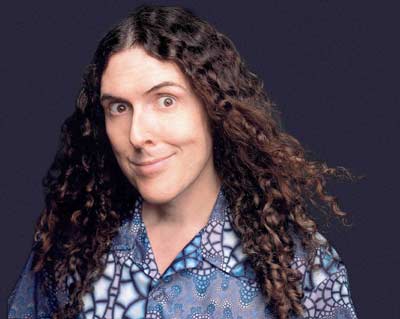
MTV Welcomes Weird Al Yankovic

According to Wikipedia, the discography of Mr. Yankovic consists of fourteen studio albums, nine compilation albums, eleven videos albums, two extended plays, two box sets, forty-six singles and fifty-four music videos. 

Those fifty-four music videos helped to take Weird Al Yankovic to the mainstream world. Let’s face it, the only place you could hear him on the radio was on the Dr. Demento Show, which was often aired in the worst possible time slot because of the crazy content. When Al ventured into the video realm, more and more viewers wanted to see – and hear – more of him!

Parody songs have been around forever, and very rarely ever got radio play. Novelty records were big in the 50’s and 60’s, and there were a few here and there in the 70’s. When Al comes on the scene in 1983, he took it to a whole new level, using videos.

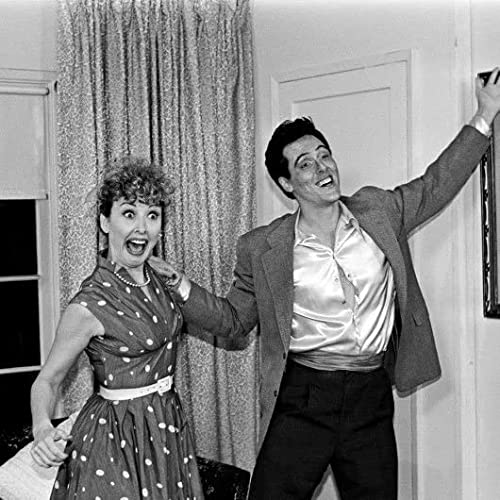
1983’s “Ricky” is credited as being his first video. It was a parody of Toni Basil’s “Micky.” It was a parody base on the TV show I Love Lucy. The video was shot in black and white and still looks great today.

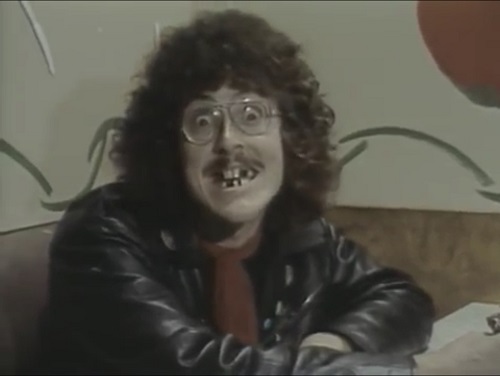
From there, Al continued to use video to gain exposure on MTV. His next single was “I Love Rocky Road” which parodies Joan Jett’s “I Love Rock and Roll.” Instead of a greaser bar, it is set in … an ice cream parlor.

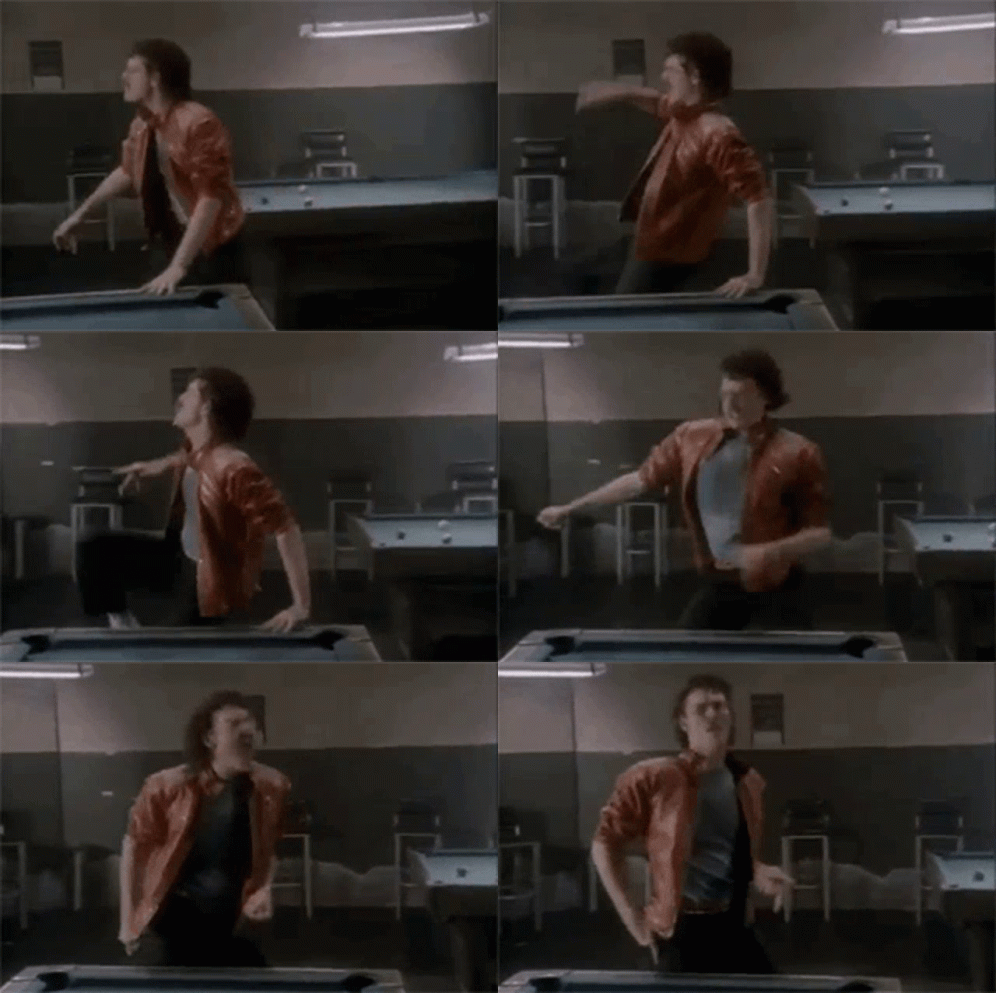
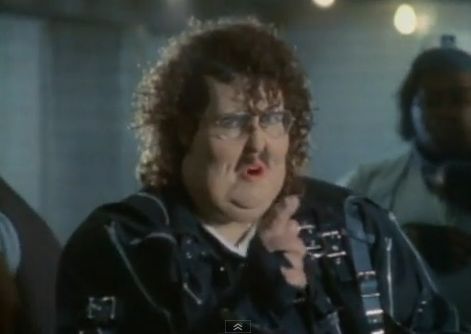
Al’s next video is really the one that really stands out as the one that moved him to a whole new level. Yes, he is a parody singer, but with the video for “Eat It” (a parody of Michael Jackson’s Beat It), not only is the song parodied, but so is the video. Al’s video is literally a shot for shot remake of Jackson’s. Throughout the video, instead of switchblades there are rubber chickens and kitchen utensils, and gags for almost everything in the Beat It video.

I can’t say whether or not the video is responsible for this, but the song won Al a Grammy Award for Best Comedy Recording in 1984. The video won for Best Male Performance at the 1984 American Video Awards!

From that point on, Al continued to make music videos for his singles. Art Fleming appeared in the “I Lost on Jeopardy” video, non-stop visual gags were plentiful in the “Like a Surgeon” video, and the James Brown “screams and shrieks” in “Living With a Hernia” were all more painful than soulful.

In 1988, Al once again parodied Michael Jackson. If I had to pick a “perfect” Weird Al parody video, it this would be one of two. Al won another Grammy Award for Best Concept Music Video for “Fat.” He even got permission from MJ to use the same set as the original video. Al’s makeup took three hours to apply every day and his fat suit weighed 40 pounds. Every time I hear the line, “Ding Dong, Yo!” I still crack up.

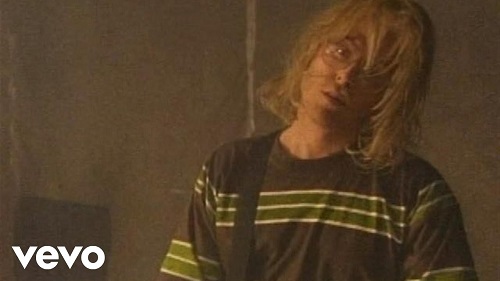
I mentioned that “Fat” is one of two “perfect” videos. The other would have to be the fantastic video for “Smells Like Nirvana” (a parody of Smells Like Teen Spirit). Al famously got permission for this parody from Kurt Cobain himself when he was performing on Saturday Night Live. In this Grammy-nominated video, Al satirizes Nirvana and the grunge movement, shooting on the same set as the original video and using the same actor who played the janitor (Rudy Larosa). Dick Van Patten has a cameo, which for whatever reason is extremely funny to me. Why Dick Van Patten??!! Someone said that Tony Hawk makes an appearance in the video, too. I’m not sure I know where.

Weird Al has certainly used music videos to his advantage. It takes a lot of creativity to write a good parody (I mean, come on, there are a lot of crap ones out there – just look on YouTube), but to take an already funny song and create a video that brings about even more humor, just enhances the song. I’ve said it before, and I will say it again, Weird Al is a musical genius.

There have been many other great videos that have followed. To name a few: Amish Paradise (featuring Florence Henderson), Headline News (featuring The People’s Court’s Doug Llewelyn), Gump (featuring Ruth Buzzi and Pat Boone), The Saga Begins (the fantastic Star Wars tribute), White and Nerdy (featuring Donny Osmond and Seth Green), and so many more.

Yes, video may have killed the radio star, but it certainly helped boost the career of Weird Al Yankovic.