It was on this day in 1971 that John Lennon recorded his classic “Imagine.” Biography.com says: The impact of the song is unquestionable. But disguised within its message of peace and love and its flowing piano melody is a collection of edgy, “dangerous” ideas that challenge society as we know it.
John Lennon wrote and recorded this song on his white grand piano at his Tittenhurst Park estate in the English countryside (He and Yoko took up residence in the summer of 1969). In early 1971, Lennon worked up songs for a new album and “Imagine” was one of them.
When he had finished writing the song, John didn’t think that it had any potential of being a hit song. He recorded a rough demo of Imagine and wanted to know what others thought of it. He invited a few journalists and other associates over to have a listen. Ray Connolly of the London Evening Standard recalls Lennon playing him the demo and asking, “Is it any good?” Connolly and the others who heard it had to convince John he had a hit on his hands!
In May, he brought in several of his musical friends to Tittenhurst to record it, including Phil Spector, George Harrison, bass player Klaus Voormann, piano man Nicky Hopkins, and drummers Alan White and Jim Keltner. They recorded on-campus in the studio Lennon had recently built, which he called Ascot Sound Studios. Footage from the session shows Lennon and his guests enjoying each others’ company, but also getting down to business when it came time to work.
It was Phil Spector kept the sessions on track. “Imagine” was one of the first songs they recorded. Spector kept the track fairly simple. Although they did experiment a bit. At one point they had Hopkins play on the same piano as Lennon, but on a higher octave. However, the more they added, the more they ended up stripping away. The very simple arrangement was designed to spotlight the lyric, it required just Lennon’s vocals and piano, Voormann’s bass, and White’s drums. Strings were overdubbed later by John.
Julian Lennon shared his thoughts on the song in the 2019 documentary Above Us Only Sky: “He’s not shoving it down people’s throats. It’s not religious and it’s not political – it’s humanity and life. We all really want what he’s singing about, and I think that’s why even today the song is still so important. The sad thing is, the world is still in a bad way. Why is it impossible to move forward in these dreams and make them a reality?”
Rolling Stone described “Imagine” as Lennon’s “greatest musical gift to the world”, praising “the serene melody; the pillowy chord progression; [and] that beckoning, four-note [piano] figure”
Let’s go back 54 years and join John at his piano …
This is sort of a continuation of the Music of My Life feature. It focused on music from 1970-2025. It featured tunes that have special meaning to me, brought back a certain memory or a tune that I just really like. I found that with the first three decades, there were songs that I didn’t feature. So I sat down with my original lists and selected some songs that “bubbled under,” so to speak.
I figured a good way to present them was to focus on a decade. 10 years = 1 song per year = 10 songs. Last week we looked at the 70’s, and I thought we’d stay there one more week before moving on to the 80’s. So, let’s check out a few “Decade Extras.”
A hat tip to songfacts.com for much of the information.
1970
I suppose it wouldn’t be right to leave out the number one song for the entire year I was born, so we start off with Simon and Garfunkel’s Bridge Over Troubled Water. Paul Simon wrote this about providing comfort to a person in need. It started as a modest gospel hymn but became more dramatic as he put it together.
He wrote the song with just two verses, considering the song “a little hymn.” Art Garfunkel and producer Roy Halee heard it as more epic, and convinced him to write an extra section, which Paul did in the studio (the “Sail on, Silvergirl part”). This was very unusual for Simon, as he usually took a long time writing his lyrics. The song got a grand production, and after hearing it, Paul thought it was too long, too slow and too orchestral to be a hit. It was Clive Davis at Columbia Records who heard the commercial appeal of the song, and insisted they market it like crazy and use it as the album title.
In 1971, this won five Grammy Awards: Song of the Year, Record of the Year, Best Contemporary Song, Best Engineered Record, and Best Arrangement Accompanying Vocalists. The album also won Album of the Year.
My mom loved this song and I remember her singing along with it on car trips.
Bridge Over Troubled Water
1971
Many folks poked fun at Ringo Starr when he began a solo career. Of the four, people thought he was the least likely to have success as a solo artist. He proved them wrong and he still tours to this day. One of the songs that did well for him was It Don’t Come Easy.
Ringo is the only songwriter credited on this one, but he had a lot of help from George Harrison. George was very generous in giving his former band mate full writing credit. The track (less Ringo’s vocal and horn parts) was already completed when Harrison gave it to him, and it included a scratch vocal by George.
Fun Fact: Peter Ham and Tom Evans of Badfinger sang on the intro to this song (“It don’t come easy, ya know it don’t come easy”). Badfinger was signed to The Beatles’ Apple Records, and helped out George Harrison’s first solo album.
It Don’t Come Easy
1972
Growing up there were a lot of Van Morrison songs that I liked, but never knew it was him. It wasn’t until I worked at my first radio station that I discovered he sang Moondance, Domino, and Jackie Wilson Said.
Listening to Jackie Wilson Said, I would have never guessed that the recording was unorganized. However, according to guitarist Doug Messenger the session was chaos! He told “Uncut”:
“Jackie Wilson Said was totally disorganized. He didn’t know where anything went, and no one seemed to know what to do with it. Van went away and the band worked on the basic structure. When he came back we went through it a couple of times and he was real happy because all of a sudden it seemed to be making sense. He said, ‘I think it’s coming together,’ which is what he always said when he felt it was working.”
“I remember he said to the drummer, Ricky Schlosser, ‘When I sing “boom boom boom,” hit the tom and the kick drum at the same time.’ We ran through it once or twice, and the first recorded take is what’s on the album. It was all over the place, but somehow it worked. Even when he ad-libbed at the end -‘One more time’- somehow we all kept it together. At the end, Van was smiling like a Cheshire Cat. ‘I think we got it!’ We tried a second take and – of course – it all fell apart.”
Give it a listen and see if you can hear the “disorganization.”
Jackie Wilson Said
1973
The next song makes me think of my oldest son. His mother would play songs from her iPod around the house and one of those songs was Let Me Be There by Olivia Newton-John. There would be times where he would take her iPod and listen to it in headphones. I still laugh when I think about him singing loudly and off-key “Let me be there in your mornin’, let me be there in your night!” It was really more of a scream than singing.
The was Newton-John’s breakthrough single in the US, where it landed in the Top 10 on the Hot 100, the Country chart, and the Adult Contemporary chart. At the time, she was still living in Britain and didn’t travel across the pond to promote the single or the album. Turns out she didn’t need much promotion at all. When the song hit it big, people had no idea who she was. That actually was a relief to the singer. “The one great thrill I had in America was that my music was accepted before I was ever seen, before I was on television, before I did live appearances,” she told Rolling Stone. “Therefore I had to hope it was my music and not my face.”
Keep in mind that this was five years before she starred in the movie musical Grease. She would win her first Grammy Award for song. This was surprising because she was up against country veterans like Tammy Wynette and Dottie West. She won for Best Female Country Vocal Performance.
Let Me Be There
1974
I was lucky enough to have never walk in on my parents when they were being intimate. My friends who have say it was a truly traumatic experience. On the TV series That 70’s Show, that exact thing happens to Eric, the main character. As he opens the door, Tell Me Something Good by Rufus and Chaka Khan. As a running gag throughout the episode, that song pops up a few times. I think of that episode when I hear this song.
Stevie Wonder wrote the song and recorded it himself on December 13, 1973 – he copyrighted it on January 3, 1974. His version was never released because he gave the song to Rufus, since Stevie was a fan of their lead singer, Chaka Khan.
Chaka Khan tells the story that Stevie was going to bring them a song in the studio, and when he dropped by and played her one he had written, she stunned her bandmates by telling the mighty Stevie Wonder she didn’t like it! So Wonder asked her astrological sign, and when she told him Aries, he delivered “Tell Me Something Good.” According to Chaka, she loved it and they worked out the song together in the studio, although Stevie is the only credited writer on the song.
Fun Fact: Rufus evolved from a group called The American Breed, who had the hit “Bend Me, Shape Me.” They took their name from a column in Popular Mechanics magazine called “Ask Rufus,” later shortened to Rufus when Chaka Khan joined the band in 1972.
Tell Me Something Good
1975
I remember playing Bad Blood by Neil Sedaka when I worked at the oldies station. I had no idea at the time that he had done anything other than those 60’s songs he was known for.
Sedaka wrote this song with Philip Cody. Phil said in a Songfacts interview that it’s his least favorite song. “I went to visit my family and I spent some time with my grandmother, who is an old Sicilian lady. She was telling stories about the lady up the street who used to be a witch, a Strega. And the whole idea of people being good or evil because of what goes on in their blood was just part of the superstitious nature of my Sicilian upbringing that I tried to stay as far away from as I could. (laughing) I just thought it would be an interesting way to approach a lyric: rather than from a place of enlightenment the idea is that love makes us stupid. And that’s where I went. It wasn’t (heavy sigh – pause)… I did it, and I didn’t think I did a very good job on it, and before I had a chance to do a re-write Neil was in the studio with Elton doing the song, and that was it. So I guess the best things are left undone.”
This song turned out to be Sedaka’s biggest hit, reaching #1 on the Billboard Top 100, remaining there for three weeks. He was helped by Elton John, who sang back-up for this song which ensured airplay. In an odd coincidence, this song was knocked out of its #1 position by an Elton John song, “Island Girl.”
Bad Blood
1976
More Than a Feeling was Boston’s debut single. It turned out to be a big surprise hit. Songfacts says: The group’s rise was sudden and unexpected; when “More Than a Feeling” was released, their managers spent a lot of time pitching it to radio stations, which is a very tough sell for an unknown band, but the song is so polished and radio-friendly that many stations put it on the air. It took off, and very soon this unknown band with an album recorded mostly in a basement was a major player on the rock scene.
Boston’s Tom Scholz worked at Polaroid, which made him enough money to buy equipment to create a basement studio. He did most of the recording of the first album there. He actually took a leave of absence from his job at Polaroid to complete the album. Once the album was released, he went back to work.
Songfacts says, “disco was big, so he wasn’t sure his rock record would find an audience. He got very excited when co-workers would summon him to let him know ‘More Than A Feeling’ was playing on the radio. After that happened a few times, he was confident enough to quit his day job.
The song is a classic rock standard and appeared on the soundtrack of the film “FM,” which was the subject of this blog on Monday.
More Than a Feeling
1977
Being born and raised in Michigan, Bob Seger’s music was everywhere when I grew up. When my dad played in a wedding band Night Moves and Trying To Live My Life Without You were songs that they played at gigs.
Mainstreet was a song that was always requested at the station. The actual street Seger sings about in this song is Ann Street, which was off of Main Street in Ann Arbor. Seger told the Chicago Sun-Times: “It was a club. I can’t remember the name of the club, but the band that played there all the time was called Washboard Willie. They were a Delta and Chicago blues band. Girls would dance in the window. They were a black band, and they were very good. That’s where I would go but I was too young to get in. It wasn’t in a great part of town but college students loved to go there.”
This was the second single from the Night Moves album, following the title track. Both songs are very nostalgic and a departure from high-energy rockers his fans were used to hearing. By this time, Seger had been at it in earnest for over a decade and was just starting to break through to a national audience. Live Bullet was his first album to find a broad audience; many who bought it snatched up Night Moves when it came out, and weren’t disappointed. Both albums ended up selling over 5 million copies, making Seger a star.
Mainstreet
1978
Kiss You All Over by Exile was another one of those songs that dominated pop and country radio. It was the perfect crossover song.
In an interview with Billboard, writer Mike Chapman said:
“It’s a very unusual song and is very much about what music in the US is all about in 1978. It’s MOR (Middle Of the Road) soft rock, slightly disco though not pure disco, and has a sensuous lyric line that Americans love. Americans are big lyric listeners and listen to every word.”
It is no surprise that the song has frequently been used as backing music for TV scenes involving various degrees of smooching or similar lip-caressing activities. Songfacts notes that the most creative use of “Kiss You All Over” goes to the Canadian Broadcasting Company’s use of the song in a 2007 montage of hockey players kissing the Stanley Cup. HA!
Kiss You All Over
1979
Many DJ’s will play the song Single Ladies when they do the bouquet toss at weddings. I always love using Ladies Night by Kool and the Gang. It had a funky beat that the ladies would dance to as they waited for the bride to toss her flowers.
Songfacts notes that disco was dying when “Ladies Night” was released at the end of 1979. That didn’t stop Kool & the Gang from using a disco groove on this track and mentioning the “disco lady” and “disco lights” in the lyrics. The song mixed in enough of their funk flourishes to stand out from the pack and bring them into the ’80s – it reached its chart peak of #8 in America the second week of 1980.
Like most Kool & the Gang songs, every member of the group is credited as a writer. “Ladies Night” started with a groove their multi-instrumentalist music director Ronald Bell came up with. His brother, Robert “Kool” Bell (the bass player in the group), gave him two ideas for lyrical themes: “Ladies Night” and “Hangin’ Out.” It was no contest – Ronald knew there were ladies nights everywhere, and loved the idea.
They fleshed out the song with the group, but struggled to find a hook. Ronald Bell remembered a piece of advice from his mother. He recalled to Billboard: “My mother, Aminah, had a hand in that one. Because she would say to me, ‘Always give the people nursery rhymes. Give them something they remember.’ She liked the Dells’ song, ‘Oh What A Night,’ so I put that in. When we were finished, we were all in tune that this was it. We just didn’t know how big!”
Of course, younger folks will always think of Jon Lovitz in the Wedding Singer when they hear this one.
Ladies Night
Yes, there are plenty of great songs I missed from the 1970’s, but next week, we’ll head to the 80’s. I’ll feature ten songs, one from each year of the decade. I hope you will join me next week.
Last May I began this feature. Today, I will finish it off by looking at 2020 through the present. As I got closer to the end, it became difficult for me to pick ten songs from each year. Proof of this will be evident from this post.
The songs that I featured each year had to connect with me in some way. It was attached to a core memory. Maybe it reminded me of one of my kids or a friend. Maybe it was a song from my years DJing. Maybe it was just a song that I liked a lot. The only real rule was that it had to be released in the year featured. With that in mind, let’s see how the last five years of music connects with me….
2020
There were no songs that really hit me in 2020. Thank you, Covid
2021
The world was still reeling from the pandemic. There was so much uncertainty. Many folks reconnected with their faith, as I did. I went back and watched the Bible classes I had taken. There I found comfort and the strength to get through things.
I want to say that a friend of mine asked if I had ever heard the song “My Jesus” before. I hadn’t and I found it online. It hit me immediately and I shared it with my wife. It is a powerful song, but even more powerful when you hear the story behind it.
Anne Wilson’s life changed in more ways than one when her older brother, Jacob, died in a car accident at 23. She told songfacts.com: “It was so tragic. He was my best friend. That’s actually how I started singing and how I got into music and that’s why I wrote the song ‘My Jesus.'”
After losing her brother, Wilson processed her emotions through journal entries. As she flicked through her entries before a writing session with Matthew West and Jeff Pardo, the young singer had an idea for a song. She told Billboard: “I walked through a really tough season of grief. I remember having this moment where I wanted to give up on life. When I looked back at my journals, I saw how God pulled me through. I also realized I never referred to God as anything else, except ‘My Jesus.'”
When she brought the title into the writing room, it turned out that the two others had that same exact title as an idea. None of the three had spoken about it, so it must have been “a total God thing.”
My Jesus
2022
No songs
2023
When I heard that they were releasing a new Beatles song, I hoped it would be better than Free As a Bird. When they released that for the Anthology stuff, the technology wasn’t as good as it was in 2023. Because of this, Lennon’s vocal sounds tinty.
Songfacts tells the story:
“Now and Then” was originally written and recorded by John Lennon around 1977 as a solo piano track. After his death in 1980, the unfinished demo floated in limbo until 1994 when his widow, Yoko Ono Lennon, gave the recording to the three surviving Beatles, along with Lennon’s demos for “Free as a Bird” and “Real Love.”
Paul McCartney, George Harrison and Ringo Starr considered “Now and Then” as the third Beatles reunion single for their 1995–1996 retrospective project The Beatles Anthology, following “Free as a Bird” and “Real Love.” After two days of recording, it was scrapped, largely because Harrison’s didn’t like it.
In 2022, using advanced technology and a curatorial touch, Paul McCartney and Ringo Starr completed the track. The same AI restoration technology Peter Jackson used on the Beatles documentary Get Back was applied to Lennon’s vocal take.
“Back in 1995, after several days in the studio working on the track, George felt the technical issues with the demo were insurmountable and concluded that it was not possible to finish the track to a high enough standard,” Harrison’s widow, Olivia, said. “If he were here today, Dhani and I know he would have whole-heartedly joined Paul and Ringo in completing the recording of ‘Now And Then.'”
Besides Lennon’s John’s vocals, “Now And Then” includes electric and acoustic guitar recorded from the scrapped 1995 sessions by Harrison, a new drum part by Starr, and bass, guitar and piano from McCartney that matches Lennon’s original playing. McCartney added a slide guitar solo in Harrison’s style “as a tribute to George.”
“Now And Then” became the first AI-assisted song to earn a Grammy nomination, and the first to win, when it took the award for Best Rock Performance at the 2025 ceremony.
As a life long Beatles fan, I was impressed with just how good this one turned out.
Now and Then
2024
My wife will often listen to Pandora as she gets ready for work. The next song seemed to play on there at lot. It also seemed to play on her Sirius XM station when we went anywhere. It sort of had a catchy hook, but it wasn’t so good that I’d buy it.
One day I was driving with the kids in the back of the car and my daughter started singing “Excuse me, you look like you love me…” over and over again. It made me chuckle.
You Look Like You Love Me
2025
There has not been any songs from this year that connect with me. I tend to listen to audio books or songs from my iPod when I drive, so I don’t really get to hear anything new anyway. I’m ok with that.
Wow. Five years and only three songs. What a way to wrap up a feature, huh? Well, technically, I had wanted to wrap this up in May. So I have an idea on how to fill a couple Wednesdays and still keep it musical. Tune in next week to find out more….
Welcome back to The Music of My Life, where I feature ten songs from each year of my life. In most cases, the ten songs I choose will be ones I like personally (unless I explain otherwise). The songs will be selected from Billboard’s Year-end Hot 100 Chart, Acclaimed Music, and will all be released in the featured year.
In 1995 a new form of media was invented – The DVD. 1995 was also the year I hit the quarter century mark, turning 25.
30 years ago this month, in 1994, my partner, Rob, and I lost our jobs at Honey Radio. We searched for other radio work, but no one was looking for a morning team. I kept searching and eventually found some part time radio work. I also ventured out and began to host Karaoke at a few places every now and then.
My full time gig was working in the mail room at EDS. I spent a lot of time in the car and listened to a lot of radio. Many of these songs accompanied me on my deliveries.
After seven years of touring and three previous albums, Blues Traveler finally broke through with the song Run-Around. John Popper had a crush on the band’s original bass player Felicia Lewis. She was actually classically trained as a violinist. She was just playing bass for fun.
Guitar player Chan Kinchla says that Felicia was a great student and eventually became a doctor. “Her calling was medicine, not music” . When Bobby Sheehan was ready to take over on bass, Felicia stepped aside. Kinchla says, “It’s a very amicable situation. John always had kind of a crush on her, but they were friends, as well. So that song’s from that whole affair. They’re still very close. It’s just an unrequited love song.”
The song won a Grammy for Best Rock Performance By A Duo Or Group With Vocal in 1995.
John Hopper could really blow the harp! His harmonica stuff is just fantastic. It is hard to to hear this one and not feel happy. I often found myself having to set the cruise control, as this one often made me want to drive fast.
If you are a fan of the Wizard of Oz, you’ll appreciate the nod to the classic film in the video.
Run-Around
Until researching for this blog, I had no idea the story behind the next song. I Believe was a top ten record for Blessid Union of Souls. The song is about the power of love and the belief that it can impact life for the better. It is a powerful message.
The song came about because of the end of a relationship. Eliot Sloan recalls writing this song after his girlfriend’s father coerced her into breaking up with him. Many sources say that it was because of his race. Her dad went as far as threatening to cut off her college tuition, if she didn’t leave him.
They did break up, but she obviously meant a lot to him. He placed a message in the liner notes of the Home album. It says, “Lisa, give me a call sometime just to say hello, my number is still the same.”
Sloan says, “I always tell people, and it’s the truth, ‘I Believe’ was written in the middle of the night at about three in the morning. I always used to live in downtown Cincinnati, a really cool spiral staircase up to my bedroom, which kind of ended up as my studio. I kept a piano there that my mother got me when I was nine. In the middle of the night I was hearing the melody and I thought, ‘this is pretty.’ I just had to get up and play it.”
That piano line is really beautiful, and I love the way it intermingles with the strings. I love the message, too:
‘Cause I believe, that love is the answer I believe, love will find the way
I Believe
There are many stories about how Better Than Ezra came up with their name. As far as I can tell, they’ve never really said. The one that I love is that they were playing at some event that featured many bands. The story goes that they followed a band called Ezra, and when asked what their name was they said, “Better Than Ezra.” I hope that is the real story, because I think that is hilarious!
We just heard I Believe about a break up. Better Than Ezra’s, Good, looks at a break up in a different way. As a matter of fact, I tend to look at my past break ups like this.
BTE’s Kevin Griffin wrote the song. In an interview with songfacts.com he said:
“I wanted to talk about the positive things that come from the end of a relationship. There’s always the hurt feelings and everyone’s guarded and it can be traumatic, but when the dust settles, it was about looking at the good things – no pun intended – that you got from that relationship. How did you grow? What did you learn emotionally? And to experience some stuff. And in this case it was just kind of reflecting on how this person changed.“
That isn’t always easy to do. I have to remind myself, for example, that while things with my ex-wife weren’t great, I have two amazing sons from that relationship.
As much as I heard this song, I find it hard to believe that it only reached #30 on the charts.
Good
A new Beatles song in 1995?! How can that even happen!? John Lennon had been dead for 15 years by then. Believe it or not, you can thank Yoko Ono for it. Yoko agreed to release a demo tape of John’s to the other Beatles the day after he was inducted into the Rock and Roll Hall of Fame.
In 1994 the three remaining Beatles recorded around his demo track to complete the song Free As a Bird. It was released as a single in 1995. Before their breakup, The Beatles won just four Grammy Awards. They picked up three more in 1997 when “Free As A Bird” won for Best Pop Performance By A Duo Or Group With Vocal and Best Music Video, Short Form.
It was Jeff Lynne of ELO who would produce the single. He The Daily Mail that of all the songs he’s produced, “Free as a Bird” is the one he’s most proud of. “I just had to improvise and come up with a few things to make it work,” Lynne recalled. “I did it late at night, 3 a.m. in the studio, just me and the engineer, because I didn’t want to do it in front of Paul and George. But I came in the next day and Paul gave me a hug and he said, ‘You’ve done it, well done!'”
My first records were Beatles songs. So it was so neat to hear all four of them together again for the first time in years!
Free As A Bird
Next is another song that I heard a lot while driving. It stood out for a few reasons. First, it was uptempo. I seem to remember a lot of ballads being played at the time. Driving while tired, uptempo is always good!
Second, it was short. It was very rare to have any song be under 3 and a half minutes on the radio. Many of them were 4 and 5 minutes. This one clocks in at just under 2 and a half minutes.
Finally, it reminds me of Run-Around by Blues Traveler. Ok, maybe it was Blues Traveler that reminds me of this one. I really don’t know.
The first time I saw the video, I laughed out loud. In it the guys from Del Amitri are being wheeled about in strollers by beautiful women. The band members’ heads were superimposed (badly) on the babies to create the effect.
Roll To Me
When I worked at W4 Country in Detroit, they used to host a huge summer festival. It was downtown in Hart Plaza and all kinds of country artists came to play. It was called the Downtown Hoedown. At this time in my career, I had really never done a lot of backstage stuff.
Looking back now, I could kick myself. So many of the singers were just walking around backstage and in the area that was reserved for our staff. I took my ex wife with me and we were just sitting at a table drinking water. This guy walked by with a cowboy hat on and he looked familiar. I couldn’t place him to save my life.
As he walked by, he nodded and said hello to us. I didn’t know if it was an artist, a manager, a roadie, or someone else. We said hello and he continued walking. What was weird was that as he approached us, he kind of slowed down like he expected us to start chatting him up. I know now that this was David Lee Murphy.
Dust on the Bottle was a big hit for him, but it almost didn’t make his album. He tells the story:
“I had the idea for that song, but I hadn’t ever done anything with it. I just remember being at my house the second day [of recording]. We started recording on Monday, and Tuesday morning, I was drinking coffee at my kitchen table. I started playing the opening chords on my guitar for ‘Dust on the Bottle.’ It just came out of nowhere. The song just fell out in like 15 minutes.
I called Tony Brown, who was producing my record, and I told him, ‘Man, I just wrote this new song!'” Murphy continued. “We had all the songs picked out already for the album. He told me to bring it in and play it for him that day. When he heard the song, he said, ‘Man, we’ve got to cut this.’ So we cut it, and what’s on the record is the first take of the song. A lot of the vocals on it were the first time I sang it. It was really a special song, and it still is to this day.”
Dust On The Bottle
I will apologize for the next song right now. I had to include it because it was such a big song when I was DJing. In the US, the Macarena was the biggest dance craze of the 1990s. It was played at weddings, office parties, cruise ships, and just about anywhere there was dancing. Like the earlier dance craze, the “Electric Slide,” it was easy to learn and was done in a group. This made it perfect for Americans who lacked rhythm. It would spawn other dance crazes in the years ahead.
The song was one that had many “mixes.” The meaning of the song changes depending on what mix you are listening to. In the original version, Macarena is upset because her boyfriend, Vitorino, has joined the army. She retaliates by going out on the town and carousing with other men. In the Bayside Boys mix, Macarena gets mad at her boyfriend and goes out to shake it while he’s out of town. In this version, she seems to be more promiscuous. The Bayside Boys also made it a first-person account, with the lyrics being the voice of Macarena.
Macarena
I never cared for the song that much, however two years later, there was a country mix. It sounded ridiculous. I went out and bought one of those hillbilly hats with the feather on it and a corn cob pipe. I would get out and dance with it on. It only made it more silly.
The next song was one that got played a lot on the radio with dedications to someone who passed away. It was played at weddings in remembrance of a loved one, too. When my mom passed away, this was another of those songs that made me think of her.
Mariah Carey wrote One Sweet Day with Boyz II Men. She said she wrote a song that was identical to a song Boyz II Men had written, so they combined the two.
Mariah was in the middle of writing the poignant ballad with her longtime collaborator Walter Afanasieff when she had the idea to bring in the R&B group.“I just thought the chorus was crying out for the vocals that they do,” she recalled in a 1999 interview. “We contacted them, we went through all the channels, this and that, and we finally got together, sang them the song and Nate had written a song that was basically identical to my song in the theme and melodically – he could actually sing it over my song and it was really bizarro, it was like fate, so we put the two songs together and came up with ‘One Sweet Day.'”
This was #1 on the US Billboard charts for 16 weeks! That is longer than any other song up to that time. It held that record until 2019 when Lil Nas X’s Old Town Road was #1 for 17 weeks.
One Sweet Day
Despite being a 1995 release, Give Me One Reason was a song that Tracy Chapman had been performing since 1988. She also performed it on a 1989 episode of Saturday Night Live.
The song would wind up on her fourth studio album, New Beginnings in 1995. In 2005, she said “This is autobiographical,” before performing the song. “I left it on someone’s answering machine, and it worked. I wrote it late one night hanging out with my dog, a mini dachshund.”
The song would be her first hit since 1988’s Fast Car. The charts had changed a bit in 1995. Songfacts.com explains: The mid-’90s were a tougher time for female singer-songwriters with stories to tell, but Melissa Etheridge, Alanis Morissette, Sheryl Crow and Jewel all got their piece of the pie even as the airwaves were dominated by R&B and dance singers, mostly guys. “Give Me One Reason” fell into this bucket, skewing to an older audience averse to hip-hop and modern rock.
I love this song because of the bluesy feel to it. That opening guitar lick and her voice are just so good!
Gimme One Reason
My final pick for 1995 comes from a gang member. Yes, you read that right. Lead singer Pauly Fuemana was a gang member in Auckland, New Zealand before achieving pop immortality with this song. He received his musical training in a New Zealand juvenile prison.
How Bizarre by OMC reached #1 in eight different countries, the first of which was New Zealand in early 1996. Others include Australia, Canada, and the US (on the Mainstream Top 40 chart). What is Bizarre is that it never entered the Billboard Hot 100 Chart. Why? It was released as a radio-only promo single. Therefore it was ineligible to chart on the Hot 100 according to rules in place at the time.
According to songfacts.com: OMC stands for Otara Millionaires Club, after the neighborhood in Auckland where Fuemana grew up. It’s a somewhat fanciful name, as the Auckland suburb of Otara is a ghetto/slum.
This was another one of those songs I would hear driving at work. Many of the drivers would come in to the mail room and if something unexpected happened they’d say “How Bizarre!” Some of my ex wife’s sisters would also say this a lot, but usually they’d say, “How Bizzaaaah.”
The song has a fun sound to it and it brings back some great memories.
How Bizarre
So that’s all for 1995. Did I miss one of your favorites? Let me know in the comments.
Next week, we move forward to 1996. My list includes movie music, a cover song or two, a couple artists I have had the chance to hang out with, and a few I’d like to hang out with. It also includes a song that was given to me by a girlfriend to express how she felt about us. Was it good or bad? Tune in next week!
It was on this day in 2007 that Jerry Seinfeld’s Bee Movie premiered. I was working at B-95 at the time and it was a natural tie-in. We had a special advanced screening and we gave away tickets to see it.
My oldest son was 5 when it came out and I remember him loving the movie. We watched it on DVD a lot. There were some great voice talents in the movie, too. Matthew Broderick, John Goodman, Rip Torn, Chris Rock, Renee Zellweger, and many others leant their voices to the film. The film also raised awareness on the importance of bees on the environment.
The soundtrack of the film consists mainly of score pieces by Rupert Gregson-Williams, but does include two pop songs. The first is Sugar, Sugar by the Archies, which was a number one song in 1969. The second was a song that was also released in 1969 – Here Comes The Sun.
It wasn’t the Beatles’ version that appeared on the soundtrack, but a cover by Sheryl Crow. The song is almost a carbon copy of the Beatles’ version. Sheryl does a great job on the song and it is a perfect song for the scene in the movie that accompanies it. No disrespect to George Harrison, because I love his vocal, but Sheryl’s voice almost works better for me.
It’s time again for my contribution to Dave from A Sound Day’s monthly feature Turntable Talk. If you are keeping track, this is round #30! Way back when we started this, he asked us if the Beatles were still relevant. This time we circle back to the Fab Four and Dave wants us to write about our favorite Beatle. He is calling this round The Most Fab of Them All.
I have struggled in the past to narrow down what song or artist I am going to write about, but never like this. It shouldn’t be hard to pick one guy out of four, right? For me it is, believe it or not. Frankly, and I mean no disrespect to Dave, the topic is unfair. To me, a musical group or band is the coming together of people, each contributing something unique. Like a puzzle, when all the pieces come together, you have something amazing. To have to choose one is a daunting task.
Let me start by saying that if you had asked me as a kid, without a pause, I would have chose Ringo. This may be because I was so familiar with the Beatles cartoon and Ringo always made me laugh. I also really enjoyed the almost all of the songs that he sang lead on. He went on to have some solo hits post-Beatles, too.
There are times I might have picked George Harrison, but probably not because of his Beatles stuff. Don’t get me wrong, he wrote the amazing song “Something,” which even Sinatra said was a beautiful love song. I also loved a lot of the early songs he sang on. Everybody’s Trying to Be My Baby is one of my favorites. George really gained my respect as a musician and songwriter post-Beatles.
John was a quick wit and always made me laugh when I saw him in those early interviews. You cannot deny the songwriting power that he had both solo and with Paul McCartney. He really wrote some deep songs. To me, it is interesting to look back and see how he put much of his hurt, suffering and confusion into a song.
John was also a guy who wasn’t afraid to take a stand for something. Many of his solo songs are still as relevant today as they were when they were released. If only the people would listen to the lyrics of Imagine, maybe we’d see a change? Every Christmas I hear War is Over, yet every day when I go to MSN, there is some new story about Putin and World War III. Obviously, Give Peace a Chance is not something any of the world powers wants to do.
Then, there is Paul. I don’t have to really say much about his songwriting abilities. As a matter of fact, if you look at the output of the Lennon-McCartney machine, you cannot help but be in awe of the volume of work they put out. As a musician, he really was the greatest talent of the group. Before you get up in arms, let me prove it to you.
We know that he was best known for playing bass guitar for the Beatles. Growing up, his first instrument was the trumpet (given to him by his dad). He also knew how to play the piano, and did so on Beatles songs like Slow Down and Ob La Di Ob La Da. While it is a simple tune, you can hear Paul’s drumming skills on The Ballad of John and Yoko. As a matter of fact, he can play over 40 instruments including mandolin, cello, harmonica, harpsichord, and the ukulele. Watch his video from 2020 for Find My Way and you will see him playing many (FYI – it’s not my favorite McCartney song, but it is a good illustration).
While many songs had both John and Paul listed as writers, many were “all Paul.” Yesterday, Hey Jude, Blackbird, and Here There and Everywhere, just to name a few. Paul said once that the last one was the only one that John had ever complimented him on. John said in an interview that it “was all his” and was “one of my favorite Beatles songs.”
So why am I picking Paul? Honestly, if it wasn’t Paul it would be Ringo for the simple fact that they are still around. Both are still touring and in the public eye. I love watching Paul do interviews. He is fun to watch, tells great stories and isn’t afraid to be a part of something a bit silly.
One of my favorite McCartney moments was when Chris Farley interviewed him on SNL for the Chris Farley Show bit. How Paul kept a straight face through that still amazes me. Farley asks him, “Remember when they said you were dead? That was a hoax, right?” and Paul simply says, “I wasn’t really dead!” That always makes me laugh. How Paul keeps a straight face through the bit is beyond me. I wish there was a better quality clip…
There’s another great SNL bit where he and Martin Short and doing something for a Christmas Pageant. Martin says that he and Paul are a team but he is the only singer because Paul “cannot sing.” Paul plays the triangle in the bit. He misses cues and Martin screams at him through the whole bit. Paul is hilarious. The bit ends with Martin leaving and Paul asking, “Can I sing now?” Walls move and Paul walks onto the stage to sing Wonderful Christmastime, as himself.
Paul was fantastic on the Letterman show reminiscing about being there on the Ed Sullivan show. During the interview Dave says that they have been trying to get him on the show for years. He asks why it took so long to get him there, to which Paul says with a straight face, “I don’t like the show, David.” But THE highlight for me was to watch him do a rooftop performance of Get Back. I want to say that he wound up doing about a 40 minute concert from up there that night.
Another great Paul bit is when he shows up on James Corden’s show and does his Carpool Karaoke. The first song they sing together is Drive My Car and he’s having a blast doing it. The conversation between the two of them as they drive around is moving at times. Paul and James stop at Paul’s boyhood home and shares some great stories. The kicker is that they go to a pub that McCartney used to play at and he and his band surprise the patrons of it with a concert. It is worth a watch on Youtube –
As I write this, I have no idea what Beatle the other contributors have chosen. I am guessing that many of the pieces will be very music related. While I feel mine is also a bit music related, I also feel that what made Paul stand out to me was Paul being Paul. Paul, years away from the Beatles, talking about those days, the music, the memories, and the rest of the band. Paul, looking back at those early days that influenced and brought him to where he is today.
Not too long ago, country singer George Strait said he was done touring. George is 72. Sir Paul is 82 and still out there playing for sold out crowds for hours at a time. He is an artist who is always trying something new, while never forgetting his roots. He has a passion for the music and for his fans. He just seems to be that guy who’d be fun to hang out with.
Thanks to Dave for asking me to be a part of Turntable Talk. Thanks for another great topic. I love writing for it and love to see the responses from the other music lovers. Until next month … Thanks for reading.
Welcome back to The Music of My Life, where I feature ten songs from each year of my life. In most cases, the ten songs I choose will be ones I like personally (unless I explain otherwise). The songs will be selected from Billboard’s Year-end Hot 100 Chart, Acclaimed Music, and will all be released in the featured year.
Before we get into the music, I have to take a moment to mark a blogging milestone. This blog will be the 1400th blog I have written since the Nostalgic Italian site went live.
1400 posts and here you are still reading. For that, I thank you from the bottom of my heart. I am glad that you are here. Now, let’s celebrate by going back to 1989…. when I turned 19.
As I sorted through the singles from 1989, I noticed that there were a lot of duets recorded that year. After All from Peter Cetera and Cher, Don’t Know Much and All My Life from Linda Ronstadt and Aaron Neville, were just a few of them. No duets made my list, however, as I just didn’t feel any of them connected with me enough to bump the ten songs I picked.
I grew up listening to Roy Orbison. He was a favorite for a long time. I used to ask my dad to play his songs on the stereo all the time as a kid. In 1988, Roy saw his career take on new life. He recorded with George Harrison, Jeff Lynne, Tom Petty and Bob Dylan as part of the group The Traveling Wilburys (More on them in a moment) and had recorded a brand new album (Mystery Girl) in November of 1988.
On December 6, 1988, I was at the radio station when an “Urgent” Bulletin came across the AP Newswire stating that Roy had died after having a heart attack. I had never met Roy, but his music was such a big part of my life that seeing the story upset me quite a bit.
You Got It was the first single released from the Mystery Girl album in January of 1989. Orbison wrote the song with his Wilbury friends, Jeff Lynne and Tom Petty. Lynne produced the track and also played guitar, keyboards and bass; Petty played acoustic guitar and sang backup. It would reach #1 on the Adult Contemporary chart and #9 on the Top 40 chart.
Orbison performed this song just once: at the Diamond Awards Festival in Antwerp, Belgium on November 19, 1988. This performance was used as the song’s music video.
You Got It
Every interview I have seen with the guys from the Traveling Wilburys always has them saying how wowed they were by having Roy in their group. When Jeff Lynne was asked about the recording sessions, he said, “Everybody just sat there going, ‘Wow, it’s Roy Orbison!’ … Even though he’s become your pal and you’re hanging out and having a laugh and going to dinner, as soon as he gets behind that [microphone] and he’s doing his business, suddenly it’s shudder time.”
Roy was in the group’s first video (for Handle With Care), and was set to travel to London a couple days after he passed away. One of those videos was for The End of the Line. One of the reasons that I love this video is that the group gives a heartfelt tribute to their friend. When Roy’s vocal happens, we see Roy’s guitar in a rocking chair next to a framed photo of Roy.
The End of the Line
I have never seen the movie Road House. My mom liked it a lot, because she liked Patrick Swayze. Jeff Healey and his band were shooting scenes for the movie (and Jeff had many scenes with Swayze) and recording his See The Light album simultaneously. One of the cuts from this album was Angel Eyes.
I had never heard of Healey before this song. I had no idea that he was blind and marveled at the way he played his guitar (on his lap, like a piano). I was really blown away by his vocals and his guitar playing. He was discovered by two blues legends – Stevie Ray Vaughn and Albert Collins.
He toured and sat in with some fantastic people over the years including Buddy Guy, BB King, Eric Clapton, ZZ Top, The Allman Brothers and Bonnie Raitt (just to mention a few.) While he is mainly known for his bluesy style, by the year 2000 he actually was releasing many jazz albums.
He loved music and he was an avid record collector. He amassed a collection of well over 30,000 old 78 rpm records. Starting in 1990 he hosted a radio program of very early jazz on CIUT at the University of Toronto with Colin Bray. Later he went national on CBC Radio’s program entitled My Kind of Jazz, in which he played records from his vast vintage jazz collection.
Too many people write him off as a “One hit wonder” act. His music is fantastic and this song is so soulful … he was a talent taken too soon.
Angel Eyes
“Hey, man! Have you heard that new song by Marvin Young?” I can’t even imagine what type of music someone called Marvin Young would be singing! However, Young MC just screams rap music, right?! I’ve never been a big rap fan, but there was just something about the baseline and the catchy lyrics that made this a favorite for me.
Bust a Move was a song that whenever I played it, the crowd always new the words and sang along. The verse that every one knows is “Your best friend, Harry, has a brother Larry, in five days from now he’s gonna marry…” The whole rhythm of that verse and the baseline fit so well together. I also like the fact that while there is some sexual innuendo, there is no profanity in the song.
Interesting story from songfacts.com: Flea from The Red hot Chili Peppers played bass on this song and appears in the video, but he didn’t reap the rewards. He explained to Bass Player magazine: “I have a bitter taste in my mouth about that, because I feel as though I got ripped off. The bass line I wrote ended up being a major melody of the tune, and I felt I deserved songwriting credit and money because it was a #1 hit. They sold millions of records, and I got $200! Afterwards, my lawyer told them, ‘You should throw down Flea some cash,’ but the record company said, ‘We told him exactly what to play.’ No one was even in the room at the time but me and the engineer! It was ridiculous, but I learned from it.”
It was one of the first rap records to cross over to the mainstream charts. It went to #7! Young MC recalled to Rolling Stone: “People looked at rap and hard rock as the type of music that you slam your door after you argue with your parents, and bang your head in defiance. My record wasn’t necessarily rebellious, but it was clever enough to grab in a decent segment of people that didn’t listen to rap music.”
Bust a Move
The next song is one that I used to play for my prom date, Karen, after we started dating. This and Just You and I from Eddie Rabbit and Crystal Gayle were “our songs.” I remember the first time I heard Luther Vandross sing Here and Now. I remember how powerful the lyric was and just how perfect his voice was for the song.
Karen and I dated for a bit and broke up around 1990, only to get back together a year or so later before breaking up after another year or so. Somewhere during that time I had made her a mix tape of love songs. This was just one of many that made it to that tape.
It was hard for me after we broke up because I was DJing a lot of weddings and this was a very popular Bride and Groom song. I almost always had to put headphones on and listen to something else while it played. Today, I can listen to it and it doesn’t bother me, but at the time, it brought about a lot of pain.
Here and Now
My next tune is one that I have featured before and I wrote about how it was helpful to me post-divorce. You can read about it here:
I have said many times that Willie Nelson always seemed to have one song on each album that I connected with personally. Many times it was more than that. In 1989, he released a fantastic album entitled “A Horse Called Music.” On the album is a cut that was co-written by Mike Reid (who played five seasons with the Cincinnati Bengals and had a brief country singing career) called There You Are.
I had heard the song many times when listening to the album, but it wasn’t until after the final break up with Karen (see above) that the song really hit me hard. At the time, I was still wrapped up in feelings and hated that we were not together. I found myself thinking about her more than I should have been, especially since she had moved on with her life. Then I heard this song…
I could have written this song! It literally was exactly what was happening to me. For no reason, she’d pop into my head. It was never bad things, it was always some good memory of when we were together. The string arrangement and Willie’s vocal convey those feelings in such a magnificent way. It is beautifully sad …
I had never seen the video for this song until I searched for it today. Willie cleans up pretty good…
There You Are
When you make a list of great songwriters – Leiber and Stoller always are on that list. The next song was written by Oliver Leiber, the son of Jerry Leiber of that aforementioned team. Oliver had already written a couple songs for Paula Abdul (Forever Your Girl and The Way That You Love Me) when he got a call saying that the label needed one more song for her album. That song would be Opposite Attract.
From songfacts: This song evolved into a duet with a cartoon cat named MC Skat Kat, who was actually the duo The Wild Pair. Oliver Leiber explains: “I wrote it all from the perspective of one person singing it. It wasn’t initially a duet. It was saying, ‘I like this and you like that.’ It was basically: I like potatoes, and you like po-tah-toes, all from one singer’s perspective. But I had these two singers I had been working with – Marvin Gunn and Tony Christian. They’re the guys that sang on Prince’s “Kiss” and they were incredibly soulful funky singers that I had been using as part of my sound on the first two tracks I did with Paula, helping to preserve the Minneapolis sound, because they sounded very Prince-y and it really added something to Paula’s vocals.
Basically, he had the Wild Pair sing the entire song and then got Paula to cut her lines later. He wasn’t happy with the original mix, which is why the album and the single versions sound so different.
In the video, the real Paula interacted with the animated MC Skat Kat. The concept of Paula dueting with a cat came from Anchors Aweigh, a movie where Gene Kelly dances with the mouse from Tom & Jerry. The video was directed by Michael Patterson and his wife Candace Reckinger, who also created the MC Skat Kat character and animation. Patterson said: “Gene Kelly loved it; he was a friend of Paula’s. Gene was also an inspiration to Candace and I.”
Fun Fact: Patterson and Reckinger got their start in music videos when they created the iconic clip for a-ha’s Take On Me
I loved the Gene Kelly and Jerry Mouse dance, so naturally, I loved this video (and Paula) too!
Opposites Attract
Before I knew the song was about Elvis, I really loved the sound of Black Velvet by Alannah Miles. It was considered a power ballad, but to me it sounded more like a good blues song. Miles’ voice had that bluesy and sultry voice that fit with the groove of the song perfectly.
The story of how the song came to be is a good one. Co-writer Christopher Ward, who was Myles’ then-boyfriend, was inspired on a bus full of Elvis fans riding to Memphis attending the 10th Anniversary Vigil at Graceland, in 1987. Upon his return to Canada, he brought his idea to Myles and producer David Tyson, who wrote the chords for the bridge. The song was one of three in a demo Myles presented to Atlantic Records, which eventually got her signed to the label.
Songfacts provides a bit of lyric analysis:
“Black velvet and that little boy’s smile” – You can buy a black velvet Elvis painting at any respectable yard sale. Early female fans were drawn to his “Little boy smile.”
“Black velvet with that slow southern style” – Elvis delivered some of his songs with slow, undulating hips. Check out “Steamroller Blues” live.
“Up in Memphis the music’s like a heatwave” – Sun Studios. The epicenter of early rock music and where Elvis recorded.
“Love Me Tender leaves ’em cryin’ in the aisle” – Love Me Tender was a huge hit for Elvis in 1956.
“The way he moved, it was a sin, so sweet and true” – Elvis’ legendary hips swivel, the Pelvis.
“Every word of every song that he sang was for you. In a flash he was gone, it happened so soon, what could you do?” – Elvis died suddenly in 1977.
Black Velvet
For me, the last song for this week is something that I continue to work on in my personal life. In my first marriage and throughout that period of my life, I just found it easier to back down and make everyone happy. I did this even if it made me unhappy. It is challenging to stand your ground and not back down from what you believe in or what you feel is right.
Tom Petty’s song was helpful to him as well. Before recording his Full Moon Fever album, an arsonist burned down his house while he was in it with his family and their housekeeper. They escaped, but Petty was badly shaken and spent much of the next few months driving between hotel rooms and a rented house.
Songfacts says that: It was on these drives that he came up with many of the songs for the album; the fire was a huge influence, especially on this song. Petty felt grateful to be alive, but also traumatized – understandable considering someone had tried to kill him. “I Won’t Back Down” was his way of reclaiming his life and getting past the torment – he said that writing and recording the song had a calming effect on him.
The song was used as a patriotic anthem after the September 11th terrorist attacks. Regarding that, Tom said: “The song has also been adopted by nice people for good things, too. I just write them, I can’t control where it ends up.”
The song has a Wilburys connection. The video features Ringo Starr on drums, with Wilburys’ George Harrison and Jeff Lynne on guitar. Harrison did play on the track and contributed backing vocals, but Ringo had nothing to do with the song itself.
I Won’t Back Down
That’s it for the 1980’s! We’ll dive into a brand new decade next week. 1990 was a good year for music. Starting in the 1990’s my music choices tended to lean a bit more country as far as new stuff. In 1990 alone, I could have picked 10 country songs for the list. I didn’t, but I could have.
Next week’s list will feature and interesting mix of music, largely due to the radio station where I was working at the time … some classic rock, some soulful songs, and big pants ….
Did I miss a favorite of yours from 1989? Tell me all about it in the comments. See you next week.
Welcome back to The Music of My Life, where I feature ten songs from each year of my life. In most cases, the ten songs I choose will be ones I like personally (unless I explain otherwise). The songs will be selected from Billboard’s Year-end Hot 100 Chart, Acclaimed Music, and will all be released in the featured year.
1988 was a very big year for me. It was the year I graduated from high school. It was also the year that I landed my first radio job. As graduation day grew closer, I began counting all of the “lasts.” The last marching band performance. The last band concert. The last final exam. To say that I was an emotional wreck would be an understatement.
After graduation, I had a full time radio gig (making a whopping $12 an hour) and so I gave up thinking about doing anything else. I was that clueless to think that I’d have this radio gig until I retired. Can you imagine? Typical 18 year-old!
I mentioned last week that 1988’s list would present some songs that may or may not seem out of place. I suppose that those who know me well will not be surprised by the songs I picked, and there certainly is a variety! Well, I suppose I should get right into the tunes …
I have to remind myself that it is not Movie Music Monday, because my list includes not one, but two songs from the soundtrack to Tom Cruise’s film, Cocktail. My buddy Steve and I cruised a lot our senior year. He was always bringing new music for me to listen to. I am almost positive that he was the one who told me about the Georgia Satellites’ version of the Hippy Hippy Shake.
The version I was familiar with was done by the Swinging Blue Jeans, and was a song we played at my first radio station. I had no idea that the song was written and recorded first by Chan Romero in 1959. Anyway, when I hear the Satellites’ version really rocks and it was a great song to cruise to.
Hippy Hippy Shake
In 1987, the song La Bamba was a hit again. This time it was Los Lobos from the soundtrack to the hit movie starring Lou Diamond Phillips. It made for the perfect parody song for Weird Al Yankovic. His version was called, Lasagna. Now, what Italian wouldn’t like this song?!
It is on my list because when my dad booked my graduation party, he also gathered up a few of his band friends. He had the sax guy, keyboard guy, and bass guy come. It was either my cousin or my uncle who brought their drum kit, and my dad brought his guitar. No rehearsal, all they had was some lyric sheets with chords on them and they jammed through the whole party. It was awesome!
My dad played so many great blues songs. Everyone seemed to take turns singing something. My dad called me, and my friends Steve and Joe up to the stage and handed us the lyrics to Weird Al’s Lasagna. I’m guessing it didn’t take much coaxing for us to sing, and it was probably awful. However, it is a great memory of me and my pals.
Lasagna
If it ain’t broke, don’t fix it, they say. Robert Palmer had great success with his Addicted to Love video. So he brought back the models from the previous music video for this one. Only this time they’ve multiplied! Five of them do choreographed dance moves, but another eight stand behind Palmer looking bored. It worked, though, as Palmer won the 1988 Grammy Award for Best Rock Vocal Performance, Male for this song. It was the same award he won two years earlier for “Addicted To Love.”
Songfacts.com says: The big, sexy hook in this song is the pause after Palmer sings, “Now I find her.” After some drumbeats, he comes back with “…simply irresistible.” The song was in the works for three years before Palmer came up with this part, making the song complete. “A little thing like that makes the difference between an idea and the complete song,” he wrote in his Addictions: Volume 1 liner notes, adding, “I like the manic military rhythm and the strong counter melody.”
This was yet another song that made it to our “cruising cassettes.” It was another great sing along song for us.
Simply Irresistible
My next song is one that I always thought was very creative. I Hate Myself for Loving You is such a great line. I relate to in in a few ways. As a young punk, I kinda fell for gals pretty hard. I let many of them treat me bad and I just kept hanging on with them. I always felt that I would just keep on loving them through it all. Yeah, I was an idiot. Today, that title makes me smile and makes me think of young Keith, who just wanted to make someone happy.
Thanks to Songfacts, I learned that that wasn’t originally the title: Joan Jett’s producer Kenny Laguna told us that Joan came up with the guitar riff for this song and wrote it as “I Hate Myself Because I Can’t Get Laid.” She took it to the writer/producer Desmond Child, who thought the title would never fly and convinced Joan to change it to something with “Love” in the title. Child, who got a co-writing credit on the song.
I Hate Myself For Loving You
The next song is the only country song on my list. I am guessing that I never really heard this when it was released, and became familiar with it a year or so after when I had my first stint at a country station.
I was familiar with the Oak Ridge Boys, of course. I mean, who wasn’t? Elvira was all over the radio when it was out. They guys had great harmonies and when I first heard Gonna Take a Lot of River, that is what stood out to me. This would have been sometime in 1991, when my girlfriend had broken up with me.
That being said, the lyrics now really hit home. I spent a lot of time at the beach and on the pier watching the waves during that time. So the lines “Because my baby’s long gone and nothings going my way. I’m gonna let this muddy water just wash away my blues.” resonated with me.
Today, when I hear it I just love listening to the harmonies and fumble every time I try to say, “Monongahela.”
Gonna Take a Lot of River
The variety of songs continues …
1988 brought us the only acapella song to go to number one in the United States. It is the second song from the Cocktail soundtrack. Don’t Worry, Be Happy by Bobby McFerrin was unlike anything on the radio at the time. Bobby recorded it using only his body to make all the sounds. The simple message and unusual sound made it a surprise hit.
The inspiration for the song came from a poster that Bobby saw featuring the Indian guru Meher Baba. It simply said, “Don’t Worry, Be Happy.” Bobby says that when he saw it he thought it was “a pretty neat philosophy in four words.” If I had a dollar for every time I heard someone say, Don’t Worry, Be Happy in 1988 alone, I’d be financially set for life.
The video was a silly one and a received lots of airplay on MTV. It featured Robin Williams and the lesser-known comedian Bill Irwin (who plays Mr. Noodle on Sesame Street). It is interesting to note that the video is a bit shorter than the single.
I always think of my best friend, Jeff, when I hear this one. He would always say the line, “I’ll give you my phone number, when you worry, call me, I’ll make you happy.” We found that line hilarious for some reason.
Don’t Worry, Be Happy
The next song was something I heard while cruising with my girlfriend. I’m sure we were listening to that Love Song show (Pillow Talk). It grabbed me from the intro. It was a smooth groove that reminded me of some old Atlantic or Stax soul songs. I was surprised to learn it was Glenn Frey.
Glenn’s Soul Searching album was his third solo album. I picked up the album because of the song True Love. My feelings about the song were justified when I read the liner notes. Frey wrote of the song “For those of you who have my previous albums, I apologize. I just can’t shake my obsession with this Al Green-Memphis thing. Like Wilson Pickett says, ‘Don’t fight it’.” Cash Box magazine even called the song: “a classic R&B tune replete with hornbreaks and soul-tinged arrangement and production.”
My favorite part of the song is the fake ending. After a second or two, the drum kicks back in and the sax wails away at a solo. Love this song. I wish the video would have started with the song instead of the cheesy acting by the actors … LOL
True Love
Who would have thought that Tom Jones would have a career boost in 1988?! Tom enjoyed great success in the mid 60’s and the 1970’s. He never really stopped making records and was always on tour. In the early 1980s, Jones started to record country music. From 1980 to 1986, he had nine songs in the US country top 40, yet failed to crack the top 100 in the UK or the Billboard Hot 100.
Prince had recorded Kiss in 1986. The song was a big hit and continues to be played in a regular rotation on Adult Contemporary stations all over the country. I know that many will not agree with me when I say that Prince’s version sounds weak compared to the Tom Jones/Art of Noise version. Tom commands the song and I cannot love it more!
According to Songfacts, after his country songs, he “made a left-field decision to cover this song, and in doing so revived his career. He told the Observer Music Monthly December 2008 how this came about: “If I hear a song I like I’ll do it in the show, so when I heard this I sang it (Kiss) in an R&B style. Then I was due to go on Jonathan Ross’s program in 1987 to perform the ballad ‘A Boy From Nowhere,’ and he wanted something upbeat too. My philosophy has always been: when in doubt, do ‘Great Balls of Fire.’ But Jonathan asked if I had anything new. Art of Noise were watching and they asked if I’d do a version with them. When they sent me the finished version I thought: ‘If this isn’t a hit, I’ll bloody well pack it all in.’ It was a busting hit.”
Tom tells a great story about Prince. When he met Prince and thanked him for the song, but didn’t ask what his thought of his version, as he wasn’t sure he would like the answer. “I saw a movie once that Bette Midler did called The Rose,” Jones said in a Songfacts interview. “She goes to see Harry Dean Stanton, a country singer, because she’d recorded one of his songs. She says she’s a big fan of his, and just before she walks out the door he says, ‘Could I say one thing to you? Don’t you ever record one of my songs again. ‘That hit home. I thought, s–t, I’m never going to ask a songwriter what he or she thinks of my version. I’ll leave that to them. That always sticks in my mind. So I just thanked him for writing it.”
Fun fact: Prince and Tom Jones were both born on the same day, the 7th of June (Prince in 1958, Jones in 1940)
Kiss
I am sure that I have talked about the next song before. I am also sure that I talked about the album before. It was truly a monumental event!
From Songfacts: Handle With Care was the first single from The Traveling Wilburys, a supergroup created by George Harrison and Jeff Lynne. Initially an informal grouping with Roy Orbison and Tom Petty, they got together at Bob Dylan’s Santa Monica, California, studio to quickly record an additional track as a B-side for the single release of Harrison’s song “This Is Love.” “Handle With Care” was the song they came up with, which Harrison and his record company immediately realized was too good to be released as merely a B-side. The five superstars decided to form a band and make an entire album, recording nine more songs at Dave Stewart’s (of Eurythmics) house in Los Angeles in a 10-day window when they were all available.
This was the only video that included Roy Orbison. A short time after the album was released, he passed away of a heart attack. I was working at the radio station the morning that news of his passing came across the news wire. I will never forget that.
Handle With Care
When I was DJing parties and weddings, I would often find out about new dance songs from people who made requests. Many of the songs were line dances like the Cupid Shuffle or Cha Cha Slide. Over the years, I was introduced to The Biker Shuffle, The Turbo Hustle, The Dougie and many others that way. I was always surprised at how they would fill the dance floor.
I remember someone asking for a song called Da Butt and I laughed. It was from a Spike Lee movie, but I had never heard of it. That week, I stopped by a DJ supply store and there on one of the many compilation CD’s they made was Da Butt by a group called EU. I bought it, took it home and gave it a listen.
It certainly had a funkiness to it and I could see how this might be something that people could dance to. It didn’t take long to find out because I had a wedding the following weekend. Once I started the song, the crowd screamed and got on the dance floor. Before I knew it, everyone was shaking their rear end. I would use this song a lot over the years.
I always think of one of my college instructors when I hear this because I DJ’d a birthday party for one of her kids and SHE was the one who asked me to play it.
I would often get out on the dance floor with these poster board signs I had made for my gigs. I had one that said “Oh-We-Oh. Whoa-Oh” and I would hold it up for audience participation during that part of the song. While it is not the most family friendly song, it did give me a chance to have some fun at a lot of DJ gigs.
Da Butt
I couldn’t let this year pass without touching on one of the big controversies of the year. In June of 1988, Gail Brewer-Giorgio released a book called “Is Elvis Alive?” Along with the book, there was a cassette tape with alleged phone conversations that Elvis had with someone long after he was supposed to have died.
This played right into the rumor in the music industry was that Elvis had faked his death. In the years following his death, there were many sightings of him (including my home state of Michigan – at a Kalamazoo Burger King), and in late 1988 record label LS Records released “Spelling on the Stone” to capitalize on the popularity of the phenomenon. According to LS Records owner Lee Stoller, who produced the song, his daughter Tammy received the recording in August 1988 from an anonymous man who arrived at the label’s offices in a limousine. After obtaining distribution rights, LS Records released the song on radio by the end of 1988, with the single’s release not crediting an artist. The song’s title refers to the fact that Presley’s middle name, Aron, is misspelled as “Aaron” on his tombstone, which was a common argument against his death at the time. The song features an uncredited vocalist with a delivery similar to Presley’s; it tells a first-person narrative, purportedly from his perspective, to suggest that he had faked his death.
Some people claim that the impersonator is actually a guy named Dan Willis, who recorded at LS Records. Others think it really is Elvis. I say Balderdash …
Bonus Song: Spelling On the Stone
1988 had so many great songs. There have been times I wonder if I should pick 15 instead of 10. I know that in future years, I will struggle to pick 10, so I won’t. What one of your favorite 1988 hits did I miss? Mention it in the comments.
Next week we move to 1989. The list isn’t as all over the place like this one and includes some great songs. Join me next week and we’ll give them a listen….
Welcome back to The Music of My Life, where I feature ten songs from each year of my life. In most cases, the ten songs I choose will be ones I like personally (unless I explain otherwise). The songs will be selected from Billboard’s Year-end Hot 100 Chart, Acclaimed Music, and will all be released in the featured year.
I would turn 17 in 1987. It was my junior year in high school and I did what I had to do to get by in all my classes except band class. I was completely devoted to band class. I was an officer in band class (I was one of the librarians who helped sort, catalog and distribute music). I often stayed late and practiced with a couple other band nerds.
It was also the year I dated a gal who was kinda sorta toxic. It was an 8 month relationship that really had me messed up. I won’t go into details. We had some good times, but the bad times outweighed them. As I have worked ahead for this feature, I began to notice how some songs really hold some big relationship memories. The power of a song and the memories attached to them aren’t always happy, but I have noticed that there are more happy ones than bad ones.
Off to 1987 and my ten picks …
One of the best concerts I ever attended was Billy Joel and Elton John. There were two piano greats and a night of fantastic music. I am always interested to find out an artist’s hero, or favorite artist. Billy has often said that his favorite was the great Ray Charles. Put the two of them together and you’ve got one very cool song.
According to songfacts.com, when Ray showed up at the session, they met for the first time, and Joel was in awe. To break the ice and get to know each other, they each played piano for a while before recording the song. Whenever Charles would meet someone for the first time, he would touch that person’s face. When he did this to Joel, he said, “relax,” since he could tell Billy was nervous.
In a 1986 promotional interview, Joel said he was sitting at home trying to find inspiration for the song in his surroundings when his baby grand sparked his imagination. “I began looking around at things that have been consistent in my life, and in this age of synthesizers and electronic keyboards the piano has almost become an old-fashioned instrument,” he recalled. “I glanced at the baby grand piano and realized that I had a lot of love for that thing. The piano has provided me with a nice living, a career, and happiness. It’s gotten me women, and it’s gotten me through some strange times.”
He continued: “Sometimes at night I’d sit down and give myself a concert, and it’s almost like the piano did it – I didn’t even have anything to do with it. When I was thinking about a theme for Ray and me, it seemed apropos: you know, Ray Charles, piano player. Billy Joel, piano player. Let’s talk about a real love in our lives – the baby grand. ‘Baby Grand’ is really a love song to an instrument.”
Personally, this is just one of those magical musical songs to me. It’s a bluesy love song played by two talents who love their instrument – and making music. And that is good enough for me.
Baby Grand
I’m sure that every radio market had an adult contemporary station that played love songs at night. Usually, it was hosted by a deep voiced DJ who would smoothly deliver requests and dedications over the air. In Detroit, we had “Pillow Talk” hosted by Alan Almond.
In 1987, I had my driver’s license and I would go out cruising around with my friends. When I began dating, I would often “park” and listen to the love song show. As I was going through songs for this feature, I was overwhelmed by just how many of those songs were nightly staples on that show.
While there were times that my girlfriend and I would make out in a parking lot, there were also a lot of times when we sat and listened to the music and talk. There were a lot of ballads that came out in the mid-80’s. Many of them continue to be played as wedding songs and such.
One song that really stood out on the radio was an instrumental by Kenny G. It was his hit, Songbird. It sounded so out of place, yet perfectly fit. Because it was an instrumental, the DJ would often use it to read those lovey dovey dedications. “Sarah wants Josh to know that she misses him so much tonight.” “William called in to thank Beth for a wonderful first date.” “Deborah wants Tim to know that she is very sorry for the argument they had tonight and wants to dedicate this one to him.”
Fun fact: “Songbird” is all Kenny G – he played every instrument on the track (including the drum programming) and recorded it in his home studio. “I created a whole sound based on what I was hearing inside me,” he told Vanity Fair. “It came out, and Whoa! That’s exactly what I wanted!”
When I hear Songbird, I am reminded of those nights where I thought I was really in love and had no idea what true love was at the time.
Songbird
MTV turned 6 in 1987 and as we have seen in the past few weeks, there were many creative videos to boost record sales. I could list about 50 videos that are forever etched in my brain, and up near the top would be the one for the next song – Doing It All For My Baby.
Mike Duke (who played with the Outlaws) cowrote the song with Philip Cody. They couldn’t get anyone to record it. Mike went on tour with Delbert McClinton and at some point was doing club gigs in Mississippi. Some guys from Huey’s band came in to see the gig and he was playing ‘Doing It All For My Baby.’ The guys in the band said, ‘Wow, we love this song. We’re going to bring it to Huey.’ And they brought it in, and three years after we wrote the song, Huey Lewis & the News recorded the song and put it on their biggest selling album ever.”
The band produced an extended video for the song that lasted almost 8 minutes and resulted an one of the iconic MTV images of the ’80s: the band’s heads on display in glass cases while they sing this song. In the video, the band gets stranded somewhere spooky, and end up in various Frankenstein scenes with Lewis playing Dr. Frankenstein. It was truly one of those “fun” videos!
This song features the Tower of Power Horns. I can’t imagine the song without them!
Doing It All For My Baby
When I used to DJ, I would often play music at the VFW hall that my dad belonged to. I met so many great people there and remain friends with many of them. It was here that I became familiar with a lot of songs that I hadn’t heard before. One of them was my next song.
Jimmy Mac, as he was known to all of us, used to always ask for stuff like Barry White, Deon Jackson and the Whispers. Rock Steady never failed to get people on the dance floor. I started playing it at other gigs afterward and it always worked.
According to songfacts.com, the song was written and produced by the team of L.A. Reid and Babyface. It was one of the first songs the pair worked on for another artist – they were members of the group The Deele at the time. In 1989, they formed LaFace Records and became music moguls as well as hit producers. TLC, OutKast and Pink were all signed to LaFace. It would be their biggest hit, reaching #7 on the chart.
Rock Steady
It has taken me 17 weeks to finally “Rickroll” you. Sorry. Of course, Rickrolling wouldn’t even become a thing until 2007, but you have to admit that the song was an earworm. Once you heard it, it was stuck in your brain for hours. (The same thing happens to me with his song, “Together Forever.” Which is almost the same song, really!)
At the time, however, this was a pretty big thing. I remember it playing at all the high school dances and all the kids dancing to it, well, not me, but you know what I mean. Astley’s story is actually a cool one …
He worked for the British production team of Stock, Aitken and Waterman’s studio for two years. While he was there he was operating tape machines, singing on recordings for other singers, learning the trade and famously making the tea before the production trio wrote and produced this song for him, which became his first hit. It was recorded in October 1986, but wasn’t released until July 1987, as the producers were waiting for the right environment to break a new artist.
It was inspired by a woman Pete Waterman had been seeing for three years. Rick Astley was staying with Waterman at the time, and after a three-hour phone call with the woman, Astley said, “You’re never gonna give her up.” Aitken and Waterman then changed the story a bit and made him the one who was vulnerable. It was the biggest hit of 1987 in the UK, and went to number one here in the states.
I guess the nice thing about this blog is that you don’t have to click on the video, but you KNOW you want to! Do it! Click it!
Never Gonna Give You Up
Time to clear your musical pallet of Mr. Astley. I’ll do it with the phenomenal blending of three beautiful voices.
The group Trio was made up of Dolly Parton, Linda Ronstadt, and Emmylou Harris. These three ladies were good friends with each other and admirers of each other’s work. The first attempted to record an album together in the mid-1970s, but scheduling conflicts and other difficulties (including the fact that the three women all recorded for different record labels) prevented its release. Record labels were real peculiar about that kind of thing, I guess.
The Trio album was released in March of 1987. One of four singles that was released was called Those Memories of You. This song was recorded by Bill and James Monroe in 1950! Mel Tillis’ daughter, Pam, released a version in 1986 (reaching #55), but the Trio version is the one that was the hit. It was a top 5 song on the Country charts. The video starred a familiar face – actor Harry Dean Stanton.
The Trio album won the Grammy Award for Best Country Performance by a Duo or Group with Vocal.
It is one of those songs that I could get lost in the vocals and the harmonies.
Those Memories of You
The next song is on my list because of my brother. He listened to a lot of music in his room, but I can distinctly remember Madonna and Debbie Gibson music playing a lot. If memory serves me right, he saw her in concert a few times. Shake Your Love seems to be the one song from this album that I always heard from down the hall.
Out of the Blue was Debbie’s debut album and Shake Your Love was the second single from it. What is impressive to me is that she wrote every song on this album and was only 16 when the album was released! This and her first single (Only in My Dreams) were both top 5 records for her.
Another 1980’s superstar helped Debbie with the dance moves in the video for this song – Paula Abdul.
Shake Your Love
Desmond Child has written and co-written some very big songs, including You Give Love a Bad Name and Livin’ on a Prayer for Bon Jovi. When a record rep suggested that Steven Tyler and Joe Perry of Aerosmith write a song with him, they were not thrilled.
Child told songfacts.com: Steven was much more friendly, as he is, and was very generous, really, and showed me a song that they had started called ‘Cruisin’ for the Ladies.’ I listened to that lyric, and I said, ‘You know what, that’s a very boring title.’ And they looked at me like, ‘How dare you?’ And then Steven volunteered, sheepishly, and said that when he first wrote the melody he was singing ‘Dude Looks like a Lady.’ It was kind of a tongue twister that sounded more like scatting. He got the idea because they had gone to a bar and had seen a girl at the end of the bar with ginormous blonde rock hair, and the girl turned around and it ended up being Vince Neil from Motley Crue. So then they started making fun of him and started saying, ‘That dude looks like a lady, dude looks like a lady, dude looks like a lady.’ So that’s how that was born. That’s the true story of how that was born. So I grabbed onto that and I said, ‘No, that’s the title of the song.'”
I have always loved the story of how the song came to be. It really became the comeback song for the group, as their last hit was back in 1978. When I first saw Mrs. Doubtfire with Robin Williams and they played this song, I laughed out loud.
Dude Looks Like A Lady
In 1982, George Harrison released his Gone Troppo album and it didn’t do well. It can be said that a lot of his work was well off the mainstream, using unusual instruments and based on Indian music. “Got My Mind Set On You” proved that he could release a song requiring very little thought and send it up the charts. Naturally, many of Harrison’s ardent followers can’t stand this song.
The song was written by Rudy Clark and originally recorded by James Ray in 1962. George had bought a copy of the single in the summer of 1963 when visiting his sister Louise in Illinois. Many years later when he was writing his Cloud Nine album, he remembered the song and decided to cover it.
Songfacts.com says that when Harrison conceived the Cloud Nine album, he looked for a producer who could carry some of the load and not be intimidated by working with a former Beatle. He sought out Jeff Lynne of ELO for the role even though he had never met him – he connected with Lynne by having their mutual friend, Dave Edmunds, get him the message. It ended up being a great fit. Lynne brought his distinctive production sheen to the tracks and helped out writing some of the songs. Lynne’s influence can be heard in the backing vocals of the “Got My Mind Set On You” chorus. Harrison and Lynne are responsible for bringing together Roy Orbison, Bob Dylan, and Tom Petty, forming The Traveling Wilburys in 1988.
MTV played the video a lot for this song and VH1 had recently gone on the air, so it aired there, too. As simple as this song is, I’ve always loved this one by George.
There were two videos for the song, the first I was unaware of until I stumbled on it for this piece. Both were directed by Gary Weis. The first features a young guy trying to win a ballerina for a gal he sees in an arcade. She is watching the video of George on a kinescope. Here is that video:
Got My Mind Set On You
This second video is the one I am most familiar with. It was inspired by the then-recently released movie – Evil Dead II. As George sits in a study singing, furniture and knick-knacks (including a stuffed squirrel, sentient chainsaw, a suit of armor, and mounted stag and warthog) begin to sing or dance along with the song. FYI, the backflip is performed by a stunt double.
I have made it no secret that I love Roy Orbison’s music. I remember being thrilled that he was making a comeback in the late 80’s. His stuff with the aforementioned Wilburys is so good. His posthumous Mystery Girl album was a fitting sendoff for him.
The original version of crying was recorded in 1961. Roy claimed to have written this as the result of an encounter he had with an old flame with whom he was still in love. He refused to say how much she meant to him, and when he ran into her again it was too late. It has one of the most powerful endings in music, in my opinion.
He claimed the stunning climax at the end of the song was not contrived, but just happened in the course of the song. He told the NME in 1980: “Immediately I thought of a past experience and just retold that, was the way that came about. It was the retelling of a thing with a girlfriend that I had had. I couldn’t tell you right now what notes I hit at the end of the song, or anything.”
In 1987, shortly after he signed with Virgin Records, he recorded a duet of this song with kd lang which was released as a single and later used as the B-side to his 1989 release “She’s A Mystery To Me.” This duet won the 1988 Grammy award for Best Country Vocal Collaboration, and was re-released in the UK in 1992, where it hit #13. Lang said that when they met to do the recording, it was obvious that their voices had a “tonal connection.”
I do not disagree with her. To me, the 1961 version is perfection. When I hear it, I am mentally exhausted. It is so moving. How can you top it? Add kd lang. Wow. To say that I was blown away by this version is an understatement. The arrangement and the vocals are just powerful and beautiful at the same time.
There was a time in my life where I could relate to the lyrics of this song. It was a painful time, and the hurt conveyed in the song was very real to me.
Crying
Boy, this week I Rickroll you and end on a sad note. Sorry about that. Next week will be better.
We’ll travel to 1988 next week. It was my senior year, and there are some fun ones on my list. I hope you will come back and check out the list.
What was your favorite from 1987? Drop them in the comments ….
In 1965, The Beatles’ second feature film, Help! premiered at the London Pavilion Theatre in the West End of London. The musical comedy, which followed the success of A Hard Day’s Night, was a much larger production than its predecessor, finding the band and director Richard Lester shooting in a variety of international locations. The film’s soundtrack doubled as The Beatles’ fifth studio album.
Ok, before I go on, I need to clarify the title of this blog. Just what in the world is NUJV? Originally, the album cover showed The Beatles spelling out the word “Help” using the semaphore system of communicating with flags, which was usually used by ships. The photographer, Robert Freeman, didn’t like the pose because it looked unbalanced. Instead, he had them pose in a more “balanced” way – that in semaphore spells the letters NUJV.
Apparently, only those who knew semaphore saw the issue.
This movie played a big part in the way another group portrayed themselves. Help! was used by The Monkees to prepare for their TV series. The Beatles showed off their individual personalities in their movies, which The Monkees made sure to emulate. By not presenting all members of the band as identical, it made the Beatles even more popular, as many of their fans picked a favorite.
There certainly are some great tracks on the album: Ticket to Ride, Yesterday, The Night Before, Act Naturally, Dizzy Miss Lizzie, You’ve Got To Hide Your Love Away, I’ve Just Seen a Face, and the title track – Help! (Which is what I want to feature today.)
According to Lennon’s cousin and boyhood friend Stanley Parkes, “Help!” was written after Lennon “came in from the studio one night. ‘God,’ he said, ‘they’ve changed the title of the film: it’s going to be called ‘Help!’ now. So I’ve had to write a new song with the title called ‘Help!’.”
Fun Fact: The original title to the title song and the movie was “Eight Arms To Hold You,” and the first copies of the single said it was from the movie “Eight Arms to Hold You.”
Originally, John Lennon wanted this to be a much slower song. He was convinced, however, that by speeding it up, it would sound “more commercial” and would naturally sell more albums.
The song itself runs just 2:18, but packs in 267 words! This makes it one of the most lyrically dense hits of the era. It starts and ends on a vocal, and there are two vocal lines running throughout the song, as John Lennon sings lead while George Harrison and Paul McCartney do backgrounds, singing some of the same phrases either before or after Lennon. There are only a few seconds in the song where somebody isn’t singing.
Lennon admitted that the song truly was a “cry for help!” He has described this time of his life as his “fat Elvis period.” In a 1971 interview with Rolling Stone, Lennon said this is one of his favorite Beatles records, because, “I meant it – it’s real.” He added: “The lyric is as good now as it was then. It is no different, and it makes me feel secure to know that I was that aware of myself then. It was just me singing ‘Help’ and I meant it.” Paul McCartney helped Lennon write the song, but did not realize it was actually John calling for help until years later.
Writer Ian MacDonald describes the song as the first crack in the protective shell Lennon had built around his emotions during the Beatles’ rise to fame, and an important milestone in his songwriting style. In January of 1980, John told Playboy magazine, “The whole Beatles thing was just beyond comprehension. I was subconsciously crying out for help”.


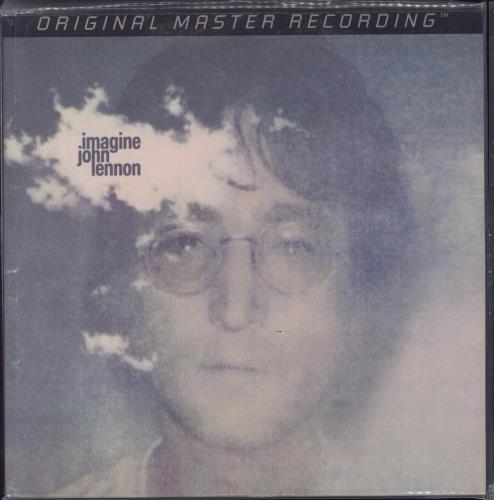


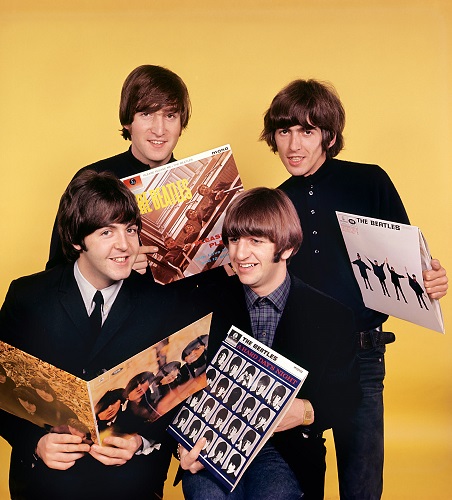
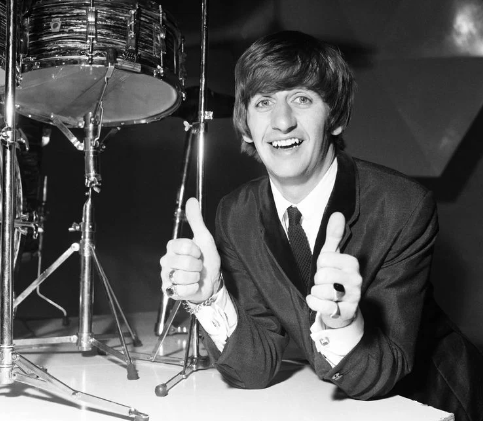
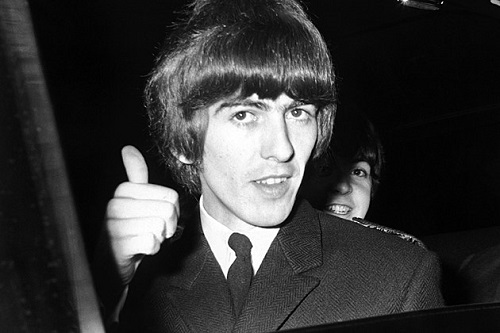
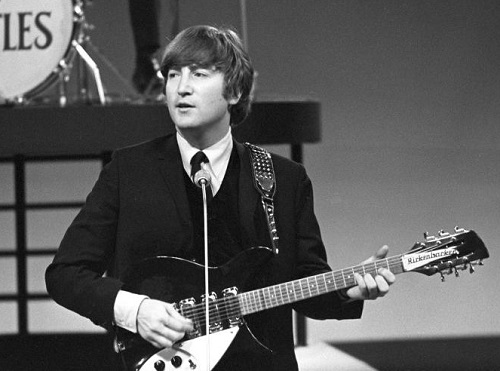
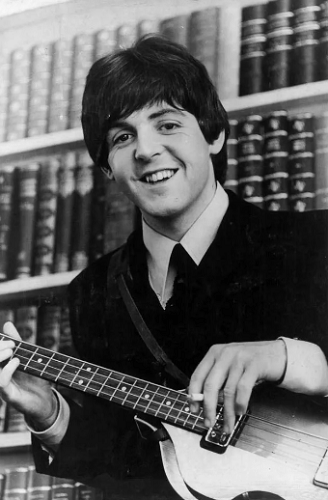
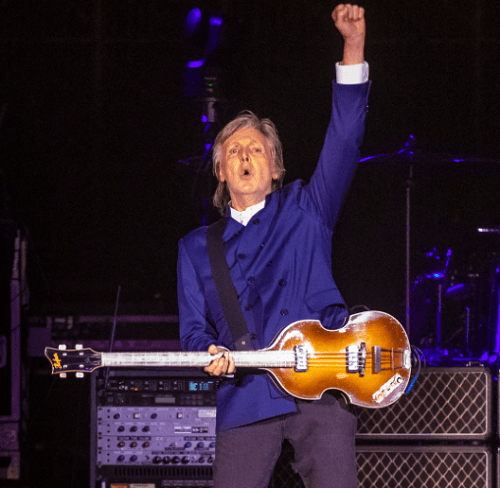

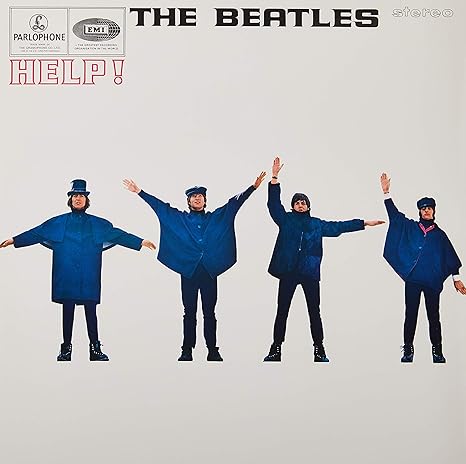
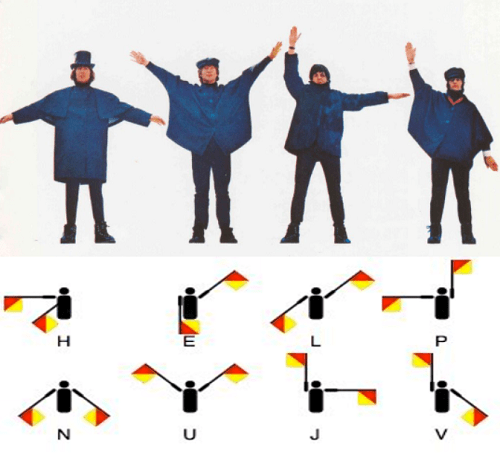
 Various Ramblings of a Nostalgic Italian