Torme’ Centennial

Happy 100th birthday to the late, great Mel Torme’!!
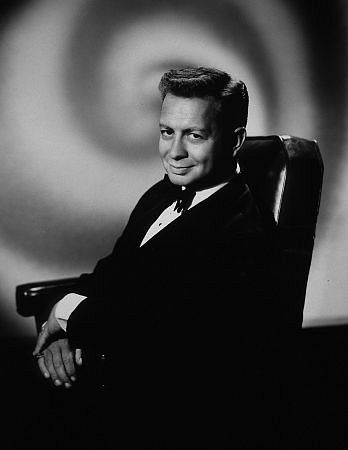
Melvin Howard Tormé was an American musician, singer, composer, arranger, drummer, actor, and author. He was a jazz icon.  He won two Grammy Awards and was nominated a total of 14 times.

Mel grew up in a largely black neighborhood and was heavily influenced by jazz. He was a child prodigy, who performed professionally at age four with the Coon-Sanders Orchestra.  He would sing “You’re Driving Me Crazy” – a song he had learned on the radio, at Chicago’s  Blackhawk restaurant. He was invited back and sang every Monday night for six months.  It wasn’t a bad first gig. He was paid $15 a night with a free dinner for his family.

From 1942 to 1943, he was a member of a band led by Chico Marx. He was the singer and drummer and also created some arrangements for the band. In 1944, he formed a vocal quintet called Mel Tormé and His Mel-Tones. His group was modeled on Frank Sinatra and The Pied Pipers. The Mel-Tones had several hits while fronting Artie Shaw’s band and on their own. The Mel-Tones were among the first jazz-influenced vocal groups.
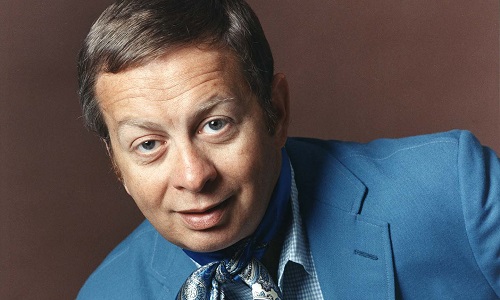
In 1947, he started a solo singing career. His appearances at New York’s Copacabana led local disc jockey Fred Robbins to give him the nickname “the Velvet Fog” in honor of his high tenor and smooth vocal style. Mel detested the nickname. He self-deprecatingly referred to it as “this Velvet Frog voice”.
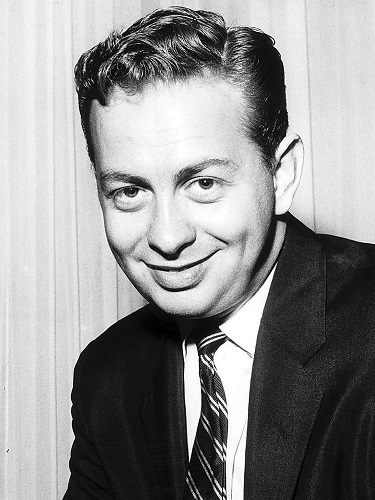
As a solo singer, he recorded several romantic hits for Decca records and with the Artie Shaw Orchestra for Musiccraft (1946–1948). In 1949, he moved to Capital records, where his first record, “Careless Hands”, became his only number-one hit.

Though he spent most of his career singing jazz, Tormé had a deep appreciation of classical music. As for Rock and roll … he considered “three-chord manure”.

In the ’60s and ’70s, Tormé covered pop tunes of the day, never staying long with one label. He had two minor hits: his 1956 recording of “Mountain Greenery”, which did better in the United Kingdom where it reached No. 4; and his 1962 R&B song “Comin’ Home Baby”, which reached No. 13 in the UK. “Comin’ Home Baby” led the jazz and gospel singer Ethel Waters to say that “Tormé is the only white man who sings with the soul of a black man.”

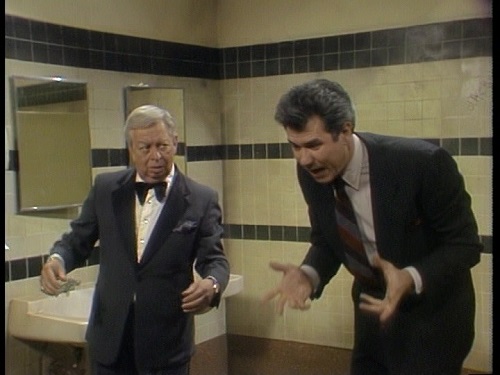
He gained popularity among a younger generation when he made nine guest appearances as himself (and one as a guardian angel) on the 1980s situation comedy Night Court.  The main character, Judge Harry Stone, played by Harry Anderson, was depicted as an unabashed Tormé fan, an admiration that Anderson shared in real life. Anderson would deliver the eulogy at Tormé’s funeral.
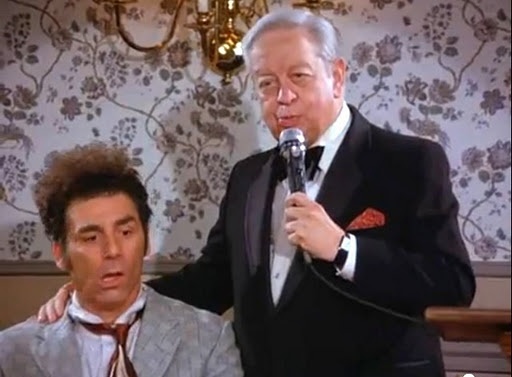
Mel also appeared in Mountain Dew commercials and in a 1995 episode of the sitcom Seinfeld as himself. This is in one of my favorite episodes – “The Jimmy.”
During the 1980s and 1990s he performed often with piano great George Shearing. They recorded six albums together for Concord Records.  It was about this period Shearing wrote:

It is impossible to imagine a more compatible musical partner… I humbly put forth that Mel and I had the best musical marriage in many a year. We literally breathed together during our countless performances. As Mel put it, we were two bodies of one musical mind.

Mel Tormé wrote more than 250 songs, several of which became standards. He often wrote the arrangements for the songs he sang. He collaborated with Bob Wells on his most popular composition, “The Christmas Song”(1946). They wrote the song on a swelteringly hot and sunny day in California, sitting down and coming up with all the most ‘mid-wintery’ things they could think of, in an attempt to cool themselves down; it was recorded first by Nat King Cole.  Tormé said that he wrote the music in 45 minutes and that it was not one of his favorites, calling it “my annuity”

I had the chance to see him when he toured with Doc Severinsen.  He was fantastic!  He owned that stage and had the audience in the palm of his hand.  That concert remains one of the best concerts I have ever been to.  He blew me away when he joined Doc for Sing, Sing, Sing and played the drums.  It was amazing.
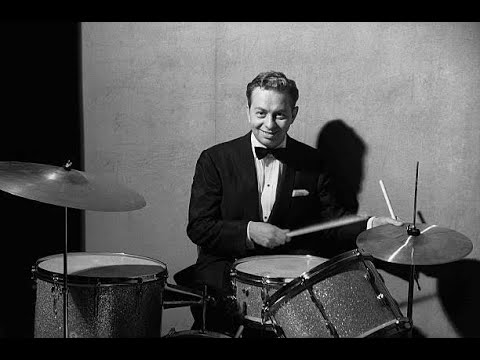
On August 8, 1996, a stroke ended Tormé’s 65-year singing career. In February 1999, he was awarded the Grammy Lifetime Achievement Award. He died from another stroke on June 5, 1999, at the age of 73

In his eulogistic essay, John Andrews wrote:

Tormé’s style shared much with that of his idol, Ella Fitzgerald. Both were firmly rooted in the foundation of the swing era, but both seemed able to incorporate bebop innovations to keep their performances sounding fresh and contemporary. Like Sinatra, they sang with perfect diction and brought out the emotional content of the lyrics through subtle alterations of phrasing and harmony. Ballads were characterized by paraphrasing of the original melody which always seemed tasteful, appropriate and respectful to the vision of the songwriter. Unlike Sinatra, both Fitzgerald and Tormé were likely to cut loose during a swinging up-tempo number with several scat  choruses, using their voices without words to improvise a solo like a brass or reed instrument.

They were two of the best scat singers. Watch this magical improv moment with Ella and Mel:

Happy 100th birthday, Mel! 

Source: Wiki

Turntable Talk #24 – This Woman’s Work

For two solid years Dave Ruch from A Sound Day has been hosting a monthly feature called “Turntable Talk.” Each month he provides a topic to me and other musical bloggers to write about. I have been honored to have participated in every one of them. Each of the participants look forward to not only writing our piece, but anxiously await reading the other contributions.

As I stated in a previous blog, this month is International Women’s Month. Dave offered us an easy topic to write about this month. His instructions state “we’re going to turn our tables and sights to the women of music. Pick one you like and write about her. Whoever you want (that might sound creepier than I intended it), singer, songwriter, band member, the lady on the ‘Breakfast in America’ cover, whoever.”

I wrote a blog that teased this topic earlier in the week. In that post, I said, “I really struggled to pick one (female singer). I even posted on Facebook asking my friends to offer up their three favorite singers. I guess I hoped that they would offer up someone that I hadn’t considered (and they did). The results surprised me. The singers that came up the most were (1) Stevie Nicks, (2) Etta James, and (3 – tie) Pink and Karen Carpenter. Etta was the only one that was in my list of considerations. After looking at the list (and the suggestions) I finally chose who I am writing about and NO ONE mentioned her.

Along with Etta James, I featured a song from my other considerations: Ella Fitzgerald, Alison Krauss, Aretha Franklin, Billie Holiday, Dusty Springfield, Sarah Vaughn, Diana Krall, Norah Jones, Linda Ronstandt, Pat Benatar, Peggy Lee, Jewel, and Keely Smith in that blog. So how did I finally come up with my choice?

My friend, Dawn, from high school actually helped me make my decision. She said, “There are so many talented vocalists, I’d have a hard time picking. if you’re going to write an impactful piece, I think you have to go with somebody you admire because they knocked down boundaries or overcame obstacles. That’s how I’d pick my vocalist.” That really struck me. Now, I am not saying that the ladies I mentioned already did not knock down boundaries or overcome obstacles – heck, Jewel was living in her van before she made it big!

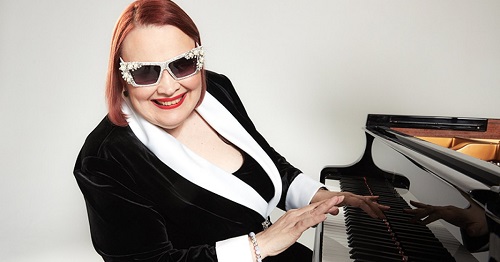
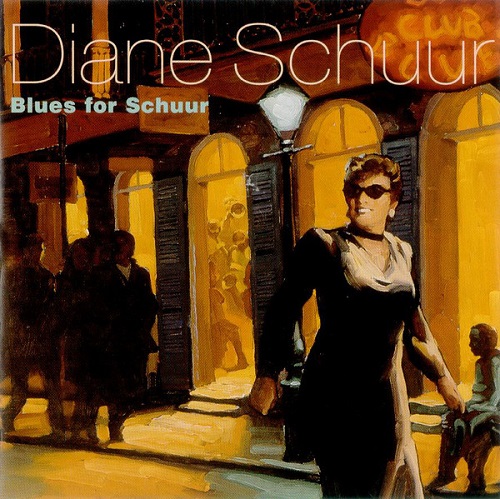
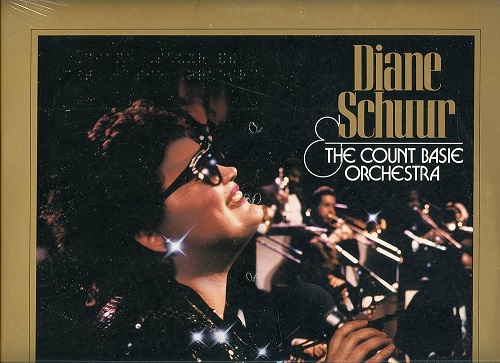
My featured female singer is a talented woman named Diane Schuur.

I was introduced to Diane Schuur back in the late 80’s. I was talking about music with a gal I was dating at the time. We started talking about jazz singers and she asked if I had ever heard of Schuur. I hadn’t. If memory serves me correct, she loaned me a cassette (or maybe a CD) with some songs on it and I really enjoyed it.

One of her biographies online says this: “Diane Schuur is as eclectic as she is brilliant.” In my opinion, this statement could not be more true. While many of her songs would fall into the jazz category, she could easily be filed in the blues or pop categories, too. While preparing to write this, I picked a playlist on YouTube and it was fun to hear the different sounds of each of the songs.

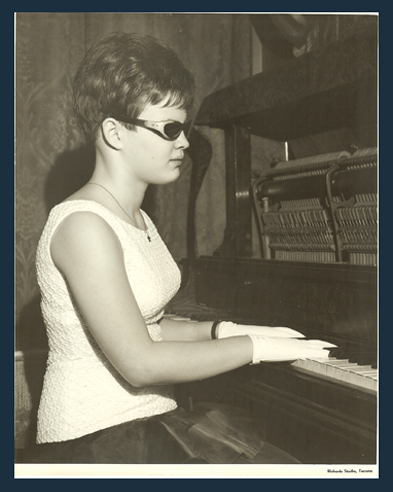
My friend Dawn said to pick someone who “overcame obstacles.” Diane certainly has done that! She was born prematurely in 1953. She has been blind since birth because of Retinopathy of Prematurity. This disorder affected premature newborns who received high-oxygen therapy during neonatal intensive care. This was a standard practice until 1954.

She learned to play piano by ear. She would listen to Dinah Washington songs and began to pound out the melodies at age 3. Dinah was a big influence to Diane as she began singing her songs as a toddler and worked on her own vocal style. She once stated, “As far back as I can remember, singing was in my blood. My parents loved music, and I loved to sing. I was scatting at an early age.” She scats right up there with Ella and Mel Torme’! She also has perfect pitch!

Blindness was not her only obstacle. When she was a young adult, she began drinking and struggled with alcoholism. She also battled an eating disorder. Those obstacles were so much that she actually contemplated and attempted suicide. Thankfully, her brother-in-law stopped her from jumping out a third-story window. She got help and has been sober for several decades.

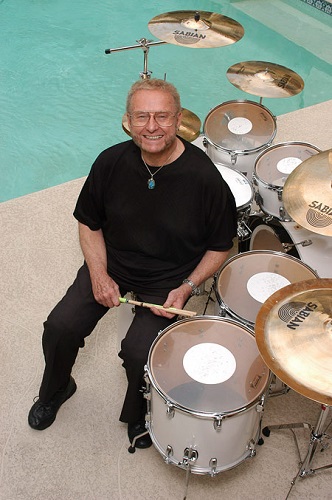
Diane got her big break when she was 22 years old. She auditioned for drummer/bandleader Ed Shaughnessy (of the Tonight Show Band) after he finished a concert with Doc Severinsen. Ed said, “this young blind girl comes in and sits down at the Fender Rhodes keyboard and starts singing the blues. Well, my hair stood on end!”

He hired her to be the vocalist in his orchestra. This led many other musicians to hear her. Those included Dizzy Gillespie and the great Stan Getz. Stan was so impressed that he became an advisor and coach to her. She stated that it was Stan who taught her that “less is more.” This was important because she had many critics that said she often “oversang” when she first started out. Stan once said, “She’s just like Sarah (Vaughn) or Ella (Fitzgerald) to me. She’s taking from the tradition, and what comes out is her own conception and advancement of the tradition.”

In 1985, she met B.B. King at a music festival in Tokyo. The two really hit it off and later made an album together entitled “Heart to Heart.” It was released in 1994 and it entered the Billboard Jazz Charts at number one!

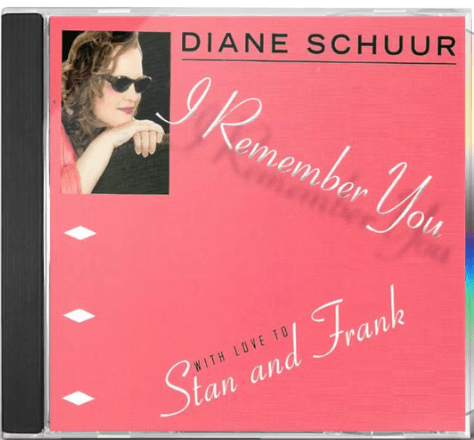
In 1988, Frank Sinatra asked her to sing with him at a benefit concert when Liza Minnelli was unable to perform. She was a guest at Sinatra’s home and also performed at a concert with him and Quincy Jones. Frank gave her an abstract oil painting that he had created for her afterwards. When Frank passed away, Schuur recorded a tribute album for her late friends (Frank and Stan).

Other inspirations to Schuur include George Shearing, Stevie Wonder and Ray Charles who are all blind as well. She has said that one of her fondest memories was performing with Ray Charles in 1998 for a PBS concert (some of which is available on YouTube).

Her career has brought her two Grammy awards – both for Best Jazz Vocal Performance (1986 & 1987). She is still recording and touring today. She says, “For the future I plan to continue my reading of American song, paying respect to celebrated writers and polishing the gems in the jazz tradition.”

I’ve never had the chance to see her in person, but there are some fantastic live albums available.

All About Jazz says, “Ms. Schuur surely is among the very best jazz vocalists, and she exemplifies, if not redefines the “diva” category with her warm, often humorous and relaxed interactions with the audience and the musicians. Her mere presence is enough to make for a memorable evening.” I hope to be able to see her perform one day.

I will include just a couple of my favorite cuts at the end of this blog, but before I do, I want to again thank Dave for hosting this monthly feature. I hope that you enjoy reading this as much as I did writing it. I love that with each topic, I am not only enjoying old favorites, but I am introduced to new songs and singers. Perhaps this blog is your introduction to Diane Schuur?

Here is a classic – Come Rain or Come Shine

Another favorite – All Right, OK, You Win!

I just love her take on Moonlight and Shadows

One more – Her swinging version of I Can’t Believe That You’re in Love With Me

Thanks for reading!