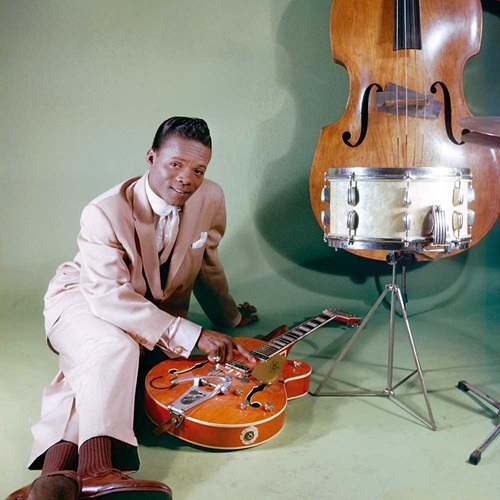
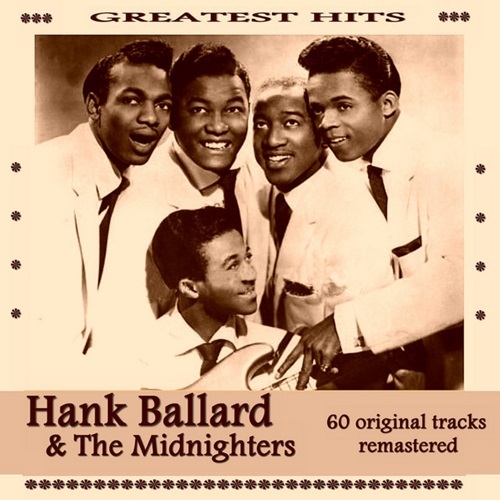
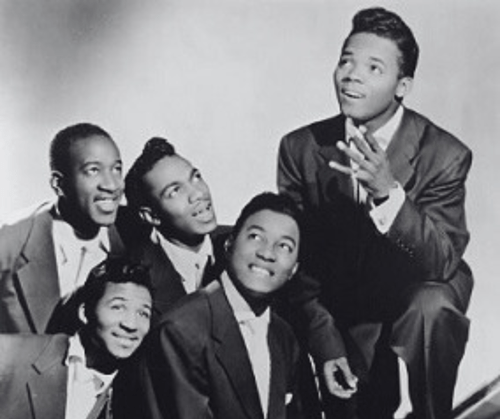
Happy Heavenly Birthday to Michigan’s own Hank Ballard! He was born on this day in 1927. He, of course, wrote and recorded the original version of The Twist. The song will be forever associated with Chubby Checker. He also had hits with Work With Me Annie, Annie Had a Baby and more.
I have featured Hank on this blog before with the 2021 Song Draft
I’d like to feature two of my other favorite Hank songs. I played both of these when I was working at Honey Radio in Detroit.
“Let’s Go, Let’s Go, Let’s Go” (also known as “There’s a Thrill on The Hill”) is a 1960 pop and R&B single written by Hank and performed by Hank and the Midnighters.
The single was the last of the Midnighters’ three number one singles on the US Billboard R&B Chart, staying there for three non-consecutive weeks. “Let’s Go, Let’s Go, Let’s Go” is also Ballard & the Midnighters’ most successful pop single, peaking at number six on the Billboard Hot 100. The record sold in excess of one million copies. In Canada the song reached number 16.
“Finger Poppin’ Time” is a song that was written by Ballard and reached number two on the US Billboard R&B chart. It reached number seven on the pop chart in 1960. It was featured on their 1960 album Mr. Rhythm and Blues.
The song was nominated for the Grammy Award for Best R&B Performance in 1961. It lost to Ray Charles “Let The Good Times Roll.” It ranked #49 on Billboard’s list of Top 100 songs for 1960.
It is time once again for a new Turntable Talk topic from Dave at A Sound Day. Each month he offers up a musical topic for us to write about. This month we are Going out on a High Note. Dave’s instructions to us:
We all have seen artists (not to mention athletes, politicians…) who stick around long after they should have exited gracefully. For this round, pick a musical artist who you think ended their career on a high note, a great final album, or triumphant concert tour before they grew stale.
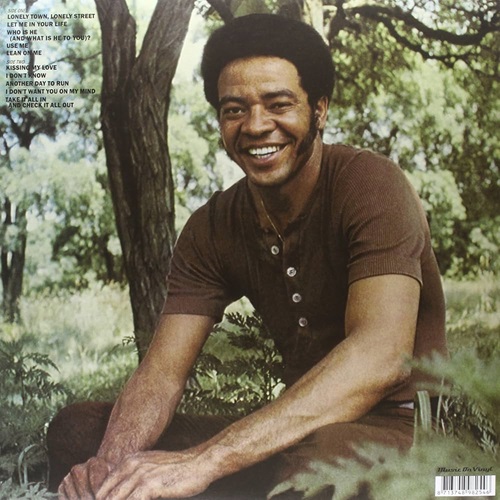
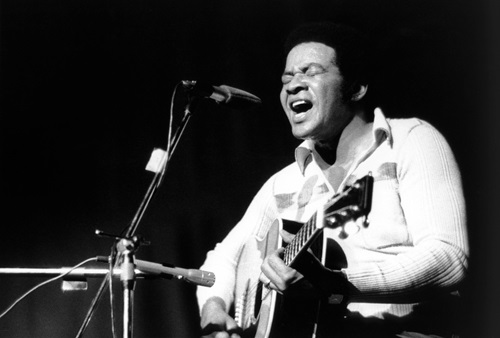
I had a difficult time with this one. As I began to think of artists, I kept coming up with artists who are still recording and touring. Willie Nelson, for example, is still making music and hitting the stage. Has he stayed around “too long?” Some say yes, while other say no. So my search continued. Then I remembered Bill Withers.
Bill served in the US Navy for almost 10 years. It was while he served our country that he began writing songs and became interested in singing. After he left the Navy, he decided to relocate to California in hopes of starting a career in music.
He found work as a mechanical assembler for several different companies including IBM, Ford, and the Douglas Aircraft Corporation. He used the money from his job to record demo tracks that he could take to record companies. He also began to play his songs in nightclubs in the area, hoping someone might discover him.
In 1967, he had his first official release – “Three Nights and a Morning.” It was a song that got little recognition. Three years later, he was signed to Sussex Records and Booker T Jones was assigned to produce Bill’s first album. That album, Just As I Am, included his first hit – “Ain’t No Sunshine.”
The album was a huge success and Withers rounded up a band and went out on tour. “Ain’t No Sunshine” was a Top 10 song and went on to win the Grammy for Best R&B Song in 1972. It also got him noticed by Johnny Carson’s Tonight Show, who sent him a letter inviting him to appear on the show.
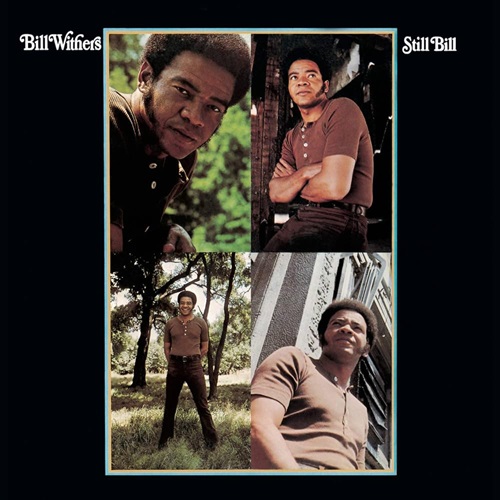
When his tour wrapped up, he used the time off to write and record songs for his second album entitled Still Bill. This album included Bill’s first #1 song – “Lean On Me,” which hit the top of the charts in July of 1972. This was followed up with his third million selling record – “Use Me.”
Bill’s relationship with Sussex record eventually went sour. He said of Sussex Records “They weren’t paying me.” He claims to have erased an entire album that he had recorded for the label in a fit of pique. “I could probably have handled that differently,” he said. There was an ongoing legal dispute with the Sussex company, and because of that Withers was unable to record for some time thereafter.
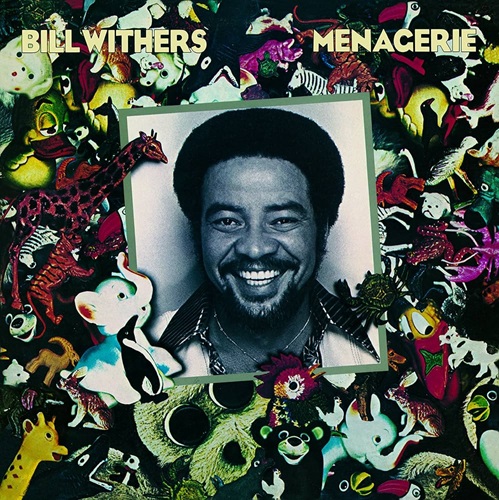
Sussex Records eventually went out of business and Bill had to find a new label. He wound up at Columbia Records in 1975. His first album on Columbia included the song “She’s Lonely,” which was featured in the movie Looking For Mr. Goodbar (which starred Richard Gere and Diane Keaton). He released an album every year afterward, including the 1977 album Menagerie which contained the hit “Lovely Day.”
Bill began to have trouble with Columbia. Apparently he was unable to get songs approved for his album. The label kept passing on the songs he wanted to record. Because of this, he decided to focus on joint projects beginning in 1977. He worked with the Crusaders, percussionist Ralph MacDonald, and jazz saxophonist Grover Washington Jr.
“Just The Two of Us” appeared on Washington’s 1980 album Winelight. It was released as a single in February of 1981 and went on to win a Grammy for Best R&B Song. In 1985, Withers released his final studio album, Watching You, Watching me. It was at this point that Bill decided to “go out on a high note.”
Withers was quoted in interviews that “a lot of the songs approved for the album—in particular, two of the first three singles released—were the same songs that had been rejected in 1982.” This played a big part in the eight-year hiatus between albums. Bill also stated how frustrating it was to see his record label release an album by actor Mr. T, when they were preventing him, an actual songwriter, from releasing his own.
With Columbia trying to exert control over his sound to sell more albums played a part in his decision to not record or re-sign with a record label after 1985. I would imagine the Mr. T thing played a part, too. This effectively ended his performing career, though remixes of his previously recorded music were released well after his “retirement.”
Withers was an artist who found musical success later in life. He was in his early 30’s when he began his career. Now at 47, he said he was socialized as a “regular guy” who had “a life before the music, so he did not feel an inherent need to keep recording once he fell out of love with the industry.” Bill felt he made the right decision. After leaving the music industry, he said that he did not miss touring and performing live and did not regret leaving music behind.
Accolades continued after his “retirement.” In 1988, he won another Grammy, this time as a songwriter for the cover of his “Lean on Me” by Club Nouveau. It won the Grammy for Best Rhythm and Blues Song. In 2005 he was inducted into the Songwriters Hall of Fame, followed in 2015 with his induction into the Rock and Roll Hall of Fame. He said:
“What few songs I wrote during my brief career, there ain’t a genre that somebody didn’t record them in. I’m not a virtuoso, but I was able to write songs that people could identify with. I don’t think I’ve done bad for a guy from Slab Fork, West Virginia.”
Bill passed away in March of 2020 in a Los Angeles hospital due to cardiac complications.
He is still receiving accolades in 2025. Last month, he was selected to be inducted into the National Rhythm and Blues Hall of Fame. The induction ceremony usually takes place in October.
Thanks to Dave for once again hosting Turntable Talk. I am already looking forward to what next month’s topic will be.
Welcome back to The Music of My Life, where I feature ten songs from each year of my life. In most cases, the ten songs I choose will be ones I like personally (unless I explain otherwise). The songs will be selected from Billboard’s Year-end Hot 100 Chart, Acclaimed Music, and will all be released in the featured year.
In 2001, I turned 31. It is a year that I will not forget. It was that year that I found out I was going to be a father for the first time. To say that I was freaking out a little was an understatement. My mom continued to get treatment for breast cancer. There was a time where I prayed that she would be around for my wedding. Now I was praying that she’d be around to meet her first grandchild. My first song was inspired by, coincidentally, a mother with cancer.
It was also the year of the 9/11 attacks. I, of course, was around for the Challenger accident. Many folks called that the “JFK assassination” of my generation. As sad as the Challenger accident was, 9/11 was on an entirely different level. I remember sitting alone wondering about the world we were welcoming our baby into. The event caused many of us to think … more on that shortly.
Train’s Drops of Jupiter came from devastating loss for lead singer Pat Monahan. In a VH1 interview, he revealed that he wrote this song about the death of his mother. Train was were touring in 1988 when Monahan’s mom was dying of lung cancer – she was a heavy smoker. Cell phones had not yet become widely used. This found Monahan making many stops to pay phones on the tour to speak with his mom. It was in December of that year, his mother died.
In early 1999 Train was working on their next album when their record company started pressuring them for a hit. Monahan returned to his childhood home in Pennsylvania, and woke one morning with the words “back in the atmosphere” in his head. Beginning a time of healing, he started to compose the song. Pat said: “Loss of the most important person in my life was heavy on my mind, and the thought of ‘what if no one ever really leaves? What if she’s here but different. The idea was, she’s back here in the atmosphere.”
He recorded a demo of the song and played it for the president of their record company at Columbia. The president loved it and told him it was his Grammy song. He was right: It won Grammys for Best Rock Song and Best Instrumental Arrangement With Accompanying Vocalist. The label had Train record the song quickly. That way they could put it on the album and use it as the title track.
Pat Monahan is quoted as saying, ““It was an obvious connection between me and my mother. ‘Drops of Jupiter’ was as much about me being on a voyage and trying to find out who I am. The best thing we can do about loss of love is find ourselves through it.”
That is SO true.
Drops of Jupiter
I mentioned when I did my list in 1999 that I’ll Be by Edwin McCain is hard to listen to. It was the wedding song my ex and I used. In 2000, Edwin released I Could Not Ask For More, which is a more beautiful song, in my opinion.
This song itself is about spending time with your true love. It is about realizing you do not need anything else in life to make you happy. The song was written by Diane Warren, who has written quite a few songs that I have written about. McCain said that he had to speed the song up to suit his voice. He said, “The tempo of the song was actually half of what it is now. At first, I wasn’t into it. Now it’s a popular wedding song; every night on tour people tell me that it was their wedding song.”
It was in 2001 that country singer Sara Evans covered the song. While not too different from McCain’s version, I love her version more. I have always felt that she has one of the best female voices in country music. She is also one of the most beautiful singers I have met. I loved watching her perform this live.
I Could Not Ask For More
This next song is on my list for one reason and one reason only – the video! I can still remember the first time I watched it and was blown away by Christopher Walken. I had no idea he could dance like this!
Weapon of Choice appeared on Fatboy Slim’s third album and featured Bootsy Collins. Bootsy is, of course, known for his work with Parliament-Funkadelic and Bootsy’s Rubber Band. Boosty co-wrote the song and plays bass on it.
According to Songfacts:
The official music video for “Weapon of Choice” reveals a surprising side of Christopher Walken, known for his intense, often villainous roles in films like Pulp Fiction, The Deer Hunter, and True Romance. What most of us didn’t know until this video appeared is that Walken is a great dancer – he trained at the Washington Dance Studio and appeared in musicals such as 1981’s Pennies from Heaven. In a 2014 interview with Entertainment Weekly, Walken said he accepted the role before he became “too decrepit to dance.”
He choreographed the video with Michael Rooney, son of Mickey Rooney, and performed stunts, including flying across the mezzanine in a harness. Reflecting on the humor and playfulness of the video, Fatboy Slim told Higher Frequency in 2006: “I think it’s full of irony, and to see an actor that I really admire but who’s famous for playing psychopaths, to see him do that silly un-psychopathic dancing made me smile and made everyone else smile.”
The “Weapon of Choice” music video was a huge hit! It won six MTV Video Music Awards in 2001. It won for Breakthrough Video, Best Direction, Best Choreography, Best Art Direction, Best Editing, and Best Cinematography. It also went on to win the Grammy Award for Best Music Video. To top it all off, it was named the greatest music video of all time by VH1 in 2002.
Weapon of Choice
I recently saw where Brian Cranston, Jane Kaczmarek, and Frankie Muniz announced that they will reunite for a reboot of Malcolm in the Middle. The show debuted in 2000 and did very well. I always watched it because I could relate to the constant fighting between the brothers. I also loved the humor of the show.
They Might Be Giants recorded this song specifically for Malcolm in the Middle, and can be found on the show’s soundtrack. The show used other songs from the band throughout the run of the show.
The rumor is that the song is about guitar player John Flansburgh’s brother. I can totally see this. We may not have used the exact phrase growing up, but I know my brother and I often said that the other couldn’t boss the other around. It hits home in that way for me.
Boss of Me
The next song was a triumphant return for Weezer. Their fans were a little worried about the band in the late ’90s. After touring for their 1996 album Pinkerton, they took some time off and went through some lineup changes. It was during this time that Rivers Cuomo was taking classes at Harvard. He enrolled there in 1995 and attended sporadically when it suited his schedule. “Island In The Sun” was welcome relief for fans, showing that the band was back and in a good place. (Cuomo did eventually graduate Harvard, earning a degree in English in 2006.)
Songfacts says, “Unlike many Weezer songs, there’s no trace of pathos and no deeper meaning, making it an easy song to enjoy even if you’re not a big fan of the band. It became one of their most popular songs, although it was never a bit hit, reaching a chart peak of just #111 in the US.”
This is another one of those songs that I remember hearing a lot on the radio. I find it hard to believe that it only reached #111 on the charts. It was obviously good enough for them to play on TV. Weezer played it along with “Hash Pipe,” when they were musical guests on Saturday Night Live, May 19, 2001. It was their only guest appearance on the show.
Sing along…. “Hip. Hip.”
Island in the Sun
What do Neil Diamond, The Monkees and Smash Mouth have in common? One MONSTER hit!
Neil Diamond wrote I’m a Believer in 1966. Don Kirshner was looking for material for the Monkees to record and liked it. Neil was allowed to record it as well as part of their deal and did so in 1967. The Monkees version went to #1in ’66.
Jump ahead 35 years to 2001. Smash Mouth recorded a version of the song for the Dreamworks animated movie, Shrek. The song was picked because it fit the movie’s theme, as it was a sort of fairy tale. The opening line of the song is “I thought love was only true in fairy tales.”
Smash Mouth’s version is a great modern take on the song and still fun to sing along with. When I hear it, I am taken back to watching this movie with my oldest son. He loved Shrek and we watched it MANY times.
I’m a Believer
The next song was one that I often used as a first song at parties and weddings. It was a good one because it was the “kick off” song and literally got the party started.
Songfacts.com says: Get the Party Started was written by Linda Perry of 4 Non Blondes. After the group broke up in the early ’90s, Perry released two solo albums and started writing for other artists. She learned that hits of the ’00s were made digitally. She bought Akai MPC and Korg Triton digital workstations and started experimenting with them. As she was learning how to use them, she came up with the track by adding layer after layer, then she quickly banged out a lyric with every party cliché she could think of, arriving at lines like:
I’m your operator, you can call anytime I’ll be your connection to the party line
It worked: “Get The Party Started” was a huge hit for Pink and launched Perry’s songwriting career. Her next hit was “Beautiful” for Christina Aguilera.
The song is synonymous with Pink, but it was almost offered to another singer. Thankfully, a phone call changed that. Perry initially thought this could be a hit for Madonna. However, Pink happened to call her the week after she wrote the song. Pink was a huge 4 Non Blondes fan. She sought out Perry, who was very surprised to get a call from a pop star. When they met, Perry gave Pink an MP3 copy of the “Get The Party Started.” Pink’s management loved the song and arranged for them to work together on her second album.
Get The Party Started
When an artist’s first single is a ballad, it is usually because the ballad is amazing. Most record labels want uptempo songs. (Honestly, most radio stations want uptempo stuff, too!) There are no shortage of ballads waiting to get airplay!
When it came time to release his first single, Enrique Iglesias fought to get “Hero” released. “Everybody thought first singles at the time had to be uptempo,” he told People. “But I knew that it was one of those songs that when I wrote it it just felt special.” It was, and he was right. Iglesias attributes the success of this song to a combination of good lyrics, melody, and excellent production. He feels those three qualities need to work together to make a timeless hit.
The song took on a whole new meaning shortly after it was released. This song was released on August 14, 2001, just a month before the September 11 attacks on the US. The song doesn’t describe the type first-responder heroes, but the theme of standing by a loved one resonated at this time. The song became quite popular because of that, reaching a chart peak of #3.
One pastor taught a message on husbands and wives. He stated that what a husband wants is to be his wife’s hero. That’s the guy who will take away her pain and be there through thick and thin.
Hero
MercyMe is a contemporary Christian group. They had an Adult Contemporary crossover hit with a song that was written by their lead singer Bart Millard. I Can Only Imagine is simply about imagining what it will be like meeting Jesus for the first time.
In a Songfacts interview, Bart said that he that he wrote the song in about 10 minutes. He said that it was one of just three songs he wrote where he felt like he was “a spectator watching the song being written.”
Regarding the song’s meaning, Millard stated: “When my father died of cancer in 1991, he left me with the assurance that he was headed to a better place. For several years following his death, I would find myself writing the phrase ‘I can only imagine’ on anything I could find. That simple phrase would give me a peace thinking about what my dad was finally experiencing. Years later, in 1999, MercyMe was writing songs for an independent project. I remember coming home from a show and being wide awake on our bus at 2 o’clock in the morning. I was trying to write lyrics in an old notebook of mine, when all of a sudden, I stumbled across that phrase. About ten minutes later, the song was written. Some people say it’s amazing that it was written in ten minutes, when really it had been on my heart for almost ten years.”
This one means a lot to me personally. I am so grateful for my faith and my Savior. It is an amazing thing to imagine….
I Can Only Imagine
I can still vividly remember the morning of 9/11. I was in a meeting with my boss at the radio station when the morning gal came in and told us that a plane had hit the World Trade Center. We went into the newsroom and were shaken to the core when we watched the second plane it the Twin Towers. That would be one of the longest and most emotional days in my radio career.
I worked at a country station at the time. We saw a lot of patriotism come out of those attacks. Songwriters wrote songs about being an American and such, but none of the equaled the contribution made by Alan Jackson.
The 9/11 attacks made a lot of us stop and think about life. We were left with so many questions. We were left shocked and scarred by the images we watched on TV. It was constantly on our minds. Alan Jackson seemed to be on the same page as everyone else, and conveyed it all perfectly in the song Where Were You (When the World Stopped Turning)
He wrote the song alone, with the idea coming to him at 4am in the morning. He explained to The Boot that the lyrics really “came out of nowhere.” “It was just a gift,” he said. “I got up and scribbled it down and put the melody down so I wouldn’t forget it, and the next day I started piecing all those verses together, thoughts I had or visuals I had.”
The song made its debut on the Country Music Association’s annual awards show on November 7, 2001. I still cannot believe that he was able to sing the song without breaking down. Alan considers this to be one of his biggest (if not the biggest) accomplishment. He said in an interview: “I [recently] did a radio interview, and the guy was talking about being at the [CMA] Awards the night I sang ‘Where Were You,'” he explained. “Even though that was a hard performance for me and an emotional time, I still get so many comments about that. Of all the awards, and all that kind of stuff, the music is still what I like. To be able to create a song that really affects people and makes a mark in the music industry, I would have to say that would be a highlight.”
To this day, the song still gives me chills. I’m sure you will never forget where you were when the events of that day unfolded either.
Where Were You
Sorry to wrap up the year on a somber note, but that wraps up my list. How about you? What song from 2001 did I miss that was your favorite. Mention it in the comments.
Next week, we’ll head to 2002. My list features movie music, an in your face patriotic song, a song full of 70’s and 80’s nostalgia, a cover song, an appearance by the Muppets, and the return of the King! I hope you’ll check it out.
Until next week, thanks for listening and for reading!
Welcome back to The Music of My Life, where I feature ten songs from each year of my life. In most cases, the ten songs I choose will be ones I like personally (unless I explain otherwise). The songs will be selected from Billboard’s Year-end Hot 100 Chart, Acclaimed Music, and will all be released in the featured year.
In 1981 there were two things that influenced me musically. First of all, I discovered American Top 40 with Casey Kasem. My dad had it the radio on one day while he was washing the cars and doing yard work. It was my first exposure to a countdown show. As a matter of fact, as I looked over the list of possible songs for my list, there were plenty of songs that I remember hearing for the first time on AT40. Some of those that are not on my list are: Start Me Up, Centerfold, Waiting for a Girl Like You, Elvira, Bette Davis Eyes, Hearts, Physical, and so many others!
The second thing that not only influenced me musically, but everyone else in the country, was the birth of MTV in August of 1981. This changed the way people listened to music. Some of those 80’s music videos are forever etched in my mind. I loved the creativity of many of those videos. In many cases, the videos helped with the popularity of songs and how much airplay they got on the radio. Perhaps you’ll remember the videos from some of the songs on my list?
Here we go ….
My dad played guitar in a wedding band for many years. Often, my brother and I would have to go to band practice with him. It was there that I recall being introduced to some of the current songs. One of them was Just The Two of Us by Grover Washington Jr. and Bill Withers. I can remember the distinct mystical sounding keyboard part at the beginning from my dad’s band and being wowed at how it sounded exactly like the record.
Grover Washington, Jr. wrote this with his musical partner Bill Salter before Withers added to the lyrics. It was produced by Ralph MacDonald, a percussionist who played on many of Washington’s tracks. MacDonald was friends with Withers and made the connection. Bill said in an interview with songfacts:
“I’m a little snobbish about words, so they sent me this song and said, ‘We want to do this with Grover, would you consider singing it?’ I said, ‘Yeah, if you’ll let me go in and try to dress these words up a little bit.’ Everybody that knows me is kind of used to me that way. I probably threw in the stuff like the crystal raindrops. The ‘Just The Two Of Us’ thing was already written. It was trying to put a tuxedo on it. I didn’t like what was said leading up to ‘Just The Two Of Us.'”
The song reached number 2 on the charts, but never made it to number 1. It was kept from that spot by Sheena Easton’s Morning Train (9 to 5) and Kim Carnes’ Bette Davis Eyes. The song did win a Grammy award for Best R&B Song. It would be Grover Washington Jr’s only Top 40 hit.
Just The Two of Us
I’ve told this story before, but it is why the next song is here. I remember my dad throwing the 45 of The Breakup Song on the turntable and playing the intro over and over. He’d pick on his guitar and work out that intro over a matter of minutes. Once I heard him play it note for note, I was in awe of him.
The Greg Kihn Band had been around for some time. Their album Rockihnroll was their sixth studio album. It celebrates the quality of breakup songs in rock’s earlier times, as the narrator laments both his recent breakup and the fact that they don’t write good breakup songs anymore. The song is perhaps best known by the hook, “They Don’t Write ‘Em Like That Anymore.”
The Breakup Song
I have always loved the Commodores, with and without Lionel Richie. Lady (You Bring Me Up) was released as the lead single from their album In The Pocket, their last with Lionel Richie in the group. Lionel didn’t write the song, Commodores’ trumpet player William King did. He wrote it with his wife, Shirley, and Harold Hudson, a member of the Commodores’ backing group, The Mean Machine.
In 1981, sexually suggestive songs like “Physical” and “Girls on Film” caused a bit of controversy. Naturally, some disc jockeys poked fun by warning listeners that this was another song with sexually suggestive lyrics: “Lady, you bring me up when I’m down.” In truth, the song is simply a song about a man whose woman gets him through life’s difficult times. It went to #8 on the Hot 100 chart.
Lady
It wasn’t until years later that I found out that Juice Newton wasn’t the first one to sing Queen of Hearts. It was actually written by Hank DeVito of Emmylou Harris’ band and first recorded in 1979 by rocker Dave Edmunds. His version was big in the UK and Ireland, but didn’t go far anywhere else.
Juice Newton had the biggest success with “Queen of Hearts” after it appeared on her 1981 album, Juice. In September 1981, Newton’s version peaked at #2 on the US charts, having shifted over one million copies. It almost didn’t happen, though. Juice remembers, “I did [‘Queen of Hearts’] live for about a year…Then I brought it to [producer] Richard Landis when we started the Juice album. He wasn’t convinced at that point that it was a breakout song but I told him I think this is a real cool song … so we cut it”.
In 1982, the song was nominated for the Grammy Award for Best Female Country Vocal Performance. Dave Edmunds told Creem Newton stole his composition: “She did pinch my arrangement, note for note, but I’m not angry with that.”
Queen of Hearts
Before Foreigner recorded this album 4, two members of the group left, trimming the band from six members to four. This, along with the fact that it was their fourth album, explains the title. My favorite cut on the album has a Motown connection.
Future Mr. Shania Twain, Mutt Lange, produced the album. Lange wanted to hear every music idea guitarist Mick Jones had recorded on tape, no matter how embarrassing. One of these ideas was the opening riff for what would become “Urgent”. “I had the riff starting out,” Jones recalled. “And I said, ‘That’s like an experimental instrumental thing that I’m working on.’ He said, ‘No, it isn’t anymore – let’s take that one, because that’s got a lot of potential.’ There wasn’t even a song with it.”
The group wanted a “Junior Walker-style” sax solo for this record. When they took a break from recording, one of the members read in New York newspaper The Village Voice that Walker was performing that night mere blocks from the recording studio. Walker accepted their offer to play, and the recording of the sax solo was swift and without a hitch.
Urgent
ELO’s TIME is a concept album about a time traveler who visits the year 2095. This song takes place on his return trip in 1981. He is inspired, and now knows that everything he needs he can find back home. “Hold On Tight” was the first single from the album.
By this time, the band was credited as ELO, downplaying the orchestra because they had recently jettisoned their string section. The lead instrument on “Hold On Tight” is piano played by group leader Jeff Lynne, who wrote the song. Billboard called it an “affectionate tip-of-the-hat to ’50s rock ‘n’ roll” that was inspired by the piano playing of Jerry Lee Lewis. That sound is probably why I love this song so much, as well as the uplifting message.
There was an elaborate (for its time) video was made of this song. Wikipedia states that this was the most expensive music video ever made (at the time). Directed by Mike Mansfield, it’s a sendup of sci-fi movie trailers from the 1940, which often blared words on the screen in huge font (AMAZING!, BREATH-TAKING!). Their violinist, Mik Kaminski, had left the group by this time but shows up in the video miming guitar.
The song topped out at number 2 on the Billboard Top Tracks chart.
Hold On Tight
Who can deny a great cover song? Am I right? (I’m talking to you Randy! LOL)
Yep, one of the biggest 80’s hits is actually a cover of a song first recorded in 1964. Ed Cobb of the Four Preps composed the song, and it was first recorded by Gloria Jones. (Fun Fact: Glen Campbell was a studio musician and played guitar on that version!) Her version was actually the B-side of her single, “My Bad Boy’s Comin’ Home.”
In 1973, British club DJ Richard Searling purchased a copy of the almost decade-old single while on a trip to the United States. The track’s Motown-influenced sound (featuring a fast tempo, horns, electric rhythm guitar and female backing vocals) fit in perfectly with the music favored by those involved in the UK’s Northern soul club scene of the early 1970s.
In the book 1000 UK #1 Hits by Jon Kutner and Spencer Leigh, Soft Cell’s Marc Almond called this song “A mixture of cold electronics with an over-passionate, over-exuberant, slightly out of key vocal.” Almond recalls, “Dave (Ball) introduced me to the record and I loved it so much and we wanted an interesting song for a encore number in our show. Dave loved northern soul and it was a novelty to have an electronic synthesizer band doing a soul song. When we signed with our record company, they wanted to record it. They told us to put bass, guitar and drums on it as they said it was too odd. They put it out anyway and the next thing it was gathering radio play and then it was #1. I was fascinated that it was originally by Gloria Jones, the girlfriend of Marc Bolan and I’d always been a T-Rex fan.”
Marc Almond’s vocal is the first take he recorded. That take was actually a run-through so they could tweak the settings, but it had just the right emotion, so that was the one they used. Obviously it was the right take because even Gloria Jones liked it. She said that she considers the Soft Cell version to be the best one. “I loved the emotion in his voice,” she said. “Their version was far better than mine.”
Tainted Love
Here is another song with a Dave Edmunds connection. Tempted was the second single off Squeeze’s East Side Story album. It was written by Chris Difford and Glenn Tilbrook. Chris wrote the lyric while the band was taking a taxi to Heathrow Airport. The descriptions of the city and airport sights are interspersed with the narrator’s ruminations on a relationship that is failing, or has failed, due to his own infidelities. As he recalled,
The original story behind “Tempted” is we’re going on another American tour. I got on a taxi and I started writing down what I saw lyrically. I don’t know the course of time of how long it took, but then I gave Glenn the lyrics and then Glenn put the music to it. It’s an extraordinary song. It’s one of the most played songs that we have in our catalog.
Unlike most other Squeeze songs, which are sung usually by Tilbrook or Difford, the song’s lead vocal is sung by newly recruited keyboardist Paul Carrack. According to Carrack, this was the result of a suggestion by co-producer Elvis Costello:
They’d actually recorded a version of that song before I was on board. Dave Edmunds produced it, and it was completely different. The song was in the can, and we were recording the other songs from East Side Story when we had some downtime and played ‘Tempted’ but in that slow, soulful, Motown groove. Elvis Costello, who was producing, ran in and said, ‘Let’s put this down on tape!’ So, we did, and Elvis said ‘Paul, you should sing it.’
I had never heard the song before, but in 1994, I was driving a lot for my job and this would come on Planet 96.3. I have always loved the opening line of this song, “I bought a toothbrush, some toothpaste, a flannel for my face” I can’t imagine it without the slow bluesy feel.
Tempted
Loverboy’s first single from their Get Lucky album didn’t really burn up the charts, however, years later it would be linked forever to a classic Saturday Night Live sketch.
Working for the Weekend originated when guitarist Paul Dean was out walking one Wednesday afternoon, looking for inspiration in his songwriting. He noticed that much of the area was deserted, as most people were at work. “So I’m out on the beach and wondering, ‘Where is everybody? Well, I guess they’re all waiting for the weekend,'” he later said. Mike Reno, the band’s vocalist, suggested they change the title to “Working for the Weekend”. According to Dean, he first began writing the song in a hotel room following a Montreal concert. At the time, the band were still playing bars to little response from patrons. After completing the song, they used it to open one set, and Dean recalled that “the dance floor was packed”.
The video had a life of it’s own on MTV. Loverboy lead singer Mike Reno tells about the filming of this video: “We would play the song over and over again, and we’d bounce around like we normally did. Here’s what I thought was kind of interesting: The director would say, ‘OK, we’re going to shoot another song, now go get changed.’ ‘What do you mean?’ ‘You have to put on a whole new outfit, and we’re going to change the lighting a bit.’ But it was the same stage! So basically, we just had to get some other clothes, fix your hair, take a break, and then jump back on stage and do the same thing over and over again. I really felt like I was being abused a bit, but that’s the nature of the beast.”
On October 27, 1990, Patrick Swayze hosted Saturday Night Live. It was on that show that the famous Chippendale’s Audition sketch debuted. It featured Chris Farley and Swayze auditioning for the final spot in the Chippendale line up. Their audition was done to this song.
Working for the Weekend
“Shake It Up,” was the title track of The Cars’ fourth album. It is hard not to want to dance when you hear it. Some call it a “tailor-made party song.”
It was written by Cars’ frontman Ric Ocasek. It really is an odd song for Ric in that it’s very straightforward, simply encouraging us all to get on the dance floor and boogie like nobody’s watching. Ocasek’s songs were generally far more enigmatic. Years later, Ocasek dismissed the song’s lyrics, saying, “I’m not proud of the lyrics to ‘Shake It Up.'”
This song has some throwback elements, like the “ooo ooo ooo” backing vocals and references to a “quirky jerk” and “night cats” – lingo that was hep in the ’60s when songs about dancing were in vogue. At the same time, “Shake It Up” as a futuristic sound, with synthesizers and drum machines that were part of the new wave.
It was released as the lead single from the album. “Shake It Up” was a big American hit for The Cars, getting them into the Top 10 for the first time as the song reached #4. The song was such a departure from what fans expected that some accused the band of “selling out.” The band, however, insisted they were simply progressing and growing (one point in their defense: they continued to live in Boston instead of relocating to New York or Los Angeles). The jabs came mostly from the UK, where the band got lots of positive press early on but faced the wrath of a finicky press when they released this song about dancing.
Fun Fact: Guitarist Elliot Easton said he wanted his solo to sound like “two guys trading off”. He first plays a Fender Telecaster, in a style skewing country, then midway through the solo switches to a Gibson guitar for a heavier rock sound.
Shake It Up
Finally, a song that has yet another Michigan connection. When Styx was preparing their tenth album, Paradise Theater, guitarist Tommy Shaw, says he was asked to write one more song for the album, which followed the theme of a concert hall rising to prominence and then crumbling. Shaw liked the concept, but was having trouble writing songs that fit. So he just wrote one that didn’t follow the theme – “Too Much Time On My Hands.”
Shaw had a long drive to and from the recording studio, and on one trip, the bassline popped into his head: “dun-dun dun-dun dun-dun-dun-dun.” When he arrived, he quickly had the band record what was in his head so he wouldn’t lose it. He found himself calling out chord changes as they played, which laid the groundwork for the track.
When it came to the lyrics, he drew inspiration from a real bar in Niles, Michigan, where he was living. “I think officially it was called Mark’s Tavern, but everybody called it Mark’s Bar. It was the local watering hole. The drinks were good, and the drinks were cheap. You could go in there with 20 bucks and be a hero, you know – buying rounds of drinks. And you’d always run into somebody you knew in there. That was the basis of the song.”
The song was released in the spring of 1981 and reached its US chart of #9 in May. In August, MTV went on the air, which gave the song new life, since the video was one of the few the network had available from an American rock band, and they played constantly.
Too Much Time On My Hands
Looking back over the list of songs released in 1981, there are so many worth mentioning. Did I miss one of yours?
As I start looking at each year and jotting songs, I have gone from 2 pages to 3 pages of songs to chose from. These 80’s years are probably going to be the toughest to narrow down for me.
Next week, we’ll jump into 1982 and see what 12 year old Keith was liking ….
Thanks for reading!
(Most info was gathered using sources like Wiki, songfacts.com, and artist websites)
Welcome back to The Music of My Life, where I feature ten songs from each year of my life. In most cases, the ten songs I choose will be ones I like personally (unless I explain otherwise). The songs will be selected from Billboard’s Year-end Hot 100 Chart, Acclaimed Music, and will all be released in the featured year.
This week we enter a new decade – the 80’s! As the final years of the 70’s ticked away, you could already start to hear the “eighties sound” creeping in. As we move through the decade that sound will change even more. What is also interesting is the amount of crossover hits in the years ahead. 40% of my list for 1980 has roots in country music.
So what was my 10 year old self listening to in 1980?
I did not know that the first song would perhaps unknowingly influence my career choice at 10 years old, but it may have. Released in February in the US, Charlie Dore reached number 13 on the Hot 100 charts with her ode to the radio DJ, Pilot of the Airwaves.
The lyrics are from the point of view of a woman who frequently listens, late at night, to a radio disc jockey whom she calls a “pilot of the airwaves”, keeping what has often been called the “dawn patrol”. She admits that she has few real-life friends and that the DJ keeps her as much company as she believes she needs, describing her life and the feelings she has2 surrounding the fact that she considers the radio DJ her only true friend. The DJ does not need to play the selection she has requested; she does hope the DJ will do his best along those lines, adding:
I’ve been listening to your show on the radio, And you seem like a friend to me.
Looking back on this song now, I can tell you that the one thing I learned was most important about being on the air was to have the listener feel as though they were just hanging out with a friend. That was always my goal – speaking one on one and keeping my listener company.
The song played a role in an early relationship, too. Two gals used to call the station all the time and one of them always wanted to hear this song. They decided to bring me coffee one night and I hit really hit it off with one of them. We dated for a while, and when an ex of mine called to ask me to take her back, I did. Ah, young love …. it really gets messy
Pilot of the Airwaves
A songwriter and producer named Steven Greenburg wrote a song when he became bored with Minneapolis and wanted to move to New York, which he called “Funkytown.” Lipps Inc. (pronounced “Lip Synch”) was formed especially for this song. The vocals were done by Cynthia Johnson, who was Miss Black Minnesota 1976. The song reached number one on the charts and stayed there for four weeks!
The group continued to record until 1985 with a changing lineup, but they failed to see the success they’d had with their first hit. Steven Greenburg, however, went on to have great success. He became A&R Vice President for Mercury Records, signing Hanson, among other acts. Later he headed the S-Curve Records label, signing the Baha Men and Joss Stone.
This song shows up in a lot of movies (Shrek 2, History of the World Part 1, Selena) and TV shows (Everybody Loves Raymond, Will and Grace, Malcolm in the Middle, and Friends) and VH1 ranked the song at #37 in the Top 100 One Hit Wonders.
Funkytown
It’s Still Rock and Roll to Me from Billy Joel’s Glass Houses album was one of Joel’s most popular songs and was his first #1 hit on the Hot 100, spending two weeks at the top spot in July 1980. The song spent 11 weeks in the top 10 and was the 7th biggest hit of 1980. It was released on May 12, 1980 – 3 days before my 10th birthday.
In this song, Billy Joel was making a comment on musical styles and trends. At the end of the disco era, the music press began touting the “New Wave” sound, which included bands like The Police and The Cars. Joel thought that this new sound was just a variation on power-pop that had been around since the ’60s. He didn’t have a problem with the music, just the way it was being categorized. “I like it, but it’s not particularly new,” he said.
He said in a Rolling Stone interview that “new wave songs, it seems, can only be about two and a half minutes long… only a certain number of instruments can be played on the record – usually a very few… only a certain amount of production is allowed or can be heard… the sound has to be limited to what you can hear in a garage… a return to that sound is all that’s going on now.”
It’s Still Rock and Roll To Me
Despite the next song being a huge hit in 1980, it is interesting that it goes all the way back to 1959 and has ties to Buddy Holly and the Beatles.
More Than I Can Say was originally written and recorded by Sonny Curtis and Jerry Allison in 1959. Curtis and Allison were both members of Buddy Holly’s band, the Crickets. They recorded it in 1959 soon after Holly’s death and released it in 1960 on their album In Style With The Crickets. The hook was left unfinished at the time, and at the time of recording, the hook was left this way with no lyrics, only the “wo-wo yay-yay,” which became a memorable part of the song. The single went on to become a minor hit in the UK. Curtis considers this song to be one of his most enduring, looking back at the success subsequent artists have had performing it.
It was also covered by Bobby Vee in 1961. Bobby, you may recall, was one of the artists who was chosen to play the remainder of the tour that Buddy Holly, The Big Bopper, and Richie Valens were doing when they died. Bobby’s version never cracked the Top 40 in the US, but was a Top 5 song in the UK.
From Wiki: According to author Mark Lewisohn in The Complete Beatles Chronicle, The Beatles performed “More Than I Can Say” live in 1961 and 1962 (in Hamburg and Liverpool and elsewhere). Author Allen J. Weiner in The Beatles: The Ultimate Recording Guide confirms this, noting that it came from a setlist made at the time by George Harrison. It is unclear who sang the lead vocals and no recording is known to survive.
The best known version of the song was by Leo Sayer. Sayer was looking for an “oldie” for his 1980 album Living in a Fantasy. He saw a television commercial for a greatest hits collection by Bobby Vee and chose the song on the spot: “We went into a record store that afternoon, bought the record and had the song recorded that night.” It spent five weeks at #2 on the Billboard pop chart in December 1980 and January 1981.
What I remember most about this song is that my dad’s wedding band used to play this in the set. My brother and I often heard it over and over as they rehearsed it.
More Than I Can Say
I will always see a dancing gopher whenever I hear the next song. “I’m Alright” is the theme to the movie Caddyshack, and plays at the beginning and end of the film. Kenny Loggins saw a rough cut of the movie before he wrote the song. He used the character Danny Noonan, who was a caddy with hopes for a brighter future, as inspiration.
Loggins told the St. Petersburg Times: “The character was trying to figure out where he fit. But at the same time he wanted people to leave him alone and let him find his own way. So I wanted to grab him and summarize that character, and that’s what ‘I’m Alright’ is doing.”
Do you recognize a familiar voice in the song? Eddie Money was recording in a nearby studio, and Loggins convinced him to sing a line on this song. That’s him in the background singing, “You make me feel good!” Money was unhappy that he never got credit for his contribution. “I’m not a fan of Kenny Loggins to tell you the truth,” he told Cincinnati morning show host Kidd Chris of WEBN in 2014. “I sang the bridge in that. We were label mates, you know.”
Fun Fact: When Loggins launches back into the chorus partway through the song, he stutters on the lyric, singing, “I- I’m Alright,” which was a happy accident. “I actually misjudged the entrance. In the arrangement, I delayed that entrance but I forgot when I was doing the lead vocal.” They decided to leave it in the song.
I’m Alright
Urban Cowboy was released in 1980 and country music was big. There were many country songs that crossed over to the pop charts. The next song, however, makes my list because I loved watching the Dukes of Hazzard every week. The first autograph I ever received was a postcard from James Best ( Sheriff Roscoe P. Coltrane)!
Waylon Jennings was the narrator in the 1975 movie Moonrunners, where he was credited as “The Balladeer.” When CBS created a TV show based on the movie, they asked Jennings to reprise his role as narrator (again credited as “The Balladeer”) and write the theme song. He came up with an outlaw-Country theme that fit the story of Bo and Luke Duke, who were good-hearted rebels from the fictional Hazzard county in The Dukes of Hazzard. Jennings appeared in all 121 episodes of the show until it ended in 1985.
Waylon recorded two versions of the song. The commercially available version receiving radio airplay contains a musical bridge which follows the first verse and chorus. Also, following the commercial version’s second chorus, Jennings makes a tongue-in-cheek reference to his faceless appearance in the credits by singing, “I’m a good ol’ boy, you know my mama loves me, but she don’t understand, they keep-a showin’ my hands and not my face on TV” (a statement referring to the opening shot in the television theme version where Jennings is only shown below the neck playing guitar). This version was a #1 Country hit.
Personally, I think the TV version is the superior version. One of the reasons is that it features Larry McNeely’s banjo work which the commercially available version does not. That banjo really makes a difference! Additionally, the television version’s third verse contains the lyric, “Fightin’ the system like two modern-day Robin Hoods”, which is accompanied by a “Yee-haw!” said by characters, Bo & Luke Duke (John Schneider and Tom Wopat. Fun Fact: The “Yee-haw is Schneider’s vocal used twice.
Here are both versions.
Theme from The Dukes of Hazzard
Another country themed movie from 1980 starred Willie Nelson, Honeysuckle Rose.
On The Road Again was written on the spur of the moment on an air sickness bag when Nelson was on a plane with Jerry Schatzberg, the director of the movie Honeysuckle Rose and its executive producer Sydney Pollack. He recalled to Uncut magazine: “They were looking for songs for the movie and they asked me if I had any idea. I said, ‘What do you want the song to say?’ and Sydney said, ‘Can it be something about being on the road?’ It just started to click. I said ‘You mean like, On the road again, I can’t wait to get on the road again?; They said, ‘That’s great. What’s the melody?’ I said, ‘I don’t know yet.'”
Willie put off writing the melody for months until the day before he went to the studio to cut the song. “I saw no reason to put a melody to something I wasn’t ready to record,” he explained in his 1988 autobiography, Willie. “I knew I wouldn’t have any problem pulling the melody out of the air.”
This was a #1 Country hit for Willie Nelson, and also one of his biggest crossovers, reaching #20 on the Hot 100, his highest placing at the time. It also won him a Grammy Award for Best Country Song in 1981.
On The Road Again
Hit Me With Your Best Shot was the first Top 10 record for Pat Benatar. It was the second single from her Crimes of Passion album. The song was written by guitarist Eddie Schwartz. His inspiration? A pillow.
Eddie says, “I was in a kind of weird therapy when I was in my mid-20s, it was called bio-energetics, I believe. One of the things we did was punch pillows, I guess it had something to do with getting out hostility. I went to a session where we punched the pillows for a while. It all seemed kind of strange, but I remember walking outside of this therapy session and standing on the doorstep of the building I’d been in, this small house in Toronto, and the title just came to me, ‘Hit Me With Your Best Shot.’ I haven’t been to therapy before or since. Maybe I should go back.”
The song can be interpreted as a song about a one-night-stand, but that’s not what its writer had in mind. Schwartz says, “The song is laden with sexual innuendo, but at the core is a song about self confidence. It’s a song saying ‘no matter what you throw at me, I can handle it, I can play in your league.'”
Pat Benatar retired “Hit Me With Your Best Shot” from her live sets in 2022 when she deemed the lyrics inappropriate in the light of a spate of mass shootings in the United States. “We’re not doing ‘Hit Me With Your Best Shot’ and fans are having a heart attack and I’m like, ‘I’m sorry, in deference to the victims of the families of these mass shootings, I’m not singing it.’ I tell them, if you want to hear the song, go home and listen to it,” she told USA Today.
Benatar added that though the title is tongue-in-cheek, she had to draw the line. “I can’t say those words out loud with a smile on my face, I just can’t,” she said. “I’m not going to go on stage and soapbox – I go to my legislators – but that’s my small contribution to protesting. I’m not going to sing it. Tough.”
Hit Me With Your Best Shot
I guess I would call the next song one of my forgotten favorites. You don’t hear it too often anymore, and it was really Terri Gibbs only bonified hit. I’ve always loved the sound of it and remember hearing it a lot on the radio growing up. Somebody’s Knockin’ was released in October of 1980.
When Terri was only six months old, she was diagnosed with retrolental fibroplasia and declared blind. She began playing the piano when she was three. When she was seventeen, she opened up for country legend Bill Anderson. It was another country legend who told her to move to Nashville and pursue a music career – Chet Atkins. She did just that when she was eighteen, but had no luck getting a record deal.
She moved back to Georgia and toured with a trio. She made a demo tape and sent it to record producer Ed Penney of MCA Records who signed her to the label in 1980. Penney was a former Boston disc jockey and a long-time songwriter. He liked her voice on her demo, but he felt she needed stronger material. So he co-wrote “Somebody’s Knockin'” for her and also produced the song. He also became her manager.
This song was a crossover hit upon its 1980 release, reaching No. 8 on the U.S. country charts, No. 13 on the Billboard Hot 100 and No. 3 on the Adult Contemporary charts. Her debut album won her the Academy of Country Music’s Top New Female Vocalist award. She was also the first winner of the Country Music Association’s Horizon Award (which is awarded to emerging artists), and was nominated for a Grammy Award for Best Country Song and Best Female Country Vocal Performance for the song.
In 1987, after struggling to have another country hit, she switched her focus to Contemporary Christian music. Her last album was released in 2017.
Somebody’s Knockin’
It is probably just a coincidence that I am writing this during a Michigan thunderstorm, but it is the appropriate background noise to accompany my last entry of 1980. Eddie Rabbitt was a country singer and songwriter who had a fair share of country and crossover hits. Here is another example of real life inspiring a song.
Eddie first got the idea for the song I Love a Rainy Night in the ’60s when he was sitting in his small apartment on a rainy night. He sang, “I love a rainy night, I love a rainy night” into a tape recorder, but didn’t complete the song until 1980, when he discovered the tape in his basement. He finished the song with the help of fellow songwriters Even Stevens and David Malloy.
The one thing I truly remember about this song was the intro. The song has a very distinctive feature – its rhythmic pattern of alternating finger snaps and hand claps. The snaps and claps were included with the help of percussionist Farrell Morris, who, according to The Billboard Book of Number One Country Hits, mixed two tracks of each to complete the record. I am sure this is what they intended, but I always picture the windshield wipers going back and forth in that rhythm (just like Eddie sings).
This song was a huge crossover hit! Eddie had great success with the song going to #1 on the Pop, Adult Contemporary and Country charts.
I Love A Rainy Night
So that brings my list for 1980 to an end. As I continue to listen to the thunder, I’ll ponder a bit on what is to come next week as we look at 1981. That was another important year for me and the influence of radio in my future. Why? Because I discovered a show that featured one of the best on air personalities to ever grace the airwaves …..
Actor George Clooney turns 63 today. While he is known for some TV work (ER, The Facts of Life, Roseanne, and Downton Abbey), he has also made quite a name for himself in the movies. His films include Hail Caesar, Catch 22, Leatherheads, The Thin Red Line, The Fantastic Mr. Fox, The Monuments Men, The Perfect Storm and Ocean’s Eleven (and the sequels).
For Movie Music Monday, I chose a cut from his film O Brother, Where Art Thou? The film is set in 1937 in Mississippi and Clooney plays one of three convicts who escape from a chain gang and are looking for treasure. They are naturally pursued by law enforcement and are on the run.
In their travels, they come across a young man who says he has “sold his soul to the devil” so that he could play guitar. The four men (who need some money) stop at a radio station and record a song as “The Soggy Bottom Boys.” Little do they know, the record becomes a HUGE hit. The song – I’m a Man of Constant Sorrow.
Origins of the song vary but it seems that it was first published in 1913 and it was called “The Farewell Song.” It is credited to writer Dick Burnett, however, even he wasn’t sure he did. In an 1973 interview he was asked:
“What about this “Farewell Song” – ‘I am a man of constant sorrow’ – did you write it?” To which he replied, “No, I think I got the ballad from somebody – I dunno. It may be my song …”
The Stanley Brothers recorded it in 1950, and Ralph Stanley said this about the song’s origin: “Man of Constant Sorrow” is probably two or three hundred years old. But the first time I heard it when I was y’know, like a small boy, my daddy – my father – he had some of the words to it, and I heard him sing it, and we – my brother and me – we put a few more words to it, and brought it back in existence. I guess if it hadn’t been for that it’d have been gone forever. I’m proud to be the one that brought that song back, because I think it’s wonderful.
In 2001, radio stations began to get requests for the bluegrass song and it didn’t take long for the Mercury Nashville label to send it out as a single. Stations were divided on whether to play the song because of its “old” sound. I was on a country station at the time and I remember when we added it to the playlist. Did it stick out when it played? It sure did. Did we get countless requests for it? We sure did? It was an unexpected hit.
Of course, some folks really believed that George Clooney sang the lead on the song, which is just not true. The lead vocals were sung by Dan Tyminski, who was actually a member of Union Station (Alison Krauss’s band).
The song received a CMA Award for “Single of the Year” in 2001 and even won a Grammy for “Best Country Collaboration with Vocals” in 2002. The song was also named Song of the Year by the International Bluegrass Music Association in 2001. It peaked at No. 35 on Billboard’s Hot Country Songs chart.
Man of Constant Sorrow
I am a man of constant sorrow I’ve seen trouble all my days I bid farewell to old Kentucky The place where I was borned and raised (The place where he was borned and raised)
For six long years I’ve been in trouble No pleasure here on earth I find For in this world I’m bound to ramble I have no friends to help me now (He has no friends to help him now)
It’s fare thee well my own true lover I never expect to see you again For I’m bound to ride that northern railroad Perhaps I’ll die upon this train (Perhaps he’ll die upon this train)
You can bury me in some deep valley For many years where I may lay Then you may learn to love another While I am sleeping in my grave (While he is sleeping in his grave)
Maybe your friends think I’m just a stranger My face you’ll never will see no more But there is one promise that is given I’ll meet you on God’s golden shore (He’ll meet you on God’s golden shore)
This blog is my entry for Dave over at A Sound Day’s “Turntable Talk.” Kudo’s to Dave for picking some fantastic topics, and at the same time letting us participants “run” with it. The following are the instructions we were given:
We were told we ” …don’t have to write literally about the question, but we’re looking for your thoughts on all things music video – how much did MTV change the music of the ’80s? Since there were already British acts making videos regularly in the 70s, do you think it would have taken off in a big way even without the American MTV influence? Did it kill careers… or make careers that shouldn’t have happened? Do you have favorite ones you still like to watch? Do you miss the days when MTV (or Much Music in Canada, or European equivalents) ran music videos instead of reality TV and old reruns? Really, approach it how you like, but I’m curious to get thoughts on the Video Revolution.“
My Conundrum
There have been many people who truly believe that video killed the radio star. As a child of the 70’s and 80’s, I lived through the beginnings of MTV. When I think about music videos, there are so many that I will forever associate with the songs. For example:
Take On Me – a-ha
Sledgehammer – Peter Gabriel
Rhythm Nation – Janet Jackson
Bad, Billie Jean, Beat It, Black or White, and of course, Thriller – Michael Jackson
Vogue – Madonna
Smells Like Teen Spirit – Nirvana
Buddy Holly – Weezer
Weapon of Choice – Fatboy Slim
Dire Straits – Money For Nothing
Legs – ZZ Top
Land of Confusion – Genesis
Hot For Teacher – Van Halen
Simply Irresistible – Robert Palmer
Girls Just Wanna Have Fun – Cyndi Lauper
Run DMC and Aerosmith – Walk This Way
California Girls – David Lee Roth
Got My Mind Set on You – George Harrison
Stuck With You – Huey Lewis and the News
Faith – George Michael
White Wedding – Billy Idol
Opposites Attract – Paula Abdul
The list could go on and on! Those are just the ones that I pulled off the top of my head (and I am probably forgetting some big ones)!
The more I thought about it, I kept coming back to “Video killed the radio star.” Perhaps that is the case (as some proclaim), but I can think of one artist who made videos and it got him mainstream attention.
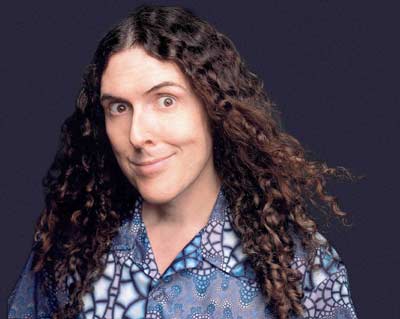
MTV Welcomes Weird Al Yankovic
According to Wikipedia, the discography of Mr. Yankovic consists of fourteen studio albums, nine compilation albums, eleven videos albums, two extended plays, two box sets, forty-six singles and fifty-four music videos.
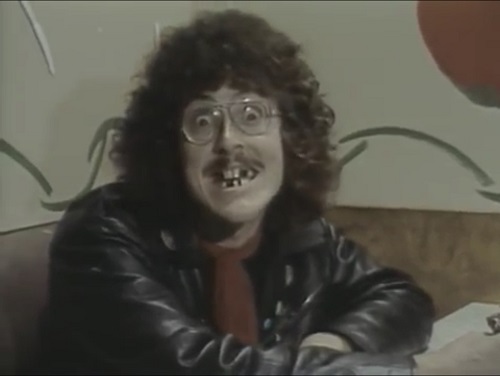
Those fifty-four music videos helped to take Weird Al Yankovic to the mainstream world. Let’s face it, the only place you could hear him on the radio was on the Dr. Demento Show, which was often aired in the worst possible time slot because of the crazy content. When Al ventured into the video realm, more and more viewers wanted to see – and hear – more of him!
Parody songs have been around forever, and very rarely ever got radio play. Novelty records were big in the 50’s and 60’s, and there were a few here and there in the 70’s. When Al comes on the scene in 1983, he took it to a whole new level, using videos.
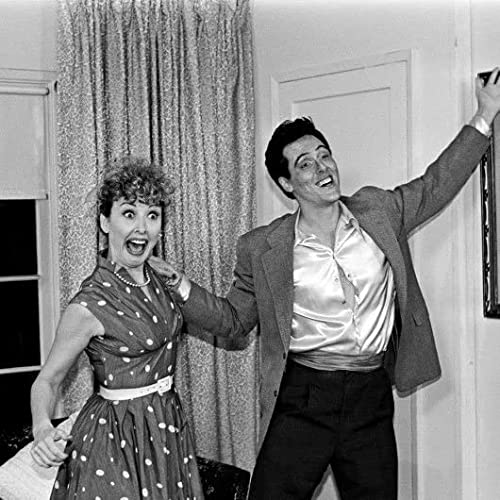
1983’s “Ricky” is credited as being his first video. It was a parody of Toni Basil’s “Micky.” It was a parody base on the TV show I Love Lucy. The video was shot in black and white and still looks great today.
From there, Al continued to use video to gain exposure on MTV. His next single was “I Love Rocky Road” which parodies Joan Jett’s “I Love Rock and Roll.” Instead of a greaser bar, it is set in … an ice cream parlor.
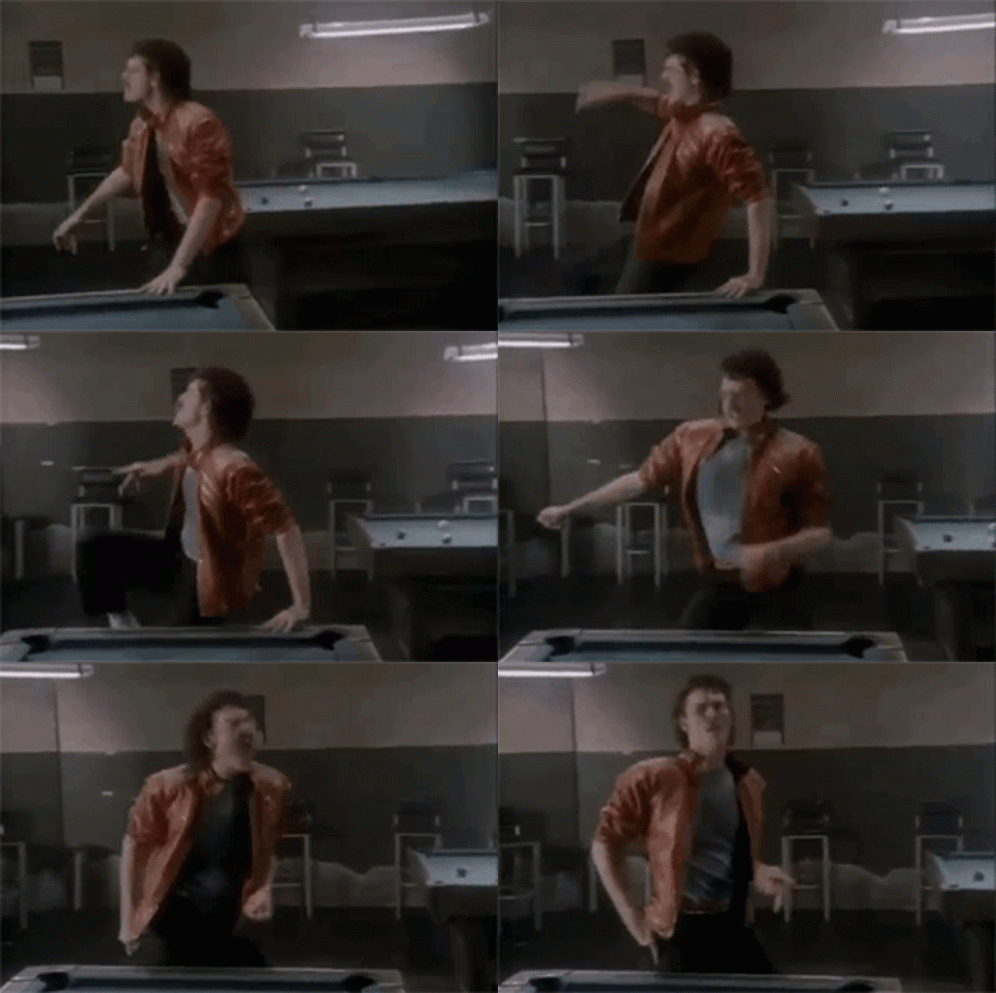
Al’s next video is really the one that really stands out as the one that moved him to a whole new level. Yes, he is a parody singer, but with the video for “Eat It” (a parody of Michael Jackson’s Beat It), not only is the song parodied, but so is the video. Al’s video is literally a shot for shot remake of Jackson’s. Throughout the video, instead of switchblades there are rubber chickens and kitchen utensils, and gags for almost everything in the Beat It video.
I can’t say whether or not the video is responsible for this, but the song won Al a Grammy Award for Best Comedy Recording in 1984. The video won for Best Male Performance at the 1984 American Video Awards!
From that point on, Al continued to make music videos for his singles. Art Fleming appeared in the “I Lost on Jeopardy” video, non-stop visual gags were plentiful in the “Like a Surgeon” video, and the James Brown “screams and shrieks” in “Living With a Hernia” were all more painful than soulful.
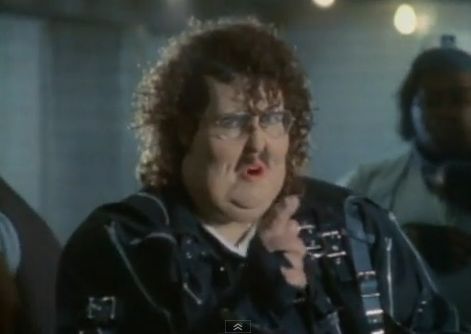
In 1988, Al once again parodied Michael Jackson. If I had to pick a “perfect” Weird Al parody video, it this would be one of two. Al won another Grammy Award for Best Concept Music Video for “Fat.” He even got permission from MJ to use the same set as the original video. Al’s makeup took three hours to apply every day and his fat suit weighed 40 pounds. Every time I hear the line, “Ding Dong, Yo!” I still crack up.
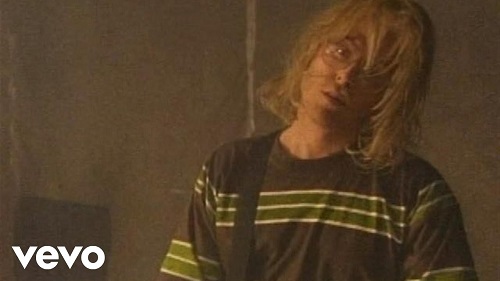
I mentioned that “Fat” is one of two “perfect” videos. The other would have to be the fantastic video for “Smells Like Nirvana” (a parody of Smells Like Teen Spirit). Al famously got permission for this parody from Kurt Cobain himself when he was performing on Saturday Night Live. In this Grammy-nominated video, Al satirizes Nirvana and the grunge movement, shooting on the same set as the original video and using the same actor who played the janitor (Rudy Larosa). Dick Van Patten has a cameo, which for whatever reason is extremely funny to me. Why Dick Van Patten??!! Someone said that Tony Hawk makes an appearance in the video, too. I’m not sure I know where.
Weird Al has certainly used music videos to his advantage. It takes a lot of creativity to write a good parody (I mean, come on, there are a lot of crap ones out there – just look on YouTube), but to take an already funny song and create a video that brings about even more humor, just enhances the song. I’ve said it before, and I will say it again, Weird Al is a musical genius.
There have been many other great videos that have followed. To name a few: Amish Paradise (featuring Florence Henderson), Headline News (featuring The People’s Court’s Doug Llewelyn), Gump (featuring Ruth Buzzi and Pat Boone), The Saga Begins (the fantastic Star Wars tribute), White and Nerdy (featuring Donny Osmond and Seth Green), and so many more.
Yes, video may have killed the radio star, but it certainly helped boost the career of Weird Al Yankovic.
We have reached the final round of the 2021 Song Draft hosted by Hanspostcard. I want to thank Hans for allowing me to be a part of it, and also thank the other participants who welcomed me into the draft. I have truly enjoyed being a part of this!
Prior to the draft, I made a list of possible song choices. As the draft continued, each round I would look at my list (and at the songs picked by the others) and decide which one would be my next choice. Some of the picks were easy, while others were more difficult. A few of them were spur of the moment picks that weren’t on the original list.
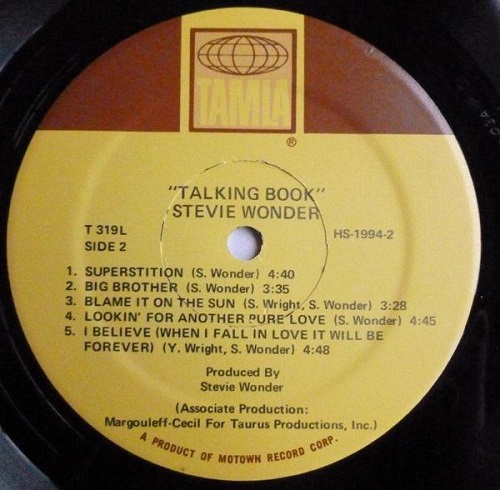
As I looked at that list in preparation for my last pick, I see many artists that I’d love to have featured: Aretha Franklin, The Honeydrippers, Big Joe Turner, Bob Seger, The Go-Go’s, Bill Withers, Johnny Lang, Queen, Buster Brown, Dean Martin, Frank Sinatra, Buddy Guy, Neil Diamond, Mel Torme’ and so many more! I stared at my list for a long time and thought about it. Since I began the draft with a Michigan artist, I should wrap up with a Michigan artist. So my final pick for the draft is – Superstition by Stevie Wonder.
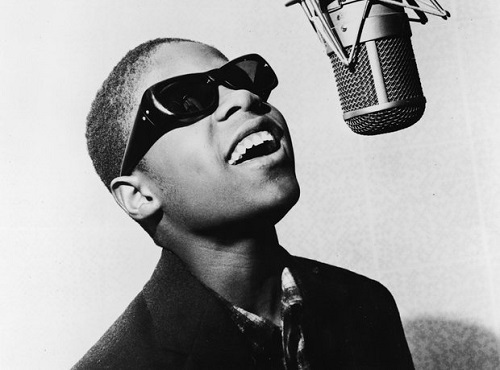
Stevie was born a little over 100 miles north of Detroit in Saginaw, Michigan in 1950. He would forever be associated with Detroit and Motown records. In a 1990 Detroit appearance at Tiger Stadium, Nelson Mandella said, “It is motor town that gave the world a great singer – Steve Wonder!”
In 1963, when he was known as “Little” Stevie Wonder, he had his first #1 song with a cut called Fingertips Part 2. Personally, I could never stand that song. It was in a heavy rotation at the first radio station I worked at, and I found it annoying. It would be 10 years before he received his next #1 song – Superstition.
The song was released on his fifteenth studio album, Talking Book.
Guitarist Jeff Beck was a fan of Stevie’s music and Stevie heard about this just before recording the Talking Book sessions. Though at this point he was playing virtually all of the instruments on his songs by himself, Stevie preferred to let other guitarists play on his records, and he liked the idea of a collaboration with Beck. An agreement was quickly made for Beck to become involved in the sessions that became the Talking Book album, in return for Wonder writing him a song.
According to legend, between the album sessions, Beck came up with the opening drum beat. Stevie told Jeff to keep playing while he improvised over the top of it. He improvised most of the song, including the funky riff. They wound up creating a rough demo of the song that day.
After finishing the song, Wonder decided that he would allow Beck to record “Superstition” as part of their agreement. Originally, the plan was for Beck to release his version of the song first, with his newly formed power trio Beck, Bogert, and Appice. Their album’s release, however, was delayed.
From Songfacts.com: When Stevie turned 21, he was no longer obligated to Motown Records, and used his clout to sign a deal with the label giving him unprecedented control of his music. He got a large share of royalties and publishing rights, and Motown was not allowed to alter the albums once they were delivered. One thing Motown did control, however, were what songs they released as singles. Knowing Jeff Beck was about to record his version, Motown head Berry Gordy made sure this was the first single and released it before Beck could get his out.
This was recorded at Electric Lady Studios, which is where Jimi Hendrix recorded. The studios stayed active after Hendrix’ death, with artists like Miles Davis and Deep Purple also recording there.
At the time, Wonder would keep the studio booked so he could record when inspiration hit. Stevie’s bass player at the time, Scott Edwards, told Songfacts this was not always convenient for his band. “Because he does not have sight, he’s not controlled by daylight,” said Edwards. “So he may begin his night at midnight. Which is bad, because if they want you to come do an overdub or something, he may call you at 4 a.m. and say, ‘Come on in.'”
I always loved the funky feel of this song, and I always played it when I was DJing Halloween parties.
Aside of Jeff Beck’s version, many others have covered this song. None made much of an impact until Stevie Ray Vaughan released a live version as a single in 1986 on his album Live Alive. His version still gets radio airplay today on many Classic Rock stations.
In 1974, the song earned Stevie his first Grammy Award.
Superstition – Lyrics
Very superstitious, Writing’s on the wall, Very superstitious, Ladders bout’ to fall, Thirteen month old baby, Broke the lookin’ glass Seven years of bad luck, The good things in your past
When you believe in things That you don’t understand, Then you suffer, Superstition aint the way
Hey
Very superstitious, Wash your face and hands, Rid me of the problem, Do all that you can, Keep me in a daydream, Keep me goin’ strong, You don’t wanna save me, Sad is the soul
When you believe in things That you don’t understand, Then you suffer, Superstition ain’t the way, Yeh, yeh
Very superstitious, Nothin’ more to say, Very superstitious, The devil’s on his way, Thirteen month old baby, Broke the lookin’ glass, Seven years of bad luck, Good things in your past
When you believe in things That you don’t understand, Then you suffer, Superstition ain’t the way, No, no, no
As a bonus – here is the official video of Stevie Ray Vaughn’s cover….watch for a cool cameo at the end ….
If you are like me, you have songs that when you hear them on your MP3 player, or your iPod, as soon as they end, you play them again. I have quite a few of them. I would wager a guess that these songs will end up here in future Tune Tuesday blogs. Today’s song is definitely one that I play at least twice.
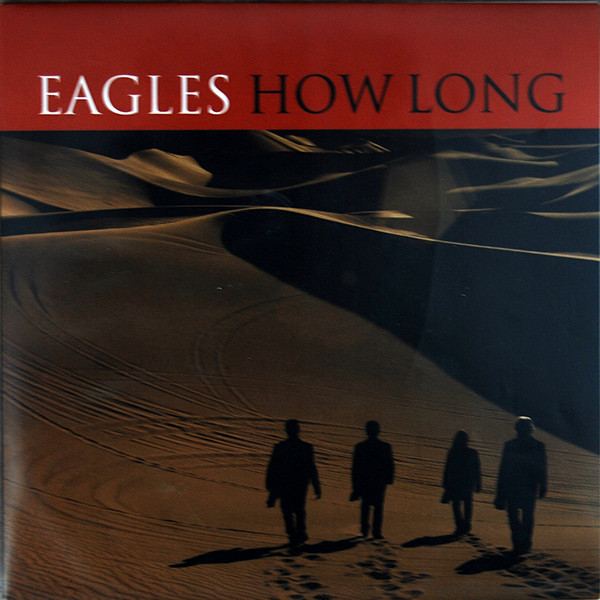
I was working in country radio when this song hit my desk. I knew that the Eagles, whose last studio album had been 28 years earlier, had recorded a new album. I was surprised that this song was shipped to our station as a song that could possibly make the playlist. While the Eagles certainly had a “southern” sound, I wasn’t sure what to expect.
I popped it into the CD player and began to listen to it. I remember liking the opening guitar lick. I remember thinking that the vocals were strong and then the chorus hit. Those amazing Eagles harmonies were there and sounded amazing! Solid Eagles. I fell in love with it and when I talked to my program director, he thought the same thing. It stood out amongst the other songs, and we were ok with that.
What’s neat about the song is that The Eagles had been performing it at concerts in the early 70’s. The song was written by JD Souther, and he wanted to record it for his own album, so the Eagles never recorded it. Souther and the Eagles were good friends, and JD co-wrote some of their hits (New Kid In Town, Heartache Tonight, and The Best of My Love). He released his version of the song on his 1972 Album, John David Souther.
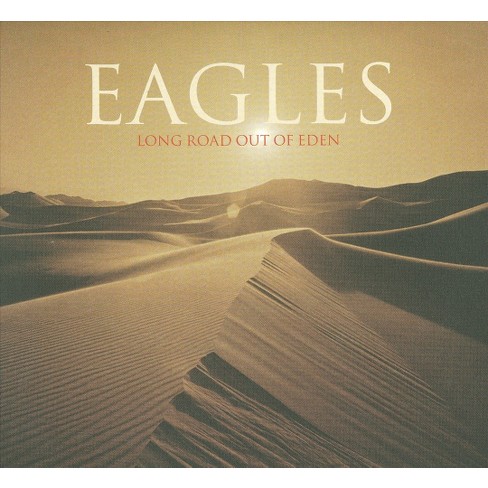
Fast forward to 2007. Glenn Frey said that his kids were watching a clip of the Eagles on a special called Pop Gala (in Holland) from 1974. As his kids laughed at how long his hair was, the band was playing How Long. Glenn’s wife told him that the band should record the song stating that it was “classic Eagles.” He agreed that it would fit right in with what they were recording for their album Long Road Out of Eden.
In 2008, the song won a Grammy Award for “Best Country Performance by a Duo or Group with Vocal”. It was the group’s first Grammy since 1979. 1979 was also when they had recorded their last studio album.
Play it twice! I know I will ….
How Long – The Eagles
Like a blue bird with his heart removed, lonely as a train
I’ve run just as far as I can run
If I never see the good old days shinin’ in the sun
I’ll be doin’ fine and then some
How long, how long
Woman will you weep
How long, how long
Rock yourself to sleep
Well I been doin’ time in lonesome prison, where the sun don’t shine
Just outside, the freedom river runs
Out there in that shiny night, with blood hounds on your mind
Don’t you know it’s the same sad situation?
How long, how long
Woman will you weep
How long, how long
Rock yourself to sleep
Everybody feels alright you know, I heard some poor fool say (somebody ooh)
Everyone is out there on the loose
Well I wish I lived in the land of fools, no one knew my name
But what you get is not quite what you choose
Tell me, how long, how long
Woman will you weep
How long, how long
Rock yourself to sleep
How long, how long
Muddy River runs so deep
How long, how long
Good night baby, rock yourself to sleep
Sleep tight baby, rock yourself to sleep
B-b-b, bye bye baby, rock yourself to sleep








 Various Ramblings of a Nostalgic Italian