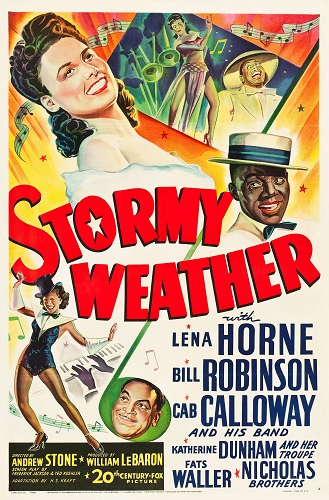
It was 82 years ago today that the musical Stormy Weather premiered in the US.
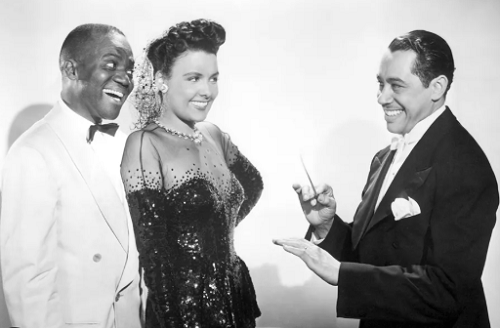
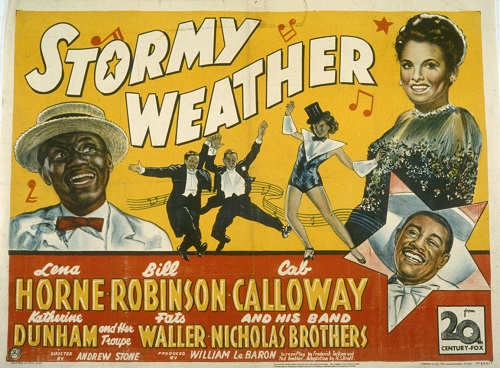
The movie starred the beautiful Lena Horne, Bill “Bojangles” Robinson, and Cab Calloway. Also making appearances were Fats Waller and Dooley Wilson (who was the piano player in Casablanca). The movie is loosely based on Robinson’s life. It would be Robinson’s last film (he passed away in 1949).
Wiki says: “Stormy Weather is a primary showcase of some of the leading African American performers of the day, during an era when African American actors and singers rarely appeared in lead roles in mainstream Hollywood productions.” The entire movie is only about 75 minutes long, yet it is full of music! 20 songs to be exact.
The soundtrack is full of great songs like Ain’t Misbehavin’ from Fats Waller, Cab Calloway and his band offer up a few numbers including Jumpin’ Jive and then there is the title track performed by Lena Horne. While she is remembered for her version of the song, she also performs in several dance numbers with Robinson. It was one of her few non-MGM film appearances, and one of only two films from the 1930s-1940s in which she played a substantial role.
It was first sung by Ethel Waters under the title of “Stormy Weather (Keeps Rainin’ All The Time)” at the Cotton Club in Harlem. “When I got out there in the middle of the Cotton Club floor,” Waters recalled. “I was singing the story of my misery and confusion … the story of the wrongs and outrages done to me by people I had loved and trusted … I sang ‘Stormy Weather’ from the depths of my private hell in which I was being crushed and suffocated.”
Lena Horne’s version of the song is probably the best-known recording of this standard and became her signature tune. She originally sang it in 1941 for RCA Victor, but it was re-recorded in 1943 for the soundtrack. Noteworthy cover versions have been recorded by Judy Garland, Ella Fitzgerald, Frank Sinatra and Billie Holiday, among many others.
Fun Fact: Lena Horne’s version of the song was inducted into the Grammy Hall of Fame in 2000 and Ethel Waters’ recording three years later.
Here is the version from the film:
Here is the 1943 recording:
I have always loved the bluesy Jackie Wilson version:
Most people have never heard the “doo wop” version that the Spaniels (who sang Goodnight Sweetheart) did. I just love everything about this version:
I could play so many other versions of the song, but instead I will encourage you to search up the great covers on YouTube. It is just such an amazing song, it’s hard to have a bad version of it.
Dave at A Sound Day just wrapped up his monthly feature Turntable Talk. It was an interesting topic this time around and there were a lot of surprises as to who everyone chose to write about. This was my entry to the feature, which originally posted on Dave’s site on Monday:
It is time once again for Dave’s feature Turntable Talk. Dave features this every month on his site A Sound Day. This is the 39th edition, and he continues to come up with fantastic topics. This month is a fun one: Bands? We Don’t Need No Stinkin’ Bands! Dave’s instructions were simple: This time around, we’re looking for artists who left popular bands to go solo and did well (either commercially or else in your own critical assessment.)
I am sure that I did exactly what the other participants did when the topic was presented – I Googled. I was actually surprised at just how many artists moved from a group to become a solo artist. Off the top of my head I can list Diana Ross, Sting, Lionel Richie, Eric Clapton, Gwen Stefani, Ricky Martin, Peter Gabriel, Rob Thomas, Steve Perry, Lou Gramm, and Justin Timberlake. There are SO many.
In all honesty, I had my choice almost immediately. However, as I began to write about him, there was another artist connected with him that became more interesting to me. It was an artist who had solo success for a short time, and then a sad ending.
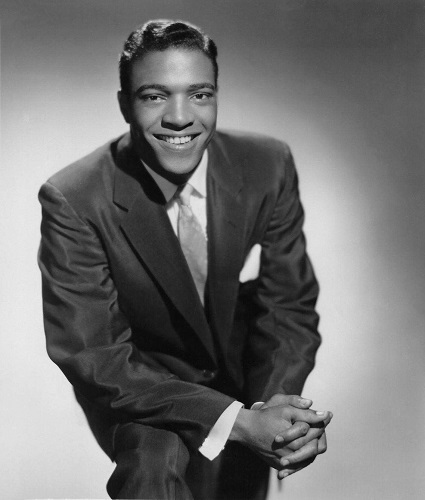
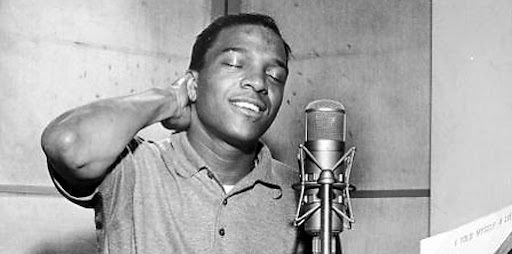
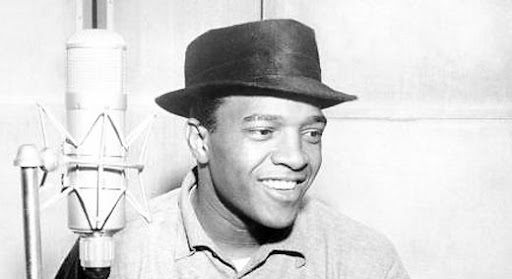
If I mention The Drifters I am sure you can name a few of their big hits. Under The Boardwalk, This Magic Moment, and Up On The Roof are just some of them. The Drifters were formed by my choice artist in 1953. His name was Clyde McPhatter. Let’s go back a couple years to see how it all came together.
Like many artists, Clyde McPhatter began singing in the church choir at his father’s church. In 1950, he was working at a grocery store. He entered the Amateur Night contest at Harlem’s Apollo Theater – and won! Afterward, he went back to working in the store.
One Sunday, Billy Ward of Billy Ward and the Dominoes heard Clyde singing in the choir of Holiness Baptist Church of New York City. He was immediately recruited to join the group. Clyde was there for the recording of their hit “Sixty Minute Man,” which was a number one song on the R&B chart for 14 weeks in 1951.
My original pick for this round was Jackie Wilson. Jackie was hired by Billy Ward in 1953 to join The Dominoes. That same year, Clyde left the group. He coached Wilson while they were out touring together. Wilson would leave in 1957. Apparently, Ward was not pleasant to work with. Wilson said, “Billy Ward was not an easy man to work for. He played piano and organ, could arrange, and he was a fine director and coach. He knew what he wanted, and you had to give it to him. And he was a strict disciplinarian. You better believe it! You paid a fine if you stepped out of line.”
Atlantic Records saw a Dominoes show and noticed that Clyde was not with the group, so they searched for him, found him and wanted to sign him to a record deal. Clyde agreed to sign on one condition – they allow him to form his own group. That group was the Drifters. While known as Clyde McPhatter and the Drifters, they released songs like Money Honey.
Elvis Presley covered Money Honey in 1956. In researching for this piece I was surprised to find that McPhatter and the Drifters did the original of another Elvis hit – Such a Night.
In late 1954, McPhatter was inducted into the U.S. Army. He assigned to Special Services in the continental United States. This allowed him to continue recording. After his tour of duty, he left the Drifters and launched a solo career. The Drifters continued as a successful group, but with many changes in personnel, and the group assembled by McPhatter was long gone by the time their greatest successes were released after he left the group.
It would take two years, but Clyde would finally get his first solo #1 R&B hit when he released “Treasure of Love” in 1956. It would top out at #16 on the US Pop Chart. I love his vocal on this one.
His biggest solo hit would come in 1958 when he recorded and released a song written by Brook Benton. A Lover’s Question would reach #6 on the Pop Chart. If I had to pick my favorite Clyde song, it would be this one. There is so much to love about this song. That acapella bass line being sung throughout the song is very catchy.
McPhatter would leave Atlantic Records and bounce from label to label recording many songs, but not having much success. His last top ten record would come in 1962 with a song written by Billy Swan. Lover Please was first recorded by the Rhythm Steppers in 1960. It was the title track from Clyde’s 1962 album of the same name. It would reach #7 on the Pop Chart.
Clyde did manage to have a top 30 hit in 1964 with “Crying Won’t Help You Now,” but when it fell of the chart, he turned to alcohol for comfort. He would record every so often, but nothing ever really did well on the charts. He always had a decent following in the UK, so in 1968 he moved to England.
He wouldn’t return to the US until 1970. Outside of performing on a few Rock and Roll Revival shows, he lived a very private and reclusive life. In 1972, Decca Records signed him and they were planning a a big comeback. That never materialized as Clyde passed away on June 13, 1972 of complications from liver, heart and kidney disease. This was brought on by his alcohol abuse years earlier. He was only 39 years old.
His legacy consists of over 22 years of recording history. Clyde was the first artist to be inducted twice into the Rock and Roll Hall of Fame, first as a solo artist and later as a member of the Drifters.
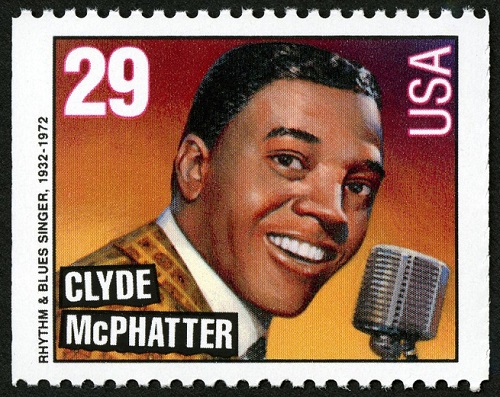
In 1993, Clyde was honored with his own stamp by the US Postal Service.
His career had ups and downs, and his hit songs were an important part of Rock and Roll history. Vocalists like Marv Johnson, Smokey Robinson and Ben E. King are all said to have patterned their vocal styles on Clyde’s. Others have cited him as a major influence as well. In the book “The Drifters” by Bill Millar, he says:
“McPhatter took hold of the Ink Spots’ simple major chord harmonies, drenched them in call-and-response patterns, and sang as if he were back in church. In doing so, he created a revolutionary musical style from which—thankfully—popular music will never recover.”
Thanks again to Dave for hosting another great round of Turntable Talk. I cannot wait to see who the other writers have picked and look forward to Round #40 next month.
Today is the birthday of one of the “Three Kings of Blues Guitar.” The best known of these three is most likely B.B. King, followed closely by Albert King, and last but not least, the birthday boy, Freddie King. All three Kings – but no relation to each other. Freddie was born today in 1934.
Freddie was not just a great guitarist, he was also a songwriter and singer. His voice has been called “soulful and powerful,” but today I’ll focus on his guitar playing.
He was taught to play by his mother and uncle as child and eventually moved to Chicago. There he formed a band called the Every Hour Blues Boys. He tried many times to get a record deal at Chess Records (the home of Muddy Waters and Howlin’ Wolf), but was rejected every time. They told him that he “sounded too much like B.B. King.”
Persistence paid off for him as he finally landed a record deal with Federal Records in 1960. In August of 1960, he recorded his debut single, “Have You Ever Loved a Woman.” At that same session, he recorded an instrumental that has gone on to become a blues “standard,” “Hide Away.”
Hide Away reached number five on the R&B Chart and number 29 on the Pop Chart, an unprecedented accomplishment for a blues instrumental at a time when the genre was still largely unknown to white audiences.
While at Federal Records, Freddie became good friends with Sonny Thompson, a pianist, producer, and A&R man for Cincinnati’s King Records. Federal Records was a subsidiary of King Records. After the success of Hide Away, Thompson and Freddie recorded over 30 instrumentals (including today’s pick). Yes, they recorded vocal tracks throughout this period but often released the tunes as instrumentals on albums.
On the last day of local broadcasting at Honey Radio, my partner Rob Main and I were given 6 hours of the day to play whatever we wanted. We had decided to do have each hour focus on something different. Hour 1 was songs with Male names. Hour 2 was songs with Female names. Hour 3 had songs with body parts in the title. Hour 4 focused on instrumentals. That hour got a ton of requests for more and we did an extra hour of them.
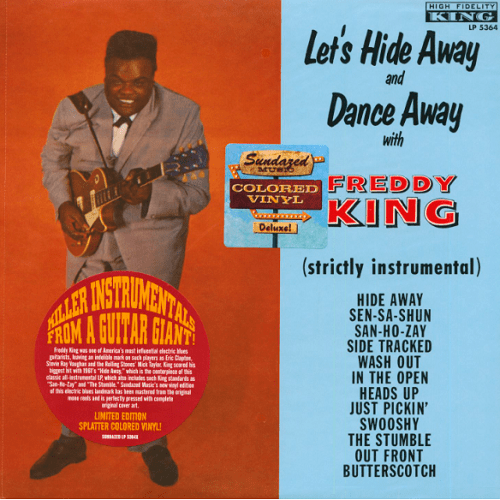
Rob was a guitar player and he was the guy who introduced me to today’s Freddie King song. He had the “Let’s Hide Away and Dance Away” album his favorite cut was called Wash Out. I remember he told me he thought it had an “early Elvis” feel to it. The repeated guitar lick does remind me a bit of Elvis’ Blue Christmas.
He handed the song to me on a cart (what we played songs off of before CDs) and I played it on air without ever hearing it. We both sat with our headphones on listened. When it was done, we cracked the microphone and he asked me if I liked it. I remember telling him that it sounded like I was just listening to a couple guys sitting in a room jamming together. That’s what it felt like to me, improvising the blues.
Freddie was always out on the road. He toured with guys like Sam Cooke, James Brown, and Jackie Wilson. He was on the road almost 300 days out of the year. All the touring caught up with him. In 1976 he began suffering from stomach issues. Painful ulcers and acute pancreatitis led to failing health and he passed away just after Christmas in 1976 at the young age of 42.
In 2012, ZZ Top inducted him into the Rock and Roll Hall of Fame. A year later, Rolling Stone magazine ranked him 15th on their list of 100 Greatest Guitarists of All Time.
Welcome back to The Music of My Life, where I feature ten songs from each year of my life. In most cases, the ten songs I choose will be ones I like personally (unless I explain otherwise). The songs will be selected from Billboard’s Year-end Hot 100 Chart, Acclaimed Music, and will all be released in the featured year.
I turned 15 in 1985. It was sophomore year and I had moved up from the Freshman band to the Concert/Marching band. It is the year that consisted of many of my favorite songs that I recently posted about in this week’s Turntable Talk blog. It was also the year that I went on my first date and my first dance. How did the music of 1985 play into my life? Let’s find out…
My first pick is a soulful tribute to two amazing singers who passed away in 1984. It is also the only hit that the Commodores had after Lionel Richie left the group. I am talking, of course, about Nightshift.
The song is a tribute to singers Marvin Gaye and Jackie Wilson. Marvin was 44 when he passed away, while Jackie was only 49. In 1974 the Righteous Brothers had a hit with Rock and Roll Heaven, where they picture fallen stars like Jimi Hendrix and Janis Joplin forming a band in heaven. This was supposed to be a soul version where Marvin Gaye and Jackie Wilson are on heaven’s nightshift, playing some sweet sounds.
I love how the intro starts with that percussion lick and the smooth bass line that works its way to the vocal. It is such a funky, soulful and loving tribute to Marvin and Jackie – two legends!
Nightshift
As a sophomore, I ventured out of my comfort zone a bit and decided it was ok to go to high school dances. Mostly, the guys just hung out at a table and talked. However, after my first official date, I began actually wanting to go to dances with a female date. While I cannot remember for certain, I am pretty sure that one of my first dances ever with a girl was to Crazy For You by Madonna.
Admittedly, I am not a huge fan of hers. My brother, on the other hand, loved her! There are a few songs that I do like by her, and this is one of them. What I remember most about dancing to this song was that she was singing “crazy for you” and I wasn’t sure what kind of message that may or may not have been sending to my date. I was also thinking about making sure I was swaying the same way she was and NOT stepping on her toes. It had to be a very uncomfortable dance for her.
Fun Fact: Madonna reportedly only took one take to record this song.
This was recorded for the soundtrack to the wrestling film Vision Quest, which also featured a guest appearance by Madonna herself, who played a singer at a local restaurant. After the success of this song, the film was renamed Crazy For You in some European countries to capitalize on the song’s popularity.
Crazy For You
How does that saying go? Everything old is new again? I don’t know. What I do know is that Netflix is currently airing the 4th installment of the Beverly Hills Cop Franchise and I hear it is doing well. It was back in 1984 that Eddie Murphy first played Detroit Cop Axel Foley. The character’s name is what led to the title of my next song, Axel F.
Before the title was settled on, it went by a different name. During production of the movie, it known as the “Banana Theme,” as it was slated for a scene where Axel Foley shoves a banana in the tailpipe of police officers intending to pursue him. The composer was German musician Harold Faltermeyer and truly, this song was all him.
According to Wikipedia, he recorded the tune using five instruments: a Roland Jupite-8 provided the distinctive saw lead, a Moog modular synthesizer 15 provided the bass, a Roland JX-3P provided chord stab brasses, a Yamaha DX7 was used for the marimba sound, and a LinnDrum was used for drum programming. Faltermeyer played every single instrument.
He was also the musical director on Beverly Hills Cop and did the score for the film. The soundtrack went to #1 in the US and won a Grammy for Best Album Of Original Score Written For A Motion Picture Or A Television Special. The song topped out at #3.
We played this at a concert one year in band, and though it sounds pretty easy, it was a bit tougher than I anticipated. It may have been in a weird key. It was one of many fun numbers we played.
Axel F
There are some songs that when you hear them, you cannot help but feel happy. My next pick is one of those songs. I have rarely played this at a party or wedding where it didn’t cause people to just get up and dance.
Remember the feeling you got when you first found out that someone truly loved you? There was that feeling of joy that just overflows from you! You can feel that joy and excitement in the vocals by Katrina Leskanich in Walking on Sunshine. It just makes you feel good!
The wife of one of my second cousins threw him a birthday party I DJ’d. The song was on the “must play” list. I remember having a conversation about the song and she said that it was the kid of song that you should play the minute you wake up in the morning. She said that it would just set the mood for the day. She always seemed to be in good mood when I saw her, so maybe she did just that!
Songfacts says, The video got a lot of airplay on MTV. It shows the band hanging around London, with Katrina very colorful and bouncy, and her bandmates more subdued. She had to make her own sunshine, as there was none in London – it was a typically cloudy and cold day.
Katrina’s look was anti-glam, with tennis shoes and the kind of fashions you’d find at the mall. In interviews from this time, she often took shots at singers like Madonna and Pat Benatar for adopting more suggestive looks.
Teen boys didn’t seem to mind….
Take four major country superstars, all who are friends with each other, pitch them an old song and tell them they should record it together and you get one really neat song. That’s the basic story of how Willie Nelson, Waylon Jennings, Kris Kristofferson, and Johnny Cash became The Highwaymen.
Country legend Jimmy Webb wrote the song about a soul with incarnations in four different places in time and history: as a highwayman, a sailor, a construction worker on the Hoover Dam, and finally as a captain of a starship. Webb released his version in 1977, it was covered in 1979 by Glen Campbell, who took the song to Johnny Cash, who was recording with Nelson, Jennings and Kristofferson.
The story goes that the four were all together in Switzerland doing a television special and decided that they should do a project together. While the four were recording their first album, Johnny’s friend Marty Stuart played the song for Cash, saying it would be perfect for them. It had four verses, four souls, and four of them.
The song led to the name of their supergroup, their album, and of course, their first single. Each of the four verses was sung by a different performer: first Nelson as the highwayman, then Kristofferson as the sailor, then Jennings as the dam builder, and finally Cash as the starship captain. Webb later observed, “I don’t know how they decided who would take which verse, but having Johnny last was like having God singing your song.”
No personal story to go with this one, I just like it!
I am embarrassed to say that up until 1985, I had never seen a James Bond movie. I was familiar with the fact that Roger Moore played Bond. My mom would rent Bond films on occasion and also watch them on cable. Moore played a Bond-like version of himself in Cannonball Run in 1981, but I had never really seen him AS Bond.
So when a friend of mine asked if I wanted to go to the show with him we saw A View to a Kill. It was actually neat to see this in the theaters. I had often seen the Bond movie intro being parodied, but to see it kick off the film and to hear the song was all new to me. I was grateful to be able to see it.
Knowing Duran Duran and some of their songs, I was surprised that they did the theme song. The story of how they got it is interesting. Songfacts says: “according to the bassist John Taylor, was that he approached the longtime Bond producer, Albert R. ‘Cubby’ Broccoli, while extremely intoxicated when they were both at a party. He stated that he was a long time fan (Major Bond geek would be more accurate. An Aston Martin was said to be one of his first “rock star” purchases, and he frequently mentioned his Bond video collection in interviews) of the series, but the music for the last few movies had been mediocre. He then offered to have his band fix the problem and Broccoli took the idea under advisement.Being asked to perform the theme song for a James Bond movie is a great honor, but the requirement to include its title in the lyrics can be challenging. Just ask John Taylor. “To this day we are forever grateful that we didn’t get Quantum Of Solace,” he said.
It is the only theme from a Bond movie to hit #1 in America.
A View To A Kill
I’ve made it all the way to 1985 and have yet to feature a Prince song. Not that I don’t like him, he was a musical genius. I am still blown away by his Rock and Roll Hall of Fame performance and his Superbowl Halftime Show. He was a talent, no doubt. My only real connection to him was that we play Let’s Go Crazy in Marching Band one year.
However, I can connect this one to me because it was on my 15th birthday that Prince released Raspberry Beret. Prince originally recorded “Raspberry Beret” in 1982, but re-worked it with his newly re-formed Revolution backing band.
At the time this was released, Prince was under fire from Tipper Gore during the notorious PMRC witch hunt, which placed two of his songs on the list of the “filthy 15.” So this is one of the songs where Prince started making his lyrics more family friendly. But if you really listen closely, you know that Prince still slipped in a “filthy” reference.
Raspberry Beret
1985 was the year that one of my favorite movies was released – Back to the Future. If you’ve read this blog for any length of time, I reference the movie a lot and have read my fair share of time travel novels. It is a masterpiece and I will always watch it when it is on.
When Marty realizes he’s going to be late for school and he leave’s Doc’s place on his skateboard, Huey Lewis and The News’ The Power of Love makes the perfect song to accompany the scene. How did Huey become involved?
The film’s director Robert Zemeckis wanted Lewis to do the song – Huey Lewis & the News were rising stars with a modern sound that worked well in the movie, which takes place in both 1955 and 1985. Lewis had never done film work and hesitated at first, since he didn’t want to write a song called “Back to the Future.” When Zemeckis told him that the song didn’t have to be about the movie, Lewis accepted the challenge.
All Back to the Future fans know that Lewis has an uncredited cameo in this movie. Lewis has an uncredited cameo in this scene, where he plays a teacher who is judging the auditions. An early scene in the film has Marty McFly and his band The Pinheads auditioning for the high school dance. Huey plays a teacher who is judging the auditions. The group plays the beginning of “The Power of Love,” but before Marty can sing a note, Lewis cuts them off, telling them, “I’m afraid you’re just too darn loud.”
The music video doesn’t contain scenes from the film, but does feature an appearance by Christopher Lloyd in character as Doc Brown. We see him pull up in the DeLorean outside of a club where Huey Lewis & the News are performing.
The Power of Love
Yesterday marked the 34th anniversary of the passing of Stevie Ray Vaughn. I debated posting one of his songs for Tune Tuesday, but opted for a more uplifting post.
I was late to the SRV party. I was introduced to him after he passed away. I marveled at his playing and his vocal abilities. I really fell in love with his music.
I wrote about this song before, probably for one of the Song Drafts we were doing. It is Stevie’s cover of the old Hank Ballard song, “Look at Little Sister.”
Look At Little Sister
My final pick is another fun song. It reminds me a lot of the Kinks Come Dancing (which I just wrote about for Max’s PowerPop blog) because of the sound of the opening keyboards.
The Dire Straits were coming off the success of Money For Nothing which really established the band on MTV and on Top 40 radio in America. The fourth single from their Brothers In Arms Album was Walk of Life.
Mark Knopfler wrote this song to celebrate the street buskers of London, hence the references to “Be-Bop-a-Lula” and “What’d I Say,” which were two standards that might be part of a singer’s repertoire in the mid-’80s. Before the lyrics kick in, Knopfler does a few “who-hoo”s, which help create a whimsical vibe. When he spoke with the BBC in 1989, he expressed some “woo-hoo” remorse. “There’s too many ‘woos’ at the beginning of ‘Walk of Life,'” he said. “I heard it on the radio the other day and thought, Oh my God! What was I doing that for?”
Walk of Life (US)
Walk of Life (UK)
What song defined 1985 for you?
Next week we’ll share some songs from 1986. As I look at the music from that year, there were some great music videos! The year will feature my high school class song, my first attempt at Karaoke – before there was Karaoke, and two fantastic cover songs!
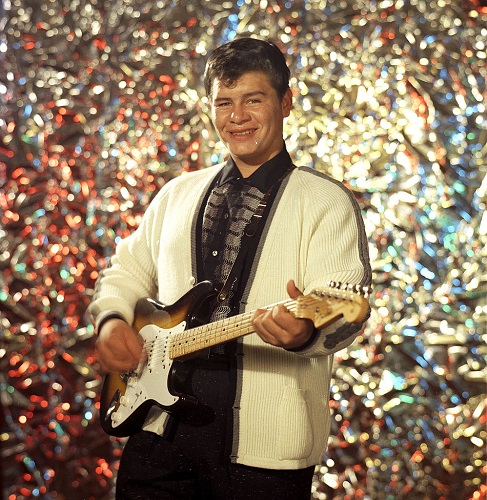
Richard Steven Valenzuela would have been 83 years old today, had he not become part of the story entitled, “The Day the Music Died.” We, of course, know him by his stage name – Richie Valens.
UNSPECIFIED – JANUARY 01: Photo of Ritchie Valens (Photo by Michael Ochs Archives/Getty Images)
In May of 1958, Bob Keane of Del-Fi Records was told about a high school singer who students called “The Little Richard of San Fernando.” This peaked his interest and he went to see him perform. Keane invited Richard to his home to audition for him. After that first audition, Keane signed him to Del-Fi on May 14, 1958. At this point, the musician took the name “Ritchie” because, as Keane said, “There were a bunch of ‘Richards’ around at that time, and I wanted it to be different.” Similarly, he recommended shortening his surname to “Valens” from Valenzuela to widen his appeal beyond any obvious ethnic group.
The first song that Ritchie recorded at a session shortly after being signed was Come On, Let’s Go. Our song for today. But I am getting ahead of myself.
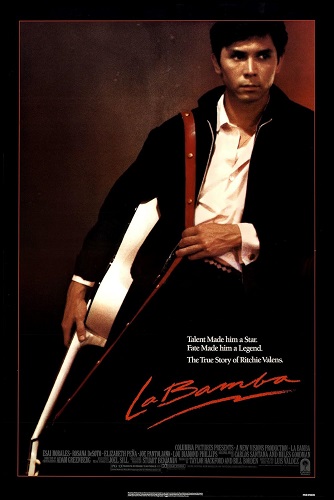
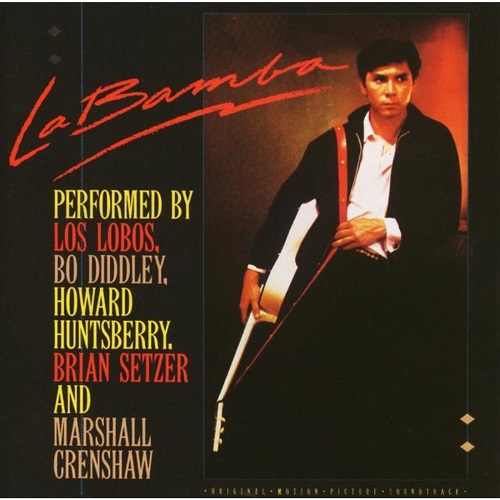
Ritchie’s story was told in the 1987 biographical film, La Bamba, which starred Lou Diamond Phillips as Valens. Marshall Crenshaw played Buddy Holly, Stephen Lee was the Big Bopper, and Brian Setzer makes a cameo as Eddie Cochran. Some of Ritchie Valens’ family even had roles in the film.
The film was well received and Roger Ebert said that he liked the film and the screenplay and writing: “This is a good small movie, sweet and sentimental, about a kid who never really got a chance to show his stuff. The best things in it are the most unexpected things: the portraits of everyday life, of a loving mother, of a brother who loves and resents him, of a kid growing up and tasting fame and leaving everyone standing around at his funeral shocked that his life ended just as it seemed to be beginning.”
The soundtrack consists of many Ritchie covers done by Los Lobos as well as well as Howard Huntsberry (who played Jackie Wilson in the film), Bo Diddly and Brian Setzer. A second soundtrack was released 1988 with more music from the movie.
Los Lobos did a fantastic job capturing Ritchie Valens’ essence and his songs are fairly true to the originals. While La Bamba will forever be the song Richie is remembered for, Come On, Let’s Go was always my favorite. So for Movie Music Monday, let’s here Los Lobos’ version.
Valens’ story (like that of Buddy Holly and other singers who died young) leaves us wondering “What if ….?” His was a talent taken much too soon.
It is time once again for another edition of Turntable Talk. This is a feature created by my friend Dave Ruch from the A Sound Day Blog. This is my 18th submission for this feature and it is something I look forward to writing each month.
This time around, Dave took us to the Land of Oz for inspiration. His instructions:
“Pay No Attention to That Man (Or Woman) Behind The Curtain” . Yep the famous phrase about the Wizard of Oz.
We’ve looked at a number of great artists – singers, groups, musicians – and their records. This time we’re switching it up just a little and are going to salute someone “behind the scenes” that was significant to music. All too often people do pay no attention to the people behind the curtain in music that are so important to the albums and groups we love. There are record producers, the record company bosses and talent scouts, the people on radio who used to make the hits happen, even unsung heroes like concert roadies. Pick one you feel is important and maybe a little un-noticed and tell us why!
As a former radio guy, I immediately thought I should write about a well known DJ. There are many of them who played a big part in the music industry. Dick Clark, Casey Kasem, Wolfman Jack and Alan Freed come to mind. However, I decided that I would feature a man who played on some of the biggest hits on the radio, yet until recently was relatively unknown.
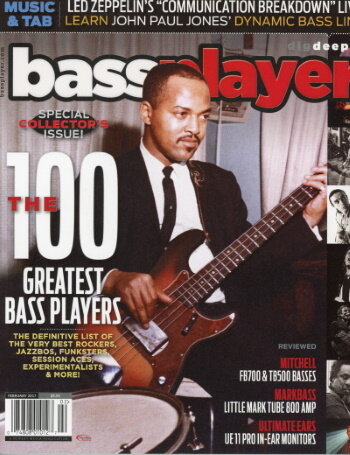
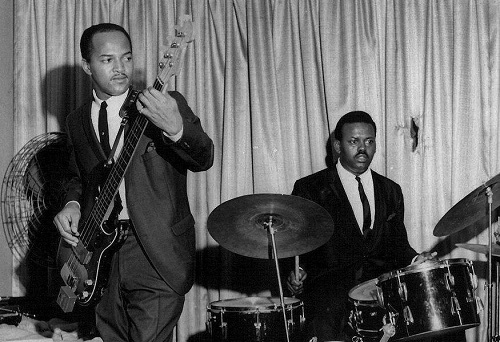
40 years ago, James Jamerson passed away at the young age of 47. At the time he passed away, no one really knew who he was, despite being one of the best (if not THE best) bass player of all time! As a matter of fact, he often tops the list of Best Bass Players of all time by numerous publications. It has been said that he single-handedly revolutionized bass playing. I agree. His creative contributions to music certainly makes him a good pick for a “man behind the curtain.”
James Jamerson was born on January 29, 1936 in Charleston, SC. When his parents divorced, his mother moved to Detroit to find work. He would spend time with his aunt, grandmother and cousin. His aunt sung at church while his grandmother and cousin played piano. He spent time listening to gospel, Jazz, and blues music and that influenced his own musical abilities.
In 1954, his mother sent for him and he attended Northwestern High School. In the music room of the high school, he saw a stand up bass lying on the floor. He picked it up and began to play with it. He had “found” his instrument. He began to play at many of the Detroit area blues and jazz clubs.
He began to get noticed and he began playing for dances, weddings, frat parties, and other events. He was quite a local celebrity. It was hard to miss him driving through town with his bass sticking out the window of his car! Because he was still a minor, the good folks at the Detroit Police Dept. gave him a permit so that he could play in clubs that served alcohol. This allowed him to get more work.
Believe it or not, Wayne State University offered him a full ride music scholarship which he turned down! He was playing so often, he figured he was already in the music field, so why would he need to go to college? Instead, after he graduated high school, he joined up with Washboard Willie and the Super Suds of Rhythm (How’s that for a group name?!). It was during this time that he began to drink alcohol (which would eventually lead to his death).
In 1958, someone from the Northern Records label heard him play and asked him to sit in on the session recordings for the label. The unique way he played caught the ear of other labels. He began to work for Fortune, Tri-Phi, Anna Records, and eventually Motown.
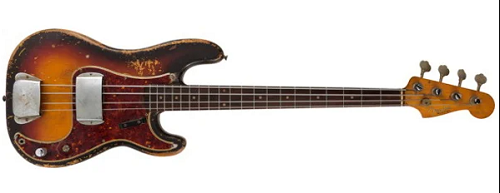
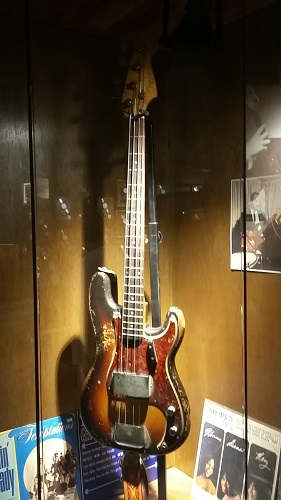
He and the Funk Brothers (pianist Earl Van Dyke, drummer Benny Benjamin, and guitarists Robert White and Joe Messina) spent the days recording in the “Snake Pit” (the Basement of Motown Records) and playing at Jazz clubs in the evenings. Jamerson had switched from an upright bass to a brand new creation – the electric Fender Precision Bass.
The switch really made his work stand out. On some songs, he’d play the stand up bass and then double it with the electric. What made his work on the electric so awesome is that he played the electric just like he played the stand up bass – with one finger (which many folks called “the claw”).
While he is known for playing on many of the Motown songs, he also played on Boom Boom by John Lee Hooker, Whispers Getting Louder and Higher and Higher by Jackie Wilson, Agent Double-O-Soul by Edwin Starr, Cool Jerk by the Capitols, Show and Tell by Al Wilson, Boogie Fever by the Sylvers, and so many other hits! What made the Motown stuff so good was he had some free reign to be “James Jamerson.”
Musician magazine interviewed him in 1983 and he stated that the Motown songwriting and productions teams “would give me the chord sheet, but they couldn’t write for me. When they did, it didn’t sound right. When they gave me that chord sheet, I’d look at it, but then start doing what I thought would fit. I’d hear the melody line from the lyrics and build the bass line around that.”
One of the coolest examples of how he listened and did his thing was on two separate recordings of the same song. To help illustrate this, I found some isolated bass lines on YouTube that are fascinating! Jamerson played on Marvin Gaye’s I Heard It Through the Grapevine – a Motown classic! Check out the soulful line here:
Now check out the same song – and a funkier bass line – on the Gladys Knight Version:
I find it amazing that the same man can take the same song and make them so different.
Speaking of Marvin Gaye, the Funk Brothers shared a story about how Marvin wanted Jamerson to play on What’s Going On. James was out drinking and Marvin went out looking for him. When he found him, he brought him back to the studio. Jamerson was so drunk that he couldn’t even stand up! It was no problem for him, though, he just laid on his back on the floor and played on the track!
Trivia Bit: What’s Going On is the first track that Jamerson is credited on a recording.
It is said that James Jamerson played on almost every Motown song between 1963 and 1968. That would include over 60 songs that hit #15 or better on the charts. He also performed on 23 # 1 songs on the pop charts and 56 #1 songs on the R&B charts! Berry Gordy called him an “incredible improvisor” and said “I, like the other producers, would not do a session unless at least two of the Funk Brothers were present, namely Benny Benjamin and James Jamerson.”
Some of the other Motown songs that feature Jamerson:
Ain’t No Mountain High Enough – Diana Ross and the Supremes
Ain’t That Peculiar – Marvin Gaye
Ain’t to Proud to Beg – The Temptations
Baby, I Need Your Loving – The Four Tops
Baby Love – The Supremes
Bernadette _ The Four Tops
Can I Get a Witness – Marvin Gaye
Dancing in the Streets – Martha and the Vandellas
Don’t Mess With Bill – The Marvelettes
Going to a Go Go – Smokey Robinson and the Miracles
Home Cooking – Jr. Walker and the All Stars
It Takes Two – Marvin Gaye and Tammy Terrell
My Cherie Amour – Stevie Wonder
My Girl – The Temptations
Pride and Joy – Marvin Gaye
Reach Out, I’ll Be There – The Four Tops
Shotgun – Jr. Walker and the All Stars
This Old Heart of Mine – The Isley Brothers
Two Lovers – Mary Wells
What Becomes of the Broken Hearted – Jimmy Ruffin
You can also hear him on :
The Theme from S.W.A.T. – Rhythm Heritage
The Theme from Starsky and Hutch
Just Like Romeo and Juliet – The Reflections
Rock the Boat – Hues Corporation
The list of people who were influenced by Jamerson’s playing is almost as long as the list of songs he played on! Saxophone and bass player Wilton Felder called him “The Godfather of the electric bass.”
Suzi Quatro says, “I grew up in Detroit, so I was weaned on James Jamerson and Motown music. It’s in my DNA. He is still the best and I took my style from him. It’s hard to improve on what he did, because you are talking perfection.”
Sir Paul McCartney says, “Jamerson was where I picked up a lot of my bass style. Because bass players normally have to follow: we follow chords, follow the drummer, follow the vocalist, we have a following role. Suddenly the bass had power! We could dictate the direction of the music and add excitement. James Jamerson became just my hero, really.”
James Jamerson Jr. says, “As for his sense of syncopation, that was his God-given gift. I couldn’t even explain that one. I put it like this: My dad liked to dance, so he just danced on the bass. He would occasionally polish his bass, but he’d never touch the gunk that built up on that fingerboard. he told me the ‘dirt keeps the funk’.”
Years of drinking finally caught up with Jamerson. On August 2, 1983, he died of complications from cirrhosis of the liver, heart failure and pneumonia.
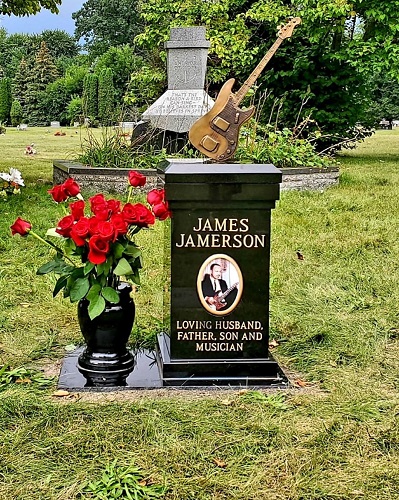
He was buried in Detroit’s Woodlawn Cemetery. A few years ago, Jamerson’s cousin saw a picture of his grave site. There was no headstone, only a grass marker. Eventually, the funds were raised and a proper headstone was set in place on August 27, 2021.
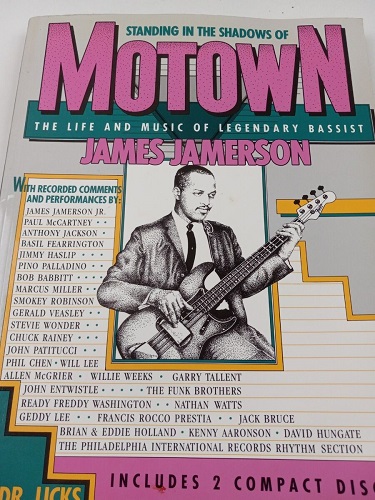
In 1989, Jamerson was the subject of a book loaded with great stuff – Standing in the Shadows of Motown. I think you can still get this on Amazon. A documentary of the same name was produced in 2002
He was posthumously inducted into the Rock and Roll Hall of Fame in 2000, received a Grammy Lifetime Achievement Award in 2004, and inducted into the Musicians Hall of Fame in 2007. Last month, in South Carolina, he was honored when a street was named for him.
It is a shame that it took so long for Jamerson and the Funk Brothers to get the recognition that they deserve.
As I prepared for this piece I found myself on YouTube listening to track after track of Motown stuff and listening with different ears. I focused on that bass line and really was blown away. These are songs I have heard countless times, yet focusing on that bass made them so fresh! As I said, the isolated tracks are an entirely different thing – it is so awesome to hear Jamerson “feel” and “drive” the tunes. It is no wonder that he is ranked the #1 bass player in the business by so many different sources, including Rolling Stone magazine.
Thanks again to Dave for allowing me to be a part of such a cool feature. I have already been impressed by the other blogger’s submissions. I am sure that they love taking part in this feature as much as I do.
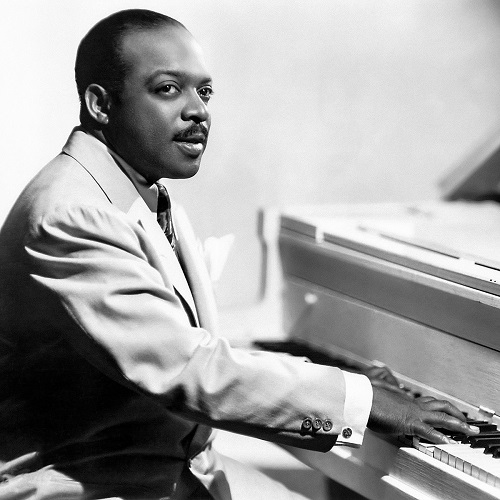
Today is the 99th birthday of WIlliam “Count” Basie. He was one of many legendary jazz pianists, and big band leaders. He formed the Count Basie Orchestra in 1935 and led the group for almost 50 years. He is noted for creating innovations like the use of two “split” tenor saxophones, emphasizing the rhythm section, riffing with a big band, using arrangers to broaden their sound, and others. So many musicians came to prominence under his direction.
He worked with many well known singers including Tony Bennett, Jackie Wilson, and Frank Sinatra. His list of accomplishments and recordings would take forever to write about. Instead, I’d like to share a couple of my favorite Basie tunes by Basie and some covers.
One O’clock Jump
Amazing cover by Doc and the Tonight Show Band
April In Paris
Again, Doc and the Tonight Show Band
Fly Me To The Moon – With Frank
Please Be Kind – With Frank
With Plenty of Money and You – With Tony Bennett
Chain Gang – With Jackie Wilson
It is said that one of Basie’s biggest regrets was never recording with the great Louis Armstrong.
There is a neat album that has been referenced as the “concert that never happened.”
This is concert vocals from Ray Charles and members of the Basie Band mixed together for a unique album.
Georgia on My Mind
Busted
Ok, a couple quick movie clips that feature Basie just because …
First a classic pantomime by Jerry Lewis in The Errand Boy. He uses Basie’s “Blues in Hoss’ Flat” as the basis for this gem.
…and finally, the Count and his orchestra’s cameo appearance in Blazing Saddles (using April in Paris)!
It is time once again for one of my favorite blog posts – Turntable Talk, hosted by Dave at A Sound Day. If you are unfamiliar with this feature, Dave assigns the participants with a specific musical topic each month. This is the 15th installment. This month the topic is: My Hometown
Dave’s instructions for us this time read: “I’m leaving this one rather open-ended for your interpretation, but essentially if you’re in, write about either a song about your hometown, or highlight an artist from your hometown. Likewise, I leave it to you to define what your hometown is – it can be your literal one, or one you live in now or somewhere close by that you associate with.”
As many followers know, I live in Michigan. I was raised in the city of Warren, which is about 20 miles from Detroit (less than 20 miles in some places). When the topic was presented, my first thought was to pic the song Detroit City (which was done by numerous artists). I really don’t consider that song a favorite, so I started thinking about Motown Songs. There were SO many good ones to chose from, but I decided against that, too.
I then did a search of artists from Michigan hoping that one would jump out at me. One did. I wrote briefly about him in the past, but feel he is worth writing about for this topic. I will mention some of his biggest hits, which you will be familiar with, and maybe even include some YouTube links. There is one song that wasn’t a huge hit for him, but it is my favorite vocal by him. I hope you are ready for some excitement – Mr. Excitement, Jackie Wilson!
Jackie Wilson has ties to many other artists and groups, all prior to having a successful solo career. He was considered a master showman and one of the most dynamic singers and performers in soul, R&B, and rock and roll history. His story is really an amazing one to follow, although it does have a sad ending.
The iconic, soulful and energetic stage entertainer was born in Detroit on June 9th, 1934, and raised in the rough neighborhoods of Highland Park, Michigan (13 miles outside of Detroit). He actually began singing as a young boy, accompanying his mother, an experienced church choir singer. In his early teens he joined a quartet, the Ever Ready Gospel Singers, who gained popularity in local churches. Wilson was not very religious, but he enjoyed singing in public. The money the quartet earned from performing was often spent on alcohol, and Wilson began drinking at an early age.
Life was rough for him growing up. At age 15, he dropped out of school. He joined an area gang, which led to Jackie getting in trouble. He got locked up twice in juvenile homes where he eventually learned to box. He entered the amateur circuits around the Detroit area where he met fellow boxer and future Motown chief, Berry Gordy. Jackie would become a Golden Gloves boxer, but after his mother told him ‘that’s enough boxing’, and with a record of 2-8, he turned to music.
Forming the original Falcons, he would be discovered by Johnny Otis, who placed him in a group called the Thrillers. The Thrillers later became the Royals, the same group that backed another Detroit legend, Hank Ballard, but Jackie left before they made their big hits. Joining Billy Ward & the Dominoes in 1953, replacing Clyde McPhatter. He stayed with the group for 3 years, and cut their last real hit “St. Terese of the Roses.” It was after this (in 1957) that he decided going solo would be a better option. He was absolutely right and it paid off for him in a big way.
Signing with Brunswick Records, Jackie would have his first hit “Reet Petite” in 1957, co-written by Berry Gordy, who would become good friends with Wilson over the years, and co-writing a few of his early hits.
Jackie followed this with “To Be Loved,” “That’s Why (I Love You So),” and “I’ll Be Satisfied.” But it was “Lonely Teardrops” that would launch him to a whole new level!
Charting 54 hits from 1957-1974, his stage presence earned him the nickname “Mr. Excitement”! Audiences went wild for his stage show! Go to YouTube and watch some of his live performances! He was amazing. He sang while doing knee-drops, spins, the splits, back flips, one-footed across-the-floor slides, removing his tie and jacket and throwing them off the stage, basic boxing steps like advance and retreat shuffling. Jackie would sing anything from high-powered soul classics, to opera, to ballads – there wasn’t anything Jackie couldn’t sing.
One of those amazing ballads was a song called, “Doggin’ Around” from 1960. The vocal on this song blows me away every time I hear it! You can hear the pain in his voice as he pleads to this woman to stop playing games with him. There is that lone piano plinking along in the back ground and the back ground singers are just enough to enhance the “pain” Jackie is trying to convey. The song itself only went to #15, but I have always felt it should have gone MUCH higher.
Doggin’ Around – Lyrics
You better stop, yeah, doggin’ me around If don’t you stop, yeah, I’m gonna put you down
Cause, I can’t take it Much longer My heart’s getting weak, It’s not getting any stronger You keep me so upset, My head’s in a whirl, But if you wanna be my girl
You better stop, yeah, doggin’ me around Cause if you don’t stop, I’m gonna put you down
Now you know you go out nights, To have yourself a ball Sometimes you don’t, you don’t make it home at all I don’t mind you having yourself a real good time, But now what are you tryna do, tryna make me lose my mind
You better stop, yeah, doggin’ me around If you don’t stop, I’m gonna put you down Yes, put you down I don’t want to do it, but I’ll have to put you down I love you baby, but still, I’ll put you down…
Elvis Presley’s hairstylist, Larry Geller, once visited Jackie backstage with Elvis after one of his Las Vegas performances. He said that Jackie had a habit of taking a handful of salt tablets and drinking large amounts of water before each performance, to create profuse sweating. Wilson told Elvis, “The chicks love it.” This may not have been the healthiest thing to do, and may have contributed to his tragic end.
On September 29, 1975, Jackie was one of the main acts to be featured in Dick Clark’s Good Ol’ Rock and Roll Revue at the Latin Casino in Cherry Hill, New Jersey. While singing “Lonely Teardrops,” as he sang the words “My heart is crying” he collapsed on stage; audience members applauded as they initially thought it was part of the act. He had suffered a heart attack onstage. Dick Clark sensed something was wrong, then ordered the musicians to stop the music.
Due to the lack of oxygen, he fell into a coma, of which he never recovered. He was moved to a retirement community in Mt. Holly, New Jersey, where he needed constant care. Elvis Presley paid for a lot of his medical expenses. On January 21, 1984, Jackie Wilson died at the young age of 49.
So many great singers hail from Michigan, and the Detroit area. Jackie Wilson was an amazing talent who, despite a short career, left us so many great songs! He posthumously received his star on the Hollywood Walk of Fame on September 4, 2019. He is buried at Westlawn Cemetery in Wayne, Michigan. His tombstone reads “No more lonely teardrops.” A bench in front of his grave says, “Jackie – The Complete Entertainer.”
Thanks again to Dave for allowing me to take part in this feature! I truly look forward to writing for it and reading the other participant’s entries. I am already waiting patiently for next month’s topic.
From my Facebook friend, Ric Allen and the Michigan Music History page:
It was a day that powerful voice of Detroit’s “Mr. Excitement” was silenced forever .. as Michigan Music History remembers Jackie Wilson .. who sadly passed away 36 years ago today.
The iconic, soulful and energetic stage entertainer was born in Detroit on June 9th, 1934, and raised in the rough neighborhoods of Highland Park. Joining an area gang, Jackie was often in trouble… got locked up twice in juvenile homes .. where he eventually learned to box. Entering the amateur circuits around Detroit, where he met fellow boxer and future Motown chief, Berry Gordy, Jackie would become a Golden Gloves boxer, but after his mother told him ‘that’s enough boxing’, and with a record of 2-8, he turned to music.
Forming the original Falcons, he would be discovered by Johnny Otis, who assigned him to a group called the Thrillers, who later became the Royals, the same group that backed another Detroit legend, Hank Ballard, but Jackie left before they made their big hits. Joining Billy Ward & the Dominoes in 1953, replacing Clyde McPhatter, Jackie would stay with the group for 3 years, cutting “St. Terese of the Roses”, until he decided going solo would be a better option … and it paid off big time.
Signing with Brunswick Records, Jackie would have his first hit “Reet Petite” in 1957, co-written by Berry Gordy, who would become good friends with Wilson over the years, and co-writing a few of his early hits. “Lonely Teardrops” would launch Mr. Excitement to a whole new level. Charting 54 hits from 1957-1974, his stage presence earned him the nickname “Mr. Excitement”! Jackie would sing anything from high-powered soul classics, to opera, to ballads – there wasn’t anything Jackie couldn’t sing.
While singing “Lonely Teardrops” at the Latin Casino in Cherry Hill, New Jersey, Jackie suffered a heart attack onstage and fell into a coma, of which he never recovered. Moved to a retirement community in Mt. Holly, New Jersey, where he needed constant care, the voice, the dancer and the consummate entertainer died on January 21st, 1984, at the age of only 49. Finally getting his star on the Hollywood Walk of Fame last September – we remember the iconic Jackie Wilson.
What a voice! What a talent! His music was some of the best! Here are some of my favorites:
Baby Workout
Lonely Teardrops
Doggin’ Around
Higher and Higher
Talk That Talk
Stormy Weather
That’s Why I Love You So
Reet Petite
What an amazing voice! What an amazing talent! GREAT songs! He is missed!
















 Various Ramblings of a Nostalgic Italian