I have a few holiday traditions that I keep up with every year. Many of those include Christmas movies or TV specials. Watching those certainly help get me in the spirit. It was on this day in history that two of my “must watch” shows first debuted.
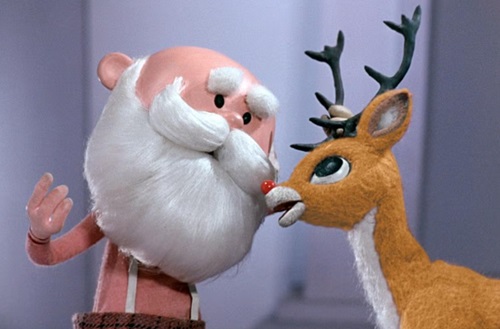
It was 61 years ago – December 6, 1964 – that NBC presented the classic Rudolph, the Red-Nosed Reindeer for the first time.
In the story, we follow Rudolph from his birth right up to the historic night when he led Santa’s sleigh. It is the classic story of a misfit who is bullied and made fun of until he becomes the hero that saves the day. Sadly, there are people who refuse to take it for what it is and try to make it something that it isn’t.
Cancel culture doesn’t care for shows like this. They don’t understand the lesson that is learned from the story. It’s like Mr. Rogers once said, “Every one is special in their own way.”
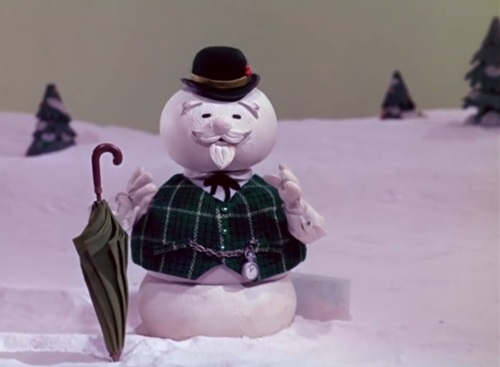
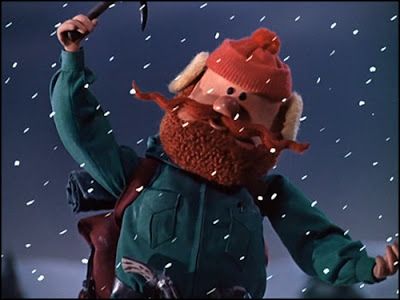
I love this one for the many great supporting characters. Who doesn’t love Sam the Snowman or Yukon Cornelius?!
Not to mention Hermie and Bumbles.
The special has continued to be a staple for 61 years and I hope it remains that way for years to come.
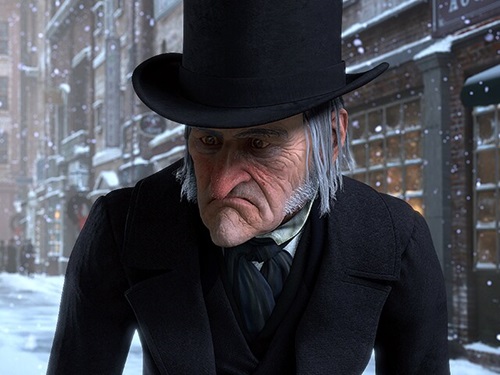
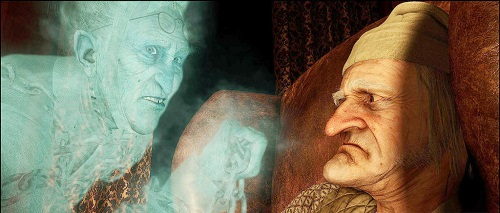
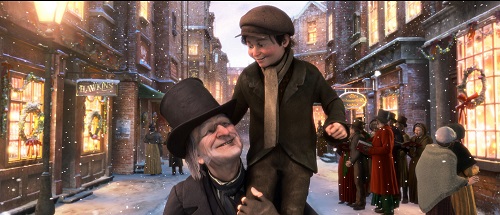
Just 16 years years ago – December 6, 2009 – An adaption of Charles Dickens’ A Christmas Carol with Jim Carrey as Ebenezer Scrooge was released to theaters.
There were quite a few people who really dissed on this version, but I truly enjoyed it. I think Carrey is fantastic as Scrooge (and a few other characters, too). This is just one of the many versions I watch each year. Every version/adaption takes some liberty with the story, which is why I still read it every year.
I remember seeing this one the first time and thinking that it got pretty dark in a few spots. I wasn’t sure how I felt about that, but now I can say that it only helps to make the transition of Scrooge more joyous.
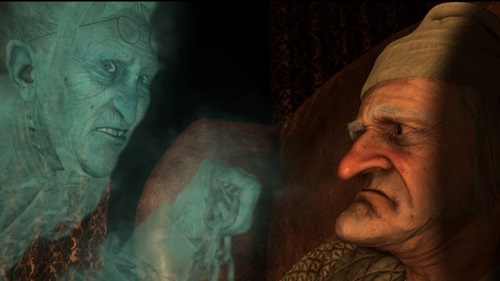
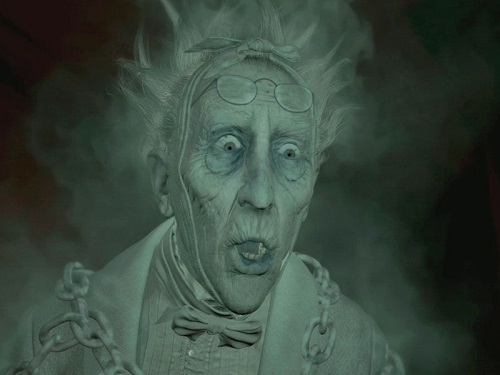
There are also some things that animation can do that weren’t so easy to make happen in the early adaptions. For example, in the book it says that when Jacob Marley undoes his head wrap, his jaw literally drops to his lap. With today’s special effects, I’m sure they could do that, but those early films couldn’t. In this animated version, it really comes across as scary, just as the book intended.
This is one that I plan on watching over the weekend.
What’s your favorite version of A Christmas Carol? What is your favorite holiday special?
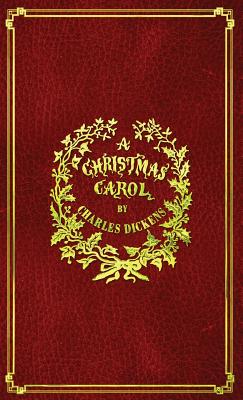
“Marley was dead: to begin with” … so begins the Dickens classic A Christmas Carol. It was originally titled: A Christmas Carol. In Prose. Being a Ghost Story of Christmas. It was published on this day (December 19) in 1843. The first edition was completely sold out by Christmas Eve (that’s less than a week!). By the end of 1844 thirteen editions had been released!
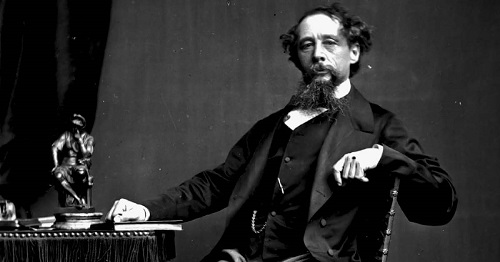
This was not Dickens’ first Christmas story. As a matter of fact, he had written three before writing this one. He would go on to write four more afterward. The story of the transformation of Ebenezer Scrooge, however, remains his best known holiday story.
Backstory
By mid-1843 Dickens began to suffer from financial problems. The sales of his Martin Chuzzlewit were falling off. His wife, Catherine, was pregnant with their fifth child. To make matters worse, his publishers threatened to reduce his monthly income by £50 if sales dropped further! It has been said that the publishers knew that the Chuzzlewit stories were not gaining public interest. They begged Dickens for a Christmas book.
Dickens started writing the book in October of 1843. Michael Slater, Dickens’s biographer, describes the book as being “written at white heat.” It was completed in six weeks, the final pages being written in early December. He built much of the work in his head while taking night-time walks around London.
Slater says that A Christmas Carol was “intended to open its readers’ hearts towards those struggling to survive on the lower rungs of the economic ladder and to encourage practical benevolence, but also to warn of the terrible danger to society created by the toleration of widespread ignorance and actual want among the poor.”
Since its initial publication the book has been issued in numerous hardback and paperback editions, translated into several languages and has never been out of print
1982 – English Class – Lincoln Junior High
I was familiar, of course, with the story of Scrooge. I had even seen a few movie versions of this classic ghost story. Interestingly, I had never actually read the novella. However, in 7th grade, I was blessed with one of my all time favorite teachers – Mrs. Shirley Kellogg. She was a no-nonsense teacher who could even make diagramming sentences fun.
I remember one day I got caught daydreaming and looking out the window. She saw me and asked me a question, which I obviously did not hear. I was startled by her calling my name and I must have looked scared to death. She looked at me and said, “Well just don’t sit there like a Willie Lump Lump – answer the question.” I started laughing, because I was well aware of the Red Skelton character she was referring to! Even though I didn’t have an answer, I immediately connected with her! Rest assured, I saved my daydreaming for other classes!
I digress. Back to A Christmas Carol :
I remember that we would often read from this big blue book that had the word “Literature” in the title. It was a collection of modern stories, short stories, classic stories, and poems. Charles Dickens’ tale was in this book. In elementary school, we would often read stories aloud, with each student reading a chapter. What makes my first “reading” of this story unique is that Mrs. Kellogg read it to us – not live though…it was Memorex! She had spent time recording herself reading the entire story and played it back to us on a cassette tape. This allowed us to read along while she graded papers and such. Because of this, when I read the story today, I can still hear certain lines in her voice.
Stave One
Dickens divides his tale into 5 “staves” or chapters. The story opens on a miserable Christmas Eve, seven years after the death of Scrooge’s partner in business Jacob Marley. Dickens’ opening line stresses the importance of the fact that he was dead. In fact, he stated that this “must distinctly be understood or nothing wonderful can come of the story” that follows. Dickens’ description of Scrooge is something that I can still hear in Mrs. Kellogg’s voice – “a squeezing, wrenching, grasping, scraping, clutching, covetous old sinner!” Right from the start, we learn what a miserable man Scrooge truly is.
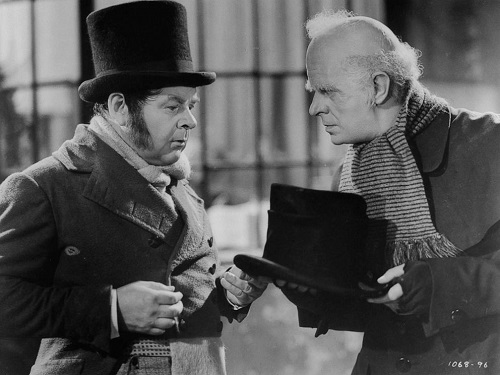
In this stave we are also introduced to Fred, Scrooge’s nephew. His visit only continues to illustrate Scrooge’s hate for the holiday and the season. Another main character is Bob Cratchit, Scrooge’s clerk. Dickens describes the poor working conditions and Cratchit’s measly salary. Jobs must have been scarce at the time. I say that because you have to wonder why this poor man is working for such a jerk like Scrooge. We are also introduced to two men collecting for charity, who are basically told by Scrooge to “get lost”. He tells them that he supports prisons and workhouses and those in need should go there for refuge.
Before the chapter is over, we follow Scrooge to his empty, damp, dark, and desolate home. It is there that we are introduced to his deceased business partner, Jacob Marley. It is here that we witness the beginnings of Scrooge’s transformation.
Marley’s ghost is a ghastly sight. He is wearing heavy chains and lock boxes. He tells of the misery and gloom that he suffers in the afterlife. He gives Scrooge a warning that his fate is far worse than his. This is because he has had additional years to labor on the chains he is forging. A doubtful Scrooge tells him he must be some sort of mirage or illusion. In response to this, Marley scares him into believing his presence. Marley sets the stage for what is to follow – the visits from three spirits. These visits are the only chance that Scrooge has to avoid Marley’s fate.
Stave Two – The Past
Scrooge’s second spiritual visit from the Ghost of Christmas Past. Scrooge then asks the spirit if it is the spirit of “long past”, and the spirit responds “your past”. The spirit whisks Scrooge away to Christmases where Scrooge was a boy, a young man, and a young adult. We begin to get a sense of why he is the way he is. As a boy, he spends Christmas at a boarding school. As a young man, we see him as an apprentice – an apprentice who loves Christmas. We also see him as a young adult. Here, we witness the love of his life leave him. She leaves because money has grown to be the most important thing in his life.
The older I get, the more this part of the story stays with me. Scrooge, as he witnesses all these past Christmases, is given a gift. He is allowed to see a younger self and those who he grew up with. We watch him call out the names of former school mates. He sees his beloved sister who died giving birth to his nephew. He also speaks highly of his fellow apprentice and former boss. Finally, he relives the pain of the loss of his love. These are among the many scenes that spark strong emotions with Scrooge.
Imagine, being able to go back in time to witness past Christmases! What I wouldn’t give to relive those childhood memories! I would love to see:
My grandfather’s face as I opened the cribbage board he gave me
The joy on me and my brother’s faces as we opened up the entire collection of Star War figures
The homemade Christmas ornaments mom made for our tree
My children’s first Christmases
A family pinochle game in the sun room at my grandparents
Dad putting together one of our toys with a gazillion stickers to place on it
Mom in good health, laughing at a gag gift I bought her
The adults playing guitars and the organ after having a few too many rum balls
The spread of Italian food we’d feast on every Christmas Eve
The list goes on and on. Oh to be able to hear the voices of loved ones who are no longer with us … wow. What a gift Scrooge is treated to.
Stave Three – The Present
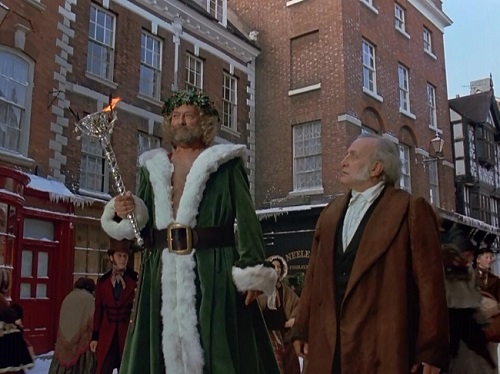
The second spirit is the Ghost of Christmas Present. He is a jolly spirit who shows Scrooge what is to happen this Christmas. He is first given some enlightenment about his clerk as he visits their home. He learns first hand of the struggles that they face, financially and emotionally. He is shown the small feast that the entire family is to eat. It is here that Scrooge (and the reader) is introduced to the Cratchit’s lame boy, Tiny Tim.
We really see the events of the past and present working in old Scrooge here. At one point, he very uncharacteristically asks the spirit if Tiny Tim will live. The spirit informs him that if the present course remains, Tiny Tim will die. The amazing change that is beginning in Scrooge is seen clearly here. There is a glimpse of compassion and worry as he asks the question of Tiny Tim’s fate. This is followed by the hanging of his head in grief when he hears the answer.
Ever wonder what people are saying about you when you are not there? In some cases, it’s better that you not know. Scrooge visits his nephews home next and is shown the dinner that he was invited to. What he sees is the guests making fun of him. He sees his nephew telling everyone in disbelief about his uncle’s abhorrence of the holiday. The more he sees the angrier he gets. He is so angry that he tells the spirit to take him away from the scene he is watching.
As the spirit’s time grows short, Scrooge notices something. He spies what looks like a claw coming out from underneath the spirit’s robe. When asked about it, the spirit reveals two children – a boy and a girl who are anything but pretty. They were children, but they looked terrible. Scrooge asks the spirit if they belong to him. The spirit answers that they are “Man’s”. Scrooge learns that the boy is Ignorance and the girl is Want. He is then told to “Beware them both, and all their degree”. 181 years later – these words are still true! Beware ignorance and want!
There is nothing that is more embarrassing and humbling than to have your own words thrown back at you. Especially when those words are applied the way the ghost does. As the ghost’s time expires on earth, he answers Scrooge’s question about finding the children some sort of refuge. His powerful reply consists of Scrooge’s words to the men collecting for charity “Are there no prisons? Are there no workhouses?” With that, the spirit is gone…
Stave Four – Christmas Yet To Come
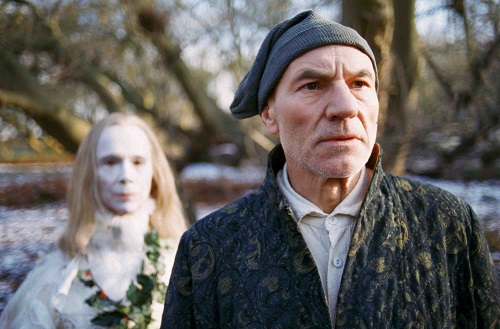
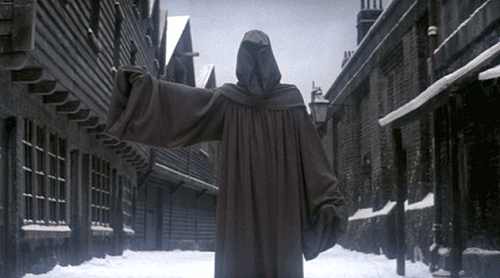
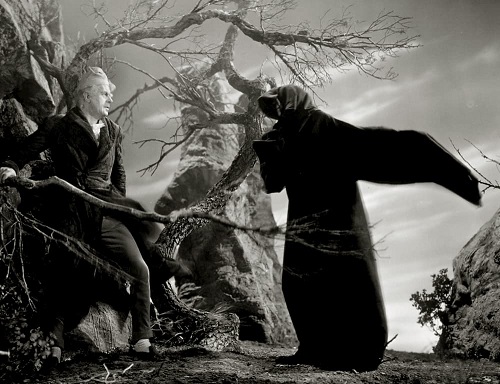
Fear can be a very good motivator. Imagine the fear that now engulfs Scrooge as he sees his final spiritual visitor! The Phantom which is described as being “draped and hooded” is now coming toward Scrooge. He is approaching ”slowly, gravely” and “silently – like a mist on the ground.” Rather than run away in a panic, Scrooge faces the spirit who speaks not a word. Words can be scary – silence can be scarier! How he realizes that he is in the presence of the ghost of the future I do not know. It must have be based on his knowledge of his previous two visitors. He confirms this by asking the spirit if that is who he is. The reply that he gets is a slow and deliberate nod.
Scrooge’s fear is no secret. As a matter of fact, he tells the ghost that he fears him. He fears him “more than any other spectre I have seen.” The change that continues in Scrooge is apparent here. He states that he knows that his “purpose is to do me good, and as I hope to live to be another man from what I was. I am prepared to bear you company”.
No surprise that the topic everyone shown to Scrooge is discussing is death. The death of one nameless man in particular. He sees business men standing on the street talking about an “old scratch” who “got his own at last”. Then he is taken to a sort of pawn shop. There three people meet up to sell stuff they took from a dead man’s home! One of the items was the shirt off the man’s dead corpse. He is then in a dark empty room where a dead man lays on a bed under a sheet. The spirit points to the head of the body – he wants Scrooge to look at the man. Scrooge says that he cannot do it. Every situation the spirit showed Scrooge was one where the man’s death brought pleasure.
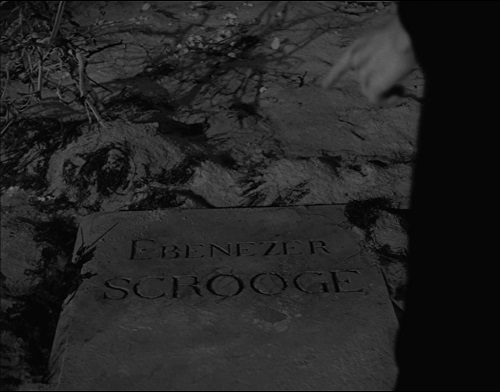
Scrooge begs the spirit to show him some “tenderness connected with death”. He is taken through town to the home of his clerk, Bob Cratchit. The mood is somber there as they continue to deal with the death of Tiny Tim. There is much hurt and many tears in the house. Scrooge then has the realization that the time with the spirit is almost gone. But he has to know something. He asks to know who the man was that had died. He is taken to a church yard that is overrun with weeds and has not been tended to. The spirit stands with nothing but a hand pointing to a gravestone.
The culmination of all that he has seen is now coming to a head. Scrooge must have some sort of inkling of who is buried in this terrible place. I say this because he now becomes frantic. He asks if the things he was shown are things that “will be” or things that “may be.” He begs to know whether or not they can be changed. Upon reading his own name on the gravestone, Scrooge breaks. He begs the spirit to wipe his name from the stone. He insists that he is not the man he was and that he will live an altered life. He makes promises to honor Christmas and live by the lessons taught by all the spirits. He grabs the spirit and continues to plead, but the spirit disappears and turns into his bedpost.
Remember the classic It’s a Wonderful Life? In it George Bailey is shown what life would be like if he was never born. George is frightened by so many things that he sees. He understands just how many things would have been different if he were never born. With A Christmas Carol, Ebenezer Scrooge sees things a bit differently. He sees the product of the present and future because of his life and how he currently lives it.
Stave Five – The End of It
The climax of the story – the miracle of the story – all culminates here. Scrooge is now a changed man! He awakens on Christmas day and he is filled with joy and happiness. These are emotions which have eluded him for many many years. His first order of business is to buy the prize turkey and send it to his clerk anonymously. He even splurges for a cab to send it there. He then dresses in his best and heads out.
He see’s the men who were collecting for charity the day before. He calls one of them over, apologizes for the day before and whispers a huge sum of money to them. They marvel at what is happening, and Scrooge assures them that there are many back payments included in that amount. He goes to church for the first time in years. Finally, he heads over to his nephew’s house, not knowing what will happen. Fred is surprised and welcomes him with open arms.
The one man who is unaware of the change in Scrooge is Bob Cratchit. When he arrives at work a few minutes late, Scrooge is waiting for him. This is exactly what Scrooge had hoped for. As soon as he walks in, Scrooge lays into him. He demands to know why he is coming in late. Scrooge continues his charade and stresses how he is not going to stand this behavior anymore! Quickly, he changes his demeanor and announces he is giving Bob a raise! He then vows to help his family in all ways possible.
Dickens ends by telling the reader that he was better than his word. He was a great man and second father to Tiny Tim. He explains that there were plenty of naysayers who still laughed at the transformation in Scrooge. The old man said it didn’t bother him one bit. We are told that there is no more spiritual intervention and that he “knew how to keep Christmas well”.
Closing Thoughts
I have been reading Dickens’ A Christmas Carol every year for 42 years now. Each and every year I am grateful for the start of the tradition. I was lucky enough to have had Mrs. Kellogg for English Class in 7th and 8th grade and she read it to us both years. Every holiday, I think of her fondly as I read those opening words.
I have seen almost every film and TV adaptation of this story. Honestly, it is hard for me to pick a favorite. What holds true for all of them is the amazing transformation of Ebenezer Scrooge. There is also a renewed appreciation for the Christmas season. During the holidays, just like Scrooge, people tend to give more to those in need. They tend to be kinder, and they tend to be happier. Here’s a thought – why not do this all year round?
Elvis Presley had a song on his Christmas CD which stated my feelings perfectly:
Why can’t every day be like Christmas? Why can’t that feeling go on endlessly? For if every day could be just like Christmas, what a wonderful world this would be.
One of my favorite places to hang out is the library. Last week, my oldest son asked if we could go there so he could look up some things for a homework project. While he was working on that, I naturally started browsing. I always start in the New Fiction/New Non-Fiction section. By doing this, I have stumbled onto some books that I may never have read (I love to do this at the book store, too!).
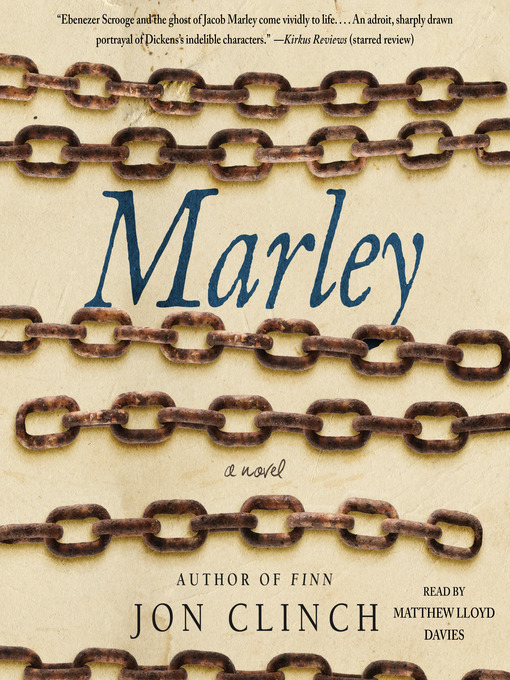
While looking at the new titles on the book spines, one jumped out at me – “Marley”. Two things come to mind when I hear “Marley”: (1) Marley and Me (the movie about a dog) and (2) Jacob Marley from Dickens’ A Christmas Carol (which I just read for the holiday). I picked up the book and saw that surrounding the title were links of chains. Marley’s Ghost in Dickens’ story appears weighed down by chains.
As you can see by the cover, the book is indeed about Jacob Marley. I read that this author, Jon Clinch, also wrote a “back story” to Huckleberry Finn, which focused on Huck’s father. This backstory, gives new light to the story we all know so well. That is what this book does, as well. In Dickens’ tale, we don’t know much about Jacob Marley.
We know that he was Scrooge’s business partner and that he is forced to walk the earth bearing the chains he forged in life. But what led him to this fate? Why is Ebenezer Scrooge the way he is? This book tells us. I am only a few chapters in, but am enjoying it so far.
It’s been done before – many times
This is not a new concept. There have been many books, movies, and TV shows that explored how well known characters became the way they are. Fans of the TV show Taxi may remember a flashback scene where Reverend Jim was drug free! Jack Benny did many shows telling the story of how he met members of his cast. The TV show How I Met Your Mother used this entire premise for the entire series.
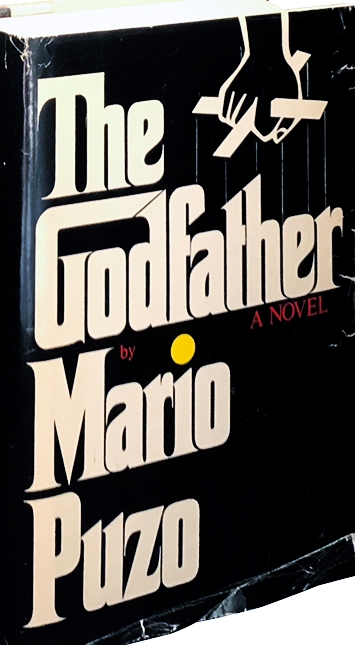
It is no secret that I am a HUGE fan of Mario Puzo’s The Godfather. I loved the book, and loved the movie trilogy. The novel was published in 1969, and the film was released in 1972.
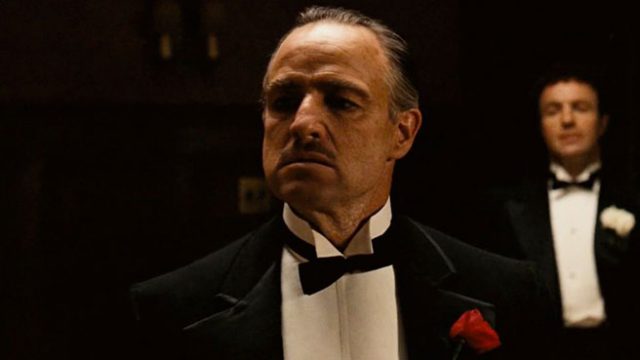
Marlon Brando played Vito Corleone, the head of the Corleone Crime family.
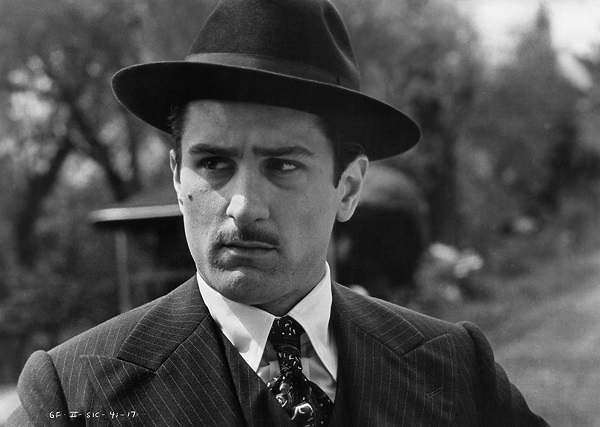
Two years later, in 1974, The Godfather Part II was released in theaters. It consisted of flashbacks of how Vito became the Don. The role was played by Robert DeNiro.
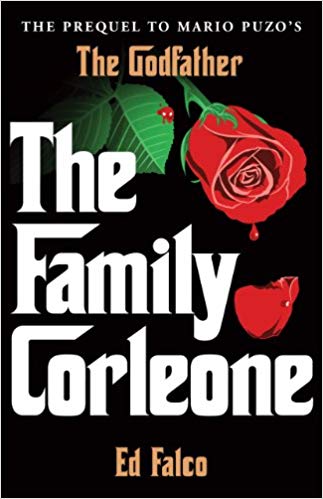
But what about other characters? Ed Falco’s 2012 novel “The Family Corleone” tells us.
The book is based on an unproduced screenplay that Mario Puzo had written. It gives us a look at some of the minor characters, like Luca Brasi, and how they come to know the Don and how they join the family. A couple books that “fill in the gaps” between the Godfather movie trilogy came out in 2004 (The Godfather Returns) and 2006 (The Godfather’s Revenge) written by Mark Winegardener.
Good characters – Good Stories
When we come to love good characters, we tend to want to know more about them. We want to see them or read about them in another story or adventure. Perhaps that why there are so many books that feature a star character (like Alex Cross, or Cotton Malone) or movie sequels (like Star Wars, Harry Potter, or Toy Story). In the 60’s and 70’s, many TV shows had novels or short stories based on characters (like Get Smart, Kojak, Columbo, and countless Star Trek books).
I LOVE the concept of exploring a well known character and shedding light on their back story. I am hoping this book on Jacob Marley does not disappoint.


 Various Ramblings of a Nostalgic Italian