Torme’ Centennial

Happy 100th birthday to the late, great Mel Torme’!!
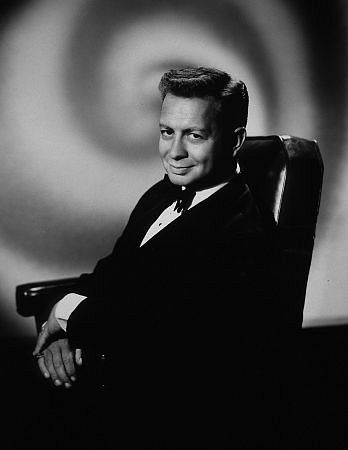
Melvin Howard Tormé was an American musician, singer, composer, arranger, drummer, actor, and author. He was a jazz icon.  He won two Grammy Awards and was nominated a total of 14 times.

Mel grew up in a largely black neighborhood and was heavily influenced by jazz. He was a child prodigy, who performed professionally at age four with the Coon-Sanders Orchestra.  He would sing “You’re Driving Me Crazy” – a song he had learned on the radio, at Chicago’s  Blackhawk restaurant. He was invited back and sang every Monday night for six months.  It wasn’t a bad first gig. He was paid $15 a night with a free dinner for his family.

From 1942 to 1943, he was a member of a band led by Chico Marx. He was the singer and drummer and also created some arrangements for the band. In 1944, he formed a vocal quintet called Mel Tormé and His Mel-Tones. His group was modeled on Frank Sinatra and The Pied Pipers. The Mel-Tones had several hits while fronting Artie Shaw’s band and on their own. The Mel-Tones were among the first jazz-influenced vocal groups.
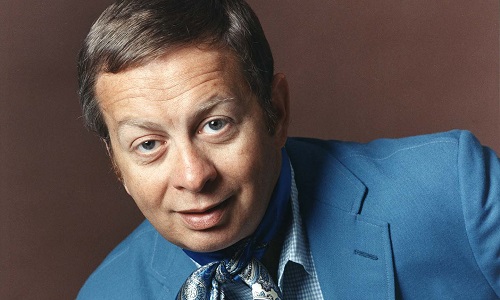
In 1947, he started a solo singing career. His appearances at New York’s Copacabana led local disc jockey Fred Robbins to give him the nickname “the Velvet Fog” in honor of his high tenor and smooth vocal style. Mel detested the nickname. He self-deprecatingly referred to it as “this Velvet Frog voice”.
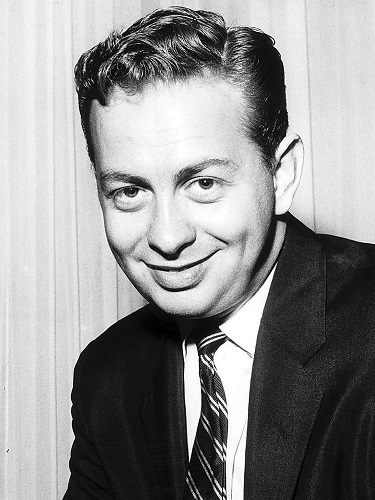
As a solo singer, he recorded several romantic hits for Decca records and with the Artie Shaw Orchestra for Musiccraft (1946–1948). In 1949, he moved to Capital records, where his first record, “Careless Hands”, became his only number-one hit.

Though he spent most of his career singing jazz, Tormé had a deep appreciation of classical music. As for Rock and roll … he considered “three-chord manure”.

In the ’60s and ’70s, Tormé covered pop tunes of the day, never staying long with one label. He had two minor hits: his 1956 recording of “Mountain Greenery”, which did better in the United Kingdom where it reached No. 4; and his 1962 R&B song “Comin’ Home Baby”, which reached No. 13 in the UK. “Comin’ Home Baby” led the jazz and gospel singer Ethel Waters to say that “Tormé is the only white man who sings with the soul of a black man.”

He gained popularity among a younger generation when he made nine guest appearances as himself (and one as a guardian angel) on the 1980s situation comedy Night Court.  The main character, Judge Harry Stone, played by Harry Anderson, was depicted as an unabashed Tormé fan, an admiration that Anderson shared in real life. Anderson would deliver the eulogy at Tormé’s funeral.
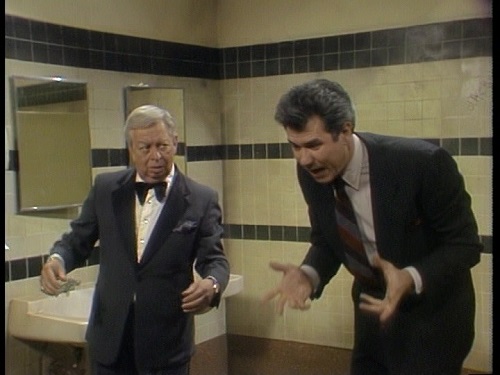
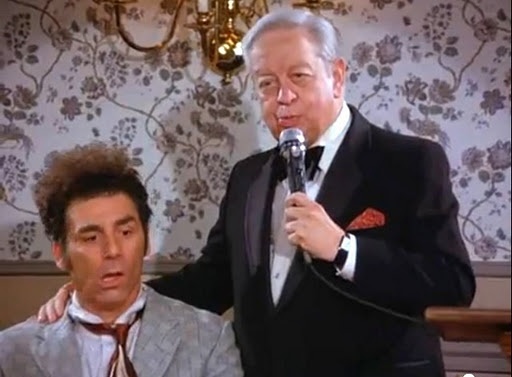
Mel also appeared in Mountain Dew commercials and in a 1995 episode of the sitcom Seinfeld as himself. This is in one of my favorite episodes – “The Jimmy.”
During the 1980s and 1990s he performed often with piano great George Shearing. They recorded six albums together for Concord Records.  It was about this period Shearing wrote:

It is impossible to imagine a more compatible musical partner… I humbly put forth that Mel and I had the best musical marriage in many a year. We literally breathed together during our countless performances. As Mel put it, we were two bodies of one musical mind.

Mel Tormé wrote more than 250 songs, several of which became standards. He often wrote the arrangements for the songs he sang. He collaborated with Bob Wells on his most popular composition, “The Christmas Song”(1946). They wrote the song on a swelteringly hot and sunny day in California, sitting down and coming up with all the most ‘mid-wintery’ things they could think of, in an attempt to cool themselves down; it was recorded first by Nat King Cole.  Tormé said that he wrote the music in 45 minutes and that it was not one of his favorites, calling it “my annuity”

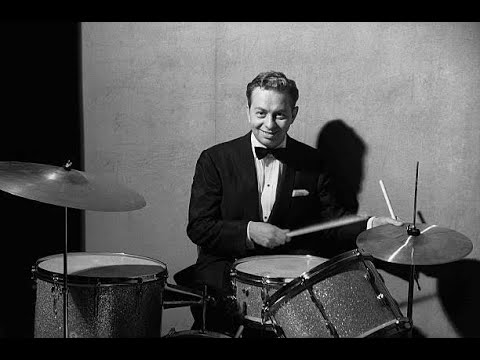
I had the chance to see him when he toured with Doc Severinsen.  He was fantastic!  He owned that stage and had the audience in the palm of his hand.  That concert remains one of the best concerts I have ever been to.  He blew me away when he joined Doc for Sing, Sing, Sing and played the drums.  It was amazing.
On August 8, 1996, a stroke ended Tormé’s 65-year singing career. In February 1999, he was awarded the Grammy Lifetime Achievement Award. He died from another stroke on June 5, 1999, at the age of 73

In his eulogistic essay, John Andrews wrote:

Tormé’s style shared much with that of his idol, Ella Fitzgerald. Both were firmly rooted in the foundation of the swing era, but both seemed able to incorporate bebop innovations to keep their performances sounding fresh and contemporary. Like Sinatra, they sang with perfect diction and brought out the emotional content of the lyrics through subtle alterations of phrasing and harmony. Ballads were characterized by paraphrasing of the original melody which always seemed tasteful, appropriate and respectful to the vision of the songwriter. Unlike Sinatra, both Fitzgerald and Tormé were likely to cut loose during a swinging up-tempo number with several scat  choruses, using their voices without words to improvise a solo like a brass or reed instrument.

They were two of the best scat singers. Watch this magical improv moment with Ella and Mel:

Happy 100th birthday, Mel! 

Source: Wiki

Turntable Talk #18 – The Man (or Woman) Behind the Curtain

It is time once again for another edition of Turntable Talk. This is a feature created by my friend Dave Ruch from the A Sound Day Blog. This is my 18th submission for this feature and it is something I look forward to writing each month.

This time around, Dave took us to the Land of Oz for inspiration. His instructions:

 “Pay No Attention to That Man (Or Woman) Behind The Curtain” . Yep the famous phrase about the Wizard of Oz. 

We’ve looked at a number of great artists – singers, groups, musicians – and their records. This time we’re switching it up just a little and are going to salute someone “behind the scenes” that was significant to music. All too often people do pay no attention to the people behind the curtain in music that are so important to the albums and groups we love. There are record producers, the record company bosses and talent scouts, the people on radio who used to make the hits happen, even unsung heroes like concert roadies. Pick one you feel is important and maybe a little un-noticed and tell us why!

As a former radio guy, I immediately thought I should write about a well known DJ. There are many of them who played a big part in the music industry. Dick Clark, Casey Kasem, Wolfman Jack and Alan Freed come to mind. However, I decided that I would feature a man who played on some of the biggest hits on the radio, yet until recently was relatively unknown.

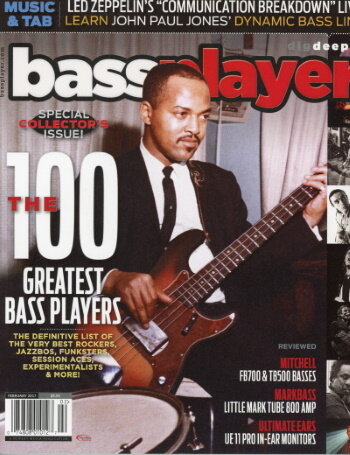
40 years ago, James Jamerson passed away at the young age of 47. At the time he passed away, no one really knew who he was, despite being one of the best (if not THE best) bass player of all time! As a matter of fact, he often tops the list of Best Bass Players of all time by numerous publications. It has been said that he single-handedly revolutionized bass playing. I agree. His creative contributions to music certainly makes him a good pick for a “man behind the curtain.”

James Jamerson was born on January 29, 1936 in Charleston, SC. When his parents divorced, his mother moved to Detroit to find work. He would spend time with his aunt, grandmother and cousin. His aunt sung at church while his grandmother and cousin played piano. He spent time listening to gospel, Jazz, and blues music and that influenced his own musical abilities.

In 1954, his mother sent for him and he attended Northwestern High School. In the music room of the high school, he saw a stand up bass lying on the floor. He picked it up and began to play with it. He had “found” his instrument. He began to play at many of the Detroit area blues and jazz clubs.

He began to get noticed and he began playing for dances, weddings, frat parties, and other events. He was quite a local celebrity. It was hard to miss him driving through town with his bass sticking out the window of his car! Because he was still a minor, the good folks at the Detroit Police Dept. gave him a permit so that he could play in clubs that served alcohol. This allowed him to get more work.

Believe it or not, Wayne State University offered him a full ride music scholarship which he turned down! He was playing so often, he figured he was already in the music field, so why would he need to go to college? Instead, after he graduated high school, he joined up with Washboard Willie and the Super Suds of Rhythm (How’s that for a group name?!). It was during this time that he began to drink alcohol (which would eventually lead to his death).

In 1958, someone from the Northern Records label heard him play and asked him to sit in on the session recordings for the label. The unique way he played caught the ear of other labels. He began to work for Fortune, Tri-Phi, Anna Records, and eventually Motown.

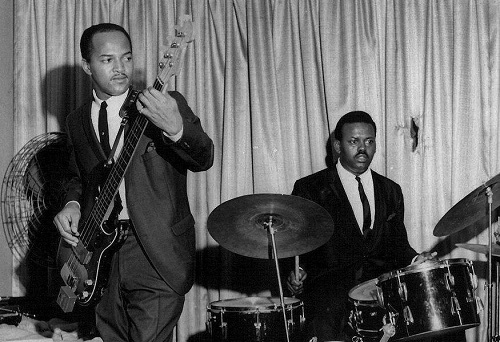
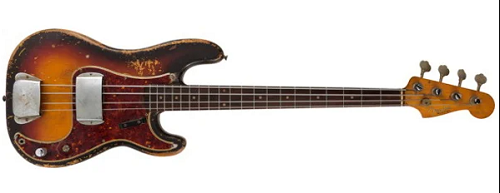
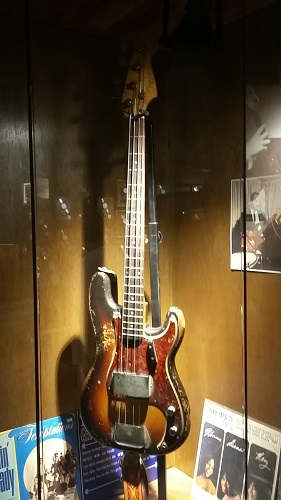
He and the Funk Brothers (pianist Earl Van Dyke, drummer Benny Benjamin, and guitarists Robert White and Joe Messina) spent the days recording in the “Snake Pit” (the Basement of Motown Records) and playing at Jazz clubs in the evenings. Jamerson had switched from an upright bass to a brand new creation – the electric Fender Precision Bass.

The switch really made his work stand out. On some songs, he’d play the stand up bass and then double it with the electric. What made his work on the electric so awesome is that he played the electric just like he played the stand up bass – with one finger (which many folks called “the claw”).

While he is known for playing on many of the Motown songs, he also played on Boom Boom by John Lee Hooker, Whispers Getting Louder and Higher and Higher by Jackie Wilson, Agent Double-O-Soul by Edwin Starr, Cool Jerk by the Capitols, Show and Tell by Al Wilson, Boogie Fever by the Sylvers, and so many other hits! What made the Motown stuff so good was he had some free reign to be “James Jamerson.”

Musician magazine interviewed him in 1983 and he stated that the Motown songwriting and productions teams “would give me the chord sheet, but they couldn’t write for me. When they did, it didn’t sound right. When they gave me that chord sheet, I’d look at it, but then start doing what I thought would fit. I’d hear the melody line from the lyrics and build the bass line around that.”

One of the coolest examples of how he listened and did his thing was on two separate recordings of the same song. To help illustrate this, I found some isolated bass lines on YouTube that are fascinating! Jamerson played on Marvin Gaye’s I Heard It Through the Grapevine – a Motown classic! Check out the soulful line here:

Now check out the same song – and a funkier bass line – on the Gladys Knight Version:

I find it amazing that the same man can take the same song and make them so different.

Speaking of Marvin Gaye, the Funk Brothers shared a story about how Marvin wanted Jamerson to play on What’s Going On. James was out drinking and Marvin went out looking for him. When he found him, he brought him back to the studio. Jamerson was so drunk that he couldn’t even stand up! It was no problem for him, though, he just laid on his back on the floor and played on the track!

Trivia Bit: What’s Going On is the first track that Jamerson is credited on a recording.

It is said that James Jamerson played on almost every Motown song between 1963 and 1968. That would include over 60 songs that hit #15 or better on the charts. He also performed on 23 # 1 songs on the pop charts and 56 #1 songs on the R&B charts! Berry Gordy called him an “incredible improvisor” and said “I, like the other producers, would not do a session unless at least two of the Funk Brothers were present, namely Benny Benjamin and James Jamerson.”

Some of the other Motown songs that feature Jamerson:

  • Ain’t No Mountain High Enough – Diana Ross and the Supremes
  • Ain’t That Peculiar – Marvin Gaye
  • Ain’t to Proud to Beg – The Temptations
  • Baby, I Need Your Loving – The Four Tops
  • Baby Love – The Supremes
  • Bernadette _ The Four Tops
  • Can I Get a Witness – Marvin Gaye
  • Dancing in the Streets – Martha and the Vandellas
  • Don’t Mess With Bill – The Marvelettes
  • Going to a Go Go – Smokey Robinson and the Miracles
  • Home Cooking – Jr. Walker and the All Stars
  • It Takes Two – Marvin Gaye and Tammy Terrell
  • My Cherie Amour – Stevie Wonder
  • My Girl – The Temptations
  • Pride and Joy – Marvin Gaye
  • Reach Out, I’ll Be There – The Four Tops
  • Shotgun – Jr. Walker and the All Stars
  • This Old Heart of Mine – The Isley Brothers
  • Two Lovers – Mary Wells
  • What Becomes of the Broken Hearted – Jimmy Ruffin

You can also hear him on :

  • The Theme from S.W.A.T. – Rhythm Heritage
  • The Theme from Starsky and Hutch
  • Just Like Romeo and Juliet – The Reflections
  • Rock the Boat – Hues Corporation

The list of people who were influenced by Jamerson’s playing is almost as long as the list of songs he played on! Saxophone and bass player Wilton Felder called him “The Godfather of the electric bass.”

Suzi Quatro says, “I grew up in Detroit, so I was weaned on James Jamerson and Motown music. It’s in my DNA. He is still the best and I took my style from him. It’s hard to improve on what he did, because you are talking perfection.”

Sir Paul McCartney says, “Jamerson was where I picked up a lot of my bass style. Because bass players normally have to follow: we follow chords, follow the drummer, follow the vocalist, we have a following role. Suddenly the bass had power! We could dictate the direction of the music and add excitement. James Jamerson became just my hero, really.”

James Jamerson Jr. says, “As for his sense of syncopation, that was his God-given gift. I couldn’t even explain that one. I put it like this: My dad liked to dance, so he just danced on the bass. He would occasionally polish his bass, but he’d never touch the gunk that built up on that fingerboard. he told me the ‘dirt keeps the funk’.”

Years of drinking finally caught up with Jamerson. On August 2, 1983, he died of complications from cirrhosis of the liver, heart failure and pneumonia.

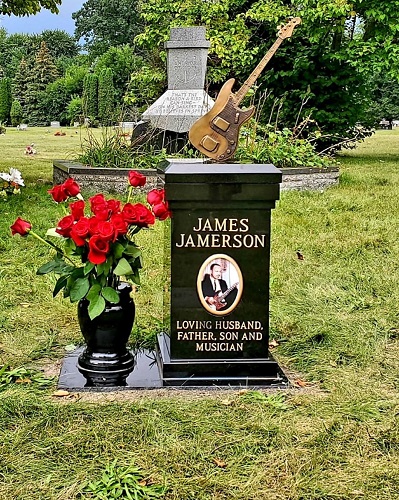
He was buried in Detroit’s Woodlawn Cemetery. A few years ago, Jamerson’s cousin saw a picture of his grave site. There was no headstone, only a grass marker. Eventually, the funds were raised and a proper headstone was set in place on August 27, 2021.

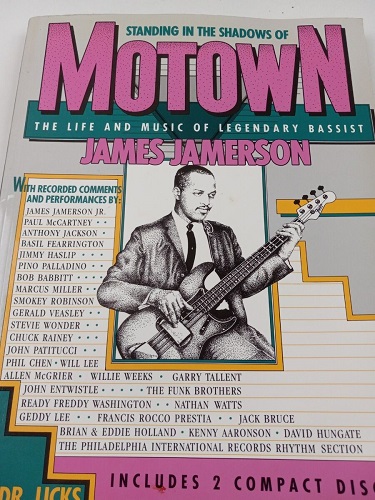
In 1989, Jamerson was the subject of a book loaded with great stuff – Standing in the Shadows of Motown. I think you can still get this on Amazon. A documentary of the same name was produced in 2002

He was posthumously inducted into the Rock and Roll Hall of Fame in 2000, received a Grammy Lifetime Achievement Award in 2004, and inducted into the Musicians Hall of Fame in 2007. Last month, in South Carolina, he was honored when a street was named for him.

It is a shame that it took so long for Jamerson and the Funk Brothers to get the recognition that they deserve.

As I prepared for this piece I found myself on YouTube listening to track after track of Motown stuff and listening with different ears. I focused on that bass line and really was blown away. These are songs I have heard countless times, yet focusing on that bass made them so fresh! As I said, the isolated tracks are an entirely different thing – it is so awesome to hear Jamerson “feel” and “drive” the tunes. It is no wonder that he is ranked the #1 bass player in the business by so many different sources, including Rolling Stone magazine.

Thanks again to Dave for allowing me to be a part of such a cool feature. I have already been impressed by the other blogger’s submissions. I am sure that they love taking part in this feature as much as I do.

Thanks for reading! Stay funky!

Turntable Talk – “Shock Rock”

Welcome to another edition of Turntable Talk hosted by Dave over at A Sound Day. Check out his site here: https://soundday.wordpress.com/

His topics have ranged from very easy to thought provoking. This time around, I find it truly thought provoking.

Here are the instructions that Dave sent to each of the participants describing what this edition was to be about:

This time around I’m calling it ‘Shock rock’… but wait, it’s not about Marilyn Manson and Megadeath…unless you want it to be.  The subject basically will be pick a record that you love that would surprise people… something that runs afar from your regular favorite listening.  Maybe you like hard rock but love something by the Carpenters. Or are a huge ’60s fan who can’t get enough Bruno Mars. Or maybe it’s a little Tchaikovsky to wind down after a night full of Stones or Springsteen.  Let us know what it is that makes that ‘oddball’ selection so appealing to you.

What Could Possibly “Surprise” You?

I have almost 5000 songs on my iPod. I have a CD collection that fills at least three storage totes, and 4 carrying cases. My external hard drive is loaded up with almost half a terabyte of songs. What ONE song would surprise you? This was my dilemma.

I had three songs immediately jump out at me when I first read Dave’s e-mail. The more I thought on them, I just wasn’t sure which one to pick. As I am writing this, I still question the one that I chose. I will stick with it because it isn’t something I would normally post, and it is more of a personal song. So how in the world did I narrow it down?

Grab my iPod and there is just about every genre of music on there. There is pop music from every decade from the 1930’s to the 2010’s. There is country music – classic and modern. There is a fair amount of R&B, Soul and Motown. I’m not ashamed to admit there are some disco favorites, too. You will also find Big Band and Swing music, Jazz, standards, and plenty of Classical music. There is Christian music and plenty of oldies. There are some favorite Christmas songs on the play list and songs that I played when I was in high school band that I downloaded from YouTube and other sources.

Going through the iPod, there were songs that I thought were “oddball” that I could write about. For example, I have almost every Weird Al Polka Medley on there. I also have music from the Shrek soundtrack, music from The Muppets, and music from the cartoon Phineas and Ferb. There are also plenty of songs that are on there that my kids used to listen to when we would be in the car from some of their favorite kid shows. Oddball, indeed.

All that being said, anyone who knows me or has read my blog before knows that I have a wide range of musical tastes. It would be easy to feature any one of the “oddball” songs mentioned in the above paragraph. Instead, there was one song that stood out for me. It is a song that I never skip when it comes on the iPod (there are only a few of those). It is also a song that I have debated posting on my blog as part of a “music Monday” or some music feature. I kept holding back, probably because it is such a personal song for me. Will you find it “shocking?” I doubt it.

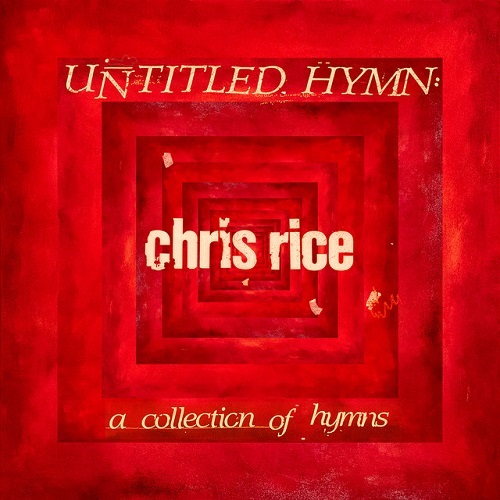
Untitled Hymn – Chris Rice

Readers of my blog know that I am a Christian. While I don’t care for much of the “modern” Christian music, I do like many songs. I cannot recall when I first heard Chris Rice’s “Untitled Hymn,” but it hit me immediately. It was a song that I shared with one of the guys at church, who worked it up and sang it on more than one occasion.

To those who are not of the Christian faith, there will be no connection whatsoever to the song. To me, however, it hits me deep every time I hear it. I am reminded of who I was before and who I am now. It also reminds me that when my life is over – it isn’t over. I am aware that not everyone believes what I do, and that is ok. I’m ok if you just scroll on by this blog.

The song begins with a lone piano and then the vocal. The lyrics of this song speak of the journey of a Christian. From sinner to saved. Singing praise. New life in Christ and life’s struggles and looking to Him in those struggles. Feeling the love and joy that comes in this new life. Finally, the “end” of life on earth for the Christian and the beginning of the afterlife.

The vocal and the piano blend so perfectly. The inflection of the vocal through the dynamics of the song conveys the lyrics exactly how they need to be conveyed. Rice rerecorded the song for “A Collection of Hymns” with a more up-tempo piano and more instrumentation (strings, guitar, etc…) and vocal harmony. Personally, I prefer the original recording over the newer version. I feel it is more powerful.

Here is the original and the lyrics:

Weak and wounded sinner
Lost and left to die
Oh, raise your head for Love is passing by

Come to Jesus
Come to Jesus
Come to Jesus and live

Now your burden’s lifted
And carried far away
And precious blood has washed away the stain

So, sing to Jesus
Sing to Jesus
Sing to Jesus and live

And like a newborn baby
Don’t be afraid to crawl
And remember when you walk sometimes we fall

So, fall on Jesus
Fall on Jesus
Fall on Jesus and live

Sometimes the way is lonely
And steep and filled with pain
So if your sky is dark and pours the rain

Then cry to Jesus
Cry to Jesus
Cry to Jesus and live

Oh and when the love splills over
And music fills the night
And when you can’t contain your joy inside

Then dance for Jesus
Dance for Jesus
Dance for Jesus and live

With your final heartbeat
Kiss the world goodbye
Then go in peace, and laugh on Glory’s side

And fly to Jesus
Fly to Jesus
Fly to Jesus and live

Fly to Jesus
Fly to Jesus
Fly to Jesus and live

In Closing

Does it shock you that I picked this song? I guess it is a bit different than the songs I have posted in the past. Isn’t that what I was supposed to do? At any rate, Dave asked us to explain what makes this song so “appealing.” All I can say is that it appeals to me because I relate to it. Outside of the last verse, I have lived it. It is a song that strikes a chord (pun intended) every time I hear it. Depending on what is going on in my life, I either smile and sing along or cry and sing along. To me, that makes it one powerful song.

Thanks for allowing me to participate, Dave. I look forward to the next edition.