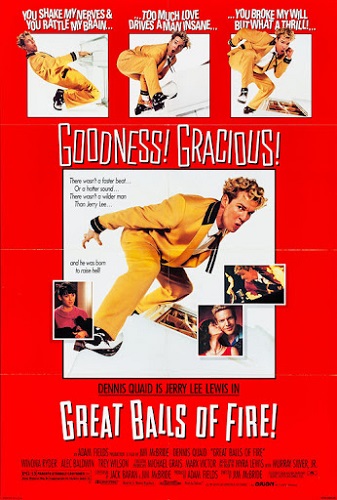
It was on this day in 1989 that Dennis Quaid hit the big screen as Jerry Lew Lewis in Great Balls of Fire.
The film covers the early career of Lewis, from his rise to rock-and-roll stardom to his controversial marriage to his 13-year-old cousin. That marriage led to his downfall. Until the scandal of the marriage depreciated his image, many had thought Lewis would take over Elvis Presley as the “King of Rock and Roll” in the 1950s.
The story was co-written by Myra Gale Lewis (her autobiography Great Balls of Fire!), the former wife of Jerry Lee Lewis, with Murray Silver. Despite this, co-writer Silver was upset by the lack of accuracy in the film, claiming it was “phoney”.
Lewis openly stated that he hated the film and the book it was based on. He did, however, praise Quaid’s portrayal of him in the film, saying “he really pulled it off”. Quaid even learned to play “Lewis-style” piano for the role.
For the soundtrack, Lewis re-recorded some of his music from the 1950s. The songs included “Whole Lotta Shakin’ Goin’ On,” “That Lucky Old Sun,” “High School Confidential,” “Breathless,” and the title track.
Overall, the re-recordings aren’t bad. Jerry Lee’s voice still sounds great and the sound is pretty close to that of the originals. Many of them are longer and contain extra solos, which is actually neat to hear.
I could pick a few from this soundtrack, but I’ve gotta go with the title track. Here are the versions from the film, the soundtrack and the original hit.
It was 39 years ago today that the Rock and Roll Hall of Fame inducted its inaugural class. When you look at the 10 inductees, you cannot help but be impressed. These artists are legends who were a part of the birth of Rock and Roll. The performers category is meant for recording artists and bands that have “influence and significance to the development and perpetuation of rock and roll.” Each of them did just that!
To honor this class of Rock and Roll pioneers, I thought I would feature a favorite song from each of them. Feel free to add your favorites in the comments.
Chuck Berry– No Particular Place To Go
The “Granddaddy of Rock and Roll”
James Brown – Please, Please, Please
“The Godfather of Soul”
Ray Charles – Hallelujah, I Love Her So
“The Genius”
Sam Cooke – Twisting The Night Away
“The King of Soul”
Fats Domino – I’m Walkin’
“The Father of Rock and Roll”
The Everly Brothers – Bye Bye Love
Buddy Holly – Rave On
Jerry Lee Lewis – Whole Lotta Shakin’ Goin’ On
“The Killer”
Little Richard – Rip It Up
“The Architect of Rock and Roll” (Also “The Bronze Liberace”)
Elvis Presley – Blue Suede Shoes
“The King of Rock and Roll”
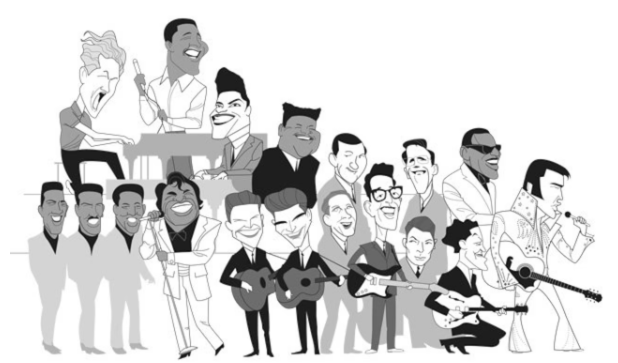
I wish I could find out who the artist is on this amazing caricature! I love this and would love to get a print of it.
The amount of music that these ten performers put out in their lifetime is overwhelming! It is fitting that they make up the first class of Rock and Roll Hall of Fame inductees.
My wife and I took a trip to Cleveland for our anniversary one year. We visited the Hall of Fame and I was in awe walking amongst the pieces of history. If you have never been there, I highly recommend a visit!
Welcome back to The Music of My Life, where I feature ten songs from each year of my life. In most cases, the ten songs I choose will be ones I like personally (unless I explain otherwise). The songs will be selected from Billboard’s Year-end Hot 100 Chart, Acclaimed Music, and will all be released in the featured year.
In 1981 there were two things that influenced me musically. First of all, I discovered American Top 40 with Casey Kasem. My dad had it the radio on one day while he was washing the cars and doing yard work. It was my first exposure to a countdown show. As a matter of fact, as I looked over the list of possible songs for my list, there were plenty of songs that I remember hearing for the first time on AT40. Some of those that are not on my list are: Start Me Up, Centerfold, Waiting for a Girl Like You, Elvira, Bette Davis Eyes, Hearts, Physical, and so many others!
The second thing that not only influenced me musically, but everyone else in the country, was the birth of MTV in August of 1981. This changed the way people listened to music. Some of those 80’s music videos are forever etched in my mind. I loved the creativity of many of those videos. In many cases, the videos helped with the popularity of songs and how much airplay they got on the radio. Perhaps you’ll remember the videos from some of the songs on my list?
Here we go ….
My dad played guitar in a wedding band for many years. Often, my brother and I would have to go to band practice with him. It was there that I recall being introduced to some of the current songs. One of them was Just The Two of Us by Grover Washington Jr. and Bill Withers. I can remember the distinct mystical sounding keyboard part at the beginning from my dad’s band and being wowed at how it sounded exactly like the record.
Grover Washington, Jr. wrote this with his musical partner Bill Salter before Withers added to the lyrics. It was produced by Ralph MacDonald, a percussionist who played on many of Washington’s tracks. MacDonald was friends with Withers and made the connection. Bill said in an interview with songfacts:
“I’m a little snobbish about words, so they sent me this song and said, ‘We want to do this with Grover, would you consider singing it?’ I said, ‘Yeah, if you’ll let me go in and try to dress these words up a little bit.’ Everybody that knows me is kind of used to me that way. I probably threw in the stuff like the crystal raindrops. The ‘Just The Two Of Us’ thing was already written. It was trying to put a tuxedo on it. I didn’t like what was said leading up to ‘Just The Two Of Us.'”
The song reached number 2 on the charts, but never made it to number 1. It was kept from that spot by Sheena Easton’s Morning Train (9 to 5) and Kim Carnes’ Bette Davis Eyes. The song did win a Grammy award for Best R&B Song. It would be Grover Washington Jr’s only Top 40 hit.
Just The Two of Us
I’ve told this story before, but it is why the next song is here. I remember my dad throwing the 45 of The Breakup Song on the turntable and playing the intro over and over. He’d pick on his guitar and work out that intro over a matter of minutes. Once I heard him play it note for note, I was in awe of him.
The Greg Kihn Band had been around for some time. Their album Rockihnroll was their sixth studio album. It celebrates the quality of breakup songs in rock’s earlier times, as the narrator laments both his recent breakup and the fact that they don’t write good breakup songs anymore. The song is perhaps best known by the hook, “They Don’t Write ‘Em Like That Anymore.”
The Breakup Song
I have always loved the Commodores, with and without Lionel Richie. Lady (You Bring Me Up) was released as the lead single from their album In The Pocket, their last with Lionel Richie in the group. Lionel didn’t write the song, Commodores’ trumpet player William King did. He wrote it with his wife, Shirley, and Harold Hudson, a member of the Commodores’ backing group, The Mean Machine.
In 1981, sexually suggestive songs like “Physical” and “Girls on Film” caused a bit of controversy. Naturally, some disc jockeys poked fun by warning listeners that this was another song with sexually suggestive lyrics: “Lady, you bring me up when I’m down.” In truth, the song is simply a song about a man whose woman gets him through life’s difficult times. It went to #8 on the Hot 100 chart.
Lady
It wasn’t until years later that I found out that Juice Newton wasn’t the first one to sing Queen of Hearts. It was actually written by Hank DeVito of Emmylou Harris’ band and first recorded in 1979 by rocker Dave Edmunds. His version was big in the UK and Ireland, but didn’t go far anywhere else.
Juice Newton had the biggest success with “Queen of Hearts” after it appeared on her 1981 album, Juice. In September 1981, Newton’s version peaked at #2 on the US charts, having shifted over one million copies. It almost didn’t happen, though. Juice remembers, “I did [‘Queen of Hearts’] live for about a year…Then I brought it to [producer] Richard Landis when we started the Juice album. He wasn’t convinced at that point that it was a breakout song but I told him I think this is a real cool song … so we cut it”.
In 1982, the song was nominated for the Grammy Award for Best Female Country Vocal Performance. Dave Edmunds told Creem Newton stole his composition: “She did pinch my arrangement, note for note, but I’m not angry with that.”
Queen of Hearts
Before Foreigner recorded this album 4, two members of the group left, trimming the band from six members to four. This, along with the fact that it was their fourth album, explains the title. My favorite cut on the album has a Motown connection.
Future Mr. Shania Twain, Mutt Lange, produced the album. Lange wanted to hear every music idea guitarist Mick Jones had recorded on tape, no matter how embarrassing. One of these ideas was the opening riff for what would become “Urgent”. “I had the riff starting out,” Jones recalled. “And I said, ‘That’s like an experimental instrumental thing that I’m working on.’ He said, ‘No, it isn’t anymore – let’s take that one, because that’s got a lot of potential.’ There wasn’t even a song with it.”
The group wanted a “Junior Walker-style” sax solo for this record. When they took a break from recording, one of the members read in New York newspaper The Village Voice that Walker was performing that night mere blocks from the recording studio. Walker accepted their offer to play, and the recording of the sax solo was swift and without a hitch.
Urgent
ELO’s TIME is a concept album about a time traveler who visits the year 2095. This song takes place on his return trip in 1981. He is inspired, and now knows that everything he needs he can find back home. “Hold On Tight” was the first single from the album.
By this time, the band was credited as ELO, downplaying the orchestra because they had recently jettisoned their string section. The lead instrument on “Hold On Tight” is piano played by group leader Jeff Lynne, who wrote the song. Billboard called it an “affectionate tip-of-the-hat to ’50s rock ‘n’ roll” that was inspired by the piano playing of Jerry Lee Lewis. That sound is probably why I love this song so much, as well as the uplifting message.
There was an elaborate (for its time) video was made of this song. Wikipedia states that this was the most expensive music video ever made (at the time). Directed by Mike Mansfield, it’s a sendup of sci-fi movie trailers from the 1940, which often blared words on the screen in huge font (AMAZING!, BREATH-TAKING!). Their violinist, Mik Kaminski, had left the group by this time but shows up in the video miming guitar.
The song topped out at number 2 on the Billboard Top Tracks chart.
Hold On Tight
Who can deny a great cover song? Am I right? (I’m talking to you Randy! LOL)
Yep, one of the biggest 80’s hits is actually a cover of a song first recorded in 1964. Ed Cobb of the Four Preps composed the song, and it was first recorded by Gloria Jones. (Fun Fact: Glen Campbell was a studio musician and played guitar on that version!) Her version was actually the B-side of her single, “My Bad Boy’s Comin’ Home.”
In 1973, British club DJ Richard Searling purchased a copy of the almost decade-old single while on a trip to the United States. The track’s Motown-influenced sound (featuring a fast tempo, horns, electric rhythm guitar and female backing vocals) fit in perfectly with the music favored by those involved in the UK’s Northern soul club scene of the early 1970s.
In the book 1000 UK #1 Hits by Jon Kutner and Spencer Leigh, Soft Cell’s Marc Almond called this song “A mixture of cold electronics with an over-passionate, over-exuberant, slightly out of key vocal.” Almond recalls, “Dave (Ball) introduced me to the record and I loved it so much and we wanted an interesting song for a encore number in our show. Dave loved northern soul and it was a novelty to have an electronic synthesizer band doing a soul song. When we signed with our record company, they wanted to record it. They told us to put bass, guitar and drums on it as they said it was too odd. They put it out anyway and the next thing it was gathering radio play and then it was #1. I was fascinated that it was originally by Gloria Jones, the girlfriend of Marc Bolan and I’d always been a T-Rex fan.”
Marc Almond’s vocal is the first take he recorded. That take was actually a run-through so they could tweak the settings, but it had just the right emotion, so that was the one they used. Obviously it was the right take because even Gloria Jones liked it. She said that she considers the Soft Cell version to be the best one. “I loved the emotion in his voice,” she said. “Their version was far better than mine.”
Tainted Love
Here is another song with a Dave Edmunds connection. Tempted was the second single off Squeeze’s East Side Story album. It was written by Chris Difford and Glenn Tilbrook. Chris wrote the lyric while the band was taking a taxi to Heathrow Airport. The descriptions of the city and airport sights are interspersed with the narrator’s ruminations on a relationship that is failing, or has failed, due to his own infidelities. As he recalled,
The original story behind “Tempted” is we’re going on another American tour. I got on a taxi and I started writing down what I saw lyrically. I don’t know the course of time of how long it took, but then I gave Glenn the lyrics and then Glenn put the music to it. It’s an extraordinary song. It’s one of the most played songs that we have in our catalog.
Unlike most other Squeeze songs, which are sung usually by Tilbrook or Difford, the song’s lead vocal is sung by newly recruited keyboardist Paul Carrack. According to Carrack, this was the result of a suggestion by co-producer Elvis Costello:
They’d actually recorded a version of that song before I was on board. Dave Edmunds produced it, and it was completely different. The song was in the can, and we were recording the other songs from East Side Story when we had some downtime and played ‘Tempted’ but in that slow, soulful, Motown groove. Elvis Costello, who was producing, ran in and said, ‘Let’s put this down on tape!’ So, we did, and Elvis said ‘Paul, you should sing it.’
I had never heard the song before, but in 1994, I was driving a lot for my job and this would come on Planet 96.3. I have always loved the opening line of this song, “I bought a toothbrush, some toothpaste, a flannel for my face” I can’t imagine it without the slow bluesy feel.
Tempted
Loverboy’s first single from their Get Lucky album didn’t really burn up the charts, however, years later it would be linked forever to a classic Saturday Night Live sketch.
Working for the Weekend originated when guitarist Paul Dean was out walking one Wednesday afternoon, looking for inspiration in his songwriting. He noticed that much of the area was deserted, as most people were at work. “So I’m out on the beach and wondering, ‘Where is everybody? Well, I guess they’re all waiting for the weekend,'” he later said. Mike Reno, the band’s vocalist, suggested they change the title to “Working for the Weekend”. According to Dean, he first began writing the song in a hotel room following a Montreal concert. At the time, the band were still playing bars to little response from patrons. After completing the song, they used it to open one set, and Dean recalled that “the dance floor was packed”.
The video had a life of it’s own on MTV. Loverboy lead singer Mike Reno tells about the filming of this video: “We would play the song over and over again, and we’d bounce around like we normally did. Here’s what I thought was kind of interesting: The director would say, ‘OK, we’re going to shoot another song, now go get changed.’ ‘What do you mean?’ ‘You have to put on a whole new outfit, and we’re going to change the lighting a bit.’ But it was the same stage! So basically, we just had to get some other clothes, fix your hair, take a break, and then jump back on stage and do the same thing over and over again. I really felt like I was being abused a bit, but that’s the nature of the beast.”
On October 27, 1990, Patrick Swayze hosted Saturday Night Live. It was on that show that the famous Chippendale’s Audition sketch debuted. It featured Chris Farley and Swayze auditioning for the final spot in the Chippendale line up. Their audition was done to this song.
Working for the Weekend
“Shake It Up,” was the title track of The Cars’ fourth album. It is hard not to want to dance when you hear it. Some call it a “tailor-made party song.”
It was written by Cars’ frontman Ric Ocasek. It really is an odd song for Ric in that it’s very straightforward, simply encouraging us all to get on the dance floor and boogie like nobody’s watching. Ocasek’s songs were generally far more enigmatic. Years later, Ocasek dismissed the song’s lyrics, saying, “I’m not proud of the lyrics to ‘Shake It Up.'”
This song has some throwback elements, like the “ooo ooo ooo” backing vocals and references to a “quirky jerk” and “night cats” – lingo that was hep in the ’60s when songs about dancing were in vogue. At the same time, “Shake It Up” as a futuristic sound, with synthesizers and drum machines that were part of the new wave.
It was released as the lead single from the album. “Shake It Up” was a big American hit for The Cars, getting them into the Top 10 for the first time as the song reached #4. The song was such a departure from what fans expected that some accused the band of “selling out.” The band, however, insisted they were simply progressing and growing (one point in their defense: they continued to live in Boston instead of relocating to New York or Los Angeles). The jabs came mostly from the UK, where the band got lots of positive press early on but faced the wrath of a finicky press when they released this song about dancing.
Fun Fact: Guitarist Elliot Easton said he wanted his solo to sound like “two guys trading off”. He first plays a Fender Telecaster, in a style skewing country, then midway through the solo switches to a Gibson guitar for a heavier rock sound.
Shake It Up
Finally, a song that has yet another Michigan connection. When Styx was preparing their tenth album, Paradise Theater, guitarist Tommy Shaw, says he was asked to write one more song for the album, which followed the theme of a concert hall rising to prominence and then crumbling. Shaw liked the concept, but was having trouble writing songs that fit. So he just wrote one that didn’t follow the theme – “Too Much Time On My Hands.”
Shaw had a long drive to and from the recording studio, and on one trip, the bassline popped into his head: “dun-dun dun-dun dun-dun-dun-dun.” When he arrived, he quickly had the band record what was in his head so he wouldn’t lose it. He found himself calling out chord changes as they played, which laid the groundwork for the track.
When it came to the lyrics, he drew inspiration from a real bar in Niles, Michigan, where he was living. “I think officially it was called Mark’s Tavern, but everybody called it Mark’s Bar. It was the local watering hole. The drinks were good, and the drinks were cheap. You could go in there with 20 bucks and be a hero, you know – buying rounds of drinks. And you’d always run into somebody you knew in there. That was the basis of the song.”
The song was released in the spring of 1981 and reached its US chart of #9 in May. In August, MTV went on the air, which gave the song new life, since the video was one of the few the network had available from an American rock band, and they played constantly.
Too Much Time On My Hands
Looking back over the list of songs released in 1981, there are so many worth mentioning. Did I miss one of yours?
As I start looking at each year and jotting songs, I have gone from 2 pages to 3 pages of songs to chose from. These 80’s years are probably going to be the toughest to narrow down for me.
Next week, we’ll jump into 1982 and see what 12 year old Keith was liking ….
Thanks for reading!
(Most info was gathered using sources like Wiki, songfacts.com, and artist websites)
I was approached by my blogger buddy, Max, from the PowerPop Blog recently and asked to contribute something for his “Beatles Week” feature. In truth, it will probably go longer than a week as there are many talented writers participating with me. I think his original thought was to have each of us write about a favorite Beatles song, but then he allowed us to pursue something “Beatle themed.”
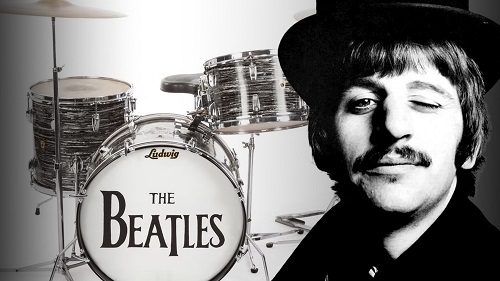
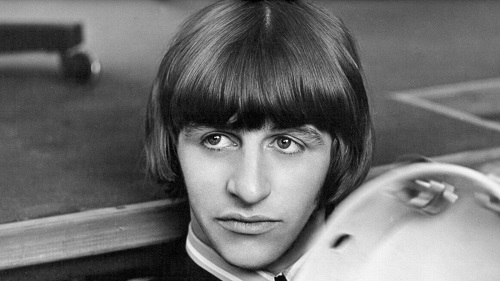
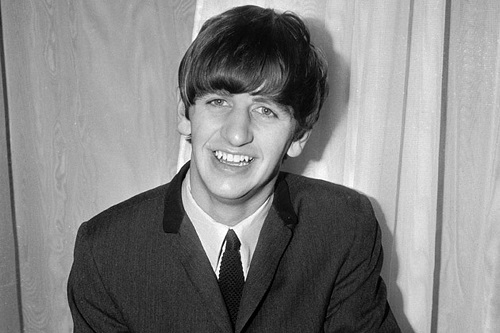
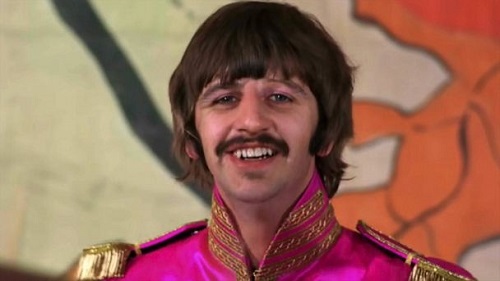
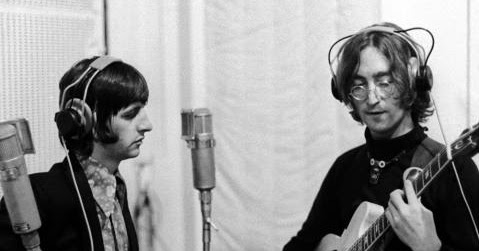
I think I have mentioned in the past that it would be extremely difficult for me to pick one favorite Beatles song. There are just too many great ones to choose from. I could spend hours talking about the fantastic harmonies of the group or the amazing songwriting contributions of Lennon and McCartney. I could also examine the way George Harrison’s guitar playing matured as the group got older. Instead, I chose to focus on the Beatle that I connected with as a young fan discovering the band – Ringo Starr.
As a kid, I discovered the Beatles through their cartoon series (as well as albums that my dad had). While the boys didn’t voice the characters themselves, it featured many of their songs and put them in silly situations. Ringo always seemed to be the goofball and I guess I found him to be the funniest.
As I began to buy Beatles albums on my own, I often found that the “Ringo” cut of each album tended to really stand out as a favorite. Let me be clear, it is not that I disliked the other guys, the opposite was true. I loved them! However, the “Ringo” cut just really had a different sound to it.
As many know, Ringo was not the original drummer for the band. Pete Best was the guy. The rumors were that he was pretty good looking and a fan favorite, so they got rid of him. How true that is, I don’t know. The boys recruited Ringo from another band (Rory Storm and the Hurricanes). Once the group got their recording contract and started sessions with George Martin, Ringo was dissed a bit. Martin felt that he was not a good enough drummer to do studio work. Eventually, Martin came around and not only was he in the recording sessions, he occasionally got to sing on a song or two.
In total, Ringo Starr sang lead vocals on 11 Beatles songs. The first was “Boys,” which was a cover of a Shirelles song. The song was one that the Beatles had been playing in their live shows for some time. Pete Best used to sing it in shows. Ringo knew the song and had performed it many times with his previous group. When the band was in the studio cutting the 1963 album “Please Please Me” he sang it in one take.
The group had been playing “Boys” for years before it was ever recorded. It was the only song that Ringo sang lead on and his loyal fans wanted to hear more. John, Paul, and George were getting tired of the song and when it was time to record their second album, Lennon and McCartney worked together to write a song for Ringo that would replace “Boys.” The song would be “I Wanna Be Your Man.”
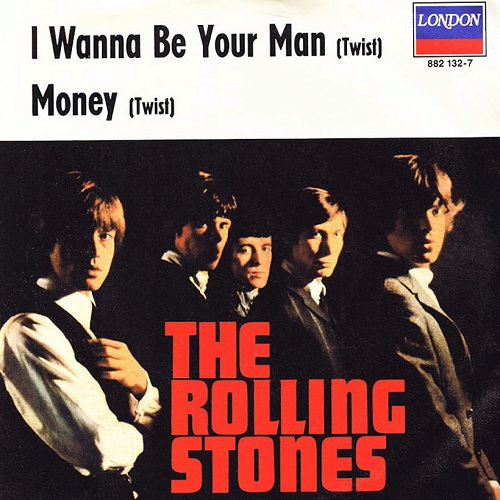
Before they went into the studio, another British group approached Lennon and McCartney and asked if they had a song that they might record. They decided to give them “I Wanna Be Your Man.” That song became the first “hit” for Mick Jagger and The Rolling Stones!
Carl Perkins was responsible for Ringo’s next two vocal songs. First, was “Matchbox” which Perkins had a hit with in 1957. This song (and his next vocal) was responsible for the association of Ringo with rockabilly/country music. Word is that Perkins was in the studio while the Beatles recorded his songs.
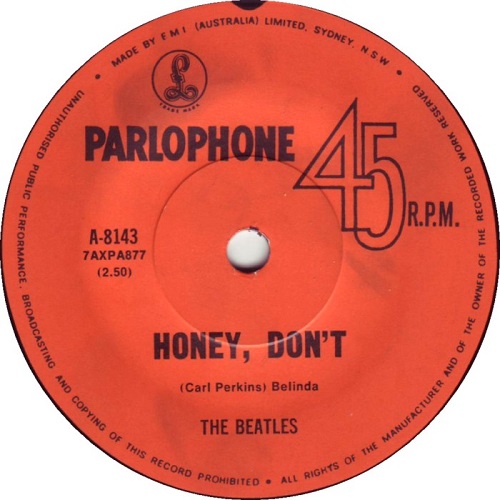
For the 1964 album “Beatles For Sale,” Ringo contributed the lead vocal to Perkins’ “Honey Don’t.” Carl Perkins influenced a lot of Liverpool bands and Ringo was playing this one in his prior group before joining the Beatles. It was another song that Pete Best sang lead on in early live performances. John Lennon began singing it after Best left, but the band agreed that it was a perfect Ringo song for the album.
Ringo had decided that he wanted to have a bit more input in the songs that he was to sing. During the recording sessions for “Help” in 1965, he came upon the Buck Owens song “Act Naturally.” He brought it to the band and said he felt it would be a great song for him. They all agreed and cut it. This would mark the first Beatles cover song that they had not already been playing at live shows.
Ringo, while not best known for his song writing, did write a few for the band. By this time, John, Paul and George were all churning out songs. The three seemed to be doing everything and Ringo felt like he was being left out and maybe even someone who could easily be replaced. He went to the group and voiced his concerns. This led to his first song writing credit on a Beatles song. The song was What Goes On. The song was not all Ringo, as it was actually a song that John had originally written and Ringo tweaked and contributed to.
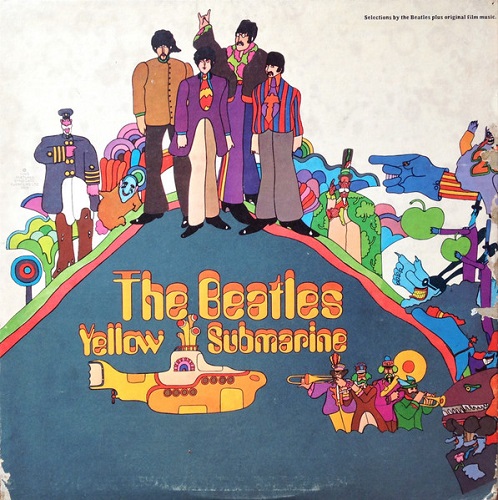
Yellow Submarine appeared on the 1966 Revolver album. It was a big song for Ringo as it went to #1 in the UK and #2 in the US. In Alan Clayson’s book, “Ringo Starr: Straight Man or Joker,” he says that the song was “conceived as a song that would appeal primarily to children, while recalling the band’s roots in Liverpool.” The song was written mostly by Paul McCartney and it is said that Donovan also helped (while being uncredited).
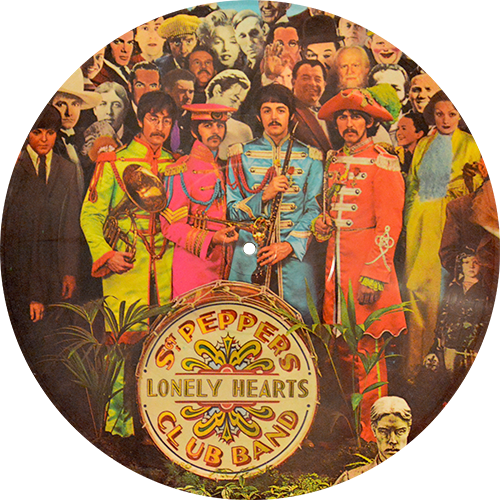
If you had to pick a “signature” song for Ringo, it would be “With a Little Help from My Friends.” The song is the second track on the Sgt. Pepper Album. The album itself was sort of a concept album where the band is playing … well, another band. In the album’s opening track, the character of Billy Shears is introduced. Even Ringo has stated that for the cut he is “taking on” the character of Shears to sing the song. The song was one that was written specifically for Ringo by John and Paul.
Ringo’s next vocal feature was one that he wrote. “Don’t Pass Me By” was one that came to him while sitting at the piano. He claims to only know a few chords on the piano and guitar. He says that while he plays around, if a melody comes to him or some words, he just keeps playing around. This is supposedly how “Don’t Pass Me By” came to be. There is some confusion as to when exactly the song was written, and while it may have been written as early as 1964, it was never recorded and released until 1968 on the White Album.
Alan Clayson says in his book that Ringo had unknowingly plagiarized music from a Jerry Lee Lewis song. It was only when George Martin was experimenting with different effects and orchestration that the song was able to be released (now sounding very musically different from it’s original version).
The song “Good Night” from the White Album was written by John Lennon. He wrote it for his five year old son, Julian. Lennon was very insistent that the song be sung by Ringo. What is interesting is that Ringo is the only Beatle who performs on the song. The music is provided by classical session musicians under the direction of producer George Martin.
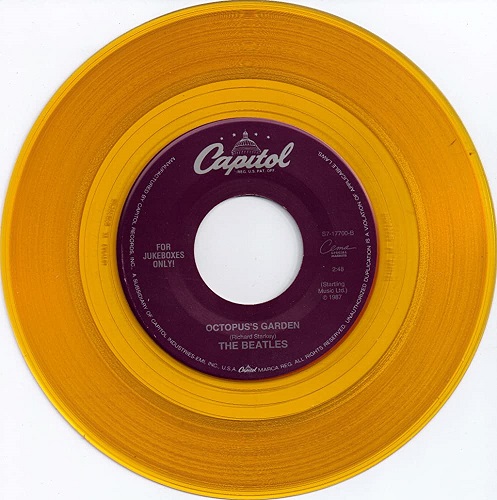
Ringo’s last songwriting credit for the band appears on the 1969 album, Abbey Road. Many compare “Octopus’s Garden” to “Yellow Submarine.” Other’s compare it to an amazing and peaceful under-the sea world. This song, however, was written by Ringo at a time when things were less than peaceful with the group.
The story goes that Ringo was so angry that he walked out of a recording session because he was angry at Paul McCartney. Paul had reportedly been making comments about Ringo’s drumming, and so he left. He spent time relaxing on the Italian island of Sardinia. While there, he became fascinated by the ocean and sea life. This led to him writing the song.
When Ringo returned to the Abbey Road studios, he found that the rest of the band had decorated his drum set with flowers and found a gift from John, Paul and George as an apology. He showed the song to them and George Harrison worked with him to get the song ready to record.
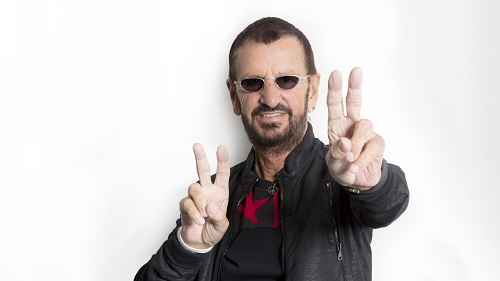
After the Beatles broke up, each went on to have solo hits. Ringo enjoyed success with “Back off Boogaloo,” “Photograph,” “You’re Sixteen,” “The No No Song,” and “It Don’t Come Easy.” He continues to tour with his All-Starr Band and sells out venues.
“Peace and Love” – Ringo Starr
Perhaps if world leaders, politicians, and people in general listened to Ringo, the world would be a better place.
Once again, Dave from A Sound Day has asked some of us music lovers to participate in another round of Turntable Talk. This time around was a bit of a challenge for me. Dave’s e-mail stated:
“Put your thinking caps on and go through your stacks of records (or scroll thru that I-pod) and … come up with what you think the best year for music was. A tough call of course, thankfully there have been more than a few good ones! I’m interested in what you pick and don’t worry if yours duplicates someone else’s , you still have your reasons which might be different.” He goes on to say, “I think I have a guess on a couple of years that might come up more than once, but we’ll wait and see.”
This particular blog will be one of the last ones to be featured and I do not know if my year will be or has been featured. I plan on writing this KNOWING that the year I have chosen very well may be one that comes up in another post. Before I tell you the year I picked, let me tell you that I had a very difficult time narrowing it down.
My first thought was to go with 1956/1957 because those years were always so unique. You had the birth of rock and roll mixing with pop standards. When I worked at Honey Radio, I loved doing the Top 12 at 12 show when those years popped up because there was such a big variety in what was played. You could go from Elvis or Jerry Lee Lewis to Pat Boone or Nelson Riddle. When I looked at the list of songs, however, were they really the BEST? No.
The same thing can be said for some of the years in the 70’s decades. I looked through many lists and while there were many great songs, there were also a lot of really crappy songs! I just couldn’t really come up with the conviction to pick a year in that decade as the BEST.
One year kept coming up every time I started thinking about it – 1964.
I want you to know before I continue that I was dead set AGAINST 1964 when I read Dave’s e-mail. Why? Well, I felt that it would just be too Beatle heavy and loaded with British Invasion stuff. And it is. On the Top 100 Chart, The Fab Four nabbed 9 spots. 18 spots were held by other British Invasion acts. In total 27% of the Top 100 were British acts. When I really looked at the chart, the more and more I felt like this WAS the year.
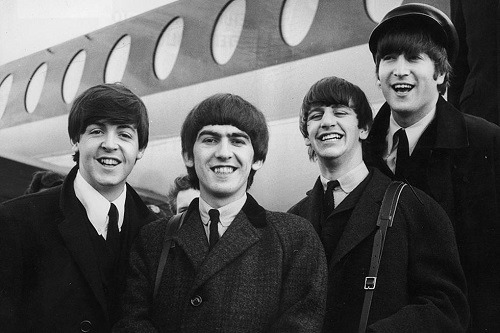
1964 really was the year of the Beatles, so let’s discuss them first. They were present almost right from the start as their “Introducing The Beatles” album was released in America on January 10th of that year.
This album preceded Capitol Records “Meet the Beatles” by 10 days and there was a lawsuit surrounding that whole issue. Capitol Records won an injunction and Vee-jay Records was not allowed to put out any more Beatles recordings.
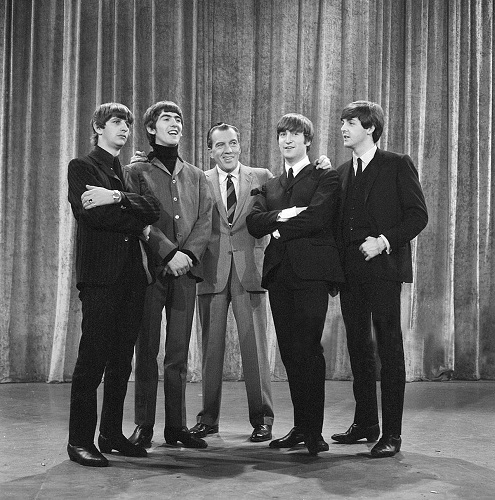
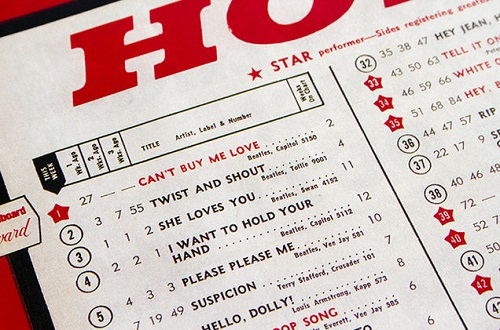
In February of 1964, the Beatles arrived in the US and appeared on Ed Sullivan’s show three times (2/9, 2/16, and 2/23). In March of 64, Billboard magazine stated that the Beatles were responsible for 60% of all single record sales! In a feat that has yet to be matched, on April 4, 1964, the Beatles held the Top 5 spots on the Billboard chart!
A week later, the boys held 14 spots on the Hot 100 Chart! That broke the previous record of 9 spots held by Elvis Presley in 1956.
In May, The Beatles Second Album was released and in July, they would release A Hard Day’s Night in theaters. “I Want to Hold Your Hand” wound up being the #1 song for the whole year of 64 (“She Loves You” was #2) To say that they played a small part in the music of 1964 would be a huge understatement.
Among the other artists that came over from “across the pond” in 64 were Manfred Mann (Do Wah Diddy Diddy), Billy J. Kramer and the Dakotas (Little Children and Bad to Me), The Dave Clark Five (Glad All Over, Because, Do You Love Me), Peter and Gordon (A World Without Love), The Animals (House of the Rising Son), The Honeycombs (Have I The Right), Dusty Springfield (Wishin’ and Hopin’), Gerry & The Pacemakers (Don’t Let the Sun Catch You Crying and How Do You Do It), Chad and Jeremy (A Summer Song), The Kinks (You Really Got Me), and the Searchers (Don’t Throw Your Love Away and Needles and Pins). It is interesting to note that the Rolling Stones debut album was released this year, but no songs appear in the Top 100 for the year.
Once you move away from the British artists, the chart has a nice variety of pop, rock, folk, country, soul, and even a few novelty songs. I think that is what made me ultimately choose this particular year.
It was nice to look over the Top 100 and see Motown represented with some classics. The Supremes hold two of the six Motown songs (Where Did Our Love Go and Baby Love), Motown was female heavy as Mary Wells (My Guy) and Martha and the Vandellas (Dancin’ In The Street) grabbed the next two spots, and the male gender was represented by The Four Tops (Baby I Need Your Loving) and The Temptations (The Way You Do The Things You Do).
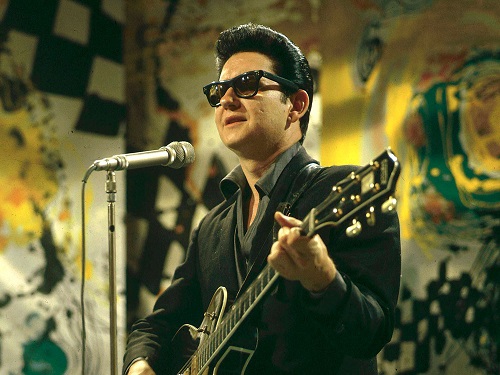
While they were not “oldies” at the time, there were some classic songs that are still in hot rotation today on the oldies stations across the country. Roy Orbison had a smash with Pretty Woman in 64, and also had a hit with It’s Over. Frankie Valli and the Four Seasons grabbed three of the Top 100 with Rag Doll, Dawn and Ronnie. The Beach Boys only entry in the Top 100 was I Get Around.
1964 brought us classics like The Drifters Under The Boardwalk, Chapel of Love by the Dixie Cups, Suspicion by Terry Stafford, It Hurts to Be In Love from gene Pitney and Come A Little Bit Closer by Jay and the Americans. Johnny Rivers had a hit with Chuck Berry’s Memphis, Bobby Freeman invited us to C’mon and Swim, Detroit’s Reflections offered up Just Like Romeo and Juliet and the Shangri-Las told us the story of the Leader of the Pack.
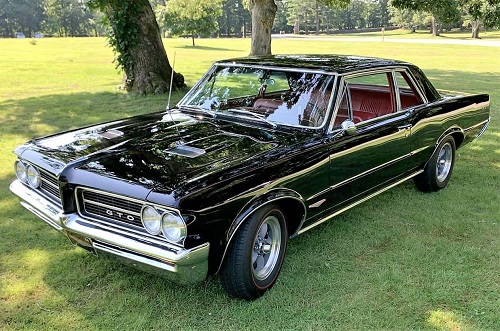
Car songs were well represented in 64! Ronny and the Daytonas had GTO, while the Rip Chords sang Hey Little Cobra, and the Hondells had Little Honda. Jan and Dean told us the stories of The Little Old Lady from Pasadena and Dead Man’s Curve, while J. Frank Wilson and the Cavaliers told us the tragic story of a Last Kiss.
Soul music is represented by The Impressions (I’m So Proud and Keep on Pushing), Joe Hinton (Funny How Time Slips Away), The Tams (What Kind of Fool Do You Think I Am), Jimmy Hughes (Steal Away) and Nancy Wilson (How Glad Am I). If you throw Blues into the “Soul” mix, the great Tommy Tucker song “Hi Heel Sneakers” was out in 1964.
Instrumentally, Al Hirt had a monster hit with Java, The Ventures had Walk Don’t Run 1964, The Marketts had The Outer Limits, and Robert Maxwell had the incredibly cheesy lounge version of Shangri-la. While novelty songs included Jumpin’ Gene Simmons (Haunted House), The Trashmen (Surfin’ Bird) and Roger Miller (Chug-a-Lug).
While Rock was dominant in 1964, there were still some pop (and even folk) songs that made the Top 100 – one of them, doing the “impossible.” Two of the biggest pop hits of the year couldn’t be more different from each other. The third biggest hit of the year belonged to Louis “Satchmo” Armstrong and his Dixieland hit “Hello, Dolly!” Barbra Streisand (who won Album of the year at the 1964 Grammy Awards) had the 11th biggest hit of the year with “People.”
Pop/Folk was also represented by Gale Garnett (We’ll Sing in the Sunshine), The Ray Charles Singers (Love Me With All Your Heart), Dionne Warwick (Walk On By), Al Martino (I Love You More and More Every Day), and Andy Williams (A Fool Never Learns). But the biggest surprise came from an artist who hadn’t had a top 40 record since 1958!
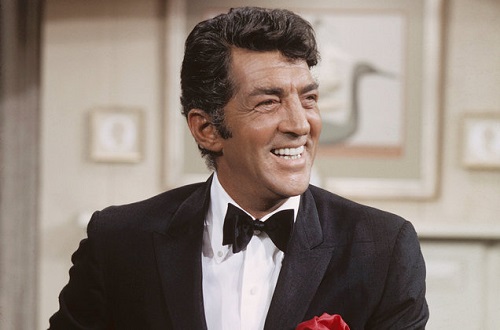
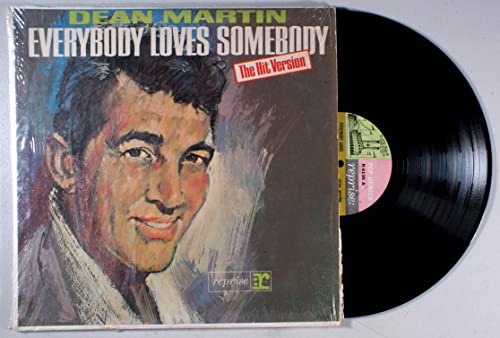
Dean Martin didn’t care for Rock and Roll. With the British Invasion in full swing, there was very little chance of him ever having another hit. His kids loved the new artists. His son, Dean Paul, loved the Beatles. Dean told his boy, “I’m gonna knock your pallies off the charts!” On August 15, 1964 – he did just that with a song that became his NEW theme song, “Everybody Loves Somebody.” (It replaced That’s Amore as his theme song)
The song knocked the beloved Beatles A Hard Day’s Night out of the number 1 spot! It went on to stay at #1 on the Pop Standards Singles Chart for 8 weeks. It also became the theme to his weekly television show in 1965.
I picked 1964 for a few reasons. Despite my initial worry about it being British act heavy, it was the year that introduced us to the Beatles (who changed the music scene forever!). It is also the year that one act held the top 5 spots on the charts (a record that remains in place). It is also the year that my favorite singer of all time bumped the biggest group in music out of the top spot.
It is also a year that encompasses such a vast variety of music. While there may be better songs that appeared before and after 1964, it truly represents a unique time in history. America was still recovering from the loss of a beloved president, there were still Civil Rights issues, and a war in Vietnam. The music of 1964 was a welcome escape from so many things.
Was it all good? No, and that is true of every year. However, as I look at the 100 biggest songs of the year, there are a lot of great songs that have gone on to become classics. There are so many songs that are still looked at as pivotal in the music scene. The fact that many of these songs are still getting airplay today is a statement to just how good they are.
Thanks again to Dave at a Sound Day for allowing me to be a part of this feature. I can only hope that my contribution is worthy of an invite to participate in the next round.










 Various Ramblings of a Nostalgic Italian