The Music of My Life – 2001

Welcome back to The Music of My Life, where I feature ten songs from each year of my life.  In most cases, the ten songs I choose will be ones I like personally (unless I explain otherwise). The songs will be selected from Billboard’s Year-end Hot 100 Chart, Acclaimed Music, and will all be released in the featured year.

In 2001, I turned 31. It is a year that I will not forget. It was that year that I found out I was going to be a father for the first time. To say that I was freaking out a little was an understatement. My mom continued to get treatment for breast cancer. There was a time where I prayed that she would be around for my wedding. Now I was praying that she’d be around to meet her first grandchild. My first song was inspired by, coincidentally, a mother with cancer.

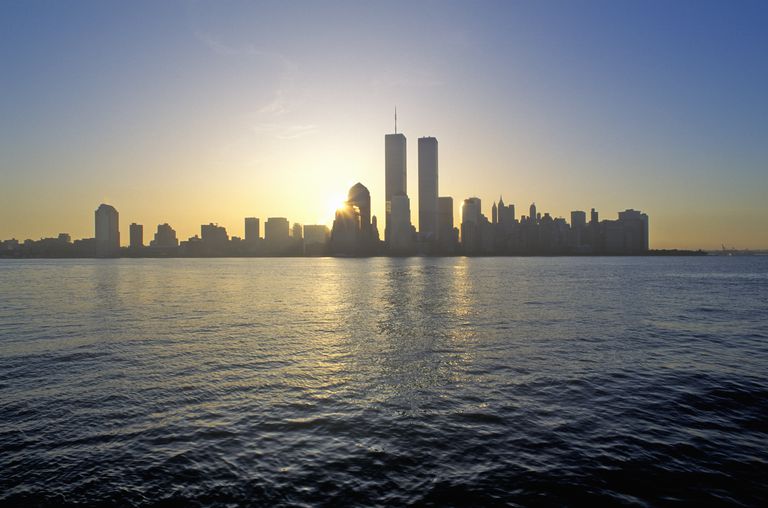
It was also the year of the 9/11 attacks. I, of course, was around for the Challenger accident. Many folks called that the “JFK assassination” of my generation. As sad as the Challenger accident was, 9/11 was on an entirely different level. I remember sitting alone wondering about the world we were welcoming our baby into. The event caused many of us to think … more on that shortly.

Train’s Drops of Jupiter came from devastating loss for lead singer Pat Monahan. In a VH1 interview, he revealed that he wrote this song about the death of his mother. Train was were touring in 1988 when Monahan’s mom was dying of lung cancer – she was a heavy smoker. Cell phones had not yet become widely used. This found Monahan making many stops to pay phones on the tour to speak with his mom. It was in December of that year, his mother died.

In early 1999 Train was working on their next album when their record company started pressuring them for a hit. Monahan returned to his childhood home in Pennsylvania, and woke one morning with the words “back in the atmosphere” in his head. Beginning a time of healing, he started to compose the song. Pat said: “Loss of the most important person in my life was heavy on my mind, and the thought of ‘what if no one ever really leaves? What if she’s here but different. The idea was, she’s back here in the atmosphere.”

He recorded a demo of the song and played it for the president of their record company at Columbia. The president loved it and told him it was his Grammy song. He was right: It won Grammys for Best Rock Song and Best Instrumental Arrangement With Accompanying Vocalist. The label had Train record the song quickly. That way they could put it on the album and use it as the title track.

Pat Monahan is quoted as saying, ““It was an obvious connection between me and my mother. ‘Drops of Jupiter’ was as much about me being on a voyage and trying to find out who I am. The best thing we can do about loss of love is find ourselves through it.”

That is SO true.

Drops of Jupiter

I mentioned when I did my list in 1999 that I’ll Be by Edwin McCain is hard to listen to. It was the wedding song my ex and I used. In 2000, Edwin released I Could Not Ask For More, which is a more beautiful song, in my opinion.

This song itself is about spending time with your true love. It is about realizing you do not need anything else in life to make you happy. The song was written by Diane Warren, who has written quite a few songs that I have written about. McCain said that he had to speed the song up to suit his voice. He said, “The tempo of the song was actually half of what it is now. At first, I wasn’t into it. Now it’s a popular wedding song; every night on tour people tell me that it was their wedding song.”

It was in 2001 that country singer Sara Evans covered the song. While not too different from McCain’s version, I love her version more. I have always felt that she has one of the best female voices in country music. She is also one of the most beautiful singers I have met. I loved watching her perform this live.

I Could Not Ask For More

This next song is on my list for one reason and one reason only – the video! I can still remember the first time I watched it and was blown away by Christopher Walken. I had no idea he could dance like this!

Weapon of Choice appeared on Fatboy Slim’s third album and featured Bootsy Collins. Bootsy is, of course, known for his work with Parliament-Funkadelic and Bootsy’s Rubber Band. Boosty co-wrote the song and plays bass on it.

According to Songfacts:

The official music video for “Weapon of Choice” reveals a surprising side of Christopher Walken, known for his intense, often villainous roles in films like Pulp Fiction, The Deer Hunter, and True Romance. What most of us didn’t know until this video appeared is that Walken is a great dancer – he trained at the Washington Dance Studio and appeared in musicals such as 1981’s Pennies from Heaven. In a 2014 interview with Entertainment Weekly, Walken said he accepted the role before he became “too decrepit to dance.”

He choreographed the video with Michael Rooney, son of Mickey Rooney, and performed stunts, including flying across the mezzanine in a harness. Reflecting on the humor and playfulness of the video, Fatboy Slim told Higher Frequency in 2006: “I think it’s full of irony, and to see an actor that I really admire but who’s famous for playing psychopaths, to see him do that silly un-psychopathic dancing made me smile and made everyone else smile.”

The “Weapon of Choice” music video was a huge hit! It won six MTV Video Music Awards in 2001. It won for Breakthrough Video, Best Direction, Best Choreography, Best Art Direction, Best Editing, and Best Cinematography. It also went on to win the Grammy Award for Best Music Video. To top it all off, it was named the greatest music video of all time by VH1 in 2002.

Weapon of Choice

I recently saw where Brian Cranston, Jane Kaczmarek, and Frankie Muniz announced that they will reunite for a reboot of Malcolm in the Middle. The show debuted in 2000 and did very well. I always watched it because I could relate to the constant fighting between the brothers. I also loved the humor of the show.

They Might Be Giants recorded this song specifically for Malcolm in the Middle, and can be found on the show’s soundtrack. The show used other songs from the band throughout the run of the show.

The rumor is that the song is about guitar player John Flansburgh’s brother. I can totally see this. We may not have used the exact phrase growing up, but I know my brother and I often said that the other couldn’t boss the other around. It hits home in that way for me.

Boss of Me

The next song was a triumphant return for Weezer. Their fans were a little worried about the band in the late ’90s. After touring for their 1996 album Pinkerton, they took some time off and went through some lineup changes. It was during this time that Rivers Cuomo was taking classes at Harvard. He enrolled there in 1995 and attended sporadically when it suited his schedule. “Island In The Sun” was welcome relief for fans, showing that the band was back and in a good place. (Cuomo did eventually graduate Harvard, earning a degree in English in 2006.)

Songfacts says, “Unlike many Weezer songs, there’s no trace of pathos and no deeper meaning, making it an easy song to enjoy even if you’re not a big fan of the band. It became one of their most popular songs, although it was never a bit hit, reaching a chart peak of just #111 in the US.”

This is another one of those songs that I remember hearing a lot on the radio. I find it hard to believe that it only reached #111 on the charts. It was obviously good enough for them to play on TV. Weezer played it along with “Hash Pipe,” when they were musical guests on Saturday Night Live, May 19, 2001. It was their only guest appearance on the show.

Sing along…. “Hip. Hip.”

Island in the Sun

What do Neil Diamond, The Monkees and Smash Mouth have in common? One MONSTER hit!

Neil Diamond wrote I’m a Believer in 1966. Don Kirshner was looking for material for the Monkees to record and liked it. Neil was allowed to record it as well as part of their deal and did so in 1967. The Monkees version went to #1in ’66.

Jump ahead 35 years to 2001. Smash Mouth recorded a version of the song for the Dreamworks animated movie, Shrek. The song was picked because it fit the movie’s theme, as it was a sort of fairy tale. The opening line of the song is “I thought love was only true in fairy tales.”

Smash Mouth’s version is a great modern take on the song and still fun to sing along with. When I hear it, I am taken back to watching this movie with my oldest son. He loved Shrek and we watched it MANY times.

I’m a Believer

The next song was one that I often used as a first song at parties and weddings. It was a good one because it was the “kick off” song and literally got the party started.

Songfacts.com says: Get the Party Started was written by Linda Perry of 4 Non Blondes. After the group broke up in the early ’90s, Perry released two solo albums and started writing for other artists. She learned that hits of the ’00s were made digitally. She bought Akai MPC and Korg Triton digital workstations and started experimenting with them. As she was learning how to use them, she came up with the track by adding layer after layer, then she quickly banged out a lyric with every party cliché she could think of, arriving at lines like:

I’m your operator, you can call anytime
I’ll be your connection to the party line

It worked: “Get The Party Started” was a huge hit for Pink and launched Perry’s songwriting career. Her next hit was “Beautiful” for Christina Aguilera.

The song is synonymous with Pink, but it was almost offered to another singer. Thankfully, a phone call changed that. Perry initially thought this could be a hit for Madonna. However, Pink happened to call her the week after she wrote the song. Pink was a huge 4 Non Blondes fan. She sought out Perry, who was very surprised to get a call from a pop star. When they met, Perry gave Pink an MP3 copy of the “Get The Party Started.” Pink’s management loved the song and arranged for them to work together on her second album.

Get The Party Started

When an artist’s first single is a ballad, it is usually because the ballad is amazing. Most record labels want uptempo songs. (Honestly, most radio stations want uptempo stuff, too!) There are no shortage of ballads waiting to get airplay!

When it came time to release his first single, Enrique Iglesias fought to get “Hero” released. “Everybody thought first singles at the time had to be uptempo,” he told People. “But I knew that it was one of those songs that when I wrote it it just felt special.” It was, and he was right. Iglesias attributes the success of this song to a combination of good lyrics, melody, and excellent production. He feels those three qualities need to work together to make a timeless hit.

The song took on a whole new meaning shortly after it was released. This song was released on August 14, 2001, just a month before the September 11 attacks on the US. The song doesn’t describe the type first-responder heroes, but the theme of standing by a loved one resonated at this time. The song became quite popular because of that, reaching a chart peak of #3.

One pastor taught a message on husbands and wives. He stated that what a husband wants is to be his wife’s hero. That’s the guy who will take away her pain and be there through thick and thin.

Hero

MercyMe is a contemporary Christian group. They had an Adult Contemporary crossover hit with a song that was written by their lead singer Bart Millard. I Can Only Imagine is simply about imagining what it will be like meeting Jesus for the first time.

In a Songfacts interview, Bart said that he that he wrote the song in about 10 minutes. He said that it was one of just three songs he wrote where he felt like he was “a spectator watching the song being written.”

Regarding the song’s meaning, Millard stated: “When my father died of cancer in 1991, he left me with the assurance that he was headed to a better place. For several years following his death, I would find myself writing the phrase ‘I can only imagine’ on anything I could find. That simple phrase would give me a peace thinking about what my dad was finally experiencing. Years later, in 1999, MercyMe was writing songs for an independent project. I remember coming home from a show and being wide awake on our bus at 2 o’clock in the morning. I was trying to write lyrics in an old notebook of mine, when all of a sudden, I stumbled across that phrase. About ten minutes later, the song was written. Some people say it’s amazing that it was written in ten minutes, when really it had been on my heart for almost ten years.”

This one means a lot to me personally. I am so grateful for my faith and my Savior. It is an amazing thing to imagine….

I Can Only Imagine

I can still vividly remember the morning of 9/11. I was in a meeting with my boss at the radio station when the morning gal came in and told us that a plane had hit the World Trade Center. We went into the newsroom and were shaken to the core when we watched the second plane it the Twin Towers. That would be one of the longest and most emotional days in my radio career.

I worked at a country station at the time. We saw a lot of patriotism come out of those attacks. Songwriters wrote songs about being an American and such, but none of the equaled the contribution made by Alan Jackson.

The 9/11 attacks made a lot of us stop and think about life. We were left with so many questions. We were left shocked and scarred by the images we watched on TV. It was constantly on our minds. Alan Jackson seemed to be on the same page as everyone else, and conveyed it all perfectly in the song Where Were You (When the World Stopped Turning)

He wrote the song alone, with the idea coming to him at 4am in the morning. He explained to The Boot that the lyrics really “came out of nowhere.” “It was just a gift,” he said. “I got up and scribbled it down and put the melody down so I wouldn’t forget it, and the next day I started piecing all those verses together, thoughts I had or visuals I had.”

The song made its debut on the Country Music Association’s annual awards show on November 7, 2001. I still cannot believe that he was able to sing the song without breaking down. Alan considers this to be one of his biggest (if not the biggest) accomplishment. He said in an interview: “I [recently] did a radio interview, and the guy was talking about being at the [CMA] Awards the night I sang ‘Where Were You,'” he explained. “Even though that was a hard performance for me and an emotional time, I still get so many comments about that. Of all the awards, and all that kind of stuff, the music is still what I like. To be able to create a song that really affects people and makes a mark in the music industry, I would have to say that would be a highlight.”

To this day, the song still gives me chills. I’m sure you will never forget where you were when the events of that day unfolded either.

Where Were You

Sorry to wrap up the year on a somber note, but that wraps up my list. How about you? What song from 2001 did I miss that was your favorite. Mention it in the comments.

Next week, we’ll head to 2002. My list features movie music, an in your face patriotic song, a song full of 70’s and 80’s nostalgia, a cover song, an appearance by the Muppets, and the return of the King! I hope you’ll check it out.

Until next week, thanks for listening and for reading!

Tune Tuesday – The Night Has A Thousand Eyes

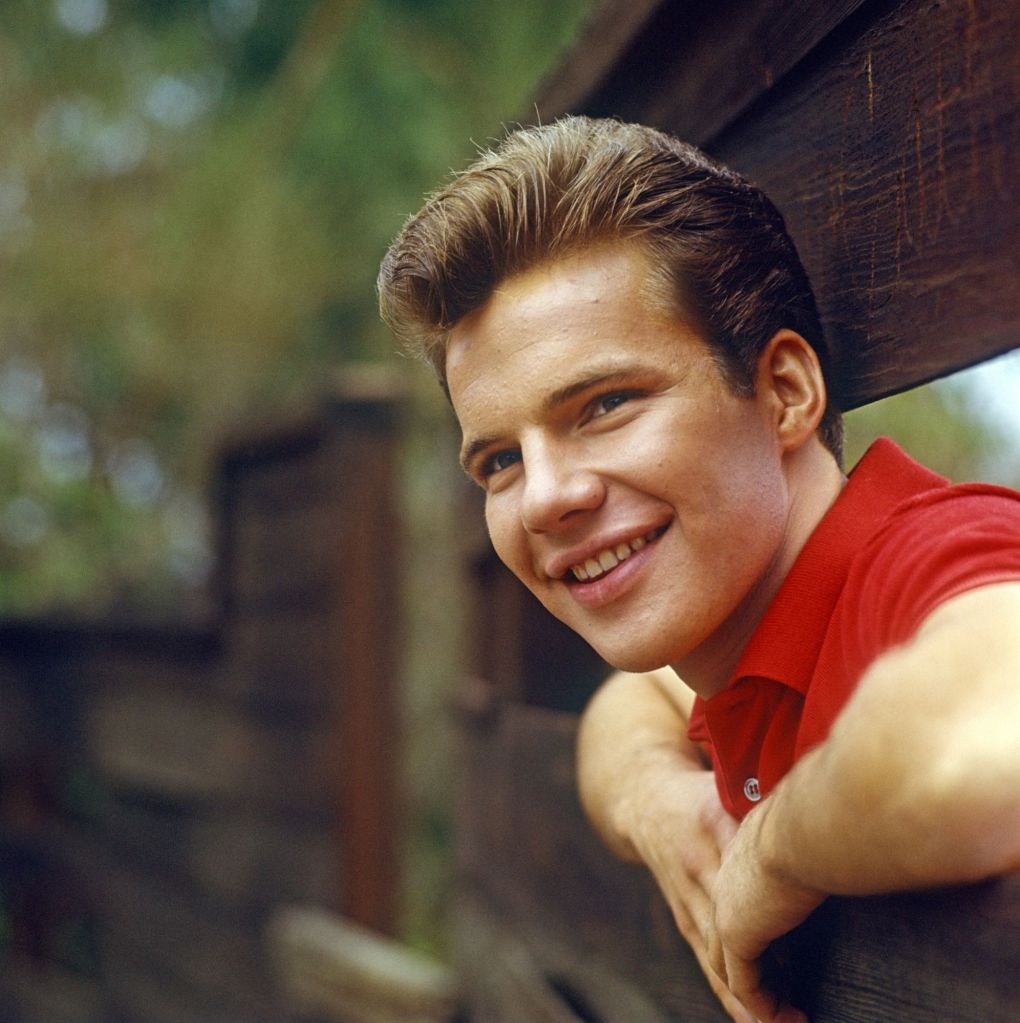
Bobby Vee was born on this day in 1943.  In his career he had quite a few hits under his belt, but had it not been for a tragedy, the world may never have known him.

Anyone familiar with “The Day the Music Died,” remembers that on February 3, 1959, three of the four main headliners of the touring “Winter Dance Party” were killed in an airplane crash.  Those three singers were Buddy Holly, Richie Valens, and The Big Bopper.  Dion, the fourth headliner, chose not to travel by plane to the next city on the tour. That city was Moorhead, Minnesota. 

The show in Moorhead went on as scheduled, but organizers searched for a musical act to fill in for Buddy Holly.  Bobby Vee (who was 15 at the time) gathered up some musicians from Fargo (which includes his brother) and they performed that night.  This was the jumpstart of his career.

A couple years later, Bobby recorded a tribute album to Buddy. In the liner notes, he recalled Holly’s influence on him and the events surrounding Holly’s death, describing how he had looked forward to attending the concert, how the local radio station put out a call for local talent to fill in after the disaster, and how Vee’s recently organized group, modeled on Holly’s style, had to make up a name (the Shadows) on the spot.

In 1963 Bobby was signed by American Bandstand to headline a tour called Dick Clark’s Caravan of Stars national U.S. tour, scheduled to perform its 15th show on the night of November 22, 1963, at the Memorial Auditorium in Dallas, Texas. The event, however, was cancelled after U.S. President John F. Kennedy was assassinated that afternoon while riding in his motorcade through downtown Dallas.

In 2012, Bobby announced publicly that he had been diagnosed with Alzheimer’s and sadly would have to withdraw from the music business.  Four years later, on October 24, 2016, Vee died from complications of the disease at the age of 73.

He had hits with Devil or Angel, Run to Him, Rubber Ball, and hit #1 with Take Good Care of My Baby. My favorite Bobby Vee song is The Night Has a Thousand Eyes.  The song came out in December of 1962 and went to #3 on the charts.  

I have always liked this song melodically and for all of the little musical things that are happening in the background. Those little string licks that play off his vocal, the drummer’s cymbal rhythm during the chorus, and the syncopated lines at the end of the chorus always sound so good to me! 

The Night Has a Thousand Eyes

They say that you’re a runaround lover
Though you say it isn’t so
But if you put me down for another
I’ll know, believe me, I’ll know


Cause the night has a thousand eyes
And a thousand eyes can’t help but see if you are true to me
So remember when you tell those little white lies
That the night has a thousand eyes


You say that you’re at home when you phone me
And how much you really care
Though you keep telling me that you’re lonely
I’ll know if someone is there


Cause the night has a thousand eyes
And a thousand eyes can’t help but see if you are true to me
So remember when you tell those little white lies
That the night has a thousand eyes


One of these days you’re gonna be sorry
Cause your game I’m gonna play
And you’ll find out without really tryin’
Each time that my kisses stray


Cause the night has a thousand eyes
And a thousand eyes will see me too
And no matter what I do
I could never disguise all my little white lies
Cause the night has a thousand eyes


So remember when you tell those little white lies
That the night has a thousand eyes

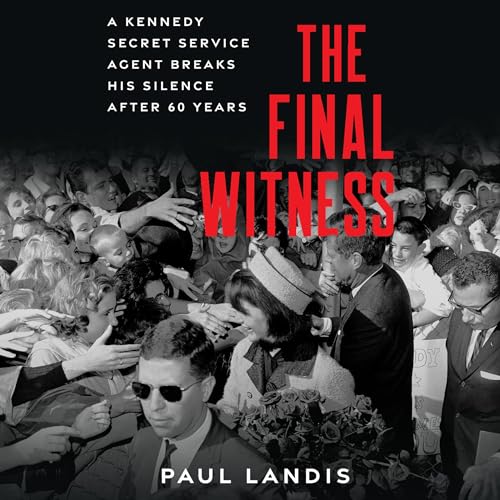
Book Recommendation: The Final Witness – Paul Landis

It seems that I have been reading a lot of non-fiction lately. It isn’t anything deliberate, it just happens to be the way the books I have “on hold” have become available. The latest is on a topic that has fascinated me for years – The JFK Assassination.

The assassination happened seven years before I was born. My grandmother had saved newspapers from the week after he was killed. She had some books on the events as well. In school, I remember the first research report I ever wrote was on the assassination.

I have read many of the books surrounding the event and have heard almost every conspiracy theory involved with it. When I saw this book come up on Goodreads, I naturally had to read it. Believe it or not, there was one thing in this book that I had never heard before.

Here is the Goodreads synopsis:

Dallas, Texas. November 22, 1963. Shots ring out at Dealey Plaza. The president is struck in the head by a rifle bullet. Confusion reigns.

Special Agent Paul Landis is in the follow-up car directly behind JFK’s and is at the president’s limo as soon as it stops at Parkland Memorial Hospital. He is inside Trauma Room #1, where the president is pronounced dead. He is on Air Force One with the president’s casket on the flight back to Washington, DC; an eyewitness to Lyndon Johnson taking the oath of office.

What he saw is indelibly imprinted upon his psyche. He writes and files his report. And yet . . . Agent Landis is never called to testify to the Warren Commission. The one person who could have supplied key answers is never asked questions.

By mid-1964, the nightmares from Dallas remain, and he resigns. It isn’t until the fiftieth anniversary that he begins to talk about it, and he reads his first books on the assassination.
Landis learns about the raging conspiracy theories—and realizes where they all go wrong.

Admittedly, I had hoped for a lot more about the events of that day. The author doesn’t really get into November 22, 1963 until a little over halfway through the book. He spends time explaining how he came to be a Secret Service agent and how he eventually was assigned to the White House and Mrs. Kennedy. There were some really enlightening stories about her and the reader gets a glimpse into what she was like behind the scenes.

Once he gets to the events that lead up to the trip to Dallas, things get really interesting. For months after the assassination, he would keep seeing it over and over again. I cannot imagine the trauma that the Secret Service men experienced that day and the days afterward. Eventually, it became to much and he resigns.

The most interesting thing to me was that he distanced himself from that day in Dallas for years! He never read any of the books (including the Warren Commission Report), watched any of the TV coverage and TV specials, he avoided it all. It wasn’t until recently that he began to discuss it and that led to this book.

Does the book add to the many conspiracy theories? Maybe a little. Does the book clear up questions about the assassination? Well, it cleared up one for me.

If you like historical non-fiction, or are interested in the JFK assassination, I think you will enjoy this one.

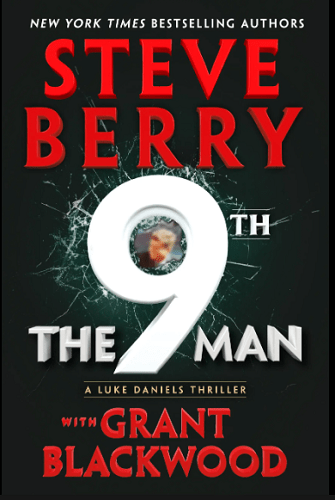
Book Recommendation: The 9th Man by Steve Berry

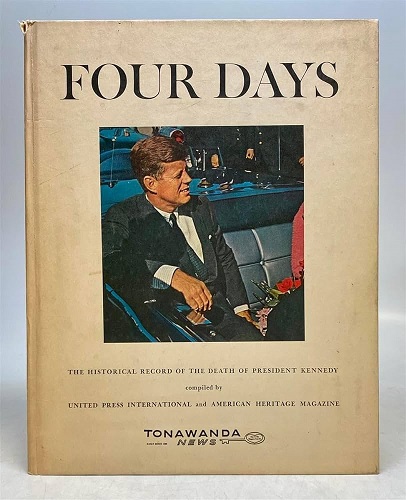
I’ve been fascinated by the JFK assassination since I was a kid. My grandmother had a book on her shelf that was called 4 Days. It had many pictures from November 22, 1963. There were plenty of photos that I had never seen before.

I spent countless hours looking at that book. When we had to write a report on a historical event for school, I naturally wrote about the assassination. My grandmother also had saved many of the local newpapers from the days that followed the assassination. I remember borrowing them for my research.

In the years following I have read many accounts on the events of that day. Most of those accounts were based on theories of who really shot the President or new “evidence” and stuff like that. But there have also been some fantastic fiction novels with the events of that day playing a major role (Stephen King’s 11/22/63 is a favorite).

I have read many of Steve Berry’s books and enjoyed most of them. This is the first book I have read where he wrote with someone else – Grant Blackwood. The books premise is based on another book (based on a theory that the shot that killed JFK may have come from a secret service agent) called Mortal Error.

Here is the Goodreads synopsis:

From  New York Times  bestselling author of the Cotton Malone series comes a thrilling, action-packed historical adventure that sends Luke Daniels on an international manhunt for the truth about the assassination of President John Kennedy.

Luke Daniels is in London, between assignments with the Magellan Billet, when he receives a frantic call from an old friend.  Jillian Stein is in trouble.  She made a mistake and now her life may be in danger.  She needs Luke’s help.  Immediately.  Racing to Belgium Luke quickly finds that she was right.  A shadow team of highly-trained operatives are there on the hunt.  Intervening, he finds himself embroiled in a war between two determined sides — one seeking the truth, the other trying to escape the past — a war that has already claimed one life and is about to claim more.   

Thomas Rowland is a Washington insider, a kingmaker, problem-solver, but also a man with a past.  For him everything turns with what happened on November 22, 1963 in Dallas, Texas.  What history has recorded is wrong.  There is more to the story, much more, and Thomas Rowland is at the center of that terrible reality.  But forces are working against him, and Rowland will do anything to keep the world from learning what actually happened on that fateful day, including killing Luke, Jillian and anyone else who might be a threat. 

In a race from Belgium, to Luxembourg, to the bayous of Louisiana and the Wyoming wilderness, to a final confrontation in the Bahamas, Luke Daniels confronts a series of shocking truths which not only rewrite history but will forever change his own life — as he comes face to face with the ninth man.   

All in all, I enjoyed this one. Steve Berry rarely has disappointed me. He is so good at incorporating historical events into his stories.

Turntable Talk #8 – Best Year In Music?

Once again, Dave from A Sound Day has asked some of us music lovers to participate in another round of Turntable Talk. This time around was a bit of a challenge for me. Dave’s e-mail stated:

Put your thinking caps on and go through your stacks of records (or scroll thru that I-pod) and … come up with what you think the best year for music was. A tough call of course, thankfully there have been more than a few good ones! I’m interested in what you pick and don’t worry if yours duplicates someone else’s , you still have your reasons which might be different.” He goes on to say, “I think I have a guess on a couple of years that might come up more than once, but we’ll wait and see.

This particular blog will be one of the last ones to be featured and I do not know if my year will be or has been featured. I plan on writing this KNOWING that the year I have chosen very well may be one that comes up in another post. Before I tell you the year I picked, let me tell you that I had a very difficult time narrowing it down.

My first thought was to go with 1956/1957 because those years were always so unique. You had the birth of rock and roll mixing with pop standards. When I worked at Honey Radio, I loved doing the Top 12 at 12 show when those years popped up because there was such a big variety in what was played. You could go from Elvis or Jerry Lee Lewis to Pat Boone or Nelson Riddle. When I looked at the list of songs, however, were they really the BEST? No.

The same thing can be said for some of the years in the 70’s decades. I looked through many lists and while there were many great songs, there were also a lot of really crappy songs! I just couldn’t really come up with the conviction to pick a year in that decade as the BEST.

One year kept coming up every time I started thinking about it – 1964.

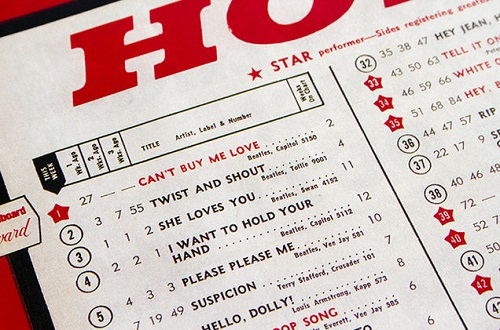
I want you to know before I continue that I was dead set AGAINST 1964 when I read Dave’s e-mail. Why? Well, I felt that it would just be too Beatle heavy and loaded with British Invasion stuff. And it is. On the Top 100 Chart, The Fab Four nabbed 9 spots. 18 spots were held by other British Invasion acts. In total 27% of the Top 100 were British acts. When I really looked at the chart, the more and more I felt like this WAS the year.

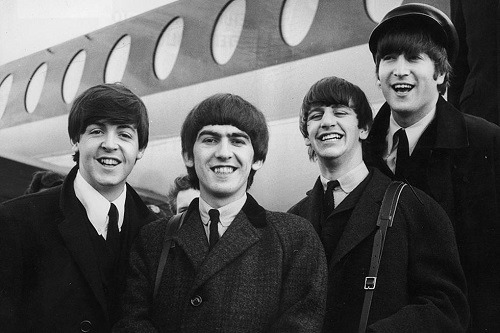
1964 really was the year of the Beatles, so let’s discuss them first. They were present almost right from the start as their “Introducing The Beatles” album was released in America on January 10th of that year.

This album preceded Capitol Records “Meet the Beatles” by 10 days and there was a lawsuit surrounding that whole issue. Capitol Records won an injunction and Vee-jay Records was not allowed to put out any more Beatles recordings.

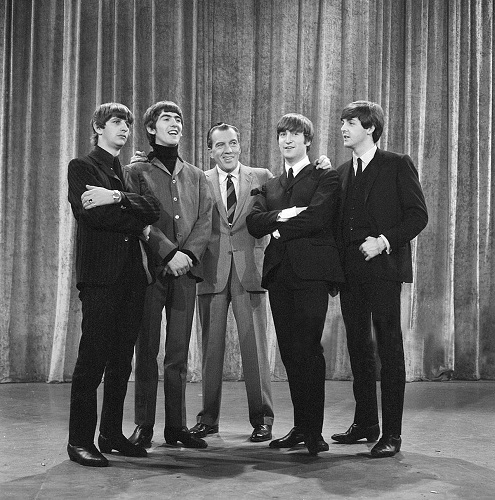
In February of 1964, the Beatles arrived in the US and appeared on Ed Sullivan’s show three times (2/9, 2/16, and 2/23). In March of 64, Billboard magazine stated that the Beatles were responsible for 60% of all single record sales! In a feat that has yet to be matched, on April 4, 1964, the Beatles held the Top 5 spots on the Billboard chart!

A week later, the boys held 14 spots on the Hot 100 Chart! That broke the previous record of 9 spots held by Elvis Presley in 1956.

In May, The Beatles Second Album was released and in July, they would release A Hard Day’s Night in theaters. “I Want to Hold Your Hand” wound up being the #1 song for the whole year of 64 (“She Loves You” was #2) To say that they played a small part in the music of 1964 would be a huge understatement.

Among the other artists that came over from “across the pond” in 64 were Manfred Mann (Do Wah Diddy Diddy), Billy J. Kramer and the Dakotas (Little Children and Bad to Me), The Dave Clark Five (Glad All Over, Because, Do You Love Me), Peter and Gordon (A World Without Love), The Animals (House of the Rising Son), The Honeycombs (Have I The Right), Dusty Springfield (Wishin’ and Hopin’), Gerry & The Pacemakers (Don’t Let the Sun Catch You Crying and How Do You Do It), Chad and Jeremy (A Summer Song), The Kinks (You Really Got Me), and the Searchers (Don’t Throw Your Love Away and Needles and Pins). It is interesting to note that the Rolling Stones debut album was released this year, but no songs appear in the Top 100 for the year.

Once you move away from the British artists, the chart has a nice variety of pop, rock, folk, country, soul, and even a few novelty songs. I think that is what made me ultimately choose this particular year.

It was nice to look over the Top 100 and see Motown represented with some classics. The Supremes hold two of the six Motown songs (Where Did Our Love Go and Baby Love), Motown was female heavy as Mary Wells (My Guy) and Martha and the Vandellas (Dancin’ In The Street) grabbed the next two spots, and the male gender was represented by The Four Tops (Baby I Need Your Loving) and The Temptations (The Way You Do The Things You Do).

While they were not “oldies” at the time, there were some classic songs that are still in hot rotation today on the oldies stations across the country. Roy Orbison had a smash with Pretty Woman in 64, and also had a hit with It’s Over. Frankie Valli and the Four Seasons grabbed three of the Top 100 with Rag Doll, Dawn and Ronnie. The Beach Boys only entry in the Top 100 was I Get Around.

1964 brought us classics like The Drifters Under The Boardwalk, Chapel of Love by the Dixie Cups, Suspicion by Terry Stafford, It Hurts to Be In Love from gene Pitney and Come A Little Bit Closer by Jay and the Americans. Johnny Rivers had a hit with Chuck Berry’s Memphis, Bobby Freeman invited us to C’mon and Swim, Detroit’s Reflections offered up Just Like Romeo and Juliet and the Shangri-Las told us the story of the Leader of the Pack.

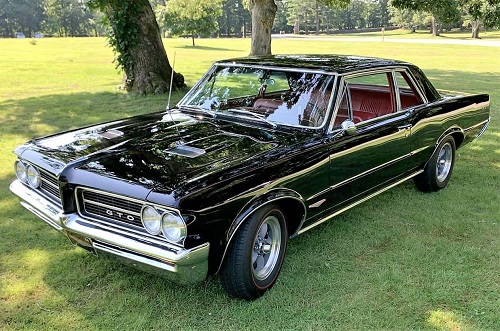
Car songs were well represented in 64! Ronny and the Daytonas had GTO, while the Rip Chords sang Hey Little Cobra, and the Hondells had Little Honda. Jan and Dean told us the stories of The Little Old Lady from Pasadena and Dead Man’s Curve, while J. Frank Wilson and the Cavaliers told us the tragic story of a Last Kiss.

Soul music is represented by The Impressions (I’m So Proud and Keep on Pushing), Joe Hinton (Funny How Time Slips Away), The Tams (What Kind of Fool Do You Think I Am), Jimmy Hughes (Steal Away) and Nancy Wilson (How Glad Am I). If you throw Blues into the “Soul” mix, the great Tommy Tucker song “Hi Heel Sneakers” was out in 1964.

Instrumentally, Al Hirt had a monster hit with Java, The Ventures had Walk Don’t Run 1964, The Marketts had The Outer Limits, and Robert Maxwell had the incredibly cheesy lounge version of Shangri-la. While novelty songs included Jumpin’ Gene Simmons (Haunted House), The Trashmen (Surfin’ Bird) and Roger Miller (Chug-a-Lug).

While Rock was dominant in 1964, there were still some pop (and even folk) songs that made the Top 100 – one of them, doing the “impossible.” Two of the biggest pop hits of the year couldn’t be more different from each other. The third biggest hit of the year belonged to Louis “Satchmo” Armstrong and his Dixieland hit “Hello, Dolly!” Barbra Streisand (who won Album of the year at the 1964 Grammy Awards) had the 11th biggest hit of the year with “People.”

Pop/Folk was also represented by Gale Garnett (We’ll Sing in the Sunshine), The Ray Charles Singers (Love Me With All Your Heart), Dionne Warwick (Walk On By), Al Martino (I Love You More and More Every Day), and Andy Williams (A Fool Never Learns). But the biggest surprise came from an artist who hadn’t had a top 40 record since 1958!

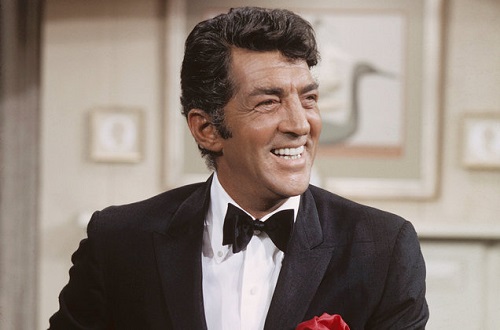
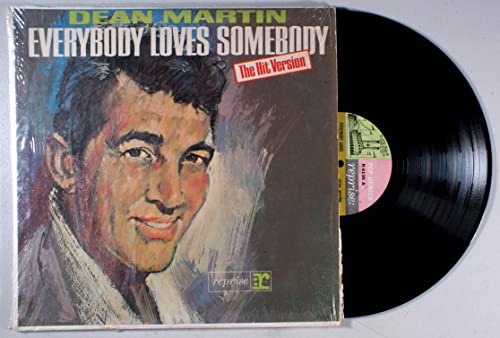
Dean Martin didn’t care for Rock and Roll. With the British Invasion in full swing, there was very little chance of him ever having another hit. His kids loved the new artists. His son, Dean Paul, loved the Beatles. Dean told his boy, “I’m gonna knock your pallies off the charts!” On August 15, 1964 – he did just that with a song that became his NEW theme song, “Everybody Loves Somebody.” (It replaced That’s Amore as his theme song)

The song knocked the beloved Beatles A Hard Day’s Night out of the number 1 spot! It went on to stay at #1 on the Pop Standards Singles Chart for 8 weeks. It also became the theme to his weekly television show in 1965.

I picked 1964 for a few reasons. Despite my initial worry about it being British act heavy, it was the year that introduced us to the Beatles (who changed the music scene forever!). It is also the year that one act held the top 5 spots on the charts (a record that remains in place). It is also the year that my favorite singer of all time bumped the biggest group in music out of the top spot.

It is also a year that encompasses such a vast variety of music. While there may be better songs that appeared before and after 1964, it truly represents a unique time in history. America was still recovering from the loss of a beloved president, there were still Civil Rights issues, and a war in Vietnam. The music of 1964 was a welcome escape from so many things.

Was it all good? No, and that is true of every year. However, as I look at the 100 biggest songs of the year, there are a lot of great songs that have gone on to become classics. There are so many songs that are still looked at as pivotal in the music scene. The fact that many of these songs are still getting airplay today is a statement to just how good they are.

Thanks again to Dave at a Sound Day for allowing me to be a part of this feature. I can only hope that my contribution is worthy of an invite to participate in the next round.

18 years later – 9/11

skyscraper-NYC-126420770-56aadce93df78cf772b497fb

Like the assassination of JFK for some people, or the Challenger explosion for others, 9/11 is one of those life changing events that is forever etched in the minds of those who lived through it. No doubt, you remember exactly what you were doing and where you were when you heard the news. So do I.

In radio, an aircheck is a recording of your show. It consists of just your talk breaks. Many times your boss brings you in to listen to a past show together. You listen to the breaks you did, talk about what was good, what was bad, how to improve your performance and so on. On September 11, 2001, I was in my boss’s office going over a show.

I was working at B95 in Flint at the time. Brian Cleary was my boss. We had just listened to a break where I told a stupid joke when our morning gal, Kristine Turner, came in to tell us that a plane had hit the World Trade Center. At the time we all thought it was some sort of freak accident. We walked out of the office and down to the newsroom. The TV was on and there was a live shot of the World Trade Center with smoke pouring out of it. Even the news people on the air were talking about how this was some sort of accident. And then we watched as the second plane hit the other tower on live TV!
At this point, we understood that this was going to be no ordinary day. When I went on the air at 10am, I became the link to what was going on to people without access to TVs at work. I recall breaking format and playing news updates. I remember the South Tower collapsed just before I went on the air. We then heard of Flight 93 going down in Pennsylvania. Then came the news of the North Tower collapsing just before 10:30am. It was the busiest and craziest day of my radio career. I remember staying after my shift and manning the canopy that we had set up in the parking lot to take donations for the people in New York. I also remember being exhausted when we wrapped up for the night. We all knew that the days and weeks ahead were going to be VERY different.
I don’t think any of us knew just how much the world was going to change that day. My ex and I had just found out that we were expecting our first child, who was due in April of 2002. I remember being scared about the world that our baby was coming into. What we also didn’t realize was how these horrible events would bring our nation together.
What follows is something that I posted on Facebook last year and reposted today:

“18 years ago today the people of this country forgot all about race, gender, political stance, religion, and stood together as one after the events of 9/11. What followed was a surge of patriotism that hadn’t been seen since World War II. American Pride soared. Today the country is extremely divided, and not just into two parts, but many.

Today we live in a country where everything seems to offend somebody. We tend to forget that the things of the past have made us and this country what it is today. History is history. We can look back in hindsight and see that there were things in the past that were (at the time) considered to be okay, but now we know they are not. We study history, to learn the things not to repeat. We also study history, to show us the things that worth repeating. Let’s take a lesson from history, a day 18 years ago, let’s put away the divisions. Let’s remember that no matter what race, color, or gender you are, we are all human beings.
There are plenty of scientific studies to show that it takes more effort to frown than to smile, and to hate rather than love. Today, as we remember those people who were on the planes, in the towers, in the Pentagon, or were first responders… remember the love, sadness, and the patriotism that brought this country together. Life can change in an instant. Practice kindness. Love one another.”
The emotions of that day will never be forgotten. We will never forget the acts of heroism we witnessed or the outpouring of support that was shown by Americans everywhere. The uniting of a nation is one that I will always remember. Today I remember the people whose lives that were cut short. I remember the innocent. I remember the heroes.
Today I reflect and remember. I hope you will too.