Dave just wrapped up another chapter of Turntable Talk. This was my contribution:
It is time once again for Turntable Talk hosted by Dave at A Sound Day. For over three years now, he has offered up a musical topic each month for me (and other participants) to write about. This month’s topic is “It’s About Time.”
Dave’s instructions are simple. “Tell us about a song about “time.” It could be one using the word “time” in the title … and there’s no shortage of them… or one that actually somehow explores the passage of, or idea of time.” While this is a topic that is fairly easy, I can’t help but wonder if there will be duplicate submissions.
For example, right off the top of my head I came up with Time in a Bottle from Jim Croce (which I have written about before. Then Time After Time from Cyndi Lauper came to mind. This was followed by Cher’s If I Could Turn Back Time and Huey Lewis’ Back in Time. Before I could shut my mind off Styx Too Much Time on My Hands and Semisonic’s Closing Time entered my mind.
I immediately discarded those, because I am sure that the other participants would choose one of those. So I dug a little deeper and tried to think of a song that might not be someone’s choice. I narrowed it down to No Time by the Guess Who, Just in Time by Dean Martin, Crying Time from Ray Charles, Time is Tight by Booker T and the MG’s, and my choice.
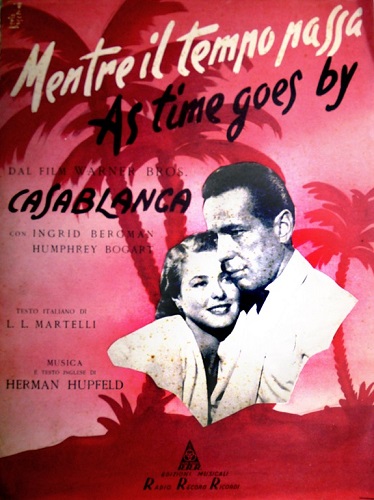
I chose a song written by Herman Hupfeld! Now everyone knows Herman, right? No. Not really, but I am sure you will know the song. It is a song that was written in 1931 for the Broadway show “Everybody’s Welcome.” It was first recorded by Rudy Vallee in July of 1931. It would be covered by Billie Holiday, Louis Armstrong, Frank and Nancy Sinatra, Natalie Cole, Carly Simon and Bob Dylan (Just to name a few).
While the song was recorded a few times after Vallee’s version, it was 11 years later when it would really get noticed. In 1942, the song was sung by the character “Sam” (portrayed by Dooley Wilson) in the classic film – Casablanca. As Time Goes by is heard throughout the film in short musical breaks.
RCA Victor wanted Dooley to record a version of it to be released to the public. However, a musician’s strike happened between 1942 and 1944, so he was not allowed to do so. Instead, the record label re-released the Rudy Vallee version, which went on to become a number one record (11 years after the original release).
Wiki states: Like many later singers, Wilson in Casablanca starts with “You must remember this, a kiss is still a kiss…”, singing only the verses and refrain (“As time goes by”). He entirely omits the intro that put those “fundamental things” into context: “This day and age we’re living in gives cause for apprehension, With speed and new invention and things like third dimension. Yet, we get a trifle weary with Mister Einsten’s theory, So we must get down to earth, at times relax, relieve the tension. No matter what the progress or what may yet be proved, The simple facts of life are such they cannot be removed.”
The song was voted No. 2 on the AFI’s 100 Years… 100 Songs special. The show commemorated the best songs in film.
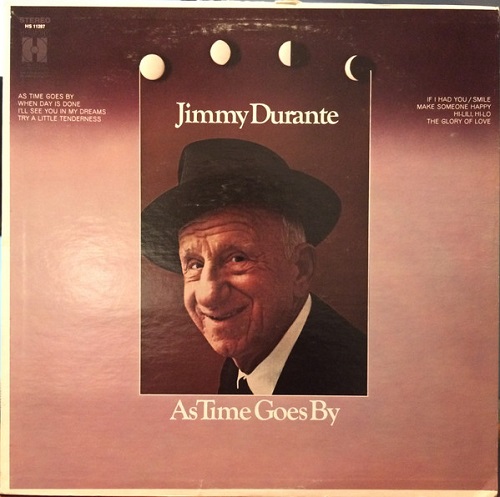
The version I chose to feature is by a multi-talented comedian, actor, pianist and singer. His voice was instantly recognizable on radio. He was a guest on many television shows and had some success as a singer. He is, however, probably best known for … his nose. His nickname was “the schnozzola.” I am, of course, talking about the great Jimmy Durante.
The song itself is beautiful. Every artist who has covered it brings their own special take on it. There is something that really hits me when I hear Durante’s version. Despite that raspy voice, there is a sincerity that makes it just a bit better than the other versions. I’m not trying to diss the other versions, but none of them give me goosebumps when I hear them. Jimmy’s version does. For some reason, his voice blends so well with the string arrangement.
Before I post the song, you know I have to say it – “Play it again, Sam!”
In a live version, Jimmy adds the intro that many leave out.
Thanks again to Dave for asking me to participate and for hosting this feature. I’m excited to see the choices of the other writers!
Last week I wrapped up my Music of My Life feature. It focused on music from 1970-2025. I admit that it was fun to look back at the tunes that have special meaning to me, bring back a certain memory or a tune that I just really like.
When I got into the 2000’s it became more difficult for me to find songs. With the earlier years, however, I found it difficult to narrow my list down to just ten songs. So I sat down with my original lists and selected some songs that “bubbled under,” so to speak.
I figured a good way to present them was to focus on a decade. 10 years = 1 song per year = 10 songs. Let’s head back to the 70’s and check out a few “Decade Extras.”
1970
I wish I could find the recording of this so I could set it up better. My co-host, Steph, and I were in conversation with our newsman, Hal. Something came up about knocking and Hal says, “Knock three times on the ceiling if you want me.” This led to me asking why we were discussing Tony Orlando on a country station.
Steph walks out of the studio during commercials and I went on the hunt for the song. I found it and cued it up to the chorus. When she comes back to the studio, and she has to read a sponsorship for the weather forecast. I let her begin and out of nowhere I play the chorus of Knock Three Times. She was so thrown by this, she can’t stop laughing. She’s trying to do the sponsorship, but every 6th or 7th word, I’d fire the chorus again. She is down for the count in laughter (which was my intention), so I wound up reading it and apologizing to our listeners.
I think of Steph every time I hear it.
Knock Three Times
1971
I’ve always love the Jonathan Edwards song “Sunshine.” It was always one that I loved singing along with. Had it not been for a mistake, it may never have gotten recorded. According to songfacts.com, he recorded this out of necessity when one of the tracks he put down was accidentally erased. Instead of redoing that song, he did “Sunshine.” Pleased with the results, he and the engineer overdubbed bass and added the drums the next day.
Edwards was signed to Atco Records. They released “Sunshine” as his first single early in 1971, but it flopped. The song got some traction thanks to disc jockeys in New England who started playing it off the album. Six months after the Atco single was released, it was re-issued on the independent Capricorn label with a demo version on the B-side. This time, the song was a hit, shooting to #4 in the US.
He would often end live shows with the song, and Edwards said, “I often say, and it’s true, that if I had never done another song in my life, I’ll be happy to have come and gone with that.”
Sunshine
1972
For the longest time, I thought that Neil Diamond was singing Nice To Be With You. When I started working at my first radio gig, I found out I was wrong.
The song was actually one that had a local connection. Jim Gold formed the group Gallery in Detroit. They recorded quite a few songs, but none were as big as Nice To Be With You. It was also the title track of their debut album.
Nice to Be With You
1973
There was no shortage of Jim Croce songs in my original feature. My mom and dad listened to his music a lot. He was one of many artists who were a part of my childhood.
I love when songs have some basis or inspiration in real life. Bad, Bad Leroy Brown is one of them.
“Leroy Brown is a guy that he actually met,” said his widow Ingrid. “When he was in the service – The National Guard – this guy had gone AWOL. He was a guy that Jim kind of related to, he liked to sing with him. This guy had gone AWOL but he came back to get his paycheck, and he got caught. Jim just thought he was such a funny guy that he thought he’d include his name in the song, and it just worked. There really was a Leroy Brown, and sometimes having a name helps you to build a song around it.”
It’s one of the few songs I can sing at karaoke.
Bad, Bad Leroy Brown
1974
I was a big Beatles fan growing up. As a kid, I didn’t really understand why Paul McCartney was in another group (Wings) or why John Lennon was doing solo stuff. I do remember hearing Band on the Run, though, and liking it.
McCartney recorded the album in Lagos, Nigeria along with his wife Linda and guitarist Denny Laine. The other Wings decided not to make the trip, which worked out fine in the end: McCartney considers the album his best post-Beatles work. He told Word in 2005:
“I was on drums and guitar a lot, mainly because the drummer decided to leave the group the night before and one of the guitar players decided not to come! So we got that solo element into an otherwise ‘produced’ album.”
Band On the Run
1975
It’s a Long Way to the Top is an autobiographical song for AC/DC. It describes their struggles as they tried to make it big. Right from the start, they delivered a top notch live show night after night. Songfacts says: It was genuine: At the time, they were just getting started and playing some seedy venues with even seedier business associates. The hard work eventually paid off, and several years later the band was selling out arenas.
“It’s A Long Way To The Top” really summed us up as a band,” Angus Young told Rolling Stone. “It was the audience that really allowed us to even get near a studio.”
The song is a bit unusual because instead of a lengthy guitar solo it features Angus Young on lead and Bon Scott on the bagpipes in a Dueling Banjos sort of way. I remember the first time I heard the song. “Are those bagpipes?!” Yes. Yes, they are!
It’s a Long Way to the Top
1976
Turn the Page by Bob Seger is also a song about being out on the road and performing. This one focuses on the effects of touring on a performer. There is a lot of loneliness that they feel.
Bob says, “Our first headline shows ever in a large (twelve thousand seat) hall were the two shows at Detroit’s Cobo Arena, September 4th and 5th, 1975. I remember while I was singing this how nice it was to have such good on-stage monitors. I had never heard my voice so well while performing.” The version on Seger’s greatest hits album was taken from these shows.
The song is a classic rock staple here in Michigan. I got to see Bob perform one of his last shows and it was electrifying. I can’t even begin to explain the feel of the room when he performed this one.
Turn the Page
1977
“What’s Your Name” by Lynyrd Skynyrd is another song that is based on a true story. One night while they were on tour, the band was drinking at their hotel bar when one of the roadies got in a fight. They all got kicked out. So they went to a room, ordered champagne and continued the party.
Songfacts says: The incident in this song did not happen in Boise, Idaho. The first line was originally, “It’s 8 o’clock and boys it’s time to go,” but lead singer Ronnie Van Zant changed it when he found out his brother, Donnie, was opening his first national tour with his band .38 Special in Boise. The first line became “It’s 8 o’clock in Boise, Idaho.”
Three days after the album was released, Ronnie Van Zant, Steve Gaines, and Cassie Gaines died in a plane crash. The cover of the album was redone because the original cover had the band surrounded by flames.
What’s Your Name
1978
Hold the Line by Toto caught my ear the first time I heard it because of the piano open with the guitar riff intermingling with it. It was the debut single for the group who was made up primarily of session musicians.
From songfacts: “Hold the line” is an expression meaning to maintain your existing position, which in this case is the singer telling a girl to be patient and stay with their relationship.
The saying also has a more literal meaning, however, which is how David Paich came up with the title. “Hold the line” is what you tell someone on the phone if you want to put them on hold while you’re taking another call. This is typical in workplaces, but in the days before cell phones, some households (especially ones with teenagers) also had multiple phone lines coming in and could put callers on hold. Paich lived in one such household.
Paich said: “When I was in high school, all of a sudden the phone started ringing off the hook, and I had a situation where I was at the dinner table and I had three girls all call at the same time, so all the lights were flashing. I was kind of juggling girlfriends, and that’s how that came about.”
Toto’s video was a bit ahead of it’s time. MTV hadn’t even gone on the air yet when the song was released.
Hold the Line
1979
Don’t Stop Me Now by Queen is such a fun song to play at weddings and parties, especially after the audience has loosened up. So often I’d come out of a slow song and segue right into the smooth intro of Freddie Mercury. People would raise their hands and sway while singing along. Then, when the tempo changes, the dance floor was insane.
It’s a catchy song that has you singing along, even if you are just hearing it for the first time. In 2011, Queen fans voted the chorus of “Don’t Stop Me Now” as the band’s best ever lyric.
In an Absolute Radio interview, Brian May says, “I thought it was a lot of fun, but I did have an undercurrent feeling of, ‘aren’t we talking about danger here,’ because we were worried about Freddie at this point. That feeling lingers, but it’s become almost the most successful Queen track as regards to what people play in their car or at their weddings. It’s become a massive, massive track and an anthem to people who want to be hedonistic. It was kind of a stroke of genius from Freddie.”
Don’t Stop Me Now
So what do you think? I like this idea. A quick look back at a decade. There are plenty of songs to choose from that did not make the original run of this feature. Join me next week for more!
Once again, it is time for Turntable Talk, our monthly musical topic hosted by Dave from A Sound Day. Most readers are familiar with this feature. Dave gives some of us musical bloggers a topic and we write about it. This month, he asked for our help in creating a holiday playlist.
Per his instructions: “Because of the time of the year, we’ll keep it simple – One More For Under The Tree. Just pick a favorite Christmas / holiday season song of yours and tell us a wee bit about it and maybe why you love it. If it’s a ‘standard’, old or new, pick the favorite version of yours and we’ll make a nice little Christmas playlist of sorts.”
A couple years ago, we did something similar. As someone who loves Christmas music, it is difficult for me to chose just one. I will try to keep it to no more than two. Maybe three. Surely, not four….
The song I want to feature is one that has never really been classified as a “Christmas” song. It is not one that you will hear often (if at all) on the radio in December. You will find it on a few 1970’s Holiday compilation albums, though. It was first released as a B-side of a single and released again as a posthumous single.
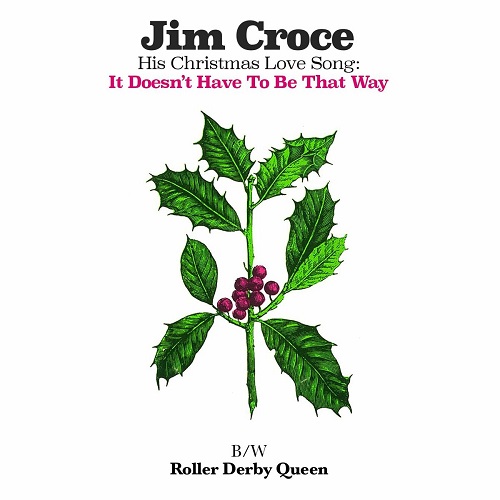
It Doesn’t Have To Be That Way
Jim Croce’s It Doesn’t Have to Be That Way was on his 1973 Life and Times Album. It was the B-side of One Less Set of Footsteps. He died in a plane crash in September of that year. It was in December that his label rereleased the song as the final single from the album. The song paints some wonderful images of winter and Christmas for the listener. Perhaps this is what the label was hoping to take advantage of when it was released again.
I was introduced to this song by a gal I was dating in the late 1980’s. I had never heard the song before and she had told me it was one of her favorites. From the opening guitar work and Jim’s vocal, I was hooked. The song is melodically beautiful. As beautiful as it is, however, it is a sad song.
Anyone who has ever gone through a break-up around the holidays will tell you how difficult it is. The festive decorations, the warmth and happiness of the season, and the overall feeling of love can really cause depression. No one wants to be alone at Christmas time.
The singer reveals himself to be a man who has recently ended a relationship. As the holiday season approaches, the Christmas atmosphere in his town is evident nearly everywhere. The lyrics attest to that. As he experiences his surroundings, he begins to wish that he and his lover could reunite. He professes that it was a mistake to end their relationship and that it can easily be rekindled.
The song ends in mystery. In a bold move, the man says he will be stopping by his old lover’s place to “get it together.” “It’s only right” for them to start the relationship again according to the song. We never do find out what happens. Perhaps the “happy” chimes at the end of the song elude to a happy ending.
The songwriting team of Jerry Leiber and Mike Stoller wrote over 70 hit songs together. They wrote songs in the 1950’s for The Coasters, Wilbert Harrision, Big Mama, Thorton, and Elvis Presley. One of those Elvis songs was the one that opened his first Christmas album…
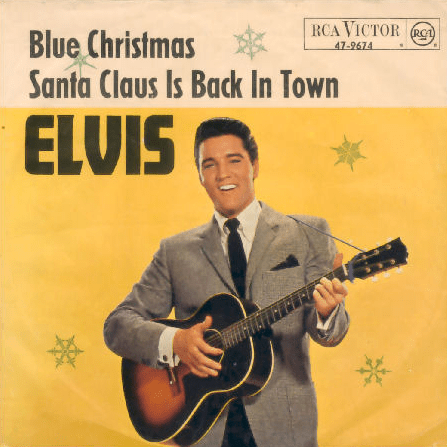
Santa Claus is Back In Town
Elvis’ Christmas Album was released in 1957. It contained twelve songs – six on each side. Side A contained the more contemporary cuts like Blue Christmas, White Christmas and Santa Claus is Back in Town. Side B contained the more religious and sacred songs like Silent Night and O Little Town of Bethlehem.
For years, I was only familiar with his versions of Blue Christmas and Here Comes Santa Claus. You know, the ones that played on the radio. In 1994, I picked up the compilation “If Every Day Was Like Christmas.” It included early Christmas songs as well as his later songs. I first heard Santa Claus is Back in Town on this album.
The song is a basic twelve-bar blues song with three verses. I have always wished that Elvis would have recorded an album of all blues songs. The genre (and the mixing of blues and rock) is one that allows him to shine. This song is a prime example of this. It is a raunchy, raw, and dirty blues song that is misleading from the beginning.
The song begins a group singing the word “Christmas” three times. You get the feeling that you are about to hear this beautiful holiday song. Suddenly the drum kicks, Elvis growls his first lyric and the blues begin!
Elvis howls his was through the verses as “Santa Claus,” who has no sleigh, but a black Cadillac instead. He also tells his pretty baby to expect him to come down her chimney later that night. The chorus begs her to be a good little girl because Santa is back in town. Naturally, the lyrics and the song itself are meant to have that “double entendre” and “innuendo” to it.
Many people have covered this song, including Dwight Yoakam, Foghat, Billy Idol, and Joe Perry. Even Kurt Russell performed it in the Netflix special, “The Christmas Chronicles.” These versions never seem to live up to the energy and the grittiness that the Elvis version has. None of them have ever given me goosebumps when I hear it either. The Elvis version does. His version is the best!
The question I pose now is a simple one. Is it possible to make this song sound even better? Personally, I think so. When the Royal Philharmonic Orchestra accompanied Elvis on a Christmas album in 2017, it brought it to an entire new level! It is still gritty. It is still bluesy. It is still raunchy. But now, you’ve got this fantastic horn line that takes it up a notch. Mix the orchestra parts with the original arrangement and you have a much fuller and fresh sound. Now, there is a raunchy “sparkle” to it.
Dave, thank you for again asking me to be a part of this feature. To my fellow music bloggers and you, I wish you and your family a Happy Holiday season. May you and yours have a blessed and Merry Christmas! Here’s to an amazing 2025!!
Welcome back to The Music of My Life, where I feature ten songs from each year of my life. In most cases, the ten songs I choose will be ones I like personally (unless I explain otherwise). The songs will be selected from Billboard’s Year-end Hot 100 Chart, Acclaimed Music, and will all be released in the featured year. I turned three in 1973, so let’s see what music had some influence on me ….
In January of 1973, The Four Tops released their second song on the ABC label. They had left Motown the year before and this song became their biggest post-Motown hit. Ain’t No Woman (Like The One I’ve Got) was originally recorded by Hamilton, Joe Frank, and Reynolds in 1972. It’s hard for me to hear anyone else but Levi Stubbs on the vocal. It reached #4 on the Billboard Hot 100.
Ain’t No Woman (Like The One I’ve Got)
In March of 1973, Elvis released one of my favorite live cuts – Steamroller Blues. I did a piece on the song for Tune Tuesday a few months back. You can read that here:
Elvis added the song to his concert set list and this recording was from his Aloha From Hawaii show. It reached #17 on the charts.
Steamroller Blues
In April of 1973, Gerry Rafferty and Joe Egan’s song about a music industry party was released by their band The Stealer’s Wheel. “Well, I don’t know why I came here tonight” is the opening line of Stuck in the Middle and it makes you want to hear the rest of the story.
It was a top ten hit for the group, reaching #6 on the charts. The band was surprised at the success of the song, especially since Gerry’s vocal was meant to sound like a funny Bob Dylan. Many people thought it actually was Bob Dylan singing!
Stuck in the Middle
Also released in April of 1973, the last Top 40 hit for a singing barber. This song actually seems out of place on my list, but I have a reason it’s here.
Don McLean wrote And I Love You So for his debut album in 1970. It was the B-side of his single Castles in the Air. Crooner Perry Como used it as the title song for his 1973 album. It would peak at #29 on the charts.
I include it here because when my old morning show partner and I would go out and sing karaoke, he used to sing this one. I had never heard it before then and I loved the lyrics and melody.
And I Love You So
Another great opening line for a song was from Paul Simon. “When I think back on all the crap I learned in high school….” Kodachrome was released in May of 1973. The song was originally written as “Going Home,” but he didn’t think it worked. Kodachrome sounded similar and he went with that.
It has been said that the song is a sort of admiration for all the things that brighten the world. After his lamenting about high school, his world becomes alive with memories.
Kodachrome
Also released in May of 1973, a song that is based on real events and has one of the greatest opening riffs of all time. Smoke on the Water is the story of how Deep Purple was getting to record in a mobile studio they rented from the Rolling Stones. The night before they were set to record, someone fired a flare gun during Frank Zappa’s song King Kong and set the casino venue on fire that destroyed it. Deep Purple watched the fire from their hotel room and the smoke from the fire across the water led to the song’s title.
The opening riff which was written by guitarist Richie Blackmore, was inspired by “an interpretation of inversion” of Beethoven’s Fifth Symphony. That intro remains something I love hearing, especially in headphones. The guitar riff by itself, then the hi-hat cymbal, snare drum kicks, bass guitar and finally the vocal. SO cool.
Smoke on the Water
The next song has an interesting story. It has it’s origins in a song that I almost picked for my list. From Songfacts.com: In February 1973, Stevenson released the song “Shambala” which was written by the composer Daniel Moore. Two weeks later, Three Dog Night released their version of the song, which became the much bigger hit, charting at US #3 while Stevenson’s version stalled at #66. Stevenson and Moore then got together and re-wrote “Shambala” as “My Maria,” changing the lyrics so the song became an ode to a beautiful woman. The ploy worked, and Stevenson had by far his biggest hit. (It went to #9 on the Billboard Hot 100.)
Brooks and Dunn enjoyed a number one country song with their cover of the song in 1996.
My Maria
Another song that was inspired by real events was from Jim Croce. In 1970, Jim Croce wrote Time in a Bottle the night that he found out his wife, Ingrid, was pregnant. Songfacts.com says: The couple had been married for five years, and Ingrid found out she was pregnant when she went to a fertility specialist. She recalls a mix of terror and delight in Jim’s reaction when she told him the news. The child was a boy named Adrian, who grew up to become the singer-songwriter A.J. Croce.
The song was released in November of 1973, and it hit #1 in America 14 weeks after Croce was killed in a plane crash in September.
For the record, I have never been to a whorehouse. The next song is a classic rock standard about the aforementioned establishment. The boys of ZZ Top based La Grange on John Lee Hooker’s Boogie Chillin’, and there is even a vocal tribute to Hooker as Billy Gibbons sings “Ho Ho Ho Ho!”
Again from Songfacts.com: The place in this song is the subject of the 1982 movie The Best Little Whorehouse In Texas, starring Dolly Parton and Burt Reynolds, which was adapted from a 1978 Broadway play.In a 1985 interview with Spin magazine, ZZ Top bass player Dusty Hill explained: “Did you ever see the movie, The Best Little Whorehouse in Texas? That’s what it’s about. I went there when I was 13. A lot of boys in Texas, when it’s time to be a guy, went there and had it done. Fathers took their sons there.
La Grange
We wrap 1973 with another great classic rock song. “I was cutting a rug down at a place called the Jug with a girl named Linda Lou…” the story begins and right from the get go trouble is brewing! Lynyrd Skynyrd released Gimme Three Steps in November of 1973.
From Songfacts.com: This song is based on a true story. As Skynyrd guitarist Gary Rossington tells it, lead singer Ronnie Van Zant, who was about 18 at the time, used a fake ID to get in a bar while his younger bandmates Rossington and Allen Collins waited for him in a truck. Van Zant danced with a girl named Linda, whose boyfriend, who was not too happy about it, came up to Ronnie and reached for something in his boot. Figuring he was going for a gun, Van Zant told him: “If you’re going to shoot me it’s going to be in the ass or the elbows… just gimme a few steps and I’ll be gone.” He ran to the truck, and he, Rossington, and Collins wrote this song that night.
This was one of the few songs Skynyrd released as a single. It was their first major-label release, and it didn’t chart, which simply amazes me. It is a song that has truly become a party classic. I think I got more requests for this one than Sweet Home Alabama at weddings. Maybe it wasn’t a hit, but I have certainly heard this a lot throughout my life, and I always sing along!
Gimme Three Steps
That wraps up 1973 for me. Did you have any favorites from that year? Next week, we move on to 1974. See you there!
Welcome back to The Music of My Life, where I feature ten songs from each year of my life. In most cases, the ten songs I choose will be ones I like personally (unless I explain otherwise). The songs will be selected from Billboard’s Year-end Hot 100 Chart, Acclaimed Music, and will all be released in the featured year. I turned two in 1972, so what songs were influencing my tiny ears? Let’s find out.
By March of 1972, Badfinger was enjoying the success of their fourth album, Straight Up. Baby Blue was their last top 20 single. It reached number 14 on the charts. Todd Rundgren produced the song. Younger folks remember this song from the 2013 series finale of Breaking Bad.
Baby Blue
In April of 1972, the Hollies had a hit that was a film noir story set to music. Long Cool Woman in a Black Dress features an FBI agent, a bar filled with criminals and a 5’9″ beauty. Songfacts.com says: This tale of a government agent and a femme fatale contains one of the classic indecipherable lyrics in rock history. The part after “she was a long cool woman in a black dress” is “just a 5′ 9″ beautiful tall.”
The song should have been a number one, but Alone Again Naturally by Gilbert O’Sullivan prevented it from grabbing the top spot.
Long Cool Woman in a Black Dress
One of the biggest films of the year was The Godfather. The Love Theme from The Godfather is instantly recognizable. The music was composed by Nino Rota and most folks are familiar with the instrumental version. A lyricist named Larry Kusik actually wrote words to the song and it was recorded by Andy Williams under the title Speak Softly Love.
While it only reached number 34 on the charts, personally, I found the arrangement of this simply beautiful. Andy’s vocal is great, but give it a listen and just focus on the instrumentation of the orchestra.
Speak Softly Love
Three days after my second birthday, The Looking Glass released Brandy (You’re a Fine Girl). The story of the barmaid who serves the many sailors was from the band’s debut album and the song went to number one. The song was so popular that the US Social Security Administration saw a large increase in baby girls with that name in 1973.
This was not typical of the band’s sound, which caused a problem at concerts. While audiences expected pop songs like this one, the Looking Glass played rock, which left the crowds disappointed. The band broke up less than two years later.
Brandy (You’re a Fine Girl)
Also in May of 1972, the world was introduced to a little band known as The Eagles. The story behind their debut single Take it Easy is a great one. Here is the short version from Songfacts.com:
Jackson Browne started writing “Take It Easy” for his first album, but he didn’t know how to finish it. At the time, he was living in an apartment in the Echo Park section of Los Angeles, and his upstairs neighbor was Glenn Frey, who needed songs for his new band – the Eagles.
Frey heard Browne working on the song (he says that he learned a lot about songwriting by listening to his downstairs neighbor work), and told Jackson he thought it was great. Browne said he was having trouble completing the track, and played what he had of it. When he got to the second verse, Frey came up with a key lyric: “It’s a girl, my lord, in a flatbed Ford, slowing down to take a look at me.”
Browne turned the song over to Frey, who finished writing it and recorded it with the Eagles, who used it as the first song on their first album, and also their first single. Frey says Browne did most of the work on the song and was very generous in sharing the writing credit. He described the unfinished version of the song as a “package without the ribbon.”
Take It Easy
1972 introduced us to another new artist – Jim Croce. “You Don’t Mess Around With Jim” was his first single. After several years struggling for success and battling music industry politics, the song got the promotion it deserved when a rep at ABC/Dunhill named Matty Singer visited radio stations in the Philadelphia area to promote the song. It got solid airplay and national attention, which was followed by lots of positive press for the album. You Don’t Mess Around With Jim wasn’t released until nine months after it had been recorded, so Croce and his musical partner Maury Muehleisen had perfected the songs in performance, earning rave reviews.
You Don’t Mess Around With Jim
Here’s a story for you – The King of Rock and Roll was actually prevented from hitting the number one spot in 1972 by the Granddaddy of Rock and Roll. Yep, Burning Love reached number two on the charts while Chuck Berry held the number one spot with “My Ding-A-Ling!” Urgh!
Burning Love was the final Top 10 hit in the American Hot 100 or pop charts for Elvis. The electric guitar opening and riffs were overdubbed and played by Dennis Linde, the writer of the song. He performed the song in the concert movie Elvis on Tour, and because the song was still new to him, you can see him holding a sheet of paper with the lyrics on it.
Burning Love
In October of 1972, Motown’s of Stevie Wonder released on of my all time favorite songs. When some music bloggers were doing a “Song Draft” I actually picked Superstition as one of my songs. You can read that blog here:
In September of 1972, Johnny Rivers released a cover of Huey “Piano” Smith’s 1957 song, Rockin’ Pneumonia and the Boogie Woogie Flu. In the late 50’s the country was hit with the Asian Flu, also called the “walking pneumonia.” The title of the song is a play on this. Johnny’s version did much better than Huey’s version. Huey didn’t even get into the top 40 (it peaked at 52), while Johnny had a top ten (peaking at 6). Playing piano on Johnny’s version was none other than the Wrecking Crew’s Larry Knechtel.
Rockin’ Pneumonia and the Boogie Woogie Flu
My final song from 1972 is a funky jam. There is so much that I love about Use Me by Bill Withers. The song was released on his Still Bill album. It has such a neat syncopated percussion line that interplays with the rest of the instruments and Bill’s vocal. Again, there is a great story about the writing of the song. It seems a lot of women were telling him he was just “too nice” and he wanted to change that. Bill said in an interview:
That’s fun stuff. That’s just talkin’ trash. That’s just a song about being a little playful, a little arrogant and a little cool. Unless you were one of those people that were born popular, I was a chronic stutterer until I was twenty-eight. I avoided the phone. So I wasn’t this popular guy. I remember being young and I would have girls tell me, “You’re too nice.” I didn’t understand that.
What kind of twisted world are we in? Women like bad boys, I guess. There is no more confusing form of rejection than for somebody to tell you that you’re not interesting to them because you’re too nice.
So over the course of time, you say okay, you wanna play, okay, let’s play? Use Me taps into that. I tried to be nice, now let’s get nasty. That song came quick. I was working in McDonnell Douglas out in Long Beach and the noise of the factory, they had some women working there. I crossed that line there thinking, “You all want a nasty boy? Well here I come.” [laughs]
Use Me
I hope you enjoyed my picks. What 1972 tunes were your favorites?
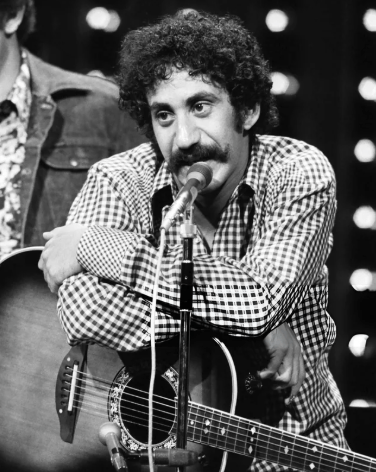
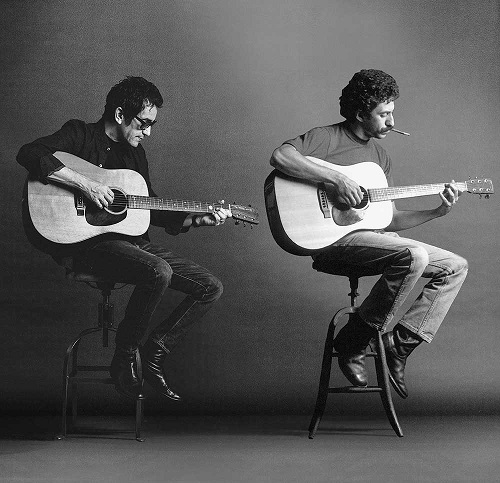
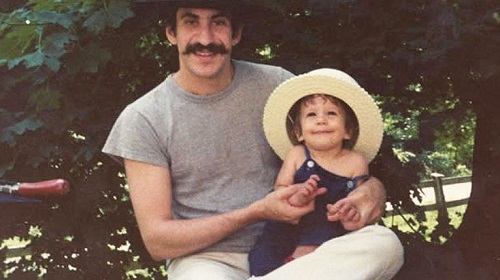
Last month, Jim Croce would have turned 81 had he not died tragically in a 1973 plane crash. His son, AJ Croce (who I follow on Facebook) inherited his love for music from his father and is currently out touring to honor the 50th anniversary of his father’s passing.
During the tour, he is playing many of his father’s songs, as well as his own. Remind Magazine said, “The tour is big news for fans as A.J. has been uneasy about performing his father’s songs in public over the years. He revealed, “I’ve had the opportunity to do this my entire life. I turned it down for 25 years because I just didn’t feel there was integrity capitalizing on his music without making a mark of my own.” However, now he feels like it is the perfect time to blend his father’s music with his own, plus some covers of music that inspired them both.“
AJ feared that if he played his father’s songs in public, people would compare him to his father or critique him. The article quotes AJ, “I’m celebrating the legacy of my father, but it’s really the legacy of two generations of musicians. We share a love of storytelling and music. I’m not a cover band per se, though there are times when I sound a lot like my father — even though I’m 20-some years older than him at this point.”
Jim Croce died eight days before AJ turned two. He barely knew his father. I would imagine that this tour has to be a very emotional one for AJ, but it truly is an amazing way to honor his father’s legacy. To see if the tour is coming through your area, check out AJ’s website:
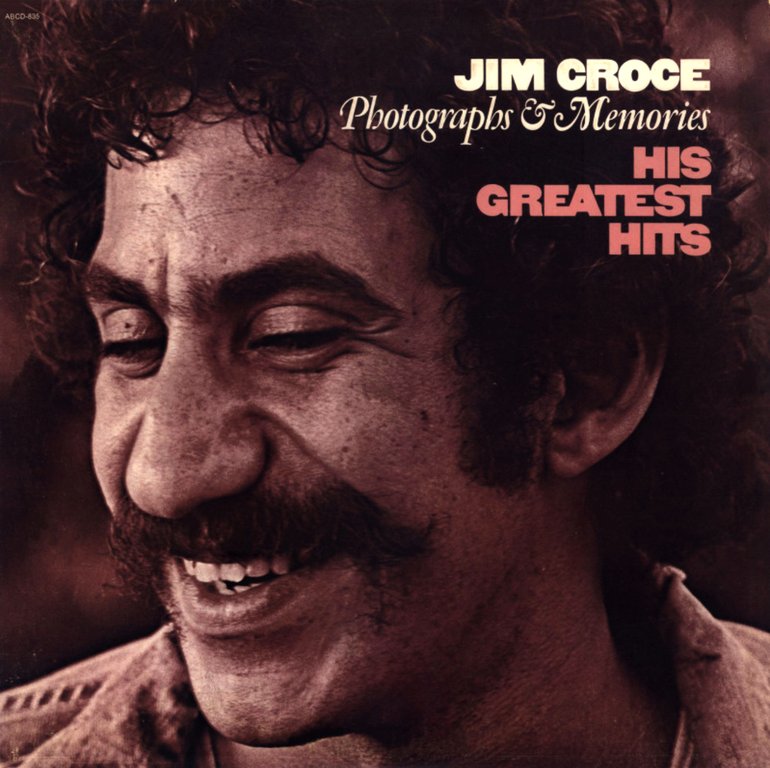
One of the albums I picked up on vinyl to play on the record player my wife bought me for my birthday was Jim Croce Photographs and Memories – His Greatest Hits.
This song hit #1 about 14 weeks after he died in a plane crash in 1973. He wrote this song on the night that he found out his wife was pregnant. They had been married 5 years and while visiting a fertility specialist, she found out she was pregnant. His wife said she will always remember the “mix of terror and delight” in his reaction when she told him. (Side note: They had a son named Adrian, who went on to achieve success as a songwriter. He was AJ Croce.)
The song appeared on his 1972 album – You Don’t Mess Around With Jim. The song was never intended to be released as a single. It was used in a TV movie about a woman with cancer entitled She Lives (starring Desi Arnaz Jr. and Season Hubley). The movie aired a few weeks before his death. TV stations were getting hundreds of calls wanting to know who sang the song and where they could buy it! The following day, the record label got orders for 50,000 copies of the album. The song became the 3rd posthumous #1 song of the rock era. The first was Otis Redding’s Dock of the Bay, and the second was Janis Joplin’s Me and Bobby McGee.
I always loved the simple guitar work in this song, as well as the use of a harpsichord. The harpsichord was kind of an experiment according to producer Tommy West in an article for Mixonline:
“The night before we were going to mix, I was watching a horror movie on TV, and something must have lodged in my brain because when I walked into the studio the next day, I saw this harpsichord sitting in a corner and got an idea. A jingle company had used it on a session and in walked a couple of guys from SIR [Studio Instruments Rental] to haul it away. I asked them to take a lunch break and told Bruce to put a couple of mics on it. He was whining that it was out of tune, but I asked him to let me try something. I added two tracks of harpsichord, told the movers they could remove it, walked into Jerry’s office and asked if I could borrow the electric bass that was sitting on his couch, played that on just the second verse and the outro, and that was that! Radio compression worked in our favor on that record. It made the harpsichord blend with the two guitars in an unusual way. But we thought this record would only be an album cut.”
I love the way it sounds and it really makes the song more haunting and lovely. For me personally, I completely understand how Jim feels. I want to bottle up every minute and spend it with my wife. Even when time is over, I want to have that extra bit bottled up to continue sharing special moments with her. She is the answer to my every wish, just like the song says. Yes, she is the one I want to go through time with – forever. This weekend, this song took on a whole new meaning to me … for reasons I will keep to myself for now.
“Time In A Bottle”
If I could save time in a bottle
The first thing that I’d like to do
Is to save every day till eternity passes away
Just to spend them with you
If I could make days last forever
If words could make wishes come true
I’d save every day like a treasure and then
Again, I would spend them with you
But there never seems to be enough time
To do the things you want to do, once you find them
I’ve looked around enough to know
That you’re the one I want to go through time with
If I had a box just for wishes
And dreams that had never come true
The box would be empty, except for the memory of how
They were answered by you
But there never seems to be enough time
To do the things you want to do, once you find them
I’ve looked around enough to know
That you’re the one I want to go through the time with





 Various Ramblings of a Nostalgic Italian