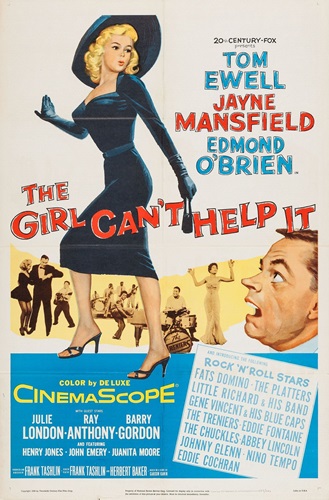
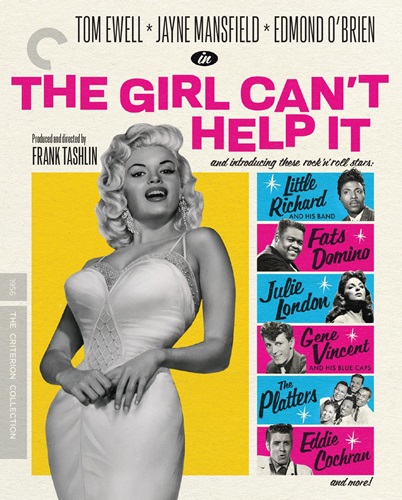
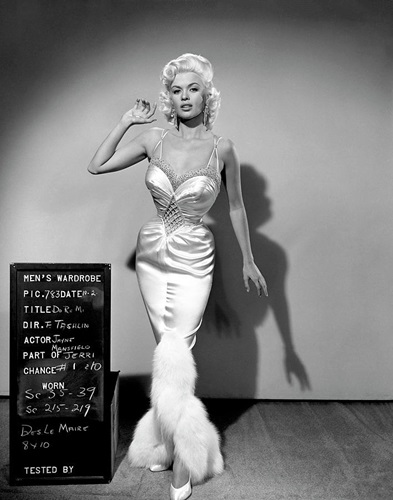
It was on this day in 1956 that “The Girl Can’t Help It” starring Jayne Mansfield, Tom Ewell and Edmund O’Brien opened in theaters.
The movie was originally conceived as a way to build Mansfield’s celebrity, but it took on a life of its own and became a rallying point for young people, helping propel rock and roll into its unofficial “first Golden Age.” The unintended result has been called the “most potent” celebration of rock music ever captured on film. No doubt the cameos by Fats Domino, The Platters, Gene Vincent, Eddie Cochran, Julie London and Ray Anthony helped with that.
The film was based on “Do Re Mi”, a short story by Garson Kanin. After seeing the adapted screenplay, Kanin did not approve of the new take on his story and requested his name be removed from the credits. Subsequently, director Frank Tashlin came up with the new title, The Girl Can’t Help It.
FUN FACT: The film the heavily inspired young, pre-Beatle John Lennon to be a rocker. The impact was so significant that, 12 years later, the Beatles took a break from recording “Birthday” to watch the film premiere on British television (Lennon had seen it in theaters).
The Girl Can’t Help It is the title song to the film, and was written by Bobby Troup. Little Richard recorded it and it was released in 1956. Fats Domino was originally supposed to record the song for the film, but the sessions fell through. The song has been covered by The Everly Brothers, The Animals, Led Zeppelin, and many others.
In the US, the song peaked at No. 49 on the Billboard Top 100 singles chart and No. 7 on the R&B Best Sellers Chart.
Songfacts.com sums up the song in this way:
“The Girl Can’t Help It” is about a young woman so attractive that she unwittingly captures the attention of every guy she passes. In addition to her siren-like sex appeal, there’s a distinctly incendiary element to her superpowers. She turns bread to toast with a wink of an eye and makes “beefsteak become well done” with a smile. She can’t be held responsible for the potentially dangerous effects of her fiery presence. The poor girl just can’t help it.
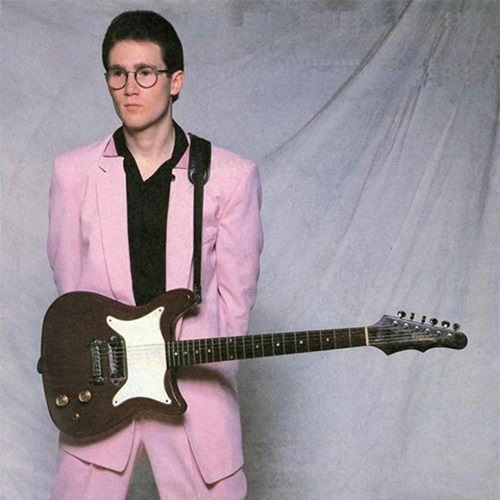
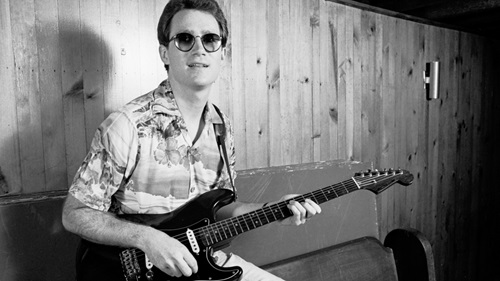
I hope you don’t mind if I focus on a hometown hero that often gets overlooked. Today Marshall Crenshaw celebrates birthday 72. He was born in Detroit, Michigan and was raised in the suburb of Berkley. A radio buddy of mine went to high school with him.
He had hit songs with “Cynical Girl” and “Whenever You’re On My Mind” in the early 80’s. He has said that Buddy Holly was an influence, and early on he was often said to look like him. Perhaps that is why he was cast as Buddy Holly in the movie La Bamba?
Crenshaw was also co-writer of one of the Gin Blossom’s big hits, “Til I Hear It From You.”
Robert Gordon recorded one of his songs in 1981 – “Someday, Someway.” His version went to number 76 on the chart. Crenshaw recorded the song himself in 1982. He released it and it reached number 36 on the Billboard Top 40 Hit chart. It would be his only Top 40 song. Both versions saw early success on New York radio, though Crenshaw’s rendition saw greater success nationally.
Crenshaw wrote the song while he was in New York where he played John Lennon in the musical Beatlemania. He says, “I wrote ‘Someday, Someway’ and five or six of the other tunes on my first album. I wrote those in my hotel room. That was my next move in life, to be a recording artist. I actually had a sense of artistic direction and off I went.”
Someday, Someway was inspired by Gene Vincent’s song “Lotta Lovin’.” Crenshaw said, “I wanted to take the beat and atmosphere of a 1950s Rock and Roll record that I loved … and build something around that. I came up with the music first for ‘Someday’ and dug that it was kind of hypnotic, very spare and succinct.”
Let’s celebrate his birthday with his biggest song –
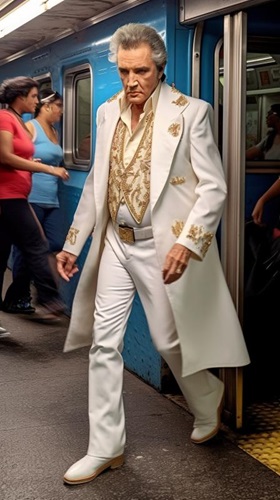
The above photo is one of many AI photos created to show “what Elvis would look like if he were still alive.” While it is interesting to see what AI comes up with, things are beginning to get out of control.
Scroll Instagram or Tik Tok today and you will eventually find videos that feature AI renditions of celebrities that have passed away. The ones that have come up the most feature familiar faces and the voices are very close to their real voice.
A forgetful Ronald Reagan lost in the halls of the White House
Martin Luther King Jr. and his dream that the ice cream machine would be working (among other things)
JFK riding in the Dallas motorcade saying, “This is so boring. Just shoot me.”
Rod Serling talking about the time traveling DeLorean
Elvis as Captain Kirk in Star Trek, Indiana Jones, and Han Solo in Star Wars
Mr. Rogers in a movie trailer that has him physically fighting painter Bob Ross
George Carlin standing in his grave doing jokes about the state of the country
One more that seems to be everywhere is Robin Williams. I’ve seen him hosting a podcast in heaven where he interviews Freddie Mercury, Jimi Hendrix, and John Lennon; I’ve seen him walking a dog out on the streets of New York joking around with people; and seen him ordering a coffee at Starbucks while tossing out puns about coffee. The voice on these is so good, you’d think it really was him.
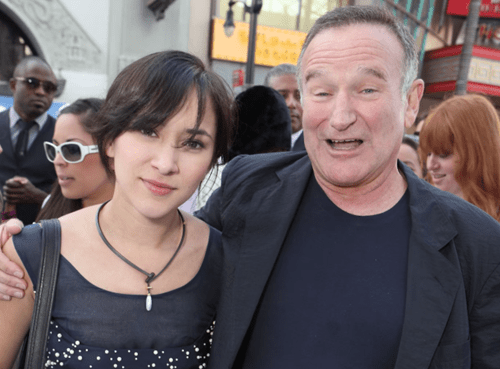
These AI creations are something that has caused Robin’s daughter to speak out. Zelda Williams posted on her Instagram page this week asking people to “just stop sending me AI videos of Dad.” She went on to say, “Stop believing I wanna see it or that I’ll understand, I don’t and I won’t,” she wrote. “If you’re just trying to troll me, I’ve seen way worse, I’ll restrict and move on. But please, if you’ve got any decency, just stop doing this to him and to me, to everyone even, full stop. It’s dumb, it’s a waste of time and energy, and believe me, it’s NOT what he’d want.”
She finally said, “To watch the legacies of real people be condensed down to ‘this vaguely looks and sounds like them so that’s enough’, just so other people can churn out horrible TikTok slop puppeteering them is maddening. You’re not making art, you’re making disgusting, over-processed hotdogs out of the lives of human beings, out of the history of art and music, and then shoving them down someone else’s throat hoping they’ll give you a little thumbs up and like it. Gross.”
I think Zelda is right. Many of the celebrities have been gone for some time like Marilyn Monroe and Albert Einstein. There are still living relatives of many of the famous people in these videos. I wondered how they might feel about them. Zelda Williams cannot be the only one who feels this way about their deceased loved ones.
I admit, the first one I saw was an Elvis video. It was done to be humorous in that he says in one, “I can’t wait for AI to come along so I can stop acting in these dumb movies.” He says this while in a scene from his movie Spinout. I chuckled a bit when I saw it, because I had read somewhere that Elvis didn’t necessarily enjoy making all of his movies.
The more I thought about this, the more I wondered about the future. If these videos are close today, imagine how good they might be as the technology advances. We would be left questioning everything. How would we know that what we are watching is real? We can’t trust what we see on TV now, let alone if/when AI stuff starts being broadcast. This just scares me.
Remember that line from the X-Files? “The truth is out there.” The problem is going to be trying to figure out what is true and what isn’t!
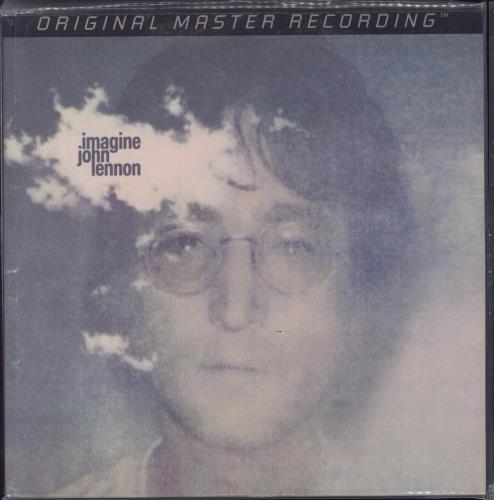
It was on this day in 1971 that John Lennon recorded his classic “Imagine.” Biography.com says: The impact of the song is unquestionable. But disguised within its message of peace and love and its flowing piano melody is a collection of edgy, “dangerous” ideas that challenge society as we know it.
John Lennon wrote and recorded this song on his white grand piano at his Tittenhurst Park estate in the English countryside (He and Yoko took up residence in the summer of 1969). In early 1971, Lennon worked up songs for a new album and “Imagine” was one of them.
When he had finished writing the song, John didn’t think that it had any potential of being a hit song. He recorded a rough demo of Imagine and wanted to know what others thought of it. He invited a few journalists and other associates over to have a listen. Ray Connolly of the London Evening Standard recalls Lennon playing him the demo and asking, “Is it any good?” Connolly and the others who heard it had to convince John he had a hit on his hands!
In May, he brought in several of his musical friends to Tittenhurst to record it, including Phil Spector, George Harrison, bass player Klaus Voormann, piano man Nicky Hopkins, and drummers Alan White and Jim Keltner. They recorded on-campus in the studio Lennon had recently built, which he called Ascot Sound Studios. Footage from the session shows Lennon and his guests enjoying each others’ company, but also getting down to business when it came time to work.
It was Phil Spector kept the sessions on track. “Imagine” was one of the first songs they recorded. Spector kept the track fairly simple. Although they did experiment a bit. At one point they had Hopkins play on the same piano as Lennon, but on a higher octave. However, the more they added, the more they ended up stripping away. The very simple arrangement was designed to spotlight the lyric, it required just Lennon’s vocals and piano, Voormann’s bass, and White’s drums. Strings were overdubbed later by John.
Julian Lennon shared his thoughts on the song in the 2019 documentary Above Us Only Sky: “He’s not shoving it down people’s throats. It’s not religious and it’s not political – it’s humanity and life. We all really want what he’s singing about, and I think that’s why even today the song is still so important. The sad thing is, the world is still in a bad way. Why is it impossible to move forward in these dreams and make them a reality?”
Rolling Stone described “Imagine” as Lennon’s “greatest musical gift to the world”, praising “the serene melody; the pillowy chord progression; [and] that beckoning, four-note [piano] figure”
Let’s go back 54 years and join John at his piano …
Last week I wrapped up my Music of My Life feature. It focused on music from 1970-2025. I admit that it was fun to look back at the tunes that have special meaning to me, bring back a certain memory or a tune that I just really like.
When I got into the 2000’s it became more difficult for me to find songs. With the earlier years, however, I found it difficult to narrow my list down to just ten songs. So I sat down with my original lists and selected some songs that “bubbled under,” so to speak.
I figured a good way to present them was to focus on a decade. 10 years = 1 song per year = 10 songs. Let’s head back to the 70’s and check out a few “Decade Extras.”
1970
I wish I could find the recording of this so I could set it up better. My co-host, Steph, and I were in conversation with our newsman, Hal. Something came up about knocking and Hal says, “Knock three times on the ceiling if you want me.” This led to me asking why we were discussing Tony Orlando on a country station.
Steph walks out of the studio during commercials and I went on the hunt for the song. I found it and cued it up to the chorus. When she comes back to the studio, and she has to read a sponsorship for the weather forecast. I let her begin and out of nowhere I play the chorus of Knock Three Times. She was so thrown by this, she can’t stop laughing. She’s trying to do the sponsorship, but every 6th or 7th word, I’d fire the chorus again. She is down for the count in laughter (which was my intention), so I wound up reading it and apologizing to our listeners.
I think of Steph every time I hear it.
Knock Three Times
1971
I’ve always love the Jonathan Edwards song “Sunshine.” It was always one that I loved singing along with. Had it not been for a mistake, it may never have gotten recorded. According to songfacts.com, he recorded this out of necessity when one of the tracks he put down was accidentally erased. Instead of redoing that song, he did “Sunshine.” Pleased with the results, he and the engineer overdubbed bass and added the drums the next day.
Edwards was signed to Atco Records. They released “Sunshine” as his first single early in 1971, but it flopped. The song got some traction thanks to disc jockeys in New England who started playing it off the album. Six months after the Atco single was released, it was re-issued on the independent Capricorn label with a demo version on the B-side. This time, the song was a hit, shooting to #4 in the US.
He would often end live shows with the song, and Edwards said, “I often say, and it’s true, that if I had never done another song in my life, I’ll be happy to have come and gone with that.”
Sunshine
1972
For the longest time, I thought that Neil Diamond was singing Nice To Be With You. When I started working at my first radio gig, I found out I was wrong.
The song was actually one that had a local connection. Jim Gold formed the group Gallery in Detroit. They recorded quite a few songs, but none were as big as Nice To Be With You. It was also the title track of their debut album.
Nice to Be With You
1973
There was no shortage of Jim Croce songs in my original feature. My mom and dad listened to his music a lot. He was one of many artists who were a part of my childhood.
I love when songs have some basis or inspiration in real life. Bad, Bad Leroy Brown is one of them.
“Leroy Brown is a guy that he actually met,” said his widow Ingrid. “When he was in the service – The National Guard – this guy had gone AWOL. He was a guy that Jim kind of related to, he liked to sing with him. This guy had gone AWOL but he came back to get his paycheck, and he got caught. Jim just thought he was such a funny guy that he thought he’d include his name in the song, and it just worked. There really was a Leroy Brown, and sometimes having a name helps you to build a song around it.”
It’s one of the few songs I can sing at karaoke.
Bad, Bad Leroy Brown
1974
I was a big Beatles fan growing up. As a kid, I didn’t really understand why Paul McCartney was in another group (Wings) or why John Lennon was doing solo stuff. I do remember hearing Band on the Run, though, and liking it.
McCartney recorded the album in Lagos, Nigeria along with his wife Linda and guitarist Denny Laine. The other Wings decided not to make the trip, which worked out fine in the end: McCartney considers the album his best post-Beatles work. He told Word in 2005:
“I was on drums and guitar a lot, mainly because the drummer decided to leave the group the night before and one of the guitar players decided not to come! So we got that solo element into an otherwise ‘produced’ album.”
Band On the Run
1975
It’s a Long Way to the Top is an autobiographical song for AC/DC. It describes their struggles as they tried to make it big. Right from the start, they delivered a top notch live show night after night. Songfacts says: It was genuine: At the time, they were just getting started and playing some seedy venues with even seedier business associates. The hard work eventually paid off, and several years later the band was selling out arenas.
“It’s A Long Way To The Top” really summed us up as a band,” Angus Young told Rolling Stone. “It was the audience that really allowed us to even get near a studio.”
The song is a bit unusual because instead of a lengthy guitar solo it features Angus Young on lead and Bon Scott on the bagpipes in a Dueling Banjos sort of way. I remember the first time I heard the song. “Are those bagpipes?!” Yes. Yes, they are!
It’s a Long Way to the Top
1976
Turn the Page by Bob Seger is also a song about being out on the road and performing. This one focuses on the effects of touring on a performer. There is a lot of loneliness that they feel.
Bob says, “Our first headline shows ever in a large (twelve thousand seat) hall were the two shows at Detroit’s Cobo Arena, September 4th and 5th, 1975. I remember while I was singing this how nice it was to have such good on-stage monitors. I had never heard my voice so well while performing.” The version on Seger’s greatest hits album was taken from these shows.
The song is a classic rock staple here in Michigan. I got to see Bob perform one of his last shows and it was electrifying. I can’t even begin to explain the feel of the room when he performed this one.
Turn the Page
1977
“What’s Your Name” by Lynyrd Skynyrd is another song that is based on a true story. One night while they were on tour, the band was drinking at their hotel bar when one of the roadies got in a fight. They all got kicked out. So they went to a room, ordered champagne and continued the party.
Songfacts says: The incident in this song did not happen in Boise, Idaho. The first line was originally, “It’s 8 o’clock and boys it’s time to go,” but lead singer Ronnie Van Zant changed it when he found out his brother, Donnie, was opening his first national tour with his band .38 Special in Boise. The first line became “It’s 8 o’clock in Boise, Idaho.”
Three days after the album was released, Ronnie Van Zant, Steve Gaines, and Cassie Gaines died in a plane crash. The cover of the album was redone because the original cover had the band surrounded by flames.
What’s Your Name
1978
Hold the Line by Toto caught my ear the first time I heard it because of the piano open with the guitar riff intermingling with it. It was the debut single for the group who was made up primarily of session musicians.
From songfacts: “Hold the line” is an expression meaning to maintain your existing position, which in this case is the singer telling a girl to be patient and stay with their relationship.
The saying also has a more literal meaning, however, which is how David Paich came up with the title. “Hold the line” is what you tell someone on the phone if you want to put them on hold while you’re taking another call. This is typical in workplaces, but in the days before cell phones, some households (especially ones with teenagers) also had multiple phone lines coming in and could put callers on hold. Paich lived in one such household.
Paich said: “When I was in high school, all of a sudden the phone started ringing off the hook, and I had a situation where I was at the dinner table and I had three girls all call at the same time, so all the lights were flashing. I was kind of juggling girlfriends, and that’s how that came about.”
Toto’s video was a bit ahead of it’s time. MTV hadn’t even gone on the air yet when the song was released.
Hold the Line
1979
Don’t Stop Me Now by Queen is such a fun song to play at weddings and parties, especially after the audience has loosened up. So often I’d come out of a slow song and segue right into the smooth intro of Freddie Mercury. People would raise their hands and sway while singing along. Then, when the tempo changes, the dance floor was insane.
It’s a catchy song that has you singing along, even if you are just hearing it for the first time. In 2011, Queen fans voted the chorus of “Don’t Stop Me Now” as the band’s best ever lyric.
In an Absolute Radio interview, Brian May says, “I thought it was a lot of fun, but I did have an undercurrent feeling of, ‘aren’t we talking about danger here,’ because we were worried about Freddie at this point. That feeling lingers, but it’s become almost the most successful Queen track as regards to what people play in their car or at their weddings. It’s become a massive, massive track and an anthem to people who want to be hedonistic. It was kind of a stroke of genius from Freddie.”
Don’t Stop Me Now
So what do you think? I like this idea. A quick look back at a decade. There are plenty of songs to choose from that did not make the original run of this feature. Join me next week for more!
Last May I began this feature. Today, I will finish it off by looking at 2020 through the present. As I got closer to the end, it became difficult for me to pick ten songs from each year. Proof of this will be evident from this post.
The songs that I featured each year had to connect with me in some way. It was attached to a core memory. Maybe it reminded me of one of my kids or a friend. Maybe it was a song from my years DJing. Maybe it was just a song that I liked a lot. The only real rule was that it had to be released in the year featured. With that in mind, let’s see how the last five years of music connects with me….
2020
There were no songs that really hit me in 2020. Thank you, Covid
2021
The world was still reeling from the pandemic. There was so much uncertainty. Many folks reconnected with their faith, as I did. I went back and watched the Bible classes I had taken. There I found comfort and the strength to get through things.
I want to say that a friend of mine asked if I had ever heard the song “My Jesus” before. I hadn’t and I found it online. It hit me immediately and I shared it with my wife. It is a powerful song, but even more powerful when you hear the story behind it.
Anne Wilson’s life changed in more ways than one when her older brother, Jacob, died in a car accident at 23. She told songfacts.com: “It was so tragic. He was my best friend. That’s actually how I started singing and how I got into music and that’s why I wrote the song ‘My Jesus.'”
After losing her brother, Wilson processed her emotions through journal entries. As she flicked through her entries before a writing session with Matthew West and Jeff Pardo, the young singer had an idea for a song. She told Billboard: “I walked through a really tough season of grief. I remember having this moment where I wanted to give up on life. When I looked back at my journals, I saw how God pulled me through. I also realized I never referred to God as anything else, except ‘My Jesus.'”
When she brought the title into the writing room, it turned out that the two others had that same exact title as an idea. None of the three had spoken about it, so it must have been “a total God thing.”
My Jesus
2022
No songs
2023
When I heard that they were releasing a new Beatles song, I hoped it would be better than Free As a Bird. When they released that for the Anthology stuff, the technology wasn’t as good as it was in 2023. Because of this, Lennon’s vocal sounds tinty.
Songfacts tells the story:
“Now and Then” was originally written and recorded by John Lennon around 1977 as a solo piano track. After his death in 1980, the unfinished demo floated in limbo until 1994 when his widow, Yoko Ono Lennon, gave the recording to the three surviving Beatles, along with Lennon’s demos for “Free as a Bird” and “Real Love.”
Paul McCartney, George Harrison and Ringo Starr considered “Now and Then” as the third Beatles reunion single for their 1995–1996 retrospective project The Beatles Anthology, following “Free as a Bird” and “Real Love.” After two days of recording, it was scrapped, largely because Harrison’s didn’t like it.
In 2022, using advanced technology and a curatorial touch, Paul McCartney and Ringo Starr completed the track. The same AI restoration technology Peter Jackson used on the Beatles documentary Get Back was applied to Lennon’s vocal take.
“Back in 1995, after several days in the studio working on the track, George felt the technical issues with the demo were insurmountable and concluded that it was not possible to finish the track to a high enough standard,” Harrison’s widow, Olivia, said. “If he were here today, Dhani and I know he would have whole-heartedly joined Paul and Ringo in completing the recording of ‘Now And Then.'”
Besides Lennon’s John’s vocals, “Now And Then” includes electric and acoustic guitar recorded from the scrapped 1995 sessions by Harrison, a new drum part by Starr, and bass, guitar and piano from McCartney that matches Lennon’s original playing. McCartney added a slide guitar solo in Harrison’s style “as a tribute to George.”
“Now And Then” became the first AI-assisted song to earn a Grammy nomination, and the first to win, when it took the award for Best Rock Performance at the 2025 ceremony.
As a life long Beatles fan, I was impressed with just how good this one turned out.
Now and Then
2024
My wife will often listen to Pandora as she gets ready for work. The next song seemed to play on there at lot. It also seemed to play on her Sirius XM station when we went anywhere. It sort of had a catchy hook, but it wasn’t so good that I’d buy it.
One day I was driving with the kids in the back of the car and my daughter started singing “Excuse me, you look like you love me…” over and over again. It made me chuckle.
You Look Like You Love Me
2025
There has not been any songs from this year that connect with me. I tend to listen to audio books or songs from my iPod when I drive, so I don’t really get to hear anything new anyway. I’m ok with that.
Wow. Five years and only three songs. What a way to wrap up a feature, huh? Well, technically, I had wanted to wrap this up in May. So I have an idea on how to fill a couple Wednesdays and still keep it musical. Tune in next week to find out more….
Welcome back to The Music of My Life, where I feature ten songs from each year of my life. In most cases, the ten songs I choose will be ones I like personally (unless I explain otherwise). The songs will be selected from Billboard’s Year-end Hot 100 Chart, Acclaimed Music, and will all be released in the featured year.
In 1995 a new form of media was invented – The DVD. 1995 was also the year I hit the quarter century mark, turning 25.
30 years ago this month, in 1994, my partner, Rob, and I lost our jobs at Honey Radio. We searched for other radio work, but no one was looking for a morning team. I kept searching and eventually found some part time radio work. I also ventured out and began to host Karaoke at a few places every now and then.
My full time gig was working in the mail room at EDS. I spent a lot of time in the car and listened to a lot of radio. Many of these songs accompanied me on my deliveries.
After seven years of touring and three previous albums, Blues Traveler finally broke through with the song Run-Around. John Popper had a crush on the band’s original bass player Felicia Lewis. She was actually classically trained as a violinist. She was just playing bass for fun.
Guitar player Chan Kinchla says that Felicia was a great student and eventually became a doctor. “Her calling was medicine, not music” . When Bobby Sheehan was ready to take over on bass, Felicia stepped aside. Kinchla says, “It’s a very amicable situation. John always had kind of a crush on her, but they were friends, as well. So that song’s from that whole affair. They’re still very close. It’s just an unrequited love song.”
The song won a Grammy for Best Rock Performance By A Duo Or Group With Vocal in 1995.
John Hopper could really blow the harp! His harmonica stuff is just fantastic. It is hard to to hear this one and not feel happy. I often found myself having to set the cruise control, as this one often made me want to drive fast.
If you are a fan of the Wizard of Oz, you’ll appreciate the nod to the classic film in the video.
Run-Around
Until researching for this blog, I had no idea the story behind the next song. I Believe was a top ten record for Blessid Union of Souls. The song is about the power of love and the belief that it can impact life for the better. It is a powerful message.
The song came about because of the end of a relationship. Eliot Sloan recalls writing this song after his girlfriend’s father coerced her into breaking up with him. Many sources say that it was because of his race. Her dad went as far as threatening to cut off her college tuition, if she didn’t leave him.
They did break up, but she obviously meant a lot to him. He placed a message in the liner notes of the Home album. It says, “Lisa, give me a call sometime just to say hello, my number is still the same.”
Sloan says, “I always tell people, and it’s the truth, ‘I Believe’ was written in the middle of the night at about three in the morning. I always used to live in downtown Cincinnati, a really cool spiral staircase up to my bedroom, which kind of ended up as my studio. I kept a piano there that my mother got me when I was nine. In the middle of the night I was hearing the melody and I thought, ‘this is pretty.’ I just had to get up and play it.”
That piano line is really beautiful, and I love the way it intermingles with the strings. I love the message, too:
‘Cause I believe, that love is the answer I believe, love will find the way
I Believe
There are many stories about how Better Than Ezra came up with their name. As far as I can tell, they’ve never really said. The one that I love is that they were playing at some event that featured many bands. The story goes that they followed a band called Ezra, and when asked what their name was they said, “Better Than Ezra.” I hope that is the real story, because I think that is hilarious!
We just heard I Believe about a break up. Better Than Ezra’s, Good, looks at a break up in a different way. As a matter of fact, I tend to look at my past break ups like this.
BTE’s Kevin Griffin wrote the song. In an interview with songfacts.com he said:
“I wanted to talk about the positive things that come from the end of a relationship. There’s always the hurt feelings and everyone’s guarded and it can be traumatic, but when the dust settles, it was about looking at the good things – no pun intended – that you got from that relationship. How did you grow? What did you learn emotionally? And to experience some stuff. And in this case it was just kind of reflecting on how this person changed.“
That isn’t always easy to do. I have to remind myself, for example, that while things with my ex-wife weren’t great, I have two amazing sons from that relationship.
As much as I heard this song, I find it hard to believe that it only reached #30 on the charts.
Good
A new Beatles song in 1995?! How can that even happen!? John Lennon had been dead for 15 years by then. Believe it or not, you can thank Yoko Ono for it. Yoko agreed to release a demo tape of John’s to the other Beatles the day after he was inducted into the Rock and Roll Hall of Fame.
In 1994 the three remaining Beatles recorded around his demo track to complete the song Free As a Bird. It was released as a single in 1995. Before their breakup, The Beatles won just four Grammy Awards. They picked up three more in 1997 when “Free As A Bird” won for Best Pop Performance By A Duo Or Group With Vocal and Best Music Video, Short Form.
It was Jeff Lynne of ELO who would produce the single. He The Daily Mail that of all the songs he’s produced, “Free as a Bird” is the one he’s most proud of. “I just had to improvise and come up with a few things to make it work,” Lynne recalled. “I did it late at night, 3 a.m. in the studio, just me and the engineer, because I didn’t want to do it in front of Paul and George. But I came in the next day and Paul gave me a hug and he said, ‘You’ve done it, well done!'”
My first records were Beatles songs. So it was so neat to hear all four of them together again for the first time in years!
Free As A Bird
Next is another song that I heard a lot while driving. It stood out for a few reasons. First, it was uptempo. I seem to remember a lot of ballads being played at the time. Driving while tired, uptempo is always good!
Second, it was short. It was very rare to have any song be under 3 and a half minutes on the radio. Many of them were 4 and 5 minutes. This one clocks in at just under 2 and a half minutes.
Finally, it reminds me of Run-Around by Blues Traveler. Ok, maybe it was Blues Traveler that reminds me of this one. I really don’t know.
The first time I saw the video, I laughed out loud. In it the guys from Del Amitri are being wheeled about in strollers by beautiful women. The band members’ heads were superimposed (badly) on the babies to create the effect.
Roll To Me
When I worked at W4 Country in Detroit, they used to host a huge summer festival. It was downtown in Hart Plaza and all kinds of country artists came to play. It was called the Downtown Hoedown. At this time in my career, I had really never done a lot of backstage stuff.
Looking back now, I could kick myself. So many of the singers were just walking around backstage and in the area that was reserved for our staff. I took my ex wife with me and we were just sitting at a table drinking water. This guy walked by with a cowboy hat on and he looked familiar. I couldn’t place him to save my life.
As he walked by, he nodded and said hello to us. I didn’t know if it was an artist, a manager, a roadie, or someone else. We said hello and he continued walking. What was weird was that as he approached us, he kind of slowed down like he expected us to start chatting him up. I know now that this was David Lee Murphy.
Dust on the Bottle was a big hit for him, but it almost didn’t make his album. He tells the story:
“I had the idea for that song, but I hadn’t ever done anything with it. I just remember being at my house the second day [of recording]. We started recording on Monday, and Tuesday morning, I was drinking coffee at my kitchen table. I started playing the opening chords on my guitar for ‘Dust on the Bottle.’ It just came out of nowhere. The song just fell out in like 15 minutes.
I called Tony Brown, who was producing my record, and I told him, ‘Man, I just wrote this new song!'” Murphy continued. “We had all the songs picked out already for the album. He told me to bring it in and play it for him that day. When he heard the song, he said, ‘Man, we’ve got to cut this.’ So we cut it, and what’s on the record is the first take of the song. A lot of the vocals on it were the first time I sang it. It was really a special song, and it still is to this day.”
Dust On The Bottle
I will apologize for the next song right now. I had to include it because it was such a big song when I was DJing. In the US, the Macarena was the biggest dance craze of the 1990s. It was played at weddings, office parties, cruise ships, and just about anywhere there was dancing. Like the earlier dance craze, the “Electric Slide,” it was easy to learn and was done in a group. This made it perfect for Americans who lacked rhythm. It would spawn other dance crazes in the years ahead.
The song was one that had many “mixes.” The meaning of the song changes depending on what mix you are listening to. In the original version, Macarena is upset because her boyfriend, Vitorino, has joined the army. She retaliates by going out on the town and carousing with other men. In the Bayside Boys mix, Macarena gets mad at her boyfriend and goes out to shake it while he’s out of town. In this version, she seems to be more promiscuous. The Bayside Boys also made it a first-person account, with the lyrics being the voice of Macarena.
Macarena
I never cared for the song that much, however two years later, there was a country mix. It sounded ridiculous. I went out and bought one of those hillbilly hats with the feather on it and a corn cob pipe. I would get out and dance with it on. It only made it more silly.
The next song was one that got played a lot on the radio with dedications to someone who passed away. It was played at weddings in remembrance of a loved one, too. When my mom passed away, this was another of those songs that made me think of her.
Mariah Carey wrote One Sweet Day with Boyz II Men. She said she wrote a song that was identical to a song Boyz II Men had written, so they combined the two.
Mariah was in the middle of writing the poignant ballad with her longtime collaborator Walter Afanasieff when she had the idea to bring in the R&B group.“I just thought the chorus was crying out for the vocals that they do,” she recalled in a 1999 interview. “We contacted them, we went through all the channels, this and that, and we finally got together, sang them the song and Nate had written a song that was basically identical to my song in the theme and melodically – he could actually sing it over my song and it was really bizarro, it was like fate, so we put the two songs together and came up with ‘One Sweet Day.'”
This was #1 on the US Billboard charts for 16 weeks! That is longer than any other song up to that time. It held that record until 2019 when Lil Nas X’s Old Town Road was #1 for 17 weeks.
One Sweet Day
Despite being a 1995 release, Give Me One Reason was a song that Tracy Chapman had been performing since 1988. She also performed it on a 1989 episode of Saturday Night Live.
The song would wind up on her fourth studio album, New Beginnings in 1995. In 2005, she said “This is autobiographical,” before performing the song. “I left it on someone’s answering machine, and it worked. I wrote it late one night hanging out with my dog, a mini dachshund.”
The song would be her first hit since 1988’s Fast Car. The charts had changed a bit in 1995. Songfacts.com explains: The mid-’90s were a tougher time for female singer-songwriters with stories to tell, but Melissa Etheridge, Alanis Morissette, Sheryl Crow and Jewel all got their piece of the pie even as the airwaves were dominated by R&B and dance singers, mostly guys. “Give Me One Reason” fell into this bucket, skewing to an older audience averse to hip-hop and modern rock.
I love this song because of the bluesy feel to it. That opening guitar lick and her voice are just so good!
Gimme One Reason
My final pick for 1995 comes from a gang member. Yes, you read that right. Lead singer Pauly Fuemana was a gang member in Auckland, New Zealand before achieving pop immortality with this song. He received his musical training in a New Zealand juvenile prison.
How Bizarre by OMC reached #1 in eight different countries, the first of which was New Zealand in early 1996. Others include Australia, Canada, and the US (on the Mainstream Top 40 chart). What is Bizarre is that it never entered the Billboard Hot 100 Chart. Why? It was released as a radio-only promo single. Therefore it was ineligible to chart on the Hot 100 according to rules in place at the time.
According to songfacts.com: OMC stands for Otara Millionaires Club, after the neighborhood in Auckland where Fuemana grew up. It’s a somewhat fanciful name, as the Auckland suburb of Otara is a ghetto/slum.
This was another one of those songs I would hear driving at work. Many of the drivers would come in to the mail room and if something unexpected happened they’d say “How Bizarre!” Some of my ex wife’s sisters would also say this a lot, but usually they’d say, “How Bizzaaaah.”
The song has a fun sound to it and it brings back some great memories.
How Bizarre
So that’s all for 1995. Did I miss one of your favorites? Let me know in the comments.
Next week, we move forward to 1996. My list includes movie music, a cover song or two, a couple artists I have had the chance to hang out with, and a few I’d like to hang out with. It also includes a song that was given to me by a girlfriend to express how she felt about us. Was it good or bad? Tune in next week!
It’s time again for my contribution to Dave from A Sound Day’s monthly feature Turntable Talk. If you are keeping track, this is round #30! Way back when we started this, he asked us if the Beatles were still relevant. This time we circle back to the Fab Four and Dave wants us to write about our favorite Beatle. He is calling this round The Most Fab of Them All.
I have struggled in the past to narrow down what song or artist I am going to write about, but never like this. It shouldn’t be hard to pick one guy out of four, right? For me it is, believe it or not. Frankly, and I mean no disrespect to Dave, the topic is unfair. To me, a musical group or band is the coming together of people, each contributing something unique. Like a puzzle, when all the pieces come together, you have something amazing. To have to choose one is a daunting task.
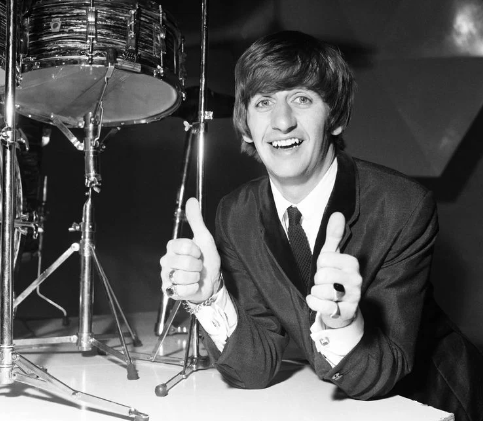
Let me start by saying that if you had asked me as a kid, without a pause, I would have chose Ringo. This may be because I was so familiar with the Beatles cartoon and Ringo always made me laugh. I also really enjoyed the almost all of the songs that he sang lead on. He went on to have some solo hits post-Beatles, too.
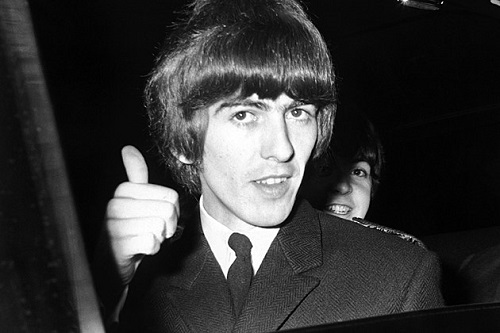
There are times I might have picked George Harrison, but probably not because of his Beatles stuff. Don’t get me wrong, he wrote the amazing song “Something,” which even Sinatra said was a beautiful love song. I also loved a lot of the early songs he sang on. Everybody’s Trying to Be My Baby is one of my favorites. George really gained my respect as a musician and songwriter post-Beatles.
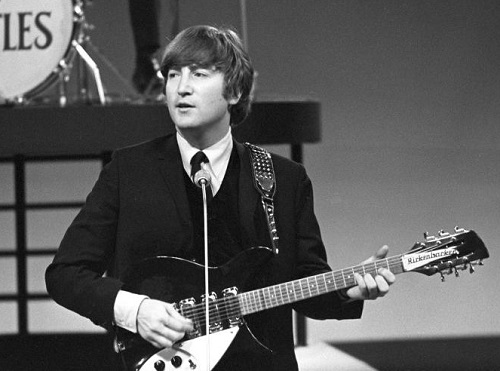
John was a quick wit and always made me laugh when I saw him in those early interviews. You cannot deny the songwriting power that he had both solo and with Paul McCartney. He really wrote some deep songs. To me, it is interesting to look back and see how he put much of his hurt, suffering and confusion into a song.
John was also a guy who wasn’t afraid to take a stand for something. Many of his solo songs are still as relevant today as they were when they were released. If only the people would listen to the lyrics of Imagine, maybe we’d see a change? Every Christmas I hear War is Over, yet every day when I go to MSN, there is some new story about Putin and World War III. Obviously, Give Peace a Chance is not something any of the world powers wants to do.
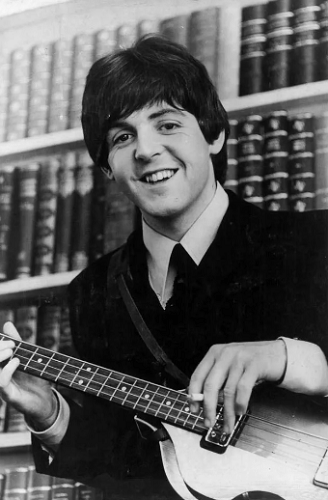
Then, there is Paul. I don’t have to really say much about his songwriting abilities. As a matter of fact, if you look at the output of the Lennon-McCartney machine, you cannot help but be in awe of the volume of work they put out. As a musician, he really was the greatest talent of the group. Before you get up in arms, let me prove it to you.
We know that he was best known for playing bass guitar for the Beatles. Growing up, his first instrument was the trumpet (given to him by his dad). He also knew how to play the piano, and did so on Beatles songs like Slow Down and Ob La Di Ob La Da. While it is a simple tune, you can hear Paul’s drumming skills on The Ballad of John and Yoko. As a matter of fact, he can play over 40 instruments including mandolin, cello, harmonica, harpsichord, and the ukulele. Watch his video from 2020 for Find My Way and you will see him playing many (FYI – it’s not my favorite McCartney song, but it is a good illustration).
While many songs had both John and Paul listed as writers, many were “all Paul.” Yesterday, Hey Jude, Blackbird, and Here There and Everywhere, just to name a few. Paul said once that the last one was the only one that John had ever complimented him on. John said in an interview that it “was all his” and was “one of my favorite Beatles songs.”
So why am I picking Paul? Honestly, if it wasn’t Paul it would be Ringo for the simple fact that they are still around. Both are still touring and in the public eye. I love watching Paul do interviews. He is fun to watch, tells great stories and isn’t afraid to be a part of something a bit silly.
One of my favorite McCartney moments was when Chris Farley interviewed him on SNL for the Chris Farley Show bit. How Paul kept a straight face through that still amazes me. Farley asks him, “Remember when they said you were dead? That was a hoax, right?” and Paul simply says, “I wasn’t really dead!” That always makes me laugh. How Paul keeps a straight face through the bit is beyond me. I wish there was a better quality clip…
There’s another great SNL bit where he and Martin Short and doing something for a Christmas Pageant. Martin says that he and Paul are a team but he is the only singer because Paul “cannot sing.” Paul plays the triangle in the bit. He misses cues and Martin screams at him through the whole bit. Paul is hilarious. The bit ends with Martin leaving and Paul asking, “Can I sing now?” Walls move and Paul walks onto the stage to sing Wonderful Christmastime, as himself.
Paul was fantastic on the Letterman show reminiscing about being there on the Ed Sullivan show. During the interview Dave says that they have been trying to get him on the show for years. He asks why it took so long to get him there, to which Paul says with a straight face, “I don’t like the show, David.” But THE highlight for me was to watch him do a rooftop performance of Get Back. I want to say that he wound up doing about a 40 minute concert from up there that night.
Another great Paul bit is when he shows up on James Corden’s show and does his Carpool Karaoke. The first song they sing together is Drive My Car and he’s having a blast doing it. The conversation between the two of them as they drive around is moving at times. Paul and James stop at Paul’s boyhood home and shares some great stories. The kicker is that they go to a pub that McCartney used to play at and he and his band surprise the patrons of it with a concert. It is worth a watch on Youtube –
As I write this, I have no idea what Beatle the other contributors have chosen. I am guessing that many of the pieces will be very music related. While I feel mine is also a bit music related, I also feel that what made Paul stand out to me was Paul being Paul. Paul, years away from the Beatles, talking about those days, the music, the memories, and the rest of the band. Paul, looking back at those early days that influenced and brought him to where he is today.
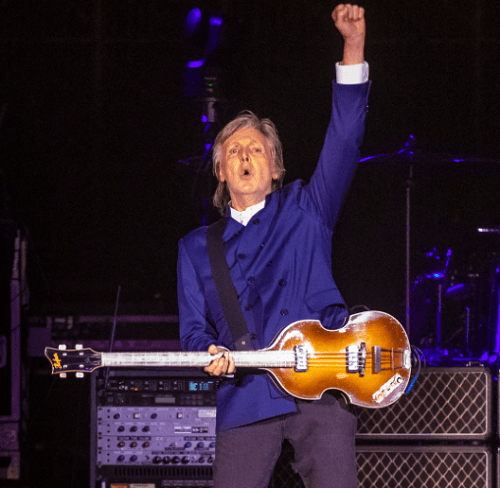
Not too long ago, country singer George Strait said he was done touring. George is 72. Sir Paul is 82 and still out there playing for sold out crowds for hours at a time. He is an artist who is always trying something new, while never forgetting his roots. He has a passion for the music and for his fans. He just seems to be that guy who’d be fun to hang out with.
Thanks to Dave for asking me to be a part of Turntable Talk. Thanks for another great topic. I love writing for it and love to see the responses from the other music lovers. Until next month … Thanks for reading.
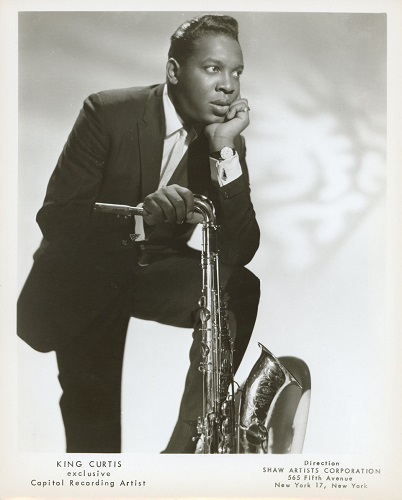
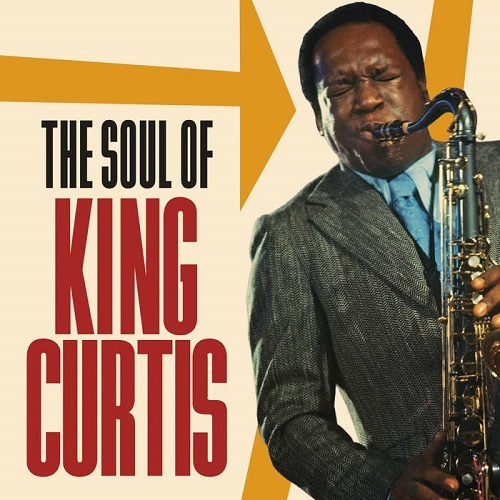
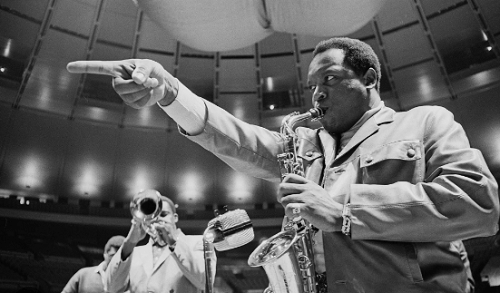
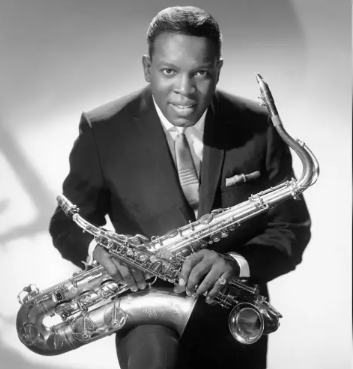
The song for today is a familiar one, despite its age. The reason I pick this one is to remember one of the greats who passed away on this day in 1971. Perhaps you don’t know him by his real name, Curtis Montgomery, or his adopted name Curtis Ousley. If you are a music lover, I would hope that you are familiar with his stage name – King Curtis. He was one of the all time great saxophonists and had quite a career.
Curtis began playing saxophone at age twelve and liked a variety of music. He turned down college scholarships to join up with the legendary Lionel Hampton band where he wrote and arranged music. In the early 1950’s he left the band to go to New York. He became an on call session musician for labels like Atco, Prestige, and Capitol Records. He recorded with Clyde McPhatter, Bobby Darin, Buddy Holly, Jimi Hendrix, Andy Williams and was on Waylon Jennings first record. He also made his own records like “Soul Twist” (with his Noble Knights) in 1962.
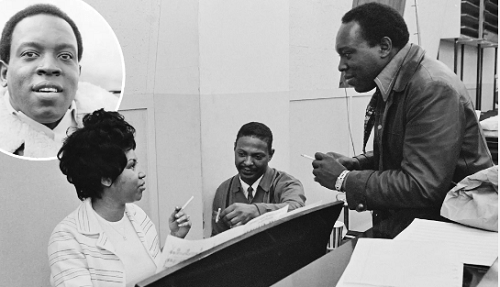
In 1967, Aretha Franklin covered Otis Redding’s Respect by flipping the gender and presenting it from the female point of view. The song featured Aretha’s sisters, Erma and Carolyn on the repeated “sock it to me” line and King Curtis on the saxophone solo.
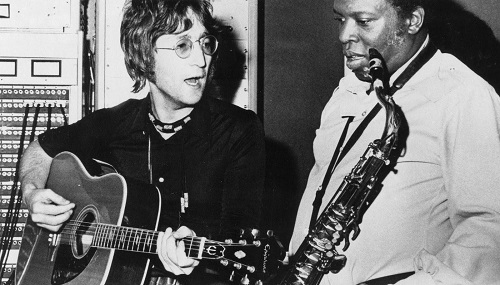
In February of 1971, John Lennon started recording tracks for his Imagine album. When Lennon, Yoko Ono and Phil Specter were mixing and finishing the album, John must have felt that he needed something more on a couple tracks. Apple’s Allen Steckler said, “John knew he wanted a sax player and it was his idea to use King Curtis. He asked me to get him. I found his agent and booked him. John played him the tracks and told him the kind of feel he wanted. He went into the studio and played his ass off. John loved it, as did Phil Spector and all of us.“
Curtis recorded his parts for the album in July of 1971. He can be heard on Lennon’s “I Don’t Want to Be a Soldier Mama” and “It’s So Hard.”
Long before all of that, Curtis decided to move towards playing rhythm and blues in part because it was a more lucrative career choice, but he also loved the music. It was in 1958 that he became widely known for his unique saxophone work when he played on The Coasters hit “Yakety Yak.” The sound that Curtis unleashed earned him some fame and influenced the sound of R&B the saxophone. He developed a strong relationship with The Coasters, becoming their go to sax man and contributing to arrangements as well on a string of hits that included “Charlie Brown,” “Along Came Jones,” “Shoppin’ For Clothes,” and more.
Saxophonist Boots Randolph was so influenced by the “Yakety Yak” solo that he altered the melody a bit and made it his own song called “Yakety Sax” (which played prominently on the Benny Hill Show). That song only further exposed the King Curtis sound.
On the night of August 12, 1971, Curtis was attempting to access the fuse box to his house (his central air conditioning system was tripping the breaker) when he confronted Juan Montanez, who was loitering on Curtis’s front steps with an unidentified female. A fight ensued and Montanez stabbed him. Curtis was found on the steps outside his apartment and was taken to New York’s Roosevelt Hospital where he died early on the morning of August 13, 1971. He was 37 years old.
So today, on the 53rd anniversary of his passing, check out the great King Curtis with the Coasters on the classic, “Yakety Yak.”
In 1965, The Beatles’ second feature film, Help! premiered at the London Pavilion Theatre in the West End of London. The musical comedy, which followed the success of A Hard Day’s Night, was a much larger production than its predecessor, finding the band and director Richard Lester shooting in a variety of international locations. The film’s soundtrack doubled as The Beatles’ fifth studio album.
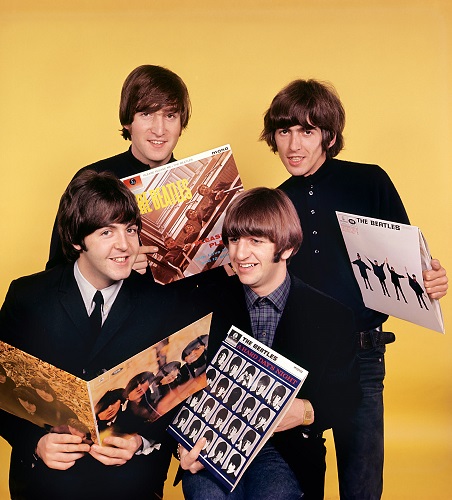
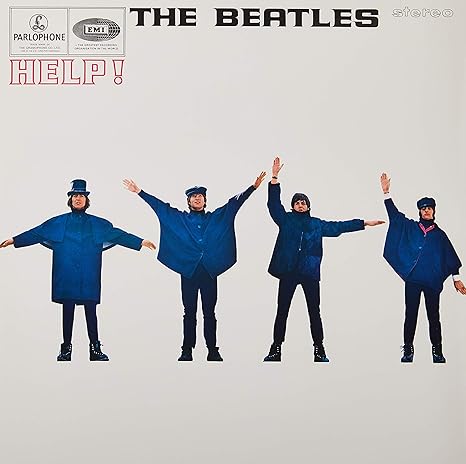
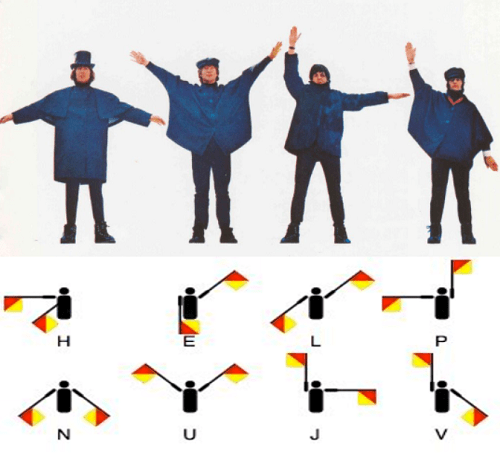
Ok, before I go on, I need to clarify the title of this blog. Just what in the world is NUJV? Originally, the album cover showed The Beatles spelling out the word “Help” using the semaphore system of communicating with flags, which was usually used by ships. The photographer, Robert Freeman, didn’t like the pose because it looked unbalanced. Instead, he had them pose in a more “balanced” way – that in semaphore spells the letters NUJV.
Apparently, only those who knew semaphore saw the issue.
This movie played a big part in the way another group portrayed themselves. Help! was used by The Monkees to prepare for their TV series. The Beatles showed off their individual personalities in their movies, which The Monkees made sure to emulate. By not presenting all members of the band as identical, it made the Beatles even more popular, as many of their fans picked a favorite.
There certainly are some great tracks on the album: Ticket to Ride, Yesterday, The Night Before, Act Naturally, Dizzy Miss Lizzie, You’ve Got To Hide Your Love Away, I’ve Just Seen a Face, and the title track – Help! (Which is what I want to feature today.)
According to Lennon’s cousin and boyhood friend Stanley Parkes, “Help!” was written after Lennon “came in from the studio one night. ‘God,’ he said, ‘they’ve changed the title of the film: it’s going to be called ‘Help!’ now. So I’ve had to write a new song with the title called ‘Help!’.”
Fun Fact: The original title to the title song and the movie was “Eight Arms To Hold You,” and the first copies of the single said it was from the movie “Eight Arms to Hold You.”
Originally, John Lennon wanted this to be a much slower song. He was convinced, however, that by speeding it up, it would sound “more commercial” and would naturally sell more albums.
The song itself runs just 2:18, but packs in 267 words! This makes it one of the most lyrically dense hits of the era. It starts and ends on a vocal, and there are two vocal lines running throughout the song, as John Lennon sings lead while George Harrison and Paul McCartney do backgrounds, singing some of the same phrases either before or after Lennon. There are only a few seconds in the song where somebody isn’t singing.
Lennon admitted that the song truly was a “cry for help!” He has described this time of his life as his “fat Elvis period.” In a 1971 interview with Rolling Stone, Lennon said this is one of his favorite Beatles records, because, “I meant it – it’s real.” He added: “The lyric is as good now as it was then. It is no different, and it makes me feel secure to know that I was that aware of myself then. It was just me singing ‘Help’ and I meant it.” Paul McCartney helped Lennon write the song, but did not realize it was actually John calling for help until years later.
Writer Ian MacDonald describes the song as the first crack in the protective shell Lennon had built around his emotions during the Beatles’ rise to fame, and an important milestone in his songwriting style. In January of 1980, John told Playboy magazine, “The whole Beatles thing was just beyond comprehension. I was subconsciously crying out for help”.







 Various Ramblings of a Nostalgic Italian