The Music of My Life – Decade Extras – The 1990’s Part 2

This is sort of a continuation of the Music of My Life feature. It focused on music from 1970-2025. It featured tunes that have special meaning to me, brought back a certain memory or a tune that I just really like. I found that with the first three decades, there were songs that I didn’t feature. So I sat down with my original lists and selected some songs that “bubbled under,” so to speak.

I figured a good way to present them was to focus on a decade. 10 years = 1 song per year = 10 songs. Last week we looked at the 90’s. This week I have 10 more from the 90’s. Next week we’ll move to the 2000’s. So, let’s check out a few “Decade Extras.”

1990

To kick off the decade, I chose a song that is still played today and remains one of the most requested songs at parties and weddings. When Vanilla Ice hit the scene, many people mocked him, but all these years later, his song Ice Ice Baby remains a favorite.

In a 2016 interview, he explained that the song was based on a real life scenario. “The song tells you the story. It’s me, with my top down, in my 5.0 Mustang, cruising down A1A Beachfront Avenue. It’s a weekend experience that turned into an amazing song. It’s timeless. I still love singing it, and it never gets old.”

The song samples “Under Pressure” from Queen and David Bowie. Songfacts.com says: Vanilla Ice never got permission to use it. No lawsuit was filed, but it is likely that Vanilla Ice agreed to pay Queen and Bowie a settlement. According to industry insider Hans Ebert, Brian May of Queen first heard this song in a disco in Germany. He asked the DJ what it was, and learned that it was #1 in the US.

Ice Ice Baby

1991

In 1991, I was working at my first country station. I was familiar with many of the legends that were mixed into the playlist like Willie Nelson, Waylon Jennings and Johnny Cash. My dad listened to many of them, so I heard them, too.

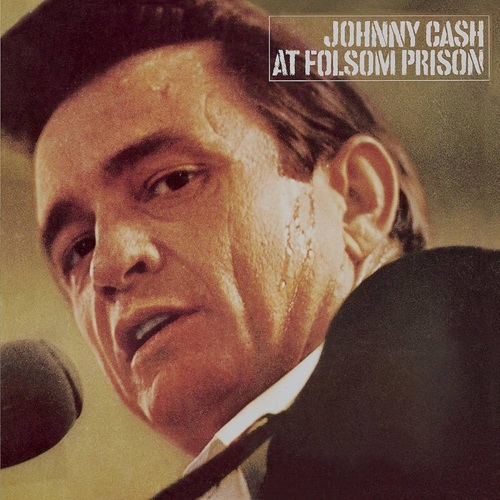
The song Get Rhythm was a Johnny Cash song from 1956 as the B-side to I Walk The Line. Johnny’s music has influenced many an up and coming country singer. In 1991, Martin Delray decided to cover the song for his debut album. It had to be a thrill for Delray to have Johnny sing with him on the track AND appear in the music video.

I’ve always loved this song.

Get Rhythm

1992

Annie Lennox is best known for being in the 1980’s group the Eurythmics. It was her extremely successful and inventive duo with Dave Stewart. In early 1990, the group split and Lennox took time off to work on charitable endeavors and focus on her home life. In 1992 she released her first solo album, Diva.

The third single from the album was Walking on Broken Glass. Pop Matters Magazine described the song as a “gloriously weird pop song with one of the oddest intros: prancing strings, strutting keyboards, and the enigmatic line”. It went on to claim that “all of that make the track sound like nothing else on pop radio in 1992.” Honestly, I think that is why I like the song – it stood out.

The video was based on the 1988 movie Dangerous Liaisons, with elaborate costumes inspired by film, which was set in France during the 1700s. Annie Lennox recalled the song’s video in a blog promoting her 2009 greatest hits album:

“This was a wonderful video to create. There were some wonderful people involved – John Malkovich and Hugh Laurie (before he had an American accent)! That was tremendous fun. The idea of it being a period piece, like Les Liaisons Dangereux. The alternative title for ‘Broken Glass’ could easily have been ‘Hell hath no more fury than a woman scorned.’ The video is very wry and tongue-in-cheek. People can take me a little seriously sometimes, but I do actually have a rather radical sense of humor.”

Walking on Broken Glass

1993

Karaoke introduced me to the Gin Blossoms. I was going out the the bars a lot around this time and every once in a while someone would sing one of their songs. When I started driving for EDS and listening to the radio, I heard them much more.

Found Out About You was written by Doug Hopkins for the group’s first album, 1989’s Dusted. The album, however, was on a small label and really didn’t get noticed. When the band signed to A&M, they rerecorded the song for their New Miserable Experience album and it was released as the fourth single.

Singer Robin Wilson says, “The first time we ever demo’d “Found Out About You” we knew it was a hit song. I remember that being a significant event in my mind, when we were in the studio doing that song. I was sitting out on my car and what I imagined to be a hit song was a bunch of kids dancing to it at the Devil House. We were listening to it and Bill [Leen, the bassist] looked over at me and said, “Hey, wow, this song is going to get you a lot of women, isn’t it?” I was just like “Yeah, whatever.”

I was hooked from the opening guitar…

Found Out About You

1994

I heard Round Here by Counting Crows long after it had been released. This was one of the albums that my ex loved to listen to, so I hear it on long drives a lot.

Adam Duritz wrote the song and says it is sort of autobiographical. He wrote the song when he was in college and part of a band called the Himalayans. Members of that group helped with some lyrics and the music. When he formed Counting Crows, he brought the song with him and they reworked it a bit. Wanting to give everyone their due, Adam made sure to credit everyone in both bands with writing the song, so “Round Here” has eight different writers listed on the composer credits.

Songfacts.com says, The theme of childhood promises not panning out is one that shows up a lot in Duritz’ lyrics. In the chorus of this song, he lists some sayings that our parents often say: “Around here we always stand up straight,” “Around here we’re carving out our names.”

Adam says, “You’re told as a kid that if you do these things, it will add up to something: you’ll have a job, you life. And for me, and for the character in the song, they don’t add up to anything, it’s all a bunch of crap. Your life comes to you or doesn’t come to you, but those things didn’t really mean anything. By the end of the song, he’s so dismayed that he’s screaming out that he gets to stay up as late as he wants and nobody makes him wait; the things that are important to a kid – you don’t have to go to bed, you don’t have to do anything. But they’re the sort of things that don’t make any difference at all when you’re an adult. They’re nothing.”

Round Here

1995

When You Say Nothing At All was originally a hit for country singer Keith Whitley in 1988. It was co-written by Paul Overstreet. I had played it when I was at that first country station. I thought it was a great song lyrically, but wasn’t a fan of his voice. He died in 1989 of alcohol poisoning.

When some of Whitley’s friends decided to put together a tribute album to Whitley, they had other singers recording his songs. It was Alison Krauss who chose to cover “When You Say Nothing At All.

When I heard her version of the song, it stopped me in my tracks. Her voice is so beautiful and perfectly fit the song. Her voice took the song to an entirely different level. She knocked it out of the park!

When asked by Songfacts what he thought of the Krauss version, Overstreet said when he first heard it, “All the hair stood up all over my body. I was like, ‘Are you kidding me!?’ She sang it great.”  It still gives me goosebumps!

When You Say Nothing At All

1996

I think whenever guys have a “guy’s night” or gals have a “gal’s night” they begin to talk and tell stories. “My wife/girlfriend does that, too!” or “Why is it that all men keep shirts or socks with holes in them?” You know, that kind of thing.

I have been guilty of asking male friends, “How come they can do that and we can’t?” It all falls into that “Battle of the Sexes” thing. Music has focused on those male/female differences for years, but I hadn’t heard it put the way Mindy McCready did in 1996.

It was at my second country station that I heard “Guys Do It All The Time.” It is the ultimate switcheroo song from the woman’s point of view. The song itself does a great job in conveying this, but the video only enhances it with gal’s doing guy things.

I saw Mindy in passing at a Radio Seminar, and she was even more beautiful in person. It was sad to see her life spiral out of control before her passing.

Guys Do It All The Time

1997

Picture it – you are getting ready to go on a trip or maybe you are being shipped off for the military. This is the last night you will be with your special someone for a while. You’d want it to last forever and make it special right? That’s the premise of Save Tonight by Eagle Eye Cherry. He wants to cherish this one last night spent with his love. He explains that you can’t fight changes, all you can do is accept them.

This was the last song Cherry wrote for his debut album and he wanted it to be special, “something that would stand the test of time.” He achieved his goal – two decades later, the song is still in rotation on throwback radio stations and is a fixture on the setlists of countless cover bands.

Songfacts says that the black-and-white music video was filmed in Sweden and follows Cherry in the roles of several different characters whose lives intersect, including an amiable young man, a bespectacled butcher, a robber, a truck driver, a busker, and a homeless man.

Cherry is actually a trained actor, having attended New York City’s School of Performing Arts, with credits that include a bit part on The Cosby Show and a stint as an ex-con on the short-lived TV drama South Beach.

Save Tonight

1998

Another song that really stood out to me on the radio was Iris by the Goo Goo Dolls. That opening guitar always seemed to cut through whatever was going on. It was almost hypnotic.

Songfacts says that lead Goo Johnny Rzeznik wrote this song for the movie City Of Angels, where it is sung from the perspective of Nicolas Cage’s character. In the film, Cage plays an angel sent to help humans make their transition to the afterlife. When he falls in love with a human (played by Meg Ryan), he must choose between love and eternal life.

Johnny explained how the film influenced the song: “I was thinking about the situation of the Nicolas Cage character in the movie,” he said. “This guy is completely willing to give up his own immortality, just to be able to feel something very human. And I think, ‘Wow! What an amazing thing it must be like to love someone so much that you give up everything to be with them.’ That’s a pretty heavy thought.”

Iris was nominated for Grammys in the categories Song of the Year, Record of the Year, and Best Pop Performance By Duo Or Group. It didn’t win any of them.

Iris

1999

It was around 1998-1999 that I took a leap of faith after deciding to give up on radio. I had received a call from a station in the Flint area. They had called the Detroit country station that I had just resigned from asking if they knew anyone who wanted full time work. The boss talked me up and gave them my number. It was from there that I would spend the next 10-12 years working full time in Country radio.

LeAnn Rimes was making quite a name for herself around this time. She had burst on the scene in 1996 with her debut single “Blue.” She was only 13 years old at the time!

In 1999, she recorded an album of country cover songs. It included Patsy Cline’s Crazy and She’s Got You, Hank Williams Your Cheating Heart and Lovesick Blues, and other classics. The album was entitled “LeAnn Rimes” and was her fourth studio album.

If you have ever been in a situation where your lover broke up with you, only to begin dating one of your closest friends, you know how much that hurts. How do you handle that situation? In country radio, you write a hit song about it. That song was only original song on the album – Big Deal.

What I loved about the song is the slow and deliberate opening verse. It almost has a gospel song feel to it. She is lamenting about letting her man get away and eventually winding up with her friend. Then the tempo kicks in and she let’s her rival have it. She’s tired of her bragging …

Big Deal

And that is a wrap on the 1990’s. You may remember that the further along I got in the original series the less songs I was able to come up with. I think I have enough to look at the early 2000’s and officially put this feature to bed. Next week we’ll glace at 2000-2009. I hope you’ll come back then.

Thanks for reading and listening!

Movie Music Monday – Walk The Line

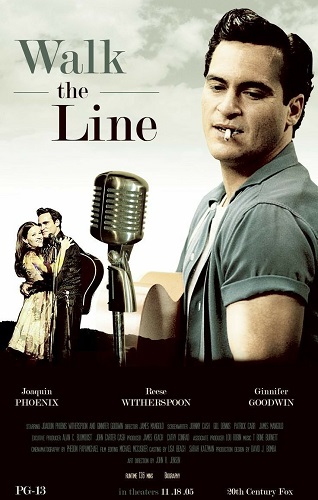
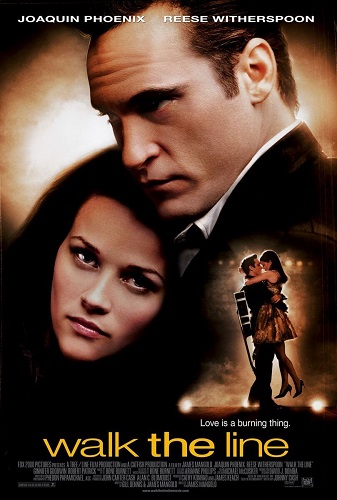
On this day in 2005, Walk The Line opened in US theaters. The biographically film starred Joaquin Phoenix as Johnny Cash and Reese Witherspoon as June Carter.

The movie was based off of two Cash autobiographies. The first being “Man In Black: His Own Story in His Own Words”” from 1975. The second: “Cash: The Autobiography” from 1997.

The film was praised by many and won numerous industry awards, including an Oscar for Reese Witherspoon. However, some critics found the film too constrained by Hollywood plot formulas of love and loss, ignoring the last twenty years of Cash’s life and other more socio-politically controversial reasons he was considered “the man in black.”

Johnny’s daughter, Roseanne Cash, had mixed feelings about the film. She did not enjoy the “painful” experience of seeing the film, “because it had the three most damaging events of my childhood: my parents’ divorce, my father’s drug addiction, and something else bad that I can’t remember now.  I don’t resent them making it – I thought it was an honorable approach.”

The soundtrack featured nine songs sung by Joaquin Phoenix, and four songs by Reese Witherspoon. It was well received and won a Grammy Award for Best Compilation Soundtrack Album for Motion Pictures. While there are so many songs to choose from on this soundtrack, I will go with my favorite Johnny Cash song – here is Ring of Fire.

The Music of My Life – 1985

Welcome back to The Music of My Life, where I feature ten songs from each year of my life.  In most cases, the ten songs I choose will be ones I like personally (unless I explain otherwise). The songs will be selected from Billboard’s Year-end Hot 100 Chart, Acclaimed Music, and will all be released in the featured year.

I turned 15 in 1985. It was sophomore year and I had moved up from the Freshman band to the Concert/Marching band. It is the year that consisted of many of my favorite songs that I recently posted about in this week’s Turntable Talk blog. It was also the year that I went on my first date and my first dance. How did the music of 1985 play into my life? Let’s find out…

My first pick is a soulful tribute to two amazing singers who passed away in 1984. It is also the only hit that the Commodores had after Lionel Richie left the group. I am talking, of course, about Nightshift.

The song is a tribute to singers Marvin Gaye and Jackie Wilson. Marvin was 44 when he passed away, while Jackie was only 49. In 1974 the Righteous Brothers had a hit with Rock and Roll Heaven, where they picture fallen stars like Jimi Hendrix and Janis Joplin forming a band in heaven. This was supposed to be a soul version where Marvin Gaye and Jackie Wilson are on heaven’s nightshift, playing some sweet sounds.

I love how the intro starts with that percussion lick and the smooth bass line that works its way to the vocal. It is such a funky, soulful and loving tribute to Marvin and Jackie – two legends!

Nightshift

As a sophomore, I ventured out of my comfort zone a bit and decided it was ok to go to high school dances. Mostly, the guys just hung out at a table and talked. However, after my first official date, I began actually wanting to go to dances with a female date. While I cannot remember for certain, I am pretty sure that one of my first dances ever with a girl was to Crazy For You by Madonna.

Admittedly, I am not a huge fan of hers. My brother, on the other hand, loved her! There are a few songs that I do like by her, and this is one of them. What I remember most about dancing to this song was that she was singing “crazy for you” and I wasn’t sure what kind of message that may or may not have been sending to my date. I was also thinking about making sure I was swaying the same way she was and NOT stepping on her toes. It had to be a very uncomfortable dance for her.

Fun Fact: Madonna reportedly only took one take to record this song.

This was recorded for the soundtrack to the wrestling film Vision Quest, which also featured a guest appearance by Madonna herself, who played a singer at a local restaurant. After the success of this song, the film was renamed Crazy For You in some European countries to capitalize on the song’s popularity.

Crazy For You

How does that saying go? Everything old is new again? I don’t know. What I do know is that Netflix is currently airing the 4th installment of the Beverly Hills Cop Franchise and I hear it is doing well. It was back in 1984 that Eddie Murphy first played Detroit Cop Axel Foley. The character’s name is what led to the title of my next song, Axel F.

Before the title was settled on, it went by a different name. During production of the movie, it known as the “Banana Theme,” as it was slated for a scene where Axel Foley shoves a banana in the tailpipe of police officers intending to pursue him. The composer was German musician Harold Faltermeyer and truly, this song was all him.

According to Wikipedia, he  recorded the tune using five instruments: a Roland Jupite-8 provided the distinctive saw lead, a Moog modular synthesizer 15 provided the bass, a Roland JX-3P provided chord stab brasses, a Yamaha DX7 was used for the marimba sound, and a LinnDrum was used for drum programming. Faltermeyer played every single instrument.

He was also the musical director on Beverly Hills Cop and did the score for the film. The soundtrack went to #1 in the US and won a Grammy for Best Album Of Original Score Written For A Motion Picture Or A Television Special. The song topped out at #3.

We played this at a concert one year in band, and though it sounds pretty easy, it was a bit tougher than I anticipated. It may have been in a weird key. It was one of many fun numbers we played.

Axel F

There are some songs that when you hear them, you cannot help but feel happy. My next pick is one of those songs. I have rarely played this at a party or wedding where it didn’t cause people to just get up and dance.

Remember the feeling you got when you first found out that someone truly loved you? There was that feeling of joy that just overflows from you! You can feel that joy and excitement in the vocals by Katrina Leskanich in Walking on Sunshine. It just makes you feel good!

The wife of one of my second cousins threw him a birthday party I DJ’d. The song was on the “must play” list. I remember having a conversation about the song and she said that it was the kid of song that you should play the minute you wake up in the morning. She said that it would just set the mood for the day. She always seemed to be in good mood when I saw her, so maybe she did just that!

Songfacts says, The video got a lot of airplay on MTV. It shows the band hanging around London, with Katrina very colorful and bouncy, and her bandmates more subdued. She had to make her own sunshine, as there was none in London – it was a typically cloudy and cold day.

Katrina’s look was anti-glam, with tennis shoes and the kind of fashions you’d find at the mall. In interviews from this time, she often took shots at singers like Madonna and Pat Benatar for adopting more suggestive looks.

Teen boys didn’t seem to mind….

Take four major country superstars, all who are friends with each other, pitch them an old song and tell them they should record it together and you get one really neat song. That’s the basic story of how Willie Nelson, Waylon Jennings, Kris Kristofferson, and Johnny Cash became The Highwaymen.

Country legend Jimmy Webb wrote the song about a soul with incarnations in four different places in time and history: as a highwayman, a sailor, a construction worker on the Hoover Dam, and finally as a captain of a starship. Webb released his version in 1977, it was covered in 1979 by Glen Campbell, who took the song to Johnny Cash, who was recording with Nelson, Jennings and Kristofferson.

The story goes that the four were all together in Switzerland doing a television special and decided that they should do a project together. While the four were recording their first album, Johnny’s friend Marty Stuart played the song for Cash, saying it would be perfect for them. It had four verses, four souls, and four of them.

The song led to the name of their supergroup, their album, and of course, their first single. Each of the four verses was sung by a different performer: first Nelson as the highwayman, then Kristofferson as the sailor, then Jennings as the dam builder, and finally Cash as the starship captain. Webb later observed, “I don’t know how they decided who would take which verse, but having Johnny last was like having God singing your song.”

No personal story to go with this one, I just like it!

I am embarrassed to say that up until 1985, I had never seen a James Bond movie. I was familiar with the fact that Roger Moore played Bond. My mom would rent Bond films on occasion and also watch them on cable. Moore played a Bond-like version of himself in Cannonball Run in 1981, but I had never really seen him AS Bond.

So when a friend of mine asked if I wanted to go to the show with him we saw A View to a Kill. It was actually neat to see this in the theaters. I had often seen the Bond movie intro being parodied, but to see it kick off the film and to hear the song was all new to me. I was grateful to be able to see it.

Knowing Duran Duran and some of their songs, I was surprised that they did the theme song. The story of how they got it is interesting. Songfacts says: “according to the bassist John Taylor, was that he approached the longtime Bond producer, Albert R. ‘Cubby’ Broccoli, while extremely intoxicated when they were both at a party. He stated that he was a long time fan (Major Bond geek would be more accurate. An Aston Martin was said to be one of his first “rock star” purchases, and he frequently mentioned his Bond video collection in interviews) of the series, but the music for the last few movies had been mediocre. He then offered to have his band fix the problem and Broccoli took the idea under advisement. Being asked to perform the theme song for a James Bond movie is a great honor, but the requirement to include its title in the lyrics can be challenging. Just ask John Taylor. “To this day we are forever grateful that we didn’t get Quantum Of Solace,” he said.

It is the only theme from a Bond movie to hit #1 in America.

A View To A Kill

I’ve made it all the way to 1985 and have yet to feature a Prince song. Not that I don’t like him, he was a musical genius. I am still blown away by his Rock and Roll Hall of Fame performance and his Superbowl Halftime Show. He was a talent, no doubt. My only real connection to him was that we play Let’s Go Crazy in Marching Band one year.

However, I can connect this one to me because it was on my 15th birthday that Prince released Raspberry Beret. Prince originally recorded “Raspberry Beret” in 1982, but re-worked it with his newly re-formed Revolution backing band.

At the time this was released, Prince was under fire from Tipper Gore during the notorious PMRC witch hunt, which placed two of his songs on the list of the “filthy 15.” So this is one of the songs where Prince started making his lyrics more family friendly. But if you really listen closely, you know that Prince still slipped in a “filthy” reference.

Raspberry Beret

1985 was the year that one of my favorite movies was released – Back to the Future. If you’ve read this blog for any length of time, I reference the movie a lot and have read my fair share of time travel novels. It is a masterpiece and I will always watch it when it is on.

When Marty realizes he’s going to be late for school and he leave’s Doc’s place on his skateboard, Huey Lewis and The News’ The Power of Love makes the perfect song to accompany the scene. How did Huey become involved?

The film’s director Robert Zemeckis wanted Lewis to do the song – Huey Lewis & the News were rising stars with a modern sound that worked well in the movie, which takes place in both 1955 and 1985. Lewis had never done film work and hesitated at first, since he didn’t want to write a song called “Back to the Future.” When Zemeckis told him that the song didn’t have to be about the movie, Lewis accepted the challenge.

All Back to the Future fans know that Lewis has an uncredited cameo in this movie. Lewis has an uncredited cameo in this scene, where he plays a teacher who is judging the auditions. An early scene in the film has Marty McFly and his band The Pinheads auditioning for the high school dance. Huey plays a teacher who is judging the auditions. The group plays the beginning of “The Power of Love,” but before Marty can sing a note, Lewis cuts them off, telling them, “I’m afraid you’re just too darn loud.”

The music video doesn’t contain scenes from the film, but does feature an appearance by Christopher Lloyd in character as Doc Brown. We see him pull up in the DeLorean outside of a club where Huey Lewis & the News are performing.

The Power of Love

Yesterday marked the 34th anniversary of the passing of Stevie Ray Vaughn. I debated posting one of his songs for Tune Tuesday, but opted for a more uplifting post.

I was late to the SRV party. I was introduced to him after he passed away. I marveled at his playing and his vocal abilities. I really fell in love with his music.

I wrote about this song before, probably for one of the Song Drafts we were doing. It is Stevie’s cover of the old Hank Ballard song, “Look at Little Sister.”

Look At Little Sister

My final pick is another fun song. It reminds me a lot of the Kinks Come Dancing (which I just wrote about for Max’s PowerPop blog) because of the sound of the opening keyboards.

The Dire Straits were coming off the success of Money For Nothing which really established the band on MTV and on Top 40 radio in America. The fourth single from their Brothers In Arms Album was Walk of Life.

Mark Knopfler wrote this song to celebrate the street buskers of London, hence the references to “Be-Bop-a-Lula” and “What’d I Say,” which were two standards that might be part of a singer’s repertoire in the mid-’80s. Before the lyrics kick in, Knopfler does a few “who-hoo”s, which help create a whimsical vibe. When he spoke with the BBC in 1989, he expressed some “woo-hoo” remorse. “There’s too many ‘woos’ at the beginning of ‘Walk of Life,'” he said. “I heard it on the radio the other day and thought, Oh my God! What was I doing that for?”

Walk of Life (US)

Walk of Life (UK)

What song defined 1985 for you?

Next week we’ll share some songs from 1986. As I look at the music from that year, there were some great music videos! The year will feature my high school class song, my first attempt at Karaoke – before there was Karaoke, and two fantastic cover songs!

See you then!

TV Show Draft – Round 4 – Columbo

Welcome to my fourth round pick in the Hanspostcard TV Draft. Last round I chose Perry Mason, which was the ultimate court room “whodunit!” You never knew who committed the crime until the end of the episode. I thought it appropriate to choose Columbo for this round, because it is almost the exact opposite of Perry Mason, in that you know who the killer is right from the get go. It was called a murder mystery where the murder was no mystery.

The show pioneered the “inverted mystery” technique/format. Almost every show begins with a crime and the audience knows who the culprit is. Then enter the LAPD’s Lieutenant Columbo who spends the remainder of the show looking for clues, pestering the criminal, and eventually solving the case. The show was not a “whodunit” like Perry Mason, but rather it has been described as a “how’s he gonna catch him?”

The first season of Columbo began in September of 1971. I know that most of the shows being picked by others in the draft ran on a weekly basis. Columbo did not. Most episodes were featured as part of the NBC Mystery Movie rotation. It ran for 35 years with a total of 69 episodes.

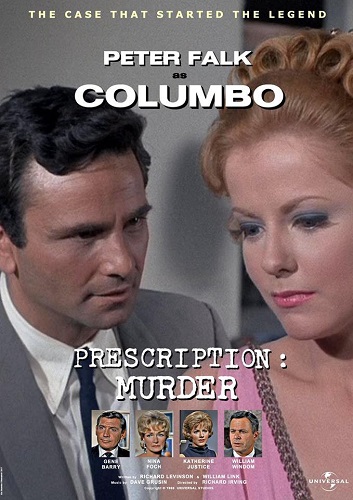
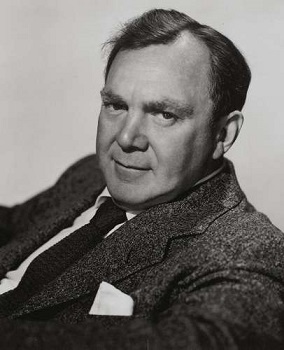
The show was created by schoolmates Richard Levinson and William Link. The character first appeared in 1960 on The Chevy Mystery Show in an episode called “Enough Rope.” That episode was then adapted for a stage play entitled Prescription: Murder, which was then adapted for television in 1968. Columbo was played by Bert Freed in Enough Rope and by Thomas Mitchell in the stage version in 1962.

The writers of the show had originally wanted Lee J. Cobb to play Columbo, but he was unavailable. They next approached Bing Crosby, who turned down the role because it would take away from his time on the golf course. Peter Falk came across the script for Prescription: Murder and contacted Levinson and Link and said, “I’d kill to play that cop!”

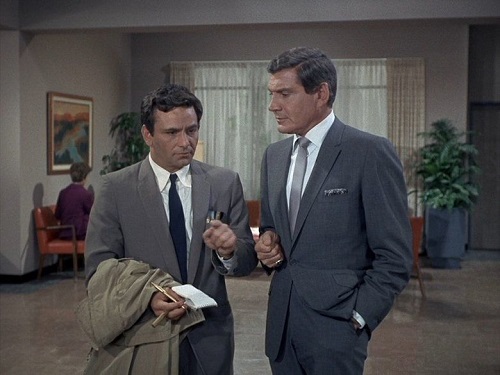
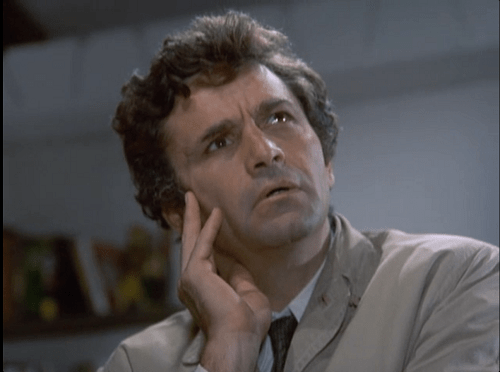
Peter Falk and Gene Berry

They weren’t really sure about Peter Falk, who was only 39 at the time. They envisioned the character as being older. He won the role, and he plays him as a much straighter, cleaner, and firmer Columbo in the first episode. It was a huge hit! The Columbo quirks and mannerisms that fans came to know and love would develop as he continued to play the role.

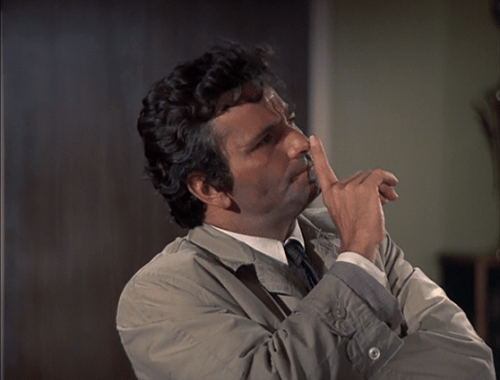
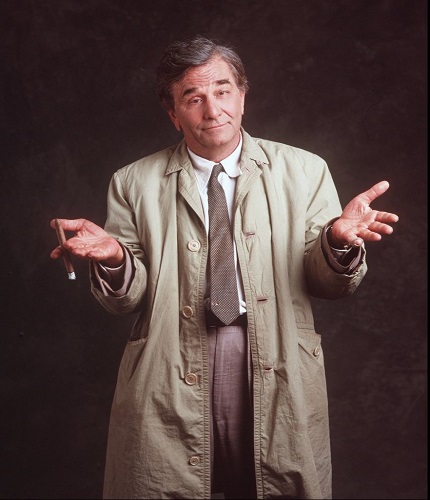
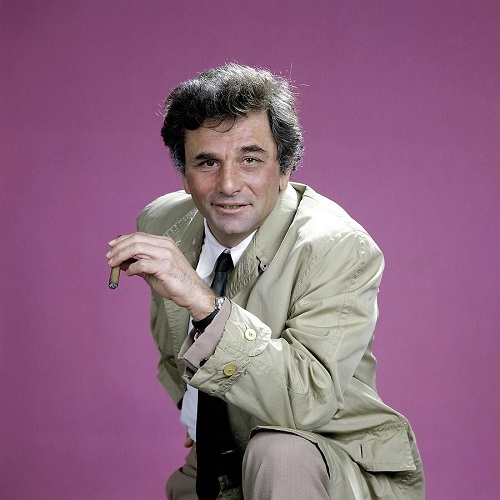
Peter Falk really threw himself into the role. He wore his own clothes. The suit was one that he had dyed brown, because he felt that looked better. He wore his own shoes. The world famous raincoat was one that he purchased in New York City while caught in a rainstorm. It cost him a mere $15. One difference between Peter and Columbo – Columbo preferred cigars, while Falk enjoyed cigarettes.

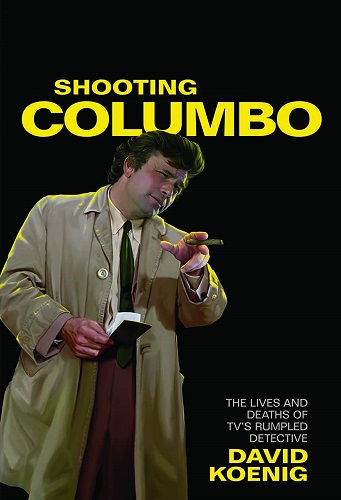
I am currently reading a fantastic book on the show written by David Koenig.

Columbo is like no other cop. Koenig says, “There was nobody or nothing like Columbo at all before him. All the detectives were these hardboiled, emotionless, tough guys. And he was the opposite of that in every way. He hated guns and violence.” He describes the show this way, “Columbo wasn’t really a cop show. It was a drawing-room mystery done backwards with a cop as the lead. It was an anti-cop show.”

During the first few seasons of Columbo, it really set the standard for what some refer to as “event television.” There were some fabulous guest stars who played the murderer. Those stars included Gene Berry, Jack Cassidy, William Shatner, Dick Van Dyke, Ruth Gordon, Robert Vaughn, Anne Baxter, Janet Leigh, Robert Culp, Donald Pleasence, Eddie Albert, Leonard Nimoy, Johnny Cash, and Patrick McGoohan – just to name a few!!

After the murder, when Columbo finally shows up, his genius is hidden by his often confused look. It is also hidden by the way he is dressed and by his friendly demeanor. He is looked upon as a stupid fool. The killer has no idea what a brilliant man Columbo is and they are lured into a false sense of security. The killer becomes even more arrogant and dismisses Columbo as a dope, only to be caught in the end.

One of the things that certainly added to the character was his little idiosyncrasies like fumbling through his pockets for a piece of evidence, asking to borrow a pencil, or being distracted by something in the room in the middle of a conversation. Falk adlibbed those moments on camera while film was rolling as a way to keep the other actors off-balance. He felt that it really helped to make their confused and impatient reactions to Columbo more genuine. It really truly worked.

On the show, the murderer is often some famous person, or someone who is cultured or from high society. Either that, or some sort of successful professional (surgeon, psychologist, etc…). Paired up against Columbo, it is gold! The interactions between the two become such a marvelous part of the show and brings out Columbo’s character and cunning genius!

In those conversations Columbo is often confused. He doesn’t know anything about classical music, chess, fine wines, photography or pieces of art. One article on the show stated that his “ignorance” will often “allow him to draw in the murderer with a cunning humility that belies his understanding of human behavior and the criminal mind.”

The last episode of Columbo aired in 2003 and was entitled “Columbo Likes the Nightlife.” Falk had planned for one final episode. It was to be called “Columbo’s Last Case” which was to begin at his retirement party. There was a lack of network interest and with his age and failing health, the episode was never to be.

Columbo remains as popular as ever. It was one of the most watched shows on streaming platforms during the pandemic. Author David Koenig says about the show, “It has stood the test of time for 50-plus years now. That character is still vibrant and alive, appealing to people. People love that central character, that basic format, the fact that it’s not political, it’s not violent, it’s not all the things television shows are today, it’s something different. And that is charm. That’s what people love about it.”

Columbo Facts:

  • Steven Spielberg directed the first episode of Season 1 – Murder by the Book.
  • Peter Falk won 4 Emmy Awards for his portrayal of Columbo (1972, 1975, 1976, and 1990)
  • He also won a Golden Globe Award for the role.
  • Patrick McGoohan played a murderer more times than any other actor – 4 times. Jack Cassidy and Robert Culp each had 3 times, William Shatner and George Hamilton each played a killer twice.
  • Columbo’s name is never revealed – although a close up of his badge in the first season says it is ‘Frank.’ The creators of the show have stated that his first name was never known, so take that however you want to.
  • Columbo drives a 1960 Peugeot 403 convertible.
  • Columbo’s favorite food is chili and black coffee is his drink of choice.
  • In the 1972 episode entitled, “Etude in Black,” Columbo rescued a basset hound from the dog pound. The dog could be seen in many other episodes, and was as close to a sidekick/partner as Columbo ever got.
  • In 1997, the episode Murder by the Book was ranked #16 in TV Guide’s “100 Greatest Episodes of All Time” list.
  • In 1999, Lieutenant Columbo was ranked #7 on TV Guide’s “50 Greatest TV Characters of All Time.”
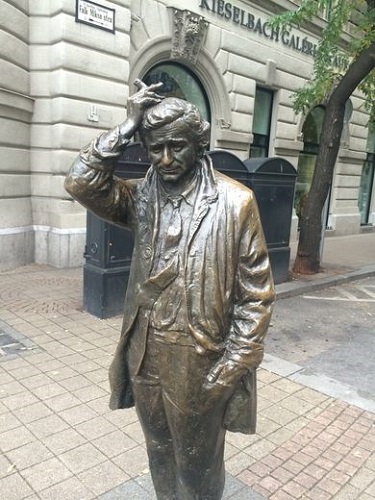
  • There is a bronze statue of Columbo (and his dog) in Budapest, Hungary. It was unveiled in 2017. Peter Falk is rumored to be a distant relative of the well-known Hungarian politician Miksa Falk (1828-1908).
Columbo Statue in Budapest, Hungary

I thought I would close with little treat for you. In one of the Dean Celebrity Roasts, Frank Sinatra was the Man of the Hour. Now, these roasts were often edited down to make sure all the best stuff was shown on TV. In Lee Hale’s book, he stated that there was only one performance that was shown in its entirety – Peter Falk’s appearance during the Sinatra roast.

Falk appears from the audience – as Lt. Columbo. The entire 11 minute bit is just priceless. It is a must see. Enjoy:

My “Go to” Karaoke Song(s)

It has been some time since a “Daily Writing Prompt” moved me enough to use it as a blog idea. Today’s though, was definitely one I could use. The Prompt? “What is your ‘go to’ karaoke song?”

I have to admit, I have sung a lot of karaoke. I did this mainly when I was in my mid 20’s to early 30’s. My friends and I had a couple places that we’d go and sing at. Looking back at it, I have to laugh because they were all dive bars.

I started singing karaoke with my old morning show partner, who actually COULD sing. He had a great voice and often sang ballads from the Great American Song Book. It was always funny because you’d have these people up there singing Johnny Cash, The Rolling Stones, Queen, and Prince. Then he would get up and sing something from Robert Goulet!

At one point, between radio jobs, I actually hosted karaoke, which I thought would be fun, but it really wasn’t. It was then that I realized there were plenty of people who “thought” they could sing, but couldn’t. They come up to you with requests like, “Put some reverb on my voice” or “Pitch the song up or down” or “Give me more volume on my microphone” … It was crazy! These people are up there thinking their Shania Twain or John Lennon or something.

I have never claimed to be a good singer. I have a handful of songs that I can sing and sing them well. I know which songs my voice will never be able to handle. I stick with the ones I know I can do without embarrassing myself. In my repertoire were songs like: The Wonder of You (the Elvis version), Bad Bad Leroy Brown, Bad Case of Loving You (Robert Palmer), The Lady is a Tramp (Sinatra) , Mack The Knife (Bobby Darin), And I Love You So (lol – yes! The Perry Como song!), and That’s Amore (Gotta do some Dean Martin!).

If I had to pick the 3 karaoke songs that people would associate with me, they would be:

#3 – Tutti Fruiti by Little Richard

The reason for this is that back in the day, I used to change the lyrics to this. The lyrics were … well, not clean. People always laughed when I did this, however, today, I couldn’t do that any more. It’s just not who I am. I actually kind of cringe when I think of some of the lyrics I sang.

#2 Delilah – Tom Jones

I’m not going to lie, this was always a hard song to sing. Tom has such a great and powerful voice. The end of this song is tough. The night is fairly high – and you have to hold it for some time. That high and long note was nothing for my old morning show partner. He used to do this song a lot. I am not sure how or why I started singing it, but it became one I was always asked to sing.

#1 – Secret Agent Man – Johnny Rivers

By far, one of my favorite songs to sing, and hence, my “go to” karaoke song. It was always a favorite of mine growing up. The Johnny Rivers single was recorded live (I think at the Whiskey A Go Go). I probably heard my dad play this hundreds of times on his guitar. It has such a great intro and awesome solo. I remember one time I brought a fedora and a trench coat to the place we were singing so I could wear them when I sang this. Yeah, I was quite the dork in my 20’s!

While I loved singing karaoke, eventually it got old. I felt like I was going out and wasting money on alcohol, and being forced to sing the same things every time. There were plenty of other songs I would have loved to try, but the people I was with always made me sing the ones they wanted to hear (“It’s my birthday! You HAVE to sing Bad Case of Loving You!” etc…) The karaoke “scene” just wasn’t were I wanted to be anymore.

If there was karaoke at a work party or back yard BBQ, would I get up and sing today? Yeah, probably, but I would leave the fedora at home!

Guest Blogger: Beatles Songs Covered (Max – Part 2)

Making his triumphant return this week to my blog is my pal Max. His blog can be found here:

https://powerpop.blog/

Last week, he presented a blog of his favorite Beatles songs that were cover songs (songs originally done by other artists). This week, he looks at the other side of the coin. Here now, is his presentation of great covers of Beatles songs by other artists. I hope you enjoy it! Take it away, Max…

Beatle Songs By Others …

Hello everyone welcome back this week for the conclusion of the Beatlefest on Keith’s site. Today I’m going to list my favorite Beatle covers. Although I like these a lot…I usually still go with the Beatles version. There is one that I do like better than the original…and that is…well you will just have to read on. I did include some live versions of songs. 

I added two at the bottom as runner ups but they just as well could have been in this list. Many songs could have been…depending on which day I was deciding. . I never thought about how many covers there were out there until Hanspostcard started to have a series on Beatle covers…there are a bunch! (KEITH: Hans posted some rare ones that I have never heard before!)

10: Aerosmith – Come Together...Aerosmith did a good job on this song. They didn’t stray too far at all from the original off of Abbey Road. This song was the one good thing about the movie Sgt Peppers Lonely Hearts Club Band…there weren’t very many bright spots. Peter Frampton fighting Steven Tyler on film was also a keeper. (KEITH: I certainly love this one – but their cover of “I’m Down” is my favorite!)

9: Chris Cornell  – You’ve Got To Hide Your Love Away – Chris’s voice is incredible in this and it’s the way he phrases that I like so much…it’s a lot of depth and feel in his version. Eddie Vedder also has a good version. (KEITH: Great song, but I tend to lean toward the original)

8: Fats Domino – Lady Madonna – This song sounds like it was written just for Fats Domino. He did a great job. He did a wonderful job every  time he covered the Beatles. (KEITH: Fats was one of the great influences of Beatles music. I would tend to agree that this really sounds more like a Fats song)

7: Emmylou Harris – For No One – I can listen to anything she sings but on this she re-worked the song in her own way and it works great. I was told about this cover by Aphoristical a year or so ago and ever since…I’ve wore it out. It puts a new light on the song. (KEITH: I have a buddy, Ken, who just loves Emmylou. Because of our many conversations about her, I stumbled on this one. Great voice.)

6: Stevie Wonder – We Can Work It Out – Stevie puts his incredible spin on this song and lifts it up. (KEITH: Love that Stevie really made this on his own!)

5: While My Guitar Gently Weeps – At the 2004 Hall of Fame Inductions you had Tom Petty, Dhani Harrison, Jeff Lynn, Steve Winwood, and Prince. Prince stole this performance with his amazing solo…you could tell Dhani (George Harrison’s son) was really enjoying it. (KEITH: When I went to the Rock and Roll Hall of Fame a year or so ago, they played the video of this amazing song. Prince – WOW!)

4: Al Green – I Want To Hold Your Hand – I would have never put these two together but Al Green turns his version of I Want To Hold Your Hand into an Al Green song. (KEITH: How can you co wrong with Al Green + The Beatles?!)

3: Johnny Cash – In My Life – This version is heartbreaking to listen to knowing that Cash was looking hard at his own mortality. (KEITH: That was my thoughts exactly when I heard this cut. Johnny is VERY reflective in his vocal…)

2: Wilson Pickett – Hey Jude – Duane Allman was a studio musician at Muscle Shoals when he brought this up as a single to Wilson Pickett. The Beatles version was still on the charts at the time. No one wanted to do it but Wilson agreed when he heard Duane’s version.  They re-worked it and it worked. After Eric Clapton heard this version he wanted to know who the guitar player was at the end of the song. That is how Eric found out about Duane Allman. (KEITH: The Wicked Mr. Pickett! This one has been a favorite of mine for some time. )

1: Joe Cocker – With A Little Help From My Friends – This is the one cover that I like better than the Beatles original. He turned the song into a show stopper. (KEITH: A Cocker Classic! I agree, Max. Such a powerful cut!)

Runner Ups

Larkin and Poe – In My Life – Christian at christiansmusicmusings turned me on to. This one is a lovely version of In My Life. (KEITH: Have never heard this one before – but I like it!)

Aretha Franklin – Eleanor Rigby – She is the one and only Queen of Soul. My favorite female singer of all time. She turns this into a soul song. (KEITH: Everything she touched was gold! She was amazing! Great cut. I would say that Ray Charles version is equally as good!)

THANKS, MAX!

I want to take a moment and thank Max for taking the time to write for my blog. I guess I need to write my Beatles Blog now.

The Big O

Roy Orbison 1

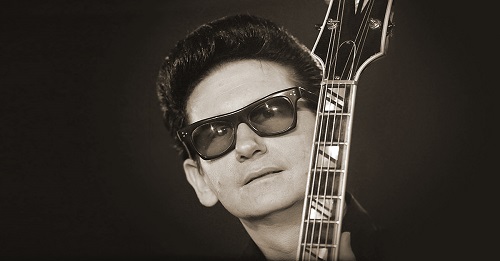
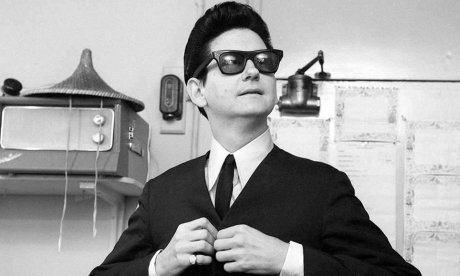
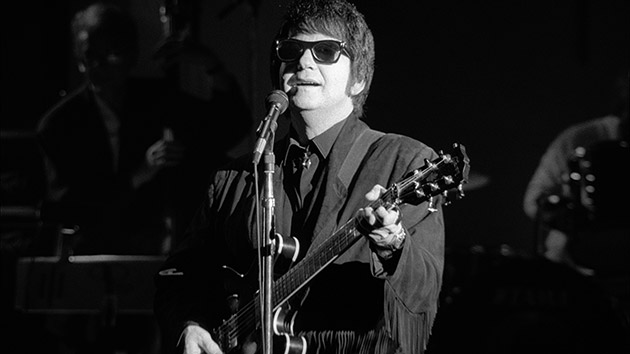
Roy Orbison is a rock and roll legend.  I refuse to debate this.  It is a fact.  The Beatles and Elvis Presley (both legends in their own right) had stated on record that Roy was a major influence on their music.  Roy’s music was different – it had it’s own style and a certain darkness to it.  My first exposure to Roy Orbison was when I was about 4 or 5 years old.

I remember my dad had an album of Roy’s Greatest Hits.  My favorite song as a kid was Dream Baby.  I didn’t know that was the name of it.  I know this because when I asked him to play it, I would ask for it by singing the opening bass line: “Daddy, play ‘boom boom boom, bum bum boom.'”  I remember the first song on the album was Candy Man, which started with a harmonica.  That is the instrument Roy asked for as a kid.

When asked hey wanted for his sixth birthday, Roy told his parents he wanted a harmonica.  Luckily for the music industry, his father bought him a guitar instead.  While some stories differ, most biographies claim that Roy learned how to play from his father Orbie Lee Orbison.  Some sources say that he learned from his Uncle Charlie, Orbie’s brother.

He wrote his first song in 1944, and entered a talent show in 1946.  He and another act tied for first place and the first prize of $15 was split between Roy and the other winner.  How much of a class act was Roy?  He gave half of his $7.50 to the friend of his who carried his guitar to the contest!

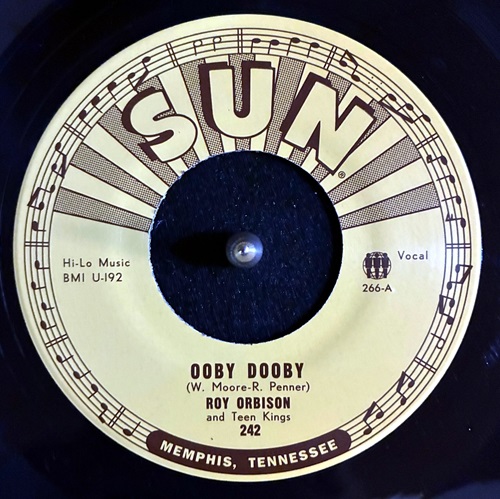
He formed a band while in Wink, Texas called the Wink Westerners and that band played some high school dances.  While in college, two friends of his had written a song called “Ooby Dooby.” They began playing that in their shows and because of their success, they got their own radio show on station KMID. In 1955, the band got their own TV show and artists came to play and sing on it.  Among them, Elvis Presley and Johnny Cash.

Roy pulled Johnny aside and asked for advice.  He wanted to know how to get a record released on the radio.  Johnny suggested that he call Sam Phillips over at Sun Records in Memphis.  Johnny gave Roy the number and sure enough Roy called.  I am sure he was not expecting what happened.  Sam Phillips answered the phone and after a brief conversation, Sam hung up on him, but not before telling Roy, “Johnny Cash doesn’t run my record company!”

Roy eventually found a place to record and recorded “Ooby Dooby” with his band, now called the Teen Kings.  The song was released in 1956 and Roy took it to a well known record dealer named Cecil “Poppa” Hollifield. He heard the song and immediately called a “connection” he had in Memphis and played him the record over the phone.  His connection asked for a copy of the record, and three days later he called Poppa up to tell him he wanted the Teen Kings in Memphis in three days to record in his studio.  That connection was none other than Sam Phillips of Sun Records!
That deal got him out on tour with Johnny Cash, Faron Young, Carl Perkins, and Johnny Horton among others.  In 1958, Roy was asked to tour with the Everly Brothers.  During the tour, the Everly Brothers told Roy they needed a new single and asked if he had any songs.  He picked up his guitar and sang the song Claudette.  They liked it, and asked him to write down the words and chords.  The song was the B-side of All I Have To Do Is Dream.  Roy had some of his other songs recorded by artists like Jerry Lee Lewis, Buddy Holly, and even Ricky Nelson.

roy-orbison--essential--2up-bw-660abd1c38f8000b8e00e53a02b4a27190fb3287-s300-c85

In 1959, Roy was signed to an independent label called Monument.  It was at this label that so many of Roy’s big hits came, starting with Uptown.  That was followed by Only The Lonely (which reached #2), Blue Angel, and I’m Hurtin’. What followed was Roy’s first #1 song, Running Scared.

Roy had hoped to change up the “pop” sound and try something different.  They recorded the song twice and he was disappointed with the two takes, so they cut it again.  Instead of using a falsetto voice, Roy sang the high natural A and nailed it.  The accompanying musicians were awestruck and had never heard anything like it.  Producer Fred Foster said “Nobody had ever hear anything like it before!”

What followed was four solid years of top 40 hits.  Those hits included Crying, Candy Man, Dream Baby, Working for the Man, In Dreams, Pretty Paper, Leah, Blue Bayou, Mean Woman Blues, and Its Over. His success got him a spot opening up for some concerts in England. He was the opening act for a few guys who were known as The Beatles (they had yet to become a big thing in the US).  The tour sold out in minutes, and on the first night of the show, they say that Roy played 14 encores before the Beatles ever got on stage!

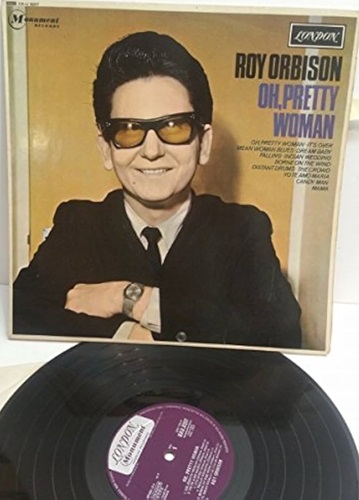
In 1964, Roy recorded what is probably his biggest hit, Oh Pretty Woman.  It would be his last big hit while at Monument records.  Touring hurt his personal life, and his wife Claudette began having an affair.  One day while writing with songwriter Bill Dees, Claudette entered the room and said that she was going to Nashville.  Roy asked her if she had any money, and Dee’s replied, “A pretty woman never needs any money.” With that phrase, and about 40 minutes, they wrote Oh, Pretty Woman, which went to number 1 in almost every country in the world.
In 1966, Claudette was killed when a pickup truck pulled out in front of her and she hit the door.  She died instantly.  Two years later, Roy was on a tour in England and he received a call that his home had burned down.  As if that wasn’t enough bad news, he was also told that his two oldest sons were killed in the fire.  He tried to cope by keeping himself busy with work.  He starred in the film The Fastest Guitar Alive, which ended up being his only lead role.

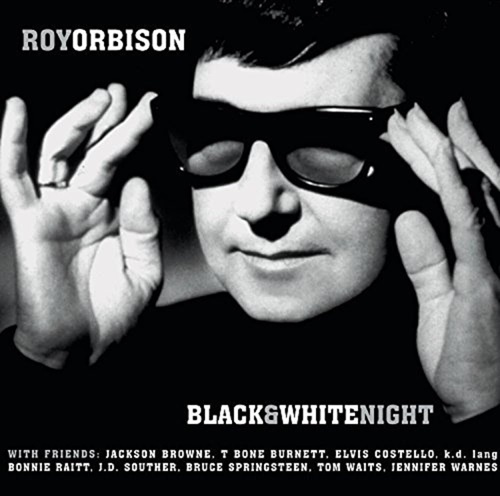
Roy changed labels a few times after this and eventually re-signed with Monument.  In 1987, Roy Orbison was inducted into the Rock and Roll Hall of Fame.  Bruce Springsteen was there to do the honors.  A TV special followed.  Roy had always wanted to do one and this special included some powerful special guests:  Elvis Costello, k.d.Lang, Tom Waits, Bonny Raitt, Jennifer Warrens, Jackson Brown, and Bruce Springsteen.  The special was called Roy Orbison and Friends – A Black and White Night Live. It was aired on cable and released on video and became one of Roy’s great concerts.

Roy-Orbison-2

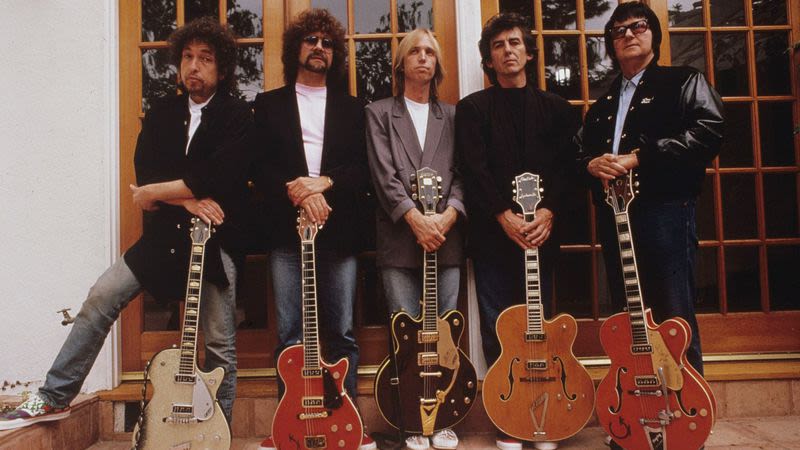
Jeff Lynne of ELO was busy producing George Harrison’s Cloud Nine album, and was working on Tom Petty’s and Roy’s albums at the same time.  This led to them all getting together with Bob Dylan for the Traveling Wilburys project which was a huge success! Handle With Care was a big hit from the album.  A song that was supposed to be a group song on the album was You’re Not Alone Anymore.  It was decided that there was really only one voice that could do the song justice, and that was Roy.  It is an amazing vocal and an amazing song!

ije87ee9xmempwxiaynh

In late 1988, Roy put the finishing touches on the Mystery Girl album.  It was set for release in 1989.  There would be a world tour to support the project.  The album would include the smash hit “You Got It”.  On December 6, 1988, Roy was complaining of chest pains.  Just before midnight, he had a heart attack and collapsed at his mother’s home.  Roy Orbison died at the young age of 52.

I was still a senior in high school and I was going to WKSG to rip news and type up stories for the news director.  I would stay till 6am and then head to school.  I remember going to the AP wire and seeing the URGENT breaking news that Roy had died.  We were an oldies station and this was big news.  I remember when we broke the news.  It is one of those moments I will never forget.
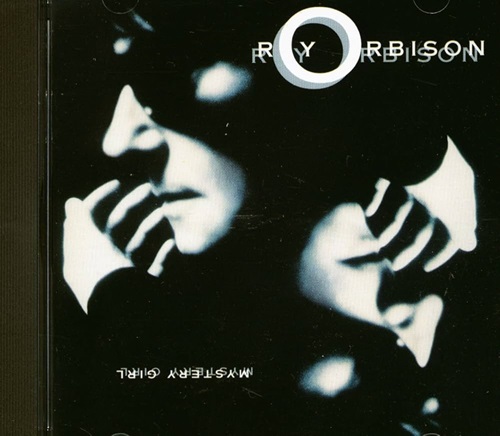
You Got It was released after Roy’s death and reached the top 10.  One of the coolest tributes to Roy was when the Traveling Wilburys released the song End of the Line.  In the video, the group is on a train singing.  When Roy’s vocal comes on, the camera is on a rocking chair in which Roy’s guitar is sitting.  Next to it, is a framed photo of Roy.  Powerful!

Roy Orbison is a legend.  His music was like no one else.  His style was like no one else.  His vocals were indescribably beautiful, haunting, and amazing.  Heaven’s choir is blessed to have him in their baritone section.  Happy Birthday, Roy!