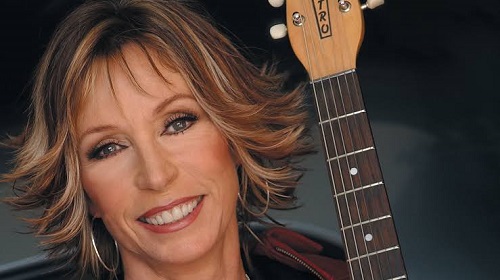
Today We wish Juice Newton a Happy 73rd Birthday. She is one of those artists/songwriters who was very big in the 80’s and sort of disappeared. The truth is, she’s always been around, we just don’t hear her stuff thanks to a variety of things. One of those things is the mindset of corporate radio.
I have featured uptempo stuff from Juice before, but I wanted to feature her voice today. Her ballads really showcase her singing voice and one of my favorites is The Sweetest Thing. This song was written for Juice Newton by her music partner Otha Young (Robert O. Young) for her 1975 debut album Juice Newton and Silver Spur. She re-recorded it in 1981 for her groundbreaking album Juice.
Country singer Jamie O’Neal covered the song for her album of cover songs. She told songfacts.com:
“I think there’s songs, like ‘The Sweetest Thing,’ that’ll live on forever, and when you hear it, it takes you right back to where you were when that was a big hit for Juice Newton … I think that song stands the test of time and that’s what makes it a classic to me is the fact that everybody knows it. Not just in one little area of music, but across the board, everybody knows that song.”
The song was a Top 10 hit on three different Billboard charts: #1 on Adult Contemporary, #1 on Country and #7 on the Hot 100.
Welcome back to The Music of My Life, where I feature ten songs from each year of my life. In most cases, the ten songs I choose will be ones I like personally (unless I explain otherwise). The songs will be selected from Billboard’s Year-end Hot 100 Chart, Acclaimed Music, and will all be released in the featured year.
Let’s jump right into 1982. We start with a song that was released in January of ’82 in the United States. Believe it or not, this song would go on to have a special meaning for me and many others from my high school. More on that in a minute.
The Go-Go’s were one of those bands who wrote most of their own songs. “We Got The Beat” was written by guitarist Charlotte Caffey, who drew inspiration from some Motown beats, specifically one that mentioned the name of her group. She explains, “I thought it would be very clever to do ‘Going to a Go Go’ (by the Miracles). I thought, Well, let’s try working this out as a cover song. Which is really funny when I think about it. I was listening to it a lot one day, and later that night, the song came to me within five minutes. I don’t even know if it has anything to do with listening to that song, but this whole idea came to me. It was one of those things that just went right through me and came out my hand; I wrote it down, recorded it a little bit, and then brought it into rehearsal a few days later.”
The Go-Go’s released an early version of “We Got The Beat” in the UK as their first single. It was issued on Stiff Records, which was home to The Specials and Madness, both groups The Go-Go’s toured with in England to promote it. Sadly, it flopped, but the group fared far better in America, where they were signed to IRS Records by Miles Copeland, who managed The Police. In the US, “Our Lips Are Sealed” was released as their first single in the summer of 1981, followed by a new version of “We Got The Beat” in January 1982. This release was The Go-Go’s biggest hit, spending three weeks at #2. (I’ll include both versions below)
Band Camp – Summer 1985. We Got the Beat was a favorite of my high school marching band. I have no idea how long they had been playing it prior to my first year, but it was always played at pep assemblies and when our team won. It was a staple in the marching band music folder. It was the one song that we could play and just have fun. We danced, we jumped, we acted the fool while playing it. It was a celebratory song.
Our band director would say, “Let’s do the little Italian number” during rehearsals. We all knew what he was talking about because he’d often call it, “We Gotta Da Beat.” I want to say our alumni band was around for at least 10 or 12 years after I graduated and they were still playing it. We always joined it because we all had it memorized. I haven’t played my trumpet in years, but I can assure you that if I were to pick it up today, I could still play this song!
We Got the Beat
Real life once again inspired another big hit. Songwriter Wayne Carson, who wrote The Box Tops’ 1967 #1 hit “The Letter,” came up with “Always On My Mind” when he was working at a recording studio in Memphis. He lived with his wife in Springfield, Missouri, and the trip to Memphis had gone 10 days longer than expected.
When he called the missus to tell her he would be there even longer, she let him have it. He tried to assuage her by telling her that was thinking about her all the time – she was “always on my mind.” “It just struck me like someone had hit me with a hammer,” he told the LA Times, “I told her real fast I had to hang up because I had to put that into a song.”
Willie had never heard the song before the song’s co-writer, Johnny Christopher, brought it to him and Merle Haggard, who were busy recording the album Pancho & Lefty (Christopher was playing guitar on the session). “‘Always On My Mind,’ bowled me over the moment I heard it, which is one of the ways I pick songs to record,” Nelson recalled in his 1988 autobiography, Willie. “There are beautifully sad songs that bowl me over… haunting melodies you can’t get out of your mind, with lines that really stick.”
Nelson figured he and Haggard would do the song together, but Haggard didn’t care for it. After they finished recording their album, Nelson stayed in the studio and recorded the ballad solo, just to see what it would sound like. Of course, it sounded like a hit, but Nelson wondered, “We’ll never know what would have happened if Merle had really heard the song right.”
You may remember that Willie Nelson played a big part in my childhood. His Stardust album was played all the time by my grandfather. My grandfather passed away in 1981. Any song by Willie reminded me of my grandpa. My mom really struggled with his passing and I remember being in the car with her when Always on My Mind came on the radio. She had to pull over because it really hit her hard.
It hit me the same way. I know that it is far fetched to believe that grandpa sent a message from beyond the grave, but it felt that way. From Stardust to Always on My Mind and every Willie album that followed, there always seemed to be one song that fit into something that was going on in my life. This one helped me cope with the first death I ever experienced, even though it was more of a love/apology song.
Always on My Mind
One of the things that I noticed as I scanned over the list of singles released in the early eighties was the prominent use of the synthesizer. Rock bands like ZZ Top, Van Halen, and Yes added synthesizers to their mix in the ’80s and scored huge hits by adapting what songfacts.com called “the sound of the decade.” The Steve Miller Band started out as a blues band in the ’60s, evolving into a rock outfit in the ’70s. They often sprinkled electronic effects into their songs, so the keyboards and synth stabs in this song weren’t out of character.
“Abracadabra” was the last US Top 40 hit for the Steve Miller Band, and their third #1. The song was written by Miller and the lyrics were inspired by Diana Ross and the Supremes, whom he had met while performing together on NBC’s Hullabaloo in 1966. “‘Abracadabra’ started off as a great piece of music with really atrocious lyrics,” Miller explained to The Dallas Morning News. “One day I was out skiing in Sun Valley and, lo and behold, who did I see on the mountain but Diana Ross. I skied down off the mountain to go have lunch. I started thinking about the Supremes and I wrote the lyrics to ‘Abracadabra’ in 15 minutes.”
Honestly, I’m really not sure how the Supremes led to the song, but I remember it being a song that really stood out to me on the radio. I rushed out to buy the 45 and it was always a song that wound up on my “driving music” tapes.
Abracadabra
1981 was the year that many were introduced to Men at Work. Their debut single, “Who Can It Be Now” shot straight to #1 on the charts. The group started as an acoustic duo with singer Colin Hay and guitarist Ron Strykert. After a few years playing pubs in Australia, they were discovered by an American who worked for CBS records and signed them.
Colin Hay wrote the song and explained how it came about:
“I was up in the bush in Southern New South Wales with my girlfriend, just sitting outside at night. We had this little tree hut in the middle of the bush. It was a great place to kill the time, mess around with ideas. It was just an idea that popped out, it took about half and hour to write that song. I was living in St. Kilda in Melbourne, which is a great part of Melbourne. At that particular time it was a very interesting area, it was frequented by everybody from the high Jewish population, punks, drug movers, all kinds of different people. It was about six or seven hours drive away, sitting in the middle of the bush in New South Wales and that song just popped out. My girlfriend at the time said, ‘that will be your first hit, that song,’ and she was right.”
Their Business as Usual album was one that I played often.
Fun Fact: The famous saxophone part originally didn’t come in until the middle of the song, which suited when the band played it in bars. When they recorded it, producer Peter McIan identified the sax as a hook and moved it to the beginning of the song, also making it more prominent throughout. This opening sax riff made the song instantly identifiable.
Who Can It Be Now
Juice Newton had a few big hits between Queen of Hearts and Love’s Been a Little Bit Hard On Me. The latter is one of those fun sounding songs, even though it is about the hardships of a relationship. The song was released exactly one week after my 12th birthday.
Juice reminds me of Carlene Carter who had some jumpy, fun songs like this one. Even though she channels Neil Sedaka and sings harmony with herself on the song, that’s one of the reasons I love it. It’s nothing fancy, but it is just good harmony and it blends so well.
One of the things I have enjoyed while picking songs for this year was seeing the videos that were made for certain songs. Wiki describes the music video for this one perfectly. It says that it comically plays off the emotional hurt of love by showing Juice Newton being physically injured by her lover in a series of accidents. The final shot is of Newton singing in the hospital in a full-body cast with her broken leg in the air. The video was awarded Video of the Year by the American Video Association in 1982.
Love’s Been a Little Bit Hard On Me
There is an outdoor amphitheater in the Detroit area that packs in some fantastic shows every summer. I cannot tell you how many shows I have seen at Pine Knob (For some time DTE Energy paid to have the name and even though shows were at “DTE Energy Music Theater,” everyone still called it Pine Knob!). I’ve seen rock shows, comedy shows, country shows, and more there.
For many years, Eddie Money was ALWAYS the guy who played the first show there. He kicked off the summer concert season annually and it became a tradition. One year, I had the opportunity to interview Eddie on the air. It was the easiest interview in the world! Why? You never had to ask questions after he got on the phone. “Hey, Eddie! How are you?” Then Eddie would roll – he’d promote the show, promote an album, share some funny story, talk about the venue, and more. The “Money Man” was great!
I dated in high school who loved Eddie Money’s Music. She had the No Control album on cassette and we’d listen to it in the car. Think I’m in Love was on that album and I remember the first time I saw the video on MTV. Again, these early videos are fun to watch. Eddie plays a sort of vampire character in it. It was a very popular video.
Think I’m In Love
Growing up I listened to Elvis, Bill Haley, Carl Perkins, Eddie Cochran and other artists who played some rockabilly music. So when I heard the Stray Cats in 1982, it was like hearing stuff I was already familiar with. The Built For Speed album was one I played over and over.
Brian Setzer was born in New York and was exposed to a lot of genres of music. He learned to play the guitar at a young age, and when he was a teen, he formed a trio he called the Tomcats, That group would later change their name to the Stray Cats. They were influenced by all those artists I just mentioned and their group developed a fairly large following in the underground punk scene of New York City during the late ’70s. Their fan base expanded so quickly that they found themselves being courted by no less than a half dozen record labels in 1980.
Brian Setzer opted to record and produce the Stray Cats’ debut album in the UK Rock This Town was released there over a year before it was released in the US. Rock This Town was a Top 10 hit for the band. It’s crazy to watch the video and see Brian. He looks like a baby in it. Hard to believe he was only 23 when this video was shot.
Rock This Town
My dad and my uncle used to play old blues music on records and on the guitar. At my graduation party, they played stuff from Jimmy Reed, Bo Diddley, and other blues legends. Because of that, I’ve always loved the blues. Because of that, I was naturally a fan of George Thorogood.
Bad to the Bone is based on the Bo Diddley blues song “I’m a Man.” Bo Diddley was one of George’s heroes. His “version” has a much heavier guitar sound, which replaces the harmonica in Diddley’s recording. Songfacts.com says that “both songs are full of swagger, with the singers exuding lots of testosterone.”
Songfacts.com goes on to say, “With MTV coming on the air in 1981, Thorogood picked a good time to release a memorable video. The clip shows Thorogood playing pool against Bo Diddley in a place where there is no chance of a dance sequence breaking out. Pool champion Willie Mosconi also appears in the clip, which introduced Thorogood – and to some extent, Diddley – to the younger MTV crowd. Among the British New Wave acts that dominated MTV’s playlist at the time, Thorogood certainly stood out, and he created an image of a bad man. While Thorogood is a disciple of the blues, he was raised in a Delaware suburb and by most accounts is actually a pretty nice guy, despite what he claims in this song.”
I love the fact that Diddley is in this video! The song is one that has a life of it’s own. It is used as intro music for wrestlers, it has been used during the removal of the bride’s garter at weddings, and has been used in both movies and television in seriousness and for comedic effect. It is a classic.
Bad to the Bone
I love a great intro. Sometimes a great guitar riff or a neat drum thing is all it takes to hook me. The intro to Everybody Wants You was one of those intros. It appeared as the opening track of his multi-Platinum 1982 album Emotions in Motion.
The song itself didn’t do that great on the Hot 100 chart, as it only went to number 32. However, it was around this time that one of the radio formats that was big was called AOR – Album Oriented Rock. It had great success on these and rock stations. It reached number one on Billboard’s Top Rock Tracks chart. Naturally, the video did well on MTV, too. It remained in heavy rotation for quite some time.
The minute I hear this one, I think back to those nights of shooting pool with my buddies. It was always on the jukebox.
Everybody Wants You
The next song is one that is still applicable today. Perhaps even more so. What exactly is “news” today? Turn on any local news channel or entertainment news show – it is chock full of stories like the ones referenced in Don Henley’s first Top 40 hit as a solo artist – Dirty Laundry.
Again, the intro of this really stood out for me. The lyrics take it to an entirely new level. They are so good and perhaps that is because Henley had plenty of real life to draw from. This song is about unscrupulous news people doing anything for a story. Henley values his privacy, and hates it when reporters pry into his personal life. He had to deal with increased press attention when his girlfriend at the time, Maren Jensen, came down with Epstein-Barr Syndrome. She recovered, but they broke up soon after.
Songfacts.com states: “Henley sings from the standpoint of a news anchorman who “could have been an actor, but I wound up here”. The song’s theme is that TV news coverage focuses too much on negative and sensationalist news; in particular, deaths, disasters, and scandals, with little regard to the consequences or for what is important (“We all know that crap is king”). The song was inspired by the intrusive press coverage surrounding the deaths of John Belushi and Natalie Wood. It was also inspired by Henley’s own arrest in 1980 when he was charged with contributing to the delinquency of a minor and possession of marijuana, cocaine, and Quaaludes after a 16-year-old girl overdosed at his Los Angeles home”
While Don’s version is the best, Lisa Marie Presley (who had to deal with a lot of press intrusions on her personal life) also does a really neat version of Dirty Laundry.
Dirty Laundry
There were plenty of great songs in 1982, I’m sorry if I missed one of your favorites. Next week, we’ll move ahead to 1983 where there will be a good mix of rock, country, pop, soul and a movie song that will forever be associated with summer vacations ….
Welcome back to The Music of My Life, where I feature ten songs from each year of my life. In most cases, the ten songs I choose will be ones I like personally (unless I explain otherwise). The songs will be selected from Billboard’s Year-end Hot 100 Chart, Acclaimed Music, and will all be released in the featured year.
In 1981 there were two things that influenced me musically. First of all, I discovered American Top 40 with Casey Kasem. My dad had it the radio on one day while he was washing the cars and doing yard work. It was my first exposure to a countdown show. As a matter of fact, as I looked over the list of possible songs for my list, there were plenty of songs that I remember hearing for the first time on AT40. Some of those that are not on my list are: Start Me Up, Centerfold, Waiting for a Girl Like You, Elvira, Bette Davis Eyes, Hearts, Physical, and so many others!
The second thing that not only influenced me musically, but everyone else in the country, was the birth of MTV in August of 1981. This changed the way people listened to music. Some of those 80’s music videos are forever etched in my mind. I loved the creativity of many of those videos. In many cases, the videos helped with the popularity of songs and how much airplay they got on the radio. Perhaps you’ll remember the videos from some of the songs on my list?
Here we go ….
My dad played guitar in a wedding band for many years. Often, my brother and I would have to go to band practice with him. It was there that I recall being introduced to some of the current songs. One of them was Just The Two of Us by Grover Washington Jr. and Bill Withers. I can remember the distinct mystical sounding keyboard part at the beginning from my dad’s band and being wowed at how it sounded exactly like the record.
Grover Washington, Jr. wrote this with his musical partner Bill Salter before Withers added to the lyrics. It was produced by Ralph MacDonald, a percussionist who played on many of Washington’s tracks. MacDonald was friends with Withers and made the connection. Bill said in an interview with songfacts:
“I’m a little snobbish about words, so they sent me this song and said, ‘We want to do this with Grover, would you consider singing it?’ I said, ‘Yeah, if you’ll let me go in and try to dress these words up a little bit.’ Everybody that knows me is kind of used to me that way. I probably threw in the stuff like the crystal raindrops. The ‘Just The Two Of Us’ thing was already written. It was trying to put a tuxedo on it. I didn’t like what was said leading up to ‘Just The Two Of Us.'”
The song reached number 2 on the charts, but never made it to number 1. It was kept from that spot by Sheena Easton’s Morning Train (9 to 5) and Kim Carnes’ Bette Davis Eyes. The song did win a Grammy award for Best R&B Song. It would be Grover Washington Jr’s only Top 40 hit.
Just The Two of Us
I’ve told this story before, but it is why the next song is here. I remember my dad throwing the 45 of The Breakup Song on the turntable and playing the intro over and over. He’d pick on his guitar and work out that intro over a matter of minutes. Once I heard him play it note for note, I was in awe of him.
The Greg Kihn Band had been around for some time. Their album Rockihnroll was their sixth studio album. It celebrates the quality of breakup songs in rock’s earlier times, as the narrator laments both his recent breakup and the fact that they don’t write good breakup songs anymore. The song is perhaps best known by the hook, “They Don’t Write ‘Em Like That Anymore.”
The Breakup Song
I have always loved the Commodores, with and without Lionel Richie. Lady (You Bring Me Up) was released as the lead single from their album In The Pocket, their last with Lionel Richie in the group. Lionel didn’t write the song, Commodores’ trumpet player William King did. He wrote it with his wife, Shirley, and Harold Hudson, a member of the Commodores’ backing group, The Mean Machine.
In 1981, sexually suggestive songs like “Physical” and “Girls on Film” caused a bit of controversy. Naturally, some disc jockeys poked fun by warning listeners that this was another song with sexually suggestive lyrics: “Lady, you bring me up when I’m down.” In truth, the song is simply a song about a man whose woman gets him through life’s difficult times. It went to #8 on the Hot 100 chart.
Lady
It wasn’t until years later that I found out that Juice Newton wasn’t the first one to sing Queen of Hearts. It was actually written by Hank DeVito of Emmylou Harris’ band and first recorded in 1979 by rocker Dave Edmunds. His version was big in the UK and Ireland, but didn’t go far anywhere else.
Juice Newton had the biggest success with “Queen of Hearts” after it appeared on her 1981 album, Juice. In September 1981, Newton’s version peaked at #2 on the US charts, having shifted over one million copies. It almost didn’t happen, though. Juice remembers, “I did [‘Queen of Hearts’] live for about a year…Then I brought it to [producer] Richard Landis when we started the Juice album. He wasn’t convinced at that point that it was a breakout song but I told him I think this is a real cool song … so we cut it”.
In 1982, the song was nominated for the Grammy Award for Best Female Country Vocal Performance. Dave Edmunds told Creem Newton stole his composition: “She did pinch my arrangement, note for note, but I’m not angry with that.”
Queen of Hearts
Before Foreigner recorded this album 4, two members of the group left, trimming the band from six members to four. This, along with the fact that it was their fourth album, explains the title. My favorite cut on the album has a Motown connection.
Future Mr. Shania Twain, Mutt Lange, produced the album. Lange wanted to hear every music idea guitarist Mick Jones had recorded on tape, no matter how embarrassing. One of these ideas was the opening riff for what would become “Urgent”. “I had the riff starting out,” Jones recalled. “And I said, ‘That’s like an experimental instrumental thing that I’m working on.’ He said, ‘No, it isn’t anymore – let’s take that one, because that’s got a lot of potential.’ There wasn’t even a song with it.”
The group wanted a “Junior Walker-style” sax solo for this record. When they took a break from recording, one of the members read in New York newspaper The Village Voice that Walker was performing that night mere blocks from the recording studio. Walker accepted their offer to play, and the recording of the sax solo was swift and without a hitch.
Urgent
ELO’s TIME is a concept album about a time traveler who visits the year 2095. This song takes place on his return trip in 1981. He is inspired, and now knows that everything he needs he can find back home. “Hold On Tight” was the first single from the album.
By this time, the band was credited as ELO, downplaying the orchestra because they had recently jettisoned their string section. The lead instrument on “Hold On Tight” is piano played by group leader Jeff Lynne, who wrote the song. Billboard called it an “affectionate tip-of-the-hat to ’50s rock ‘n’ roll” that was inspired by the piano playing of Jerry Lee Lewis. That sound is probably why I love this song so much, as well as the uplifting message.
There was an elaborate (for its time) video was made of this song. Wikipedia states that this was the most expensive music video ever made (at the time). Directed by Mike Mansfield, it’s a sendup of sci-fi movie trailers from the 1940, which often blared words on the screen in huge font (AMAZING!, BREATH-TAKING!). Their violinist, Mik Kaminski, had left the group by this time but shows up in the video miming guitar.
The song topped out at number 2 on the Billboard Top Tracks chart.
Hold On Tight
Who can deny a great cover song? Am I right? (I’m talking to you Randy! LOL)
Yep, one of the biggest 80’s hits is actually a cover of a song first recorded in 1964. Ed Cobb of the Four Preps composed the song, and it was first recorded by Gloria Jones. (Fun Fact: Glen Campbell was a studio musician and played guitar on that version!) Her version was actually the B-side of her single, “My Bad Boy’s Comin’ Home.”
In 1973, British club DJ Richard Searling purchased a copy of the almost decade-old single while on a trip to the United States. The track’s Motown-influenced sound (featuring a fast tempo, horns, electric rhythm guitar and female backing vocals) fit in perfectly with the music favored by those involved in the UK’s Northern soul club scene of the early 1970s.
In the book 1000 UK #1 Hits by Jon Kutner and Spencer Leigh, Soft Cell’s Marc Almond called this song “A mixture of cold electronics with an over-passionate, over-exuberant, slightly out of key vocal.” Almond recalls, “Dave (Ball) introduced me to the record and I loved it so much and we wanted an interesting song for a encore number in our show. Dave loved northern soul and it was a novelty to have an electronic synthesizer band doing a soul song. When we signed with our record company, they wanted to record it. They told us to put bass, guitar and drums on it as they said it was too odd. They put it out anyway and the next thing it was gathering radio play and then it was #1. I was fascinated that it was originally by Gloria Jones, the girlfriend of Marc Bolan and I’d always been a T-Rex fan.”
Marc Almond’s vocal is the first take he recorded. That take was actually a run-through so they could tweak the settings, but it had just the right emotion, so that was the one they used. Obviously it was the right take because even Gloria Jones liked it. She said that she considers the Soft Cell version to be the best one. “I loved the emotion in his voice,” she said. “Their version was far better than mine.”
Tainted Love
Here is another song with a Dave Edmunds connection. Tempted was the second single off Squeeze’s East Side Story album. It was written by Chris Difford and Glenn Tilbrook. Chris wrote the lyric while the band was taking a taxi to Heathrow Airport. The descriptions of the city and airport sights are interspersed with the narrator’s ruminations on a relationship that is failing, or has failed, due to his own infidelities. As he recalled,
The original story behind “Tempted” is we’re going on another American tour. I got on a taxi and I started writing down what I saw lyrically. I don’t know the course of time of how long it took, but then I gave Glenn the lyrics and then Glenn put the music to it. It’s an extraordinary song. It’s one of the most played songs that we have in our catalog.
Unlike most other Squeeze songs, which are sung usually by Tilbrook or Difford, the song’s lead vocal is sung by newly recruited keyboardist Paul Carrack. According to Carrack, this was the result of a suggestion by co-producer Elvis Costello:
They’d actually recorded a version of that song before I was on board. Dave Edmunds produced it, and it was completely different. The song was in the can, and we were recording the other songs from East Side Story when we had some downtime and played ‘Tempted’ but in that slow, soulful, Motown groove. Elvis Costello, who was producing, ran in and said, ‘Let’s put this down on tape!’ So, we did, and Elvis said ‘Paul, you should sing it.’
I had never heard the song before, but in 1994, I was driving a lot for my job and this would come on Planet 96.3. I have always loved the opening line of this song, “I bought a toothbrush, some toothpaste, a flannel for my face” I can’t imagine it without the slow bluesy feel.
Tempted
Loverboy’s first single from their Get Lucky album didn’t really burn up the charts, however, years later it would be linked forever to a classic Saturday Night Live sketch.
Working for the Weekend originated when guitarist Paul Dean was out walking one Wednesday afternoon, looking for inspiration in his songwriting. He noticed that much of the area was deserted, as most people were at work. “So I’m out on the beach and wondering, ‘Where is everybody? Well, I guess they’re all waiting for the weekend,'” he later said. Mike Reno, the band’s vocalist, suggested they change the title to “Working for the Weekend”. According to Dean, he first began writing the song in a hotel room following a Montreal concert. At the time, the band were still playing bars to little response from patrons. After completing the song, they used it to open one set, and Dean recalled that “the dance floor was packed”.
The video had a life of it’s own on MTV. Loverboy lead singer Mike Reno tells about the filming of this video: “We would play the song over and over again, and we’d bounce around like we normally did. Here’s what I thought was kind of interesting: The director would say, ‘OK, we’re going to shoot another song, now go get changed.’ ‘What do you mean?’ ‘You have to put on a whole new outfit, and we’re going to change the lighting a bit.’ But it was the same stage! So basically, we just had to get some other clothes, fix your hair, take a break, and then jump back on stage and do the same thing over and over again. I really felt like I was being abused a bit, but that’s the nature of the beast.”
On October 27, 1990, Patrick Swayze hosted Saturday Night Live. It was on that show that the famous Chippendale’s Audition sketch debuted. It featured Chris Farley and Swayze auditioning for the final spot in the Chippendale line up. Their audition was done to this song.
Working for the Weekend
“Shake It Up,” was the title track of The Cars’ fourth album. It is hard not to want to dance when you hear it. Some call it a “tailor-made party song.”
It was written by Cars’ frontman Ric Ocasek. It really is an odd song for Ric in that it’s very straightforward, simply encouraging us all to get on the dance floor and boogie like nobody’s watching. Ocasek’s songs were generally far more enigmatic. Years later, Ocasek dismissed the song’s lyrics, saying, “I’m not proud of the lyrics to ‘Shake It Up.'”
This song has some throwback elements, like the “ooo ooo ooo” backing vocals and references to a “quirky jerk” and “night cats” – lingo that was hep in the ’60s when songs about dancing were in vogue. At the same time, “Shake It Up” as a futuristic sound, with synthesizers and drum machines that were part of the new wave.
It was released as the lead single from the album. “Shake It Up” was a big American hit for The Cars, getting them into the Top 10 for the first time as the song reached #4. The song was such a departure from what fans expected that some accused the band of “selling out.” The band, however, insisted they were simply progressing and growing (one point in their defense: they continued to live in Boston instead of relocating to New York or Los Angeles). The jabs came mostly from the UK, where the band got lots of positive press early on but faced the wrath of a finicky press when they released this song about dancing.
Fun Fact: Guitarist Elliot Easton said he wanted his solo to sound like “two guys trading off”. He first plays a Fender Telecaster, in a style skewing country, then midway through the solo switches to a Gibson guitar for a heavier rock sound.
Shake It Up
Finally, a song that has yet another Michigan connection. When Styx was preparing their tenth album, Paradise Theater, guitarist Tommy Shaw, says he was asked to write one more song for the album, which followed the theme of a concert hall rising to prominence and then crumbling. Shaw liked the concept, but was having trouble writing songs that fit. So he just wrote one that didn’t follow the theme – “Too Much Time On My Hands.”
Shaw had a long drive to and from the recording studio, and on one trip, the bassline popped into his head: “dun-dun dun-dun dun-dun-dun-dun.” When he arrived, he quickly had the band record what was in his head so he wouldn’t lose it. He found himself calling out chord changes as they played, which laid the groundwork for the track.
When it came to the lyrics, he drew inspiration from a real bar in Niles, Michigan, where he was living. “I think officially it was called Mark’s Tavern, but everybody called it Mark’s Bar. It was the local watering hole. The drinks were good, and the drinks were cheap. You could go in there with 20 bucks and be a hero, you know – buying rounds of drinks. And you’d always run into somebody you knew in there. That was the basis of the song.”
The song was released in the spring of 1981 and reached its US chart of #9 in May. In August, MTV went on the air, which gave the song new life, since the video was one of the few the network had available from an American rock band, and they played constantly.
Too Much Time On My Hands
Looking back over the list of songs released in 1981, there are so many worth mentioning. Did I miss one of yours?
As I start looking at each year and jotting songs, I have gone from 2 pages to 3 pages of songs to chose from. These 80’s years are probably going to be the toughest to narrow down for me.
Next week, we’ll jump into 1982 and see what 12 year old Keith was liking ….
Thanks for reading!
(Most info was gathered using sources like Wiki, songfacts.com, and artist websites)
Welcome back to The Music of My Life, where I feature ten songs from each year of my life. In most cases, the ten songs I choose will be ones I like personally (unless I explain otherwise). The songs will be selected from Billboard’s Year-end Hot 100 Chart, Acclaimed Music, and will all be released in the featured year. In the final year of the 70’s, I turned 9 years old.
1979 is a year where I was surprised to find many of the songs that wound up on my mom’s ballad 8-track tape. I could easily have posted all of those songs in this blog, but then you would fall asleep listening to them, just like my brother and I did on our way up north. Instead, I will list them at the end of this blog, and if you wish, you can search them on YouTube.
So let’s begin with the first of two “out of place” or “odd” songs….
The first song is part of the soundtrack of my summer of 1979. The song seemed to be playing in a very hot rotation and was always on the radio when we were up at my grandparents place.
Frank Mills wrote and recorded “Music Box Dancer” in 1974, but it did not become a Canadian single until December 1978. By Christmas of that year, it was in the top ten of many European and Asian pop music charts. It was released as a single in the United States in January 1979 and got up to number three on the Billboard Hot 100 Chart.
In 1974, Mills released an album that featured the song, but it was not initially a hit. When he re-signed with Polydor Records Canada in 1978, the label released a new song as a single, with “Music Box Dancer” on the B-side. Because of a mistake, a single of “Music Box Dancer” found its way into the hands of a pop station in Ottawa – the single was only supposed to go out to adult contemporary stations. The station’s program director listened to the A-side and wondered why it was sent to him. He played the B-side and liked what he heard anyway and began airing it in rotation. Next thing you know, the album’s gone gold in Canada.
Music Box Dancer
The next song makes the list because it was on the iPod of my ex. My oldest son used to take it and listen to it all the time and I can still hear him in his toddler voice singing the chorus of this one.
Hot Stuff is a single that was on Donna Summer’s 7th studio album, Bad Girls. The song is unique in that while many consider it disco, many others consider it rock. As a matter of fact, when the Best Female Rock Vocal Performance category was added at the Grammy Awards in 1980, Donna Summer won for “Hot Stuff.”
The song has ties to other music as well. It was written by Pete Bellotte, Harold Faltermeyer and Keith Forsey. Bellotte co-wrote a few other hits for Summer, including “Love To Love You Baby” and ” Heaven Knows.” Faltermeyer had a solo hit in 1984 with the theme from Beverly Hills Cop, “Axel F” and Forsey’s credits include “Don’t You Forget About Me” for Simple Minds and “Shakedown” for Bob Seger.
This was Summer’s second #1 hit on the Hot 100; her first was her disco cover of “MacArthur Park.”
Hot Stuff
Here is a song that is missing one of the things the band is known for. Don’t Bring Me Down was the first ELO song that did not use strings. According to Songfacts, after recording it, they fired their string section, leaving four members in the band.
ELO leader Jeff Lynne wrote this song late in the sessions for the “Discovery” album. He came up with the track by looping the drums from a song he recorded earlier in the session, then coming up with more music on the piano. The words came last, as Lynne put together some lyrics about a girl who thinks she’s too good for the guy she’s with.
Here’s a fun fact: Wanna know why Jeff Lynne repeatedly sings the word “groose” after the song’s title line? Apparently it was a made-up place-keeper word to fill a gap in the vocals when he was improvising the lyrics. When the German engineer Reinhold Mack heard the ELO frontman’s demo, he asked Lynne how he knew “gruss” means “greetings” in his country’s language. Upon learning the German meaning, Lynne decided to leave it in.
Don’t Bring Me Down
“Hey Ringo, play something hot!”
Those are the words that Rodney Dangerfield’s character in Caddyshack says to the band at the snobbish country club as he throws money at them. As the money falls, the band plays the opening 5 note stings from Boogie Wonderland from Earth Wind and Fire (With the Emotions). I’ve always loved that song because of the movie connection.
The song, while it is upbeat and happy sounding, it really isn’t. Songfacts calls it one of the more complex and misinterpreted songs of the disco era. Written by Jon Lind and Allee Willis, it was inspired by the movie Looking For Mr. Goodbar, which stars Diane Keaton as a lost soul who goes to clubs every night to dance away her misery.
Willis says, “When I saw Mr. Goodbar, I got kind of fascinated with people who did go to clubs every night, whose life was kind of falling apart, but they lived for the night life, though it didn’t seem to be advancing them as humans in the end. So if you really look at the lyrics of ‘Boogie Wonderland,’ unlike ‘September,’ it’s not a happy song at all. It’s really about someone on the brink of self destruction who goes to these clubs to try and find more, but is at least aware of the fact that if there’s something like true love, that is something that could kind of drag them out of the abyss. So ‘Boogie Wonderland’ for us was this state of mind that you entered when you were around music and when you danced, but hopefully it was an aware enough state of mind that you would want to feel as good during the day as you did at night.”
Boogie Wonderland
The second “out of place” or “odd” song is also a movie song. It may seem like a very simple kid song, but if you listen to what the songwriter says about it, the song is deeper than you can imagine.
This was written by songwriters Paul Williams and Kenny Ascher for The Muppet Movie, which came out in 1979. In the film, it is sung by Kermit The Frog as the Muppets set out to find adventure. In a interview Williams said: “Rainbow Connection was the first number in The Muppet Movie. It’s the one that establishes the lead character. We find Kermit sitting in the middle of the swamp. Kenny Ascher and I sat down to write these songs, and we thought… Kermit, he’s like ‘every frog.’ He’s the Jimmy Stewart of frogs. So how do we show that he’s a thinking frog, and that he has an introspective soul, and all that good stuff? We looked at his environment, and his environment is water and air – and light. And it just seemed like it would be a place where he would see a rainbow. But we also wanted to show that he would be on this spiritual path, examining life, and the meaning of life.
It tells you that he’s been exposed to culture: ‘Why are there so many songs about rainbows?’ Which means, obviously, he’s heard a lot of songs. This is a frog that’s been exposed to culture, whether it’s movies, or records, or whatever. And I also like the fact that it starts out with the negative: ‘Rainbows are only illusions, rainbows have nothing to hide.’ So the song actually starts out as if he’s going to pooh-pooh the whole idea, and then it turns: ‘So we’ve been told, and some choose to believe it. I know they’re wrong, wait and see.’ And again, he doesn’t have the answer: ‘Someday we’ll find it.'”
Now, with that in mind, give this masterpiece a listen!
Rainbow Connection
Next is my “go-to” Karaoke song. I’ve always loved the line, “You had me down 21 to zip, the smile of Judas on your lip.” What a great line. Bad Case of Loving you was written by Moon Martin who released the original version on his 1978 album Shots From a Cold Nightmare. Martin is a singer/guitarist/songwriter with his band Southwind. When the group broke up in 1971, he took on studio work. He paired up with Linda Ronstadt, and played on her self-titled album. He nearly joined some of Ronstadt’s other backing musicians in a little band called the Eagles, but ended up a solo artist and signed a deal with Capitol Records.
Martin’s album got some good reviews but went nowhere on the charts. A song called “Hot Nite In Dallas” was chosen as a single, but “Bad Case Of Loving You” was only given limited release in Europe. Enter Robert Palmer. He heard the song when he was being driven to one of his shows by a rep from his label, who played it for him. Palmer included it in his set and got a great response, so he recorded it for his Secrets album.
Bad Case of Loving You (Doctor, Doctor)
In 1989, Palmer released a remix of this song for his Addictions: Volume 1 greatest hits album. “Looking back at the 1978 original the performance was there but someone was asleep at the mixing desk,” he wrote in the liner notes. “The original mix in comparison sounded like a band rehearsing in a garage and this sounds like the finished song.” I can’t listen to the original cut much anymore. The remix is SO MUCH better!
I LOVE good harmonies. This song kicks right off with a cold open and the amazing a cappella harmony of The Little River Band. Most of the band’s hits were written by founding members Graham Goble, Beeb Birtles or Glenn Shorrock, but “Lonesome Loser” was written by guitarist David Briggs, who joined in 1976 after the band’s second album.
The lyric uses a lot of gambling imagery to tell the story of the lonesome loser, who staked his heart and lost. His adversary is the “Queen of Hearts,” who will always win this game of love. The same year this song was released (1979), Dave Edmunds had a UK hit with a song called “Queen of Hearts” that used the same metaphor. That song, of course, became an American hit when Juice Newton covered it in 1981.
Lonesome Loser
Speaking of great harmonies and the Eagles, the next song features both. Heartache Tonight was written by Don Henley and Glenn Frey with Bob Seger and J.D. Souther. Songfacts says: When Frey was a 19-year-old in Detroit, Seger took him under his wing and got his music career started. Souther, who is sometimes considered an “Unofficial Eagle,” was the first person Frey met when he moved to Los Angeles in the late-’60s. J.D. Souther, told us how this song started: “Glenn Frey and I had been listening to Sam Cooke records at my house. So we were just walking around clapping our hands and snapping fingers and singing the verses to those songs. The melody sounds very much like those Sam Cooke shuffles. There’s not much to it. I mean, it’s really just two long verses. But it felt really good.”
Bob Seger’s contribution to this song was the chorus. JD Souther says, “We didn’t get to a chorus that we liked within the first few days, and I think Glenn was on the phone with Seger, and he said, ‘I wanna run something by you,’ and sang it to him, and Seger just came right in with the chorus, just sang it and it was so good. Glen called me and said, ‘Is four writers okay on this?’ And I said, ‘Sure, if it’s good.’ And he said, ‘Yeah, it’s great. Seger just sang this to me,’ and he sang it to me and I said, ‘That’s fantastic.'”
According to Seger, he was in the room with Glenn Frey when he came up with the chorus. He told Entertainment Weekly: “Glenn had the verse: ‘Somebody’s gonna hurt someone before the night is through.’ We hadn’t been sitting down for more that five minutes and I just blurted out, ‘There’s gonna be a heartache tonight!’ His eyes lit up huge.”
Heartache Tonight
The next song is one that I used to hear on the way home from elementary school. I had a buddy who got a ride home every day and his mom would often give me a lift, too. Keep in mind the ride home was 5 to 7 minutes tops, but it always seemed to be on the radio when we were in the car.
Freddie Mercury wrote Crazy Little Thing Called Love while Queen was recording The Game in Germany. He wrote it while taking a bubble bath in his room at the Munich Hilton. Peter Hince, the head of Queen’s road crew, recalled to Mojo magazine September 2009: “The idea for the song came to him while he was in the bath. He emerged, wrapped in a towel, I handed him the guitar and he worked out the chords there and then. Fred had this knack of knowing a great pop song.”
Freddie acknowledged that perhaps his limited talent on the guitar helped shape the song:
On stage, this was an important part of the show. Brian May often used three different guitars during the song: the first verse was played by Freddie alone with his guitar, then Brian joined with another Ovation Acoustic; before the third verse he had already switched to a Telecaster on which he performed the solo. During the singalong part (famous for its “ready Freddie” line) Brian again changed instruments to his homemade Red Special. From 1984 onwards Mercury replaced the acoustic with another Telecaster.
Crazy Little Thing Called Love
The final selection comes from a band who was formed on Valentines Day of 1977 in Detroit. That is what inspired their name – the Romantics.
Believe it or not, the band have only two US Top 40 hits, and “What I Like About You,” now their best-known song, isn’t one of them. ( Their two Top 40 hits were “Talking In Your Sleep” and “One In A Million”). It attracted little attention and was only a minor hit when first released in 1980 on their debut album. This song’s resurgence had a lot to do with MTV. The band made a simple performance video for the song that MTV put in rotation when they launched in 1981. It fit the criteria the network was looking for: American band, rock, catchy song, acceptable production quality. Since few American artists made videos at the time, MTV made do with lots of European imports when they started.
Since then the song has also become a fixture at sporting events, bars and nightclubs, and parties and celebrations of all kinds, and has taken its place as one of the most popular rock anthems of all time. It’s nice to wrap up the last year of the decade with an uptempo, fun song!
What I Like About You
I’m sure I have missed a few favorites, and the more I look ahead, the more I wonder if I need to expand to more than ten songs. I’ll tackle that issue if I have to later on.
Next week, we ring in a new decade – 1980! The 80’s sound certainly can be heard in some of these late 70’s songs and from here on out, the sound progresses quickly!
Over the years I have been influenced musically by many people, but I would have to say that it is my father who has had the biggest influence. This blog is sort of a continuation of the “series” I have been doing based on “songs from my iPod”.
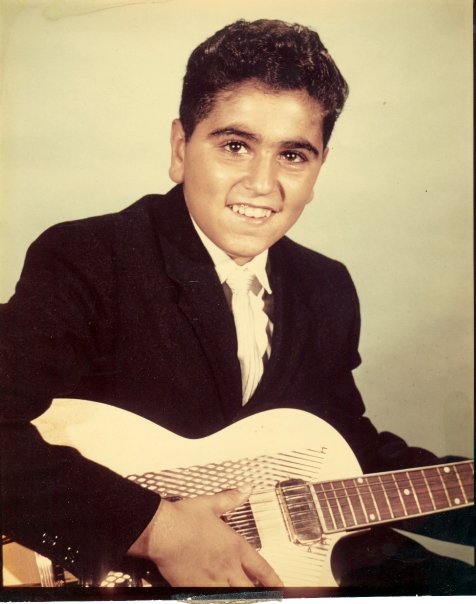
My dad introduced me to almost every genre of music. My love for oldies music comes from some of my earliest memories of songs he played. I was also introduced to classic country and country music in general by him. He played in a wedding band for years – the first being Now & Then, and the second was Foxfire. I recall him sitting in front of the stereo playing along with 45 records of songs that they were learning for gigs. I remember long nights when my brother and I had to go to “band practice” as well.
Rock and Roll music was a staple in our house, probably because it was the stuff he grew up listening to. The first song that comes to mind is Dream Baby by Roy Orbison. As a kid, I would ask, “Daddy please play ‘boom boom boom….bum bum boom'”. This was a reference to the bass notes that open the song. I loved that song. While so many other folks always connect Roy to Pretty Woman (a classic, no doubt), I remember Candy Man, In Dreams, and Crying. Roy was awesome – and dad introduced me to him.
He also introduced me to Elvis. Man, Elvis was cool! Sure, every one knows Hound Dog, All Shook Up, and the biggies….but dad played me songs like Steamroller Blues, Moody Blue, and Way Down! He had the Moody Blue album (which was on Blue Vinyl) and Elvis In Concert and I remember playing them on the stereo many times. I remember the look on my dad’s face when the news came on the radio that Elvis had died. We were at the drive in movie getting ready to watch Smokey and the Bandit, when Honey Radio announced it. Dad was shocked. We listened to Elvis music until dark and the movie started.
I have to include another person in this section about music – my Godfather, my Uncle Tom. He and my dad grew up together and their exploits can be an entirely separate blog. For now, let me talk about R&B and “local” music. When I first started working at WKSG (Kiss-FM) in Detroit, my dad asked if I could find him some songs. I told him I would look and if they were at the station, I’d throw them on tape for him. These were songs that he and my Uncle Tom grew up listening to.
As I looked over the list, I remember thinking, “What the hell are these songs? Were these even hits? Who are these people?’ The result was me getting a taste of some really amazing music. I cannot listen to any of these songs without thinking of them. This is music that was stripped down, funky, and amazing.
Mind Over Matter by Nolan Strong jumps out at first. This song is classic! Backing Nolan on this is the group the Diablos. Simple instrumentation and a powerful vocal makes this one of my favorites. This was not a song that would play on the radio much in the late 80’s, and I recall watching my uncle and my dad listening to the tape I made and loving every damn second of it. I watched them become transported back to when they were teens and jamming to these songs for the first time – it was magical!
Village of Love by Nathaniel Mayer is another one that is worth a listen just for the bass singer – it is R&B gold!. Two songs that were on his list (and now on my iPod) that were local hits that I absolutely love were by the band The Dynamics. I’m The Man and Misery are two very different songs, but they capture the sound of Motown prior to the Motown sound emerging.
A couple oldies that were on the list which we actually played in a regular rotation at WHND Honey Radio were Don’t Let Go by Roy Hamilton, You Can Have Her by Roy Hamiliton, So Fine by the Fiestas, Let’s Go Let’s Go Let’s Go by Hank Ballard and the Midnighters, What In the World’s Come Over You by Jack Scott, and Agent Double O Soul by Edwin Star. I loved when these songs would come up on the play list.
Another one that would come up was the song You’re So Fine by the Falcons. Wanna talk about stripped down? This one was as simple as they come. It was recorded in a garage with probably one or two microphones. You can totally tell that they it recorded all at once on one track and it was one take. You can even hear a little guitar feedback at the end. GREAT song! I love it!
My dad was instrumental in introducing me to blues music too. One of those songs that he and my uncle asked for was Baby, What You Want Me To Do by Jimmy Reed. Wow. It is one of those songs that DEFINES the blues in my opinion. Other songs he had me listen to were Fannie Mae by Buster Brown, which we played at WHND, Baby, Scratch My Back by Slim Harpo, Shake Your Money Maker by Elmore James, and The Thrill is Gone by BB King. The blues and R&B music helped shape Rock and Roll and these songs are a must for my iPod.
I grew up in the Urban Cowboy era when country music got a lot of attention and a lot of radio airplay. I don’t know that I would say country music is my dad’s favorite genre, but he sure introduced me to some great artists and songs. He, of course was responsible for me hearing Willie Nelson & Johnny Paycheck (who are mentioned in other blogs), but he also introduced me to Hank Williams Sr. and Jr. I recall him playing the two of them singing a duet on Tear in My Beer. This was high tech at the time, they took Hank Sr’s vocal and isolated it and then Hank Jr. sang with him, It was a great song with just Hank Sr., but adding Hank Jr. was excellent.
Another song he played for me was Okie from Muskogee. The opening line is “We don’t smoke marijuana in Muskogee”…not exactly the best song for a 10 year old to hear, but I had no idea what it meant and I liked Merle Haggard’s voice. I also recall him playing Amanda by Waylon Jennings. It is probably one of my favorite Waylon songs. Such a simple ballad, but I could listen to it over and over. I also loved when he bought the soundtrack to Smokey and the Bandit II because it was the only place you could find a great song by Don Williams called To Be Your Man. Among other acts he played were the great Ronnie Milsap, George Jones, Juice Newton, and Charlie Pride.
Two country albums I remember him calling me in to hear were from Dwight Yoakam and The Kentucky Headhunters. The Headhunters album had a great cover of Oh Lonesome Me on there, but the song he played for me was Dumas Walker. It sounded fresh and almost a little rockish. I remember immediately getting this on cassette for the car. The other album was If There Was a Way from Dwight. In my opinion, this is one of his best. My favorite cut from the album was never released as a single – The Distance Between You and Me. The instrumentation is perfect and the lyric is classic – almost Brad Paisley-ish. I crank it up ALWAYS.
On the “pop” side of things, a few songs stand out, most of which because they were songs he learned and played for his wedding band gigs. The first one I think of is the Breakup Song by Greg Kihn. I remember him putting the 45 on the stereo, and playing that intro over and over. The first time I heard him play it note for note, I was blown away! I loved watching him work out licks and chords and stuff by simply listening to it on the stereo! America by Neil Diamond was another. By the time this one came out, he was in Foxfire and playing bass guitar, not lead guitar. These guys were good. Not that the other band wasn’t, I just know that they sounded amazing. Dennis, the lead singer, (and at one time my boss at my first job) NAILED his vocals. I could swear he was Neil Diamond! Every song he sang was dead on. Man, I miss that group of guys!
Probably the craziest musical incident involving my dad was when he introduced me to the music of Red Prysock. My grandmother always wanted to go to garage sales. I think my dad hated it. There was a familiar look of disgust on his face one day when she asked to go. While at one garage sale, he was going through old 45’s. His face lit up with boyish excitement as he stopped at one 45 with a black label on it. I heard him so, “I can’t believe it…” He bought the 45 and couldn’t wait to play it for me … and to be able to hear it for the first time in years. Hand Clappin’ was the song. It was a jazzy sax number that caused to you tap your toes. It was GREAT. It was like nothing I had ever heard. My dad said that DJ’s used to use it for their “theme song” back in the day. Still remains a favorite for me. Who says garage sales are bad?!
Over the years, my dad has called me over to the turntable, the cassette deck, the CD player, the mini-disc player, and his computer with the words, “Hey son, listen to this …” Very rarely was I ever disappointed. Today, I listen to almost every type of music and have always kept an open mind to genres because of dad. I am so lucky that he was such an instrumental (pun intended) part of my musical influence. Thanks, Pop!



 Various Ramblings of a Nostalgic Italian