

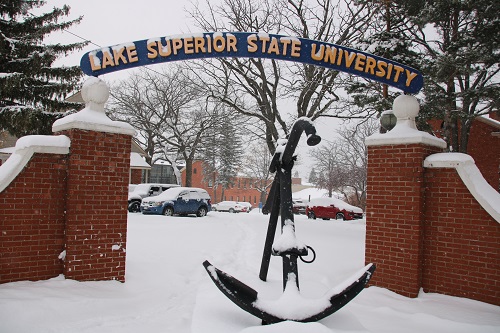
For 50 years now, the Lake Superior State University has published a yearly list of words (or phrases) from the past year that are “banished” for their “misuse, overuse and general uselessness.” Throughout the year, they took submissions from the US and around the world to create this year’s list. In total, they received over 1400 suggestions.
A LSSU representative said, “What began as a whimsical New Year’s Eve party idea in 1976, has grown into a global reflection on the words that wear out their welcome. The entries continue a tongue-in-cheek commentary on language, catchphrases, and corporate jargon.”
Here are some of them, along with their reason for adding it to the list:
6-7
“’There are six or seven reasons why this phrase needs to be stopped,’” says Paul E. from WI. The volume of submissions for this one could have taken up the whole list, at least slots 6-7. The top banishment this year, Scott T. from UT adds, ‘It’s time for ‘6-7′ to be 86’ed.’
Cooked
“‘Hearing it…my brain feels ‘cooked,’” groans Zac A. from VA. Parents and guardians led the charge on this one, with some feeling this isn’t enough. James C. from WA suggests a ban of ‘all forms of the word cook,’ hoping that hearing them will become rare.”
Massive
“‘Way overused! (often incorrectly),’ exclaim Don and Gail K. from MN. This word’s massive overuse has secured its place on this year’s list.”
Full stop
“’For the same reason ‘period’ was banished…redundant punctuation,’ explains Marybeth A. from OR.”
Perfect
“’There are very few instances when the word actually applies,’ notes Jo H. from CA. Often heard during customer service interactions, Char S. from OH wonders: ‘How do they know it’s perfect…what does that mean?'”
Gift/gifted (as a verb)
“’I found this on the 1994 list, but it will make me feel better to recommend that it be included once again,’ reveals James S. from OK. Another case of a noun being used as a verb.”
My Bad
“In the 1998 banishment, Elizabeth P. from MI suggested, ‘students and adults sound infantile when using this to apologize.’ The phrase hasn’t matured in credibility since then. Andrea R. from OH shared, ‘It does not convey much meaning in the way of an apology.’
Reach Out
“First banished in 1994, this saying has strayed from the positive message it once intended to deliver. ‘What started as a phrase with emotional support overtones has now become absurdly overused,’ asserts Kevin B. from the United Kingdom.”
___
I am happy to say that I have never used the phrase “6-7” in conversation and I don’t even care to know what it means. When it first started slipping into conversations, news services would have stories on the website, “What you need to know about 6-7,” “Here’s what 6-7 means and why your child should not use it,” etc… Everything I had seen about it offered up possible explanations, but never really a solid one. I’m thankful my kids haven’t come home saying this.
If I am being honest, this is one of the weaker list of banished words. There are three that have appeared on previous lists. There had to be better suggestions, I’d love to see a “runner up” list.
What do you think? What was missed? Is this accurate? Tell me in the comments.
 Various Ramblings of a Nostalgic Italian