TV Show Draft – Pick #2 – Mission: Impossible

This was not my original choice for my next pick in the TV show draft. Yes, it was on my list of shows, but I had planned on writing about it later in the draft. I decided to move it up the list because after binge watching some episodes as I recovered from my surgery, I realized I could tie it in with my first draft pick.

You may recall that my first pick was Police Squad – a show that was cancelled after 4 episodes (of 6) aired. The reason given for its cancellation was that people had to watch it to get the jokes. The top brass said that it required too much of the viewer. I guess they thought that no one would actually watch and pay attention to what was happening on the screen.

As I sat and watched episodes of Mission: Impossible, I realized that it truly was a show that viewers HAD to watch. There are LONG periods of action scenes where there is no dialogue and the characters are executing the episode’s plan. Maybe that required wiring up a camera, or cutting a false bottom in a safe, or creating a fake set to fool someone. These scenes were silent, with the exception of suspenseful music playing underneath. The bottom line is that half the fun of this show is watching how the team gets the plan to work. People were obviously watching, too, because the show lasted for 7 seasons.

The Show

Bruce Geller created the series, which focuses on a small team of government agents known as the Impossible Missions Force. In early seasons, the team was used for secret missions against third world dictators, evil organizations, and Iron Curtain governments. Later seasons they were used for battling organized crime, con men, and corrupt industrialists. Occasionally, the mission would be a private one on behalf of members of the team itself. The show never really says who is the organization that oversees the IM Force, but it seems to be some sort of independent agency of the US government.

The episodes almost always began with the team leader going to some place (phone booth, roof top, police box, etc…) and finding a tape machine and envelope. The voice on the tape would then offer the team leader the scenario and instructions. The team leader ultimately has the choice whether or not to accept the mission, as the voice would say, “Your mission, should you chose to accept it …” The voice would then warn, “If you or any member of your IM Force should be caught or killed, the Secretary will disavow any knowledge of your actions.” Finally, the tape would “self destruct.”

In the first season, Steven Hill is the head of the team. He plays Dan Briggs.

There are many stories surrounding the fact that he only appears in the first season. Some say he was a very difficult person to work with. Other stories say that his religious responsibilities interfered with the shooting schedule. Still others say that he just wasn’t able to do all that was required physically to play the role. At any rate, as the first season winds down, it seems he gets less and less screen time.

He was replaced in the second season by Peter Graves, who plays Jim Phelps.

After receiving listening to the mission and the self destruction of the tape, the team leader would retreat to his apartment where he was to assemble his team. He would pull out a briefcase with photos of various team members. He would pull out photos one by one. Each member had some special skill and if that skill fit the mission, the leader would pull that photo and place it in a pile.

He almost always picked the same people, but occasionally, there would be a guest star and the photo would allow the show to introduce them. In later seasons, they would skip this scene all together, assuming that the viewer understood that the leader had chosen the team.

The regular line up of agents included:

  • Cinnamon Carter (Barbara Bain) – a fashion model and actress
  • Rollin Hand (Martin Landau) – an actor, make up artist, magician, and “man of a million faces”
  • Barney Collier (Greg Morris) – a mechanical and electronics genius
  • Willy Armitage (Peter Lupus) – world record-holding weigh lifter

As cast members left the show, the ones that replaced them often had the same kind of skills. Other actors included Leonard Nimoy, Lesley Ann Warren, Lee Meriwether, and Sam Elliot. Only Greg Morris and Peter Lupus appear in every season of the series.

Once the team was chosen, they would assemble in the team leader’s apartment to discuss the plan of how they were going to accomplish the mission. It is during this scene that we often are introduced to one or more of the specialty gadgets that they would use.

Once the plan was in place, the remainder of the show focused on putting the plan in action. This is where the viewer really had to pay attention. So much action happens without any dialogue at all.

There are times that you are on the edge of your seat as you are watching the action. The team members are always seconds away from being caught or discovered. It is always fun to watch how this intricate plan comes together piece by piece. In most cases, the action of the show lasts right up until the final seconds. At that time, the mission would conclude with the IMF team making their escape.

One of my favorite things about the show is the fact that they were always able to create some sort of rubber mask to impersonate someone. Usually this would involve Rollin Hand (Martin Landau), the master of disguise. He always seemed to be able to mimic the voice of whoever he was playing (with the help of overdubbing, of course).

That’s a pretty good Martin Landau mask ….

While much of the content of the show is very dated, it still holds up today. I don’t ever tire of watching it.

Greg Morris, Peter Lupus, Martin Landau, Barbara Bain, and Peter Graves.

Theme Song

You simply cannot talk about Mission: Impossible without mentioning the theme song! It is perhaps one of the most recognizable theme songs in all of television. It was composed by an Argentine composer Lalo Schifrin. What is unique about the theme is that it is written in 5/4 time. It is an unusual time signature. The Mission Impossible Theme and Dave Brubeck’s Take Five are the two best known songs written in that time signature.

Schifrin wrote a book entitled Music Composition for Film and Television. In it, he stated that he sometimes would use Morse Code as inspiration for songs. In Morse code, the letter M is two dashes and the letter I is two dots (M I = Mission Impossible). As you listen to the theme song – you can here those letters in Morse code (Dash Dash Dot Dot – Dash Dash Dot Dot).

Schifrin won two Grammy Awards for music from the show.

Mission: Impossible remains one of the great shows of classic television. I’m off now to think about my third draft pick.

This blog will self destruct in 5 or 10 seconds …..

Tube Tunes….

sanford 1

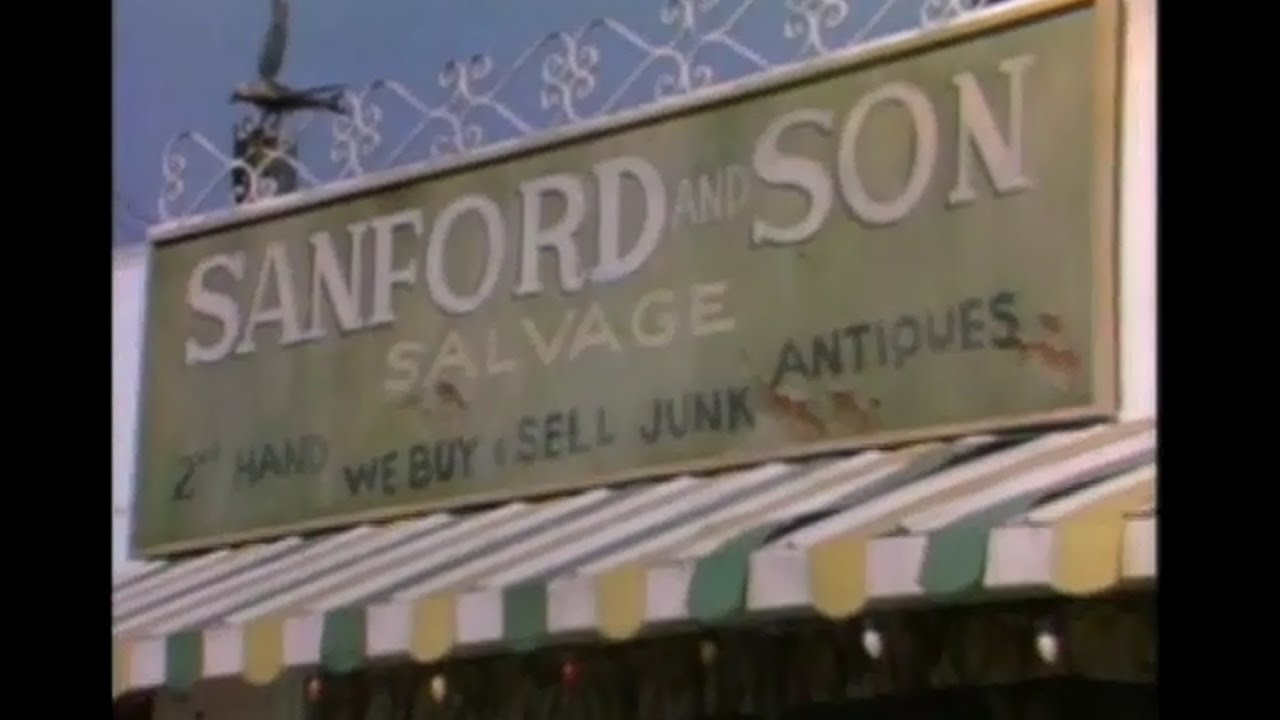
Today, Quincy Jones turns 85.  He is a legend in the music business.  He is a record producer, actor, conductor, composer, musician, TV & film producer, instrumentalist, magazine founder, entertainment company executive and humanitarian.  He’s worked with some of the best musicians and produced some of the biggest albums in history.  He has worked with everyone from Frank Sinatra to Michael Jackson.  Call my crazy, but despite all of the things Quincy Jones is known for – I remember him for one thing – he recorded the Sanford and Son Theme song!

There was just something cool about this theme song.  The opening bass line followed by the catchy melody.  To this day, I laugh when I see a beat up truck driving around, I will sing the Sanford theme out loud!  In an episode of Scrubs, JD and Turk are having a serious discussion, that eventually ends up with them singing and dancing to the Sanford theme!  Recently someone did a “mash up” with Robin Thicke’s Blurred Lines and, you guessed it, the theme to Sanford and Son.

Today, many shows don’t even bother with a theme song.  You see the credits scroll on the screen while the show is in progress.  This is sad.  A TV theme song kind of sets the mood for the show.  It will be a song with catchy lyrics or a melody that you can hum along with.  Today, lets go back and look at some of my favorite theme songs from TV’s past.  When we’re done – tell me your favorites that I may have missed.

The 50’s

Two of the earliest themes on my list come from shows considered classics.  First, The Andy Griffith Show.  This catchy tune is one that you can whistle along with.  Even without looking at a screen, whistling it makes you picture Andy and Opie walking with their fishing poles to the lake.  Second, The Dick Van Dyke Show.  What’s not to like about this one?  You only have to wonder whether or not he’s gonna trip over the ottoman when he walks in the house.

Then there is the Twilight Zone.  The haunting guitar part that plays those same four notes over and over is scary as hell!  As a kid, I remember freaking out when it was on.  Today, as I listen to it, it is perfect for the show.  It was the perfect music to play while Rod Serling explained that we were entering another dimension.  I can’t tell you how many times something obscure happens and I start humming the theme song!

Another one of my favorites was the theme to Perry Mason.  It was written by Fred Steiner who said he wanted to capture Perry’s sophistication and toughness.  The song is actually called Park Avenue Beat and it is a bluesy “piece of symphonic R&B”.  The song was re-recorded for the Perry Mason TV movies and was used by the Blues Brothers band while out touring.

Another theme song that I absolutely love, has a Blues Brothers tie in, too.  Peter Gunn is a private eye.  The initial base line accompanied by low brass instruments screams sleazy private eye.  It’s a great piece.  The song actually plays in the first Blues Brothers movie as the brothers are driving through Illinois.  They do a fine cover of it.

The 60’s

The shows of the 60’s and 70’s had some of the best theme songs!

The theme to Mission: Impossible is instantly recognizable.  It was composed by the great Lalo Schifrin.  What’s neat about the song is that it is in 5/4 time.  From the opening note – you can see the fuse light up and begin to burn.  It’s such a cool piece of music.  I was glad that they used it in the movies with Tom Cruise (even though I disliked them).

Wanna sing along with the theme to Batman?  You only need to sing the word “Batman” and you got it!  Neil Hefti, who was a composer and arranger, composed the theme with it’s simple guitar lick and vocal.  It was a hit for Hefti, The Ventures, and the The Marketts.

William Dozier, creator of Batman, also created the Green Hornet.  Even though the show didn’t last long, the theme song is memorable for a few reasons.  First, it is based on the classical piece, The Flight of the Bumblebee.  Second, playing the trumpet on the song is the great Al Hirt!  Classic!  One that you will hum for days.

Who can forget the theme to the Monkees?  “Here we come, walking down the street.  We get the funniest looks from, everyone we meet….”  Hey!  Hey!  They’re the Monkees!  For this show, they gathered 4 guys with little or no musical experience and made them a band.  The show appealed to kids and adults alike.  It was fast paced with quick jokes and 4 lovable characters who featured many of their hit songs on the show.

In the 60’s the guitar played a big part in theme songs.  Think about this, The Munsters theme had such a catchy lick that was sampled for the song Uma Thurman by Fall Out Boy.  It was cool enough to sample for one of today’s hit songs.

One of those great guitar theme songs was to Get Smart.  The opening sequence changed a little from season to season, but it always included Don Adams walking through a corridor with sets of doors one right after another until he finally makes it to the payphone that gets him into CONTROL headquarters.  Love this song and it never fails, if I am ever walking down a long hallway – I will almost always start to hum this song.

I mentioned the Ventures earlier, and they have one of the coolest theme songs – Hawaii 5-0.  It was a huge instrumental hit for the band.  It’s a great balance of guitar and horns.  The use of the tympani drum and the pyramid effect by the horns in this song is masterful!  It’s one of those theme songs you instantly crank up.

The 70’s

Disco was in and some theme songs were just “funky”.  Two examples of this are Barney Miller and it’s spin-off, Fish.  The funky bass in the two theme songs is prominent and sets the tone for the them.  The guitar melodies blend in and make them two themes that you could listen to over and over.  The horns in Barney Miller continue to crescendo to the end of the song itself.  It started slow and funky and ends in such a way that when it’s over you are disappointed cause you want more.

Norman Lear was a staple of 70’s TV.  He created All In The Family, Maude, The Jeffersons, Sanford and Son, Good Times, and the list of his credits goes on and on.  The Jeffersons was a spin-off of All In The Family.  George Jefferson is “moving on up” to a bigger and better life and that’s where the theme song sets you up.  It tells you the story.  The theme song was written by Ja’net Dubois (of Good Times) and Jeff Berry and sung by Dubois and a gospel choir.  Her vocal is amazing and so is the song.

How do I describe the theme song from What’s Happening!!?  As the show opens, the main characters are running down a sidewalk bouncing a ball.  The music kinda sounds like a ball is bouncing and then the soprano sax jumps in.  It’s odd, but it’s catchy.  It’s also written and composed by one of the most respected men in music – Henry Mancini!

The 70’s introduced us to the superhero Wonder Woman.  I do not know a boy alive who did not have a crush on Lynda Carter.  Much like the Batman theme, this theme repeats the character’s name a few times, but then expands on how wonderful she is.  There is a funky little bass line that drives the song and I can’t really remember much more because I was watching Lynda Carter run ….

Welcome Back, Kotter was the show that introduced us to John Travolta.  It was a comedy about a guy (Gabe Kaplan) who goes back to his old neighborhood to teach.  The show was originally going to be called Kotter.  The title was changed, however, because of the theme song.  It was written and recorded by former lead singer of the Lovin’ Spoonful, John Sebastian.   The song hit the charts and went all the way up to #1.  This song give you the feel of the “folksy” 70’s.

The 80’s

There are so many great theme songs from the 80’s!  Let’s start with Night Court.  Night Court’s theme song throws me back to the 70’s because of that funky bass open.  You also have that soprano sax melody.  It’s not a long theme, and when it’s done, you wish that you could find somewhere an “extended club mix”.

Police Squad only produced 6 episodes and it was cancelled.  It starred Leslie Nielson as Lt. Frank Drebin.  At the time, the network didn’t think that a show like Police Squad would be something an audience would want to watch (so they could catch all the jokes – remember, this was done by the guys who gave us the movie Airplane!).  The theme song was accompanied by a voice over announcer reading the credits.  He would also announce tonight’s guest star (who would always die during the credits) and give the name of the episode (which never matched with the title read on the screen).  Thankfully, when the Naked Gun movies were made, the kept the theme song.

In 1980, Urban Cowboy hit theaters and country music was all the rage.  It only made sense that we’d have a country comedy show on TV.  That show was the Dukes of Hazzard.  Talk about big name singers – Waylon Jennings sings the theme song, and he was also the show’s narrator.  The song was released as a single in August of 1980, and it went to #1 on the Billboard Country Charts!  Yee-haw!

The 90’s

It is here that we begin to see the decline in the use of the TV theme song.  As a matter of fact, it became a habit to edit them down to 10-30 seconds from the already short 60 seconds.  There are some that stand out for me though from this decade.

Tim Allen’s Home Improvement was a show based on his comedy act.  His grunts and vocalizations intermingle through the theme song, almost as if they are a part of the musical score.  The theme song almost sounds like a “work” song, both in sound and in tempo.

Seinfeld was one of those shows who used a theme song for a while, and used it at the end of the show, but often times especially in the show’s later seasons, it was shortened.  The bubbly, poppy, twangy bass, and silly feel will forever be associated with the show about nothing and it’s silly characters.

From the opening guitar of “I’ll Be There for You” by the Rembrandts, you are in New York with Ross, Rachel, Chandler, Joey, Phoebe and Monica.  The theme to the show Friends was an international hit.  It was a song that was requested on radio and used at wedding receptions to introduce bridal parties.  The song is heavily influenced by the Beatles (I Feel Fine) and the Monkees (Pleasant Valley Sunday).  It was originally just one minute long, but the band went in an recorded an extended version, which became a radio hit.

Who could forget It’s Garry Shandling’s Show?  The show, in itself, was silly.  Garry interacts with the cast, but often will interact with the studio audience as well.  It was just so weird.  The theme song is just as weird.  It’s a bouncy song that basically references itself (this is the theme to Garry’s show) and tells you how it came to be (Garry called me up and asked if I would write his theme song) and then asks how you like it (we’re almost halfway finished how do you like it so far?).  The melody is so catchy, you can’t help but want to sing (or whistle) along with it.

Wrapping up

With the TV theme song becoming more and more absent from TV…what are your thoughts?  Which ones did you love growing up?  Which ones do you still sing?  Which ones did you hate?

Now it’s your turn – I look forward to seeing your comments.