I played trumpet in high school. I played it off and on after high school, but I probably couldn’t play more than 5-10 minutes now. That being said, I do love to listen to the professionals who have mastered the instrument. I love listening to Maynard Ferguson, Clark Terry, Harry James, and Doc Severinsen.
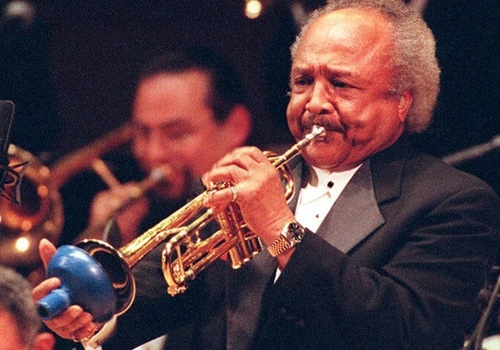
The members of the Tonight Show Band were really something. They were TIGHT! I am always amazed to hear that band and how they really cook. One of the other trumpet players I love was a member of the Tonight Show Band – Eugene “Snooky” Young.
Snooky was born on this day in 1919. Not only could he play, but he was a master of the “plunger mute” (It’s exactly what you are picturing.) with which he was able to create a wide range of sounds. Sometimes folks will call it a “whah whah” mute because that’s sort of the sound you can produce with it.
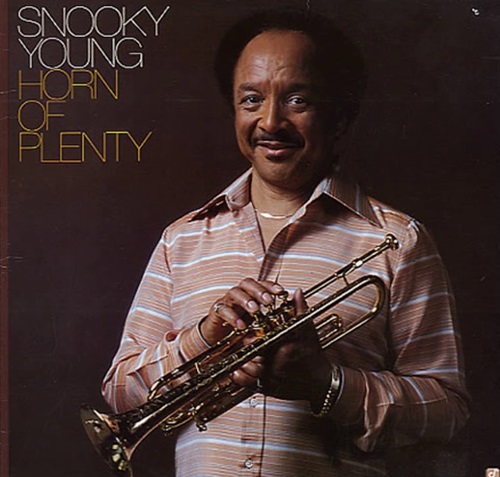
Snooky played with greats like Count Basie and Lionel Hampton. He recorded three solo albums from 1971 to 1979.
He also performed on albums with Ray Charles, Quincy Jones, Lalo Schifrin, The Mills Brothers, George Benson, Tony Bennett, The Band, Steely Dan, BB King, Neil Diamond, and Tracy Chapman.
In the late ’80’s, Doc and the Tonight Show Band went into the studio to record two albums. They are a must for folks who love a swingin’ big band. Snooky plays a solo on almost every cut on the album. One of my favorite cuts is their version of Lionel Hampton’s Flying Home. The saxophones are locked in and sound so good together. Listen for Doc (unmuted) and Snooky (Plunger muted) solos that are simply amazing.
First, the album cut –
The band live on the show (with an intro from Johnny Carson)
Here’s a fun clip of Snooky singing and playing.
Snooky passed away at the ripe age of 92 in May of 2011.
Welcome to the first Turntable Talk of 2025, hosted by Dave of A Sound Day. This is the 34th round, if you are keeping track. If you are a new follower, let me fill you in on how it works. Dave Ruch offers up a musical topic to a group of us music fans each month. Each of the writers come up with a response to the topic and Dave runs each piece on his website.
We have had some fun and interesting topics, and this one is no exception. This time around, Dave asks, “What’s my scene?” Our instructions: Pick a sort of music “Scene” that either you would have liked to have been a part of or one that you think really created a lot of the music you love. Pick a general place and time and have fun….
My fellow music bloggers know my musical tastes pretty well by now. So, let’s see a show of hands – How many thought I’d pick The Rat Pack in Vegas? I almost did, but I know I have written on a live Rat Pack show in the past. Honestly, as awesome as that would be, the more I thought about it the more I leaned another way.
My scene certainly influenced the Rat Pack. Dean Martin cut an album called Swingin’ Down Yonder. Frank Sinatra recorded albums titled: Sinatra Swings, Songs for Swingin’ Lovers, Swing Easy, Sinatra’s Swingin’ Session, Sinatra and Swingin’ Brass, and A Swingin’ Affair! You know what the song says, “It don’t mean a thing, if it ain’t got that swing!”
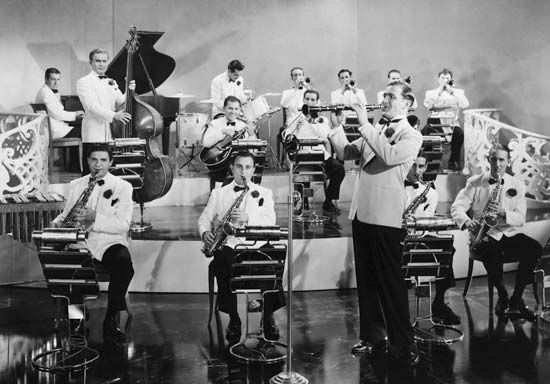
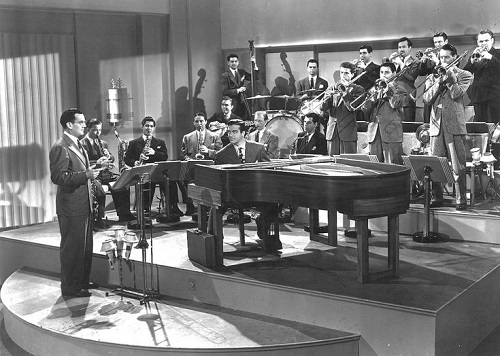
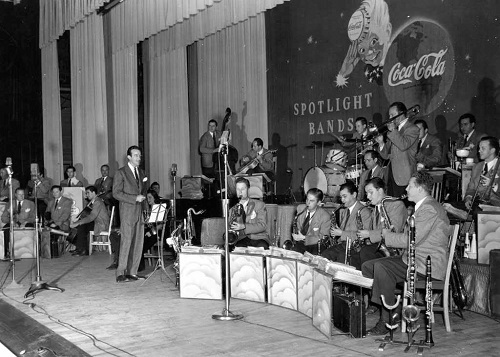
As a mediocre trumpet player, I have always loved Big Band/Swing music. Most folks would consider the Swing Era to be from the early 1930’s to around the mid 1940’s. Even though swing music was prominent in the early 1930’s, it was often ridiculed for its style and feel. Some went as far as to call it a menace (much like Rock and Roll when it gained popularity). After 1935, big bands rose to prominence playing swing music. They held a major role in defining swing as a distinctive style.
There were many big bands on the scene at this time. Each had a very distinct sound and feel to it. For example, Glenn Miller’s orchestra often used a clarinet lead. Count Basie’s sound has a relaxed feel to it. Benny Goodman used a driving and hard swing sound. Duke Ellington’s songs has a sophisticated sound to them.
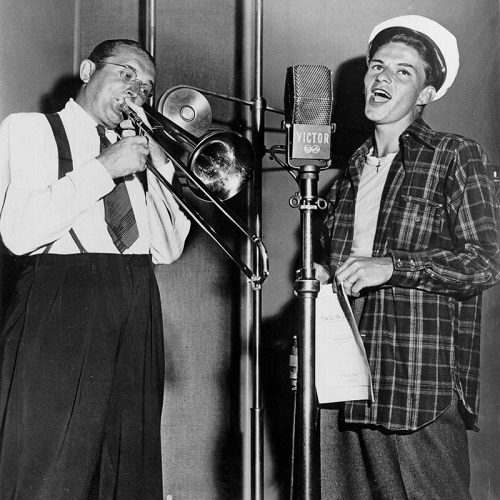
The band leaders often took the spotlight. They were amazing instrumentalists. Harry James and his trumpet, Benny Goodman and Artie Shaw on their clarinets, Gene Krupa on his drums, the trombones of Tommy Dorsey and Glenn Miller, and Lionel Hampton’s vibes. Along with those great leaders, there were plenty of talented musicians within those bands who went on to make a name for themselves.
Perhaps Sinatra recorded his many swing songs because he rose to fame alongside Tommy Dorsey. He was one of many singers who sang with those big bands. Others included the voices of Ella Fitzgerald, Billie Holiday, Kay Starr, Peggy Lee, Doris Day, Kitty Kallen, and Dick Haymes. While they all started with the big swing bands, they also went on to have prolific careers.
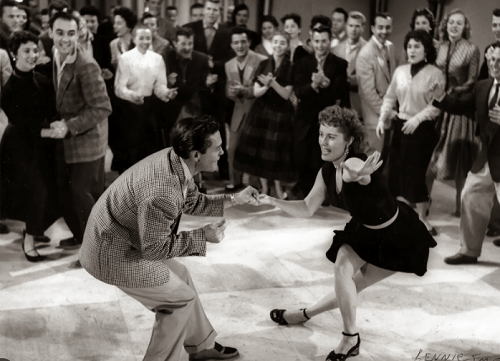
During the swing era, the big bands would often play at dance halls across the country. They appeared on the radio playing dance music. Some appeared in movies, and all of them made records. Their music had teenagers and young adults dancing until their feet hurt.
As years went on, the taste of music listeners changed. Swing began to fade away to make way for music that was less “danceable” like bebop. Many of the swing bands broke up, while other continued without their original leaders. The Glenn Miller Orchestra still tours today, for example.
When I put on headphones and listen to old big band recordings, I picture myself there listening. I picture myself in one of those great 1930’s suits with a stylish fedora.
Maybe it is in a dance hall or at a live concert. Maybe I am in the audience of a radio program where the band is playing. Wherever the music is being played, I am zoned in on it. I am listening to the drum beat of Sing, Sing, Sing and Benny Goodman. I can hear the vibrato of Tommy Dorsey’s trombone solo on I’m Getting Sentimental Over You. I marvel as I watch and listen to Harry James play his theme song, Ciribiribin.
Throughout the evening, I will study those great instrumentalists who improvise solos off the top of their head. Looking at nothing but chords and making up their own melodies. This is something I wish I could do as a trumpet player.
In all honesty, in my “scene,” I would be happy as a clam to just be in the audience. It would be the bees knees just watching those guys swing! Yeah, I can totally see myself swinging, singing, and dancing to the sounds of swing.
Thanks again, Dave for inviting me to take part in this feature. It is always fun to contribute and to read the other submissions. I’m already looking forward to next month’s topic!
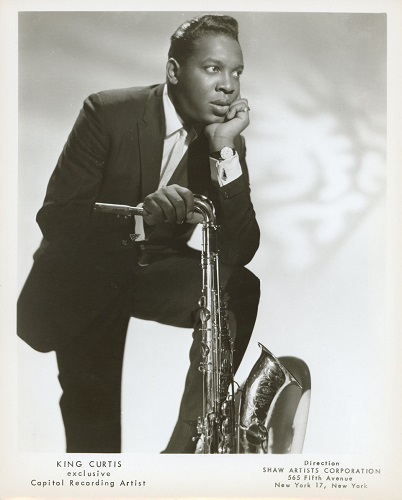
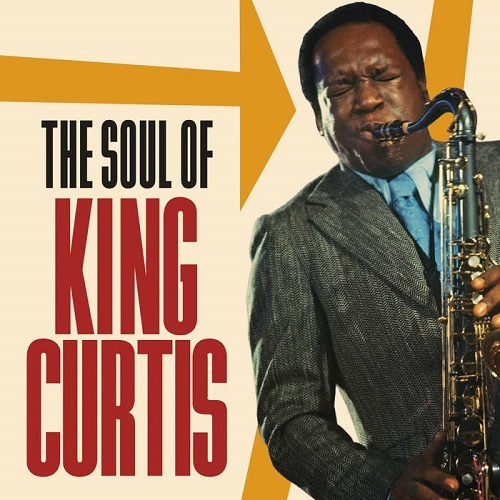
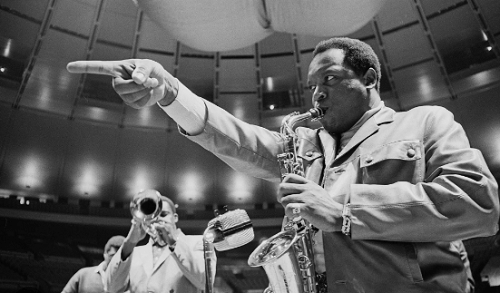
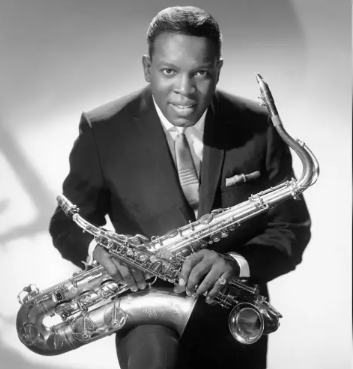
The song for today is a familiar one, despite its age. The reason I pick this one is to remember one of the greats who passed away on this day in 1971. Perhaps you don’t know him by his real name, Curtis Montgomery, or his adopted name Curtis Ousley. If you are a music lover, I would hope that you are familiar with his stage name – King Curtis. He was one of the all time great saxophonists and had quite a career.
Curtis began playing saxophone at age twelve and liked a variety of music. He turned down college scholarships to join up with the legendary Lionel Hampton band where he wrote and arranged music. In the early 1950’s he left the band to go to New York. He became an on call session musician for labels like Atco, Prestige, and Capitol Records. He recorded with Clyde McPhatter, Bobby Darin, Buddy Holly, Jimi Hendrix, Andy Williams and was on Waylon Jennings first record. He also made his own records like “Soul Twist” (with his Noble Knights) in 1962.
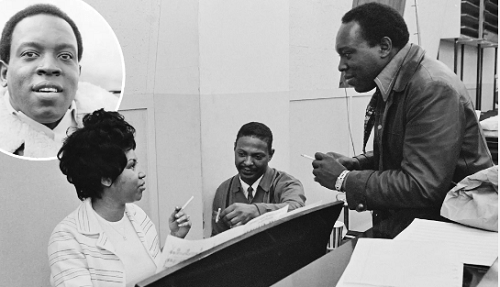
In 1967, Aretha Franklin covered Otis Redding’s Respect by flipping the gender and presenting it from the female point of view. The song featured Aretha’s sisters, Erma and Carolyn on the repeated “sock it to me” line and King Curtis on the saxophone solo.
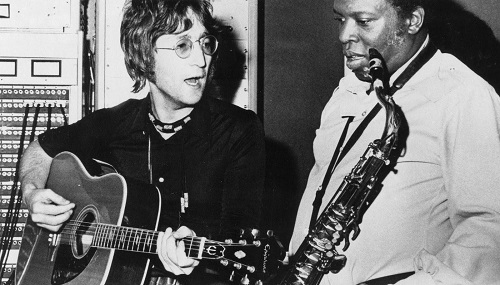
In February of 1971, John Lennon started recording tracks for his Imagine album. When Lennon, Yoko Ono and Phil Specter were mixing and finishing the album, John must have felt that he needed something more on a couple tracks. Apple’s Allen Steckler said, “John knew he wanted a sax player and it was his idea to use King Curtis. He asked me to get him. I found his agent and booked him. John played him the tracks and told him the kind of feel he wanted. He went into the studio and played his ass off. John loved it, as did Phil Spector and all of us.“
Curtis recorded his parts for the album in July of 1971. He can be heard on Lennon’s “I Don’t Want to Be a Soldier Mama” and “It’s So Hard.”
Long before all of that, Curtis decided to move towards playing rhythm and blues in part because it was a more lucrative career choice, but he also loved the music. It was in 1958 that he became widely known for his unique saxophone work when he played on The Coasters hit “Yakety Yak.” The sound that Curtis unleashed earned him some fame and influenced the sound of R&B the saxophone. He developed a strong relationship with The Coasters, becoming their go to sax man and contributing to arrangements as well on a string of hits that included “Charlie Brown,” “Along Came Jones,” “Shoppin’ For Clothes,” and more.
Saxophonist Boots Randolph was so influenced by the “Yakety Yak” solo that he altered the melody a bit and made it his own song called “Yakety Sax” (which played prominently on the Benny Hill Show). That song only further exposed the King Curtis sound.
On the night of August 12, 1971, Curtis was attempting to access the fuse box to his house (his central air conditioning system was tripping the breaker) when he confronted Juan Montanez, who was loitering on Curtis’s front steps with an unidentified female. A fight ensued and Montanez stabbed him. Curtis was found on the steps outside his apartment and was taken to New York’s Roosevelt Hospital where he died early on the morning of August 13, 1971. He was 37 years old.
So today, on the 53rd anniversary of his passing, check out the great King Curtis with the Coasters on the classic, “Yakety Yak.”



 Various Ramblings of a Nostalgic Italian