

Welcome back to The Music of My Life, where I feature ten songs from each year of my life. In most cases, the ten songs I choose will be ones I like personally (unless I explain otherwise). The songs will be selected from Billboard’s Year-end Hot 100 Chart, Acclaimed Music, and will all be released in the featured year.
1988 was a very big year for me. It was the year I graduated from high school. It was also the year that I landed my first radio job. As graduation day grew closer, I began counting all of the “lasts.” The last marching band performance. The last band concert. The last final exam. To say that I was an emotional wreck would be an understatement.
After graduation, I had a full time radio gig (making a whopping $12 an hour) and so I gave up thinking about doing anything else. I was that clueless to think that I’d have this radio gig until I retired. Can you imagine? Typical 18 year-old!
I mentioned last week that 1988’s list would present some songs that may or may not seem out of place. I suppose that those who know me well will not be surprised by the songs I picked, and there certainly is a variety! Well, I suppose I should get right into the tunes …
I have to remind myself that it is not Movie Music Monday, because my list includes not one, but two songs from the soundtrack to Tom Cruise’s film, Cocktail. My buddy Steve and I cruised a lot our senior year. He was always bringing new music for me to listen to. I am almost positive that he was the one who told me about the Georgia Satellites’ version of the Hippy Hippy Shake.
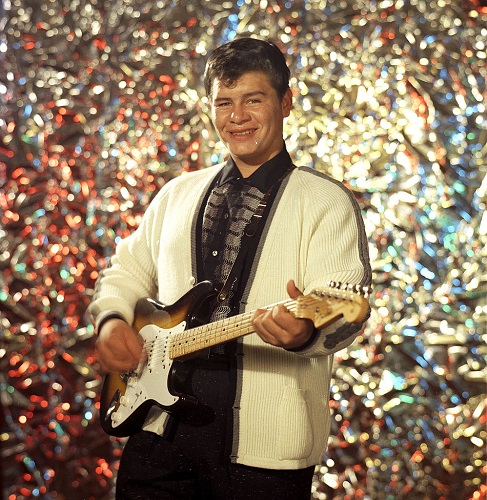
The version I was familiar with was done by the Swinging Blue Jeans, and was a song we played at my first radio station. I had no idea that the song was written and recorded first by Chan Romero in 1959. Anyway, when I hear the Satellites’ version really rocks and it was a great song to cruise to.
Hippy Hippy Shake
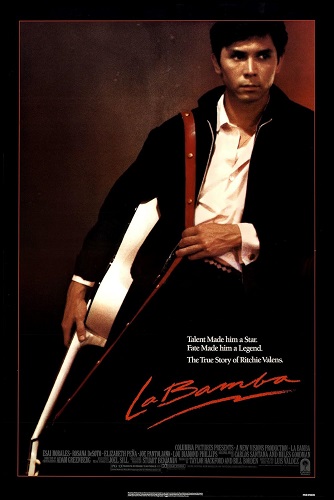
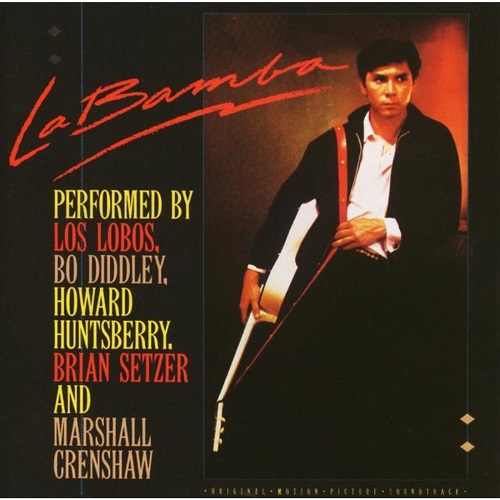
In 1987, the song La Bamba was a hit again. This time it was Los Lobos from the soundtrack to the hit movie starring Lou Diamond Phillips. It made for the perfect parody song for Weird Al Yankovic. His version was called, Lasagna. Now, what Italian wouldn’t like this song?!
It is on my list because when my dad booked my graduation party, he also gathered up a few of his band friends. He had the sax guy, keyboard guy, and bass guy come. It was either my cousin or my uncle who brought their drum kit, and my dad brought his guitar. No rehearsal, all they had was some lyric sheets with chords on them and they jammed through the whole party. It was awesome!
My dad played so many great blues songs. Everyone seemed to take turns singing something. My dad called me, and my friends Steve and Joe up to the stage and handed us the lyrics to Weird Al’s Lasagna. I’m guessing it didn’t take much coaxing for us to sing, and it was probably awful. However, it is a great memory of me and my pals.
Lasagna
If it ain’t broke, don’t fix it, they say. Robert Palmer had great success with his Addicted to Love video. So he brought back the models from the previous music video for this one. Only this time they’ve multiplied! Five of them do choreographed dance moves, but another eight stand behind Palmer looking bored. It worked, though, as Palmer won the 1988 Grammy Award for Best Rock Vocal Performance, Male for this song. It was the same award he won two years earlier for “Addicted To Love.”
Songfacts.com says: The big, sexy hook in this song is the pause after Palmer sings, “Now I find her.” After some drumbeats, he comes back with “…simply irresistible.” The song was in the works for three years before Palmer came up with this part, making the song complete. “A little thing like that makes the difference between an idea and the complete song,” he wrote in his Addictions: Volume 1 liner notes, adding, “I like the manic military rhythm and the strong counter melody.”
This was yet another song that made it to our “cruising cassettes.” It was another great sing along song for us.
Simply Irresistible
My next song is one that I always thought was very creative. I Hate Myself for Loving You is such a great line. I relate to in in a few ways. As a young punk, I kinda fell for gals pretty hard. I let many of them treat me bad and I just kept hanging on with them. I always felt that I would just keep on loving them through it all. Yeah, I was an idiot. Today, that title makes me smile and makes me think of young Keith, who just wanted to make someone happy.
Thanks to Songfacts, I learned that that wasn’t originally the title: Joan Jett’s producer Kenny Laguna told us that Joan came up with the guitar riff for this song and wrote it as “I Hate Myself Because I Can’t Get Laid.” She took it to the writer/producer Desmond Child, who thought the title would never fly and convinced Joan to change it to something with “Love” in the title. Child, who got a co-writing credit on the song.
I Hate Myself For Loving You
The next song is the only country song on my list. I am guessing that I never really heard this when it was released, and became familiar with it a year or so after when I had my first stint at a country station.
I was familiar with the Oak Ridge Boys, of course. I mean, who wasn’t? Elvira was all over the radio when it was out. They guys had great harmonies and when I first heard Gonna Take a Lot of River, that is what stood out to me. This would have been sometime in 1991, when my girlfriend had broken up with me.
That being said, the lyrics now really hit home. I spent a lot of time at the beach and on the pier watching the waves during that time. So the lines “Because my baby’s long gone and nothings going my way. I’m gonna let this muddy water just wash away my blues.” resonated with me.
Today, when I hear it I just love listening to the harmonies and fumble every time I try to say, “Monongahela.”
Gonna Take a Lot of River
The variety of songs continues …
1988 brought us the only acapella song to go to number one in the United States. It is the second song from the Cocktail soundtrack. Don’t Worry, Be Happy by Bobby McFerrin was unlike anything on the radio at the time. Bobby recorded it using only his body to make all the sounds. The simple message and unusual sound made it a surprise hit.
The inspiration for the song came from a poster that Bobby saw featuring the Indian guru Meher Baba. It simply said, “Don’t Worry, Be Happy.” Bobby says that when he saw it he thought it was “a pretty neat philosophy in four words.” If I had a dollar for every time I heard someone say, Don’t Worry, Be Happy in 1988 alone, I’d be financially set for life.
The video was a silly one and a received lots of airplay on MTV. It featured Robin Williams and the lesser-known comedian Bill Irwin (who plays Mr. Noodle on Sesame Street). It is interesting to note that the video is a bit shorter than the single.
I always think of my best friend, Jeff, when I hear this one. He would always say the line, “I’ll give you my phone number, when you worry, call me, I’ll make you happy.” We found that line hilarious for some reason.
Don’t Worry, Be Happy
The next song was something I heard while cruising with my girlfriend. I’m sure we were listening to that Love Song show (Pillow Talk). It grabbed me from the intro. It was a smooth groove that reminded me of some old Atlantic or Stax soul songs. I was surprised to learn it was Glenn Frey.
Glenn’s Soul Searching album was his third solo album. I picked up the album because of the song True Love. My feelings about the song were justified when I read the liner notes. Frey wrote of the song “For those of you who have my previous albums, I apologize. I just can’t shake my obsession with this Al Green-Memphis thing. Like Wilson Pickett says, ‘Don’t fight it’.” Cash Box magazine even called the song: “a classic R&B tune replete with hornbreaks and soul-tinged arrangement and production.”
My favorite part of the song is the fake ending. After a second or two, the drum kicks back in and the sax wails away at a solo. Love this song. I wish the video would have started with the song instead of the cheesy acting by the actors … LOL
True Love
Who would have thought that Tom Jones would have a career boost in 1988?! Tom enjoyed great success in the mid 60’s and the 1970’s. He never really stopped making records and was always on tour. In the early 1980s, Jones started to record country music. From 1980 to 1986, he had nine songs in the US country top 40, yet failed to crack the top 100 in the UK or the Billboard Hot 100.
Prince had recorded Kiss in 1986. The song was a big hit and continues to be played in a regular rotation on Adult Contemporary stations all over the country. I know that many will not agree with me when I say that Prince’s version sounds weak compared to the Tom Jones/Art of Noise version. Tom commands the song and I cannot love it more!
According to Songfacts, after his country songs, he “made a left-field decision to cover this song, and in doing so revived his career. He told the Observer Music Monthly December 2008 how this came about: “If I hear a song I like I’ll do it in the show, so when I heard this I sang it (Kiss) in an R&B style. Then I was due to go on Jonathan Ross’s program in 1987 to perform the ballad ‘A Boy From Nowhere,’ and he wanted something upbeat too. My philosophy has always been: when in doubt, do ‘Great Balls of Fire.’ But Jonathan asked if I had anything new. Art of Noise were watching and they asked if I’d do a version with them. When they sent me the finished version I thought: ‘If this isn’t a hit, I’ll bloody well pack it all in.’ It was a busting hit.”
Tom tells a great story about Prince. When he met Prince and thanked him for the song, but didn’t ask what his thought of his version, as he wasn’t sure he would like the answer. “I saw a movie once that Bette Midler did called The Rose,” Jones said in a Songfacts interview. “She goes to see Harry Dean Stanton, a country singer, because she’d recorded one of his songs. She says she’s a big fan of his, and just before she walks out the door he says, ‘Could I say one thing to you? Don’t you ever record one of my songs again. ‘That hit home. I thought, s–t, I’m never going to ask a songwriter what he or she thinks of my version. I’ll leave that to them. That always sticks in my mind. So I just thanked him for writing it.”
Fun fact: Prince and Tom Jones were both born on the same day, the 7th of June (Prince in 1958, Jones in 1940)
Kiss
I am sure that I have talked about the next song before. I am also sure that I talked about the album before. It was truly a monumental event!
From Songfacts: Handle With Care was the first single from The Traveling Wilburys, a supergroup created by George Harrison and Jeff Lynne. Initially an informal grouping with Roy Orbison and Tom Petty, they got together at Bob Dylan’s Santa Monica, California, studio to quickly record an additional track as a B-side for the single release of Harrison’s song “This Is Love.” “Handle With Care” was the song they came up with, which Harrison and his record company immediately realized was too good to be released as merely a B-side. The five superstars decided to form a band and make an entire album, recording nine more songs at Dave Stewart’s (of Eurythmics) house in Los Angeles in a 10-day window when they were all available.
This was the only video that included Roy Orbison. A short time after the album was released, he passed away of a heart attack. I was working at the radio station the morning that news of his passing came across the news wire. I will never forget that.
Handle With Care
When I was DJing parties and weddings, I would often find out about new dance songs from people who made requests. Many of the songs were line dances like the Cupid Shuffle or Cha Cha Slide. Over the years, I was introduced to The Biker Shuffle, The Turbo Hustle, The Dougie and many others that way. I was always surprised at how they would fill the dance floor.
I remember someone asking for a song called Da Butt and I laughed. It was from a Spike Lee movie, but I had never heard of it. That week, I stopped by a DJ supply store and there on one of the many compilation CD’s they made was Da Butt by a group called EU. I bought it, took it home and gave it a listen.
It certainly had a funkiness to it and I could see how this might be something that people could dance to. It didn’t take long to find out because I had a wedding the following weekend. Once I started the song, the crowd screamed and got on the dance floor. Before I knew it, everyone was shaking their rear end. I would use this song a lot over the years.
I always think of one of my college instructors when I hear this because I DJ’d a birthday party for one of her kids and SHE was the one who asked me to play it.
I would often get out on the dance floor with these poster board signs I had made for my gigs. I had one that said “Oh-We-Oh. Whoa-Oh” and I would hold it up for audience participation during that part of the song. While it is not the most family friendly song, it did give me a chance to have some fun at a lot of DJ gigs.
Da Butt
I couldn’t let this year pass without touching on one of the big controversies of the year. In June of 1988, Gail Brewer-Giorgio released a book called “Is Elvis Alive?” Along with the book, there was a cassette tape with alleged phone conversations that Elvis had with someone long after he was supposed to have died.
This played right into the rumor in the music industry was that Elvis had faked his death. In the years following his death, there were many sightings of him (including my home state of Michigan – at a Kalamazoo Burger King), and in late 1988 record label LS Records released “Spelling on the Stone” to capitalize on the popularity of the phenomenon. According to LS Records owner Lee Stoller, who produced the song, his daughter Tammy received the recording in August 1988 from an anonymous man who arrived at the label’s offices in a limousine. After obtaining distribution rights, LS Records released the song on radio by the end of 1988, with the single’s release not crediting an artist. The song’s title refers to the fact that Presley’s middle name, Aron, is misspelled as “Aaron” on his tombstone, which was a common argument against his death at the time. The song features an uncredited vocalist with a delivery similar to Presley’s; it tells a first-person narrative, purportedly from his perspective, to suggest that he had faked his death.
Some people claim that the impersonator is actually a guy named Dan Willis, who recorded at LS Records. Others think it really is Elvis. I say Balderdash …
Bonus Song: Spelling On the Stone
1988 had so many great songs. There have been times I wonder if I should pick 15 instead of 10. I know that in future years, I will struggle to pick 10, so I won’t. What one of your favorite 1988 hits did I miss? Mention it in the comments.
Next week we move to 1989. The list isn’t as all over the place like this one and includes some great songs. Join me next week and we’ll give them a listen….


 Various Ramblings of a Nostalgic Italian